Police Work, Politics and World Affairs, Football and the ongoing search for great Scotch Whiskey!

Wednesday, October 1, 2014

Good news from Jersey

Last month I posted on the legal mistreatment of a black single mother by a white male in a position of power. And then I posted on how I (and thousands of others) donated to her, seeing the Justice Brothers didn't find her worthy. But good news from New Jersey.
A.C. to allow Phila. woman carrying gun to avoid jail

After a review by the state attorney general, the Atlantic County Prosecutor's Office announced Wednesday that it would allow a Philadelphia woman charged last year with illegally bringing into New Jersey a gun that was legally registered in Pennsylvania to enter a pretrial-intervention program and avoid jail time.

The prosecutor's previous stance in the case involving Shaneen Allen, 27, was to make the case a "deterrent," either forcing a plea or bringing it to trial. The mother of two could have faced up to five years in prison.

Allen, who was stopped for a routine traffic violation on the Atlantic City Expressway, was arrested after voluntarily telling a state trooper that her purse contained a legally registered .38-caliber Bersa Thunder handgun.

In August, Allen's attorney, Evan Nappen, filed a motion to have the charge dropped, but it was denied by Superior Court Judge Michael Donio. The judge's ruling provided Nappen with a kind of primer on "how things are done here in Atlantic County" with regard to such arrests vs. other parts of the state, where more leniency might be offered to first-time offenders such as Allen.

Nappen argued that Allen "should not be turned into a felon and sent to state prison and have her life destroyed because she made a mistake and committed a victimless crime."...

...Prosecutor Jim McClain came under fire from gun-advocacy groups and defenders of Allen after noting that the case was being pursued as a deterrent and saying the charges were "too serious to warrant divergence" into the pretrial-intervention program.

Gun-law advocates, anti-domestic-violence groups, and others attempted to draw parallels between McClain's perceived leniency for NFL star Ray Rice, who was allowed to enter a pretrial-intervention program in an attack on his then-fiancee in Atlantic City, and his hard-line stance in the Allen case.

The football player did not use a firearm in the beating, caught last spring on security video inside an elevator at the Revel Casino Hotel.

Donors contributed thousands of dollars to a defense fund for Allen, who said she purchased a firearm after being robbed and beaten last year in her South Philadelphia neighborhood...

...The Office of the Attorney General on Wednesday issued to McClain a clarification of the 2008 Graves Act directive that deals with circumstances in which an out-of-state resident holds a valid permit to carry a firearm within his or her own home state, is arrested in New Jersey, and is charged with illegal possession of a firearm under New Jersey law.

The clarification was issued following a comprehensive review of firearms-possession laws and consultation with each of the state's 21 county prosecutors.

"The resulting clarification to the 2008 directive is a reasoned and considered effort to ensure consistent treatment of similarly situated defendants throughout the state," according to the Attorney General's Office statement.

In the clarification, issued by acting Attorney General John J. Hoffman, it was noted that in most of these cases, "imprisonment is neither necessary nor appropriate to serve the interests of justice and protect public safety."

Hoffman noted that prosecutors could promote this outcome in two ways: by consenting to the application or pretrial intervention, which is subject to review by a trial judge, and by considering factors and circumstances particularly relevant to "unusual situations involving otherwise law-abiding persons who inadvertently violate New Jersey's gun laws."

Great news on this lady. Mrs Allen, please make sure you keep your gun (or get another) and simply avoid Jersey like the plague it is. The state's government if beneigth your contempt.

Dogs and Cats....

Nothing too serious, just how our four legged friends look at things.


Officer Down


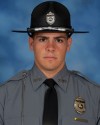
Corporal Bryon Keith Dickson, II
Pennsylvania State Police
End of Watch: Friday, September 12, 2014
Age: 38
Tour: 7 years, 3 months
Badge # 10714

Corporal Bryon Dickson was shot and killed from ambush at the Blooming Grove Barracks in Pike County, at approximately 11:00 pm.

He had just walked out of the front door of the barracks when he was struck by a .308 caliber rifle shot. A dispatcher who was inside of the barracks attempted to pull him into the building but also came under fire and had to retreat back into the building. A second trooper, who had been in the parking lot, also came to Trooper Dickson's aid but was wounded before he also had to retreat into the building. The subject then shot Corporal Dickson a second time, killing him.

The subject fled the scene but was identified two days later when his vehicle and other evidence was found partially submerged in a pond two miles from the barracks. The subject remains at large.

Corporal Dickson was a U.S. Marine Corps veteran and had served with the Pennsylvania State Police for seven years. He is survived by his wife and two sons.
Rest in Peace Bro…We Got The Watch

Day is done, Gone the sun, From the lake, From the hills, From the sky. All is well, Safely rest, God is nigh. 

Security Weekly: The Jihadist Kidnapping Threat Persists, September 25, 2014


By Scott Stewart

After attending a non-governmental organization security conference last week and chatting with some friends there, I decided to focus this Security Weekly on the continued and widespread kidnapping threat jihadist groups pose to NGO workers and other foreigners.

Since I made that decision, a number of events have occurred concerning foreign hostages and jihadists:
Sept. 20: The Islamic State released the 49 Turkish diplomats it abducted from the Turkish consulate in Mosul, Iraq in a prisoner exchange for Islamic State militants and family members.

Sept. 22: French citizen Herve Gourdel was kidnapped in the Kabylie region of Algeria by Jund al-Khilifah, a splinter group of al Qaeda in the Islamic Maghreb that has broken from the al Qaeda orbit and pledged allegiance to the Islamic State. On Sept. 24, the group published a video on the Internet featuring Gourdel's beheading.

Sept. 22: The Islamic State released a second message by British hostage John Cantlie that criticized U.S. policy toward the Islamic State.

Sept. 23: The German government confirmed the deaths of two Christian aid workers and their young son who were abducted in northern Yemen in June 2009.

Sept 23: German-American journalist Michael Scott Moore, who was kidnapped in Somalia while working on a story on piracy, was released — reportedly after a ransom payment.

Sept. 23: Philippine jihadist group Abu Sayyaf released a statement warning that two German hostages would be executed in 15 days unless Germany paid a ransom of 250 million Philippine Pesos ($5.6 million) and stopped supporting U.S. operations against the Islamic State and other jihadists in the Levant.
While the Gourdel abduction in Algeria and the Abu Sayyaf statement may have stolen my thunder a bit regarding this topic, all of these events nonetheless serve as timely and powerful reminders that, when in dangerous areas, the risk of abduction by jihadist groups persists. Foreigners, whether they be NGO workers, journalists, businessmen or tourists, have become valuable commodities for jihadist groups, and they must exercise great caution when in areas within the operational range of such groups.

Foreigners as Commodities

For over two decades now, jihadist groups have kidnapped Westerners for use in hostage swaps or for ransom. Kashmiri jihadists kidnapped a group of Swedish engineers in March 1991, representing the first of many kidnappings in Kashmir. Since then, foreigners have been kidnapped by jihadist groups in Algeria, Niger, Libya, Mauritania, Mali, Kenya, Nigeria, Cameroon, Somalia, Syria, Iraq, Saudi Arabia, Yemen, Pakistan, Afghanistan, Malaysia and the Philippines.

As Stratfor has noted elsewhere, jihadist groups such as al Qaeda in the Islamic Maghreb have netted tens of millions of dollars through kidnapping-for-ransom operations.

Though the Islamic State recently beheaded two American hostages and one British hostage in Syria to make a political point and generate a great deal of publicity, such spectacular hostage killings are not new. Kashmiri jihadists beheaded a Norwegian hostage they captured in 1995 to pressure the Indian government to make a deal for their remaining hostages, and al Qaeda beheaded American journalist Daniel Pearl in January 2002 after kidnapping him in Karachi, Pakistan. Al Qaeda in Saudi Arabia beheaded Paul Johnson in 2004, and al Qaeda in Iraq (the group now calling itself the Islamic State) beheaded Nick Berg in 2004.

Perhaps the best example of hostages being used as commodities can be seen in a letter from al Qaeda in the Arabian Peninsula leader Nasir al-Wahayshi to Abdelmalek Droukdel (aka Abu Musab Abdel al-Wadoud), the leader or "emir" of al Qaeda in the Islamic Maghreb. In the letter, al-Wahayshi discussed how his group had suffered terrible losses after a counteroffensive defeated its attempt to seize control of a large section of southern Yemen in 2011 and 2012. According to al-Wahayshi, "The control of these areas during one year cost us 500 martyrs, 700 wounded, 10 cases of hand or leg amputation and nearly $20 million." Al-Wahayshi continued, "most of the battle costs, if not all, were paid from the spoils. Almost half the spoils came from hostages. Kidnapping hostages is an easy spoil, which I may describe as a profitable trade and a precious treasure."

Foreign hostages are not only a treasure for jihadist groups. In Yemen, Sahel and Syria, tribal militants and bandits have been known to sell hostages to jihadist groups, meaning grabbing a foreigner is also an easy, lucrative business for them. For these smaller groups, the gratification is more immediate because they do not have to go through the trouble of a protracted negotiation but instead receive cash directly from the militants. Recently, a friend of mine returned from a trip to Yemen, where he had an uneasy trip after a man he was staying with told him al Qaeda in the Arabian Peninsula was offering a bounty on foreigners, and he could make a lot of money by selling my friend.

Purchasing hostages from bandits and other criminals extends the reach of jihadist groups to locations beyond their normal areas of operations. This has important implications for foreigners who may consider themselves outside the traditional range of jihadist groups.

Also, note that I am intentionally using the phrase foreigners and foreign hostages here. This is because, while Westerners get the most publicity in Western press, jihadists are also kidnapping Asians and other foreigners.

Scope of the Threat

The Islamic State and the al Qaeda franchises are hurting for cash. While some media reports have labeled the Islamic State the richest militant group ever, such reports fail to understand the extent of its obligations. The Islamic State makes a lot of money, but it also spends a lot of money.


All jihadist groups have been pressed hard on the battlefield. They need cash to pay for weapons, salaries for fighters, vehicles, medical care, gasoline, food, payments to tribal sheikhs, etc. In addition, the United States and its allies have expended a great deal of effort to curtail the funding of these militant groups in the years since 9/11. These efforts have degraded their ability to receive money via Islamic charities and wealthy donors, though those flows have by no means been completely and permanently stopped. Still, we know from communications from al Qaeda core leaders and from many of the franchise leaders such as al-Wahayshi that obstacles to receiving donated cash have caused jihadist groups to increasingly rely on funds raised from ventures such as kidnapping for ransom.

At the same time, as hostages are becoming more important sources of funding, the Islamic State has beheaded some of its hostages. Likewise, groups such as al Qaeda in the Arabian Peninsula have ransomed some hostages and, as noted above, they also had a group of German hostages die in captivity. This means these groups — among others — will be seeking to replenish their stock of hostages.

Al Qaeda in the Arabian Peninsula perhaps has the most limited access to potential foreign hostages, as travel to Yemen is very unpopular now because of the many dangers associated with it and because the group is rather isolated due to its geographic location. Nevertheless, any remaining expatriates in Yemen and near the Yemeni border in southern Saudi Arabia should be careful.

In the Horn of Africa, al Shabaab poses a risk to the few foreigners visiting Somalia. It also has the capability to reach into Kenya, eastern Ethiopia and perhaps even Djibouti.

Earlier this month, Jabhat al-Nusra released a group of UN peacekeepers from Fiji that had been abducted in the Golan Heights in late August, but it should not be expected to do the same with other potential ransom victims. The group is also believed to still be holding at least one foreign aid worker in captivity. With foreign aid workers and journalists becoming reluctant to travel to Syria because of the threat of abduction by the Islamic State and Jabhat al-Nusra — or by militant groups who sell abducted foreigners to one of those groups — there is a possibility that the groups or their proxies could abduct foreigners from locations along the Syrian border in southern Turkey.

In the Sahel, groups including al Qaeda in the Arabian Peninsula, al-Mourabitoun and now Jund al-Khilifah, pose a very wide kidnapping threat. These groups are highly mobile and are linked to groups of Tuareg and other bandits in the region, as well as Ansar al Sharia militants in Tunisia and Libya.

In Afghanistan, the various Taliban groups have shown the ability to operate throughout most of the country, as has the Tehrik-i-Taliban Pakistan in that country.

Other highly mobile groups are Abu Sayyaf and other Filipino jihadist groups operating in Mindanao and across the Sulu Archipelago region. They are experienced mariners and can operate in parts of the Philippines, Malaysia and Indonesia.

The kidnapping threat is not new, and it should not be hyped. But now is a good time for NGO workers, journalists, tourists, business travelers and other foreigners in areas where these groups operate to assess their situation, check their security posture and practice an appropriate level of situational awareness so that they can keep from becoming the next kidnapping victim. As we've previously noted, kidnapping is a complex crime and is almost always the result of a complex and carefully orchestrated criminal process. Because of this, there are almost always some indications and warnings that the process is underway prior to the abduction, meaning that many, if not most, kidnappings are avoidable.

COPYRIGHT: STRATFOR.COM

Geopolitical Weekly: Centripetal and Centrifugal Forces at Work in the Nation-State, September 23, 2014


By Zhixing Zhang

"Here begins our tale: The empire, long divided, must unite; long united, must divide. Thus it has ever been." This opening adage of Romance of the Three Kingdoms, China's classic novel of war and strategy, best captures the essential dynamism of Chinese geopolitics. At its heart is the millennia-long struggle by China's would-be rulers to unite and govern the all-but-ungovernable geographic mass of China. It is a story of centrifugal forces and of insurmountable divisions rooted in geography and history — but also, and perhaps more fundamentally, of centripetal forces toward eventual unity.

This dynamism is not limited to China. The Scottish referendum and waves of secession movements — from Spain's Catalonia to Turkey and Iraq's ethnic Kurds — are working in different directions. More than half a century after World War II triggered a wave of post-colonial nationalism that changed the map of the world, buried nationalism and ethnic identity movements of various forms are challenging the modern idea of the inviolable unity of the nation-state.


Yet even as these sentiments pull on the loose threads of nations, in China, one of the most intractable issues in the struggle for unity — the status of Tibet — is poised for a possible reversal, or at least a major adjustment. The long-running but frequently unnoticed negotiations have raised the possibility that the Dalai Lama, Tibet's spiritual leader, may be nearing a deal that would enable him to return to his Tibetan homeland. If it happens, it would end the Dalai Lama's exile in Dharamsala, India — an exile that began after the Tibetan uprising in 1959, nine years after the People's Republic of China annexed Tibet. More important, a settlement between Beijing and the Dalai Lama could be a major step in lessening the physical and psychological estrangement between the Chinese heartland and the Tibetan Plateau.

Tibet, the Dalai Lama and Self-Determination

The very existence of the Tibetan issue bespeaks several overlapping themes of Chinese geopolitics. Most fundamentally, it must be understood in the context of China's struggle to integrate and extend control over the often impassable but strategically significant borderlands militarily and demographically. These borderlands, stretching from northeast to the southwest — Manchuria, Mongolian Plateau, Xinjiang, Tibet and the Yunnan Plateau — form a shield, both containing and protecting a unified Han core from overland invasion. In attempting to integrate these regions, however, China confronts the very nature of geographic disintegration and the ethnic identities in these restive borderlands, which have sought to resist, separate or drift away from China at times when weak central power has diminished the coherence of China's interior.

Tibet in many ways represents the extreme edge of this pattern. Indeed, while the formidable geography of the Tibetan Plateau (its altitude averages 4.5 kilometers, or almost 2.8 miles, above sea level) largely inured it from most frontier threats to the Han core compared with the more accessible Manchuria, Mongolian Plateau or Xinjiang. Perhaps no borderland is as fraught with as much consequence as Tibet under China's contemporary geopolitical circumstances. The Tibetan Plateau and its environs constitute roughly one-quarter of the Chinese landmass and are a major source of freshwater for China, the Indian subcontinent and mainland Southeast Asia. The high mountains of the Himalayas make a natural buffer for the Chinese heartland and shape the complex geopolitical relationship between China and India.

Historically, China's engagement with the Tibetan Plateau has been lacking and not characterized by national unity. Starting in the 7th century, China made sporadic attempts to extend its reach into the Tibetan Plateau, but it wasn't until the Qing dynasty that the empire made a substantial effort to gain authority over Tibetan cultural and social structures through control of Tibetan Buddhist institutions. The weakening of China after the Qing dynasty led peripheral states, including Tibet, to slip from Chinese central rule.

Since the People's Republic of China began ruling over Tibet in 1950, the perennial struggle manifested as political, religious and psychological estrangement between political power in Beijing and the Dalai Lama, the charismatic political and spiritual symbol of the Tibetan self-determination movement, who consistently has resisted China's full domination over Tibet. Here, the nominally impersonal process of geopolitics confronts the rare individual who has a lasting impact. The Dalai Lama has concentrated the Tibetan cause into himself and his image. It is the Dalai Lama who represents the Tibetan identity in foreign capitals and holds a fractious Tibetan movement together, holding sway over both indigenous Tibetans in the homeland and the old and new generations of Tibetan exiles.

Perennial Struggle and Contemporary Moves

Under the People's Republic, China has some of the clearest physical control and central authority over one of the largest and most secure states in China's dynastic history. However, the ancient compulsion to secure the Chinese periphery did not go unaddressed by China's Communist leadership.

Over the years, the central government has pushed aggressively to bolster Han Chinese economic and demographic dominance over the borderland while attempting to overcome the physical barriers of distance through grandiose infrastructure projects, including road and rail links. And yet, the estrangement with the Dalai Lama has left Beijing dealing with the perception that its control over the Tibetan Plateau is partial and of questionable legitimacy. Meanwhile, the Dalai Lama's international prestige exposed the central power in Beijing to numerous international critics. Moreover, it offered New Delhi an opportunity to exploit Beijing's concerns by hosting the Dalai Lama and the Tibetan government-in-exile.

Beijing sees no space to allow the autonomy demanded by the Tibetan exile movement; it is a short path from robust autonomy to direct challenge. Beijing's strategy has been to try to undermine the Dalai Lama's international prestige, constrain interaction between the exile community and Tibetans at home and hope that when the spiritual leader dies, the absence of his strong personality will leave the Tibetan movement without a center and without someone who can draw the international attention the Dalai Lama does. Central to Beijing's calculation is interference in the succession process whereby Beijing claims the right to designate the Dalai Lama's religious successor and, in doing so, exploit sectarian and factional divisions within Tibetan Buddhism. Beijing insists the reincarnation process must follow the Tibetan religious tradition since the Qing dynasty, meaning that it must occur within Tibetan territory and with the central government's endorsement, a process that highlights Tibet's position as a part of China, not an independent entity.

Beijing's plan could work, but the cost would be high. Without recognition from the Dalai Lama, Beijing's appointed successor — and by extension, Beijing's authority in Tibet — can hardly be accepted by the wider Tibetan community. To resist Beijing's attempt at interference, the Dalai Lama has in recent years made various statements signaling that the ancient traditions of the succession process could break. In particular, the Dalai Lama has discussed the potential for succession through emanation rather than reincarnation. This would place his knowledge and authority in several individuals, each with a part of his spiritual legacy, but none as the single heir. Emanation can occur while the Dalai Lama is alive, thus giving him the ability to manage a transition. He has also mentioned the possibility that no successor will be named — that the reincarnation of the Dalai Lama will end, leaving his legacy as the lasting focus for Tibetans.

More concretely, the Dalai Lama has split the role of spiritual and political leadership of the Tibetan movement, nominally giving up the latter while retaining the former. In doing so, he is attempting to create a sense of continuity to the Tibetan movement even though his spiritual successor has not been identified. However, it also separates the Dalai Lama from any Tibetan political movement, theoretically making it easier for the spiritual leader and Beijing to come to an accord about his possible return as a spiritual — but not political — leader. But the maneuvering by the Dalai Lama reflects a deeper reality. The Tibetan movement is not homogenous. Tibetan Buddhism has several schools that remain in fragile coordination out of respect for the Dalai Lama. The Tibetan political movement is also fragmented, with the younger foreign-born Tibetans often more strongly pressing for independence for Tibet, while the older exiles take a more moderate tone and call for more autonomy. The peaceful path promoted by the Dalai Lama is respected, but not guaranteed forever, by the younger and more radical elements of the Tibetan movement, which have only temporarily renounced the use of violence to achieve their political goals.

The future of the Tibetan movement after the Dalai Lama's death is uncertain. At a minimum, the spiritual leader's fame means no successor will be able to exercise the same degree of influence or maintain internal coherence as he has done. Just as the Dalai Lama was concerned that an extremist wing of the new Tibetan generation would undermine his moderate ideology and dilute the movement's legitimacy, Beijing fears that the post-Dalai Lama era would enable multiple radical, separatist or even militant movements to proliferate, leaving Beijing in a much more difficult position and potentially facing a greater security threat.

Beijing and the Dalai Lama have shown a willingness to reach a political settlement in the past, but their attempts failed. As uncertainties loom for both sides amid concerns about the spiritual leader's age and the changing domestic dynamics facing China's new president, Xi Jinping, both sides could see a departure from previous hostilities as a reasonable step toward a low-cost settlement. In other words, both Beijing and the Dalai Lama — and by extension his mainstream followers — understand how little time they have and how, without a resolution, the uncertainties surrounding the Tibet issue could become permanent after the spiritual leader's death.

Optimism Now, but Caution Ahead

The report of the Dalai Lama's possible return to Tibet comes as Beijing has resumed talks with representatives of the spiritual leader. This round of negotiations comes after nine rounds of failed talks over the past decade and four years after the last attempt. Nonetheless, the mood appears at least somewhat optimistic on both sides. In recent weeks, the Dalai Lama has offered conciliatory comments about Xi and intimated that he could be open to returning to Tibet, a longstanding desire of the 79-year-old spiritual leader. For its part, Beijing has released some Tibetan political prisoners and reportedly allowed the Dalai Lama's image and words to be used in certain Tibetan regions after years of prohibition.

Of course, many uncertainties surround the return of the Dalai Lama; it is even uncertain whether it could happen at all. Indeed, overcoming 55 years of hostile relations takes enormous effort, and even if the Dalai Lama is allowed to return to Tibet, it is only one of several steps in much broader negotiations between Beijing and the Tibetan exile community over how to reach a resolution, including the possible resettlement of 200,000 Tibetans in exile, the status of the government-in-exile, the authority of the Dalai Lama and, ultimately, the succession process for the spiritual leader.

Over the years, the Dalai Lama repeatedly has expressed a strong desire to return to the Tibetan homeland, seeing it as an end goal in his longstanding efforts to gain Tibetan autonomy. Although Beijing had always left the option open, it repeatedly emphasized that any dialogue with the Dalai Lama would be confined to the scope of an arrangement for the spiritual leader and would carry no political implications. In other words, any agreement will be based on the premise that expanded Tibetan autonomy is not an option and that Beijing's authority over Tibetan regions — and by extension, the borderland in Xinjiang and Inner Mongolia — will remain intact. Similarly, the Dalai Lama will not accept a weakening of his spiritual authority among the Tibetan community or of his role in choosing successors. Nonetheless, with Beijing's concern over the proliferation of radical wings of the Tibetan movement abroad, allowing the Dalai Lama to return to Tibet could mitigate some of the tension and give Beijing a way to divide and weaken the Tibetan movement.

In moving toward an agreement, both sides would have to prepare for some political risk. For Beijing, the foremost concern would be managing the enormous religious influence of the Dalai Lama at home, where he is seen as a challenger to the Communist Party's political leadership. For the Dalai Lama, the main concerns would be managing the role of the Tibetan political leadership overseas and the potential repercussions within the exile movement from the developing settlement's contrast with their goal for Tibetan autonomy.

Perhaps more important, even if there were signs of a resolution developing, the succession issue is likely to be a roadblock. Beijing is unlikely to give any concession in its authority to appoint a reincarnated spiritual leader, and the Dalai Lama shows little intention of allowing Beijing's unilateral move.

Confronting a Geopolitical Curse

Despite various uncertainties, questions and risks, the potential ramifications of even the slim possibility of rapprochement illustrate China's ancient geopolitical dynamism at work.

Again illustrating how an individual can play a role in geopolitics, the potential for reconciliation between Beijing and the Dalai Lama could affect the balance between China and India. China has long viewed India's decision to host the Tibetan government-in-exile as a hostile gesture. However, India's ability to exploit China's concerns about Tibet has diminished along with the government-in-exile's influence and claim to represent Tibet as a legitimate entity. Already, New Delhi has shown waning enthusiasm for accepting Tibetan refugees and greater concern that the internal fragmentation of the Tibetan community will make hosting the exile community more of a liability than a benefit. However, a settlement would not eliminate the underlying geopolitical rivalry between India and China on other fronts — from their 4,000-kilometer land border to the maritime competitions in the Indian Ocean and South China Sea and their competition for energy and other resources.

Even if a settlement on the Tibet issue emerges in the distant future, it does not mean the end of the China-Tibet struggle. Indeed, since 2009 there have been many Tibetan self-immolations, and Beijing's economic developments in many parts of the ethnic borderlands widely are perceived as flawed or incomplete. Quite likely, a detente with the Dalai Lama will result in radicalized and more extremist elements emerging overseas, seeking self-determination and, like many of their counterparts around the world — from Scotland to the Kurds in the Middle East — challenging the centripetal forces of nation-states.

Historically, when Han China is strong, so is its control over these buffer regions. Control of the buffer regions, in turn, is a key precondition for a strong and secure Han China. This arrangement will become crucial as Beijing grapples with the potential challenges in the social, economic and political transformation in the Han core in the coming years. Therefore, despite the flux mentioned in the aphorism from Romance of the Three Kingdoms, for Beijing the ultimate goal is to confront an ancient geopolitical curse by cementing its control over its borderlands and uniting China permanently and irreversibly, however unrealistic this goal might be.

Editor's Note: Writing in George Friedman's stead this week is Stratfor Asia-Pacific Analyst Zhixing Zhang.
Centripetal and Centrifugal Forces at Work in the Nation-State is republished with permission of Stratfor.

Sunday, September 28, 2014

Saturday Night Live says what others will not

Saints fans, check out what the NFL Commissioner at 1:15. About right. Goodell, if you want sympathy, don't look to New Orleans!


GEAUX SAINTS!!!!!!!

Officer Down


Border Patrol Agent Tyler R. Robledo
United States Border Patrol
End of Watch: Friday, September 12, 2014
Age: 34
Tour: 3 years
Badge # S437

Border Patrol Agent Tyler Robledo was killed in an automobile collision on FM 2644 near Carrizo Springs, Texas.

His patrol car and another vehicle collided head-on at approximately 1:15 am. The driver of the other vehicle died at the scene. Agent Robledo was airlifted to San Antonio Military Medical Center, where he succumbed to his injuries.

Agent Robledo had served with the United States Border Patrol for three years and was assigned to the Carrizo Springs Border Patrol Station. He is survived by his wife and two young children.
Rest in Peace Bro…We Got The Watch

Day is done, Gone the sun, From the lake, From the hills, From the sky. All is well, Safely rest, God is nigh. 

Friday, September 26, 2014

Gilligan's Island and the longest three hour tour in history

Like most people who haven't been in a coma since the 1950s, I have fond memories of Gilligan's Island. I just refuse to believe it's 50 years old tonight! NOOOOOOOOO! I ain't that old yet.

In all seriousness, found this and I had to share it.
10 Things You Didn't Know About 'Gilligan's Island'

As anyone who's ever been on a three-hour boat ride can tell you, it gets pretty insufferable by the end. People are hungry, cranky and seasick, and all of them are trying like heck to avoid using the on-board bathroom.

That makes it all the more impressive that we, as viewers, managed to stomach an entire three seasons of "Gilligan's Island" (and to a lesser extent, its three made-for-TV movies). Ever since it premiered 50 years ago on September 26, 1964, we just couldn't get enough of those seven castaways, and that's despite our overwhelming frustration at their refusal to just build a darn boat already.

Then again, it's probably better they didn't get off that island. Otherwise, we'd never have all the fun little "Gilligan's Island" trivia tidbits below, each of which proves to be more interesting than a chartered boat tour, or that same boat's deplorable bathroom facilities.

#1. During the show's development, CBS chief of programming Jim Aubrey wasn't convinced that viewers would want to see the same seven castaways on the same deserted island week after week. When "Gilligan's Island" creator Sherwood Schwartz brushed off Aubrey's suggestions to change the show's premise and name (to "Gilligan's Travels"), Aubrey created his own series called "The Baileys of Balboa" (about a Southern California skipper and his offbeat crew) to compete and run concurrently with Schwartz's program. "Baileys" debuted just two nights before "Gilligan's Island," but was canceled within the year.

#2. Actress Natalie Schafer, who played Mrs. Howell, thought "Gilligan's Island" was too dumb to get picked up by a network, and only decided to star in the pilot episode because it offered her a free trip to Hawaii and a quick paycheck. As one story goes, she actually began to cry when CBS greenlit the show.

But come on Ms Schafer, you have to admit it was a steady job!
#3. After the pilot was ordered to series, television producer Hunt Stromberg Jr. tried to convince a horrified Sherwood Schwartz that Gilligan should find a gigantic dinosaur halfway through the first episode and keep it as a pet for the remainder of the show. Not wanting to offend Stromberg (who envisioned this dinosaur as a "Mister Ed"-type character), Schwartz simply questioned whether an animated dinosaur would break their budget. Fortunately, he turned out to be right, and the idea was scrapped.

Thankfully that got killed!
#4. According to the television special "Surviving Gilligan's Island: The Incredibly True Story of the Longest Three Hour Tour in History," it was Bob Denver who was responsible for getting "the Professor and Mary Ann" mentioned in the opening credits and theme song. (Prior to the second season, only Gilligan, the Skipper, Ginger, and Mr. and Mrs. Howell were mentioned by name; the Professor and Mary Ann were simply referred to as "the rest.") As the story goes, Denver had a clause in his contract stipulating how he could be credited, and threatened to remove his name from the opening credits unless Russell Johnson and Dawn Wells got their just due.

Thank you Bob for making sure these great people were recognized.
#5. Also, at about 22 seconds into the opening credits of first-season episodes of "Gilligan's Island," the U.S. Flag can be seen flying at half-staff off in the distance. This is because the show's pilot episode finished filming on November 22, 1963 — the same day President Kennedy was assassinated.

Sobering.
#6. Alan Hale Jr. was filming a Western in Utah (most likely "Advance to the Rear" or "Bullet for a Badman") when he was contacted to read for the role of the Skipper, but the producers of the film didn't authorize him to leave. So instead, on the morning of his audition, Hale rode one of the film's horses to the nearest main road, hitchhiked to a Las Vegas airport, and hopped a flight to Los Angeles with the intention of returning to Utah before anyone noticed.

With all the prima donnas they have in show business now, it's nice to see a man just bust his ass to get work. I wish other American's (won't go to Hollywood) would have that work ethic!
#7. A few months into the show's run, the U.S. Coast Guard asked to meet with Sherwood Schwartz about mail they received regarding "Gilligan's Island." Apparently, more than a few viewers believed the show to be real, and asked the Coast Guard why they couldn't simply rescue the castaways. “Now who did [these viewers] think was laughing at what was happening to these people?” Schwartz later joked in a 1997 interview with the Archive of American Television. “Where did they think the music came from, and the commercials?”

You know this had to be true. It's too stupid to not be false.
#8. Tina Louise, who studied under Lee Strasberg at the Actors Studio prior to the show, was the only castmember to decline numerous offers to reprise her role in the "Gilligan's Island" TV movies or animated series. "She simply has a fear that if she ever identifies herself with Ginger again, she will lose all chance to play other types of roles, dramatic or comic," wrote Schwartz in his 1988 book "Inside Gilligan's Island: From Creation to Syndication." However, Louise wasn't exactly ashamed of the show: When it debuted, she proudly touted that the convicts in the Kansas State penitentiary voted her "Miss Cellmate," and almost 20 years later, she appeared with the rest of the cast in a 1982 reunion on "Good Morning America":

#9. When asked why Mary Ann often gets picked over Ginger in fans' "Mary Ann or Ginger" debates, actress Dawn Wells (Mary Ann) suggested it was because "Ginger is a one-night stand while Mary Ann is for a lifetime." She further remarked that "Ginger would be exciting, but you’d have to take her to expensive places and buy her a martini [whereas] Mary Ann’s for the long haul."

See my comment about prima donnas.
#10. All of the castaways' full names have been revealed except for Gilligan's. Evidence suggests he was called "Willy Gilligan" when Sherwood Shwartz was putting together the original treatment for the pilot, yet this name was never uttered in any of the show's dialogue. In fact, viewers still debate whether Gilligan was his given name or last name. Even Bob Denver himself used to insist that Gilligan was indeed his character's first name whenever the subject was brought up.

I know most are gone, Russell Johnson was the last to pass I believe late last year. Only Ginger and Mary Ann are left.

In the big picture, is this great comedy or art, no. But as a friend of mine once said, "Mike, sometimes you have to put down War and Peace and read Bambi, stop with Henry V and watch Attack of the Killer Tomatoes!" It was great entertainment and millions are grateful for a half hour to get away from the problems of life without being lectured about crap the producers thought was important. A lesson Hollywood should relearn.

The three hour tour will continue in reruns. Thank you Gilligan, Skipper, Mr and Mrs Howell, Professor, Ginger and Mary Ann.

Officer Down


Deputy Sheriff Joseph Matuskovic
Charleston County South Carolina Sheriff's Office
End of Watch: Monday, September 8, 2014
Age: 43
Tour: 17 years
Badge # 10480

Deputy Sheriff Joe Matuskovic was shot and killed as he and several other deputies responded to a disturbance call at an apartment complex at the intersection of Ashley River Road and Carriage Lane.

Two deputies working an overtime assignment at the complex had requested assistance from additional deputies to help deal with the subject who had been pounding on apartment doors and vehicles in the parking lot. The man then went inside his apartment. As the deputies attempted to make contact with the man he opened fire through the apartment door using an AK-47 style rifle, striking Deputy Matuskovic and another deputy.

Both deputies were pulled to safety and transported to the Medical University of South Carolina, where Deputy Matuskovic succumbed to his wounds.

The Charleston Police Department SWAT team made entry into the home several hours later and found the subject dead of a gunshot wound. It was determined that the subject had been shot at least twice by return gunfire and died as a result.

Mr. Larry Britton, an employee with the Charleston County’s Technology Services and Radio Operations, suffered a fatal heart attack while assisting the Charleston County Sheriff's Office with joint communications during the event. Mr. Britton also served as a South Carolina State Constable, but was not on duty in that capacity at the time of his death.

Deputy Matuskovic had served in law enforcement for 17 years. He is survived by three children and his fiancee.
Rest in Peace Bro…We Got The Watch

Day is done, Gone the sun, From the lake, From the hills, From the sky. All is well, Safely rest, God is nigh. 

Didn't the Romans show us to not man their military with foreigners, people with no allegiance to the country.

Why yes, they did. But don't let the facts of history get in the way of an agenda
Military to allow undocumented immigrants to serve

A small number of undocumented immigrants in the U.S. will have an opportunity to join the military for the first time in decades under a new Department of Defense policy unveiled Thursday.

The new rules will expand an existing program allowing recruiters to target foreign nationals with high-demand skills, mostly rare foreign language expertise or specialized health care training.

For the first time, the program — known as Military Accessions in the National Interest, or MAVNI — will be open to immigrants without a proper visa if they came to the U.S. with their parents before age 16. More specifically, they must be approved under a 2012 Obama administration policy known as Deferred Action for Child Arrivals, or DACA...

...The Pentagon program is capped at 1,500 recruits per year. Officials say it's unclear how many of those might be unlawful DACA status immigrants as opposed to others who are also eligible for military service under MAVNI, including those with legal, nonpermanent visas such as students or tourists.

Estimates suggest between 1.2 million and 2.1 million children, teenagers and young adults in the U.S. have no legal immigration status but meet the criteria for the DACA program. Those targeted by recruiters under the MAVNI program likely will be immigrants with language skills critical to national security, such as Arabic, Chinese, Pashto or Persian.

But Pentagon officials don't know how many of those immigrants have actually learned their ancestral language to the proficiency required by the military.

"We're just not sure how many within that existing population of DACA would have the linguistic skills to qualify," said one defense official familiar with the policy change. "These are kids who entered the country at a fairly young age and have basically grown up in the United States, so the limit of their language talents would probably be the language that they received at home."

Don't argue there is a major issue with language skills. While I was overseas in Kuwait ten years ago we had a warehouse of Iraqi documents waiting translation. This was a painfully slow process and it highlighted the lack of translators we have. But it's not we didn't know that. War story, back in 1991 I was a platoon leader in the 104th Military Intelligence Battalion, Fort Carson CO. This was the end of the Cold War and I had a platoon of German and Russian linguists. As we no longer needed them, we gave these soldiers who had gone through 8-12 months language training a bonus to leave. We're talking 30-40K. And AT&T said "Come on in, we need linguists, here is 50K a year!" So here we go again.

Now here is another issue.
DACA status is granted by the Department of Homeland Security and includes a background check.

I handled security clearances for most of my career and one major issue is family. We need to know if the candidate's brother or step-sister is a known radical. Or half the family is in prison for felonies. The acorn don't fall far from the tree and this might bring the judgement of soldier into question when handing Top Secret codeword material. Or we may not be able to get to their families and check them out. My senior year in Tulane ROTC we had an excellent cadet who was originally branched Military Intelligence. She was also half Vietnamese. We could not check her family out and that ended her time in MI (She was rebranched into the Quartermaster Corps). This was one issue. Imagine ten-thousand of them.

As Princess Leia said, "I have a bad feeling about this."

K9 Down


K9 Petra
Colorado Springs Colorado Police Department
End of Watch: Monday, September 8, 2014
Age: 3
Gender: F

K9 Petra died from injuries sustained when she fell from a parking garage in the 700 block of South Nevada Avenue while conducting a scent detection training exercise with the Regional Explosives Unit.

She sustained serious injuries to her back as a result of the fall. She was transported to an emergency veterinarian clinic where she had to be euthanized as a result.

Petra had served with the Colorado Springs Police Department for 15 months.
Rest in Peace Petra…till our next roll call at the Rainbow Bridge!

In Memory of all Police Dogs

They handled themselves with beauty & grace
And who could ever forget that beautiful face
Whether at work; or at home; whatever the test
They always worked hard; and did their best

They were real champions; at work or at play
But their lives were cut short; suddenly one day
While working on the job with their partner one day
They put themselves out on a limb; out into harms way

They gave the ultimate sacrifice; any dog can give
They gave up their life; so someone could live
The best of their breed; as his partner and anyone would say
Many hearts are now broken; that he had to prove it this way

Now as the trees are blowing in the gentle breeze
The sun is shining; thru the leaves on the trees
The meadows are green; and the grass grows tall
Off in the distance they can see a waterfall

As they look over the falls; down through the creek
The water flows gently; as a rabbit sneaks a peek
Far up above; in the deep blue sky
They see the birds soar high; as they fly by

They see animals playing; at the bridge by a waterfall
Chasing each other; and just having a ball
They play all day; from morning to night
There's no more rain; just warm sunlight

Off in the distance; they hear trumpets blow
Then all the animals look up; and notice a bright glow
The harps would play and the angels would sing
As they know they've come home; they've earned their wings

We remember that they died; in the line of duty
And are now with the Lord; sharing in heaven's beauty
Off to the meadows now; where they can play and roam free
With an occasional rest stop; under a tall oak tree

No more bad guys to chase; or bullets to take
Just a run through the meadow; down to the lake
A quick splash in the water; then back to the shore
Then it's off to the forest; to go play some more

These special dogs are back home; up in heaven above
They're cradled in God's arm's; and covered with His love
We'll light a candle for all of them; in the dark of night
In loving memory of all; these very special knights

By John Quealy

Officer Down


Corporal Jason E. Harwood
Topeka Kansas Police Department
End of Watch: Sunday, September 7, 2014
Age: 40
Tour: 15 years

Corporal Jason Harwood was shot and killed while making a traffic stop in the 3200 block of SE Sixth Avenue at approximately 4:45 pm.

One of the vehicle's occupants opened fire during the traffic stop, fatally wounding Officer Harwood. The suspect believed to be the shooter turned himself in a short time later.

Corporal Harwood had served wit the Topeka Police Department for 15 years. He is survived by his wife and two sons.
Rest in Peace Bro…We Got The Watch

Day is done, Gone the sun, From the lake, From the hills, From the sky. All is well, Safely rest, God is nigh. 

Thursday, September 25, 2014

Due process worked in this case.

In recent controversial police shootings, I have mentioned how we need to let the process play out.  In criminal justice, the nightmare is punishing an innocent man. In the most extreme case we can have an innocent person executed. In this case we found a woman trying to ruin a man's life for some really worthless reason.

Man held in reported Forestville rape may be cleared.

A man suspected of raping a woman at knife point after hours on the El Molino High School campus was to be released from jail Thursday after prosecutors said they found evidence that may clear him of the assault.

Sheriff’s officials initially said a masked David J. Kocalis, 24, of Guerneville sneaked up behind the woman Aug. 30, held a knife to her and raped her near the Forestville school’s tennis courts.

He was arrested the next day on charges carrying a possible life sentence after the woman identified a prominent tattoo, and the car he was driving was captured on videotape.

But prosecutor Brian Staebell said Thursday investigators have since uncovered evidence that may point to his innocence. A judge allowed Kocalis, who had been held on $1.2 million bail, to be released on his own recognizance.

His lawyer, Evan Zelig, said a review of cellphone records showed Kocalis and the 18-year-old woman knew each other. Earlier in the day, she sent him a text message inviting Kocalis for sex, Zelig said.

Their tryst began inside his borrowed Porsche SUV but moved to a spot near the tennis courts because the car’s alarm kept going off, Zelig said.

After it was over, Kocalis drove the woman home, the lawyer said. She fabricated a story about being raped because she missed her curfew and Kocalis refused to lend her $20, Zelig said.

“It was determined her story was not credible whatsoever,” Zelig said outside court. “It was completely made up.”

Zelig said he brought the new information to sheriff’s investigators who analyzed both cellphones. They confirmed the messages as well as attempts by the woman to delete her own texts, Zelig said....

I don't know what the law is here, but it looks like this woman made a false police report and if so, she needs to be prosecuted. There is no excuse for this and she needs to be held to account.

Thanks to Darren at RotLC for the link

Officer Down


Patrolman II Nickolaus E. Schultz
Merrillville Indiana Police Department
End of Watch: Sunday, September 7, 2014
Age: 24
Tour: 1 year, 1 month
Badge # 365
Cause: Gunfire
Incident Date: 9/5/2014

Patrolman Nickolaus Schultz succumbed to gunshot wounds sustained two days earlier while investigating reports of an evicted tenant moving back in to his condominium on the 8200 block of Lincoln Circle. The subject was wearing body armor and ambushed responding officers, striking Patrolman Schultz in the head.

The man then committed suicide.

Patrolman Schultz was transported to Advocate Christ Medical Center where he was kept on life support until passing away two days later.

Patrolman Schultz had served with the Merrillville Police Department for 13 months.
Rest in Peace Bro…We Got The Watch

Day is done, Gone the sun, From the lake, From the hills, From the sky. All is well, Safely rest, God is nigh. 

Yo, Rick Perry, here is your third cabinet agency to get rid of. Department of Homeland Security.

From the DHS website, it's listed purpose:

Our Mission

The vision of homeland security is to ensure a homeland that is safe, secure, and resilient against terrorism and other hazards.


Now, knowing any bureaucracy has the purpose of justifying its existence and to accomplish that, mission creep is always useful, here is the latest.
US Homeland Security moves to tackle climate change risks

NEW YORK (Thomson Reuters Foundation) - Protecting the infrastructure of American cities from the effects of climate change is rising on the agenda of the U.S. Department of Homeland Security, according to a top agency official.

"Increasingly, we've moved not only from a security focus to a resiliency focus," said Caitlin Durkovich, assistant secretary for infrastructure protection at Homeland Security, an agency better known for its fight to curb terrorist threats.

Durkovich spoke Thursday on a panel at the Rising Seas Summit, a three-day conference organized by the U.S.-based Association of Climate Change Officers to discuss tools and ideas on building resiliency, particularly against rising sea levels.

OK, the Association of Climate Change Officers, less know as the ACCO. I only know that because I checked their website. But I looked at the "about" link and found this interesting.
About the Association of Climate Change Officers
ACCO's Board of Directors has adopted new vision and mission statements for the organization.

Mission

ACCO defines, develops and supports the functions, resources and communities necessary for effective organizational leadership in addressing climate-related risks and opportunities.

Vision

ACCO enables all organizations to be more sustainable by building enterprise capacity and empowering leadership to respond to climate change.

With the support of members, partners and sponsors, ACCO is advancing climate officers in the public and private sectors by:

Connecting members to peers, thought leaders and decision makers across sectors;

Synthesizing original and third party research findings to produce reports published in our Knowledge Center;

Producing a suite of industry leading education and training events, including the GreenGov Symposium, Climate Strategies Forum and ACCO’s
Climate Change Leadership Series; and

Helping organizations develop best practices for climate-related response strategies and identifying opportunities for collaboration with other experts and interested parties.

ACCO services climate change professionals worldwide from sectors including:

Public & private corporations;

Municipal, state, regional & Federal governmental organizations;

Colleges & universities; and

Non-profit organizations.

Sounds like a real fun place to work. More like a group of oxygen thieves taking federal grant money. Something this stupid has to be government funded.

In the aftermath of 2012's Hurricane Sandy, which devastated large swathes of the Northeastern U.S and caused over $60 billion in damages, Durkovich said her department reviewed the task of rebuilding with a new focus on "how to think about baking in resilience from the get-go."

To that end, she said, she has assembled a team of specialists, including city planners, in conjunction with the National Academy of Science to develop better tools for planning.

The Department of Homeland Security already has launched regional efforts to assess resilience of infrastruction and judge where gaps in adaptation and preparedness may be, she said.

For example, the Portland, Maine area is being looked at in terms of risks from rising sea level, how floods might be mitigated and how to deal with saltwater intrusion into what had been bodies of fresh water. The results will then be shared with other coastal communities, she said.

California, which has the country's second longest coastline after that of Alaska, also is looking increasingly at climate change adaptation and resilience, said fellow panelist Ken Alex, senior policy advisor and director of the California Governor's Office of Planning and Research...

Legitimate issues, all of them. Don't we already have an Corps of Engineers for flood control issues. Hasn't the Departments of Interior and HUD have their hands in this. Well why does DHS have to come into this. They aren't busy enough fingering children and 90 year olds in the airport.

Sounds like another worthless federal agency pushing mission creep to justify a larger budget and staff. Hopefully a conservative gets into office and removes this disgrace from the GW Bush administration. Unfortunately I have my doubts.

Officer Down


Police Officer Daryl Pierson
Rochester New York Police Department
End of Watch: Wednesday, September 3, 2014
Age: 32
Tour: 8 years
Badge # 32

Police Officer Daryl Pierson was shot and killed near the intersection of Hudson Avenue and Warsaw Street while involved in a foot pursuit of a suspect following a traffic stop.

The man that Officer Pierson was chasing had been paroled only three weeks prior while serving a sentence for attempted armed robbery.

A bystander was also wounded by the gunfire.

Officer Pierson was a veteran of the National Guard and had served with the Rochester Police Department for eight years. He is survived by his wife and two young children.
Rest in Peace Bro…We Got The Watch

Day is done, Gone the sun, From the lake, From the hills, From the sky. All is well, Safely rest, God is nigh. 

Wednesday, September 24, 2014

David Brooks, the NY Times putative conservative

Or relative conservative.

David Brooks has been the purported Times conservative columnists for years and occasionally he has a good point. This is not one of those times.

Mr. Brooks seems to be ridiculing those of us (and yes, count me in this group) concerned that America is in a period of decline, economically, militarily, culturally, etc. He goes onto list of the points about New York, arguably the once greatest city in the country. If you wonder why I call it "once", ask why people are fleeing it left and right. But this paragraph is of particular interest.
Snap out of it. 
"... I mention all of this because of the despondency and passivity and talk of unraveling that floated around this summer. Now there is a mood of pessimism and fatalism evident in the polls and in conversations — a lack of faith in ourselves.

It’s important in times like these to step back and get clarity. The truest thing to say is this: We are living in an amazingly fortunate time. But we also happen to be living during a leadership crisis, and a time when few people have faith in elites to govern from the top. We live in a vibrant society that is not being led.

We don’t suffer from an abuse of power as much as a nonuse of power. It’s been years since a major piece of legislation was passed, and there’s little prospect that one will get passed in the next two.
No kidding Dave. That last major pieces of legislation, passed by a Democratic congress and signed by a Democratic president included the movement to single payer health care (Obamacare), taking over the banking industry (Dodd-Frank) and upping the federal budget baseline for liberal constituencies. Sorry, we can live without this. And Dave, don't you think we have enough laws on the books? How about we start repealing them?

Now this paragraph made me really think.

This leadership crisis is eminently solvable. First, we need to get over the childish notion that we don’t need a responsible leadership class, that power can be wielded directly by the people. America was governed best when it was governed by a porous, self-conscious and responsible elite — during the American revolution, for example, or during and after World War II. Karl Marx and Ted Cruz may believe that power can be wielded directly by the masses, but this has almost never happened historically.

This has been a question of the last few years, the Washington Class vs the Country Class. Dave, you mention the American Revolution and I don't question we had a group of extraordinary men who led this country back then. Now there is something we should look at. George Washington, for instance, was quite an accomplished man prior to his name even coming into the public realm. Adjusting for inflation, his wealth would be in the hundreds of millions as a very successful plantation owner. Thomas Jefferson was also a successful in his education, finishing his college in two years, working as a surveyor. Benjamin Franklin, successful in publication with relatively little education. Suffice to say they were men of accomplishment before they ever got into what we would now call "national politics".

Fast forward two-hundred years and what do we have. More on the liberal side than the Republican side, but you have people of no accomplishment claiming they know how to lead this nation. Examples:

1. B Hussein Obama. Of course, top of the list. I've often asked an Obamaite "In November 2008, you look at the two candidates (I don't question it was a miserable choice, but that's another post for another day) and how do you think this man is worthy of the highest office in the land? What has he done that makes you think he has the intelligence, experience and accomplishment to handle this job?" For a man-child who's only accomplishments was being selected by the Illinois machine for a senate seat after spending ten years in the state senate saying "present", this was quite a leap. And the years since have shown he is in over his ears.

2. Mrs. Bill Clinton. Talk about a woman who is out of her capability. No question, she was an honor graduate of Ivy League law school and probably had some great opportunities coming to her. However, she hitched her wagon to him and went to Arkansas, knowing Bill would go places. And she endured one abuse after another so she could become the senator from a state she has no attachment to. Name me one major piece of legislation with her name on it? Then she is selected as Secretary of State and her only accomplishment is flying over a million miles in 4 years.

3. Joe Biden. Just graduated law school, elected to the senate just before his 30th birthday, has spent his entire life in the senate until he was elected VP, only really famous for sticking his foot in his mouth, plagiarizing and running for president.

4. Charlie Rangle. Crook and Congressmen. That's all.

5. Pat Roberts: Other than being a USMC captain and reporter, the man has been on Capital Hill for over 45 years. Beginning as an administrative assistant to a congressman, then as a member of the house, then as a senator.

6. One word. Kennedy. Enough said.

7. Another word. Rockefeller. Again, enough said.

I've got my disagreements with George W Bush but I don't question he was a man of accomplishment and got his money openly. For some reason couples that go into "public service" come out very rich. The Clinton's are worth hundreds of millions and as far as I can tell have never held a real job.

Second, the elite we do have has to acknowledge that privilege imposes duties. Wealthy people have an obligation to try to follow a code of seemliness. No luxury cars for college-age kids. No private jet/ski weekends. Live a lifestyle that is more integrated into middle-class America than the one you can actually afford. Strike a blow for social cohesion.

I don't care if Teddy Kennedy inherited his fortune from his daddy's bootlegging or Bobby Kennedy has money from directly from daddy and indirectly his granddaddy's illegal activities. But I don't want them telling me to get into an oversize gulf cart as they get into a private jet and SUV. I really don't care if Mitt Romney has 7 houses. He's actually made the money to buy them and hasn't said I need to pay more in taxes

Powerful people might follow a code of public spiritedness. That means restraining your partisan passions and parochial interests for the sake of domestic tranquility. Re-establish the lines between public service and private enrichment.

May want to try with the liberals and their screaming. Remember, "I am sick and tired of people who say if you debate and disagree with this administration that somehow you are not patriotic, we should stand up and say we are Americans 'We are Americans and we have a right to debate and disagree with any administration!'" But for some reason that don't count B Hussein Obama.

Third, discredit political bigotry. In 1960, 5 percent of Republicans and 4 percent of Democrats said they would be displeased if their children married someone of the opposite party. By 2010, Cass Sunstein observes, those numbers had jumped to 49 percent and 33 percent. How small-minded can you get?

Couldn't care less.

Fourth, put congressional reform atop the national agenda. More states could have open primaries. Nonpartisan commissions could draw district lines. Presidential nominees should get an up-or-down vote within 90 days. Representative Jim Cooper of Tennessee suggests that if Congress doesn’t pass a budget or annual spending bills on time, then members don’t get paid.

One, Dave, we all know open primaries only means let's liberal Republicans (you know, RINOs, e.g the Grahams that you like) win primaries because the Democrats will cross over.  This gives the American people the choice of suck more and suck slightly less.  And we both know anything that's called "nonpartisan" is basically liberal without the name. Also, for some reason you are conceded about presidential nominees getting an up or down vote. Gee, you din't seem so conceded from 2001 to 2009. I wonder why?

There is a reason the NY Times is a joke. But don't worry Dave, B Hussein still has the great crease in his trousers!

Sunday, September 21, 2014

Don't talk to cops....

An old legal saying is "A lawyer who defends himself has fool for a client...and idiot for a attorney>" I was reminded of this watching a defense attorney give his points and the rebuttal witness of the police investigator.

The defense attorney makes valid points on how a person of an innocent state of mind may make statements that can come to bite him in the ass. And the investigator explains how he will use one trick after another to get a statement. Worth the 48 minutes if you want a good overall look at the investigation from both sides of the table.

Tuesday, September 16, 2014

Geopolitical Weekly: The Origins and Implications of the Scottish Referendum, September 16, 2014


By George Friedman

The idea of Scottish independence has moved from the implausible to the very possible. Whether or not it actually happens, the idea that the union of England and Scotland, which has existed for more than 300 years, could be dissolved has enormous implications in its own right, and significant implications for Europe and even for global stability.

The United Kingdom was the center of gravity of the international system from the end of the Napoleonic Wars until World War II. It crafted an imperial structure that shaped not only the international system but also the internal political order of countries as diverse as the United States and India. The United Kingdom devised and drove the Industrial Revolution. In many ways, this union was a pivot of world history. To realize it might be dissolved is startling and reveals important things about the direction of the world.

Scotland and England are historical enemies. Their sense of competing nationhoods stretches back centuries, and their occupation of the same island has caused them to fight many wars. Historically they have distrusted each other, and each has given the other good reason for the distrust. The national question was intertwined with dynastic struggles and attempts at union imposed either through conquest or dynastic intrigue. The British were deeply concerned that foreign powers, particularly France, would use Scotland as a base for attacking England. The Scots were afraid that the English desire to prevent this would result in the exploitation of Scotland by England, and perhaps the extinction of the Scottish nation.

The Union of 1707 was the result of acts of parliaments on both sides and led to the creation of the Parliament of Great Britain. England's motive was its old geopolitical fears. Scotland was driven more by financial problems it was unable to solve by itself. What was created was a united island, acting as a single nation. From an outsider's perspective, Scotland and England were charming variations on a single national theme -- the British -- and it was not necessary to consider them as two nations. If there was ever a national distinction that one would have expected to be extinguished in other than cultural terms, it was this one. Now we learn that it is intact. We need a deeper intellectual framework for understanding why Scottish nationalism has persisted.

The Principle of National Self-Determination

The French Enlightenment and subsequent revolution had elevated the nation to the moral center of the world. It was a rebellion against the transnational dynasties and fragments of nations that had governed much of Europe. The Enlightenment saw the nation, which it defined in terms of shared language, culture and history, as having an inherent right to self-determination and as the framework for the republican democracies it argued were the morally correct form of government.

After the French Revolution, some nations, such as Germany and Italy, united into nation-states. After World War I, when the Hapsburg, Hohenzollern, Romanov and Ottoman empires all collapsed, a wave of devolution took place in Europe. The empires devolved into their national components. Some were amalgamated into one larger nation, such as Yugoslavia or Czechoslovakia, while others, such as Poland, were single nation-states. Some had republican democracies, others had variations on the theme, and others were dictatorships. A second major wave of devolution occurred in 1992, when the Soviet Union collapsed and its constituent republics became independent nation-states.

The doctrine of the right to national self-determination drove the first wave of revolts against European imperialism in the Western Hemisphere, creating republics in the Americas. The second wave of colonial rising and European withdrawal occurred after World War II. In some cases, nations became self-determining. In other cases, nation-states simply were invented without corresponding to any nation and actually dividing many. In other cases, there were nations, but republican democracy was never instituted except by pretense. A French thinker, Francois de La Rochefoucauld, said, "Hypocrisy is the tribute that vice pays to virtue." Even while betraying its principles, the entire world could not resist the compulsion to embrace the principles of national self-determination through republican democracy. This effectively was codified as the global gold standard of national morality in the charters of the League of Nations and then the United Nations.

The Imperfection of the Nation-State

The incredible power of the nation-state as a moral principle and right could be only imperfectly imposed. No nation was pure. Each had fragments and minorities of other nations. In many cases, they lived with each other. In other cases, the majority tried to expel or even destroy the minority nation. In yet other cases, the minority demanded independence and the right to form its own nation-state. These conflicts were not only internal; they also caused external conflict over the right of a particular nation to exist or over the precise borders separating the nations.

Europe in particular tore itself apart in wars between 1914 and 1945 over issues related to the rights of nation-states, with the idea of the nation-state being taken to its reductio ad absurdum -- by the Germans as a prime example. After the war, a principle emerged in Europe that the borders as they stood, however imperfect, were not to be challenged. The goal was to abolish one of the primary causes of war in Europe.

The doctrine was imperfectly applied. The collapse of the Soviet Union abolished one set of borders, turning internal frontiers into external borders. The Yugoslavian civil war turned into an international war once Yugoslavia ceased to exist, and into civil wars within nation-states such as Bosnia, Serbia and Croatia. At the same time, the borders in the Caucasus were redrawn when newly independent Armenia seized what had been part of Azerbaijan. And in an act that flew in the face of the principle, NATO countries divided Serbia into two parts: an Albanian part called Kosovo and the rest of Serbia.

The point of all this is to understand that the right to national self-determination comes from deep within European principles and that it has been pursued with an intensity and even viciousness that has torn Europe apart and redrawn its borders. One of the reasons that the European Union exists is to formally abolish these wars of national self-determination by attempting to create a framework that both protects and trivializes the nation-state.

Scotland's Case

The possibility of Scottish independence must be understood in this context. Nationalism, the remembrance and love of history and culture, is not a trivial thing. It has driven Europe and even the world for more than two centuries in ever-increasing waves. The upcoming Scottish election, whichever way it goes, demonstrates the enormous power of the desire for national self-determination. If it can corrode the British union, it can corrode anything.

There are those who argue that Scottish independence could lead to economic problems or complicate the management of national defense. These are not trivial questions, but they are not what is at stake here. From an economic point of view, it makes no sense for Scotland to undergo this sort of turmoil. At best, the economic benefits are uncertain. But this is why any theory of human behavior that assumes that the singular purpose of humans is to maximize economic benefits is wrong. Humans have other motivations that are incomprehensible to the economic model but can be empirically demonstrated to be powerful. If this referendum succeeds, it will still show that after more than 300 years, almost half of Scots prefer economic uncertainty to union with a foreign nation.

This is something that must be considered carefully in a continent that is prone to extreme conflicts and still full of borders that do not map to nations as they are understood historically. Catalonia, whose capital is Barcelona, the second-largest and most vibrant city in Spain, has a significant independence movement. The Treaty of Trianon divided Hungary so that some Hungarians live in Romania, while others live in Slovakia. Belgium consists of French and Dutch groups (Walloons and Fleming), and it is not too extreme to say they detest each other. The eastern half of Poland was seized by the Soviet Union and is now part of Ukraine and Belarus. Many Chechens and Dagestanis want to secede from Russia, as do Karelians, who see themselves as Finns. There is a movement in northern Italy to separate its wealthy cities from the rest of Italy. The war between Azerbaijan and Armenia is far from settled. Myriad other examples can be found in Europe alone.

The right to national self-determination is not simply about the nation governing itself but also about the right of the nation to occupy its traditional geography. And since historical memories of geography vary, the possibility of conflict grows. Consider Ireland: After its fight for independence from England and then Britain, the right to Northern Ireland, whose national identity depended on whose memory was viewing it, resulted in bloody warfare for decades.

Scottish independence would transform British history. All of the attempts at minimizing its significance miss the point. It would mean that the British island would be divided into two nation-states, and however warm the feelings now, they were not warm in the past nor can we be sure that they will be warm in the future. England will be vulnerable in ways that it hasn't been for three centuries. And Scotland will have to determine its future. The tough part of national self-determination is the need to make decisions and live with them.

This is not an argument for or against Scottish nationhood. It is simply drawing attention to the enormous power of nationalism in Europe in particular, and in countries colonized by Europeans. Even Scotland remembers what it once was, and many -- perhaps a majority and perhaps a large minority -- long for its return. But the idea that Scotland recalls its past and wants to resurrect it is a stunning testimony less to Scottish history than to the Enlightenment's turning national rights into a moral imperative that cannot be suppressed.

More important, perhaps, is that although Yugoslavia and the Soviet collapse were not seen as precedents for the rest of Europe, Scotland would be seen that way. No one can deny that Britain is an entity of singular importance. If that can melt away, what is certain? At a time when the European Union's economic crisis is intense, challenging European institutions and principles, the dissolution of the British union would legitimize national claims that have been buried for decades.

But then we have to remember that Scotland was buried in Britain for centuries and has resurrected itself. This raises the question of how confident any of us can be that national claims buried for only decades are settled. I have no idea how the Scottish will vote. What strikes me as overwhelmingly important is that the future of Britain is now on the table, and there is a serious possibility that it will cease to be in the way it was. Nationalism has a tendency to move to its logical conclusion, so I put little stock in the moderate assurances of the Scottish nationalists. Nor do I find the arguments against secession based on tax receipts or banks' movements compelling. For centuries, nationalism has trumped economic issues. The model of economic man may be an ideal to some, but it is empirically false. People are interested in economic well-being, but not at the exclusion of all else. In this case, it does not clearly outweigh the right of the Scottish nation to national-self determination.

I think that however the vote goes, unless the nationalists are surprised by an overwhelming defeat, the genie is out of the bottle, and not merely in Britain. The referendum will re-legitimize questions that have caused much strife throughout the European continent for centuries, including the 31-year war of the 20th century that left 80 million dead.

The Origins and Implications of the Scottish Referendum is republished with permission of Stratfor.

Monday, September 15, 2014

Officer Down


Constable Cleve Johnson
Titus County Texas Constable's Office - Precinct 2
End of Watch: Thursday, August 28, 2014
Age: 57
Tour: 34 years
Badge # 2200

Constable Cleve Johnson was killed in an automobile crash on FM 1734 at approximately 10:00 am.

His patrol car left the roadway and struck a concrete culvert.

Constable Johnson had served as constable of Titus County Precinct 2 for for 17 years and had served in law enforcement for a total of 34 years. He is survived by his wife, two daughters, and two grandchildren.
Rest in Peace Bro…We Got The Watch

Day is done, Gone the sun, From the lake, From the hills, From the sky. All is well, Safely rest, God is nigh. 

Sunday, September 14, 2014

Our country's future....

Working in police work can make you cynical. But nothing could be as depressing as the working the jail. Granted, this is all the turds from all around Harris county and they are (for the most part) the dregs of society. An unschooled guesstimate of the jailers (who have handed this more than I) and I is 90% of our inmates are frequent flyers, to one degree or another. Jail and prison are just part of the their life. The remaining 10% are the store managers who got busted for DWI, the college students drunk and disorderly, etc. After seeing what jail is like, they don't need another taste.

Then we have the up and coming generation of career criminals. God help us all


Galveston Police Dismantle Organized Crime Gang

At a press conference today at Galveston Police Headquarters, Police Chief Henry Porretto announced the arrest of about 30 members of a gang made up mostly of juveniles who have been robbing and terrorizing people on Galveston Island and in neighboring communities since March...

..."This summer the City of Galveston has seen an alarming increase in Property Crimes and Crimes against Persons; specifically robberies, burglaries, stolen vehicles, and carjackings. Many of these crimes involved similarly described suspects and Modus Operandi (MO’s). In response this marked increase Galveston Police Chief Henry Porretto organized a task force of Galveston Police Officers comprised of a Sergeant and 5 officers to investigate and apprehend the suspects associated with these crimes.

"As a result of this investigative effort Galveston Police were able to identify and systematically dismantle an Organized Criminal Street Gang, closely affiliated with the nationally recognized street gang identified as the Crips. The investigation resulted in identifying a leadership hierarchy for this Organized Criminal Street Gang and was able to link them to the majority of the above crimes. The Crips street gang is one of the three largest, most widely recognized, and dangerous Organized Criminal Street Gangs in these United States.

"Officers assigned to the task force immediately began collecting intelligence regarding the known members and associates of the Omega Organized Criminal Street Gang. Within one week the task force identified and arrested 12 confirmed members or associates of the criminal organization for the following offenses; Engaging in Organized Criminal Activity, Aggravated Robbery, Burglary of a Motor Vehicle, Narcotics Possession, outstanding warrants, and probation violations.

"It was quickly recognized by the task force the majority of the Omega Organized Criminal Street Gang members were juvenile offenders. These preliminary arrests led to the recovery of a large amount of stolen property, much of which has already been returned to the rightful owners. The evidence recovered during these arrests and the statements obtained from the arrestees allowed the task force to assist the Galveston Police Criminal Investigations Division in clearing several previously unsolved burglaries and stolen vehicle offenses.

"To date the task force has arrested 15 juveniles, all of which are members or associates of the Omega Organized Criminal Street Gang. The majority of these juvenile offenders has been charged with Engaging in Organized Criminal Activity and includes many of the Omega Criminal Street Gangs leadership. The investigation is still ongoing and likely to yield further Felony charges. Due to the fact these arrestees are juveniles’ state law prohibits the release of their photographs and names.

"While the investigation into the Omega Organized Criminal Street Gang is still very active the bulk of the leadership, members, and associates have been identified, arrested, and charged.


"Concurrent to the task forces’ investigation of the Organized Criminal Street Gang they were able to arrest over 30 individuals that were ultimately not confirmed as associates of the gang but were suspected as being involved in multiple crimes unrelated to the gangs operation. The task force noted a rise in Methamphetamine and made 4 cases involving this particular narcotic with arrests made for both possessing and manufacture/delivery. The task force was also able to make numerous other narcotics related arrests for the possession of cocaine (both powder and crack cocaine), illegal prescription pills, and marijuana. The task force was ultimately able to recover numerous firearms from these offenders that were linked to a burglary in League City and multiple robberies within the City of Galveston.

The Galveston Police task force was able to identify and apprehend a suspect with an Aggravated Assault warrant in Texas City. This could not have been accomplished without the assistance of the US Marshals, Texas City Police Department, and Galveston Police SWAT team...

..."The task force was able to recover numerous narcotics, seize 5 firearms from felonious subjects, and seize over $17,000 in cash...

These are kids as young as ten years old. What a waste of life. I don't argue the chances are they were born into a rough life (single mothers who didn't raise them, fathers who abandoned them, etc) but this is beyond hope. As I've said, I'll always have a job. And that is sad.