Police Work, Politics and World Affairs, Football and the ongoing search for great Scotch Whiskey!

Saturday, July 20, 2013

What a cop needs to be concerned about....

I found this article about the expansion of SWAT teams in the US since LAPD pioneered the concept in the late 1960's. If you look through their it raises some legitimate issues of overuse of SWAT. I remember how many people were astonished that the federal Department of Education has a SWAT team. Or that other departments which has little or no legit law enforcement function have them.

One thing did catch my eye.
If you browse online police discussion boards, or chat with younger cops today, you will often encounter some version of the phrase, "Whatever I need to do to get home safe." It is a sentiment that suggests that every interaction with a citizen may be the officer's last...

...Many longtime and retired law-enforcement officers have told me of their worry that the trend toward militarization is too far gone. Those who think there is still a chance at reform tend to embrace the idea of community policing, an approach that depends more on civil society than on brute force.

In this very different view of policing, cops walk beats, interact with citizens and consider themselves part of the neighborhoods they patrol—and therefore have a stake in those communities. It's all about a baton-twirling "Officer Friendly" rather than a Taser-toting RoboCop.

Mr Balko, a cop has more than one thing that is hazardous when he starts the watch, besides the possibility of getting shot. Many a year more cops are killed by auto accidents than pistol shots. However this is not the America of 1950s when a man started a watch, walked around with his baton and ate an apple from the fruit vender. Every time an officer pulls someone over the driver might be armed and not wanting to go back.

Suffice to say, SWAT and the militarization of policing in America will continue to one point or another. I for one would like to see SWAT teams stripped from the Department of Education, among other bureaucracies, as they have nothing to do with legitimate law enforcement. Sorry, DoE may have some issues with student loan fraud but that should be handled by the Department of Justice, either civil or criminal.

Thursday, July 18, 2013

K9 Down


'Indestructible' Minn. K-9 Euthanized

A Minnesota agency's police dog euthanized April 30 left a lasting legacy in law enforcement after enduring a stabbing, kicking, and near drowning.
 
Roseville Police Officer John Jorgensen used to call his German shepherd Major indestructible. Major was forced to retire from law enforcement in 2010, when a burglary suspect stabbed him several times, leaving his rear legs paralyzed. 
Major's sacrifice will help the state's working police dogs. Officer Jorgensen pushed for harsher penalties for those who assault police dogs. In 2011, Gov. Mark Dayton signed new legislation that makes any assault resulting in substantial bodily harm to a police K-9 a felony, reports the Pioneer Press.
RIP Major...


Geopolitical Weekly: Keeping the NSA in Perspective, July 16, 2013


By George Friedman

In June 1942, the bulk of the Japanese fleet sailed to seize the Island of Midway. Had Midway fallen, Pearl Harbor would have been at risk and U.S. submarines, unable to refuel at Midway, would have been much less effective. Most of all, the Japanese wanted to surprise the Americans and draw them into a naval battle they couldn't win.

The Japanese fleet was vast. The Americans had two carriers intact in addition to one that was badly damaged. The United States had only one advantage: It had broken Japan's naval code and thus knew a great deal of the country's battle plan. In large part because of this cryptologic advantage, a handful of American ships devastated the Japanese fleet and changed the balance of power in the Pacific permanently.

This -- and the advantage given to the allies by penetrating German codes -- taught the Americans about the centrality of communications code breaking. It is reasonable to argue that World War II would have ended much less satisfactorily for the United States had its military not broken German and Japanese codes. Where the Americans had previously been guided to a great extent by Henry Stimson's famous principle that "gentlemen do not read each other's mail," by the end of World War II they were obsessed with stealing and reading all relevant communications.

The National Security Agency evolved out of various post-war organizations charged with this task. In 1951, all of these disparate efforts were organized under the NSA to capture and decrypt communications of other governments around the world -- particularly those of the Soviet Union, which was ruled by Josef Stalin, and of China, which the United States was fighting in 1951. How far the NSA could go in pursuing this was governed only by the extent to which such communications were electronic and the extent to which the NSA could intercept and decrypt them.

The amount of communications other countries sent electronically surged after World War II yet represented only a fraction of their communications. Resources were limited, and given that the primary threat to the United States was posed by nation-states, the NSA focused on state communications. But the principle on which the NSA was founded has remained, and as the world has come to rely more heavily on electronic and digital communication, the scope of the NSA's commission has expanded.

What drove all of this was Pearl Harbor. The United States knew that the Japanese were going to attack. They did not know where or when. The result was disaster. All American strategic thinking during the Cold War was built around Pearl Harbor -- the deep fear that the Soviets would launch a first strike that the United States did not know about. The fear of an unforeseen nuclear attack gave the NSA leave to be as aggressive as possible in penetrating not only Soviet codes but also the codes of other nations. You don't know what you don't know, and given the stakes, the United States became obsessed with knowing everything it possibly could.

In order to collect data about nuclear attacks, you must also collect vast amounts of data that have nothing to do with nuclear attacks. The Cold War with the Soviet Union had to do with more than just nuclear exchanges, and the information on what the Soviets were doing -- what governments they had penetrated, who was working for them -- was a global issue. But you couldn't judge what was important and what was unimportant until after you read it. Thus the mechanics of assuaging fears about a "nuclear Pearl Harbor" rapidly devolved into a global collection system, whereby vast amounts of information were collected regardless of their pertinence to the Cold War.

There was nothing that was not potentially important, and a highly focused collection strategy could miss vital things. So the focus grew, the technology advanced and the penetration of private communications logically followed. This was not confined to the United States. The Soviet Union, China, the United Kingdom, France, Israel, India and any country with foreign policy interests spent a great deal on collecting electronic information. Much of what was collected on all sides was not read because far more was collected than could possibly be absorbed by the staff. Still, it was collected. It became a vast intrusion mitigated only by inherent inefficiency or the strength of the target's encryption.

Justified Fear

The Pearl Harbor dread declined with the end of the Cold War -- until Sept. 11, 2001. In order to understand 9/11's impact, a clear memory of our own fears must be recalled. As individuals, Americans were stunned by 9/11 not only because of its size and daring but also because it was unexpected. Terrorist attacks were not uncommon, but this one raised another question: What comes next? Unlike Timothy McVeigh, it appeared that al Qaeda was capable of other, perhaps greater acts of terrorism. Fear gripped the land. It was a justified fear, and while it resonated across the world, it struck the United States particularly hard.

Part of the fear was that U.S. intelligence had failed again to predict the attack. The public did not know what would come next, nor did it believe that U.S. intelligence had any idea. A federal commission on 9/11 was created to study the defense failure. It charged that the president had ignored warnings. The focus in those days was on intelligence failure. The CIA admitted it lacked the human sources inside al Qaeda. By default the only way to track al Qaeda was via their communications. It was to be the NSA's job.

As we have written, al Qaeda was a global, sparse and dispersed network. It appeared to be tied together by burying itself in a vast new communications network: the Internet. At one point, al Qaeda had communicated by embedding messages in pictures transmitted via the Internet. They appeared to be using free and anonymous Hotmail accounts. To find Japanese communications, you looked in the electronic ether. To find al Qaeda's message, you looked on the Internet.

But with a global, sparse and dispersed network you are looking for at most a few hundred men in the midst of billions of people, and a few dozen messages among hundreds of billions. And given the architecture of the Internet, the messages did not have to originate where the sender was located or be read where the reader was located. It was like looking for a needle in a haystack. The needle can be found only if you are willing to sift the entire haystack. That led to PRISM and other NSA programs.

The mission was to stop any further al Qaeda attacks. The means was to break into their communications and read their plans and orders. To find their plans and orders, it was necessary to examine all communications. The anonymity of the Internet and the uncertainties built into its system meant that any message could be one of a tiny handful of messages. Nothing could be ruled out. Everything was suspect. This was reality, not paranoia.

It also meant that the NSA could not exclude the communications of American citizens because some al Qaeda members were citizens. This was an attack on the civil rights of Americans, but it was not an unprecedented attack. During World War II, the United States imposed postal censorship on military personnel, and the FBI intercepted selected letters sent in the United States and from overseas. The government created a system of voluntary media censorship that was less than voluntary in many ways. Most famously, the United States abrogated the civil rights of citizens of Japanese origin by seizing property and transporting them to other locations. Members of pro-German organizations were harassed and arrested even prior to Pearl Harbor. Decades earlier, Abraham Lincoln suspended the writ of habeas corpus during the Civil War, effectively allowing the arrest and isolation of citizens without due process.

There are two major differences between the war on terror and the aforementioned wars. First, there was a declaration of war in World War II. Second, there is a provision in the Constitution that allows the president to suspend habeas corpus in the event of a rebellion. The declaration of war imbues the president with certain powers as commander in chief -- as does rebellion. Neither of these conditions was put in place to justify NSA programs such as PRISM.

Moreover, partly because of the constitutional basis of the actions and partly because of the nature of the conflicts, World War II and the Civil War had a clear end, a point at which civil rights had to be restored or a process had to be created for their restoration. No such terminal point exists for the war on terror. As was witnessed at the Boston Marathon -- and in many instances over the past several centuries -- the ease with which improvised explosive devices can be assembled makes it possible for simple terrorist acts to be carried out cheaply and effectively. Some plots might be detectable by intercepting all communications, but obviously the Boston Marathon attack could not be predicted.

The problem with the war on terror is that it has no criteria of success that is potentially obtainable. It defines no level of terrorism that is tolerable but has as its goal the elimination of all terrorism, not just from Islamic sources but from all sources. That is simply never going to happen and therefore, PRISM and its attendant programs will never end. These intrusions, unlike all prior ones, have set a condition for success that is unattainable, and therefore the suspension of civil rights is permanent. Without a constitutional amendment, formal declaration of war or declaration of a state of emergency, the executive branch has overridden fundamental limits on its powers and protections for citizens.

Since World War II, the constitutional requirements for waging war have fallen by the wayside. President Harry S. Truman used a U.N resolution to justify the Korean War. President Lyndon Johnson justified an extended large-scale war with the Gulf of Tonkin Resolution, equating it to a declaration of war. The conceptual chaos of the war on terror left out any declaration, and it also included North Korea in the axis of evil the United States was fighting against. Former NSA contractor Edward Snowden is charged with aiding an enemy that has never been legally designated. Anyone who might contemplate terrorism is therefore an enemy. The enemy in this case was clear. It was the organization of al Qaeda but since that was not a rigid nation but an evolving group, the definition spread well beyond them to include any person contemplating an infinite number of actions. After all, how do you define terrorism, and how do you distinguish it from crime?

Three thousand people died in the 9/11 attacks, and we know that al Qaeda wished to kill more because it has said that it intended to do so. Al Qaeda and other jihadist movements -- and indeed those unaffiliated with Islamic movements -- pose threats. Some of their members are American citizens, others are citizens of foreign nations. Preventing these attacks, rather than prosecuting in the aftermath, is important. I do not know enough about PRISM to even try to guess how useful it is.

At the same time, the threat that PRISM is fighting must be kept in perspective. Some terrorist threats are dangerous, but you simply cannot stop every nut who wants to pop off a pipe bomb for a political cause. So the critical question is whether the danger posed by terrorism is sufficient to justify indifference to the spirit of the Constitution, despite the current state of the law. If it is, then formally declare war or declare a state of emergency. The danger of PRISM and other programs is that the decision to build it was not made after the Congress and the president were required to make a clear finding on war and peace. That was the point where they undermined the Constitution, and the American public is responsible for allowing them to do so.

Defensible Origins, Dangerous Futures

The emergence of programs such as PRISM was not the result of despots seeking to control the world. It had a much more clear, logical and defensible origin in our experiences of war and in legitimate fears of real dangers. The NSA was charged with stopping terrorism, and it devised a plan that was not nearly as secret as some claim. Obviously it was not as effective as hoped, or the Boston Marathon attack wouldn't have happened. If the program was meant to suppress dissent it has certainly failed, as the polls and the media of the past weeks show.

The revelations about PRISM are far from new or interesting in themselves. The NSA was created with a charter to do these things, and given the state of technology it was inevitable that the NSA would be capturing communications around the world. Many leaks prior to Snowden's showed that the NSA was doing this. It would have been more newsworthy if the leak revealed the NSA had not been capturing all communications. But this does give us an opportunity to consider what has happened and to consider whether it is tolerable.

The threat posed by PRISM and other programs is not what has been done with them but rather what could happen if they are permitted to survive. But this is not simply about the United States ending this program. The United States certainly is not the only country with such a program. But a reasonable start is for the country that claims to be most dedicated to its Constitution to adhere to it meticulously above and beyond the narrowest interpretation. This is not a path without danger. As Benjamin Franklin said, "They that can give up essential liberty to obtain a little temporary safety deserve neither liberty nor safety."

Keeping the NSA in Perspective COPYRIGHT: STRATFOR.COM

Another example of how not to do the job....

And an insult to good cops out there.

I generally carry off duty but if I know I'm gonna get drunk, the pistol is away. Booze and guns will not be good. Here is a classic example why.

Tucson officer fired after his arrest 
TUCSON — A Tucson police officer has been fired after being accused of aggravated assault at a gasoline station while off duty. 
The Pima County Sheriff’s Department notified Tucson police that 23-year-old Kyle McCartin was arrested early Tuesday. 
Rincon District deputies responded to a call of an assault with a deadly weapon at the Giant Gas Station about 3 a.m. 
Authorities say two men wearing bullet-proof vests allegedly approached the gas station clerk and one of them pulled out a gun and pointed it twice at the clerk. 
The men fled on foot but were later found at an apartment complex. Authorities say the clerk gave a detailed description of the suspect, who was later identified as McCartin. 
Police say McCartin was hired last September and was on probationary status.
When I was on probation it was drowned into my head until you were civil service you are an "employee at will" and could be "terminated at will". The fact he is willing to pull a weapon on someone while intoxicated with on justification tells me he doesn't need a badge.

Tuesday, July 16, 2013

Security Weekly: Nigeria: Limitations on a Boko Haram Cease-Fire, July 11, 2013

By Scott Stewart

The Nigerian government has reached an understanding that will lead to a cease-fire with Boko Haram, Nigerian Minister of Special Duties Al Haji Tanimu Turaki announced July 8. It was not clear if the cease-fire would be just for the month of Ramadan, the Islamic holy month that began this week, or if it is intended to be longer lasting. It is also unclear exactly whom in Boko Haram the government is negotiating with.

Nigeria has sought to broker a cease-fire with Boko Haram for several months while simultaneously waging an aggressive campaign to weaken the group's military capabilities. In the past, some Boko Haram leaders have expressed a willingness to negotiate with the government only to be killed by more radical members of the group. In late January, reports emerged of a local official's having negotiated a cease-fire with Boko Haram, only to have bombing attacks break that truce the following day.

The reality of the situation is such that even if Boko Haram leader Abubakar Shekau agreed to a truce with the Nigerian government, the complex nature of Islamist militancy in northern Nigeria means such an agreement would not completely end the region's pervasive violence.

The Militant Environment

As we have noted in previous analyses, Boko Haram was established in 2002 in Maiduguri, the capital of Nigeria's Borno state, but it has since spread to several other northern and central Nigerian states. Its official name is Jama'atu Ahlis Sunna Lidda'asati wal-Jihad, Arabic for "Group Committed to Propagating the Prophet's Teachings and Jihad." While Boko Haram is only a little more than a decade old, it is important to recognize that Nigeria has struggled with militant Islamism for decades. For example, the Maitatsine sect led by Mohammed Marwa fomented violence in the early 1980s across much of northern Nigeria.

While Boko Haram is currently the largest militant organization in northern Nigeria, it is not the only one -- nor is it a monolithic organization. Like al Qaeda in the Islamic Maghreb, it consists of assorted cells led by individual commanders, and some of those commanders can at times be at odds with Boko Haram's central leadership when it comes to tactics and ideology.

Following the death of its leader, Mohammed Yusuf, in 2009, Boko Haram experienced internal tensions between more nationalist factions aligned with current Boko Haram leader Abubakar Shekau and factions with a more transnationalist focus led by commanders such as Abu Muhammed and Khalid al-Barnawi.

It is believed that these tensions and an attack by Boko Haram on the predominantly Muslim city of Kano led to the January 2012 formation of a Boko Haram splinter group called Ansaru. Ansaru is short for Jama'atu Ansaril Muslimina fi Biladis Sudan, which in Arabic means "Group for the Protection of Muslims in Black Africa." It is believed al-Barnawi leads Ansaru, though this remains unclear. The self-proclaimed leader uses the name Abu Usmatul al-Ansari, a former Boko Haram leader in Nigeria's northeastern states. Many experts believe this is a pseudonym used by al-Barnawi.

In addition, both al-Barnawi and Ansaru are connected to al Qaeda in the Islamic Maghreb. In June 2012, the U.S. government designated al-Barnawi as a global terrorist due to his ties to Boko Haram and al Qaeda in the Islamic Maghreb. It is believed that al-Barnawi worked with Mokhtar Belmokhtar, who has since split from al Qaeda in the Islamic Maghreb to form his own Sahel-based militant group known as "Those Who Sign in Blood."

Jacob Zenn recently wrote an article in the Combating Terrorism Center Sentinel suggesting Ansaru is either working with, or has perhaps even re-integrated into, Boko Haram following the French military intervention in Mali that resulted in the scattering of many jihadist elements that had established a presence in the region. This is certainly possible. At the very least, an intricate web of relationships between the members of Boko Haram and Ansaru remains. But it is far from certain that a cease-fire with Boko Haram would extend to Ansaru, and if it did, it would be unlikely to stop Ansaru from continuing its kidnapping operations.

Any negotiations with Boko Haram will be complicated by more than just the fractious nature of the group. Rather than being merely focused on spreading Islamist tenets, the group also serves as a political tool. Powerful Muslim politicians in Nigeria's north use Boko Haram to pressure the administration of President Goodluck Jonathan in an effort to gain a larger share of the political patronage funded by Nigeria's oil revenues. Southern politicians such as Jonathan use militant groups in the Niger Delta for the same purpose. Northern politicians will also use Boko Haram's activities as cover for their own political assassinations. Direct links between prominent ethnic Kanuri politicians and Boko Haram leaders have come to light. At the very least, the 2015 presidential elections will provide significant motivation for the northeastern political elite to deploy its tool, just as Niger Delta militants such as Alhaji Mujahid Dokubo-Asari of the Niger Delta People's Volunteer Force have threatened violence should Jonathan's re-election bid be thwarted.

A Complex Mosaic of Violence

It is also very important to recognize that Boko Haram and Ansaru are not responsible for all the violence in northern Nigeria. Most of the violence in some northern middle-belt cities such as Jos in Plateau state results from clashes between ethnic groups -- such as the Muslim Fulani and the Christian Berom -- over land and cattle. These clashes are also about securing political offices and patronage, and ethnic and religious identities provide much of the "us-versus-them" motivation to win these lucrative battles.

Beyond that, many "Boko Haram" attacks in northern Nigeria are conducted by self-professed grassroots militants, or even Muslim street gangs and hooligans, who are not formally connected with Boko Haram. Some of these local militants may subscribe to some of Boko Haram's ideology, but they tend to be more locally focused and motivated. Some of these militants are not even aligned with Boko Haram ideologically, yet the police or the media blame their attacks on Boko Haram merely because the attackers were Muslims or for some other propaganda purpose.

Such mischaracterizations make it very difficult to understand the complex mosaic of actors responsible for the violence in northern Nigeria. This complexity will make it very difficult to end the violence in northern Nigeria simply by negotiating a cease-fire with Abubakar Shekau or some other prominent Boko Haram commander.

But beyond that, there has been little progress made toward addressing the very real social grievances and economic problems that plague northern Nigeria and that lead many young men toward crime and militancy, and even toward joining groups such as Boko Haram as a source of employment. Until these grievances are resolved -- and considering the lack of meaningful economic opportunities apart from political patronage, they are unlikely to be -- Boko Haram and Ansaru will have a ready supply of recruits. This means that there will be very little chance of a meaningful, long-lasting peace settlement in northern Nigeria.

Finally, it is important to keep the threat posed by Boko Haram and Ansaru in perspective. While these militant groups will continue to operate for the foreseeable future, we have not seen indications that either group has been able to significantly expand its operational capabilities. They are still primarily limited to conducting attacks and kidnapping operations against soft targets, mostly in their core areas. This means that while they are able to attack targets such as schools and churches, they do not pose an existential threat to the Nigerian government. They have also not shown much ability to date to reach farther south than Abuja other than a single prison break, and their last large attack in Abuja was a suicide vehicle-borne improvised explosive device attack against a newspaper in April 2012.

We have also seen no real signs of them becoming a transnational threat to the West along the lines of al Qaeda in the Arabian Peninsula. Before they could develop such a capability, we would expect to see signs of them being able to expand their operational range to strategic places in Nigeria such as Lagos and Port Harcourt. There have been reports of Boko Haram activity in those areas, but so far the group has been unable to conduct successful attacks there. It remains a deadly but limited organization.

Nigeria: Limitations on a Boko Haram Cease-Fire Copyright: STRATFOR.COM

Sunday, July 14, 2013

A time for a drink....

I sit here on the porch with the rain coming down (finally, we needed it!) with a great cigar and some excellent scotch. End of the week and time to take a little time to myself. Had some experiences in the last 24 hours and it's time to take it in.

Just got my paper in for the class I'm taking. I'm going for my master's in Intelligence Studies, focusing on homeland security. Spent the better part of three days last week finishing it and thankfully I had someone who knows how to edit check the grammar. Got it turned in with an hour to spare and these comments: "Done at Last! Done at Last! Thank God Almighty! Done at Last1"

Checked the scoreboard and I'm still holding an A in the class. Only ten more classes to go! As one major I used to work for said, "L.T., you eat the elephant one bite at a time."

And a bit more serious matter and by brothers and sisters in blue can relate. Got to spend four hours last night at the scene of a tragedy. Two kids, smoking weed at the house. One takes a gun and shoots himself. Dead at sixteen.

Spent the hours looking it over but it doesn't look like anything but a tragedy. An officer had to go to the house and tell the parents their child was injured and they needed to get to the hospital. The cop honestly didn't know the details of the incident or the kid's condition, just the child was injured. I can't fathom something worse for any human being than burying a child. I've seen my father put to rest and at some point I will see my mother laid to rest. That may not be pleasant, but it is right. The circle of life, a child should bury their parent. A parent should never bury their kid. God please be with that family as they go on without their child.

I guess this job makes a man a little detached. I've seen bodies of adults shot to pieces, burned to death, simply died from old age or disease. But to see a kid with their life ahead of themselves gone by an accident, it can get to you. One of my friends worked in a pre-natal intensive care unit and we sometimes discuss it. I've only been in there once, visiting one of my soldiers who had a delivery almost three months early. I really needed a drink after ten minutes in there. See babies the size of a fist struggling to make it to the end of the day, then to the beginning of the next day.

When my girls say "That's not fair!", my answer is usually "Don't use that four letter F word in this house!" Life is not fair. I think of my friends who's girl survived being born early and say "Thank You God", not at all in jest. I just hope He will be with that family who planning on their child't high school and now has to plan a funeral.

As I take another sip of twelve year old and another puff of my cigar, I contemplate why I love this job. Every cop is asked this question in one form or another: "Why did you become a cop?" My answer is I always wanted to be in the middle of it all, being order to disorder, handing the worse life has to offer. And driving fast, carrying a gun, all that fun stuff, that's the gravy. But last night was the bitter side. It comes with the job. If you can't handle it, don't put on the badge.

We are the guards who oversee the orderly function of society. Unfortunately, police get to deal with the bad times as a rule, some worse than others.

To everyone, especially my brothers and sisters in blue, give the family another hug tonight knowing they are safe and say a prayer for a family who has lost everything this weekend.

Let's hope for a better week, be safe out there and God bless you all!

Saturday, July 13, 2013

More reasons why Time magazine is a joke

I don't know who this idiot is but I take it he's a member of the race baiting industry. Now he stuck his stupid nose into the Zimmerman trial.
RACE

Preparing for Riots After Zimmerman Verdict Is Racial Fear Mongering

The assumption that there will be violence if Zimmerman is acquitted runs counter to recent history


By Marc W. Polite

As the trial of George Zimmerman winds down, the Orlando police are reportedly bracing for possible riots in the event that the defendant walks. The Broward County Sheriff’s Office release two public service announcements urging people to “raise their voice, not their hands” if they are unhappy with the verdict. Meanwhile, church leaders, who have been given seats at the trial, have pledged to use their influence in the community to quell any violence...

...The last major racial riot occurred in Los Angeles after four police officers were acquitted in the brutal beating of Rodney King. That was 21 years ago. Since then, there have been several other racially-charged cases that might have provoked an outpouring of protest but did not. The police officers who murdered Sean Bell in a hail of 50 bullets were acquitted in 2008, and no riots ensued. The indictment of the officer that shot and killed Bronx teenager Ramarley Graham was tossed out earlier this year, even with footage of the police following him into his Bronx home. His mother didn’t call for riots. She made t-shirts to protest.

In some ways, the calls for order recapitulate what this case is all about—the assumption of violence on the part of the black community, and of black men. No one seems to be concerned about the possible violence of Zimmerman supporters if Zimmerman is convicted. To try to preemptively deter the black community from taking matters into their own hands should they feel justice has not been done...

Mr Polite knows one of the criticisms of the LAPD and the City was how they did not handle the reaction to the King jury verdict So since then every city with a similar issue gets it's cops ready for unrest prior at the end of the trial. But Mr Polite won't let the facts get in the way of a good story.

Oh Mr Polite, those cops in New York did not murder Seal Bell. They killed him. There is a difference. But like most liberals, you want your own set of facts, not just opinions.

Thankfully this rag Time is on it's deathbed and will soon be on the internet.

No, there is no bias in the media.

As the jury is deciding the fate of Mr Zimmerman, it's good to know the object media can be relied on. Here is the link to the article and read it if you will. I just want to notice the pictures of the actors in this event.

Lupica: Let’s hope Zimmerman won’t get away with it

George Zimmerman was an overheated pretend cop with a very real gun who followed a 17-year-old black kid in a hoodie after dispatchers told him he didn't need to.


Zimmerman, the night of the shoot

Treyon Martin, 5 years ago

Now, why don't they show a current picture of Mr Martin:


Just saying.

Friday, July 12, 2013

First Rubio, now Ryan. Who next.?

I recently posted on the end of Marco Rubio as a viable candidate for President on the Republican ticket. He's cut his own throat. Well he was not along unfortunately and another good one goes down.

Paul Ryan is a supurb budget hawk, policy wonk and a leader, unlike the current members of the Execuitve Branch. But he has drunk the Kool-Aid on this on.

From the Washington Post:
...Ryan ran into his old friend, Rep. Luis V. Gutierrez (D-Ill.), and urged him to restart his effort to get a comprehensive immigration package through Congress. Ryan’s arguments stemmed from a religious and economic foundation, not from the huge political liability the issue had become for the Republican Party during the 2012 presidential campaign.

“You’re a Catholic; I’m a Catholic; we cannot have a permanent underclass of Americans exploited in America,” Ryan told Gutierrez, according to the Democrat’s recollection of the November discussion.

Given those sentiments, and the drubbing the GOP ticket took among Latino voters, supporters of an immigration overhaul expected Ryan to emerge as the House’s most prominent public voice on the issue....

Mr Ryan, I hate to shock you but here are the facts. One, this is a nonissue for most of the American people. When polled, immigration comes in the low teens. Recent polls say a majority of Hispanics want the border secured first. The know if you input millions of more unskilled workers in the US it will only force their wages down.

Also, something you seem to be missing. The Democrats needs a permanent underclass and an influx of low/no skilled workers into the US is just the ticket for them. They will continue to be exploited by the Democrats for the votes, unions for the memberships and business for cheap labor. So the reach on being Catholic doesn't work.

BTY, even after Reagan signed amnesty in 1986, George HW Bush actually got fewer Hispanic voters in 1988. Don't worry, we will never get the illegal alien vote.

A few days ago I was discussing the next presidential election with a complete stranger at an Academy Sporting Goods. Strange things get covered when you start seeing ammunion back on the shelves. I made the point Rubio has cut his own throat because to the Republican base, amnesty is a deal breaker. Just like being pro abortion is with Democrats. You will never see a pro-life ticket on the Democrats side, however, you may see a pro-amnesty guy on the Republican side. The difference? The Republican will always loose because the base will walk out on him. Right John McCain. Rubio may win the nomination, but the people who vote in mass (and write small checks) will stay home.

Ryan, you got some time to pull out. Do it to save yourself for bigger and better things, and listen to your constituents, not the Karl Roves of the area.

K9 Down


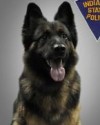
K9 Kilo
Indiana State Police
End of Watch: Monday, June 24, 2013
Age: 8
Gender: M
Tour: 7 years

K9 Kilo was shot and killed by a subject who was barricaded inside a home on Iowa Avenue in Sellersburg, Indiana.

Members of the Sellersburg Police Department had attempted to serve a mental inquest warrant on the subject earlier in the morning. Upon the officers' arrival, the subject took his two children hostage at gunpoint and moved them on foot to the backyard of a home on East Delaware Court. He then left the children and barricaded himself in the house after breaking into it.

Members of the Indiana State Police SWAT team, along with Deputy K9 Kilo, responded to the scene.

After a brief standoff the subject opened fire, killing K9 Kilo and wounding a Clark County sheriff's deputy in the leg.
Rest in Peace …and enjoy running the green grass of Heaven!

In Memory of all Police Dogs

They handled themselves with beauty & grace
And who could ever forget that beautiful face
Whether at work; or at home; whatever the test
They always worked hard; and did their best

They were real champions; at work or at play
But their lives were cut short; suddenly one day
While working on the job with their partner one day
They put themselves out on a limb; out into harms way

They gave the ultimate sacrifice; any dog can give
They gave up their life; so someone could live
The best of their breed; as his partner and anyone would say
Many hearts are now broken; that he had to prove it this way

Now as the trees are blowing in the gentle breeze
The sun is shining; thru the leaves on the trees
The meadows are green; and the grass grows tall
Off in the distance they can see a waterfall

As they look over the falls; down through the creek
The water flows gently; as a rabbit sneaks a peek
Far up above; in the deep blue sky
They see the birds soar high; as they fly by

They see animals playing; at the bridge by a waterfall
Chasing each other; and just having a ball
They play all day; from morning to night
There's no more rain; just warm sunlight

Off in the distance; they hear trumpets blow
Then all the animals look up; and notice a bright glow
The harps would play and the angels would sing
As they know they've come home; they've earned their wings

We remember that they died; in the line of duty
And are now with the Lord; sharing in heaven's beauty
Off to the meadows now; where they can play and roam free
With an occasional rest stop; under a tall oak tree

No more bad guys to chase; or bullets to take
Just a run through the meadow; down to the lake
A quick splash in the water; then back to the shore
Then it's off to the forest; to go play some more

These special dogs are back home; up in heaven above
They're cradled in God's arm's; and covered with His love
We'll light a candle for all of them; in the dark of night
In loving memory of all; these very special knights

By John Quealy

Great cartoon on Zimmermann trial

Thank you Legal Insurrection


Always bring a gun to a knife fight!

I've been in a blog debate over the Zimmermann trial at a friend's blog and one point I've made is the decision to use deadly force is usually made in an instant. This video shows why very well.

And this video shows the results of a cop going against a man with a knife.

Last week I posted on how Michael Savage was saying the jury must find Zimmerman guilty of manslaughter because he had a round in the chamber and the safety off. Gee Mike, if the cops in these videos had a round in the chamber and safety off and manage to shot the suspect are they guilty of manslaughter? Gotta love that 20/20 hindsight.

I don't know if Zimmermann was justified or not. I'll leave that to the jury. I do know he has been convicted by the race baiting industry and the media because he fits the narrative. Hopefully justice is served by the verdict.  

Be safe out there!

Thursday, July 11, 2013

Geopolitical Weekly: The Weakening of Egypt's Military State, July 9, 2013

By Michael Nayebi-Oskoui

Ongoing debates surrounding the categorization of Egyptian President Mohammed Morsi's July 3 ouster from office -- whether it qualified as a military coup or a democratic uprising -- are best left to think tanks. What Egypt needs, according to its geography, population size and economic condition, is stability, and this stability is best achieved through the centralization of strong state power and control. History bears this out; the pharaohs were able to build an empire on the banks of a river coursing through the desert under such a model. Subsequent foreign occupiers took heed of the pharaonic example, instituting a strong centralized authority backed with military might. Gamal Abdel Nasser's military coup overthrew the monarchy in 1952, establishing the latest iteration of a stable, independent Egyptian state.

Egypt's Challenges

The presence of a democratic political system along the lines of a Western-style liberal democracy is at best an arbitrary indicator of stability for many Middle Eastern governments, particularly Egypt. And for a region that is facing the United States' diminishing direct engagement, this stability is key. Whatever its motivation, when Egypt's military expelled Morsi, it largely guaranteed two of Washington's key interests: namely, that it will not attack Israel, and more important, it will keep the Suez Canal free and clear to international trade. As Morsi has no doubt learned by now, little else regarding the domestic politics and policies of the Egyptian state affects the decision making of the United States or other Western powers as long as the military-backed order is maintained.

The events of the past week have established a difficult precedent for the military and its management of the Egyptian state. Since the 2011 unrest that preceded the ouster of former President Hosni Mubarak, Egyptian society has increasingly looked to public protest and social unrest as a legitimate means of affecting political change, at least outwardly. While the military has remained the final arbiter of power, its position has become less secure following each wave of unrest.

The 18 months of direct military rule after Mubarak's removal from office brought Egypt's generals into direct competition with the aspirations of Egypt's youth movements, culminating in large-scale protests in January 2012 that led to the call for elections. Those elections brought Morsi and his Muslim Brotherhood to power. When state security forces joined protesters during the Port Said riots of early 2013, the military again had to intervene to ensure domestic stability and security, again setting a precedent of direct involvement that ran counter to nearly 50 years of indirect state management through a pliant political front party.

With the fall of Morsi's government, the military has again stepped into a very public and difficult role of having to reconcile the various political factions of the Egyptian public while maintaining its own interests, within the geopolitical constraints of the Egyptian state. The democratic system that led to the installment of Morsi's government failed to harness or contain the proliferation of street politics that emerged after Mubarak's fall. If ongoing Islamist protests against the military's most recent political roadmap are any indication, it doesn't appear Egypt's generals will have much more success managing the country's emergent protest culture. A distracted Egyptian military and an increasingly restive Egyptian population do not bode well for domestic, or regional, stability.

The Middle East's Need for Strong Leadership

Democracy is often touted by Western pundits as an ideal for Middle Eastern states, but the reality of the democratic process often results in outcomes that undermine Western and international interests in the region. Post-Gadhafi Libya has had relative success in holding elections and convening an elected government largely representative of the various regions and political currents within the country. However, the General National Congress has failed to reach consensus or extend its authority beyond the confines of the building where it meets. The inability of the central government or its military to impose its will on strong local centers has prevented the re-emergence of a Libyan strongman like Gadhafi, but it has also hampered the establishment of a permanent government to manage the Libyan state, including imposing Gadhafi-era stability.

The result has been fluctuating oil production, ongoing violence in regional centers such as Benghazi and general lawlessness in its vast swathes of desert territory, the latter of concern to Westerners seeking to limit the expansion of regional Islamist militant organizations. Libya's democratic experiment has resulted in a central government that is not convincingly stronger than any of its regional power centers -- Libya is now much more a collection of competing power centers than a centralized state. We can understand the constraints of Egypt's generals preventing them from flirting with such a system.

Unlike Libya, Iran's political system presents a case study in which democratic practices help cement strong centralized authority, and by extension, stability in the region. Like Egypt, Iran's political system features an element of stability that persists beyond the time frame of individual presidents or administrations in the role of the supreme leader, himself a representative of a broader military-clerical partnership. Unlike the Egyptian military, however, the Iranian supreme leader's role is formally acknowledged within the Iranian Constitution, which at least on paper provides a system of checks and balances and a system of nominating and removing him from office if need be.

Iran's democratic system has allowed for enough competition for power within its system to prevent the Islamic republic from coalescing around one figure or one institution, and it is exactly this competition for authority that has helped the regime endure through two supreme leaders and several presidents. Though not directly elected, Iran's supreme leader helps ensure the continuation of key Iranian policy throughout the course of different presidential administrations, though as outgoing President Mahmoud Ahmadinejad's second term has shown us, presidents are not the pawns of the supreme leader.

But more than anything else, Iran's stability draws on its geographic identity and relative security. With its mountainous geography helping to define a millennia-old Persian identity, Iran has persisted even after several waves of invasion. Iran's rugged territory and the various ethnic and linguistic groups that it supports favor a strong centralized power tempered with localized self-rule under the Persian administrative system. In short, the historical legacy of Persian administration is reflected in modern Iran's unique democratic system; by creating a venue for competition between various political factions, it leaves the military-clerical elite better able to contain this opposition and impose order. Egypt lacks any such system, thereby ensuring that large-scale unrest rather than organized political competition will continue to limit the military's options in managing the Egyptian state.

The Military's Geopolitical Reality

Egypt's borders, like those in most of the Arab world, are artificial boundaries drawn up by European powers through large stretches of featureless desert. Unlike many of its neighbors, Egypt boasts a largely homogenous population and a well-defined geographic core: the Nile Valley. But Egypt's geography presents challenges as well.

Much like ancient Egypt, modern Egypt features very densely populated strips of population living along the Nile surrounded by large regions of desert. Egypt's geographical reality has long shaped its political necessities, favoring a strong centralized authority with the organizational skill to control and move large groups of people around difficult terrain. Infrastructure is costly to develop, and while the Nile can support a large population, it requires labor- and management-intensive irrigation systems and food distribution schemes to ensure there is enough wheat and bread to go around. Egypt's military has for the past five decades moved comfortably into the role previously held by strong foreign occupiers and Egypt's original rulers, although the population growth of recent years has added significant strain to the military's ability to manage its population's needs given Egypt's limited economic resources.

The challenge for Egypt's military now is whether it can continue to maintain its monopoly on authority. Like the Egyptian Muslim Brotherhood's related parties in Jordan, Algeria, Tunisia and Turkey, Egypt's military regime also inspired similar military-backed governments in the Arab world, from Algeria to Iraq. The past decade has not been good to these secular military regimes -- there was the ouster of Saddam Hussein, a popular uprising against the Syrian Baathist regime and the dissolution of the Algerian military's monopoly on power. The Egyptian military's continued dominance over domestic affairs, although challenged in recent years, is increasingly becoming anomalistic rather than part of a larger regional trend.

The tide is slowly but surely shifting against Nasser's military-backed secular Arab nationalist political system. Egypt's has remained the most entrenched in the region, but in the face of rising social discontent and the political aspirations of its population, Egypt's military faces a difficult long-term scenario: adapt and loosen its hold on power to survive as in Algeria and Turkey, or resist and risk being overthrown as seen in the Baathist republics of Syria and Iraq.

For decades, the military-dominated political system in Egypt faced little in the way of meaningful challenges to its authority and prestige. Even now, the military remains the most powerful institution within the state even if some of its influence and political maneuverability has declined. But the rising instability following the unrest of 2011 has forced the military out of its preference -- ruling behind a political proxy -- into more directly addressing the challenges of the state.

Egypt's opposition is lauding the military involvement that lead to Morsi's ouster, but the 18 months of military rule after the fall of Mubarak's regime illustrated how quickly public sentiments could turn against Egypt's generals. Morsi's defiant speech in refusal of the military's demands that he step down would have been unthinkable a decade ago. And with the Muslim Brotherhood again in the role of the opposition, the Egyptian military is sure to face rising challenges to its goal of quietly guaranteeing the security and stability of the Egyptian state from behind the scenes, even as economic, energy and food security problems continue to mount.

Egypt's military leadership cannot move the country back in time, before the proliferation of independent political parties and protest culture took hold. The military's acquiescence to public demands, albeit in line with its own desire to limit the influence of the Muslim Brotherhood, came at the expense of validating large-scale unrest as a legitimate form of political participation, ultimately limiting the military's own actions in the future. The results of Egypt's democratic experiment of the past few years has left the Arab world's most populous state and strongest military facing serious indigenous competition for authority for the first time in its modern history. As the Muslim Brotherhood and the democratic process continue to weaken the military's absolute hold on power, the stability of the Egyptian state and the broader region will increasingly come into question.

Copyright STRATFOR.COM

More good news from my adopted home state!

And thankfully B Hussein Obama, as of now, can't stop it!
Texas pumping more oil than some OPEC countries

We all know oil production in Texas has soared in recent years. But putting the rise in graphic form shows just how phenomenal the energy turnaround has been: The surge looks exponential.

In March, Texas oil production reached its highest level since 1984. That month, the Lone Star State pumped more than 74 million barrels of crude from the ground, which means if Texas were a country, it would be one of the 15 largest oil producers in the world.

Saudi Texas: Oil’s new reign in Texas draws comparisons to the Kingdom

Texas’ oil output has doubled in less than three years, putting it in the ranks of OPEC heavy-hitters like Venezuela, Kuwait and Nigeria.

As a whole, the United States produced 221 million barrels of crude in April, with more than a third coming from Texas.


The bad thing is New York, California and other states could be producing oil in similar fashions but the morons who control those states don't like real energy creation. No, Jerry Brown wants to spend billions on a train from nowhere to nowhere, solar panels that don't work and windmills no one wants.

Officer Down


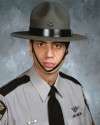
Sergeant John C. LaRose
Pennsylvania State Police
End of Watch: Monday, July 1, 2013
Age: 50
Tour: 21 years, 9 months

Sergeant John LaRose was killed in a vehicle crash when his patrol car collided with another vehicle on Route 120 in Lumber Township, Pennsylvania, while traveling between Emporium and Muncy.

He was travelling on a curved portion of roadway when his vehicle lost traction due to wet conditions. The vehicle crossed the center line and struck another oncoming car. Sergeant LaRose was killed in the crash while the two occupants of the other vehicle were injured.

Sergeant LaRose was a U.S. Air Force veteran and had served with the Pennsylvania State Police for 22 years where he served as station commander of the Emporium barracks. He is survived by his wife and four children.
Rest in Peace Bro…We Got The Watch

Day is done, Gone the sun, From the lake, From the hills, From the sky. All is well, Safely rest, God is nigh. 

Wednesday, July 10, 2013

If true, this is inexcusable.

I've often said reporters and lawyers are not exactly know for their honesty, but if this is true, the city needs it's ass spanked. And again, if this is true the sergeant needs at least to be demoted.

Nevada Man Sues Police for Commandeering His Home to Surveil Neighbor

...A man and his family from suburban Las Vegas have sued local police for violation of their rights as guaranteed by the Third Amendment to the Constitution.

...The tale told by Anthony Mitchell of how he and his family were robbed of these rights is compelling and cautionary.

Mitchell was sitting at home in Henderson, Nevada, on the morning of July 10, 2011, when the phone rang. Officer Christopher Worley of the Henderson Police Department was calling Mitchell to tell him that the police were going to take over his house. In order to gain “tactical advantage” over Mitchell’s next door neighbor, Officer Worley reportedly explained, police were going to set up shop in Mitchell’s house.

There was no asking if Mitchell would mind such a surrender of his home. The officer was informing Mitchell that they would be commandeering his house. In his legal complaint against the Henderson Police Department, Mitchell claims that he didn’t want to get involved with the police department’s operation against his neighbor and accordingly refused to let police occupy his home.

Not surprisingly, Mitchell’s refusal didn’t sit well with law enforcement. Again, according to Mitchell’s complaint, Officer David Cawthorn of the Henderson Police Department, one of the members of the force who were named as defendants in Mitchell’s lawsuit, “outlined the defendants' plan in his official report: 'It was determined to move to 367 Evening Side and attempt to contact Mitchell. If Mitchell answered the door he would be asked to leave. If he refused to leave he would be arrested for Obstructing a Police Officer. If Mitchell refused to answer the door, force entry would be made and Mitchell would be arrested.'”

It isn’t hard in the these times of police militarization to predict what happened next.

Just before noon, five (or more) officers of the Henderson Police Department “arrayed themselves in front of plaintiff Anthony Mitchell's house and prepared to execute their plan,” according to the narrative laid out in Mitchell’s lawsuit.

After showing up at Mitchell’s door, the officers allegedly “banged forcefully” on his door and demanded that Mitchell and his family open up.

Seconds later, Mitchell claims, “officers … smashed open his front door using a metal ram.”

Standing in his living room in shock, Mitchell says that the officers “aimed their weapons” at him and ordered him “to lie down on the floor.” Fearing for his life, Mitchell complied.

Mitchell says that while he was prostrate on his front room floor, Henderson Police Department officers shouted “conflicting orders” at him, some commanding him to “crawl” toward the officers, with others demanding that he stay put.

Mitchell’s complaint continues the account of this incredible afternoon:

Confused and terrified, plaintiff Anthony Mitchell remained curled on the floor of his living room, with his hands over his face, and made no movement. 
Although plaintiff Anthony Mitchell was lying motionless on the ground and posed no threat, officers, including Officer David Cawthorn, then fired multiple "pepperball" rounds at plaintiff as he lay defenseless on the floor of his living room. Anthony Mitchell was struck at least three times by shots fired from close range, injuring him and causing him severe pain.

Police then took Mitchell in custody and, as they reportedly planned to do, arrested him for obstructing a police officer. After arresting Mitchell, officers searched his home, then proceeded to rearrange furniture and establish the tactical lookout they wanted all along.

Remarkably, Mitchell’s complaint claims that police played out a similar scenario at his parents’ home just down the street. Mitchell alleges:...


Mitchell v City of Henderson et al Complaint by dmataconis


The report is referring to the 3rd Amendment forbidding the housing of soldiers in private hours. That doesn't apply. The police are not the military or the militia. But this, if accurate, is definite violation of 4th and 5th Amendments as well as leaving the officers open to official oppression charges (or whatever they sell call it in Nevada)

I hope this is not accurate.

Wait, women don't lie about this......

One of the issues brought up from time to time in reference to Houston area law enforcement is "...and we have over 5000 rape kits untested...." To paraphrase the pull quote from Absence of Malice, everything is accurate, but it's not true.

If a woman (and let's be honest it's over 90% female who file sexual assault cases) claims rape, a sexual assault exam is preformed. However the contents of the kit are not examine until sometime later. In that time she can refuse to assist the investigation (just wants to forget it) or as in this case, the facts ain't exactly as she first said.

Sex video clears men accused of rape

The hookup got hot and wild, and one of the two men whipped out his cellphone to shoot a video of the room-to-room romp with the woman they'd just met that night.

The sex video may have been the only thing that saved the two from prison.

The woman accused them of rape. The video showed otherwise, police and prosecutors said. What happened that night led to the vicious beating of one of the men two days later.

Last Friday, a Sacramento Superior Court jury convicted Jasmine Levanna Kurre of felony assault likely to produce great bodily injury and of another count of felony battery.

Jurors acquitted Kurre of the misdemeanor filing of a false police report and of another felony count of robbing the beating victim of his cellphone.

Unfortunately for Kurre, 27, the man's friend shot the video, showing her laughing and carrying on with the two alleged rapists – hence, the lack of charges against them and the lodging of the misdemeanor false-report accusation.

"This is great stuff," Citrus Heights Police Detective Ron Pfleger told the man who shot the video, according to a transcript of his interview five days after the Feb. 17, 2011, beating of his friend, outside the assault victim's apartment. "This is exactly what you guys are hoping for."

Had it not been for the video, the chances were likely that Kurre's rape accusation against the two men would have been given more credibility by police and prosecutors.

Instead, it turned the tables on Kurre, who now is looking at the possibility of four years behind bars...

You can read the details on how it occurred, but thankfully the man is not in prison for a crime he didn't commit and the woman will face some jail time for her actions.

Thanks to Darren at Right on the Left Coast for the link.

Good point here......

Sunday, July 7, 2013

Officer Down


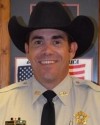
Sergeant Lance Allen "Lou" McLean
Hood County Texas Sheriff's Office
End of Watch: Saturday, June 29, 2013
Age: 38
Tour: 9 years
Incident Date: 6/28/2013

Sergeant Lance McLean succumbed to a gunshot sustained the previous day while responding to a disturbance call in the Oak Trail Shores community near Lake Granbury.

A subject who was awaiting trial for sexually assaulting a juvenile female had shown up at the girl's home. The subject was known to officers because of a previous criminal trespass warning at the location.

Sergeant McLean was the first officer to arrive at the location. The man opened fire on him, striking him in the head. The man then fled in a van and proceeded to the Granbury City Hall. As other deputies and officers attempted to stop him he walked towards them and opened fired with a semi-automatic rifle, wounding one Granbury officer before being shot and killed.

Sergeant McLean was flown to a local hospital where he succumbed to his injuries the following morning.

Sergeant McLean served with the Hood County Sheriff's Office for five years and four years with the Hamilton County Sheriff's Office. He is survived by his wife, two special-needs children, mother, brother, and grandfather.
Rest in Peace Bro…We Got The Watch

Day is done, Gone the sun, From the lake, From the hills, From the sky. All is well, Safely rest, God is nigh. 

God Help us and the US

These are the people who will my pay my Social Security and take care of me in my old age.....

Excuse me, I'm going to cut my wrist.

WARNING: Strong language. Be afraid. Be very afraid.


Thanks to Chicks on the Right for the link.

Can the NY Times go one week without showing itself as a complete rag

Probably not. Here is the latest example.

In one of the final acts of its term, the US Supreme Court ruled that the 1965 Voting Rights Act could not be revised based on data from 1972. It may shock the NY Puke et all but the population of the South has changed over the last 40 years and that has to be factored into the law. The mayor of Houston for instance is an open lesibian, the mayor of Atlanta is black, the mayor of San Antonio is Hispanic with a radical leftist mother. Damned, I would think this would be signs of progress in the minds of the radicals who run that paper. But of course that cannot be shown. America is always wrong.

That being said I found this article interesting for one major point.

After Ruling, States Rush to Enact Voting Laws

State officials across the South are aggressively moving ahead with new laws requiring voters to show photo identification at the polls after the Supreme Court decision striking down a portion of the Voting Rights Act.

The Republicans who control state legislatures throughout the region say such laws are needed to prevent voter fraud. But such fraud is extremely rare, and Democrats are concerned that the proposed changes will make it harder for many poor voters and members of minorities — who tend to vote Democratic — to cast their ballots in states that once discriminated against black voters with poll taxes and literacy tests.
The part on election fraud is extremely rare is a bold faced lie. Here is a woman in Cincinnati openly bragging about voting for Obama six times. And for some reason the only people who "rise from the dead" are from big cities controlled by Democratic machines.

Now the other parts of the propaganda piece is reminiscent of the MSNBC rewrite of George Wallace's political alignment. He was a Democrat but don't let Chris Hayes know that. It attempts to tie modern efforts to insure legitimate voting with poll taxes and literacy tests. Things Democrats put on people (Another thing MSMBC may want to remember). As if having a government issued identification card is a major burden in life.

In my work on the streets of Houston I come upon many a homeless person who has no money but at least one type of government issued identifcation (Texas ID card, Veterans ID card, etc). And for some reason every fall I often see something new in their wallets: A clean (the only thing clean on their person's) voter card. Gee, I wonder what they are going to get for the vote?

All in all a waste of electrons even for the NY Times.

Saturday, July 6, 2013

Guns, murder, manslaughter and idiocy...

I used to listen to Michael Savage but his rants got to be a bit nonseniial. Mostly I hear about him from references from media and other talk shows. A classic was when the Anthony Weiner scandal broke last year, Michael Berry just started off with "Weinber, just change your name to Savage!"

Now I get this from a link on Hotair.com this morning as I"m recovering from the Independance Day party and it did catch my eye.

Michael Savage on George Zimmerman: ‘You have to find this man guilty’

On his show on Tuesday night, talk show host Michael Savage said that George Zimmerman, who is currently on trial for the murder of Trayvon Martin, should be found guilty of second-degree manslaughter based on two things: 1) The state of his firearm and 2) The language he allegedly used on a 911 call when he was first reporting his suspicions about Martin.

But first Savage explained why his insight should be valued over others in the media covering the trial...

Savage laid out his case, saying that the murder could have been avoided, but based on Zimmerman’s gun having a round in the chamber with the safety off, Zimmerman intended “to find some he could shoot or intimidate.”

“Zimmerman was carrying a Kel Tec semi-automatic 9mm handgun,” Savage said. “So? Big deal. It is a big deal because he had a bullet chambered in the gun and he had the safety off… Had he not chambered a round prior to meeting Trayvon, and had he not taken the safety off, even if Trayvon, during the altercation even if Trayvon had tried to grab the gun away from Zimmerman — had that gun not been chambered with a round and safety off, Trayvon Martin would have had to use two hands. You can’t do it with one hand.”

“Many of you don’t own guns,” Savage said. “He would have had to let go of Zimmerman. He would have had to stop punching him. He would have had to take both hands on the gun, hold the pistol grip with one, pull the top back to chamber a round and then he would have had to unlock the safety, during which time the mixed-martial-artist-in-training Mr. Zimmerman would have had time to throw him off and pound the hell out of him. But because Zimmerman carried a loaded weapon with the safety off, Trayvon Martin is dead. Therefore, the responsibility is in the hands of Zimmerman.

“I don’t care which side you are on,” Savage continued. “He wasn’t just carrying a gun, he wasn’t just a watch guy: He was hunting. He was looking, he was hoping to find someone he could shoot or intimidate with that loaded weapon, ladies and gentlemen of the Savage jury.”...

Many a cop looks at what is shown on TV and movies as normal law enforcement procedure (e.g. running with lights and sirens to everything, reading everyone their rights, etc) and laughs. One thing you see from time to time is how the cop, feeling sometime is up, pulls out his semi-automatic and racks the slide. Here are the problems there.

One, if you were jumped you will not have the time to pull out you pistol and charge it. You will be busy defending yourself.

Two, if you are close to a bad guy and they hear the noise of the pistol being racked, that tells them the good guy is nearby. And the good guy may not want that known.

Suffice to say Mike, there is no issue with the fact Zimmerman had his pistol locked and loaded. That is how cops carry it every day. BTY, that is the effective way a person with a revolver carries his pistol.

Mr Weiner, if I want such insightful stupidity I would tune into CNN, MSNBC or NPR. And it's wild hairs up the ass like this that turned me off from your show.

Thursday, July 4, 2013

Another thing that shows what kind of man-child we have in the Oval Office

I've often said a man is well judged by the company he keeps. If you are surrouded by high achievers, you probably are one. If you are surrounded by low lives, need I need say
more?

Now here is an interesting report on the President and another thing he is doing to weaken our military.
Obama's Purge: Military Officers Replaced Under the Commander-in-Chief

High-ranking officers in the United States military are being replaced by the Obama administration and for a number of dubious reasons. The latest is General John Allen, who was embroiled in the Petraeus affair.

The following are the military officers who resigned under or were removed by President Obama:

General David Petraeus is perhaps the most visible military officer removed under President Obama. As Tim Brown of the D.C Clothesline summarized well: “Back in November General David Petraeus resigned as head of the Central Intelligence Agency (CIA), claiming that he was in an adulterous affair, which was discovered by the Federal government snooping through his and his mistress’ emails. This came on the heels of Benghazi being blamed on a YouTube video.”

The timing of the removal of one of the nation’s most honored military minds, on the heels of the Benghazi scandal, is what makes this a most unusual case. Petraeus effectively disappeared from the national scene overnight.

The latest to resign under President Obama is General John Allen. On Tuesday, the president accepted General Allen’s resignation, and ostensibly over Allen’s sexual involvement with Jill Kelly. The Pentagon, however, did not allege misconduct charges against General Allen for an exchange of explicit pictures with Jill Kelly. Allen said his resignation was to “address health issues within his family.”

General Stanley McChrystal resigned in June 2010 after a Rolling Stone article written by mysteriously “disappeared” journalist Michael Hastings caused a controversy. McChrystal had batted down Joe Biden’s “counter-terrorism strategy,” saying it would lead to “Chaos-istan,” which landed McChrystal in hot water with the higher-ups...

...As Investor’s Business Daily wrote: “Gen. David McKiernan, the four-star who lead U.S. ground forces during the successful lightning Iraq invasion. He was asked to resign command of allied forces in Afghanistan just four months into Obama’s presidency in 2009. Never fully explained, but the implication was administration dissatisfaction with the war’s progress.”

General Carter Ham was removed from his position as the top general at AFRICOM on October 12, 2012, obviously due to his actions on the night of September 11, 2012 during the Benghazi terrorist raid. General Ham, who was the Commander of the 2011 US-NATO operation to topple Gadhafi in Libya, reportedly disregarded a “stand down” order issued from above and ordered the launch of an in extremis force to rescue the eventually slain servicemen at Benghazi, Libya. Regardless of the exact events that night, he was almost immediately removed from command. General Ham has not been called to testify publicly on Benghazi.

Also involved in the military (non-) response to the 9/11 anniversary attack was Admiral David Gaouette. He was replaced on October 27, 2012, according to Military.com news, “pending the outcome of an internal investigation into undisclosed allegations of inappropriate judgment.” As reported by J.B. Williams, Gaouette also received, and disobeyed, a stand down order issued from above. As Williams claims, “Gaouette readied vital intelligence and communications operations for an extraction effort to be launched by Ham.” A Navy spokesman, however, declined to comment on the Admiral’s removal. Gaouette has also not been called to testify publicly about Benghazi.

Retired Marine General James “Hoss” Cartwright is currently the focus of a probe for “allegedly leaking classified information about a covert cyberattack on Iran’s nuclear facilities.” The former vice chairman of the Joint Chiefs of Staff, who is 63, retired in 2011, after having been cleared of all wrongdoing in yet another sexually suggestive affair.

What is the red thread connecting several of these cases? An NSA whisteblower (Edward Snowden is only one of four major NSA whistleblowers) Russel Tice claims that the domestic spy agency is wiretapping and carrying out surveillance on top military officers. Listen to his interview below:


Whether or not this is true, and it certainly seems the NSA has the capability to do this, it raises several questions about the manner that several high-ranking military officers were removed. Is there any manner of entrapment or blackmail being carried out on military officers, who subsequently refuse to testify openly and honestly over sensitive national security matters?

The deafening silence over who exactly issued the Benghazi “stand down order” that plausibly resulted in the deaths of two CIA servicemen (who also disobeyed stand down orders) and the reprisals against administration whistleblowers suggest that a thorough public investigation into such matters is of utmost importance. If the federal government is being abused to silence critics of the administration, or if it is being wielded against those who refuse to carry out illegal and immoral acts, representative government demands not just investigation, but decisive action.

Lyndon Johnson placed many of his adversaries in his administration, partially because they were qualified, partially because he didn't want them attacking him from the outside. In LBJ's saying, "I'd rather have them inside the tent pissing out than outside the tent pissing in!"

Now one thing you will find of successful leaders, administrators and executives is they surround themselves with good men (sorry, I still use the masculine generic, I'm old school on that) who will provide good council. They will also have fortitude to stand up to the boss when he is wrong. A famous example of this is Colin Powell who told then President George W Bush "We break Iraq, we own it."

B Hussein Obama is famous for surrounding himself with mostly yes men (Joe Biden anyone) who are not known for their competence (Biden again). But one thing I've been alarmed at is with the weakening of the military under this administration I have not seen one resignation. Not one flag officer (that I know of) had said "Enough!" but now with the revelations of the NSA monitoring are they using SIGINT to find dirty laundry and eliminate possible enemies (e.g. Petraeus as a possible Republican nominee). There is nothing beneath this administration.

Hopefully as the NSA scandal unfolds this is one aspect that is opened up. Maybe if some so called journalists in DC and NY would stop kissing B Hussein's ass and look at his dirty laundry for a change we may know.

Thanks to LTC A Broussard for the link to the story.

Happy Independence Day

If you grew up in the 70s you remember School House Rock. Kids theses days probably don't remember Saturday morning cartoons but this was a major part of growing up back in the 70s/80s. To my surprise the series lated until 2009 with enviro crap, but the originals were the best. Actual history of this country, etc.

Happy Birthday America...and many more to come.

Officer Down


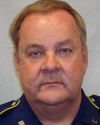
Deputy Sheriff Steven G. Netherland
Vernon Parish Louisiana Sheriff's Office
End of Watch: Monday, June 24, 2013
Age: 54
Tour: 33 years

Deputy Sheriff Steven Netherland was killed when his patrol vehicle left the roadway and collided with multiple pieces of heavy machinery in a construction zone on Highway 8, east of Calcasieu Loop. Deputy Netherland, who was not wearing a seat belt at the time, was ejected from the vehicle and sustained fatal injuries.

Deputy Netherland had served with the Vernon Parish Sheriff's Office for one year. He had previously served with the Louisiana State Police for 22 years and the Leesville Police Department for 10 years. He is survived by his wife and daughter.
Rest in Peace Bro…We Got The Watch

Day is done, Gone the sun, From the lake, From the hills, From the sky. All is well, Safely rest, God is nigh.