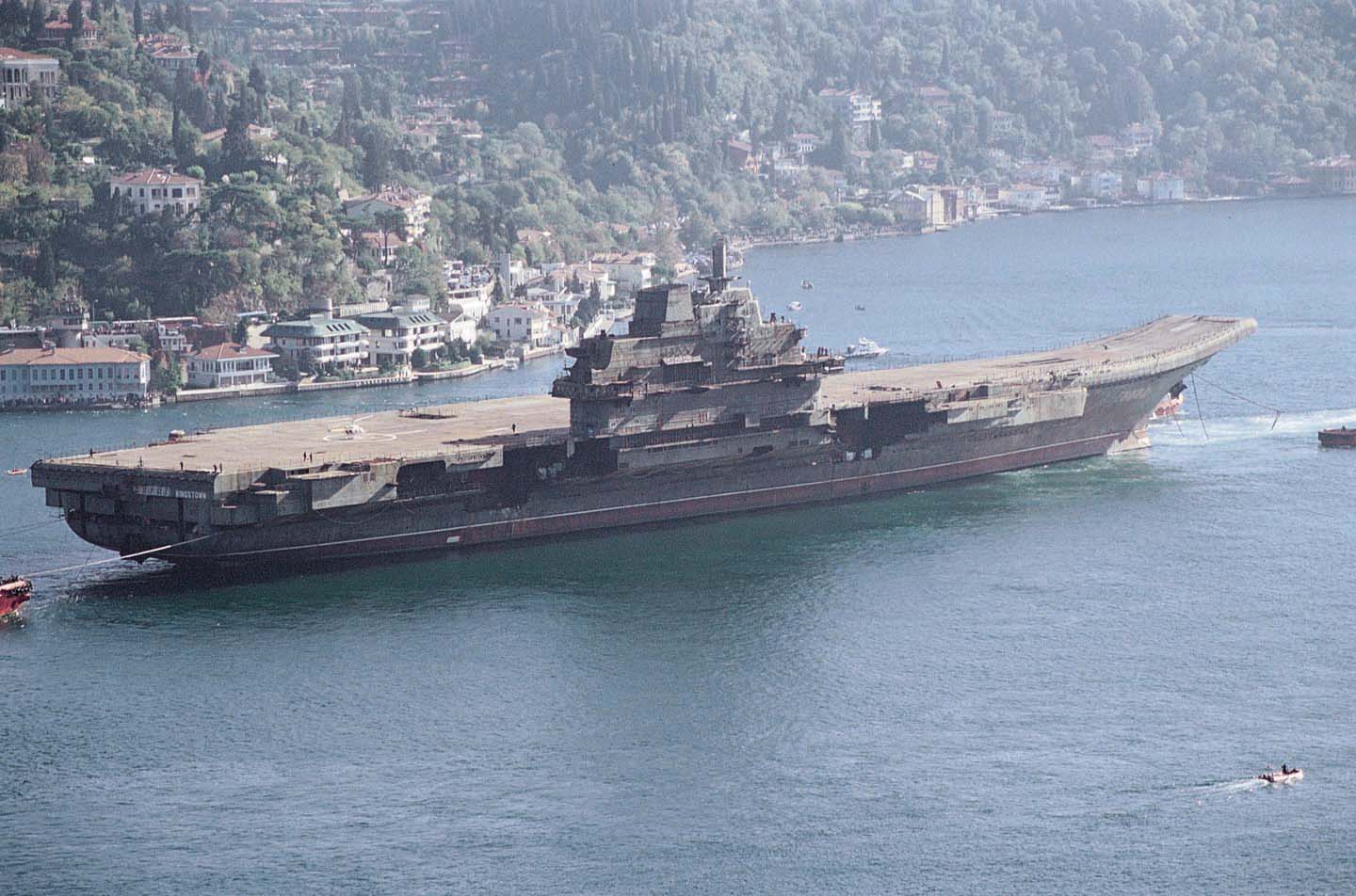
Here is an excellent overview of the China's focus on projecting force in its region (Western Pacific, Indian Ocean, etc) and how it will achieve its goals.
A bit over thirty minutes but it is worth the half hour.
C: STRATFOR.COM
Autos Insider | U.S. boosts estimate of auto bailout losses to $23.6B | The Detroit News
The Treasury Department dramatically boosted its estimate of losses from its $85 billion auto industry bailout by more than $9 billion in the face of General Motors Co.'s steep stock decline.
In its monthly report to Congress, the Treasury Department now says it expects to lose $23.6 billion, up from its previous estimate of $14.33 billion.
The Treasury now pegs the cost of the bailout of GM, Chrysler Group LLC and the auto finance companies at $79.6 billion. It no longer includes $5 billion it set aside to guarantee payments to auto suppliers in 2009.
The big increase is a reflection of the sharp decline in the value of GM's share price.
The current estimate of losses is based on GM's Sept. 30 closing price of $20.18, down one-third over the previous quarterly price.
GM's stock closed Monday at $22.99, up 2 percent. The government won't reassess the estimate of the costs until Dec. 30.
The government has recovered $23.2 billion of its $49.5 billion GM bailout, and cut its stake in the company from 61 percent to 26.5 percent. But it has been forced to put on hold the sale of its remaining 500 million shares of stock...
...Republican presidential candidates, including former Massachusetts Gov. Mitt Romney, have seized on the auto bailout losses estimates, as evidence that the Bush and Obama administrations "wasted" money.
Matt Anderson, a spokesman for the Treasury Department, said, "Both TARP and the auto industry rescue are still on track to cost a fraction of what was originally expected during the dark days of the financial crisis."
In 2009, the government initially forecast it would lose $44 billion on its auto industry bailout. It revised it down to $30 billion, and later to as low as $13.9 billion earlier this year.The administration and President Barack Obama have argued that any losses on the auto bailout were worth the hundreds of thousands of jobs saved.
"The investment paid off. The hundreds of thousands of jobs that have been saved made it worth it," he said at an appearance last month at GM's Orion Assembly plant. "I want to especially thank the people of Detroit for proving that, despite all the work that lies ahead, this is a city where a great American industry is coming back to life and the industries of tomorrow are taking root, and a city where people are dreaming up ways to prove all the skeptics wrong and write the next proud chapter in the Motor City's history."
By Karen HooperThe Mexican Drug Cartel Threat in Central America is republished with permission of STRATFOR.
Guatemalan President-elect Otto Perez Molina told Mexican newspaper El Universal on Nov. 9 that he plans to engage drug cartels in a “full frontal assault” when he takes office in 2012. The former general said he will use Guatemala’s elite military forces, known as Los Kaibiles, to take on the drug cartels in a strategy similar to that of the Mexican government; he has asked for U.S. assistance in this struggle.
The statements signal a shifting political landscape in already violent Central America. The region is experiencing increasing levels of crime and the prospect of heightened competition from Mexican drug cartels in its territory. The institutional weakness and security vulnerabilities of Guatemala and other Central American states mean that combating these trends will require significant help, most likely from the United States.
From Sideshow to Center Stage
Central America has seen a remarkable rise in its importance as a transshipment point for cocaine and other contraband bound for the United States. Meanwhile, Mexican organized crime has expanded its activities in Mexico and Central America to include the smuggling of humans and substances such as precursor chemicals used for manufacturing methamphetamine. Substantial evidence also suggests that Central American, and particularly Guatemalan, military armaments including M60 machine guns and 40 mm grenades have wound up being used in Mexico’s drug conflict.
From the 1970s to the 1990s, Colombian cartels transited directly to Miami. After U.S. military aerial and radar surveillance in the Caribbean effectively shut down those routes, Mexico became the last stop on the drug supply chain before the United States, greatly empowering Mexico’s cartels. A subsequent Mexican government crackdown put pressure on Mexican drug trafficking organizations (DTOs) to diversify their transit routes to avoid increased enforcement at Mexico’s airstrips and ports. Central America consequently has become an increasingly significant middleman for South American suppliers and Mexican buyers of contraband.
The methods and routes for moving illicit goods through Central America are diverse and constantly in flux. There is no direct land connection between the coca-growing countries of Colombia, Peru and Bolivia. A region of swampy jungle terrain along the Panamanian-Colombian known as the Darien Gap has made road construction prohibitively expensive and thus barred all but the most intrepid of overland travelers. Instead, aircraft or watercraft must be used to transport South American goods north, which can then be offloaded in Central America and driven north into Mexico. Once past the Darien Gap, the Pan American Highway becomes a critical transportation corridor. Honduras, for example, reportedly has become a major destination for planes from Venezuela laden with cocaine. Once offloaded, the cocaine is moved across the loosely guarded Honduran-Guatemalan border and then moved through Guatemala to Mexico, often through the largely unpopulated Peten department.
Though precise measurements of the black market are notoriously difficult to obtain, these shifts in Central America have been well-documented — and the impact on the region has been stark. While drug trafficking occurs in all Central American countries to some extent, most violence associated with the trade occurs in the historically tumultuous “Northern Triangle” of Guatemala, El Salvador and Honduras. No longer receiving the global attention they did when the United States became involved in their Cold War-era civil wars, these countries remain poverty stricken, plagued by local gangs and highly unstable.
The violence has worsened as the drug traffic has increased. El Salvador saw its homicide rate increase by 6 percent to 66 per 100,000 inhabitants between 2005 and 2010. At the same time, Guatemala’s homicide rate increased 13 percent, to 50 per 100,000 inhabitants. Meanwhile Honduras saw a rise of 108 percent, to 77 per 100,000 inhabitants. These are some of the highest homicide rates in the world.
In comparison, the drug war in Mexico caused murder rates to spike 64 percent, from 11 to 18 deaths per 100,000 between 2005 and 2010. Conservative estimates put the number of dead from gang and military violence in Mexico at 50,000. These numbers are slightly misleading, as Mexican violence is concentrated in scattered pockets where most drug trafficking and competition among drug traffickers occurs. Even so, they demonstrate the disproportionate impact organized criminal groups have had on the societies of the three Northern Triangle countries.
Guatemala’s Outsized Role
Increased involvement by Mexican cartels in Central America inevitably has affected the region’s politico-economic structures, a process most visible in Guatemala. Its territory spans Central America, making it one of several choke points on the supply chain of illicit goods coming north from El Salvador and Honduras bound for Mexico.
Guatemala has a complex and competitive set of criminal organizations, many of which are organized around tight-knit family units. These family organizations have included the politically and economically powerful Lorenzana and Mendoza families. First rising to prominence in trade and agriculture, these families control significant businesses in Guatemala and transportation routes for shipping both legal and illicit goods. Though notorious, these families are far from alone in Guatemala’s criminal organizations. Major drug traffickers like the well-known Mario Ponce and Walther Overdick also have strong criminal enterprises, with Ponce reportedly managing his operations from a Honduran jail.
The relationship of these criminal organizations to Mexican drug cartels is murky at best. The Sinaloa and Los Zetas cartels are both known to have relationships with Guatemalan organized criminal groups, but the lines of communication and their exact agreements are unclear.
Less murky, however, is that Los Zetas are willing to use the same levels of violence in Guatemala to coerce loyalty as they have used in Mexico. Though both Sinaloa and Los Zetas still need Guatemalan groups to access high-level Guatemalan political connections, Los Zetas have taken a particularly aggressive tack in seeking direct control over more territory in Guatemala.
Overdick facilitated Los Zetas’ entry into Guatemala in 2007. The first indication of serious Los Zetas involvement in Guatemala occurred in March 2008 when Leon crime family boss Juan Leon Ardon, alias “El Juancho,” his brother Hector Enrique Leon Chacon and nine associates all died in a gunbattle with Los Zetas, who at the time still worked for the Gulf cartel. The fight severely reduced the influence of the Leon crime family, primarily benefiting Overdick’s organization. The Zetas most flagrant use of force occurred in the May 2011 massacre and mutilation of 27 peasants in northern Guatemala intended as a message to a local drug dealer allegedly tied to the Leon family; the Zetas also killed and mutilated that drug dealer’s niece.
MS-13 and Calle 18
In addition to ramping up relationships with powerful political, criminal and economic players, Sinaloa and Los Zetas have established relationships with Central American street gangs. The two biggest gangs in the region are Mara Salvatrucha (MS-13) and Calle 18. The two groups are loosely organized around local cliques; the Mexican cartels have relationships at varying levels of closeness with different cliques. The U.N. Office on Drugs and Crime estimates that there are 36,000 gang members in Honduras, 14,000 in Guatemala and 10,500 in El Salvador.
They were formed by Los Angeles gang members of Central American origin whose parents had immigrated to the United States to escape the region’s civil wars. After being arrested in the United States, these gang members were deported to Central America. In some cases, the deportees spoke no Spanish and had no significant ties to their ancestral homeland, encouraging them to cluster together and make use of the skills learned on the streets of Los Angeles to make a living in Central America via organized crime.
The gangs have multiplied and migrated within the region. Many have also returned to the United States: U.S. authorities estimate that MS-13 and Calle 18 have a presence in as many as 42 states. Though the gangs are truly transnational, their emphasis is on controlling localized urban turfs. They effectively control large portions of Guatemala City, Guatemala; Tegucigalpa, Honduras; and San Salvador, El Salvador. Competition within and among these gangs is responsible for a great deal of the violence in these three countries.
In a March statement, Salvadoran Defense Minister David Munguia Payes said his government had evidence that both Sinaloa and Los Zetas are active in El Salvador, but that he believes MS-13 and Calle 18 are too anarchic and violent for the Mexican cartels to rely on heavily. According to Honduran Security Minister Pompeyo Bonilla, Mexican cartels primarily hire members of these gangs as assassins. The gangs are paid in drugs, which they sell on the local drug market.
Though limited in their ties to the Mexican cartels, the prevalence of MS-13 and Calle 18 in the Northern Triangle states and their extreme violence makes them a force to be reckoned with, for both the cartels and Central American governments. If Central American street gangs are able to better organize themselves internally, this could result in closer collaboration, or alternately serious confrontations with the Mexican cartels. In either case, the implications for stability in Central America are enormous.
The U.S. Role
The United States has long played an important, complex role in Latin America. In the early 20th century, U.S. policy in the Western Hemisphere was characterized by the extension of U.S. economic and military control over the region. With tactics ranging from outright military domination to facilitating competition between subregional powers Guatemala and Nicaragua to ensuring the dominance of the United Fruit Company in Central American politics and business, the United States used the first several decades of the century to ensure that Central America — and by extension the Caribbean — was under its control. After World War II, Central America became a proxy battleground between the United States and the Soviet Union.
On a strategic level, Central America is far enough away from the United States (thanks to being buffered by Mexico) and made up of small enough countries that it does not pose a direct threat to the United States. U.S. interest in the region did not end after the Cold War, however, as it is critically important to the United States that a foreign global competitor never control Central America or the Caribbean.
The majority of money spent combating drug trafficking from South America to the United States over the past decade has been spent in Colombia on monitoring air and naval traffic in the Caribbean and off the Pacific coasts, though the U.S. focus has now shifted to Mexico. Central America, by contrast, has languished since the Reagan years, when the United States allocated more than $1 billion per year to Central America. Now, the region has been allocated a total of $361.5 million for fiscal years 2008-2011 in security, economic and development aid through the Merida Initiative and the Central America Regional Security Initiative (CARSI). The Obama administration has requested another $100 million for CARSI. Of this allocated funding, however, only 18 percent has been dispersed due to failures in institutional cooperation and efficiency.
The U.S. Drug Enforcement Administration (DEA) has facilitated most U.S.-Central American security cooperation. The DEA operates teams in the Northern Triangle that participate in limited counternarcotic operations. They are also tasked with both vetting and training local law enforcement, a particularly tricky — and most likely doomed — task. As the failure of Guatemala’s highly vetted and lauded Department of Anti-Narcotics Operations shows, preventing local law enforcement from succumbing to the bribes and threats from wealthy and violent DTOs is a difficult, if not impossible, task.
The DEA’s limited resources include five Foreign-deployed Advisory and Support Teams worldwide. These are the agency’s elite operational teams that are equipped to train foreign law enforcement and military personnel and to conduct support operations. Originally established to operate in Afghanistan exclusively, the teams have been deployed to several countries in Central America, including Guatemala and Honduras. These teams are designed to be flexible, however, and do not represent the kind of long-term commitment that would likely be necessary to stabilize the region.
Central America’s Challenge
Central America has no short-term escape from being at the geographical center of the drug trade and from the associated violence. Unless and until technologies shift to allow drugs to flow directly from producer to consumer via ocean or air transport, it appears likely that Central America will only become more important to the drug trade. While the drug trade brings huge amounts of cash (admittedly on the black market) into exceedingly capital-poor countries, it also brings extreme violence.
The billions of dollars drugs command create an insurmountable challenge for the regional counternarcotic campaigns. The U.S. “war on drugs” pits the Guatemalan elite’s political and financial interests against their need to retain a positive relationship with the United States, which views the elites as colluding with drug organizations to facilitate the free passage of drugs and key figures in the drug trade.
For the leaders of Central America, foreign cartel interference in domestic arrangements and increasing violence is the real threat to their power. It is not the black market that alarms a leader like Perez Molina enough to call for greater involvement by the United States: It is the threat posed by the infiltration of Mexico’s most violent drug cartel into Guatemala, and the threat posed to all three countries by further Central American drug gang destabilization, which could lead to even more violence.
Looking Forward
The United States is heavily preoccupied with crises of varying degrees of importance around the world and the significant budget-tightening under way in Congress. This makes a major reallocation of resources to Guatemala or its Central American neighbors for the fight against Mexican drug cartels unlikely in the short term. Even so, key reasons for paying close attention to this issue remain.
First, the situation could destabilize rapidly if Perez Molina is sincere about confronting Mexican DTOs in Guatemala. Los Zetas have proved willing to apply their signature brutality against civilians and rivals alike in Guatemala. While the Guatemalans would be operating on their own territory and have their own significant power bases, they are neither technologically advanced nor wealthy nor unified enough to tackle the challenge posed by heavily armed, well-funded Zetas. At the very least, such a confrontation would ignite extremely destabilizing violence. This violence could extend beyond the Northern Triangle into more stable Central American countries, not to mention the possibility that violence spreading north could open up a new front in Mexico’s cartel war.
Second, the United States and Mexico already are stretched thin trying to control their shared 2,000-mile land border. U.S. counternarcotic activities in Mexico are limited by Mexican sovereignty concerns. For example, carrying weapons and operating independent of Mexican supervision is not allowed. This hampers the interdiction efforts of U.S. agencies like the DEA. The efforts also are hampered by the United States’ unwillingness to share intelligence for fear that corrupt Mexican officials would leak it.
Perez Molina’s invitation for increased U.S. participation in Guatemalan counternarcotic operations presents a possibility for U.S. involvement in a country that, like Mexico, straddles the continent. The Guatemalan choke point has a much shorter border with Mexico — about 600 miles — in need of control, and is far enough north in Central America to prevent insertion of drug traffickers into the supply chain between the blocking force and Mexico. While the United States would not be able to stop the illicit flow of cocaine and people north, it could make it significantly more difficult. And although significantly reducing traffic at the Guatemalan border would not stop the flow of the drugs to the United States, it would radically decrease the value of Central America as a trafficking corridor.
Accomplishing this would require a much more significant U.S. commitment to the drug war, and any such direct involvement would be costly both in money and political capital. Absent significant U.S. help, the current trend of increased Mexican cartel influence and violence in Central America will only worsen.
USA
U.S.: No Legal Guarantees To Russia Over BMD In Europe - Official November 16, 2011
Washington will not provide Moscow with any legally binding guarantees that the planned ballistic missile defense system in Europe will not be used against Russia, U.S. Undersecretary of State for Political Affairs Wendy Sherman said Nov. 16, RIA Novosti and The Moscow Times reported. In an interview with Russian daily Kommersant, Sherman said the system is a U.S.-NATO project that does not involve Moscow in any way, and that the project is designed to defend Europe against rogue states, such as Iran and North Korea, rather than Russia. Washington may negotiate political guarantees with Moscow, Sherman added.
U.S. Naval Update Map: Nov. 16, 2011
November 15, Government Security News – (Texas; International) Texas man who sought to help AQAP convicted. A federal judge convicted a 30-year-old former college student of trying to help support Al Qaeda in the Arabian Peninsula (AQAP) November 14. After acting as his own attorney in a 4-day trial at a federal courthouse in southern Texas, the convict, a resident of Hempstead, Texas, and former student at Prairie View A&M University, was convicted of providing material support to AQAP. His conviction marked the end to a long-term investigation by the FBI’s Joint Terrorism Task Force that showed he acted as a recruiter for AQAP and pursued a goal of “violent jihad,” said a Department of Justice statement. He was arrested May 30, 2010, after he traveled to Houston for what he thought was a chance to stowaway on ship bound for Algeria and then on to Yemen to fight for AQAP. He was also convicted on an identity theft charge, stemming from the use of a fake transportation worker identity card, which he believed to be a card issued by the Transportation Security Administration, that he used to access the Port of Houston.
Source: http://www.gsnmagazine.com/node/24988?c=law_enforcement_first_responders
EUROPE
Problems Facing Germany's Designs for Europe
ASIA
U.S.: Military Activities In Australia To Increase 2012 November 16, 2011
U.S. President Barack Obama said the United States will increase its military activities in Australia in 2012 as part of a stepping up in U.S. commitments in Asia-Pacific, Xinhua reported Nov. 16. Speaking after a meeting with Australian Prime Minister Julia Gillard, Obama said the U.S. military increase will come in stages with around 250 marines to begin training in Australia’s Northern Territory in 2012, increasing to battalion strength groups of 1,000 by 2014 and a 2,500-strong Marine Air Ground Task Force by 2016. Gillard said the increased U.S. presence will reinforce stability in Asia-Pacific.
AFRICA
NOTHING SIGNIFICANT TO REPORT
RUSSIA
Russia and Tajikistan: A Case Study in the Post-Soviet Dilemma
Poland, Russia Competing for Courtship with Germany
Dispatch: EU-Russian Energy Politics
IRAN


Texas Cop Catches Arrested, Handcuffed Couple Engaged In Sex Act In Back Seat Of Police Car | The Smoking Gun
Meet Tina Marie Arie and Howard Windham.
The Texas duo was arrested on drug charges last Monday after a cop was summoned to a Whataburger, where a male acquaintance of Arie and Windham was passed out.
Arie, 44, who admitted providing the unconscious man with Hydrocodone, was arrested for delivery of a controlled substance. Windham, 30, was collared on a possession rap after he was found with the painkiller Soma. The pair was cuffed and stuffed into a police cruiser for the trip to get booked.
That’s when things got interesting, according to a spokesperson for Montgomery County Constable Precinct 4. When the officer looked in his rear view mirror, he “could no longer see Tina Arie,” who subsequently explained that she was resting her head in Windham’s lap because she was “tired.”
Suspicious, the officer pulled over to the side of the road to further investigate, according to a press statement. He discovered that, “despite being handcuffed behind their backs,” the pair were engaged in a sexual act. Windham’s jeans were undone “and Arie was servicing his exposed genitalia.”
It is unclear how Windham’s jeans were unfastened--or whether teeth were somehow involved in the undoing of said britches. A spokesperson said she was unaware whether the jeans were of the zipper or button-fly variety...
Pill poppin porn perk polishes pole. Perfect.
Occupy L.A.: 5 charged with crimes including lewd conduct, battery November 15, 2011
Five people at the Occupy L.A. encampment have been charged with separate crimes, including a man who allegedly exposed himself and commited a sex act in front of a child, officials said Tuesday.
Angele Chaidez, 21, faces one count of lewd conduct and one count of indecent exposure for allegedly exposing himself and masturbating in front of several people, including children, Friday on the south steps of City Hall, said prosecutors with the L.A. city attorney's office.
That same day, Zachary Isaac, 21, allegedly entered a woman's tent and called her “Satan.” After the woman asked Isaac to leave, he allegedly punched her in the face with a closed fist. Prosecutors charged him with one count of battery resulting in injury.
Robert Holland Jr., 31, allegedly waved a knife at another person on Halloween, then resisted arrest, prosecutors said. He was charged with one count of assault with a deadly weapon, one count of brandishing a deadly weapon, one count of disturbing the peace and one count of resisting arrest.
Michael Howard Thomson, 51, was charged with two counts of battery and one count of resisting arrest after getting into a physical altercation with a parent over a child, prosecutors said.
Thompson is accused of approaching a man in a tent Oct. 11 and pushing him while attempting to grab a 2-year old child, prosecutors said.
Another person tried to intervene and Thompson punched him in the face, prosecutors said. When police arrived, Thompson allegedly refused to cooperate and violently resisted officers’ efforts to detain him.
Farid Ahntab, 24, faces one count each of possession of a deadly weapon, brandishing a deadly weapon, assault with a deadly weapon and resisting arrest following three separate incidents at the camp.
He allegedly brandished a knife at officers Oct. 29, tried to light a food vendor on fire with a lighter Nov. 4 and resisted arrest Nov. 11.
Hours after Md. mall shootings, police fatally shoot suspect after exchange of gunfireAgain, no loss to humanity and my God be with the family and friends of the two innocent victims here. Good work officers!
DISTRICT HEIGHTS, Md. — A man suspected of killing two people outside a Maryland shopping mall Saturday morning was fatally shot hours later in an exchange of gunfire with Prince George’s County police officers, authorities say.
Cpl. Henry Tippett, a Prince George’s police spokesman, said 22-year-old James Coleman was killed Saturday morning after emerging from a District Heights home with two guns. He said Coleman shot one officer in the torso with a shotgun, but the officer is expected to survive. Six officers are believed to have opened fire
Tippett said Coleman was suspected in the fatal shooting hours earlier of two people in the parking lot of Arundel Mills Mall in Hanover. Prince George’s police went to the home based on information and tips received by the Anne Arundel police, Tippett said...
...Anne Arundel police Lt. James Fredericks said Saturday night that investigators believe the gunman may have known the victims, but they are still investigating whether that is the case and what the motive for the shootings may have been.

By George Friedman
Everyone is wondering about the next disaster to befall Europe. Italy is one focus; Spain is also a possibility. But these crises are already under way. Instead, the next crisis will be political, not in the sense of what conventional politician is going to become prime minister, but in the deeper sense of whether Europe’s political elite can retain power, or whether new political forces are going to emerge that will completely reshape the European political landscape. If this happens, it will be by far the most important consequence of the European financial crisis.
Thus far we have seen some changes in personalities in the countries at the center of the crisis. In Greece, Prime Minister George Papandreou stepped aside, while in Italy Prime Minister Silvio Berlusconi now has resigned. Though these resignations have represented a formal change of government, they have not represented a formal policy change. In fact, Papandreou and Berlusconi both stepped down on the condition that their respective governments adopt the austerity policies proposed during their respective tenures.
Europeanists dominate the coalitions that have replaced them. They come from the generation and class that are deeply intellectually and emotionally committed to the idea of Europe. For them, the European Union is not merely a useful tool for achieving national goals. Rather, it is an alternative to nationalism and the horrors that nationalism has brought to Europe. It is a vision of a single Continent drawn together in a common enterprise — prosperity — that abolishes the dangers of a European war, creates a cooperative economic project and, least discussed but not trivial, returns Europe to its rightful place at the heart of the international political system.
For the generation of leadership born just after World War II who came to political maturity in the last 20 years, the European project was an ideological given and an institutional reality. These leaders formed an international web of European leaders who for the most part all shared this vision. This leadership extended beyond the political sphere: Most European elites were committed to Europe (there were, of course, exceptions).
Greece and the Struggle of the European Elite
Now we are seeing this elite struggle to preserve its vision. When Papandreou called for a referendum on austerity, the European elite put tremendous pressure on him to abandon his initiative. Given the importance of the austerity agreements to the future of Greece, the idea of a referendum made perfect sense. A referendum would allow the Greek government to claim its actions enjoyed the support of the majority of the Greek people. Obviously, it is not clear that the Greeks would have approved the agreement.
Led by German Chancellor Angela Merkel, the European elite did everything possible to prevent such an outcome. This included blocking the next tranche of bailout money and suspending all further bailout money until Greek politicians could commit to all previously negotiated austerity measures. European outrage at the idea of a Greek referendum makes perfect sense.
Coming under pressure from Greece and the European elite, Papandreou resigned and was replaced by a former vice president of the European Central Bank. Already abandoned by Papandreou, the idea of a referendum disappeared.
Two dimensions explain this outcome. The first was national. The common perception in the financial press is that Greece irresponsibly borrowed money to support extravagant social programs and then could not pay off the loans. But there also is validity to the Greek point of view. From this perspective, under financial pressure, the European Union was revealed as a mechanism for Germany to surge exports into developing EU countries via the union’s free trade system. Germany also used Brussels’ regulations and managed the euro such that Greece found itself in an impossible situation. Germany then called on Athens to impose austerity on the Greek people to save irresponsible financiers who, knowing perfectly well what Greece’s economic position was, were eager to lend money to the Greeks. Each version of events has some truth to it, but the debate ultimately was between the European and Greek elites. It was an internal dispute, and whether for Greece’s benefit or for the European financial system’s benefit, both sides were committed to finding a solution.
The second dimension had to do with the Greek public and the Greek and European elites. The Greek elite clearly benefited financially from the European Union. The Greek public, by contrast, had a mixed experience. Certainly, the 20 years of prosperity since the 1990s benefited many — but not all. Economic integration left the Greek economy wide open for other Europeans to enter, putting segments of the Greek economy at a terrific disadvantage. European competitors overwhelmed workers in many industries along with small-business owners in particular. So there always was an argument in Greece for opposing the European Union. The stark choice posed by the current situation strengthened this argument, namely, who would bear the burden of the European system’s dysfunction in Greece? In other words, assuming the European Union was to be saved, who would absorb the cost? The bailouts promised by Germany on behalf of Europe would allow the Greeks to stabilize their financial system and repay at least some of their loans to Europe. This would leave the Greek elite generally intact. The price to Greece would be austerity, but the Greek elite would not pay that price. Members of the broader public — who would lose jobs, pensions, salaries and careers — would.
Essentially, the first question was whether Greece as a nation would deliberately default on its debts — as many corporations do — and force a restructuring on its terms regardless of what the European financial system needed, or whether it would seek to accommodate the European system. The second was whether it would structure an accommodation in Europe such that the burden would not fall on the public but on the Greek elite.
The Greek government chose to seek accommodation with European needs and to allow the major impact of austerity to fall on the public as a consequence of the elite’s interests in Europe — now deep and abiding — and the ideology of Europeanism. Since by its very nature the burden of austerity would fall on the public, it was vital a referendum not be held. Even so, the Greeks undoubtedly would seek to evade the harshest dimensions of austerity. That is the social contract in Greece: The Greeks would promise the Europeans what they wanted, but they would protect the public via duplicity. While that approach might work in Greece, it cannot work in a country like Italy, whose exposure is too large to hide via duplicity. Similarly, duplicity cannot be the ultimate solution to the European crisis.
The Real European Crisis
And here we come to the real European crisis. Given the nature of the crisis, which we have seen play out in Greece, the European elite can save the European concept and their own interests only by transferring the cost to the broader public, and not simply among debtors. Creditors like Germany, too, must absorb the cost and distribute it to the public. German banks simply cannot manage to absorb the losses. Like the French, they will have to be recapitalized, meaning the cost will fall to the public.
Europe was not supposed to work this way. Like Immanuel Kant’s notion of a “Perpetual Peace,” the European Union promised eternal prosperity. That plus preventing war were Europe’s great promises; there was no moral project beyond these. Failure to deliver on either promise undermines the European project’s legitimacy. If the price of retaining Europe is a massive decline in Europeans’ standard of living, then the argument for retaining the European Union is weakened.
As important, if Europe is perceived as failing because the European elite failed, and the European elite is perceived as defending the European idea as a means of preserving its own interests and position, then the public’s commitment to the European idea — never as robust as the elite’s commitment — is put in doubt. The belief in Europe that the crisis can be managed within current EU structures has been widespread. The Germans, however, have floated a proposal that would give creditors in Europe — i.e., the Germans — the power to oversee debtors’ economic decisions. This would undermine sovereignty dramatically. Losing sovereignty for greater prosperity would work in Europe. Losing it to pay back the debts of Europe’s banks is a much harder sell.
The Immigrant Factor and Upcoming Elections
All of this comes at a time of anti-immigrant, particularly anti-Muslim, feeling among the European public. In some countries, anger increasingly has been directed at the European Union and its borders policies — and at European countries’ respective national and international elites, who have used immigration to fuel the economy while creating both economic and cultural tensions in the native population. Thus, immigration has become linked to general perceptions of the European Union, opening both a fundamental economic and cultural divide between European elites and the public.
Racial and ethnic tensions combined with economic austerity and a sense of betrayal toward the elite creates an explosive mixture. Europe experienced this during the inter-war period, though this is not a purely European phenomenon. Disappointment in one’s personal life combined with a feeling of cultural disenfranchisement by outsiders and the sense that the elite is neither honest, nor competent nor committed to the well-being of its own public tends to generate major political reactions anywhere in the world.
Europe has avoided an explosion thus far. But the warning signs are there. Anti-European and anti-immigrant factions existed even during the period when the European Union was functioning, with far-right parties polling up to 16 percent in France. It is not clear that the current crisis has strengthened these elements, but how much this crisis will cost the European public and the absence of miraculous solutions also have not yet become clear. As Italy confronts its crisis, the cost — and the inevitably of the cost — will become clearer.
A large number of elections are scheduled or expected in Europe in 2012 and 2013, including a French presidential election in 2012 and German parliamentary elections in 2013. At the moment, these appear set to be contests between the conventional parties that have dominated Europe since World War II in the West and since 1989 in the East. In general, these are the parties of the elite, all more or less buying into Europe. But anti-European factions have emerged within some of these parties, and as sentiment builds, new parties may form and anti-European factions within existing parties may grow. A crisis of this magnitude cannot happen without Tea Party- and Occupy Wall Street-type factions emerging. In Europe, however — where in addition to economics the crisis is about race, sovereignty, national self-determination and the moral foundations of the European Union — these elements will be broader and more intense.
Populist sentiment coupled with racial and cultural concerns is the classic foundation for right-wing nationalist parties. The European left in general is part of the pro-European elite. Apart from small fragments, very little of the left hasn’t bought into Europe. It is the right that has earned a meaningful following by warning about Europe over the past 20 years. It thus would seem reasonable to expect that these factions will become much stronger as the price of the crisis — and who is going to bear it — becomes apparent.
The real question, therefore, is not how the financial crisis works out. It is whether the European project will survive. And that depends on whether the European elite can retain its legitimacy. That legitimacy is not gone by any means, but it is in the process of being tested like never before, and it is difficult to see how the elite retains it. The polls don’t show the trend yet because the magnitude of the impact on individual lives has not manifested itself in most of Europe. When it does show itself, there will be a massive recalculation regarding the worth and standing of the European elite. There will be calls for revenge, and vows of never allowing such a thing to recur.
Regardless of whether the next immediate European crisis is focused on Spain or Italy, it follows that by mid-decade, Europe’s political landscape will have shifted dramatically, with new parties, personalities and values emerging. The United States shares much of this trend, but its institutions are not newly invented. Old and not working creates problems; new and not working is dangerous. Why the United States will take a different path is a subject for another time. Suffice it to say that the magnitude of Europe’s problems goes well beyond finance.
The European crisis is one of sovereignty, cultural identity and the legitimacy of the elite. The financial crisis has several outcomes, all bad. Regardless of which is chosen, the impact on the political system will be dramatic.


Police Officer Robert Shane WilsonRest in Peace Bro…We’ll Continue The Watch
Doraville Georgia Police Department,
End of Watch: Monday, November 14, 2011
Age: 27
Police Officer Shane Wilson was killed when his vehicle was struck head-on by an SUV on I-20 in DeKalb County.
Officer Wilson was off duty, but on call as part of his department SWAT team, when he was contacted by dispatchers and directed to respond to a home invasion call in Doraville. The crash occurred as he drove to the scene. He succumbed to his injuries at the scene of the crash.
Dan Rather: Newt dangerous as a wounded Wolverine by Charlie Spiering Commentary Staff Writer
Don't underestimate Newt Gingrich, warns Dan Rather during an MSNBC roundtable discussion today.
"Anyone who has covered Newt Gingrich over the years knows better than to underestimate him," said Rather, referencing his political comeback. "Newt Gingrich on the move politically is as dangerous as a wounded wolverine."
Rather added that Jon Huntsman was the best candidate for the GOP in the 2012 general election, but would have a hard time winning the Republican primary.
USA
November 9, Aviation Week – (International) Proposed rules for exports protect stealth. The U.S. Presidential administration is proposing export control changes that would allow aircraft components to be more freely traded on the global market, while continuing to protect parts designed specifically for the military’s most stealthy aircraft, Aviation Week reported November 9. The move would modify the U.S. Munitions List for what is known as “Category VIII,” which covers aircraft. The change would free up generic parts, components, accessories, and attachments for export “regardless of their significance to maintaining a military advantage for the United States,” according to a November 7 notice in the Federal Register. Those parts would be transferred from the State Department-managed munitions list to a list governed by the Commerce Department. Source: http://www.aviationweek.com/aw/generic/story.jsp?id=news/asd/2011/11/09/01.xml&h eadline=Proposed Rules For Exports Protect Stealth&channel=defense
EUROPE
Special Report: Europe's North-South Divide on Infrastructure
ASIA
China Political Memo: Enforcing the Anti-Monopoly Law
AFRICA
Somalia: Top Al Shabaab Leaders Allegedly Killed In U.S. UAV Attack November 14, 2011
Senior leaders of Islamist militant group al Shabaab, including Ahmad Abdi Godane and Sheikh Hassan Dahir Aweys, allegedly died in a U.S. unmanned aerial vehicle (UAV) strike Nov. 13, a Somali government official said, Mareeg Online reported Nov. 14. The UAV strike targeted a compound in the lower Shebelle region, Somalia, where top al Shabaab leaders were meeting. An al Shabaab official denied the reports.
RUSSIA
NOTHING SIGNIFICANT TO REPORT
IRAN
Agenda: With George Friedman and Robert Kaplan on Iran
Dispatch: Countering Iran in the Covert World
IRAQ
Turkey: U.S. UAV Base Moved From Iraq November 14, 2011
A U.S. operation using four unmanned aerial vehicles (UAVs) has moved its base from Iraq to Incirlik, Turkey, a Pentagon spokesman said Nov. 14, Reuters reported. Turkey requested the move because U.S. forces must withdrawal from Iraq by the end of 2011, the spokesman said. The UAVs have been performing reconnaissance missions against the Kurdistan Workers Party (PKK) and will continue to provide support to the Turkish military against the PKK along its southern border with Iraq, he said. The base’s location changed, but the mission and the support provided to Turkey will remain the same, the spokesman said.
ISRAEL
Kenya: PM Asks Israel For Help Countering Terrorism November 14, 2011
Kenyan Prime Minister Raila Odinga asked Israeli President Shimon Peres to help the Kenyan police develop the capability to respond to al Shabaab attacks, according to a government statement Nov. 14, AP reported.
AFGHANISTAN
New Afghan Opposition Political Movement
MIDDLE EAST
Syria Set to Risk Homs Escalation
SOUTH OF THE BORDER
Risks and Rewards in Brazil's Favela Offensive
Mexico Security Memo: AFO Continuing To Lose Power in Tijuana
Special Interactive Report: Mexico's 2012 Elections
MISC
Geopolitical Calendar: Week of Nov. 13, 2011
Above the Tearline: Brush Passes and Dead Drops
Pittsburgh Steelers Quarterback Ben Roethlisberger is pictured with a couple cops and their K-9s.
By PoliceOne Staff
PITTSBURGH — Pittsburgh Steelers Quarterback Ben Roethlisberger announced Thursday that his foundation will be distributing a grant to police in Ohio.
The Ben Roethlisberger Foundation invited police and fire departments nationwide to submit proposals detailing their needs, and the Norwood Police Department will use it to purchase equipment for its formerly defunct K-9 unit, including training for handlers.
“The Norwood Police Department is proud and grateful to receive the Ben Roethlisberger Foundation Grant,” police said in the release. “This grant will allow the Norwood Police Department to re-institute its K-9 program. If not for the generosity of the Ben Roethlisberger Foundation, this would not have been possible. Mr. Roethlisberger has repeatedly shown his commitment to law enforcement and we couldn’t be more appreciative.”
This will be the fifth season the Foundation distributed grants to K-9 programs, according to a press release.
"We're very fortunate to be in the position that we are able to help these K-9 units," Roethlisberger said. "The work that is performed by the dogs and their handlers as well as the bond that is formed is incredible. We're just thrilled to do our small part."
Gay TV star: I was assaulted for being associated with Ann Coulter
A cast member of the gay reality TV show “A-List Dallas” tells The Daily Caller that he was punched to the ground and bloodied Friday night by someone vandalizing his car because he’s a gay conservative associated with commentator Ann Coulter.
Taylor Garrett, a Republican consultant in Texas who stars in the reality series on the channel LOGO TV, said in an interview that he was attacked outside a birthday party in Dallas after finding a vandal scratching “F–k Coulter” on the side of his car.
Garrett said the incident reflects a troubling mindset.
“The Democrats want me to live on their plantation as their slave, because I’m a gay person,” he said. “And I refuse to do that.”
Photos provided by Garrett to TheDC show the phrase about Coulter keyed in large letters across his car. Other photos show Garrett with a bloody ear and blood covering his white shirt.
“I was at a party and one of my friends arrived and I had a present for him, so I went back to my car to get the present,” he recalled. “When I walked out to my car, I saw someone squatting next to my car.”
After asking the vandal what he was doing, Garrett said the large man stood up and decked him in his left eye. Garrett fell to the ground. He also scraped up his body by falling into some glass that was next to his car, Garrett said. The attacker got away.
Garrett, who has done work with groups run by former House Speaker Newt Gingrich, says he has been subject to harassment and threats for being a gay conservative since news broke that he was having lunch with Coulter in Los Angeles for his show.
Garrett found a rock, with a threatening note attached that was anti-conservative, last month thrown through his living room window, he said.
On Friday night after the incident with the vandal, Garrett said his friends called an ambulance, but paramedics did not take him to the hospital.
Garrett said he begged the police not to put his name on the police report, because “I didn’t want to be in the press again about this,” but his friends convinced him otherwise...
...He also said he’s disgusted by those in the gay community and media who doubt him and accuse him of trying to gin up publicity for himself by going public with these stories.
Garrett said he decided to join the show because he wanted to show that there are gay “conservative, Republican, Christians” out there. But he said he has been “destroyed by the gay community” for his views and he’s doubtful he’ll return for another season after this.
“I would’ve thought people would have been a little more tolerant considering that our community advocates for tolerance, but it has been nothing but mean spirited attacks, especially after the Ann Coulter scene,” he said.
The point of having lunch with Coulter, he said, is to show people that “just because you don’t support gay marriage doesn’t make you a bigot, doesn’t mean you hate gay people, it just means you disagree on gay issues.”...
...“The left has turned on anyone that might not agree with gay marriage, they have demonized them,” he said.
Captains Log, Stardate 312864.54. Have received an update warning of the dangers of a primitive transportation source called the Chevrolet Volt. We have had previous encounters with this vehicle on Stardates 65261.8 and 311409.04. At the times of these encounters this piece of s@#$, err machinery was considered a joke of engineering but good for a laugh. It took my Chief of Engineering almost two days to get over his hangover from the last encounter. But we have notice the vehicle make be more hazardous that it's stupid, slow and meek image leads you to believe.
Chevy Volt catches fire weeks after crash, feds probeI requested my Chief of Engineering review this update for any issues that may require action on our part. Last time I saw the engineer he was reading the update in the bar with a couple of bottles on the floor and a third open on the table.
A Chevrolet Volt caught fire in storage more than three weeks after a government crash test, prompting federal safety regulators to look at safety procedures for electric vehicles after a crash.
The National Highway Traffic Safety Administration said today it had investigated a fire that occurred this spring, after the Volt extended-range electric vehicle underwent testing for its five-star crash safety rating. The test damaged the Volt's lithium-ion battery.
And after weeks of sitting in storage, the vehicle caught fire.
The fire damaged property but caused no injuries. General Motors says it believes the fire -- which caused property damage but no injuries -- occurred because NHTSA did not follow GM's recommended safety protocol for a post-crash Volt, spokesman Greg Martin said.
"Had those safety protocols been followed for this test, this incident would not have happened," he said, adding that this is the only crashed Volt ever to catch fire.
NHTSA did not immediately respond to Martin's statement about protocols. Still, it said, "NHTSA does not believe the Volt or other electric vehicles are at a greater risk of fire than gasoline-powered vehicles." The agency said it "is working with all vehicle manufacturers to ensure they have the appropriate post-crash protocols."
Until I get updated analysis from my engineering staff (and I know that wasn't Synthol in those bottles) I have ordered immediate destruction of any Chevy Volt we come in contact with.
Woman who flipped off Sheriff Clarke while driving, speaks out. Woman cited for driving with a suspended license and reckless driving
WITI-TV, MILWAUKEE— One woman learned a big lesson the hard way Thursday: never give your fellow driver the finger, especially when that driver is the most powerful member of the sheriff's department - and you are driving with a suspended license! Cheryl Smith was arrested Thursday and cited for driving with a suspended license, and also got a $393 ticket for reckless driving, after she flipped off Milwaukee Sheriff David Clarke near 9th and State...
...Smith says it was a look from a fellow driver on I-43 southbound Thursday that provoked her to make a gesture she now regrets. "I jumped from behind him, to the first lane, to the middle lane, and that's when I happened to look over. He had his window down, and he was giving me the 'are you serious?' look. I flipped him off, just so he could see it, and then I put it back, and started driving," Smith said.
It wasn't until Smith saw the flashing lights that she realized the vehicle was an unmarked squad car, and the person she flipped off: Sheriff Clarke! "I even uttered to myself, 'is she giving me the finger?' I mean, she held it up that long, that I could make sure," Sheriff Clarke said.
"He pulled his vehicle in front, and got out, and that's when I was like, I flipped off the police. It's David Clarke I flipped off," Smith said....
Donald Trump says it pretty clearly: "Let me get this straight...We're going to be "gifted" with a health care plan we are FORCED TO PURCHASE and FINED if we don't, Which purportedly covers at least 10 MILLION MORE PEOPLE, without adding a SINGLE NEW DOCTOR, but provides for 16,000 NEW IRS AGENTS, written by a committee whose chairman says he DOESN'T UNDERSTAND IT, PASSED by a Congress THAT DIDN'T READ it, and signed by a president who SMOKES, with FUNDING administered by a treasury chief who DIDN'T PAY HIS TAXES, for which WE'LL be TAXED FOR 4 YEARS BEFORE ANY BENEFITS TAKE EFFECT, by a government which has ALREADY BANKRUPTED SOCIAL SECURITY AND MEDICARE, all to be overseen by a surgeon general who is OBESE and FINANCED by a country that is BROKE!!! What the HELL could possibly go wrong?"Kinda links up with some pleasant news from this morning. As many of you know I'm kinda married. Beth and I got engaged a little over a year ago and we registered as common law to get the girls under my insurance. One of the cool things about that is we can claim the girls on taxes. Well....
...Although we try to respond quickly, extensive research is often required. At this time we are unable to provide a complete response because:The research required is to read the attached 1040 and other documentation. I guess that's to much for the IRS to handle.
Due to the heavy workload, we have not yet completed our research to resolve you inquiry....
...Although we try to respond quickly, extensive research is often required. At this time we are unable to provide a complete response because:Today I did get a pleasant surprise when I checked the bank and my refund is finally here. A simple typo on the tax return of a middle class family of four, the response has documentation and this is about a 1600 dollar tax refund. That took six months to clear up.
Due to the heavy workload, we have not yet completed our research to resolve you inquiry....
By Scott Stewart
The U.S. Embassy in Abuja, Nigeria, issued a warning Nov. 5 indicating it had received intelligence that the Nigerian militant group Boko Haram may have been planning to bomb several targets in the Nigerian capital during the Muslim holiday of Eid al-Adha, also known as Eid al-Kabir, celebrated Nov. 6-8. The warning specifically mentioned the Hilton, Nicon Luxury and Sheraton hotels as potential targets.
The warning came in the wake of a string of bombings and armed attacks Nov. 4 in the cities of Maiduguri, Damaturu and Potiskum, all of which are located in Nigeria’s northeast. An attack also occurred in the north-central Nigerian city of Kaduna. The sites targeted in the wave of attacks included a military base in Maiduguri and the anti-terrorism court building in Damaturu. Militants reportedly attacked these two sites with suicide vehicle-borne improvised explosive devices (VBIEDs). The Nigerian Red Cross reported that more than 100 people were killed in the attacks, while some media reports claimed the death toll was at least 150.
According to AFP, a spokesman for Boko Haram claimed responsibility for the attacks Nov. 5 and threatened more attacks targeting the Nigerian government until “security forces stop persecuting our members and vulnerable civilians.” On Nov. 7, a Boko Haram spokesman claimed that his group employed only two suicide operatives in the attacks and not 12 as reported by some media outlets.
Though Eid al-Kabir passed without attacks on Western hotels in Abuja, a deeper examination of Boko Haram is called for, with a specific focus on its rapidly evolving tactical capabilities.
Boko Haram
Boko Haram, which means “Western education is sinful” in Hausa, was established in 2002 in Maiduguri, the capital of Nigeria’s Borno state. It has since spread to several other northern and central Nigerian states. The group officially is known as Jama’atu Ahlis Sunna Lidda’awati wal-Jihad, Arabic for “group committed to propagating the Prophet’s teachings and jihad.” Some in the country have referred to Boko Haram as the Nigerian Taliban in reference to the group’s call for Shariah throughout Nigeria. (At present, only the northern part of the country adheres to Shariah.) In June, a spokesman claiming to represent Boko Haram amended this demand, instead calling for what the group defines as a stricter form of Shariah in the northern Nigerian states where Shariah already is the law.
(click here to enlarge image)
With approximately 150 million people, Nigeria is the most populous African country and one of the most densely populated countries in the world. It has some 250 distinct ethnic groups, with the dominant groups being the Yoruba, Igbo and Hausa-Fulani, along with a smaller but critical fourth group, the Ijaw. These groups are in constant tension as they attempt to dominate the nation’s politics and the allocation of its natural resources. Approximately half the country is Muslim and half is Christian (though many Nigerians follow traditional religions). As reflected by the adjacent map, which depicts the sites of the Nov. 4 attacks as well as the Nigerian states governed by Shariah, the Muslim population predominates in the north while Christians predominate in the south. The Muslim north is parched and devoid of significant resources (agriculture is the north’s economic mainstay). This contrasts sharply with the economic environment in southern Nigeria, an area that includes Lagos, the country’s vibrant commercial capital and the business hub for much of West Africa, and the Niger Delta region, home to about 90 percent of the country’s large crude oil and natural gas sector.
In addition to ethnic tensions, Nigeria has experienced frequent and intense bursts of sectarian violence between Christians and Muslims, especially in the areas where the two religions overlap, like Jos in the northern tip of Plateau state. This struggle pits the powerful Hausa-Fulani from the north, which tends to be Muslim, against a number of smaller local ethnic groups that tend to be Christian. Indeed, Boko Haram has been involved since its inception in several outbursts of inter-communal violence, including the November 2008 violence that saw some 800 people killed in Jos, the July 2009 violence that saw more than 700 people killed in Jos, and the January 2010 violence in Jos that claimed 450 lives.
Following the July 2009 violence, which brought Boko Haram to the world’s attention, Boko Haram founder Mohammed Yusuf and his deputy, Abubakar Shekau, were both killed. Yusuf died in police custody, allegedly during an escape attempt, though his followers have called his death an extrajudicial execution.
Since the destruction of Boko Haram’s leadership, the exact structure and makeup of the group has been unclear. Boko Haram now seems to lack organizational structure or strong leadership. If the group has any central leadership, it has maintained a very low profile since Yusuf’s killing. It may even be in hiding, possibly in a neighboring country. Mixed messages have emerged from various individuals claiming to speak for Boko Haram. Some figures have come across as more moderate and willing to negotiate, while others have been more strident, rejecting talks. This difference makes it appear that Boko Haram comprises a loose confederation of militants operating relatively independently from one another, rather than a cohesive, hierarchical organization pursuing a unified set of objectives.
Ramping Up
Boko Haram initially was involved mostly in fomenting sectarian violence. Its adherents participated in fairly rudimentary attacks involving clubs, machetes and small arms. By late 2010, the group had added Molotov cocktails and simple improvised explosive devices to its tactical repertoire, as reflected by the series of small IED bombing attacks against Christian targets in Jos on Christmas Eve in 2010.
(click here to enlarge image)
Boko Haram also conducted a number of armed assaults and small IED attacks in 2011. The IEDs involved in these attacks were small devices either thrown from motorcycles or left at the attack location.
On June 16, Boko Haram made a huge operational leap with the detonation of its first suicide VBIED. The attack was directed against the police headquarters in Abuja. While it proved largely ineffective — security kept the vehicle in a parking lot away from the targeted building — the attack nonetheless represented a significant tactical development in that it demonstrated that Boko Haram had mastered a completely new aspect of terrorist tradecraft. Employing a suicide VBIED is a far cry from throwing a few sticks of dynamite with a piece of time fuse at a police station or leaving a small IED with a crude timer outside a church. The VBIED was also quite sizable; it destroyed some 40 vehicles in the parking lot.
Significantly, the attack occurred outside Boko Haram’s traditional area of activity, proving the group can now project power at least as far as Abuja. Reports emerged in September indicating that Boko Haram was threatening to conduct attacks in the Niger Delta, though these threats have yet to materialize. The Niger Delta is significantly farther from Boko Haram’s base in the north than Abuja, which is in central Nigeria. Distance aside, ethnic and linguistic differences would make it difficult for Boko Haram members to operate in the Delta without being detected.
Recruiting and training a suicide operative who can conduct successful missions when an organization has no history of such operations is no small feat. Frequently, poorly prepared suicide operatives back out of missions. By being able to recruit, indoctrinate and then send out a suicide operative who can complete his mission, Boko Haram enjoys a great deal of operational latitude.
Taken together, these facts illustrate the large operational leap Boko Haram accomplished in 2011. It is very unusual for a militant group to achieve such a significant operational leap absent outside training or assistance. In many past cases, that outside assistance came from state sponsors. For example, the Soviet Union and its allies assisted various Marxist revolutionary groups, Iran and Syria have assisted Hezbollah, and the United States and Pakistan aided the Afghan mujahideen. Non-state actors also have been involved in such training, however, with Hezbollah having taught al Qaeda how to construct large VBIEDs and al Qaeda trainers having taught others how to construct IEDs in their training camps in Afghanistan and Pakistan.
On June 14, 2010, Abu Musab Abd al-Wadoud, the leader of al Qaeda in the Islamic Maghreb (AQIM), told Al Jazeera that his group would provide Boko Haram with support and weapons to build strategic depth in Africa. We initially viewed the claim with some skepticism, as al-Wadoud had made previous unfounded claims that his group was going to expand. Following that announcement, however, we continued to receive reports that Nigerians associated with Boko Haram had been seen at AQIM training camps in the Sahel and that some of them even had received training from the jihadist group al Shabaab in Somalia.
While we have not received hard confirmation of these reports, we believe that the rapid uptick in Boko Haram’s bombmaking capability provides strong circumstantial evidence that such an interchange did indeed happen between Boko Haram and one, or perhaps both, of those African jihadist groups.
On Aug. 26, Boko Haram conducted a second suicide VBIED attack in Abuja, this time attacking a U.N. compound. This attack proved far more successful than the June attack against the police headquarters. The VBIED driver managed to enter the compound by ramming an exit gate, then maneuvering his vehicle into a parking garage before detonating it. The attack also stands out in that the U.N. compound was located in the diplomatic district of Abuja, where numerous high-profile facilities are located, demonstrating that Boko Haram possessed the ability to spot a soft target amid harder targets like foreign embassies and government buildings. The group’s preoperational surveillance efforts also permitted it to accurately identify a security weakness — the exit gate — which it then successfully exploited. This attack was Boko Haram’s first attack against a transnational target rather than against a government or sectarian target. Boko Haram sees the many U.N. development programs in Nigeria as an affront, as have the various jihadist groups in places like Algeria, Iraq, Somalia, Afghanistan and Pakistan that also have attacked the United Nations because of its programs.
The Hotel Threat
All of this, then, helps us place the recent hotel threat into perspective. While Boko Haram’s attacks against hardened targets largely have proved unsuccessful, the group has clearly displayed the ability to conduct attacks against soft targets in Abuja. It also has demonstrated a desire to hit transnational targets.
As we have previously discussed, measures taken to harden diplomatic facilities have caused militant groups to come to regard hotels as attractive targets. Striking an international hotel in a major city like Abuja would allow militants to make the same kind of statement against the West as they could by striking an embassy. Hotels often are full of Western business travelers, diplomats and intelligence officers. This makes them target-rich environments for militants seeking to kill Westerners and gain international media attention without having to penetrate the extreme security of a hard target like a modern embassy.
While it is possible that the intelligence report referenced by the U.S. Embassy was inaccurate, or a ruse by Boko Haram, someone in Boko Haram quite plausibly was planning such an attack. Jihadist groups have launched multiple attacks against hotels in Jakarta, Indonesia, in July 2009, in the Jordanian capital of Amman in November 2005, and in Sharm el-Sheikh in Egypt’s Sinai Peninsula in July 2005. Even the November 2008 armed assaults in Mumbai targeted multiple hotels. With Boko Haram’s U.N. attack mirroring jihadist attacks against the United Nations elsewhere, the group similarly could be planning to mirror attacks by jihadists against hotels elsewhere.
In the wake of the Nov. 5 U.S. Embassy warning, security has been ramped up around hotels in Abuja and especially around those hotels mentioned as specific targets. Given the long history of violence in Nigeria, Nigerian authorities have gained much experience in dealing with militancy. Their tactics often have been quite brutal. Therefore, we are doubtful that Boko Haram successfully could strike these specific hotels in the immediate future. If, however, the group has prepared VBIEDs for such an operation, they would likely employ them against other, softer targets in the near future. Once a VBIED is prepared, it is vulnerable to detection. Militant groups do not like to leave such devices assembled for very long given the risk of losing such a valuable asset. Instead, VBIEDS tend to be employed shortly after being constructed.
It is quite possible, however, that these hotels will remain on Boko Haram’s target list. The attack plan could be revisited once security around the hotels is reduced or once Boko Haram’s operational leadership evolves to the point that it possesses the sophistication to plan and execute attacks against harder targets.
On Nov. 2, Nigerian authorities claimed to have thwarted a bomb plot planned for the Eid holiday. A man they arrested in connection with the plot allegedly possessed explosives that he planned to use to create package bombs. Whether the man was in any way linked to the string of attacks that occurred Nov. 4 or if he was planning an independent operation remains unknown. At the very least, the arrest did not allow authorities to foil the many attacks executed Nov. 4. The arrest probably resulted from the house-to-house searches in Maiduguri that resumed after an arms amnesty for militants ended Oct. 31. These security operations in Maiduguri have reportedly caused some Boko Haram members to move elsewhere, such as neighboring Yobe state.
While the Nigerian government did uncover a warehouse on the outskirts of Abuja used to construct VBIEDs while investigating the U.N. bombing, Nigerian authorities do not appear to have identified the operational planners and bombmakers responsible for the high-level VBIED attacks, much less arrested them. The longer these individuals are allowed to operate, the more experience they will gain — and the deadlier they will get. It will be important to watch the tactical details of the next Boko Haram attacks for signs that its leadership is maturing as terrorist planners.

Duke Energy stops use of electric car charging stationThe real funny part. In two states there are all of 125 owners of these damned things. There are more F-150 owners in my subdivision, but this is the car of the future.
Electric car charger center of investigation in house fire
CHARLOTTE, N.C. -- Duke Energy is asking customers who own their electric car charging station to stop using the product after a house fire in Mooresville last month.
Duke Energy sent an e-mail to about 125 customers in the Carolinas and Indiana who currently participate in their plug-in electric vehicle pilots and have the same type of charging station installed at their homes to stop using it.
Investigators have not determined if the electric car charger was the source of a house fire in Mooresville on October 30, but the product has been the center of the investigation...
Driving the Nissan Leaf: Hurray for trafficAnd you can put out of you mind that the electricity comes from coal. But the quote of the story, "Heat is a luxury...". Heat, a luxury in a 30 thousand plus micro car.
Nov 8, 2011
I drove our all-electric Nissan Leaf over the weekend and while I was happy to drive past gas stations, it still came at a price.
My turn in the Leaf started last Thursday night, and I had an easy commute from our Yonkers headquarters to my New Jersey home. The car was warm from the sun and only used 25 miles of charge. On the way back in Friday morning, I was concerned the Leaf would drop battery power quickly on my regular 33-mile highway commute over the Tappan Zee Bridge, so I opted to travel fewer miles and pay the $12 toll over the George Washington Bridge and another $2.25 over the Henry Hudson Bridge. Luckily traffic was light, but so was my wallet.
Driving over the weekend was great in the Leaf as I was running errands and only going short distances. The car was relatively fun to drive and the kids enjoyed the quiet ride, as well. I charged up during the afternoon for five hours on my garage standard plug, but the charge only brought the range up 25 miles to 75 miles. Consequently, I wasn’t confident we would make it there and back to our dinner location, which was 60 miles round trip. My husband noted that the possible cost of a tow truck added to the cost of dinner and the babysitter would make for a very expensive date.
I didn’t charge the car overnight Sunday since I had 70 miles left. Plenty for my 33 mile trip back to work, or so I thought. The car was skimmed with ice Monday morning, so I had to use the defroster for a few minutes, but after that I kept the heat off even though it was 39 degrees out.
I decided to head out on my regular long commute, with the cheaper toll, but saw the Leaf quickly run though the charge and drop to 39 miles about halfway through my trip and I was freezing. I was very happy to see stopped traffic on the New York State Thruway (that’s a first) as that calmed my range anxiety and I saw the estimated range actually increase by six miles. The last two miles of my trip, I put on the heat with 24 miles left, but it did little to warm my already numb fingers and toes. I made it to the office with 17 miles to spare.
This electric experiment definitely forces you to think about your driving and always leave at least a 20-mile cushion. Heat is a luxury only allowed when driving short distances close to home. Likewise, fast highway driving may get you to your destination quicker, but it also quickly reduces charge. It seems Leaf ownership is best if you are not in a hurry or live in a climate where the temperature remains moderate, so you can avoid using the climate control for heat or air conditioning.
I have long had a fond view of future of electric cars and how it would be great to have quick-charging stations at the grocery store while I was shopping, on the street parking meter while I was out for dinner, or at the movie theater or mall. I assume this will happen in the years to come, but until then I’ll need to remember to wear my boots and gloves.


