Police Work, Politics and World Affairs, Football and the ongoing search for great Scotch Whiskey!
Monday, February 2, 2026
A more through battle damage assessment of Operation Midnight Hammer.
In the immediate aftermath of Operation Midnight Hammer and Israel’s Operation Rising Lion, several news sources went straight to work. Citing anonymous sources, within two days they said the attack caused practically no damage to the Iranian nuclear program.
In the immortal words of Dr. Evil, Riiiiiight. An initial (i.e., before the smoke clears) battle damage assessment (BDS) will be at best an educated guess. This work takes looking at the damage from multiple sources, analyzing what the enemy is doing in response, etc. And seeing the media sources putting out this propaganda, it’s wise to take what they say with a brick of salt.
Fast forward several months, and more reliable sources, we have a better look at what we did in June 2025. And analysising what the Iranians are doing indicates we did some serious damage to their program. From the Times of Israel:
Satellite images indicate Iran working to salvage nuclear materials from damaged sites
Experts say new roofs at Isfahan, Natanz likely part of effort ‘to assess whether key assets, such as limited stocks of highly enriched uranium, survived the strikes’ by Israel and US
As tensions soar over Iran’s bloody crackdown on nationwide protests, satellite images show activity at two Iranian nuclear sites bombed last year by Israel and the United States that may be a sign of Tehran trying to obscure efforts to salvage any materials remaining there.
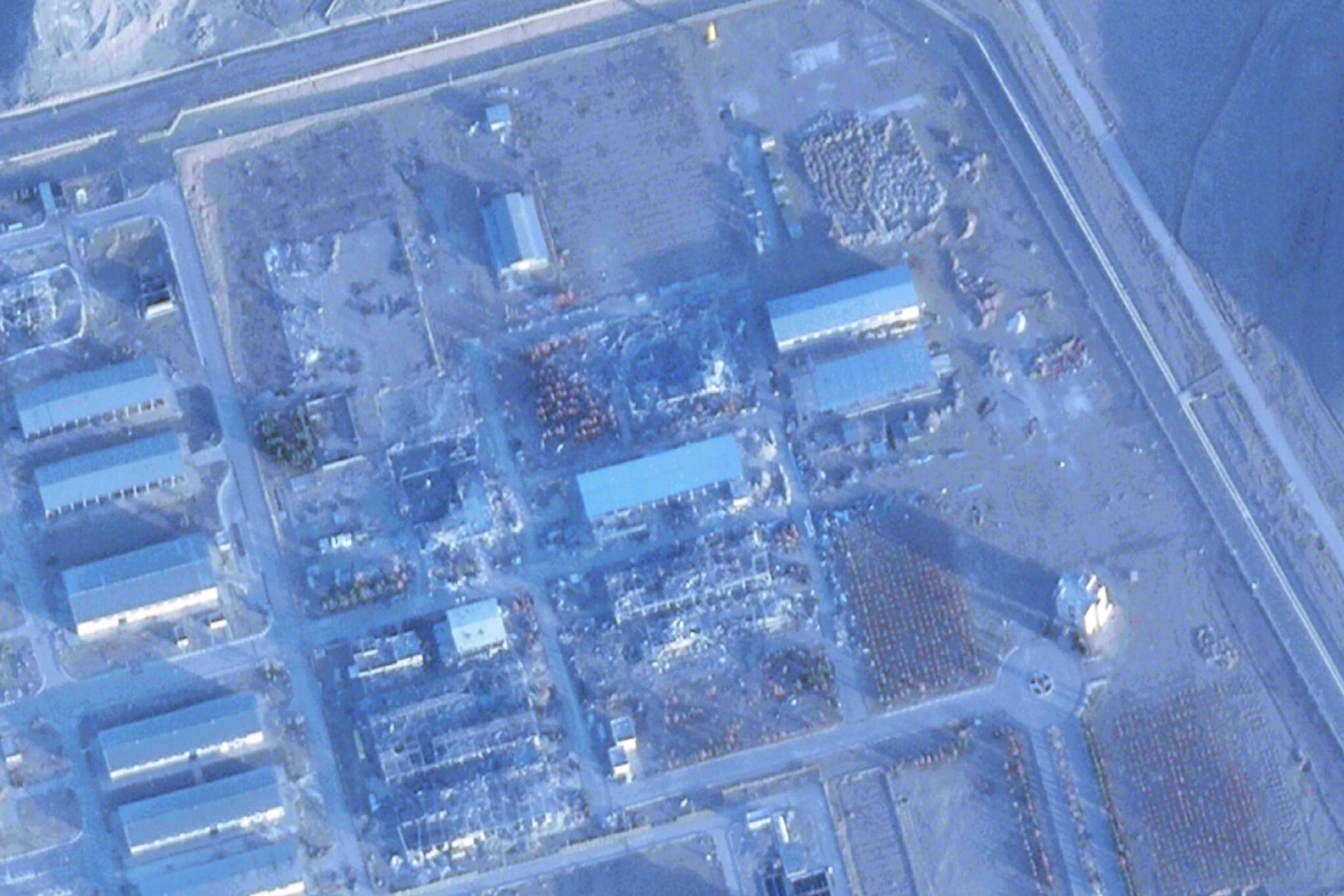
This satellite image from Planet Labs PBC shows a roof built over rubble Iran’s Isfahan Nuclear Technology Center outside of Isfahan, Iran, on Wednesday, Jan. 28, 2026. (Planet Labs PBC via AP)
The images from Planet Labs PBC show that roofs have been built over two damaged buildings at the Isfahan and Natanz facilities, the first major activity noticeable by satellite at any of the country’s stricken nuclear sites since Israel’s 12-day war with Iran in June.
Those coverings block satellites from seeing what’s happening on the ground, which is the only way for inspectors from the International Atomic Energy Agency to monitor the sites right now, as Iran has prevented access…
The new roofs do not appear to be a sign of reconstruction starting at the heavily damaged facilities, experts who examined the sites said. Instead, they are likely part of Iran’s efforts “to assess whether key assets — such as limited stocks of highly enriched uranium — survived the strikes,” said Andrea Stricker, who studies Iran for the Washington-based Foundation for Defense of Democracies, which has been sanctioned by Tehran.
“They want to be able to get at any recovered assets they can get to without Israel or the United States seeing what survived,” she said.
Isfahan and Natanz are 2 key Iran sites
The Natanz site, some 220 kilometers (135 miles) south of the capital, is a mix of above- and below-ground laboratories that did the majority of Iran’s uranium enrichment.
Before the war, the IAEA said Iran used advanced centrifuges there to enrich uranium up to 60 percent, a short, technical step from weapons-grade levels of 90%. Some of the material is presumed to have been onsite for when the entire complex was attacked.
The facility outside the city of Isfahan was mainly known for producing the uranium gas that is fed into centrifuges to be spun and purified.
A third site, Fordo, some 95 kilometers (60 miles) southwest of the capital, housed a hardened enrichment site under a mountain…
…Iran has not allowed IAEA inspectors to visit the sites since the attacks.
The main above-ground enrichment building at Natanz was known as the Pilot Fuel Enrichment Plant. Israel hit the building on June 13, leaving it “functionally destroyed,” and “seriously damaging” underground halls holding cascades of centrifuges, the IAEA’s director-general, Rafael Mariano Grossi, said at the time. A US follow-up attack on June 22 hit Natanz’s underground facilities with bunker-busting bombs, likely decimating what remained. Planet Labs PBC images show Iran began building a roof over the damaged plant in December. It completed the roof by the end of the month. Iran has not provided any public acknowledgment of that work. Natanz’s electrical system appears to still be destroyed…
…At Isfahan, Iran began building a similar roof over a structure near the facility’s northeast corner, finishing the work in early January. The exact function of that building is not publicly known, although the Israeli military at the time said its strikes at Isfahan targeted sites there associated with centrifuge manufacturing. The Israeli military did not respond to requests for comment over the construction.
Meanwhile, imagery shows that two tunnels into a mountain near the Isfahan facility have been packed with dirt, a measure against missile strikes that Iran also did just before the June war. A third tunnel appears to have been cleared of dirt, with a new set of walls built near the entrance as an apparent security measure.
Sarah Burkhard, a senior research associate for the Washington-based Institute for Science and International Security, which long has watched Iran’s nuclear sites, said the roofs appear to be part of an operation to “recover any sort of remaining assets or rubble without letting us know what they are getting out of there.”
Sean O’Connor, an expert at the open-source intelligence firm Janes, concurred that the aim was likely “to obscure activity rather than to, say, repair or rebuild a structure for use.”
Again, at best an initial assessment is a guess. It takes time to see the facts in full. In a Facebook discussion with a friend of mine, he was convinced the bombing did nothing. The man trusted The New York Times (mistake). I pointed out if there was no damage, the Iranians could easily show the failure of the American attack. I also explained, multiple times, a complete assessment would take time. As we have looked at, and analyzed the information, it’s accurate to say we devastated the Iranian nuclear program.
Completely destroyed, no. But between cutting off their funding, obliterating billions in high tech assets, killing their scientist (thank you Mossad), and putting the regime in fear for their life (literally, the mullahs are looking at real estate in Moscow), their nuclear program is on the ropes. Hopefully, between the Trump White House, Bebe in Israel, and the people of Iran rising up, we can finally wipe this threat to world peace (not an exaggeration) off the face of the earth.



No comments:
Post a Comment