Police Work, Politics and World Affairs, Football and the ongoing search for great Scotch Whiskey!

Sunday, March 25, 2012

News from the Global Cooling, err Global Warming, oh Climate Change, what now, Global Climate Disruption....dammit, will people stop changing their minds on this crap!

It's good to know there are still people out there who look at a falsehood and say "I don't think so!"
India bans its airlines from paying EU carbon tax

India has barred its airlines from complying with the European Union carbon tax scheme, joining China in resistance to plans that have caused a backlash among the EU's trade partners.

The European Union imposed a carbon levy on air travel with effect from January 1, but no airline will face a bill until 2013 after this year's carbon emissions have been tallied.

Civil Aviation Minister Ajit Singh told parliament on Thursday that "the imposition of carbon tax does not arise" because Indian airlines would simply refuse to hand over their emissions data.

"Though the European Union has directed Indian carriers to submit emission details of their aircraft by March 31, 2012, no Indian carrier is submitting them in view of the position of the government," he said.

India's resolution to boycott the scheme follows China's decision last month to prevent its airlines from complying with the EU directive....

..The 27-nation EU has said the carbon tax will help it achieve its goal of cutting emissions by 20 percent by 2020 and that it will not back down on the plan...

...Industry insiders have expressed concern that the scheme could spark a trade war between the EU and the countries opposed to the tax.

The chief executive of European plane manufacturer Airbus, Thomas Enders, called for a "freeze" on the EU plan Thursday, saying that it would otherwise cost the sector thousands of jobs.

"Delay it, freeze it for one or two years," he said according to Dow Jones Newswires, arguing that the scheme "will do nothing but induce strife... retaliation and counter-retaliation."...

Mr Enders, what's the problem? Those thousands of jobs will be replaced by green jobs in bankrupt companies. Works real good...just ask the guys at Solyndra.

But for a more serious look at this BS movement, check this article out.

Climate Fund Seeks UN-Style Diplomatic Immunity

The Green Climate Fund, which is supposed to help mobilize as much as $100 billion a year to lower global greenhouse gases, is seeking a broad blanket of UN-style immunity that would shield its operations from any kind of legal process, including civil and criminal prosecution, in the countries where it operates.

There is just one problem: it is not part of the United Nations.

Whether the fund, which was formally created at a UN climate conference in Durban, South Africa last December, will get all the money it wants to spend is open to question in an era of economic slowdown and fiscal austerity.

Its spending goal comes atop some $30 billion in "fast start-up" money that has been pledged by UN member states to such climate change activities.

A 24-nation interim board of trustees for the Green Climate Fund (GCF) is slated to hold its first meeting next month in Switzerland to organize the fund's secretariat and to get it running by November, as well as find a permanent home for the GCF's operations.

The board expects to spend about $6.7 million between now and June of next year...

...Despite its name, the UNFCCC was informed in 2006 by the United Nations Office of Legal Affairs that it was not considered a UN "organ," and therefore could not claim immunity for its subordinate bodies or personnel under the General Convention that has authorized UN immunity since the end of World War II...

...According to an official of the US Treasury, which strongly supports the existence of the GCF, the full extent of the immunities still remains to be worked out by the fund board, although the wording of various UNFCCC resolutions indicate that immunities like those held by the UN are clearly envisaged.

Hundreds of billions of dollars over the years by an unacceptable bureau at the UN that will have major effects on our trade, industry, life. Why should anyone be nervous on this? After the UN is now looking into Voter ID laws in the states and had Libya on the Human Rights Commission. The same group that praised Libya's record on human rights but comdemns the only democracy in the Middle East.

I used to say this was tin foil hat stuff but I've had a change of thought. US out of the UN and UN out of the US. Without US, the UN is nothing. And America will be much better without this group of leaches.

Another classic case of reality hitting the college crowd

As we have scene over the last few months spoiled children screaming about not being able to get a job with their gender studies major or advanced basket weaving master's degree in spite of spending more for that than a mortgage on a house. But this kinda makes your heart warm. Graduates of law school finding out about life. Yes kiddies, if you have too much of something then the value goes down. And for once a judge in New York actually issues a common sense ruling.
9 Graduates Lose Case Against New York Law School

The New York Law School in TriBeCa was sued by graduates who said they had been misled after failing to find jobs as lawyers.

Amid a challenging time in the legal industry, a growing chorus of law-school graduates are bemoaning the lack of job opportunities.

One judge does not want them complaining in his courtroom.

Melvin L. Schweitzer, a New York Supreme Court judge, dismissed a lawsuit brought by nine graduates of New York Law School who accused their alma mater of misleading them about their postgraduate employment prospects.

While expressing some sympathy for the students’ plight, Justice Schweitzer said the action had no merit and was essentially a case of caveat emptor — let the buyer of a legal education beware.

“In this court’s view, the issues posed by this case exemplify the adage that not every ailment afflicting society may be redressed by a lawsuit,” he wrote.

College graduates “seriously considering law schools are a sophisticated subset of education consumers, capable of sifting through data and weighing alternatives before making a decision regarding their postcollege options,” Justice Schweitzer said.

The decision deals a setback to a flurry of similar cases filed across the country, and it comes at an uncertain moment for both the legal academy and the law profession. For the second-consecutive year, the number of those taking the law school entrance exam has sharply declined, reflecting a view that the sluggish legal market will continue to retrench. And while most graduates of top law schools continue to secure legal employment, alumni of less-prestigious institutions are having a hard time finding work....


Here is the ruling and the rest of the article is interesting. But I love the fact reality is finally hitting these kids. Yo guys, there are only so many positions out there for lawyers and you are not guaranteed what you want. But have a plan for when that fails. If you had some history you might have remember the wisdom of Benjamin Franklin, "The only thing certain in life is death and taxes."

Maybe the wisdom of Ted Baxter will help...

In interesting look at Obamacare in front of the Court

As the Supreme Court looks at the constitutionally of Obamacare I found this article from Reason Magazine. Worth the full read.

The 4 Best Legal Arguments Against ObamaCare


Why the president's sweeping health care overhaul should be struck down by the Supreme Court.


Damon W. Root


...Twenty-six of those states, plus the National Federation of Independent Business and several individuals, are challenging the health care law, claiming it is an illegal power grab by the federal government that tramples the Constitution and undermines the principles of federalism.


Contrary to what Nancy Pelosi would have you believe, these challengers have a strong and serious case. Here are four of their best arguments against the individual mandate.


4. The Individual Mandate Threatens the Foundations of Contract Law


American contract law rests on the principle of mutual assent. If I hold a gun to your head and force you to sign a contract, no court of law will honor that document since I coerced you into signing it. Mutual assent must be present in order for a contract to be valid and binding.


This view was widely shared by the framers and ratifiers of the U.S. Constitution. Here’s how Pennsylvania lawyer James Wilson, a signer of both the Declaration of Independence and the Constitution, put it in one of his legal lectures:


The common law is a law of liberty. The defendant may plead, that he was compelled to execute the instrument. He cannot, indeed, deny the execution of it; but he can state, in his plea, the circumstances of compulsion attending his execution; and these circumstances, if sufficient in law, and established in fact, will procure a decision in his favour, that, in such circumstances, he did not bind himself.


The individual mandate turns this longstanding legal principle on its head. After all, there’s nothing mutual about the government forcing you to enter into a binding contract with a private company. As the Institute for Justice, the public interest law firm that pioneered this argument, explains in the powerful friend of the court brief it filed in the case, the framers of the Constitution “would never have given, and in fact did not give, Congress, through the guise of the Commerce Clause, the power to gut the foundation upon which the entirety of contract law rests.”


3. The Individual Mandate Cannot Be Justified Under Existing Supreme Court Precedent


...Yet neither of those precedents stretched the Commerce Clause so far as to allow Congress to regulate inactivity—such as the non-act of not buying health insurance. As the National Federation of Independent Business argues in its brief, “uninsured status neither interferes with commerce or its regulation nor constitutes economic activity. Instead, the uninsured’s defining characteristic is their non-participation in commerce.”


2. The Individual Mandate Rests on an Unbounded and Unprincipled Assertion of Federal Power


Does the Commerce Clause allow Congress to do anything it wants so long as an economic activity is remotely involved? Under the government’s theory of the case, yes, congressional power is essentially unlimited. As the D.C. Circuit Court of Appeals remarked in its ruling on the individual mandate:


The Government concedes the novelty of the mandate and the lack of any doctrinal limiting principles; indeed, at oral argument, the Government could not identify any mandate to purchase a product or service in interstate commerce that would be unconstitutional, at least under the Commerce Clause.


Solicitor General Donald Verrilli will need to come up with something better than that when he argues the case before the Supreme Court. As the multi-state challengers put it in their Supreme Court brief, "there is no way to uphold the individual mandate without doing irreparable damage to our basic constitutional system of governance." At a minimum, the Court's conservatives will expect the solicitor general to lay out a plausible limiting principle for congressional power under the Commerce Clause. If Verrilli does not—or cannot—do that, the individual mandate is in big trouble.


1: The Individual Mandate Violates the Original Meaning of the Constitution


Article 1, Section 8 of the U.S. Constitution grants Congress the power “to regulate commerce...among the several states.” The framers and ratifiers of the Constitution understood those words to mean that while congress may regulate commercial activity that crossed state lines, Congress was not allowed to regulate the economic activity that occurred inside each state. As Alexander Hamilton—normally a champion of broad federal power—explained in Federalist 17, the Commerce Clause did not extend congressional authority to “the supervision of agriculture and of other concerns of a similar nature, all those things, in short, which are proper to be provided for by local legislation.” In other words, the Commerce Clause was not a blank check made out to the federal government....


... As Justice Clarence Thomas remarked about the majority’s reasoning in Raich, “If Congress can regulate this under the Commerce Clause, then it can regulate virtually anything—and the Federal Government is no longer one of limited and enumerated powers.”


Unfortunately for constitutional originalists, Thomas is unlikely to persuade a majority of his colleagues to wipe the slate clean by overturning Wickard and Raich. But as I explained earlier, the Supreme Court already has sufficient reason to strike down the individual mandate without touching any of its existing precedents. That approach—which targets the mandate's unprecedented regulation of inactivity—could satisfy both Thomas and his faint-hearted originalist colleagues on the bench. If five or more justices are interested in expressing at least some fidelity to the text of the Constitution, the individual mandate is finished.

You can never tell how SCOTUS will rule. Past rulings are no guide. And I'm not one for judges using their emotions in evaluating a case...but the members of the court should remember B Hussein Obama's  childish lecturing spat at the State of the Union a couple of years ago.

Let us pray SCOTUS gets this right. If it's allowed to stand this country is doomed.

Officer Down


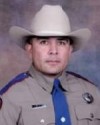
Trooper Javier Arana, Jr.
Texas Department of Public Safety - Texas Highway Patrol, Texas

End of Watch: Saturday, March 24, 2012
Age: 32
Tour: 2 years

Trooper Javier Arana was killed in an automobile accident as he responded to assist a vehicle pursuit in El Paso at approximately 1:30 am.

During the response Trooper Arana's vehicle collided with a pickup truck near the intersection of Joe Battle Boulevard and Bob Hope Drive. Trooper Arana's patrol car burst into flames upon impact.

Trooper Arana had served with the Texas Highway Patrol for two years. He is survived by his wife and children.
Rest in Peace Bro…We’ll Continue The Watch

Day is done, Gone the sun, From the lake, From the hills, From the sky. All is well, Safely rest, God is nigh.

Tuesday, March 20, 2012

Officer Down


Sergeant Ruben Thomas
Florida Department of Corrections
End of Watch: Sunday, March 18, 2012
Age: 24
Tour: 6 years

Sergeant Ruben Thomas was stabbed to death by an inmate at the Columbia Correctional Institution Annex.

At approximately 10:00 pm he was checking on an inmate in one of the prison's dorms when the inmate attacked him. He was stabbed in the neck several times by the inmate who was armed with some sort shank. The inmate, who was serving a life sentence for murdering a college student, then struck another officer in the eye with a sock filled filled with a heavy item before being taken into custody.

Sergeant Thomas was transported to Shands Lake Shore Hospital where he succumbed to his wounds.

Sergeant Thomas had served with the Florida Department of Corrections for six years. He is survived by his young daughter and fiancee.
Rest in Peace Bro…We’ll Continue The Watch

Day is done, Gone the sun, From the lake, From the hills, From the sky. All is well, Safely rest, God is nigh.

One of the 30th World Hell Holes that doesn't get much attention.

I have something like twenty books on my "to read" shelve in my office. I'm getting ready for the sergeant's test and getting through a light read is a problem right now. But I had to pre-order this from Amazon.com. Yes it will sit on the shelve until summer but I have to read this book.

I've been fascinated with the Korean conflict since I was assigned there in 1988 as a fresh Second Lieutenant out of the basic course. I can't really explain the difference between the two countries as well as this picture does:

Korean peninsula at night
The south has all the light. It's a prosperous first world nation and the night mare north of the DMZ doesn't have light. If you want an excellent report on what life is like in North Korea, take a look at this report from 60 Minutes:


Now back to the book Escape from Camp 14: One Man's Remarkable Odyssey from North Korea to Freedom in the West. This except is too long for a blog post but it's worth a read. Having to betray your family to live is pretty bad.

His first memory is an execution. He walked with his mother to a wheat field, where guards had rounded up several thousand prisoners. The boy crawled between legs to the front row, where he saw guards tying a man to a wooden pole.

Shin In Geun was four years old, too young to understand the speech that came before that killing. At dozens of executions in years to come, he would listen to a guard telling the crowd that the prisoner about to die had been offered "redemption" through hard labour, but had rejected the generosity of the North Korean government.

Guards stuffed pebbles into the prisoner's mouth, covered his head with a hood and shot him.

In Camp 14, a prison for the political enemies of North Korea, assemblies of more than two inmates were forbidden, except for executions. Everyone had to attend them.

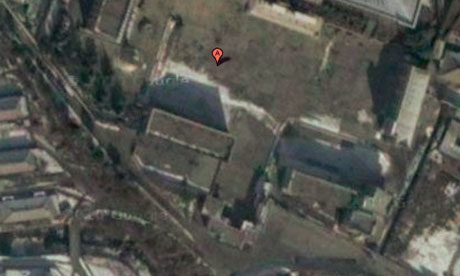
The South Korean government estimates there are about 154,000 prisoners in North Korea's labour camps, while the US state department puts the number as high as 200,000. The biggest is 31 miles long and 25 miles wide, an area larger than the city of Los Angeles. Numbers 15 and 18 have re-education zones where detainees receive remedial instruction in the teachings of Kim Jong-il and Kim Il-sung, and are sometimes released. The remaining camps are "complete control districts" where "irredeemables" are worked to death.

Shin's camp, number 14, is a complete control district. Established around 1959 near Kaechon County in South Pyongan Province, it holds an estimated 15,000 prisoners. About 30 miles long and 15 miles wide, it has farms, mines and factories threaded through steep mountain valleys.


Shin and his mother lived in the best prisoner accommodation the camp had to offer. They had their own room, where they slept on a concrete floor, and they shared a kitchen with four other families. Electricity ran for two hours a day. There were no beds, chairs or tables. No running water.

If Shin's mother met her daily work quota, she could bring home food. At 4am, she would prepare breakfast and lunch for her son and for herself. Every meal was the same: corn porridge, pickled cabbage and cabbage soup. Shin was always hungry and he would eat his lunch as soon as his mother left for work. He also ate her lunch. When she came back from the fields at midday and found nothing to eat, she would beat him with a shovel.

Her name was Jang Hye Gyung. She never talked to him about her past, her family, or why she was in the camp, and he never asked. His existence as her son had been arranged by the guards. They chose her and the man who became Shin's father as prizes for each other in a "reward" marriage.

Single men and women slept in dormitories segregated by sex. The eighth rule of Camp 14 said, "Should sexual physical contact occur without prior approval, the perpetrators will be shot immediately." A reward marriage was the only safe way around the no-sex rule. Guards announced marriages four times a year. If one partner found his or her chosen mate to be unacceptably old, cruel or ugly, guards would sometimes cancel a marriage. If they did, neither the man nor the woman would be allowed to marry again. Shin's father, Shin Gyung Sub, told Shin that the guards gave him Jang as payment for his skill in operating a metal lathe.

After their marriage, the couple were allowed to sleep together for five consecutive nights. From then on, Shin's father was permitted to visit Jang a few times a year. Their eldest son, Shin He Geun, was born in 1974. Shin was born eight years later. The brothers barely knew each other. By the time Shin was four, his brother had moved into a dormitory.

The guards taught the children they were prisoners because of the "sins" of their parents but that they could "wash away" their inherent sinfulness by working hard, obeying the guards and informing on their parents.

...On Friday 5 April 1996, Shin's teacher told him he could go home and eat supper with his mother as a reward for good behaviour. There was a surprise when he got there. His brother, who worked at the camp's cement factory, had come home, too. Shin's mother was not delighted when her youngest son showed up. She did not say welcome or that she had missed him. She cooked, using her daily ration of 700 grams of cornmeal to make porridge in the one pot she owned. Shin ate, then went to sleep.

Some time later, voices from the kitchen woke him. He peeked through the bedroom door. His mother was cooking rice. For Shin, this was a slap in the face. He had been served the same tasteless gruel he had eaten every day of his life. Now his brother was getting rice. Shin guessed she must have stolen it, a few grains at a time. Shin fumed. He also listened. Shin heard that Shin He Geun had not been given the day off. He had walked out without permission. His mother and brother were discussing what they should do.

Escape. Shin was astonished to hear his brother say the word. He did not hear his mother say that she intended to go along. But she was not trying to argue, even though she knew that if he escaped or died trying, she and others in her family would be tortured and probably killed. Every prisoner knew the first rule of Camp 14, subsection 2: "Any witness to an attempted escape who fails to report it will be shot immediately."

His heart pounded. He was angry that she would put his life at risk for the sake of his brother. He was also jealous that his brother was getting rice. Shin's camp-bred instincts took over: he had to tell a guard. Shin ran back to school. It was 1am. Who could he tell? In the crowded dormitory, Shin woke his friend Hong Sung Jo. Hong told him to tell the school's night guard.

"I need to say something to you," Shin told the guard, "but before I do, I want something in return." Shin demanded more food and to be named grade leader at school, a position that would allow him to work less and not be beaten as often. The guard agreed, then told Shin and Hong to go back to get some sleep.

On the morning after he betrayed his mother and brother, uniformed men came to the schoolyard for Shin. He was handcuffed, blindfolded and driven in silence to an underground prison.

"Do you know why you are here?" The officer did not know, or did not care, that Shin had been a dutiful informer. "At dawn today, your mother and your brother were caught trying to escape. Were you aware of this fact or not? If you want to live, you should spit out the truth."

Shin would eventually figure out that the night guard had claimed the credit for discovering the escape plan. But on that morning Shin understood nothing. He was a bewildered 13-year-old. Finally, the officer pushed some papers across his desk. "In that case, bastard, your thumbprint."

The document was a family rap sheet. The papers explained why his father's family had been locked up in Camp 14. The unforgivable crime Shin's father had committed was being the brother of two young men who had fled south during the Korean war. Shin's crime was being his father's son...

(six months later)
...After signing a secrecy form, father and son were handcuffed, blindfolded and driven away. Shin guessed they would be released but when the car stopped after about 30 minutes and his blindfold was removed, he panicked. A crowd had gathered. Shin was now certain he and his father were to be executed. He became acutely aware of the air passing into and out of his lungs. He told himself these were the last breaths of his life.

"Execute Jang Hye Gyung and Shin He Geun, traitors of the people," the senior officer said. Shin looked at his father. He was weeping silently. When guards dragged her to the gallows, Shin saw that his mother looked bloated. They forced her to stand on a wooden box, gagged her, tied her arms behind her back and a noose around her neck. She scanned the crowd and found Shin. He refused to hold her gaze. When guards pulled away the box, she jerked about desperately. As he watched his mother struggle, Shin thought she deserved to die.

Shin's brother looked gaunt as guards tied him to the wooden post. Three guards fired their rifles three times. He thought his brother, too, deserved it....

The article is too long to give it justice in this format but well worth the read. I could make a smart ass remark about George Clooney not protesting about repression and starvation in North Korea but I have already. I'll just leave you with this as you look at the Occupy punks and others who seem to not like life in the West. People you have no idea what the real world is like and you should thank God you were not born north of the Korean DMZ.

Kinda puts the Manning-Tebow thing into perspective....

From Jimmy Fallon, via Andrew Malcolm at Twitter:

Fallon: So Denver will trade Tim Tebow aftr 1 yr as a starter. Even Kim Kardashian was like ‘Come on, who dumps a pro athlete that quickly?’

This cannot be right

An undocumented alien in Houston commits a crime. How can this be? The regime of B Hussein Obama has not rested until the southern border was secure. Even Janet Napolitano said "...the Arizona border has never been more secure..." But we are talking about Texas, not Arizona.
ICE questions status of driver accused in fatal porch crash - Houston Chronicle

A suspected drunken driver accused of crashing into a home killing one child and injuring another is being held without bail after a judge heard Monday that he may not be in this country legally.

Luis Hector Lopez-Rodriguez, 27, is accused of losing control of the blue Ford Crown Victoria he was driving and plowing into the front porch of a southwest Houston apartment, where two children were playing during a Saturday night party.

During a brief court appearance Monday, Magistrate Judge Blanca Villagomez said federal officials have put a hold on Lopez-Rodriguez. That action typically means his immigration status is in question. He apparently is a Mexican citizen.

Lopez-Rodriguez is charged with intoxication manslaughter and intoxicated assault. If convicted, he faces a maximum punishment of life in prison...

...Saturday's wreck was not the first time Lopez-Rodriguez has been accused of driving drunk. In January 2008, he pleaded guilty to driving while intoxicated in exchange for three days in jail.

He also was charged last year with assaulting his wife.
...

...Gregory Palmore, a spokesman for U.S. Immigration and Customs Enforcement, said Monday that the agency was still investigating Lopez-Rodriguez's immigration status. Lopez-Rodriguez listed his place of birth as San Luis Potosi, Mexico, court records show.

Lopez-Rodriguez was last booked into Harris County Jail in December 2007 - nearly a year before the county started participating in ICE's Secure Communities immigration enforcement program, which runs suspects' fingerprints through a Homeland Security database. It was unclear from court records whether ICE officials questioned Lopez-Rodriguez or marked him for possible deportation in 2007.

In all seriousness six Houston cops have either been killed or injured by illegal aliens in the last six years. But for some reason DC doesn't see our wide open border as a problem. Then again, these people are only here to do the crimes Americans won't do anymore

Geopolitical Weekly: Afghanistan and the Long War, March 19, 2012

By George Friedman

The war in Afghanistan has been under way for more than 10 years. It has not been the only war fought during this time; for seven of those years another, larger war was waged in Iraq, and smaller conflicts were under way in a number of other countries as well. But the Afghanistan War is still the longest large-scale, multi-divisional war fought in American history. An American soldier's killing of 16 Afghan civilians, including nine children, on March 11 represents only a moment in this long war, but it is an important moment.

In the course of the Iraq and Afghanistan wars, military strategists in the United States developed the concept of the long war. The theory was presented in many ways, but its core argument was this: The defeat of Taliban forces and the Iraqi resistance would take a long time, but success would not end the war because Islamist terrorism and its supporters would be a constantly shifting threat, both in the places and in the ways they would operate. Therefore, since it was essential to defeat terrorism, the United States was now engaging in a long war whose end was distant and course unknown.

Sometimes explicit but usually implicit in this argument was that other strategic issues faced by the United States should be set aside and that the long war ought to be the centerpiece of U.S. strategic policy until the threat of Islamist terrorism disappears or at least subsides. As a result, under this theory -- which very much influences U.S. strategy -- even if the war in Afghanistan ended, the war in the Islamic world would go on indefinitely. We need to consider the consequences of this strategy.

Staff Sgt. Robert Bales, who allegedly perpetrated the appalling slaughter in Afghanistan, was on his fourth tour of combat duty. He had served three tours in Iraq of nine, 15 and 12 months -- he had been at war for three years. His tour in Afghanistan was going to be his fourth year. The wars he fought in differed from prior wars. Fallujah and Tora Bora were not Stalingrad. Still, the hardship, fear and threat of death are ever-present. The probability of dying may be lower, but it is there, it is real, and there are comrades you can name whom you saw die.

In Vietnam, only volunteers served more than a single one-year tour. For Americans in World War II, the war lasted a little more than three years, and only a handful of U.S. troops were in combat for that long. U.S. involvement in World War I lasted less than two years, and most U.S. soldiers were deployed for a year or less. In U.S. history, only the Civil and Revolutionary wars lasted as long as Bales had served.

Atrocities occur in all wars. This is an observation, not an excuse. And they become more likely the longer a soldier is in combat. War is brutal and it brutalizes the souls of warriors. Some resist the brutalization better than others, but no one can see death that often and not be changed. Just as important, the enemy is dehumanized. You cannot fight and fear him for years and not come to see him as someone alien to you. Even worse, when the enemy and the population are difficult to distinguish, as is the case in a counterinsurgency, the fear and rage extends to everyone. In Bales' case, it extended even to children.

It is no different for the Taliban save two things. First, they are fighting for their homeland and in their homeland. Americans fight for the homeland in the sense that they are fighting terrorism, but that fight becomes abstract after a while. For the Taliban it is a reality. Americans can go home and may become bitter at those who never shared the burden. The Taliban are at home, and their bitterness at those who did not share the burden outstrips the bitterness of the Americans. Second, it is a fact of war that Taliban atrocities are usually invisible to the Western media, but they are there, even if reporters are not. It could be said that the Taliban were brutalized by years of fighting before the Americans came, but in the end, the fact of brutalization is more important than the genesis.

It is important to remember that for the United States, the Afghanistan War is the first major war since the Civil War that did not involve a draft. Opposition to the draft during Vietnam gave rise to the volunteer army. One thing no one assumed after Vietnam was that the United States would attempt to fight a counterinsurgency on the mainland of Asia again, and therefore the conditions for reconstituting the draft were never considered.

When the war in Afghanistan began, there was no theory of the long war. It was assumed that the goal was the dislocation and destruction of al Qaeda, and grandiose notions of democratizing Afghanistan were not yet part of the policy. In Iraq, the assumption was that the defeat of Saddam Hussein's conventional forces would require neither significant cost nor time and that there would be no resistance to constructing a pro-American democracy there. It took time for the mission in Afghanistan to creep up to democratization, and it took a while to realize that not all Iraqis were cheering the American occupation.

But even while it became apparent that the United States was in a long war, neither the Bush nor the Obama administration ever grappled with the consequences of a force in which individuals could be in combat for four years and more. And we might include here the dangers for noncombatants and headquarters troops, who faced mortar and rocket fire at their desks. No one escaped the burden.

The result was a war that was seen on the home front as not requiring a massive effort but that required some volunteers to remain in combat for longer than many had in World War II. And while it was true that all of the soldiers had volunteered, the volunteers were no more ready than the government for the tempo of operations they would face. Additionally, they were not always free to leave. During the height of the war, some of those trying to leave service when their time was up were "stop-lossed." For them, it became less of a volunteer army than a captive army.

The doctrine of the long war fought by the present force fails to take into account whether the force can sustain the war. Former Defense Secretary Donald Rumsfeld argued that you fight with the army you have. What he did not address was that while you begin fighting with the army you have, as the United States did in World War II, you do not continue fighting with that army, but move to mobilize the country. But Rumsfeld did not realize how long the war in Afghanistan would last, and in particular, he did not anticipate the cost that two multi-divisional wars would have. It is noteworthy that Bales began with three tours in Iraq. The war in Iraq might be over, but its consequences for the force remain.

What Bales is alleged to have done is inexcusable. There have been many atrocities, both recorded and not, both outright and ambiguous, and conducted by both NATO and the Taliban. It is unrealistic to imagine a war of this length devoid of atrocities. But in a counterinsurgency, in which the goal is not simply the defeat of an enemy force but also persuading the population that turning against that force is the safest course, a massacre like this can have strategic consequences. The Taliban's psychological warfare operations will focus on the killings as they did with the February Koran-burning incident at a U.S. base. In the meantime, American psychological warfare efforts will focus on U.S. troops, both making sure they remain restrained and -- after the Feb. 25 shooting of two U.S. officers in a Kabul ministry by an Afghan colleague -- reassuring them that they must not be afraid of Afghans, since training Afghans is their mission.

The long war, without a major readjustment of the American force structure, creates unintended strategic consequences. One consequence is a force that contains large numbers of troops at the limits of their endurance. Their potential actions undermine the strategic purpose of the counterinsurgency: winning over the populace. That opens the door to increased influence for the Taliban and reduces the Taliban's inclination to negotiate as the U.S. position deteriorates. Put differently, troops are not numbers on a table of organization. They wear out.

There are four strategic assumptions of the long war underlying all of this. The first is that the fight against Islamist terrorism can be won and that ultimately it is more than just a threat that has to be accepted. The second is that large-scale operations like those in Iraq and Afghanistan help achieve that goal. Third, that the United States is able to wage a long war such as this without massive adjustments to its domestic life. Fourth, that this should continue to be the centerpiece of U.S. strategy indefinitely, regardless of other events in the world -- in other words, that this is the single most important challenge facing the United States.

The invasion of Afghanistan was strategically justifiable as a means of disrupting al Qaeda and preventing follow-on attacks against the United States. The invasion of Iraq was based on a false assumption that the Iraqis would not resist occupation. As the wars went further, the military situation became more difficult while the goals expanded. The ultimate expansion was the idea that the United States was committed to an indefinitely long war, with available forces, and that this would involve occupying large and hostile countries.

I argued in my last book, "The Next Decade," that the danger of empire was that it threatened the republic. After the fall of the Soviet Union, the United States became the world's only superpower, combining military, economic and political might on a global basis. Whether it wanted this power or not, it had it. Within a decade of the Soviet Union's collapse, 9/11 happened. Whatever its initial intentions, the United States found itself in a war that has lasted more than 10 years. That war has strained American resources. It has also strained the fabric of American life.

The threat to the republic comes from multiple directions, from creating systems for national defense that undermine republican principles to overestimating military capability and committing the republic to a war whose end state is unclear and where the means are insufficient. War transforms countries, and the long war transforms domestic life and creates an unbalanced foreign policy. Most of all, it creates a professional class that fights wars that are considered limitless while the rest of society, though paying the bills, does not see the war as being part of everyday life. The alienation between citizen and soldier in a nation struggling to reconcile global power with republican institutions is historically dangerous.

This is made all the more dangerous because the force is reaching its limits. Resisting terrorism is important. Eliminating it is an illusion. To continue with the long war with the forces available puts in motion processes that threaten the republic without securing U.S. interests. Leaving aside the threat to the republic, a force at its limits and left to fight a war on the margins of national consciousness will not be effective.

Afghanistan and the Long War COPYRIGHT STRATFOR.COM

Monday, March 19, 2012

Getting ready for the BBQ

I had 5 burgers on the plate...and now I have two.


I wonder where they went?


What?

All I can say is thank God....

And hopefully this is only the beginning of a rush!

Major US Airport To Evict TSA Screeners
Orlando Sanford International could prompt stampede of other opt-outs

One of America’s busiest airports, Orlando Sanford International, has announced it will opt out of using TSA workers to screen passengers, a move which threatens the highly unpopular federal agency’s role in other airports across the nation.

“The president of the airport said Tuesday that he would apply again to use private operators to screen passengers, using federal standards and oversight,” reports the Miami Herald.

With Sanford International having originally been prevented by the TSA from opting out back in November 2010 when the federal agency froze the ability for airports to use their own private screeners, a law passed by the Senate last month forces the TSA to reconsider applications.

Larry Dale hinted that the move was motivated by the innumerable horror stories passengers have told of their encounters with the TSA, noting that the change was designed to provide a more “customer friendly” operation.

The agency has been slow to reissue the guidelines on the the rule change, prompting Republican Representatives John Mica of Florida, Darrell Issa of California and Jason Chaffetz of Utah to press TSA head John Pistole to implement the mandate.

...Orlando Sanford is in the top 30 busiest airports in the world, with large numbers of takeoffs and landings.

The TSA has been keen to downplay the opportunity for airports to dispense with their screeners, fearing a mass exodus that could undermine the justification for the agency’s continued existence, especially given the fact that its reputation has been repeatedly savaged by a number of scandals.

...A November 2010 poll found that the TSA’s “enhanced pat downs,” some of which include touching genitalia, angered 57% of regular adult fliers.

West Yellowstone Airport in Montana has already replaced its TSA screeners with private security. Bert Mooney Airport, also in Montana, is attempting to do the same...

A step in the right direction. The TSA needs to be stuck from the federal budget and its history shown as an example of why every agency must justify i's existence ever two years. I defy anyone to show me one example of a TSA pervert patdown or other abuse of the public stopping a terrorist or other criminal act. I've said more than once the rent a cops at the bus station near my beat are more useful and a damned site less expensive.

If you want a good video to remember, Captain Chris Liu, a San Francisco based pilot who showed how he as the airplane captain had to go through the harassment as all the other passengers but the staff that services the plane only has to scan a badge. Yo guys, if the captain is compromised the game is over, the plane is doomed. So after Captain Liu shows how ridiculous the TSA is what do they do? Harass the man at his house.


Let us pray the TSA will only be a bad memory of passengers soon enough.

UPDATE: TSA finally shows it can find Al Queda.

A three year old with a broken leg, confined to a wheel chair. Where do we get such idiots. Oh yea, civil service.

Sunday, March 18, 2012

More gun propaganda

Last month I blogged on how His Dumb S$%^ Da Mayor of New York, Bloomberg has organized a phony group called Mayors Against Illegal Guns. Basically it's message is any gun used in a crime is illegal. So if someone had their gun stolen and used in a robbery it's an illegal gun and your a criminal. Got it.

Not to be outdone our current Attorney General shows his real feeling towards guns. The critical point is just after 3 minutes.


Breitbart.com has uncovered video from 1995 of then-U.S. Attorney Eric Holder announcing a public campaign to "really brainwash people into thinking about guns in a vastly different way."

Holder was addressing the Woman's National Democratic Club. In his remarks, broadcast by CSPAN 2, he explained that he intended to use anti-smoking campaigns as his model to "change the hearts and minds of people in Washington, DC" about guns.

"What we need to do is change the way in which people think about guns, especially young people, and make it something that's not cool, that it's not acceptable, it's not hip to carry a gun anymore, in the way in which we changed our attitudes about cigarettes."

Holder added that he had asked advertising agencies in the nation's capital to assist by making anti-gun ads rather than commercials "that make me buy things that I don't really need." He had also approached local newspapers and television stations, he said, asking them to devote prime space and time, respectively, to his anti-gun campaign.

Local political leaders and celebrities, Holder said, including Mayor Marion Barry and Jesse Jackson, had been asked to help. In addition, he reported, he had asked the local school board to make the anti-gun message a part of "every day, every school, and every level."

Despite strict gun control efforts, Washington, DC was and remains one of the nation's most dangerous cities for gun violence, though crime has abated somewhat since the 1990s...

Now maybe he misspoke and used an improper word with "brainwash". Then again he's sure blacks cannot commit civil rights violations so I guess he's trying to brainwash us on that. But why is it he's so conceded about guns when he should be focused on crime control. You take away the guns and if someone wants to kill he will find another way. But why let that fact get in his worldview. And I mean gun control has worked so well. I mean look at New York, Chicago and DC.

Facebook helps cops...

From NYPD,

NYPD uses high-tech software to capture suspect

NEW YORK - New York City detectives have used cutting-edge facial recognition software to capture a man suspected in a shooting at a barbershop...

...Police say the man was beaten and shot on March 10 over a neighborhood dispute as he tried to get a haircut.

The victim knew the shooter but not his name, pulled up a Facebook photo and gave it to police. Authorities at the Real Time Crime Center fed the photo through the system and a match appeared: The suspect's prior mug shot.

His mug shot. In the immortal words of the brother of Molly Ringwald in Sixteen Candles, "Classic."
The center has a database of mug shots, names and nicknames....

Yo turds you may not want to put your mug shot on Facebook, etc. Like this guy it might bite you in the ass.

Saturday, March 17, 2012

Once more, Thanks Barrack...

Here is the results when you let the children in the adults only area. The Camp David Accords were one of the few positive achievements of Jimmy Carter and they led to over 30 years of peace between Israel and Egypt. Now after the Arab Spring or whatever the hell it's called this week Hosni Mubarak was forced out and there was no stable transition to a new government. Now the Muslim Brotherhood is in charge and we see the results.


Egypt’s Islamist-dominated parliament votes in support of expelling Israel’s ambassador

CAIRO — Egypt’s Islamist-dominated parliament unanimously voted on Monday in support of expelling Israel’s ambassador in Cairo and halting gas exports to the Jewish state.

The motion is largely symbolic, because only the ruling military council can make such decisions, and it is not likely to impact Egypt’s relations with Israel. But it signals the seismic change in Egypt after the ouster of longtime leader and Israel ally Hosni Mubarak a year ago in a popular uprising that ended his 29 years in power.

The vote was taken by a show of hands on a report by the chamber’s Arab affairs committee that declared Egypt will “never” be a friend, partner or ally of Israel. The report described Israel as the nation’s “number one enemy” and endorsed what it called Palestinian resistance “in all its kinds and forms” against Israel’s “aggressive policies.”

...There have been bouts of tension in relations between the two neighbors, mostly over Israel’s perceived reluctance to proceed in good faith with peace talks with the Palestinians, but leaders of the two nations have consistently kept open channels of communication.

The parliamentary report also called for the recall of Egypt’s ambassador in Israel and a revision of Egypt’s nuclear power policy in view of the widespread suspicion that Israel has a nuclear arsenal of its own.

“Revolutionary Egypt will never be a friend, partner or ally of the Zionist entity (Israel), which we consider to be the number one enemy of Egypt and the Arab nation,” said the report. “It will deal with that entity as an enemy, and the Egyptian government is hereby called upon to review all its relations and accords with that enemy.”...

Great. When their were young people protesting the Iranian government in 2009 B Hussein Obama et all were no where to be found. But they were right on with Egypt, Libya and Syria. Talk about clueless. Yo Barrack, real world. Democracy is not for everyone. We need order. The Shah of Iran was never going to win a Peace Price but women could have a job and walk down the street alone in a modern society and he wasn't funding forces against our nation. Now we have the anarchy in the Middle East and it may spread to Saudi Arabia, Kuwait. Just when he's doing everything to raise oil prices we throw this in.

Thanks Barrack....

We wondered where those morons from the Occupy Rent a Mobs went to


Cops disperse crowd at anti-police riot in Montreal

Montreal police have ordered protesters at an annual march against brutality to disperse, with riot officers charging the crowd as some demonstrators threw rocks.

At least 1,000 people showed up at the Berri metro station Thursday for the annual anti-police brutality march.

Police in riot gear ordered demonstrators to respect the law and move with traffic flow, and monitored the march from horseback, in some cases.

Authorities declared the march illegal shortly after 6:30 p.m. and ordered people to disperse.

Some protesters threw projectiles, while police sprayed chemical irritants...

...The event, in its 16th year, often ends in confrontation between protesters and police, as well as arrests. In 2011, 258 people were arrested...

...Montreal authorities have been criticized in recent months for being heavy-handed during rolling student protests held throughout the city.

Like a typical media moron, no list of who are the critics. And critics, what is your solution? Probably just let the punks go mad.
Protests are being staged almost every day, as part of Quebec's widespread student movement against tuition increases.

Yo punks, get a job.

Again back to the critics. Years ago I had a disturbance with a mental patient in front of a car dealership. Long story short, after a half can of mace two other officers and I used baton strikes to get him into handcuffs. The car dealership manager came out and said he saw the suspect had tried to assault me, etc and he would be my witness. Anyway as we were handling the scene the manger mentioned three of his employees thought we were a little hard on him.

My answer was simple. "Sir, please have these men come out here. We'll each give them a baton and a can of mace and they can show us how it's done."

They didn't want to come out.

Good work Montreal PD. And college kids, welcome to life. Sometimes you gotta pay more for something than you want to. Tough!

Friday, March 16, 2012

Public support of a cop's investigation.

Around Houston (among other cities) you will find government owned signs near the highway warning about construction, accidents, etc. The ones here all occasionally broadcast assist for missing children, etc. Here is a private company donating it's assets for an investigation.

Company Donates to Solve Murder: MyFoxHOUSTON.com


Company Donates to Solve Murder

PASADENA, Texas - You've probably never met or seen Gary Martin, but you might have seen the signs his company, NTS Mikedon, has.

They are those light-up signs that sit on trailers, warning drivers about road hazards...

...Pretty soon, at the request of the Pasadena Police Department one will be sitting at an old murder scene. Instead of giving information to anyone passing, it will be asking for information about the New Year’s Day murder of Edlyn Villegas...

...Public pleas for information from Zermeno and Villegas' family didn't work. The case has stalled, but the detective investigating the case had an idea: Why not put a light-up sign at the scene asking for help?

"Of course he was interested in information coming from any direction or any part of the day, but night in particular because the focus was on between 1 and 4 a.m.," Pasadena Police Chief Bud Corbett said.

So the detective approached the city's public works department and approached NTS Mikedon. Martin, the owner, said yes and installed on at the scene for two weeks, free of charge.

Why?

"It brought back a lot of memories," Martin said. "Years ago, I had a coworker whose daughter was murdered here in the city of Houston. They never solved the case."

Thank you Mr Martin. Hopefully this will help.

Thursday, March 15, 2012

Not the best judgement from the Chief of Police....

From the Cereal State, California. The Land of Fruits, Flakes and Nuts.


Berkeley police union 'gravely concerned' with chief's move to alter story

BERKELEY -- The Berkeley police chief's decision to order a sergeant to a reporter's home insisting on changes to a story continued to draw heavy criticism Sunday, with the city's police union saying they are "gravely concerned" about his actions and the impact on officers' ability to maintain community trust.

Berkeley Police Chief Michael Meehan sent an armed police sergeant to Bay Area News Group reporter Doug Oakley's home at 12:45 a.m. Friday because he wanted a story that he perceived to contain inaccuracies changed online.

Just as an aside Mr Peele, police sergeant's (and police officer's, police lieutenant's, etc) are armed. It's one of the cool part's of the job, you can carry a gun.
First Amendment experts on Friday said Meehan's action was "an attempt at censorship by intimidation and an abuse of power."

...Meehan apologized Friday calling his actions an "overzealous attempt to make sure that accurate information is put out."...

Having just gotten called by a sergeant at six this morning on a BS call, I can relate to being annoyed about cops not being conceded about people's schedule. Hey moron, you think you could call them during work hours.

Chief, I hope you exercise better judgement on real cop stuff.

Security Weekly, A Practical Guide to Situational Awareness, March 15, 2012

By Scott Stewart

For the past three weeks we have been running a series in the Security Weekly that focuses on some of the fundamentals of terrorism. First, we noted that terrorism is a tactic not exclusive to any one group and that the tactic would not end even if the jihadist threat were to disappear. We then discussed how actors planning terrorist attacks have to follow a planning process and noted that there are times during that process when such plots are vulnerable to detection.

Last week we discussed how one of the most important vulnerabilities during the terrorism planning process is surveillance, and we outlined what bad surveillance looks like and described some basic tools to help identify those conducting it. At the end of last week's Security Weekly we also discussed how living in a state of paranoia and looking for a terrorist behind every bush not only is dangerous to one's physical and mental health but also results in poor security. This brings us to this week, where we want to discuss the fundamentals of situational awareness and explain how people can practice the technique in a relaxed and sustainable way.

Situational awareness is very important, not just for personal security but as a fundamental building block in collective security. Because of this importance, Stratfor has written about situational awareness many times in the past. However, we believe it merits repeating again in order to share these concepts with our new readers as well as serve as a reminder for our longtime readers.

More Mindset than Skill

It is important to note that situational awareness -- being aware of one's surroundings and identifying potential threats and dangerous situations -- is more of a mindset than a hard skill. Because of this, situational awareness is not something that can be practiced only by highly trained government agents or specialized corporate security teams. Indeed, it can be exercised by anyone with the will and the discipline to do so. Situational awareness is not only important for recognizing terrorist threats, but it also serves to identify criminal behavior and other dangerous situations.

The primary element in establishing this mindset is first to recognize that threats exist. Ignorance or denial of a threat make a person's chances of quickly recognizing an emerging threat and avoiding it highly unlikely. Bad things do happen. Apathy, denial and complacency can be deadly.

A second important element of the proper mindset is understanding the need to take responsibility for one's own security. The resources of any government are finite and the authorities simply cannot be everywhere and cannot stop every potential terrorist attack or other criminal action. The same principle applies to private security at businesses or other institutions, like places of worship. Therefore, people need to look out for themselves and their neighbors.

Another important facet of this mindset is learning to trust your "gut" or intuition. Many times a person's subconscious can notice subtle signs of danger that the conscious mind has difficulty quantifying or articulating. I have interviewed many victims who experienced such feelings of danger prior to an incident but who chose to ignore them. Trusting your gut and avoiding a potentially dangerous situation may cause you a bit of inconvenience, but ignoring such feelings can lead to serious trouble.

The discipline part of practicing situational awareness refers to the conscious effort required to pay attention to gut feelings and to surrounding events even while you are busy and distracted. At such times even obvious hostile activity can go unnoticed, so individuals need to learn to be observant even while doing other things.

Levels of Awareness

People typically operate on five distinct levels of awareness. There are many ways to describe these levels ("Cooper's colors," for example, which is a system frequently used in law enforcement and military training), but perhaps the most effective way to illustrate the differences between the levels is to compare them to the different degrees of attention we practice while driving. For our purposes here we will refer to the five levels as "tuned out," "relaxed awareness," "focused awareness," "high alert" and "comatose."

The first level, tuned out, is similar to when you are driving in a very familiar environment or are engrossed in thought, a daydream, a song on the radio or even by the kids fighting in the backseat. Increasingly, cellphone calls and texting are also causing people to tune out while they drive. Have you ever arrived somewhere in your vehicle without even really thinking about your drive there? If so, then you've experienced being tuned out.

The second level of awareness, relaxed awareness, is like defensive driving. This is a state in which you are relaxed but are also watching the other cars on the road and are looking at the road ahead for potential hazards. For example, if you are approaching an intersection and another driver looks like he may not stop, you tap your brakes to slow your car in case he does not. Defensive driving does not make you weary, and you can drive this way for a long time if you have the discipline to keep yourself from slipping into tuned-out mode. If you are practicing defensive driving you can still enjoy the trip, look at the scenery and listen to the radio, but you cannot allow yourself to get so engrossed in those distractions that they exclude everything else. You are relaxed and enjoying your drive, but you are still watching for road hazards, maintaining a safe following distance and keeping an eye on the behavior of the drivers around you.

The next level of awareness, focused awareness, is like driving in hazardous road conditions. You need to practice this level of awareness when you are driving on icy or slushy roads -- or the pothole-infested roads populated by erratic drivers that exist in many developing countries. When you are driving in such an environment, you need to keep two hands on the wheel at all times and have your attention totally focused on the road and the other drivers around you. You don't dare take your eyes off the road or let your attention wander. There is no time for cellphone calls or other distractions. The level of concentration required for this type of driving makes it extremely tiring and stressful. A drive that you normally would not think twice about will totally exhaust you under these conditions because it demands prolonged and total concentration.

The fourth level of awareness is high alert. This is the level that induces an adrenaline rush, a prayer and a gasp for air all at the same time. This is what happens when that car you are watching at the intersection ahead doesn't stop at the stop sign and pulls out right in front of you. High alert can be scary, but at this level you are still able to function. You can hit your brakes and keep your car under control. In fact, the adrenaline rush you get at this stage can sometimes aid your reflexes.

The last level of awareness, comatose, is what happens when you literally freeze at the wheel and cannot respond to stimuli, either because you have fallen asleep or, at the other end of the spectrum, because you are petrified. It is this panic-induced paralysis that concerns us most in relation to situational awareness. The comatose level is where you go into shock, your brain ceases to process information and you simply cannot react to the reality of the situation. Many times when this happens, a person can go into denial, believing that "this can't be happening to me," or the person can feel as though he or she is observing the event rather than actually participating in it. Often, the passage of time will seem to grind to a halt. Crime victims frequently report experiencing this sensation and being unable to act during an unfolding crime.

Finding the Right Level

Now that we've discussed the different levels of awareness, let's focus on identifying what level is ideal at a given time. The body and mind both require rest, so we have to spend several hours each day at the comatose level while asleep. When we are sitting at our homes watching a movie or reading a book, it is perfectly fine to operate in the tuned-out mode. However, some people will attempt to maintain the tuned-out mode in decidedly inappropriate environments (e.g., when they are out on the street at night in a Third World barrio), or they will maintain a mindset wherein they deny that criminals can victimize them. "That couldn't happen to me, so there's no need to watch for it." This results in their being tuned out to any potential threats.

If you are tuned out while you are driving and something happens -- say, a child runs out into the road or a car stops quickly in front of you -- you will not see the problem coming. This usually means that you either do not see the hazard in time to avoid it and you hit it, or you totally panic, freeze and cannot react to it -- neither is good. These reactions (or lack of reactions) occur because it is very difficult to change mental states quickly, especially when the adjustment requires moving several steps, say, from tuned out to high alert. It is like trying to shift your car directly from first gear into fifth and it shudders and stalls. Many times, when people are forced to make this mental jump and they panic (and stall), they go into shock and will actually freeze and be unable to take any action -- they go comatose. This happens not only when driving but also when a criminal catches someone totally unaware and unprepared. While training does help people move up and down the alertness continuum, it is difficult for even highly trained individuals to transition from tuned out to high alert. This is why law enforcement and military personnel receive so much training on situational awareness.

It is critical to stress here that situational awareness does not mean being paranoid or obsessively concerned about security. In fact, people simply cannot operate in a state of focused awareness for extended periods, and high alert can be maintained only for very brief periods before exhaustion sets in. The "fight-or-flight" response can be very helpful if it can be controlled. When it gets out of control, however, a constant stream of adrenaline and stress is simply not healthy for the body and mind, and this also hampers security. Therefore, operating constantly in a state of high alert is not the answer, nor is operating for prolonged periods in a state of focused alert, which can also be demanding and completely enervating. The human body was simply not designed to operate under constant stress. All people, even highly skilled operators, require time to rest and recover.

Because of this, the basic level of situational awareness that should be practiced most of the time is relaxed awareness, a state of mind that can be maintained indefinitely without all the stress and fatigue associated with focused awareness or high alert. Relaxed awareness is not tiring, and it allows you to enjoy life while rewarding you with an effective level of personal security. When people are in an area where there is potential danger (which, in reality, is almost anywhere), they should go through most of the day in a state of relaxed awareness. Then if they spot something out of the ordinary that could be a threat, they can "dial up" to a state of focused awareness and take a careful look at that potential threat (and also look for others in the area). If the possible threat proves innocuous, or is simply a false alarm, they can dial back down into relaxed awareness and continue on their way. If, on the other hand, the potential threat becomes a probable threat, seeing it in advance allows a person to take actions to avoid it. In such a case they may never need to elevate to high alert, since they have avoided the problem at an early stage.

However, once a person is in a state of focused awareness they are far better prepared to handle the jump to high alert if the threat does change from potential to actual -- if the three guys lurking on the corner do start advancing and look as if they are reaching for weapons.

Of course, when a person knowingly ventures into an area that is very dangerous, it is only prudent to practice focused awareness while in that area. For example, if there is a specific section of highway where a lot of improvised explosive devices detonate and ambushes occur, or if there is a part of a city that is controlled (and patrolled) by criminal gangs -- and the area cannot be avoided for whatever reason -- it would be prudent to practice a heightened level of awareness when in those areas. An increased level of awareness is also prudent when engaging in common or everyday tasks, such as visiting an ATM or walking to the car in a dark parking lot. When the time of potential danger has passed, it is then easy to shift back to a state of relaxed awareness.

People can hone their situational awareness ability by practicing some simple drills. For example, you can consciously move your awareness level up to a focused state for short periods of time during the day. Some examples of this can include identifying all the exits when you enter a building, counting the number of people in a restaurant or subway car, or noting which cars take the same turns in traffic. One trick that many law enforcement officers are taught is to take a look at the people around them and attempt to figure out their stories, in other words, what they do for a living, their mood, what they are focused on and what it appears they are preparing to do that day, based merely on observation. Employing such simple focused-awareness drills will train a person's mind to be aware of these things almost subconsciously when the person is in a relaxed state of awareness.

This situational awareness process also demonstrates the importance of people being familiar with their environment and the dangers that are present there. Such awareness permits some threats to be avoided and others to be guarded against when you must venture into a dangerous area.

Not everyone is forced to live in the type of intense threat environment currently found in places like Mogadishu, Juarez or Kandahar. Nonetheless, average citizens all over the world face many different kinds of threats on a daily basis -- from common thieves and assailants to criminals and mentally disturbed individuals intending to conduct violent acts to militants wanting to carry out large-scale attacks.

As we noted two weeks ago, some of the steps required to conduct these attacks must be accomplished in a manner that makes the actions visible to the potential victim and outside observers -- if people are looking for such actions. It is at these junctures that people practicing situational awareness can detect these attack steps, avoid the danger themselves and alert the authorities to protect others.

As the jihadist threat continues to devolve from one based on al Qaeda the group to one based on grassroots cells and lone wolves, grassroots defenders -- ordinary citizens practicing good situational awareness -- become more important than ever before.


A Practical Guide to Situational Awareness COPYRIGHT: STRATFOR.COM

Wednesday, March 14, 2012

And then there's Duke....

Got into a John Wayne discussion last night and I remembered a great episode of Maude when John Wayne, poster child of the patriotic right swept the uber leftist Maude off her feet. This five minute piece is great.


Miss you Duke...and I gotta say it, Maude.

Tuesday, March 13, 2012

Here it is from the official mouth of a bunch of asses

Ok liberals, Obamaites, etc, remember how you screeched Obamacare would cut the defict (how spending a trillion cuts the deficit I can't comput but liberals don't deal with reality well.).

Now we have a update...you knew it would happen.
...Today, the CBO released new projections from 2013 extending through 2022, and the results are as critics expected: the ten-year cost of the law's core provisions to expand health insurance coverage has now ballooned to $1.76 trillion. That's because we now have estimates for Obamacare's first nine years of full implementation, rather than the mere six when it was signed into law. Only next year will we get a true ten-year cost estimate, if the law isn't overturned by the Supreme Court or repealed by then. Given that in 2022, the last year available, the gross cost of the coverage expansions are $265 billion, we're likely looking at about $2 trillion over the first decade, or more than double what Obama advertised.
Too all you Obamaites who actually believed this crap please don't vote again...you are a hazard to the nation and I would hope you are ashamed but you are probably too stupid for shame. To the rest of you who voted for him knowing this, we know you have no shame. You must be defeated. I hope Mr Romney can see what he has inspired.

Geopolitical Weekly: The State of the World: Germany's Strategy, March 13, 2013

By George Friedman

The idea of Germany having an independent national strategy runs counter to everything that Germany has wanted to be since World War II and everything the world has wanted from Germany. In a way, the entire structure of modern Europe was created to take advantage of Germany's economic dynamism while avoiding the threat of German domination. In writing about German strategy, I am raising the possibility that the basic structure of Western Europe since World War II and of Europe as a whole since 1991 is coming to a close.

If so, then the question is whether historical patterns of German strategy will emerge or something new is coming. It is, of course, always possible that the old post-war model can be preserved. Whichever it is, the future of German strategy is certainly the most important question in Europe and quite possibly in the world.

Origins of Germany's Strategy

Before 1871, when Germany was fragmented into a large number of small states, it did not pose a challenge to Europe. Rather, it served as a buffer between France on one side and Russia and Austria on the other. Napoleon and his campaign to dominate Europe first changed the status of Germany, both overcoming the barrier and provoking the rise of Prussia, a powerful German entity. Prussia became instrumental in creating a united Germany in 1871, and with that, the geopolitics of Europe changed.

What had been a morass of states became not only a unified country but also the most economically dynamic country in Europe -- and the one with the most substantial ground forces. Germany was also  inherently insecure. Lacking any real strategic depth, Germany could not survive a simultaneous attack by France and Russia. Therefore, Germany's core strategy was to prevent the emergence of an alliance between France and Russia. However, in the event that there was no alliance between France and Russia, Germany was always tempted to solve the problem in a more controlled and secure way, by defeating France and ending the threat of an alliance. This is the strategy Germany has chosen for most of its existence.

The dynamism of Germany did not create the effect that Germany wanted. Rather than split France and Russia, the threat of a united Germany drew them together. It was clear to France and Russia that without an alliance, Germany would pick them off individually. In many ways, France and Russia benefited from an economically dynamic Germany. It not only stimulated their own economies but also provided an alternative to British goods and capital. Nevertheless, the economic benefits of relations with Germany did not eliminate the fear of Germany. The idea that economics rule the decisions of nations is insufficient for explaining their behavior.

Germany was confronted with a strategic problem. By the early 20th century the Triple Entente, signed in 1907, had allied Russia, France and the United Kingdom. If they attacked simultaneously at a time of their choosing, these countries could destroy Germany. Therefore, Germany's only defense was to launch a war at a time of its choosing, defeat one of these countries and deal with the others at its leisure. During both World War I and World War II, Germany first struck at France and then turned to deal with Russia while keeping the United Kingdom at bay. In both wars, the strategy failed. In World War I, Germany failed to defeat France and found itself in an extended war on two fronts. In World War II, it defeated France but failed to defeat Russia, allowing time for an Anglo-American counterattack in the west.

Binding Germany to Europe

Germany was divided after World War II. Whatever the first inclinations of the victors, it became clear that a rearmed West Germany was essential if the Soviet Union was going to be contained. If Germany was to be rearmed, its economy had to be encouraged to grow, and what followed was the German economic miracle. Germany again became the most dynamic part of Europe.

The issue was to prevent Germany from returning to the pursuit of an autonomous national strategy, both because it could not resist the Soviet forces to the east by itself and, more important, because the West could not tolerate the re-emergence of divisive and dangerous power politics in Europe. The key was binding Germany to the rest of Europe militarily and economically. Put another way, the key was to make certain that German and French interests coincided, since tension between France and Germany had been one of the triggers of prior wars since 1871. Obviously, this also included other Western European countries, but it was Germany's relationship with France that was most important.

Militarily, German and French interests were tied together under the NATO alliance even after France withdrew from the NATO Military Committee under Charles de Gaulle. Economically, Germany was bound with Europe through the emergence of more sophisticated multilateral economic organizations that ultimately evolved into the European Union.

After World War II, West Germany's strategy was threefold. First, it had to defend itself against the Soviet Union in concert with an alliance that would effectively command its military through NATO. This would limit German sovereignty but eliminate the perception of Germany as a threat. Second, it would align its economy with that of the rest of Europe, pursuing prosperity without undermining the prosperity of other countries. Third, it would exercise internal political sovereignty, reclaiming its rights as a nation without posing a geopolitical threat to Western Europe. After the fall of the Soviet Union, this was extended to include Eastern European states.

The strategy worked well. There was no war with the Soviets. There was no fundamental conflict in Western Europe and certainly none that was military in nature. The European economy in general, and the German economy in particular, surged once East Germany had been reintegrated with West Germany. With reintegration, German internal sovereignty was insured. Most important, France remained linked to Germany via the European Union and NATO. Russia, or what was left after the collapse of the Soviet Union, was relatively secure so long as Germany remained part of European structures. The historical strategic problem Germany had faced appeared solved.

Europe's Economic Crisis

The situation became more complex after 2008. Germany's formal relationship with NATO remained intact, but without the common threat of the Soviet Union, the alliance was fracturing over the divergent national interests of its members. The European Union had become Germany's focus, and the bloc had come under intense pressure that made the prior alignment of all European countries more dubious. Germany needed the European Union. It needed it for the reasons that have existed since World War II: as a foundation of its relationship with France and as a means to ensure that national interest would not generate the kinds of conflicts that had existed in the past.

It needed the European Union for another reason as well. Germany is the second-largest exporter in the world. It exports to many countries, but Europe is a critical customer. The free-trade zone that was the foundation of the European Union was also one of the foundations of the German economy. Protectionism in general, but certainly protectionism in Europe, threatened Germany, whose industrial plant substantially outstripped its domestic consumption. The pricing of the euro aided German exports, and regulations in Brussels gave Germany other advantages. The European Union, as it existed between 1991 and 2008, was critical to Germany.

However, the European Union no longer functions as it once did. The economic dynamics of Europe have placed many countries at a substantial disadvantage, and the economic crisis of 2008 triggered a sovereign debt crisis and banking crisis in Europe.

There were two possible solutions in the broadest sense. One was that the countries in crisis impose austerity in order to find the resources to solve their problem. The other was that the prosperous part of Europe underwrites the debts, sparing these countries the burden of austerity. The solution that has been chosen is obviously a combination of the two, but the precise makeup of that combination was and remains a complex matter for negotiation.

Germany needs the European Union to survive for both political and economic reasons. The problem is that it is not clear that a stable economic solution can emerge that will be supported by the political systems in Europe.

Germany is prepared to bail out other European countries if they impose austerity and then take steps to make sure that the austerity is actually implemented to the degree necessary and that the crisis is not repeated. From Germany's point of view, the roots of the crisis lie in the fiscal policies of the troubled countries. Therefore, the German price for underwriting part of the debt is that European bureaucrats, heavily oriented toward German policies, be effectively put in charge of the finances of countries receiving aid against default.

This would mean that these countries would not control either taxes or budgets through their political system. It would be an assault on democracy and national sovereignty. Obviously, there has been a great deal of opposition from potential recipients of aid, but it is also opposed by some countries that see it as something that would vastly increase the power of Germany. If you accept the German view, which is that the debt crisis was the result of reckless spending, then Germany's proposal is reasonable. If you accept the view of southern Europe, which is that the crisis was the result of the European Union's design, then what Germany is proposing is the imposition of German power via economics.

It is difficult to imagine a vast surrender of sovereignty to a German-dominated EU bureaucracy, whatever the economic cost. It is also difficult to imagine Germany underwriting the debt without some controls beyond promises; even if the European Union is vitally important to the Germans, German public opinion will not permit it. Finally, it is difficult to see how, in the long term, the Europeans can reconcile their differences on this issue. The issue must come to a head, if not in this financial crisis then in the next -- and there is always a next crisis.

An Alternative Strategy

In the meantime, the basic framework of Europe has changed since 1991. Russia remains a shadow of the Soviet Union, but it has become a major exporter of natural gas. Germany depends on that natural gas even as it searches for alternatives. Russia is badly in need of technology, which Germany has in abundance. Germany does not want to invite in any more immigrants out of fear of instability. However, with a declining population, Germany must do something.

Russia also has a declining population, but even so, it has a surplus of workers, both unemployed and underemployed. If the workers cannot be brought to the factories, the factories can be brought to the workers. In short, there is substantial synergy between the Russian and German economies. Add to this that the Germans feel under heavy pressure from the United States to engage in actions the Germans want to be left out of, while the Russians see the Americans as a threat to their interests, and there are politico-military interests that Germany and Russia have in common.

NATO is badly frayed. The European Union is under tremendous pressure and national interests are now dominating European interests. Germany's ability to use the European Union for economic ends has not dissipated but can no longer be relied on over the long term. Therefore, it follows that Germany must be considering an alternative strategy. Its relationship with Russia is such a strategy.

Germany is not an aggressive power. The foundation of its current strategy is its relationship with France in the context of the European Union. The current French government under President Nicolas Sarkozy is certainly committed to this relationship, but the French political system, like those of other European countries, is under intense pressure. The coming elections in France are uncertain, and the ones after that are even less predictable. The willingness of France to engage with Germany, which has a massive trade imbalance with France, is an unknown.

However, Germany's strategic interest is not necessarily a relationship with France but a relationship with either France or Russia to avoid being surrounded by hostile powers. For Germany, a relationship with Russia does as well as one with France. An ideal situation for Germany would be a Franco-German-Russian entente. Such an alliance has been tried in the past, but its weakness is that it would provide too much security to Germany, allowing it to be more assertive. Normally, France and Russia have opposed Germany, but in this case, it is certainly possible to have a continuation of the Franco-German alliance or a Russo-French alliance. Indeed, a three-way alliance might be possible as well.

Germany's current strategy is to preserve the European Union and its relationship with France while drawing Russia closer into Europe. The difficulty of this strategy is that Germany's trade policies are difficult for other European countries to manage, including France. If Germany faces an impossible situation with the European Union, the second strategic option would be a three-way alliance, with a modified European Union or perhaps outside of the EU structure. If France decides it has other interests, such as its idea of a Mediterranean Union, then a German-Russian relationship becomes a real possibility.

A German-Russian relationship would have the potential to tilt the balance of power in the world. The United States is currently the dominant power, but the combination of German technology and Russian resources -- an idea dreamt of by many in the past -- would become a challenge on a global basis. Of course, there are bad memories on both sides, and trust in the deepest sense would be hard to come by. But although alliances rely on trust, it does not necessarily have to be deep-seated trust.

Germany's strategy, therefore, is still locked in the EU paradigm. However, if the EU paradigm becomes unsupportable, then other strategies will have to be found. The Russo-German relationship already exists and is deepening. Germany thinks of it in the context of the European Union, but if the European Union weakens, Russia becomes Germany's natural alternative.

The State of the World: Germany's Strategy COOYRIGHT STRATFOR.COM