
Have a great week!

Cheney gives first speech since heart transplantGood to see you back in the game. You will not find with us a disturbing lack of faith!
Former Vice President Dick Cheney walked onstage without any assistance and spoke for an hour and 15 minutes without seeming to tire in his first public engagement since he underwent a heart transplant three weeks ago.
Cheney even threw in a couple of political plugs amid much reminiscing at the Wyoming Republican Party state convention in Cheyenne on Saturday.
He said presumptive Republican presidential nominee Mitt Romney is going to do a "whale of a job" and that the party should unite behind him. He added that it's never been more important than now to defeat a sitting president.
"He has been an unmitigated disaster to the country," Cheney said of President Barack Obama.

Police Officer Caught Masturbating on Video While on Duty
A police sergeant in Santa Fe, New Mexico is in a bad situation after a video caught him masturbating while he was on duty. The video has recently been released and it was filmed by the dashboard camera of the officer’s cruiser. The video released to the media does not show the inside of the cruiser but has audio that is quite steamy. The officer in question is Sgt. Mike Eiskant.
One former officer, Shannon Brady, was not surprised at the news of the video as Brady said that Eiskant had a bad reputation as a stalker of women and a ‘creeper.’ Brady attempted to file a harassment complaint against Eiskant years ago with the Santa Fe Police Department’s human resource division. The complaint was filed with compliance officer Raymond Rael, who is not the police chief for the department.
You can hear on the video his audio-erotic situation and the sound of a zipper can be heard clearly. The officer seems to be masturbating while looking at a nude picture of a woman on his cellphone. The video is a total of 10 minutes and at one time in the video the officer can be heard saying, “Oh, show me those big beautiful breasts, baby.”...


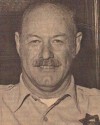
Deputy Sheriff Denny LawrenceRest in Peace Bro…We’ll Continue The Watch
Elko County Nevada Sheriff's Office,
End of Watch: Tuesday, January 17, 2012
Tour: 26 years
Incident Date: 6/26/1982
Deputy Sheriff Denny Lawrence succumbed to a gunshot wound sustained 30 years earlier while investigating a minor traffic accident on US 93 south of Jackpot, Nevada.
Unbeknownst to Deputy Lawrence, the suspect had just been released from the California Department of Corrections. Upon his release, he went to his former cellmate's home where he murdered two people and stole their car. Several campers in the area were helping the man stay warm as they waited for an officer to respond to the accident.
As Deputy Lawrence began to run the man's driver license, the man approached him and suddenly shot him once in the forehead with a .22 caliber handgun. He then fired again, but missed, before taking Deputy Lawrence's service revolver. Two armed citizens then shot and killed the subject as he opened fire on bystanders in an attempt to steal a vehicle to escape.
Deputy Lawrence remained in a coma for several days. He suffered severe brain damage and remained completely disabled in an assisted living home until passing away from medical complications of the wound.
Deputy Lawrence had served in law enforcement for a total of 26 years before he was shot. He is survived by his two sons.

Ex-Houston officer gets 15 years in drug smuggling case
A former veteran Houston police sergeant who took a bribe and used his patrol car to escort a load of cocaine - while clad in his uniform - was sentenced Thursday to 15 years in federal prison without the possibility of parole.
Leslie Aikens 47, was convicted by a jury of corruption in November after being snared by FBI agents and Texas Rangers working on a tip he was in the pocket of drug traffickers.
"Fifteen years is a long time on the federal side," prosecutor James McAlister said Thursday.
Aikens had been with HPD for 19 years and had been assigned to the jail division.
Suspecting he was in cahoots with the traffickers, authorities set up an undercover sting and secretly recorded Aikens agreeing to escort the vehicle and then carrying out the deed, the prosecutor said. He escorted about 15 pounds of cocaine from just outside Houston to inside Loop 610 before peeling off and continuing his official duties.
The word "cocaine" was never used during any recorded conversations, but Aikens knew what he was doing to make the $2,000 he was paid, McAlister said...
...Aikens did not testify during his trial, but his lawyer, Robert A. Jones of Houston, said Thursday that Aikens didn't know drugs were involved and thought he was escorting a load of beer.
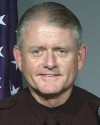

Deputy Sheriff Robert ParisRest in Peace Bro…We’ll Continue The Watch
Stanislaus County California Sheriff's Department
End of Watch: Thursday, April 12, 2012
Age: 53
Tour: 16 years
Deputy Sheriff Robert Paris was shot and killed while he and another deputy were serving an eviction notice at the Whispering Woods apartment complex on Chrysler Drive in Modesto.
The deputies were attempting entry into the residence around 11 a.m. when the subject opened fire, striking and killing Deputy Paris and a civilian. The suspect barricaded himself inside of the residence and has not yet been taken into custody.
Deputy Paris had served with the Stanislaus County Sheriff's Department for 16 years and is survived by his parents, a brother and two adult children.
Medical Daily: Drinking Alcohol May Significantly Enhance Problem Solving Skills
...Scientists found that men who either drank two pints of beer or two glasses of wine before solving brain teasers not only got more questions right, they also were quicker in delivering correct answers, compared to men who answered the questions sober.
While the latest findings go against the traditional beliefs that alcohol impairs analytical thinking and rational thoughts, lead author Professor Jennifer Wiley of the University of Illinois at Chicago discovered that alcohol may enhance creativity problem solving by reducing the mind’s working memory capacity, which is the ability to concentrate on something in particular.
“Working memory capacity is considered the ability to control one’s attention,” Wiley told the Federation of Associations in Behavioral and Brain Sciences (FABBS). “It’s the ability to remember one thing while you’re thinking about something else.”
While the latest study found that alcohol may enhance creative problem solving, previous research found that increased working memory capacity actually led to better analytical problem-solving performance.
Researcher from the current study published in the journal Consciousness and Cognition also found that people who drank alcohol and had a blood alcohol level of 0.07 or higher were worse at completing problems that required attentional control but better at creative problem solving tests...
By Scott Stewart
U.S. Deputy Undersecretary of State Wendy Sherman announced April 3 that the U.S. government's "Rewards for Justice" (RFJ) program was offering a $10 million reward for information leading to the capture and conviction of Hafiz Mohammad Saeed, the founder of Lashkar-e-Taiba (LeT). In other Rewards for Justice cases involving Pakistan, suspects such as Osama bin Laden, Ayman al-Zawahiri, Abdel Basit and Mir Amal Kansi have hidden in Pakistan and maintained relatively low profiles. In this case, Saeed is a very public figure in Pakistan. He even held a news conference April 4 in Rawalpindi announcing his location and taunting the United States by saying he was willing to share his schedule with U.S. officials.
While the Saeed case is clearly a political matter rather than a pure law enforcement or intelligence issue, the case has focused a great deal of attention on Rewards for Justice, and it seems an opportune time to examine the history and mechanics of the program.
Rewards for Justice
In the shadow of the 1983 and 1984 bombings of the U.S. Embassy in Beirut, the 1983 bombing of the U.S. Embassy in Kuwait and the 1983 Marine barracks bombing in Lebanon, the U.S. Congress established the Rewards for Justice program under the 1984 Act to Combat International Terrorism. The program is administered by the U.S. Department of State's Diplomatic Security Service, which was established by the Omnibus Diplomatic Security and Antiterrorism Act of 1986.
The program was intended not only to reward people who provide information that leads to the arrest or conviction of people who plan, commit or attempt terrorist attacks against U.S. targets but also to obtain information that prevents such attacks. U.S. government employees and the employees of other governments are not eligible for the program. The law also authorizes program participants to be entered into the U.S. Department of Justice witness protection program to ensure their safety after providing information. The statute covers arrests of and convictions for the subjects sought and contains a clause for "favorable resolution" of such cases that can be applied when a military strike results in the death of the suspect.
While the RFJ program currently offers large rewards -- $25 million for Ayman al-Zawahiri, the leader of al Qaeda, and $10 million for figures such as Saeed and Taliban leader Mullah Mohammad Omar -- the rewards initially offered by the program were much smaller, up to $500,000. That amount was increased to $1 million in 1990, and then augmented to $2 million total through matching funds provided by the Air Transport Association and the Air Line Pilots Association. The program gained the ability to offer large payments for figures such as al-Zawahiri under the 2001 Patriot Act, which was passed after the 9/11 attacks.
The RFJ got off to a slow start and didn't really begin to have much of an impact until the early 1990s. Its first significant success occurred during the 1991 Persian Gulf War, when an informant in Bangkok tipped off American officials to a pending attack against U.S. interests there by agents of the Iraqi Intelligence Service. The informant received a significant reward and was relocated to a safe place along with his family. However, rewards paid for information leading to the prevention of attacks have proved to be the exception rather than the rule for the RFJ.
The program also figured prominently in the February 1995 capture of Abdel Basit in Pakistan. Basit, widely known as Ramzi Yousef (the name on one of his fraudulent passports), is a Pakistani citizen born in Kuwait. He was the principal operational leader and bombmaker in the 1993 World Trade Center bombing. After fleeing the United States he also planned a number of other failed or thwarted attacks in Manila, Bangkok and Pakistan. Basit is also the nephew of alleged 9/11 planner Khalid Sheikh Mohammed, with whom he conspired. The widespread use of the Ramzi Yousef name and Iraqi passport provided a great deal of confusion regarding his true identity, but it also allowed the government of Pakistan to extradite the Pakistani citizen to the United States with very little public backlash.
The RFJ was also used by the CIA to entice Pakistani tribesmen in June 1997 to hand over Mir Amal Kansi, who was convicted and executed in Virginia, for a January 1993 shooting outside the CIA headquarters in Langley, Va. Kansi, a Pakistani citizen, was rendered from Pakistan instead of extradited, which generated a great deal of controversy inside Pakistan.
While the RFJ advertises that it has paid out more than $100 million in rewards, it must be pointed out that a great deal of that money has been paid in Iraq, where the reward paid for the deaths of Udai and Qusay Hussein alone was $30 million. More than $11 million has been paid out in recent years for leaders of the Abu Sayyaf group in the Philippines. Although $25 million rewards were offered each for Saddam Hussein and Abu Musab al-Zarqawi, rewards were not authorized in their cases.
In order for a high-profile reward such as that offered for Saeed to be established, a case has to be made before an interagency rewards program committee, which is chaired by the director of the Diplomatic Security Service. In addition to State Department personnel, the committee includes representatives from the Department of Justice, the FBI, the National Security Council, the CIA, the Department of Defense, the Department of Treasury and the Department of Homeland Security. This interagency RFJ committee also authorizes the payment of rewards once cases are resolved and an informant is nominated to receive a reward. The secretary of state must personally authorize any reward offer exceeding $5 million, and Secretary of State Hillary Clinton approved the reward for Saeed after receiving the committee's recommendation.
Intelligence can come into the program via the Internet, telephone or mail. After a reward is issued and publicized, the RFJ staff is typically deluged with potential leads -- many of which come from scammers and mentally disturbed individuals. However, most of the good sources the program has developed have contacted U.S. embassies or intelligence officers in person. While the program was once envisioned as an operational entity that would recruit and run informants, it has for the most part become an administrative program that provides rewards to informants run by other agencies.
The CIA also has specially designated operational funds that can be used as payments for intelligence pertaining to terrorism, albeit in a much more low-key fashion. Such payments do not have to undergo the type of public and interagency scrutiny and limitations that RFJ rewards must endure.
Limitations
The RFJ does have its limitations. Despite the huge rewards offered, the program has had very little luck in recent years capturing high-profile figures in Pakistan such as al-Zawahiri, Mullah Omar, Hakeemullah Mehsud or Sirajuddin Haqqani.
Additionally, although the program was instituted in large part as a response to the attacks conducted by Hezbollah against U.S. interests, the program has not had success in capturing figures such as Hasan Izz-al Din, Ali Atwa and Mohamed al-Hamadei, who are accused of hijacking TWA Flight 847 in 1985, despite the $5 million rewards offered for each of them.
One of the big assumptions behind the initiation of the program, and the subsequent increases in the amount of the rewards offered, is that everybody is for sale. If enough money is offered all the suspects will be turned in. Yet despite the very high rewards offered for many suspects, people have not come forward to offer information regarding their locations. This is likely due to two factors. First, it is clear that not everyone is for sale. Most of the people who are close enough to the target to provide actionable intelligence are in fact true believers and can't be bought.
Second, there is a general distrust of the U.S. government in the parts of the world where most of the critical suspects are hiding -- places like Lebanon and Pakistan. Individuals who might otherwise be induced by the cash rewards do not trust the U.S. intention or capability to protect them or their extended families. This protection would be required against reprisal not only from the terrorist group but also from the government itself. A current case in point is the medical doctor who helped locate Osama bin Laden and who is now in prison in Pakistan facing possible high treason charges.
As illustrated by the amounts of the rewards listed above, the program has proved more successful in a place like Iraq, where the U.S. military had a significant presence and control, or a location like the Philippines or Thailand, where the U.S. government is viewed in a somewhat better light.
It is also very difficult to get suspects out of hostile areas controlled by powerful tribes like the Pashtun along the Afghanistan-Pakistan border or powerful groups like Hezbollah in Lebanon, or to nab suspects who are protected by the government in a country like Iran or Pakistan.
In the Saeed case, the RFJ program is clearly being used for political purposes. This is firmly underscored by the fact that the announcement of the reward was made in India, the site of the 2008 Mumbai attacks and Pakistan's longtime regional rival. Certainly, due to sentiment on the Pakistani street and the Pakistani government's need to maintain the use of militant proxies in pursuing its interests in the region, the U.S. government does not expect the government of Pakistan to hand Saeed over. This case simply cannot be divorced from the larger dynamic of U.S.-Pakistani relations in the context of the pending U.S. withdrawal from Afghanistan.
Saeed's choice of Rawalpindi, the heart of the Pakistani military establishment, as the location for his news conference clearly indicates that he feels secure that the Pakistani government will continue to protect him. The U.S. government certainly knows this. Therefore, the intent of the U.S. government in this case is not so much to facilitate the capture of Saeed but to use the reward as a mechanism to pressure the government of Pakistan to keep under control the militant networks that have evolved out of the LeT.

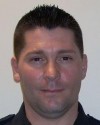
Deputy Sheriff Ryan TveliaRest in Peace Bro…We’ll Continue The Watch
Norfolk County Massachusetts Sheriff's Office,
End of Watch: Tuesday, April 10, 2012
Age: 42
Tour: 11 years
Deputy Sheriff Ryan Tvelia was killed in a motorcycle accident on I-95, in Walpole, while en route to Quincy to assist with the funeral detail for the mother of fellow deputy.
His department-issued motorcycle collided with a vehicle near Exit 11 at approximately 7:40 am. He was then struck by a second vehicle, suffering more severe injuries. He was transported to Norwood Hospital where he was pronounced dead.
Deputy Tvelia had served with the Norfolk County Sheriff's Office for 11 years. He is survived by his wife, daughter, and two sons.
1. Blaming your farts on me...not funny...not funny at all!
2. Yelling at me for barking...I'M A DAMN DOG!
3. Taking me for a walk, then not letting me check stuff out. Exactly whose walk is this anyway?
4. Any trick that involves balancing food on my nose. Stop it!
5. Any haircut that involves bows or ribbons. Now you know why we chew your stuff up when you're not home.
6. The sleight of hand, fake fetch throw. You fooled a dog! Whoooo Hoooooo! What a proud moment for the top of the food chain!
7. Taking me to the vet for 'the big snip', then acting surprised when I freak out every time we go back!
8. Getting upset when I sniff the crotches of your guests. Sorry, but I haven't quite mastered that handshake thing yet.
9. Dog sweaters. Hello? Haven't you noticed the fur?
10. How you act disgusted when I lick myself. Look, we both know the truth. You're just jealous.
Now lay off me on some of these things. We both know who's boss here! You don't see me picking up your poop do you?

CHICAGO — Call it the Sheriff’s Gambit.
A sheriff in Illinois is turning to kings, queens and rooks to help teach inmates at his jail not to behave like pawns.
Cook County Sheriff Tom Dart launched a chess program at the county jail in Chicago. The law enforcement officer, known for making unusual moves in the name of justice, hopes inmates can take what they learn from a game that rewards patience and problem-solving and apply it to their own lives.
“We see it day-in and day-out that people want instant gratification and that often individuals do not think before they act,” Dart said Monday. “Thoughtless actions will hurt you while playing chess and hurt you more on the street.”...
...With the jail chess program, the sheriff got help from Mikhail Korenman. The longtime teacher of the game, whose chess club includes one of the sheriff’s children, came up with the idea.
“I thought it would be good for any people,” said Korenman, a member of the United States Chess Federation Council.
He broached the subject with Dart earlier this year. And on Monday, he accompanied the sheriff to the jail to watch some inmates play.
“It helps kids and it should help the people in the prisons get back to a normal life, make good decisions,” Korenman said, adding that he knows of no other similar jail program in the U.S.
He sees chess as being about making decisions with an eye toward how they will affect the ultimate outcome of the game. “(Players) have to make decisions and analyze their decisions,” Korenman said...
...Dart’s office said 100 inmates are participating now. Ultimately, about 150 are to take part.
Iran's Strategy
By George Friedman
For centuries, the dilemma facing Iran (and before it, Persia) has been guaranteeing national survival and autonomy in the face of stronger regional powers like Ottoman Turkey and the Russian Empire. Though always weaker than these larger empires, Iran survived for three reasons: geography, resources and diplomacy. Iran's size and mountainous terrain made military forays into the country difficult and dangerous. Iran also was able to field sufficient force to deter attacks while permitting occasional assertions of power. At the same time, Tehran engaged in clever diplomatic efforts, playing threatening powers off against each other.
The intrusion of European imperial powers into the region compounded Iran's difficulties in the 19th century, along with the lodging of British power to Iran's west in Iraq and the Arabian Peninsula following the end of World War I. This coincided with a transformation of the global economy to an oil-based system. Then as now, the region was a major source of global oil. Where the British once had interests in the region, the emergence of oil as the foundation of industrial and military power made these interests urgent. Following World War II, the Americans and the Soviets became the outside powers with the ability and desire to influence the region, but Tehran's basic strategic reality persisted. Iran faced both regional and global threats that it had to deflect or align with. And because of oil, the global power could not lose interest while the regional powers did not have the option of losing interest.
Whether ruled by shah or ayatollah, Iran's strategy remained the same: deter by geography, protect with defensive forces, and engage in complex diplomatic maneuvers. But underneath this reality, another vision of Iran's role always lurked.
Iran as Regional Power
Possessing an essentially defensive posture, a vision of Iran as a regional power remained. The shah competed with Saudi Arabia over Oman and dreamed of nuclear weapons. Ahmadinejad duels with Saudi Arabia over Bahrain, and also dreams of nuclear weapons. When we look beyond the rhetoric -- something we always should do when studying foreign policy, since the rhetoric is intended to intimidate, seduce and confuse foreign powers and the public -- we see substantial continuity in Iran's strategy since World War II. Iran dreams of achieving regional dominance by breaking free from its constraints and the threats posed by nearby powers.
Since World War II, Iran has had to deal with regional dangers like Iraq, with which it fought a brutal war lasting nearly a decade and costing Iran about 1 million casualties. It also has had to deal with the United States, whose power ultimately defined patterns in the region. So long as the United States had an overriding interest in the region, Iran had no choice but to define its policies in terms of the United States. For the shah, that meant submitting to the United States while subtly trying to control American actions. For the Islamic republic, it meant opposing the United States while trying to manipulate it into taking actions in the interests of Iran. Both acted within the traditions of Iranian strategic subtlety.
The Islamic republic proved more successful than the shah. It conducted a sophisticated disinformation campaign prior to the 2003 Iraq war to convince the United States that invading Iraq would be militarily easy and that Iraqis would welcome the Americans with open arms. This fed the existing U.S. desire to invade Iraq, becoming one factor among many that made the invasion seem doable. In a second phase, the Iranians helped many factions in Iraq resist the Americans, turning the occupation -- and plans for reconstructing Iraq according to American blueprints -- into a nightmare. In a third and final phase, Iran used its influence in Iraq to divide and paralyze the country after the Americans withdrew.
As a result of this maneuvering, Iran achieved two goals. First, the Americans disposed of Iran's archenemy, Saddam Hussein, turning Iraq into a strategic cripple. Second, Iran helped force the United States out of Iraq, creating a vacuum in Iraq and undermining U.S. credibility in the region -- and sapping any U.S. appetite for further military adventures in the Middle East. I want to emphasize that all of this was not an Iranian plot: Many other factors contributed to this sequence of events. At the same time, Iranian maneuvering was no minor factor in the process; Iran skillfully exploited events that it helped shape.
There was a defensive point to this. Iran had seen the United States invade the countries surrounding it, Iraq to its west and Afghanistan to its east. It viewed the United States as extremely powerful and unpredictable to the point of irrationality, though also able to be manipulated. Tehran therefore could not dismiss the possibility that the United States would choose war with Iran. Expelling the United States from Iraq, however, limited American military options in the region.
This strategy also had an offensive dimension. The U.S. withdrawal from Iraq positioned Iran to fill the vacuum. Critically, the geopolitics of the region had created an opening for Iran probably for the first time in centuries. First, the collapse of the Soviet Union released pressure from the north. Coming on top of the Ottoman collapse after World War I, Iran now no longer faced a regional power that could challenge it. Second, with the drawdown of U.S. forces in the Persian Gulf and Afghanistan, the global power had limited military options and even more limited political options for acting against Iran.
Iran's Opportunity
Iran now had the opportunity to consider emerging as a regional power rather than solely pursuing complex maneuvers to protect Iranian autonomy and the regime. The Iranians understood that the moods of global powers shifted unpredictably, the United States more than most. Therefore it knew that the more aggressive it became, the more the United States may militarily commit itself to containing Iran. At the same time, the United States might do so even without Iranian action. Accordingly, Iran searched for a strategy that might solidify its regional influence while not triggering U.S. retaliation.
Anyone studying the United States understands its concern with nuclear weapons. Throughout the Cold War it lived in the shadow of a Soviet first strike. The Bush administration used the possibility of an Iraqi nuclear program to rally domestic support for the invasion. When the Soviets and the Chinese attained nuclear weapons, the American response bordered on panic. The United States simultaneously became more cautious in its approach to those countries.
In looking at North Korea, the Iranians recognized a pattern they could use to their advantage. Regime survival in North Korea, a country of little consequence, was uncertain in the 1990s. When it undertook a nuclear program, however, the United States focused heavily on North Korea, simultaneously becoming more cautious in its approach to the north. Tremendous diplomatic activity and periodic aid was brought to bear to limit North Korea's program. From the North Korean point of view, actually acquiring deliverable nuclear weapons was not the point; North Korea was not a major power like China and Russia, and a miscalculation on Pyongyang's part could lead to more U.S. aggression. Rather, the process of developing nuclear weapons itself inflated North Korea's importance while inducing the United States to offer incentives or impose relatively ineffective economic sanctions (and thereby avoiding more dangerous military action). North Korea became a centerpiece of U.S. concern while the United States avoided actions that might destabilize North Korea and shake loose the weapons the north might have.
The North Koreans knew that having a deliverable weapon would prove dangerous, but that having a weapons program gave them leverage -- a lesson the Iranians learned well. From the Iranians' point of view, a nuclear program causes the United States simultaneously to take them more seriously and to increase its caution while dealing with them. At present, the United States leads a group of countries with varying degrees of enthusiasm for imposing sanctions that might cause some economic pain to Iran, but give the United States a pretext not to undertake the military action Iran really fears and that the United States does not want to take.
Israel, however, must take a different view of Iran's weapons program. While not a threat to the United States, the program may threaten Israel. The Israelis' problem is that they must trust their intelligence on the level of development of Iran's weapons. The United States can afford a miscalculation; Israel might not be able to afford it. This lack of certainty makes Israel unpredictable. From the Iranian point of view, however, an Israeli attack might be welcome.
Iran does not have nuclear weapons and may be following the North Korean strategy of never developing deliverable weapons. If they did, however, and the Israelis attacked and destroyed them, the Iranians would be as they were before acquiring nuclear weapons. But if the Israelis attacked and failed to destroy them, the Iranians would emerge stronger. The Iranians could retaliate by taking action in the Strait of Hormuz. The United States, which ultimately is the guarantor of the global maritime flow of oil, might engage Iran militarily. Or it might enter into negotiations with Iran to guarantee the flow. An Israeli attack, whether successful or unsuccessful, would set the stage for Iranian actions that would threaten the global economy, paint Israel as the villain, and result in the United States being forced by European and Asian powers to guarantee the flow of oil with diplomatic concessions rather than military action. An attack by Israel, successful or unsuccessful, would cost Iran little and create substantial opportunities. In my view, the Iranians want a program, not a weapon, but having the Israelis attack the program would suit Iran's interests quite nicely.
The nuclear option falls into the category of Iranian manipulation of regional and global powers, long a historic necessity for the Iranians. But another, and more significant event is under way in Syria.
Syria's Importance to Iran
As we have written, if the Syrian regime survives, this in part would be due to Iranian support. Isolated from the rest of the world, Syria would become dependent on Iran. If that were to happen, an Iranian sphere of influence would stretch from western Afghanistan to Beirut. This in turn would fundamentally shift the balance of power in the Middle East, fulfilling Iran's dream of becoming a dominant regional power in the Persian Gulf and beyond. This was the shah's and the ayatollah's dream. And this is why the United States is currently obsessing over Syria.
What would such a sphere of influence give the Iranians? Three things. First, it would force the global power, the United States, to abandon ideas of destroying Iran, as the breadth of its influence would produce dangerously unpredictable results. Second, it would legitimize the regime inside Iran and in the region beyond any legitimacy it currently has. Third, with proxies along Saudi Arabia's northern border in Iraq and Shia along the western coast of the Persian Gulf, Iran could force shifts in the financial distribution of revenues from oil. Faced with regime preservation, Saudi Arabia and other Gulf states would have to be flexible on Iranian demands, to say the least. Diverting that money to Iran would strengthen it greatly.
Iran has applied its strategy under regimes of various ideologies. The shah, whom many considered psychologically unstable and megalomaniacal, pursued this strategy with restraint and care. The current regime, also considered ideologically and psychologically unstable, has been equally restrained in its actions. Rhetoric and ideology can mislead, and usually are intended to do just that.
This long-term strategy, pursued since the 16th century after Persia became Islamic, now sees a window of opportunity opening, engineered in some measure by Iran itself. Tehran's goal is to extend the American paralysis while it exploits the opportunities that the U.S. withdrawal from Iraq has created. Simultaneously, it wants to create a coherent sphere of influence that the United States will have to accommodate itself to in order to satisfy the demand of its coalition for a stable supply of oil and limited conflict in the region.
Iran is pursuing a two-pronged strategy toward this end. The first is to avoid any sudden moves, to allow processes to run their course. The second is to create a diversion through its nuclear program, causing the United States to replicate its North Korea policy in Iran. If its program causes an Israeli airstrike, Iran can turn that to its advantage as well. The Iranians understand that having nuclear weapons is dangerous but that having a weapons program is advantageous. But the key is not the nuclear program. That is merely a tool to divert attention from what is actually happening -- a shift in the balance of power in the Middle East.
U.S. Attorney General Eric Holder has declared that there is no proof that in-person voter fraud is a problem. He's about to see proof that even he can't deny.
In a new video (below) provided to Breitbart.com, James O’Keefe’s Project Veritas demonstrates why Holder should stop attacking voter ID laws--by walking into Holder’s voting precinct and showing the world that anyone can obtain Eric Holder’s primary ballot. Literally.
The video shows a young man entering a Washington, DC polling place at 3401 Nebraska Avenue, NW, on primary day of this year--April 3, 2012--and giving Holder’s name and address. The poll worker promptly offers the young man Holder’s ballot to vote.
The young man then suggests that he should show his ID; the poll worker, in compliance with DC law, states: “You don’t need it. It’s all right. As long as you’re in here, you’re on our list, and that’s who you say you are, you’re okay.”
The young man replies: “I would feel more comfortable if I just had my ID. Is it alright if I go get it?" The poll worker agrees.
"I’ll be back Faster than you can say Furious,” the young man jokes on his way out, in a reference to the Fast and Furious gunwalking scandal that has plagued Holder’s Department of Justice.
Holder has maintained that voter fraud is not a major problem in the United States, and that voter ID would not curb voter fraud in any case.
As Project Veritas has proven, voter fraud is easy and simple--and may be increasingly common in the absence of voter ID laws.
Project Veritas has already shown how dead people can vote in New Hampshire, prompting the state senate to pass a voter ID law; they’ve also shown people can use celebrity names like Tim Tebow and Tom Brady to vote in Minnesota, prompting the state legislature to put voter ID on the ballot as a constitutional amendment.
By Scott Stewart
Mohammed Merah, the suspect in a string of violent attacks culminating with the March 19 shooting deaths of three children and a rabbi at the Ozar Hatorah School in Toulouse, France, committed suicide by cop March 22 after a prolonged standoff at his Toulouse apartment. Authorities believed Merah also to have shot and killed a paratrooper March 11 in Toulouse and two other paratroopers March 15 in Montauban.
While Merah's death ended his attacks, it also began the inevitable inquiry process as French officials consider how the attacks could have been prevented. The commissions or committees appointed to investigate such attacks normally take months to complete their inquiries, so the findings of the panel looking into the Merah case will not be released in time to have any impact on the French presidential election set to begin April 22. However, such findings are routinely used for political purposes and as ammunition for bureaucratic infighting.
Like the suspects in many recent terrorist attacks in other countries, Merah had previously come to the attention of French authorities. He reportedly traveled at least twice to the Afghanistan/Pakistan border region and was interviewed by authorities upon his return to France in November 2011. Some media reports have even suggested that Merah had worked as an informant for French authorities. Merah's older brother, Abdulkader Merah, also reportedly was investigated in 2007 for helping French Muslim men travel to Iraq to fight. These facets of the case will certainly be examined in detail.
While it will be many months before the official reports are published, already we can draw several conclusions from this case. This is because the same essential problems occur whenever a Western government attempts to pre-empt vague, potential threats posed by an amorphous enemy. Indeed, these issues surfaced several times following attacks by Islamist militants in the United States, the Netherlands, Spain and the United Kingdom. They also were seen in the July 2011 attacks in Norway.
In short, government bureaucracies do not deal well with ambiguity -- and terrorist actors, particularly at the grassroots and lone-wolf levels, are nothing if not ambiguous. They tend to be insular and dedicated, and they might not be meaningfully connected to the command, control and communication mechanism of any known militant group or actor. This makes them exceedingly hard to identify, let alone pre-empt, before an attack is carried out.
As the political debates in London following the 2005 attacks (and in Washington following 9/11) have shown, that governments somehow are expected to prevent all terrorist attacks. When one occurs, political investigations into the cause of intelligence failures ensue and, on occasion, considerable finger-pointing and agency reorganizing. The public, after all, needs to feel secure.
But the uncomfortable truth is that there is no such thing as complete security. Given the nature of the terrorist threat and terrorist actors, no intelligence or security service in the world could identify every aspiring militant who lives in or enters a country or could pre-empt their potential acts of violence. This is impossible even in states that employ draconian security measures, and the challenge is obviously amplified in societies that value civil liberties and due process. The challenge is especially pronounced in cases where the subject is a citizen who has not yet broken any laws, or there is not sufficient evidence to support prosecution for any violations. A distinct tension exists between security and individual liberties.
Within that context, then, the tactical challenges and expectations faced by counterterrorism agencies are useful to consider.
Puzzles
Certainly, when the Merah case is reviewed in hindsight and in isolation it will become obvious that there were clues -- pieces of a puzzle -- that could have been fitted together to indicate Merah posed a threat and warranted focused intelligence and investigative efforts. As noted above, a few of those clues already have appeared in the press, and there are sure to be other clues revealed as the investigation progresses.
Anyone can be a brilliant investigator after the fact, but solving a puzzle in real time is very difficult -- especially considering that Merah did not exist in isolation but was one of myriad potential threats French authorities faced. France is not North Korea, a homogeneous society where the few resident foreigners easily can be monitored. France is a huge, multicultural country that is home to many religious and political dissidents and refugees. Moreover, France's Muslim population may number as many as 5 or 6 million, which equates to somewhere between 8 and 10 percent of the total population. Thus, even if one were to use profiling techniques, which can be problematic in their own right, identifying radical Islamists -- who make up only a small percentage of France's Muslim population -- would be a tremendous undertaking.
Even if one were able to positively identify all the radical Islamists in France, there would be a further challenge of differentiating between what could be called "jihadist cheerleaders" -- radicals who voice political or ideological support for the jihadist cause but are not actually violent -- from those militant jihadists willing to commit attacks. The most vociferous are not always the most likely to conduct an attack, but their heated rhetoric usually draws a lot of scarce government resources. Even among those willing to wage physical jihad, there is an additional difference between those who believe they can fight only in Muslim lands and those who believe they can conduct attacks in the West.
Sorting through the galaxy of potential suspects is a daunting task for the French government. Obviously, if there is intelligence that a suspect is directly linked to al Qaeda or another known terrorist group, it is easy to classify that individual as a high-priority intelligence target. Such a suspect would then merit 24/7 physical and electronic surveillance, an endeavor that could tie up as many as 100 people, including surveillance operatives, supervisors, technicians, photographers, forensics experts, analysts and interpreters -- and this would be to monitor only one suspect.
But in the real world, intelligence is seldom, if ever, so black-and-white. And quite often, investigators and analysts are left to work with bits of partial information. This problem is compounded by the very structure of the jihadist movement, which consists of al Qaeda, its franchises, grassroots sympathizers and lone wolves. The jihadist landscape has been described as a "network of networks" or a "network of relationships," a characterization that has become even more apt as the capabilities of the central al Qaeda group have been degraded. In application, this means that when considering any particular plot, there may not be any clear-cut chain of command or communications networks on which to focus intelligence resources. The network within which jihadists operate is difficult to delineate, as are the targets they choose to attack. This same ambiguity also exists in the non-jihadist realm as seen in attackers such as Anders Breivik, Timothy McVeigh, Theodore Kaczynski and Eric Rudolph.
This means that, without hard intelligence indicating a link between a particular suspect and a known militant group or network, government agencies often place suspected operatives into lower priority categories, which means they receive less investigation and intelligence monitoring. Indeed, it is often nearly impossible to gather hard intelligence about a person's thoughts and intentions, and this is the crux of the dilemma facing the French and other governments as they attempt to assess the threat posed by individuals and small, insular groups.
Not all puzzles are equal. Investigating an attack after the fact is a matter of identifying the puzzle pieces and placing them together to form a complete picture of what happened. But identifying plotters and their plans before an attack occurs is far more difficult. It is more like sifting through the pieces of thousands of different puzzles, all jumbled together in one big pile, and then attempting to create a complete picture, without knowing what the end result -- the attack -- will look like.
Tools and Limitations
Several tools can be used to identify and pre-empt terrorist attacks. These are human-intelligence sources, signals intelligence, investigation and analysis. All of these tools are useful, but none are perfect.
Recruiting human sources from the communities in which militants are likely to live and move is invaluable, but any source can see only what is within his or her field of vision, and many sources exhibit biases that can cloud their collection. Militant cells are built on relationships and trust -- often based on familial or tribal connections -- which are difficult to establish quickly. And when the concern is about militants at the grassroots or lone-wolf level, the universe of people with whom human sources would need to establish close relationships becomes very large indeed. Moreover, even if a source is well-placed, it can be difficult to judge a suspect's motivations and intentions unless one knows him or her intimately. In the Merah case, even some who claimed to have known the suspect well were surprised to learn of his alleged involvement in the attacks.
The utility of signals intelligence can also be limited, especially in light of past successes. Signals intelligence does not work well when suspects practice careful operational security (such as foregoing the use of satellite telephones, email or cell phones). Even a fairly moderate and intuitive amount of operational security can increase the difficulty of detection by orders of magnitude. In the case of grassroots operatives, escaping scrutiny simply means not committing acts that would bring someone to the attention of authorities, such as communicating with known members of terrorist groups or visiting radical Internet sites.
A potential suspect can be investigated, as was apparently the case with Merah, as well as suspects in past attacks such as London bomber Mohamed Siddique Khan, Norwegian bomber and shooter Anders Breivik and Fort Hood shooter Nidal Hassan. However, due to the large numbers of potential suspects it is very unlikely investigators will conduct a full probe unless they note obvious signs of criminal intent or activity during their preliminary inquiry. Certainly, attackers are bound to the terrorist attack cycle, but unless they exhibit such behavior while being investigated, chances are the authorities are going to miss it even if the attackers are practicing sloppy tradecraft.
In any setting, intelligence is little more than raw data until analysis is applied -- but drawing the correct conclusions is difficult if one has incomplete data, is given the wrong kinds of material to analyze or lacks the proper mindset and training to make useful inferences. Bias, assumptions and preconceptions also pose significant problems. In the Breivik case, authorities noted his acquisition of large quantities of fertilizer but discounted him as a threat after interviewing him. It appears that as a white Norwegian, he did not fit the investigators' preconception of a potential threat. In other words, they were envisioning the wrong finished picture for that particular puzzle.
The fact is the resources available for investigations; physical and electronic surveillance; recruiting and handling human sources; and completing analyses from the field are finite for any government. In the French case particularly, one problem was that authorities had to devote significant resources to monitoring the "jihadist cheerleaders" (although some of those individuals are now being rounded up; the French government announced April 2 that it was deporting five radical Islamic preachers).
Monitoring and deporting cheerleaders does not fully address the problem of distinguishing those intending to conduct an attack from a host of potential attackers when the government has not been able to collect hard intelligence pertaining to that intent and activity. It is from this constellation of individuals that Merah and several other successful attackers have arisen in recent years. For the authorities, it is a question of justifying the expenditure of limited resources to monitor an individual or group whose connections to terrorism are questionable while staying fully engaged in monitoring others with solid connections to terrorism. This is how grassroots jihadists and lone wolves can, and will, slip through the net, sometimes with deadly effect.
At this time, it is impossible to tell how many individuals or small cells are or might be planning attacks in France, Britain or the United States. There are many variables involved, and no government agency should be expected to provide complete security against potential -- but unknown -- threats. Moreover, with each arrest, each intelligence find, each videotaped speech or warning, the game changes: Each side shifts, adjusts and adapts to the moves being made by the other side in order to attain or maintain an advantage. This type of shift was clearly illustrated by the calls by jihadist leaders in recent years for sympathizers to conduct simple attacks close to home with readily available weapons.
None of this is intended to argue that the missions of intelligence and security agencies are futile, that funding should be cut or efforts abandoned. In a world where complete safety is not possible, the question becomes one of aligning resources to prevent the most serious threats to a society and mitigating the effects of attacks that cannot be prevented. Such an approach stands in stark contrast to that of attempting to guard every potential target against every conceivable threat.
Indeed, acknowledging that it is impossible to prevent all acts of violence could provide a starting point for a more meaningful discussion of effective counterterrorism tactics. Knowing there is a limit to what governments can do can lead to smarter ways of doing things -- focusing efforts and resources, collecting information and turning that information into actionable intelligence while safeguarding individual liberties.
Candidates in Orbit
The late, great U.S. space program.
P.J. O'Rourke
We’ve had some fun with space policy in the 2012 presidential race. Saturday Night Live, the Daily Show, candidate debates, and other forms of low comedy had us all laughing at Newt Gingrich’s proposal for moon statehood. Ron Paul said, “I think we should send some politicians up there.” So it would be a blue state, and there goes Republican control of the Senate. Mitt Romney said, “If I had a business executive come to me and say they wanted to spend a few hundred billion dollars to put a colony on the moon, I’d say, ‘You’re fired.’ ” Ha, ha. A president, a Congress, and a number of wives have tried to fire Newt, and he’s still on the job.
But fun with space policy is about all we’ve had. Space is not an issue in this election. There are good reasons it should be. NASA is cheap. Its budget is $17.7 billion, one-fourth the budget for the Department of Education, which ought to—considering the state of public schools, where none of the kids can do this math—give its money to NASA.
National prestige is important, even if our current president doesn’t know it. China is trying to become America without democracy while America is trying to become France without cheese calories.
We’ve gained technological advantages from our space program, and not just Tang and Teflon but satellite radio for listening to Howard Stern, GPS telling Mitt Romney how to get to Washington without going by way of the moon, the foam that protects skulls in football helmets and keeps my little linebacker from becoming any dumber than 8-year-olds already are, the cordless drill to facilitate household DIY projects, and the scratchproof sunglasses my wife wears to conceal eye-rolling at the way the bookshelves tilt. The hang glider, that California fool-killer, owes its “para-wing” to NASA research on returning payloads to Earth. Then there’s hazardous gas sensors, filtration devices for kidney dialysis, flame-resistant clothing for firemen, and the Hubble telescope. The Hubble’s imaging problems turned out to be the same problems doctors had looking for tumors in mammograms. Someone you love is alive today, not because of a NASA success, but because of a NASA failure—a design flaw in the Hubble telescope.
Also, the first rule of tactics, military and diplomatic, is to hold the high ground. It gets no higher than outer space. And space keeps the politically powerful distracted with grand, visionary projects. Otherwise they’d be tempted to meddle in our personal affairs and might—who knows?—start subjecting us to full body searches at airports or telling us which health insurance policies to buy.
But the U.S. space program is short of machinery, muddled about goals, and low in morale. The space shuttle has been retired. Thousands of NASA employees and contractors lost their jobs. We have no way to get a man into space except by asking Vladimir Putin, “Mother Russia, May I?”
The Bush-era Constellation program, with its moon and Mars capabilities, was canceled. Neil Armstrong called the decision “devastating.” The Augustine Commission, an Obama administration panel of scientists, retired astronauts, and aerospace experts chaired by former Lockheed Martin CEO Norman Augustine, judged Constellation to be hopelessly behind schedule, underfunded, and over budget. I’m glad they didn’t judge me.
The new Space Launch System or SLS, the heavy launch vehicle that will replace Constellation’s Ares I and Ares V rockets, won’t be ready for a manned flight until at least 2021. Where the SLS will go is, as it were, up in the air. Lunar orbit? Asteroid? Lagrange point? (A Lagrange point is the place between two gravitational bodies where an object is held stationary in perfect equilibrium.) What if Jack Kennedy had declared we were going to put a man on a Lagrange point by the end of the decade? The nation would have been inspired to watch ballet in a suburb of Chicago...
Five conservative Supreme Court men join Mitt Romney, Paul Ryan, John Boehner and Ron Paul in the war against women - The Hill's Pundits Blog
In my latest column, Supreme Court on trial, I initiated a new discussion about how five conservative men on the Supreme Court have joined partisan Republicans in the war against laws and programs that serve women. In June we will remember the anniversary of the infamous 5-4 Supreme Court decision discrimination defeating women opposing against Wal-mart, when the five men joined fellow Republicans against efforts to win pay equity for women and end discrimination against women. It will not help Republicans to put South Carolina Gov. Nikki Haley, who is highly unpopular at home, on the presidential ticket with “war against women” politicians such as Mitt Romney, Paul Ryan, John Boehner and Ron Paul.
Actions have consequences. Policies have impact. Court rulings have results. The Supreme Court conservatives have joined and at times led the war against women on a range of issues, especially in decisions that hurt women and support those who discriminate against women in hiring, promotion and pay. The Wal-mart decision was a disgrace. Republican opposition to equal pay for women is a disgrace. The vulture capitalism of Mitt Romney is a disgrace. The Ayn Rand-like reactionary budgeting of Wisconsin Rep. Paul Ryan (R) is a dagger in the hearts of programs that serve women. The Austrian economics of Ron Paul is from the wrong century and the wrong continent, and profoundly hurts women.
If the Supreme Court throws out the healthcare law as unconstitutional it will foment a powerful political backlash and escalate the judicial front in the war against women.I love in three paragraphs she demands the Court "Republicans should step back, uphold the law and begin acting with judicial impartiality." while she demands it's influenced by supposed American opinion to uphold the law, "If the Supreme Court throws out the healthcare law as unconstitutional it will foment a powerful political backlash.." It is not inparcialty she wants but leftist dogma enshroud into our founding document by judicial fiat. Rule by 5 unelected judges as opposed to the majority. BTW sis, Obamacare is deeply opposed by the majority of this country.
The Supreme Court is indeed on trial with the American people and the high court of history.
The five men on the Supreme Court who promote these wars against women decisions and join with war against women Republicans should step back, uphold the law and begin acting with judicial impartiality. They should stop acting like partisan Republicans and extreme ideologues with an agenda that dishonors the law, and does grave damage and injustice to the women of America.
echosyst 21 hours ago
Was this a parody or a serious article?
Winter snowfall record set in Anchorage
(Reuters) - A storm dumped more than 4 inches of snow on Anchorage over the weekend, bringing the total snowfall for Alaska's largest city to a record 11.2 feet for the year, the National Weather Service said on Sunday.
The official snow tally was 134.5 inches, 1.9 inches above the previous record set in the winter of 1954-1955, the weather service said.
The average for winter snowfall in Anchorage over the past 30 years is 74.5 inches, the agency said...
...With many snow storage sites full, the Anchorage Assembly created temporary storage areas in late February. Some of the snow piles are expected to last through the summer.
Several roofs in Anchorage have caved in under the weight of accumulated snow, including the roof of a church auditorium.
There are similar concerns about roofs in the towns of Valdez and Cordova, where the snowpack is much higher than normal...
...Winter sports enthusiasts have reveled in the record snowfall.
Alyeska Resort in Girdwood, the state's largest ski area, is enjoying a banner season. And Chugach Powder Guides, a Girdwood company that runs helicopter tours, is almost completely booked...
Survey reveals hotel guests want Wi-Fi over everything else - USATODAY.com
A new Hotels.com survey reveals which amenities guests want the most.
What is your favorite hotel amenity?
Survey says: Free Wi-Fi.
OK, no surprise there, but according to a new Hotels.com survey, hotel guests would overwhelmingly take Wi-Fi over high-end coffee makers, an iPod dock, video game systems and workout equipment/DVDs. Over high-end coffee makers? That surprised me, but clearly I'm addicted to caffeine.
Many of the 415 guests polled reported that the availability of Wi-Fi factored into their decision on which hotel to book. More than one-third—38%--said free Wi-Fi was a must when staying at a hotel, 35% said it is the single amenity they want to see more of in hotels, and 31% said they want it to become a standard amenity at hotels this year...
...The survey revealed some more interesting tidbits:
23% of guests said their favorite modern in-room amenity was the use of iPads. • 45% reported that their favorite new amenities are happy hours, wine tastings or any other activities involving free food and drinks.
31% of travelers want complimentary bottled water in their hotel rooms (34% of female travelers
and 24% of male travelers)...

Deputies: Shots fired at Augusta Waffle House stemmed from Facebook
AUGUSTA, Ga. --- Investigators have arrested a female they say opened fire in the air at a Waffle House early this morning.
Shots were fired outside the Waffle House on Wrightsboro Road near Marks Church road just before 5 a.m. Deputies responded and found two groups of females involved.
One group was inside the restaurant when deputies say another group approached them and started a verbal altercation. The fight carried outside where a female fired four shots in the air with a handgun.
Investigators think the argument stemmed from a post on Facebook. They believe it might be related to a relationship status. It's not clear what relation the two groups have.
Deputies say the group scattered in three different cars. The accused shooter was arrested in an Impala near the restaurant. Deputies found one gun outside a nearby Taco Bell, and another gun in one of the vehicles apprehended in connection with the shooting...


Senior Police Officer Jaime PadronRest in Peace Bro…We’ll Continue The Watch
Austin Texas Police Department
End of Watch: Friday, April 6, 2012
Age: 41
Tour: 17 years
Badge # 6674
Senior Police Officer Jaime Padron was shot and killed after responding to the Walmart on the I-35 Frontage Road to investigate reports of an intoxicated man at approximately 2:30 am.
Upon arriving at the scene, Officer Padron was immediately attacked by the man and was shot once in the neck at point blank range. Despite being wounded, he was able to inform dispatchers that he had been shot. Two Walmart employees tackled the suspect and held him down until responding units arrived and placed him under arrest.
Officer Padron succumbed to his wound at the scene.
Officer Padron was a U.S. Marine Corps veteran and had served with the Austin Police Department for three years. He had previously served with the Austin Airport Police Department and the San Angelo Police Department for 14 years. He is survived by his two young daughters and parents.


