Police Work, Politics and World Affairs, Football and the ongoing search for great Scotch Whiskey!

Thursday, April 11, 2013

K9 Down


K9 Rocky
New Canaan Connecticut Police Department
End of Watch: Sunday, April 7, 2013
Breed: German Shepherd
Age: 3
Gender: M
Cause: Asphyxiation
Incident Date: 4/7/2013

K9 Rocky died after choking on a ball during a training exercised with his handler.

During the exercised he was given his usual ball as a reward and it became lodged in his throat. His handler attempted to remove the blockage but was unable to open an air passage.

K9 Rocky had served with the New Canaan Police Department for only six months.
Rest in Peace Rocky …and enjoy running the green grass of Heaven!

In Memory of all Police Dogs


They handled themselves with beauty & grace
And who could ever forget that beautiful face
Whether at work; or at home; whatever the test
They always worked hard; and did their best

They were real champions; at work or at play
But their lives were cut short; suddenly one day
While working on the job with their partner one day
They put themselves out on a limb; out into harms way

They gave the ultimate sacrifice; any dog can give
They gave up their life; so someone could live
The best of their breed; as his partner and anyone would say
Many hearts are now broken; that he had to prove it this way

Now as the trees are blowing in the gentle breeze
The sun is shining; thru the leaves on the trees
The meadows are green; and the grass grows tall
Off in the distance they can see a waterfall

As they look over the falls; down through the creek
The water flows gently; as a rabbit sneaks a peek
Far up above; in the deep blue sky
They see the birds soar high; as they fly by

They see animals playing; at the bridge by a waterfall
Chasing each other; and just having a ball
They play all day; from morning to night
There's no more rain; just warm sunlight

Off in the distance; they hear trumpets blow
Then all the animals look up; and notice a bright glow
The harps would play and the angels would sing
As they know they've come home; they've earned their wings

We remember that they died; in the line of duty
And are now with the Lord; sharing in heaven's beauty
Off to the meadows now; where they can play and roam free
With an occasional rest stop; under a tall oak tree

No more bad guys to chase; or bullets to take
Just a run through the meadow; down to the lake
A quick splash in the water; then back to the shore
Then it's off to the forest; to go play some more

These special dogs are back home; up in heaven above
They're cradled in God's arm's; and covered with His love
We'll light a candle for all of them; in the dark of night
In loving memory of all; these very special knights

By John Quealy

Officer Down


Sheriff Eugene Crum
Mingo County West Virginia Sheriff's Office
End of Watch: Wednesday, April 3, 2013
Tour: 12 years
Badge # 700
Incident Date: 4/3/2013

Sheriff Eugene Crum was shot and killed near the Mingo County Courthouse in Williamson at about noon. Sheriff Crum was eating lunch in his vehicle while conducting surveillance on a suspected illegal pharmaceutical operation. A vehicle pulled alongside and a subject exited the vehicle and shot Sheriff Crum four times at point-blank range.

The suspect fled the scene and crashed during the pursuit near Hell Creek. He was shot after pointing a firearm at a pursuing Mingo County deputy and was then apprehended.

Sheriff Crum had served as sheriff of Mingo County since January. He had previously served as a magistrate for 12 years and also with the Delbarton Police Department. He is survived by his children and grandchildren.
Rest in Peace Bro…We Got The Watch

Day is done, Gone the sun, From the lake, From the hills, From the sky. All is well, Safely rest, God is nigh. 

Security Weekly: Residential Security: How to Stop Threats From the Outside In, April 11, 2013

By Scott Stewart
Vice President of Analysis

The March 30 shootings of Mike McLelland, the district attorney for Kaufman County, Texas, and his wife have generated a lot of press coverage, much of which has focused on potential suspects. That their deaths occurred just 11 days after the murder of Colorado Department of Corrections Director Tom Clements has led many to believe that the two incidents were somehow related or that members of the same prison gang murdered all three victims. So far, those comparisons remain unsubstantiated because the McLellands' killer has yet to be identified.

What we do know is that the victims were murdered in their respective homes -- an especially rare fate for law enforcement personnel. Until more concrete connections are established, we will leave the speculation to the media so that we can revisit the importance of residential security measures.

Prior Assessments

Several elements, including costs and aesthetics, will factor into measured, commonsensical security measures. But putting those measures in place first requires a thorough security assessment. Understanding the security environment and identifying likely threats enables residents -- and if need be, security professionals -- to make informed choices on everything from the location of the residence to the specific security features, such as alarms, lighting and fences.

Effective residential security planning starts from the outside and works its way in. But the outside-in approach pertains as much to security assessments as it does to physical security measures. The first step, then, is to assess the general security environment of the region in which the residence is located, taking into account the current and historical trends of crime, terrorism and civil unrest in the nation and in the city. Obviously, the security environment in Lincoln, Nebraska, differs greatly from the security environment in Lagos, Nigeria.

A good security assessment does not focus solely on crime. Threats posed by natural disasters such as floods, earthquakes, hurricanes and tornados should also be taken into account, as should the threat of martial law or government-imposed curfews that could leave residents isolated and, perhaps, without basic supplies and services. In such environments, a good security plan will provide for self-sufficiency in case of disruptions to infrastructure and transportation. It will also include an evacuation procedure.

The next assessment should cover the specific security environment of the neighborhood and of the strengths and vulnerabilities of the residence itself. After all, the contents of a particular residence can determine how likely it is it be targeted. A home with a multimillion-dollar art collection has a greater chance of being targeted for theft than a home without such extravagances.

The effectiveness of local law enforcement and emergency response personnel also must be evaluated. If the police are not likely to respond in a timely manner -- or respond at all -- then security plans must be adjusted accordingly. If available, a statistical history of crime in the neighborhood should be studied. This history will provide a general idea of the types of crimes that can be expected. However, in many places serious crimes often go unreported because the police, rightly or wrongly, are not trusted. In such cases that official government statistics are not reliable, a deeper study will be required. The proximate neighborhoods surrounding the residence likewise should be evaluated, since crime can often spill over into other areas.

Notably, people residing in rural areas have some unique concerns. Recovering from a disaster, violent crime or militant attack could be more difficult in a remote area or in a town with poorly developed facilities. A timely police response may not be possible in many remote places.

Layout and geography also play a crucial role in security assessments. Some street layouts, for example, are attractive to criminals and potential attackers because they offer easy access to the neighborhood from the outside. They also offer rapid escape routes after crimes have been committed. Gated communities with only one entrance also provide a convenient choke point; all residents must pass through the gate, which potential intruders can use to their advantage.

Neighborhoods with trees and bushes, abandoned houses, vacant lots and busy roads help those engaged in hostile surveillance to blend in. Local ordinances or agreements that restrict the construction of walls or the use of security measures, such as window grates or some forms of lighting, should also be factored in when assessing the security of a particular neighborhood.

A Layered Approach

The outside-in approach to developing an effective residential security plan involves viewing the residence as having five layers of protection. The outermost layer is off the property in the area surrounding the residence. The second layer is the residence property line. The third is the outer perimeter of the grounds or yard. The fourth is the structure of the house itself, and the final, innermost layer is a secure location inside used for shelter during an attack or intrusion.

The First Layer

In most neighborhoods of developed countries, police provide the first ring of protection. In some cases, it is augmented by neighborhood watch programs. In more affluent locations, private security personnel provide protection in this zone. If dedicated security patrols are not available, residents should work to develop a cooperative relationship with their neighbors. If possible, the streets and area in this first layer should be well-lit at night to discourage criminal surveillance and activity.

The Second Layer

The second ring starts with a clearly delineated property line, which is marked as private property. The property line can include physical barriers, such as fences or hedges, to discourage casual or accidental intrusion. Obviously, aesthetic considerations must be taken into account. A high wall topped with razor wire, for example, might not fit in with many residential areas in the United States and Europe, though it is a necessity in many more dangerous areas.

In particularly dangerous areas, security personnel should patrol the outer perimeter. These can include armed or unarmed security guards who are on foot or in patrol vehicles. Guard dogs also make excellent patrol and detection assets, especially with an armed handler.

The Third Layer

On a large residential property there can be quite a bit of distance between the outer perimeter and the residence. In some cases there will be an additional fence or wall delineating the yard from the rest of the property, and this forms the third ring of defense. A very large area is difficult to guard; a smaller area around the house can be guarded far more efficiently. In a tightly packed urban environment, there may be only a few feet between the property line and the outer walls of the house, and this layer is not applicable because the property line is the yard perimeter.

Indeed, urban dwelling requires different considerations. In some cases, an upper-floor apartment in a well-secured building can be a wise choice for housing because the building management assumes the cost and burden of security. A well-secured apartment building is essentially a condensed version of a gated community. Such living provides a degree of anonymity, while access to the public is limited by the use of security cards or doormen. However, the quality of the building's security system and personnel should be taken into consideration, as should the risk of living in close proximity to a potentially high-value target, who could involve you in an attack inadvertently. Apartment living can also complicate fire and evacuation plans. Another consideration is that building management may not allow you to improve your exterior apartment door or locks if they are not adequate.

The Fourth Layer

The walls, doors and windows of the residence itself constitute the fourth ring. In practical and legal terms, this barrier can and should be protected according to the level deemed appropriate in the overall security assessment and, if necessary, defended with force. The exterior of the home should have its own system of passive defenses, which include construction, locks, landscape features and security procedures, and active defenses, which include alarms, detection systems and security personnel.

Special attention should be paid to the strength, quality and installation of doors and locks. A high-quality deadbolt can be very effective. Double-cylinder deadbolts should be used if the door is near any window. A simple slidebolt into the floor can bolster these locks. Ideally, locks should be selected and installed by specialists. However, the best lock in the world, even when set in a sturdy metal or solid core wood door, can easily be kicked in if it is set in a cheap wood frame with a thin jamb. There are a number of commercial products available to strengthen doorjambs and make them more difficult to kick in.

Close attention should also be paid to windows, especially ground-floor windows. Most commercial locks accompanying residential widows are easily broken when the window is pried open, and even decent pry-proof locks on ordinary glass windows can be circumvented by shattering the window itself. Shatter-resistant windows or clear shatter-resistant films applied to windows help mitigate this threat. In extreme cases, ground-floor windows can be barred, as can any higher window that can be reached if the intruder climbs up a wall or tree. If windows are barred, emergency releases should be installed to facilitate an escape in case of fire.

Wherever possible, landscaping features such as hedges should be kept away from walls near windows and doors, or kept trimmed short so that they will not conceal a potential intruder. Another passive defense is having the entire hard line, or perimeter of the residence itself, flooded with light. In addition, any outside roof access ladders should be enclosed by cages and locked.

An important active measure to have is a robust residential alarm system. The system should be backed up with battery power in case electric power is lost or disconnected. A cell phone backup is also recommended in case the phone lines go down. Motion detectors and glass-break sensors should be used to augment door and window sensors. It is critical to remember that even the best alarm system is useless if residents do not use it.

"Panic alarms" that can alert the entire household and even local police to an intrusion also should be discreetly placed in strategic locations around the residence. An intrusion into the residence itself must always be treated as an extreme emergency until security responders can clear the residence.

The Fifth Layer

If an intruder breaches the perimeter of the residence, occupants should move immediately to the final ring of protection -- a safe room, for example. This is an interior retreat, and it will vary depending upon the threat. In South Africa, this is the section of a house frequently protected by an interior metal gate, referred to as a "rape gate," but the refuge can also be a bedroom, bathroom or even a large closet that is equipped with robust doors and locks that serve to provide an additional barrier to an intruder. High net worth families frequently have elaborate, hardened havens in their homes that can withstand a prolonged assault.

Not all residential security plans require such a room, although if the decision to create or install one is part of the broader security assessment then it should become an integral part of the security plan. If called for, the safe room should be centrally located on the sleeping floor, or the part of the residence where bedrooms are located. That room, or another designated location in the residence if there is no safe room, should be stocked with certain items.

The safe room can be equipped with a firearm for defense, although the decision to maintain firearms for self-defense in the home is a personal decision that is specific to each family and depends on the capabilities of family members who might use them. In the hands of a well-trained person who has the will to use deadly force in an emergency -- and not everyone does -- a firearm can be an extremely effective deterrent to violent intruders. It can be the difference between life and death or freedom and captivity. If employed, firearms must be well-maintained, able to be deployed quickly under high-stress conditions and carefully secured inside the safe room.

The safe room should also be stocked with materials and supplies that the residents might need during an assault. This includes first-aid supplies and medications residents might need immediately. In specific cases, the safe room might include an inhaler for an asthmatic, or insulin and sugar sources for diabetics. Auxiliary light sources, such as flashlights or battery-powered lanterns, will be needed if all sources of power have been interrupted. A tactical flashlight with a strobe capability can also prove quite useful in such a situation. In addition, drinking water and an emergency food supply, such as energy bars, might also prove handy.

The safe room should be stocked with a smoke hood for each member of the family in case the house catches fire. U.S. Ambassador Christopher Stevens and communications officer Sean Smith died in Benghazi, Libya, from smoke inhalation, not gunshot wounds. They were locked in the safe room with no smoke hoods when the jihadists set fire to the building.

Like any security precaution, a safe room is useless without a plan, and a plan is useless unless it is practiced and every family member knows what is expected of them. Every home should also have a fire evacuation plan, and in some locations, things like earthquake and tsunami plans should also be developed and practiced. We have discussed the topic of household plans and emergency drills at great length, and though it all may sound prescriptive, vigilant residential security could mean the difference between life and death.

Residential Security: How to Stop Threats From the Outside In copyright STRATFOR.COM.

Amnesty, Obamacare and history

As someone who opposed Obamacare and amenity, excuse me, the Affordable Care Act and Comprehensive Immigration Reform, there is simply history to show why they never work. Single payer systems (Canada) and socalized medicine (United Kingdom) have shown how to not maintian helath care, much less improved it. With that said, I found this in STRATFOR interesting. From an article this mooring, The Crisis of the European Common Market:
...The free movement of people is the principle that allows EU citizens to travel to or live and work in any member country. It has come under threat from several governments and political parties in Europe. In the United Kingdom, the conservative government of Prime Minister David Cameron is analyzing ways to prevent the arrival of Romanian and Bulgarian workers, who will be allowed to work legally in the United Kingdom starting next year. According to the British government, those workers would collapse the British healthcare system. In countries such as France, Sweden, Finland and Denmark, parties that reject immigration are gaining ground...
OK. Bringing in a large number of immigrants into a county will collapse the health care system. Would that happen here? Naa. It's not like we're about to grant amnesty to millions of illegal aliens...oh, yea, we are. But they won't get access to Obamacare's free health care...well, I think they will.

Gotta love this. And you wonder why the Congress is held in utter contempt.

Wednesday, April 10, 2013

Security Weekly: The Acute Jihadist Threat in Europe, April 4, 2013

By Scott Stewart, Vice President of Analysis, and Sidney Brown

On March 26, the Belgian federal police's counterterrorism force, or Special Units, conducted a felony car stop on Hakim Benladghem, a 39-year-old French citizen of Algerian extraction. When Benladghem reacted aggressively, he was shot and killed by the police attempting to arrest him. The Special Units chose to take Benladghem down in a car stop rather than arrest him at his home because it had intelligence indicating that he was heavily armed. The authorities also knew from their French counterparts that Benladghem had been trained as a paratrooper in the French Foreign Legion.

Additional intelligence showed that Benladghem had traveled extensively and that, through his travels and email and cellphone communications, he appeared to be connected to the international jihadist movement. Rather than risk a confrontation at Benladghem's apartment, where he had access to an arsenal of weapons as well as a ballistic vest and helmet, the police decided to arrest him while he was away from home and more vulnerable. The Belgian authorities did not want to risk a prolonged, bloody siege like the one that occurred in April 2012 in Toulouse, France, when French police attempted to arrest shooter Mohammed Merah.

The intelligence regarding Benladghem's arsenal was confirmed when a search of his apartment revealed several weapons, including an assault rifle, a submachine gun and a tactical shotgun. He also possessed a large collection of tactical equipment, including a ballistic vest, a Kevlar helmet, a ballistic shield and two gas masks. With such equipment and training, Benladghem would have been well-equipped to not only handle an assault on his apartment but also to conduct an armed assault -- intelligence indicating that he was preparing to conduct such an attack March 27 is reportedly what led the police to try to arrest him. Authorities are still closely guarding the identities of Benladghem's targets, but given France's involvement in the case, it is likely they were transnational in nature; there are a number of such targets in Brussels, which houses NATO and EU headquarters.

Belgian authorities are now undoubtedly working with their European and other allies to investigate Benladghem's contacts in order to determine the scope of the network he was a part of and what threat his associates still pose. This potential threat is a reminder of the challenges that radicalized European Muslims present for European authorities.

The Roots of the Problem

There are long, historical ties between the Muslim world and Europe. From the earliest days of Islam and the Umayyads' invasion of Spain and France in the early 700s, through the Crusades and the European colonization of North Africa and South Asia in the 1700s and 1800s, to the fall of the Ottoman Empire in the wake of World War I and the European colonization of the Middle East, the threads of Europe and the Muslim world have been tightly woven together by geopolitics into a vivid tapestry of conflict and cooperation.

The proximity of North Africa to southern Europe and the Europeans' colonization efforts, combined with the many people in the Muslim world seeking education and employment in Europe, have resulted in large populations of Muslims living on the Continent.


But this close relationship has not been without friction. Though a large portion of Muslims in Europe come from families who have lived there for four or five generations, many have not become integrated into European society and frequently live in isolated, Muslim-dominated areas. Moreover, while Europe as a whole is suffering from the economic crisis, the Muslim population has been hit particularly hard and the unemployment rate for young Muslims is alarmingly high in many parts of Europe. This, in addition to the frequent discrimination against Muslims in the job market, leaves many Muslims feeling alienated, disenfranchised and resentful. When this resentment is combined with the European welfare state, in which working is not necessary to survival, many of these Muslims have the opportunity to be exposed to radical discourse and to become involved in radical political or even militant activity.

Europe's immigration and asylum laws, which granted refuge to many jihadist ideologues who were persecuted in their home countries, have exacerbated this situation. Men like Omar Bakri Mohammed, Abu Qatada, Abu Hamza al-Masri and Mullah Krekar, among many others, were allowed to set up shop on the Continent, and Europe's Muslim areas provided target-rich environments for the jihadist preachers, who were looking to recruit disaffected young Muslims to their cause.

Although European countries have taken steps to expel or extradite many of these jihadist theologians since the 9/11 attacks, they have been replaced by a second generation of preachers and the issue of disaffected Muslim populations has persisted and grown. Large numbers of vocal Islamist fundamentalists currently attend European universities. Incidents such as the French burqa ban and anti-Islamic rhetoric of politicians like Geert Wilders reinforce the narrative put forward by jihadist recruiters that Islam is under attack from Europeans and help the preachers' efforts to recruit new followers.

There is a great deal of variety in the way Muslims are radicalized, but recruiters have consistently used mosques, gyms and university Islamic associations as places to spot potential recruits. The recruits usually are then taken aside, away from the view of the community, and radicalized in a one-on-one or small-group setting. These recruiters often have contacts with other radical cells inside Europe, as well as links to jihadist and militant groups overseas, and use these links to facilitate travel to training camps and war zones.

It is important to recognize that while young Muslim men can become radicalized and are often sought for the purpose of recruitment, they are not the only demographic group susceptible to radicalization. We have also seen older adults become radicalized -- men like 39-year-old Benladghem or the 37-year-old French particle physicist, Adlene Hicheur. Such individuals with degrees, practical career experience and clean criminal backgrounds can more easily travel between Europe and other foreign countries if necessary and are less likely to raise suspicions than the younger men. Women can also become radicalized and can serve as important conduits for funds and intelligence or as recruiters and propagandists.

There are no accurate counts of European Muslims currently fighting or training abroad, but there are at least several hundred, and there have been thousands over the past decades. Not all are jihadists; many who have traveled to Libya and Syria are nationalists or non-jihadist Islamists. Nevertheless, there are many jihadists among them, along with other Muslims who become heavily influenced by the jihadists after fighting with them.

Taken together, these conditions have made it very difficult to mitigate the jihadist threat in Europe. If anything, based on the tempo of attacks, plots and arrests, the threat is growing more acute.


The Outlook for Europe

A timeline of attacks and thwarted plots in Europe shows that the pace of jihadist activity on the Continent is increasing. As was the case in the United States, major attacks like the March 2004 Madrid train bombings and the July 2005 London subway bombings have caused European authorities to become far more focused on this threat, and consequently they have become more proactive in their approach to combating it.

However, the nature of the jihadist threat is slightly different in Europe than it is in the United States due to differences in the Muslim communities. In the United States, where the Muslim community is more integrated and less likely to be isolated in their own districts, plotters tend to be more self-radicalized and aspirational. Once they become radicalized -- frequently via the Internet -- it is quite common for them to be arrested as they seek assistance with their plots from individuals who are FBI agents or police informants working on sting operations. The Oct. 17, 2012, arrest of Qazi Nafis, who tried to bomb the Federal Reserve Bank in New York, and the Sept. 15, 2012, arrest of Adel Daoud, who thought he was bombing a Chicago bar, are recent examples of this trend. Aspiring terrorists in the United States also tend to be younger and have less experience than their European counterparts, though there have been some notable exceptions, such as U.S. Army Maj. Nidal Hasan. In addition, there are fewer cases of radicalized females in the United States.

Due to Europe's concentrated and disenfranchised Muslim population, it is not difficult for radicalized European Muslims to find confederates who are not police informants. Even more aspirational and inept groups -- such as the four men who were arrested in April 2012, in Luton, United Kingdom, and who pled guilty to plotting to attack a British army base on March 1, 2013 -- can be part of a larger radicalized community and have friends and relatives who have been involved in prior plots or who have traveled overseas to fight jihad. This was true for Toulouse shooter Merah: Although he conducted his shooting attacks alone, Merah had long been part of a larger militant community and had traveled to places like Pakistan and Afghanistan to train and fight. French authorities also reportedly investigated Merah's older brother, Abdelkader, in 2007 for helping European Muslims travel to Iraq to fight.

The portrait of Benladghem that is beginning to emerge is somewhat similar to that of Merah. Benladghem maintained contact with a number of people associated with jihadist networks in France and Belgium as well as with jihadists overseas. According to news reports, he came to the attention of the French government after being denied entry to Gaza from Egypt while carrying ballistic vests and gas masks. Pressure by the French government after his return from Egypt may have caused his immigration to Belgium. Stratfor sources have said that French authorities alerted their Belgian counterparts about Benladghem when he moved to Belgium and that he was under close scrutiny due to his history.

Nevertheless, Benladghem does appear to have been able to participate in some illegal activity while in Belgium. He was reportedly involved in the March 21 armed robbery of a restaurant outside Brussels as he attempted to steal weapons from the restaurant's owner. According to news reports, two accomplices accompanying Benladghem during the armed robbery were arrested, and both implicated Benladghem during the police interrogation.

It is not clear if Benladghem was aware of his colleagues' arrest. He apparently did not attempt to cache or otherwise dispose of his weapons and equipment, nor did he flee the country, as he might have done if he had feared arrest.

Like Merah, Benladghem had armed himself and was competent with the weapons he had acquired. He did not have to reach out to a police informant to obtain the weapons. He also somehow had managed to support himself and acquire an expensive four-wheel drive vehicle, though he reportedly had not worked for years. It is not yet clear if he received outside support or if he supported himself through armed robberies like the one he conducted March 21.

Trained, dedicated and armed operatives with international connections, such as Merah and Benladghem, pose a very different threat than the aspiring and incompetent jihadists frequently seen in the United States. This means that European authorities will have their work cut out for them. But this is not only bad news for Europeans; it could also portend more anti-American attacks in Europe or even attacks outside Europe, as militants with European passports travel elsewhere.

The Acute Jihadist Threat in Europe is republished with permission of Stratfor.

Officer Down


Correctional Officer Brandon Elliot Kountz
United States Department of Justice - Federal Bureau of Prisons
End of Watch: Sunday, March 31, 2013
Tour: 11 months
Cause: Heart attack

Correctional Officer Brandon Kountz suffered a fatal heart attack while responding to a body alarm at FCC Beaumont, in Beamont Texas.

He was rushing to assist other officers deal with the inmates when he suddenly collapsed.

Officer Kountz had served with the Federal Bureau of Prisons for only 11 months. He is survived by his wife.
Rest in Peace Bro…We Got The Watch

Day is done, Gone the sun, From the lake, From the hills, From the sky. All is well, Safely rest, God is nigh. 

Monday, April 8, 2013

To The Right Honorable Lady....Well Done!

And then, there were none. The triumvirate of the last quarter of the 20th Century instrumental in the defeat of international communism were President Ronald W Reagan, Pope John Paul II and Prime Minister Margaret Thatcher. The first two left us in the early part of the 21st Century. Now we have lost the last of this distinguished group.

When Margaret Thatcher came to power in 1979, Britain was a dump, “the sick man of Europe” and on the brink of total economic collapse. When she left power in 1990, it was the one of the financial capitals of the world. She is associated with her political philosophy of Thatcherism, based on low taxation, low public spending, free markets and mass privatization. I personally admire Margaret Thatcher for her honesty, bluntness and strength of character. Many others hate her, though, mainly on the left of politics who believed that she destroyed workers rights and slashed public spending. During her tenure she had to deal with mass unemployment, out of control inflation, endless strikes, a war with the Falklands and an attempted assassination by the IRA. In February 2007, she became the first British Prime Minister to be honored with a statue in the House of Commons while still alive; a testament to her incredible legacy.

A quote from Churchill seems appropriate right now: You have enemies? Good. That means you've stood up for something, sometime in your life.. Before there was the term class ceiling Thatcher shattered it. And she didn't need "Stand by her man" like other notional leaders did. From this morning's Hotair an example of Lady Thatcher standing up and how.

Some of her greatest quotes:
Pennies don’t fall from heaven – they have to be earned here on earth.

No one would remember the Good Samaritan if he’d only had good intentions; he had money as well.

Economics are the method; the object is to change the heart and soul.

My policies are based not on some economics theory, but on things I and millions like me were brought up with: an honest day’s work for an honest day’s pay; live within your means; put by a nest egg for a rainy day; pay your bills on time; support the police.

Defeat? I do not recognise the meaning of the word.

I, personally, have always voted for the death penalty because I believe that people who go out prepared to take the lives of other people forfeit their own right to live. I believe that the death penalty should be used only very rarely, but I believe that no-one should go out certain that no matter how cruel, how vicious, how hideous their murder, they themselves will not suffer the death penalty.

Socialists cry “Power to the people”, and raise the clenched fist as they say it. We all know what they really mean—power over people, power to the State.

A man may climb Everest for himself, but at the summit he plants his country’s flag.

to Conservative backbench MP John Whittingdale: The trouble with you, John, is that your spine does not reach your brain.

For every idealistic peacemaker willing to renounce his self-defence in favour of a weapons-free world, there is at least one warmaker anxious to exploit the other’s good intentions.

If you want something said, ask a man. If you want something done, ask a woman.

To me, consensus seems to be the process of abandoning all beliefs, principles, values and policies. So it is something in which no one believes and to which no one objects.

Being powerful is like being a lady. If you have to tell people you are, you aren’t.

Consensus is the absence of Leadership

I am extraordinarily patient, provided I get my own way in the end.

If you want to cut your own throat, don’t come to me for a bandage.

There can be no liberty unless there is economic liberty.

I usually make up my mind about a man in ten seconds, and I very rarely change it.

It pays to know the enemy – not least because at some time you may have the opportunity to turn him into a friend.

I always cheer up immensely if an attack is particularly wounding because I think, well, if they attack one personally, it means they have not a single political argument left.

Popular capitalism is nothing less than a crusade to enfranchise the many in the economic life of the nation.

Imagine a Labour canvasser talking on the doorstep to those East German families when they settle in on freedom’s side of the wall. “You want to keep more of the money you earn? I’m afraid that’s very selfish. We shall want to tax that away. You want to own shares in your firm? We can’t have that. The state has to own your firm. You want to choose where to send your children to school? That’s very divisive. You’ll send your child where we tell you.”

RIP Lady Thatcher. You took on challenges that others said were insurmountable and led a nation back from the brink. At a time leadership is needed you are sorrily missed.

Sunday, April 7, 2013

An update to Training for Columbine

A couple of years ago I posted on Active Shooter training my department has started with. My friend Darren at Right on the Left Coast accurately named it Training for Columbine. Hopefully we don't see any more Columbines or Newtowns but hope is not a plan. With the population of screwed up people we have now we have to plan for the worse. And if Newtown or Aurora has shown us one thing, Gun Free Zones are at best wishful thinking. More accurately someone with their head in the ground.

With that as background we can see a school district that is preparing for the worse. Hopefully these volunteers only shoot on the range, but at least they will not be helpless in case of a disaster.

Teachers pack heat at gun school

A shooter is loose in the school. Vulnerable staff members cry for help as the gunman stands close and shoots them all.

Even the good guy with a gun, who was supposed to keep everyone safe, doesn’t make it out alive.

From the ground, one of the dead laughs and blurts out, “What took you so long?”

It’s a lesson in the first-ever Armed Teacher Training Program, where participants learn tactical maneuvers so that they might be able to take down a school gunman.

An instructor walks around, helps the teachers, administrators and maintenance workers off their backs and explains what went wrong. They run the scenario again.

This time, the good guy takes out the bad guy.

Jim Irvine, chairman of the Buckeye Firearm Association, said arming teachers is the best way to stop more mass murders, and gun control can’t help.

“Gun control is purely political and has no place in this conversation,” Irvine said.

This is why the Buckeye Firearm Foundation, a nonprofit with the association, paid $30,000 for 24 Ohio educators to learn how to react to a shooter in a school. The program is conducted by the Tactical Defense Institute, which trains everyone from civilians to federal agents in firearms and physical self-defense.

The 24 were chosen from more than 1,400 applicants. The program was organized after the December shooting in a Newtown, Conn., school that took the lives of 20 children and six staff members.

Deanna, an elementary-school teacher from central Ohio who spoke on the condition of anonymity, said she doesn’t know if she would have taken the training course had the Newtown massacre not occurred. “Tragedy wakes you up,” she said.

Deanna said she feels better prepared to fend off a classroom shooter, but she does not think all teachers should have guns.

“This isn’t just, ‘Let’s bring in teachers and train them, and then everyone’s going to be able to carry a gun,’ ” Deanna said.

This is the only teacher-training program of its kind in the country, but school workers from across the nation have asked about future training classes, Irvine said.

The program began on Monday with classroom sessions and ended yesterday with active killer shooting, which involves gunman scenarios based on real-life situations, said John Benner, the owner of the institute that sits on a 186-acre training center in rural Adams County. It has seven ranges, three live-fire houses and classrooms.

In role play, the “good guys” use model Airsoft guns to shoot plastic pellets at other participants who are playing the “bad guys.” The scenarios are set in common spaces in schools, such as hallways and auditoriums, as well as in more-enclosed spaces such as offices.

David Bowie, an instructor at the institute, said the pellets from the guns hurt, which raises stress levels and results in better responses in a more-heightened reality.

Angie, a substitute teacher from northeast Ohio, agreed and said it’s valuable.

“You can walk through a scenario, you know, just mapping it out a hundred times, and it’s not going to be as memorable,” she said.

All participants have gone through concealed-weapons training, which covers basic firearm safety and marksmanship, and obtained a permit. Participants still need permission from their school boards to carry a gun while at school. In December, Attorney General Mike DeWine said it is something districts should consider.

Dick Caster, a senior consultant with the Ohio School Boards Association, said that to his knowledge, no Franklin County school district has allowed teachers with concealed guns into classrooms. Others in the state have, and he said many more are considering it.

Some participants in the pilot program already have permission from their districts, some will get it if they complete the program and others are planning to try to persuade their boards when the program is complete, said Irvine, who would not identify the districts.

DeWine’s office also offers a four-hour “active shooter” class through the Ohio Peace Officer Training Academy, where educators can learn how to respond if a shooter enters their school. That training focuses on how to keep a shooter from getting to students, even if that means running, jumping out windows and blocking doors with desks. It does not include teachers with guns.

Not everyone is convinced that arming teachers is the best way to protect children.

“It merely contributes to the ‘gun culture’ that has socialized young people to believe that guns are power and an appropriate tool for resolving disputes,” said Dr. Antoinette Errante, a professor in Ohio State University’s College of Education and Human Ecology.

Her colleague, Dr. Deanna Wilkinson, called for more research before school boards widely adopt any policy allowing teachers to carry guns.

“I don’t care how much firearm training a teacher gets, I think kids will be afraid of their teachers,” she said. “There should be controlled pilot studies. If there’s a positive side to this, we need to know.”

But Anthony Head, a high-school teacher from the Dayton area, said the positive side to the Buckeye Firearm Foundation’s program is simple: Kids in his classroom would be safer if he had a gun. He’s making a pitch for that to his school board now that he’s passed the program.“

Post-Newtown, this is what teachers need,” he said. “This is our DEFCON-4.”

Again I pray this is never needed but I have to agree with someone after Newtown. "When seconds count, the police are only minutes away."

What to do today?


All the girls will out for all day...or at least most of it.  Beth and Adele in Austin for a baby shower, Katie and her friend Ann at the movies....

So Elmer and I get to have some fun like guys do....we're doing the taxes!

Gorgeous day outside and I'm doing the taxes.  This sucks!

Hope your day is better!

UPDATE:

I got something to do. New man toys! :).

My lawnmower died after 14 years of dedicated service and the weed wacker was in hospice so I has an excuse to spend money. On the negative side Beth will want me to cut and trim the lawn.

Oh well, there is always pain with pleasure!

Saturday, April 6, 2013

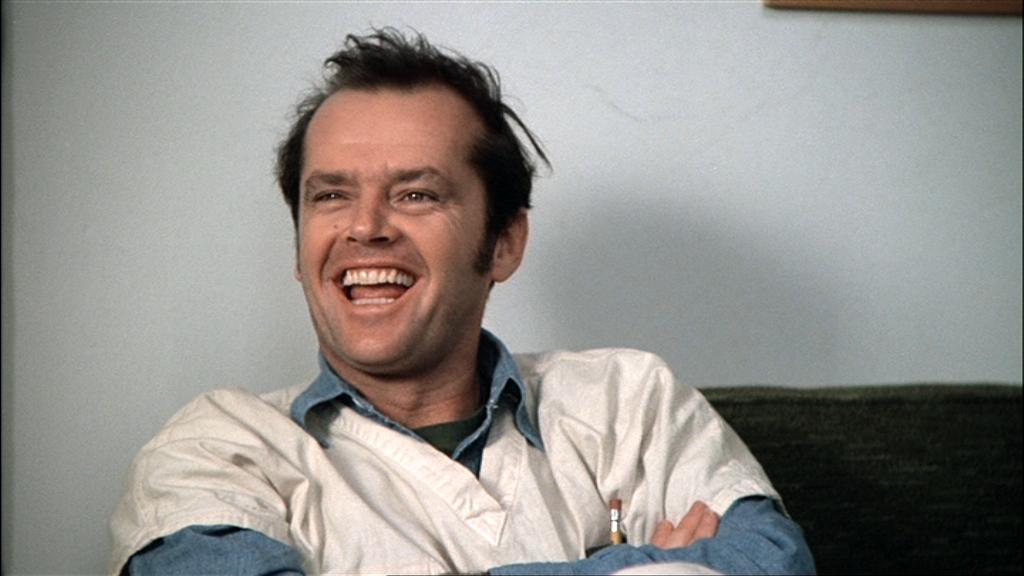
Fly by the Cuckoo's Nest!


Which one of you nuts has got any guts?...
I must be crazy to be in a loony bin like this.

Anyone with any knowledge of great movies and the even greater Jack Nicholson and the Academy Award roll he played in One Flew Over the Cuckoo’s Nest. He perfectly played the personal wrench in the machinery of the bureaucracy of the mental health hospital and also showed the inadequaces of the way we treated mentally ill persons.

Once a ‘Cuckoo’s Nest,’ Now a Museum 

SALEM, Ore. — Nurse Ratched slept here. 
The punctiliously cruel psychiatric ward tyrant in the book and movie “One Flew Over the Cuckoo’s Nest” was brought to cinematic life by the actress Louise Fletcher during filming here at the Oregon State Hospital in the 1970s. 
But the melding of real life and art went far beyond the film set. Take the character of John Spivey, a doctor who ministers to Jack Nicholson’s doomed insurrectionist character, Randle McMurphy. Dr. Spivey was played by Dr. Dean Brooks, the real hospital’s superintendent at the time. 
Dr. Brooks read for the role, he said, and threw the script to the floor, calling it unrealistic — a tirade that apparently impressed the director, Milos Forman. Mr. Forman ultimately offered him the part, Dr. Brooks said, and told the doctor-turned-actor to rewrite his lines to make them medically correct. Other hospital staff members and patients had walk-on roles. 
Now jump cut to the present: the office and treatment rooms of the hospital, which opened in 1883, have been turned into a Museum of Mental Health — one of only a few around the world that are part of a still-functioning hospital, which sprawls behind the old brick structure. 
In the museum, a steel examination table sits near a photograph of the Oregon State Insane Asylum baseball team, which once played against local challengers in and around Salem, Oregon’s capital. A straitjacket and a spilled bag of handcuffs fill another display, with a notation from the night watch book recorded at 2 a.m. on Feb. 25, 1913. “Mrs. Bernard would not remain in bed,” an attendant wrote. “Restrained her with jacket and belt.”
The juxtaposition of real and celluloid, truth and fiction, that emerged on the “Cuckoo’s Nest” set continues. A photograph of Ms. Fletcher’s character, steely smile and nurse’s cap in place, adorns a wall near a television that blares the movie itself on a continuous loop showing the movie’s patients watching that very television, which was retrieved from a hospital trash bin and saved after the filming ended. 
The result — physical evidence of the hospital’s past alongside the Hollywood portrait — creates questions that McMurphy and his cohorts might have asked. What is real and what merely seems real? Was the hospital, which had a large number of voluntary admissions in its early years, a place of sanctuary, an old definition of the word “asylum,” or of confinement? Darkness and dread, or escape? 
Dr. Brooks, now 96, and living near the hospital in a retirement home, minces no words when he says that mental health treatment in years past had its flaws. But anyone looking back, he said in an interview, should also look hard at the present. Institutions like the Oregon State Hospital, which he supervised for nearly 30 years — from the mid-1950s to the early ’80s — might not have been perfect, he said, but they were at least out there and trying to help. Today, he said, prisons have taken over the job, with barely a pretense of treatment. “Three-fourths of all mentally ill people are in jails or penitentiaries,” he said.
But the new museum raises questions about what the hospitals themselves were created to do, and how many patients were actually mentally ill by modern definitions....
I'm reading an interesting book called My Brother Ron and it covers how in the 1960s America decided to move from institutionalization of the mentally ill to outpatient treatment with new miracle drugs.  Well the miracles didn't quite work out as well, federal judges decided people had a right to be nuts and  our streets are filled with the homeless and our prisons are acting as mental facilities.  Gotta love it.  But if you wnat a great flick, check our Nicholson and a young Danny Devito in One Flew Over the Cuckoo's Nest!

Officer Down


Trooper Tage Toll
Alaska State Troopers
End of Watch: Saturday, March 30, 2013
Age: 40
Tour: 10 years

Trooper Tage Toll was killed in a helicopter crash during a search and rescue mission near Talkeetna, Alaska.

Trooper Toll had been picked up by the Alaska State Trooper's Helo-1 at approximately 7:35 pm to assist in searching for a missing snowmachiner near Larson Lake. They located the subject just before 10:00 pm and were able to bring him aboard the helicopter.

The helicopter was en route to Sunshine Tesoro to meet with medics when troopers lost radio contact with it at approximately 11:00 pm. The wreckage was located the following morning after a massive search. Trooper Toll, civilian pilot Mel Nading, and the snowmachiner were all killed in the crash.

Trooper Toll had served with the Alaska State Troopers for 10 years and had previously served with the Kansas Highway Patrol.
Rest in Peace Bro…We Got The Watch

Day is done, Gone the sun, From the lake, From the hills, From the sky. All is well, Safely rest, God is nigh. 

Bloombergites show their hypocrisy again

In january Talk Radio Network investigative reporter Jason Mattera asked something the nanny of New York hates. A real question. He wants to disarm everyone else, so will Bloomturd disarm his guards? Hey, if the guns cause the problems, we wouldn't want him in danger would we?

Here is the video.


For some reason objective journal-lists like Upchuck Todd and David Gregory never ask Bloomturd this question. Or mention their children go to schools with armed guards while they think armed security for your kid's school is a bad idea.

Now we have another classic example of being a two faced sack of s$%^ from the land of the liberals. And for a change, it's a Republican.
HIZONORDAMAER
Unreal – One Of Bloomberg’s ‘Mayors Against Illegal Guns’ Arrested For Trying To Force Man To Have Sex With Him … At Gunpoint

One of the gun-grabbing members of Michael Bloomberg’s organization, Mayors Against Illegal Guns, recently found himself trying to lure a man into a sexual encounter through the liberal use of alcohol. When the charm and alcohol didn’t do the trick, James ‘Jay’ Schiliro (R) decided to go a different route – firing a handgun into a wall in an attempt at intimidation.

The mayor who, as the title suggests, is against illegal guns, was forced to hand over his firearm collection, and has been charged with several crimes.
Gee, a member of MAIG with guns....next thing you will tell me is the mayor of New York wants you to stop idling your car while he keeps his going for the air conditioning.

James Schiliro, a.k.a. Jay Schiliro, the mayor of Marcus Hook, a small town in Delaware County, Pennsylvania, faces charges of official oppression, reckless endangerment, unlawful restraint, false imprisonment, and furnishing a minor with alcohol. He surrendered to authorities on Thursday morning, and his attorney declared that “we intend to fight these charges.”

Schiliro, 38, allegedly ordered a local police officer to bring a 20-year-old male friend to his home, where the mayor plied him with alcohol, and made sexual advances which the man refused. Schiliro allegedly brandished several handguns and fired one of them into the floor in an apparent attempt to intimidate the young man, who reportedly was in fear of his life.

The mayor was freed on $50,000 bail and told to stay away from the alleged victim and give up his stash of firearms.

More details from the Philadelphia Inquirer:

When the man repeatedly refused, Schiliro, who as mayor controls the police department, started to pull out handguns, informed the man that he was “going to be a hostage,” fired a 9 mm bullet into the wall and said that he’d ordered police to stay away from the house, the report states....
For some reason I don't think this will be mentioned next time Bloomturd is on Meet the Depressed

Friday, April 5, 2013

Officer Down


Trooper James Sauter
Illinois State Police
End of Watch: Thursday, March 28, 2013
Age: 28
Tour: 4 years, 9 months
Badge # 6095

Trooper James Sauter was killed when a semi-trailer truck struck his cruiser on Interstate 294 south of Willow Road shortly after 11:00 p.m.

The trooper was stopped in the left shoulder of the south-bound lanes when the semi rear-ended his cruiser, causing both vehicles to burst into flames. He was pronounced dead at the scene.

Trooper Sauter was a 5-year veteran of the Illinois State Police and is survived by his wife and family.

Rest in Peace Bro…We Got The Watch
Day is done, Gone the sun, From the lake, From the hills, From the sky. All is well, Safely rest, God is nigh. 


You think MSMBC can't get any lower....

I guess we shouldn't challenge them.

From the network of Schultz, Matthews and Madcow Rachel herself, Mrs Marris-Perry thinks your kids are not yours, but ours.


And you really have to wonder why their prime time schedule has fewer viewers than Fox's reruns.

Thursday, April 4, 2013

Officer Down


Director Larry Johnson
Fifth Judicial District Drug Task Force, Arkansas
End of Watch: Tuesday, March 26, 2013
Age: 65

Director Larry Johnson suffered a fatal heart attack while involved in a foot pursuit with a parolee in Clarksville, Arkansas.

Director Johnson, along with other officers, had gone to the man's home to conduct a home visit. The subject fled on foot upon the officers' arrival. The subject was taken into custody and charged with fleeing from police.

Director Johnson is survived by his wife, three sons, two daughters, and seven grandchildren.
Rest in Peace Bro…We Got The Watch

Day is done, Gone the sun, From the lake, From the hills, From the sky. All is well, Safely rest, God is nigh. 

I know engineers, they love to change things!

A great quote from Dr. McCoy in the beginning of Star Trek-The Motion Picture and like many sayings, it has a measure of truth. A great example from the engineers in training at Rice University.

Trendy Houston restaurant gets Rice engineering students to develop soap dispenser

Rice University freshmen developed a unique type of soap dispenser using a common kitchen utensil that a downtown Houston restaurant will soon incorporate into its bathrooms.

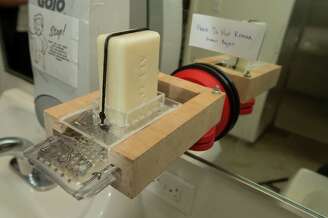
It may cause diners to pause when they see the wall-mounted dispenser that looks uses a kitchen grater to dispense soap at The Pass and Provisions eatery.

The device is built around a kitchen grater that serves flakes of a high-quality bar of soap, according to a university statement.

Four Rice University freshman engineering students are currently working on the soap dispensers. The restaurant asked Professor Ann Saterbak, who teachers bioengineering, to offer a design that would fit its aesthetic, which called for a real kitchen utensil to be used to fit the restaurant's theme.

The five students, who call themselves "Fork Yeah," took on the challenge this semester as part of Saterbak's course.

"People use a lot of things in their daily lives that they take for granted," Saterbak said. "They don't actually think about the engineering design and testing that goes into simple, everyday things."

The students, Sarah Hernandez, Marie Hoeger, Kayla McCarty and Josiah Grace, say the soap grater may make diners' visits memorable.

The device is constructed using a rubber band that presses a bar of soap onto a spring-loaded grater that the user pushes to shave off flakes that fall gently from the dispenser.

The team is working on reinforcing the rubber bands' tension and on the aesthetics to make it look sleeker.

"Right now, it's made of really nice cutting-board wood, but it doesn't look like it could be in a bathroom all the time or at the level of a finished product," Grace said.

The team worked to determine the soap's ability to handle humidity without softening, as it would be in frequent and close proximity to hot running water.

"It doesn't have as much moisturizer as more common soap," Hernandez said. "It grates very well and doesn't leave a lot of gunk."

Hoeger said the bar soap makes the user work to lather.

"I think we all get lazy with liquid soap that just washes right away," Hoeger said. "You have to work to get the lather off. That's how your hands get clean."

Gotta love this. I'll see if I can check it out while I'm on patrol. But I was looking at the comments at the bottom and this was classic:
There going to law suits, because some idiots thought it is cheese and put it in his/her mouth.

True, very true. Probably a few lawyers handing out business cards now!

Tuesday, April 2, 2013

Geopolitical Weekly: Beyond the Post-Cold War World, April 2, 2013

By George Friedman
Founder and Chairman

An era ended when the Soviet Union collapsed on Dec. 31, 1991. The confrontation between the United States and the Soviet Union defined the Cold War period. The collapse of Europe framed that confrontation. After World War II, the Soviet and American armies occupied Europe. Both towered over the remnants of Europe's forces. The collapse of the European imperial system, the emergence of new states and a struggle between the Soviets and Americans for domination and influence also defined the confrontation. There were, of course, many other aspects and phases of the confrontation, but in the end, the Cold War was a struggle built on Europe's decline.

Many shifts in the international system accompanied the end of the Cold War. In fact, 1991 was an extraordinary and defining year. The Japanese economic miracle ended. China after Tiananmen Square inherited Japan's place as a rapidly growing, export-based economy, one defined by the continued pre-eminence of the Chinese Communist Party. The Maastricht Treaty was formulated, creating the structure of the subsequent European Union. A vast coalition dominated by the United States reversed the Iraqi invasion of Kuwait.

Three things defined the post-Cold War world. The first was U.S. power. The second was the rise of China as the center of global industrial growth based on low wages. The third was the re-emergence of Europe as a massive, integrated economic power. Meanwhile, Russia, the main remnant of the Soviet Union, reeled while Japan shifted to a dramatically different economic mode.

The post-Cold War world had two phases. The first lasted from Dec. 31, 1991, until Sept. 11, 2001. The second lasted from 9/11 until now.

The initial phase of the post-Cold War world was built on two assumptions. The first assumption was that the United States was the dominant political and military power but that such power was less significant than before, since economics was the new focus. The second phase still revolved around the three Great Powers -- the United States, China and Europe -- but involved a major shift in the worldview of the United States, which then assumed that pre-eminence included the power to reshape the Islamic world through military action while China and Europe single-mindedly focused on economic matters.

The Three Pillars of the International System

In this new era, Europe is reeling economically and is divided politically. The idea of Europe codified in Maastricht no longer defines Europe. Like the Japanese economic miracle before it, the Chinese economic miracle is drawing to a close and Beijing is beginning to examine its military options. The United States is withdrawing from Afghanistan and reconsidering the relationship between global pre-eminence and global omnipotence. Nothing is as it was in 1991.

Europe primarily defined itself as an economic power, with sovereignty largely retained by its members but shaped by the rule of the European Union. Europe tried to have it all: economic integration and individual states. But now this untenable idea has reached its end and Europe is fragmenting. One region, including Germany, Austria, the Netherlands and Luxembourg, has low unemployment. The other region on the periphery has high or extraordinarily high unemployment.

Germany wants to retain the European Union to protect German trade interests and because Berlin properly fears the political consequences of a fragmented Europe. But as the creditor of last resort, Germany also wants to control the economic behavior of the EU nation-states. Berlin does not want to let off the European states by simply bailing them out. If it bails them out, it must control their budgets. But the member states do not want to cede sovereignty to a German-dominated EU apparatus in exchange for a bailout.

In the indebted peripheral region, Cyprus has been treated with particular economic savagery as part of the bailout process. Certainly, the Cypriots acted irresponsibly. But that label applies to all of the EU members, including Germany, who created an economic plant so vast that it could not begin to consume what it produces -- making the country utterly dependent on the willingness of others to buy German goods. There are thus many kinds of irresponsibility. How the European Union treats irresponsibility depends upon the power of the nation in question. Cyprus, small and marginal, has been crushed while larger nations receive more favorable treatment despite their own irresponsibility.

It has been said by many Europeans that Cyprus should never have been admitted to the European Union. That might be true, but it was admitted -- during the time of European hubris when it was felt that mere EU membership would redeem any nation. Now, Europe can no longer afford pride, and it is every nation for itself. Cyprus set the precedent that the weak will be crushed. It serves as a lesson to other weakening nations, a lesson that over time will transform the European idea of integration and sovereignty. The price of integration for the weak is high, and all of Europe is weak in some way.

In such an environment, sovereignty becomes sanctuary. It is interesting to watch Hungary ignore the European Union as Budapest reconstructs its political system to be more sovereign -- and more authoritarian -- in the wider storm raging around it. Authoritarian nationalism is an old European cure-all, one that is re-emerging, since no one wants to be the next Cyprus.

I have already said much about China, having argued for several years that China's economy couldn't possibly continue to expand at the same rate. Leaving aside all the specific arguments, extraordinarily rapid growth in an export-oriented economy requires economic health among its customers. It is nice to imagine expanded domestic demand, but in a country as impoverished as China, increasing demand requires revolutionizing life in the interior. China has tried this many times. It has never worked, and in any case China certainly couldn't make it work in the time needed. Instead, Beijing is maintaining growth by slashing profit margins on exports. What growth exists is neither what it used to be nor anywhere near as profitable. That sort of growth in Japan undermined financial viability as money was lent to companies to continue exporting and employing people -- money that would never be repaid.

It is interesting to recall the extravagant claims about the future of Japan in the 1980s. Awestruck by growth rates, Westerners did not see the hollowing out of the financial system as growth rates were sustained by cutting prices and profits. Japan's miracle seemed to be eternal. It wasn't, and neither is China's. And China has a problem that Japan didn't: a billion impoverished people. Japan exists, but behaves differently than it did before; the same is happening to China.

Both Europe and China thought about the world in the post-Cold War period similarly. Each believed that geopolitical questions and even questions of domestic politics could be suppressed and sometimes even ignored. They believed this because they both thought they had entered a period of permanent prosperity. 1991-2008 was in fact a period of extraordinary prosperity, one that both Europe and China simply assumed would never end and one whose prosperity would moot geopolitics and politics.

Periods of prosperity, of course, always alternate with periods of austerity, and now history has caught up with Europe and China. Europe, which had wanted union and sovereignty, is confronting the political realities of EU unwillingness to make the fundamental and difficult decisions on what union really meant. For its part, China wanted to have a free market and a communist regime in a region it would dominate economically. Its economic climax has left it with the question of whether the regime can survive in an uncontrolled economy, and what its regional power would look like if it weren't prosperous.

And the United States has emerged from the post-Cold War period with one towering lesson: However attractive military intervention is, it always looks easier at the beginning than at the end. The greatest military power in the world has the ability to defeat armies. But it is far more difficult to reshape societies in America's image. A Great Power manages the routine matters of the world not through military intervention, but through manipulating the balance of power. The issue is not that America is in decline. Rather, it is that even with the power the United States had in 2001, it could not impose its political will -- even though it had the power to disrupt and destroy regimes -- unless it was prepared to commit all of its power and treasure to transforming a country like Afghanistan. And that is a high price to pay for Afghan democracy.

The United States has emerged into the new period with what is still the largest economy in the world with the fewest economic problems of the three pillars of the post-Cold War world. It has also emerged with the greatest military power. But it has emerged far more mature and cautious than it entered the period. There are new phases in history, but not new world orders. Economies rise and fall, there are limits to the greatest military power and a Great Power needs prudence in both lending and invading.

A New Era Begins

Eras unfold in strange ways until you suddenly realize they are over. For example, the Cold War era meandered for decades, during which U.S.-Soviet detentes or the end of the Vietnam War could have seemed to signal the end of the era itself. Now, we are at a point where the post-Cold War model no longer explains the behavior of the world. We are thus entering a new era. I don't have a good buzzword for the phase we're entering, since most periods are given a label in hindsight. (The interwar period, for example, got a name only after there was another war to bracket it.) But already there are several defining characteristics to this era we can identify.

First, the United States remains the world's dominant power in all dimensions. It will act with caution, however, recognizing the crucial difference between pre-eminence and omnipotence.

Second, Europe is returning to its normal condition of multiple competing nation-states. While Germany will dream of a Europe in which it can write the budgets of lesser states, the EU nation-states will look at Cyprus and choose default before losing sovereignty.

Third, Russia is re-emerging. As the European Peninsula fragments, the Russians will do what they always do: fish in muddy waters. Russia is giving preferential terms for natural gas imports to some countries, buying metallurgical facilities in Hungary and Poland, and buying rail terminals in Slovakia. Russia has always been economically dysfunctional yet wielded outsized influence -- recall the Cold War. The deals they are making, of which this is a small sample, are not in their economic interests, but they increase Moscow's political influence substantially.

Fourth, China is becoming self-absorbed in trying to manage its new economic realities. Aligning the Communist Party with lower growth rates is not easy. The Party's reason for being is prosperity. Without prosperity, it has little to offer beyond a much more authoritarian state.

And fifth, a host of new countries will emerge to supplement China as the world's low-wage, high-growth epicenter. Latin America, Africa and less-developed parts of Southeast Asia are all emerging as contenders.

Relativity in the Balance of Power

There is a paradox in all of this. While the United States has committed many errors, the fragmentation of Europe and the weakening of China mean the United States emerges more powerful, since power is relative. It was said that the post-Cold War world was America's time of dominance. I would argue that it was the preface of U.S. dominance. Its two great counterbalances are losing their ability to counter U.S. power because they mistakenly believed that real power was economic power. The United States had combined power -- economic, political and military -- and that allowed it to maintain its overall power when economic power faltered.

A fragmented Europe has no chance at balancing the United States. And while China is reaching for military power, it will take many years to produce the kind of power that is global, and it can do so only if its economy allows it to. The United States defeated the Soviet Union in the Cold War because of its balanced power. Europe and China defeated themselves because they placed all their chips on economics. And now we enter the new era.

Beyond the Post-Cold War World is republished with permission of Stratfor.

Officer Down


Sergeant Gilbert Cortez
California Department of Corrections and Rehabilitation
End of Watch: Monday, March 25, 2013
Age: 46
Tour: 23 years

Sergeant Gilbert Cortez and K9 Mattie were killed in an automobile accident Route 79, near San Felipe Road, in San Diego County.

Sergeant Cortez was part of a convoy of state corrections K9 officers who were en route to inspect the La Cima Fire Camp in a rural part of the county. His marked vehicle veered off the roadway and overturned, killing K9 Mattie. Sergeant Cotez was transported to a local fire station but died before a helicopter could reach him.

Sergeant Cortez had served with the California Department of Corrections and Rehabilitation for 23 years and was assigned to the Southern Regional K-9 Unit. He is survived by his wife, two children, and parents.
Rest in Peace Bro…We Got The Watch

Day is done, Gone the sun, From the lake, From the hills, From the sky. All is well, Safely rest, God is nigh. 
K9 Mattie
California Department of Corrections and Rehabilitation
End of Watch: Monday, March 25, 2013
Breed: Belgian Maligns

K9 Mattie had served with the California Department of Corrections and Rehabilitation for 1-1/2 years.
Rest in Peace Mattie Mattie…and enjoy running the green grass of Heaven!

In Memory of all Police Dogs

They handled themselves with beauty & grace
And who could ever forget that beautiful face
Whether at work; or at home; whatever the test
They always worked hard; and did their best

They were real champions; at work or at play
But their lives were cut short; suddenly one day
While working on the job with their partner one day
They put themselves out on a limb; out into harms way

They gave the ultimate sacrifice; any dog can give
They gave up their life; so someone could live
The best of their breed; as his partner and anyone would say
Many hearts are now broken; that he had to prove it this way

Now as the trees are blowing in the gentle breeze
The sun is shining; thru the leaves on the trees
The meadows are green; and the grass grows tall
Off in the distance they can see a waterfall

As they look over the falls; down through the creek
The water flows gently; as a rabbit sneaks a peek
Far up above; in the deep blue sky
They see the birds soar high; as they fly by

They see animals playing; at the bridge by a waterfall
Chasing each other; and just having a ball
They play all day; from morning to night
There's no more rain; just warm sunlight

Off in the distance; they hear trumpets blow
Then all the animals look up; and notice a bright glow
The harps would play and the angels would sing
As they know they've come home; they've earned their wings

We remember that they died; in the line of duty
And are now with the Lord; sharing in heaven's beauty
Off to the meadows now; where they can play and roam free
With an occasional rest stop; under a tall oak tree

No more bad guys to chase; or bullets to take
Just a run through the meadow; down to the lake
A quick splash in the water; then back to the shore
Then it's off to the forest; to go play some more

These special dogs are back home; up in heaven above
They're cradled in God's arm's; and covered with His love
We'll light a candle for all of them; in the dark of night
In loving memory of all; these very special knights

By John Quealy

Monday, April 1, 2013

Another reason to bring back public hanging

I've often said we need to bring back public hangings and not just for murder. I believe rape should be a capital offense. You do that to a woman you won't be stopped. I'm not talking statutory rape but a adult male grabs a woman, forces her down and by pressure violates her is not going to be stopped until her is put in a cell where he is violated. What's the point. Just get rid of him.

Now we have an example of another waste of sperm that needs to be eliminated from the human gene pool.

Police: Pimp Forced Girl To Tattoo Eyelids With His Name

LIBERTY CITY, Fla. (CBSMiami) – Police said “Suave”, a Miami pimp, allegedly forced a 13-year-old runaway to tattoo his street name on her eyelids.

The pimp, who has a lengthy rap sheet, allegedly forced the girl to a Liberty City flea market tattoo shop to get the ink done after she threatened to leave him, CBS4 news partner The Miami Herald reports.

The vicious twist to a human trafficking case surfaced this month when Miami police arrested Roman Thomas III, 26, who was already on probation after serving four years in state prison for having sex with a minor.

Thomas was wearing a state corrections GPS monitor when Miami police arrested him on March 18.

The girl, dubbed “Sparkle,” was pimped through the classified advertising website Backpage.com, police say. Thomas and a woman plied the girl with liquor, marijuana and the drug Molly as she had sex with men at the Miami Shores Motel.

“It’s outrageous that this girl would be branded for life at such an early age, on of all places her eyelids,” said Miami Lt. Jose Alfonso, who investigated the case as part of the State Attorney’s Human Trafficking Unit.

Thomas will be formally charged in the new case on April 13. Another woman, Shanteria Sanders, 23, who also has “Suave” tattooed across her chest, also was charged in the case. Both Thomas and Sanders face charges of human trafficking, false imprisonment, lewd and lascivious exhibition and delivery of a controlled substance to a child.

Thomas, 26, has a long criminal history. In 2008, he was charged with attempted murder and other felonies. He wound up pleading guilty to the felony battery and four counts of lewd and lascivious battery on a child between the ages of 12 and 16....

Again, there is no redemption of this. May God have mercy on his soul, but the court should have none.