Police Work, Politics and World Affairs, Football and the ongoing search for great Scotch Whiskey!

Tuesday, June 25, 2013

What's going on in the World Today 130625

Major T. J. "King" Kong: Survival kit contents check. In them you'll find: one forty-five caliber automatic; two boxes of ammunition; four days' concentrated emergency rations; one drug issue containing antibiotics, morphine, vitamin pills, pep pills, sleeping pills, tranquilizer pills; one miniature combination Russian phrase book and Bible; one hundred dollars in rubles; one hundred dollars in gold; nine packs of chewing gum; one issue of prophylactics; three lipsticks; three pair of nylon stockings. Shoot, a fella' could have a pretty good weekend in Vegas with all that stuff


HYPERLINKS MAY REQUIRE AN EMAIL:

USA

U.S. Naval Update Map: June 20, 2013

June 20, Washington Post – (International) Bank of Tokyo to pay $250 million to N.Y. state in money-laundering case. The Bank of Tokyo-Mitsubishi UFJ agreed to a $250 million settlement over charges filed by the State of New York that it processed $100 billion in illicit transactions between 2002 and 2007 to countries under U.S. sanctions.

EUROPE

Greece, Bulgaria: Political Protests Erupt

Hollande Faces a Dilemma

Problems Surround the EU-U.S. Free Trade Negotiations

ASIA

The Japanese Military's Focus on Anti-Submarine Abilities

Hong Kong's Declining Economic Fortunes

AFRICA

Piracy Slowly Rises in Western Africa

Increased Pirate Activity in the Gulf of Guinea

Railway Development in Ethiopia

RUSSIA


Russia After Putin: Inherent Leadership Struggles

Syria: Russia Will Not Permit No-fly Zone, Spokesman Says June 17, 2013

Russia will not allow a no-fly zone to be implemented in Syria, a spokesman for the Russian Foreign Ministry said June 17, NOW reported. The Wall Street Journal reported earlier that the United States was drawing up plans for a no-fly zone, which would be deployed from Jordan over western Syria. Russia's core interest is to sustain the Syrian regime and prolong the conflict.

Putin Puts Pensions at Risk in $43 Billion Bid to Jolt Economy

ST. PETERSBURG, Russia — Faced with meager growth worldwide and a worrisome ebbing of Russia’s own oil and gas revenues, President Vladimir V. Putin announced an ambitious and risky economic stimulus program on Friday along with a novel amnesty plan for imprisoned white-collar criminals that was intended to improve investor confidence.

Mr. Putin’s proposal to dip into the country’s pension reserves for loans of up to $43.5 billion for three big infrastructure projects and other investments provoked an immediate debate among some of Russia’s top financial minds. It also brought warnings from financial experts who said that it might produce a burst of inflation, and that what the Russian economy needed most was deep structural change, to diversify from oil and gas and to build investor confidence....

CHINA

China's Food Supply

In China, Reform and the Risks of Urbanization

China's Brinksmanship with its Banks

IRAN

Iran’s Man in the Middle

...While he is considered a moderate, Rouhani comes to office as an insider. For sixteen years he was head of Iran’s National Security Council (NSC) and for two years Iran’s chief nuclear negotiator. Even today, he sits on the NSC as the personal representative of the supreme leader, Ayatollah Khamenei. He served five terms in the Majlis, or parliament. He sits on two major state councils, one of which, the Assembly of Experts, will elect Khamenei’s successor whenever he passes away. In holding high office, Rouhani was more a team player than a maverick and continues to support many existing Iranian policies. On Syria, since his election he has offered only the formulaic non-answer that the Syrian people should decide their own future through elections....

IRAQ

Iraq: Northern Oil Exports Have On Hold Since June 21, Shippers Say June 24, 2013

Crude oil exports from Iraq's northern Kirkuk oil fields have been on hold since June 21 after an explosion at a key pipeline, Middle East shipping agents said June 24, The Wall Street Journal reported. The Baghdad-controlled Kirkuk-Ceyhan oil pipeline has been operating at roughly one-fifth of its official capacity of 1.6 million barrels per day due to frequent bombings, poor maintenance and lower output overall.

ISRAEL


http://www.washingtonpost.com/world/middle_east/israeli-aircraft-strike-targets-in-gaza-strip-after-rockets-launched/2013/06/24/dae8be4c-dc8e-11e2-a484-7b7f79cd66a1_print.html


Israeli aircraft strike targets in Gaza Strip after rockets launched

JERUSALEM — Israeli aircraft pounded targets in the Gaza Strip early Monday after rockets were fired at Israel from the territory, the military said, unsettling a tenuous cease-fire between Israel and Hamas.

The military said its aircraft struck two weapons storage facilities and a rocket launch site. No injuries were reported.

Rocket fire from Gaza has declined since Israel carried out an eight-day military campaign last November in response to frequent attacks. An Egyptian-brokered cease-fire has largely held, but sporadic fire still persists.

AFGHANISTAN

The Challenge of Afghan Power-Sharing

Afghanistan: NATO Forces Stepping Back From Combat Operations June 19, 2013

NATO Secretary General Anders Fogh Rasmussen said June 19 that NATO forces will no longer plan, execute or lead combat operations in Afghanistan, Xinhua reported. The remarks followed an announcement by Afghan President Hamid Karzai that Afghan security forces are taking the lead in the country.

MIDDLE EAST

Qatar: Emir To Transfer Power To His Son June 24, 2013

Qatari Emir Sheikh Hamad bin Khalifa al-Thani announced June 24 that he plans to step down and transfer power to his son, Sheikh Tamim bin Hamad al-Thani, Al Jazeera reported. It was also announced that June 25 will be considered an official state holiday.

A Revolt Within the al Qaeda Movement

SOUTH OF THE BORDER

Evaluating the National Effect of Brazilian Protests

Mexico Readies for Energy Sector Reform

Oil and Natural Gas Production in Mexico

MISC

Geopolitical Calendar: Week of June 24, 2013

June 20, V3.co.uk – (International) Anonymous OpPetrol hacking campaign targets oil and gas sectors. Symantec urged oil and gas firms in the U.S. and worldwide to be vigilant for cyberattacks after a hacker group announced their plans for attacks on energy companies beginning June 20. The group promised to use distributed denial-of- service (DDoS) attacks, deface social media accounts and Web sites, steal sensitive information from systems and post it online, as well as infect networks with disk- wiping malware.


Except where noted courtesy STRATFOR.COM

Sunday, June 23, 2013

You only though Bloomberg was this stupid!

But no, the entire city council is pretty bad also.

Here is the ad placed by some of the police unions in New York in opposition of a bill from a Brooklyn councilperon (don't want to be profiling) idiot who wants to expand the definition of "racial profiling" to include describing a suspect with pretty much anything more than the cloths on his/her back.


NYPD unions blast bill they say will bar cops from using race, gender to go after suspects
Police unions in New York City are blasting a piece of legislation they say will handcuff them, by preventing cops from using little more than the color of a suspect’s clothing in descriptions or risk being sued for profiling.
A half-page ad in Thursday’s New York Post paid by the NYPD Captains Endowment Association and the Lieutenants Benevolent Association asks: “How effective is a police officer with a blindfold on?”
The answer is not very, according to Roy Richter, president of the Captains Endowment Association who is seen in the advertisement wearing a blindfold in bustling Times Square. Richter claims Intro. No. 1080 would send crime rates soaring and told The Post the bill is dangerous because it will “ban cops” from identifying a suspect’s age, gender, color or disability.
The proposal, sponsored by Jumaane Williams, D-Brooklyn, would effectively expand the definition of profiling, which is already prohibited. It specifically pertains to what factors officers can consider before stopping a potential suspect.

The bill defines profiling as "an act of a member of the force of the police department or other law enforcement officer that relies on actual or perceived race, [ethnicity, religion or] national origin, color, creed, age, alienage or citizenship status, gender, sexual orientation, disability, or housing status as the determinative factor in initiating law enforcement action against an individual, rather than an individual's behavior or other information or circumstances that links a person or persons [of a particular race, ethnicity, religion national origin] to suspected unlawful activity....”

The bill defines profiling as "an act of a member of the force of the police department or other law enforcement officer that relies on actual or perceived race, [ethnicity, religion or] national origin, color, creed, age, alienage or citizenship status, gender, sexual orientation, disability, or housing status as the determinative factor in initiating law enforcement action against an individual, rather than an individual's behavior or other information or circumstances that links a person or persons [of a particular race, ethnicity, religion national origin] to suspected unlawful activity....”
OK, how about something I've said over the radio once or twice. "Dispatch. suspect on foot, south bound on Main, mid twenty's black male two hundred pounds wearing green shorts and a white t-shirt in a wheel chair carrying a blue back pack ..." That is what we call a general broadcast. Notice how it relies on "actual or perceived race...color...age...disablity" Now if I were to follow the law as proposed by this moron with a chip on his shoulder this would be the description: "Dispatch. suspect on foot, south bound on Main, mid twenty's black male two hundred pounds wearing green shorts and a white t-shirt in a wheel chair carrying a blue back pack ..."" You think the first description may be a bit more enlightening and led to more direct apprephentin of the suspect. Also, it will enable us to not stop people who don't match the second rather worthless description.

Thursday’s ad urges residents to contact local councilmembers to urge them to vote against the bill. City Council Speaker Christine Quinn is reportedly going to bypass normal committee processes to bring the measure directly to a vote.

“If a police officer transmits descriptions beyond clothing color they can be sued for racial profiling,” Thursday’s ad reads. “That’s dangerous for the public and police officers.”

City councilmembers, according to the bill, have “deep” concerns regarding the impact of the NYPD’s growing reliance on stop-and-frisk tactics, and particularly the impact of the practice on communities of color.

“In 2002, the NYPD made approximately 97,000 stops,” the bill reads. “By 2010, the number of stops had increased to more than 601,000. Black and Latino New Yorkers face the brunt of this practice and consistently represent more than 80 percent of people stopped despite representing just over 50 percent of the city's population.”

They also live in the more crime filled areas and by statistics, the conduct more the of crimes. Sorry, but look at the stats and the fact.

Stop-and-frisk practices, further, have not increased public safety, sponsors claim, as year-after-year nearly 90 percent of individuals stopped are neither arrested nor issued a summons.

NYPD Detectives Endowment Association President Michael Palladino criticized Quinn for supporting the rare expedited process and said his union plans to place ads in newspapers next week.

“The (union’s) ad will focus on . . . Speaker Quinn’s political decision to sell the security of all New Yorkers for votes,” Palladino told the newspaper. “Where was the speaker and her legislation for the last seven years?”

A spokeswoman for Quinn said the proposal was sent to a full vote because a majority of councilmembers supported it and Public Safety Committee chair Peter Vallone Jr., who opposes the measure, refused to let it out of committee.

A bit of a sidebar from the law enforcement aspect on this proposal. I linked to Ms Quinn's Wikipedia page to show who she is, a serious canidate to be the next mayor of this country's largest city. Until Anthony "The Weiner" Weiner plunged back in, she was going to be the new mayor. Now the odds are he is going to pull it out and have the climate of his political career, mayor of New York. New Yorkers, I have to ask, when you look at the ballot and ask "Is this our choice, eight million people in this city and this is the best we have?" I had a similar experience in November 2008.
...Williams and fellow Brooklyn Democrat Brad Lander, a co-sponsor of the proposal, told the Post the bill, if passed, would only expand the city’s existing racial-profiling law by adding other demographic groups that should be protected, such as homeless and homosexual individuals.

Lander told CBS New York that police union officials are mischaracterizing the bill.

“They know they’re misrepresenting the legislation,” Lander told the station. “Police officers will continue to be able to use skin color and gender and age and height in suspect descriptions. What doesn’t work is profiling people based solely on they’re being one race, being one religion, being gay, living in public housing.”

Yo moron, how stupid do you take us for. May I quote your bill, "an act of a member of the force of the police department or other law enforcement officer that relies on actual or perceived race,..." A general broadcast of a suspect on the radio, or computer, or description in a report is an "act of a member of the force..." If this passes you can see how fast it will be before the fist law suit is filed saying "My client was described as a black male, an act that is forbidden by the city of New York..." What stupidity. Mr Williams, I hope someone kicks your ass on the street and the responding officers puts out a general broadcast for you, "Suspect, human wearing black pants and white shirt....not other details allowed by city ordinance..."

But New York, you've eared it. You put these cretans in office I hope you're happy as a once great city rots from the inside. Oh, please stay up there. We don't want you and your stupidity to infect great states like Texas.

K9 Down


K9 Ronin
Glendale Arizona Police Department, Arizona
End of Watch: Thursday, June 20, 2013
Breed: Belgian Malinois
Gender: M
Tour: 3 months

K9 Ronin was shot and killed as he attempted a take down on an armed subject who had fled from officers a short time earlier.

Patrol officers had initially responded to a business on Orangewood Avenue to investigate reports that a man was trespassing at approximately 6:45 pm. When the officer attempted to make contact with the individual the man fled on foot and jumped over a wall into a residential area. The subject was able to elude officers briefly and attempted to force entry into a home. Additional units were able to locate the subject hiding under a trampoline in the 5100 block of Morton Avenue.

K9 Ronin was deployed to subdued the subject, but the man opened fire, fatally wounding him and wounding his handler. Officers returned fire and killed the subject.

K9 Ronin was transported to a local animal hospital where he succumbed to his injuries overnight.

K9 Ronin had served with the Glendale Police Department for only three months and was the agency's newest canine.
Rest in Peace Ronin, we got the watch! …and enjoy running the green grass of Heaven!

In Memory of all Police Dogs

They handled themselves with beauty & grace
And who could ever forget that beautiful face
Whether at work; or at home; whatever the test
They always worked hard; and did their best

They were real champions; at work or at play
But their lives were cut short; suddenly one day
While working on the job with their partner one day
They put themselves out on a limb; out into harms way

They gave the ultimate sacrifice; any dog can give
They gave up their life; so someone could live
The best of their breed; as his partner and anyone would say
Many hearts are now broken; that he had to prove it this way

Now as the trees are blowing in the gentle breeze
The sun is shining; thru the leaves on the trees
The meadows are green; and the grass grows tall
Off in the distance they can see a waterfall

As they look over the falls; down through the creek
The water flows gently; as a rabbit sneaks a peek
Far up above; in the deep blue sky
They see the birds soar high; as they fly by

They see animals playing; at the bridge by a waterfall
Chasing each other; and just having a ball
They play all day; from morning to night
There's no more rain; just warm sunlight

Off in the distance; they hear trumpets blow
Then all the animals look up; and notice a bright glow
The harps would play and the angels would sing
As they know they've come home; they've earned their wings

We remember that they died; in the line of duty
And are now with the Lord; sharing in heaven's beauty
Off to the meadows now; where they can play and roam free
With an occasional rest stop; under a tall oak tree

No more bad guys to chase; or bullets to take
Just a run through the meadow; down to the lake
A quick splash in the water; then back to the shore
Then it's off to the forest; to go play some more

These special dogs are back home; up in heaven above
They're cradled in God's arm's; and covered with His love
We'll light a candle for all of them; in the dark of night
In loving memory of all; these very special knights

By John Quealy

Friday, June 21, 2013

I don't know what to call this other than evil

A waste of human sperm and egg who
likes to rape children
The mother who let the waste of sperm
rape her daughter to death. 


Police: Infant Died After Mother Let Boyfriend Rape Her

ST. CHARLES, MO (KTVI) – Prosecutors in St. Charles County have charged the mother of an infant girl with abuse and second degree murder stemming from an incident last December.

The grim and chilling details were released Monday.

In an amended complaint against Jessica Lynn Howell, 25, prosecutors now allege that she knew her boyfriend, Jordan Lafayette Prince, had previous convictions for sexual offense against a minor.

Prince is currently awaiting trial for first degree murder in the death of four-month-old Ashlynn Lilith Peters on December 3, 2012. Police allege that Prince strangulated Ashlynn after sexually assaulting her.

The complaint against Ashlynn’s mother, Jessica Howell, alleges she had sent text messages to Prince suggesting her willingness to allow him to engage in sexual activity with Ashlynn.

“In those text messages she suggested and encouraged some unspeakable things,” St. Charles Prosecuting Attorney Tim Lohmar said. “It is very, very disturbing.”

The complaint goes on to allege that Howell took Ashlynn to Prince’s home to spend the night at the time Ashlynn was murdered.

It was a trailer at Deerfield Village in St. Charles County. Neighbors said they were shocked.

“I saw them take the baby in and out, but you never imagine something like that is going on,” John Ezell said. “I am glad she is charged.”

Howell is in custody and held on $1 million bond. She will be arraigned Tuesday morning. Prince remains in custody as he awaits trial for Ashlynn’s murder...

A few years ago I testified at the trial of a piece of human excitement who raped a two year old and a five year old. He's currently in Huntsville for life in a small block for over 20 hours a day. Human rights activist complain that is inhuman. Pardon me morons, it's for their protection. Any exposure to the prision population and these humans will get justice that don't want. Given five minutes they will get raped like they raped the child.

Personally I would rather see these two hanged at the county courthouse but we know that won't happen. The best we can hope for is they never see the light of day or somehow the general prison population does for us what we cannot do for ourselves. God, how does such evil come up from humans I will never know.

Thursday, June 20, 2013

Global Affairs: Why Mideast Monarchies Survive, June 19, 2013

By Robert D. Kaplan

A startling fact has emerged from the Arab Spring that few have remarked upon: despite the pining for democracy by the Muslim masses, it's comparatively safe to be a king or sultan. Royal families have survived better in this age of upheaval than secular autocrats, despite the latter's pretension to revolutionary traditions. No Arab royal family has been toppled, and most have made deft adjustments in the face of public unrest. Compare that with military dictators and security service thugs who have either been killed, driven into exile or who are fighting quite bloodily for their survival.

King Mohammed VI of Morocco, King Abdullah of Saudi Arabia, King Abdullah II of Jordan, Sultan Qaboos bin Said of Oman and the various sheikhs of the Persian Gulf are, to be sure, more nervous on their thrones than a few years ago: in particular the monarchs of Jordan, Bahrain and Saudi Arabia. Moreover, they are not angels. Strong and regularly ruthless security services help keep these monarchs in power. Nevertheless, as comparison is the beginning of all serious scholarship, compared to other regimes in the region these monarchs have been both enlightened and Machiavellian in the best sense of the word.

Algeria's military-cum-revolutionary regime contended with a civil war in the 1990s; and, with the looming death of President Abdel Aziz Bouteflika, stability there is seriously questionable. Tunisia's secular strongman Zine El Abdine Ben Ali was toppled in a popular uprising in 2011; so was military dictator Hosni Mubarak in Egypt. Libyan tyrant Moammar Gadhafi was hunted down by a crowd and murdered, following another popular uprising. Mubarak was in a line of revolutionary military pharaohs and Gadhafi was an avowed radical: a self-declared enemy of the reactionary order of kings. Yet, the Egyptian and Libyan masses were not impressed.

Of course, the sturdiest revolutionary credentials were possessed by the Baathist socialist rulers of Iraq and Syria. Though the Americans toppled Iraqi dictator Saddam Hussein, many in the country did not mourn his death. And had the Americans not invaded, the Arab Spring might have claimed Saddam, too, as a victim. Finally, there is Syrian dictator Bashar al Assad, who thus far has had to wage a civil war that has claimed 93,000 lives and created millions of refugees in order to stay in power.

Modernizing officer corps have bitten the desert dust; antiquated dynasties have held on, at least so far. Why?

It's legitimacy, stupid!

The fact is, monarchs are identified with their states to a degree that the officers and the dark-suited security heavies are not. Tunisia is an age-old cluster of civilization emanating from ancient Carthage, the incredibly corrupt, plain-clothed policeman (because that's what he was) Ben Ali was superfluous to Tunisia's identity. Egypt constitutes a river valley civilization going back thousands of years. Toppling Mubarak was not going to lead to the breakup of the country. Then there are the revolutionary leaders who governed no real states at all. Libya is but a vague geographical expression that was held together only by Gadhafi's tyranny -- a tyranny so suffocating that it sowed the seeds of its own destruction. Syria and Iraq are also artificial states, and their erstwhile rulers, al Assad and Hussein, have represented sectarian minority regimes with questionable legitimacy at best. In sum, either the rulers were not sufficiently identified with their states, or there weren't any states underneath them.

The contrast with Arab royalty could not be greater.

The monarchs and their states, in terms of identity, are inextricable. The Alaouite dynasty in Morocco has ruled longer than the United States has existed as a country: it was Alaouite Moulay al-Rashid who forged the country in the first place in the second half of the 17th century. Saudi Arabia is, well, Saudi Arabia, the kingdom of the al-Sauds: without them there is no country. Jordan's geographical artificialness, coupled with its uneasy mix of desert tribesmen and urban Palestinians, is held together by the unifying force of the monarch: whose Hashemite family -- claiming direct descent from the Prophet Mohammed -- was synonymous with the original founding of the state in the mid-20th century. In Oman, the sultan has united the disparate worlds of the desert interior and the cosmopolitan, Indian Ocean seaboard in order to forge a state. As for the Gulf sheikhdoms, they were created as such by the British, and have been further buttressed by combining small populations with significant hydrocarbon deposits. Only the royal family in Bahrain is in trouble, because of a Sunni-Shiite split that has also bedeviled Iraq.

Precisely because of this historical legitimacy, the royal families of the Arab world have not had to govern in an extremely brutal fashion -- relative to the likes of the Gadhafis, the al Assads and Husseins. Their very moderation, again, relative to their region, has made them at least tolerable to their populations -- if not downright popular, in some cases. Moreover, because of their inherited wealth, there is not the same impetus to be corrupt. The kings and sultans may live lavishly, but they lack to the same degree the money-grubbing aura of the Ben Alis and Mubaraks, with their vulgar, nouveau riche wives. The Arab royals represent "old money," after a fashion. This, too, has made them more acceptable to the masses.

There are other factors. Precisely because the monarchs are ceremonial -- encompassing all the pomp and circumstance of the state in their very persons -- they can often delegate the dirty work of actual daily governance to ministers, who, when things go wrong, can conveniently take the blame. Indeed, who says the Arab world does not have separation of powers? Some Arab monarchs utilize this feature all the time, to their benefit. Jordan's kings are famous for firing prime ministers during many an economic downturn. The problem with the Gadhafis and the Mubaraks was that, because they had no inherited legitimacy (nobody believed in their pomp and circumstance), they demanded absolute power as insurance against coups. And because they had absolute power, they got personally blamed when the economy produced uneven results.

Finally, there is something else, something harder to define. Yes, the Arab royals are legitimate in a way their non-royal counterparts are not. Nevertheless, preserving a family tradition of state power for generations and, in some cases, for centuries, is an enormous responsibility: much greater even than that of the scions of family-run corporations in the West. You don't want to be the last in a royal line! And so, in addition to being wily and occasionally ruthless, there is also the constant desire to do good works: to earn your throne, as it were. For that, ultimately, is what will keep you in power. So when we think of Arab leaders who are -- in a larger political sense -- humane, who comes to mind: Mohammed VI, Abdullah II, Sultan Qaboos. That is the key to being a real prince, as Machiavelli would say: combining ruthlessness with virtu (virtue).

The democratic West should count itself lucky to have such autocrats in power.
Why Mideast Monarchies Survive is republished with permission of Stratfor.

The selling of Obamacare and other tripe....

I found this on HotAir.com this morning and after reading it I was reminded of discussion i had with a college friend on Time and Newsweek. He recalled the time he was with a person he knew at a medical center getting a treatment and he just had to kill a few hours. There were piles of recent issues of both Time and Newsweek and he said "After a while I found I was reading more of the Newsweek and less of the Time." After that I tried it at a library and he was right. Newsweek sucked less that Time (this was over twenty years ago.)

Now we have the propaganda rag of the left explaining the latest problem with Obamacare (excuse me, the Affordable Care Act...pardon me, while I puke.) The problem is not the piece of legislation, just the fact it hasn't been sold right
And Now, The Selling of Obamacare

Stephen Lam

In a windowless office in the basement of the West Wing, behind a utility room and next to a fire-alarm panel, David Simas is marking up another whiteboard with blue ink, hoping to explain one more time just how the President’s health care reform law will work when the time comes for uninusured Americans to sign up this fall.

The abstraction of Obamacare is about to become reality. But will anyone know what to do? An estimated 7 million Americans will join the first health exchanges from Oct. 1, 2013, to April 1, 2014, and most have no idea how to do that. And for the millions who are already covered by some early Obamacare benefits, Simas adds, “We need to continue to remind them of what they’re getting.”

If Simas, 42, has the nervous energy of the 2012 campaign, where he served as opinion-research director, there is a good reason. Though Barack Obama has competed in his last election, he has one more campaign ahead of him. This fall, Obamacare will go into full effect, with the promise of insuring as many as 40 million Americans if it succeeds. But it could still fail.


No Stephen, it's designed to fail. Without people just falling in line and paying multiple times what they do now, the system will collapse. And Stephen, in case you haven't figured it out, that is the purpose.

...the law is increasingly unpopular. According to an NBC News–Wall Street Journal poll released earlier this month, 49% of Americans now believe the law is a bad idea, the highest percentage recorded, with only 37% saying it is a good thing. Many states have already opted out of key provisions to expand Medicaid. In Washington, Republicans continue to lay siege to the law; they have voted to repeal it 37 times in the U.S. House.

That unpopularity threatens one of the law’s most ambitious goals—establishing health care exchanges allowing uninsured Americans to purchase affordable coverage. The exchanges need roughly 2.7 million healthy 18-t0-35-year-olds to sign up to be solvent. The majority of that group is nonwhite and male, according to Simas’ data, and a third are located in just three states: California, Texas and Florida. If too few choose to enroll because they don’t know about the law, don’t like it, or feel they don’t need insurance, the exchanges will fail. And so will the law.

The Administration has plotted an extensive social-media campaign designed to reach the young and healthy and is soliciting sports teams to help raise awareness. More than 10 staffers in the Office of Public Engagement are marshalling the help of Latino and African American groups and community nonprofits. And Simas has spent countless hours surrounded by maps of media markets and demographic data on the uninsured trying to remind prospective enrollees of the benefits available to them: “It’s that guy in Dallas, it’s the woman in Los Angeles, it’s the family in Miami-Dade,” he says.

Obama aides have been saying such things for years, with little effect. But now the clock is ticking, and Obama is running out of time to make his signature achievement stick.

Again Stephen, that is the purpose. Obama's signature achievement is yet to come and Obamacare is just one of the means to that end. Obama (and his ilk) hate this country as it was founded and they want it changed into a second rate nation, the United States of Europe if you will. He thinks we made it to the top of the international pyramid by cheating and taking the wealth of other nations. As if the people of the Middle East would know what the hell to do with oil without the work of the British and Americans. But B Hussein want to fundamentally transform this nation into a second rate power and moving to a single payer system for health care is a means to that end. Destroying the finest health care system on earth will leave the people of this country with no choice but having the government running it and if people are hurt or die during the implementation, so be it. The means justify the end in his mind and you should just go alone. B Hussein Obama will have his goal met of turing this country from a republic into a semi-solaist nation with no opposition. And the "leadership" of the Republican party have no stomach to fight him.

God help us all.

Officer Down


Police Officer William Jason Sprague
Texarkana Texas Police Department
End of Watch: Saturday, June 15, 2013
Age: 30
Tour: 2 years
Cause: Vehicular assault
Incident Date: 6/14/2013

Police Officer William Sprague succumbed to injuries sustained the previous night when he was struck by a hit-and-run driver while investigating a disturbance at Grady T. Wallace Park at approximately 12:30 am.

Officer Sprague had responded to reports of the disturbance, involving approximately 100 people, and was attempting to make contact with the driver of an SUV. The vehicle suddenly accelerated, struck Officer Sprague, and then fled the area. Officer Sprague was transported to a local hospital where he succumbed to his injuries the following morning.

The subject who struck Officer Sprague was arrested the following day after being interviewed by detectives.

Officer Sprague had served with the Texarkana Police Department for two years and had previously served with several agencies in Arkansas. He is survived by his wife and son.
Rest in Peace Bro…We Got The Watch

Day is done, Gone the sun, From the lake, From the hills, From the sky. All is well, Safely rest, God is nigh. 

Wednesday, June 19, 2013

How New York does it wrong and Texas has it right.

Which is normal.

Saw this last week and I have to say, coming from the former Empire State and example of all the worst of liberalism, I'm not surprised
Upstate NY man charged after confining in closet 4 boys caught vandalizing home

CLYDE, N.Y. (AP) -- A man who says he caught four boys vandalizing his father-in-law's home has been charged with child endangerment after corralling them in a closet until police arrived.

Jesse Daniels was arraigned on four counts of endangering the welfare of a child after authorities say he interrupted the vandalism at the empty home in the Wayne County village of Clyde, midway between Rochester and Syracuse.

Daniels, 53, told WHAM-TV in Rochester that he heard pounding coming from the home next door the night of June 8. The house is empty while Daniels renovates it for his father-in-law.

Daniels said he went to investigate while his wife called 911. He said he found four boys, ages 8 and 10, inside with hammers. He took a hammer from one, then stuck the boys in a closet until officers arrived, he said.

"I was fortunate that they were in that room that had a closet, so I put them in the closet," he said. "I said, 'Listen, you guys are staying here until the police come, period.'"

Their parents said Daniels handled the boys roughly and threatened them with the hammer.

The damage to the home included holes in the walls, broken windows and graffiti derogatory to women spray-painted on walls. Daniels estimated that the damage to his father-in-law's property exceeds $40,000.

He said he believed the boys committed the vandalism in retaliation for Daniels' wife telling them earlier in the day to stay off the couple's property.

The boys have been charged with burglary and criminal mischief. Their cases are being handled in Wayne County Family Court.

Paul Bowler, the father of two of the boys, told the station that there are no excuses for his sons' actions.

"I understand they were in the wrong, but there are other ways to handle it," he said. "He (Daniels) knew who the kids were. It's not like they were strangers. And send the kids home and call the cops then. You don't sit there and torment them and tell them you're going to bash their skulls in with a hammer."

Bowler said Daniels grabbed the neck of one of his sons and left a mark. He said that his boys are traumatized and that Daniels should have faced more charges....
Mr Bowler, I would say you raised a piece of s^%#, but he obviously wasn't raised. If he was, he wouldn't have put 40K in damage in a man's house. But even m ore absurd is the fact the local DA even took charges on this. That idiot needs his ass kicked.

Now, this is how we do things in Texas.
Baytown mom punches, runs over robber who threatened her kids

BAYTOWN, Texas -- A Baytown mother fought back – and won – when an armed robber threatened her and her two young sons, according to police.

Dorothy Baker was just driving home from CVS with her sons, ages 5 and 2, when a man crept up from the third row of their minivan with a knife.

He demanded money.

“So I asked him how much he needed and he said $200,” Baker said. “And I told him I didn’t have that kind of cash, I had about $20 in my account, and he said I better figure out a way to get it, or my kids were going to get hurt.”

Thinking fast and acting even faster, the mother of six ignored his request at one point to make a turn.

She said he then leaped up to the front row and realized she had dialed 911 on her cell phone. Instinct took over and she was able to rip the knife out of his hand.

She said she then pushed him to the passenger seat and punched him in the face, all while they were still moving.

“And I told him to get the hell out of my car,” she said. “And he said ‘fine.’ He got out and started running and the next thing I thought was if he gets away he can do this to somebody else.”

So she pursued him.

“He kind of ‘zagged’ and I turned, intending to clip him in the side or something to get him to stop,” she said. “And I ended up running completely over him.”

Baytown police identified the man as 53-year-old Ismael Martinez. He was taken to Memorial Hermann via Life Flight, where he was listed in stable condition.
Damned! :<(  The sack of s%^& lived.

Now seeing she used "deadly force" on another human being, by state law she must be judge by a grand jury.  Twelve people on a panel will judge is this was assault, aggravated assault or justified use of force.

I'll take a bet on the outcome.  Mrs Baker, glad you and the kids are OK and hopefully the turd who started this gets to go back to his home in Huntsville.

Tuesday, June 18, 2013

Officer Down


Trooper Sean O'Connell
Washington State Patrol
End of Watch: Friday, May 31, 2013
Age: 38
Tour: 15 years
Badge # 1076

Trooper Sean O'Connell was killed when his motorcycle was struck by another vehicle as he controlled traffic in Conway, Washington.

He was struck near the intersection of Fir Island Road and Main Street and knocked to the ground at approximately 5:45 pm. He was transported to a local hospital where he succumbed to his injuries.

Trooper O'Connell was a U.S. Navy veteran and had served with the Washington State Patrol for 15 years. He is survived by his wife and two children.
Rest in Peace Bro…We Got The Watch

Day is done, Gone the sun, From the lake, From the hills, From the sky. All is well, Safely rest, God is nigh. 

Geopolitical Weekly: The Foreign Policy Impact of Iran's Presidential Election, June 18, 2013


By Michael Nayebi-Oskoui and Kamran Bokhari

Iranians went to the polls Friday to elect outgoing President Mahmoud Ahmadinejad's successor. Candidates reported few serious problems with the process, and the losers sent congratulations to the eventual winner, Hassan Rouhani. 
Compared to the political instability that followed Ahmadinejad's 2009 re-election, this process was relatively boring. But however the news media felt about the election, Iran needs domestic stability if it is going to change its foreign policy in a very challenging geopolitical environment.

Domestic Stability

Domestic stability has been the first goal for any regime that would project power from Iran's central highlands. The Persian Empire first emerged only after a central power subjugated the various groups of Indo-Iranian, Turkic and Semitic peoples within its borders. The suppression of 2009's Green Movement is only a recent example of a strong state apparatus quelling internal dissent. For millennia, various Persian regimes have sought to keep such domestic pressures at bay while foreign powers have sought to exacerbate these tensions to distract Iran or make it vulnerable to invasion. 
In today's Iran, structural economic stresses that have persisted under decades of sanctions are coming to a head while sectarian competition in the region has halted the expansion of Tehran's regional influence. The clerical regime that currently rules the Iranian mountain fortress understands the threats from beyond its borders, but like its predecessors, it must make peace at home before it can address external challenges. 
Much of the Western, and especially U.S., coverage of the Iranian elections centered on Rouhani, a figure known to many in the West. He took part in the Islamic Revolution and had ties to Ayatollah Ruholla Khomeini, the founder of the Islamic republic. He also has ties to Ayatollah Ali Akbar Hashemi Rafsanjani, Iran's second clerical president, and is a representative of the current supreme leader, Ali Khamenei, on the Supreme National Security Council. Rouhani served as secretary of Iran's Supreme National Security Council for 16 years. As an extension of this position, he was Iran's chief nuclear negotiator from 2003 to 2005. It was during this period when Rouhani's foreign policy credentials became best known in the United States and Europe. It was also during this period when Western and Iranian nuclear negotiators came closest to reaching a deal. 
Paradoxically, Rouhani combines conservative and reformist tendencies. As a cleric, he does not seek fundamental changes in Iran's power structure of the sort Ahmadinejad sought, but he also advocates cooperation with, and outreach to, other branches of Iran's power structure such as the military and civilian politicians. While defending Iran's nuclear program and regional agenda, he understands that simply issuing ultimatums to the West and escalating tensions rather than striking compromises will not win relief from sanctions. In this regard, he resembles the reformist former President Mohammed Khatami, under whom Rouhani served as chief nuclear negotiator. Rouhani can be expected to adopt a less incendiary tone in foreign policy than Ahmadinejad and to cooperate with other domestic power centers, like those of the supreme leader and the military and security forces.
Iran's domestic woes give it an incentive to pursue the kind of pragmatic engagement and dialogue with the West Rouhani was known for, especially on issues such as Iran's nuclear program and Tehran's interests in the Levant, Iraq and Afghanistan. This means Friday's election represents a relative success for the Islamic republic, though it denied the West's desire for a disruptive election that would see Iran's clerical regime fall. 
Ahead of any meaningful traction on its foreign policy agenda, the Iranian government had to re-engage its electorate, something it has accomplished with this election. Tellingly, aside from current nuclear negotiator Saeed Jalili, seven of the eight candidates approved to run in this election campaigned on moderate or even reformist platforms, in stark contrast to the nationalist rhetoric of the firebrand Ahmadinejad.
Although largely unaffected by the regional unrest in 2011, the clerical regime needed to demonstrate both to its citizens and foreign capitals that the Iranian people could still bring about change at the ballot box, not just through the streets. Given the choice, the Iranian people chose pragmatism in relatively free and fair elections.
Though the Islamic republic cannot be changed overnight -- long-term structural changes are needed to revive the Iranian economy -- Rouhani's campaign and election have provided a relatively immediate, low-cost way to lessen some of the domestic pressures on the regime. Large-scale demonstrations in support of the president-elect following the announcement of his victory took place in Tehran and throughout many of Iran's urban centers, without the involvement of state security forces. For now at least, this suggests Iran's large and increasingly frustrated electorate seems to have been appeased 
While it is, of course, too early to know how his presidency will play out, the Rouhani administration at the very least will not begin its tenure plagued with doubts regarding its legitimacy of the sort that greeted Ahmadinejad's second term. Also unlike Ahmadinejad, the president-elect has the opportunity to bridge deep divisions within the clerical elite. With clerical authority and the supreme leader no longer under attack from the presidency, and with convincing electoral support behind him, Rouhani has already overcome the largest hurdles to amending Iranian policy at home and abroad.

Foreign Policy Shifts

It is in this framework that the West hopes to eventually re-engage Rouhani and Iran. Fiery rhetoric aside, Ahmadinejad also sought a strategic dialogue with the West, especially as his competition with the supreme leader prompted him to seek foreign policy wins. But the infighting that resulted from Ahmadinejad's attempts to undermine the pro-clerical structure of the republic impeded any progress in this arena. 
If Rouhani can get the clerics behind him and accommodate the interests of Iran's military and security forces and the broader electorate, his chances of reaching a dialogue or negotiated settlement with the West will be much improved. 
Guiding much of this will not be just the change in personalities but Iran's shifting geopolitical environment. Since it is no longer on the regional offensive, Tehran's previous defiant rejection of American interests is now incompatible withlong-term Iranian goals in the region. 
There is still much work to be done at home before Iran can switch gears, and Iran's president-elect still faces considerable challenges to enacting any major shifts in policy. Rouhani must still convince many of the stakeholders within the regime that he can be trusted. He must protect the economic interests of the powerful Islamic Revolutionary Guard Corps while building a relationship with Iran's larger and often overlooked regular army. He must also manage his relationships with Rafsanjani, his most influential political backer, and with the supreme leader. Rafsanjani and Khamenei are competitors, and although the approval and eventual success of Rouhani's candidacy may hint at a broader clerical rapprochement, the supreme leader will not take kindly to attempts by Rafsanjani to rule through Rouhani. Rafsanjani, however, is unlikely to stop trying to capitalize on the successes of his protege. 
Against a backdrop of domestic political reconfiguration, gradual diplomatic outreach to and from Iran can be expected. Parliamentary elections in 2015 will provide greater insight into how much change Rouhani can attempt, and it is along this timeline we should expect to see Iran seriously re-engage in negotiations with the West. In the meantime, little substantive change will occur beyond more careful rhetoric regarding both Iran's nuclear program and Tehran's support for the embattled Syrian regime. While challenges to both Iran's domestic policy realignment and outreach to the United States thus remain, Western and regional hopes for such change endure. 

The Foreign Policy Impact of Iran's Presidential Election is republished with permission of Stratfor.

Monday, June 17, 2013

Portable Battlefield Surgery Kit

One of the good things of working in Houston is we have multiple Level One Trauma Centers in case of major injury. If you get shot, stabbed, crushed or burned, you go to Ben Taub or Hermann Memorial. Now I found this interesting and one of the bad things for smaller departments (or state police units) is they may not have emergency facilities available nearby. Time can mean life. Something like this may very useful to smaller, more isolated agencies.


Nicole Ribeiro, an anesthesiologist, demonstrates how a tablet
computer can help evaluate a burn patient when used with other
miniaturized medical tools. 
Nick de la Torre / Houston Chronicle

Dr. George Kramer shows a miniaturized high-rate IV pump, which is
used to help burn patients in John Sealy hospital in Galveston.


Emergency room in backpack being developed for battlefield

GALVESTON — Marines seriously wounded in remote areas of the world, hours or even days from emergency room care, can find their lives slipping away.

New tactics developed by the Marine Corps that emphasize smaller, highly mobile units operating in distant lands make the need for better medical care closer to the battlefront even more important.

That care is on its way in the form of an emergency room in a backpack being developed in part by a team of doctors at the University of Texas Medical Branch. It’s part of an effort to bring close to the front lines treatment normally found only in the best hospital emergency rooms. The effort already has produced life-saving equipment.

“This is really a big breakthrough,” said Dr. Kim Bentley, program officer at the Office of Naval Research in Arlington, Va.

The object of the effort is to reduce the size of bulky monitors and other life-saving equipment normally found in a hospital emergency room so that they can fit in a backpack. Eventually wounded Marines could be hooked up to the automated system and it would keep them alive while they were transported to the nearest aid station.

One possibility under consideration is attaching the equipment, known as the Automated Critical Care System, to a drone that would carry the patient to a hospital ship.

“It’s robot airplanes and robot medical care at the extreme part of this vision,” said Dr. George Kramer, a researcher who pioneered two key components of the system. Although the Office of Naval Research is leading the development of the system, it would be available to all branches of the service and eventually to civilian first responders, Bentley said.

Small enough to carry

The idea is for miniaturized medical devices to be connected to a core computer. Devices would monitor vital functions such as breathing and heart rate as well as administering blood and saline solution, drugs and anesthetics, among other medical tasks.

The entire system must be small enough to fit into a backpack. The device could work on its own without human intervention or give information to a caretaker. It could also link to specialists.

University of Texas Medical Branch is developing the devices that monitor and dispense fluids and drugs, the University of Cincinnati is working on devices that assist with breathing, and Iowa-based Athena GTX is working on the core computer, Bentley said.

A helicopter picking up wounded could be equipped with the system, which would give doctors information about the injury earlier than was previously possible.

“The great thing about this whole setup is that it provides a medical record from the point of injury onwards,” said researcher Dr. Michael Kinsky. “We don’t have any information now at the point of injury. It’s a big black box.”

Vital signs monitor

Kramer developed a component known as the Burn Navigator, which monitors a burn patient’s fluids and automatically replaces them. The device was recently approved for use by the U.S. Food and Drug Administration. He developed a second device to monitor blood pressure and replace blood. The device consists of a wireless vital-signs monitor with a cuff that transmits information to a computer tablet about the size of an iPad. The computer analyzes information from the monitor and sends instructions to a small pump.

Kinsky is testing the blood system on volunteers and the results are promising, with no complications in about 50 experiments, he said.

Another group of the hospital’s researchers is turning the best available medical knowledge into algorithms — mathematical computations that can create software for the Automated Critical Care System.

Houston-based Arcos Inc. has adapted the rugged Panasonic Toughbooks for use as the trauma tablets to control the blood system device. Arcos is using the hospital algorithms to develop the tablet software.

The device can operate on its own, but it will know when human assistance is needed, Arcos CEO Chris Meador said. Arcos is manufacturing the Burn Navigator and will manufacture the blood system device....

Officer Down


Sheriff Cody Carpenter
Scott County Arkansas Sheriff's Office
End of Watch: Friday, May 31, 2013
Age: 42

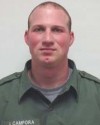
Wildlife Officer Joel Campora
Arkansas Game and Fish Commission
End of Watch: Friday, May 31, 2013
Age: 32

Sheriff Cody Carpenter and Wildlife Officer Joel Campora drowned while assisting victims of an overnight flash flood along the Fourche Lefave River near Y City, Arkansas.

They had responded by boat to a 911 call at a home in the flooded area along the river. They both exited the boat and entered the home to assist two female victims who were trapped inside. At some point the officers, victims, and boat were swept away by the rising water. Sheriff Carpenter's body was located the following morning while Officer Campora's body was recovered three days later.

Sheriff Carpenter had served as sheriff for 11 years and had served with the Scott Sheriff's Office for a total of 16 years.
Rest in Peace Bro…We Got The Watch

Day is done, Gone the sun, From the lake, From the hills, From the sky. All is well, Safely rest, God is nigh. 

Sunday, June 16, 2013

"Why didn't they just shoot him the leg?" or "Why didn't they just shoot the gun out of his hand?"

Or do something that doesn't break the law as the public sees it, but breaks the laws of physics.

Years ago when movies were just coming out the American Medical Association offered their advise to studios so motion pictures would give a more accurate image of the practice of medicine. The doctors at AMA knew a movie, if it gives out wrong information, can mislead the general public on the capabilies of the medical pofession.

Unforunltey law enforcement doesn't ahve a similar influence in the monie making industry. See the Lethal Weapon series, Die Hard series, The Fugitive. All entertaining to one degree or an other, but not an accurate reflection of police work and use of force.

Sorry, cops don't shoot someone and are back on the street the next day bragging about it. Generally they must take time off by department policy while the event is investigated by the department, it's internal affairs office, the district attorney's office and in many agencies a police oversight board. That doesn't even count how the state or the feds may come into this.

Here is something put out by the Eugene OR Police Department that is a bit more accurate on the use of force.


I really like the point made about video cameras. Back to Rodney King. The whole video showed a lot, such as King getting up after being taxed twice and struck multiple times. And as the jury in the original state trial said, the use of force was justified. The federal government said the officers had violated his civil rights and two of the four officers (if memory serves) were convicted. But going back to the video. Waht was shown over and over on TV, movies, news reports, etc. The use of a baton to the head. That was deadly force and it was not justified.

However, that was what the media and Hollywood focused on. I remember an episode of L.A. Law where Blair Underwood was just jogging and arrested for no reason other than he was black. And in the mind of Hollywood liberals, cops only stop black people because they are black. Well, this episode was written and shot in the time between the King arrest and the initial trail of the officers. Part of the show was Underwood's character using the video tape in his defense (of coruse he was not guilty). But do you think this may have been a case of someone with a chip on his shoulder? And it may have been an attempt to play off the public's reaction to the video or even to influence potential juries?

This is a video that gives a more realistic look at the use of force and is definitely worth a few minutes to watch.

Thanks to the producers of this film for making it and to Big City Cops for posting it on Facebook.

Friday, June 14, 2013

A issue from DNA collection

Unlike many friends and others who's opinion I highly respect, I agreed with the majority in Maryland v. King. I agree with Justice Scalia that what happens after the DNA is collected is a major issue, but the issue discussed in the case was not that but is the swabbing of salvia of an arrested felon during booking unreasonable under the 4th Amendment.

Now we have another issue from the ruling that ties into what Scalia mentioned in his decent. Good read.

Supreme Court Rules Police Can Collect DNA Upon Arrest, But Can The System Handle It?

By Leischen Stelter

June 3, 2013 was a historic day for police agencies across the country. The U.S. Supreme Court, in a 5-4 decision, ruled that law enforcement officers are not violating the Fourth Amendment’s prohibition of unreasonable searches by collecting DNA samples from suspects arrested for a “serious offense.”

“Taking and analyzing a cheek swab of the arrestee DNA is, like fingerprinting and photographing, a legitimate police booking procedure that is reasonable under the Fourth Amendment,” Justice Anthony Kennedy wrote for the court’s five-justice majority, according to this news article.

This ruling legitimizes a procedure already practiced by many law enforcement officers across the country. News outlets reported that 28 states and the federal government now take DNA swabs after arrests.

...Dr. Vincent Giordano, program director of the criminal justice program at American Public University, agreed saying the lack of definition for the types of crimes considered “serious” could be problematic for law enforcement agencies.

“Most of us would agree that rape and murder are ‘serious’ crimes, but possession of marijuana might be considered serious to you, but not serious to me,” he said. “The lack of definition can open Pandora’s box and agencies and states are left trying to argue what the Supreme Court meant.”

Impacts on an Already Overtaxed System

Mark Bridgeman, a retired captain who served as a police officer for 26 years and is currently the President of the North Carolina Gang Investigators Association, has years of experience collecting and relying on DNA evidence. During his career, he worked many serial rape cases as a detective and then as a commander with a sexual assault task force.

“DNA is a wonderful tool, and it makes the world smaller for criminals, but we have to have the infrastructure behind it for it to be successful,” he said.

Currently in North Carolina, most agencies collect DNA after an individual is convicted. Now, with the Supreme Court’s ruling, more agencies may choose to collect DNA from those arrested, causing an influx of DNA samples that need to be processed by state and local crime labs. This would only worsen the already backlogged system experienced by many labs throughout the country, said Bridgeman.

It has been a priority within most states, as well as the federal government, to address the backlog in at DNA-processing labs. In 2011 and 2012, the National Institute of Justice’s DNA Backlog Reduction Program spent $163 million to assist states and local governments increase their capacity to process more DNA samples. The application timeframe for the FY 2013 DNA Backlog Reduction Program ended on May 13, just 21 days before the Supreme Court’s ruling.

Other than an influx of DNA samples into crime labs, Bridgeman does not expect there to be many other impacts on law enforcement agencies. Only minimal training is needed to take an accurate DNA sample, and most agencies will have their intake officers conduct that process when deemed appropriate...

Escape from North Korea.

I've made post from time to time on North Korea. I read the book Escape from Camp 14, an accounting of how completely innocent people are imprisoned for the sins of the ancestors. Kim Il Sung, the founders of the People's Democratic Republic, believed in punishing three generations of a family for a minor slight.

Well, I found this interesting from of all sources the NY Times. A few minutes but it's worth it. How people risk everything, including the safety of their families to escape the hell of North Korea.

Tuesday, June 11, 2013

Let's give him a Paw Up!

Every cop looks forward to the day he's sitting back, catching some rays and living large in retirement. It's also true with four legged cops!


Kash, well done, keep your nephew straight and enjoy your retirement!

Geopolitical Weekly: Geopolitical Journey: Azerbaijan and America, June 11, 2013

By George Friedman

There is a point where three great powers -- Russia, Turkey and Persia -- meet: the Caucasus. At the moment they converge in a country called Azerbaijan. That fact makes Azerbaijan a battleground for these three great powers, which have competed with each other along various borders for centuries. Until 1991 Azerbaijan was part of the Soviet Union, as was the rest of the South Caucasus. But as the Russian border moved north, Armenia, Georgia and Azerbaijan were once more unveiled by history. Of the three, Azerbaijan won the geopolitical prize of bordering the three great regional powers.

It also emerged as a major energy producer. At the end of the 19th century, half of the oil in the world was produced in Azerbaijan, whose oil fields around the capital, Baku, were developed by the Nobel brothers, famed for dynamite and prizes. This is where they made their fortune. I had the pleasure of dining at their mansion a few years ago, a guest of government officials. Whatever others might have thought in that elegant house, I thought of Hitler urgently trying to reach Baku and its oil, and the fact that his disaster at Stalingrad was actually part of his attempt to seize Azerbaijan's oil fields. Azerbaijan was once the prize of empire. It is now independent in a very dangerous place.

The United States: An Adolescent Global Power

I have visited Azerbaijan several times since 2008, when I published a book called The Next 100 Years, which identified Azerbaijan as geopolitically critical in the emerging global system. This brought with it an invitation to visit Azerbaijan and see the place on which my theory focused. Since I continue to regard Azerbaijan as critical both in the struggle emerging in the Caucasus and to the United States, I continue to visit and continue to enjoy dinners that never end and rounds of toasts that test my liver. But I never forget one thing: Hitler risked everything to get to Baku and its oil. He failed to reach it, and the history of our time turns on that fact.

My latest trip had to do with a conference on U.S.-Azerbaijani relations. There are a small number of people in the United States who care about Azerbaijan and most of them were there, along with some congressmen, state representatives and a large numbers of Azeris. Compared with my first encounter with Azerbaijan, the number of people interested in the country has risen dramatically.

Conferences on subjects like this are global. You can be in Washington, Singapore or Baku and it all looks the same. When you are in my business, you meet the same people several times a year. Sometimes they have something new to say; sometimes I have something new to say. It is too infrequent. What is interesting is the people you don't normally meet: the local academics, government officials, businessmen and others. Over time you create a group of friends in the countries you visit. These are the ones from whom you learn the most. And in Azerbaijan, you listen to their desire to be friends with the United States and bewilderment at American indifference.

This is a recurring theme in my travels. Everyone is unhappy with the United States either for doing something or not doing something. In either case, they feel let down by the United States, and I am somehow personally at fault. In general I give as good as I get. But in the case of Azerbaijan, I'm on the defensive. They feel let down by the United States, and they are. This isn't a question of sentiment. Nations don't have friends and whatever my friendships in Azerbaijan -- friendships that are real and important to me -- the United States must pursue its interests. My problem in answering is that I believe that working with Azerbaijan is in the American interest and that holding back is taking unnecessary risks. I don't like criticizing my country in another country, so I try to shift the discussion to something else. It rarely works.

My own interest in Azerbaijan requires greater explanation. In The Next 100 Years I forecast a number of events, beginning with the serious weakening of the European Union and the increase in relative power of Russia. Russia had its own problems, but between Europe's dependence on Russian energy and the fact that Russia had cash available to buy assets in Europe, the decline of Europe meant a more powerful Russia. The countries that would feel that power would be those bordering the former Soviet Union -- a line from Poland to Turkey and then from Turkey to Azerbaijan, the eastern anchor of Europe on the Caspian Sea.

I wrote that the United States, withdrawing from its wars in the Islamic world, would be increasingly cautious and uncertain. The United States would continue to be the dominant power in the world, economically the most viable and with the most powerful military, but an adolescent power without foresight or balance in its actions. I argued that the United States had not been the dominant global power until 1991, when the Soviet Union collapsed. Until then the United States had shared domination and competed with the Soviet Union in a Cold War that had been frequently hot and where it wasn't clear that the United States would win. Between Korea, Vietnam and some other, less well-known engagements, nearly 100,000 Americans died in the "Cold" War -- almost as many as died in World War I -- a fact that most people don't appreciate. And when we look back on Korea and Vietnam, it is hard to imagine this period as the American age.

The United States won the Cold War because the Soviets knocked themselves out. But a win is a win and the United States stood alone, really amazed to be where it was, talking about New World Orders, but truly clueless as to what it would do later. First it imagined that war had been abolished and that it was all about making money. Then it imagined that it would spend the next century with only Islamic terrorists on its mind. Now it seems to have decided that it will avoid involvement in the world -- although how a country with nearly 25 percent of the world's gross domestic product and control of the oceans avoids involvement is beyond me.

Specialists in U.S. foreign policy divide into two camps. One camp is the realists, who argue that the United States should pursue its national self-interest. That seems reasonable until you ask them to define what the national interest is. Another camp consists of idealists, who want to use American power to do good, whether building democracy or stopping human rights abuses. It's a good idea until you ask them how they intend to do it. Usually the answer is to intervene but only kill bad people. I assume they will wear signs.

The point is that the United States is the world's global power but is lurching from conflict to conflict and from concept to concept. It takes awhile to understand how to use power. The British had to lose America before they started to get the idea. The United States is fortunate. It is rich and isolated, and even if terrorists kill some of us, we will not be occupied like France or Poland. We have time to grow up. This makes the rest of the world very uncomfortable. Sometimes the United States does inexplicable things. Sometimes it fails to do necessary things. When the United States makes a mistake it is mostly other countries that suffer or are placed at risk. So some of the world wishes the United States would disappear. It won't. Other parts of the world wish the United States take responsibility for their security. It won't.

The Criticality of Azerbaijan

This brings us back to Azerbaijan. It is a country that borders both Russia and Iran. In Russia it borders Dagestan; in Iran it borders the Iranian Azeri region. The bulk of Azeris live in Iran, where they are the largest ethnic minority group in the country (Ayatollah Ali Khamenei is an Azeri). Azerbaijan is a predominantly secular country. It feels threatened by Iranian Shiite terrorism and by Sunni Islamic terrorism in the north. Azerbaijan fought a war in the 1990s in which it lost an area called Nagorno-Karabakh to Armenia, which was backed by the Russians. Russian troops are now based in Armenia. A government that appears to have close ties to Russia has replaced the formerly pro-American government of Georgia. Azerbaijan finds itself in a tough place, and the country's position between Russia and Iran makes it critical. A secular Muslim state in this region hostile to both Iran and Russia is not all that common.

Azerbaijan has another strategic virtue from the American point of view: energy. The Russian strategy has been to maintain and deepen European dependence on Russian energy, on the theory that this would both increase Russian influence and decrease the risk to Russian national security. The second phase of this strategy has been to limit alternatives for the Europeans, including Turkey. The complex tension over oil and natural gas pipelines boils down to the fact that the Russians do not want significant energy sources that are outside of Russian control to be available to Europe.

It is in the American interest to try to limit Russian influence around its periphery in order to stabilize the pro-Western states there at a time when Europe is weak and disorganized. It is also in the United States' interest to limit Iranian power projection and to retain a platform for influencing the Azeri population in Iran. But there are limits to American power and interest. It cannot go to war as the first option. The United States can afford to support only countries that take primary responsibility for their national security on themselves. The United States cannot be the primary source of that security.

This is what makes U.S. relations with Azerbaijan interesting. Azerbaijan is strategically located between two powers antagonistic to the United States: Russia and Iran. Azerbaijan has served as a major transshipment point for supplies to Afghanistan. Azerbaijan wants to be able to buy weapons from the United States. The United States has deflected that request in most cases. The Azerbaijanis have turned to the Israelis instead, with whom they have close ties.

Azerbaijan has all the characteristics of a full American ally. It is strategically located and provides options for both influencing events in Iran and limiting Russian power in Europe by providing an energy alternative, including the possibility of a pipeline under the Caspian Sea to Central Asia. Given its location it needs access to weapons, for which it is prepared to pay. Yet the United States limits its access to weapons.

There are two reasons for this. One is the ethnic politics of the United States. The strong Armenian-American community is hostile to Azerbaijan because of the dispute over the Nagorno-Karabakh region. The Azerbaijani lobby in the United States has failed to gain the influence of its Armenian counterpart. Therefore, there is pressure on Congress to block weapons shipments, and even appointing ambassadors is difficult. The second reason is more significant. Human rights advocates, including those in the State Department, have said that the Azerbaijani government is repressive and corrupt. Therefore, they have opposed arms sales to Azerbaijan.

I am not in a position to have seen repression or corruption. This is a country that was a former Soviet republic and that went through a chaotic privatization program that resulted in inequities like those in other former Soviet countries. It is also a country where family and clan are critical, so there is what Westerners would call cronyism. A Chinese businessman once told me that he thought Americans were vile and immoral because they would hire strangers over family merely because the stranger was better qualified. He argued that valuing merit over blood was the height of immorality. I would not have liked to build my company on his basis, but his comments reminded me that our conviction as to how a society should function is neither universally shared nor admired. I am therefore more cautious in judging the moral conduct of others. This is not because I don't think merit is superior to blood but because I am aware that there are reasonable people who think my view is vile.

At any rate, a country doesn't go from being a Soviet republic to having an economy without corruption in a little more than 20 years. Nor does it become a full-fledged liberal democracy in that time frame, particularly when it is surrounded by hostile powers on three sides -- Iran, Russia and Armenia. Looking at the record of other former Soviet republics, Azerbaijan is not out of the box. It is hard to imagine what country in the former Soviet Union the United States could be aligned with if Azerbaijan were off limits.

Another issue troubles me -- what I call the "Arab Spring syndrome." There is an assumption by human rights advocates that the crowd opposing a repressive regime will create a less repressive government. I recall how in 1979, when demonstrations were going on against the Shah of Iran, the obvious fact that he ran a repressive regime was combined with a fantasy about what the demonstrators were like -- they were all seen as Western liberal democrats. They weren't, and it is difficult to argue from a human rights point of view that the success of the demonstrators enhanced human rights in Iran.

The same can be said of Azerbaijan. Whatever criticism might be made of the regime, it is difficult to imagine that the alternative would be either more liberal or transparent. An Iranian-sponsored alternative would look like Iran. A Russian-sponsored alternative would look like Russia. The idea that the United States should not pursue its strategic interests in a situation where the current regime is morally superior to a Russian- or Iranian-backed alternative is perverse. It is part of the immaturity of a global power trying to find its bearings.

Azerbaijan matters to the United States not because of its moral character. It matters because it is a wedge between Russia and Iran. Any regime that would follow the current one would likely be much worse in a moral sense and might be hostile to the United States. The loss of Azerbaijani oil to either Russia or Iran would increase the pressure on Turkey and eliminate energy alternatives along the periphery of Russia. The United States must adopt a strategy of early and low-risk support for strategic partners rather than sudden, spasmodic military responses to unanticipated crises. An independent Azerbaijan is a bone in Russia's and Iran's throat and an energy source for Turkey. And Azerbaijan pays cash for weapons that will be used by Azerbaijani troops and not by Americans.

It is hard to get attention for seemingly arcane issues in the United States today. It is not until the arcane becomes the urgent that the United States responds. I explain this in Baku, and they have no choice but to put up with it. But the management of massive power requires prudent management of seemingly arcane threats. As much as I enjoy Azerbaijani cooking and company, it is the ability of the United States to create a stable framework for its foreign policy -- neither simplistically realistic nor moralistic -- that is being tested in Azerbaijan.

Both Hitler and Stalin understood that control of Baku meant control of the Eurasian landmass. The realities of energy have shifted but not to the extent that Baku doesn't remain critical. When I go to Baku and I read my histories, this becomes obvious. Most Americans don't go to Baku and too many don't read histories. It doesn't take much to guarantee the security of a critical asset, but it is hard to get the United States to do much right now.

Saturday, June 8, 2013

Hollywood shows itself stupid again...

I have no particular tolerance for hypocrites that inflect the left in general and Hollywood in particular. Latest case in point, "I am Bradley Manning".


From Breitbart:
HOLLYWOOD CELEBS: 'I AM BRADLEY MANNING'

On Tuesday, Hollywood celebrities released a teaser video defending alleged traitorous soldier Private Bradley Manning, who is accused of leaking classified documents to Julian Assange of Wikileaks.

“I am Bradley Manning,” the celebrities proclaim. The video stars Oliver Stone, Russell Brand, Peter Sarsgaard, Maggie Gyllenhaal, Moby, Wallace Shawn – and even some leftist journalists like Matt Taibbi, Phil Donahue, and Chris Hedges.

“It’s very hard for a lower-level soldier to turn on his officers and say, ‘There was a war crime here,’” says Stone, a Fidel Castro sympathizer, to the camera.

Then the various actors read, quick cut style, “If you saw incredible things, awful things, things that belonged in the public domain and not in some server stored in some dark room in Washington, D.C., what would you do? What would you do?”

Tom Morello finishes: “If you know nothing about Bradley Manning, you should find out, and then you should help me bust him out of jail.”

Don't worry Tommy, you won't have to wait long. I know this piece of human excitement will get off with a few years and be the latest celeb de jour so you can make yourself feel good. As a retired Army intelligence officer I would only say he's already gotten off. He should be charged with treason. If there was real justice after conviction, the court martial would end with these words, "You will be transferred to the Disciplinary Barracks at Fort Leavenworth to await execution at a date to be determined. May God have mercy on your soul."

Then again, he's only looked for guidance from his commander in chief.

A classic rhetorical bitch slap!


No comment needed