Police Work, Politics and World Affairs, Football and the ongoing search for great Scotch Whiskey!

Sunday, August 18, 2013

This was not supposed to happen.....

Obamacare is increasing cost....and costing people jobs and hours.


Businesses seek cure for health care cost surge | savannahnow.com


NEW YORK — A year ago, Teresa Hartnett was on the verge of expanding her small business. The company had hit $1 million in sales, and requests from clients were flowing in. She planned to transition from nearly 30 freelancers to a full-time staff of 60 by 2014.

Then the reality of the Affordable Health Care Act hit. Hartnett realized she might not be able to afford to carry out her plan.

“At the end of that marathon of effort and sweat and stress, I’d face the impact of the ACA. I decided against it,” says Hartnett, whose company, Hartnett Inc., transforms printed documents into digital content.


The expected surge in health insurance costs under the ACA has many small business owners changing the way they operate. For many like Hartnett, hiring and expanding is going on the back burner. Others expect to cut back on some of the services their companies provide, raise prices or cut employees’ hours and bonuses.

The ACA requires that companies with 50 or more workers provide affordable health coverage for their workers. For many companies, that could mean higher insurance costs. And while the government has put off enforcement of the law until 2015, premiums for 2014 are expected to rise sharply because of the law’s requirements.

A survey of owners taken last month by the advocacy group National Small Business Association found that 20 percent have held off on implementing a growth strategy because of rising health care costs. Thirty-six percent said they had refrained from raising salaries and 26 percent have held back on hiring....
That can't be true. Increased cost?! B Hussein Obama said it would lower everyone's health insurance premium to as much as 2500 a year.
Well at least people are not getting their hours/pay cut. Oh, you mean.....
Businesses claim Obamacare has forced them to cut employee hours

Employers around the country, from fast-food franchises to colleges, have told NBC News that they will be cutting workers’ hours below 30 a week because they can’t afford to offer the health insurance mandated by the Affordable Care Act, also known as Obamacare.

“To tell somebody that you’ve got to decrease their hours because of a law passed in Washington is very frustrating to me,” said Loren Goodridge, who owns 21 Subway franchises, including a restaurant in Kennebunk. “I know the impact I’m having on some of my employees.”

Goodridge said he’s cutting the hours of 50 workers to no more than 29 a week so he won’t trigger the provision in the new health care law that requires employers to offer coverage to employees who work 30 hours or more per week. The provision takes effect in 16 months.

Luke Perfect, who has worked at Goodridge’s Kennebunk Subway for more than a decade, said it was “horrible” to learn he was among the employees whose hours would be limited, and that it would be a financial hardship. “I’m barely scraping by with overtime,” he said.

The White House dismisses such examples as "anecdotal." Jason Furman, chairman of the president’s Council of Economic Advisors, said, “We are seeing no systematic evidence that the Affordable Care Act is having an adverse impact on job growth or the number of hours employees are working. … [S]ince the ACA became law, nearly 90 percent of the gain in employment has been in full-time positions.”

But the president of an influential union that supports Obamacare said the White House is wrong.

"It IS happening," insisted Joseph Hansen, president of the United Food and Commercial Workers union, which has 1.2 million members. "Wait a year. You'll see tremendous impact as workers have their hours reduced and their incomes reduced. The facts are already starting to show up. Their statistics, I think, are a little behind the time."...

Facing the prospect of my HMO fees skyrocketing next year, I have to say to this leech who pushed B Hussein on his members and the county, good for you. Misery loves company. Another case in point.

At St. Petersburg College, a public university in Florida where most of the faculty is part-time, 250 have had their hours reduced for the fall term because the college said it can’t afford to offer them health insurance.

St Petersburg’s president, Dr. Bill Law, said providing health care for the 250 adjunct professors would cost more than $777,000 dollars a year. "The cost associated with making a part-timer benefits-eligible really is not available to us as a public college,” said Law.

"I don't think anyone [passed the law] so they could make our life worse,” said Law. “They did it because people need access to health care."

Part-time math professor Tracey Sullivan said she will lose half her income because of the cuts.

"I never thought it would impact me directly,” said Sullivan. “I was stunned when I got the email...I love teaching at St. Pete College but that is a significant cut..."

Cost increase/ That's can't be right. B Hussein said if you like your plan, your doctor, you can keep them. Rihgt?
I don't know what is worse, the fact educated idiots (if you need an example of why you should not confuse intelligence and education) bought B Hussein's snake oil or the fact these idiots are educating impressionable young students. Hey guys, welcome to reality. Hope it's bitter. And speaking for millionose who didn't want this, it's a bit of revenge for the American people. And revenge is a dish best served cold.

Right now we have two Hail Mary's running to kill this off. A case is in the courts saying if this is a tax it is illegal because it didn't originate in the House. And some Republicans are actually working to defund this. Let up pray.

Saturday, August 17, 2013

Now what's the problem with concealed carry?

I've said often I generally don't have issue with concealed carry holders as they are usually level headed and have thought through the use a of a firearm. When CCW started to go forward in the 90s propaganda was put forth by leftists in the media, academia and DC saying we would have bloodbaths in the streets. Strange that the cities with the most restrictive gun law are also the most dangerous to live in. E.G., Chicago.

And now we have an example of how to handle crooks from the great city of Houston.

video platformvideo managementvideo solutionsvideo player
A woman opened fire on a group of robbers at a local Denny's restaurant. 
At around 4 a.m. Thursday, a man who does not want to be identified, said his brother was robbed by six men with guns at a Denny's off the Gulf Freeway in southeast Houston. 
"I don't know if it was random or someone set him up. Because he got his own label," said the victim's brother. 
His brother's wife was in the restroom at the time, but when she exited the restroom she saw the group of suspected robbers. Police said that's when she pulled out her gun and shot at them. 
"She said she came out of the restroom and saw my brother on the floor. That's when she started doing what she gotta do. She got a license and she'll do anything to protect her kids and my brother," he said. 
Police said there was a shootout, but it is not known how many shots were fired at the time. However, police said the gunshots did hit cars in the parking lot. No bystanders or customers were injured. The group of suspects fled the scene. 
The married couple said they are still shook up, but their family said they're glad they made it out alive. "Self-defense saved my brother's life," he said. 
According to police, the robbers got away with jewelry.
Nice Shooting Tex! Glad you were there for the family and the other diners at the restaurant.

Officer Down


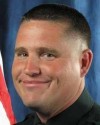
Police Officer Rodney R. Thomas
New Orleans Louisiana Police Department
End of Watch: Sunday, July 7, 2013
Age: 52
Tour: 8 years
Badge # 2053


Police Officer Rodney Thomas was struck and killed by a hit-and-run driver on the I-10 High Rise Bridge at approximately 1:00 am.

Officer Thomas was en route home following his shift when he was involved in a minor accident. He was still in uniform and put on his traffic vest to check on the other occupants of the vehicle. As he did so, a vehicle driving recklessly entered the crash scene. As Officer Thomas attempted to signal the vehicle to stop it struck him.

He was dragged a short distance before being thrown to the pavement.

Detectives discovered the vehicle in a body shop several days later. The driver, an occupant, and the body shop owner were all arrested and charged in connection with Officer Thomas' death and subsequent attempt to cover up evidence.

Officer Thomas had served with the New Orleans Police Department for eight years and was assigned to the 2nd District. He is survived by his wife and two children.
Rest in Peace Bro…We Got The Watch

Day is done, Gone the sun, From the lake, From the hills, From the sky. All is well, Safely rest, God is nigh.

Thursday, August 15, 2013

Tuesday, August 13, 2013

What's going on in the World Today 130812

Al Czervik: Oh, this is the worst-looking hat I ever saw. What, when you buy a hat like this I bet you get a free bowl of soup, huh?
[looks at Judge Smails, who's wearing the same hat]
Al Czervik: Oh, it looks good on you though.

Al Czervik: Oh, this your wife, huh? A lovely lady. Hey baby, you must've been something before electricity.

Al Czervik: You're a lot of woman, you know that? Yeah, wanna make 14 dollars the hard way?

Al Czervik: What're we, waiting for these guys? Hey Whitey, where's your hat?
Judge Smails: Do you mind, sir. I'm trying to tee off.
Al Czervik: I'll bet you a hundred bucks you slice it into the woods.
Judge Smails: Gambling is illegal at Bushwood sir, and I never slice.
[Swings club, slices ball into woods]
Judge Smails: *Damn*.
Al Czervik: OK, you can owe me.
Judge Smails: I owe you nothing.

Al Czervik: [tees off] Fore!
[his ball hits Judge Smails in the crotch]
Al Czervik: I should have yelled, "Two!"

Al Czervik: [drops his bow anchor on Judge Smails' sailboat, sinking it] Hey, you scratched my anchor!


Man I miss Rodney D. Hope you had a great weekend.

HYPERLINKS MAY REQUIRE AN EMAIL:

USA

NOTHING SIGNIFICANT TO REPORT

AFRICA

NOTHING SIGNIFICANT TO REPORT

ASIA


India's Aircraft Carrier Unveiled 08/12/13

NEW DELHI -- India has launched its first home-built aircraft carrier, marking another milestone in its efforts to bolster its maritime presence.

Defense Minister A.K. Antony said Monday that India needed a strong navy to defend itself, and that India will press ahead with developing its maritime capabilities.

India joins the U.S., Russia, France and Britain in building its own carrier. The carrier was launched at the Kochi shipyard in southern Kerala state, but it still needs to be outfitted and extensive trials held before it is inducted into the Indian navy in 2018.

India has steadily built up its naval capabilities in recent years, spurred by its rivalry with neighboring China.

On Saturday, India activated an atomic reactor for its indigenously built nuclear submarine.

Reactor Powered Up On First 'Made in India' Nuclear Sub August 11, 2013

A Russian Akula-class sub in Brest harbor, western France, in 2004. The INS Arihant is said to be based on this Cold War design.

India has activated the reactor aboard the INS Arihant, believed to be the first nuclear-powered ballistic missile submarine designed and built outside the Cold War "nuclear club."

Prime Minister Manmohan Singh called the event a "giant stride in ... our indigenous technological capabilities."

It's the first nuclear-powered submarine built in India and the first such vessel constructed by a country other than the United States, U.K., France, Russia or China.

Reports of the vessel suggest its design is based on Russia's Akula-class submarines, which came into operation toward the end of the Cold War. India has leased one from Moscow and plans to operate others. However, unlike the Akula, which is an attack submarine, Arihant is designed to be the first in a class of Indian boats that carry ballistic missiles.

The BBC says:

"Nuclear [ballistic missile] submarines will add a third dimension to India's defence capability, as it has previously only been able to launch ballistic missiles from the air and from land. ...
"The fact that this submarine, the nuclear reactor that powers it, and the ballistic missiles that it will fire are all manufactured locally in India — though there may have been some assistance from Russia — is a significant technological achievement."
Naval-technology.com adds:

"The Indian Navy has a fleet of 16 diesel-electric submarines leased from Russia and Germany. However, the disadvantage with diesel electric submarines is that they cannot stay under water for an extended period.
"Conventional diesel-electric submarines have to ascend to the surface each day to eject carbon dioxide produced by the generator. Nuclear-powered submarines, on the other hand, can stay under water for long durations without being detected."

The website says the cost of building the Arihant is estimated at $2.9 billion.


Indian-built Arihant nuclear submarine activated

The move means the submarine can now undergo sea trials.

Prime Minister Manmohan Singh hailed the "giant stride in... our indigenous technological capabilities".

Experts say is the first ballistic missile submarine known to have been built outside the five recognised nuclear powers.

Last year, India rejoined those countries - the US, UK, France, Russia and China - in being an operator of nuclear-powered submarines when it formally commissioned a Russian-built submarine into its navy.

Nuclear submarines will add a third dimension to India's defence capability, as it has previously only been able to launch ballistic missiles from the air and from land.

Assuming its sea trials are completed successfully, India's new nuclear-powered submarine could be operational within the next two years, the BBC's Jonathan Marcus reports.

Russian alliance
When it is eventually deployed, the Arihant will be able to carry a crew of about 100 sailors on board.

It will be able to stay under water for long periods and thereby increase its chances of remaining undetected.

By contrast, India's ageing conventional diesel-powered submarines need to surface frequently to recharge their batteries.

Last year India leased the Russian-built nuclear-powered submarine the INS Chakra for the next 10 years at a cost of about $1bn (£630m).

India had previously operated a Soviet nuclear submarine until 1991.

India and Russia are long-time allies, and Russia supplies 70% of India's military hardware.

Russia is also expected to help India train the Arihant's crew. The crew of the Chakra underwent their training in a secretive programme in St Petersburg...

EUROPE

UK's nuclear weapons being dismantled under disarmament obligations

Quietly, slowly and without any fuss, Britain is dismantling its nuclear weapons. Three Trident warheads a year are being moved from the Clyde to the home counties to be taken to pieces, according to evidence seen by the Guardian.

The Ministry of Defence (MoD) has revealed that it is overseeing a programme "to disassemble Trident warheads" at Burghfield in Berkshire, in a way that will prevent them from being put back together. This fulfils a government promise to cut the number of the nation's nuclear weapons from 225 to 180 by the mid 2020s.

The latest monitoring of nuclear bomb convoys by activists suggests that in 2012 five warheads were sent by road to Burghfield from the royal naval armaments depot at Coulport on Loch Long near Glasgow. Two were refurbished and returned north, they said, while three stayed at Burghfield to be dismantled.

Ministers announced in June 2011 that Britain's stockpile of nuclear weapons was being reduced by 45 to "no more than 180" over about 15 years to comply with international disarmament obligations. Until now it's not been clear what was happening to the warheads, with critics suspicious that they could just be disarmed and stored ready to be rearmed if necessary....

MEXICO/LATIN AMERICA

NOTHING SIGNIFICANT TO REPORT

AFGHANISTAN

NOTHING SIGNIFICANT TO REPORT

CHINA

China: Cargo Ship To Transit Northeast Passage August 12, 2013

A cargo ship that departed northeastern China's Dalian port on Aug. 8 is attempting China's first-ever commercial transit of the Northeast Passage, north of Russia, the Financial Times reported Aug. 11. The 19,000-ton ship, operated by state-owned Cosco Group, is bound for Rotterdam. The Arctic is expected to become more important in coming decades as natural resources and transport routes become more accessible. China was granted observer status in the Arctic Council in May

IRAN

NOTHING SIGNIFICANT TO REPORT

IRAQ

NOTHING SIGNIFICANT TO REPORT

ISRAEL

NOTHING SIGNIFICANT TO REPORT

RUSSIA

Russia: Few Options to Redress Ethnic Tensions

SYRIA

NOTHING SIGNIFICANT TO REPORT

MIDDLE EAST GENERAL

War splits Syria into 3 distinct regions

Rebels have firmer grip on northern provinces while government is in tight control of central areas

Beirut: More than two years into Syria’s civil war, the once highly-centralised authoritarian state has effectively split into three distinct parts, each boasting its own flags, security agencies and judicial system.

In each area, religious, ideological and turf power struggles are under way and battle lines tend to ebb and flow, making it impossible to predict exactly what Syria could look like once the combatants lay down their arms.

But the longer the bloody conflict drags on, analysts says, the more difficult it will be to piece together a coherent Syrian state from the wreckage. “There is no doubt that as a distinct single entity, Syria has ceased to exist,” said

Charles Lister, an analyst at IHS Jane’s Terrorism and Insurgency Centre. “Considering the sheer scale of its territorial losses in some areas of the country, Syria no longer functions as a single all-encompassing unitarily-governed state.”

The geographic dividing lines that have emerged over the past two years and effectively cleft the nation in three remain fluid, but the general outlines can be traced on a map. The regime holds a firm grip on a corridor running from the southern border with Jordan, through the capital Damascus and up to the Mediterranean coast, where a large portion of the population belongs to President Bashar Al Assad’s Alawite sect.

The rebels, who are primarily drawn from Syria’s Sunni majority, control a chunk of territory that spans parts of Idlib and Aleppo provinces in the north and stretches along the Euphrates river to the porous Iraqi border in the east.

Tucked into the far northeastern corner, meanwhile, Syria’s Kurdish minority enjoys semi-autonomy. Those contours provide the big picture view. The view from the ground, however, is slightly muddied.
MISC

NOTHING SIGNIFICANT TO REPORT

Except where noted courtesy STRATFOR.COM

Monday, August 12, 2013

Oh Mommy, can I have one, please!


VIEW THE LATEST SNIPER RIFLE AVAILABLE TO OUR MILITARY: THE OMEN

Meet the new Omen. This semi-automatic weapons platform can hit a target out to 1,400 meters. The military-only version shoots 3 shot groups in an area the size of a dime, civilian-versions under a quarter at 100 yards. Stretching nearly four feet in length, it holds 14 rounds.

This description might sound like the latest big bore .50-cal on the market, but this is the new NEMO Omen .300 Winchester Magnum semi-automatic sniper platform. This revolutionary rifle weighs less than 11 pounds unloaded. Comparatively, the average AR-15/M-4, chambered for 5.56 NATO, weighs in at under 7 pounds while a comparable AR-10, chambered for the 7.62 NATO cartridge, weighs in at just under 10 pounds.

The platform, announced at last year's annual NRA meeting in Houston, extends the range a sniper can operate within a combat zone. While most AR-15's cannot reliably extend beyond 600 meters and AR-10s beyond 1,000 meters; the OMEN is capable of reaching out to 1,400 meters, nearly a mile, and can rapidly engage multiple targets without requiring the operation of a bolt. This system fills a gap between 7.62 NATO semi-automatic sniper systems and the Barrett M107 .50 BMG, which is capable of engagements exceeding 2,000 meters. The Barrett weighs more than two OMENs combined.

The development of the rifle is considered a major stepping stone in the AR rifle market. Historically, previous AR platforms have restricted the size of cartridge to those with a length shorter or equal to the 7.62 NATO cartridge. However, NEMO engineers expanded the receiver size to accept the massive cartridge while maintaining a lightweight profile. Despite the massive cartridge and light weight, weapon recoil is little more than its AR-10 counterpart thanks to a proprietary recoil reduction system built into the weapon's bolt.

If this weapons platform catches on, expect to see our snipers carrying this into combat soon. If so, I don't foresee them complaining. For those civilians who want one, though, it can be yours for just under $6,000. If that price seems a little steep, compare that to NEMO's latest offering: a titanium chassis AR-10, weighing just over 8 pounds, sells for a mere $100,000.

I wonder if the department would.... Oh, never mind ! :<)

Officer Down


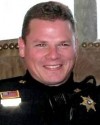
Sergeant Mike Wilson
Charlotte County Florida Sheriff's Office
End of Watch: Monday, August 5, 2013
Age: 42
Tour: 20 years

Sergeant Mike Wilson was shot and killed while responding to a domestic violence call at an apartment complex on Veterans Boulevard in Port Charlotte.

The call involved a man in a physical fight with his wife and son. As Sergeant Wilson walked up to the stairs to the apartment the male subject emerged and opened fire from the second floor landing, striking Sergeant Wilson in the chest above his vest.

The subject then committed suicide.

Sergeant Wilson had served with the Charlotte County Sheriff's Office for 20 years. He is survived by his wife and three children.
Rest in Peace Bro…We Got The Watch

Day is done, Gone the sun, From the lake, From the hills, From the sky. All is well, Safely rest, God is nigh. 

Sunday, August 11, 2013

I gotta give a shout out to Juan Williams

For calling out these race baiting poverty pimps.

I have more than a few disagreements with Juan Williams (Obamacare, taxation, etc) but on this he is dead on. And for some reason the the good suggestion Mr Williams' makes at the end of this statement are not really embraced by those two sleaze bags.

Why I'm calling out civil rights hustlers Sharpton and Dyson

Editor's note: The following op-ed is based on a monologue delivered on the July 30, 2013 edition of Fox News Channel's "The Five" and an op-ed that appeared previously in Fox News Opinion.

Race has been the topic over the last couple weeks, but if we're going to do this right, if we're going to have an honest discussion among people who care about the problems inside the black community, we have to be dealing with honest brokers. Unfortunately, a lot of people in the so- called civil rights community are frauds, outright hucksters.

Two of the worst: civil rights activist and MSNBC host Al Sharpton and Georgetown University Professor Michael Eric Dyson. Their goal: demonize white people, especially conservatives like Bill O'Reilly, so they don't have to deal with the real problems that continue to plague the black community. Making an older, conservative white guy like O'Reilly a boogie man is easy for these hustlers.

But do they ever confront the real problems and threats in the minority community? No.

High murder rates? How about that? What about high dropout rates? What about the breakdown of the family?

I bet you think I'm exaggerating. Well, here’s this from Michael Eric Dyson:

“Why is it that when we say we want to have a conversation on race, you want a conversation on blackness? You don't want to have a conversation on race. You don't want to have a conversation on white privilege, unconscious bias. You don't want to talk about the collective world we made as black, brown, red, yellow and white people. You want to lecture black people.

So, Mr. O'Reilly, I'd love to have that conversation about protecting yourself behind white picket fences and Fox News and having digital courage. Come in the streets where you went to Sylvia, and you were surprised that black people don't throw bananas at each other or swing from trees.”

Can you believe that? This is unbelievable on so many levels. But let me just start by saying this: Dyson is making the charge basically that O'Reilly is portraying black people as animals. And, of course, this never happened. This is not true.

In the whole episode (when he visited Sylvia's restaurant), which O'Reilly and I talked about on the radio, was going on about defeating racial stereotypes in this society. But that's not what Michael Eric Dyson wants to do here. He wants to hold up somehow that Bill O'Reilly is a racist and target of the conversation and therefore we should be about, somehow, going after Bill O'Reilly.

Well, who does that help? Let's think about that for a second. If this is a real conversation about helping people, if you truly love people, and want to help those in need, how does it help to go after conservatives, O'Reilly, white people, rich people? Let's go to the people who need help and give them help.

But that's not what Michael Eric Dyson is doing. Oh, no. When you start asking questions like well, are you doing anything to help the schools in the inner-city? No.

What about the carnage on black streets with kids shooting each other? No.

What about, you know, any of the issues attached to family breakdown, 70 percent of children born out of wedlock? What about that? No.

So what we're doing here is a huge distraction. Yes, there's legitimate rage in the black community over the Zimmerman verdict, but the idea that we have to use the power that exists in this country to help people who are in need in the black community, that is an ongoing and longer story and you can't pull away from that by making Bill O'Reilly into your target and somehow beating him up. That's craziness.

So what can we do, what should we do to start helping people who are in need in the African-American community today? I wrote about this in my book, “Enough” and recently in an opinion piece for FoxNews.com.

Here’s the message I would like to see expressed in America today. I think it would be especially powerful if it could come from the black man with the highest level of credibility in black America since Dr. Martin Luther King Jr. – President Obama.

1. Stay in school and graduate from the highest level of school – but absolutely, no excuses, graduate from high school.

2. Take a job and hold it, no matter what job, no matter if your friends put you down for ‘flipping burgers.’ Use the job to get experience, make contacts with business people, and build a resume.

3. Marry after you have finished your education and while you have a job.

And the final step is important for you and for the future of your family and your community:

4. Don’t have children until you are at least 21-years-old and married.

Imagine if President Obama repeated that message over and over, ignoring the phonies who want to focus only on “systemic” racism as the reason for high rates of poverty, involvement with crime, and incarceration among black men.

Imagine if the president delivered that message despite attempts to intimidate him by civil rights leaders.

Imagine if he decided to deliver that message and by-passed the so-called ‘racial experts’ and academics who prefer to look at America’s troubled racial history – slavery and legal segregation.

The answer is the president could make a difference in millions of lives and build a legacy on par with Dr. King.

Mr. President it is your move.

Mr Williams, cannot put it better. Hopefully NPR will see the failure of their ways. But I have my doubts. May God bless you and hopefully your message will be the one put out, not these two leeches on society.

Officer Down


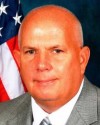
Deputy Sheriff Jeff Watson
St. Charles Parish Louisiana Sheriff's Office
End of Watch: Sunday, August 4, 2013
Age: 41
Tour: 12 years

Deputy Sheriff Jeff Watson was killed in an automobile crash while responding to an assistance call from another officer at approximately 8:45 pm.

He was traveling on Paul Maillard Road with his emergency lights activated when an oncoming vehicle attempted to make a left turn in front of him onto Post Drive. Deputy Watson, who was not wearing a seatbelt at the time, attempted to avoid a collision but swideswiped the vehicle and then struck another vehicle head-on.

The occupants of the other vehicles all suffered injuries.

Deputy Watson had served with the St. Charles Parish Sheriff's Office for 12 years.
Rest in Peace Bro…We Got The Watch

Day is done, Gone the sun, From the lake, From the hills, From the sky. All is well, Safely rest, God is nigh. 

Geopolitical Weekly: A Little Cold War: Russia, Europe and the United States, August 6, 2013

By George Friedman

Stratfor has been chronicling what we call the end of the Post-Cold War world, a world with three pillars: the United States, Europe and China. Two of these three have been shifting their behavior over the past few years. We've discussed the end of China's high-growth, low-wage expansion. We've also discussed the deep institutional crisis in Europe resulting from its economic problems. We have discussed some of China's potential successors. What needs to be discussed now is the system that will emerge from the Post-Cold War world, and to do that, we need to discuss shifts in Russia's behavior.

Chaos in Russia

Russia went through two phases in the Post-Cold War world. The first was the chaos that inevitably followed the collapse of the Soviet Union. Chaos sometimes can be confused with liberalism and many think of Russia in the decade after the Soviet Union as being liberal. But Russia under Boris Yeltsin was less liberal than chaotic, with a privatization program that enriched those who rapidly organized to take advantage of the poorly defined process, a public life that had little shape or form and a West that was both pleased with the fall of Soviet power and deluded into thinking that Russia was reshaping itself into a Western constitutional democracy.

The second phase was a reaction to the first. The havoc of Yeltsin could not continue. To a great extent Russia was not working. The only structure that had survived the Soviet Union and that was still working was the security services -- and even those were being seriously degraded by Yeltsin's efforts. The security services had both held the country together to the extent possible and had participated in the accumulation of wealth through the privatization process. In the course of that they not only retained the power they had in the Soviet Union but also dramatically increased their power. At the same time, a class of oligarchs emerged and the two groups oscillated between competition and cooperation.

Russia could not continue as it was. It was sinking into extraordinary poverty, worse than the Soviet Union; there were regions that were seeking to break away from the Russian Federation; and it had little to no international standing.

The United States and NATO waged a war in Kosovo, completely indifferent to Russian opposition. Russia opposed the war both because Serbia was an ally and because one of the principles of Europe since World War II was that there would be no shifts in borders. This was regarded as sacred inasmuch as redrawing borders was one of the origins of the war. Russia's wishes were disregarded.

When Serbia did not collapse immediately under air attack and the war dragged out, the Russians were asked to negotiate its end. In return they were promised a significant role in managing post-war Kosovo. That didn't happen; the future of Kosovo became a matter for European and American decision-making.

Influence is not something given to a country. It has that influence because of its power, because the consequences of ignoring its wishes would have unacceptable consequences. By 1999, Russia had reached the low point of its influence.

Putin Brings Russia Back

It was logical that a man like Vladimir Putin would emerge from the chaos of the 1990s. Putin was deeply embedded in the KGB and the old security apparatus. During his time in St. Petersburg, he was integrated with the emerging oligarchs as well as the new generation of economic reformists. Putin understood that in order to revive Russia, two things had to happen. First, the oligarchs had to be intimidated into aligning their activities with the Russian government. He owed too much to them to try to break them -- though he made an example or two -- but he did not owe them so much as to allow them to continue to loot Russia.

He also understood that he had to bring some order to the economy both for domestic and foreign policy reasons. Russia had massive energy reserves, but it was incapable of competing on the world markets in industry and services. Putin focused on the single advantage Russia had: energy and other primary commodities. To do this he had to take a degree of control of the economy -- not enough to return Russia to a Soviet model, but enough to leave behind the liberal model Russia thought it had. Or put differently, to leave behind the chaos. His instrument was Gazprom, a government-dominated company whose mission was to exploit Russian energy in order to stabilize the country and create a framework for development. At the same time, while reversing economic liberalism, Putin imposed controls on political liberalism, limiting political rights.

This process did not happen overnight. It was something that evolved over a decade, but its final result was a Russia that not only was stabilized economically but also had influence in the world. For Putin, the consequences for political and personal freedom were not a high price to pay. From his point of view, the freedoms of the 1990s had damaged Russia tremendously. Putin wanted to create a stable platform for Russia to protect itself in the world. The dread of disintegration, supported by Western powers in his mind, had to be reversed. And Russia could not simply be ignored in the international system unless Russia was prepared to continue its position as victim.

Energy production created an economic base that the government could use to end the erosion of economic life throughout the country. It also gave Russia a lever that assured it would not be ignored. Energy sales to Europe became an essential part of European economic life. Germany, for example, needed energy to maintain its economy. There was always a chance that Russia might cut off sales. On several occasions, the flow of energy was severed when disagreements arose between Moscow and the transit states, Belarus and Ukraine. As the Russians developed greater reserves it became easier for them to endure the cost of a monthlong disruption than it was for Germany.

Therefore, Germany and the rest of Europe ceased to be indifferent to what Russia wanted. They couldn't afford to neglect Russian interests. During the Cold War, Russia had been poor and powerful. After the Cold War, it had been poorer and powerless. Putin returned it to a place where it was somewhat better off and had international power. That he was indifferent to individual rights upset urban liberals in Russia. Its effect outside of Moscow and St. Petersburg is less clear, but his popularity continues to be greater outside major cities.

An Emerging Russian Strategy

As Europe is struggling with its internal problems and China is dealing with its economic problems, Russia has attained a position of significant regional influence -- influence that Putin is systematically trying to increase. Putin is following a policy that we might call "commercial expansionism." Russian tanks are not about to surge into the former Soviet satellites in Europe like they did in Georgia, but the weakness of Europe has forced these countries to rely less on the rest of Europe and to try to cope on their own. Unable to rely on the United States, where the single issue of missile defense has created substantial unease, they remain distrustful of Russia in the extreme. However, they have few options, and the Russians are being meticulous in assuring that commercial relations are not seen as a means of political control.

Russian interests are working to increase their ownership of energy resources and a range of other industries. Weakened by the European crisis, joint ventures, purchases and sales agreements are being quietly signed everywhere. Most are small, but it is the small relationships that are binding Eastern European economies to Russian interests. Given the way that Russia is managing its economy, even small companies must align with broad strategy, and the broad strategy is that the deals must make financial sense, but one of the results is increased Russian influence.

This is not confined to former satellites. Russian firms, holding energy-generated cash, have made deals or flirted with deals throughout troubled Europe. The strategy is that commercial relations will beget internal pressure to avoid confrontation with Russia on political matters, shaping foreign policy.

This strategy creates a new dynamic in Russia's relationship with the United States. During the Soviet era and under Putin, the Russian strategy toward the United States has been to generate problems in diverse areas in order to force U.S. actions that diffuse American power and lead Washington to overcommit. Vietnam was an example of this. For Putin, the sphere for this action is the Middle East. The wars in Afghanistan and Iraq were gifts to the Russians. The Americans were tied down, creating a window of opportunity for the Russians to recover their balance, rebuild their system and, when the opportunity presented itself, expand their power.

The end of the wars in Afghanistan and Iraq are not in the Russian interest. Moscow benefits, with some costs, from the U.S. preoccupation in the Islamic world. Therefore, the Russians have played a role in both Syria and Iran, essentially inviting the Americans to continue their policy in the Middle East while relieving pressure on the Russians. The United States has responded with increased pressure on the Russians to halt support for Bashar al Assad and the Iranians. The Russians refused.

The New Cold War

When you step back, you see the United States in the process of disengagement that normally follows American wars. This disengagement comes at the same time that Europe is undergoing an internal economic crisis that has created an institutional crisis. This has opened opportunities for the Russians to increase their influence in Europe at a time when the United States is trying to find its own balance. The Russians are helping to maintain potential crises in the Middle East that the Americans might be tempted to get involved in. The Russians are also reactivating and expanding a network of relationships with regimes in Latin America. There is a long-standing anti-Americanism in Latin America that equates anti-Americanism with left-wing politics. Today, the Russians are hardly left-wingers ideologically; they are nationalists. But the ability to create tensions between Venezuela, Ecuador and Bolivia and the United States costs the Russians little and has potential benefits.

The Snowden affair should be seen in this light. There are many issues involved in the Snowden case, from U.S. constitutional matters to the obligations of those with clearances. The Snowden affair also has this context: An American with access to highly classified materially has defected to Russia. The Americans want him back. Ten or 15 years ago he might have been returned, but not now. If the Russians returned him, all other potential American defectors might decide not to trust Russia. If an equivalent Russian defected to the United States, it is unlikely he would be returned to face trial. But the defection would be much more quiet, as the less the Russians knew the better. For reasons perhaps beyond their control, or perhaps not, this defection cannot be hidden.

But that serves two purposes. First, it creates a political crisis in the United States and between the United States and its allies. Second, it aligns Russia with human rights groups (international and inside of Russia itself) that have been condemning Russia for violating human rights. Russia has created a moral equivalency on human rights with the United States, valuable in its political war with the United States. The Snowden affair is on this level a minor matter. But there are no opportunities too minor to be exploited now.

There is no danger of a military confrontation now or perhaps ever. But the Russians are now using the European economic crisis and tensions between Europeans and Americans to project power -- commercial, in this case -- into Europe, to separate the Europeans from the Americans to the extent possible and to put the United States on the defensive.

The Russians are not being aggressive from their point of view. They suffered a massive reversal in 1991 that the United States in particular has taken every opportunity to exploit, from Kosovo to Ukraine to the Baltics. For a while it appeared that the Americans would succeed in breaking Russian power permanently. If not for 9/11 they might have. Russia sees itself as creating a sphere of security to protect itself and assert its interests as a great power.

The United States has not yet defined its policy toward Russia. It continues to look at Russian behavior in the context of isolated actions that do not form a coherent whole. Syria, Iran, Eastern Europe and Ecuador are viewed as Russian irritants, not a Russian strategy. But it is now a strategy -- a strategy of finding the means to tie down and divert the United States while Russia creates a new reality on its periphery and especially in Europe.

The United States can afford to be confused. It is a huge power with ample time to react. Russia is ultimately a weak power. Its advantage in energy depends on the price of energy and the development of alternative sources and customers of energy. Russia's reassertion rests on a very weak foundation and I doubt that they can sustain their play. The Soviet Union was much stronger on the whole than Russia is today, and it could not sustain itself. Neither can Russia.

But for now, it has a powerful play. What Latin American leftists do is really not very important. And the United States is not going to be sucked back into the Middle East; two wars are enough. But what the Russians are doing in Eastern Europe could transfigure Europe sufficiently to challenge American interests. It is hard to ignore it. It is also hard to react to it. This is the American problem. For now, the United States has no good options.

This is one of the reasons President Barack Obama is considering canceling the September summit with Putin. Snowden is the excuse and a piece of it, but it's not just that. The United States is in the process of coming to terms with the fact that Russia is an adversary waging a well-reasoned and effective strategy within the limits of its resources, one for which the United States has no clear counter. The last summit achieved nothing, nor will this one.

In The Next 100 Years, I laid out a sequence in which Europe and China weakened. I argued that the power that would emerge from this weakening would be Russia, that Russia would wind up in a little Cold War with the United States and that Russia's ability to sustain itself for a generation really isn't there. But I saw this as still the most significant successor to the Post-Cold War world. I think we are there. It is not a Cold War, but it is more than a little chilly. And it will become a central feature of the international system.

A Little Cold War: Russia, Europe and the United States Copyright STRATFOR.COK

Officer Down


Corporal Thomas Keith Slay
Columbus Georgia Police Department
End of Watch: Tuesday, July 30, 2013
Age: 53

Corporal Thomas Keith Slay was killed in an automobile accident while responding to assist another officer. Corporal Slay and another officer were traveling north with lights and siren in an unmarked truck on Veterans Parkway when another vehicle entered their lane and struck their vehicle at approximately 3:00 p.m. The truck left the road and slid sideways, striking a utility pole on the driver's side.

Corporal Slay was transported to The Medical Center, where he was pronounced dead from blunt force trauma. The other officer was critically injured in the wreck. Both officers were assigned to a multi-agency drug task force.
Rest in Peace Bro…We Got The Watch
Day is done, Gone the sun, From the lake, From the hills, From the sky. All is well, Safely rest, God is nigh. 

A new way to you pay your debt to society

Something unique from the justice arena.
Luxury jail available for only $155 a night in California.


Have you been sentenced to a short stretch of jail time in Alameda County, Calif.? Not so wild about spending it at your typical, "Oz"-like horror show of an institution? Good news, criminal. If you can swing $155 a night, you can stay in the Fremont facility, far away from the riff raff of general county miscreants.

You'll get a large, flat-screen HD TV and open community spaces, "but you don’t get a warm cookie on your bed," warned jail rep Lt. Mark Devine. Potential inmates need a health screening, background check and a judge's approval to luxuriate in the $10.6 million facility, though rarely are more than a dozen inmates residing in the 58-bed facility at a time.

Still, if 16 inmates stay twice a week yearly, Fremont would profit $244,000, according to Devine. That's just good prisoning.

What the hell, it makes money.

Tuesday, August 6, 2013

Waiting on daddy

Virginia Beach VA

Security Weekly: The Mythical El Chapo, July 31, 2013

By Scott Stewart

Stratfor analysts spend a lot of time reading intelligence, including huge numbers of media reports. This is something I jokingly refer to as "electronic waterboarding" when talking to new analysts: The intelligence flow is more than any brain can absorb, and until you become accustomed to managing the onslaught of information, you can feel as though you are drowning intellectually. But once you learn to manage it, a heavy flow of information can be very useful in spotting anomalies and patterns and in charting and predicting changes in dynamics. It is also quite helpful in allowing an analyst to pick out conventional wisdom and even myths that are propagated by the media and sometimes deeply held by a population.

Analytically, the problem is that buying into a popular narrative or commonly held myth can be quite dangerous. This is because such concepts can not only shape the way you perceive and categorize information as you read through the flow, but also serve to radically skew your analysis of a situation or dynamic. Indeed, conventional wisdom, disinformation and myths have long proved to be the bane of sound analysis. Intellectually buying into these types of concepts has led to the construction of faulty intellectual frameworks that in recent years have resulted in deeply flawed analyses regarding, for example, the presence of weapons of mass destruction in Iraq and the purported links between Saddam Hussein and al Qaeda.

But deceptive narratives, disinformation and myths do not apply just to Iraq or Saddam. One of the places where they are running rampant today is in Mexico, and perhaps no figure has more myths and disinformation associated with him than Joaquin Guzman Loera, also known as El Chapo, the leader of the Sinaloa Federation.

Myth and Reality in Mexico

This is not the first time Stratfor has attempted to address the El Chapo myth. In November 2012, I wrote an analysis discussing how a commonly held belief that El Chapo was somehow less violent than his competitors is patently false. Indeed, a historical review of inter-cartel violence in Mexico shows that it was the aggressiveness of El Chapo and his Sinaloa cartel compatriots in their efforts to seize smuggling corridors from competing organizations that started successive cartel wars in Tijuana, Nuevo Laredo, Juarez and Veracruz. Yet, despite this clear history, the myth somehow endures, and it is not unusual to read media accounts in which analysts and academics who study Mexico's cartels discuss how El Chapo and the Sinaloa cartel are more businesslike and less violent than their competitors. I often wonder what the remnants of the Arellano-Felix Organization (also know as the Tijuana cartel) or the Vicente Carrillo Fuentes Organization (also known as the Juarez cartel) think when they read such claims.

There is another myth we would like to address. Since the July 15 arrest of Miguel "Z-40" Trevino Morales, the leader of Los Zetas, there has been an increase in the circulation of the persistent myth that El Chapo's organization has somehow been spared in the Mexican government's efforts to decapitate and splinter the cartels. This is purportedly a sign that El Chapo has reached some sort of deal with Mexican President Enrique Pena Nieto and his Institutional Revolutionary Party to spare the Sinaloa Federation from government attention. But this is clearly not supported by the facts.

Certainly, connections between the various cartels in Mexico and politicians at the local, state and even federal levels are longstanding and very well documented. However, while such connections can provide some degree of shelter and a great deal of intelligence regarding police and military operations, they by no means have been useful in completely shielding cartel figures from the government.

For example, the cartel leader who built arguably the best intelligence network within the Mexican government was Alfredo Beltran Leyva. Even though some of the Beltran Leyva Organization's alleged informants have been released from prison in recent months -- including former Mexican drug czar Noe Ramirez Mandujano and former army Gen. Tomas Angeles Dauahare -- due to questions about the credibility of a witness who testified against them, the cartel still possessed an extensive and impressive network of agents of influence and human intelligence sources. Yet this expansive network could not prevent Beltran Leyva himself from being arrested in January 2008, one of his brothers, Arturo, from being killed in December 2009 or another, Carlos, from being arrested two weeks later.

Clearly, agents of influence and intelligence sources cannot provide universal protection from the government. This is because while corruption is widespread in Mexico, it is not homogenous at any level, and collusion does not imply exclusive or consistent support. Some politicians are on the payrolls of multiple cartels, and while one member of a political party or government institution can be in the employ of a certain cartel, their colleagues may be on the payrolls of others.

Because of this, agents of influence and information sources in the Mexican government have not been able to provide absolute protection to El Chapo and the Sinaloa Federation. For example, the Beltran Leyva Organization was a part of the Sinaloa Federation until after Alfredo Beltran Leyva's arrest, when rumors that El Chapo had betrayed Alfredo compelled Arturo Beltran Leyva to break away from, and declare war on, the Sinaloa Federation. It has never been clear if the rumors of the betrayal were true or if they were part of an information operation employed by former President Felipe Calderon's administration and the U.S. Drug Enforcement Administration to divide and decapitate the cartels. Either way, the rumor was taken as fact, and the loss of the Beltran Leyva Organization was a big blow to the Sinaloa Federation.

El Chapo's group lost not only the Beltran Leyvas' intelligence and logistics networks but also their guns. The brothers had been dispatched to Nuevo Laredo when Sinaloa was attempting to wrest control of the plaza from the Gulf cartel following the arrest of Gulf leader Osiel Cardenas Guillen in 2003. After Alfredo's arrest, those same forces that had become battle-hardened after warring with Los Zetas for control of Nuevo Laredo began to attack their former Sinaloa Federation allies. They even killed El Chapo's son, Edgar Guzman Beltran, in Culiacan in May 2008. To this day, certain remnants of the Beltran Leyva Organization, including an enforcer group known as Los Mazatlecos, pose a potent threat to the Sinaloa Federation throughout Sinaloa state.

A similar dynamic played out following the July 2010 death of Ignacio "El Nacho" Coronel Villarreal, the leader of a Sinaloa Federation faction based in Guadalajara. The organization splintered into several factions, some of which are now at war with the Sinaloa Federation after blaming El Chapo for betraying Coronel. These factions are also battling each other for control of Guadalajara. In this case, not only did the Sinaloa Federation lose significant revenue from the methamphetamine produced by Coronel's organization (Coronel was known as the "King of Crystal"), but Guadalajara has now become a hotly contested city rather than a Sinaloa stronghold. The largest of the Coronel factions, the Cartel de Jalisco Nueva Generacion, which is at war with the Sinaloa Federation, has become one of the fastest-growing cartels in the country in terms of territory, and it poses a significant threat to the remaining Sinaloa factions headed by El Chapo, Ismael "El Mayo" Zambada Garcia and Juan "El Azul" Jose Esparragoza Moreno, along with their allies in the Knights Templar and the Gulf cartel.

Speaking of El Mayo and El Azul, it is important to recognize that the Sinaloa Federation does not operate as a single hierarchical organization under El Chapo. While El Chapo gets most of the media attention, El Mayo and El Azul are also members of the triumvirate that guides the cartel's activities. Sinaloa's structure as a network of separate groups has helped the federation weather the loss of the Beltran Leyva and Coronel organizations. This also means that even if El Chapo is removed from the equation, his organization would likely continue, as would the factions led by El Mayo and El Azul -- though there is always the risk that the fall of such an apex leader could lead to the type of balkanization we have seen affect the Beltran Leyva and Coronel organizations.

Sinaloa Losses to Government Operations

Whether or not El Chapo and his triumvirate partners betrayed Alfredo Beltran Leyva and Coronel to the government, it is still not accurate to maintain that the Sinaloa Federation has not been affected by the campaign to splinter and decapitate the cartels. Besides losing two powerful organizations from its network, the Sinaloa Federation also has lost a number of key individuals, including:

Ines Coronel Barreras: El Chapo's father-in-law and an important smuggler in Sonora. Arrested with his son in April 2013.
Jonathan "El Fantasma" Salas Aviles: A key Sinaloa lieutenant and hit man. Arrested in February 2013.
Jose Angel "El Changel" Coronel Carrasco: A prominent figure in Sinaloa illicit drug production operations in the area known as the Golden Triangle near the borders of Sinaloa, Chihuahua and Durango states. Arrested in January 2013.
Jesus Alfredo "El Muneco" Salazar Ramirez (El Muneco): A key lieutenant for El Chapo who oversaw production and trafficking of illicit drugs in Sonora and Chihuahua states. Arrested in November 2012.
Jose Manuel "El M1" Torres Felix: A key lieutenant for El Mayo reportedly in charge of his security team. Killed in a shootout with the Mexican military in October 2012.
Jose Antonio "El Jaguar" Torres Marrufo: A leader of the Gente Nueva enforcer group. Arrested in February 2012.
Noel "El Flaco" Salgueiro Nevarez: A leader of the Gente Nueva enforcer group. Arrested in October 2011.
Jesus Vicente "El Vicentillo" Zambada Niebla: The son of El Mayo. Arrested in March 2009 and extradited to the United States to stand trial.
It is also significant to recognize that this list does not count the personnel lost in confrontations with opposing cartels or arrested in other countries; these are just some of the key Sinaloa members lost to the Mexican government. Again, it is hard to understand how anyone can argue that Sinaloa has not been affected by government operations -- or that those arrested or killed were just low-ranking cannon fodder given up to provide an appearance that the government is attacking Sinaloa.

Interestingly, the myth that El Chapo reached an agreement with the government is nearly as old as it is immune to facts. I can clearly recall that when President Felipe Calderon came into power in December 2006, there were whisperings and rumors of some sort of familial link between Calderon and El Chapo and that Calderon and his National Action Party had somehow reached a deal with El Chapo that would protect the Sinaloa Federation from government action. As the partial list above shows, this was not the case. The Calderon administration did go after the Sinaloa Federation, as is Pena Nieto.

That the rumors span two administrations headed by presidents from opposing political parties -- and that the myths fly in the face of the facts -- highlights the dangers that such narratives pose to analysts. These myths shape the way facts are perceived and memorized -- or ignored. In this way, they introduce what is known as cognitive bias into an analysis of a situation or phenomenon. This cognitive bias can then lead the analysis astray -- and recent press articles demonstrate that a great deal of cognitive bias is still floating around regarding El Chapo.

The Mythical El Chapo C: STRATFOR.COM

Monday, August 5, 2013

Going out on top....

He left like he came in, a champ! Good work Chino!


Sheriff's K-9 corrals wrestler suspected in slaying, then retires

TAMPA - Hillsborough County sheriff's deputies were trailing a suspect Wednesday night driving north on Interstate 275.

In Pasco County, he took an exit off the highway and crashed into a guardrail. Deputies ordered Brian McGhee to get out of his car, but he wouldn't comply, they said.

So sheriff's Deputy Jason Allen called his partner, Chino, an 84-pound German shepherd and Belgian Malinois mix. The dog leaped into the car's open door and pinned the 280-pound McGhee, a former professional wrestler, by the chest.

Chino's career ended the same way it started: corraling a suspect.

"Last night was probably one of the best," Allen said. "What a way to retire, especially with a homicide suspect. It really can't get any better than that."

Chino, nearly 7 now, retired Thursday after working five years with the sheriff's office. The retirement comes a little early because of leg problems and fatigue on the job.

"He loves work," Allen said. "This is going to be a big change for him."

Chino doesn't handle it well when Allen leaves for duty without him. He usually whines.

A permanent separation at work is a big adjustment for Allen, too. He has spent nearly all his time with Chino, at home and at work.

Chino was 2 and nervous when he teamed up with Allen in the sheriff's office K-9 unit. The partners worked together in a two-month training course, and in his first day on the job, Chino found a burglary suspect.

He's an expert at locating suspects and detecting explosives. Before football games and events at Raymond James Stadium, Allen and Chino would inspect the area to make certain it was safe.

They also were involved in the security for the Republican National Convention in August in Tampa.

"Our bond has grown," said Allen, who has worked with the sheriff's office for 14 years. "It's almost as if he knows what I'm thinking. And I can really read him."

When Chino catches a suspect, Allen treats him to a sausage biscuit from McDonald's. On his retirement night, Chino was to enjoy a sausage biscuit as well as ice cream.

Allen will keep Chino and plans to get another dog to keep him company - a Belgian Malinois that Allen hopes will be as friendly as Chino is with other dogs.

"Instead of him getting hurt on the job, it's time for him to retire," Allen said. "It's a good time for him. I don't want him to not enjoy his retirement."

Deputy Allen, I know you and Chino will have a great time in retirement. I think a steak is even in order.

Geopolitical Weekly: The PC16: Identifying China's Successors, July 29, 2013

By George Friedman

Editor's Note: For more information on purchasing the full PC16 report, which assesses each member of the grouping, and for details on custom briefings and analysis for your organization, please click here.

China has become a metaphor. It represents a certain phase of economic development, which is driven by low wages, foreign appetite for investment and a chaotic and disorderly development, magnificent in scale but deeply flawed in many ways. Its magnificence spawned the flaws, and the flaws helped create the magnificence.

The arcs along which nations rise and fall vary in length and slope. China's has been long, as far as these things go, lasting for more than 30 years. The country will continue to exist and perhaps prosper, but this era of Chinese development -- pyramiding on low wages to conquer global markets -- is ending simply because there are now other nations with even lower wages and other advantages. China will have to behave differently from the way it does now, and thus other countries are poised to take its place.

Reshaping International Order

Since the Industrial Revolution, there have always been countries where comparative advantage in international trade has been rooted in low wages and a large work force. If these countries can capitalize on their advantages, they can transform themselves dramatically. These transformations, in turn, reorganize global power structures. Karl Kautsky, a German socialist in the early 1900s, wrote: "Half a century ago, Germany was a miserable, insignificant country, if her strength is compared with that of the Britain of that time; Japan compared with Russia in the same way. Is it conceivable that in 10 or 20 years' time the relative strength will have remained unchanged?" Lenin also saw these changes, viewing them as both progressive and eventually revolutionary. When Kautsky and Lenin described the world, they did so to change it. But the world proved difficult to change. (It is ironic that two of the four BRIC countries had been or still are Communist countries.)

When it is not in the throes of war, trade reshapes the international order. After World War II, Germany and Japan climbed out of their wreckage by using their skilled, low-wage labor to not only rebuild their economy but to become great exporting powers. When I was a child in the 1950s, "Made in Japan" meant cheap, shoddy goods. By 1990, Japan had reached a point where its economic power did not rest on entry-level goods powered by low wages but by advanced technology. It had to move away from high growth to a different set of behaviors. China, like Japan before it, is confronted by a similar transition.


The process is fraught with challenges. At the beginning of the process, what these countries have to sell to their customers is their relative poverty. Their poverty allows them to sell labor cheaply. If the process works and the workers are disciplined, investment pours in to take advantage of the opportunities. Like the investors, local entrepreneurs prosper, but they do so at the expense of the workers, whose lives are hard and brutal.

It's not just their work; it's their way of life. As workers move to factories, the social fabric is torn apart. But that rending of life opens the door for a mobile workforce able to take advantage of new opportunities. Traditional life disappears; in its place stand the efficiencies of capitalism. Yet still the workers come, knowing that as bad as their lot is, it is better than it once was. American immigration was built on this knowledge. The workers bought their willingness to work for long hours and low wages. They knew that life was hard but better than it had been at home, and they harbored hopes for their children and with some luck, for themselves.

As the process matures, low wages rise -- producing simple products for the world market is not as profitable as producing more sophisticated products -- and the rate of growth slows down in favor of more predictable profits from more complex goods and services. All nations undergo this process, and China is no exception. This is always a dangerous time for a country. Japan handled it well. China has more complex challenges.

The PC16

Indeed, China is at the fringes of its low-wage, high-growth era. Other countries will replace it. The international system opens the door to low-wage countries with appropriate infrastructure and sufficient order to do business. Low-wage countries seize the opportunity and climb upon the escalator of the international system, and with them come the political and business elite and the poor, for whom even the brutality of early industrialism is a relief.

But identifying these countries is difficult. Trade statistics won't capture the shift until after it is well underway. In some of these countries, such as Vietnam and Indonesia, this shift has been taking place for several years. Though they boast more sophisticated economies than, say, Laos and Myanmar, they can still be considered members of what we are calling the Post-China 16, or PC16 -- the 16 countries best suited to succeed China as the world's low-cost, export-oriented economy hub.

In general, we are seeing a continual flow of companies leaving China, or choosing not to invest in China, and going to these countries. This flow is now quickening. The first impetus is the desire of global entrepreneurs, usually fairly small businesses themselves, to escape the increasingly non-competitive wages and business environment of the previous growth giant. Large, complex enterprises can't move fast and can't use the labor force of the emerging countries because it is untrained in every way. The businesses that make the move are smaller, with small amounts of capital involved and therefore lower risk. These are fast moving, labor-intensive businesses who make their living looking for the lowest cost labor with some organization, some order and available export facilities.

In looking at this historically, two markers showed themselves. One is a historical first step: garment and footwear manufacturing, a highly competitive area that demands low wages but provides work opportunities that the population, particularly women, understand in principle. A second marker is mobile phone assembly, which requires a work force that can master relatively simple operations. Price matters greatly in this ruthlessly competitive market.

Therefore we tried to determine places where these businesses are moving. We were not looking for the kind of large-scale movements that would be noticed globally, but the first movements that appear to be successful. Where a handful of companies are successful, others will follow, so long as there is labor, some order and transportation. Some things are not necessary or expected. The rule of law, understood in Anglo-Saxon terms of the written law, isn't there at this stage. Things are managed through custom and relationships with the elite. Partnerships are established. Frequently there is political uncertainty, and violence may have recently occurred. These are places that are at the beginning of their development cycle, and they may not develop successfully. Investors here are risk takers -- otherwise they wouldn't be here.

The beginning of China's boom is normally thought of as 1978-1980. The Cultural Revolution had ended a few years before. It was a national upheaval of violence with few precedents. Mao Zedong died in 1976, and there had been an intense power struggle, with Deng Xiaoping consolidating power in 1977. China was politically unstable, had no clear legal system, sporadic violence and everything else that would make it appear economically hopeless. In fact, Egbert F. Dernberger and David Fasenfest of the University of Michigan wrote a paper for the Joint Economic Committee of Congress titled "China's Post-Mao Economic Future." In this paper, the authors state: "In the next seven years as a whole, the rate of industrial investment and production, more than the total of the last 28 years, imply a level of imports and industrial labor force such that the exports, transportation facilities, social overhead capital, energy and middle-level technical personnel requirements would exceed any realistic assessment of Chinese capabilities."

I don't mean to criticize the authors. This was the reasonable, conventional wisdom at the time. It assumed that the creation of infrastructure and a managerial class was the foundation of economic growth. In fact in China, it was the result of economic growth. The same can be said for rule of law, civil society, transparency and the other social infrastructure that emerges out of the social, financial and managerial chaos that a low-wage economy almost always manifests. Low-wage societies develop these characteristics possibly out of the capital formation that low-wage exports generates. The virtues of advanced industrial society and the advantages of pre-industrial society don't coincide.

There is no single country that can replace China. Its size is staggering. That means that its successors will not be one country but several countries, most at roughly the same stage of development. Taken together, these countries have a total population of just over 1 billion people. We didn't aim for that; we realized it after we selected the countries.

The point to emphasize is that identifying the PC16 is not a forecast. It is a list of countries in which we see significant movement of stage industries, particularly garment and footwear manufacturing and mobile phone assembly. In our view, the dispersal of industries that we see as markers of early-stage economic growth is already underway. In addition, there are no extreme blocks to further economic growth, although few of these countries would come to mind as having low political risk and high stability -- no more than China would have come to mind in 1978-1980. I should also note that we have excluded countries growing because of energy and mineral extraction. These countries follow different paths of development. The PC16 are strictly successors to China as low wage, underdeveloped countries with opportunities to grow their manufacturing sectors dramatically.

The new activity is focused on Africa, Asia and to a lesser extent, Latin America. When you look at the map, much of this new activity is focused in the Indian Ocean Basin. The most interesting pattern is in the eastern edge of Sub-Saharan Africa: Tanzania, Kenya, Uganda and Ethiopia. Sri Lanka, Indonesia, Myanmar and Bangladesh are directly on the Indian Ocean. The Indochinese countries and the Philippines are not on the Indian Ocean, and even though I don't want to overstate the centrality of the Indian Ocean, they are nearby. At the very least we can say that there are two ocean basins, the Indian Ocean and the South China Sea. You might want to read my colleague Robert D. Kaplan's book Monsoon on this region.

There are some countries in Latin America: Peru, the Dominican Republic, Nicaragua and Mexico. A special word needs to be included on Mexico. The area north of Mexico City and south of the U.S. borderlands has been developing intensely in recent years. We normally would not include Mexico but the area in central-southern Mexico is large, populous and still relatively underdeveloped. It is in this area, which includes the states of Campeche, Veracruz, Chiapas and Yucatan, where we see the type of low-end development that fits our criteria. Mexico's ability to develop its low-wage regions does not face the multitude of challenges China faces in doing the same with its interior.

All of this has to be placed in context. This is not the only growth process underway. It is most unlikely that all of these countries will succeed. They are not yet ready, with some exceptions, for advanced financial markets or quantitative modeling. They are entering into a process that has been underway in the world since the late 1700s: globalism and industrialism combined. It can be an agonizing process and many have tried to stop it. They have failed not because of their respective ruling classes, which would have the most to lose. It doesn't take place because of multinational corporations. They come in later. It takes place because of profit-driven jobbers who know how to live with instability and corruption. It also takes place because of potential workers looking to escape their lives for what to them seems like a magnificent opportunity but for us seems unthinkable.

The parabola of economic development dictates that what has not yet risen will rise and eventually fall. The process unleashed in the Industrial Revolution does not seem to be stoppable. In our view, this is the next turning of the wheel.

"The PC16: Identifying China's Successors is republished with permission of Stratfor."

Officer Down


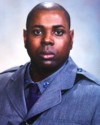
Trooper Winston I. Martindale
New York State Police
End of Watch: Wednesday, July 24, 2013
Age: 40
Tour: 7 years

Trooper Winston Martindale succumbed to injuries sustained on May 9th, 2011, after responding to the scene of a plane crash in Wawayanda, New York.

Trooper Martindale was one of the first responding units to a crash involving two small planes that had collided. During the response he fell on a piece of equipment and suffered internal injuries and internal bleeding. Despite the injuries, he continued his efforts to free the two pilots from the wreckage.

After clearing the scene several hours later it was determined that he had suffered severe injuries. He underwent several surgeries over the following two years but succumbed as a result of the injuries and complications on July 24th, 2013.

Trooper Martindale was a U.S. Army veteran of Operation Enduring Freedom. He had served with the New York State Police for seven years and was assigned to Troop F. He is survived by his wife, son, daughter, parents, sister, and brother.
Rest in Peace Bro…We Got The Watch

Day is done, Gone the sun, From the lake, From the hills, From the sky. All is well, Safely rest, God is nigh. 

What's going on in the World Today 130805

HYPERLINKS MAY REQUIRE AN EMAIL:
USA

With Embassy Closures, the U.S. Errs on the Side of Caution

U.S. Naval Update Map: Aug. 1, 2013

July 31, V3.co.uk – (National) NASA cloud computing use blasted for security and management failings. A report published by the U.S. Office of Inspector General determined the National Aeronautics and Space Administration’s cloud services did not meet critical IT security requirements and the administration did not perform annual tests of security controls, creating the potential for serious disruptions to operations.

July 30, CSO – (National) Universities putting sensitive data at risk via unsecure email. A survey conducted by Halock Security Labs determined colleges and universities put the financial and personal information of students and parents at risk when they allow them to submit such data to the school through unencrypted email. The vulnerability is more prominent in smaller schools and community colleges as larger universities tend have better security measures in place, according to the report.

July 31, Denver Post – (Colorado) Former Rocky Mountain Spine Clinic employee stole patient information. Rocky Mountain Spine Clinic in Lone Tree, Colorado, notified 532 patients after a former employee created a document containing their personal information and sent it to her personal email account. The former employee was immediately fired and told police she did not share the information and immediately deleted the document after sending it.


August 1, The Register – (International) Gmail, Outlook.com, and e-voting ‘pwned’ on stage in crypto-dodge attack. Researchers demonstrated a man-in-the-middle attack at the Black Hat 2013 conference which can allow unauthorized access to email by preventing logout requests. The attack could also be used against certain electronic voting systems.

July 28, St. Helens Chronicle – (Oregon) OHSU notifies patients of ‘cloud’ health information storage. Oregon Health & Science University (OHSU) notified 3,044 individuals that their OHSU health information was stored on a cloud computing system, and although the service is password-protected and has security measures in place to protect stored information, the terms of use indicate the data could potentially be used for promotional and development services by the provider.

AFRICA

The Role of Jihadists in Tunisia's Unrest

ASIA

Cambodia's Ruling Party Under Siege

Problems Facing Taiwan's Transition to an All-Volunteer Military

Taiwan: Mass Protest Held In Taipei Over Military August 3, 2013

More than 100,000 people protested in Taiwan on Aug. 3 in response to the death of a young conscript who was allegedly abused in the military, AFP reported. The rally took place in a square near the presidential office in Taipei. The march was the second such protest since Corporal Hung Chung-chiu died of heatstroke July 4, allegedly after being forced to exercise excessively as punishment for taking a smartphone onto his base. High costs and low recruitment and retention are affecting the military's modernization plan.

EUROPE

The European Crisis Catches Up to Nordic Europe

In Spain and Italy, Corruption Scandals Threaten Stability

MEXICO/LATIN AMERICA

The Politics of Argentine Agriculture

AFGHANISTAN

Afghanistan Update: Avoiding the U.S. "Zero Option"

Afghanistan: Indian Consulate Attacked August 3, 2013

Three suicide attackers assaulted the Indian Consulate in the eastern Afghan city of Jalalabad on Aug. 3, killing six people and wounding another 22, Indian officials and local police said, Reuters and AP reported. Police fired on the militants as they approached a checkpoint, prompting one of them to set of an explosive-laden car. Following the 10 a.m. blast, gunfire was heard in the area for an hour. All three assailants died. On Aug. 1, the United States announced that 21 of its embassies and consulates around the world, including its mission in Kabul, would be closed Aug. 4 due to al Qaeda-related security threats.

CHINA

Interpreting the Discrepancies in China&'s Statistics

The Uncertain Future of the Sino-Myanmar Pipeline

Energy Pipelines Between China and Myanmar

The Post-China 16: Ascendant Manufacturing Countries

EGYPT

Egypt: Army Destroys Hidden Fuel Tanks In Sinai August 1, 2013

Border guards and the Egyptian army destroyed 38 underground fuel tanks discovered on the northeastern Sinai border, an army spokesman said Aug. 1, MENA reported. Ten of the tanks contained gasoline and had a storage capacity of 2,600,000 liters, and the remaining 28 tanks had a capacity of 634,000 liters and were used to store diesel. The tanks were found as part of the recent operations to fight militants in the Sinai Peninsula.

IRAN

U.S., Iran: Why They Will Now Likely Negotiate

Iran: New President Assumes Office August 4, 2013

Newly elected Iranian President Hassan Rouhani took the oath of office in Tehran on Aug. 4, and is expected to name his Cabinet later in the day, Reuters reported. The election of Rouhani, who has pledged to pursue less confrontational policies abroad in order to ease sanctions against Iran, has provided Iranian leaders with an ideal opportunity to engage with the United States to forestall further economic decline.

IRAQ

Iraq: Troops Ordered To Search For Prison Escapees In Baghdad August 1, 2013

Iraqi Prime Minister Nouri al-Maliki has instructed anti-terrorism, Baghdad Operations Command and ground forces to launch raids in several areas in and around Baghdad, All Iraq News reported Aug. 1. The raids and searches are meant to find escapees from the Abu Ghraib prison. Militants attacked two prisons in Iraq on July 21 and freed between 500 and 600 prisoners.

ISRAEL

NOTHING SIGNIFICANT TO REPORT

RUSSIA

Tajikistan Extends Russia's Military Presence

Russia: Muslim Cleric Killed In Dagestan August 4, 2013

An unidentified gunman shot and killed a Muslim cleric in the Russian province of Dagestan, police said Aug. 4, AP reported. The province has seen a rise in a more radical form of Salafist Islamism that has conflicted with the region's more traditional Sufi Islam, as seen by the recent targeting of several clerics in the region for being "too moderate".

Russia: North Caucasus Islamists Should Not Come To Syria, Syrian Warlord Says August 1, 2013

North Caucasus Islamists should not join the war in Syria but should continue jihad in Russian cities outside the North Caucasus, a Syrian jihadist warlord said in a video message dated July 30, RIA Novosti reported Aug. 1. In the video, the speaker, identified as the leader of a group called az Zubair, sits in a wheelchair and is wearing a T-shirt bearing the name of Russian Islamist group Caucasus Emirate. The speaker said that North Caucasus Islamists should target the 2014 Winter Olympics in Sochi, Russia. In May 2012, Russia's National Anti-Terrorist Committee accused the Caucasus Emirate militant group and its leader, Doku Umarov, of planning an attack against the Olympics in Sochi.

SYRIA

Syria: Intense Fighting Erupts In Damascus, Activists Say August 3, 2013

Syrian rebels clashed with government troops in the Barzeh district of Damascus on Aug. 3, activists with the opposition Local Coordination Committee said, Xinhua reported. The intense fighting was ignited when government troops tried to storm the district with the support of heavy shelling on the area, the activists said. Heavy shelling was also reported in the eastern suburbs of Jobar and Hamorieh. Earlier, the Syrian Observatory for Human Rights said that rebels, including members of al Qaeda-linked Jabhat al-Nusra, seized three arms depots in the town of Qaldoun, near Damascus, after intense fighting overnight.
Syria: Rebels, Including Jihadists, Seize Arms Depot, Activists Say August 3, 2013

Syrian rebels captured and arms and ammunition deport in the Qalamun area near Damascus on Aug. 3, gaining access to anti-tank weapons and rockets, the Syrian Observatory for Human Rights said, AFP reported. Several groups, including the al Qaeda-linked Jabhat al-Nusra, were involved in the seizure, which was achieved following several overnight clashes. Though Washington will take several steps to limit the distribution of weapons sent by the West into extremist hands, at least some will likely end up in the extremists' control

MIDDLE EAST GENERAL

The Latest Attempt at Israeli-Palestinian Peace Talks

Pakistan: The Ramifications of a Prison Break

Turkey's Options to Manage Syrian Kurds and Jihadists

France: Interpol Issues Global Security Alert Over Prison Breaks August 3, 2013

Interpol issued a global security alert Aug. 3 in response to a series of recent prison breaks in Iraq, Libya and Pakistan, which the France-based agency said it is examining for links, Reuters reported. The alert follows a U.S.-issued worldwide travel alert on Aug. 2 warning Americans that al Qaeda may be planning attacks in August, particularly in the Middle East and North Africa. The alert was based on the same intelligence that prompted the State Department to close 21 U.S. embassies and consulates on Aug. 4, an unnamed U.S. official said. The United Kingdom, France and Germany announced plans to temporarily close their embassies in Yemen the same day. While the al Qaeda core has been crippled, other portions of the jihadist movement are thriving.

MISC

Geopolitical Calendar: Week of Aug. 5, 2013

Canada's Evolution in Oil

Technology's Impact on Geopolitics

August 1, The Register – (International) Hackers induce ‘CATASTROPHIC FAILURE’ in mock oil well. Researchers with Cimation demonstrated how to exploit widely deployed supervisory control and data acquisition (SCADA) systems to spoof data to the operator and remotely control equipment such as pumps in oil pipelines. A programmable logic controller was remotely controlled to send signals to devices on the simulated pipeline, allowing researchers the ability to turn pumps on and off, causing the mock oil pipeline to rupture.
Except where noted courtesy STRATFOR.COM

Sunday, August 4, 2013

Justice is sometimes slow....

But at least it's coming in this case. Now if they can make Al Sharpton hurt like this woman.
Pay-up time for Brawley: '87 rape-hoaxer finally shells out for slander

Twenty-five years after accusing an innocent man of rape, Tawana Brawley is finally paying for her lies.

Last week, 10 checks totaling $3,764.61 were delivered to ex-prosecutor Steven Pagones — the first payments Brawley has made since a court determined in 1998 that she defamed him with her vicious hoax.

A Virginia court this year ordered the money garnisheed from six months of Brawley’s wages as a nurse there.

She still owes Pagones $431,000 in damages. And she remains defiantly unapologetic.

“It’s a long time coming,” said Pagones, 52, who to this day is more interested in extracting a confession from Brawley than cash.

Brawley’s advisers in the infamous race-baiting case — the Rev. Al Sharpton, and attorneys C. Vernon Mason and Alton Maddox — have already paid, or are paying, their defamation debt. But Brawley, 41, had eluded punishment.

She’s now forced to pay Pagones $627 each month, possibly for the rest of her life. Under Virginia law, she can appeal the wage garnishment every six months.

“Finally, she’s paying something,” said Pagones’ attorney, Gary Bolnick. “Symbolically, I think it’s very important — you can’t just do this stuff without consequences.”

Pagones filed for the garnishment with the circuit court in Surry County, Va., in January, a few weeks after The Post tracked down Brawley to tiny Hopewell, Va.

Before The Post came knocking, not even her own co-workers knew she was the teen behind the spectacular 1987 case....

Just got back to this news from a vacation with the family in very rural Mississippi. Beautiful camp with no WIFI. Hell, the nearest Starbucks is 30 miles away. Hope you had a great weekend!