Police Work, Politics and World Affairs, Football and the ongoing search for great Scotch Whiskey!

Thursday, September 19, 2013

Security Weekly: Preventive Security and the Washington Navy Yard Attack , September 19, 2013

By Paul Floyd

Much of the investigation into the deadly Sept. 16 shooting at the Washington Navy Yard will focus on the background of shooter Aaron Alexis to uncover any missed red flags that could have prevented the attack.

Alexis brought at least one firearm onto the post, which serves as a home for the chief of naval operations and various other command headquarters throughout the Navy and Marine Corps, and opened fire, ultimately wounding eight and killing 12 before being shot down by responding security personnel. The death toll makes this incident the second-deadliest military installation shooting in U.S. history after the Fort Hood shooting perpetrated by U.S. Army Maj. Nidal Malik Hasan in 2009.

In a city overlaid with multiple law enforcement agencies and overlapping jurisdictions, the FBI quickly assumed the lead in the investigation, taking the case away from the U.S. Naval Criminal Investigative Service. This suggests terrorism was suspected and has not been entirely ruled out, even though initial evidence points to this being a case of workplace violence coupled with mental illness; much effort will be expended to determine if Alexis was influenced by or acted under the direction of another person and whether others assisted him.

Preventive and Screening Security

Preventive security, such as security clearances and background checks, are only small pieces of the overall security framework that must be in place to prevent these types of attacks. In general, this can be broken down into three categories: preventive and screening security measures that filter and flag potential issues; security procedures and infrastructure that identify and contain an immediate security threat while alerting security personnel; and reactionary procedures to protect those within the facility while enabling follow-on forces to close in on and deal with the threat. Implementing all three effectively requires significant funds, training and constant updates. While ideally this would prevent all attacks, in reality no system is perfect given limited resources and human fallibility.

Alexis was a former naval reservist as well as an IT subcontractor for HP Enterprise Services, a job that gave him access to any facility to which he was assigned. To get the job, he would have needed a Secret-level clearance, which requires a background check. A Secret clearance can be gained via national agency checks, through an investigation into employment and residential history, criminal records and credit reports that looks for major red flags such as illegal drug use, previously revoked clearances or severe financial irregularities or indebtedness. This level of clearance also involves very limited street work, such as field interviews of family members and friends. This constitutes the bulk of the preventive security and screening that most people undergo to obtain a Secret-level clearance. As we have written, the system that allots clearances has many flaws. At its base, the system is very formulaic and rigid. It only catches indicators if they are divulged by the prospective employee or are documented by law enforcement. Security clearances are also not updated often enough to catch sudden changes in behavior, and the sheer volume of requests for clearances and clearance updates -- which number in the tens of thousands annually -- pushes many of the agencies and/or subcontractors conducting these investigations into doing the absolute minimum to keep up with demand.

Alexis received his Secret clearance during his years as a naval reservist from 2007 to 2011. This level of clearance lasts for 10 years before an update investigation is carried out. His clearance remained active after he left the military and applied to work at HP, where another security contractor ran a cursory background check using only public records -- which are often incomplete. This background check apparently did not uncover or bring proper attention to Alexis' series of firearms-related incidents, including arrests, which should have prompted a deeper investigation.

Alexis also reportedly was receiving treatment for possible mental illness at Veterans Affairs hospitals. If such treatment had come to light, it could have disqualified him from holding a clearance. But medical confidentiality laws usually protect this type of information. Disclosing it would require hospital personnel to notify the appropriate authorities, something that usually can only be done if the patient makes a direct, credible threat against himself or others, or if a mental health official were to declare him mentally incompetent.

In the end, thick layers of bureaucracy allowed Alexis to slip through the system.

Security Procedures and Infrastructure

Most military bases are softer targets than they initially appear. Their perimeter security infrastructure and procedures are designed to deter or catch people completely unrelated to the post from gaining access. This is usually done through perimeter fences and controlled access gates that use a combination of identification by a military common access card -- a standard government identification card shared by all federal and military personnel -- and vehicle screening. The thoroughness of these checks is determined by the force protection level and can be adjusted accordingly to perceived threats. Installations on the post that are sensitive will have redundant and sometimes additional layers of security.

Both the Washington Navy Yard shooting and the Fort Hood shooting demonstrate two shortcomings in these security procedures. The security checks are vulnerable to people already cleared to be in the system and on the post. As a contractor, Alexis had a common access card and it would have been perfectly normal to have him moving throughout the base as an IT professional. It would be unusual for anyone to have his person or equipment searched, so concealing a firearm would not have been difficult. His freedom of movement allowed him ample opportunity to do preoperational surveillance.

Furthermore, most bases or specific installations on these bases are not designed to withstand a direct assault from an armed assailant. Security desks, checkpoints or kiosks staffed by a handful of lightly armed security personnel are very common for individual buildings or gates. This makes them vulnerable to an attacker who can produce proper identification before suddenly opening fire. In gaining access to the Washington Navy Yard, Alexis was able to easily drive through gate security due to his common access card. With that same card he was able to gain access to his targeted building and quickly kill the initial security guard controlling access.

Facilities must be purpose-built from the ground up to be secure against direct assaults. Certain embassies located in high-threat regions of the world meet this standard. Usually this involves several concentric layers of security, ballistic barriers for security personnel and mantrap architecture that immediately restricts the movement of intruders in case of an alarm. Bases in the United States were simply not built with this in mind, and it would be prohibitively expensive to harden every single one. Moreover, these bases have several thousand employees and residents, and are in essence small cities unto themselves. Creating security procedures akin to hardened embassy security would place unrealistic restrictions on the thousands of personnel who flow in and out of the base each day.

Reaction Procedures

The last part of general security is the reaction to these incidents, where each second is critical. The Washington Navy Yard shooting reaction was the most successful of the three general categories of security. The ongoing threat of active shooters in the United States has led to a slow and steady revolution in how law enforcement, military and civilians responding to these situations are trained to react. It has become common for most municipalities and government installations to have specially designated active shooter response teams at the ready.

Lower-level initial responders are now being taught to aggressively close with and engage active shooters or at least isolate them from as many victims as possible (as opposed to setting up broad perimeters and waiting on higher-end units to arrive while attackers rampage). Additionally, government programs, workplaces and schools are teaching their employees and students how to respond to shootings as non-combatants with the Run, Hide, Fight technique or something comparable. At the Washington Navy Yard, it took armed personnel less than eight minutes to engage Alexis after he fired the first shot.

Major U.S. cities have established protocols to cope with sudden attacks. They focus resources such as additional law enforcement and military along with medical personnel that can contain and isolate the affected area while treating casualties. In the wake of the Washington Navy Yard shooting and the Boston Marathon bombing, we have also seen greater protection of key infrastructure and potential follow-on attack sites (in case there are multiple teams of attackers). Some good examples of such places are airports, bridges and nearby schools. Cities also communicate to citizens to shelter in place in an effort to deny attackers more victims and provide freedom of movement for responders.

Successfully protecting any given facility requires a balanced approach to security. Too much reliance on any one approach will ultimately prove unsuccessful. It is also simply impossible to secure all potential soft targets completely, since resources are limited and convenience and practical functioning must be balanced against security concerns. As the investigation proceeds, specific shortcomings will be identified and realistic solutions will hopefully be applied across the board. But there is no panacea that will stop all security threats, especially if the attacker is a current or previous employee. Ultimately it is still the citizen who is the last line of defense against tragedies such as the Washington Navy Yard shooting.

Preventive Security and the Washington Navy Yard Attack Copyright STRATFOR.COM

Officer Down


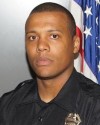
Police Officer Jason Schneider
Baltimore County Maryland Police Department
Age: 36
Tour: 13 years
Badge # 4581

Police Officer Jason Schneider was shot and killed while serving a search warrant at a home on Roberts Avenue, in Catonsville, at approximately 5:00 a.m.

Officer Schneider was part of the tactical team that had entered the house in search of a juvenile subject wanted in relation to a shooting the previous week. The entry team encountered four subjects inside the home who attempted to flee. Officer Schneider was pursuing a subject towards the rear of the house when another subject attacked him and opened fire, striking him several times.

Despite being mortally wounded, Officer Schneider returned fire and killed the subject.

Two juveniles, including the subject they were originally searching for, were later charged with weapons violations.

Officer Schneider was a U.S. Marine Corps veteran and had served with the Baltimore County Police Department for 13 years. He is survived by his wife and two children.

Rest in Peace Bro…We Got The Watch

Day is done, Gone the sun, From the lake, From the hills, From the sky. All is well, Safely rest, God is nigh.

A great commentary on police.

Cops get lots on comments on the Internet or in the press, generally bad. You arrived too late on a call where someone else kept you because they didn't think you were paying attention to the fact their kid was not doing his homework. And then someone said you were driving too fast. Or you should not write a ticket but "go after real crooks..." Or when we're holding a scene with an active shooter, we're rude when we say "Get the hell out of here before you get killed!' or words to that effect. Not to say we don't sometimes deserve it. We're human and can make mistakes.

That being said, this is a great article on the cops who responded to the Washington DC Navy Yard shooter this week.

The Cops Amaze Me | Bob Lonsberry

The cops amaze me.

Some days I honestly don’t know how they do it.

Like yesterday, at the Navy Yard.

We know about the bad guy, we know about his military record and his criminal record. And we know what he did.

But we don’t know much about how he came to stop doing what he was doing.

We don’t know much about how they took him down.

But what we do know is impressive.

Which gets back to the cops.

Yesterday morning about 8:20, the first 9-1-1 call came in of trouble in Building 197. Moments later, an alert was broadcast and officers began speeding toward the Navy Yard from across the District of Columbia.

Regular patrol officers.

Some from schools, some from speed-enforcement details, all from the first hour a new shift and a new week. Old, young, male, female, black, white. They just came. Primarily from the Metropolitan Police Department and the Federal Park Police.

Officers whose lives were going from zero to 60 in the blink of an eye. Officers who went from the sleepy good morning of a Monday dawn to the real-world battlefield of an active shooter.

They began to arrive almost immediately.

And quickly formed up into an assault team.

They didn’t wait for the SWAT team. They didn’t stand back and wait for the armored personnel carrier. They formed up and went in.

Specifically, seven minutes after the first call, an ad hoc team of park police and district police with AR-15s ran into the building in their patrol uniforms.

They ran to the sound of the gunfire.

They closed with the enemy, and engaged him, and killed him.

And by every account some 10 minutes after the first word of trouble had breathed across the police radio, regular patrol officers had killed the gunman and ended his assault.

He fought the law, and the law won.

It’s impossible to calculate how many lives that saved. It’s impossible to calculate how much expertise that took.

It’s impossible to grasp the mindset of readiness that must permeate the men and women of law enforcement. Without notice, the police can be thrown into life-and-death situations where every second and every decision counts.

And sometimes, like yesterday, they must operate in an environment that is heartbreaking and troubling. The responding officers at the Navy Yard ran past the dead and dying, their blood pooling where they lay, in order to press their attack against a monster.

And that was just yesterday.

Every day it is different, every call it is different. Sometimes they are comforting heartbroken children, other times they are knocking on the door to inform someone of the death of a relative. Sometimes they are spat upon, other times they are vomited upon. They are hated and loved, cursed and praised, sometimes on the same call.

They see the carnage of the highways, the sorrow of abused and neglected children, the collapse of a battered wife. They talk the despondent off bridges, they catch the drunk drivers, they try to mediate family and neighbor disputes.

And half the time they do it while being cussed by one group or another. Maybe it’s the neighborhood people. Maybe it’s the pastors. Maybe it’s an activist with a cell-phone video.

The politicians trash them, the residents trash them, the police brass trashes them. They’re ready to lay down their lives for strangers, but heaven help them if anybody thinks they were impolite to a citizen. Heaven help them if they disrespected somebody’s culture.

They fight crime all day, every day, and usually it is a pretty low-key affair. Until there’s a glint of sunlight or a stumbling drunk or a dispatch on the radio.

That’s when it’s Superman time.

That’s when the next 10 minutes of your life are going to be some of the most important in your life.

Like yesterday at the Navy Yard.

Across a big city, the routine of the morning worked its way out. Until there was a cry for help, and the sirens began to roar, and a crew of men and women from at least a couple of departments ran toward the danger.

And killed it.

Before he could kill anybody else.

The cops amaze me.
Thank you Mr. Lonsberry for you kind comments. And to the men and women who handled the shooting in DC, great job!

Thanks to Darren at RotLC for this link.

Officer Down


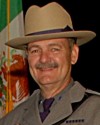
Trooper William P. Keane
New York State Police
End of Watch: Friday, August 23, 2013
Age: 56
Tour: 26 years
Badge # 4216

Trooper William Keane suffered a fatal heart attack while officially representing the New York State Police in the North American Inspectors Championship in Salt Lake City, Utah.

Trooper Keane had been participating in the timed commercial vehicle inspection events when he began to feel ill. He was transported to a local hospital when his conditioned worsened but passed away a short time later.

Trooper Keane was a U.S. Navy veteran. He had served with the New York State Police for 26 years and was assigned to the Commercial Vehicle Enforcement Unit in Troop A. He is survived by his wife, seven children, and six grandchildren.
Rest in Peace Bro…We Got The Watch

Day is done, Gone the sun, From the lake, From the hills, From the sky. All is well, Safely rest, God is nigh. 

Wednesday, September 18, 2013

An example of why you don't rush to judgement...

In fifteen years on the street one of the things that really drives me nuts is when I'm conducting an on site investigation (e.g. traffic stop, on street stop, etc) people not involved with this want to just come up close and interfere. Forgive me, but don't come close. I don't know who the hell you are, I don't know if you are a friend of the guy I've stopped and intend to assault me to help him. You wanna video tape me, fine. I'm on public street, it's fair game. However, I will stop you from getting close enough to interfere with my investigation or threaten me.

That being said, I saw this and reviewed the video. What I have seen I cannot fault the officer. He has three people on the ground and is surrounded by potential hostiles. He was asking for back up and did eventually put the man in his car and put the woman in the the truck bed. I would like to know what happened before this video started...and why did Mr Tatkowski decide he had to get out of the car and start swearing at the officer. Again, it's up to Washington Township to investigate the incident, but I don't see, from this video, what he did wrong.


Washington Twp., TPS officer put on paid leave

A Washington Township police officer is on administrative leave after a videotaped traffic stop was posted online and went viral.

Officer Eric Hart is being paid while on leave, Washington Township police Chief Christopher Kaiser said. Officer Hart has worked part-time for the department for about two years.

“He’s not in trouble, but to keep things aboveboard, we put him on administrative leave until an internal investigation is fully complete,” the chief said. “I’m not saying he did anything wrong, but we’re trying to show we’re not trying to sweep this under the rug or cover it up.”

In the four-minute, 50-second video, a woman shouts at Officer Hart that he is harassing people. The woman, who screams and shouts throughout the encounter, also claims Officer Hart smashed her cell phone when she tried to call 911.

In a police report, Officer Hart wrote he was working Sunday afternoon when he stopped a vehicle...in Raintree Village, for having an “altered” license registration sticker.

During the stop, a man, later identified as Aaron Tatkowski, who was in another vehicle, stopped and got out of his truck, and reportedly told Officer Hart, “I’m [expletive] sick of you cops. I’m [expletive] sick of you harassing people for no reason.”

Officer Hart wrote in the report that he ordered Mr. Tatkowski to get back; when he allegedly refused, the officer said he pointed his stun gun at Mr. Tatkowski, who yelled for spectators to videotape the encounter. The passenger from the first vehicle, Cassandra Meyers, got out of the vehicle and approached the officer, who had Mr. Tatkowski handcuffed on the ground.

The officer wrote he had his gun out and pointed through open vehicle doors.

Ms. Meyers was also put on the ground and struggled with the officer until she was handcuffed, the report states.

A witness called 911 to request a Toledo police crew for an “officer in distress.” Toward the end of the video, Officer Hart approaches the man, takes his phone, and tosses it aside, saying Toledo police are on the way.

Officer Hart then told the spectators to leave — in the report, he writes that ordering them to leave is for their safety.

“You don’t need witnesses?” asked one witness.

“It’s on camera, what does it matter?” Officer Hart responds...

...Officer Hart also works for Toledo Public Schools as a school resource officer. On Tuesday, administrators put Officer Hart on paid administrative leave pending Washington’s Township inquiry, said Patty Mazur, district spokesman. She said Officer Hart has worked for TPS about 20 months.

Mr. Tatkowski, 40, was charged with misconduct at an emergency, obstructing official business, and resisting arrest. He was arraigned Monday in Toledo Municipal Court, pleaded not guilty, and was released from the Lucas County jail on his own recognizance.

Ms. Meyers, 21, was arrested and booked into the Lucas County jail Sunday night for obstructing official business, tampering with evidence, fictitious plates, and a tax payment warrant....

Officer Down


Police Officer Ivorie Klusmann
DeKalb County Georgia Police Department
End of Watch: Saturday, August 10, 2013
Age: 31
Tour: 10 months
Badge # 3184

Police Officer Ivorie Klusmann was killed in a single vehicle crash while responding to backup another officer at approximately 2:45 am.

He had been involved in a pursuit earlier in the evening that had been called off in compliance with the department's pursuit policy. Another officer requested backup after spotting a vehicle matching the wanted vehicle's description. Officer Klusmann was responding to the assistance call when his patrol car left the roadway and struck a tree near the intersection of DeKalb Medical Parkway and Heritage Park Trail.

Officer Klusmann had served with the DeKalb County Police Department for only 10 months and was assigned to the East Precinct. Officer Klusmann is survived by his two children.
Rest in Peace Bro…We Got The Watch

Day is done, Gone the sun, From the lake, From the hills, From the sky. All is well, Safely rest, God is nigh. 

Tuesday, September 17, 2013

Lurch again gets his ass spanked again....

And it's even better news.
A judge has set the execution date of a man that is accused of killing a Houston police officer.

Edgar Tamayo was convicted of killing HPD Officer Guy Gaddis back in 1994.

Authorities said while in the back of squad car, Tamayo took out a hidden gun and shot Officer Gaddis in the back.

No News2 Houston, it's not "authorities said...." It is "he was found guilty by a jury of...." Please get this straight.
U.S. Secretary of State John Kerry (The Haughtily French looking Massachusetts Democrat, who by the way, served in Vietnam) had sent a letter to the judge asking him not to set an execution date because Tamayo is a Mexican citizen, but the judge on Tuesday set Tamayo’s execution for January 22, 2014.
Sorry Johnny, but he was also convicted by American citizens of violating Texas law, Capital Murder. And in Texas, we execute capital murderers. We have a special space in our dim view for cop killers. Now we know he's just one of those undocumented workers who has come here to commit the crimes Americans just don't do anymore, so we will treat him like an American. So he will rot in hell. Unlike the trial, there is no appeal from his next judge whom he will met soon after 600pm on January 22.

RIP Officer Gaddis.

This is almost as bad as having Hollywood idiots testifying in front of Congress...

Sybrina Fulton has suffered the greatest loss a human can.  She has buried a child.  However, she has no real expertise in law.   The again, Little Dick Durbin is not interested in law but good video.


TRAYVON MARTIN'S MOTHER TO TESTIFY IN SENATE ON 'STAND YOUR GROUND' LAWS 
Senator Dick Durbin (D-IL), the chairman of the Judiciary Subcommittee on the Constitution, Civil Rights and Human Rights, announced on Thursday that a central witness in the September 17 Senate hearing targeting “Stand Your Ground” laws will be Sybrina Fulton, Trayvon Martin’s mother.

Another witness will be Lucia McBath, the mother of Jordan Davis, who was shot and killed in 2012 at a gas station in Jacksonville, Florida.
Other witnesses scheduled to appear include: William Meggs, State Attorney, Second Judicial Circuit, Tallahassee, Fla.; Ronald Sullivan, Clinical Professor of Law, Director of the Criminal Justice Institute, Harvard Law School; John Lott, President, Crime Prevention Research Center; and Ilya Shapiro, Senior Fellow, CATO Institute
Trayvon Martin’s mother is being asked to testify in the hearing even though George Zimmerman, who shot her son, waived his right to use Florida’s “Stand Your Ground” laws in his own defense.
So again, what can she input into a meeting covering, supposedly, Stand Your Ground?

What's going on in the World Today 130916


WOLVERINES!!!!!!

Darryl Bates: [he and the other Wolverines are gathering food, weapons and survival equipment from Robert Morris's father's store] And grab some toilet paper; I ain't gonna use no leaves.

Re-education Film Narrator: [at what once was the Calumet, Colorado Drive-in Theater] America is a whorehouse... where the revolutionary ideals of your forefathers... are corrupted and sold in alleys by vendors of capitalism...


Personal Comment:  Sounds like a typical college class!

Matt Eckert: [after their flight from Calumet, Jed is fixing the radiator on his pickup-truck] Did you get it?
Jed Eckert: Yeah, I got it. Only thing is, we got one problem: we don't have any water.
Matt Eckert: How about pissing in it?
Jed Eckert: That's a good idea. Get up here. [laughs]
Danny: How do you know it'll work?
Jed Eckert: How old are you, kid?
Danny: Fifteen. And the name's Danny, not "kid."
Jed Eckert: Well, when you grow up... then you'll know these things, Danny. Now get up here and piss in the radiator.

Radio Free America Announcer: It's 11:59 on Radio Free America; this is Uncle Sam, with music, and the truth until dawn. Right now I've got a few words for some of our brothers and sisters in the occupied zone: "the chair is against the wall, the chair is against the wall", "john has a long mustache, john has a long mustache". It's twelve o'clock, American, another day closer to victory. And for all of you out there, on, or behind the line, this is your song.
[the Battle Hymn of the Republic begins to play]

Erica: You American?
Col. Andy Tanner: Red-blooded.
Erica: What's the capital of Texas?
Col. Andy Tanner: Houston.
Erica: Wrong, commie! It's Austin!

Erica: [closing narration] I never saw the Eckert Brothers again. In time, this war - like every other war - ended. But I never forgot. And I come to this place often, when no one else does. [we see "Partisan Rock," with its memorial plaque, which she reads for us]
"... In the early days of World War 3, guerillas - mostly children - placed the names of their lost upon this rock. They fought here alone and gave up their lives, so that this nation should not perish from the earth."

Been in a mood to watch that movie. The real one from 1984, not the crap remake.

HYPERLINKS MAY REQUIRE AN EMAIL:

USA

The Future of U.S. Space Strategy

September 12, Softpedia – (International) Anonymous supporter pleads guilty to launching DDoS attack against Koch. A hacker pleaded guilty to supporting a distributed denial-of-service (DDoS) attack led by the hacker group Anonymous against the Web site of Koch Industries in February 2011.

September 5, Los Angeles Daily News – (California) Police looking to recover Porsche find alleged credit card fraud ring. Police in Los Angeles uncovered what is believed to be a major credit card fraud operation after they raided a residence on an unrelated warrant. Police found around 6,000 credit cards as well as encoding machinery and arrested one suspect when he returned to the residence.

September 11, Associated Press – (California) Eight Armenian Power gang members plead guilty to fraud, other charges. Eight members of the Armenian Power gang pleaded guilty in Los Angeles to participating in a scheme that used skimming devices to obtain debit card information from customers at 99 Cents Only stores and then making fraudulent transactions that stole more than $2 million from victims' bank accounts.

September 12, Reuters – (Hawaii) Hawaii warns swimmers molasses spill could draw sharks. The Hawaii Department of Health increased the number of cleanup crews to remove hundreds of fish after a 1,400 ton molasses spill September 9 and warned swimmers, snorkelers, and surfers to stay out of the water as the spill has attracted sharks, barracuda, and eel.

AFRICA

Libya's Troubles Maintaining Central Control

Egypt: Security Forces Reportedly Storm Town South Of Cairo September 16, 2013

Egyptian troops and police forces stormed into Dalga, a town about 300 kilometers (190 miles) south of Cairo, early Sept. 16 and took control of the town after clashes with militants, two rights activists said, AP reported. The town has a population of 120,000, of which 20,000 are Christian.

ASIA

Taiwan: A Party Dismissal Bodes Ill for the Kuomintang

India's Search for Greater Food Security

India's New Grain Bill and the Geopolitics of Rice

North Korea: Daughter Of Security Official Reportedly Defects September 16, 2013

The daughter of a senior North Korean security official escaped to South Korea, a rare defection by a member of the country's elite, a South Korea-based activist said Sept. 16, AFP reported. The 19-year-old escapee, identified by the last name Han, is the daughter of an official in the Ministry of Public Security, the rights activist, who reportedly helped her escape, said.

Japan's Nuclear Troubles Could Derail its Economic Plans

Looming Shutdown for Japan's Nuclear Power

Japan: Last Operational Nuclear Reactor Is Shutting Down September 15, 2013

Japan is shutting down its last operational nuclear reactor, located at the Ohi plant, for scheduled maintenance, BBC reported Sept. 15. The reactor will stop generating electricity early Sept. 16. With its nuclear plants idle, Japan will be forced to continue relying on expensive energy imports, which, combined with rising electricity prices in Japan, could threaten Japanese Prime Minister Shinzo Abe's plans for an economic revival.

India: New Delhi Successfully Test-Fires Agni-V Missile September 15, 2013

India successfully test-fired the Agni-V, the country's longest-range nuclear-capable missile, for the second time in less than 1.5 years on Sept. 15, Indian Defense Ministry sources said, IANS reported. The missile was launched from a site in Bhadrak, roughly 200 kilometers (124 miles) from Bhubaneswar.

EUROPE

Poland: Tens Of Thousands Protest In Warsaw September 14, 2013

Tens of thousands of Polish labor union members rallied in Warsaw on Sept. 14 in protest of the government labor and wage policies, AP reported. Some union member threw smoke grenades during the march. The rally was the last of four days of protests, and organizers estimated that more than 100,000 people had participated.

Spain: Catalonia's Independence Bid, One Year Later

MEXICO/LATIN AMERICA

Mexico: Energy Sector Drives Tax Reform

Colombia bar stampede deaths in Bogota after police raid

Panic broke out after tear gas was reportedly released inside the crammed venue

Six people were killed and five injured in a stampede triggered when police raided a crowded bar in the Colombian capital Bogota, officials say.

Officers were called to the venue after reports of a brawl.

Chaos broke out after some form of gas was released and patrons tried to leave the premises, authorities say.

Witnesses accused police of causing the deaths by throwing tear gas and using excessive force. A federal probe has been launched into the incident.

More than 180 people were crammed into the small bar, according to local media reports.

Officials confirmed five men and one woman were killed during the stampede.

"There must be an investigation as to how this gas came to be inside this place and that's why the attorney general's office is involved," Bogota Police Chief Luis Eduardo Martinez said.

Two officers have reportedly been suspended as part of the case.

'Like animals'
Mayor Gustavo Petro has strongly criticised the police team's tactics.

"It cannot be that a police intervention kills more people than if they had not intervened," he wrote in a post on Twitter....

AFGHANISTAN

NOTHING SIGNIFICANT TO REPORT

CHINA

In China, an Opportunity for More Progress in Shale Gas Extraction

Japan and China's Escalating Island Dispute

Maldives: Benefitting from Chinese-Indian Competition

NightWatch For the night of 8 September 2013

Japan-China: Japan's Defense Ministry said Sunday two Chinese H-6 bombers flew a round trip from the East China Sea to the Pacific Ocean without violating Japanese airspace the same day after overflying waters between Okinawa and adjacent islands.

The Japan Air Self-Defense Force scrambled fighter aircraft, the ministry said. It was the first time the ministry has made an announcement after confirming the passing of Chinese bombers through the Ryukyu Islands off the southwest coast of Japan.

IRAN

NOTHING SIGNIFICANT TO REPORT

IRAQ

Iraq: At Least 11 Killed In Suicide Attack September 14, 2013

A suicide attack at a funeral held by members of the Shabak minority in the northern town of Baashiqah, near Mosul, killed at least 11 people and wounded at least 13 others, hospital and police officials said, AP and AFP reported. Though near-daily attacks in Iraq seem likely to continue, the country's overall stability does not yet seem at risk.

ISRAEL

NOTHING SIGNIFICANT TO REPORT

RUSSIA

The Future of Russian Space Strategy

Russia and Economic Shifts in the Caucasus

Russia Tries to Crack China's Natural Gas Market

The Other U.S.-Russia Proxy Battle

SYRIA

Syria: Homs Prison Riot Suppressed September 9, 2013

Syrian regime forces put down an uprising Sept. 9 at a prison in Homs, the Syrian Observatory for Human Rights said, AFP reported. The riot reportedly occurred after authorities tried to move prisoners to facilities that could be targeted in U.S.-led military strikes.

MIDDLE EAST GENERAL

NOTHING SIGNIFICANT TO REPORT

MISC

Geopolitical Calendar: Week of Sept. 16, 2013

September 12, Softpedia – (International) Researchers find third variant of OS X Tibet malware. Intego researchers identified a third variant of the "Tibet" malware for OS X, dubbed OSX/Tibet.C. The new variant is distributed via a Java applet hosted on Web sites and uses several recently-patched Java vulnerabilities to attempt to install a backdoor on a victim's system.

September 6, Help Net Security – (International) Massive spike of Tor users caused by Mevade botnet. Researchers at Fox-IT found evidence that a recent spike in users of The Onion Router (TOR) anonymity network was due to a botnet known as Mevade.A, which may also go by the names “Sefnit” or “SBC.”

September 5, Help Net Security – (International) Obad Android trojan distributed via mobile botnets. The operators of the Obad mobile botnet have begun using four distribution methods to spread malware to mobile devices, including through a newmethod, dissemination via mobile botnet created by using another form of malware.

Except where noted courtesy STRATFOR.COM

Perspectives on choking off our resources...

One of the underreported issues of the last twenty five years is the limiting of America to its own natural resources. Bubba Clinton sold off major coal reserves in Utah and refused to open up the Arctic National Wildlife Refuge. George W Bush, with a Republican (RINO) Congress didn't get ANWR opened and you know B Hussein Obama will not. Thankfully the shale oil finds are out of the reach of the feds.

With that as background I find this interesting. From this morning's Houston Chronicle.
Perspective on our fuel prices

By Joe Barnes and James Coan

We should welcome recent news about dramatic increases in U.S. production of oil. But their impact on our domestic and foreign energy policies may be less earthshaking than we might believe.

The U.S. petroleum sector is surely in the midst of a remarkable revival. Output is up from just a few years ago, an increase driven in large measure by technological advances that permit sharply increased production from shale oil formations such as the Eagle Ford in South Texas. At the same time, domestic oil consumption appears to have reached a plateau. This is partly because of slow economic growth and high prices at the fuel pump.

But subdued U.S. consumption also reflects other, longer-term factors, notably increased fuel efficiency in automobiles. Rising output and flat demand have combined to reduce oil imports. As recently as 2005, net imports of fuel liquids (including petroleum), represented 60 percent of total consumption; in 2012, their share had dropped to 41 percent. Most analysts expect this trend to continue.

Let us stipulate: Increased domestic oil production is, on balance, a good thing. It will generate economic activity, bolster employment — particularly in the Houston area — and reduce our balance of payments deficit. It will also — all other things being equal — tend to reduce world prices for petroleum.

But increased domestic petroleum output will not — at least for the foreseeable future — either fully insulate American consumers from price shocks emanating from abroad or dramatically reduce the strategic importance of oil producing regions such as the Persian Gulf.

The fundamental reason: Oil markets are not national, but global. Prices are set by world-wide supply and demand. Here’s a good way to understand this critical point: Think of global oil production as water in a swimming pool. Remove a glassful from one end of the pool and the level declines everywhere; add a glassful at the other end and the opposite occurs. The inference for the United States is clear. Even were we to become fully self-sufficient in petroleum, major disruptions in supply elsewhere would lead to price increases here at home. The experience of Canada is a case in point. Though it has long been a major exporter of oil, Canadian consumers, like their counterparts to the south, have suffered from volatility in fuel prices...

...The bottom line: Increased U.S. oil production, however welcome, does not relieve us from the imperative of addressing possible oil shocks through domestic and foreign policy. Perhaps it’s time to open the champagne and raise a toast. But we should limit ourselves to a single glass.

If you were in a static economy that would be correct gentlemen. However, left to its own devices, the economy is dynamic. In the water example, if I were to remove a glass of water and then add another glass, the level would be maintained. However, if I were allowed to dump not a glass but five gallons of water, the level would rise. By the direct efforts of the government, the oil industry is being hampered in its efforts to fulfill a demand for more oil. And with China and India coming online, demand for more oil will force prices higher unless we can bring more oil on the market. But this article doesn't explain this or the fact we need more oil or the fact government is hindering our efforts to get more oil. It's only a weak attempt to justify high prices and CAFE standards. And CAFE arguably has the side effect of increasing highway deaths.

Sorry guys, it is not an article but an opinion piece, but please, this is bad.

Geopolitical Weekly: Strategy, Ideology and the Close of the Syrian Crisis, September 17, 2013

By George Friedman

It is said that when famed Austrian diplomat Klemens von Metternich heard of the death of the Turkish ambassador, he said, "I wonder what he meant by that?" True or not, serious or a joke, it points out a problem of diplomacy. In searching for the meaning behind every gesture, diplomats start to regard every action merely as a gesture. In the past month, the president of the United States treated the act of bombing Syria as a gesture intended to convey meaning rather than as a military action intended to achieve some specific end. This is the key to understanding the tale that unfolded over the past month.

When President Barack Obama threatened military action in retaliation for what he claimed was the use of chemical weapons by the Syrian government, he intended a limited strike that would not destroy the weapons. Destroying them all from the air would require widespread air attacks over an extensive period of time, and would risk releasing the chemicals into the atmosphere. The action also was not intended to destroy Syrian President Bashar al Assad's regime. That, too, would be difficult to do from the air, and would risk creating a power vacuum that the United States was unwilling to manage. Instead, the intention was to signal to the Syrian government that the United States was displeased.

The threat of war is useful only when the threat is real and significant. This threat, however, was intended to be insignificant. Something would be destroyed, but it would not be the chemical weapons or the regime. As a gesture, therefore, what it signaled was not that it was dangerous to incur American displeasure, but rather that American displeasure did not carry significant consequences. The United States is enormously powerful militarily and its threats to make war ought to be daunting, but instead, the president chose to frame the threat such that it would be safe to disregard it.

Avoiding Military Action

In fairness, it was clear at the beginning that Obama did not wish to take military action against Syria. Two weeks ago I wrote that this was "a comedy in three parts: the reluctant warrior turning into the raging general and finding his followers drifting away, becoming the reluctant warrior again." Last week in Geneva, the reluctant warrior re-appeared, put aside his weapons and promised not to attack Syria.

When he took office, Obama did not want to engage in any war. His goal was to raise the threshold for military action much higher than it had been since the end of the Cold War, when Desert Storm, Somalia, Kosovo, Afghanistan and Iraq and other lesser interventions formed an ongoing pattern in U.S. foreign policy. Whatever the justifications for any of these, Obama saw the United States as being overextended by the tempo of war. He intended to disengage from war and to play a lesser role in general in managing the international system. At most, he intended to be part of the coalition of nations, not the leader and certainly not the lone actor.

He clearly regarded Syria as not meeting the newly raised standard. It was embroiled in a civil war, and the United States had not been successful in imposing its will in such internal conflicts. Moreover, the United States did not have a favorite in the war. Washington has a long history of hostility toward the al Assad regime. But it is also hostile to the rebels, who -- while they might have some constitutional democrats among their ranks -- have been increasingly falling under the influence of radical jihadists. The creation of a nation-state governed by such factions would re-create the threat posed by Afghanistan and leading to Sept. 11, and do so in a country that borders Turkey, Iraq, Jordan, Israel and Lebanon. Unless the United States was prepared to try its hand again once again at occupation and nation-building, the choice for Washington had to be "none of the above."

Strategy and the specifics of Syria both argued for American distance, and Obama followed this logic. Once chemical weapons were used, however, the reasoning shifted. Two reasons explain this shift.

WMD and Humanitarian Intervention

One was U.S. concerns over weapons of mass destruction. From the beginning of the Cold War until the present, the fear of nuclear weapons has haunted the American psyche. Some would say that this is odd given that the United States is the only nation that has used atomic bombs. I would argue that it is precisely because of this. Between Hiroshima and mutual assured destruction there was a reasonable dread of the consequences of nuclear war. Pearl Harbor had created the fear that war might come unexpectedly at any moment, and intimate awareness of Hiroshima and Nagasaki generated fear of sudden annihilation in the United States.

Other weapons capable of massive annihilation of populations joined nuclear weapons, primarily biological and chemical weapons. Robert Oppenheimer, who oversaw the scientific work of the Manhattan Project, employed the term "weapon of mass destruction" to denote a class of weapons able to cause destruction on the scale of Hiroshima and beyond, a category that could include biological and chemical weapons.

The concept of weapons of mass destruction eventually shifted from "mass destruction" to the weapon itself. The use and even possession of such weapons by actors who previously had not possessed them came to be seen as a threat to the United States. The threshold of mass destruction ceased to be the significant measure, and instead the cause of death in a given attack took center stage. Tens of thousands have died in the Syrian civil war. The only difference in the deaths that prompted Obama's threats was that chemical weapons had caused them. That distinction alone caused the U.S. foreign policy apparatus to change its strategy.

The second cause of the U.S. shift is more important. All American administrations have a tendency to think ideologically, and there is an ideological bent heavily represented in the Obama administration that feels that U.S. military power ought to be used to prevent genocide. This feeling dates back to World War II and the Holocaust, and became particularly intense over Rwanda and Bosnia, where many believe the United States could have averted mass murder. Many advocates of American intervention in humanitarian operations would oppose the use of military force in other circumstances, but regard its use as a moral imperative to stop mass murder.

The combined fear of weapons of mass destruction and the ideology of humanitarian intervention became an irresistible force for Obama. The key to this process was that the definition of genocide and the definition of mass destruction had both shifted such that the deaths of less than 1,000 people in a war that has claimed tens of thousands of lives resulted in demands for intervention on both grounds.

The pressure on Obama grew inside his administration from those who were concerned with the use of weapons of mass destruction and those who saw another Rwanda brewing. The threshold for morally obligatory intervention was low, and it eventually canceled out the much higher strategic threshold Obama had set. It was this tension that set off the strange oscillations in Obama's handling of the affair. Strategically, he wanted nothing to do with Syria. But the ideology of weapons of mass destruction and the ideology of humanitarian intervention forced him to shift course.

An Impossible Balance

Obama tried to find a balance where there was none between his strategy that dictated non-intervention and his ideology that demanded something be done. His solution was to loudly threaten military action that he and his secretary of state both indicated would be minimal. The threatened action aroused little concern from the Syrian regime, which has fought a bloody two-year war. Meanwhile, the Russians, who were seeking to gain standing by resisting the United States, could paint Washington as reckless and unilateral.

Obama wanted all of this to simply go away, but he needed some guarantee that chemical weapons in Syria would be brought under control. For that, he needed al Assad's allies the Russians to promise to do something. Without that, he would have been forced to take ineffective military action despite not wanting to. Therefore, the final phase of the comedy played out in Geneva, the site of grave Cold War meetings (it is odd that Obama accepted this site given its symbolism), where the Russians agreed in some unspecified way on an uncertain time frame to do something about Syria's chemical weapons. Obama promised not to take action that would have been ineffective anyway, and that was the end of it.

In the end, this agreement will be meaningful only if it is implemented. Taking control of 50 chemical weapons sites in the middle of a civil war obviously raises some technical questions on implementation. The core of the deal is, of course, completely vague. At the heart of it, the United States agreed not to ask the U.N. Security Council for permission 
to attack in the event the Syrians renege. It also does not clarify the means for evaluating and securing the Syrian weapons. The details of the plan will likely end up ripping it apart in the end. But the point of the agreement was not dealing with chemical weapons, it was to buy time and release the United States from its commitment to bomb something in Syria.

There were undoubtedly other matters discussed, including the future of Syria. The United States and Russia both want the al Assad regime in place to block the Sunnis. They both want the civil war to end, the Americans to reduce the pressure on themselves to aid the Sunnis, the Russians to reduce the chances of the al Assad regime collapsing. Allowing Syria to become another Lebanon (historically, they are one country) with multiple warlords -- or more precisely, acknowledging that this has already happened -- is the logical outcome of all of this.

Consequences

The most important outcome globally is that the Russians sat with the Americans as equals for the first time since the collapse of the Soviet Union. In fact, the Russians sat as mentors, positioning themselves as appearing to instruct the immature Americans in crisis management. To that end, Putin's op-ed in The New York Times was brilliant.

This should not be seen merely as imagery: The image of the Russians forcing the Americans to back down resonates all along the Russian periphery. In the former Soviet satellites, the complete disarray in Europe on this and most other issues, the vacillation of the United States, and the symbolism of Kerry and Lavrov negotiating as equals will shape behavior for quite awhile.

This will also be the case in countries like Azerbaijan, a key alternative to Russian energy that borders Russia and Iran. Azerbaijan faces a second consequence of the administration's ideology, one we have seen during the Arab Spring. The Obama administration has demonstrated a tendency to judge regimes that are potential allies on the basis of human rights without careful consideration of whether the alternative might be far worse. Coupled with an image of weakness, this could cause countries like Azerbaijan to reconsider their positions vis-a-vis the Russians.

The alignment of moral principles with national strategy is not easy under the best of circumstances. Ideologies tend to be more seductive in generalized terms, but not so coherent in specific cases. This is true throughout the political spectrum. But it is particularly intense in the Obama administration, where the ideas of humanitarian intervention, absolutism in human rights, and opposition to weapons of mass destruction collide with a strategy of limiting U.S. involvement -- particularly military involvement -- in the world. The ideologies wind up demanding judgments and actions that the strategy rejects.

The result is what we have seen over the past month with regard to Syria: A constant tension between ideology and strategy that caused the Obama administration to search for ways to do contradictory things. This is not a new phenomenon in the United States, and this case will not reduces its objective power. But it does create a sense of uncertainty about what precisely the United States intends. When that happens in a minor country, this is not problematic. In the leading power, it can be dangerous.

Strategy, Ideology and the Close of the Syrian Crisis is republished with permission of Stratfor.

Monday, September 16, 2013

A look at how fast a shot/don't shot decision must be made

All the cop sees is a man with a knife...


Dash cam video sheds new light on Seattle police shooting

SEATTLE -- Newly obtained dash cam video shows the dramatic confrontation that ended with a Seattle police officer shooting a man in Magnolia last June.

The man was later found to have a history of mental illness, and court documents show the shooting was just one of several involving people with mental illness.

...According to court records, a young man called 911 several times to say someone armed with a kitchen knife was in front of his house. When officers arrived, they say it was the 911 caller who had the knife.

Dash cam video shows the man running toward officers with the knife. As he makes it to the side of the car, which is just out of camera view, you hear the sound of a gunshot.

The Seattle Police Department is not commenting on the court ordered release of the dash cam video. Like several other recent officer-involved shootings, records show the victim in the June 1 shooting suffered from mental illness.

The man's family asked that his name not be used. He survived the shooting and just this week pleaded guilty to assault.

Thank God the cop is alright. And hopefully the suspect is sent to a mental facility. He needs help.

Friday, September 13, 2013

Makes me proud to be an American and a Harley rider!

From The Wilderness of Mirrors:
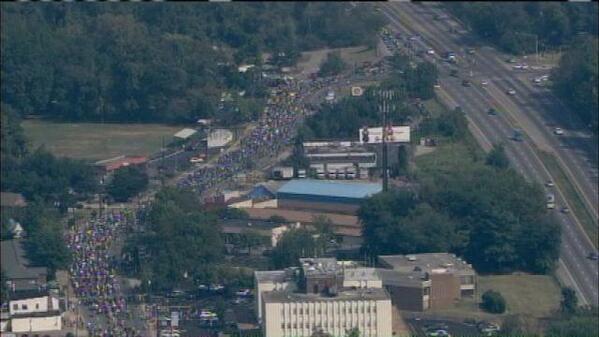
55 MILES LONG, 4 LANES WIDE, NO WONDER THE NEWS IS SILENT ON THIS REVOLUTION!!


Your Fifth Column Treasonous Media in action.

For additional perspective consider that the group from Los Angeles alone was 55 miles long. 55 miles of four lane highway – from ONE CITY:
NEWS COPTERS REPORTED A FOUR LANE 55 MILE COLUMN ALREADY HEADED OUT FROM LA – 55 MILES LONG, 4 LANES WIDE, NO WONDER THE NEWS IS SILENT ON THIS REVOLUTION!!

Even when it was reported in local media, downplay was the word of the day.

“Two Million Bikers” Rally Roars Into D.C. Area for 9/11

Although they didn’t reach a goal of two million riders, thousands of bikers rolled through the Washington, D.C. area to mark the 12th anniversary of 9/11 on Wednesday.

The bikers — riding with the group “Two Million Bikers to D.C.” — snarled traffic on the Beltway with a ride honoring the victims of the Sept. 11, 2001 terrorist attacks and the members of the military called to serve after the attacks.
Many participating riders were veterans who said they rode to protect Americans’ freedom in the midst of tumultuous times.
“The enemy has a say when the war is over,” said rider Pete Raymond. “I believe they’re saying it’s not, so we’re here.”
On their Facebook page, in all caps, the group said they will stand by the Constitution and Bill of Rights, adding that they’re “against any fundamental transformation of America.”

Take this for what it’s worth, the DC Police, notorious for under reporting the numbers of conservative patriotic American’s that show up for rallies in DC, admitted that 1.2 million bikers showed up. These were hard working American citizens who took time off from their jobs to protest Muslims demonstrating on 9/11 in Mordor on the Potomac.

A Column stretching 55 miles long rode out of Los Angeles California, just let that sink in for a while… That is a column of Bikers that stretches beyond horizon to horizon. That is a column, that even traveling at 60 miles per hour, would have taken more than an hour to pass any given point. That was JUST the bikers from Los Angeles California.

The Fifth Column Treasonous Media desperately hopes that the sentiment that drove millions of American’s to take a couple days off from work and ride into Mordor on the Potomac to protest Muslims demonstrating on what amounts to a sacred holy day in America, will both go unnoticed and not catch on. The truth is more to the effect that this Biker led protest represents a kind of barometric reading of the mood of America.
Traditionally, the average American is very slow and reluctant to protest. We are a gentle, peace loving and pragmatic people by nature. By the time our collective dander is up enough for us to start protesting, we are mighty pissed off. Yes, there are special interest group driven Americans who will protest pretty much anything at the drop of a hat, but they do not even remotely represent the average American.
You can pay attention to what millions upon millions of average middle class Americans riding into Mordor on the Potomac means, or, you can continue to keep your head up your ass and live in a delusional fantasy world, it is of course, your choice. However, make no mistake about it, reality is coming knocking.

A few more videos from that awesome ride. Great work guys...only wish I was with you two days ago.


If you go there next year, count me in!

Wednesday, September 11, 2013

There is still hope for America.....

Although this is a somber day of reflection, there is some good news from Colorado last night. Thank you citizens from the Centennial State, reminding those “public servants” they serve at the pleasure of people, not their own. I recall a great document that has this quote,
“...We hold these truths to be self-evident, that all men are created equal, that they are endowed by their Creator with certain unalienable Rights, that among these are Life, Liberty and the pursuit of Happiness.--That to secure these rights, Governments are instituted among Men, deriving their just powers from the consent of the governed, --That whenever any Form of Government becomes destructive of these ends, it is the Right of the People to alter or to abolish it, and to institute new Government, laying its foundation on such principles and organizing its powers in such form, as to them shall seem most likely to effect their Safety and Happiness....”

The always objective Washington Post/AP reports it this was:
2 Colo. Democratic lawmakers ousted in gun control recalls promoted by activists, NRA

DENVER — Two Democratic state lawmakers who backed tighter gun laws in the aftermath of mass shootings have been kicked out of office in a recall election promoted by both grassroots activists and the National Rifle Association.

Senate President John Morse lost by just 343 votes Tuesday in a swing district in the Republican stronghold of Colorado Springs but Sen. Angela Giron lost by a bigger margin in a largely blue-collar district that favors Democrats....

The NRA backing the people of Colorado is implied to be illegitimate but Bloomberg and this ilk putting money in is not.

Hopefully this expands to pulling the federal politicians out. Time will tell. But for now I"m now recalling this great video from my Saturday morning cartoon days.

Tuesday, September 10, 2013

Geopolitical Weekly: Syria, America and Putin's Bluff, 9/10/13

By George Friedman

In recent weeks I've written about U.S. President Barack Obama's bluff on Syria and the tightrope he is now walking on military intervention. There is another bluff going on that has to be understood, this one from Russian President Vladimir Putin.

Putin is bluffing that Russia has emerged as a major world power. In reality, Russia is merely a regional power, but mainly because its periphery is in shambles. He has tried to project a strength that that he doesn't have, and he has done it well. For him, Syria poses a problem because the United States is about to call his bluff, and he is not holding strong cards. To understand his game we need to start with the recent G-20 meeting in St. Petersburg, Russia.

Putin and Obama held a 20-minute meeting there that appeared to be cold and inconclusive. The United States seems to be committed to some undefined military action in Syria, and the Russians are vehemently opposed. The tensions showcased at the G-20 between Washington and Moscow rekindled memories of the Cold War, a time when Russia was a global power. And that is precisely the mood Putin wanted to create. That's where Putin's bluff begins.

A Humbled Global Power

The United States and Russia have had tense relations for quite a while. Early in the Obama administration, then-Secretary of State Hillary Clinton showed up in Moscow carrying a box with a red button, calling it the reset button. She said that it was meant to symbolize the desire for restarting U.S.-Russian relations. The gesture had little impact, and relations have deteriorated since then. With China focused on its domestic issues and with Europe in disarray, the United States and Russia are the two major -- if not comparable -- global players, and the deterioration in relations can be significant. We need to understand what is going on here before we think about Syria.

Twenty years ago, the United States had little interest in relations with Russia, and certainly not with resetting them. The Soviet Union had collapsed, the Russian Federation was in ruins and it was not taken seriously by the United States -- or anywhere else for that matter. The Russians recall this period with bitterness. In their view, under the guise of teaching the Russians how to create a constitutional democracy and fostering human rights, the United States and Europe had engaged in exploitative business practices and supported non-governmental organizations that wanted to destabilize Russia.

The breaking point came during the Kosovo crisis. Slobodan Milosevic, leader of what was left of Yugoslavia, was a Russian ally. Russia had a historic relationship with Serbia, and it did not want to see Serbia dismembered, with Kosovo made independent.

There were three reasons for this. First, the Russians denied that there was a massacre of Albanians in Kosovo. There had been a massacre by Serbians in Bosnia; the evidence of a massacre in Kosovo was not clear and is still far from clear. Second, the Russians did not want European borders to change. There had been a general agreement that forced changes in borders should not happen in Europe, given its history, and the Russians were concerned that restive parts of the Russian Federation, from Chechnya to Karelia to Pacific Russia, might use the forced separation of Serbia and Kosovo as a precedent for dismembering Russia. In fact, they suspected that was the point of Kosovo. Third, and most important, they felt that an attack without U.N. approval and without Russian support should not be undertaken both under international law and out of respect for Russia.

President Bill Clinton and some NATO allies went to war nevertheless. After two months of airstrikes that achieved little, they reached out to the Russians to help settle the conflict. The Russian emissary reached an agreement that accepted the informal separation of Kosovo from Serbia but would deploy Russian peacekeepers along with the U.S. and European ones, their mission being to protect the Serbians in Kosovo. The cease-fire was called, but the part about Russian peacekeepers was never fully implemented.

Russia felt it deserved more deference on Kosovo, but it couldn't have expected much more given its weak geopolitical position at the time. However, the incident served as a catalyst for Russia's leadership to try to halt the country's decline and regain its respect. Kosovo was one of the many reasons that Vladimir Putin became president, and with him, the full power of the intelligence services he rose from were restored to their former pre-eminence.

Western Encroachment

The United States has supported, financially and otherwise, the proliferation of human rights groups in the former Soviet Union. When many former Soviet countries experienced revolutions in the 1990s that created governments that were somewhat more democratic but certainly more pro-Western and pro-American, Russia saw the West closing in. The turning point came in Ukraine, where the Orange Revolution generated what seemed to Putin a pro-Western government in 2004. Ukraine was the one country that, if it joined NATO, would make Russia indefensible and would control many of its pipelines to Europe.

In Putin's view, the non-governmental organizations helped engineer this, and he claimed that U.S. and British intelligence services funded those organizations. To Putin, the actions in Ukraine indicated that the United States in particular was committed to extending the collapse of the Soviet Union to a collapse of the Russian Federation. Kosovo was an insult from his point of view. The Orange Revolution was an attack on basic Russian interests.

Putin began a process of suppressing all dissent in Russia, both from foreign-supported non-governmental organizations and from purely domestic groups. He saw Russia as under attack, and he saw these groups as subversive organizations. There was an argument to be made for this. But the truth was that Russia was returning to its historical roots as an authoritarian government, with the state controlling the direction of the economy and where dissent is treated as if it were meant to destroy the state. Even though much of this reaction could be understood given the failures and disasters since 1991, it created a conflict with the United States. The United States kept pressing on the human rights issue, and the Russians became more repressive in response.

Then came the second act of Kosovo. In 2008, the Europeans decided to make Kosovo fully independent. The Russians asked that this not happen and said that the change had little practical meaning anyway. From the Russian point of view, there was no reason to taunt Russia with this action. The Europeans were indifferent.

The Russians found an opportunity to respond to the slight later that year in Georgia. Precisely how the Russo-Georgian war began is another story, but it resulted in Russian tanks entering a U.S. client state, defeating its army and remaining there until they were ready to leave. With the Americans bogged down in Iraq and Afghanistan, no intervention was possible. The Russians took this as an opportunity to deliver two messages to Kiev and other former Soviet states. First, Russia, conventional wisdom aside, could and would use military power when it chose. Second, he invited Ukraine and other countries to consider what an American guarantee meant.

U.S.-Russian relations never really recovered. From the U.S. point of view, the Russo-Georgia war was naked aggression. From the Russian point of view, it was simply the Russian version of Kosovo, in fact gentler in that it left Georgia proper intact. The United States became more cautious in funding non-governmental organizations. The Russians became more repressive by the year in their treatment of dissident groups.

Since 2008, Putin has attempted to create a sense that Russia has returned to its former historic power. It maintains global relations with left-wing powers such as Venezuela, Ecuador, Bolivia and Cuba. Of course, technically Russia is not left wing, and if it is, it is a weird leftism given its numerous oligarchs who still prosper. And in fact there is little that Russia can do for any of those countries, beyond promising energy investments and weapon transfers that only occasionally materialize. Still, it gives Russia a sense of global power.

In fact, Russia remains a shadow of what the Soviet Union was. Its economy is heavily focused on energy exports and depends on high prices it cannot control. Outside Moscow and St. Petersburg, life remains hard and life expectancy short. Militarily, it cannot possibly match the United States. But at this moment in history, with the United States withdrawing from deep involvement in the Muslim world, and with the Europeans in institutional disarray, it exerts a level of power in excess of its real capacity. The Russians have been playing their own bluff, and this bluff helps domestically by creating a sense that, despite its problems, Russia has returned to greatness.

In this game, taking on and besting the United States at something, regardless of its importance, is critical. The Snowden matter was perfect for the Russians. Whether they were involved in the Snowden affair from the beginning or entered later is unimportant. It has created two important impressions. The first is that Russia is still capable of wounding the United States -- a view held among those who believe the Russians set the affair in motion, and a view quietly and informally encouraged by those who saw this as a Russian intelligence coup even though they publicly and heartily denied it.

The second impression was that the United States was being hypocritical. The United States had often accused the Russians of violating human rights, but with Snowden, the Russians were in a position where they protected the man who had revealed what many saw as a massive violation of human rights. It humiliated the Americans in terms of their own lax security and furthermore weakened the ability of the United States to reproach Russia for human rights violations.

Obama was furious with Russia's involvement in the Snowden case and canceled a summit with Putin. But now that the United States is considering a strike on the Syrian regime following its suspected use of chemical weapons, Washington may be in a position to deal a setback to a Russia client state, and by extension, Moscow itself.

The Syria Question

The al Assad regime's relations with Russia go back to 1970, when Hafez al Assad, current President Bashar al Assad's father, staged a coup and aligned Syria with the Soviet Union. In the illusion of global power that Putin needs to create, the fall of al Assad would undermine his strategy tremendously unless the United States was drawn into yet another prolonged and expensive conflict in the Middle East. In the past, the U.S. distraction with Iraq and Afghanistan served Russia's interests. But the United States is not very likely to get as deeply involved in Syria as it did in those countries. Obama might bring down the regime and create a Sunni government of unknown beliefs, or he may opt for a casual cruise missile attack. But this will not turn into Iraq unless Obama loses control completely.

This could cause Russia to suffer a humiliation similar to the one it dealt the United States in 2008 with Georgia. The United States will demonstrate that Russia's concerns are of no account and that Russia has no counters if and when the United States decides to act.

The impact inside Russia will be interesting. There is some evidence of weakness in Putin's position. His greatest strength has been to create the illusion of Russia as an emerging global power. This will deal that a blow, and how it resonates through the Russian system is unclear. But in any event, it could change the view of Russia being on the offensive and the United States being on the defensive.

Putin made this a core issue for him. I don't think he expected the Europeans to take the position that al Assad had used chemical weapons. He thought he had more pull than that. He didn't. The Europeans may not fly missions but they are not in a position to morally condemn those who do. That means that Putin's bluff is in danger.

History will not turn on this event, and Putin's future, let alone Russia's, does not depend on his ability to protect Russia's Syrian ally. Syria just isn't that important. There are many reasons that the United States might not wish to engage in Syria. But if we are to understand the U.S.-Russian crisis over Syria, it makes sense to consider the crisis within in the arc of recent history from Kosovo in 1999 to Georgia in 2008 to where we are today.
Syria, America and Putin's Bluff is republished with permission of Stratfor.

Monday, September 9, 2013

Good look at search law.

Sorry I've been off the net for the last few days...crazy weekend. I was at work this afternoon and saw this article on voluntary search.
SUPREME COURT TO HEAR ORAL ARGUMENTS TO DECIDE WHETHER A DEFENDANT MUST BE PRESENT AND OBJECTING WHEN POLICE ASK A CO-TENANT FOR CONSENT TO SEARCH PREMISES

The Supreme Court will hear oral arguments in Fernandez v. California to decide “whether a defendant must be personally present and objecting when police officers ask a co-tenant for consent to conduct a warrantless search or whether a defendant's previously-stated objection, while physically present, to a warrantless search is a continuing assertion of 4th Amendment rights which cannot be overridden by a co-tenant.”

In this case, on the early afternoon of October 12, 2009, petitioner-appellant, Walter Fernandez, approached the victim, Lopez on the street, issued a gang challenge and tried to stab Lopez. When Lopez resisted, Fernandez called out to accomplices, who helped Fernandez subdue and rob an unarmed Lopez. Fernandez fled the scene into a nearby apartment that he shared with his girlfriend, Rojas, and where pursuing police officers heard a verbal altercation. Police then approached the residence and a bloodied Rojas opened the door for the investigating officers. Police believed they had encountered an ongoing domestic violence incident. Fernandez then objected to police entry into his shared apartment...

Police Magazine has a few more details about this:
After knocking on the door, Rojas answered with a bruised nose and bloody hand. Detectives requested entry and Fernandez stepped forward and refused. They arrested Fernandez and informed Rojas he was in custody in connection with a robbery. Detectives again requested entry and Rojas consented verbally and in writing.
Upon detaining Fernandez, the officers discovered that he matched the robbery suspect’s description. After Lopez identified petitioner as the robber, the police arrested him. With Fernandez either in the squad car or en route to the police department, the police returned to the apartment after an hour, where they obtained Rojas’s oral and written consent to search the residence. The police then discovered an illegal firearm and ammunition, among other items.

Before trial, Fernandez filed a motion to suppress evidence seized during the warrantless search of his apartment following his arrest, seeking to exclude various items including a 20–gauge shotgun, ammunition and a knife. The motion to suppress was denied. A jury found Fernandez guilty of second degree robbery of Lopez, and inflicting corporal injury on his cohabitant, Rojas. The trial court imposed a fourteen year sentence.

Before the Court of Appeals, it held that there was no showing that the arrest was a pretext for the search and Fernandez’s prior objection to police entry was overridden by his absence from the apartment and Rojas’s consent. Fernandez argued on appeal that the Fourth Amendment did not allow the police to obtain valid consent to enter his home by removing the objecting tenant (Fernandez) from the scene against his will and then seeking permission from the other tenant shortly thereafter. The Court of Appeals rejected the claim, holding Rojas’s consent to a search of the apartment she shared with petitioner was valid and justified the officers’ actions.

Never say never but I see this as a legal search. If Rojas (aka Baby Mama) is a legal tenant of the apartment, she can consent. But the full details are not listed in this article, like how long Baby Moma and Baby Daddy have lived together.

Then again, SCOTUS said Obamacare was Constitutional and that is grade A BS!

Tuesday, September 3, 2013

Officer Down


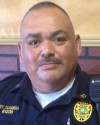
Sergeant Jorge Luis "JL" Garcia
Pharr Texas Police Department
End of Watch: Thursday, August 8, 2013
Age: 51
Tour: 27 years
Badge # 1239

Sergeant JL Garcia was killed in an automobile accident while en route to a meeting at the Pharr International Bridge.

His vehicle was struck by a dump truck at the intersection of South Cage Boulevard and East Anaya Road at approximately 3:50 pm. He was transported to a local hospital where he succumbed to his injuries about one hour later.

Sergeant Garcia had served with the Pharr Police Department for 27 years. He is survived by his wife and two children.
Rest in Peace Bro…We Got The Watch

Day is done, Gone the sun, From the lake, From the hills, From the sky. All is well, Safely rest, God is nigh. 

Police abuse, so called....

A friend of mine showed me this video of Houston Police taking a couple of Houston's not finest into custody.

Now after seeing a bad situation being handled pretty well, I just happened to see this on the side and the mask perked by interest:


Obviously the suspect has been handled rather hard. He is also a capital murder suspect, having a murdered a cop in police headquarters and on the run, armed. He has shown himself more than capable of killing another man so forgive me if the officers out there will be rather up tight when they go after him. And if he was severely arrested, oh well. I don't see any evidence that five men held him down while another officer kicked him in the face. What I do see is him in a face shield to keep him from spitting. Perhaps a man who knows he's on his way to prison for the rest of his life was spitting at the officers and they had enough.

The story did mention they officers were cleared in the arrest. Too bad the sack of s^&* won't be facing execution but not every state capital punishment. But again, this Court TV video only shows one side of an issue. With yellow journalism like like you should get a Pulitzer Prize soon.

A season of discontent...and lies of omision....

As I sit at the Dot Coffee House, eating my breakfast and prepare to labor on Labor Day, I sit reviewing the daily propaganda rag in Houston, the Houston Chronicle. It has been hemorrhaging money and readers for years and this propaganda dressed up as an editorial is an example why.
Labor pains

Two groups that have it too good


It’s a season of discontent for too many American workers, but for two very different groups things are copacetic — for much the same specific reason. In 2012, according to the Economic Policy Institute, chief executives of the nation’s largest companies earned 273 times as much as the average American worker. In 1965, the typical CEO earned only about 18-20 times what the average worker took home. And one reason why the gap has jumped nearly 14-fold in the past 50 years is that the raises of CEOs are too often voted by their buddies on corporate boards. If you’re looking for a fine example of crony capitalism, look no further.

And group two? Why, that would be members of public employee unions, especially those at the federal level. Their salaries and generous benefits are voted by the same politicians who rely on their votes for re-election. If you’re looking for an example of political cronyism, this is it...

Well you can argue about the issue of CEO compensation. Yes, they are paid multiples of what a "front line" worker but auguabely they are worth more. Would anyone disagree that Steve Jobs was more vaaluable to Apple or Bill Gates to Microsoft that a phone manufactrer in China? Not really. And one can argue if the public is getting its money out of the civil service. Fair enough. But how about some of these who don't get much bang for our buck.

President B Hussein Obama and his family. Over sixteen vacations since less than five years. Using a OSPRAY to transport a dog. Using a 747 for Fastass Michelle can got to Martha's Vineyard two hours before B Hussein. And I know, those 4 hour days are really something to recover from so he needs all the golf.

Or many members of the congress, both parties, who spend more time raising money for themselves that actually working. Or pass one law after another that's devastating on the American people (e.g. Obamcare) and conveniently exempt themselves. Although that may be a good thing. Like with B Hussein, less they do the better. An unlike the head of Ford or Apple Computers, these men spend other people's money.

How about union heads. Richard Trumka, the head of the AFL-CIO, makes just over 300K a year. Not bad for a so called "working man"

Or the heads of major media like The Washington Post, NY Times, Houston Chronicle themselves. I know they are paid well but their organization is bleeding cash. Sounds like they are being paid well for running a sinking ship deeper into the water. It's only a matter until these organizaitons are bankrupt.

So yes, on this Labor Day, there are people making a lot for not doing much. And the HC, as usual, misses the more obvious examples.

Security Weekly: Assessing Hezbollah Kidnapping Threats in Lebanon, August 29, 2013

By Scott Stewart

As the United States and its allies move closer to direct military action in Syria, Russia and Iran have expressed vocal opposition to any attack against their ally in Damascus. In addition to press statements, more subtle messages have been passed around the region. For example, while Iran is quite unlikely to confront the United States directly and militarily, we have received reports that Iranian diplomats have discussed the possibility of Hezbollah launching a wave of hostage takings in Lebanon in response to any U.S. military strike on the al Assad regime -- discussions apparently intended for U.S. ears. The Daily Star, a Lebanese newspaper, quoted pro-Hezbollah Sheikh Afif Nabulsi on Aug. 27 as saying that "any [U.S.] strike against Syria would be met by harsh responses against U.S. interests in the region."

While there are fewer Americans living in Lebanon than there were in the 1970s and early 1980s -- the wave of kidnappings in Lebanon commenced with the abduction of American University of Beirut President David Dodge in July 1982; the last Western hostage, Terry Anderson, was released in December 1991 -- there are many more American college students, tourists and businessmen in Lebanon at present than there were in the early 1990s in the immediate wake of the Lebanese hostage crisis. With the abduction U.S. Marine Col. William Higgins, the last American taken hostage, having occurred in 1988, the threat is seen as greatly reduced. This sentiment exists despite U.S. State Department warnings of the threat of kidnapping in Lebanon, like the travel warning issued in April. Warnings notwithstanding, many if not most of the Americans living in Lebanon would be easy kidnapping targets for a sophisticated group such as Hezbollah -- especially if they are not looking for surveillance directed against them.

The manner in which these warnings are occurring suggests the Iranians and their Lebanese allies are using this threatening message to the U.S. government as a bluff. Given the history of kidnapping in Lebanon, however, such as the Aug. 9 abduction of two Turkish Airlines pilots, this threat should be taken very seriously by Americans residing in or visiting Lebanon.

The Dog that Barks

If the Iranians were really preparing to unleash Hezbollah for a kidnapping operation, it seems unlikely that they would provide such a well-telegraphed warning in advance. Past covert operations by the Iranians and Hezbollah have been conducted with much more secrecy, and in most cases with a very large degree of plausible deniability. For example, Hezbollah used many different organizational names to hide its hand during the Lebanese hostage crisis, such as Islamic Jihad, Organization for the Defense of Free People and Organization of the Oppressed on Earth, among others. This obfuscation was also intended to hide the Iranian connection to the kidnappings despite the very real involvement of Iranian intelligence. While the first American hostage, David Dodge, was held in an Iranian prison near Tehran, the Iranians took many steps to attempt to keep their involvement in later kidnappings more concealed, arms-for-hostages deals and other indicators aside. The charade was enough to keep the United States from directly attacking Iran and also sufficed to allow the Europeans enough leeway to continue commercial relations with Iran despite U.S. objections and economic sanctions.

As seen in the August 2006 Lebanon war and in its current offensive actions in Syria to assist the al Assad regime, Hezbollah remains a potent militant force with a large number of highly trained and dedicated fighters. Indeed, the urban warfare skills Hezbollah is demonstrating in Syria, such as planning and executing complex ambushes and employing improvised explosive devices, are things that can be directly applied to terrorist attacks. As seen by their apparent involvement in the February 2005 assassination of former Lebanese Prime Minister Rafik al-Hariri and other more recent incidents, the group has also not lost its ability to construct and effectively deploy large vehicle bombs.

Hezbollah also operates a very complex intelligence apparatus inside Lebanon that allows it to collect a great deal of intelligence on prospective targets. This includes the ability to tap phone traffic at will. Moreover, Hezbollah has long controlled security and communications at Beirut's Rafik al-Hariri International Airport, a position that lets it note the comings and goings of foreigners or other targets of interest. It is believed that this network was instrumental in the October 2012 assassination of Brig. Gen. Wissam al-Hassan, the intelligence chief for Lebanon's Internal Security Forces.

In addition to assassinations, Hezbollah clearly has retained the capability to locate and kidnap foreigners. The ability was showcased Aug. 9 when two Turkish Airlines pilots were kidnapped shortly after they departed from Rafik al-Hariri International Airport in a van. While the kidnapping was claimed by a previously unknown group calling itself Zuwwar al Imam Ali al Reda, (the Visitors of the Shrine of Imam Ali al Reda), there is little doubt Hezbollah actually carried it out. The kidnappers have demanded the release of a group of nine Lebanese Shia kidnapped by Sunni rebels in Syria. Syrian rebels have claimed the abducted Lebanese were members of Hezbollah, and said they will not be released until Hezbollah stops fighting in Syria. Hezbollah took the Turkish pilots in the hope that Ankara, which is assisting the Syrian rebels, could pressure the Syrian rebels to release the Lebanese prisoners. The Iranian Foreign Ministry has conveniently volunteered to help negotiate the pilots' release.

Intent, not Just Capability

While Hezbollah clearly retains the capability to take American hostages -- and there are numerous vulnerable Americans in Lebanon at this time -- the big question is whether Hezbollah intends to do so.

Hezbollah has long had operatives capable of undertaking missions aimed at U.S. interests in Lebanon and beyond, including in the United States. In fact, Hezbollah's militant operatives are better trained and more numerous than any group the al Qaeda core has ever controlled. Yet despite this capability, Hezbollah has not chosen to use it to strike American interests for several years now. Though there are indications Hezbollah operatives may have assisted the Iranian Islamic Revolutionary Guard Corps Quds Force in the July 2012 attack against Israeli tourists in Burgas, Bulgaria, Hezbollah has been very careful not to anger the United States in recent years.

This is due in large part to the way Hezbollah has matured as an organization. It is no longer the new, shadowy organization it was in 1982 or 1983, but rather is now a large global organization with a proverbial return address. Its assets and personnel now can be identified and seized or attacked. Hezbollah understands that a serious terrorist attack or series of attacks against Americans could result in the type of reaction that followed 9/11, and that the organization would likely end up on the receiving end of the type of relentless global campaign that the United States launched against al Qaeda. The ability of the United States to strike targets using special operations forces, drones and other advanced weapons far surpasses its capabilities in the 1980s -- and Lebanon is far easier for the United States to strike than Afghanistan or Pakistan.

As discussed above, in the early days, Hezbollah (and its Iranian patrons) worked hard to sow ambiguity and hide responsibility for terrorist attacks, but as Hezbollah matured as an organization, such subterfuge became more difficult.

There is also international public opinion to consider. Hezbollah is not just a militant group. Today, it is also a political organization seeking legitimacy. It is one thing for it to portray itself as a "victim of Israeli aggression" when standing up to Israeli forces in southern Lebanon or even fighting jihadists in Syria to help Alawites being attacked. It is quite another to be seen kidnapping students or businessmen.

Hezbollah also sees the United States (and the rest of the Western Hemisphere) as a wonderful place to make money through its array of legal and illegal enterprises. If it angered the United States, Washington could launch a persistent and focused campaign against Hezbollah financial networks similar to the one conducted against al Qaeda's finances. If this were to occur, Hezbollah's business interests in the Western Hemisphere would be severely impacted. Such an economic campaign could also extend to Hezbollah's business interests in Africa, Asia and elsewhere. With Iran and Syria facing serious financial issues, Hezbollah needs its financial network more than ever.

Hezbollah's terrorist attacks in Lebanon in the 1980s, such as the bombing of the U.S. Marine barracks and the two attacks against the U.S. Embassy, were intended to drive U.S. influence out of Lebanon, and the attacks largely succeeded in doing that. An attack by Hezbollah against American interests today could result in the return of U.S. attention to, and perhaps even attacks against, Hezbollah's infrastructure in Lebanon, something that is clearly not in Hezbollah's interests. Therefore, even if the Iranians did ask Hezbollah to undertake a kidnapping campaign, it is not certain Hezbollah would oblige -- especially in the wake of these recent threats, which would make it difficult for Hezbollah and Iran to deny involvement.

Taking all that into account, given Hezbollah's capabilities and the history of kidnapping in Lebanon such as the recent kidnapping of the two Turkish pilots, Americans in Lebanon should not ignore the potential kidnapping threat. They should reassess their personal security, examine their travel habits and patterns, dust off their contingency plans and above all, practice good situational awareness.

Hezbollah may possess advanced operational and intelligence capabilities, but it cannot operate without detection. Even the most professional militant networks are bound by the constraints of the attack planning cycle and their operational activities are vulnerable to detection during certain phases of that cycle -- especially during the surveillance phase.

If the threat of Hezbollah kidnappings is not merely an Iranian bluff, picking up on signs of preoperational surveillance and then acting to avoid a potential abduction could spare one a long and painful hostage ordeal.

Copyright Stratfor.com

Monday, September 2, 2013

From the files of Couldn't have happened to nicer guys

REGARDLESS OF HOW IT LOOKS, THESE ARE NOT THE VICTIMS OF A CRIME – THEY ARE THE PERPETRATORS WHO LEARNED A VERY PAINFUL LESSON


Two suspected robbers left the scene of their own crime looking like the victims of a brutal attack after their would-be victims fought back.

Johnny Calderon Jr., 19, and Gerald Allen, 18, attempted to rob two University of Virginia students at gunpoint, which turned out to be a huge, painful mistake, according to police in Charlottesville, Va.

Police arrived on the scene to find the two students had beaten up and detained the suspects.

Clearly, Allen got the worst of the beating. His right eye was swollen shut and his face bloodied. However, Calderon didn’t get off easy and arrived at the police station with a black eye and plenty of bruises.

Calderon has been charged with two counts of attempted robbery, one count of pointing a firearm and using a firearm in the commission of a felony, WVIR-TV reports. Allen is facing two counts of attempted robbery.

“Calderon is due in General District Court Friday morning for a hearing. Allen is due in court on October 3,” the report adds.

Hopefully children next time you think to rob someone at gun point something make you decide "naaaaa".