SAN DIEGO CHARGERS FAN FINED $280 FOR THROWING FOOTBALL IN STADIUM PARKING LOTIs this beyond POP (Pissing Off Police), no. By that I mean when someone demands to have a ticket, e.g. when I pull someone over they scream "Why the fu&* you stopping me, you're worthless sack of s%^&, go after real criminal…." Those are words I've heard doing my jobs. Again, don't have the full story. But is throwing a football around the parking lot a real hazard?
A San Diego Chargers fan was fined $280 for throwing a football in the parking lot of Qualcomm Stadium, the stadium where the Chargers play. Cops gave Jesse Unger a $60 ticket last month before the Chargers-Colts game for throwing the football in the parking lot while he was tailgating, but he realized the ticket was $280 when he looked it up online. That is when Unger decided to challenge the ticket.
According to U-T San Diego:
The actual law, per San Diego Municipal Code 59.0502, says that one cannot "intentionally throw, discharge, launch or spill any solid object (including footballs, baseballs, frisbees and other such devices) or liquid substance or otherwise cause subject or substance to be thrown, discharged, launched, spilled, or to become airborne.”
And according to Unger, the judge said that the law was in place for the sake of public safety – that footballs flying everywhere posed a danger to drivers navigating the lot.
The judge said that he would suspend the fine if Unger pleaded guilty to "throwing the football."
“I plead guilty to throwing the football, Your Honor," Unger told the judge.
Unger told U-T San Diego that the Judge dismissed the ticket and then started talking about San Diego's running game.
Three other stadiums in the NFL have similar rules for tailgaters: "LP Field in Tennessee, Lucas Oil Stadium in Indianapolis, and CenturyLink Field in Seattle."
Tuesday, November 12, 2013
Sometimes we are our worse enemy….
Discretion is the better part of valor, also helps with prevent stupidity like this. Granted, I don't know the full story (this is only one side) but how is this a hazard to anyone.


I swear ossifer, I'm not as think as you drunk I am!"
"One shot." Usually the answer to the question "Have you had anything to drink tonight?" is "A couple of beers…" My usual answer is "A couple of what? Forty ounces, six packs, keys?" Or on the "Walk and Turn", I ask them to put their left foot down and it's a challenge, my normal comment is "Your other left…" If they don't get it it's even more fun"
On my first DWI back in 2000 or so, it took 20 minutes for the jury to convict. I asked the DA what caused that and he said, "Honesty the video from the intox center. Put that in front of twelve people and they say, "Looks like a drunk, acts like a drunk, sounds like a drunk, that's a drunk!"
Small world. Two weeks ago I was in a cigar shop on my him from work and a man said "It's you!" He was the father of the young lady who was involved in that accident. He recalled I didn't' wear glasses back then. Damned, I wish I had that memory.
On my first DWI back in 2000 or so, it took 20 minutes for the jury to convict. I asked the DA what caused that and he said, "Honesty the video from the intox center. Put that in front of twelve people and they say, "Looks like a drunk, acts like a drunk, sounds like a drunk, that's a drunk!"
Small world. Two weeks ago I was in a cigar shop on my him from work and a man said "It's you!" He was the father of the young lady who was involved in that accident. He recalled I didn't' wear glasses back then. Damned, I wish I had that memory.
Monday, November 11, 2013
What's going on in the World Today 131111
This past weekend I attended the Council of Colonels, a reunion of friends from the reserves. We meet every Veterans Day weekend, eat too much, drink too much, watch football, tell lies about how great we were, etc. Things to be expected from middle aged men.
One conversation stood in my mind. I was explaining to a new member, or should I say "first time attendee" of the group on how all these men went forward in 2001-2003, during the shooting war. I was mobilized 2003-04 but I joked about it being in a much scarier place, New Orleans. He told me his similar story: "Mike I got in just after Vietnam and when I told one of the vets about feeling weird around them, having not gone to the shooting war, he said to me. "You stood the watch!"
So for everyone who has worn a uniform, picked up a weapon, gone where your country called, saluted your flag and stood the watch over America, Happy Veterans Day.
PS: LSU and Texans sucked, but Saints kicked little Tony Romo's ass all up and down the Dome! :<) HYPERLINKS MAY REQUIRE AN EMAIL:
Except where noted courtesy STRATFOR.COM
One conversation stood in my mind. I was explaining to a new member, or should I say "first time attendee" of the group on how all these men went forward in 2001-2003, during the shooting war. I was mobilized 2003-04 but I joked about it being in a much scarier place, New Orleans. He told me his similar story: "Mike I got in just after Vietnam and when I told one of the vets about feeling weird around them, having not gone to the shooting war, he said to me. "You stood the watch!"
So for everyone who has worn a uniform, picked up a weapon, gone where your country called, saluted your flag and stood the watch over America, Happy Veterans Day.
PS: LSU and Texans sucked, but Saints kicked little Tony Romo's ass all up and down the Dome! :<) HYPERLINKS MAY REQUIRE AN EMAIL:
USACOMMENT: Quote of the story
Navy benches admirals in scandal.
The U.S. Navy's widening scandal involving prostitutes, cash bribes and the fat-cat defense contractor who allegedly supplied them for sensitive military information just expanded to colossal proportions. The Navy announced Friday night that it has suspended access to classified information for two senior intelligence officers, effectively relieving them from duty. It's all part of the ongoing investigation into global defense Glenn Defense Marine Asia.
Vice Adm. Ted Branch, ...and Rear Adm. Bruce Loveless -- the service's director of naval intelligence and director of intelligence operations, respectively -- have not been charged with any crimes. But the suspension "was deemed prudent given the sensitive nature [of] their current duties and to protect and support the integrity of the investigative process," said Rear Adm. John Kirby, the Navy's top spokesman, in a statement....
...Already, three Navy officials and two Glenn Defense executives have been charged in U.S. federal court in connection with the case. All three other Navy personnel -- two active-duty commanders and a senior agent with the Naval Criminal Investigative Service -- are accused of sharing sensitive or classified information with Glenn Defense CEO Leonard Glenn Francis in exchange for prostitutes, cash and other favors. Francis allegedly used that information, in turn, to overbill the U.S. military millions of dollars while servicing Navy ships in ports across the Pacific.
The Navy also relieved of command Capt. Daniel Dusek, the captain of the amphibious ship Bonhomme Richard, in connection with the investigation. He has not been charged with any crimes, but officials said that commanders lost confidence in him...
AFRICA
East African Infrastructure Development, Part I: The Central Corridor
Egypt: Cairo To Expand Cooperation With Russia November 9, 2013
Egypt will expand cooperation with Russia as a result of the diplomatic tensions with the United States, Cairo's long-time ally, Egyptian Foreign Minister Nabil Fahmy said Nov. 9, AFP reported. Strained relations with Washington, which suspended some of its military aid to Cairo after Egyptian President Mohammed Morsi was ousted by the military, improved after U.S. Secretary of State John Kerry visited a week ago, Fahmy said. Nonetheless, Egypt is taking a more independent tack and broadening its choices, he said. Just as the United States is demonstrating a new willingness to challenge Egypt, the Egyptian military seems equally willing to test the United States on its strategic commitment to the region.
http://www.stratfor.com/geopolitical-diary/end-us-aid-egypt
ASIA
Iran: Tehran Offers India Free Crude Delivery November 7, 2013
Iran is offering free delivery of crude oil to India, Reuters reported Nov. 7, citing industry sources. Because Western sanctions have cut its exports in half, Iran is offering deep discounts on oil and free delivery to India, one of its major energy markets, in an effort to increase sales. Iran is also offering Indian buyers discounts on larger quantities of oil in order to persuade them to increase their purchases.
EUROPE
Conversation: France's Struggles With the European Crisis
Explaining France's Protest Culture
MEXICO/LATIN AMERICA
Mexico Boosts Security in a Critical City
Mexico's Military Secures an Essential Port
Colombia: The Impact of Reviving the Magdalena River
Colombia's River Revitalization Plan
AFGHANISTAN
NOTHING SIGNIFICANT TO REPORT
CHINA
Energy Price Reform in China
IRAN
Iran and West Narrow Differences, but Negotiations to Continue
Iran: Official Slain In Tehran November 11, 2013
Iranian Deputy Minister of Industry Safdar Rahmat Abadi was shot dead Nov. 10 by unidentified attackers in Tehran, Reuters reported Nov. 11, citing state news agency IRNA.
IRAQ
NOTHING SIGNIFICANT TO REPORT
ISRAEL
Iran: Israel Reportedly Surprised By U.S. Diplomatic Course November 9, 2013
The Israeli government is surprised by the diplomatic course being taken by the United States during nuclear negotiations in Geneva, including the decision to offer Tehran minor sanctions relief, unnamed officials told Israel radio on Nov. 9, Jerusalem Post reported. U.S. Secretary of State John Kerry told Israeli Prime Minister Benjamin Netanyahu about the plan during a meeting on Nov. 8. After the meeting, Netanyahu criticized the prospective deal, saying that Iran is getting everything it wants at this stage and not giving anything in return, despite being under intense pressure. U.S. President Barack Obama and Netanyahu spoke later in the evening, with Obama underscoring his strong commitment to preventing Iran from obtaining a nuclear weapon. Iran has demanded assurances that its facilities would not be damaged during inspection and that the United States would protect Iran from any military reprisals by Israel.
http://www.stratfor.com/analysis/us-iran-historic-deal-making
RUSSIA
NOTHING SIGNIFICANT TO REPORT
SYRIA
Syria: Rebels Retake Strategic Northern Base November 9, 2013
Syrian rebels retook an important base near Aleppo's international airport following heavy fighting on Nov. 9 that left more than 50 people dead, the Syrian Observatory for Human Rights said, AFP reported. Syrian troops backed by fighters from Lebanese Shiite militant group Hezbollah captured large parts of Base 80 in an assault on the morning of Nov. 8. The rebel force, which included al Qaeda loyalists, counter-attacked after dark, using Grad rockets against the army's tanks, and recovered all of the lost ground. The rebels has held Base 80, which serves as a garrison for the both the international airport and the adjacent Nayrab military airfield, since February. The battle for Aleppo is a central one in the Syrian civil war.
MIDDLE EAST GENERAL
The Reality of Reported Saudi-Pakistani Nuclear Cooperation
Since the 1980s, the Saudis have fielded a number of CSS-2 missiles purchased from China. The CSS-2's inaccuracy limits its utility in a conventional role, but accuracy is somewhat less of a concern when using nuclear warheads.
MISC
NOTHING SIGNIFICANT TO REPORT
Except where noted courtesy STRATFOR.COM
Friday, November 8, 2013
The SR-72
One of the greatest technology achievements of the 1960s was the SR-71, the hypersonic reconnisance craft. It was "retired" in 1988, it was reactivated in the 1990s because it was better than anything including the drones coming online. Well, we may have another craft to succeed her.
Hopefully we have a DoD by 2030. But the concept is incredible. Six times the speed of sound. Literally the enemy will not hear the shots that kill them by the time the plane is outside of hostile airspace.
Let us pray this survive the Obama regime.
Lockheed Unveils Plans for SR-72
SR-72
Lockheed Martin Corp., the world’s largest defense contractor, has unveiled plans for an unmanned successor to the famous SR-71 Blackbird spy plane.
The new twin-engine, hypersonic aircraft, known as SR-72 and nicknamed “Son of Blackbird”, will be designed to fly as fast as Mach 6. That’s six times the speed of sound — more than 3,500 miles per hour — and twice as fast as its predecessor.
Details of the jet were first reported last week by Aviation Week, a trade publication. The Bethesda, Md.-based company wants to fly a missile to demonstrate the technology as soon as 2018. An operational aircraft could be ready by 2030 for surveillance or strike missions.
“Hypersonic aircraft, coupled with hypersonic missiles, could penetrate denied airspace and strike at nearly any location across a continent in less than an hour,” Brad Leland, Lockheed’s program manager for hypersonics, wrote in a blog post.
...The plane would use a two-phase propulsion system. A standard jet turbine would propel the plane as fast as Mach 3, then a ramjet would kick in and accelerate the craft to hypersonic speeds.
...Lockheed has experimented with hypersonic aircraft before.
The company’s Falcon Hypersonic Technology Vehicle 2, or HTV-2, an unmanned, arrowhead-shaped glider, crashed into the Pacific Ocean in 2011 after flying for more than nine minutes and reaching speeds of Mach 20. (A similar flight in 2010 also failed.)
The Defense Advanced Research Projects Agency, the Pentagon’s advanced technology laboratory, which funded the project, later concluded the HTV-2 aircraft went so fast that its exterior coatings peeled apart from the airframe, creating gaps that caused the vehicle to roll and ultimately break apart.
The SR-72 will draw on lessons learned from the HTV-2 project, but won’t push the hypersonic envelop as far.


Hopefully we have a DoD by 2030. But the concept is incredible. Six times the speed of sound. Literally the enemy will not hear the shots that kill them by the time the plane is outside of hostile airspace.
Let us pray this survive the Obama regime.
Officer Down

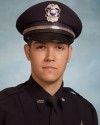
Police Officer Casey KohlmeierRest in Peace Bro…We Got The Watch
Pontiac Illinois Police Department
End of Watch: Wednesday, October 30, 2013
Age: 29
Tour: 6 years, 9 months
Police Officer Casey Kohlmeier and his canine, Draco, were killed when their patrol car was struck by a drunk driver on I-55, near mile 201, at approximately 9:30 pm.
Their patrol car was in a median turnaround when another vehicle left the northbound lanes and struck them during a period of heavy rain. Officer Kohlmeier and K9 Draco both suffered fatal injuries in the collision. The driver of the other vehicle survived and was subsequently charged with aggravated DUI.
Officer Kohlmeier was a U.S. Air Force veteran and had served with the Pontiac Police Department for six years. He was assigned to the Livingston County Proactive Unit. He is survived by his parents.
Day is done, Gone the sun, From the lake, From the hills, From the sky. All is well, Safely rest, God is nigh.
Wednesday, November 6, 2013
Oh thank God, the K9 is ok….
I've heard from our DWI TF cops of similar incidents. An officer would be conducting a DWI investigation on the side of the street and another car driven by a drunk driver would hit a nearby car or the curb. But never hitting the squad car itself.
Good to hear of deputy's and the dog were ok…if she needs her ass stitched.no biggie. Call be a bit cynical, but I have no tolerance for DWIs.
Cops: Drunk driver hits DUI squad
Arizona woman arrested after smashing into side of deputy's vehicle
CASA GRANDE, Ariz. (KPHO) —Sheriff's deputies with Pinal County's DUI Task Force didn't have to go far to arrest one suspected drunken driver.
The Pinal County Sheriff's Office said a sheriff's K-9 deputy was stopped on Peart Road in Casa Grande to help with an arrest Sunday night when a 22-year-old woman slammed into the side of his vehicle.
Amanda Leyvas drove into the front passenger side as the deputy was about to get out of the car, and just missed hitting two other squad vehicles and two deputies, police said.
Leyvas and her passenger, Terry Sigarroba, were both believed to be drunk, according to police.
Neither was hurt in the crash.
Leyvas was arrested on charges of driving while impaired by alcohol, aggravated assault and criminal damage, while Sigarroba was arrested for an outstanding warrant out of the Casa Grande City Court for interfering with a judicial proceeding.
The deputy was taken to Casa Grande Regional Medical Center for minor injuries.
His K-9 was taken to a veterinary clinic as a precaution.
Good to hear of deputy's and the dog were ok…if she needs her ass stitched.no biggie. Call be a bit cynical, but I have no tolerance for DWIs.
Officer Down

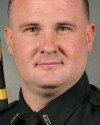
Senior Police Officer Robert BingamanRest in Peace Bro…We Got The Watch
Asheville North Carolina Police Department
End of Watch: Tuesday, October 29, 2013
Age: 37
Tour: 6 years
Senior Police Officer Rob Bingaman was killed a single vehicle crash when his patrol car plunged off of the Jeff Bowen Bridge on I-240, onto Riverside Drive below.
Officer Bingaman was a U.S. Marine Corps veteran. He had served with the Asheville Police Department for six years and was assigned to the Traffic Enforcement Unit. He is survived by his wife, three stepdaughters, parents, and six siblings.
Day is done, Gone the sun, From the lake, From the hills, From the sky. All is well, Safely rest, God is nigh.
A great quote
I was recently promoted to Sergeant and last week got off the field training program.
Saturday was a fun one, as they normally are. Things start going crazy as soon as the sun goes down and we're going from one call to another. During this run of run crisis to another, the station desk officer called for a Spanish speaking officer to come by and assist her. A woman had come by to report an accident and needed assistance. All of our officers (bilingual and otherwise) we're tied up, so we told the woman she would have to wait.
After one crisis after another, we get back to the station a hour past off duty time and the new desk officer mentioned "A woman called to complain she came here to report an accident and she had to wait four hours for a Spanish speaking officer, so she just left…." Before I could say it, one of my other supervisors answered her "Well, she needs to learn English so she doesn't have these problems…"
Yes, America's language is English. You want to visit for a while, it's understandable if you don't know the language. But if you are going to stay here, learn it. It precludes many of the issues we have today. Then again, the usual suspects like The Race and LULAC wouldn't like that. They make money off it and it's more power.
Saturday was a fun one, as they normally are. Things start going crazy as soon as the sun goes down and we're going from one call to another. During this run of run crisis to another, the station desk officer called for a Spanish speaking officer to come by and assist her. A woman had come by to report an accident and needed assistance. All of our officers (bilingual and otherwise) we're tied up, so we told the woman she would have to wait.
After one crisis after another, we get back to the station a hour past off duty time and the new desk officer mentioned "A woman called to complain she came here to report an accident and she had to wait four hours for a Spanish speaking officer, so she just left…." Before I could say it, one of my other supervisors answered her "Well, she needs to learn English so she doesn't have these problems…"
Yes, America's language is English. You want to visit for a while, it's understandable if you don't know the language. But if you are going to stay here, learn it. It precludes many of the issues we have today. Then again, the usual suspects like The Race and LULAC wouldn't like that. They make money off it and it's more power.
What's going on in the World Today 131106
The reason women don't play football is because 11 of them would never wear the same outfit in public.
Phyllis Diller
HYPERLINKS MAY REQUIRE AN EMAIL:
Except where noted courtesy STRATFOR.COM
Phyllis Diller
HYPERLINKS MAY REQUIRE AN EMAIL:
USA
What's Actually Interesting About the Latest Snowden Leak
United States: The Problem of Aging Infrastructure on Inland Waterways
AFRICA
South Africa Seeks Balance in Its Investment Treaties
Southern Africa's Resource Hunt
Bringing Central Africa's Minerals to Port
ASIA
Upcoming Japanese Military Exercises
EUROPE
Bulgaria: Tensions Rise Despite EU Funding
MEXICO/LATIN AMERICA
Mexico: Military Takes Control Of Port November 5, 2013
Mexico's military has assumed control of policing duties in the city of Lazaro Cardenas and the port of the same name, officials said Nov. 4, AP reported Nov. 5.
AFGHANISTAN
Supply lines into and out of Afghanistan could get tricky. Again. A Pakistani opposition party says it will block NATO supply lines into (or out of) Afghanistan unless the U.S. stops drone strikes in that tribal area. UPI: "The Pakistan Tehreek-e-Insaf, which is led by the country's former cricket captain Imran Khan and is the ruling party in the northwestern province of Khyber-Pakhtunkhwa province, voted Monday to block the supply lines beginning Nov. 20 if the drone strikes in nearby tribal areas do not stop. The PTI is one of the parties which had campaigned strongly against the drone program during general elections last May and its latest resolution comes in the wake of last week's killing of Hakimullah Mehsud, leader of the Pakistan Taliban, in a drone strike. Khyber-Pakhtunkhwa province is the main route for transporting supplies to U.S. and NATO troops in Afghanistan."
CHINA
Mongolia, China: A State Visit and Encouraging Signs for Investors
IRAN
Iran Struggles to Change Its Ways
KNIGHTWATCH:
Iran: An Iranian prosecutor announced that 16 "terrorists" were executed on 26 October in retaliation for the deaths of 14 Iranian border guards in clashes on the 25th.
Fourteen border guards were killed and three were kidnapped in clashes with "bandits" in Sistan Baluchistan Province in southeastern Iran which borders Pakistan's Baluchistan Province.
Comment: Baluchi tribes straddle the Iran-Pakistan border. They are Sunnis and they are restive in both countries. In Pakistan, for example, Baluchi nationalists want to secede. The group which claimed responsibility for the clash with the border guards is new or is using a new name. It apparently uses Pakistan as a base, as have many similar groups in the past.
This group poses only a threat to local law enforcement in Iran when security forces let their guards down. Iranian retaliation is swift and now certain.
IRAQ
NOTHING SIGNIFICANT TO REPORT
ISRAEL
NOTHING SIGNIFICANT TO REPORT
RUSSIA
Russia's Military Preparations for the Arctic
SYRIA
KNIGHTWATCH
Syria: Kurdish militiamen took control of a key border crossing between Syria and Iraq on 26 October in an effort to prevent Syrian Sunni rebels with the al Qaeda-linked Islamic State in Iraq in the Shams (ISIS) and Jabhat al-Nusra from entering the region, according to a news outlet.
The Kurdish militiamen seized the border crossing point in al-Hasakah Province in northeastern Syria after three days of fighting.
Comment: The Kurdish militiamen continue to beat and defeat the Syrian Sunni Arab fighters linked to al Qaida, who supposedly are the best fighters in the Syrian opposition. Kurdish control of border crossing points along the Turkish and the Iraqi borders helps contain the Sunni extremists. The Kurds represent a major obstacle to ISIS' plan to unite Sunni Arabs in Syria
Syria: Update. Kurdish fighters have driven jihadists from 19 towns and villages in northeastern Syria in the week since they maintained control of a key Iraqi border crossing that the jihadists sought to seize.
The Committees for the Protection of the Kurdish People (YPJ), the main Kurdish militia in Syria, has for months prevented the jihadists from making gains in northeastern Syria.
Comment: The government in Damascus made a strategic decision to let the Kurds protect their homeland region and to not use government forces to blunt opposition expansion into the northeast. That gamble appears to be paying off.
The government decision does not mean that it consents to secession by the Syrian Kurds or formation of a pan-Kurdish state that includes Kurds in Syria, Turkey, Iraq and Iran. It does mean that the government will have to make concessions to Kurdish autonomy, as has Iraq, when the fighting ends. Damascus owes the Syrian Kurds.
...The Assad regime has come to view doctors as dangerous, their ability to heal rebel fighters and civilians in rebel-held areas a weapon against the government. Over the past two and a half years, doctors, nurses, dentists, and pharmacists who provide treatment to civilians in contested areas have been arrested and detained; paramedics have been tortured and used as human shields, ambulances have been targeted by snipers and missiles; medical facilities have been destroyed; the pharmaceutical industry devastated. Directly and indirectly, the attacks have had a profound effect on tens of thousands of health professionals and millions of Syrian patients, let alone the more than 2 million refugees who have fled to neighboring countries.
Here is how a surgeon from Aleppo describes the attitude of the Syrian government. Last April, while treating a man seriously wounded by a government sniper, he was accosted and wrenched away by a military intelligence officer: “We are shooting at them in order to kill them. This is obvious,” the intelligence officer told him. “Since you are stopping him from dying, you are a terrorist. For this you will be punished.” The surgeon’s clinic was destroyed, his wife’s clinic was shut down, and they were forced to flee Aleppo. As a surgeon, he is not authorized to practice in Turkey, where they have taken refuge, despite the urgent need of his skills there....
MIDDLE EAST GENERAL
NOTHING SIGNIFICANT TO REPORT
MISC
Geopolitical Intelligence, Political Journalism and Wants vs. Needs
Except where noted courtesy STRATFOR.COM
Geopolitical Weekly: China's Inevitable Changes, November 5, 2013
By Rodger Baker and John Minnich
The Central Committee of the Communist Party of China will convene its Third Plenum meeting Nov. 9. During the three-day session, President Xi Jinping's administration will outline core reforms to guide its policymaking for the next decade. The Chinese government would have the world believe that Xi's will be the most momentous Third Plenary Session since December 1978, when former supreme leader Deng Xiaoping first put China on the path of economic reform and opening.
Whether or not Xi's policies will be as decisive as Deng's -- or as disappointing as those of former President Hu Jintao -- the president has little choice but to implement them. China's current economic model, and by extension its political and social model, is reaching its limits just as it had prior to Deng's administration. The importance of the upcoming meeting is that it comes at an inflection point for China, one that its leaders can hardly afford to ignore.
A Fundamental Challenge
It is worth recalling just how extraordinary Deng's 1978 meeting was. Mao Zedong had died only two years earlier, taking with him what little remained of the old pillars of Communist Party legitimacy. China was a mess, ravaged by years of economic mismanagement and uncontrolled population growth and only beginning to recover from the trauma of the Cultural Revolution. Had the People's Republic fallen in 1978 or shortly thereafter, few would have been truly surprised. Of course, in those tense early post-Mao years hardly anyone could foresee just how rapid China's transformation would be. Nonetheless, battling enormous institutional constraints, Deng and his colleagues quickly set up new pillars of social, political and economic stability that guided China through the fall of the Soviet Union and into the 21st century.
Although Xi presides over China during a time of economic prosperity, not disrepair, perhaps not since Deng has a Chinese leader faced such formidable challenges at the outset of his tenure. Former Party general secretaries Jiang Zemin, and to a greater extent Hu, could largely follow the lead of their predecessors. Jiang, emerging as a post-Tiananmen Square leader, was faced with a situation where the Party was rapidly losing its legitimacy and where state-owned enterprises were encumbering China's economic opening and reform. But internationally, China's position was relatively secure at the beginning of Jiang's term in office, and by the time he took on the additional role of president in 1993, the decline of the Japanese economy and the boom in the United States and the rest of Asia left an opening for China's economy to resurge.
These conditions enabled Jiang's administration to enact sweeping bureaucratic and state sector reforms in the late 1990s, laying much of the groundwork of China's post-2000 economic boom. When Hu succeeded Jiang in 2002-2003, China's economic growth was seemingly unstoppable, perhaps even gaining steam from the Asian economic crisis. The United States, which had seemed ready to counter China's rise, was instead fully focused on Iraq and Afghanistan, and though the Communist Party of China was not exactly seen as the guiding moral compass of the state, the role of print and social media in raising criticism of Party officials had not yet exploded.
As Xi prepares his 10-year plan, China has reached the end of the economic supercycle set in motion by Deng. Public criticism of officials and thus of the Party is rampant, and China's military appears much more capable than it actually is, putting China is a potentially dangerous situation. Once again the United States is looking at China as a power perhaps to contain or at least constrain. China's neighbors seem eager for Washington's assistance to counterbalance Beijing's influence, and long-dormant Japan is awakening once again. Xi may not have to rebuild a fractured Party or state as Deng did, but in some ways he faces the same fundamental challenge: redirecting and redefining China.
China can no longer follow the path it has in previous decades. Deng emerged as China's paramount leader out of the struggles and chaos of the Gang of Four era and the Cultural Revolution. He redefined what China was and where China was going, not out of a desire to try something different or an infatuation with "Western" economic models but out of a fundamental need to change course. Whether Xi wants it to be or not, China is at another crossroads. He has little choice but to make consequential decisions, lest he leave China scrambling from one quick fix to another at the expense of long-term opportunities.
The Perils of Rapid Reform
Reform, with "Chinese characteristics," is not about Westernizing the Chinese model. Rather, it is about reshaping the relationship between the Party, the economy and the people in a way that will maintain the centrality of the Party. This may require improving the efficiency of the Party and governing structures, changing the organization and rules of business, and deferring to the rights and responsibilities of the citizenry. But while this will likely entail selectively scaling back the Party's power in certain areas, it does not mean the overall reduction of Party power.
Since the founding of the People's Republic in 1949, the Party has been constitutionally at the center of Chinese leadership. Mao's authority stemmed from his role as chairman of the Central Committee of the Communist Party of China, a position he held from 1945 until his death in 1976. Concerned by Mao's concentration of power, Deng never adopted the same titles, though he still managed China through the Party, drawing strength and authority through his careful balancing of retired and serving Party officials. In 1993, the Party general secretary took on the parallel role of the president. Jiang served in both roles, as did Hu and Xi.
The consolidation of Party and political leadership was made clear in the formula. It is matched by the general secretary and president also holding the dual roles of chairman on the two parallel Central Military Commissions, one under the Party and the other under the state. Under Mao, the Party and the state were united in the figure of Mao himself. In the 20-year transition from Mao to Jiang, the Party remained synonymous with the state, but the consolidation of power in a single individual was replaced as Deng sought to initiate a system of group leadership to avoid the rise of another strongman. Jiang's accession to the presidency formalized Party-government leadership, but consensus leadership constrained his power. Jiang may have technically held all the key posts of power, but other power brokers in the Politburo could counterbalance him. The system ensured that the paramount leader remained constrained.
This group dynamic allowed the Party to avoid the rapid and far-reaching policy swings of Mao, but it created stagnation in the bureaucracy and state sector. Ensuring the right web of connections often became more important than fulfilling the responsibilities of the Party or the state. Deng's machinations helped eliminate strongman politics and degraded political factions like the Gang of Four, but these were replaced by more complex and widespread bureaucratic and industrial patronage networks. The result was more a web than a set of individual strings. No longer could any one interest press entirely against another without risking the entire structure. The intertwining threads were just too complex. Rapid policy swings were impossible and factional battles that threatened the fabric of the state were effectively eliminated, but the cost was a decision-making process that was increasingly cumbersome and timid. Radical reform would never make it through the process of consensus building, and any policy deemed harmful was met with resistance.
This worked well during China's boom. Though China was corrupt, beset with a cumbersome regulatory environment and prone to violations of intellectual property rights, it was fairly predictable overall, unlike so many other developing economies. The consensus model was also more attuned to social stability, constantly making tiny adjustments to appease or contain the demands of public sentiment. In times of slowed economic growth, China's leaders would stimulate the economy. In times of apparent overheating, they could cut back on credit. If people were frustrated with local officials, the central government would alternately remove the accused leaders or crack down on the protesters. But when the foundation of China's economy began to shake after 2008, when China's very success drove up wages and prices as its biggest consumers faced serious economic problems of their own, China's consensus leadership proved unequal to the task.
During China's rise, Beijing needed only minor adjustments to maintain stability and growth. But now that the country is in a far different set of circumstances, Beijing needs a major course correction. The problem is that consensus rarely allows for the often radical but necessary response. And for good reason: The success of radical change is not guaranteed. In fact, history suggests otherwise, as it did notably with the case of Mikhail Gorbachev and the Soviet Union.
Adaptation
To overcome the limitations of consensus leadership, Xi apparently is trying to strengthen the role of president. He wants to redefine the presidency so that it is not merely the concomitant title for the Party leader but also a post with a real leadership role, similar to the presidencies of other major countries.
This is a way to compromise somewhere between consensus and strongman. The presidency should not exceed the Party, but as the head of state, Xi is hoping to use his position to have a greater say in how the Party is restructured. The first target is the bloated bureaucracy. Already there are signs that several of the reforms are about removing layers from China's bureaucratic structures. This should add efficiency to the system (its stated goal), but it may also confer greater central oversight and control by cutting through the webs of vested interests that have taken hold in many of China's most powerful institutions.
The reforms slated for the economic sector are similar. They will introduce more market and competitive mechanisms while giving Beijing greater control over the overall structure. Consolidation, efficiency, transparency, reform and restructuring are all words that possess dual meanings -- one regarding more efficient and more flexible systems, the other regarding systems that the center is better able to direct. At a time when China needs radical change, it first needs to change the mechanism through which policies are decided and enacted. The government hopes that by disengaging from constant, restrictive intervention into certain sectors, it will have greater capacity to intervene selectively, focusing on enforcement and compliance rather than dictating every move of state-owned enterprises. There is no guarantee that these reforms will work or that they can be implemented effectively or smoothly. China has seen three decades of economic growth, and in turn three decades of more tightly woven relationships and knitted interests. Unraveling any thread can rapidly degrade the entire structure, unless stronger central replacements are already in place.
China's leaders are facing the difficult task of adjusting once again to changing circumstances. Political legitimacy and control remain closely linked. It is Xi's position as head of the Party that ostensibly gives him legitimacy as head of the state. But to create a more nimble and adaptive government, Xi is seeking to harness the people in a slight reversal, using his role as president to rebuild the legitimacy of the Party, and in doing so take stronger control of the Party mechanisms. This is a difficult balance. But China is at a turning point, and without nimble leadership, a system as large and complex as China can move very rapidly down an unpredictable and uncontrollable path. The leadership can attempt to take control and hope for success, but the consensus system and entrenched and bloated bureaucracy are reaching the end of their effectiveness as China enters uncharted economic and social waters.
"China's Inevitable Changes is republished with permission of Stratfor."
Here we go again, why you don’t fly off the handle with only some information.
In September I posted on a viral YouTube video, showing an officer handing a scene. I made the point the officer may or may not have done wrong (although I conceded he should have not thrown the citizen’s phone) we should let the full story be investigated, don’t make judgments on few seconds of a video. I think the feedback set the record for comments on this blog.
Well, update:
I underlined the Lucas County Sheriff's Office because with small departments, when issues like this come up, it's good to have an outside set of eyes to look at the incident. In a large department (e.g. New York or LA) there is less chance for the investigator to know the subject of an inquiry.
What does this mean? Is the officer innocent or guilty? Can’t really tell. But the system went though its process and if needed, there are civil actions the people in the video can do.
I’ve been made aware of the latest outrage by police with the following:
I've made this point more than once, but here we go again. We do not need your consent to execute a warrant issued by a court, in this case a search warrant from a district judge. If we needed your consent for this, do we need the consent for an arrest warrant?
I still kinda wondering how this works, “Eckert was forced to defecate in front of doctors and police officers…” OK, I can hold it for a while and we know he wasn’t forced fed a laxative. Why do we know that? Because if he was it would have been mentioned.
Forgive me if I'm not taking this woman at face value, but she is a lawyer trying to win a case and using this troll as means to influence to public. The public that fills the jury pool.
I can make the same comments about Death Panels, aka Obamacare. But I distress.
I love how the objective reporter asked a loaded question to the Chief, “…what reassurances can you give to people they will not be abused or violated…”. Excuse me genius but this man has a lawsuit that could cost his agency a fortune. He is not going to make a statement you will chop and misquote so the attorney can use against him at the trial.
Or that this article fails to mention a K9 alerted to Eckert (that part was on the video report). Or that the only person really quoted from extensively in this article is Miss Kennedy, the lawyer. Call me cynical, but I believe the reason the client wouldn’t come on was to not screw up his payday.
Again, I’m not saying the officers did right or wrong. I am not saying Mr Eckert did or did not commit a crime. I AM SAYING LET THIS PLAY OUT IN AN ADMINISTRATIVE HEARING OR LEGAL PROCEEDING, not in the court of public opinion presided over by a Judge Judy wanna-be.
I wonder if Astropup will have a comment on this?! :<)
Well, update:
Washington Twp. officer put on leave returns to job Review of traffic-stop video finds no wrongdoing
A Washington Township police officer is back on the job after authorities found no wrongdoing on a videotape of a traffic stop that had resulted in him being placed on paid administrative leave.
The tape, viewed more than a million times since it was posted online, depicts an encounter Officer Eric Hart had with at least two people Sept. 15 when he stopped a vehicle at 166 Pine Ridge St. in Raintree Village for having a license registration sticker that appeared to have been altered.
Lucas County Sheriff’s Office performed the review, township Trustee Kenneth Kay said.
In the nearly five-minute video, a woman accused Officer Hart of harassing people and claimed he smashed her cell phone when she tried to call 911.
In a police report, Officer Hart wrote that a man — later identified as Aaron Tatkowski — emerged from another vehicle and told him: “I’m [expletive] sick of you cops. I’m [expletive] sick of you harassing people for no reason.”…
…Mr. Kay said he was satisfied with the sheriff’s office’s findings and with the police department’s actions. He said he believed the video did not show everything that happened during the incident. “I really feel that the video and the way that people acted over there took things way out of context,” Mr. Kay said. “It made it much worse than things really had to be.”
The officer also works for Toledo Public Schools as a school resource officer, and had been on paid administrative leave pending Washington Township’s inquiry. District Business Manager Jim Gant said TPS received the report late last week, and reinstated the officer Monday.
I underlined the Lucas County Sheriff's Office because with small departments, when issues like this come up, it's good to have an outside set of eyes to look at the incident. In a large department (e.g. New York or LA) there is less chance for the investigator to know the subject of an inquiry.
What does this mean? Is the officer innocent or guilty? Can’t really tell. But the system went though its process and if needed, there are civil actions the people in the video can do.
I’ve been made aware of the latest outrage by police with the following:
4 On Your Side investigates traffic stop nightmare
This 4 On Your Side investigation looks into the actions of police officers and doctors in Southern New Mexico…
...The incident began January 2, 2013 after David Eckert finished shopping at the Wal-Mart in Deming. According to a federal lawsuit, Eckert didn't make a complete stop at a stop sign coming out of the parking lot and was immediately stopped by law enforcement.
Eckert's attorney, Shannon Kennedy, said in an interview with KOB that after law enforcement asked him to step out of the vehicle, he appeared to be clenching his buttocks. Law enforcement thought that was probable cause to suspect that Eckert was hiding narcotics in his anal cavity. While officers detained Eckert, they secured a search warrant from a judge that allowed for an anal cavity search.
The lawsuit claims that Deming Police tried taking Eckert to an emergency room in Deming, but a doctor there refused to perform the anal cavity search citing it was "unethical."
But physicians at the Gila Regional Medical Center in Silver City agreed to perform the procedure and a few hours later, Eckert was admitted.
What Happened
While there, Eckert was subjected to repeated and humiliating forced medical procedures. A review of Eckert's medical records, which he released to KOB, and details in the lawsuit show the following happened:
1. Eckert's abdominal area was x-rayed; no narcotics were found.
2. Doctors then performed an exam of Eckert's anus with their fingers; no narcotics were found.
3. Doctors performed a second exam of Eckert's anus with their fingers; no narcotics were found.
4. Doctors penetrated Eckert's anus to insert an enema. Eckert was forced to defecate in front of doctors and police officers. Eckert watched as doctors searched his stool. No narcotics were found.
5. Doctors penetrated Eckert's anus to insert an enema a second time. Eckert was forced to defecate in front of doctors and police officers. Eckert watched as doctors searched his stool. No narcotics were found.
6. Doctors penetrated Eckert's anus to insert an enema a third time. Eckert was forced to defecate in front of doctors and police officers. Eckert watched as doctors searched his stool. No narcotics were found.
7. Doctors then x-rayed Eckert again; no narcotics were found.
8. Doctors prepared Eckert for surgery, sedated him, and then performed a colonoscopy where a scope with a camera was inserted into Eckert's anus, rectum, colon, and large intestines. No narcotics were found.
Throughout this ordeal, Eckert protested and never gave doctors at the Gila Regional Medical Center consent to perform any of these medical procedures.
I've made this point more than once, but here we go again. We do not need your consent to execute a warrant issued by a court, in this case a search warrant from a district judge. If we needed your consent for this, do we need the consent for an arrest warrant?
I still kinda wondering how this works, “Eckert was forced to defecate in front of doctors and police officers…” OK, I can hold it for a while and we know he wasn’t forced fed a laxative. Why do we know that? Because if he was it would have been mentioned.
"If the officers in Hidalgo County and the City of Deming are seeking warrants for anal cavity searches based on how they're standing and the warrant allows doctors at the Gila Hospital of Horrors to go in and do enemas and colonoscopies without consent, then anyone can be seized and that's why the public needs to know about this," Kennedy said.
Search Warrant Concerns
There are major concerns about the way the search warrant was carried out. Kennedy argues that the search warrant was overly broad and lacked probable cause. But beyond that, the warrant was only valid in Luna County, where Deming is located. The Gila Regional Medical Center is in Grant County. That means all of the medical procedures were performed illegally and the doctors who performed the procedures did so with no legal basis and no consent from the patient.
In addition, even if the search warrant was executed in the correct New Mexico county, the warrant expired at 10 p.m. Medical records show the prepping for the colonoscopy started at 1 a.m. the following day, three hours after the warrant expired.
Forgive me if I'm not taking this woman at face value, but she is a lawyer trying to win a case and using this troll as means to influence to public. The public that fills the jury pool.
"This is like something out of a science fiction film, anal probing by government officials and public employees," Kennedy said.
I can make the same comments about Death Panels, aka Obamacare. But I distress.
No Comment
KOB reached out to the attorneys representing the defendants in the lawsuit and all declined to comment on the situation. The attorneys said it's their personal policy not comment on pending litigation.
4 On Your Side Investigative Reporter Chris Ramirez cornered Deming Police Chief Brandon Gigante.
"As the police chief what reassurances could you give people when they come through your town that they won't be violated or abused by your police officers?" Ramirez asked Chief Gigante.
"We follow the law in every aspect and we follow policies and protocols that we have in place," Chief Gigante replied.
"Do you think those officers in this particular case did that?" Ramirez asked.
Gigante didn't answer, instead he referred Ramirez to his attorney...
I love how the objective reporter asked a loaded question to the Chief, “…what reassurances can you give to people they will not be abused or violated…”. Excuse me genius but this man has a lawsuit that could cost his agency a fortune. He is not going to make a statement you will chop and misquote so the attorney can use against him at the trial.
Or that this article fails to mention a K9 alerted to Eckert (that part was on the video report). Or that the only person really quoted from extensively in this article is Miss Kennedy, the lawyer. Call me cynical, but I believe the reason the client wouldn’t come on was to not screw up his payday.
Again, I’m not saying the officers did right or wrong. I am not saying Mr Eckert did or did not commit a crime. I AM SAYING LET THIS PLAY OUT IN AN ADMINISTRATIVE HEARING OR LEGAL PROCEEDING, not in the court of public opinion presided over by a Judge Judy wanna-be.
I wonder if Astropup will have a comment on this?! :<)
Wednesday, October 30, 2013
20 Facts about Mel Brooks' greatest achievement, Blazing Saddles
You can tell a good movie by the fact the fans know the lines better than the actors or script writers. Who hasn't quoted "I'll be back", "Make my day", or "A census taker once tried to test me. I ate his liver with some fava beans and a nice chianti."
I've often lamented on this blog (and Facebook...and Twitter...and life) of the lack of originality in Hollywood. They have remade in the last few years Star Trek's greatest villain, TV classics Lost In Space, Ironside and Hawaii Five O. The movies sow such originality as The Adams Family, Starsky & Hutch, Car 54, Where Are You?, Get Smart and True Grit. And I'm hearing the remake of Space 1999 in the future.
This was not the case with Blazing Saddles. Mel Brooks, coming off his lampoons of Hitchcock, (High Anxiety), received a scrip called Tex X, like what he saw and the rest is history. I've put in selected parts of the article but the full list is well worth the read. Another movie
that will never be match and thankfully will never be remade!
I've often lamented on this blog (and Facebook...and Twitter...and life) of the lack of originality in Hollywood. They have remade in the last few years Star Trek's greatest villain, TV classics Lost In Space, Ironside and Hawaii Five O. The movies sow such originality as The Adams Family, Starsky & Hutch, Car 54, Where Are You?, Get Smart and True Grit. And I'm hearing the remake of Space 1999 in the future.
This was not the case with Blazing Saddles. Mel Brooks, coming off his lampoons of Hitchcock, (High Anxiety), received a scrip called Tex X, like what he saw and the rest is history. I've put in selected parts of the article but the full list is well worth the read. Another movie
that will never be match and thankfully will never be remade!
Mindhole Blowers: 20 Facts About Blazing Saddles That Might Leave Your Mind Aglow with Whirling, Transient Nodes of Thought Careening Through a Cosmic Vapor of Invention
Mel Brooks' raunchy, insane Blazing Saddles had a heck of a time getting out the gate, but when it finally did, oh what a race it ran. With pitch perfect performances by Cleavon Little, Madeline Kahn and Harvey Korman, the little Western (spoof) that could took on racial bigotry, sex and bodily functions, defied closed-minded fears and went on to become a great success, both with audiences and the awards circuit. Whether or not one enjoys this shocking, in-your-face comedy, Brooks' (and his actors') willingness to charge headfirst into dangerous waters is nothing if not admirable.
1. Blazing Saddles, originally titled Tex X, began as a story outline written by Andrew Bergman (Honeymoon in Vegas, The Freshman, Soapdish). After Mel Brooks (Robin Hood: Men in Tights, Spaceballs, High Anxiety) became involved, the film script was written by Bergman, Brooks, Norman Steinberg (Johnny Dangerously, My Favorite Year), Alan Uger ("Family Ties, Champs") and Richard Pryor (Bustin' Loose, Jo Jo Dancer, Your Life Is Calling).
2. Brooks told the story of how he came to be involved with the film: He was "walking the streets of New York, looking in the gutters for change," having just done The Producers and The Twelve Chairs back to back. Neither film made a lot of money, though The Producers ran a long time. As he was walking, Brooks heard a voice say, "Mel;" it was David Begelman, Creative Management Associates (talent agency) founder--and an old friend. Begelman took Brooks to lunch where he had "scrambled eggs, sliced tomatoes and rye toast with butter," then Begelman told Mel that Richard Zanuck and David Brown (Jaws, Planet of the Apes,) owned a property called Tex X, but they didn't know what do do with it. The agent thought it had a "Mel Brooks" feel to it. Brooks read it and liked it, but he told Begelman he didn't normally do things he hadn't written himself; Begelman said Brooks should write the script (it was only an outline at that point). Brooks let his wife, Anne Bancroft read Tex X and she liked it too, so Brooks let Begelman know he wanted to work with the original writer, Andrew Bergman. Brooks also wanted to get a group of writers together in a room (like he had done when writing with Carl Reiner, Neil Simon and others on "Your Show of Shows"), whoever has an idea puts it out and the group runs with it. Bergman liked the idea. Brooks said they needed to find a black writer and suggested Richard Pryor--Bergman was concerned ("He's a little nuts, isn't he?"). But Mel knew and liked Pryor, who was just starting out as a comedian and he called to ask Pryor to come work with them. Pryor agreed, but told Brooks he would take the train because he didn't like to fly. There was a certain kind of brandy Pryor liked and asked Brooks to have it waiting for him--"I can get more of it into me on the train before I meet you."
3. The writing group included a former lawyer who wanted to be a scriptwriter (Norman Steinberg) and his friend the dentist (Alan Ugo), both of whom had to go back to their regular jobs toward the end of the writing process (to earn money). Brooks said he wrote most of the sheriff's part and Pryor wrote most of Mongo. The group would write for three to four hours, then separate to chill out and get away from each other, coming back "when they could take each other again." Brooks said they wrote at 666 Fifth Avenue on the sixth floor; he was afraid (because of The Omen) that they were doomed. Coincidentally, that particular building was visible in 1977's The Exorcist II: The Heretic and a restaurant at the top of the building is featured in Terry Pratchett and Neil Gaiman's Good Omens.
4. The writers agreed that Tex X was not a good film title, Brooks thought it sounded like a black exploitation film. He suggested Black Bart (the sheriff's name), but Warner Bros. wouldn't approve that title. Brooks also suggested The Purple Sage, a reference to Zane Grey's 1912 novel, Riders of the Purple Sage and was told it was too wild and too arcane--no one would get it. They left the title alone and kept writing....
6. "The whole movie cost about $2.6 million--nobody got anything." Brooks said he hardly made much himself, around $50k to write, direct, for everything. The remaining writers (after those that left for financial reasons) held in there and finished writing. They'd write every day until around midnight, then walk to Chinatown where there was a restaurant they liked--they'd have beef and broccoli and a Pepsi, then walk back. Brooks spoke of working hard to get the script done, it had to be completed by July....
...8. Brooks wanted Richard Pryor to play the sheriff--Calley was okay with it--but because Pryor was unknown, others were not. Brooks called Pryor "the most blessed with talent guy he'd ever seen in his life. So sweet a guy." The director went back to New York and to every studio executive to beg for Pryor, but they wouldn't let him have the part. When he saw Cleavon Little, Brooks knew he was "the guy." "Everyone who had ever worked with him loved him." Brooks said he knew Little "got it" and that Cleavon delivered the lines just the way Bart should (say them).
9. Madeline Kahn had done Paper Moon; Brooks cast her right away, saying he loved her and knew how funny she was from Off-Broadway. When she auditioned, he said "Let me see your legs." She said, "Oh, you're that kind of guy." Kahn was nervous. Mel demanded to see them, explaining that "If you're going to do Dietrich, you've gotta have the legs." Kahn showed them and said, "You're not going to touch them?" He said, "No" and he never did. Brooks called Kahn good natured and (she was) fun on the set.
10. Director/Actor Claude E. Starrett Jr. (aka Jack) knew Mel Brooks and had once done a George "Gabby" Hayes immitation for Brooks. Mel called him and said, "I want you to do your Gabby Hayes in the movie;" he agreed to play Gabby Johnson.
11. Brooks chose Slim Pickens ("Bonanza, Gunsmoke," The Apple Dumpling Gang) based on seeing him ride the bomb down to earth in Dr. Strangelove or: How I Learned to Stop Worrying and Love the Bomb.
12. Liam Dunn (Young Frankenstein, Silent Movie), who played Reverend Johnson, was described by Brooks as "very weird." The actor had emphysema and when he would finish a scene, they'd ask him "Do you want water? Do you want orange juice? Do you want a cigarette?" Dunn would always choose the cigarette; he'd take a few puffs of smoke, then a few puffs of oxygen.
13. Brooks wanted actor Dan Dailey (It's Always Fair Weather, The Getaway, My Blue Heaven [1950]) for The Waco Kid, calling him the best civilian horse rider around, but Dailey said he couldn't do it, he was blind (wore "Coke bottle glasses"). Brooks later ran into John Wayne in the commissary and asked him to read the script. Wayne told Brooks he would read it that night and that Mel should meet him back at the commissary at noon the next day. When they met again, the actor said it was too dirty; "I can't do it, I'm John Wayne." Wayne did love the script and told Brooks he was up all night screaming, he loved it and would be first in line to see it....
...15. When (Gene) Wilder arrived, he brought with him a four page outline he'd written for Young Frankenstein and asked Mel to do it with him. While editing Blazing Saddles the two worked together writing the script--Blazing Saddles was released in February, 1974--Young Frankenstein was released in December, that same year. Madeline Kahn, Liam Dunn, Wilder and Brooks starred in both films. While working on the script, Brooks realized he was smoking too much and quit, cold turkey. When he started working on Young Frankenstein, Brooks met Marty Feldman, who smoked "two cartons a day and wore a lighter around his neck."
16. The finished film was shown to twelve executives. Brooks described the scene: They couldn't help but laugh at a couple of things (the farting scene); the film comes to a "glorious end" and the lights come up..."nothing...just quiet. It was pretty rough." The silence lasted about ten minutes, with only some throat clearing. Finally, Leo Greenfield (distribution executive) said, "New York, Chicago, LA, we can open in those three cities. It's funny, but I don't know if we should open this." Some people said, "We can bury this. It's only about $2.6 million, it will cost more to deal with the negatives and the advertisers." But John Calley thought there was lots of good stuff and suggested they "sleep on it." Producer Michael Hertzberg (Entrapment, The Producers) decided to set up a viewing at room 12, the biggest Warner Bros. screening room. They went to all the offices and got every secretary, assistant, whoever they could find and filled the theater. Brooks: "Right from the singing and the titles, there was thunder--you never heard laughter like that in your life. People were screaming and yelling and rolling in the aisles. Word got out to the big shots." The next day, Brooks got a call from Calley, who said he was going to put his job on the line and get it out there, spend maybe a million bucks. Brooks thought the poster was brilliant, with the tagline "Never Give a Saga an Even Break" taken from a W. C. Fields line in You Can't Cheat an Honest Man, " Never give a sucker an even break or smarten up a chump" (credited to P.T. Barnum by Brooks). For the opening, horses were brought down Wilshire Boulevard.
17. At the screening, Warner Bros. head Ted Ashley cornered Brooks and said "You have to do the following: take out the word n*****, take out the bean scene, punching a horse, the Lili von Shtupp and the black sheriff--"You're sucking my arm," or something--you've got to take all that out." Brooks (who was writing it down) says, "Great! They're all out!" He walks away, crumples up the paper and throws it away--they guy didn't know Brooks had final cut control in his contract. He never heard from Ashley again. "Imagine if I didn't have final cut?" Brooks lamented over the version that is shown on television, says he can't even watch it--everything is cut out. The film did well upon initial release; even better for its second, summer release (Warner Bros. didn't have a big summer release and people kept clamoring for Blazing Saddles).
18. Brooks received a lot of letters from animal lovers who thought they really punched the horse (they didn't). There were two horses on set, trained to fall down. "Lots of white people got upset, but never any blacks. They knew it (n*****) was used correctly." Brooks said he doesn't think the word should ever be used unless "absolutely correctly to show racial prejudice. And we dIdn't show it from good people, but from bad people who didn't know any better."...
It's George Bush's fault....
Remember all this is not the responsibility of B Hussein Obama
 Thank you Independent Journal Review for this cartoon.

Officer Down

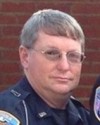
Police Officer Keith CrenshawRest in Peace Bro…We Got The Watch
Eupora Mississippi Police Department
End of Watch: Wednesday, October 23, 2013
Age: 52
Tour: 10 years
Badge # E6
Incident Date: 10/23/2013
Police Officer Keith Crenshaw was struck and killed by a vehicle while deploying a spike strip during a vehicle pursuit on U.S. Highway 82, at the exit to Mississippi 9.
Three subjects in the vehicle were wanted in connection with multiple attempted robberies earlier in the morning and led officers on a high speed chase across three counties. Officer Crenshaw deployed the spike strip at approximately 10:00 a.m. as the chase entered Europa. As the subjects approached they swerved into the median, fatally striking Officer Crenshaw. The vehicle then crashed into a utility pole.
One subject was killed in the wreck and two others were taken into custody.
Officer Crenshaw had served with the Eupora Police Department for 10 years. He is survived by his six children and five grandchildren.
Day is done, Gone the sun, From the lake, From the hills, From the sky. All is well, Safely rest, God is nigh.
Geopolitical Weekly: U.S. Foreign Policy from the Founders' Perspective, October 23, 2013
By George Friedman
Last week I discussed how the Founding Fathers might view the American debt crisis and the government shutdown. This week I thought it would be useful to consider how the founders might view foreign policy. I argued that on domestic policy they had clear principles, but unlike their ideology, those principles were never mechanistic or inflexible. For them, principles dictated that a gentleman pays his debts and does not casually increase his debts, the constitutional provision that debt is sometimes necessary notwithstanding. They feared excessive debt and abhorred nonpayment, but their principles were never completely rigid.
Whenever there is a discussion of the guidelines laid down by the founders for American foreign policy, Thomas Jefferson's admonition to avoid foreign entanglements and alliances is seen as the founding principle. That seems reasonable to me inasmuch as George Washington expressed a similar sentiment. So while there were some who favored France over Britain during the French Revolutionary Wars, the main thrust of American foreign policy was neutrality. The question is: How does this principle guide the United States now?
A Matter of Practicality
Like all good principles, Jefferson's call for avoiding foreign entanglements derived from practicality. The United States was weak. It depended heavily on exports, particularly on exports to Britain. Its navy could not guarantee the security of its sea-lanes, which were in British hands and were contested by the French. Siding with the French against the British would have wrecked the American economy and would have invited a second war with Britain. On the other hand, overcommitting to Britain would have essentially returned the United States to a British dependency.
Avoiding foreign entanglements was a good principle when there were no other attractive strategies. Nonetheless, it was Jefferson himself who engineered a major intrusion into European affairs with the purchase of the Louisiana Territory from France. Initially, Jefferson did not intend to purchase the entire territory. He wanted to own New Orleans, which had traded hands between Spain and France and which was the essential port for access between the Gulf of Mexico and the Mississippi-Ohio-Missouri river system. Jefferson sensed that Napoleon would sell New Orleans to finance his war in Europe, but he was surprised when Napoleon countered with an offer to sell all of France's North American holdings for $15 million. This would change the balance of power in North America by blocking potential British ambitions, opening the Gulf route to the Atlantic to the United States and providing the cash France needed to wage wars.
At the time, this was not a major action in the raging Napoleonic Wars. However, it was not an action consistent with the principle of avoiding entanglement. The transaction held the risk of embroiling the United States in the Napoleonic Wars, depending on how the British reacted. In fact, a decade later, after Napoleon was defeated, the British did turn on the United States, first by interfering with American shipping and then, when the Americans responded, by waging war in 1812, burning Washington and trying to seize New Orleans after the war officially ended.
Jefferson undertook actions that entangled the United States in the affairs of others and in dangers he may not have anticipated -- one of the major reasons for avoiding foreign entanglements in the first place. And he did this against his own principles.
The reason was simple: Given the events in Europe, a unique opportunity presented itself to seize the heartland of the North American continent. The opportunity would redefine the United States. It carried with it risks. But the rewards were so great that the risks had to be endured. Avoiding foreign entanglements was a principle. It was not an ideological absolute.
Jefferson realized that the United States already was involved in Europe's affairs by virtue of its existence. When the Napoleonic Wars ended, France or Britain would have held Louisiana, and the United States would have faced threats east from the Atlantic and west from the rest of the continent. Under these circumstances, it would struggle to survive. Therefore, being entangled already, Jefferson acted to minimize the danger.
This is a very different view of Jefferson's statement on avoiding foreign entanglements than has sometimes been given. As a principle, steering clear of foreign entanglements is desirable. But the decision on whether there will be an entanglement is not the United States' alone. Geographic realities and other nations' foreign policies can implicate a country in affairs it would rather avoid. Jefferson understood that the United States could not simply ignore the world. The world got a vote. But the principle that excessive entanglement should be avoided was for him a guiding principle. Given the uproar over his decision, both on constitutional and prudential grounds, not everyone agreed that Jefferson was faithful to his principle. Looking back, however, it was prudent.
The Illusion of Isolationism
The U.S. government has wrestled with this problem since World War I. The United States intervened in the war a few weeks after the Russian czar abdicated and after the Germans began fighting the neutral countries. The United States could not to lose access to the Atlantic, and if Russia withdrew from the war, then Germany could concentrate on its west. A victory there would have left Germany in control of both Russian resources and French industry. That would have created a threat to the United States. It tried to stay neutral, then was forced to make a decision of how much risk it could bear. The United States opted for war.
Isolationists in World War II argued against involvement in Europe (they were far more open to blocking the Japanese in China). But the argument rested on the assumption that Germany would be blocked by the Soviets and the French. The alliance with the Soviets and, more important, the collapse of France and the invasion of the Soviet Union, left a very different calculation. In its most extreme form, a Soviet defeat and a new Berlin-friendly government in Britain could have left the Germans vastly more powerful than the United States. And with the French, British and German fleets combined, such an alliance could have also threatened U.S. control of the Atlantic at a time when the Japanese controlled the western Pacific.
A similar problem presented itself during the Cold War. In this case, the United States did not trust the European balance of power to contain the Soviet Union. That balance of power had failed twice, leading to alliances that brought the United States into the affairs of others. The United States calculated that early entanglements were less risky than later entanglements. This calculation seemed to violate the Jeffersonian principle, but in fact, as with Louisiana, it was prudent action within the framework of the Jeffersonian principle.
NATO appeared to some to be a violation of the founders' view of a prudent foreign policy. I think this misinterprets the meaning of Jefferson's and Washington's statements. Avoiding entanglements and alliances is a principle worth considering, but not to the point of allowing it to threaten the national interest. Jefferson undertook the complex and dangerous purchase of Louisiana because he thought it carried less risk than allowing the territory to remain in European hands.
His successors stumbled into war partly over the purchase, but Jefferson was prepared to make prudent judgments. In the same way, Woodrow Wilson, Franklin Roosevelt and Harry Truman, realizing that avoiding foreign entanglements was impossible, tried to reduce future risk.
Louisiana, the two world wars and the Cold War shared one thing: the risks were great enough to warrant entanglement. All three could have ended in disaster for the United States. The idea that the oceans would protect the United States was illusory. If one European power dominated all of Europe, its ability to build fleets would be extraordinary. Perhaps the United States could have matched it; perhaps not. The dangers outweighed the benefits of blindly adhering to a principle.
A General Role
There is not an existential threat to the United States today. The major threat is militant Islamism, but as frightening as it is, it cannot destroy the United States. It can kill large numbers of Americans. Here the Jeffersonian principle becomes more important. There are those who say that if the United States had not supported Israel in the West Bank or India in Kashmir, then militant Islamism would have never been a threat. In other words, if we now, if not in the past, avoided foreign entanglements, then there would be no threat to the United States, and Jefferson's principles would now require disentanglement.
In my opinion the Islamist threat does not arise from any particular relationship the United States has had, nor does it arise from the celebration of the Islamic principles that Islamists hold. Rather, it arises from the general role of the United States as the leading Western country. The idea that the United States could avoid hostility by changing its policies fails to understand that like the dangers in 1800, the threat arises independent of U.S. action.
But militant Islamism does not threaten the United States existentially. Therefore, the issue is how to apply the Jeffersonian principle in this context. In my opinion, the careful application of his principle, considering all the risks and rewards, would tell us the following: It is impossible to completely defeat militant Islamists militarily, but it is possible to mitigate the threat they pose. The process of mitigation carries with it its own risks, particularly as the United States carries out operations that don't destroy militant Islamists but do weaken the geopolitical architecture of the Muslim world -- which is against the interests of the United States. Caution should be exercised that the entanglement doesn't carry risks greater than the reward.
Jefferson was always looking at the main threat. Securing sea-lanes and securing the interior river systems was of overwhelming importance. Other things could be ignored. But the real challenge of the United States is defining the emerging threat and dealing with it decisively. How much misery could have been avoided if Hitler had been destroyed in 1936? Who knew how much misery Hitler would cause in 1936? These thoughts are clear only in hindsight.
Still, the principle is the same. Jefferson wanted to avoid foreign entanglements except in cases where there was substantial benefit to American national interests. He was prepared to apply his principle differently then. The notion of avoiding foreign entanglements must therefore be seen as a principle that, like all well-developed principles, is far more complex than it appears. Foreign entanglements must be avoided when the ends are trivial or unattainable. But when we can get Louisiana, the principle of avoidance dictates involvement.
As in domestic matters, ideology is easy. Principles are difficult. They can be stated succinctly, but they must be applied with all due sophistication.
U.S. Foreign Policy from the Founders' Perspective is republished with permission of Stratfor.
Monday, October 28, 2013
Star Wars Bloopers
No commnets are really needed. But this does show why the drones are such bad shots! :<)
Friday, October 25, 2013
Officer Down

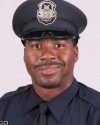
Police Officer Patrick HillRest in Peace Bro…We Got The Watch
Detroit Michigan Police Department
End of Watch: Saturday, October 19, 2013
Age: 37
Tour: 13 years
Incident Date: 4/2/2013
Police Officer Patrick Hill succumbed to an accidental gunshot wound sustained six months earlier following a high speed pursuit of a murder suspect.
The vehicle they were pursuing was boxed into another police car at the intersection of Linwood and Hooker Street. The murder suspect immediately opened fire on officers from inside the vehicle wounding one officer. Other officers on the scene returned fire, killing the subject. It is believed that shrapnel from a shotgun pellet fired by another officer struck Officer Hill in the head.
Another person in the vehicle attempted to flee on foot but was arrested.
Officer Hill was transported to a local hospital in critical condition. He succumbed to his wounds on October 19th, 2013.
Officer Hill had served with the Detroit Police Department for 13 years. He is survived by his wife and four children.
Day is done, Gone the sun, From the lake, From the hills, From the sky. All is well, Safely rest, God is nigh.
Security Weekly: Lessons From a Failed Attack in Ethiopia, October 17, 2013
By Scott Stewart
An explosion ripped through a residence Oct. 13 in the Bole district of Addis Ababa, Ethiopia's capital city, killing two men. The Ethiopian government said the two were Somalis who were in Ethiopia illegally. News footage of the scene showed a pistol, hand grenades and bomb components discovered after the blast.
The incident occurred just prior to a highly publicized soccer game in which the Ethiopian national team played a World Cup qualification match against the Nigerian national team in an Addis Ababa stadium just a few miles from the site of the explosion. An Ethiopian government spokesman noted Oct. 14 that an intact suicide vest and a soccer shirt were found at the site of the explosion, indicating that the two men likely intended to use their weapons and explosives to attack the stadium during the match or one of the many venues where large crowds would gather to watch the game on television. While the Ethiopians lost the soccer match against Nigeria, their luck clearly was better when the explosion killed the two would-be assailants before they could strike.
Suspects
Ethiopia has long been wracked by terrorist attacks conducted by insurgent groups such as the Oromo Liberation Front and the Ogaden National Liberation Front. Such groups have used improvised explosive devices and carried out armed assaults or ambushes in the past, including attacks in Addis Ababa. These nationalistic groups have not, however, employed suicide attacks before. In fact, the Ogaden National Liberation Front has released press statements describing al Shabaab suicide attacks as cowardly. The apparent planned suicide attack in this incident by two men of Somali origin suggests al Shabaab or al Shabaab sympathizers were behind the attack aborted by the explosion.
Al Shabaab in fact claimed responsibility for the failed attack via its Twitter account. The group also claimed to have placed other explosive devices on Churchill Avenue at the Piazza in the heart of the Ethiopian capital, but a subsequent search of the area found nothing. Al Shabaab also claimed on Twitter on Oct. 15 that the operation was in fact intended to target the soccer match.
Al Shabaab and its predecessor, the Islamic Courts Union, has threatened to conduct attacks in Ethiopia since shortly after the 2006 invasion of Somalia by Ethiopian troops that resulted in the unseating of the Islamic Courts Union government in early 2007 -- and the emergence of al Shabaab as an insurgent and terrorist group. Indeed, Al-Itihaad al-Islamiya, the Somali jihadist group that preceded and helped spawn the Islamic Courts Union, had been threatening to attack Ethiopia since the 1990s.
Despite some thwarted plots and low-level bombings that may have been linked to al Shabaab -- for example, it claimed responsibility for a November 2007 bombing at a hotel in Dolo, Ethiopia -- al Shabaab's threats against Ethiopia have been largely empty.
If the claims of the Ethiopian government and al Shabaab are true in this case and the deceased pair indeed planned to attack soccer fans, this would be eerily similar to the July 11, 2010, al Shabaab attack in Kampala, Uganda, in which a coordinated suicide attack using three improvised explosive devices struck crowds watching World Cup matches. The Kampala attack killed 70 and wounded scores more. Uganda has troops in Somalia, as do Ethiopia and Kenya. While Ethiopia is undertaking a unilateral military mission in Somalia, Kenyan and Ugandan troops are supporting the African Union Mission to Somalia, which seeks to help the government of Somalia in its struggle against al Shabaab. (Burundi, Djibouti and Sierra Leone also have troops deployed to the country under the aegis of the African Union Mission to Somalia.)
Like Kenya, where al Shabaab attacked the Westgate Mall on Sept. 21, Ethiopia hosts a large population of Somalis displaced by decades of famine, war and the lack of a stable government. In addition to the displaced Somalis, there is also an ethnically Somali area of Ethiopia with a sizable population. All told, some 8 million Somalis reside in Ethiopia, comprising the country's third-largest ethnic group. Similar to Somali diaspora populations elsewhere, including in the United States and Europe, a small percentage of Somalis in Ethiopia are sympathetic to al Shabaab.
If the explosion in Addis Ababa was indeed an al Shabaab operation, this would clearly indicate a shift in the group's intent to act on the threats they have made against the countries with troops in Somalia. Three years separated the Kampala attack and the Westgate Mall attack, but only a month passed between the Westgate Mall attack and the explosion in Addis Ababa, indicating that al Shabaab appears to have increased the tempo of its attacks outside Somalia. This change of intent and corresponding increase in operational tempo means al Shabaab could be plotting other strikes in countries with troops in Somalia.
However, even if al Shabaab wants to increase the frequency and range of its operations, the group will be limited in what it can do because it lacks the sophisticated terrorist tradecraft required to conduct more sophisticated attacks. This is especially true the farther one gets from its home base in Somalia.
Limits
As we noted in the aftermath of the Westgate Mall attack, the operation employed attackers using common insurgent weapons (assault rifles and hand grenades) and rudimentary insurgent tactics rather than more sophisticated terrorist tradecraft and weaponry. This was made possible because al Shabaab has a robust support network in Kenya and access to military weapons. The presence of a pistol, hand grenades and electrical blasting caps in Addis Ababa likewise shows that al Shabaab also has ready access to military ordnance inside Ethiopia.
The presence of the bomb components in the rented residence where the detonation occurred suggests that the explosion occurred during the assembly of an improvised explosive device or from the premature detonation of an already completed device. The sloppy workmanship on a firing chain for a bomb found intact at the residence, which had numerous connections taped together with electrical tape as part of the improvised wiring harness and was hooked to three electrical detonators and a nine-volt battery, makes an accidental detonation of an explosive device with a similarly constructed firing chain easy to envisage.
It is far easier to assemble improvised explosive devices from military-grade or commercial explosive components than it is to manufacture components from scratch. That the two operatives in Addis Ababa failed to accomplish this without killing themselves demonstrates their lack of bombmaking tradecraft. If a bombmaker struggles to make a device from manufactured components in Ethiopia, the chances of that individual manufacturing a viable device from scratch in a more hostile environment -- like the United States or the United Kingdom -- are fairly remote.
As we noted after the Nairobi attack, al Shabaab has shown the ability to conduct complex attacks inside Somalia using both insurgent and terrorist tactics. Its terrorist attacks in Somalia have involved the successful deployment of suicide bombers and large vehicle bombs. But to date, al Shabaab has yet to demonstrate the ability to conduct anything more than rudimentary attacks outside Somalia. The botched attack in Addis Ababa confirms our assessment of its limited ability to project a terrorist capability. Before the group can pose a transnational threat, it must develop the capability to dispatch operatives trained in advanced terrorist tradecraft to conduct missions in hostile environments. Thus, at present the group appears to continue to pose a regional threat rather than a true transnational one. But even with this limited capability it can be deadly within the region.
Copyright: STRATFOR.COM
Thursday, October 24, 2013
At least I’ve gotten something right....
Been a really bad day. After going outside, spilled coffee all over the floor by the front door. Broke the front of my iPhone outside. And got eaten by ants moving trash to the front. Damned I’m feeling like calling in, but I got to get to work in a few hours.
At least I did get finished with this. I’ve been moving as much as possible to being paperless, books I’m reading not withstanding. Since the mid-1990s at the beginning of every year I would start a multi page file for the new year with sections for taxes, paychecks, medical, etc. After the following new year, I’d complete my taxes, print off a final copy for this file and then place it into a box for “long term” storage. Then I’d pull the file from five years previous, purge it of things I don’t need anymore (old receipts, etc) and then destroy the paper. I’d put the now reduced file with the essential (e.g. tax and medical records) in the file.
Well, last spring I bought a Scan Snap scanner to start getting this paper converted into electrons.
 After scanning the 2013 files I started to get excited. I reduced an eight inch file to a few files, everything else is electrons (backed up on CD and online). Then it came time to get the big project started.
First, I brought up two boxes of files for scanning.
Next, over two weeks I scanned one section after another into my computer. This was fun and made a real mess for the time but it was only temporary!

This project was a pain in the ass but it reduced two boxes to a few files:
And here are the remains. Now how to destroy this without burning up my shredder or paying Shred-it a fortune. Well, I want to be environmentally sensitive so I pulled the bag downstairs, put it in my BBQ pit and burned it. Hey, the plants will love all the CO2 I put out for them to breath.
The next morning I went outside and it was still smoldering. Turned a few more pages and it burned down by noon. Put the ashes in a box for pick up with the Friday morning trash.
All in all a pain in the ass but I've reduced my paper retention to less than 5% of what I used to have. Can't beat it.
Hope you have a great week!
At least I did get finished with this. I’ve been moving as much as possible to being paperless, books I’m reading not withstanding. Since the mid-1990s at the beginning of every year I would start a multi page file for the new year with sections for taxes, paychecks, medical, etc. After the following new year, I’d complete my taxes, print off a final copy for this file and then place it into a box for “long term” storage. Then I’d pull the file from five years previous, purge it of things I don’t need anymore (old receipts, etc) and then destroy the paper. I’d put the now reduced file with the essential (e.g. tax and medical records) in the file.
Well, last spring I bought a Scan Snap scanner to start getting this paper converted into electrons.

 |
| Fifteen years of papers! |
 |
| Took two of these boxes to hold! |
First, I brought up two boxes of files for scanning.
 |
| The remains after I scanned. |

This project was a pain in the ass but it reduced two boxes to a few files:
 |
| The remains. Elmer wants to help Daddy! |
 |
| My neighbor though the house was on fire...I can't understand why?! :<) |
The next morning I went outside and it was still smoldering. Turned a few more pages and it burned down by noon. Put the ashes in a box for pick up with the Friday morning trash.
All in all a pain in the ass but I've reduced my paper retention to less than 5% of what I used to have. Can't beat it.
Hope you have a great week!
Officer Down


Lieutenant Clay CrabbRest in Peace Bro…We Got The Watch
Austin Texas Police Department
End of Watch: Wednesday, October 16, 2013
Age: 42
Tour: 19 years
Badge # 3841
Cause: Automobile accident
Incident Date: 10/16/2013
Lieutenant Clay Crabb was killed in an automobile collision on U.S. Highway 290, near Sawyer Ranch Road in Hays County, while en route to the police station.
His patrol car hydroplaned and slid into oncoming traffic and was struck by another vehicle during a period of heavy rain.
Lieutenant Crabb had served with the Austin Police Department for 15 years and previously served with the San Angelo Police Department for four years. He is survived by his wife and three children. He was killed the day before his 43rd birthday.
Day is done, Gone the sun, From the lake, From the hills, From the sky. All is well, Safely rest, God is nigh.
Subscribe to:
Posts (Atom)