Police Work, Politics and World Affairs, Football and the ongoing search for great Scotch Whiskey!

Sunday, February 16, 2014

Another reason you knew voting for Ted Cruz was good for America.

Texas Monthly is one of those liberal rags you alway see by the grocery checkout and like TV Guide, it's time has come and gone. It's one of those magazines you use to kill time as your waiting for the woman to finish arguing with the check out clerk over the cost of an item, normally holding people up for twenty cents. But onto the subject.

I saw my favorite senator on the cover this month, Ted Cruz. Knowing this leftist rag really loves Republicans, especially actual conservatives, I could expect real objective journalism here. Here is the cover.

You get the impression they are not impressed by his first year being eventful, as they put it. I wonder why. Here are some highlights of the article with commentary.

To simultaneously elicit such admiration and such scorn is unusual for a freshman senator and, in a way, impressive. As 2013 drew to a close, observers were increasingly wondering whether the 43-year-old Cruz was thinking of running for the Republican presidential nomination in 2016. It was not an unreasonable thought, despite Cruz’s youth and his relative inexperience. Barack Obama had served less than four years in the Senate before being elected president in 2008, and Cruz had already made a greater impression on Congress than Obama had during his time there. The problem was that it was a distinctly polarizing one. By leading the fight against Obamacare, Cruz had endeared himself to the Republican base to a greater degree than most of the party’s presidential prospects had... If such voters looked at his overall record, they would see a more complex character than Cruz’s national caricature would suggest. Whether they would be willing to take a look was very much an open question....

Yes, but unlike B Hussein Obama, there is a record of accomplishment to back up his election to the Senate. Texas Solicitor General who has won won cases at the Supreme Court and indirectly challenged the president, George W Bush, he worked for and helped elect. The former junior senators from New York and Illinois were actually selected by their party leadership and won with party support. David Dewhurst, the serving Lieutenant Governor of Texas, was the selected man to serve in the senate. Ted Cruz came from less than 5% name recognition to win a state election against a multimillionaire who had never lost an election. Not bad.
...As we headed up the Capitol steps, I realized that Cruz’s response to the previous question reminded me of something I had mentally summarized as the Barry Goldwa ter scenario—the prospect that Cruz could be the kind of Republican who could win the party’s presidential nomination but alarm voters in a general election, just as Goldwater had in 1964 against LBJ.

“If you had a Goldwater scenario, that would be okay with you?”

“Not at all,” he said, “because we have a limited window to turn this country around. We can’t keep going down this path without permanently jeopardizing the future for subsequent generations. And I think the window to turn things around is not decades, it is a matter of a few years. There comes a point where the hole is too deep, where our debt is too large, where our liberties have been too profoundly eroded, that there’s no turning back....

Goldwater scenario? Someone put it best, if the Republicans had nominated Jesus Christ in 1964 Johnson still would have won. The American people would not tolerate a third president in just over a year. Especially after loosing Kennedy to an televised assasssignation and the dirty tricks played by the LBJ campaign. If you need the classic example, Daisy.
...And so June 28, 2012, would prove to be a critical date. That was the day the Supreme Court upheld key aspects of the Affordable Care Act, providing Cruz with exactly the opening he needed, at exactly the moment he needed it. The Affordable Care Act was deeply unpopular among Texas Republicans, tea party or otherwise. Both candidates had opposed it and promised to fight for its repeal if elected. But the distinction Cruz had drawn between himself and Dewhurst had suddenly become highly relevant. Cruz argued that he, not Dewhurst, was the one who would be the man in the arena, as Teddy Roosevelt had put it, with blood and sweat on his face. “Obamacare underscores the fundamental difference between me and David Dewhurst,” Cruz said. “Lieutenant Governor Dewhurst is a deal-maker. He is a conciliator.”

The argument worked. In the May primary Dewhurst had received about 628,000 votes to Cruz’s 481,000. In the July runoff the totals were reversed. Dewhurst won 480,126 votes, but 631,812 Texans had turned out for Cruz. It was the biggest upset in Texas politics in a generation. To find anything like it, you have to go back to 1961, when a conservative economics professor named John Tower thumped Democrat Bill Blakely in the race to fill LBJ’s Senate seat, making Tower the first Republican elected statewide since Reconstruction...

And yes, Cruz made it very clear he was going to do what he could to stop Obamacare. And won. And after actually doing what he said he would, his popularity is threw the roof in the state and country. Hey McConnell, maybe you should take some hints. We don't want someone to reach across the aisle, We want someone to throw a wrench into this and stop it. But that would require leadership, something you have no concept of.
...After graduating from Second Baptist School, in Houston, he went east to Princeton, where he wrote his senior thesis on the Ninth and Tenth amendments. After college, he enrolled at Harvard Law, then spent two years as a law clerk, at Virginia’s Fourth Circuit and the Supreme Court, for William Rehnquist. From there he worked in private practice before joining Bush’s 2000 presidential campaign as a domestic policy adviser and then as a legal counsel, when the bungled results in Florida sent the final decision about the election to the Supreme Court. Among his colleagues on the Bush campaign was a blond Californian named Heidi Nelson. They married in 2001—Cruz considers himself to be the quiet one in the relationship—and they have two young daughters, Caroline and Catherine...

Sounds like the all American family. Oh, BTY, the election results were not bungled. ALGORE challenged them in the Florida courts, the Florida Supreme Court stuck its nose into the election, trying to throw the election to the democrats. Fortunately SCOTUS slapped them own. ALGORE lost in a whisper, in spite of all their cheating. I've always believed what really did it was the release of this picture, showing a scared kid looking down the barrel of a rifle. That really pissed off the Cubans-American population in Florida.
...When the Senate was debating a gun-control bill, for example, after the shootings at Sandy Hook Elementary, he had annoyed Dianne Feinstein, a Democratic senator from California, by asking her whether she would deem it appropriate to abridge the protections laid out in the First and Fourth amendments the same way she was proposing with regard to the Second, prompting her to snap at him, “I’m not a sixth grader.”...

Yes Dianne, you are not. A sixth grader is more intelligent. You are a poster child for term limits.
...Once again, he cited Medellín v. Texas, the case he had discussed at the Heritage Foundation. It concerned a gang member named José Medellín, who had been sentenced to death in Texas for his role in the 1993 rape and murder of two teenage girls in Houston. There was no question that Medellín was guilty—he had confessed—but he was also a Mexican national, and at the time of the arrest, no one had notified him of his right under a 1963 treaty called the Vienna Convention on Consular Relations to contact consular authorities. In 2004 the International Court of Justice had ruled that 51 Mexican nationals in such situations, including Medellín, had the right to a review of their convictions. The next year President Bush issued a memorandum referencing the World Court’s decision and ordered the states to comply. Texas balked.

“The narrative of the other side was straightforward,” Cruz said. “It was ‘Texas cannot flout the treaty obligations of the United States of America. Texas cannot thumb its nose at the federal government, and at the president of the United States, and at every nation on the face of the earth. And besides, you know how those Texans are about capital punishment anyway.’ If that’s what the case is about, we lose. If the question is ‘Can Texas defy the treaty obligations of the United States?’ we lose. And that’s why just about every observer said there’s no way Texas can win.”

Instead Abbott and Cruz decided to approach it as a separation of powers case. By ordering Texas to comply with the World Court’s ruling, Cruz argued, Bush was ignoring Congress’s authority to implement treaties in accordance with existing American law. He was also snubbing the Supreme Court, which hadn’t yet weighed in on the subject.

“At the end of the day, the court adopted our narrative,” Cruz concluded. “And we didn’t just win, we won six to three, which astonished observers. I’m convinced that framing it as a separation of powers case instead of a federalism case was critical to winning it.”...

Sounds like a serious legal mind at work. Someone who believes in federalism and separation of powers. What a radical concept.
...The Senate, accordingly, stripped the defunding language out and sent it back to the House. That chamber, though, had fallen into disarray. The tea party Republicans were in no mood to compromise, and without their support, House speaker John Boehner was apparently reluctant to hold a vote on the Senate’s version of the bill. On October 1 the federal government began its partial shutdown, and people began hurling accusations at one another about who was to blame. The Democrats blamed the Republicans. The House blamed the Senate. The president blamed Congress. And almost everyone blamed Cruz....

No, propaganda came out saying the Republicans had shut down the "government" although less than 20% was shut down. And B Hussein Obama ordered national parts shut down just to make it more painful. And under the leadership of Boehner and McConnell, they folded. Thanks guys.
...Making matters worse was that at the time of Cruz’s pseudo-filibuster, the country was facing more than a federal government shutdown: it was facing the prospect of defaulting on its debt payments. Many economists were warning against this in the gravest possible terms; the United States is the largest economic power in the world, and the American dollar is the world’s most important currency of last resort. Over the next few weeks, as the shutdown continued and the deadline for raising the debt ceiling drew closer, Cruz was excoriated by almost everyone. Even some conservative activists felt that he had taken things too far. “He pushed House Republicans into traffic and wandered away,” said Grover Norquist, a longtime anti-tax activist....

One, the US was in no risk of defaulting of its debt. There was more than enough money coming in to pay the interest, which is required by the 14 Amendment. Oh, Grover Norquist is a Chamber of Commerce propagandist and they want lower taxes. And amnesty. And quantitative easing, printing billions of dollars and putting in into the market, inflating the currency. Not exactly someone we would listen to, IMHO.
...In recent years the Republican Party, around the country, has been a noticeably dyspeptic coalition of fiscal conservatives, social conservatives, tea partiers, and libertarians. The 2016 presidential primary will therefore be a battle over the direction of the party as much as the nomination. The establishment would like to see a nominee who can bridge the party’s internal divisions and swing votes in the general election, like Chris Christie, Scott Walker, or Jeb Bush. Many Republican primary voters, however, will hold out for a candidate committed to their key concerns. The Republican base isn’t looking for crossover appeal, it’s looking for someone who will fight for the cause.

Which explains why leading the polarizing and seemingly self-destructive battle to defund the Affordable Care Act may prove to have been a shrewd move on Cruz’s part. For a Republican who may have his eye on the 2016 presidential primary, having been the last man in the arena fighting against Obamacare is a pretty good campaign credential. Things haven’t changed that much since the 2012 Senate campaign: the law is unpopular with Republican primary voters. And, significantly, no other issue is equally unpopular with the various factions of the Republican coalition.

By making this his central issue, Cruz has won over conservative activists. At the same time, he hasn’t necessarily implicated himself in something that moderates can never forgive. Many of Cruz’s Republican colleagues in Congress derided his defunding strategy, but not a single one of them voted for the law in the first place. At the end of the day, it wasn’t just the tea party that was leery of the Affordable Care Act. If the law represents a major and potentially transformative expansion of America’s safety net, it also represents a major and potentially transformative expansion of government power....

Gee, Obamacare is unpopular with the Republican base? That goes without saying. You might have wanted to mention that an overwhelming majority of the American people want it repealed. BTY, why Ms Greider, don't you call it Obamacare? Just curious. Maybe because you know how unpopular he and his takeover of the medical industry is?
...Since the rise of the tea party movement, Republican activists have been on the lookout for signs of latent moderation. Even the incumbents who have always been considered conservative are suddenly coming under scrutiny. It happened to Rick Perry: during his ill-fated campaign for the 2012 presidential nomination, the longest-serving governor in Texas history was taken to task for minor doctrinal lapses, like the fact that he had signed the state’s 2001 law authorizing in-state tuition for certain undocumented students. It’s happening in this year’s Republican primaries. In December Steve Stockman, a tea party congressman from Houston, announced a primary challenge to “the liberal John Cornyn”—Texas’ senior senator, who had, in 2012, posted the second-most-conservative voting record in the Senate, according to a ranking by the National Journal

An irony is that if not for the fight against Obamacare, Cruz could have been vulnerable to such purity tests too. He is clearly more focused on fiscal issues than social ones, and he doesn’t use the economy as a proxy for the culture wars. He has repeatedly said that encouraging economic growth should be Congress’s number-one goal; that being the case, he’s disagreed with the party’s strictest budget hawks. “I think Republicans get their priorities wrong at times by focusing too much on austerity,” he told me in Houston. “As much as spending is out of control, given the choice between spending cuts and economic growth, I choose growth one hundred out of one hundred times.” He’s also chided Republicans for failing to reach out to the voters that Mitt Romney notoriously summarized as “the 47 percent” during the presidential campaign. “The top one percent in this country now have the highest share of our income since 1928, under President Obama. The rich do fine with government control of the economy. It’s not about them. It’s about everybody else.”....

National Journal is not exactly an objective source of conservative opinion. Life the Wall Street Journal editorial page, it enjoys a reputation for being conservative, but it's more corporatist. And Cornyn was for it before he was against it. In last week's debt limit extension, Cornyn voted with the Democrats to end Cruz's filibuster. Then Cornyn voted "against" the debt limit extension, alloying the Democrats to give B Hussein Obama another 1.5 trillion to piss away. And for that he got us.....nothing. No reforms to Obamacare, he din't remade the Keystone XL be approved, budget/entitlement reforms. He got nothing. And that is why Cornyn is scared. He knows if he cannot win the nomination fight outright next month, if he is put into a primary, he is vulnerable. Cornyn doesn't want to be the next Dewhurst. He likes being part of the ruling class.

I look at articles like this and they show how much journalist, at every level, are embedded into America's ruling class. Granted, Texas Monthly doesn't claim to be objective, like the NY Puke. But like the readers of the Times, the readers of the Texas Monthly are liberal Austin types. They don't like Cruz, never have, never will. But one recalls the words of Great Britain's two greatest prime ministers in the 20th Century. Churchill said, "You have enemies? Good. That means you've stood up for something, sometime in your life." And as Thatcher said, "I always cheer up immensely if an attack is particularly wounding because I think, well, if they attack one personally, it means they have not a single political argument left." Ted Cruz has enemies, the right ones (B Hussein Obama, Harry Reid, the RINO leadership, etc) and
they have gone after him personally. And that, alone, is enough to say I did right by donating to the man's campaign two years ago, giving him my vote, and asking him to run for President.

TED CRUZ 2016!

Saturday, February 15, 2014

Officer Down


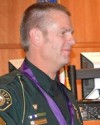
Sergeant David Baldwin
Jefferson County Colorado Sheriff's Office
End of Watch: Sunday, January 26, 2014
Tour: 27 years

Sergeant David Baldwin was killed when his police motorcycle was struck head-on by another vehicle on Highway 93, at West 64th Parkway, at approximately 10:30 am.

The driver of the other vehicle attempted to illegally pass a third vehicle on a double-yellow line when he struck Sergeant Baldwin.

Sergeant Baldwin was a U.S. Air Force veteran and had served with the Jefferson County Sheriff's Office for 27 years. He was assigned to the Traffic/Motorcycle Unit.
Rest in Peace Bro…We Got The Watch

Day is done, Gone the sun, From the lake, From the hills, From the sky. All is well, Safely rest, God is nigh. 

Thursday, February 13, 2014

A great way to look at Ray Nagin's future....

Remember, Mayor "Chocolate City" himself. He was stealing from minorities, women and children in a disaster area. The ironic thing is he was considered a reformer when he became mayor...not he's in a long line of crooked politicians. Only, for once, he finally got convicted. Great work by the US Attorney and his guys.

Tuesday, February 11, 2014

A curious scenario from a National Guard exercise.

I just found this and I have to say the scenario for this command post exercise is revealing. The fact the objective media calls the scenario "timely" is to be expected. Don't confuse them with the facts.
Mock Disaster Training Exercise in Scioto County

PORTSMOUTH, Ohio (WSAZ) -- A dead science teacher, weapons of mass destruction, first responders in hazmat suits and the Ohio Army National Guard all near the Municipal Stadium in Portsmouth, Thursday. There's no cause for alarm -- this is just a drill!

The mock disaster training exercise is being done with Scioto County first responders and the Ohio Army National Guard 52nd Civil Support Unit.

"It's the reality of the world we live in," says Portsmouth Police Chief Bill Raisin. "Don't forget there is such a thing as domestic terrorism. This helps us all be prepared."

The make-believe scenario is timely. Two school employees who are disgruntled over the government's interpretation of the Second Amendment, plot to use chemical, biological and radiological agents against members of the local community.scenario "timely" is to be expected. Don't confuse them with the facts.
Now the fact a National Guard unit is training for handling a local law enforcement is not troubling. They are a state asset (unless mobilized) and can be used for a police function. But the scenario is unrealistic. It would more likely be Ted Kaczynski or Rebecca Rubin, not right wing agitators. But again, don't confuse these people with the facts. And using a more realist enemy may make for better training, but it's not allowed right now.

Officer Down


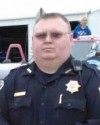
Police Officer Kristian Willhight
Burns Flat Oklahoma Police Department
End of Watch: Thursday, January 23, 2014

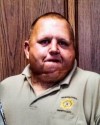
Undersheriff Brian Beck
Washita County Oklahoma Sheriff's Office
End of Watch: Thursday, January 23, 2014
Age: 39

Police Officer Kristian Willhight and Undersheriff Brian Beck were killed when their patrol cars collided during a vehicle pursuit in Washita County.

Undersheriff Beck had gone to a man's home to serve several felony warrants when the subject fled in his truck. Undersheriff Beck began to pursue the subject and called for backup.

The pursuit lasted for 31 minutes and ended when the subject crashed. Officer Willhight was responding to assist in the pursuit when the two patrol cars collided near Dill City, approximately 3-1/2 miles from where the subject crashed. The subject was also killed.

Officer Willhight is survived by his 4-year-old daughter. Undersheriff Beck is survived by his wife and two children.

Read more: http://www.odmp.org/officer/21921-undersheriff-brian-beck#ixzz2t4X0W86u
Rest in Peace Gentlemen…We Got The Watch

Day is done, Gone the sun, From the lake, From the hills, From the sky. All is well, Safely rest, God is nigh. 

Geopolitical Weekly: New Dimensions of U.S. Foreign Policy Toward Russia, February 11, 2014

By George FriedmanThe struggle for some of the most strategic territory in the world took an interesting twist this week. Last week we discussed what appeared to be a significant shift in German national strategy in which Berlin seemed to declare a new doctrine of increased assertiveness in the world -- a shift that followed intense German interest in Ukraine. This week, U.S. Assistant Secretary of State Victoria Nuland, in a now-famous cell phone conversation, declared her strong contempt for the European Union and its weakness and counseled the U.S. ambassador to Ukraine to proceed quickly and without the Europeans to piece together a specific opposition coalition before the Russians saw what was happening and took action. 
This is a new twist not because it makes clear that the United States is not the only country intercepting phone calls, but because it puts U.S. policy in Ukraine in a new light and forces us to reconsider U.S. strategy toward Russia and Germany. Nuland's cell phone conversation is hardly definitive, but it is an additional indicator of American strategic thinking.Recent U.S. Foreign Policy ShiftsU.S. foreign policy has evolved during the past few years. Previously, the United States was focused heavily on the Islamic world and, more important, tended to regard the use of force as an early option in the execution of U.S. policy rather than as a last resort. This was true not only in Afghanistan and Iraq, but also in Africa and elsewhere. The strategy was successful when its goal was to destroy an enemy military force. It proved far more difficult to use in occupying countries and shaping their internal and foreign policies. Military force has intrinsic limits. 
The alternative has been a shift to a balance-of-power strategy in which the United Statesrelies on the natural schisms that exist in every region to block the emergence of regional hegemons and contain unrest and groups that could threaten U.S. interests. The best example of the old policy is Libya, where the United States directly intervened with air power and special operations forces on the ground to unseat Moammar Gadhafi. Western efforts to replace him with a regime favorable to the United States and its allies have not succeeded. The new strategy can be seen in Syria, where rather than directly intervening the United States has stood back and allowed the warring factions to expend their energy on each other, preventing either side from diverting resources to activities that might challenge U.S. interests. 
Behind this is a schism in U.S. foreign policy that has more to do with motivation than actual action. On one side, there are those who consciously support the Syria model for the United States as not necessarily the best moral option but the only practical option there is. On the other, there are those who argue on behalf of moral interventions, as we saw in Libya, and removing tyrants as an end in itself. Given the outcome in Libya, this faction is on the defensive, as it must explain how an intervention will actually improve the moral situation. Given that this faction also tended to oppose Iraq, it must show how an intervention will not degenerate into Iraqi-type warfare. That is hard to do, so for all the rhetoric, the United States is by default falling into a balance-of-power model. 
The Geopolitical Battle in UkraineRussia emerged as a problem for the United States after the Orange Revolution in 2004, when the United States, supporting anti-Russian factions in Ukraine, succeeded in crafting a relatively pro-Western, anti-Russian government. The Russians read this as U.S. intelligence operations designed to create an anti-Russian Ukraine that, as we have written, would directly challenge Russian strategic and economic interests. Moreover, Moscow saw the Orange Revolution (along with the Rose Revolution) as a dress rehearsal for something that could occur in Russia next. The Russian response was to use its own covert capabilities, in conjunction with economic pressure from natural gas cutoffs, to undermine Ukraine's government and to use its war with Georgia as a striking reminder of the resurrection of Russian military capabilities. These moves, plus disappointment with Western aid, allowed a more pro-Russian government to emerge in Kiev, reducing the Russians' fears and increasing their confidence. In time, Moscow became more effective and assertive in playing its cards right in the Middle East -- giving rise to the current situations in Syria and Iran and elsewhere. 
Washington had two options. One was to allow the balance of power to assert itself, in this case relying on the Europeans to contain the Russians. The other was to continue to follow the balance of power model but at a notch higher than pure passivity. As Nuland's call shows, U.S. confidence in Europe's will for and interest in blocking the Russians was low; hence a purely passive model would not work. The next step was the lowest possible level of involvement to contain the Russians and counter their moves in the Middle East. This meant a very limited and not too covert support for anti-Russian, pro-European demonstrators -- the re-creation of a pro-Western, anti-Russian government in Ukraine. To a considerable degree, the U.S. talks with Iran also allow Washington to deny the Russians an Iranian card, although the Syrian theater still allows the Kremlin some room to maneuver. 
The United States is not prepared to intervene in the former Soviet Union. Russia is not a global power, and its military has many weaknesses, but it is by far the strongest in the region and is able to project power in the former Soviet periphery, as the war with Georgia showed. At the moment, the U.S. military also has many weaknesses. Having fought for more than a decade in the core of the Islamic world, the U.S. military is highly focused on a way of war not relevant to the former Soviet Union, its alliance structure around the former Soviet Union is frayed and not supportive of war, and the inevitable post-war cutbacks that traditionally follow any war the United States fights are cutting into capabilities. A direct intervention, even were it contemplated (which it is not), is not an option. The only correlation of forces that matters is what exists at a given point in time in a given place. In that sense, the closer U.S. forces get to the Russian homeland, the greater the advantage the Russians have. 
Instead, the United States did the same thing that it did prior to the Orange Revolution: back the type of intervention that both the human rights advocates and the balance-of-power advocates could support. Giving financial and psychological support to the demonstrators protesting Ukrainian President Viktor Yanukovich's decision to reject a closer relationship with Europe, and later protesting the government's attempt to suppress the demonstrations, preserved the possibility of regime change in Ukraine, with minimal exposure and risk to the United States. 
Dissatisfaction with the German Approach 
As we said last week, it appeared that it was the Germans who were particularly pressing the issue, and that they were the ones virtually controlling one of the leaders of the protests, Vitali Klitschko. The United States appeared to be taking a back seat to Germany. Indeed, Berlin's statements indicating that it is prepared to take a more assertive role in the world appeared to be a historic shift in German foreign policy.
The statements were even more notable since, over the years, Germany appeared to have been moving closer to Russia on economic and strategic issues. Neither country was comfortable with U.S. aggressiveness in the Middle East and Southwest Asia. Both countries shared the need to create new economic relationships in the face of the European economic crisis and the need to contain the United States. Hence, the apparent German shift was startling.
 
Although Germany's move should not be dismissed, its meaning was not as clear as it seemed. In her cell phone call, Nuland is clearly dismissing the Germans, Klitschko and all their efforts in Ukraine. This could mean that the strategy was too feeble for American tastes (Berlin cannot, after all, risk too big a confrontation with Moscow). Or it could mean that when the Germans said they were planning to be more assertive, their new boldness was meant to head off U.S. efforts. Looking at this week's events, it is not clear what the Germans meant. 
What is clear is that the United States was not satisfied with Germany and the European Union. Logically, this meant that the United States intended to be more aggressive than the Germans in supporting opponents of the regime. This is a touchy issue for human rights advocates, or should be. Yanukovich is the elected president of Ukraine, winner of an election that is generally agreed to have been honest (even though his constitutional amendments and subsequent parliamentary elections may not have been). He was acting within his authority in rejecting the deal with the European Union. If demonstrators can unseat an elected president because they disagree with his actions, they have set a precedent that undermines constitutionalism. Even if he was rough in suppressing the demonstrators, it does not nullify his election. 
From a balance of power strategy, however, it makes great sense. A pro-Western, even ambiguous, Ukraine poses a profound strategic problem for Russia. It would be as if Texas became pro-Russian, and the Mississippi River system, oil production, the Midwest and the Southwest became vulnerable. The Russian ability to engage in Iran or Syria suddenly contracts. Moscow's focus must be on Ukraine. 
Using the demonstrations to create a massive problem for Russia does two things. It creates a real strategic challenge for the Russians and forces them on the defensive. Second, it reminds Russia that Washington has capabilities and options that make challenging the United States difficult. And it can be framed in a way that human rights advocates will applaud in spite of the constitutional issues, enemies of the Iranian talks will appreciate and Central Europeans from Poland to Romania will see as a sign of U.S. commitment to the region. The United States will re-emerge as an alternative to Germany and Russia. It is a brilliant stroke. 
Its one weakness, if we can call it that, is that it is hard to see how it can work. Russia has significant economic leverage in Ukraine, it is not clear that pro-Western demonstrators are in the majority, and Russian covert capabilities in Ukraine outstrip American capabilities. The Federal Security Service and Foreign Intelligence Service have been collecting files on Ukrainians for a long time. We would expect that after the Olympics in Sochi, the Russians could play their trump cards. 
On the other hand, even if the play fails, the United States will have demonstrated that it is back in the game and that the Russians should look around their periphery and wonder where the United States will act next. Putting someone in a defensive crouch does not require that the first punch work. It is enough for the opponent to understand that the next punch will come when he is least expecting it. The mere willingness of the United States to engage will change the expectations of Central Europe, cause tensions between the Central Europeans and the Germans and create an opening for the United States. 
The Pressure on Russia 
Of course, the question is whether and where the Russians will answer the Americans, or even if they will consider the U.S. actions significant at all. In a sense, Syria was Moscow's move and this is the countermove. The Russians can choose to call the game. They have many reasons to. Their economy is under pressure. The Germans may not rally to the United States, but they will not break from it. And if the United States ups the ante in Central Europe, Russian inroads there will dissolve. 
If the Russians are now an American problem, which they are, and if the United States is not going to revert to a direct intervention mode, which it cannot, then this strategy makes sense. At the very least it gives the Russians a problem and a sense of insecurity that can curb their actions elsewhere. At best it could create a regime that might not counterbalance Russia but could make pipelines and ports vulnerable -- especially with U.S. help. 
The public interception of Nuland's phone call was not all that embarrassing. It showed the world that the United States, not Germany, is leading the way in Ukraine. And it showed the Russians that the Americans care so little, they will express it on an open cell phone line. Nuland's obscene dismissal of the European Union and treatment of Russia as a problem to deal with confirms a U.S. policy: The United States is not going to war, but passivity is over.

New Dimensions of U.S. Foreign Policy Toward Russia is republished with permission of Stratfor.

Monday, February 10, 2014

What's going on in the World Today 140210

I believe that if life gives you lemons, you should make lemonade... And try to find somebody whose life has given them vodka, and have a party.

Other states are trying to abolish the death penalty... mine's putting in an express lane.

People are saying that I'm an alcoholic, and that's not true, because I only drink when I work, and I'm a workaholic.

The great Ron White....
HYPERLINKS MAY REQUIRE AN EMAIL:
USA

U.S. Naval Update Map: Feb. 6, 2014

The Asia Pivot: Old Policy, New Name

Geopoliticalmonitor.com

Washington’s re-engagement with the Asia Pacific, or “Asia pivot,” is not as new as the US media and some political commentators have made it out to be. It has long been US policy to prevent the emergence of a single power dominating the Asia Pacific region, and US planners have carefully maintained a regional balance of power since the days of the Cold War. The result is a longstanding US military, diplomatic, and economic presence throughout the region, much of which predates any mention of a “pivot.” The Arab Spring and its aftermath have not distracted Washington from the importance of playing a leading role in the Asia-Pacific region. The belief that US military engagement in Afghanistan and subsequently Iraq involved a substantive shift away from Asia is simply erroneous....

February 4, Wall Street Journal – (California) Assault on California power station raises alarm on potential for terrorism. Pacific Gas and Electric Company confirmed an April 2013 attack at its Metcalf transmission substation near San Jose where snipers shot at the site and knocked out 17 giant transformers that transmit power to Silicon Valley. Electric-grid officials rerouted power and made repairs, and no one has been arrested in connection with the attack.

February 4, Associated Press – (South Carolina) Navy probing alleged cheating on nuke reactor work. U.S. Navy officials are investigating 30 or more senior sailors in connection with alleged cheating on tests used to quality them as instructors taken at a Charleston, South Carolina training site. The incident was reported by a senior enlisted sailor at the site February 3.

AFRICA

International Support for French Operations in Mali

Libya Prepares to Restart the Constitutional Process Despite Risks

The Geopolitics of Airlift Support in Africa

An Emerging Jihadist Group in Egypt

Obstacles to a Federalist System in Yemen

North Africa: Bearing the Brunt of Libya's Instability

ASIA

Taiwan's Political Gridlock Threatens Its Regional Position and Cooperation with China

Pakistan's Looming North Waziristan Offensive

In Ukraine, Western Aid Has Limits

Ukraine's Financial Struggles

Belarus' Absence from the EU-Russian Competition

Pakistan: The Coming Conflict in North Waziristan

NIGHTWATCH 140206:

Japan: On Wednesday Prime Minister Shinzo Abe reiterated his intention to expand the government's interpretation of Japan's constitution that strictly limits the scope of any Japanese military operations.

"We are now facing the disadvantages stemming from the nation's inability to exercise the right of collective self-defense," Abe said at a meeting of the House of Councillors Budget Committee.

"If the government adopts a new interpretation of the constitution, that would enable the use of the collective self-defense right," he said, there would be no need to revise the constitution itself.

"It's not that the collective self-defense right should be exercised, but the point is that we should hold the option."

"For the right to be exercised, a relevant legal framework and a political decision are required on top of a change in the constitutional interpretation," he said.

Comment: Chinese and North Korean behavior has spurred new thinking about self-defense in Japan, including the need for collective self-defense. It seems unthinkable that the behavior of two Asian states would be the catalyst for a revival of militarist impulses in Japan within the lifetime of the soldiers who fought World War II in the Pacific. Equally strange is the prospect that a rearmed Japan might work with democratic allies to keep the peace in Asia against an assertive communist China and North Korea. Curious role reversals.

The key point is that Asian states are assuming responsibility for the security of Asia. The success of the Asian democracies is a tribute to the wisdom of US policies. The Asian world is returning to normality. In that normality, the US is a Pacific power, but not an Asian power.

Korea and Taiwan remain the last unfinished business from World War II.

EUROPE

In France, Growing Protests Could Hamper Economic Reforms

Switzerland Reverses the Trend of European Integration

France's Economic Struggles

MEXICO/LATIN AMERICA

Argentina's Banks Depend on Agriculture

Panama: Canal Expansion Talks Break Down February 5, 2014

Talks with the United Group for the Canal consortium over funding for the Panama Canal's expansion have failed, head of the Panama Canal Authority Jorge Quijano said Feb. 5, Reuters reported. Quijano said that the Panama Canal Authority will still negotiate, but the consortium is unwilling to compromise and the window of opportunity to do so is closing. He said that Panama Canal Authority's priority is to keep work going and that the expansion will be finished in 2015 with or without the consortium.

Mexico police find mass grave and severed heads in Michoacan

The vigilantes agreed to register their weapons and join the official security forces
Mexican police have found a mass grave containing at least 20 bodies in the small municipality of Tinguindin, in troubled western Michoacan state.

In nearby Zacan, the severed heads of four men were discovered by residents early on Thursday.

Vigilante groups began an offensive in the area a month ago against the notorious Knights Templar drug cartel...

AFGHANISTAN

NOTHING SIGNIFICANT TO REPORT

CHINA

China's Anti-Corruption Efforts Rumored to Have a New Target

IRAN

Iran: French Companies Considering Deals, Official Says February 6, 2014

French auto and aviation companies are visiting Iran and exploring deals possibly worth hundreds of millions of dollars, Bloomberg reported Feb. 6, citing former French Ambassador to Iran Francois Nicoullaud. The companies may start shipping parts to Iran within weeks, he said. Iran's pragmatic conservatives believe that opening up to the West could help salvage an economy hard-hit by sanctions.

IRAQ

NOTHING SIGNIFICANT TO REPORT

ISRAEL

NOTHING SIGNIFICANT TO REPORT

RUSSIA

A Chronology of Russia's Resurgence

A Chronology of Militancy in the Russian Caucasus

With Sochi, Russia Celebrates Its Transformation

Russia: Leader In Bombing Attacks Reportedly Killed February 5, 2014

Dagestani police said they killed a suspected mastermind of the December bombings in Volgograd, Tass reported Feb. 5. A security source said the leader, identified as belonging to the Kadarskaya gang, was killed during an operation in Izberbash. Russia has stepped up raids not only in Dagestan, which is the hub of the current militant umbrella in the Caucasus, but also in Volgograd. 

SYRIA

NIGHTWATCH 140205

Syria: Special comment. The Ba'athist government in Damascus appears to be holding its own. The best indication of increased stability is that the focus of most combat reports is the city of Aleppo, most of which has been under opposition control. This means the government and its allies are taking the fight to the anti-government fighting groups.

The security situation generated comments by two senior US officials.

Today, the US Secretary of State denounced Syria's use of barrel bombs dropped by helicopters. He described the tactic as barbaric. The statements deserve comment because they imply that opposition forces are too feeble to shoot down helicopters dropping 50 gallon drums packed with explosives and they exaggerate the tactical use of barrel bombs.

The Secretary acknowledged a significant shortcoming in opposition capabilities because at least a million shoulder-fired surface-to-air missiles are readily available for purchase in the gray arms market. Nevertheless, the Syrian opposition fighters have no defense against helicopters dropping barrels.

A few old hands will recall that Vietnam used barrel bombs dropped from slow and low flying transports to help defeat the Khmer Rouge in Cambodia 40 years ago. Barrel bombs proved to be more precise than iron bombs dropped by faster moving combat aircraft. They are a poor country's precision bomb. One commentary described the barrel bomb as an aerial Improvised Explosive Device (IED).

The US Secretary of State provided no explanation why aerial IEDs are more barbaric than ground-based IEDs.

The second odd comment was by National Intelligence Director Clapper. He said that the chemical weapons disposal deal between the US and Russia saved the Ba'athist government in Damascus.

The facts show that long before the chemical weapons disposal deal, the opposition in Syria was a flop. As one Brilliant and Insightful Reader noted, there never was a single opposition. There were and remain many oppositions, fighting each other more often than the Ba'athist forces of the government. They never coordinated and never accepted higher leadership.

The chemical weapons destruction deal actually helps stabilize regional security by reducing the threat to Israel beyond anything the Israelis could accomplish with their own military and diplomatic skills. The agreement already has produced a degradation of the missile-born chemical weapons threat to Israel. The US-Russian agreement never had much to do with the fighting in Syria.

Syria has so much tonnage of chemical weapons and precursors that it could long ago have wiped out most of the opposition pockets and their civilian supporters. Syria's arsenal of chemical weapons includes non-persistent agents that could be used with little risk of detection.

The failure to meet artificial deadlines about removing chemical agents in the midst of an armed uprising should surprise no one. All intelligent observers knew that the deadlines depended on security conditions. The US imposed a deadline but offered no security to help Syria meet it.

Syria's willingness to continue the program is far more surprising and reassuring, especially to Israel. Plus it has Russian backing.

Clapper's staff seems to have confused correlation with causation in the briefing materials they provided him. The improved condition of the Ba'athist government is primarily a function of Russian assistance, Iranian assistance, help from Hezbollah and the utter ineptitude of the opposition plus incessant internecine fighting. Syria's chemical weapons capabilities have no bearing on those factors.

The US policy and intelligence failures in Syria have created a reprieve for the Christians, other minorities and ancient monuments of human civilization in Syria, all of which the Islamists promise to destroy. The chemical weapons deal is primarily a windfall for Israel.

MIDDLE EAST GENERAL

NOTHING SIGNIFICANT TO REPORT

MISC

Geopolitical Calendar: Week of Feb. 10, 2014

Why So Much Anarchy?


Except where noted courtesy STRATFOR.COM

Sunday, February 9, 2014

A K9's Funeral....

Civilians sometimes don't understand how attached police (or firemen or military for that matter) get to their four legged partners. They have skills humans just don't possess, will outrun any man on the street and always will cover their partner.

With that said, you may have heard about the injury to K9 Rocco of Pittsburgh PD. He was buried with full honors last week.


Video: Hundreds attend funeral for slain Pa. K-9 
PITTSBURGH — Hundreds of active-duty and retired police officers and their families gathered Friday morning at a funeral service to honor Pittsburgh police dog Rocco, killed on duty, at Soldiers & Sailors Memorial Hall & Museum in Oakland. 
As bagpipers played, a procession of uniformed police officers wearing white gloves carried a large plaque displaying Rocco's photo followed by a box containing his cremated remains into the hall about 10:50 a.m. The service began at 11 a.m. with limited public seating available. 
Police officers, their K-9 partners, politicians and residents who simply love dogs, wanted to say goodbye to Rocco. K-9 units lined the walkway to the building. The dog bred in the Czech Republic and his partner, Officer Phil Lerza, were injured while capturing a fugitive. John L. Rush of Stowe is accused of stabbing the dog on Jan. 28 in Lawrenceville. 
Acting Police Chief Regina McDonald said Rocco was Lerza's best friend. "They trained together, worked together, lived together," she said during the service. "This is an officer to them," said Don Marchione, 37, of Lawrenceville, who said his uncle is a retired K-9 handler. "He's a family member and he went into he trenches for his partner. He deserves this." 
The procession and funeral service, honors typically reserved for human police officers, reflect the outpouring of emotion for a dog most people never met, officials said. When Rocco died the night of Jan. 30, dozens of people stood in vigil outside the animal hospital. 
On social media, in homes and neighborhood bars, when word spread of his death, strangers mourned. "Pittsburgh showed its soul that night, a soul that shines with compassion and recognizes the good not only in every human, but in every being," Mayor Bill Peduto said. 
The reaction is not surprising, said police Chief Rudy Harkins in Marion Township, Beaver County, formerly the head K-9 trainer for Pittsburgh's police bureau. Many people love dogs because they demonstrate levels of loyalty and courage most humans fail to reach, he said. Trained service dogs, including Rocco and other police canines, exhibit more bravery than the average dog, elevating them in the eyes of the public to "more than a dog," Harkins said. " 
They're special — not just pet dogs," he said. "They perform tasks above and beyond, sometimes, what the officer can perform. ... There is a bond that is hard to explain. It can be even tighter than you are with a lot of your family members, because you know he will be there when you need him." Harkins trained Odin, the Lower Burrell K-9 dog whose partner, Officer Derek Kotecki, was fatally shot in 2011. Displaying the loyalty for which such dogs are known, Odin refused to leave Kotecki's body at the site of the shooting, officials said....
That is no joke. Last month a Harris County K9 unit was involved in a severe accident and his dog would not let the medics near him:
Harris County deputy critical following crash on Beltway 8 HOUSTON—A major crash involving a Harris County Sheriff’s Office K9 Unit sent multiple people, including a deputy, to the hospital Tuesday morning... 
...Deputies said another K9 unit had to be called in to subdue Denham’s dog in the wrecked patrol car. 
“When the dog saw his partner in the condition he was in, he became highly protective of his partner,” said Capt. Darryl Coleman. “And that’s to anyone, other K9 officers as well. They are trained at removing the dog and handling the dog. It was just that the dog was being extremely protective of his handler and the K9 officers were the proper people to come and deal with the dog.”
The dog, named Sjors, was sent to a nearby vet to get checked out...
RIP  Rocco...

Saturday, February 8, 2014

After Action Review on Dorner.....

Crazy to think its been a year since this disgrace met his final end. From PoliceOne.Com, a quick look at what law enfacement can leave from the experience.

Dorner, one year later: 7 lessons learned from a murderer

It’s been a year since Christopher Dorner killed two police officers and wounded three more. He also deliberately ambushed and killed the beloved daughter of a retired police captain, whose only offense was to serve as counsel to Dorner.

Hard lessons can be (and should be) learned from this terrible tragedy.

1.) Your Potential Adversaries Are Training Hard and Often — Are You?

Dorner had been highly trained in the use of firearms and tactics during his service in the United States Navy, as well as during his brief tenure on the Los Angeles Police Department. He arrogantly predicted success in his impending killing spree when he wrote, “I know your TTP’s (Tactics, techniques and procedures.).”

Too many police officers are satisfied to train at entry level and then only follow up on that training when their department pays them to do so. Your goal at training should not be to qualify on the range, but to prepare to prevail in the real world against threats like Christopher Dorner.

Make an investment in your personal survival. Supplement your departmental training by training on your own dime and on your own time.

2.) There is a Need for Courageous Supervision

A field training officer told Dorner in advance that he would be receiving a substandard performance evaluation from the FTO. The evaluation identified areas he needed to improve upon. Instead of looking toward self-improvement, Dorner filed a retaliatory complaint against his field training officer.

The investigation triggered by Dorner’s complaint revealed he had lied about his field training officer in the complaint, and this lie ultimately resulted in Dorner’s termination. The investigation after Dorner’s appeal on his termination sustained his firing. An independent investigation after Dorner’s killing spree reaffirmed Dorner’s firing.

Using 20/20 hindsight, a reasonable person would have to conclude that Dorner’s killing spree sustained the concerns of the field training officer....
Only issue I would respectfully raise with this. Was the FTO backed by the field training staff at his station or the department. If not, then will have other issues to handle.

3.) Hate + Lack of Empathy = Dangerous
Mass killers often have something in common. They possess an unreasonable hate coupled with a lack of empathy, which allows them to kill in large numbers.

Hate is the motive in many a homicide and suicide. Learn to recognize unreasonable hate as the major danger sign that it is, and use extreme caution during any investigation of someone who possesses such a hatred of a person or persons.

4.) Train for the Ambush
Most officers train for an anticipated confrontation 180 degrees to their front. Few mentally and physically prepare for the unexpected ambush from the 360-degree world. Christopher Dorner demonstrated that the tactic of choice of the criminal who sets out to kill police officers will probably be the ambush.

Here are few general guidelines for ambush survival:

1.) Strive to constantly scan and process.
2.) Always be aware of the cover availability in the environment you inhabit.
3.) Wear your vest no matter your assignment.
4.) Train your sudden movement skills. Have the ability to move laterally, forward, backward, up and down quickly. Movement makes you a harder target to hit.
5.) Train in quickly exiting your squad.
6.) Train in exiting kill zones with your squad.
7.) Train in quickly accessing and firing all weapons systems.
8.) Train in self-treating wounds, and carry a treatment option with you at all times.
9.) Train in officer and citizen rescues as well as emergency care.
10.) Physically train. Strive to be in better condition when you retire than when you were hired.
11.) Believe that an ambush can happen to you.
12.) I say it again: believe that an ambush can happen to you!

Again, something to add. It's not a 360 world but a 540 world. In addition to 360, it's 90 degrees up, 90 down.
5.) Look for and Believe “The Manifesto”
When you are in the evidence-gathering mode, remember to look for the written evidence of homicidal intent. Even though that writing may take a variety of forms, it often is documented by those who intend to kill in a rambling “manifesto.” This was true in the case of Christopher Dorner.

In Dorner’s manifesto, he not only explained why he intended on killing black, white, Asian and Hispanic police officers, he also took the time to give a shout-out to Charlie Sheen. He actually wrote, “Charlie Sheen. You’re effin awesome.”

Manifestos have become a common road map through the twisted minds of mass killers. Remember, however, a map is more effective when utilized before the journey starts, rather than at its end. Lives can be saved by finding the manifesto before the event and, when you do, by proceeding as if you believe it.

6.) Have a Tactical Option for the Barricaded Gunman
Every officer in the nation should have the capability of calling out a fully equipped tactical team, including negotiators, to deal with the barricaded gunman.

7.) Prepare, Prepare, Prepare!
Abraham Lincoln once said, “Give me six hours to chop a tree and I will spend the first four sharpening the axe.”
Good review of what we need to do. I recall the words of General George Patton, "Any fool and learn from his own mistakes. I want to learn from other men's mistakes!"

Security Weekly: The Persistent Threat of Mentally Disturbed Lone Wolves, February 6, 2014

By Scott Stewart

On the afternoon of Jan. 30, the mother of a Pittsford, New York, man made a terrifying discovery. Her son, 44-year-old Benjamin Smith, had disappeared from the family home armed with a lever-action rifle and left a disturbing note for his mother that said, among other things, "I am going to work for George W. Bush and the Pentagon" and "I have to slay the dragon and then Barbara Bush is mine…"

The U.S. Secret Service was able to use Smith's cell phone to track him, and he was located and arrested early the next morning in midtown Manhattan, some 330 miles from Pittsford. At the time of his arrest, Smith was armed with his rifle and a machete. Barbara Pierce Bush, the daughter of former President George W. Bush mentioned in Smith's letter, works and resides in Manhattan.

In a time when so much attention has turned to the very real threat posed by grassroots jihadists, the Smith case is a reminder that not all lone wolves are ideologically motivated, and that mentally disturbed individuals pose a persistent threat that is hard for law enforcement and security officers to detect and defend against.

Challenges for Law Enforcement

Mentally disturbed gunmen are well known for perpetrating mass shootings such as the September 2013 shooting at the Washington Navy Yard or the July 2012 shooting at a movie theater in Aurora, Colo. They have also posed a significant threat to high-profile individuals. John Hinckley, who shot and seriously wounded President Ronald Reagan; Mark David Chapman, who murdered John Lennon; and Charles Guiteau, who assassinated President James Garfield, are all examples of such assailants. In this analysis we want to focus on the latter type of lone wolf -- those who target specific high-profile individuals.

As we have discussed elsewhere, lone wolf assailants pose unique problems for law enforcement and security officers. They are difficult to identify before they act because they are widely dispersed geographically and are distributed across the ideological and social spectrum. In these cases, traditional police intelligence efforts are of limited effectiveness because there is no group to penetrate or communications between co-conspirators to intercept.

Perhaps the best example of the problems lone wolves pose for investigators is Unabomber Theodore Kaczynski, who began sending improvised explosive devices in 1978 but was not arrested until 1996. During those 18 years, Kaczynski sent 16 devices, several of which either did not explode or did not function as designed. Although these failed attacks allowed authorities to recover a large quantity of physical evidence, Kaczynski's isolation kept him from being identified. It was only after the publication of Kaczynski's "Unabomber Manifesto" in 1995 that his brother came forward to the FBI and identified him as a possible suspect.

That said, such assailants are not impossible to guard against. Mentally disturbed lone wolves frequently take actions before an attack that make them vulnerable to detection by a proactive, protective intelligence program that incorporates investigation and surveillance detection or countersurveillance.

Indicators

In the Smith case, the Secret Service was greatly aided by the fact that Smith left a note, that his mother warned authorities about his intentions and that the authorities took the warning seriously and took action to find him. It is not unusual for mentally disturbed individuals to leave notes or make excited utterances to friends or family members revealing their intentions. Sadly, there are many cases in which lone assailants provide such warnings but those warnings then are ignored and do not surface until after an attack has occurred.

According to the Rochester Democrat and Chronicle, Smith had a history of violent behavior, and in 2011 he was arrested for assaulting a man along the Erie Canal towpath and then yelling, "All you Pakistanis and Indians are all going to be killed! Go home!" Such an incident likely influenced Smith's mother to go to the police and for the sheriff's office to take the mother's warning seriously.

Direct warnings are not the only activities that can bring a mentally disturbed lone wolf assailant to the attention of law enforcement or security officers. Such individuals frequently attempt to make written or telephonic contact with their targets before initiating physical contact. Indeed, the quantity of correspondence that high-profile individuals such as the secretary of state or a corporate CEO receive from people who are obviously mentally imbalanced is simply astonishing. Some of this correspondence is angry in tone, some of it is fawning or expresses an unhealthy sexual interest and sometimes it is mostly or totally incomprehensible. It would not be surprising if Smith had previously come to the attention of the Secret Service for attempting to contact Barbara Pierce Bush.

But even when a mentally disturbed individual self-identifies, it is extremely difficult to differentiate between harmless individuals and those who intend to conduct violent acts. This is further complicated by the fact that mental health is seldom static, and sometimes the mental state of individuals once assessed as harmless might deteriorate to the point where they could take action on their delusions or perhaps even become violent.

It is also very hard to assess what event might set a mentally disturbed individual off and cause them to act. In one case Fred Burton and I worked in the late 1980s, a mentally disturbed man from Massachusetts traveled to Washington, D.C., intending to kill then-Secretary of State George Shultz. This man (a decorated combat veteran) decided he needed to kill Shultz because he had seen the secretary on a Sunday morning interview program and decided that Shultz was the person who was using a satellite to control his mind. Fortunately for the agents assigned to Shultz's protective detail, that person told his mother he was going to kill Shultz, she alerted the police and her heavily armed son was located and arrested before he could launch an attack -- much like the Smith case last week.

Looking for Trouble

In addition to making threats and contacting their potential target, the point at which mentally disturbed lone wolf assailants are most vulnerable to being identified before an attack is when they are conducting pre-operational surveillance of their potential targets -- when they are stalking, in other words. Since pre-operational surveillance involves establishing patterns, potential attackers are required to stalk their targets several times.

Lone wolves are especially vulnerable to detection during the surveillance phase because they do not have others to assist them. Conducting solo surveillance against a moving target is one of the hardest tasks any professional surveillance operative can be tasked with, and is especially difficult for an amateur. In solo surveillance, the operative is forced to reveal himself repeatedly over time and distance and in different environments. Also, people unskilled in the art of surveillance, especially those who are mentally disturbed, will frequently commit many errors of demeanor. This odd behavior and crude surveillance technique -- they frequently stalk and lurk -- make them easy to pick out.

This vulnerability is magnified if the target is employing surveillance detection or countersurveillance operations to search for potential threats. Surveillance detection and countersurveillance -- the processes of detecting and mitigating hostile surveillance -- are an important aspect of protective security operations. Good surveillance detection and countersurveillance operations are by their nature proactive, meaning they provide a means to prevent an attack from happening by identifying a potential threat before an attack can be launched. This can be a group effort performed by a dedicated surveillance detection or countersurveillance team, or it can be done by individuals who simply make the effort to be aware of their surroundings and watch for people or vehicles that seem out of place.

Because of this, efforts to detect surveillance -- whether by law enforcement, intelligence agencies, corporations or individuals -- are a critical means of spotting lone wolves during the target selection and planning stage, the time the operation is most vulnerable to detection and interdiction. It is important to be able to recognize hostile surveillance by a lone wolf before the next phase of the attack cycle begins, because once an actual attack is in progress, it is too late to prevent it -- all security can do is react.

The Persistent Threat of Mentally Disturbed Lone Wolves : COPYRIGHT STRATFOR.COM

Officer Down


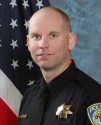
Detective Sergeant Tom Smith
Bay Area Rapid Transit Police Department, San Francisco-Oakland California
End of Watch: Tuesday, January 21, 2014
Age: 42
Tour: 20 years
Badge # 34
Incident Date: 1/21/2014

Detective Sergeant Tommy Smith was accidentally shot and killed by another officer while conducting a probation check and warrant service at an apartment on Dougherty Road, in Dublin, at approximately 1:00 pm. The subject they were searching for was wanted for several robberies on BART property.

The officers conducting the check had made a force entry into the apartment when a round was discharged, striking Sergeant Smith. He was transported to Eden Medical Center where he succumbed to the wound.

The subject wanted in the initial search had already been taken into custody by another agency prior to the start of the search.

Sergeant Smith had served with the BART Police Department for 20 years. He is survived by his wife, who also serves with the department, and his 6-year-old daughter.
Rest in Peace Bro…We Got The Watch

Day is done, Gone the sun, From the lake, From the hills, From the sky. All is well, Safely rest, God is nigh. 

K9 Down


K9 Max
Miami Gardens Florida Police Department
End of Watch: Friday, September 13, 2013
Gender: M
Incident Date: 9/12/2013

K9 Max died following complications during surgery for a duty related injury the previous night.

K9 Max and his handler had responded to a burglary in progress on NW 176th Terrace in which multiple suspects were believed to be inside of a residence. Max's handler deployed him through a jalousie window that appeared to provide access into the home. One of the glass panels in the window came loose and severely lacerated one of Max's ears.

He was transported to Hollywood Animal Hospital where he underwent emergency surgery to repair the damage. During the surgery he suffered a medical emergency and died.

K9 Max had served as a certified apprehension and explosive ordinance detection canine for four years.
Rest in Peace Max…and enjoy running the green grass of Heaven!

In Memory of all Police Dogs

They handled themselves with beauty & grace
And who could ever forget that beautiful face
Whether at work; or at home; whatever the test
They always worked hard; and did their best

They were real champions; at work or at play
But their lives were cut short; suddenly one day
While working on the job with their partner one day
They put themselves out on a limb; out into harms way

They gave the ultimate sacrifice; any dog can give
They gave up their life; so someone could live
The best of their breed; as his partner and anyone would say
Many hearts are now broken; that he had to prove it this way

Now as the trees are blowing in the gentle breeze
The sun is shining; thru the leaves on the trees
The meadows are green; and the grass grows tall
Off in the distance they can see a waterfall

As they look over the falls; down through the creek
The water flows gently; as a rabbit sneaks a peek
Far up above; in the deep blue sky
They see the birds soar high; as they fly by

They see animals playing; at the bridge by a waterfall
Chasing each other; and just having a ball
They play all day; from morning to night
There's no more rain; just warm sunlight

Off in the distance; they hear trumpets blow
Then all the animals look up; and notice a bright glow
The harps would play and the angels would sing
As they know they've come home; they've earned their wings

We remember that they died; in the line of duty
And are now with the Lord; sharing in heaven's beauty
Off to the meadows now; where they can play and roam free
With an occasional rest stop; under a tall oak tree

No more bad guys to chase; or bullets to take
Just a run through the meadow; down to the lake
A quick splash in the water; then back to the shore
Then it's off to the forest; to go play some more

These special dogs are back home; up in heaven above
They're cradled in God's arm's; and covered with His love
We'll light a candle for all of them; in the dark of night
In loving memory of all; these very special knights

By John Quealy

Wednesday, February 5, 2014

Active Shooter Video...

Police shootouts are often one of the more misunderstood parts of the job. But look at this video from Albuquerque PD from last fall. Awesome job by Albuquerque's finest. And thankfully no trial is needed for the waste of sperm.


Video: Pursuit, shooting of 'cop killer' captured on body cam

ALBUQUERQUE, N.M. — A man who shot four law enforcement officers and led scores more on a sprawling police chase through Albuquerque in late October was shot eight times, including four times in the neck and once through his scalp, according to the autopsy report released Tuesday.

Also Tuesday, the department released videos from officers involved in the chase, with sometimes graphic images of the officers as they were shot.

On the morning of Oct. 26, Christopher Chase, 35, dressed in body armor and camouflage and wielding an assault rifle, told witnesses in Southeast Albuquerque to call police and that he was waiting for them. He then fired upon an officer and managed to steal the officer's police cruiser, beginning a 16-mile police pursuit that eventually ended when Chase crumpled in the cruiser against a gas pump at Fourth and Montano NW — all amid gunfire from multiple officers.

Chase had shot three Albuquerque police officers, who received minor injuries, and one Bernalillo County sheriff's deputy, Robin Hopkins, who is undergoing a lengthy recovery for a shattered femur...

...The several hours of video from officers' lapel cameras show a chaotic scene, with at least three dozen shots fired at Fourth and Montano at the end of the chase. Officers can be heard shouting expletives and instructions to each other as they try and comprehend the fast-moving situation. One video shows APD officer Daniel Morales as he gets shot in the leg, and another shows officers discussing how Chase had "half his head blown off" after the dust had settled.

A gruesome shot shows a bloody Chase slumped over the steering wheel, blood splattered over the interior of the car.

Officers can be seen running from vandalism and breaking-and-entering calls all over the city in response to a "shots fired" call blasted over their radios. Adding to the complication was an incorrect address that dispatchers could be heard repeating several times throughout the chase.

Interim Police Chief Allen Banks said a witness told 911 dispatchers that Chase was waiting to ambush officers at Broadway and Cesar Chavez. In fact, Chase was waiting at Broadway and Iron, catching the first responding officer off guard....

...The autopsy report showed Chase had three gunshot wounds on his neck near his sternum and another from a bullet that entered near the back of his head. Also, a bullet entered Chase's upper back, and he had two more gunshot wounds to his left arm. Chase also had a gunshot wound on his scalp, a "gaping" laceration that measured 6 inches long and 4 inches at its widest point, according to the autopsy.

Chase, who had "Cop killer" tattooed across his knuckles, had no drugs in his system, the OMI found. The investigator tested for marijuana, methamphetamines, cocaine and opiates.

Investigators also did not appear to find anything else irregular about Chase physically. All indicators, from the surface of his diaphragm to cardiovascular system, appeared normal, according to the report.

Investigators commented several times throughout the 27-page report that Chase's brain was "extensively lacerated" from at least two of the shots, preventing them from tracing the trajectories of individual bullets.

In addition to the gunshot wounds, Chase also sustained blunt-force injuries to his head and upper left arm, the report found....

Emphasis on the fact Chase fired on the officers sooner than they likely suspected. And see how much chasos there was in the firefight.

Awesome job handlling this POS Albuquerque PD. Hope the officers are back on their feet soon.

Another case of "Why am I not surprised!"

When I was an Army lieutenant one of the duties I had was to change combinations and supervise safes. I thought it was really cool but the combination parameters were simple. Well simple and useful would never last.

Fast forward to the mid 90s we start using computers and we had to produce our own password. Simple. Again, that can't last.

Since the early 2000s we had to have a ten digit password, at least two upper case letters, at least two lower case and at least two special characters. At first they only had to be changed yearly....then bi-annually...it was quarterly when I left in 2010.

The department requires a similar password and it's changed quarterly. And that is for access to department information. If I want Texas or national criminal information, I need another password and a case number. Just so I can see if this drunk is wanted is Louisiana.

Now the people who handle our nuclear power secrets or protect us from terrorist....
The Incredibly Dumb Way the Government Is Guarding Top-Secret Data

Some of the federal government's most sensitive data are protected by passwords that wouldn't pass muster for even the most basic civilian email account, according to a new congressional report.

Passwords like "password," "qwerty," and users' names have left Homeland Security Department data vulnerable, says a report released Tuesday by the Republican staff of the Senate Homeland Security and Governmental Affairs Committee.

And the password fiasco, the report says, is only the tip of the iceberg—plenty of other agencies have lost sensitive data as well.

The Nuclear Regulatory Commission left nuclear-plant security details on a shared drive with no protection. Hackers swiped Information on the nation's dams—including their weaknesses and catastrophic potential if breached—from an Army Corps of Engineers database.

All that's too much for Sen. Tom Coburn of Oklahoma, the panel's top Republican. "Weaknesses in the federal government's own cybersecurity have put at risk the electrical grid, our financial markets, our emergency-response systems, and our citizens' personal information," he said.

So far, the security failings have been more comedic than catastrophic (in one instance, hackers used the Emergency Broadcast System to warn TV viewers of a zombie outbreak). But the report warned we may not be so lucky in the future—and the problem appears to be widespread:

In addition, hackers have penetrated, taken control of, caused damage to, and/or stolen sensitive personal and official information from computer systems at the Departments of Homeland Security, Justice, Defense, State, Labor, Energy, and Commerce; NASA; the Environmental Protection Agency; the Office of Personnel Management; the Federal Reserve; the Commodity Futures Trading Commission; the Food and Drug Administration; the U.S. Copyright Office; and the National Weather Service.

"These are just hacks whose details became known to the public," the report added.

At the Nuclear Regulatory Commission—responsible for safeguarding the nation's nuclear plants—faith in IT is so bad that employees have started buying their own computers and setting up separate networks, which creates a whole new series of security concerns.

Things aren't much better at the Department of Homeland Security. "To take just one example, weaknesses found in the office of the Chief Information Officer for ICE included 10 passwords written down, 15 FOUO (For Official Use Only) documents left out, three keys, six unlocked laptops—even two credit cards left out," the report stated.

NRC spokesman Eliot Brenner said many of that agency's safety issues have already been addressed. All 44 security recommendations in reports cited by the committee have been closed or resolved pending final implementation, he said. "The NRC takes information security very seriously and works continuously toward improvements," Brenner said.

I was speaking with a friend, a Texas National Guard officer on how we both served time with federal law enforcement. He told me "Mike, before that I thought feds were at another level. Then I worked with them and that was an eyeopener."

I would laugh, but this is serious. And with the current administration and the current leadership in the Congress, this won't be improved.

Pocket Carry....

Interesting ready from caring in your pocket. My next toy will probably be a 357 snub nose and I gotta get a holster for it.
3 considerations for pocket carry

Earlier this month, my good friend and PoliceOne Colleague Lindsey Bertomen and I had the distinct pleasure spending a full morning at Media Day at the Range — the semi-official opening of SHOT Show 2014 — at the Boulder City (Nev.) Rifle and Pistol Club. We then spent our afternoon at the Clark County (Nev.) Shooting Complex, attending an invitation-only event hosted by Sig Sauer at which a dozen or more Sig specimens were available for testing.

Make repetitions from the pocket a training priority. In the image above I demonstrate with an old Kel-Tec Blue Gun I had in a drawer in my office...

...During our day of “work” we were given the opportunity to shoot three excellent “micro-sized” handguns: the Beretta Pico, the Glock 42, and the Sig Sauer P290RS. I encourage you to check out Lindsey’s outstanding article in which he shares his thoughts on all three pistols.

Here, I want to share three quick thoughts to keep in mind if you elect to purchase and carry one of these excellent “pocket guns” — whether that be as an on-duty backup gun or an off-duty concealed carry gun.

I will say this again in the close, but let me be clear right up front: This list is just the beginning. It’s intended entirely as the starting point.

That disclaimer dutifully disseminated, here are my “3 Ds” of pocket carry.

1.) Designate that pocket your pocket-gun pocket. Into your chosen pocket goes nothing but your gun (and its holster, because that’s how you should be carrying). No combs, coins, cards, or cash. Nor should you discard there any other “pocket litter” like chewing gum wrappers or retail receipts.

2.) Do regular pocket maintenance. I was speaking about pocket guns with a buddy of mine recently and he gave me some awesome advice — which he had been given someone else at an earlier date. Once a week (at least) turn the carry pocket inside out and vacuum it. No lint, dirt, or other detritus allowed!

3.) Decide to make repetitions from the pocket a training priority. This should go without saying, but use a cleared weapon in a safe environment and practice. Take into account different types of clothing that may be worn during different seasons and incorporate that into your practice sessions.

K9 Down


K9 Kali
Peru Illinois Police Department
End of Watch: Saturday, August 3, 2013
Breed: Belgian Malinois
Gender: M

K9 Kali was killed in an automobile crash, at the intersection of Route 251 and 36th Street, as his handler responded to an armed robbery call at a mobile phone store.

As the patrol car proceeded through a red light vehicle on 36th Street struck it broadside. K9 Kali was ejected from the vehicle and died approximately one hour later an emergency animal hospital.

K9 Kali had served with the Peru Police Department for two years.
Rest in Peace Kali...and enjoy running the green grass of Heaven!

In Memory of all Police Dogs


They handled themselves with beauty & grace
And who could ever forget that beautiful face
Whether at work; or at home; whatever the test
They always worked hard; and did their best

They were real champions; at work or at play
But their lives were cut short; suddenly one day
While working on the job with their partner one day
They put themselves out on a limb; out into harms way

They gave the ultimate sacrifice; any dog can give
They gave up their life; so someone could live
The best of their breed; as his partner and anyone would say
Many hearts are now broken; that he had to prove it this way

Now as the trees are blowing in the gentle breeze
The sun is shining; thru the leaves on the trees
The meadows are green; and the grass grows tall
Off in the distance they can see a waterfall

As they look over the falls; down through the creek
The water flows gently; as a rabbit sneaks a peek
Far up above; in the deep blue sky
They see the birds soar high; as they fly by

They see animals playing; at the bridge by a waterfall
Chasing each other; and just having a ball
They play all day; from morning to night
There's no more rain; just warm sunlight

Off in the distance; they hear trumpets blow
Then all the animals look up; and notice a bright glow
The harps would play and the angels would sing
As they know they've come home; they've earned their wings

We remember that they died; in the line of duty
And are now with the Lord; sharing in heaven's beauty
Off to the meadows now; where they can play and roam free
With an occasional rest stop; under a tall oak tree

No more bad guys to chase; or bullets to take
Just a run through the meadow; down to the lake
A quick splash in the water; then back to the shore
Then it's off to the forest; to go play some more

These special dogs are back home; up in heaven above
They're cradled in God's arm's; and covered with His love
We'll light a candle for all of them; in the dark of night
In loving memory of all; these very special knights

By John Quealy

Officer Down


Agent Carlos Rivera-Vega
Puerto Rico Police Department
End of Watch: Tuesday, January 21, 2014
Age: 32
Tour: 14 years
Incident Date: 1/14/2014

Agent Carlos Rivera-Vega succumbed to gunshot wounds sustained seven days earlier in an unprovoked attack while conducting an investigation.

He and other members of the Mayagüez Drugs Division had gone to the Concordia Public Housing complex, in Mayagüez, during the course of the investigation. While they were on scene a resident walked up to them and began questioning the officers why they were at the complex. The man suddenly produced a .357 caliber handgun and opened fire, striking Agent Rivera-Vega in the abdomen two times.

The subject ran a short distance away and then committed suicide as other officers pursued him.

Agent Rivera-Vega was transported to Rio Piedras Medical Center where he remained until succumbing to his wounds.

Agent Rivera-Vega had served with the Puerto Rico Police Department for 14 years. He is survived by his three children.
Rest in Peace Bro…We Got The Watch

Day is done, Gone the sun, From the lake, From the hills, From the sky. All is well, Safely rest, God is nigh.