Police Work, Politics and World Affairs, Football and the ongoing search for great Scotch Whiskey!

Tuesday, December 2, 2014

Geopolitical Weekly: Taking the Strategic Intelligence Model to Moscow, December 2, 2014

By George Friedman

I am going to visit Moscow next week. I was invited by the Moscow State Institute of International Relations to speak on strategic analysis, their term for what Stratfor calls strategic forecasting. Going to Moscow would give me pause under any circumstances. I am a product of the Cold War, and for me, at some level, Moscow is the city of the enemy. For my father, that city was Berlin. For my daughter, it was Fallujah. In every war there is an enemy and a city that embodies that enemy. I have spent too much of my life fixated on Moscow to lose the ingrained sense that it is a city of darkness and conspiracy.

My children don't have that sense of Moscow, and it is fading in me as well, like memories of old loves. It's there, but it's not there. Certainly, we are not on the verge of nuclear war, nor are we expecting Soviet divisions to pour into West Germany. But it is interesting to me that those I mentioned this trip to — people who are aware that I am constantly traveling and discussing such matters — have expressed concern for my safety. Some have asked whether I was afraid of being arrested or afraid for my life. Stratfor's security director even took a half hour of my time to remind me of the potential dangers. We both are of an age to have enjoyed the conversation mightily.

The events in Ukraine are not a surprise to us, and our readers know that we have covered them carefully. But the distance between then and now is as important as the conflict itself. There must be a sense of proportion. If I were to identify the major difference, it would be this: In the Soviet Union prior to 1980, there was an overarching ideology. Over time, people became cynical about it, but for a long time, it was either believed or feared. Today's Russia is many things, but it is not ideological. It is nationalist (what we call patriotic in other countries), it is an oligarchy, it is corrupt, it is authoritarian — but it is not a place of deeply held beliefs, or at least not a place of a single belief. The Soviet Union once thought of itself as the vanguard of humanity, giving it a strength and will that was daunting. Russia no longer has any such pretensions. It is simply another country. It makes no claims for more.

There are causes for conflict other than ideology. The United States has an interest in preventing the emergence of a new European hegemon. The Russians must maintain the buffers that sapped the strength of Napoleon and Hitler. Neither interest is frivolous, and it is difficult to imagine how both can be satisfied. Therefore, there is a divergence of interests between the United States and Russia, complicated by the European Peninsula's myriad nations. That this had to play out was inevitable. As the Europeans weakened, Russia strengthened relative to them. When Ukraine reversed its orientation from Russia to the West, Russia had to react. As Russia reacted, the United States had to react. Each side can portray the other as a monster, but neither is monstrous. Each simply behaves as it is forced to under circumstances.

That is the entire point of strategic forecasting and analysis. It does not depend on hidden secrets but on impersonal forces. It depends on things hidden in clear sight. The current dispute over Ukraine is an example. The Russians have an interest in Ukraine's fate, fair or unfair to Ukraine. So do the Americans. Several years ago I wrote about this crisis because it did not depend on policies but instead on the impersonal forces that shape national interest. Robert D. Kaplan has written on the realist view of foreign policy. I disagree in this sense: For me, realism is not a policy. It is a standpoint from which to observe the unfolding of reality. The subjective views of policymakers matter little. They are trapped in events. Regardless of what U.S. President Barack Obama wanted to do in the Middle East, ultimately predictable events have trapped him against his will. It is interesting to watch him try to resist the reality he finds himself in. There is little chance.

This is why I am going to Moscow. I want to talk to Russians who are looking at the world through a prism similar to my own and compare notes on how we see the world. We will be looking at the same realities using what I suspect are similar methods and will see how our visions differ. This is not a game of secrets. At this level, it matters little what Obama wants or what Russian President Vladimir Putin thinks. It is about forces far larger than individuals. I will tell them the following. I wonder what they will tell me.

The Nature of Strategic Forecasting

Strategic forecasting is that class of intelligence that is most alien to intelligence services: events that cannot be understood through sources and whose outcome was unintended and unanticipated by the actors involved. In addition, it does not enable decision-makers to decide whether the events will happen, but it lets them prepare for broad shifts. For most political leaders, immediate issues subject to control are more attractive, while strategic issues, which after all may be in error, require enormous effort with political costs. Careers in intelligence are not enhanced by broad and long-term thinking, even if completely correct. Given the frequent and radical shifts in history that challenge conventional thought, many strategic forecasts appear preposterous to the intelligence consumer. In this sense, it is a form of intelligence best practiced outside of government and state intelligence services.

Strategic intelligence is not source-driven; it is model-driven. This is not to say that strategic intelligence doesn't depend on the inflow of information, but the level of information it requires is not necessarily information that is hard and dangerous to discover (although it could be, in some cases). Nor does it consist of massive collections. The entire principle of strategic intelligence is to ruthlessly discard the subcritical noise that is being collected in order to identify the center of gravity of events. A tiny hint may sometimes draw attention to a major process, particularly in military affairs. Finding that tiny hint, however, requires huge amounts of time and effort, and little time is left to understand the meaning. Moreover, in many cases, the process is in plain sight. The trick is to see it, and the even harder trick is to believe it.

We have a saying at Stratfor: Be stupid. By this we mean do not be so sophisticated that you do not see what is before your eyes, and do not value the secret that is obtained at great expense over facts that everyone knows but fails to understand. Excessive sophistication and excessive love of the secret will hide the strategic processes underway. Thus, for example, the fragmentation of the European Union, which is of great importance today, is based on the fact that the value of Germany's exports is equivalent to 50 percent of its gross domestic product. This is a fact that everyone knows, but few understand the implications, which are enormous. The sophisticated deal with levels of abstraction far beyond this simple fact. The truth lies in the open.

There are two foundations to the model. The first is that there is no distinction between economic, political, military and technological affairs. They are convenient ways to organize departments, but in reality, they are simply a different and linked dimension of the nation-state and related socio-political activities. The relative importance of each differs from time to time and from place to place, but they are always present and always interacting. Strategic intelligence must view things from an integrated standpoint.

Second, decision-makers are trapped by a matrix of forces that will break them unless accommodated. Successful decision-makers are those who understand the circumstances in which they find themselves. They make history, but not as Karl Marx put it, as they will. On the surface this is connected to a Marxist mode of thinking. In fact, Marx himself was not the originator of this idea. Adam Smith and his notion of the invisible hand, in which men pursue private interests and unintentionally increase the wealth of nations in the course of these activities, preceded Marx. Smith himself was beholden to Machiavelli, who argued that a prince cannot lift his eyes from war but must focus on the things he is forced to do by circumstance. The virtue of the prince rested in ruthlessly doing what he must, not in dreaming of power he didn't have. Strategic forecasting and Marxism have similar views only in that they both believe the foundation of political life is necessity.

Necessity is predictable, particularly if you are dealing with rational actors, and successful politicians are extremely rational within the space they occupy. The actions required to rise and lead a million people, let alone hundreds of millions, necessitate extraordinary discipline and instinct. Few humans can even begin the climb, and only the most disciplined achieve the heights. It is fashionable among journalists and academics to hold politicians in contempt. They lack the politicians' learning and cleverness. Thus, journalists mistake a radically different mindset and soul for inferiority. This satisfies their need to not feel inferior, but it does little to guide us. Obama and Putin have far more in common with each other than either has with their general publics. Each rose to power in his milieu, where almost no one else did.

If you watch a chess grandmaster play another, you will note that the game is rather predictable. Each understands fully the circumstance and knows that the apparent options are illusory. Each move is met with an expected countermove. On rare occasions, a brilliant player finds a variation. Most games end in predictable draws. A grandmaster is predictable in his game precisely because his understanding is so acute. An amateur is liable to do anything, but of course, the amateur never gets the opportunity to play at the grandmaster's board. The same is true of politicians. The careless and random can't be predicted, but neither do they survive. It is the gifted and disciplined who survive and who can therefore be predicted.

The Strategic Intelligence Model

The task of strategic intelligence is to build a model that takes into account the wide range of constraints that limit the choices of a leader, identifying the imperatives that he must pursue if he is to survive as a leader and if his country is to be safe. The obvious constraint and imperative is geography. Germany's location on the Northern European Plain and its ability to produce efficiently and dominate markets to the east and southeast create an imperative to export and to maintain political domination in its markets. This has been true since the unification of Germany in 1871. At the same time, given its location and lack of natural barriers, it is an inherently insecure country. It must maintain its export markets while politically or militarily securing its physical safety. This simplistic model allows us to predict a number of things regardless of who is chancellor. First, to avoid domestic disruption, Germany will export regardless of circumstances. Second, Berlin will shape the political environment to facilitate this. Third, it will try to avoid military confrontation. Fourth, in extreme circumstances, it must initiate conflict rather than wait for its enemies to do so.

This model, which I provide only for the sake of understanding the concepts I've laid out, begins with the internal political constraints on a German leader. It follows to the only effective solution: exports. It then shifts to other concerns triggered intermittently by German success. Chancellor Angela Merkel must maintain exports or face unemployment and political opposition. Germany must export in part to the European Union, so it has shaped the European Union to facilitate this trade. Simultaneously, it must protect its national security by posing no strategic threat to anyone. Other options, such as cutting exports, allowing the European Union to function under other rules or moving Germany from the North European Plain are not available to her. Therefore, certain policies are imposed upon her.

The model involves imperatives that must be fulfilled, constraints that shape the solutions and decision-makers who respect these terms, with the variables extended into multiple domains and interacting with similar models for other countries. To manage this, the broad outlines of behavior can only be modeled, and the data that is used cannot be excessively granular; otherwise, it would overwhelm the analyst and obscure the point, which is to understand the broad patterns that are emerging. Without the existence of a prior model that controls the selection and flow of intelligence, the system collapses under the weight of random information. It is important to bear in mind that no attempt is made to engage in a psychological model of the decision-maker. This is not only because such a model is impossible to create but also because the psychology of power and powerful leaders tends to make them more similar than different. A psychology of power in general is more useful than a psychology of the individuals. There are two keys to strategic forecasting. First, focus on the community, nation and state rather than individuals. Second, do not confuse the subjective intent of the individual leader with the outcome.

My hosts should be comfortable with this theme, for it has elements of Marxism in it. The two differences are my focus on the state instead of the class and the fact that I regard this as the human condition, permanent and not evolving toward any "new humanity." Ultimately I owe more to Adam Smith's invisible hand and to Machiavelli's description of the dilemma of the prince, who is powerful only so long as he exercises his power as necessity dictates. His power has little choice.

I will be looking forward to seeing how the Russians do strategic intelligence and how they see Ukraine. The board and the pieces are for anyone to see. Espionage undoubtedly has its uses, but not at this level and not in this game. I will report on what I find in Moscow.

Taking the Strategic Intelligence Model to Moscow is republished with permission of Stratfor.

Officer Down


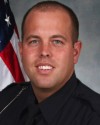
Sergeant Alejandro "Alex" Martinez
Willacy County Texas Sheriff's Office
End of Watch: Friday, November 21, 2014
Age: 52

Sergeant Alex Martinez was killed in a single vehicle crash near the intersection of FM 490 and FM 1425, southwest of Raymondville, at approximately 2:00 pm.

His Chevy Tahoe patrol vehicle overturned several times and came to rest in a nearby field. He suffered fatal injuries in the crash.

Sergeant Martinez had served with the Willacy County Sheriff's Office for 11 months. He had previously served with the Weslaco Police Department, Texas Department of Criminal Justice, and as the chief of the Raymondville Police Department.
Rest in Peace Bro…We Got The Watch

Nemo me impune lacessit

Day is done, Gone the sun, From the lake, From the hills, From the sky. All is well, Safely rest, God is nigh. 

Geopolitical Weekly: The Islamic State Reshapes the Middle East, November 25, 2014

By George Friedman

Nuclear talks with Iran have failed to yield an agreement, but the deadline for a deal has been extended without a hitch. What would have been a significant crisis a year ago, replete with threats and anxiety, has been handled without drama or difficulty. This new response to yet another failure to reach an accord marks a shift in the relationship between the United States and Iran, a shift that can’t be understood without first considering the massive geopolitical shifts that have taken place in the Middle East, redefining the urgency of the nuclear issue.

These shifts are rooted in the emergence of the Islamic State. Ideologically, there is little difference between the Islamic State and other radical Islamic jihadist movements. But in terms of geographical presence, the Islamic State has set itself apart from the rest. While al Qaeda might have longed to take control of a significant nation-state, it primarily remained a sparse, if widespread, terrorist organization. It held no significant territory permanently; it was a movement, not a place. But the Islamic State, as its name suggests, is different. It sees itself as the kernel from which a transnational Islamic state should grow, and it has established itself in Syria and Iraq as a geographical entity. The group controls a roughly defined region in the two countries, and it has something of a conventional military, designed to defend and expand the state’s control. Thus far, whatever advances and reversals it has seen, the Islamic State has retained this character. While the group certainly funnels a substantial portion of its power into dispersed guerrilla formations and retains a significant regional terrorist apparatus, it remains something rather new for the region — an Islamist movement acting as a regional state.

It is unclear whether the Islamic State can survive. It is under attack by American aircraft, and the United States is attempting to create a coalition force that will attack and conquer it. It is also unclear whether the group can expand. The Islamic State appears to have reached its limits in Kurdistan, and the Iraqi army (which was badly defeated in the first stage of the Islamic State's emergence) is showing some signs of being able to launch counteroffensives.

A New Territorial Threat

The Islamic State has created a vortex that has drawn in regional and global powers, redefining how they behave. The group's presence is both novel and impossible to ignore because it is a territorial entity. Nations have been forced to readjust their policies and relations with each other as a result. We see this inside of Syria and Iraq. Damascus and Baghdad are not the only ones that need to deal with the Islamic State; other regional powers — Turkey, Iran and Saudi Arabia chief among them — need to recalculate their positions as well. A terrorist organization can inflict pain and cause turmoil, but it survives by remaining dispersed. The Islamic State has a terrorism element, but it is also a concentrated force that could potentially expand its territory. The group behaves geopolitically, and as long as it survives it poses a geopolitical challenge.

Within Iraq and Syria, the Islamic State represents elements of the Sunni Arab population. It has imposed itself on the Sunni Arab regions of Iraq, and although resistance to Islamic State power certainly exists among Sunnis, some resistance to any emergent state is inevitable. The Islamic State has managed to cope with this resistance so far. But the group also has pressed against the boundaries of the Kurdish and Shiite regions, and it has sought to create a geographical link with its forces in Syria, changing Iraq's internal dynamic considerably. Where the Sunnis were once weak and dispersed, the Islamic State has now become a substantial force in the region north and west of Baghdad, posing a possible threat to Kurdish oil production and Iraqi governance. The group has had an even more complex effect in Syria, as it has weakened other groups resisting the government of Syrian President Bashar al Assad, thereby strengthening al Assad's position while increasing its own power. This dynamic illustrates the geopolitical complexity of the Islamic State's presence.

Countering with a Coalition

The United States withdrew from Iraq hoping that Baghdad, even if unable to govern its territory with a consistent level of authority, would nevertheless develop a balance of power in Iraq in which various degrees of autonomy, formal and informal, would be granted. It was an ambiguous goal, though not unattainable. But the emergence of the Islamic State upset the balance in Iraq dramatically, and initial weaknesses in Iraqi and Kurdish forces facing Islamic State fighters forced the United States to weigh the possibility of the group dominating large parts of Iraq and Syria. This situation posed a challenge that the United States could neither decline nor fully engage. Washington's solution was to send aircraft and minimal ground forces to attack the Islamic State, while seeking to build a regional coalition that would act.

Today, the key to this coalition is Turkey. Ankara has become a substantial regional power. It has the largest economy and military in the region, and it is the most vulnerable to events in Syria and Iraq, which run along Turkey's southern border. Ankara's strategy under President Recep Tayyip Erdogan has been to avoid conflicts with its neighbors, which it has been able to do successfully so far. The United States now wants Turkey to provide forces — particularly ground troops — to resist the Islamic State. Ankara has an interest in doing so, since Iraqi oil would help diversify its sources of energy and because it wants to keep the conflict from spilling into Turkey. The Turkish government has worked hard to keep the Syrian conflict outside its borders and to limit its own direct involvement in the civil war. Ankara also does not want the Islamic State to create pressure on Iraqi Kurds that could eventually spread to Turkish Kurds.

Turkey is in a difficult situation. If it intervenes against the Islamic State alongside the United States, its army will be tested in a way that it has not been tested since the Korean War, and the quality of its performance is uncertain. The risks are real, and victory is far from guaranteed. Turkey would be resuming the role it played in the Arab world during the Ottoman Empire, attempting to shape Arab politics in ways that it finds satisfactory. The United States did not do this well in Iraq, and there is no guarantee that Turkey would succeed either. In fact, Ankara could be drawn into a conflict with the Arab states from which it would not be able to withdraw as neatly as Washington did.

At the same time, instability to Turkey's south and the emergence of a new territorial power in Syria and Iraq represent fundamental threats to Ankara. There are claims that the Turks secretly support the Islamic State, but I doubt this greatly. The Turks may be favorably inclined toward other Islamist groups, but the Islamic State is both dangerous and likely to draw pressure from the United States against any of its supporters. Still, the Turks will not simply do America's bidding; Ankara has interests in Syria that do not mesh with those of the United States.

Turkey wants to see the al Assad regime toppled, but the United States is reluctant to do so for fear of opening the door to a Sunni jihadist regime (or at the very least, jihadist anarchy) that, with the Islamic State operational, would be impossible to shape. To some extent, the Turks are floating the al Assad issue as an excuse not to engage in the conflict. But Ankara wants al Assad gone and a pro-Turkey Sunni regime in his place. If the United States refuses to cede to this demand, Turkey has a basis for refusing to intervene; if the United States agrees, Turkey gets the outcome it wants in Syria, but at greater risk to Iraq. Thus the Islamic State has become the focal point of U.S.-Turkish ties, replacing prior issues such as Turkey's relationship with Israel.

Iran's Changing Regional Role

The emergence of the Islamic State has similarly redefined Iran's posture in the region. Tehran sees a pro-Iranian, Shiite-dominated regime in Baghdad as critical to its interests, just as it sees its domination of southern Iraq as crucial. Iran fought a war with a Sunni-dominated Iraq in the 1980s, with devastating casualties; avoiding another such war is fundamental to Iranian national security policy. From Tehran's point of view, the Islamic State has the ability to cripple the government in Baghdad and potentially unravel Iran’s position in Iraq. Though this is not the most likely outcome, it is a potential threat that Iran must counter.

Small Iranian formations have already formed in eastern Kurdistan, and Iranian personnel have piloted Iraqi aircraft in attacks on Islamic State positions. The mere possibility of the Islamic State dominating even parts of Iraq is unacceptable to Tehran, which aligns its interests with those of the United States. Both countries want the Islamic State broken. Both want the government in Baghdad to function. The Americans have no problem with Iran guaranteeing security in the south, and the Iranians have no objection to a pro-American Kurdistan so long as they continue to dominate southern oil flows.

Because of the Islamic State — as well as greater long-term trends — the United States and Iran have been drawn together by their common interests. There have been numerous reports of U.S.-Iranian military cooperation against the Islamic State, while the major issue dividing them (Iran's nuclear program) has been marginalized. Monday's announcement that no settlement had been reached in nuclear talks was followed by a calm extension of the deadline for agreement, and neither side threatened the other or gave any indication that the failure changed the general accommodation that has been reached. In our view, as we have always said, achieving a deliverable nuclear weapon is far more difficult than enriching uranium, and Iran is not an imminent nuclear power. That appears to have become the American position. Neither Washington nor Tehran wants to strain relations over the nuclear issue, which has been put on the back burner for now because of the Islamic State's rise.

This new entente between the United States and Iran naturally alarms Saudi Arabia, the third major power in the region if only for its wealth and ability to finance political movements. Riyadh sees Tehran as a rival in the Persian Gulf that could potentially destabilize Saudi Arabia via its Shiite population. The Saudis also see the United States as the ultimate guarantor of their national security, even though they have been acting without Washington's buy-in since the Arab Spring. Frightened by Iran’s warming relationship with the United States, Riyadh is also becoming increasingly concerned by America’s growing self-sufficiency in energy, which has dramatically reduced Saudi Arabia's political importance to the United States.

There has been speculation that the Islamic State is being funded by Arabian powers, but it would be irrational for Riyadh to be funding the group. The stronger the Islamic State is, the firmer the ties between the United States and Iran become. Washington cannot live with a transnational caliphate that might become regionally powerful someday. The more of a threat the Islamic State becomes, the more Iran and the United States need each other, which runs completely counter to the Saudis' security interests. Riyadh needs the tensions between the United States and Iran. Regardless of religious or ideological impulse, Tehran's alliance with Washington forms an overwhelming force that threatens the Saudi regime's survival. And the Islamic State has no love for the Saudi royal family. The caliphate can expand in Saudi Arabia's direction, too, and we've already seen grassroots activity related to the Islamic State taking place inside the kingdom. Riyadh has been engaged in Iraq, and it must now try to strengthen Sunni forces other than the Islamic State quickly, so that the forces pushing Washington and Tehran together subside.

America's Place at the Center of the Middle East

For Washington's part, the Islamic State has shown that the idea of the United States simply leaving the region is unrealistic. At the same time, the United States will not engage in multidivisional warfare in Iraq. Washington failed to achieve a pro-American stability there the first time; it is unlikely to achieve it this time. U.S. air power applies significant force against the Islamic State and is a token of America's power and presence — as well as its limits. The U.S. strategy of forming an alliance against the Islamic State is extremely complex, since the Turks do not want to be pulled into the fight without major concessions, the Iranians want reduced pressure on their nuclear programs in exchange for their help, and the Saudis are aware of the dangers posed by Iran.

What is noteworthy is the effect that the Islamic State has had on relationships in the region. The group's emergence has once again placed the United States at the center of the regional system, and it has forced the three major Middle Eastern powers to redefine their relations with Washington in various ways. It has also revived the deepest fears of Turkey, Iran and Saudi Arabia. Ankara wants to avoid being drawn back into the late Ottoman nightmare of controlling Arabs, while Iran has been forced to realign itself with the United States to resist the rise of a Sunni Iraq and Saudi Arabia, as the Shah once had to do. Meanwhile, the Islamic State has raised Saudi fears of U.S. abandonment in favor of Iran, and the United States' dread of re-engaging in Iraq has come to define all of its actions.

In the end, it is unlikely that the territorial Islamic State can survive. The truth is that Turkey, Iran and Saudi Arabia are all waiting for the United States to solve the Islamic State problem with air power and a few ground forces. These actions will not destroy the Islamic State, but they will break the group's territorial coherence and force it to return to guerrilla tactics and terrorism. Indeed, this is already happening. But the group's very existence, however temporary, has stunned the region into realizing that prior assumptions did not take into account current realities. Ankara will not be able to avoid increasing its involvement in the conflict; Tehran will have to live with the United States; and Riyadh will have to seriously consider its vulnerabilities. As for the United States, it can simply go home, even if the region is in chaos. But the others are already at home, and that is the point that the Islamic State has made abundantly clear.

The Islamic State Reshapes the Middle East is republished with permission of Stratfor.

Officer Down


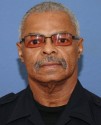
Sergeant Jeffrey Wayne Greene
Union County North Carolina Sheriff's Office
End of Watch: Wednesday, November 19, 2014
Age: 54
Tour: 10 years

Sergeant Jeffrey Greene was killed when his patrol car was crushed by a tractor trailer on U.S. 74 at Sutherland Avenue.

The tractor trailer overturned when it attempted to avoid rear-ending a tanker truck that was stopped at the light in the right travel lane. The tractor trailer struck another car and then landed on top of Sergeant Greene's patrol car while he was stopped in a turn lane, causing him to suffer fatal injuries.

The driver of the tractor trailer was transported to a local hospital and charged with misdemeanor death by vehicle.

Sergeant Greene was a veteran of both the U.S. Air Force and U.S. Marine Corps. He had served with the Union County Sheriff's Office for 10 years and is survived by his wife, two daughters, and five grandchildren.
Rest in Peace Bro…We Got The Watch

Nemo me impune lacessit

Day is done, Gone the sun, From the lake, From the hills, From the sky. All is well, Safely rest, God is nigh. 

Security Weekly: The Jihadist Threat Is Not Novel, Not New, November 27, 2014

By Scott Stewart

Last week I had the opportunity to attend the Overseas Security Advisory Council's annual briefing, which was attended by some 1,500 security managers from corporations, non-governmental organizations and academic institutions. The meetings are always a great chance to catch up with friends, colleagues, Stratfor customers and business contacts. But the briefing is more than just a chance to network and socialize; it is also an opportunity to listen and learn from an impressive lineup of prominent speakers.

One of the keynote speakers this year was Jeh Johnson, the U.S. Secretary of Homeland Security since December 2013. Johnson has had a long and distinguished career in government. He is also an engaging speaker and is obviously a very intelligent man. But during Johnson's presentation he made three assertions that I found quite shocking to hear from the secretary of the Department of Homeland Security, namely, that the threat of foreign jihadists returning from fighting overseas is new, that the threat posed by lone wolf extremists is new and that the extremist use of social media is relatively new.

I am not sure if these three assertions were merely a result of a speechwriter who was misled by bad analysis or by too much consumption of mainstream media, or if Johnson himself actually believes these things. However, in light of last week's column highlighting how important it is that security managers and government officials present a rational and honest assessment of threats, I feel compelled to take issue with these three claims.

Foreign Fighters

Certainly, the amount of press coverage given to the threat posed by jihadists returning from Syria and Iraq is unprecedented, but the actual threat posed by such individuals is far from new. As we noted in a Security Weekly on this last April, since 1979, tens of thousands of foreign fighters have received training at camps run by jihadists in places such as Pakistan, Afghanistan, Chechnya, Bosnia, Iraq, Somalia, Libya and Syria.

Indeed, when Johnson was an assistant U.S. attorney in New York's Southern District (1989-1991), that office was overseeing the investigation of a group of men involved with the Al Kifah Refugee Center in Brooklyn, aka the Brooklyn Jihadi Office. The Al Kifah Refugee Center has been linked to prominent jihadists such as Abdullah Azzam, Osama bin Laden and Sheikh Omar Abdel Rahman.

Al Kifah was established for the purpose of recruiting men and raising funds for jihad in Afghanistan and elsewhere. After a man associated with the center, El Sayyid Nosair, assassinated the founder of the Jewish Defense League in New York in November 1990, the FBI managed to insert an informant into the group. According to Willful Blindness, a book written by Assistant U.S. Attorney Andrew McCarthy, assistant U.S. attorneys from the Southern District of New York — Johnson's colleagues — oversaw the operation.

The operation to monitor the cell was dropped after the FBI's informant became difficult to control and the cell was judged not to pose a real threat. In hindsight, this assessment proved to be incorrect, and many men associated with Al Kifah were later convicted for participating in the 1993 World Trade Center bombing and for plotting to attack a number of other high-profile targets in New York. Other Afghan jihad veterans involved with the case, including Ali Mohammed and Wadih el-Hage, were later convicted for their participation in the bombing of two U.S. embassies in East Africa in 1998.

In the 13 years since the 9/11 attacks, there have been many plots in the United States and in Europe involving jihadists who fought or who were trained in camps overseas. A partial list of them includes:

Richard Reid, who failed to destroy American Airlines flight 63 over the Atlantic Ocean using a shoe bomb in December 2001.
Jose Padilla, who was arrested in Chicago in May 2002 and convicted for plotting terrorist attacks inside the United States.
Mohammad Sidique Khan and the three other suicide bombers, who attacked the London mass transportation system July 7, 2005.
Abdulhakim Mujahid Muhammad, also known as Carlos Bledsoe, who is serving a life sentence for shooting and killing one U.S. Army recruit and wounding another outside a U.S. Armed Forces recruiting center in Little Rock, Arkansas, in June 2009.
Daniel Boyd, who was arrested in August 2009 and who pled guilty to terrorism charges in September 2011.
Najibullah Zazi, who was arrested in September 2009 and who pled guilty of plotting to bomb the New York subway system.
Umar Farouk Abdulmutallab, who attempted and failed to destroy Northwest Airlines flight 253 over Detroit in December 2009.
Faisal Shahzad, who attempted and failed to detonate a car bomb in Times Square in May 2010.
But returning jihadists have been a problem outside of the United States and Europe, too. For decades now, Egyptian, Libyan and jihadists of other nationalities have fought abroad and sought to bring their fight home with them. High-profile figures such as Nasir al-Wahayshi, al Qaeda in the Arabian Peninsula's founder, and Mokhtar Belmokhtar, the founder of the group Al-Mourabitoun in the Sahel, also received training and combat experience in Afghanistan before returning to their home countries to lead jihadist groups.

In Asia, Indonesian jihadists, including Hambali and Dulmatin, and Filipino jihadists, including Abu Sayyaf's founder, Abdurajak Abubakar Janjalani, also received training and experience in Afghanistan and brought it home to wreak havoc in their home countries.

Clearly, returning jihadists are not a new threat by any means.

The Lone Wolf Threat

We did see a brief spike in lone wolf attacks in October following the Islamic State's plea for jihadists living in the West to undertake such attacks. However, as I discussed in the Oct. 20 Security Weekly, this type of leaderless resistance operational model is not new.

White supremacists and anarchists have been encouraging people to follow this strategy for decades now, as seen by famous lone wolf attackers such as Joseph Paul Franklin, Eric Rudolph and Ted Kaczynski.

Ideologues, such as Abu Musab al-Suri, have been promoting the leaderless resistance approach for jihadists living in the West since 2004. Al Qaeda in the Arabian Peninsula began promoting al-Suri's theories in 2009, most notably through the creation of Inspire magazine, and the al Qaeda core hopped on the leaderless resistance bandwagon in 2010.

The Role of Social Media

Jihadists have always used media to promote their cause. In the 1970s and 1980s they produced bulletins, magazines, and VHS and audio tapes to raise funds, draw people to their cause and convince them to migrate to fight jihad abroad.

Jihadists and other militant groups — including anarchists and white supremacists — were early adopters of the Internet. I have followed this progression since the early 1990s, and, by and large, militant groups have been slightly ahead of the rest of us when it comes to social media.

Jihadists were active on Internet Relay Chat boards in the mid-1990s and then in Usenet newsgroups in the late 1990s and early 2000s. They also became very active with websites such as azzam.com, which became one of the most popular jihadist web sites. Azzam.com was established in 1996 by Babar Ahmed, a British citizen of Pakistani descent, who traveled to fight jihad in Bosnia.

Azzam.com went offline in 2002 because of pressure following the 9/11 attacks, but the 9/11 attacks led to a veritable explosion of jihadist activity on the Internet. While many jihadists and jihadist cheerleaders started websites, others opted for Internet forums, rather than static websites that are easier to shut down. There are a wide variety of jihadist forums. Some are open to the public, others are password protected. Even today, these forums remain an important source of propaganda, networking, recruitment and radicalization.

In recent years, sites like Twitter, Facebook and Instagram have become more popular among jihadists, as they have with the rest of us. I do agree with Johnson that the Islamic State's use of social media is masterful and more sophisticated than that of groups in the past. However, the jihadists' use of social media is not new.

Why It Matters

Portraying a longtime issue as something new and daunting may be a way to excuse the inability of the government to stop lone attackers and grassroots jihadists, but in reality, the government's inability to abate these threats stems more from their nature and not their novelty. Indeed, the United States and Europe have lived with the threats of returning jihadists and lone wolf attackers for decades now, and while such operators have been able to conduct occasional attacks, their impact has been quite limited when considered as part of the big picture. This is not to downplay the individual tragedies that happen when such operatives are able to kill and injure people in their terrorist attacks, but, quite frankly, the casualties produced by these attacks are dwarfed by those caused by other things, including car accidents, natural disasters and even the seasonal flu.

Terrorism has been a part of life for decades now, and it will continue to be, but it does not have to be a source of paranoia, fear and dread. It must instead be kept in proper perspective, as should any other problem, so it may be responded to appropriately.

COPYRIGHT: STRATFOR.COM

Officer Down


Police Officer Justin Winebrenner
Akron Ohio Police Department
End of Watch: Sunday, November 16, 2014
Age: 32
Tour: 9 years
Badge # 360

Police Officer Justin Winebrenner was shot and killed while confronting an armed subject while off duty at approximately 2:00 am.

He and several friends were at a pub in the 1800 block of East Market Street when another patron became disorderly and was ejected from the business. The man returned a short time later and brandished a handgun at the staff and other customers. Staff member, who knew Officer Winebrenner was a police officer, alerted him to the situation. He and another off duty officer confronted the man, who then opened fire.

Officer Winebrenner was struck once in the chest and suffered a fatal wound while the other officer suffered a non-life threatening gunshot wound. Three citizens were also shot and wounded.

The subject, a convicted felon, fled the scene on foot. He was located and taken into custody by a canine unit approximately one mile away.

Officer Winebrenner had served with the Akron Police Department for seven years and had previously served with the Medina County Juvenile Detention Center for two years. He is survived by his 4-year-old daughter and fiancee.
Rest in Peace Bro…We Got The Watch

Nemo me impune lacessit

Day is done, Gone the sun, From the lake, From the hills, From the sky. All is well, Safely rest, God is nigh. 

An academic shows a truism...

Having the term doctorate means your are educated. It doesn't mean you are not a moron.

The professor Gregory Clark says the American Dream is dead and actually never existed. This stupidity makes me recall this statement:
An economist is someone who knows 100 ways to make love, but doesn't know any women.

Art Backward
Let's just hear the learned man's words.
UC Davis Economics Professor: There Is No American Dream

A UC Davis economics professor has determined there is no American Dream.

Gregory Clark is sharing his research as a hard truth with no hope—whether or not you can get ahead in America is as predictable as any formula.

In fact, he says, the formulas for social mobility in the United States show there’s nothing to dream about.

“America has no higher rate of social mobility than medieval England, Or pre-industrial Sweden,” he said. “That’s the most difficult part of talking about social mobility is because it is shattering people s dreams.”

Clark crunched the numbers in the U.S. from the past 100 years. His data shows the so-called American Dream—where hard work leads to more opportunities—is an illusion in the United States, and that social mobility here is no different than in the rest of the world.

“The status of your children, your grandchildren, your great grandchildren your great-great grandchildren will be quite closely related to your average status now,” he said....

...Clark has heard the naysayers before.

“My students always argue with me, but I think the thing they find very hard to accept, is the idea that much of their lives can be predicted from their lineage and their ancestry,” he said.

Stuck in a social status is no American Dream—Clark says it’s the American reality.

“The good news is that this is coming from an economist, because economists are used to being unpopular, and so we are the right people to bear this message that the world is a limiting place,” he said....

No Mr. Clark, you are unpopular because you're an idiot.

Sorry to tell you but you've been in the Ivory Tower for far too long and you may recall this saying, "There are lies, there are damnable lies and then there are statistics." Opportunity to advance is there but many people just don't like it when it's called hard work. Get a job, show you are good at it, get a better job, go forth. Sometimes there are things that hold you back, but often they are poor choices you make. Substance abuse, getting involved with the wrong significant other, not saving to get ready for the rough times. Also, opportunities may require you to move from your hometown and you're unwilling to do that. But that's life.

Professor, get your head out of the clouds and get a real job. You may be educated, but you're a moron and I doubt you could run the night shift at a McDonald's.

Sunday, November 30, 2014

Officer Down


Police Officer Ronald A. Leisure
United States Department of Veterans Affairs Police Services, U.S. Government
End of Watch: Friday, November 14, 2014
Age: 66
Tour: 15 years
Badge # 3622

Police Officer Ronald Leisure suffered a fatal heart attack while conducting a foot patrol of the VA Medical Center in Livermore, California, at approximately 11:15 am.

He was conducting checks of the large complex when he suddenly collapsed. Medical staff immediately initiated lifesaving measures but were unable to resuscitate him.

Officer Leisure was a U.S. Army veteran of the Vietnam War and had served with the Department of Veterans Affairs Police for 15 years. He is survived by an adult daughter.
Rest in Peace Bro…We Got The Watch

Nemo me impune lacessit

Day is done, Gone the sun, From the lake, From the hills, From the sky. All is well, Safely rest, God is nigh. 

Does this just smell bad? The thought police are at it again.

I have no idea who this man is and from the reading here, I doubt I would like to attend his "seminar". However, does that mean he can be banned from a nation because he is “not conducive to the public good...”
Man is first denied visa on grounds of sexism

Self-described ‘pickup artist’ banned entry into country amid outcry over teachings, techniques

LONDON — This week, Julien Blanc became possibly the first man denied a visa on grounds of sexism.

Blanc, a 25-year-old Californian, calls himself a “pickup artist.” His website promises men that he will “make girls beg to sleep with you,” and in expensive dating boot camps he shares tips about “gaming” and grabbing women, including casually pulling their heads toward the crotch...

...Amid an outcry over his abusive techniques, which some say verge on rape promotion, and an online petition with more than 150,000 signatures, the British government Wednesday barred Blanc from entering the country for a series of events scheduled here. Officials said people can be denied entry on the grounds that their presence is “not conducive to the public good,” a rare power usually reserved for far-right activists and terrorism suspects.

The decision by the British Home Office came after the Australian government withdrew Blanc’s visa last week and forced him to leave the country. Photos he shared on social media show him pretending to choke a series of women. Since then, women and men in several countries where he had scheduled events have started campaigns to deny him entry.

...The woman who began the petition against Blanc identified herself as Caroline Charles, a pseudonym she said she was using because of the vitriol often directed toward anti-sexism campaigners on Twitter.

“Julien Blanc dresses up his seminars as dating advice, which at best is disingenuous — he focuses on tricking women into having sex, in order to make money,” Charles said. “It is wrong on every level. It is promoting violence against women and girls, it takes advantage of men and it sends a message to survivors of sexual assault that they will not be listened to.”

Lynne Featherstone, Britain’s crime prevention minister, said she was “delighted” that Blanc was not coming to Britain.

Others had a different view. On Twitter, Jojo Moyes, a novelist, said, “Might have been more effective for women to buy up all the seats and just laugh at him.”

Distastful, over the top, absolutely. Illegal? No! There is nothing this man has done that is against the law.

Personally I'm am appalled the multimillionaire Mrs. Bill Clinton is paid $300, 000 for a speech and pictures, that is highway robbery. But I don't question to legally of this, just the judgement of UCLA is wasting a fortune. Now I'm just curious, will these groups scream about Bill Clinton visiting Great Britain? He has been chasing women for ages, sexual harassment is his trademark and he's been legitimately accused of rape. But we already know the thought police only go one way. I'm no fan of Michael Weiner, aka Michael Savage, but he's done nothing to justify his being blocked from visiting England.

How Great Britain has fallen. If the men who authored the Magna Carta could see what's become of their country they would be disgusted.

Officer Down


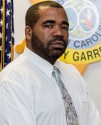
Investigator Holmes Smith
Clarendon County Sheriff's Department, South Carolina
End of Watch: Wednesday, November 5, 2014
Tour: 19 years

Investigator Holmes Smith was killed in a single vehicle crash on Sumter Highway, near I-95, in Alcolu at approximately 2:30 pm.

He was returning to Clarendon County after meeting with South Carolina Law Enforcement Division special agents in Sumter County as part of an auto theft investigation.

Investigator Holmes had served with the Clarendon County Sheriff's Department for 19 years. He is survived by his wife and five children.
Rest in Peace Bro…We Got The Watch

Day is done, Gone the sun, From the lake, From the hills, From the sky. All is well, Safely rest, God is nigh. 

Again, "National Service", forced volunteering, raises its ugly head

I served 23 years in the Army and Army Reserve and more than once I've discussed if we need to bring back the draft. Personally, barring World War III, I would never bring back a draft. I would rather have five men who volunteered for whatever reason (wanted to serve their country, needed to figure out what they wanted to do, wanted the college tuition assistance, etc) than ten who were counting down the days from the time they were forced in.

Now comes another liberal columnist, David Ignatius, saying what American needs is a form of involuntary servitude for it's young just as they are starting their lives.
The case for national service

At Thanksgiving, Americans think about the spirit of community that animates the country at its best. But in a year characterized by so much political and racial discord, you have to wonder whether the communal quilt is fraying at the edges.

Here’s an idea for reweaving our country’s fabric through a program of national service. This proposal was outlined by two Americans with very different backgrounds: Tom Brokaw, the former NBC News anchor, and Gen. Stanley McChrystal, the former commander of U.S. forces in Afghanistan. They’re joined by dozens of other advocates in an initiative called the Franklin Project at the Aspen Institute.

Brokaw, who was awarded the Medal of Freedom on Monday by President Obama, explored in his book “The Greatest Generation” the shared ideals that kept the country together during the Great Depression and World War II. He wrote recently, in promoting the national service idea: “For an emerging generation of Americans, now is an opportunity to renew and strengthen [our] tradition of rising to meet the challenges an unpredictable world places in its path.”

McChrystal has led U.S. men and women in the most demanding form of service — on the battlefield. In an article this summer for the journal Democracy, he argued: “What we need is to create a culture of service in America, one in which a year of service is culturally expected, if not quite mandatory by law.” He contended that making civic participation a rite of passage for young Americans could “mend an increasingly shorn society.”

The Franklin Project envisions a network that by 2023 would allow 1 million Americans between 18 and 28 to serve the country each year through the military or civilian programs such as Teach for America or the Peace Corps and eligible nonprofit organizations. Unlike a wartime draft, this program would rely on a cultural norm that service is expected.

McChrystal argues that a belief in service is already embedded in U.S. culture but that it isn’t mobilized. He refers to a 2010 Pew Research Center poll that reported that 57 percent of the millennial generation (those born after 1980) had done volunteer work in the previous 12 months.

Data from existing programs show a striking imbalance between the desire to serve and the opportunities to do so. McChrystal cites AmeriCorps, a program to encourage service in schools, nonprofits and other civic organizations. In 2011, it had 580,000 applications for about 80,000 slots, he writes. Similarly, Teach for America, a program to recruit teachers for schools in disadvantaged areas, had 48,000 applications for 5,200 openings in 2011.

To match demand and supply, the Franklin Project is creating a “service year exchange.” This online platform would match young people seeking service positions with qualified organizations. Opportunities would include nonprofits, schools and colleges, and state, local and national governments. The driving force for young people, McChrystal says, would be the expectation that spending a year helping others is part of American citizenship.

No, service should be voluntary. If you want to volunteer at a charity or other nonprofit, there are plenty of opportunities. Churches, homeless shelters, alcohol and drug abuse centers, reading assistance at low income area schools, libraries, hospitals. But the three agencies specifically mentioned, the military, the Peace Corps, Teach for American all have some sort of pay involved. It is simply nature, "I can volunteer to be a good guy or I can 'volunteer' for money? Let me think!"

More than that, I think trying to make a cultural norm of indentured servitude is just wrong. If you want to "serve" by volunteering, fine. You want to go into the military for a tour or two, great. If you want to get into college or work and start your life, excellent. But it is what you want to do. If you want to bring back another cultural norm, how about not having kids out of wedlock, delaying children till after school, raising your own kids,

Also, I find this curious, if not typical. Except for General McCrystal, I don't see anyone "serving" out of the group pushing this. I checked the Wikipedia biographies of Brokaw and David Ignatius and I don't see any "service" in their young days. Brokaw and Ignatius went to college and then started their careers. If that's good enough for them, I think it's good enough for me and my children.

Thursday, November 27, 2014

Lousy peeping tom! :<)


Sometimes I wonder if the writers at the Houston Chronicle are typing while intoxicated (TWI)

I was reviewing the morning Chronicle and on the top of the front page was this article on how the Texas Court of Criminal Appeals threw out mandatory DWI blood draws without a warrant. FYI, that is Texas' highest criminal court, the Texas Supreme Court handles civil actions. Now this is not surprising seeing the U. S. Supreme Court basically outlawed blood draws without a warrant last year. And the writers seems almost giddy about it. Then again the Chronicle is not a fan of local law enforcement. Here are the basics.
Court scraps DWI tool

Appeal likely on decision ousting ‘no refusal’ law to collect blood

By Lauren McGaughy and Mike Ward

AUSTIN — Texas’ controversial law allowing police to collect blood samples without warrants from drivers who refuse is unconstitutional, the Texas Court of Criminal Appeals ruled Wednesday.

While the 5-4 decision is expected to be appealed, it appears certain to impact so-called “no refusal” enforcement, including this Thanksgiving holiday weekend, when police collect blood samples from suspected drunken drivers at the scene or following transport to a nearby hospital.
Under the ruling, law enforcement officers would be required to obtain a search warrant before they force suspected motorists to submit to a test measuring their blood-alcohol content.

Many jurisdictions already have started doing that, making sure judges are present at arrest scenes to sign warrants. Some also use DWI enforcement vans where arrested drivers are taken, and where a judge is available to sign a warrant if a suspect refuses to agree to provide a sample.

The “no refusal” enforcement drives have been controversial for years, and the Legislature has revised the wording of the current law in an attempt to make it pass constitutional muster. In its decision, the Texas Court of Criminal Appeals said it did not.

“We hold that a nonconsensual search of a DWI suspect’s blood conducted pursuant to the mandatory-blood-draw and implied-consent provisions in the Transportation Code, when undertaken in the absence of a warrant or any applicable exception to the warrant requirement, violates the Fourth Amendment,” Judge Elsa Alcala wrote for the five majority opinion judges...

In Harris County, the ruling will have no impact because the district attorney’s office already seeks search warrants in all cases in which drunken driving suspects refuse a breath test or blood draw.

“We’ve already been doing what the court ruled on for the last 18 months,” said Alison Baimbridge, chief of the Harris County District Attorney’s Office Vehicular Crimes Section.

Earlier changes in law

Baimbridge said the office made changes to its policy after an April 2013 U.S. Supreme Court ruling that police generally must obtain a warrant before submitting a drunken-driving suspect to a blood test. However, the high court did not address states like Texas that have statutes that allow mandatory blood draws under certain circumstances. Baimbridge said the changes were made to ensure that evidence would be collected in such cases....
Now you can read the details of the case brought to the court if you will, but this is the part that makes me wonder if there is something in the coffee at the office.
...(defense attorney Fred) Jimenez said while he is pleased with the ruling, it does not mean police officers no will longer be able to take blood and breath samples against a DWI suspect’s will. They just need to ensure they have a warrant first...

I wonder how a cop forced a breath sample from a suspect before? A breathalyzer requires the suspect to blow into a tube for up to 10 seconds for a proper sample. If I ask a suspect for a breath sample and he refuses (aka "F%^& You!, I ain't doing it!) it's not like I can shove him to the ground, place the tube down his throat and compress the check to force air from the lungs. If there is a technique out there guys, please let me know. I would like to use it on the other suspects as they come in.

Sometimes you just have to wonder if they know what they are writing!

Happy Thanksgiving!

Monday, November 24, 2014

He was black?

Like many people I found out today the grand jury in the Ferguson MO shooting has reached a verdict. Now this is from the old town news radio station and I wonder if they are trying to show Louisiana English in a poor light.

Ferguson grand jury has reached decision; will announce tonight

The grand jury decision on whether or not to indict the white police officer who shot unarmed teen Michael Brown last summer will be announced Monday evening, CBS News has learned.

Michael Brown Sr., the teen's father, confirmed a decision had been reached to CBS News. However, Brown Sr. said he was not informed of what the decision will be.

The August 9 shooting death of 18-year-old Brown, who was black and unarmed, by Darren Wilson, a white police officer, unleashed a flurry of protests in Ferguson. The initial demonstrations triggered a forceful police response that drew criticism from both local residents and the governor of Missouri....

You know the rest. Now I love how this is phrased, "who was black". It implies he can change the color of his skin. Last time I saw that attempted it didn't come out well for Michael Jackson.

Hey, 870am, try "the unarmed black..." or "the black man who was unarmed..." Just suggesting.

Saturday, November 22, 2014

Security Weekly: The Danger of Security Theater, November 20, 2014

By Scott Stewart

I've often written about how terrorism is a type of macabre theater, or as early anarchist terrorists referred to it, the "propaganda of the deed." As I wrote in a previous Security Weekly, the intent of terrorist planners is to create hysteria that transcends the immediate impact of their attacks by drawing other people into the trauma of their attack as vicarious victims. The goal is to maximize the social and psychological impact of physical efforts.

But terrorism theater does not exist in a vacuum. It has a counterpart that lives alongside it and largely in response to it, in some ways exerting a Newtonian opposite and equal force in misleading the public. This force is, of course, security theater — theater that is intended to abate, rather than create, hysteria. But as the name suggests, this purportedly secure facade constructed of smoke and mirrors is no more universally effective than terrorism is universally dangerous. Both terrorist attacks and security measures are real, but neither is as significant or substantial as the public is led to believe.

Acting for the Sake of Acting

Now perhaps this topic is just coming to mind because I am traveling this week, and aviation security is one area in which security theater is perhaps the most readily apparent. Highly visible, knee-jerk security measures have been implemented to stop the methods and tactics used in previous attacks, but they have very little ability to stop any future attacks that use new techniques.

The Transportation Security Administration, for example, was created in the wake of 9/11 and charged with preventing similar attacks. Following the shoe bombing attempt in December 2001, aviation security authorities enacted measures requiring passengers to remove their shoes for screening. This change in procedure caused terrorist planners to switch to alternative methods of concealing explosives, such as liquids or underwear, to smuggle them onboard aircraft. Consequently, after the 2006 discovery of a plot to smuggle explosives disguised as liquids aboard aircraft, authorities limited the amount of liquids travelers could take in their carry-on luggage. Finally, in response to the failed attempt to detonate a bomb hidden in underwear in December 2009, the Transportation Security Administration began to employ full-body scanners at airports. Indeed, aviation security has a long history of being a reactionary arms race, and I see no end to this pattern.

In truth, there is only so much that aviation security authorities can do to prevent explosives from being brought onboard an aircraft so long as passengers and luggage are permitted onboard and attackers are willing to die. But because of the hysteria caused by incidents like the failed shoe and underwear bombings — and the economic implications of such panic — authorities feel compelled to do something to reassure and calm the traveling public, even if other smuggling tactics can circumvent those measures.

Creating the Illusion of Security

Security theater is not restricted to the domain of aviation security; it is much more widespread. The typical corporate office building, for example, is "secured" by access control devices, badge readers and closed-circuit television cameras. Such measures are highly visible and help prevent low-level intrusions, but they do very little to protect facilities from clever and sophisticated criminals, brute force attacks, or perhaps most significantly, insider threats. During my career I have seen many cases of expensive access control systems being rendered useless by people propping doors open with trash cans, failing to check the identifications of people tailgating in the door behind them, or simply refusing to lock doors for the sake of convenience. In many cases, the presence of access control devices and cameras can actually create a false sense of security, a psychological crutch that can be dangerous if people assume they are safe, fail to practice good situational awareness and even go into denial at the first sign of a criminal or terrorist attack, all because they don’t think such an attack could happen at their "secure" location. This attitude often proves fatal when it causes people to ignore warning signs or go into shock and freeze.

Training can also contribute to a false sense of security. Safety training can be extremely helpful and effective, but if it is not done correctly (or sufficiently) it can lead to overconfidence and dramatic failure. When I was in high school, a kid who had taken a few Kung Fu classes became unduly cocky and was taken out with one punch by an experienced street fighter. Throughout my career as a diplomatic security special agent and corporate security manager, I have encountered many people who have received a little training and have begun to think entirely too highly of their capabilities. Closely related are the security hucksters, or self-described "security experts" who heavily self-promote their expertise for financial gain. Yet despite the multitude of initials they like to include behind their names, these hucksters have little idea of what they are doing in the real world. Whenever I encounter such people, I think of that Kung Fu kid, and of how these poorly trained charlatans are setting themselves (and their clients) up for a similar type of spectacular failure.

Getting in Touch with Reality

So what, then, is the antidote for security theater? It starts with a sober assessment of the threats facing a person, company or agency. Can the threat be defeated, or is it something that can only be contained, avoided or abated? The next step is to share that rational assessment with the people you are seeking to protect. Education is an important element of effective security, and I have found that if security managers and government officials are open and honest with their people, and explain the threat they are trying to protect against in a candid and rational manner, most people will cooperate with security programs, especially if the programs are logical and designed to protect against the threat that has been defined. Yes, there will still be people who will buck any security system, but if security managers are able to get buy-in from most of the people they are protecting and establish a good security culture, then cooperative individuals will help provide positive peer pressure for any non-conformists.

Once security managers or agency directors have formed their rational assessments, they must implement security programs and measures that are balanced, sensible and cost-effective. Will your multimillion-dollar closed-circuit television system ever be able to prevent an attack or theft? Will it ever be able to help you recover enough stolen property to pay for itself? If not, you may need to rethink spending that much money for it.

Security professionals must understand that the people they are trying to keep safe are really the best line of defense against security threats of all kinds. The protected population has many more eyes than the security staff, even in companies that employ widespread video surveillance. If people are treated as adults and buy into security programs, they can become a critical part of the solution rather than the problem. When we expand this to a larger scale and incorporate individuals into the national security strategy — if you see something, say something — citizens can become highly effective grassroots defenders. This concept is becoming especially important as the terrorist threat becomes increasingly concentrated in the grassroots itself.

While the protected people in the office (or nation) can be a great security asset, they can also become cynical and jaded if they are alienated by security personnel. Nothing pushes people away faster than hyped-up, melodramatic security theater. By making theatrical and unreasonable security claims and demands, you can lose the trust and respect of the people you are trying to protect. And as a security professional, it is extremely hard to regain a person's — or a population's — trust and respect once you have lost it.

The Danger of Security Theater is republished with permission of Stratfor.


Officer Down


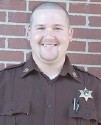
Deputy Sheriff Darrell Perritt
Maury County Tennessee Sheriff's Department
End of Watch: Tuesday, November 4, 2014
Age: 42
Tour: 2 years

Deputy Sheriff Darrell Perritt was killed in a vehicle crash while assisting another deputy who was in pursuit of a DUI suspect shortly after 3:00 am.

His patrol car left the roadway on Clara Mathis Road, near Blackburn Lane in Spring Hill, and and struck a tree on the driver's side. Deputy Perritt was killed instantly.

The driver continued to flee but crashed a short time later. She was flown to a hospital and subsequently charged with DUI and several other charges related to the accident and fleeing from law enforcement. She was not charged directly in connection with Deputy Perritt's death.

Deputy Perritt had served as a full time deputy with the Maury County Sheriff's Department for three months and had previously served as a reserve deputy for two years. He is survived by his wife and three children.
Rest in Peace Bro…We Got The Watch

Day is done, Gone the sun, From the lake, From the hills, From the sky. All is well, Safely rest, God is nigh. 

Geopolitical Weekly: On Obama and the Nature of Failed Presidencies, November 18, 2014

By George Friedman

We do not normally comment on domestic political affairs unless they affect international affairs. However, it is necessary to consider American political affairs because they are likely to have a particular effect on international relations. We have now entered the final phase of Barack Obama's presidency, and like those of several other presidents since World War II, it is ending in what we call a state of failure. This is not a judgment on his presidency so much as on the political configuration within it and surrounding it.

The midterm elections are over, and Congress and the president are in gridlock. This in itself is not significant; presidents as popular as Dwight Eisenhower found themselves in this condition. The problem occurs when there is not only an institutional split but also a shift in underlying public opinion against the president. There are many more sophisticated analyses of public opinion on politics, but I have found it useful to use this predictive model.

Analyzing a President's Strength

I assume that underneath all of the churning, about 40 percent of the electorate is committed to each party. Twenty percent is uncommitted, with half of those being indifferent to the outcome of politics and the other half being genuinely interested and undecided. In most normal conditions, the real battle between the parties — and by presidents — is to hold their own bases and take as much of the center as possible.

So long as a president is fighting for the center, his ability to govern remains intact. Thus, it is normal for a president to have a popularity rating that is less than 60 percent but more than 40 percent. When a president's popularity rating falls substantially below 40 percent and remains there for an extended period of time, the dynamics of politics shift. The president is no longer battling for the center but is fighting to hold on to his own supporters — and he is failing to do so.

When the president's support has fragmented to the point that he is fighting to recover his base, I considered that a failed presidency — particularly when Congress is in the hands of the opposition. His energy cannot be directed toward new initiatives. It is directed toward recovering his base. And presidents who have fallen into this condition near the end of their presidencies have not been likely to recover and regain the center.

Historically, when the president's popularity rating has dipped to about 37 percent, his position has been unrecoverable. This is what happened to George W. Bush in 2006. It happened to Richard Nixon in 1974 when the Watergate crisis resulted in his resignation, and to Lyndon Johnson in 1967 during the Vietnam War. It also happened to Harry Truman in 1951, primarily because of the Korean War, and to Herbert Hoover before World War II because of the Great Depression.

However, this is not the final historical note on a presidency. Truman, enormously unpopular and unable to run for another term, is now widely regarded as one of the finest presidents the United States has had. Nixon, on the other hand, has never recovered. This is not therefore a judgment on Obama's place in history, but simply on his current political condition. Nor does it take failure to lose the presidency; Jimmy Carter was defeated even though his popularity remained well in the 40s.

Obama's Presidency

Of the five failed presidencies I've cited, one failed over scandal, one over the economy and three over wars — Korea, Vietnam and Iraq. Obama's case is less clear than any. The 40 percent who gravitated to the opposition opposed him for a host of reasons. He lost the center for complex reasons as well. However, looking at the timing of his decline, the only intruding event that might have had that impact was the rise of the Islamic State and a sense, even in his own party, that he did not have an effective response to it. Historically, extended wars that the president did not appear to have a strategy for fighting have been devastating to the presidency. Woodrow Wilson's war (World War I) was short and successful. Franklin Roosevelt's war (World War II) was longer, and although it began in failure it became clear that a successful end was conceivable. The Korean, Vietnam and two Iraq wars suffered not from the length, but from the sense that the presidency did not have a war-ending strategy. Obama appears to me to have fallen into the political abyss because after six years he owned the war and appeared to have no grip on it.

Failure extends to domestic policy as well. The Republican-controlled legislature can pass whatever legislation it likes, but the president retains veto power, and two-thirds of both houses must vote to override. The problem is that given the president's lack of popularity — and the fact that the presidency, all of the House of Representatives and one-third of the Senate will be up for re-election in two years — the president's allies in Congress are not as willing to be held responsible for upholding his vetoes. Just as few Democrats wanted Obama campaigning for them, so too do few want to join the president in vetoing majority legislation. What broke Truman, Johnson and Nixon was the moment it became clear that their party's leaders in Congress wanted them gone.

Acting Within Constraints

This does not mean that the president can't act. It simply means that it is enormously more difficult to act than before. Gerald Ford, replacing Nixon but weakened by the pardoning of his predecessor, could not stop Congress from cutting off aid to South Vietnam during the final Communist assault. George W. Bush was able to launch the surge, but the surge was limited in size, not only because of strategic conditions but also because he had lost the ability to force Congress to fund alternative expansions of the war. In each of the failed presidencies, the president retained the ability to act but was constrained by the twin threats of an opposition-controlled Congress and his own party's unwillingness to align with him.

At the same time, certain foreign diplomatic initiatives can continue. Nixon initiated negotiations between Egypt and Israel that culminated, under Carter's administration, in the Camp David Accords. Truman tried to open negotiations with China, and the initiative's failure had little to do with opposition to a negotiated settlement in Korea.

The president has few domestic options. Whatever Obama does with his power domestically, Congress can vote to cut funding, and if the act is vetoed, the president puts Congressional Democrats in mortal danger. The place where he can act — and this is likely the place Obama is least comfortable acting — is in foreign policy. There, the limited deployment of troops and diplomatic initiatives are possible.

Obama's general strategy is to withdraw from existing conflicts in the Middle East and contain and limit Russian actions in Ukraine. The president has the ability to bring military and other pressure to bear. But the United States' opponent is aware that the sitting president is no longer in control of Washington, that he has a specific date of termination and that the more unpopular things he does, the more likely his successor is to repudiate them. Therefore, in the China-North Korea model, the assumption is that that continuing the conflict and negotiating with the successor president is rational. In the same sense, Iran chose to wait for the election of Ronald Reagan rather than deal with Jimmy Carter (who was not a failed president).

This model depends on the opponent's having the resources and the political will to continue the conflict in order to bargain with the president's successor, and assumes that the successor will be more malleable. This is frequently the result, since the successor can make concessions more readily than his predecessor. In fact, he can make those concessions and gain points by blaming the need to concede on his predecessor. Ironically, Obama used this strategy after replacing George W. Bush. The failed president frequently tries to entice negotiation by increasing the military pressure on the enemy. Truman, Johnson and George W. Bush all took this path while seeking to end their wars. In no case did it work, but they had little to lose politically by trying.

Therefore, if we follow historical patterns, Obama will now proceed slowly and ineffectively to increase military operations in Syria and Iraq, while raising non-military pressure on Russia, or potentially initiating some low-level military activities in Ukraine. The actions will be designed to achieve a rapid negotiating process that will not happen. The presidency will shift to the other party, as it did with Truman, Johnson and George W. Bush. Thus, if patterns hold true, the Republicans will retake the presidency. This is not a pattern unknown to Congress, which means that the Democrats in the legislature will focus on running their own campaigns as far away from Obama and the next Democratic presidential candidate as possible.

The period of a failed presidency is therefore not a quiet time. The president is actively trying to save his legacy in the face of enormous domestic weakness. Other countries, particularly adversaries, see little reason to make concessions to failed presidents, preferring to deal with the next president instead. These adversaries then use military and political oppositions abroad to help shape the next U.S. presidential campaign in directions that are in their interests.

It is against this backdrop that all domestic activities take place. The president retains the veto, and if the president is careful he will be able to sustain it. Obama will engage in limited domestic politics, under heavy pressure from Congressional Democrats, confining himself to one or two things. His major activity will be coping with Syria, Iraq and Russia, both because of crises and the desire for a legacy. The last two years of a failed presidency are mostly about foreign policy and are not very pleasant to watch.

On Obama and the Nature of Failed Presidencies is republished with permission of Stratfor.
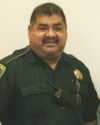
Again I ask, why? The latest and greatest, high speed rail between Houston and Dallas.

One of the causes that I've noticed over the he last decade or so it "We need high speed rail" in California, or between California and Las Vegas, etc. Now no one seems to ask "Is there a market for this?" Translation, if you build it, will they come?

The latest and greatest comes from my adopted home state of Texas. The usual suspects want to put in a rail from Houston to Dallas.
Proposed routes for Dallas-Houston high-speed rail revealed

Texans got their first glimpses Tuesday of the potential routes a proposed bullet train could take from Dallas to Houston.

The 240-mile project, which could be the first high-speed rail line in America, is expected to get people between the two cities in 90 minutes. If funding is secured and federal approval granted, the train could be running by 2021....

...That downtown station would make it easier for Texas Central to achieve a chief goal for the project: tying in to existing public transit at both end points. Dallas City Council members Lee Kleinman and Vonciel Jones Hill lobbied for Union Station to serve as the North Texas terminus. Union Station serves two Dallas Area Rapid Transit light-rail lines, an Amtrak line and the TRE passenger train that connects Dallas and Fort Worth.

“We want the train speeding to Union Station,” Hill said to applause at the meeting at the Dallas Infomart. A handful of residents later agreed in a public hearing.

The company is eyeing four general areas for the Houston station. One is downtown; the three others are northwest of the city center....

...Texas Central plans to build the project completely with private funds and has already begun soliciting investors. Although the company has not said how much the project will cost, estimates put the amount at about $10 billion.

The company has the power to use eminent domain for the project. The two routes selected for closer consideration largely follow existing rail lines or utility rights of way, which would minimize the need for land purchases or seizure.

The company estimates it needs only 3,000 acres between Dallas and Houston in addition to existing rights of way to build the 240-mile line.

Government officials estimate that the drive from Dallas to Houston, which now takes about four hours, could take six hours by 2035. They estimate the average speed on I-45 between the two cities will drop from 60 mph to 40 mph over that time.

A major contributor to the additional traffic is the expected population growth in both metropolitan areas.

“It’s going to be nearly doubling in both situations,” Jamie Maughan, an environmental analysis lead with the Federal Railroad Administration, said.

California is already building an 800-mile high-speed rail system. But that project has been bogged down with hometown feuds, lawsuits and political battles. Private investments involved with the Texas line could avoid the bureaucratic hurdles tied to public funds. And Texas’ rural and relatively flat terrain is easy to build on.

“We believe that high-speed rail is the biggest game changer in transportation since the federal highway system was established,” Hill said.

Ok, it's an interesting concept but again, if you build it, will people use it?

I recently read Nuts, a book written by the founders of Southwest Airlines. One of the points they made was they were not in competition with the big airlines, they were in competition with bus services and cars. We could let you fly from Dallas to Houston at 700am, have your meeting at 900am, get you back on the plane by 1100am and be back in Dallas for lunch. That is an issue now because in flying from those two cities you spend more time getting molested by TSA than you spend in the air. So again, we go back to high speed rail.

The distance from Houston to Dallas is around 240 miles. Assume you average 70 mph on I-45, that is around 3.5 hours. The planners state you will be riding the train for 90 minutes from one end to another. But does that factor in when TSA comes in and starts to molest your passengers for the privilege of getting on the train. From the New York Times of last year:
T.S.A. Expands Duties Beyond Airport Security

WASHINGTON — As hundreds of commuters emerged from Amtrak and commuter trains at Union Station on a recent morning, an armed squad of men and women dressed in bulletproof vests made their way through the crowds.

The squad was not with the Washington police department or Amtrak’s police force, but was one of the Transportation Security Administration’s Visible Intermodal Prevention and Response squads — VIPR teams for short — assigned to perform random security sweeps to prevent terrorist attacks at transportation hubs across the United States.

“The T.S.A., huh,” said Donald Neubauer of Greenville, Ohio, as he walked past the squad. “I thought they were just at the airports.”

With little fanfare, the agency best known for airport screenings has vastly expanded its reach to sporting events, music festivals, rodeos, highway weigh stations and train terminals. Not everyone is happy.

T.S.A. and local law enforcement officials say the teams are a critical component of the nation’s counterterrorism efforts, but some members of Congress, auditors at the Department of Homeland Security and civil liberties groups are sounding alarms. The teams are also raising hackles among passengers who call them unnecessary and intrusive...
So add on at least another half hour to the travel as you must go through being felt up by a unionized federal work force. Oh, and you will be paying for this. Remember, TSA surcharges on a ticket are not just for airlines. So that will increase the cost.

Now the target of this train appears to be business travelers needing to go to and from the two largest cities in Texas. But if the time required is adding up to the approximately 3.5 hours of drive time, the question again is will they bother. Or put another way, one of Houston's greatest growing suburbs in The Woodlands, approximately 30 miles north of the city. It is becoming a home mecca of many oil and high tech companies because Houston proper is being infested by liberals on the city council who love to manage Fortune 500 companies. If I live there and need to attend a meeting in Dallas at 900am, I can drive south into Houston during the early rush hour (say 45 minutes), get to the rail terminal and be molested by TSA (30 minutes), take the train (90 minutes), get off at a terminal in Dallas, take some form of transportation to get me to my destination (say 30 minutes) and then do the same in reverse. Just over three hours one way. Or I can leave The Woodlands at 500am, be in Dallas around 800am and when my meeting is over, drive straight back. The distance between The Woodlands and Dallas is 210 miles. Just over 3 hours driving.

Again, if this can be built by private funds only, God bless em. Lord knows it will be better handled than the multibillion dollar boondoggle in California. But again, I'm just curious, is there a market for this? If so, great, I wish them the best. But I just don't see it at this time.

Officer Down


Deputy Sheriff Matthew Chism
Cedar County Missouri Sheriff's Office
End of Watch: Sunday, November 2, 2014
Age: 25
Tour: 1 year, 10 months
Badge # 288

Deputy Sheriff Matthew Chism was shot and killed following a vehicle pursuit and foot chase in El Dorado Springs shortly after midnight.

He had attempted to stop a vehicle for driving with no headlights when the vehicle fled. The passenger bailed out of the vehicle in the area of Hickory Street and High Street, and Deputy Chism chased him on foot. A struggle ensued in which Deputy Chism and the subject were both shot. Deputy Chism was transported to a local hospital where he succumbed to his wounds. The subject was pronounced dead at the scene.

The driver of the vehicle was arrested at a nearby house a short time later.

Deputy Chism had served with the Cedar County Sheriff's Office for just under two years. He is survived by his wife and one small child.
Rest in Peace Bro…We Got The Watch

Day is done, Gone the sun, From the lake, From the hills, From the sky. All is well, Safely rest, God is nigh. 

Monday, November 17, 2014

Mr. Brady, it is the duty of a newspaper to comfort the afflicted and afflict the comfortable.

One of the greatest quotes from a classic American movie, Inherit the Wind. Back then journalist actually questioned authority. Don't see much of that these days. ANC/CBS/NBC/CNN/MSNBC/NYTIMES seems to want to take faxes of statemetns to publish and call that reporting. A recent exception to the rule was the late Robert Novak, known as one of the last gum shoe reporters. He would make anyone unconfortable when trying to make a story. Helps when you don't care if someone likes you. Too bad Cookie Roberts, F Chuck Todd, et all don't get that.

John Peter Zenger

William Cosby, England’s governor for the colony of New York, was a bully and a scoundrel. He tried to silence opponents, rig elections, and use his office to make himself rich. But Cosby had a problem: John Peter Zenger and his printing press.

Zenger, a German immigrant, began publishing his New York Weekly Journal in 1733, and he made it his business to publicize Cosby’s greed and arrogance. No other paper had been so bold.

Cosby reacted by sending his henchmen to seize and burn copies of the paper. Zenger went right on printing his Journal. On November 17, 1734, the governor tried to silence Zenger for good by having him arrested for seditious libel.

At Cosby’s request, bail was set much higher than Zenger could pay. For nearly nine months he sat in prison while his wife, Anna, helped publish the paper.

Finally Zenger got his day in court. But the governor’s handpicked judges disbarred his lawyers, leaving him without counsel. Andrew Hamilton, one of the finest attorneys in the colonies, rose from his sickbed in Philadelphia and journeyed to New York City to defend the printer.

The court all but ordered the jurors to find Zenger guilty of libel. Hamilton reminded them that the printer’s only crime was that he had dared to publish the truth. It did not take long for the jury to reach a decision. On August 4, 1735, it returned its verdict: not guilty.

The trial set a precedent for America’s world-famous freedom of the press. Journalists sometimes abuse that freedom in pursuit of their own agendas. Still, the First Amendment remains an American bedrock. As Zenger’s newspaper put it, “No nation ancient or modern has ever lost the liberty of freely speaking, writing or publishing their sentiments, but forthwith lost their liberty in general and became slaves.”
Again, would be nice if "journalists" would be more like this and less like Candy Crowley.  Governments at all levels abuse citizens, waste tax dollars, pad their friends and little is said about it. The Crowley's et all now see their job as comforting the comfortable.


Sunday, November 16, 2014

I'll say it, this is beyond the pale

And I'm not sure who is the bigger idiot, the DA and cop trying to get the warrant, or the judge who singed it.
In ‘sexting’ case Manassas City police want to photograph teen in sexually explicit manner, lawyers say

A Manassas City teenager accused of “sexting” a video to his girlfriend is now facing a search warrant in which Manassas City police and Prince William County prosecutors want to take a photo of his erect penis, possibly forcing the teen to become erect by taking him to a hospital and giving him an injection, the teen’s lawyers said. A Prince William County judge allowed the 17-year-old to leave the area without the warrant being served or the pictures being taken — yet.

The teen is facing two felony charges, for possession of child pornography and manufacturing child pornography, which could lead not only to incarceration until he’s 21, but inclusion on the state sex offender data base for, possibly, the rest of his life. David Culver of NBC Washington first reported the story and interviewed the teen’s guardian, his aunt, who was shocked at the lengths Prince William authorities were willing to go to make a sexting case in juvenile court....

...(Defense attorney Jessica Harbeson)Foster said the case began when the teen’s 15-year-old girlfriend sent photos of herself to the 17-year-old, who in turn sent her the video in question. The girl has not been charged, and her mother filed a complaint about the boy’s video, Foster said. The male teen was served with petitions from juvenile court in early February, and not arrested, but when the case went to trial in juvenile court in June, Foster said prosecutors forgot to certify that the teen was a juvenile. The case was dismissed, but police immediately obtained new charges and also a search warrant for his home. Police also arrested the teen and took him to juvenile jail, where Foster said they took photos of the teen’s genitals against his will.

The case was set for trial on July 1, where Foster said Assistant Commonwealth’s Attorney Claiborne Richardson told her that her client must either plead guilty or police would obtain another search warrant “for pictures of his erect penis,” for comparison to the evidence from the teen’s cell phone. Foster asked how that would be accomplished and was told that “we just take him down to the hospital, give him a shot and then take the pictures that we need.”

The teen declined to plead guilty. Foster said the prosecutor then requested a continuance so police could get a search warrant, which was granted by substitute Juvenile Court Judge Jan Roltsch-Anoll. Two days later, both sides were back in court. Foster had filed a motion to allow her client to travel out of state to visit family. Richardson wanted the teen to comply with the search warrant before he left. Juvenile Court Judge Lisa Baird declined to order that, and allowed the teen to leave the area. But he has another court date on July 15.

Despite the request by the prosecutor in court, Prince William County Commonwealth’s Attorney Paul B. Ebert said that police told him “these allegations [by the lawyers] lack credibility.” He said he would look into the matter further.

Carlos Flores Laboy, appointed the teen’s guardian ad litem in the case, said he thought it was just as illegal for the Manassas City police to create their own child pornography as to investigate the teen for it. “They’re using a statute that was designed to protect children from being exploited in a sexual manner,” Flores Laboy said, “to take a picture of this young man in a sexually explicit manner. The irony is incredible.” The guardian added, “As a parent myself, I was floored. It’s child abuse. We’re wasting thousands of dollars and resources and man hours on a sexting case. That’s what we’re doing.”

Foster said Detective Abbott told her that after obtaining photos of the teen’s erect penis he would “use special software to compare pictures of this penis to this penis. Who does this? It’s just crazy.”
I have gotten into arguments over the use of search warrants to obtain blood for DWI investigations and they are legitimate in my mind because they are demanding something in your body, based on probable cause. This is forcing a substance into a boy's body (the side effects of which are unknown), producing an erection and taking photo's. For the case of a high school boyfriend/girlfriend. Maybe if the parents would spend more time raising their kids (like telling the girl she really doesn't need to show herself on the video, because it can go on the Internet).

Good news. The warrant was not enforced. Some sanity came through. But IMHO, the judge needs to get head out of her ass. She had no business signing that paper.

Thank you Darren at RotLC for the link.

PS:  Rush Limbaugh said it best, demonstrate absurdity by being absurd.  Maybe they can make the ID like this.