Police Work, Politics and World Affairs, Football and the ongoing search for great Scotch Whiskey!

Wednesday, November 9, 2016

A Bright Future for Solar Power in the Middle East


Forecast

Geography and demographic challenges have made parts of the Middle East and North Africa a prime location for solar power installations.
While solar will not supplant the role of hydrocarbons, it will enable countries such as Morocco and Jordan to improve energy security and potentially become electricity exporters.

Countries such as Saudi Arabia and the United Arab Emirates will seek to maintain their position as energy exporters, in part by adopting strategies likely to include renewables development.

Analysis

Deserts are seemingly obvious places to locate solar technology. In fact, the swath of desert stretching from the Atlantic Ocean, across North Africa and the Arabian Peninsula, to the Persian Gulf has vast solar potential. But until recently it has not been economically feasible, or even necessary, to develop the renewable resource. In many areas, geographic constraints such as rough terrain have made solar projects impractical.

Only now has a combination of demographic pressure, low oil prices and technological readiness primed Middle Eastern and North African states for more investment in solar power. For countries such as Jordan and Morocco, renewable energy may offer a path toward greater energy independence. Others, such as Saudi Arabia and the United Arab Emirates, are interested in exporting renewable energy technology and financing solar projects abroad.

The steady price decline of solar power generation infrastructure, especially photovoltaic cells, is making the renewable option more viable for North African and Middle Eastern states, a region where the sun shines in abundance. Not only is the technology becoming more affordable, but operational costs after construction are also minimal when compared with hydrocarbon-based generation. As a result, several countries in the Middle East and North Africa are focusing on solar power as a means to satisfy rising electricity demand, make cuts to unsustainable government subsidy programs and reduce dependence on energy imports.


Solar will not replace hydrocarbons as the region's primary energy source, but where markets can meet national goals and strategies, it has the potential to help some countries diversify their power sources. Given the region's growing energy demand, interest and investment in solar generation there will increase in the near and medium term.

Jordan and Morocco: Energy Importers

Jordan, a relatively stable kingdom in a largely tumultuous region, is vulnerable to demographic challenges. The nation imports more than 95 percent of its energy at a cost of roughly 16 percent of its gross domestic product. Its energy dependence makes it somewhat vulnerable: In 2011 and 2012, disruptions in natural gas supplies from Egypt caused Jordan to deplete its energy reserves entirely. The problem arose again in 2013, when oil imports from Iraq were interrupted. Uncertain energy supplies have the potential to stoke unrest in the country, where energy costs are heavily subsidized by the monarchy. After all, an erratic domestic electricity supply has been among the main aggravators of social upheaval in nearby Lebanon, Iraq and Egypt. Jordan subsequently made efforts to diversify its sources of electricity by increasing solar capacity, and in recent years it added wind and nuclear generation. If Jordan is to meet its goal of relying on renewables for a full 20 percent of its generation capacity by 2018, solar will play a major role.

Numerous projects, large and small, are underway in Jordan, from installing solar panels on the rooftops of homes to building large solar parks with 200-megawatt capacities. Jordan has made the bidding process for renewable energy projects relatively easy, which has attracted companies from around the world. Jordan will be unable to reach its lofty goals on its own; public-private partnerships will be crucial to the growth of the renewable energy sector.

Much like Jordan, Morocco imports most of its energy — about 90 percent. The similarly stable nation is also looking to renewables, especially solar power, to increase energy security and lower energy costs. But Morocco is taking the idea a step further by building what will be the world's largest power plant using concentrated solar technology, which employs mirrors or lenses to focus sunlight that generates heat to power turbines. The first phase of the project, the Noor Solar Complex near the city of Ouarzazate, opened earlier this year. Morocco has set a lofty goal: to have renewables account for half its electricity production by 2025 (solar would satisfy about a third of the demand). The nation even aims to become an electricity exporter. Of course, the scale of its projects requires large tenders, requiring international investment and limiting the participation of domestic companies.

Morocco's burgeoning solar sector still faces some challenges, not least of which is the need for a reliable storage method, all the more important since sunlight is a naturally fluctuating power source. Still, with its geographic advantages and relative social stability, Morocco appears to be in prime position to exploit its solar power potential.

Egypt: Growing Demand

Egypt's political, security and financial institutions are not as stable as those of Morocco or Jordan, and in Egypt the threat of social unrest is more potent. But industry publications still tout the country as a potential hot spot for renewable energy investment. Egypt's massive population creates an enormous energy demand, which may strain the government's budget but also opens up opportunities to invest in technologies to meet the growing need.

Egypt's energy woes are not new. Production has steadily declined because of a lack of investment in domestic oil and natural gas operations. Meanwhile, domestic energy demand has risen. But President Abdel Fattah al-Sisi has implemented reforms that have attracted renewed investment to the natural gas sector, with projects such as Eni's Zohr natural gas field being fast-tracked.

Renewable energy will not necessarily meet all of the public's most urgent needs. Cooking fuel, for instance, has sometimes been in short supply, and solar power will not directly resolve that problem. Still, preventing summer brownouts (now all too common in Egypt) is a priority for the government, which has lost much of its popular support. Improved natural gas production can help provide a more consistent electricity supply, but with demand expected to climb, there is room for additional forms of power generation. Recent agreements signed with Japan and South Korea to develop solar power and associated projects indicate that Egypt is looking beyond traditional relationships to further the renewables energy sector, though both European and regional players such as Saudi Arabia and the United Arab Emirates are still active investors.

Saudi Arabia, UAE and Algeria: Exporters Remain Exporters

Saudi Arabia relies on oil for electricity production, and it faces rising domestic demand for electricity at a time when low oil prices have put significant financial strain on the government. Its domestic fuel consumption is following an unsustainable trend. Using over 3 million barrels of oil per day domestically, Saudi Arabia is already the largest global consumer of petroleum for power production. About a third of its daily oil consumption is used to fuel power plants. Without additional sources of generation to satisfy climbing electricity demand, the share of oil consumed by electricity generation would climb.

Although Saudi Arabia is gradually implementing subsidy reforms designed to reduce domestic energy demand, it still will develop energy alternatives, which is where solar power could come into play. Under current goals, renewables would account for 8 percent of electricity production by 2020 and 15 percent by 2030, with solar power accounting for the majority of that increase. In the past, however, Saudi Arabia has lengthened the timelines for such targets.

Yet Riyadh has made significant strides in exporting solar technology. Saudi company ACWA Power is involved in multiple projects in the region (Morocco and Jordan) and farther away (South Africa and Turkey). Saudi Arabian Oil Co., the national oil company, has even expressed interest in developing solar export capability. With plans to add solar technology production facilities, Riyadh could maintain its role as a regional solar exporter, especially as its domestic solar power sector continues to develop. ACWA Power has gained a regional reputation as having sufficient economies of scale to underbid other major solar power firms, mostly Western or East Asian companies. This helped ACWA Power win large bids such as the first phase of Morocco's Noor plant and the Mohammed bin Rashid solar park in the United Arab Emirates.

The United Arab Emirates, meanwhile, has positioned itself as a renewable energy financier and development hub. It is the home of the International Renewable Energy Agency, and it hosts important conferences focused on both renewable and nonrenewable energy. Furthermore, it has used its ample hydrocarbon largesse to develop unique large- and small-scale renewable projects in ways that less resource-rich countries such as Morocco, Jordan and Egypt cannot match. The United Arab Emirates has established itself as a regional leader in solar power in part because of its greater ability to adopt the technology (both domestically and through partnerships with other countries) and to fund projects throughout the world. Masdar, the country's renewable energy arm, is connected with the Mubadala Development Co., one of the country's smaller sovereign wealth funds. Masdar is involved in projects throughout the Middle East, Africa, South America and Europe and on islands in the Pacific.

Algeria, a leading natural gas producer, has ambitious plans to follow a similar path with solar energy. Renewable power installations totaling 22 gigawatts of capacity — 13 gigawatts of that solar — are proposed to go online by 2030. That is enough power to meet nearly a quarter of domestic needs while still reserving a significant portion for exports. But exporting renewable power will require substantial research and investment into solving the problem of insufficient energy storage, which is a barrier to incorporating large amounts of variable renewable power worldwide. Algeria will require foreign investment and cooperation to meet its grand plans. While Algeria is more stable than some of its neighbors, such as Libya, its government is in a slow leadership transition, and the risk of instability caused by protests relating to development and distribution of energy resources is high. Nonetheless, the country has made strides toward attracting the necessary investment to build out its solar capacity. With over 250 megawatts of capacity installed in 2015 and work occurring at additional sites in 2016, Algeria is moving toward its target of 15 percent of electricity being generated by solar by 2020.
Keeping Things in Perspective
Solar power's role in the region is poised to grow. The technology is nearing grid parity, the point at which it costs the same or less than the traditional technologies that feed the electrical grid. And solar's cost will likely come down even more. Until energy storage technology improves, however, incorporation of renewables into electricity grids will be somewhat constrained, especially for the full use of larger planned projects.

Although it will stay subordinate to hydrocarbons, solar is primed to become a more prominent part of the energy mix in the Middle East and North Africa. Its development offers investment opportunities that, while limited to well-capitalized entities, could eventually shift a portion of energy dependence in the region. In the shorter term, solar projects may actually create dependence on other countries for some nations, but they will also nurture the nascent renewable energy sectors in which domestic companies are eager to invest. In time, solar projects could help states diversify their sources of electrical power and become more energy independent.

A Bright Future for Solar Power in the Middle East is republished with permission of Stratfor.

Officer Down


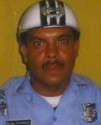
Agent Victor Rosado-Rosa
Puerto Rico Police Department, Puerto Rico
End of Watch: Wednesday, October 5, 2016
Age: 55
Tour: 23 years
Badge # 19392

Agent Victor Rosada-Rosa was killed when his police motorcycle was struck by another vehicle on PR-52 in Cayey, Puerto Rico, following a pursuit and traffic stop of a vehicle at approximately 7:30 pm.

Officers had pursued the vehicle in connection to a larceny that had occurred and were able to get it stopped on PR-52. Agent Rosada-Rosa had stopped traffic to assist with the investigation and to allow a tow truck to remove the the vehicle. As he and his partner began to leave the scene his motorcycle was struck from behind by another vehicle.

Agent Rosada-Rosa had served with the Puerto Rico Police Department for 23 years. He is survived by his wife and two sons.
Rest in Peace Bro…We Got The Watch

Nemo me impune lacessit

Day is done, Gone the sun, From the lake, From the hills, From the sky. All is well, Safely rest, God is nigh. 

Election Postmortem....

I just had a rather heated discussion with a very old friend of mine and I’m wondering if I need to send the cops for a welfare check. Yes, my friend was a very ardent supporter of Mrs Bill Clinton, is a supporter of B Hussein Obama and despises Trump.

When I said “I didn’t vote ‘for’ Trump, but ‘against’ Mrs Bill Clinton…” the answer was “you own it, live with it….”

So, to my liberal, regressive and yes, libtarted friends out there, my olive branch for what it’s worth.
1. We feel your pain.

2. In 2008 never did I believe this nation would elect an unqualified petulant man-child, and in 2012 reelect him. But seeing he really seems to enjoy, well, maybe too strong a word, is immune to the pain of the American people, especially seeing he’s inflicted a lot of it (see unemployment/underemployement, Obamacare, our nation being a laughing stock of the world) the voters said enough, we want “change,” so this is the only “hope” we have.

3. Think back to 24 hours ago and what you expected from the Republicans/conservatives/Trump supporters assuming that Mrs. Bill Clinton had won. Something like “She’s won, give her her initial chance…” or words to that effect. Is it too much to ask the same of you? Get off the floor and engage, obstruct if you will, but at least give him his 100 days.

4. Finally, to those of you hung over, ready to jump off the roof of a skyscraper, etc, remember this. This country was born from a rebellion against the greatest superpower on earth at the time. We’ve lived through a Civli War and Reconstruction, the Great Depression, World War II, Vietnam and B Hussein Obama. We will continue on. Get some coffee in you, go to work and try to improve your life. As I told my wife four years ago, life will go on.

Tuesday, November 8, 2016

Officer Down


Sergeant Steve Owen
Los Angeles County Sheriff's Department, California
End of Watch: Wednesday, October 5, 2016
Age: 53
Tour: 29 years

Sergeant Steve Owen was shot and killed after responding to a burglary in progress call in the 3200 block of West Avenue J-7 in Lancaster, California.

He was checking the rear of the apartment building when the subject emerged and shot him. The other deputy on scene heard the shooting and ran to the rear of the building, where he found Sergeant Owen wounded. As he rendered aid the suspect attempted to steal Sergeant Owen's patrol car, but but crashed into a second patrol car as the second deputy attempted to stop him.

The man then fled into a nearby home where he took two teenagers hostage for several hours. As a SWAT team entered the apartment the man fled but was quickly apprehended.

Sergeant Owen had served with the Los Angeles County Sheriff's Department for 29 years. He is survived by his wife and two children.
Rest in Peace Bro…We Got The Watch

Nemo me impune lacessit

Day is done, Gone the sun, From the lake, From the hills, From the sky. All is well, Safely rest, God is nigh. 

An excellent observation....


Why Russia Harasses U.S. Aircraft, April 20, 2016


Why Russia Harasses U.S. Aircraft
A Russian Su-24 jet makes a close-range and low-altitude pass near the USS Donald Cook in the Baltic Sea on April 12. Russia sometimes uses close interceptions to deter U.S. craft without sparking outright combat. (U.S. Navy)

Summary

Since Russia annexed Crimea in 2014, tension with the West has been high, affecting eastern Ukraine, Syria and hot spots across the former Soviet sphere. Less overtly, Moscow has been working to protect areas vital to Russian interests by raising the stakes of U.S. operations there. This has manifested in numerous aggressive interceptions of U.S. military aircraft in flight, especially over the Black and Baltic seas. The interceptions, which are reportedly occurring more frequently, aim to dissuade Washington from operating in that airspace.

Analysis

On April 14, a Russian Su-27 fighter jet performed a barrel roll maneuver over a U.S. Air Force RC-135 spy plane flying in international airspace over the Baltic Sea. Just three days earlier, two Russian Su-24 bombers flew dangerously and repeatedly close to a U.S. destroyer, also in the Baltic Sea. The most recent intercept came less than a week before the NATO-Russia Council is set to convene for the first time since 2014. Along with the fighting in Ukraine and Afghanistan, military transparency and risk reduction — timely and relevant topics given the interception incidents — will be up for discussion at the meeting.

Not all interceptions are aggressive. In fact, the tactic is standard practice among militaries, both in the air and at sea. Around the world, aircraft and ships from a multitude of countries routinely intercept, visually inspect and escort other aircraft and maritime vessels passing through sensitive airspace or waters. Air forces, navies and coast guards worldwide regularly perform intercepts of this kind to enforce an air defense identification zone such as that in the East China Sea, to police operations such as NATO's Baltic Air Policing mission or, as necessary, to conduct ad hoc tactics. In these capacities, interceptions are almost invariably non-threatening; they are simply a means by which nations enhance their situational awareness and protect against contingencies.

But some interceptions deviate from the norm. In a deliberate ploy to deter a nation's forces from transiting a specific space, aircraft or ships may display aggressive maneuvers, harassing and intimidating targets. These interceptions resemble a high-stakes game of chicken, daring the foreign craft to continue on its route, despite the increased risk of collision, or back down.

Though the tactic carries a risk of damage to both sides, the initiator holds the advantage. Usually in aerial interceptions, a sleek, fast fighter jet targets a lumbering bomber or reconnaissance plane. The initiator of the encounter is often far less valuable — in monetary cost and in the number of flight crew aboard — than the intercepted target, raising the stakes for leaders (and crew) as they decide how to respond. As a fighter jet carries out dangerous maneuvers around it, the target is left to wonder about the interceptor's intentions and skill.

For Russia, close interceptions offer a means to deter U.S. craft without sparking outright combat. The tactic has worked for Moscow already: In July 2014, a Russian jet's aggressive flight so alarmed the crew of a U.S. RC-135 over the Baltic Sea that it accidentally fled into Swedish airspace to evade the interceptor.

But close intercepts do not always go as planned. In the April 2001 Hainan Island incident, for example, a collision during a close intercept left a Chinese pilot dead, his J-8II interceptor destroyed and a U.S. EP-3E signals intelligence aircraft seriously damaged. A number of Cold War-era close intercepts also caused collisions, particularly between ships. This led to the 1972 U.S.-Soviet Incidents at Sea Agreement, which sought to reduce the chances of collision and manage escalation when collisions did occur. Further efforts to limit the risk of escalation produced the 2014 Code for Unplanned Encounters at Sea, which included Russia and China, as well as a 2014 agreement between the United States and China to regulate incidents between the two.

But the past few years have demonstrated that the agreements are not enough to stop such dangerous close encounters, at least not between the United States and Russia. And given the substantial tension between the two countries, a midair or at-sea collision resulting from a close interception could trigger retaliatory measures, leading to an escalation that neither side wants. Even so, as long as tension persists between Russia and the United States, the interceptions are likely to continue.

Why Russia Harasses U.S. Aircraft is republished with permission of Stratfor.

Between the Occasional Calms of Democracy, November 8, 2016

I've taken today off, I'm going to watch the madness of this election climax over whiskey and shrimp poboys. I've said more than once, I didn't vote "for" Trump but "against" Mrs. Bill Clinton. I did find it fascinating that the Clinton campaign cancelled their planned fireworks display over the Hudson River. STRATFOR has an interesting look at what the new president, whomever it is, will face. God help us all.

Between the Occasional Calms of Democracy

The American political circus is mercifully wrapping up, and a new president will soon occupy the most important role on the world stage. As much as the new president would love to hang a "Do Not Disturb" sign on America's door and focus on tackling domestic dysfunction, numerous conflicts beyond U.S. borders are shooting up flames that threaten to burn down the door if ignored.
To get a sense of just how daunting the foreign policy picture facing the next U.S. president is, consider the following conflicts converging in the months ahead.

The Post-Islamic State Scramble

The Islamic State will inevitably lose its claim to a caliphate in the Iraq-Syria battlespace as coalition forces steadily strip territory away from the apocalyptic jihadist group. This will deny its leadership space to operate, critical revenue and the ability to attract foreign recruits. But it is not without good reason that the territorial claims map attributed to this battlespace resembles a canvas by Jackson Pollock. The clamber to exploit post-Islamic State territories will be fierce. Once the common enemy is removed, the real scramble for revenge and power begins.
In Iraq, fractious Kurdish forces will butt heads with Baghdad as they try to formalize strategic territorial gains in northern Iraq, such as the oil-rich province of Kirkuk. Turkey and Iran will seek to play the role of sectarian protectors in the broader Sunni-Shiite competition in the region. A heavy sectarian agenda shaped by the Middle Eastern powers will diminish the credibility of Iraqi government structures, which could in turn preserve the root cause of the Sunni drift toward jihadism. Meanwhile, the erosion of the Islamic State core will encourage grassroots attacks abroad and provide an opportunity for other jihadist factions to assert themselves. Al Qaeda affiliates in the Arabian Peninsula, which have benefited greatly from the Saudi-led military campaign in Yemen, require especially close monitoring.

Debate in Washington over whether to extend the U.S. military campaign in Syria will be eclipsed by a much bigger dilemma. Turkey is in the process of anchoring itself in northern Syria and Iraq, hoping to wedge itself between aspiring Kurdish statelets while at the same time redrawing the Sunni sphere of influence in its favor. No amount of diplomacy will dissuade Ankara from pursuing its objectives across its former Ottoman territories. Still, Turkey must plan for heavy resistance from its old regional foes, Iran and Russia. For now, the Russians are working with Ankara to create strategic energy links into Europe and encouraging Turkish resistance to NATO proposals, such as building up forces in the Black Sea. But with Turkey moving forcefully ahead in Syria, and Russia still intent on using the Syrian conflict to goad the United States to the negotiating table, the possibility of a collision on this crowded battlefield cannot be discounted. And such a turn of events could draw the United States into a fight it has so desperately sought to avoid.

Unfinished Business

Russia has long sought to link the Ukrainian and Syrian conflict zones to draw the Americans and Europeans into some kind of grand bargain. Moscow reasons that if Russia could present itself as both a spoiler and a facilitator, the country would be able to reach an understanding with at least some Western parties on easing the pressure of sanctions. The Kremlin also seeks to place limits on NATO expansion in the former Soviet sphere. But unfortunately for Moscow, the plan has not gone as predicted. Russia is much more convincing as an obstacle-maker than as a peacemaker in these complex conflict zones. So long as Russian negotiators feel they are not making progress with their Western counterparts, the establishment will increasingly revert to obstructionism to stymie perceived threats from abroad.
Europe makes for an easy target. The launch of Brexit negotiations and elections in Germany and France will take place as nationalist forces expand throughout the Continent, bringing competing designs for how the European Union should be remade. Russia has already been quietly facilitating the rise of such disruptive forces, betting that a divided Europe will be too distracted to focus on Russia, therefore denying the United States a united Western front with which to pressure Moscow. At the same time, the Kremlin can increase tensions with the West by not cooperating in existing nuclear pacts and treaties, making it impossible to sideline Moscow on matters of strategic importance.

Moscow's aggressive posture is not solely a product of Russian President Vladimir Putin. Russia is moving into a darker, more vulnerable period where economic, political and social stresses are driving the state toward authoritarianism. As Russia searches for a common thread to unify itself from a position of weakness, it will try to stoke nationalism through the fear of "the other" — the United States.

North Korea, Nuclearized

North Korea has vexed Washington policymakers for more than two decades. With each year of idled U.S. strategy as it concerns the northern stakeholder on the Korean Peninsula, Pyongyang has grown that much closer to being able to reach the United States with nuclear arms. With North Korea now in the final stages of achieving a viable nuclear deterrent, the next U.S. president's foreign policy legacy will unavoidably rest on how this conundrum is handled. At this stage, however, the options for preventing North Korea from exercising a nuclear deterrent are dismal. Imperfect intelligence on target sites and the high cost of retaliation, borne largely by South Korea, make pre-emption unlikely. And while China is uncomfortable with its proximity to a nuclearized Pyongyang, it is also not prepared to deal with the fallout from a North Korean crisis across the Yalu River. From Beijing's perspective, it is better to stay close to Pyongyang and be realistic about North Korean intentions and capabilities than freeze out the regime and risk a political implosion that Beijing would be left to mop up.
The best Washington can do at this point is to try to re-establish a direct dialoguewith Pyongyang, not because it wants to legitimize North Korea's nuclear abilities or because it has a realistic chance of talking the administration out of achieving a nuclear deterrent, but because continued lack of communication in this high-stakes environment raises the potential for serious miscalculation.
The U.S. focus will be on strengthening existing security architecture in the region, with South Korea and Japan at the helm. This will in some way prepare for a nuclearized North Korea and help keep a check on China. But the prospect of a growing U.S. security footprint in the Asia-Pacific greatly unnerves Beijing, which is determined to reduce U.S. interference in what China considers its maritime sphere of influence. This complicates aspirations for a coordinated policy on pressing concerns — such as North Korea — and at the same time hardens Beijing's resolve to assert its maritime claims while it can still take advantage of U.S. distractions elsewhere.

The Coming Venezuelan Implosion

The United States has a lot to focus on in the Eurasian belt and Far East, but it must also brace for fireworks down south. In Latin America, the Venezuelan people have so far endured hyperinflation, food scarcity and extreme insecurity in a crisis seemingly without end. But things appear to be nearing a climax. Even as debt payments are prioritized over disbursements for importing basic goods, the Venezuelan government is not going to avoid a default on its sovereign debt next year. That means Caracas cannot guarantee its formal and informal security appendages will remain coherent enough to contain mass protests, not without creating a bigger conflagration in the process.

U.S. criminal cases against Venezuela's top narcopoliticians are concerning for the fractious Chavista government but are the exact reason obstinate elements within the government are entrenching themselves and resisting a negotiated transition. They have everything to lose if they are stripped of political immunity and made vulnerable to extradition. As a result, they are holding out for a better option even as the state itself is spiraling downward. The longer they resist, the more desperate the situation becomes on the streets. Washington has kept a fair amount of distance from the Venezuelan time bomb, avoiding decisions that would accelerate default and catalyze a detonation. That wait-and-see strategy is likely to expire within the first year of the new U.S. president's tenure, when Venezuela reaches its crisis point.

American Exceptionalism, Revisited

It appears that everywhere Washington looks, a foreign policy minefield awaits. The United States is not, however, expected to manage these crises alone. Every theater is home to significant powers with vested interests. And although these powers' interests, strategies and tactics will not always neatly align with those of the United States, this is not the first time Washington will be working with difficult allies in trying geopolitical times: Charles de Gaulle's France tested NATO at the height of Cold War tensions with Moscow; Maoist China was anathema to the United States ideologically but critical to isolating the Soviets; and Pakistan was quietly hosting Osama bin Laden while Washington was spending billions hunting the terrorist leader. Similarly, the Philippines and Turkey are prickly allies, but they are strategic partners that nonetheless require a deft diplomatic touch when it comes to understanding and anticipating their next moves, as opposed to reacting once it's too late.

America's battered global image makes these diplomatic struggles all the more formidable as allies and adversaries alike question the ability and political will of the United States to lead when the world is ablaze with conflict. As many American travelers abroad can attest, the mere mention of "American exceptionalism" is often quickly met with scorn as the United States' contemporary troubles are hastily thrown in the same basket as the European Union's existential crisis, China's struggle with economic reform and Russia's security dilemma. Nobody wants American exceptionalism rubbed in their face when America clearly has deep-seated problems of its own. But as much as the chaos of election season and the prospect of what might lie ahead is panic inducing, there are ways to stay grounded.

American exceptionalism was based on the Lockean premise that the state is designed to protect an individual's rights. Most of America's adversaries still operate on the notion that an individual's rights must be suppressed to preserve the state. This distinction is what makes America not just a place on the map but an idea — and a powerful one. It is an ideal embodied in the right to vote (even if the path to that vote has been particularly toxic) and protected by checks and balances embedded in the U.S. system to downplay the role of personalities in politics. In contrast to the clumsiness displayed over this election season, the founders who devised the system were sophisticated men and readers of classical texts who looked to ancient Greece and Rome to avoid the follies of democracy in building an enduring republic on a land that they knew held extraordinary privilege by virtue of its geography and ideals. But America's "favored soils" and democratic peace were never something to take for granted. As Alexander Hamilton eloquently warned in the Federalist Papers No. 9:
"It is impossible to read the history of the petty republics of Greece and Italy without feeling sensations of horror and disgust at the distractions with which they were continually agitated, and at the rapid succession of revolutions by which they were kept in a state of perpetual vibration between the extremes of tyranny and anarchy. If they exhibit occasional calms, these only serve as short-lived contrast to the furious storms that are to succeed. If now and then intervals of felicity open to view, we behold them with a mixture of regret, arising from the reflection that the pleasing scenes before us are soon to be overwhelmed by the tempestuous waves of sedition and party rage. If momentary rays of glory break forth from the gloom, while they dazzle us with a transient and fleeting brilliancy, they at the same time admonish us to lament that the vices of government should pervert the direction and tarnish the lustre of those bright talents and exalted endowments for which the favored soils that produced them have been so justly celebrated."
We should be reminded, but not dazzled, by our own greatness, in other words. Maintaining a democracy is hard work and will be essential to the United States' ability to weather the furious storms ahead.

Between the Occasional Calms of Democracy is republished with permission of Stratfor.

The Affordable Plumbing Act....

Explains to libtards how Obamacare doesn't work:

Monday, November 7, 2016

Officer Down


Jailer Robert E. Ransom
Gregg County Sheriff's Office, Texas
End of Watch: Friday, September 30, 2016
Age: 62
Tour: 36 years

Jailer Robert Ransom suffered a fatal heart attack inside the Marvin A. Smith Criminal Justice Facility while responding to a medical emergency involving an inmate.

As other deputies attempted to revive the inmate Jailer Ransom rushed to retrieve an AED. He collapsed moments later. Both he and the inmate were transported to Good Sheppard Medical Center where he passed away. The inmate that Jailer Ransom was assisting survived and was returned to the jail.

Jailer Ransom had served with the Gregg County Sheriff's Office for 11 years and had previously served with the Porter County, Indiana, Sheriff's Office for 25 years.
Rest in Peace Bro…We Got The Watch

Nemo me impune lacessit

Day is done, Gone the sun, From the lake, From the hills, From the sky. All is well, Safely rest, God is nigh. 

What's going on in the World Today-161107

HYPERLINKS MAY REQUIRE AN EMAIL:

USA

U.S. Naval Update Map: Nov. 3, 2016


Why China and the U.S. Need Each Other in Space

Space may be miles above us, but how it is being used — and by whom — is becoming increasingly important here on Earth. As of now, the United States leads the world in space exploration and exploitation, but China is determined to narrow the gap. Beijing has set its sights on becoming a major power in space, and in the next two decades it could surpass veterans in the field such as Russia, perhaps even someday rivaling the United States itself...

AFRICA

Al Shabaab's Record of Resilience

Al Shabaab, the militant Islamist group in Somalia, has taken over more territory over the past few weeks. With African Union and Somali troops stretched thin, the group has been able to steadily add to its holdings. But there is only so much al Shabaab can do to extend its reach. The group may have little choice but to dig in and wait, hoping that Mogadishu's foreign partners lose interest in the conflict before the army becomes strong enough to stand on its own...

ASIA

How National Security Will Dictate Pakistan's Future

Forecast

The Pakistani military will continue to heavily influence the government in Islamabad, ensuring that national security remains the country's top priority.

Much-needed reforms will be neglected as a result, preventing Pakistan's economy from realizing its potential.

The international community, fearing the consequences of a nuclear state's collapse, will continue to come to Pakistan's aid.

Meanwhile, the military will stick to its strategy of targeting some jihadist groups and backing others, making Pakistan a target for reprisal attacks.

Analysis

Protecting Pakistan's security has proved a daunting task for Prime Minister Nawaz Sharif since he took office in mid-2013, but the number of challenges on his plate seems to have grown over the past few months. Tensions are again rising between Pakistan and its nuclear-armed neighbor, India. At the same time, Sharif's administration is continuing to feel the fallout from a widely read Oct. 7 expose accusing the military of undermining Islamabad's efforts to combat the country's militancies. As if this were not enough, the government is also working furiously to piece together the events leading to the Oct. 24 attack on a police academy in Quetta that killed at least 60 people…

Islam Under Fire in Kazakhstan

Summary

Over the past few months, Kazakhstan has taken steps to quash the practice of Salafism, an ultraconservative strain of Islam, within its borders. The government in Astana, already grappling with a weak economy, persistent protests, militant attacks and a looming presidential succession, fears that the religious sect will further destabilize the country by inciting violence. But if the Kazakh government is not careful, its crackdown on Islam may exacerbate the security problems facing it rather than solve them…

EUROPE

Another Page in the Brexit Saga

The latest development in the ongoing Brexit drama happened on Thursday. A court ruling in London that Parliament must approve before the Brexit can happen raised hopes among those opposing the United Kingdom's departure from the European Union. In making their decision, British judges discounted arguments by lawyers for Prime Minister Theresa May, that she did not need lawmakers' approval to invoke Article 50 of the Lisbon Treaty and begin the negotiation process for withdrawing from Europe. News of the decision lifted the pound sterling to its highest level in three weeks. This reflects the market's belief that the Brexit could be derailed, or at least delayed. However, that optimism may be misguided…

France: Authorities Clear Paris Migrant Camp

Around 600 police moved into a migrant encampment at the Stalingrad metro station in northeast Paris on Nov. 4, clearing out its 3,852 inhabitants and relocating them to public facilities where their asylum requests can be screened, according to a law enforcement representative, Reuters reported. Several hundred women and children will also be moved to two camps under construction on the edge of the city. The closure follows clashes between police and migrants Oct. 31 in the same camp during an identification check. It also comes four days after the closure of a 7,000-person camp in Calais. The Socialist Party government ordered the clearing of both camps, but Interior Minister Bernard Cazeneuve said he expects 85 percent of Calais migrants to be approved for asylum.

MEXICO/LATIN AMERICA

Brazil: the Object of South American Mistrust

Analysis
By Diego Solis


Oftentimes when we think about the Southern Cone, we think only of Brazil and Argentina. The mammoth countries have historically competed with each other to control trade and infrastructure in the Rio de la Plata Basin. But Uruguay and Paraguay play an important, if often overlooked, role in that dynamic, acting as a buffer between Argentina and Brazil.

Wanting to better understand the geopolitical realities of Uruguay and Paraguay and how they have affected the countries' citizens, I headed to the capitals of each. I expected that Uruguayans and Paraguayans would be equally wary of Argentina and Brazil — the powerful neighbors that dwarf them on either side. What I found, however, was that when it comes to Argentina, Uruguayans and Paraguayans admit that their rivalry tends to be more about football than about anything else. But when it comes to Brazil, Uruguayans expressed resentment that they were so economically dependent on the country; Paraguayans expressed a profound mistrust of Brazil and a reluctance to forgive past offenses…

Nicaragua's Strongman Stays Strong

Analysis

The threat of future U.S. sanctions hangs over the Nov. 6 Nicaraguan presidential election. Yet incumbent President Daniel Ortega hopes to capture another five-year term and possibly position his wife and running mate, Rosario Murillo Zambrana, as his successor. Ortega, who will turn 71 five days after the election, enjoys a comfortable margin in opinion polls and a fragmented opposition appears to give him and his Sandinista National Liberation Front a good chance to stay in office...

AFGHANISTAN

NOTHING SIGNIFICANT TO REPORT

CHINA

China: Beijing to Discuss Action Against Defiant Hong Kong Legislators

Until now, the defiant actions of a pair of pro-independence Hong Kong legislators, although irritating to Beijing, had not drawn direct action from the mainland. However, as the city's government confirmed Nov. 3, after the fourth time the newly elected lawmakers altered their prescribed oath of office to pledge allegiance to "the Hong Kong nation," the Standing Committee of the National People's Congress decided to take the unusual step of deliberating a direct intervention in the city's politics…

China: Successful Launch Extends Space Program's Reach

The launch of the Long March 5 rocket system on Nov. 3 from Hainan Island marks a step forward for the Chinese space program. The successful debut of the rocket gives China the payload capacity to effectively match rival programs' heavy-launch vehicles, including Russia's Proton M and the United States' Delta IV Heavy or Atlas V. Besides the prestige its newest launch vehicle adds to China's civil space program, it also increases Beijing's military capabilities...

IRAN

Iran, Poland: Companies Sign Deal To Cooperate On Sumar Oil Field

Polish state-run oil and natural gas company PGNiG SA signed a memorandum of understanding Nov. 5 with the National Iranian Oil Company for cooperation in Iran's Sumar oil field, Fars News agency reported. The Polish company will carry out studies on the field within six months and share the results with its Iranian counterpart.

IRAQ

Setting Sights on Raqqa, the Other Islamic State Stronghold

Summary

The coalition against the Islamic State is beating a path toward the Iraqi city of Mosul, but its attention has already started to turn toward another key city held by the jihadist group: Raqqa, in northern Syria. The United States, hoping to stretch the Islamic State's fighters and resources thin by forcing it to fight for both cities simultaneously, is eager to launch an offensive against the Syrian stronghold as quickly as possible. Having already encountered stiff resistance around Mosul, Washington will seek to capitalize on the momentum against the extremist group to batter its remaining positions in Iraq and Syria. But significant hurdles to the Raqqa operation have arisen before the battle has even begun...

ISRAEL

NOTHING SIGNIFICANT TO REPORT

RUSSIA

Being Russian in Putin's Russia

From the Russian Empire to the Russian Federation, the world's largest country has always struggled to define itself. Russia sprawls across the top of the Eurasian landmass and encompasses a dizzying array of ethnic groups and petty regional identities. Leaders at the center have each taken their turn in the never-ending quest to overcome these centrifugal forces. President Vladimir Putin is no different. He has searched throughout his nearly 17-year reign for the common thread that will knit together these divisions and muffle dissent against his rule...

SYRIA


The Forces Converging on Raqqa

Hoping to stretch the Islamic State's fighters and resources thin by forcing the group to fight for its Iraqi stronghold, Mosul, and its Syrian stronghold, Raqqa, simultaneously, the United States is eager to launch an offensive on the northern Syrian city as quickly as possible. Having already encountered stiff resistance around Mosul, Washington will seek to capitalize on the momentum against the extremist group to batter its remaining positions in Iraq and Syria. But not all of the United States' coalition allies share its desire to start targeting Raqqa in the next few weeks. For the most part, their dissent stems from the city's composition: Raqqa is predominantly Arab, which means a sizable Arab force would be needed to seize and hold it. Though the Western-backed Syrian Democratic Forces include several Arab units, the Kurdish People's Protection Units (YPG) continue to make up an overwhelming share of the group...

MIDDLE EAST GENERAL

Turkey: Crackdown on Kurds Extends to Government

Around midnight Turkish time on Nov. 3, security forces arrested Selahattin Demirtas and Figen Yuksekdag, co-leaders of pro-Kurdish opposition party the People's Democracy (HDP). The Turkish authorities also detained nine other HDP members of parliament. All were charged with supporting terroristic propaganda and failing to testify in previous cases investigating the party's links to the militant Kurdistan Workers' Party (PKK)…

Digging In on Mosul's Outskirts

The advance on Mosul is now 17 days in and Iraqi forces have reached the outskirts of the city. After fierce fighting through the district of Godjali, Iraqi military units entered the eastern edge of Mosul on Nov. 1. For the past day, they have dug in and secured the area, taking control of the city's TV station in the Karama neighborhood. They have also largely cleared nearby al-Kadra, though skirmishes are ongoing with Islamic State holdouts...

Libya: Around 250 Migrants Believed Dead After Shipwrecks

Around 250 migrants are believed to be dead after two ships bound for Italy sunk on the perilous journey from Libya, BBC reported Nov. 3. More than 4,200 migrants have died while trying to cross the Mediterranean in 2016, according to a representative for the International Organization for Migration. Libya has been unstable since the overthrow of Moammar Gadhafi in 2011, and the country has become the main point of departure for refugees and migrants trying to reach Europe through Italy.

MISC

OPEC: Oil Output Continues To Rise

According to a new Bloomberg survey, OPEC's oil production rose even further in October, above tentative targets for reduced output. On Sept. 28, member states agreed to an aspirational production decrease to between 32.5 and 33.0 million barrels per day. This was meant as a blueprint for a long-term agreement to be finalized at a Nov. 30 summit in Vienna. The survey, however, estimates that the bloc's October output rose to 34.02 million barrels per day. The increase has not helped the global supply imbalance, and recent figures show that U.S. crude oil stockpiles shot up 14.4 million barrels the week of Oct. 28, the largest increase ever. The October OPEC figures highlight the bloc's challenge in finalizing a deal on cutting production, or implementing that deal if it is struck...

Al Qaeda Quietly Maintains Its Relevance

By Scott Stewart

The impending loss of Mosul will certainly weaken the Islamic State's core, but it is not the only jihadist group that will be affected by the upset. When the Islamic State seized swaths of territory in Iraq and Syria and declared the birth of a caliphate, its brash new brand of jihadism stood in stark contrast to al Qaeda's more calculated approach and energized many young jihadists. Though many older Islamist ideologues saw Osama bin Laden's successful efforts to goad the United States into a war as reckless, many of their younger peers came to view al Qaeda as too old, stodgy and timid because of its reluctance to aggressively carve out an Islamic polity. At the height of the Islamic State's success, victory after victory on the battlefield seemed to confirm the group's claims that it held Allah's favor, building its reputation as an inexorable force that planned to establish a utopian Islamic society. Bit by bit, the group's supporters began to believe that they were helping to fulfill an apocalyptic prophecy…

The Slow Drive Toward Automated Vehicles

Forecast

Advancements in autonomous vehicle technology are inevitable, but outdated regulations and public perception could delay its assimilation into societies.

Fully incorporating autonomous systems will not come easy for the United States because of its sprawling infrastructure and ingrained personal driving culture.

China will have a smoother transition to autonomous vehicles than the United States will because of demographic and social factors.

Analysis

Autonomous vehicles are no longer the far-off concepts of science fiction. New trials or developments in self-driving vehicles are announced on a regular basis, and the Google car, driving itself as it gathers data, is becoming a familiar sight along the streets of Mountain View, Calif., and Austin, Texas. Self-driving cars will inevitably become more prominent as computing technology matures; how long they take to fully replace human drivers is another matter.


Conversation: Economic Headwinds for Turkey, November 2, 2016

Economic Headwinds for Turkey
Stratfor Economy Analyst Mark Fleming-Williams examines the confluence of factors aligning to make 2017 a challenging year for the Turkish economy.
"Economic Headwinds for Turkey is republished with permission of Stratfor."

Sunday, November 6, 2016

Officer Down


Deputy Sheriff John Thomas Isenhour
Forsyth County Sheriff's Office, North Carolina
End of Watch: Wednesday, September 28, 2016
Age: 38
Tour: 11 months
Badge # A 114
Incident Date: 9/18/2016

Deputy Sheriff John Isenhour was struck by a vehicle at the entrance to Tanglewood Park on Clemmons Road at approximately 10 a.m. while he was working at an annual cycling event.

He was transported to Wake Forest Baptist Medical Center, where he succumbed to his injuries ten days later.

Deputy Isenhour had served with the Forsyth County Sheriff's Office for eleven months and was a 17-year veteran of the United States Marine Corps. He is survived by his wife and children.
Rest in Peace Bro…We Got The Watch

Nemo me impune lacessit

Day is done, Gone the sun, From the lake, From the hills, From the sky. All is well, Safely rest, God is nigh. 

Officer Down, Officer Safety, Police, Police Training


STRATFOR: A Look at Islamic State Defenses in Mosul, November 4, 2016

A Look at Islamic State Defenses in Mosul

Analysis

Iraqi troops and their allies are getting closer and closer to Mosul. Forces at the head of the advance, approaching the city from the east, have even crossed into the city's outskirts. Islamic State fighters in the heart of Mosul have begun to prepare for the impending battle, and based on satellite imagery obtained from our partners at AllSource Analysis, it appears as if the jihadist group has formed a formidable defensive line along the southern edge of the city's center.


The photographs above, taken Oct. 31, show that the Islamic State has cleared a wide swath of terrain to the north of Mosul airport, along the western bank of the Tigris River. Nearly all of the buildings in the airport complex and the former military base to its west have been leveled. (Though Mosul's sugar factory is still standing, its facilities seem to have already been struck by coalition airstrikes.) By destroying the buildings, the jihadists are likely trying to transform the edge of Mosul's fortified city center into a wall from which they can target approaching adversaries. The large open areas the Islamic State has cleared to the south of its positions will enable it to watch and engage advancing forces from a greater distance.

Meanwhile, the Islamic State has also erected a long line of barricades on roads leading into the city. The group has placed concrete blocks — perhaps portions of concrete walls — and other rubble in the streets to prevent vehicles from navigating them. However, the militants have opted against reducing mobility in several areas of the city for now. They have fashioned ready-made barriers that are currently lining both sides of the roads that are still open, and they could easily tip them into the streets once the battle draws near.

The air power and artillery fire that Iraqi forces can bring to bear will significantly reduce the Islamic State's chances of maintaining its hold on Mosul. Nevertheless, the jihadists' defensive measures will pose a substantial tactical challenge to the converging forces. Iraqi troops will either have to adjust their course to avoid running into the Islamic State's positions head-on, or accept the risks of crossing open terrain to reach the dug-in jihadist fighters.

A Look at Islamic State Defenses in Mosul is republished with permission of Stratfor.
STRATFOR: Russian Ultra-Nationalism: A Monster of Moscow’s Making, November 4, 2016

Russian Ultra-Nationalism: A Monster of Moscow’s Making
The rise of Russia's far right will undermine the Kremlin's attempts to overcome the country's deepening ethnic, class and religious divides.

The ultra-conservative movement will continue only to grow, thanks to its media influence and militant youth groups.

Moscow will work to curb the forces it has long supported in an effort to ensure that they do not challenge the Kremlin's writ.

Analysis

Since taking power some 16 years ago, Russian President Vladimir Putin has worked tirelessly to bring about the return of conservative and nationalist values. His government has enthusiastically promoted the Russian Orthodox Church, depicting its patriarchs as the state's moral compass. After suffering a period of neglect under the Soviet Union, over 25,000 churches and 800 monasteries have been built or refurbished during Putin's reign. Meanwhile, the Kremlin has also launched a series of youth programs, the largest being Nashi, that teach conservative courses on politics, foreign policy and family values. Finally, after consolidating strategic economic sectors under its control, the government has presented itself as the people's savior from the liberal, decadent oligarchs who once controlled the country's resources.

By stoking these long-dormant sentiments, Putin has managed to shore up his power base and create a moral mandate for Moscow's domestic and foreign policy. Whereas the West could once accuse the Soviet Union of being a "godless nation," the Russian Federation can now claim to have God on its side. This thinking has undergirded several of the Kremlin's actions at home and abroad, including the passage of laws restricting homosexuality and pornography and the launch of interventions into Ukraine and Syria. But Putin's ideological strategy has its drawbacks. Inflaming far-right extremism has given rise to ideologues who want to push the Kremlin further than it is willing to go. And, when the Kremlin balks at their demands, they are no longer shy about voicing their discontent.

The Anatomy of Extremism

Russia's far-right umbrella comprises many different groups. The ultra-conservative moniker applies to Vladimir Zhirinovsky's Liberal Democratic Party, former Investigative Committee chief Alexander Bastrykin, government adviser and economist Sergei Glazyev and Eurasianist crusader Alexander Dugin, among others. The public considers some of these thinkers to be little more than extremist cranks, but others have become wildly popular. Though the ultra-conservatives vary in their intensity and agendas, most advocate three things: an aggressive foreign policy, a crackdown on Muslims and a rooting out of competing ideologies such as communism, liberalism and fascism.

Ultra-conservative demands for a more hawkish foreign policy have translated into calls for a stronger (and perhaps an all-out) intervention in the Ukrainian conflict. Zhirinovsky, Bastrykin, Dugin and several others have publicly criticized Putin for holding back in Ukraine. Most also want Russia to take a firmer military line against NATO and the United States. Moreover, many favor isolationism as a means of protecting Russia from Western threats: Glazyev proposed last year that Moscow cut all financial and economic ties with the West. This extreme suggestion even gained traction within Russia's Security Council before more pragmatic minds in the Finance Ministry prevailed.

Meanwhile, the ultra-conservatives' proposal to crack down more heavily on Russia's growing Muslim population is not a new idea among conservatives, though it has recently gained widespread support. Over half of all Russian citizens identify Islam with terrorism, and 70 percent are wary of Muslims. That said, ultra-conservatives differ greatly in the ferocity of their anti-Muslim beliefs.

The last plank in the far-right platform — eliminating liberalism, communism and fascism — has gained attention in recent weeks after Dugin launched a media blitz against Putin, criticizing him for failing to articulate a new ideology for Russia. Dugin argued that it was not enough to simply root out old ways of thinking but that the Kremlin must also craft a concrete ideology based on traditionalism, enlightenment and exceptionalism. He called his drive to formulate such an identity a "conservative revolution," a term that has worried many in Moscow as they try to prevent revolution of any kind in the deeply divided country.

The Unintended Consequences

But the rise of ultra-conservatism and its close cousin, mainstream conservatism, has done more than just encourage punditry and rhetorical bluster. The Kremlin has actively promoted some far-right groups, but others have arisen on their own. In the Perm region, for instance, the Russian Academy of Sciences' International Relations Department has established an annual forum to train hundreds of experts on Russian national unity. The attendees are then meant to promote conservative Russian values among regional and municipal offices and businesses, spreading the ideology at the grassroots level. Elsewhere, a series of reforms is tipping the educational system toward conservative values. For the past two years, Russian high schools have taught a required course called "We Are Together," which explains why Crimea was "reunified" with Russia. The lesson plan includes accusations that other world powers do not want Russia to be strong and stable. And on Oct. 31, Russia's Security Council proposed the creation of a center to develop an official narrative of historical events, such as the 1917 Bolshevik Revolution, that can then be incorporated into curriculums nationwide and into government and media messages.

Over the past year, a number of right-wing TV programs and films have hit the airwaves as well, and several Russian media outlets have stepped up their broadcasts of conservative Soviet-era shows and movies, including a film glorifying Ivan the Terrible. New right-wing TV stations have been established too, and in January, the patriotic-religious channel Tsargrad TV began to broadcast full-time. It is now Russia's fastest-growing station. Founded by hedge fund owner Konstantin Malofeev, the station's regular shows feature Dugin and Russian Orthodox Church leaders. They also frequently guest-star Alexander Borodai and Igor Strelkov, Malofeev's former employees and two of Ukraine's most prominent former rebel leaders. (Strelkov often advocates "cleansings" in Ukraine.) As a whole, Tsargrad TV promotes the principles of the Orthodox faith, calls for a full intervention in Ukraine, offers tips on countering Western propaganda and claims that Muslim migrants in Russia are Islamic State recruiters.

Elsewhere in Russia, a series of conservative-leaning monuments and statues have been built over the past few months that have received significant media attention. In September, a local civic group called The Russian Soul raised a monument of Josef Stalin in Surgut, and on Oct. 14, the first statue of Ivan the Terrible was erected in Oryol with the local government's blessing. The 8-meter (26-foot) likeness of the czar, known as much for his brutal crackdowns as for expanding Russia, was unveiled before a crowd of hundreds of people wearing black and yellow imperial flags. It depicts him sitting on a horse, holding a cross in one hand and a sword in the other. A second statue of Ivan the Terrible will be raised in Alexandrov later this month. Meanwhile, a 17-meter monument of Vladimir the Great is under construction at Moscow's request and will be unveiled by Putin and Russian Orthodox Patriarch Kirill I outside the Kremlin's gates on Nov. 4. The statue has been condemned by Ukrainian President Petro Poroshenko, who claims the saint is Ukrainian. (Russians, however, argue that Vladimir the Great was baptized in Crimea, a key justification for Russia's 2014 annexation of the region.)

Of course, ultra-conservative activities have not been confined to the classroom and public square. They are now expanding to policing and security as well, a source of serious concern for the Kremlin. On Sept. 24, a group of young activists wearing military uniforms and presenting themselves as "Officers of Russia: Executive Youth Wing" formed a human chain in Moscow to prevent an exhibition of photographs by Jock Sturges. They labeled the controversial images child pornography and considered them to be emblematic of American decadence. It is unclear who supports these Executive Youth Wing activists, but their uniforms were high quality and their protest was choreographed to maximize their media exposure.

In October, evidence also surfaced of an ultra-conservative paramilitary training camp in the woods outside of Moscow. The group, which calls itself the Eurasian Youth Union (ESM), is reportedly backed by Dugin, who is on the U.S. sanctions list for inciting rebellion in eastern Ukraine. The ESM claims it has established similar "war camps" across Russia as part of the Kremlin's patriotic push. The group's stated goal is to train Russian volunteers to fight in eastern Ukraine and to resist potential NATO attacks. According to the Russian-based Center of Economic and Political Reform, the ESM may have received some $300,000 in government funding from 2013 to 2015. It is unclear how many of these camps actually exist, since estimates range from dozens to hundreds. Regardless, many within the ESM are highly critical of Putin and say he is not aggressive enough in Ukraine or against NATO. Dugin has argued that the ESM should not be led or ruled by the Kremlin and that its ideology is more important than state loyalty. Other fringe and anarchist groups have attended the ESM's training courses as well, many of which are openly opposed to Putin and his administration.

All of these developments have given the Kremlin pause. Though Putin's government has long embraced, fostered and promoted conservative ideology, it now worries that doing so may do more harm than good. Putin has come under pressure from liberals and conservatives alike to change Russia's stance on various foreign policy issues, including its activities in Ukraine and its relationship with the United States. As more hawkish rhetoric gains steam, Putin risks being left behind, though he is also aware of the potential repercussions of acting too aggressively abroad.

In the meantime, the rise of such extreme views will make it more difficult for Putin to develop a strategy for unifying his deeply fractured country. Those divisions will only widen in the face of economic crisis, foreign policy failure and demographic change, factors that have already fueled the Kremlin's fears of instability. Worried that the spread of conservatism will make matters worse, the Kremlin has already cracked down on some far-right initiatives. In April, when a Muslim caretaker beheaded a Russian child to send an anti-Russian and anti-Orthodox message, the Kremlin blocked many conservative media sites and stations to keep them from stoking anti-Muslim sentiments and unrest. But the Kremlin is not yet ready to completely give up its valuable constituency. Instead, it will try to strike a balance, curbing the most extreme activities while continuing to rely on far-right groups to prop up its base of support.

Russian Ultra-Nationalism: A Monster of Moscow’s Making is republished with permission of Stratfor.

Saturday, November 5, 2016

Officer Down


Agent Edwin Pabón-Robles
Puerto Rico Police Department, Puerto Rico
End of Watch: Friday, September 23, 2016
Age: 43
Tour: 5 years
Badge # 36235

Agent Edwin Pabón-Robles was killed in a vehicle crash as he and his partner responded to an emergency call in Carolina, Puerto Rico, at approximately 1:30 am.

Their patrol car left the roadway and overturned as they exited from the Teodoro Moscoso Bridge to Román Baldorioty de Castro Expressway. Agent Pabón-Robles was killed in the crash and his partner was seriously injured after being ejected from the patrol car.

Agent Pabón-Robles had served with the Puerto Rico Police Department for five years and was assigned to the San Juan Highway Division. He is survived by his wife and two children.
Rest in Peace Bro…We Got The Watch

Nemo me impune lacessit

Day is done, Gone the sun, From the lake, From the hills, From the sky. All is well, Safely rest, God is nigh. 

FBI hunting dog breaks

FBI hunting dog breaks

I must say my opinion of Mr Comey may change before this year is out.

STRATFOR: Satellite Imagery: The Islamic State's Mosul Defenses, November 4, 2016

Stratfor Military Analyst Sim Tack examines satellite imagery of the Islamic State's efforts to create barriers to defend southern Mosul.

Satellite Imagery: The Islamic State's Mosul Defenses is republished with permission of Stratfor.

Friday, November 4, 2016

Officer Down


Sergeant Kerry Winters
Ulster County Sheriff's Office, New York
End of Watch: Thursday, September 22, 2016
Age: 51
Tour: 31 years
Badge # 450

Sergeant Kerry Winters drowned while conducting a training dive with the Ulster County Sheriff's Office's In-Water Rescue Team in Ashokan Reservoir at approximately 12:30 pm.

He became separated from his two dive partners during the dive. He was found unresponsive a short time later and brought to the surface where other deputies performed CPR and utilized an AED. He was transported to a local hospital where he was pronounced dead.

Sergeant Winters had served with the Ulster County Sheriff's Office for 31 years and was assigned to the Corrections Division. He is survived by his wife and two children.
Rest in Peace Bro…We Got The Watch

Nemo me impune lacessit

Day is done, Gone the sun, From the lake, From the hills, From the sky. All is well, Safely rest, God is nigh. 

STRATFOR: Conversation: Iran's Influence on Iraq, May 10, 2016


Stratfor Middle East Analysts Toba Hellerstein and Emily Hawthorne discuss the recent unrest in Baghdad and the Iranian influence in Iraq.

For more in depth analysis on this topic, read Examining a Shiite Leader's Strength in Baghdad
Conversation: Iran's Influence on Iraq is republished with permission of Stratfor.

Thursday, November 3, 2016

Officer Down


Sergeant Kenneth Steil
Detroit Police Department, Michigan
End of Watch: Saturday, September 17, 2016
Age: 46
Tour: 20 years
Badge # 54
Cause: Gunfire
Incident Date: 9/12/2016

Sergeant Kenneth Steil succumbed to gunshot wounds sustained on September 12th, 2016, while chasing a subject who had just attempted to carjack a vehicle at approximately 11:00 pm.

As officers arrived on scene of the carjacking, at a gas station at 7 Mile East and Hayes Street, the main suspect fled on foot. As Sergeant Steil pursued him the subject turned and fired a sawed-off shotgun, striking Sergeant Steil in the shoulder. Two other officers were able to subdue the man and take him into custody.

It was later determined that the subject had shot his own father in the foot the previous night. He was charged with two counts of attempted murder and several other felonies.

Sergeant Steil was transported to St. John Hospital where it was initially believed he would recover, however, he experienced complications and died on September 17th, 2016.

The subject who shot him was subsequently charged with murder of a peace officer, first degree murder, resisting an officer causing death, and multiple other felony charges.

Sergeant Steil had served with the Detroit Police Department for 20 years and was assigned to the 9th District. He is survived by his wife and two young sons.
Rest in Peace Bro…We Got The Watch

Nemo me impune lacessit

Day is done, Gone the sun, From the lake, From the hills, From the sky. All is well, Safely rest, God is nigh. 

D-Day plus 70.

A friend of mine toured the battlefield and told me to do it justice, it takes 3 days. This video taken with a drone is incredible. I was really taken aback by the video at 90 seconds, Pointe du Hoc. I've known these were ninety degree cliffs but this video really shows it.

Then President Reagan's words put the Ranger's efforts into perspective:
...We stand on a lonely, windswept point on the northern shore of France. The air is soft, but 40 years ago at this moment, the air was dense with smoke and the cries of men, and the air was filled with the crack of rifle fire and the roar of cannon. At dawn, on the morning of the 6th of June, 1944, 225 Rangers jumped off the British landing craft and ran to the bottom of these cliffs. Their mission was one of the most difficult and daring of the invasion: to climb these sheer and desolate cliffs and take out the enemy guns. The Allies had been told that some of the mightiest of these guns were here and they would be trained on the beaches to stop the Allied advance.

The Rangers looked up and saw the enemy soldiers -- the edge of the cliffs shooting down at them with machineguns and throwing grenades. And the American Rangers began to climb. They shot rope ladders over the face of these cliffs and began to pull themselves up. When one Ranger fell, another would take his place. When one rope was cut, a Ranger would grab another and begin his climb again. They climbed, shot back, and held their footing. Soon, one by one, the Rangers pulled themselves over the top, and in seizing the firm land at the top of these cliffs, they began to seize back the continent of Europe. Two hundred and twenty-five came here. After 2 days of fighting, only 90 could still bear arms...

Just watch this video:


Thanks Claude Z for the video.
Stratfor Vice President of Asia-Pacific Analysis Rodger Baker and Asia-Pacific Analyst Roman Muzalevsky discuss China's growing economic and security interests in Central Asia.

For more in depth analysis on this topic, read China's Long March Into Central Asia


Conversation: China's Increasing Involvement in Central Asia is republished with permission of Stratfor.