I first saw this commercial a few weeks ago and laughed my ass off...it is great....
Gotta say this is my favorite....
Saturday, December 25, 2010


Friday, December 24, 2010
Officer Down


Police Officer Ann O'Donnell
University of Houston Police Department
End of Watch: Friday, December 24, 2010
Badge Number: 429
Age: 24
Tour of Duty: 1 year
Officer Ann O'Donnell was killed in an automobile accident while responding to an assault in progress at about 1:00 am. Her patrol car left the roadway and struck a tree at the intersection of North MacGregor Way at Faculty Lane.
Shortly after losing radio contact with Officer O'Donnell, dispatch was notified by members of the Houston Police Department that one of their vehicles had been involved in a single vehicle accident. Officer O'Donnell succumbed to her injuries while being transported to a local hospital.
Officer O'Donnell had served with the University of Houston Police Department for one year.
Rest in Peace Sis…We’ll Continue The Watch
Day is done, Gone the sun, From the lake, From the hills, From the sky. All is well, Safely rest, God is nigh.
We really have smart people at the UN
Anyone with a clue knows the Global Climate Change (title of the charade subject to change without notice) is a sham. Some people are at least good enough to be honest about what it is, an attempt to redistribute wealth from the productive portions of the planet to the 3rd World.
But seeing how clueless these idiots at the UN Climate Conference are is not really scary...I know they are idiots. But seeing those kids stinging them makes me feel better.
What's really cool about this video...they are hitting the UN idiots up at the water cooler. And they also seem clueless that H20 is the largest Greenhouse Gas in the atmosphere. Take a look at the video.
For some reason this is not been on ANC/CBS/NBC/CNN/MSMBC/PBS/NYTIMES/WASHPOST et all...I guess it doesn’t fit the template.
But seeing how clueless these idiots at the UN Climate Conference are is not really scary...I know they are idiots. But seeing those kids stinging them makes me feel better.
Collegians Punk UN Climate Conference Attendees to Show True Agenda of the Left: UN Climate Kooks Want to Cripple US Economy and Ban H2OIn all honesty they didn't ask them to ban water but to sign a “Petition to Ban the Use of Dihydrogen Monoxide (DHMO)”
Some people will sign anything that includes phrases like, ”global effort,” “international community,” and “planetary.” Such was the case at COP 16, this year’s United Nations Conference on Climate Change in Cancun, Mexico.
This year, CFACT students created two mock-petitions to test U.N. Delegates. The first asked participants to help destabilize the United States economy, the second to ban water.
The first project, entitled “Petition to Set a Global Standard” sought to isolate and punish the United States of America... Specifically, the scheme seeks to lower the U.S. GDP by 6% over a ten year period, unless the U.S. signs a U.N. treaty on global warming.
This would be an extremely radical move by the United Nations. Even so, radical left-wing environmentalists from around the world scrambled eagerly to sign.
The second project was as successful as the first. It was euphemistically entitled “Petition to Ban the Use of Dihydrogen Monoxide (DHMO)” (translation water). It was designed to show that if official U.N. delegates could be duped by college students into banning water, that they could essentially fall for anything, including pseudo-scientific studies which claim to show that global warming is man-caused.
Despite the apparently not-so-obvious reference to H2O, almost every delegate that collegian students approached signed their petition to ban that all too dangerous substance, which contributes to the greenhouse effect, is the major substance in acid rain, and is fatal if inhaled.
Perhaps together, the footage associated with these two projects will illustrate to mainstream America the radical lengths many current U.N. delegates are willing to go to carry out an agenda no more ethical, plausible or practical than the banning water.
What's really cool about this video...they are hitting the UN idiots up at the water cooler. And they also seem clueless that H20 is the largest Greenhouse Gas in the atmosphere. Take a look at the video.
For some reason this is not been on ANC/CBS/NBC/CNN/MSMBC/PBS/NYTIMES/WASHPOST et all...I guess it doesn’t fit the template.
Officer Down

Lieutenant Cliff RouseRest in Peace Bro…We’ll Continue The Watch
Dougherty County Georgia Police Department
End of Watch: Thursday, December 23, 2010
Age: 39
Tour of Duty: 18 years
Lieutenant Cliff Rouse was shot and killed after responding to an armed robbery at a convenience store on Sylvester Road shortly after 10:00 pm.
Shortly after his initial response to the call he radioed that he had been shot at a nearby trailer park and needed an ambulance. He had been struck once in the leg and once in the abdomen, just below his vest. He was transported to Phoebe Putney Memorial Hospital where he succumbed to his wounds.
The suspect was apprehended by a member of the Dougherty County Sheriff's Office during a search of the trailer park. He was charged with felony murder and additional charges in connection with the armed robbery.
Lieutenant Rouse had served with the Dougherty County Police Department for 18 years. He is survived by his wife and two children
Day is done, Gone the sun, From the lake, From the hills, From the sky. All is well, Safely rest, God is nigh.
Too cool not to pass on
Thank you Beth for showing me this....and it has to be shown!
From the East Peoria Festival Of Lights

Now I really love these comments:
From the East Peoria Festival Of Lights

Now I really love these comments:
Heather says: I don’t like Star Trek, but I am impressed. That looks amazing.
Reply UncaMo says: Oh noes Heather, the Star Trek trolls are locking phasers on you as we speak!
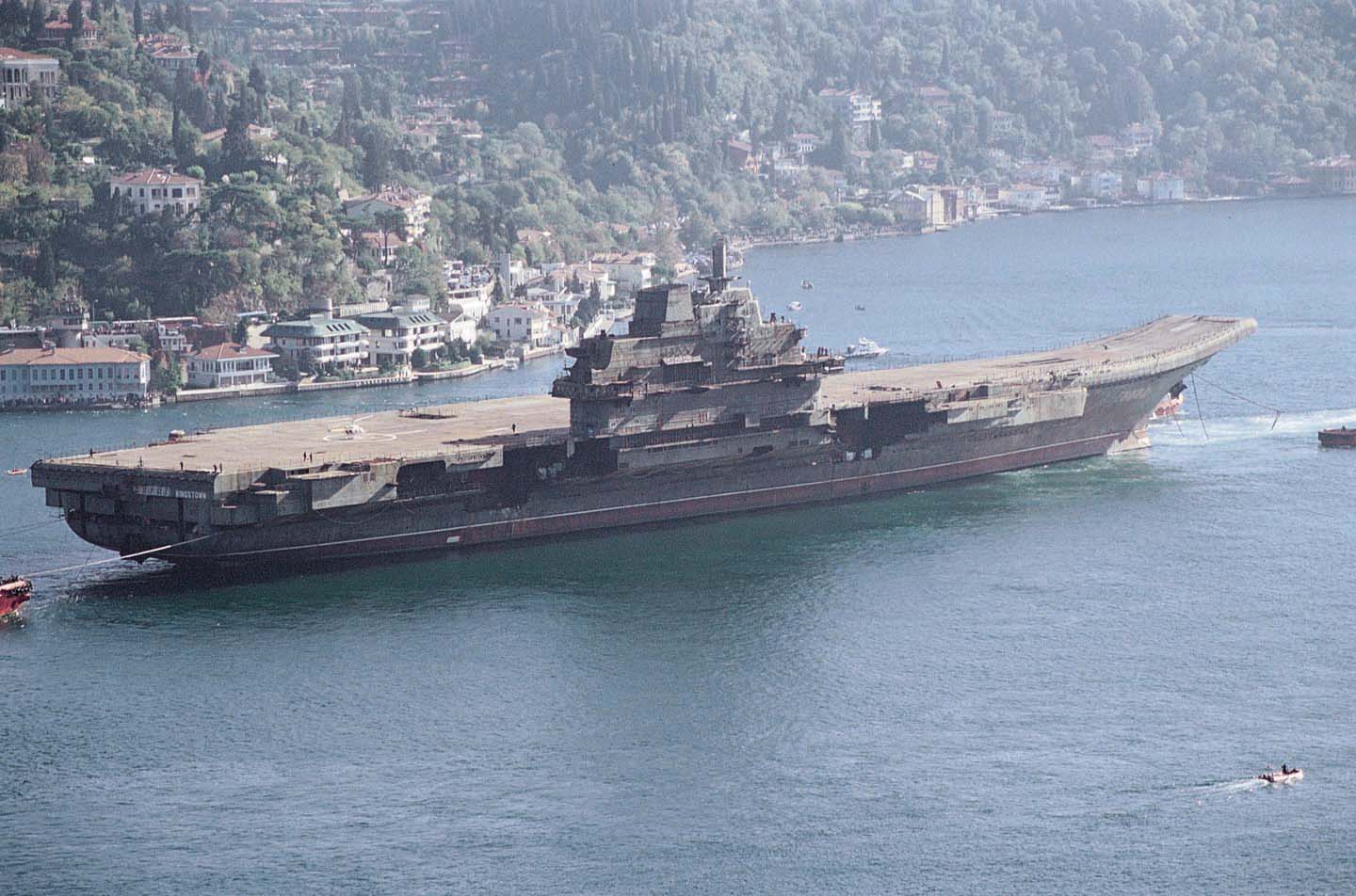
China wants a carrier...great...
Few things can project power like a carrier strike force. Few countries have done and no one has done it as well as the US Navy. Well we have some possible competition.
China speeds plans to launch aircraft carrier: sources - Yahoo! News
China may be ready to launch its first aircraft carrier in 2011, Chinese military and political sources said on Thursday, a year ahead of U.S. military analysts' expectations.
Analysts expect China to use its first operational aircraft carrier to ensure the security of its oil supply route through the Indian Ocean and near the disputed Spratly Islands, but full capability is still some years away.
"The period around July 1 next year to celebrate the (Chinese Communist) Party's birthday is one window (for launch)," one source with ties to the leadership told Reuters, requesting anonymity because the carrier programme is one of China's most closely guarded secrets...
...The possible launch next year of the ex-Soviet aircraft carrier 'Varyag' for training, and testing technology, will be one step toward building an operating aircraft carrier group, analysts said.
The U.S. Office of Naval Intelligence estimates the Varyag will be launched as a training platform by 2012, and China will have an operational domestically built carrier after 2015.
Andrew Erickson and Andrew Wilson of the U.S. Naval College wrote that it was "conceivable that carrier-relevant research, development, and even production ... could proceed with a rapidity that might surprise Western analysts."
China, which would be the third Asian country to have a carrier after India and Thailand, needs hardware, software and pilot training.
"The acquisition of a carrier doesn't equate to the acquisition of a capability -- the ability to use it effectively -- the latter involving a process that can take decades," said Robert Karniol, a veteran defense analyst based in Canada.
The 300-meter (1,000-foot) Varyag is undergoing refit at a state-run shipyard in northeastern city Dalian, sources said.
A Chinese firm bought the then-engineless Varyag from Ukraine in 1998 for $20 million, planning to convert it to a floating casino in Macau, but the Chinese military then bought the vessel.
Chinese air force pilots have yet to master takeoffs and landings from carriers. They have been undergoing training, but have far fewer flying hours than their U.S. peers.
"They must realize that their learning curve will be costly in terms of blood and treasure," Erickson and Wilson wrote.
"The Varyag will allow us to familiarize ourselves with aircraft carrier tactics of war," one Chinese military source said.
The United States and China's neighbors are nervous about how China could use its growing navy, and speeding up preparations for an aircraft carrier group could add to those jitters.
"Just the prospect of China building aircraft carriers has already made neighbors uneasy," former Taiwan deputy defense minister Lin Chong-Pin said in an interview.
China has refused to rule out the use of force to unify with Taiwan, a self-ruled island over which Beijing claims sovereignty. Tensions between the two sides have eased in recent years.
In March, China announced a 7.5 percent increase in its 2010 military budget to about $78.6 billion. But Washington suspects Chinese spending to be double that figure.
China is seeking to buy ship-borne Su-33 jets from Russia and is working on a variant of its own J-10.
J10
SU 22
The Varyag will be based in the southern province of Hainan.


Thursday, December 23, 2010
Someone call ALGORE and tell him to go home! He's bringing in too much snow
OK, how's that global cooling...err global warming...ohh climate change...yes climate change working out for you? Well for the people down under kinda weird.
I think somewhere at UN headquarters, where their phony jobs rely on crap like this, someone is going to the Austrialian ambassador and saying "You're making us look bad...you're not on the script...."
For some of you people in Chalmette, Australia's seasons are exactly opposite to us...they are just starting their summer. And they have inches of snow. A common occurance on December 25th is Christmas on the beach. What the hell is going on out there?
Again, I blame global warming!
Wintry weather brings snow to Australia in midsummer - Telegraph
Australia normally experiences temperatures of 86F (30C) at this time of year, but the chances of a rare white Christmas have increased after plunging temperatures and snow swept across the east of the country.
Snow and ice covering building at Mount Hotham as snow fell in Australia
Freezing winds from Antarctica, blown up to Australia by a low-pressure system in the Southern Ocean, gave the country a taste of the conditions that are causing havoc across Europe.
Some 11 inches of snow fell at the ski fields in New South Wales, raising the prospect that parts of the country could experience a white Christmas.
"It's white, everything is white," Michelle Lovius, the general manager of the Kosciuszko Chalet Hotel at Charlotte Pass, said...
..."First thing this morning everything was just very still, very peaceful and every single thing was just blanketed in a thick cover of white."
At the ski fields, children in Father Christmas hats, who would usually be sunning themselves on the grassy slopes, made snowballs and rode on sleds.
Miss Lovius said such a large amount of snow was unusual for early December, normally the peak of the wild flower season in the mountainous region.
"We're hoping that it (the cold) stays in for five days and we get a white Christmas," she said.
In one part of the state temperatures dropped as low 39.2F (4C), the coldest December morning in 54 years, according to the Weather Channel.
Further south in the state of Victoria, Mt Hotham had four inches of snow and Mt Buller up to two inches.
"It is a blanket of white, which is beautiful at this time of year.
People are out in their Father Christmas hats taking photos in the snow," Maureen Gearon, Victorian Snow Report spokesman, told the Australian news agency AAP.
I think somewhere at UN headquarters, where their phony jobs rely on crap like this, someone is going to the Austrialian ambassador and saying "You're making us look bad...you're not on the script...."
For some of you people in Chalmette, Australia's seasons are exactly opposite to us...they are just starting their summer. And they have inches of snow. A common occurance on December 25th is Christmas on the beach. What the hell is going on out there?
Again, I blame global warming!
You know there were some students taking out the C grade on him :<)
In my job I've had to deal with human bodies at various stages of decomposition but I've never had to deal with an autopsy, thank God! Buy you know there were a couple of students in this group saying "This is for the anatomy exam grade!"
I don't think they should have handled this body...it can led to questions on the objectivity and seeing this is a legal action (I believe all states have laws saying a doctor must certify why someone has died with certain exceptions). But doc, would you be the person to cut open one of your best friends. No and it's not because of the shock to you. It's because we need someone who is not emotionally involved handing the matter...and you mix related people (family, friends, business, etc) that can limit the objectivity.
Stupid act from their point.
Medical Students Recognize Their Autopsy Patient - Tweed - The Chronicle of Higher Education
Performing an autopsy for the first time is a rite of passage that, for most medical students, is a profoundly unfamiliar experience.
For a group of students at Sweden’s renowned Karolinska Institute, however, the occasion had an unexpected element of familiarity, when the corpse in front of them proved to be one of their former instructors, reports The Local, an online news site.
One student described being “super shocked” when he recognized the body, but none of the students apparently said anything as they began to work. According to the news site, “the mood was tense.”
Sundelin, the head of the department responsible for the course, offered no apology for the awkward circumstances.
“It is really terrible, but it is part of education sometimes,” she said. “Unfortunately they must deal with it.”
The president of Sweden’s Medical Students Association, Maria Ehlin Kolk, was less complacent.
“Students should not have to feel uneasy during their education,” she said. “The question is how much these students learned from the situation.”
I don't think they should have handled this body...it can led to questions on the objectivity and seeing this is a legal action (I believe all states have laws saying a doctor must certify why someone has died with certain exceptions). But doc, would you be the person to cut open one of your best friends. No and it's not because of the shock to you. It's because we need someone who is not emotionally involved handing the matter...and you mix related people (family, friends, business, etc) that can limit the objectivity.
Stupid act from their point.
This is another example of zero tolerance idiocy.
All too often parents are not raising their children to, among other things, show respect for other adults and simple rules. Case in point is this case where a boy was arrested for using a permanent marker. That being said it is ridiculous that he was arrested. Remove the marker from him or him from the class. This is what a school principle or disciplinarian is for.
What next, federal supervision of bake sales? Oh yea, we got that!
Here is the report...and it's still absurd!


What next, federal supervision of bake sales? Oh yea, we got that!
Boy, 13, Busted For Illegal Marker Possession | The Smoking Gun
DECEMBER 22--A 13-year-old boy was arrested Friday for using a permanent marker while in class at his Oklahoma City middle school, a violation of an obscure city ordinance.
According to an Oklahoma City Police Department report, the boy was spotted “in possession of a permanent marker” by Roosevelt Middle School teacher DeLynn Woodside. The 50-year-old educator told cop Miguel Campos that the student was “writing on a piece of paper, which caused it to bleed over onto the desk.”
Woodside...reported that the child, whose name was redacted by police from the report, attempted to hide the marker when she asked him for it...
Campos reported that he allowed Woodside, a seventh grade math teacher, to “sign a citation” against the boy, who was then transported to the Community Intervention Center, a juvenile holding facility. A police sergeant subsequently “booked the marker into the property room.”
A police spokesman referred to the student’s bust as a “citizen’s arrest” effectuated by Woodside.
The marker ban--which apparently is aimed at curbing graffiti--stems from a city ordinance making it illegal to possess spray paint or a permanent marker on private property (without the owner’s permission).
Here is the report...and it's still absurd!


This is another one that is too stupid to not be true.
Some months ago I had to call a branch of my department's Burglary division in reference to a suspect on a check fraud case. I was referred to Special Theft Division, aka STD.
Yes, Sexually Transmitted Diseases.
Not to be outdone, in rides the Central Intelligence Agency (CIA) to the rescue.
Extreme disbelief...yes, that goes with Military Intelligence
Again, too stupid to not be true.
Yes, Sexually Transmitted Diseases.
Not to be outdone, in rides the Central Intelligence Agency (CIA) to the rescue.
WTF? OMG, LOL! CIA gives WikiLeaks taskforce naughty name | World news | The Guardian
US spy agency forms taskforce to assess fallout from 250,000 leaked US cables
The CIA has formed a WTF unit to deal with any fallout from the WikiLeaks disclosures.
The CIA has launched a taskforce to assess the impact of 250,000 leaked US diplomatic cables. Its name? WikiLeaks Task Force, or WTF for short.
The group will scour the released documents to survey damage caused by the disclosures. One of the most embarrassing revelations was that the US state department had drawn up a list of information it would like on key UN figures – it later emerged the CIA had asked for the information.
"Officially, the panel is called the WikiLeaks Task Force. But at CIA headquarters, it's mainly known by its all-too-apt acronym: WTF," the Washington Post reported.
WTF is more commonly associated with the Facebook and Twitter profiles of teenagers than secret agency committees. Given that its expanded version is usually an expression of extreme disbelief, perhaps the term is apt for the CIA's investigation...
Extreme disbelief...yes, that goes with Military Intelligence
Again, too stupid to not be true.
What's going on in the World Today 101222
Something to get us going for a long ass weekend!
Star Trek, A Piece of the Action
HYPERLINKS MAY REQUIRE AN EMAIL:
Star Trek, A Piece of the Action
Kalo: [pointing a Tommy gun at Kirk. Spock & McCoy] Okay, you three, let's see you petrify.
Spock: Sir, would you mind explaining that statement, please?
Kalo: I want to see you turn to stone. Put your hands over your head, or you ain't going to have no head to put your hands over.
HYPERLINKS MAY REQUIRE AN EMAIL:
USAExcept where noted courtesy www.stratfor.com
December 18, CNN – (International) California man charged with trying to sell military jet to Iran. Federal agents have arrested a California man who allegedly attempted to export a U.S. military fighter jet to Iran, authorities announced December 17. The arrest followed a 7-month government sting operation, authorities announced. The 35-year-old also was charged in a criminal complaint with two felony counts of attempting to export other aircraft parts and controlled technology. The man has agreed to plead guilty to the charges, according to an assistant U.S. attorney, who is prosecuting the case. According to unsealed court documents, the case began to unfold after “a cooperating defendant” in the operation introduced the suspect to an undercover agent. As part of the sting, the agent met with the man on several occasions at locations in California, Pennsylvania, Delaware, and Budapest, Hungary, the court papers said. The documents said the man broached to an undercover agent the idea of obtaining an F-5B fighter jet from a source in California. He allegedly told the agent that the “Iranians” might be interested in the fighter jet and other items, and allegedly said he would not be concerned if the jet or the other items ended up in Iran. In July, the suspect allegedly sent a contract for the fighter jet to the undercover agent and demanded a $3.25 million purchase price. He was arrested in Delaware in July while negotiating plans to fly the aircraft from California to the East Coast, where it subsequently was to be crated and shipped to Hungary and eventually Iran, the documents stated. Source: http://edition.cnn.com/2010/CRIME/12/17/california.iran.sting/?hpt=T2
December 16, KXXV 25 Waco – (Texas) 4 women accused of stealing background check information. Four Waco, Texas-area women were arrested December 16 on accusations they stole personal information from fingerprint applications. The four were indicted by a federal grand jury on one count of conspiracy to commit identity theft. One woman is also charged with six substantive aggravated identity theft counts; two of the others are also charged with one aggravated identity theft count. From March 2008 to July 2008, one of the accused was employed as a Live Scan Operator by Integrated Biometrics Technology in Waco, where applicants provide personal information, such as Social Security numbers and dates of birth. The suspect employee allegedly stole thousands of background check applications when she left the company, and the four women then used them to fraudulently obtain credit cards, open accounts, and purchase items throughout the country. Their hearings are scheduled for December 21 and if convicted, they each face up to 15 years in federal prison. Source: http://www.kxxv.com/Global/story.asp?S=13688249
December 16, Associated Press – (North Carolina) Soldier held in shooting at NC base; no injuries. Military officials said a soldier suspected in a shooting December 16 at Pope Air Force Base in North Carolina in which no one was hurt has been caught. The base had been on lockdown while authorities searched for the suspect, but a base spokesman said that was no longer the case December 17. According to a news release from the base, the shooting was a domestic incident that happened around 8:45 p.m. A single gunshot was fired inside one of the base’s residences. The base said the incident involved a Fort Bragg soldier assigned to the 82nd Airborne Division. The base said the suspect was later detained by Fort Bragg military authorities. The military did not release additional details. Source: http://www.foxnews.com/us/2010/12/16/nc-base-lockdown-shots-fired-injuries/?test=latestnews
EUROPE
NOTHING SIGNIFICANT TO REPORT
ASIA
Pakistan: U.S. UAV Activity In Tribal Region Moves North December 21, 2010
Intense U.S. unmanned aerial vehicle (UAV) activity in Pakistan’s tribal region has moved northward as suspected militants try to flee the targeted air strikes, a senior Pakistani military official said Dec. 21, CNN reported. There has been an increased militant presence in Khyber agency, specifically in the Tirah Valley, the official said.
December 17, Associated Press – (International) Officials: CIA station chief pulled from Islamabad. The CIA has pulled its top spy out of Pakistan after terrorists threatened to kill him, current and former U.S. officials said, an unusual move for the United States and a complication on the front lines of the fight against al-Qaida. The CIA station chief was in transit December 16 after a Pakistani lawsuit earlier this month accused him of killing civilians in missile strikes. CIA airstrikes from unmanned aircraft have killed terrorist leaders, but have led to accusations in Pakistan that the strikes kill innocent people. The U.S. does not acknowledge the missile strikes, but there have been more than 100 such attacks this year — more than double the amount in 2009. Source: http://www.google.com/hostednews/ap/article/ALeqM5j8-dDSHBIB-
RUSSIA
Russia: Unilateral Missile Defense Means Nuclear Buildup - Medvedev December 22, 2010
Russian President Dmitri Medvedev has said that should missile defense be established unilaterally, “the other side…will build up its nuclear strike potential,” Interfax reported Dec. 22. He said Russian participation in a missile-defense system with NATO would be acceptable to Moscow. Otherwise, Russia and the United States will have to make difficult decisions, he said.
Belarus: 600 Sentenced Over Demonstration December 21, 2010
Approximately 600 participants of the Dec. 19 opposition rallies in Minsk, Belarus were sentenced to administrative arrest, Interfax reported Dec. 21. Most activists were sentenced to 5 to 15 days, Minsk Main Interior Affairs Department chief Leonid Farmagei said, adding, minors and those with two children were released as well as several foreign citizens, including journalists. The worse violators of the law faced trial, Farmagei stated.
Russia, India: Agreement On Fighter Design, Power Plant Signed December 21, 2010
Russia and India signed an agreement on Dec. 21 to design a fifth-generation fighter aircraft and to expand the capacity of Kudankulam nuclear power plant, Reuters reported. The two countries will build the third and fifth generating units for the power plant in Tamil Nadu in India’s south, according to a statement.
IRAN
Iran: Truckers Strike Following Fuel Price Hike December 21, 2010
Thousands of Iranian truck drivers began a second day of strikes Dec. 21 following a sharp increase in the price of diesel fuel, The Washington Post reported. At least half of all truck drivers in the country are currently on strike, and those who are working have increased transport fees by nearly 40 percent, according to a manager for a Tehran-based transportation company. Because of the new fuel price program, truck drivers now have to pay up to 21 times as much for diesel fuel than they previously did (every trucker can fill up their fuel tank once during the next month for the old price of $0.06 per gallon but will then have to pay $1.32 per gallon). The price of non-diesel fuel is also increasing, with a ceiling of $2.65 per gallon
Iran: Leading Cleric Rejects Statements About Music December 22, 2010
Iranian Grand Ayatollah Makarem Shirazi on Dec. 22 rejected statements by a close aide of President Mahmoud Ahmadinejad that some senior religious figures have declared music haram because they do not understand it, DPA reported, citing ISNA. Shirazi said the statements were an insult to the religious leaders, and that presidential Chief of Staff Esfandiar Rahim-Mashaei would have been more sharply criticized if the political circumstances were not different. Rahim-Mashaei also had said that the Iranian clergy should recognize that the country’s society had changed and needed poetry and art, and not just prayer.
The Implications of Iranian Assertiveness Toward Pakistan | STRATFOR
IRAQ
NOTHING SIGNIFICANT TOAfghanistan: Iran Border Blockade Continues December 21, 2010
Iran is blocking almost 2,000 fuel tankers from crossing the border into Afghanistan, saying the trucks would supply U.S.-led coalition troops, according to Afghan officials, the Wall Street Journal reported Dec. 21. The unannounced blockade is in its third week, and Afghan officials do not know when fuel imports will resume, Afghan Deputy Minister of Commerce Sharif Shairifi said. The Nimroz province customs chief said approximately 600 fuel tankers are idle on the Iranian border with Afghanistan’s southwestern Nimroz province, and similar backlogs have emerged on the borders of the western Herat and Farah provinces. Nimroz province has lost roughly $3.5 million in customs fees during the past two weeks, and Herat and Farah provinces have been equally affected.
REPORT
ISRAEL
Israel: New Anti-tank Missile Threat From Gaza December 21, 2010
Militants in Gaza used an advanced Russian-designed Kornet missile against an Israeli tank Dec. 6 and smuggled weaponry has improved Palestinian combat capabilities, Israeli military chief Gabi Ashkenazi said, Reuters reported Dec. 21. Ashkenazi’s comments came after an Israeli newspaper report that the Israeli Defense Forces planned to deploy an only tank battalion with a new missile shield outside of the Gaza Strip.
Israel: Missile Defense Tanks Deployed To Gaza Border December 22, 2010
The Israeli army will deploy tanks equipped with miniature missile defense systems to the Gaza border, unnamed Israeli defense officials said Dec. 22, AP reported. The move comes in response to alleged Palestinian use of Kornet tank-piercing missiles that, according to the officials, were provided by Iran. However, the officials offered no proof the missiles came from Iran.
AFGHANISTAN
Afghanistan: Northern Provincial Governor Accused Of Incompetence December 22, 2010
The provincial council in Afghanistan’s northern Baghlan province accused the provincial governor of incompetence and demanded his resignation, council head Mohammad Rasul Mohseni said Dec. 22, Pajhwok reported. Gov. Monshi Abdul Majid’s orders lack credibility, and if he refuses to resign the provincial council will close, Mohseni said. Majid dismissed the comments as an individual’s opinion.
Afghanistan: Operation To Clear Eastern Province Begins December 21, 2010
Afghan and international forces began a weeklong operation to clear Baraki Barak district, Logar province, of Taliban militants, Pajhwok news agency reported Dec. 21. The operation will involve approximately 600 Afghan and NATO-led troops, the district chief said.
Afghanistan: 57 Private Security Companies Disbanded December 21, 2010
The Afghan government said on Dec. 21 that 57 private security companies have been shut down, AFP and AP reported. Interior Ministry adviser Abdul Manan Farahi said all illegal private security companies have been disbanded.
MIDDLE EAST
NOTHING SIGNIFICANT TO REPORT
SOUTH OF THE BORDER
Above the Tearline: Mexican Cartels | STRATFOR
Mexican Drug Wars: Bloodiest Year to Date | STRATFOR
China: Brazilian Electricity Distribution Companies Purchased December 21, 2010
China’s state-owned State Grid Corporation of China (SGCC) purchased seven electricity distribution companies in Brazil for an estimated $1 billion, Jornal do Brasil reported Dec. 21. SGCC also acquired a 30-year concession for energy exploration and other infrastructure projects in the southeast region of Brazil. According to the contract, Brazilian authorities can opt to renew the license for an additional 20 years.
MISC
Dispatch: Organized Crime vs. Terrorism | STRATFOR
Tuesday, December 21, 2010
Geopolitical Weekly : Europe: The New Plan December 21, 2010
By Peter Zeihan
Europe is on the cusp of change. An EU heads-of-state summit Dec. 16 launched a process aimed to save the common European currency. If successful, this process would be the most significant step toward creating a singular European power since the creation of the European Union itself in 1992 — that is, if it doesn’t destroy the euro first.
Envisioned by the EU Treaty on Monetary Union, the common currency, the euro, has suffered from two core problems during its decade-long existence: the lack of a parallel political union and the issue of debt. Many in the financial world believe that what is required for a viable currency is a fiscal union that has taxation power — and that is indeed needed. But that misses the larger point of who would be in charge of the fiscal union. Taxation and appropriation — who pays how much to whom — are essentially political acts. One cannot have a centralized fiscal authority without first having a centralized political/military authority capable of imposing and enforcing its will. Greeks are not going to implement a German-designed tax and appropriations system simply because Berlin thinks it’s a good idea. As much as financiers might like to believe, the checkbook is not the ultimate power in the galaxy. The ultimate power comes from the law backed by a gun.
Europe’s Disparate Parts
This isn’t a revolutionary concept — in fact, it is one most people know well at some level. Americans fought the bloodiest war in their history from 1861 to 1865 over the issue of central power versus local power. What emerged was a state capable of functioning at the international level. It took three similar European wars — also in the 19th century — for the dozens of German principalities finally to merge into what we now know as Germany.
Europe simply isn’t to the point of willing conglomeration just yet, and we do not use the American Civil War or German unification wars as comparisons lightly. STRATFOR sees the peacetime creation of a unified European political authority as impossible, since Europe’s component parts are far more varied than those of mid-19th century America or Germany.
• Northern Europe is composed of advanced technocratic economies, made possible by the capital-generating capacity of the well-watered North European Plain and its many navigable rivers (it is much cheaper to move goods via water than land, and this advantage grants nations situated on such waterways a steady supply of surplus capital). As a rule, northern Europe prefers a strong currency in order to attract investment to underwrite the high costs of advanced education, first-world infrastructure and a highly technical industrial plant. Thus, northern European exports — heavily value added — are not inhibited greatly by a strong currency. One of the many outcomes of this development pattern is a people that identifies with its brethren throughout the river valleys and in other areas linked by what is typically omnipresent infrastructure. This crafts a firm identity at the national level rather than local level and assists with mass-mobilization strategies. Consequently, size is everything.
• Southern Europe, in comparison, suffers from an arid, rugged topography and lack of navigable rivers. This lack of rivers does more than deny them a local capital base, it also inhibits political unification; lacking clear core regions, most of these states face the political problems of the European Union in microcosm. Here, identity is more localized; southern Europeans tend to be more concerned with family and town than nation, since they do not benefit from easy transport options or the regular contact that northern Europeans take for granted. Their economies reflect this, with integration occurring only locally (there is but one southern European equivalent of the great northern industrial mega-regions such as the Rhine, Italy’s Po Valley). Bereft of economies of scale, southern European economies are highly dependent upon a weak currency to make their exports competitive abroad and to make every incoming investment dollar or deutschemark work to maximum effect.
• Central Europe — largely former Soviet territories — have yet different rules of behavior. Some countries, like Poland, fit in well with the northern Europeans, but they require outside defense support in order to maintain their positions. The frigid weather of the Baltics limits population sizes, demoting these countries to being, at best, the economic satellites of larger powers (they’re hoping for Sweden while fearing it will be Russia). Bulgaria and Romania are a mix of north and south, sitting astride Europe’s longest navigable river yet being so far removed from the European core that their successful development may depend upon events in Turkey, a state that is not even an EU member. While states of this grouping often plan together for EU summits, in reality the only thing they have in common is a half-century of lost ground to recover, and they need as much capital as can be made available. As such variation might suggest, some of these states are in the eurozone, while others are unlikely to join within the next decade.
And that doesn’t even begin to include the EU states that have actively chosen to refuse the euro — Denmark, Sweden and the United Kingdom — or consider the fact that the European Union is now made up of 27 different nationalities that jealously guard their political (and in most cases, fiscal) autonomy.
The point is this: With Europe having such varied geographies, economies and political systems, any political and fiscal union would be fraught with complications and policy mis-prescriptions from the start. In short, this is a defect of the euro that is not going to be corrected, and to be blunt, it isn’t one that the Europeans are trying to fix right now.
The Debt Problem
If anything, they are attempting to craft a work-around by addressing the second problem: debt. Monetary union means that all participating states are subject to the dictates of a single central bank, in this case the European Central Bank (ECB) headquartered in Frankfurt. The ECB’s primary (and only partially stated) mission is to foster long-term stable growth in the eurozone’s largest economy — Germany — working from the theory that what is good for the continent’s economic engine is good for Europe.
One impact of this commitment is that Germany’s low interest rates are applied throughout the currency zone, even to states with mediocre income levels, lower educational standards, poorer infrastructure and little prospect for long-term growth. Following their entry into the eurozone, capital-starved southern Europeans used to interest rates in the 10-15 percent range found themselves in an environment of rates in the 2-5 percent range (currently it is 1.0 percent). To translate that into a readily identifiable benefit, that equates to a reduction in monthly payments for a standard 30-year mortgage of more than 60 percent.
As the theory goes, the lower costs of capital will stimulate development in the peripheral states and allow them to catch up to Germany. But these countries traditionally suffer from higher interest rates for good reasons. Smaller, poorer economies are more volatile, since even tiny changes in the international environment can send them through either the floor or the roof. Higher risks and volatility mean higher capital costs. Their regionalization also engenders high government spending as the central government attempts to curb the propensity of the regions to spin away from the center (essentially, the center bribes the regions to remain in the state).
This means that when the eurozone spread to these places, theory went out the window. In practice, growth in the periphery did accelerate, but that growth was neither smooth nor sustainable. The unification of capital costs has proved more akin to giving an American Express black card to a college freshman: Traditionally capital poor states (and citizens) have a propensity to overspend in situations where borrowing costs are low, due to a lack of a relevant frame of reference. The result has been massive credit binging by corporations, consumers and governments alike, inevitably leading to bubbles in a variety of sectors. And just as these states soared high in the first decade after the euro was introduced, they have crashed low in the past year. The debt crises of 2010 — so far precipitating government debt bailouts for Ireland and Greece and an unprecedented bank bailout in Ireland — can be laid at the feet of this euro-instigated over-exuberance.
It is this second, debt-driven shortcoming that European leaders discussed Dec. 16. None of them want to do away with the euro at this point, and it is easy to see why. While the common currency remains a popular whipping boy in domestic politics, its benefits — mainly lower transaction costs, higher purchasing power, unfettered market access and cheaper and more abundant capital — are deeply valued by all participating governments. The question is not “whither the euro” but how to provide a safety net for the euro’s less desirable, debt-related aftereffects. The agreed-upon path is to create a mechanism that can manage a bailout even for the eurozone’s larger economies when their debt mountains become too imposing. In theory, this would contain the contradictory pressures the euro has created while still providing to the entire zone the euro’s many benefits.
Obstacles to the Safety Net
Three complications exist, however. First, when a bailout is required, it is clearly because something has gone terribly wrong. In Greece’s case, it was out-of-control government spending with no thought to the future; in essence, Athens took that black card and leapt straight into the economic abyss. In Ireland’s case, it was private-sector overindulgence, which bubbled the size of the financial sector to more than four times the entire country’s gross domestic product. In both cases, recovery was flat-out impossible without the countries’ eurozone partners stepping in and declaring some sort of debt holiday, and the result was a complete funding of all Greek and Irish deficit spending for three years while they get their houses in order.
“Houses in order” are the key words here. When the not-so-desperate eurozone states step in with a few billion euros — 223 billion euros so far, to be exact — they want not only their money back but also some assurance that such overindulgences will not happen again. The result is a deep series of policy requirements that must be adopted if the bailout money is to be made available. Broadly known as austerity measures, these requirements result in deep cuts to social services, retirement benefits and salaries. They are not pleasant. Put simply: Germany is attempting to trade financial benefits for the right to make policy adjustments that normally would be handed by a political union.
(click here to enlarge image)
It’s a pretty slick plan, but it is not happening in a vacuum. Remember, there are two more complications. The second is that the Dec. 16 agreement is only an agreement in principle. Before any Champagne corks are popped, one should consider that the “details” of the agreement raise a more than “simply” trillion-euro question. STRATFOR guesses that to deliver on its promises, the permanent bailout fund (right now there is a temporary fund with a “mere” 750 billion euros) probably would need upwards of three trillion euros. Why so much? The debt bailouts for Greece and Ireland were designed to completely sequester those states from debt markets by providing those governments with all of the cash they would need to fund their budgets for three years. This wise move has helped keep the contagion from spreading to the rest of the eurozone. Making any fund credible means applying that precedent to all the eurozone states facing high debt pressures, and using the most current data available, that puts the price tag at just under 2.2 trillion euros. Add in enough extra so that the eurozone has sufficient ammo left to fight any contagion and we’re looking at a cool 3 trillion euros. Anti-crisis measures to this point have enjoyed the assistance of both the ECB and the International Monetary Fund, but so far, the headline figures have been rather restrained when compared to future needs. Needless to say, the process of coming up with funds of that magnitude when it is becoming obvious to the rest of Europe that this is, at its heart, a German power play is apt to be contentious at best.
The third complication is that the bailout mechanism is actually only half the plan. The other half is to allow states to at least partially default on their debt (in EU diplomatic parlance, this is called the “inclusion of private interests in funding the bailouts”). When the investors who fund eurozone sovereign debt markets hear this, they understandably shudder, since it means the European Union plans to codify giving states permission to walk away from their debts — sticking investors with the losses. This too is more than simply a trillion-euro question. Private investors collectively own nearly all of the eurozone’s 7.5 trillion euros in outstanding sovereign debt. And in the case of Italy, Austria, Belgium, Portugal and Greece, debt volumes worth half or more of GDP for each individual state are held by foreigners.
Assuming investors decide it is worth the risk to keep purchasing government debt, they have but one way to mitigate this risk: charge higher premiums. The result will be higher debt financing costs for all, doubly so for the eurozone’s more spendthrift and/or weaker economies.
For most of the euro’s era, the interest rates on government bonds have been the same throughout the eurozone, based on the inaccurate belief that eurozone states would all be as fiscally conservative and economically sound as Germany. That belief has now been shattered, and the rate on Greek and Irish debt has now risen from 4.5 percent in early 2008 to this week’s 11.9 percent and 8.6 percent, respectively. With a formal default policy in the making, those rates are going to go higher yet. In the era before monetary union became the Europeans’ goal, Greek and Irish government debt regularly went for 20 percent and 10 percent, respectively. Continued euro membership may well put a bit of downward pressure on these rates, but that will be more than overwhelmed by the fact that both countries are, in essence, in financial conservatorship.
(click here to enlarge image)
That is not just a problem for the post-2013 world, however. Because investors now know the European Union intends to stick them with at least part of the bill, they are going to demand higher returns as details of the default plan are made known, both on any new debt and on any pre-existing debt that comes up for refinancing. This means that states that just squeaked by in 2010 must run a more difficult gauntlet in 2011 — particularly if they depend heavily on foreign investors for funding their budget deficits. All will face higher financing and refinancing costs as investors react to the coming European disclosures on just how much the private sector will be expected to contribute.
Leaving out the two states that have already received bailouts (Greece and Ireland), the four eurozone states STRATFOR figures face the most trouble — Portugal, Belgium, Spain and Austria, in that order — plan to raise or refinance a quarter trillion euros in 2011 alone. Italy and France, two heavyweights not that far from the danger zone, plan to raise another half-trillion euros between them. If the past is any guide, the weaker members of this quartet could face financing costs of double what they’ve faced as recently as early 2008. For some of these states, such higher costs could be enough to push them into the bailout bin even if there is no additional investor skittishness.
The existing bailout mechanism probably can handle the first four states (just barely, and assuming it works as advertised), but beyond that, the rest of the eurozone will have to come up with a multitrillion-euro fund in an environment in which private investors are likely to balk. Undoubtedly, the euro needs a new mechanism to survive. But by coming up with one that scares those who make government deficit-spending possible, the Europeans have all but guaranteed that Europe’s financial crisis will get much worse before it begins to improve.
But let’s assume for a moment that this all works out, that the euro survives to the day that the new mechanism will be in place to support it. Consider what such a 2013 eurozone would look like if the rough design agreed to Dec. 16 becomes a reality. All of the states flirting with bailouts as 2010 draws to a close expect to have even higher debt loads two years from now. Hence, investors will have imposed punishing financing costs on all of them. Alone among the major eurozone countries not facing such costs will be Germany, the country that wrote the bailout rules and is indirectly responsible for managing the bailouts enacted to this point. Berlin will command the purse strings and the financial rules, yet be unfettered by those rules or the higher financing costs that go with them. Such control isn’t quite a political union, but so long as the rest of the eurozone is willing to trade financial sovereignty for the benefits of the euro, it is certainly the next best thing.


This report is republished with permission of STRATFOR
OK, let me get this straight...there is a difference between the B Hussein Obama Democratic Party and the Communist? Is this a bad joke.
OK, let me get this crap straight. The Communist Party USA thinks it can get power by assimilating the Democratic Party? Then that begs the question "You mean the Democrats are not the cover party of the Communist Party USA?"
From the People before Profits website, a Communist Party USA website.
It's a long article but gives a perspective on what the CPUSA thinks. I've often said Jack Kennedy would not recognize his party today...with Pelosi, Reid and B Hussein Obama as the heads of the serpent he would run from it as fast as possible.
From the People before Profits website, a Communist Party USA website.
Extreme Makeover Goes Too FarJoe Sims December 6 2010
C.J. Atkins, in his recent article "Living in an Era of Change," expresses a desire for a bigger socialist movement. To achieve it, he prescribes an “extreme makeover” for the CPUSA: first dropping communist from its title; and second dropping the designation “party” and becoming instead a socialist group within the Democratic Party.
In his own words, “I would suggest that we ponder whether it may be appropriate to drop not only the “communist” half of our title, but the “party” half as well.”
For comrade C.J., anti-communism is so deeply embedded it is impossible to overcome; “The communist ‘brand’ is undeniably sullied beyond reprieve for the vast majority of Americans,” he contends.
Gee, I wonder why...maybe the fact Communism has killed more people than any type of tyranny in the history. Joe Stalin killed approximately seven million people before the start of World War II in a purge...the Chinese and their purges, the killing fields in SE Asia....why should we not embrace that!
Impossible too are third party and independent efforts, though for different reasons. “Efforts to operate in the electoral arena in opposition to both the Democratic and Republican parties only results in splitting the center-left vote and helping the right wing back into office” C.J. says...
...But, clearly, the U.S. has entered a new political moment. Heightened class and democratic struggle, the Great Recession and its aftermath, Obama ‘s ascent to the presidency, the assertive posture of the AFL-CIO, the growth of social networks, the counter-revolt of the extreme right, all have combined to produce an unprecedented situation – and opportunity.
U.S. ideological life is also in flux. A broad radicalization process with its roots in capitalism’s deep systemic crisis is at work. As polls repeatedly indicate, a broad left current flows in the streams of public consciousness: fully a third of America’s youth have favorable views of socialism.
Anti-communism too is not the force it once was. Just recently in the deep south, a labor council bought an ad for the Illinois People's World annual banquet, congratulating the PeoplesWorld.org and its labor editor, John Wojcik, for a prize-winning article, an inconceivable event in the not too distant past. In Connecticut, state AFL-CIO leaders participate in PW events where the CPUSA anniversary is celebrated; in Cleveland a well-known communist, Rick Nagin, running in a non-partisan race for City Council received the city’s AFL-CIO endorsement and nearly won.
That really makes the union members feel good I bet!
...The socialist left and Marxists in particular face difficulties: in recent years sections of it have stagnated, declined, or disappeared all together. Non-Marxist democratic socialists, too, are facing similar challenges without significant growth.
The CPUSA from this standpoint has held its own with several hundred spontaneous applicants for membership a year for nearly decade. Its websites reach 5,000 readers a day, or 30,000 in a week. With all its weaknesses, the party has a national infrastructure and an experienced group of organizers and activists. This background unfortunately is missing from Atkin’s analysis.
Of C.J.’s two proposals, neither of which can be supported, the idea that the character of the party be changed is the most significant: “It is my belief that we could be more effectual operating as a socialist and working-class political organization which does not present itself as a 'party' as such,” he asserts.
There are several issues at stake here. Among them are the role a Marxist party, the concept of the necessity of the political independence of the working class, and historical precedents.
The role of the party
Comrade C.J.’s concept of what he would replace the CPUSA with is ambiguous. It seems the new group, while independent, would work in and through existing parties. “Our members can freely participate in the Democratic Party process, with the Working Families Party or other independent political formations, etc. as appropriate to the circumstances,” our writer suggests.
C.J. makes an important point in stressing the importance of electoral politics. It is certainly the case that in the U.S. the real stuff of politics and governance occurs through the two mass political parties. Here is where the action is and it is here, mainly through the vehicle of the Democratic Party, that the peoples' movement fights for its interests. Serious politics cannot stand apart from these struggles.
Also correct is his implicit criticism of a section of the U.S. left, including voices in the CP, that minimizes electoral struggle in general and show particular disdain for working with the Democratic Party.
For the foreseeable future Democratic Party circles will be an area of engagement for those wanting to make a difference.
It's a long article but gives a perspective on what the CPUSA thinks. I've often said Jack Kennedy would not recognize his party today...with Pelosi, Reid and B Hussein Obama as the heads of the serpent he would run from it as fast as possible.
Officer Down

Police Officer Andrew Rameas
Harker Heights Texas Police Department
End of Watch: Monday, December 20, 2010
Age: 33
Officer Andrew Rameas was killed in a motorcycle accident while escorting a funeral procession through Killeen.
The procession was traveling on W. Stan Schlueter Loop when an SUV turned in front of Officer Rameas' motorcycle as he followed behind the procession. Officer Rameas was unable to avoid a collision and struck the passenger side of the vehicle.
He was flown to a nearby hospital where he succumbed to his injuries.
Rest in Peace Bro…We’ll Continue The Watch
Day is done, Gone the sun, From the lake, From the hills, From the sky. All is well, Safely rest, God is nigh.
What's going on in the World Today 101220
As I contemplate getting closer to 50 and things to do take more of my schedule I have to think of this great quote:
Jebediah Nightlinger: [referring to the madam Kate Collingwood's offer of sexual favor:
Hope you had a great weekend...
HYPERLINKS MAY REQUIRE AN EMAIL:
Except where noted courtesy www.stratfor.com
Jebediah Nightlinger: [referring to the madam Kate Collingwood's offer of sexual favor:
Well, I have the inclination, the maturity, and the wherewithal... but unfortunately, I don't have the time.
Hope you had a great weekend...
HYPERLINKS MAY REQUIRE AN EMAIL:
USA
U.S.: Special Operations In Pakistan Near Approval December 20, 2010
Senior United States military commanders in Afghanistan are pushing for the expansion of Special Operations ground raids in Pakistan’s tribal areas to capture or kill leaders from the Taliban and Haqqani network, the New York Times reported Dec. 20. Military and political leaders say the plan is not yet approved, although a sense of urgency has taken hold ahead of the current administration’s deadline to withdraw soldiers from Afghanistan. U.S. officers have begun to prepare plans with one senior officer saying, “We’ve never been as close as we are now to getting the go-ahead to go across.”
EUROPE
NOTHING SIGNIFICANT TO REPORT
ASIA
China Security Memo: Dec. 15, 2010 STRATFOR
Pakistan: Militants Attack NATO Tankers December 20, 2010
Militants fired rockets at a NATO convoy carrying supplies to Afghanistan, destroying two oil tankers and wounding two people, in the northwestern area of Khyber, Pakistan, AP and BBC News reported Dec. 20. According to Pakistani government officials, the militants were armed with rockets and assaults rifles. Traffic along the route in the Khyber tribal region was suspended.
RUSSIA
Russia: 460 Detained Ahead Of Protest December 19, 2010
More than 460 individuals, most of whom were teenagers, were detained Dec. 19 in areas around Moscow as police attempted to prevent racially-motivated riots, a police spokesman said, RIA Novosti reported. Police are on high alert ahead of an unsanctioned public protest against the death of football fan Yegor Sviridov, who was killed in a brawl with migrants from Russia’s predominately Muslim North Caucasus region.
IRAN
Iran: Subsidies Yield Reduced Gasoline Consumption December 20, 2010
Gasoline consumption in Iran has dropped by 16.5 percent after a government subsidy plan implemented Dec. 18, ISNA reported Dec. 20. According to ISNA figures, 2.4 million liters (634,000 gallons) were consumed on Dec. 19 — 800,000 liters less than on Dec. 18. The head of Iran’s gas station owners syndicate said reported a 15 to 18 percent drop in gasoline sales in the past 2 days. Moreover, kerosene consumption has dropped by 91.5 percent, while fuel oil consumption has dropped by 51.8 percent, compared with consumption on Dec. 18.
Iran: $1 Billion Invested In Tehran Refinery December 20, 2010
One billion dollars was invested in Tehran Oil Refinery to improve the quality of the gasoline produced as Iran’s gasoline production has recently increased by 2 million liters, says the managing director of the National Iranian Oil Refining and Distribution Company Mohsen Ghadiri, Mehr News Agency reported Dec. 20. Ghadiri said Tehran Oil Refinery’s capacity for refining oil and oil products increased to 250,000 barrels a day with 16 percent made into gasoline and 30 percent made into diesel. He said the new gasoline production unit will be operational by Sept. 2011 with a daily output of 2 million liters, adding that the development projects currently under way should increase oil production by at least 10 million liters a day by late March 2011.
IRAQ
Iraq: No Parliament Vote On Cabinet Dec. 20 December 20, 2010
The Iraqi parliament will not vote on a new Cabinet on Dec. 20, Iraqi Parliament Speaker Osama al-Nujaifi said, Reuters reported. A spokesman for Iraqi Prime Minister Nouri al-Maliki said an announcement may be made Dec. 20 about the makeup of half the Cabinet, even if there was not agreement on the entire body. Iraqi lawmakers have said points of contention include the finance ministry, vice presidential posts, deputy prime ministers, interior, defense and national security ministers.
ISRAEL
Turkey: Israel Must Apologize, Pay Reparations - PM December 20, 2010
Turkish Prime Minister Recep Tayyip Erdogan said Turkish-Israeli relations will return to normal after Israel apologizes to the Turkish republic and pays compensations, The Jerusalem Post reported Dec. 20, citing Syrian Arab News Agency. Erdogan confirmed that Israel and Turkey engaged in high-level diplomatic talks in Geneva, Switzerland, but said Turkish demands remain unchanged regarding Israeli aggression on humanitarian ships in the Gaza Strip and the death of nine Turkish citizens. Erdogan said Israel’s actions were responsible for the failure of Israeli-Palestinian peace talks causing suspicion over Israel’s sincerity in achieving peace. He added that Syria wants to revive negotiations on a possible Syria-Israel peace treaty with a Turkish mediator.
Israel: Body Of Missing U.S. Tourist Found December 19, 2010
Israeli security forces have found the body of Christine Logan, a U.S. tourist believed to have been kidnapped Dec. 18 by Arab assailants while hiking with a friend near Jerusalem, Haaretz reported Dec. 19. Logan’s friend, a 46-year-old British immigrant named Kaye Susan Wilson, managed to escape the attackers by pretending to be dead after suffering multiple stab wounds. According to Wilson, she and Logan were hiking at Khirbet Hanut, near Beit Shemesh, when they were assaulted by two Arab men. Security forces, including Israel Defense Forces and border police troops, launched a manhunt for Logan shortly after Wilson reported the attack, and Shin Bet and the police are currently investigating the possible presence of terrorism cells in the area. The search for the assailants is ongoing.
Palestinian Territories: Israeli Fighter Jets Strike Hamas Base December 20, 2010
Israeli F-16 fighter jets struck a military base belonging to Hamas in the Gaza Strip on Dec. 20, Xinhua reported, citing unnamed witnesses and local security sources. The sources said that jets fired a missile at the base, which is located west of the southern Gaza Strip city of Khan Younis, but that no injuries were reported. The Israeli airstrike was made after three homemade projectiles fired by Gaza Strip militants landed in an empty area in southern Israel, causing no injuries, Israeli radio reported. Palestinian sources said that the Israeli fighter jets struck four targets and injured two gunmen, AFP reported.
AFGHANISTAN
Afghanistan: Army Commuter Bus Attacked December 19, 2010
Around five Afghan army officers were reportedly killed in Kabul when two Taliban militants strapped with explosives ambushed a bus ferrying troops to work during rush-hour traffic, an Afghan Defense Ministry spokesman said Dec. 19, AP and Xinhua reported. The attack was the first of its kind in Kabul in months. The militants opened fire on the bus; one detonated a vest with explosives, while the other was shot and killed before he could detonate his vest. Separately, Abdul Wahid Omarkhel, the district chief of the Chahar Dara, Kunduz province, survived an ambush involving a roadside bomb.
Afghanistan: Army Recruitment Center Attacked December 19, 2010
The Taliban have claimed responsibility for an attack at an army recruitment center in Kunduz province, Afghanistan, sparking a daylong gunfight that ended only after the last remaining militant detonated his suicide vest, local officials said Dec. 19, AP and Xinhua reported. The attack began at daybreak when two militants stormed the center with guns and explosives. Seven security personnel and both militants were reportedly killed in the attack. Provincial Deputy Gov. Hamdullah Danishi said initial reports indicated the attackers were dressed in army uniforms.
MIDDLE EAST
NOTHING SIGNIFICANT TO REPORT
SOUTH OF THE BORDER
Russia: Venezuelan Officers Interested In S-400 System December 20, 2010
A delegation of Venezuelan military officers expressed interest in Russia’s S-400 air defense system during a visit to a Russian training facility in Kapustin Yar, Interfax-AVN reported Dec. 20, citing an unnamed security official in the Southern Federal District. The visit was made as part of military cooperation efforts between Russia and Venezuela.
Mexico Adopts a New Security Strategy in Juarez STRATFOR
Mexico: Former Presidential Candidate Freed From Captivity December 20, 2010
Former Mexican presidential candidate Diego Fernandez de Cevallos has reportedly been freed after being kidnapped in May, AP reported Dec. 20. Fernandez de Cevallos had been missing since his car was found abandoned near his ranch in Queretaro state. President Felipe Calderon’s National Action Party (PAN), of which Fernandez de Cevallos was a member, is trying to confirm reports of his release, according to a party spokeswoman. However, Mexico’s Televisa network reported that Fernandez de Cevallos’ lawyer confirmed his release. According to Reforma newspaper, PAN senator Fauzi Hamden also confirmed his release. AP contacted a number of parties for confirmation, but none was able to confirm the information.
MISC
Turkey: PM Asks Obama To Block Genocide Vote December 20, 2010
Turkish Prime Minister Recep Tayyip Erdogan asked U.S. President Barack Obama to block a possible congressional vote on a resolution that would declare the killings of Armenians during World War I genocide, AP reported Dec. 20. Turkish Foreign Minister Ahmet Davutoglu told parliament that Erdogan had sent a letter to Obama warning him that the vote would damage the countries’ ties.
Except where noted courtesy www.stratfor.com
Monday, December 20, 2010
OK, these are the idiots we need to emulate with health care.
Canada wants to severly increase liquor taxes because alcohol causes too many problems. But it’s not about the money you understand, it’s for health. But this might bring problems with our less fortunate crowd.
Of course, it’s never about the money.
Cool, show the evidence. My experience has been is someone wants booze they will buy it whatever the price or they will make it.
But only for the taxpayers. They will take care of the non taxpaying crowd.
Gee people will do what they need to do to get booze. So Mr John Taxpayer gets to get his cost of drinks tripled to we can pay a new bureaucracy to buy booze for homeless. How much you wanna bet 90% will pay for the staffing of the agency and 10% will go for the booze.
Typical leftist stupidity…I have no doubt B Hussein Obama et all will be pushing it soon!
VANCOUVER — Alcohol is the cheapest drug in B.C., says a report released Thursday by the Centre for Addictions Research, which recommends a hike in liquor prices to reduce illness and injuries…
…It can cost as little as 58 cents for a single-serving drink in B.C. liquor stores, meaning it costs as little as $2.32 for an average woman to exceed national guidelines for daily consumption and as little as $2.80 for an average man, said the report. The report authors looked at the price of every one of the 5,506 products on liquor store shelves in the province and the price of a standard drink ranged from 58 cents to $994.
"There's quite a lot of very cheap drinks out there," said lead researcher Tim Stockwell.
He said raising the price to a $1.50 minimum could have a major impact on everything from hospital visits and traffic accidents, to venereal disease.
"I know it's not a very popular thing to say, but it's said in the interests of public health and safety," he added.
Of course, it’s never about the money.
The study said the lowest prices for wines, beers and ciders in B.C. are much lower than in Saskatchewan and Ontario.
…Stockwell said there is plenty of evidence around the world to show that when the price of alcohol goes up, the negative consequences go down. He said there's also evidence that heavier drinkers often use cheaper alcohol.
Cool, show the evidence. My experience has been is someone wants booze they will buy it whatever the price or they will make it.
Canada is one of the few countries in the world to set minimum prices for liquor, and Stockwell said B.C. raises the price regularly for spirits but beer, wine and coolers are often left alone.
But only for the taxpayers. They will take care of the non taxpaying crowd.
…At the same time, researchers at centre at the University of Victoria recommend setting up a type of safe-drinking program offering free alcohol to homeless alcoholics to reduce their use of hazardous sources such as rubbing alcohol or mouthwash...
…He agreed there's a concern that by raising the price of alcohol those who can't afford it may go to the less expensive, and far more damaging, rubbing alcohol, antifreeze and mouthwash to drink.
That's why the study also recommend a controlled access program that gives free alcohol to homeless alcoholics.
"These are ghastly things, they're terrible things for their bodies," he said of the non-beverage alcohol. "If you're addicted and you're getting withdrawal symptoms ... people will get desperate and they'll do desperate things."
Gee people will do what they need to do to get booze. So Mr John Taxpayer gets to get his cost of drinks tripled to we can pay a new bureaucracy to buy booze for homeless. How much you wanna bet 90% will pay for the staffing of the agency and 10% will go for the booze.
Typical leftist stupidity…I have no doubt B Hussein Obama et all will be pushing it soon!
Sunday, December 19, 2010
What's going on in the World Today 101218
HYPERLINKS MAY REQUIRE AN EMAIL:
Except where noted courtesy www.stratfor.com
USA
Review Reveals a Sustained U.S. Strategy in Afghanistan STRATFOR
EUROPE
NOTHING SIGNIFICANT TO REPORT
ASIA
Live-fire Exercises and New Tensions on the Korean Peninsula STRATFOR
India, China: Six Deals Signed December 16, 2010
Chinese Premier Wen Jiabao and Indian Prime Minister Manmohan Singh signed six agreements Dec. 16, Press Trust of India reported. A memorandum of understanding on green technology was signed as well as deals regarding the exchange of hydrological data on shared rivers and media and cultural exchanges. Two banking sector pacts were also signed.
Pakistan: U.S. Missile Strike Kills 7 In Northwest December 16, 2010
A U.S. missile strike on Dec. 16 killed seven militants in northwestern Pakistan in a tribal region that has rarely seen such strikes, two anonymous Pakistani intelligence officials said, AP reported. The officials said the missiles struck a vehicle in the Spin Drand area of Khyber agency. Pakistan’s border region, particularly North Waziristan, has seen more than 100 missile strikes this year.
China: Aircraft Carriers To Join Navy December 16, 2010
China’s State Oceanic Administration said the plan to build China’s first aircraft carrier was decided last year by China’s leaders, Asahi Shimbun reported Dec. 17. The annual national ocean development report says “asserting China’s sea power is indispensable to accomplishing the great resurgence of the Chinese people.” A conventional powered carrier is planned for launch in 2015,according to Chinese military sources. A nuclear powered carrier is planned for launch by 2020. The report indicated that the possession of aircraft carriers is necessary to compete with the United States and heighten patriotic sentiment.
Japan: New Defense Policy Announced December 17, 2010
Japan’s new defense policy expressed concern over China’s military rise and naval actions in the region, Kyodo News reported Dec. 17. The Democratic Party of Japan in its first National Defense Program Outline plans a reduction of Japanese troops in Hokkaido and a reduction of Cold War-era equipment. Security will be increased near China and Taiwan and defense cooperation will be enhanced with South Korea, the United States, India and Australia, with whom it will cooperate to combat cyber-attacks. Defense Minister Toshimi Kitazawa said the program is appropriate given the current security landscape.
RUSSIA
Russia, Venezuela: Oil Venture Could Cost $24 Billion December 16, 2010
Russia and Venezuela may spend $24 billion to tap Venezuela’s Junin 6 heavy oil field, Russia’s OAO Gazprom Neft said, Bloomberg reported Dec. 16. The venture will decide in 2013 on the project, which expects to begin output at 40,000 barrels per day (bpd) of oil that year, according to the project chief at Gazprom Neft, Yuri Lyovin. Investment will be split based on equity shareholding, with Petroleos de Venezuela assuming 60 percent and the Russian group taking the remaining 40 percent. Russia’s group must borrow to fund the project, Lyovin said. The Junin 6 field may contain 53 billion barrels of oil reserves, and the venture hopes to reach 450,000 bpd in 2017, Lyovin said. Partners in the venture include OAO Rosneft, TNK-BP, OAO LUKoil and OAO Surgutneftegaz.
Russia: Police Arrest 800 In Moscow Region December 18, 2010
Police prevented unauthorized rallies in several Moscow region towns and detained more than 800 people, according to the Moscow region police directorate’s information department chief, Itar-Tass reported Dec. 18.
IRAN
Israel: Iran Cuts Hezbollah's Budget - Intelligence December 16, 2010
Aid to Hezbollah provided by Iran has been cut more than 40 percent, according to Israeli intelligence reports, The Jerusalem Post reported Dec. 16. According to assessments, Iran has given Hezbollah nearly $1 billion in aid in recent years but has cut the amount due to the most recent international sanctions against Tehran. The cuts have caused tensions between Hezbollah leadership, including the group’s leader, Sheikh Hassan Nasrallah, and Iran’s senior officer in Lebanon, Islamic Revolutionary Guard Corps officer and Quds Force member Hossein Mahdavi.
Iran: Gasoline Hiked Four-Fold December 18, 2010
Over the next few days the price of gasoline will rise four-fold in Iran with future increases expected to be announced, state television announced Dec. 18, as the most politically sensitive part of President Mahmoud Ahmadinejad’s subsidy cuts plan takes effect, Reuters reported. The price hike will increase to 4,000 rials, with the 60-liter or higher ration rising to 7,000 rials. Iranians can buy 50 liters of fuel at the 1,000 rial price in January before having to pay the higher price, according to the television announcement.
IRAQ
Iraq: Lawmakers Lift Sunni Politician Ban December 18, 2010
Iraq’s parliament lifted a ban on three Sunni Muslim politicians accused of ties to Saddam Hussein’s ousted regime, AP reported Dec. 18. The politicians were kept from running in the March national elections.
ISRAEL
EU, U.S.: Israel Must Open Gaza Border Crossings - Officials December 16, 2010
Israel must fully open Gaza border crossings to allow the transit of humanitarian aid, exports and people, EU foreign affairs chief Catherine Ashton said to U.S. Middle East peace envoy George Mitchell on Dec. 16, DPA reported. The statement came after a meeting in Brussels, during which Mitchell briefed Ashton on his recent talks with Israeli and Palestinian leaders. Ashton said she appreciated Israel’s decision to allow exports out of Gaza, but called for further efforts to achieve a fundamental policy change. Ashton also indicated that the United States and the European Union were committed to working together toward Israeli-Palestinian peace and the creation of a “contiguous, viable and sovereign Palestine.”
Israel: Iran Cuts Hezbollah's Budget - Intelligence December 16, 2010
Aid to Hezbollah provided by Iran has been cut more than 40 percent, according to Israeli intelligence reports, The Jerusalem Post reported Dec. 16. According to assessments, Iran has given Hezbollah nearly $1 billion in aid in recent years but has cut the amount due to the most recent international sanctions against Tehran. The cuts have caused tensions between Hezbollah leadership, including the group’s leader, Sheikh Hassan Nasrallah, and Iran’s senior officer in Lebanon, Islamic Revolutionary Guard Corps officer and Quds Force member Hossein Mahdavi.
Bolivia: Palestinian State Recognized December 17, 2010
Bolivian President Evo Morales said Bolivia recognizes Palestine as an independent state, AFP reported Dec. 17. Morales made the statement during the Common Market of the South summit in Foz de Iguacu, Brazil.
Lebanon: France To Supply 100 Anti-Tank Missiles December 17, 2010
French Prime Minister Francois Fillon told Lebanese Prime Minister Saad Hariri in a letter that France will provide Lebanon with 100 HOT anti-tank missiles after Fillion discussed the issue with Hariri during the Lebanese prime minister’s visit to Paris in early December, Al-Hayat reported Dec. 17. The missiles will be supplied without any condition in support of Lebanese institutions and the government, a source stated.
AFGHANISTAN
Afghanistan: Taliban-designated Governor Arrested December 16, 2010
Nisar Ahmad, the Taliban-designated shadow governor for Afghanistan’s southeastern province of Khost, has been arrested along with three other individuals by Afghan intelligence agents, National Directorate for Security chief for Kandahar Gen. Mohammad Fahim Momin said Dec. 16, Pajhwok reported.
Agenda: With Reva Bhalla STRATFOR
Afghanistan: Militias Reportedly Create Havoc December 16, 2010
Militias in Afghanistan are reportedly terrorizing the locals and hampering aid organizations in the north, with the Taliban only a small part of the issue, according to international aid workers, Afghan government officials, local residents and diplomats, The New York Times reported Dec. 16. NATO has been trying to turn many of the militias into local police forces. Sometimes paid by the Afghan intelligence service, the groups, sometimes calls “arbekais,” also include armed gangs demanding food, shelter or money. Some are linked to former mujahedeen, others to village elders. In Takhar province, they provide protection for warlords trafficking narcotics. These militias are reportedly making the Taliban more attractive. Foreign militants are also in the region.
Germany: Soldiers To Leave Afghanistan In 2011 December 16, 2010
Germany will begin withdrawing its forces in Afghanistan at the end of 2011 according to Foreign Minister Guido Westerwelle who made the comments in parliament on Dec. 16, DPA reported. Westerwelle said the deployments to Afghanistan was “the right thing to do” to defend its own security, however it must not go on without end, “and that is the right thing too.”
The Pakistani View of the U.S. Strategy on Afghanistan STRATFOR
Afghanistan: Militias Reportedly Create Havoc December 16, 2010
Militias in Afghanistan are reportedly terrorizing the locals and hampering aid organizations in the north, with the Taliban only a small part of the issue, according to international aid workers, Afghan government officials, local residents and diplomats, The New York Times reported Dec. 16. NATO has been trying to turn many of the militias into local police forces. Sometimes paid by the Afghan intelligence service, the groups, sometimes calls “arbekais,” also include armed gangs demanding food, shelter or money. Some are linked to former mujahedeen, others to village elders. In Takhar province, they provide protection for warlords trafficking narcotics. These militias are reportedly making the Taliban more attractive. Foreign militants are also in the region.
MIDDLE EAST
Hezbollah Searches for an Alternative Explosive STRATFOR
SOUTH OF THE BORDER
Venezuela's Chavez Pushes Last-Minute Legislation STRATFOR
Mexico: Update On Prison Escape In Nuevo Laredo December 17, 2010
The public security secretary for Tamaulipas state confirmed that 141 prisoners escaped from the Nuevo Laredo prison, Milenio reported Dec. 17. Prison director Jesus Horacio Sepulveda has been reported missing and initial investigations have suggested that the escape occurred through a service entrance and was aided by prison guards.
Dispatch: Venezuelan Presidental Powers Expand
MISC
NOTHING SIGNIFICANT TO REPORT
Except where noted courtesy www.stratfor.com
Saturday, December 18, 2010
Officer Down

Rest in Peace Bro…We’ll Continue The Watch
Day is done, Gone the sun, From the lake, From the hills, From the sky. All is well, Safely rest, God is nigh.
Police Officer James ListerArizona State University Police Department
End of Watch: Thursday, December 16, 2010
Tour of Duty: 30 years
Cause of Death: Heart attack
Officer James Lister suffered a fatal heart attack the day following his response to a fight on the Tempe Campus. He had returned to duty the next day and collapsed during his regular shift.
Officer Lister had served in law enforcement for over 30 years.
Friday, December 17, 2010
I would say can't you make this up....
But you know it's completely true.
Fidel had a professional admiration on B Hussein Obama, according to cables released in WikiLeaks. It should come as no surprise...both are committed socialists who only want the worse for the US. Only BO is in a much better position to insure this happens.
Don't you hate it when true love just doesn't work out....
Fidel had a professional admiration on B Hussein Obama, according to cables released in WikiLeaks. It should come as no surprise...both are committed socialists who only want the worse for the US. Only BO is in a much better position to insure this happens.
WikiLeaks cables lay bare Fidel Castro's admiration for Barack Obama, who swept into the White House as the candidate of hope and change.
...Having seen off 10 US presidents – all committed to his assassination, overthrow or isolation – Fidel Castro had more reason than most to beware the occupant of the Oval Office.
But Barack Obama was different. The octogenarian communist revolutionary fell for the young new president and became "obsessed", according to confidential US diplomatic cables released by WikiLeaks.
Having confidently predicted the US would not elect a black man, Castro sat bolt upright when the candidate of hope and change swept to the White House. His Reflections columns in the communist party newspaper, Granma, were filled with observations about, then praise for, Obama.
The US diplomatic mission in Havana, long accustomed to reporting the commandante's diatribes against American tyranny, was not prepared for fan mail.
"Fidel's subsequent Reflection on 9 June will only add to speculation from our civil society and diplomatic contacts that Fidel is obsessed with President Obama," said one memo.
Obama's speech in Cairo on US relations with Muslims inspired a 3,500-word response from the retired Cuban leader in which he lauded Obama as a "very good communicator" with "impressive working capacity". Coming from a workaholic famous for marathon speeches, this was praise indeed.
He noted that the president of the US, called "Potus" in the cables, took office at an "exceptionally complex time" and could not be blamed for the Middle East quagmire he inherited.
"Fidel mostly sympathised with Potus – in his own way," said a memo from Jonathan Farrar, the US chief of mission. "Fidel then continued his attempts to walk a thin line between a positive impression of a popular US president and the idea that the evil empire will never change."
In other Reflections columns, the US nemesis who called George Bush a genocidal drunk praised Obama as intelligent, sincere, serene, honest and well-meaning. He welcomed the president's Nobel peace prize and called his position on global warming courageous.
Latterly, the commandante's
"Following the conference, Fidel wrote three straight Reflections devoted to attacking President Obama's participation in Copenhagen. Fidel called President Obama's conference remarks 'deceitful, demagogic and ambiguous,'" a cable said...
Don't you hate it when true love just doesn't work out....
Subscribe to:
Posts (Atom)