Police Work, Politics and World Affairs, Football and the ongoing search for great Scotch Whiskey!

Wednesday, December 21, 2011

The NY Times shows some intelligence in an editorial

Rarely do I find myself agreeing with the editorial page of the NY Times, or the front page for that matter. Then again, front page and editorial page, I repeat myself. But I have to say I found this intriguing.
Who Controls Montana’s Rivers?
The Great Falls Reach of the Upper Missouri River in Montana cannot be navigated by boat. In that 17-mile stretch, as Lewis and Clark documented in 1805, the river cascades down nine waterfalls. The explorers’ journals are evidence in a Supreme Court case that turns on whether the Missouri and two other rivers were navigable in 1889 when Montana became the 41st state.

Though the history is esoteric, the legal issue is straightforward: can a state seek compensation for the use of a riverbed if it did not do so for a century?

The Constitution gives states control of navigable waters within their boundaries at the time of statehood and nonnavigable stretches to the federal government. If the court concludes that the Montana rivers were navigable in 1889, the state could potentially collect more than $50 million from a power company that owns hydroelectric dams, licensed by the federal government, on the rivers. The power company appealed the Montana Supreme Court ruling that the rivers were navigable routes of commerce, despite obstructions in parts. It contends the court should analyze the rivers section by section, with some stretches like the Great Falls Reach deemed not navigable.

Justice Antonin Scalia zeroed in on what makes the case quite odd: from 1891 until 2004, the state never asked for compensation from the companies. He said, “Now they come back, what, 100 years later, and they not only want to get the land back, they want to tax them for their use of it over all these 100 years?”...

What can raise an eyebrow here?

1. The Times seems to indicate the Constitution means what it says and says what it means. What a radical conservative view of a living and breathing document. I would have believed they would find something next to the Right to Abortion, Privacy and Health Care. You would think they would say "...right of the people to keep and bear arms shall not be infringed." actually applies to the people individually, not an organized militia.

2. They are agreeing with Justice Scalia. I for one am delighted to find these lovers of judicial activism (hell they love justices amending the Constitution by fiat) aligning with one of the greatest strict constructionist Times has no shame. And I doubt anyone will notice their blatant hypocrisy.

All in all it's nice to show their real motives.

Officer Down


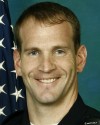
Master Public Safety Officer Scotty Richardson
Aiken South Carolina Department of Public Safety
End of Watch: Wednesday, December 21, 2011
Age: 33
Tour: 12 years
Incident Date: 12/20/2011

Master Public Safety Officer Scotty Richardson was shot and killed after he and another officer stopped a suspicious vehicle on Brandt Court, near Camellia Street, shortly before 9:00 pm.

Officers had been searching for the vehicle in relation to an incident earlier in the evening. After the stop, one of the occupants immediately opened fire, fatally wounding Officer Richardson and striking the other officer in the chest. The second officer's vest stopped the round. Officer Richardson was transported to Georgia Health Sciences University Hospital where he died early the following morning.

Several suspects were arrested in connection with Officer Richardson's murder.

Officer Richardson had served with the Aiken Department of Public Safety for 12 years. He is survived by his wife and three young children.
Rest in Peace Bro…We’ll Continue The Watch

Day is done, Gone the sun, From the lake, From the hills, From the sky. All is well, Safely rest, God is nigh.

Officer Down


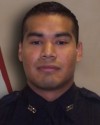
Police Officer Arnulfo Crispin
Lakeland Florida Police Department
End of Watch: Wednesday, December 21, 2011
Age: 25
Tour: 1 year, 6 months
Badge # 267
Incident Date: 12/18/2011

Officer Arnulfo Crispin was shot and killed while making contact with suspicious individuals near Crystal Grove Drive at approximately 10:15 pm. Officer Crispin exited his cruiser to make contact with three subjects in a closed park and while checking one subject for weapons was shot from behind by another.

A second officer arrived to the scene seven minutes later and found Officer Crispin unresponsive. He was taken to Lakeland Regional Medical Center where he underwent several hours of surgery. He remained in grave condition for two days before succumbing to his wounds.

Twelve agencies responded to search for the suspect, who turned himself in after a ten-hour manhunt.

Officer Crispin had served with the Lakeland Police Department for 18 months. He is survived by eight siblings.
Rest in Peace Bro…We’ll Continue The Watch

Day is done, Gone the sun, From the lake, From the hills, From the sky. All is well, Safely rest, God is nigh.

COP Christmas Cards...

Christmas Cards from some of the agency divisions:


ADR helps when you have issues and rather not go to formal resolution 


Internal Affairs...need I say more!

Officer Down


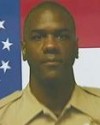
Senior Police Officer Timothy Schock
Chesapeake Virginia Police Department
End of Watch: Tuesday, December 20, 2011
Age: 41
Tour: 16 years

Senior Police Officer Tim Schock died during a training dive in the lake at Oak Grove Lake Park.

He and other members of the Chesapeake Police Department's dive team were conducting the dive when he experienced trouble breathing. His dive partner attempted to give him his own respirator as they surfaced, but Officer Schock submerged again. Other officers on scene immediately retrieved him and started CPR on shore. He was transported to Chesapeake General Hospital where he passed away.

Officer Schock was a U.S. Marine Corps veteran and active member of Law Enforcement United. He is survived by one child, fiancee, and parents.
Rest in Peace Bro…We’ll Continue The Watch

Day is done, Gone the sun, From the lake, From the hills, From the sky. All is well, Safely rest, God is nigh.

Tuesday, December 20, 2011

Security Weekly: The Iraq War: Recollections December 20, 2011

A Tuesday morning routine is to read the Security Weekly and I see Dr Friedman has used others to do his column today. I can understand that. Get this written before the holidays are in full swing. But as a long time (I believe one of the original addicts) of this service it is refreshing to see a report have this quote in it: As the C-130 ramp dropped at Kuwait International Airport in March 2003, I was hit in the face with a wave of heat and sand. I remember thinking to myself that this was going to suck, a lot.

Merry Christmas to All....and to all a good night.

By George Friedman

The war in Iraq is officially over. Whether it is actually over remains to be seen. All that we know is that U.S. forces have been withdrawn. There is much to be said about the future of Iraq, but it is hard to think of anything that has been left unsaid about the past years of war in Iraq, and true perspective requires the passage of time. It seemed appropriate, therefore, to hear from those at STRATFOR who fought in the war and survived. STRATFOR is graced with seven veterans of the war and one Iraqi who lived through it. It is interesting to me that all of our Iraq veterans were enlisted personnel. I don’t know what that means, but it pleases me for some reason. Their short recollections are what STRATFOR has to contribute to the end of the war. It is, I think, far more valuable than anything I could possibly say.

Staff Sgt. Kendra Vessels, U.S. Air Force
Iraq 2003, 2005
STRATFOR Vice President of International Projects

Six words capture my experience during the invasion of Iraq: Russian linguist turned security forces “augmentee.” I initially volunteered for a 45-day tour of the theater — one of those unique opportunities for those in the intelligence field who don’t see much beyond their building with no windows. My field trip of the “operational Air Force” turned into a seven-month stint far beyond my original job description. But in the end I wouldn’t trade anything for that experience.

I will always remember March 19, 2003 — not only because it was my 22nd birthday but also because it was the day that brought an end to the hurry-up-and-wait that I had experienced for the four months since I’d arrived in Kuwait. During that time it was a slow transition from the world I knew so well, which was confined to a sensitive compartmented information facility (SCIF) and computer screens to practically living in mission oriented protective posture (MOPP) 4 gear, working with a joint-service security team and carrying a weapon. The day I was pulled from my normal duties to take a two-hour refresher on how to use an M-16 was a wake-up call. I had shot an M-16 once before, in basic training. Carrying a weapon every day from then on was new to me. While my Army and Marine counterparts knew their weapons intimately, I was still at that awkward first-date stage.

This anecdote represented a broader issue. As much as we might have known ahead of time that we would eventually invade Iraq, I don’t think we ever could have really been prepared. There were definitely creative solutions, like issuing an Air Force intelligence Barbie an assault rifle.

The invasion of Iraq that I describe is narrowly focused, but that’s what I knew at the time. As far as seeing a bigger picture, I was subject to the opinions on CNN and Fox just as everyone was back home. The only morsel that stands out is a “need to know” briefing we had on weapons of mass destruction a month before things kicked off. Slide after slide of imagery “proved” we needed to go into Iraq. Those giving the presentation seemed unconvinced, but at our level, we didn’t question those presentations. We always assumed someone much higher up knew much more than we would ever have access to. So we drove on, kept our mouths shut and did our jobs as we were told.

As an airman, the most memorable part of the experience for me was the shock and awe of the initial bombing attack. All the days before and after are blurred in my memory — either because they all seemed the same or because I’ve buried them somewhere. There were so many mixed emotions — pride in the U.S. Air Force as we watched the initial attack live on the news, fear of what would follow and sadness in saying goodbye to my friends who would leave to cross into Iraq in the following days. Among those friends were our British counterparts who did not feel they had a stake in the fight but were there because they took pride in their jobs and wanted to do well.

Indeed, I always took notice of the many nationalities that were there to fight beside us. They were less than enthusiastic about being in Iraq and, of course, blamed the Americans for causing them to be there. This is when I first began to feel the “uncoolness” of being American overseas because of the war. I did not foresee how bad it would get and would eventually experience outright hostility in Asia, Europe and other countries in the Middle East.

Two years later, I was “deployed in-garrison.” This concept captures not only what I love about the Air Force but also why my friends in every other service always had ample material for teasing me. If we can’t take all the luxuries of home to the war (and believe me, we tried: surf and turf and endless ice cream in the chow halls, televisions in every living space and air-conditioning or heating as needed), we will bring the war to us. It seemed like a great idea at the time. I spent a year driving less than 10 miles from my duty station in the United States to carry out a mission in Iraq through radio, chat and live feed on television screens. We experienced the same crew day, tempo and real-world mission requirements but worked in over-air-conditioned vans parked inside giant hangars.

Anyone who has ever done this can relate to how bizarre it is to work inside one of these vans in full winter gear during the peak of summer. But in comparison to my first experience on the ground in Iraq, I felt I contributed far more the second time around. Our unit was able to see results daily and know that we were directly contributing to units in contact with the enemy. I could finally begin to see the forest for the trees, but by that time, I could also see that the situation on the ground was far worse than before.

My take-away from the latter experience was the perception that the rest of the United States was detached from what was happening in Iraq and Afghanistan. I would spend 12 hours engaged with the reality on the ground, full of adrenaline and exhausted by the end of the day, only to wake up and do it all over again the next day. But between the missions at work I would interact with those not directly involved, and it was endlessly frustrating. My civilian friends were more concerned about what happened on “Lost” the night before or where they were planning to vacation during the upcoming holiday. This sentiment continues even today, as those of us who were directly impacted by the war reflect on how it changed our lives while others hardly notice that the war is coming to an end. I gently remind them that this is, in many ways, a victory for us all.

Basima
Iraq 2003
STRATFOR Middle East and Arabic Monitor

In 2003, when the news in Iraq began to report that U.S. President George W. Bush would invade Iraq, Iraqis began to wonder if this would really happen — and if it would be the solution to and the end of the tyrant era in Iraq. I was sitting with my father, an old man addicted to listening to the radio instead of watching the two boring Iraqi television channels that mostly broadcast Saddam’s interviews, speeches and songs about him. I asked my father, “Dad, do you think the Americans will really come to save us and our country from this tyrant?” He said, “Yes they will, and there will be no other way to get rid of this tyrant but by a strong power like America.” As all other Iraqis, I kept watching television and listening to the radio to follow the news.

My husband, my kids and I were all staying at my parents’ house, along with my other two sisters and their families. We bought much food and stored water in a big container. We contacted our relatives and they contacted us, everyone wanting to make sure that the others were ready for the war and for the moment of salvation. If you draw an image of the Iraqi streets at that time, you will see very close and trusted friends secretly sharing their happiness about the idea that the Americans will come and topple the brutal regime. No one was afraid of the war because we are a people used to being in a war, and we were suffering enough from the blockade.

When the war began, I would say most Iraqis, if I cannot say all, were happy to see the end of the madman Saddam. When the statue of Saddam was pulled down in Firdos Square, my family and I were so happy our eyes were full of tears. They were not tears of sadness but of happiness. It was unbelievable. It was the moment of freedom.

After that, when the people began to get out of their houses, they could see all the military trucks and soldiers. And the people waved their hands and nodded or made signs with their hands to show the Americans that they were happy and thankful. For the first time in their lives, Iraqis practiced the freedom to speak in the streets freely and loudly without being afraid of Saddam’s loyalists.

Sgt. “Primo,” U.S. Marine Corps Task Force Tarawa
Iraq 2003
STRATFOR Tactical Analyst

As the C-130 ramp dropped at Kuwait International Airport in March 2003, I was hit in the face with a wave of heat and sand. I remember thinking to myself that this was going to suck, a lot. But at the same time there was a sense of relief at the finality and completion of mobilization orders and deployment, and despite the disruption of our civilian lives we knew that this was it, and it was all we had to concentrate on.

An infantry unit in the U.S. Marine Corps Reserve, we were a motley mix of professions and lifestyles — mechanics, school teachers, policemen, college students (roughly half of us), boilermakers, bankers, bartenders, small-business owners and kids straight out of high school. And we respected our leaders. Our commanding officer was a successful corporate executive, our company first sergeant and company gunnery sergeant had living-legend status in their respective law enforcement agencies, and all of our staff non-commissioned officers — most of whom were veterans of the first Gulf War and/or employed in law enforcement in their civilian lives — had served active-duty tours in their younger days, as did the NCOs that just got out of the Fleet and volunteered to deploy with us.

My squad (in which I had been unceremoniously promoted, as a lance corporal, to fire team leader) was pulling security for the command tent in the staging area in northern Kuwait when all members of the company staff gathered for a meeting with the battalion staff. The purpose of the meeting was for the battalion gunny to list all the ammunition that we would be allotted, and it did not include 5.56mm link or 7.62mm link and only a shockingly small amount of non-linked 5.56mm. We knew we were leaving soon, and we exchanged bug-eyed glances when we overheard the gunny listing the allotment. Fire suppression capability had been a central tenet of our training, and it would not be possible with the ammo we were getting. And there was only about one grenade per squad. If we hit action, our survival could depend on the pitiful first-aid kits we had been issued. Then “Doc” Chris showed up with a ton of “acquired” gauze, medical tape, iodine and morphine from battalion headquarters, which earned him a godlike status despite his many personal shortcomings.

When we received the warning order in our platoon hooch later in the evening we were told we were going to Nasiriya, where a battle was still raging. In the morning, we threw on our over-loaded packs and said our goodbyes. With the sound of helicopters in the air, the company gunny rolled up in a Humvee overflowing with 5.56mm link, 7.62mm link, more grenades and much-needed bandoleers. Every rifleman had the equivalent of about 12 magazines and the squad automatic weapon (SAW) gunners had about four or five 5.56mm link boxes.

Fortunately, the landing zone (LZ) we were flown into in Nasriya was not hot. We spent two days in Camp White Horse and then moved on into the city and took up positions, which we fortified when we were not patrolling or running raids. After a week, we were moved to the Saddam Canal, the site of a fierce battle just days earlier, where we set up checkpoints to control anyone going to or from the city over our bridge. After about a month of bridge security, patrols and raids in the nearby neighborhood, we were moved to Qulat Sikkar, south of Al Kut.

While the Shiite Muslims in our area of operation may not have wanted us there, the United States took out Saddam and we were there to help them, so there was a tentative peace. While the locals outnumbered us, they did not want to rock the boat, nor did we. For all intents and purposes, we served as the local government, court and police of Qulat Sikkar. For the first few weeks, we raided residences of suspected Baath Party members, Fedayeen and criminals. You never knew what was behind the door, which was quite stressful, but you got used it. However, it didn’t take too long to realize that despite the weapons caches we would occasionally find, a good portion of the information we were receiving to conduct these raids may have had more to do with personal revenge than actual threats.

What we were trying to do was maximize our strength at the street level by interacting with the locals as much as possible during foot and mounted patrols, which we ran 24 hours a day. We wanted the locals to know that we were ready for anything while our medical corpsmen were helping injured civilians and kids who were brought to our position for care. Locals would come to us to report criminals and other threats, which we would respond to. The professional policemen in our reserve unit trained local police. Because of this, and the fact that the local Shia were happy to see Saddam ousted and were not politically organized, we experienced no serious attacks, nothing more than the occasional spray-and-pray or potshot. The people, all of whom were destitute, just tried to keep on living and begin building an uncertain future as we continued our patrols, dreaming of home in our spare time.

The uncertain future became most evident when local Iraq army veterans began asking for their pay or pensions and we told them to go away. And while the Bush administration’s decision to remove all Baath Party members rather than just the unsavory elements from official life was not such a factor for us in the Shiite south, the move was something that we debated endlessly. The majority of the Marines in my platoon — college students and working men alike — saw it as a very bad idea and something that would almost guarantee a resistance movement.

We stayed just under six months and did a lot of good for people who have not faced much good in their history. The reality of war is that sometimes you are lucky and sometimes you are unlucky. During that deployment, we were very lucky. No Marines in our unit were killed in action, and no Marines were seriously wounded. The Italians who replaced us were not so lucky. A few months after our departure and after becoming fully immersed in civilian life again (except for drill weekends), I turned on the television to see that Nasiriya had been hit by a major suicide bombing and that 19 Italian soldiers — some of whom we had undoubtedly dined with at Camp White Horse just weeks earlier — were killed along with 11 civilians. I remember thinking that this was just the beginning of a different type of war that would last a long time.

Cpl. Nathan Hughes, U.S. Marine Corps Regimental Combat Team 1
Iraq 2003
STRATFOR Deputy Director, Tactical Intelligence

Looking back, the paradigm that pulls it all together for me is one of a military that has spent too many years in garrison going off to war. By March 2003, 9/11 had dominated everyone’s thinking for a year and a half, but only a tiny fraction of the military had actually been to Afghanistan. And there had been no time for operational lessons that might have been learned to percolate through the system.

None of that was apparent then. When we first came ashore in February, the negligent discharge of a SAW at the port in Kuwait and seeing servicemen from other units carrying their rifles slung muzzle down stuck out to us after six months with a Marine Expeditionary Unit (pretty much the height of readiness and cohesion for a Marine infantry battalion at that point). The truth was that even six months at sea in 2002, aside from the loss of Marines in a shooting in Kuwait, did little to prepare us for the post-9/11 realities that would become so apparent in subsequent years.

After weeks of waiting in Kuwait (to the point where unfounded rumors of the death of Jennifer Lopez were beginning to get too much traction) and after we had resigned ourselves to never leaving that miserable place, we suddenly received orders to immediately mount up. We were a U.S. Marine regiment on amphibious tractors, unarmored Humvees and seven-ton trucks. I remember feeling bad for anyone who got in our way, and how that illusion crumbled over and over again in the subsequent weeks.

I remember exactly how shallow the first fighting positions we dug had been at our staging area south of the Iraqi border. The ground had been ridiculously tough, and we knew we were moving in as little as a few hours. That expediency was fine until the first “Lightning, lightning, lightning” came across the net, signaling that an Iraqi “Scud” missile had been fired. We were already in our MOPP 1 attire, which we would wear during most of the invasion, but despite endless drills (and laps around the flight deck on the way over in MOPP 4), it had taken us distressingly long to suit up. And lying in a far-too-shallow fighting position recalling how useless I had been — how useless we all had been — learning how to fire a rifle while wearing a gas mask in 1998, I mulled over everything I knew about fighting in a chemical or biological environment. The only thing I knew for sure was that doing so was a terrible, terrible idea.

On the outskirts of Nasiriya, we saw the first burned-out hulks of American vehicles and the first section of our platoon was moved, briefly, from our unarmored Humvees to the “protection” of the welded-aluminum hulls of amphibious tractors. Before someone somewhere cancelled the whole maneuver, we were on the verge of following an artillery barrage through a city where the entire urban expanse had been declared hostile. One surreal experience flowed into the next.

Between spending a night where no one slept because we had erected our 81mm mortar gun line in an exposed position in the middle of an Iraqi village and reconnoitering for positions in a pair of Humvees with our heaviest weapon, a SAW, it became clear how desperately thin we were spread. The civilian looting of Baghdad was comprehensive and immediate. As we moved to our initial objective, there were already stolen construction vehicles with air-conditioning units chained to the shovels moving down the shoulders of the city’s roads. The magnitude of pacifying an urban population — and our complete inability to do so — was blatantly apparent.

By the time we fell back to Kuwait that summer (even the senior-most Marine commanders were assuring us in good faith that the objective was kicking in the door and seizing Baghdad and that the Army would take it from there), it was already a different world. Children that had once been restrained by their parents or their own uncertainty would now stand inches from moving tracked vehicles and demand candy. What we had achieved, in other words, was done in the space created by “shock and awe.” But the shock and awe had already worn off and the Iraqis were adapting and settling into the new reality with a frightening speed.

Staff Sgt. Paul Floyd, U.S. Army Special Operations Command
Iraq 2005-2008
STRATFOR Tactical Intern

My unit worked under Joint Special Operations Command (JSOC), and our primary role was high-value target (HVT) kill or capture missions. These missions were meant to apply pressure to or destroy enemy networks, not to win over popular support. I served eight tours overseas, half in Iraq. Our deployments lasted anywhere from 90 to 140 days. During these deployments, my platoon conducted hundreds of missions and killed or captured many HVTs. Most missions were successful in the sense that we got who we were after. Some missions were not successful. The following are the missions that stick out.

My first deployment was in 2005 to Baghdad. I was scared and didn’t know a damn thing about where I was going, and my team leaders and squad leaders were not about to enlighten me. After a short layover in Germany, we flew directly into Baghdad instead of Kuwait, where most units staged. The lights in the cargo bay went red, the crew donned body armor and they dropped the plane onto the runway like it was crashing to avoid being shot down. We had arrived in the middle of the night and were still recovering from the sleeping pills they had provided for the flight. We had to unpack all of our mission-essential gear from our cargo pallets and prep our gear for a helicopter flight into our operating base. Our leaders still didn’t divulge many details about where we were going even as we loaded magazines and donned body armor.

We loaded a CH-47 with half of our platoon and our personal bags and lifted off to what I had been told was the most dangerous city in the world at that time. When we landed, I was a little beside myself as we rushed off the helicopter to establish security, sweeping our sectors of fire and waiting for our first firefight while others frantically threw bags off the bird. It took a few minutes, but the helicopter finally took off to pick up the rest of our platoon and then we were able to hear the laughter. “Hey dumbasses, we are in the Green Zone and you are pointing your weapons at the guys who guard our compound,” our team leaders said between guffaws. “Welcome home.”

This was not what I was expecting. My first mission was the next night. I was a top gunner on an up-armored Humvee manning a medium machine gun. We worked at night, and all I knew was that we were going to get some guy in some place in Baghdad. In other words, I could barely understand what I was seeing, didn’t know where I was and had no idea who we were after. The last thing my team leader had told me before we rolled out was to shoot back if we were shot at and if the vehicle rolled, try and get clear because the night before a Humvee had been hit by an improvised explosive device (IED) and rolled and everyone inside had burned alive. He might have been lying, but it stuck. We rolled through Baghdad for about 15 minutes and finally stopped 200 meters past an intersection. To help with radio communication, we turned off our jammers, per standard operating procedure, and an IED detonated at the intersection we had just passed. We went on two more missions that night and, over the course of 90 days, conducted around 120 missions.

My second deployment was to Ramadi in summer 2006. At that time, Ramadi was falling apart. The entire city was hostile, every single place we went. One mission during this deployment sticks our more than any other. We received intelligence on the whereabouts of a target high enough on the food chain that the strike force commander launched us during the day. The coordinates we had been given led us to what was essentially a strip mall on the side of the road. Since it was daytime, we found it to be more successful to move hard and fast, so we “landed on the X.” As we were leaping out of our vehicles, we realized there were more than 100 people running in all directions. We detained every single military-aged male. It took hours and we had to call in the regular army to help us move them all, but we got the al Qaeda cell leader we were after and his lieutenants. We didn’t make any friends that day, but we accomplished the mission and then some.

On a similar mission, we found ourselves being launched during the middle of the day to capture a man who we thought was a major piece of the Ramadi insurgency. This time we drove to a house, contained it, blew down the door and seized it. All we found inside was a woman and 13 teenage girls. We started to search the house, and I was tasked with searching the room where the girls were being kept while a younger guy watched them. Searching a room in the desert while wearing body armor is miserable work. About halfway through I heard some light giggling and looked up to find that two of the girls had taken a fancy to their overseer and were trying to flirt. There he was smiling from ear to ear while they both were moving their veils and hijab’s just enough to show a little hair and some of their faces. I started to laugh when the radio explodes with chatter about a car returning to the house. We quickly rearranged ourselves and detained the men as they pulled into the driveway. It was their uncle who had to pick up an associate and who also happened to be our target. We detained him and left.

My third deployment in Iraq was back to Ramadi in 2007. This was after the local tribal leaders had banded together and begun working with the United States to push al Qaeda out of the city. This meant that the enemy had moved to the countryside, and we were going to air assault instead of drive. Every night, we flew to the countryside and walked to our targets. This deployment was different. I experienced more firefights in those first seven missions than I ever had before.

On my eighth mission, the intelligence that drove us to a target was literally “there is a suspicious blue truck there.” We ridiculed that assessment as we boarded the helicopters. I was point man for my platoon and led it up to the house. As I cleared the initial courtyard I saw a man open a door, stick his head out and, clearly frightened, duck back inside, leaving the door partially open. Following my training and not wanting him to have any more time to prepare for a fight I followed him through the door with my fire team. I kicked the door fully open and two men armed with what I later learned was an AK-47 and an M-16 fired on us as we came through the door. I cleared my corner and returned fire while my teammates did the same. Suddenly my firing hand was thrown off of my weapon. I placed it back but found that I could not pull the trigger. It seemed like time just stopped. I looked down to find that my finger was flapping wildly against my weapon and realized that I could not shoot. I took a knee and yelled “down” to let my team know I was out of the fight and they adjusted their sectors of fire. There was a brief pause before another armed man opened fire from behind the door. I thought I was dead. The fire team behind us entered the room immediately and eliminated the threat.

I had been shot in the hand while one of my team members had been shot through the arm and the other had had a bullet graze the side of his head. We all walked out of that room in time to see the rest of the house erupt with gunfire. My platoon moved us back under fire and returned fire. A man then ran out of the house and our rounds detonated his suicide vest. His head and leg landed in the road in front of us. The fight ended with two 500-pound bombs and a medevac helicopter to Balad. I went home early that deployment.

My last deployment to Iraq was in 2008, back in Baghdad. One again we were driving, part of a task force assigned to counter Iranian influence. The new threat was the explosively formed projectiles being imported by the Iranians. These next-generation IEDs could punch through any standard armor we had. U.S. troops adapted with solid metal plates bolted to the sides of vehicles with an 18-inch standoff. The enemy adapted by aiming the IEDs slightly higher so the force of the blast would miss the metal plates and take heads off in the passenger compartments.

This react and counteract game never stopped. We were there during the winter, which meant it actually rained a fair amount for a brief period. I was a convoy commander on this deployment. On one particular mission, we had stopped to let the assault force off more than a kilometer away so as not to spook the target at night with our engine noise. After they assaulted the house, they called to us to pull the vehicles forward. During the height of the sectarian violence of 2007, Baghdad neighborhoods had trenches and earthworks to protect them. On this wet winter night, we were forced to drive through one of these trenches to get to our platoon, and it took about three seconds to get my vehicle stuck.

Since we were running skeleton crews at this point and it was my fault, I decided to jump out by myself to perform the vehicle recovery. This is a pretty simple process of just having the nearest vehicle pull up, attaching a tow cable between the two and pulling the stuck vehicle out. As we started the pulling part, I stepped back to make room only to plunge into a hole filled with water well over my head. I was submerged, wearing about 60 pounds of armor and equipment and barely hanging onto a ledge. I thought about the irony of dying in Iraq not because of enemy fire or an IED but by drowning. I managed to extract myself, and since no one could hear or see me, I calmly walked back to my extracted vehicle. If my gunner wondered why I was soaking wet and freezing, he didn’t ask.

Staff Sgt. Benjamin Sledge, U.S. Army Special Operations Command
Iraq 2006-2007
STRATFOR Senior Graphic Designer

I had done a lot in eleven years in the military: Afghanistan, language training, John F. Kennedy Special Warfare Center and School, and Iraq. But Iraq would be the nail in the coffin of my military career.

In Iraq I kicked in doors, took shotgun pellets to the face (courtesy of a trigger happy Marine), watched IEDs explode in front of my vehicle, watched people shoot at my vehicle, made friends with the locals, rebuilt infrastructure, had the locals tell me they loved me and had the locals shoot at me. I also watched people shoot my friends, attended memorial services, cried, laughed, got depressed, ranted, fought, got dirty, got dirtier, cried some more and then went home.

The twin bloody battles of Fallujah in 2004 would move the insurgents to a city 20 miles west named Ramadi, which we would lovingly nickname the “Meat Grinder.” The rules of engagement were so lenient that if someone popped their head around the corner twice you could shoot a warning shot. The third peek was considered hostile and you could engage the person with lethal force. Every morning the roads were declared clear for about 30 minutes after an explosive ordnance disposal (EOD) team had spent the night clearing them. Thirty minutes later, every road had multiple IEDs on them. By noon, you were guaranteed to get shot at.

The turning point in my deployment came when a former Special Forces captain named Travis Patriquin came up with a simple — and hilarious — PowerPoint slide mocking how complex the American war machine had made the war in Iraq. My team began to work with him and other teams trying to win over the tribal sheiks and empower the people in the area. In accordance with a plan devised by Col. Sean McFarland, commander of the 1st Brigade Combat Team of the 1st Armored Division, U.S. troops also began to occupy all points of Ramadi in small combat outposts. In time, the tide began to shift and we began to see a significant, perceptible change. For once, my spirits were lifted and I thought we would achieve some success in the war. Capt. Patriquin would not live to see it. He was killed by an IED, leaving behind his wife and three small children.

When the war shifted in Ramadi, my team began to work hard rebuilding infrastructure instead of slinging lead, but complications soon arose. After the fighting died down, staff officers found new ways to look like rock stars in order to advance their careers. This was when my faith in the U.S. military began to crumble. Instead of working on the power grid or sewage system — basic life necessities that the people desperately needed — I was ordered to win hearts and minds by building soccer fields and other “Iraqi entertainment” venues. (Aid money was poured into a multimillion-dollar soccer stadium that only collected trash.)

After asking instead to work on the power grid, I was threatened with administrative punishment by a colonel in the 3rd Infantry Division. I acquiesced, then filed a report about waste and abuse of taxpayer dollars. More threats, more soccer fields demanded, but my unit never backed down. We eventually got electricity running in the city 18 hours a day. This was a big deal, though the cost was high: Purple Hearts, Bronze Stars with valor and marital problems. (A third of our 30-man team left Iraq divorced, including me.) Coming home should have been a joyous occasion, but after 15 months, we were all very different and the world was not the same.

Though the Iraq war is ending, it will never be over for those who went. Anytime someone finds out you’re a veteran and a little about what you did, the question comes up: “Did you kill anyone?” And with that inevitable question comes an inevitable floodgate of memories, good and bad.

Anonymous, U.S. Army Human Intelligence Collector
Iraq 2007-2008
STRATFOR Tactical Intern

I remember following the U.S. invasions in Afghanistan and Iraq from the comfort of my living room with no idea what a war zone was really like. Little did I know that one day I would have my own experiences in the Iraqi and Afghan cities I was watching on television.

A couple years after the fall of Saddam Hussein I was running human intelligence (HUMINT) operations in Baghdad, having one-on-one conversations with U.S. adversaries. I was elated by the opportunity to hear the perspective of the enemy. In the interrogations, our conversations varied. We would discuss anything from a planned attack on a convoy to the art of raising homing pigeons. While the typical image in Iraq was one of U.S. soldiers in fierce battles with insurgents, I would find myself smoking from a hookah with someone who had killed dozens. The polite nature of Iraqis carried over to the individuals with whom I would have conversations. A man who had just detonated an IED against an American convoy would offer me his prison-issued jacket if the weather was cold. I was shocked to see how cordial a detained insurgent could be, even if uncooperative.

There was a steep cultural learning curve for me, beginning with my mission in Iraq. Having never left the Western Hemisphere and having focused on Latin America with my previous unit, I was amazed to see what a different world the Middle East was. Language barriers were surprisingly easy to work around with interpreters, although my ability to gather intelligence depended on my cultural understanding. Picking and choosing which interpreter to use in communicating with a source was the first step. (An outspoken Lebanese Christian would not be very effective with a Sunni extremist.) It was also important to consider the gender, age and Islamic sect of interpreter and source. Putting aside intelligence gathering and turning instead to light-hearted conversations revolving around the source’s life not only improved my cultural understanding but also helped elicit critical information and actionable intelligence.

My time in Iraq was quite different from that of a soldier patrolling the streets of Baghdad. While I left my friends and family behind and worked long hours, sometimes exceeding 48-hour shifts, I still enjoyed most of the comforts of home that many soldiers in Iraq could not enjoy. The dangers were minimal compared to those faced by soldiers who kicked open doors and endured regular ambushes and IEDs. I often felt that I was not really doing my part compared to others who were risking their life in combat. However, I cherish the knowledge I gained from the Iraqi people and hope my contribution in Iraq was to save both U.S. and Iraqi lives.

Sgt. Frank B., U.S. Marine Corps
Iraq 2008
STRATFOR Junior Tactical Analyst

During our operations in northern Anbar province, I was continuously struck by the unintended consequences of our actions. As a platoon size, eight-vehicle element, we conducted patrols around the region checking in on disparate parts of the population. However, due to a lack of good road maps we relied on aviation charts that made it hard to identify good or established ground routes.

In our effort to survey our area of operations for security threats (in addition to other taskings), we found that our two mine-resistant, ambush-protected (MRAP) trucks, weighing more than 10 tons apiece, would easily crush the simple, mud-packed irrigation networks in the area. This would result in the limited water supply being quickly absorbed by the vast expanse of baked earth. And our communication and electronic countermeasures antennae, some 15 feet tall, would routinely pull down or short out the low-hanging, rudimentary power lines that tenuously fed electricity over long distances to isolated populations.

All of this was impossible to avoid while executing our tasking orders and providing mandated levels of protection to our unit, yet it hampered our ability to build any kind of rapport with people in areas that had had limited contact with the ousted Baathist regime in the first place. I remember realizing at the time that many of our interests and actions negated one another, and I often wondered how much more of that was happening with the many different units across the country.

I would later realize this example would prove to be one of many examples where our best operational intentions were obfuscated by the complexity of procedures, precautions and logistics necessary for our activity within the country. I’ll never forget walking away from my time in Iraq realizing the one-step-forward-two-step-backward reality of my unit’s time in Iraq, and how it forever changed how I understand the net costs of military and foreign interventions everywhere.

Conclusion

I know each of the authors well enough to have been startled by their recollections of the war. The humor, dedication and bitterness expressed in these pieces show me dimensions of each of them that I had not known were there. War reshapes the soul and makes people we think we know into mysteries. Life goes on, but not as it once was. No geopolitical meaning can be extracted from these memories, but human meanings can be. Suffice it to say that I am proud to be associated with these men and women.

"The Iraq War: Recollections is republished with permission of STRATFOR."

Officer Down


Police Officer John David Dryer
East Washington Borough Pennsylvania Police Department
End of Watch: Monday, December 19, 2011
Age: 46
Tour: 1 year, 4 months
Incident Date: 12/18/2011

Police Officer John Dryer was shot and killed as he and another officer made a traffic stop on I-70, near East Beau Street, in East Washington at approximately 11:00 pm.

As Officer Dryer and a second officer waited for a tow truck to arrive the man exited his vehicle and opened fire. Officer Dryer was shot in the head and fatally wounded, and the second officer was shot in the hand. Officer Dryer was transported to Washington Hospital where he was pronounced dead at about 1:00 am.

The suspect fled the scene and barricaded himself in his home in Webster, Pennsylvania. After several hours the suspect exited his home and was shot and killed after opening fire on officers.

Officer Dryer had served as a part-time officer with the East Washington Borough Police Department for 16 months. He is survived by his son and parents.
Rest in Peace Bro…We’ll Continue The Watch

Day is done, Gone the sun, From the lake, From the hills, From the sky. All is well, Safely rest, God is nigh. 

What's going on in the World Today 111219

 HYPERLINKS MAY REQUIRE AN EMAIL:  
 
USA

U.S. Naval Update Map: Dec. 14, 2011

EUROPE

NOTHING SIGNIFICANT TO REPORT

ASIA

North Korean Leader Kim Jong Il's Death

Dispatch: Kim Jong Il's Death and North Korea's Transition

Seychelles In the Scheme of China's Naval Expansion

AFRICA

NOTHING SIGNIFICANT TO REPORT

RUSSIA

NOTHING SIGNIFICANT TO REPORT
 
IRAN

The Geopolitics of Iran: Holding the Center of a Mountain Fortress

Iran: 17th Warship Fleet Deployed December 18, 2011

Iran’s 17th fleet of warships left for international waters Dec. 18 after the return of Iran’s Jamaran destroyer, ISNA reported, citing Iranian Adm. Habibollah Sayyari. The fleet will sail toward the Indian Ocean, the Gulf of Aden, the Red Sea and other international waters, Sayyari said.
 
IRAQ

NOTHING SIGNIFICANT TO REPORT
 
ISRAEL

NOTHING SIGNIFICANT TO REPORT
 
AFGHANISTAN

Afghanistan: Night Raids With Afghan Special Forces To Continue - NATO December 19, 2011

NATO will continue conducting nighttime kill-and-capture raids against suspected insurgents with increased Afghan special forces participation, a NATO spokesman said Dec. 19, AP reported. Afghan special forces currently participate in nearly all nighttime raids, which remain the safest way to kill or capture insurgent leaders, the spokesman said. The raids account for less than 1 percent of civilian casualties, and no shots are fired in 85 percent of operations, he said.

Afghanistan: U.S.-Taliban Talks At Critical Point December 19, 2011

Unnamed senior U.S. officials said U.S. talks with the Afghan Taliban have reached a critical juncture after 10 months of secret dialogue and a breakthrough might be possible, Reuters reported Dec. 19. Washington is reportedly offering to transfer an unspecified number of Taliban prisoners from Guantanamo Bay to Afghan government custody, asking the Taliban to make some confidence-building measures of their own. U.S. officials said the Taliban could use an office outside of Afghanistan as a method to further future its political reentry into Afghan governance, but not for fundraising, propaganda or the establishment of a shadow government. U.S. officials said Afghan President Hamid Karzai has been informed of the negotiation process with Washington meeting with him after each encounter with the Taliban


MIDDLE EAST

The Geopolitics of Egypt: From Eternal Stability to Turmoil

SOUTH OF THE BORDER

Mexico Security Memo: The Disinformation Continues in Tamaulipas
 
MISC

NOTHING SIGNIFICANT TO REPORT


Except where noted courtesy STRATFOR.COM

Monday, December 19, 2011

Officer Down


Deputy Sheriff Ronnie Smith
Butts County Georgia Sheriff's Office
End of Watch: Saturday, December 17, 2011
Age: 49
Tour: 4 years
Badge # 643

Deputy Sheriff Ronnie Smith was killed in an automobile accident while responding to a fight call at approximately 10:30 pm.

His patrol car left the roadway and struck several trees at the intersection of Biles Road and Four Points Road, causing him to suffer fatal injuries.

Deputy Smith had served with the Butts County Sheriff's Office for four years. He is survived by his wife and two daughters.
Rest in Peace Bro…We’ll Continue The Watch

Day is done, Gone the sun, From the lake, From the hills, From the sky. All is well, Safely rest, God is nigh.

My old possessed cat

Basil Kiril


He wasn't very sociable but he was unique. And damned do I miss him.

Officer Down


Sergeant Michael Boehm
United States Department of the Interior - United States Park Police
End of Watch: Friday, December 16, 2011
Tour: 19 years
Badge # 892

Sergeant Michael Boehm suffered a fatal heart attack while responding to a call involving a person who had jumped from the Key Bridge in Washington, DC. The person was found critically injured on the C&O Canal towpath underneath the bridge near 34th Street.

Sergeant Boehm collapsed moments after responding to the scene. He was immediately transported to Georgetown University Hospital where he passed away. The person who jumped from the bridge also died.

Sergeant Boehm was a U.S. Army veteran and had served with the United States Park Police for 19 years. He is survived by his wife and son.
Rest in Peace Bro…We’ll Continue The Watch

Day is done, Gone the sun, From the lake, From the hills, From the sky. All is well, Safely rest, God is nigh.

Occupy This!

Again, I have little tolerance for morons screaming "Give me! Give me!...I got a worthless degree and can't get a six figure income right out the box so you gotta pay off my student loans, give me an apartment..." But here is an interesting little note I found this weekend around seeing the Saints kick ass, Denver losing it's way and Houston...hey guys, you got the playoffs.

Well, first we go to our intrepid journalist.


“You got press credentials?”

I barely had time to say no to the mustachioed White Shirt before he grabbed my forearm and threw me to the ground. As he brought me down I transferred my smartphone – which I had been using to document the NYPD’s aggressive arrests following the impromptu celebration in the Winter Garden on Dec. 12 – to my left hand and then my pocket. The website Boing Boing posted a very dramatic photograph of me holding my glasses while police pile on top of me. I’ve been covering Occupy Wall Street as an independent journalist for its entirety as a radio show host, for Salon, and on the ground.

My arresting officer soon moved me to a chair at the far end of the lobby, just in front of the giant bay windows that line that side of the building. I was the 12th person arrested so far. There would be five more that morning before the cops were done – 10 men, seven women. Next to me sat a woman named Sarah, a drummer for the phenomenal protest marching band the Rude Mechanical Orchestra. Plastic zip ties – a longtime favorite tool for so-called riot police – held her wrists behind her back. Sarah still had her bass drum strapped to her chest, though, giving her a somewhat comical appearance. One could imagine charges against her reading: conspiracy to start a dance party. That type of absurd application of authority would become common over the next 37 hours as my fellow arrestees and I would wait for our arraignment.

Yo moron, there are no such things as Riot Police. They are called police. Sometimes knows as COPS (from England, it means Constable On Patrol), PIG (we say Pride, Intelligence and Guts, you say something else) or other words.
...They brought us inside and sat us in chairs against the wall in a large meeting area with a podium on one side. I was the last arrestee to be processed, just short of five hours after I had been handcuffed.  The police would continue this blistering pace for the next day and a half, using every excuse or procedure possible to slow our processing down. Once the sergeant on duty removed my plastic cuffs – which dig into your skin, often cause tingling or loss of feeling, and for me caused soreness, though nothing extreme – and confiscated my backpack and personal belongings, they sent me to the holding cells in the back of the precinct.

Like I told a 16 year old shoplifter last week who was in cuffs and somewhat embarrassed about it, "Hey, you don't like them, don't steal!" I know you were not stealing but we all know you were doing more than just taking pictures.
One cell in the tiny hallway held the seven women, next to that was a bathroom with a door that didn’t close, and after that was a cell that held the nine other men. Our cell was roughly 7 feet by 8 feet, and for the entire time we were held there were between 10 and 12 men inside. We were kept there from early Monday afternoon to 3 a.m Tuesday. I was not allowed to make a phone call until roughly 1 Monday night, about 14 hours after my arrest....

...Around 3 a.m. the cops were finally ready to move us to Central Booking. We lined up outside our cell standing in five sets of pairs, all facing the same direction. The cops then shackled us together like you would a chain gain, except instead of the full hands and feet we were only bound with one hand. So if you were in the front pair standing on the right, your left hand was attached to your partner’s, and vice versa, and each pair was linked together by maybe two feet of chain. We were marched through the precinct’s lobby – where Elizabeth the livestreamer slept in a chair, waiting for us – and into a new paddy wagon. We marched up the stair and into the holding area in complete darkness. When we were all inside an outwardly confident though obviously deeply insecure officer named Pete Volaric shut the doors behind us, leaving us in complete darkness.

The ride to Central Booking was stop and go although it was 3:30 a.m., and with each slam on the brakes we lurched forward as one awkward organism. Our handcuffs weren’t double locked, which means that with every motion, every yank, the rings got tighter.  When we got to Central Booking a different cop opened the latch and said, “Jesus, Voleric, you didn’t even turn on the light?” That cop switched it on as we made our way out of the paddy wagon. Standing in an open air pen inside the perimeter of Central Booking, shivering from the cold, Justin – a high-profile occupier – offhandedly remarked, “This is some real Soviet s#$%.”

Hey Justin, seeing you are part of OWS it is likely you have now knowledge of the Soviet Empire and how it handled dissidents. Ask Mr Vaclav Havel about how the Soviets were. You haven't disappeared, been sent to a re-education camp, had your family members threatened, denied schools or employment because of what you said and wrote. As I approach my fifth year on this planet I really have less tolerance for such stupidity. Get a job...McDonalds and Burger King are hiring.
The next two hours in many ways distilled the absurdism of our entire detainment. The 10 of us were forced to wind our way around tight hallways and down staircases all shackled together. One member of our group, Al, is an older man who had trouble walking quickly, especially since his belt had been taken, and as a result we moved at a pallbearer’s pace. The officers shuffled us from station to station, each time stopping us outside the room we had to go in to release us from our group cuffs one at a time. As a result, a series of processing procedures that could have taken 30 minutes total was dragged out for about two hours. I can’t be certain, but I think we finally arrived at our new cell in the tombs at around 5 a.m.

We spent the next 15 or so hours there. At lunchtime when we lined up in the hallway we saw Diablo in the next group cell over. It was like seeing an old friend. He asked how we were doing, we said fine. We asked how he was doing, he said fine. Someone in one of the other group cells behind us said, “No, no, that’s the Occupy Wall Street guys.” A few arrestees said keep up the good work. Later in the day we called some allies and recorded a phone interview describing our experience. Jeff, a member of the press team, and Lorenzo and Nick, members of the livestream group, set up the interview and sent it out to the Internet. I spoke with a friend of mine named Joe who helped me alert people about our situation.

We want your retina

When we were finally brought to the final holding area for our arraignment we were informed that if we refused to submit to a retina scan we would likely be held overnight. The retina scan is a voluntary procedure that all 10 of us had already denied earlier that day. According to our lawyers from the National Lawyers Guild – who are heroes – the lieutenant on duty and the judge said that if we continued to refuse the scans we wouldn’t get out that night. With only a few exceptions due to personal commitments, we all stood in solidarity and refused to submit to the procedure. This was around 11 p.m. on Tuesday, roughly 36 hours after our arrest. Several of the women arrested and a majority of the men were going to spend another night in prison to protest the ever expanding security state. In many ways, this final hurdle was the most egregious encroachment on our liberties. The retinal scan is a voluntary procedure, but if you don’t submit to it, you will be punished.
Or it will you not be expedited through the process. Just like in Texas if you are brought in for a DWI and refuse to provide a breath sample your license is suspended for at three months for the fact. But let's be honest privacy is not a concern of the Bloomberg government.
One final thought after these illuminating 37 hours. The story of Occupy Wall Street is impossible to tell removed from the story of the prison industrial complex. What makes OWS necessary is a story of a failing educational system. It’s a story of privatized prisons. It’s a story of predatory lenders, lack of affordable housing, and a complete absence of jobs in the most marginalized communities, who are often black or brown. It’s a story of a so-called drug war meant to imprison black and brown youth as a means of generating profits for the 1 percent. The NYPD have shown they will arrest accredited and unaccredited journalists alike. Official credentials don’t work as a protection.

That said, journalists – like activists – shouldn’t be afraid of going to jail. If and when we do get arrested it is not an inconvenience, or something that we shouldn’t be subjected to. It’s a chance to refocus our outrage, a chance to tell the most important stories, a chance to bear witness to the horrors of our criminal justice system. I don’t think the NYPD will ever offer me official credentials, but I won’t be asking them for any. Our right to observe and document police misconduct is not contingent on the approval of the authorities. And if the police think that intimidation is going to stop this movement, they should know better by now.

John, you have just explained the slow task of processing a prisoner through the NY City judicial system. I don't argue it's like most bureaucracies, efficiency is not a goal. Existence is, but that's another blog post. That said it is not part of a prison industrial complex and please come up with a more original saying. Ike created military industrial complex in 1960. But in all of your rant you had no experience with industry that was not positive. The smart phones you used to record all this was created by a private entity, not by a government agency. You go again and again about being oppressed for being arrested and complaining about the same government you want to insure you have a free college in Victim's Studies then a six figure job, a home, free health care, etc. Sorry but you are not showing much ability to write a simple story so that makes me question your knowledge of the English language. You are tying to connect two stories that are not related and failing at it.

I'll give you this, you did go to jail. Many of the journalists out there complain enough about a speeding ticket. But you need to grow up. You go around, loitering around, polluting a private park, assist in rape of women, destroy private property, harassing others you are breaking the law. You then get to pay for the price. You don't like that go to Cuba and get your free health care and job.

Sunday, December 18, 2011

I for one will not shed a tear....

Here is the official announcement of the death of Kim Jong Il, dictator of North Korea.


N Korean leader Kim Jong-il dies

Daddy's little man....

From Reuters

North Korean leader Kim Jong-il has died at the age of 69, state-run television has announced.

Mr Kim, who has led the communist nation since the death of his father in 1994, died on a train while visiting an area outside the capital, the announcement said.

He suffered a stroke in 2008 and was absent from public view for months.

His designated successor is believed to be his third son, Kim Jong-un, who is thought to be in his late 20s.

North Korea's state-run news agency, KCNA, urged people to unite behind the younger Kim.

"All party members, military men and the public should faithfully follow the leadership of comrade Kim Jong-un and protect and further strengthen the unified front of the party, military and the public," the news agency said.

A funeral for Kim Jong-il will be held in Pyongyang on 28 December and Kim Jong-un will head the funeral committee, KCNA said. A period of national mourning has been declared from 17 to 29 December.

The BBC's Lucy Williamson in Seoul says Mr Kim's death will cause huge shock waves across North Korea, an impoverished, nuclear-armed nation with few allies.

With barely concealed emotion, the newsreader dressed in black announced the death of North Korea's iconic leader - only the second the country has ever known.

He died, she said, of a heart attack brought on by mental and physical fatigue. Kim Jong-il had battled serious health problems for many years but his death has come more quickly than many expected.

His apparent heir, his son Kim Jong-un, has been groomed as the successor of the nuclear-armed state for little more than a year.

The question now is whether he has the power and authority to fill his father's shoes...

...Mr Kim inherited the leadership of North Korea - which remains technically at war with South Korea - from his father Kim Il-sung.

Shortly after he came to power, a severe famine caused by ill-judged economic reforms and poor harvests left an estimated two million people dead.

His regime has been harshly criticised for human rights abuses and is internationally isolated because if its pursuit of nuclear weapons.

Under Mr Kim's leadership funds have been channelled to the military and in 2006 North Korea conducted its first nuclear test. It followed that up with a second one three years later. Multinational talks aimed at disarming North Korea have been deadlocked for months.

Mr Kim unveiled his son as his likely successor a year ago. Many had expected to see this process further consolidated in 2012...

As an Army lieutenant I spent my first assignment in South Korea and it was an eye opener. The general belief was Second Infantry Division was to die in place. We were the trip wire that would start Korean War II if the North tried another invasion. And we would routinely find tunnels over the Demilitarized Zone. It was a bit of a standing joke we were only 38 seconds from knowing the war had started. The was the estimated time it would take for artillery in the North to hit us in Camp Casey.

A few years ago CBS 60 Minutes did an excellent article on a German doctor who had spent over a year in North Korea. The link is here and if you haven't seen the report it's eye opening. Here are some highlights from Dr Vollertsen,
...While driving his jeep around the country, Vollertsen said he saw hungry, malnourished people everywhere foraging for food: “And I saw little children at the roadside picking up all those little insects and whatever they can eat. Women who are looking for some leaves and special herbs.”


Sadly, no birds were chirping. “The people are killing whatever can run, whatever can fly,” says Vollersten.


Hazel Smith, who recently spent 13 months in North Korea for the U.N., monitoring food aid shipments, confirms his reports. She said it's not just hospitals, but the whole country that lacks the most basic necessities.


Here’s a sampling from her list: No clean running water. Lack of fuel to boil much water. No soap, no disinfectant, no toilet paper. No toothpaste. No sanitary napkins, but many women have stopped menstruating because of malnutrition.


“There is chronic malnutrition throughout the country now. Which means that children and adults don't grow very much,” says Smith.


However, you wouldn't know it by looking at the capital Pyongyang, which is in large part a Potemkin village, built for show. A towering triangle touted to be the world's tallest hotel has so many structural flaws that it has never opened for business. Wide boulevards feature decorative female traffic wardens directing imaginary traffic, with robot-like precision.

I believe it was in this article the malnutrition was so bad the average North Korean is three inches shorter than the average South Korean.

Me in 89, younger, thinner and ever dumber than now! :)  That is North Korea in the background.  

I remember serving on the DMZ with 5/20 Infantry during the summer of 89. We monitored a group of American students who were attending a festival in Pyongyang with signs of "US Imperialists" and "US out of Korea", etc. I've often wondered if they really were knowingly supporting this genocide. I'll give them the benefit of a doubt they didn't know...and hopefully they outgrew their youthful naive worldview.

But there is one pictures that puts North Korea, or Communism in general in a simple summation.

Notice the Korean peninsula north of the DMZ is almost dark. 

The South is a prosperous first world nation. Even by third world standards North Korea is a throw back to the 1700s. And we can thank this piece of human rot and his father Kim il Sung before him for the millions of dead in the area and the Korean War.

May he rest in piss. I have no doubt he and his daddy have a special ring of hell they are sharing right now. I only pray sometime in the future the peninsula will be reunited under a democratic Korea. The people of the north have suffered enough.

RIP Vaclav Havel

Another great one passes and unlike the many moron artists out there (e.g. Sean Penn, Mikey Moore) he led a nation to freedom. For some reason he never won the Nobel Peace Prize in spite of people enjoying liberty because of his leadership. I look at the morons who have won the prize (Arafat, Jimmy Carter, ALGORE and B Hussein Obama) it shows why a joke the award has become.
Vaclav Havel, leader of "Velvet Revolution," dies
(Reuters) - Vaclav Havel, a dissident playwright jailed by Communists who became Czech president and a symbol of peace and freedom after leading the bloodless "Velvet Revolution," died at 75 on Sunday.

The former chain smoker died at his country home in Hradecek, north of Prague, of a long respiratory illness after surviving operations for lung cancer and a burst intestine in the late 1990s that left him frail for more than a decade.

The diminutive playwright, who invited the Rolling Stones to medieval Prague castle, took Bill Clinton to a Prague jazz club to play saxophone and was a friend of the Dalai Lama, rose to fame after facing down Prague's communist regime.

"His peaceful resistance shook the foundations of an empire, exposed the emptiness of a repressive ideology, and proved that moral leadership is more powerful than any weapon," President Barack Obama said in a statement.

"He played a seminal role in the Velvet Revolution that won his people their freedom and inspired generations to reach for self-determination and dignity in all parts of the world."

His plays were banned for two decades and he was thrown into prison several times after launching Charter 77, a manifesto demanding the communist government adhere to international standards for human rights.

"I am extremely moved," an emotional Prime Minister Petr Necas told Czech Television when told of Havel's death.

"He was a symbol and the face of our republic, and he is one of the most prominent figures of the politics of the last and the start of this century. His departure is a huge loss. He still had a lot to say in political and social life."

Just six months after completing his last jail sentence, Havel led hundreds of thousands of protesters in Prague's cobblestone streets in a peaceful uprising in November 1989 that ended Soviet-backed rule. Just over a month later, he was installed as president in Prague Castle.

Swedish Foreign Minister Carl Bildt said on Twitter: "Vaclav Havel was one of the greatest Europeans of our age. His voice for freedom paved the way for a Europe whole and free."...

God be with your family at this time Mr Havel. Unlike most men you made a difference.

Another great one passes.

Friday, December 16, 2011

Tebow sniffs a kilo of blow!

This is too good not to be true! And after hitting the pack he sat on his hind legs and raised a paw to his head, thanking the Almighty!
The Legend Grows: "Tebow" Sniffs Out Kilo Of Cocaine, Helps Feds Bust Florida Airport Smuggler | The Smoking Gun

Is there anything Tebow can’t do?

A Puerto Rican man is facing a federal drug charge for his alleged role in trying to smuggle a kilo of cocaine into the country via Orlando International Airport in Florida.

The plot was disrupted when a drug detection canine named “Tebow” alerted to the “odor of illegal narcotics” coming from a suitcase that Weslie Morales, 20, picked up off a luggage carousel. The suitcase had been checked on an AirTran flight from San Juan by a “Juan Garcia,” who subsequently did not get on the plane.

When confronted by investigators, Morales (pictured above) described himself as “just a little fish,” adding that he was willing to cooperate to help agents “catch the big fish.” Morales claimed that he had been paid $800 to pick up the luggage, according to a criminal complaint filed in U.S. District Court.

Morales was released from jail yesterday after posting $25,000 bond. “Tebow,” named after the Denver Broncos quarterback (and former University of Florida star) Tim Tebow, is assigned to a handler with the Metropolitan Bureau of Investigation task force.

They have got to bring this dog to the game against the Pats Sunday!

Security Weekly: The Syria Crisis: Assessing Foreign Intervention, December 15, 2011

By Scott Stewart

The ongoing unrest, violence and security crackdowns in Syria have been the subject of major international attention since February. Our current assessment is that the government and opposition forces have reached a stalemate in which the government cannot quell the unrest and the opposition cannot bring down the regime without outside intervention.

In the Dec. 8 Security Weekly, we discussed the covert intelligence war being waged by the United States, Israel and other U.S. allies against Iran. Their efforts are directed not only against Tehran’s nuclear program but also against Iran’s ability to establish an arc of influence that stretches through Iraq, Syria and Lebanon. To that end, the United States and its allies are trying to limit Iran’s influence in Iraq and to constrain Hezbollah in Lebanon. But apparently they are also exploring ways to overthrow Syrian President Bashar al Assad, a longtime ally of Iran whose position is in danger due to the current unrest in the country. In fact, a U.S. State Department official recently characterized the al Assad regime as a “dead man walking.”

We therefore would like to examine more closely the potential external efforts required to topple the Syrian regime. In doing so, we will examine the types of tools that are available to external forces seeking to overthrow governments and where those tools fit within the force continuum, an array of activities ranging from clandestine, deniable activities to all-out invasion. We will also discuss some of the indicators that can be used by outside observers seeking to understand any efforts taken against the Syrian regime.

Syria Is Not Libya

It is tempting to compare Syria to Libya, which very recently was the target of outside intervention. Some similarities exist. The al Assad regime came to power in a military coup around the time the Gadhafi regime took control of Libya, and the regimes are equally brutal. And, like Libya, Syria is a country that is quite divided along demographic and sectarian lines and is governed by a small minority of the population.

However, we must recognize that the situation in Syria is quite different than Libya’s. First, the fault lines along which Syrian society is divided are not as regionally distinct as those of Libya; in Syria, there is no area like Benghazi where the opposition can dominate and control territory that can be used as a base to project power. As our map indicates, protests have occurred throughout Syria, and the Free Syrian Army (FSA) claims to have a presence in many parts of the country.

Moreover, while some low-level, mostly Sunni soldiers have defected from the Alawite-controlled Syrian military to the FSA, Syria has not seen the large-scale military defections that occurred in Benghazi and eastern Libya at the beginning of that conflict that immediately provided the opposition with a substantial conventional military force (sometimes entire units defected). The Syrian military has remained far more unified and intact than the Libyan military.

(click here to enlarge image)

Second, Syria simply does not have the oil resources Libya does. We have not seen the Europeans push for military intervention in Syria with the same enthusiasm that they did in Libya. Even France, which has been the most vocal of the European countries against Syria, has recently backed away from advocating direct military intervention. The strength of the Syrian military, specifically its air defense system — which is far superior to Libya’s — means military intervention would be far more costly in Syria than in Libya in terms of human casualties and money. In fact, Syria spent some $264 million on air defense weapons in 2009 and 2010 after the embarrassing September 2007 Israeli airstrike on a Syrian nuclear reactor.

With the future of Libya still unclear, it does not appear the United States and Europe have the political will or economic incentive to conduct another major military intervention (operations in Libya were very expensive). We also do not believe that regional powers interested in Syria, such as Saudi Arabia, Jordan or Turkey, could take military action against Syria without U.S. and NATO support.

Regardless, it is important to remember that there are many options foreign governments can apply against the al Assad regime (or any regime, for that matter) that do not constitute outright invasion or even entail an air campaign supported by special operations forces.

The Force Continuum

As we examine some of the actions available along that force continuum, we should keep in mind that the steps are not at all static; there can be much latitude for action within each step. For example, training provided by mercenaries or the CIA’s Special Activities Division is far more low-key, and therefore easier to deny, than training provided by the U.S. Army’s Special Forces.

The least risky and least detectable option for a country pursuing intervention is to ramp up intelligence activities in the target country. Such activities can involve clandestine activities like developing contact with opposition figures or encouraging generals to conduct a coup or defect to the opposition. Clandestine efforts can also include working with opposition groups and non-governmental organizations to improve their information warfare activities. These activities may progress to more obvious covert actions, such as assassinations or sabotage. Most of actions taken in the covert intelligence war against Iran can be placed in this level.

Clandestine and covert activities often are accompanied or preceded by overt diplomatic pressure. This includes press statements denouncing the leadership of the target country, the initiation of resolutions in international organizations, such as the Arab League or the United Nations, and international economic sanctions. These overt measures can also include formally meeting with representatives of the opposition in a third country, as when U.S. Secretary of State Hillary Clinton met Dec. 6 with Syrian opposition members in Geneva.

The next level up the force continuum is to solidify a relationship with the opposition and to begin to provide them with intelligence, training and advice. In the intervention in Libya, this happened fairly early on as foreign intelligence officers and special operations forces traveled to places like Benghazi, then later the Nafusa Mountains, to provide the Libyan opposition with intelligence regarding Gadhafi’s forces, and to begin to train the militia forces to fight. In Syria there is still a very real issue of a lack of unity within the opposition, which is apparently more fragmented than its Libyan counterpart.

In this level, outside governments often take opposition fighters to a third country for training. This is because of the difficulty involved with training inside the home country, which is controlled by a hostile government that rightfully views the opposition as a threat. Already we are seeing signs that this is happening with the training of FSA members in Turkey.

The next step beyond training and intelligence-sharing is to provide the opposition with funding and other support, which can include food, uniforms, communication equipment, medical assistance and even weapons. To restate a point, providing funding is not as aggressive as providing weapons to the opposition, so there is a great deal of latitude within this level.

When providing weapons, an outside government will usually try to supply opposition forces with arms native to their country. This is done to maintain deniability of assistance. For example, at the outset of international support for the mujahideen who were fighting the Soviet invasion of Afghanistan, efforts were made to provide the fighters with weapons consistent with what the Soviets and the Afghan communists were using. However, when those weapons proved insufficient to counter the threat posed by Soviet air superiority, the decision was made to provide U.S. FIM-92 Stinger man-portable air defense systems (MANPADS) to the Afghan fighters. Tactically, the MANPADS greatly benefited the mujahideen on the battlefield. But since they were advanced, exogenous weapons systems, the MANPADS stripped away any sense of plausible deniability the U.S. might have maintained regarding its operations to arm the Afghans.

We saw a similar situation in Libya in May, when rebels began using Belgian-made FN-FAL battle rifles. While the rebels had looted many Gadhafi arms depots filled with Soviet-era Kalashnikovs, the appearance of the FN-FAL rifles clearly demonstrated that the rebels were receiving weapons from outside patrons. The appearance of Iranian-manufactured bomb components in Iraq in 2006-2007 was another instance of a weapon indicating foreign government involvement in an armed struggle.

Since furnishing weapons foreign to a country eliminates plausible deniability, we are listing it as a separate step on the force continuum. Unveiling the foreign hand can also have a psychological effect on members of the regime by signaling that a powerful foreign actor is supporting the opposition.

The next level begins to bring direct foreign involvement into play. This usually entails foreign special operations forces working with local ground forces and foreign air power being brought to bear. We saw this model used in the 2001 invasion of Afghanistan, where the CIA, special operations forces and air power augmented Afghan Northern Alliance ground troops and helped them to defeat the Taliban quickly. This model was also used successfully against the Gadhafi regime in Libya.

The highest and least exercised step on the force continuum is foreign invasion, like the U.S. invasion of Iraq in 2003.

Preludes to Intervention

With this range of actions in mind, outside observers can look for signs that indicate where foreign efforts to support a particular struggle fit along the continuum.

Signs of a clandestine intelligence campaign can include the defection of critical officers, coup attempts or even major splits within the military. When figures such as former Libyan intelligence chief and Foreign Minister Moussa Koussa defected from the Gadhafi regime, they were doing so in response to clandestine intelligence efforts.

Signs of training and support will translate to increased effectiveness by the FSA — if they suddenly begin to employ new tactics, strike new targets, or show the ability to better coordinate actions over a wide geographic area, for example. Another sign of increased effectiveness would be if the FSA began to execute sophisticated asymmetrical warfare operations, such as coordinated ambushes or hit-and-run strikes directed against high-value targets. Foreign trainers will also help the FSA learn how to develop networks within the local population that provide intelligence and supplies, communication, shelter and early warning.

Outside training and intelligence support would lead to an increase in the strategic impact of attacks by armed opposition groups, such as the FSA. The opposition claims to have conducted several strikes against targets like the Syrian Directorate for Air Force Intelligence in suburban Damascus, but such attacks do not appear to have been very meaningful. To date these attacks have served more of a propaganda function than as a means to pursue military objectives. We are carefully monitoring alleged FSA efforts to hit oil and natural gas pipelines to see if they become more systematic and tactically effective. We have heard rumors of American, Turkish, French and Jordanian special operations forces training FSA personnel in Turkey, and if these rumors are true, we should begin to see results of the training in the near future.

As we watch videos and photos coming out of Syria we are constantly looking for evidence of the FSA possessing either an increased weapons supply or signs of external weapons supply. This not only includes a greater quantity of weapons, but different types of weapons, such as anti-tank guided missiles, mortars, mines, MANPADS and improvised explosive devices. We have yet to see either increased weapons or external weapons; the FSA appears to be using the weapons with which they defected.

If outside powers are going to consider launching any sort of air campaign — or establish a no-fly zone — they will first have to step up surveillance efforts to confirm the location and status of Syria’s air defense systems. This will lead to increased surveillance assets and sorties in the areas very close to Syria. Aircraft used in the suppression of air defenses would also be flown into the theater before launching any air operation, and an increase in aircraft, such as U.S. F-16CJ and British Tornado GR4s in Cyprus, Turkey or Greece, is a key indicator to watch. Increased EA-6B Prowler and EA-18G Growler electronic warfare aircraft, both carrier-based aircraft that regularly transit the region aboard U.S. Carrier Strike Groups, would likewise be important to watch. Aircraft carrier battle groups, cruise missile platforms, and possibly a Marine Expeditionary Unit would also be moved into the region prior to any air campaign.

Like the 2003 invasion of Iraq, any invasion of Syria would be a massive undertaking and there would be clear evidence of a buildup to such an invasion. The likelihood of actions against Syria happening at the top of the force continuum is very remote. Instead we will need to keep focused on the more subtle signs of foreign involvement that will signal what is happening at the lower levels of the scale. After all, any comparison to a “dead man walking” makes one wonder if the United States and its allies will take steps to hasten demise of the al Assad regime.
The Syria Crisis: Assessing Foreign Intervention is republished with permission of STRATFOR.