Police Work, Politics and World Affairs, Football and the ongoing search for great Scotch Whiskey!

Tuesday, October 16, 2012

Officer Down


Correctional Officer Larry L. Stell
Georgia Department of Corrections
End of Watch: Thursday, October 11, 2012
Age: 46
Tour: 11 years

Correctional Officer Larry Stell was stabbed and killed by an inmate at the Telfair State Prison in Helena, Georgia.

Correctional Officer Stell had served with the department for 11 years. He is survived by his wife.
Rest in Peace Bro…We Got The Watch

Day is done, Gone the sun, From the lake, From the hills, From the sky. All is well, Safely rest, God is nigh.

Monday, October 15, 2012

The Houston Comical shows how bias it is.

The Houston Chronical has taken an editorial opinion against capital punishment and I have no issue with that. It's in the back of section B that opinions are appropriate. Then again, we have articles at the front of section B that is nothing but opinion.
Houston cop killer hopes 'nice guy' image will halt his execution

With execution looming, Houston cop killer Anthony Haynes is pinning his hopes on convincing the notoriously hard-to-convince Texas Board of Pardons and Paroles that he is a nice guy and that his lawyers failed to convey that to jurors who sentenced him to death.

Haynes, 33, is set to die Oct. 18 for the May 1998 fatal shooting of Houston police Sgt. Kent Kincaid. The 40-year-old Kincaid was off duty and in civilian clothes when he confronted Haynes after an object from the killer's truck shattered the windshield of the officer's car.

A. Richard Ellis, Haynes' California-based attorney, argues in his pardons board petition that Haynes was an exceptional student with ambitions of a military career who foundered on the shoals of drug abuse. On death row, Haynes has become deeply religious and an inspiration to others, he says.

...Ellis argues that Haynes' original defense attorneys, intent on establishing that the killing was not a capital offense because Kincaid was off duty, failed to thoroughly investigate the case. "Despite a wealth of mitigating evidence, and a huge number of important witnesses who were eager to testify, the punishment phase was almost an afterthought," Ellis' pardons board petition says. "Many family members were never interviewed, and even when they volunteered to testify, their help was inexplicably refused."

Such testimony, he says, could have convinced jurors that Haynes was not a continuing danger and saved the killer's life.

Now what did this exceptional student with ambitions of a military career do in 1998 that landed him on death row:
Sergeant Kincaid was shot and killed after confronting several suspects who damaged his windshield while they were driving.

The officer was off duty and with his wife when the incident took place. An object was thrown from a pickup truck travelling in the opposite direction, striking the windshield of his personal vehicle. Sergeant Kincaid then turned around and followed the vehicle for several blocks until it stopped. He then got out and approached the vehicle and identified himself as a police officer. One suspect in the vehicle then fired a single shot which struck him in the head. He was transported to a local hospital where he was pronounced dead. The suspect was eventually arrested and sentenced to death.

Sergeant Kincaid is survived by his wife and two young daughters.


Later in the article:
'Bragged to friends'

Prosecutors painted a different picture, and the Texas Court of Criminal Appeals said in rejecting an earlier appeal, "Haynes admitted that he shot Kincaid because he was a police officer and, showing no remorse, bragged to friends that he had killed a police officer. The state's evidence established that Haynes is a violent man with an explosive temper whose only regret was not murdering Mrs. Kincaid, also."

I very much doubt Governor Perry will issue a stay of execution on this cop killer. So with a little luck sometime around 630PM this Thursday the news media will announce little Anthony has gone to his final Judge. And he will not be able to lie to Him.

RIP SGT Kincaid.

Progress, but they need to look at the other Jesse Jackson

You probably remember how Jesse Jackson Jr spoke with Governor Blago over the Senate seat held by B Hussein Obama. His quotes on the include such class notes as "This is a f#$^ing valuable thing, I'm not just going to give it away for f&%@in' nothin'." and "
I’ve got this thing and it’s f#&%­ing golden, and, uh, uh, I’m just not giving it up for f*&#in’ noth­ing. I’m not gonna do it. And, and I can always use it. I can para­chute me there." Jesse Jr was of course only speaking with the governor so he could continue his service to the people of Illinois.

Now little Jesse has been ill recently as you may recall. We may have found the cause.
Feds probe ‘suspicious activity’ in Jesse Jackson Jr.’s finances: sources - Chicago Sun-Times

The snowballing troubles of Jesse Jackson Jr. took a new turn Friday with the revelation that federal investigators have launched a probe into “suspicious activity” in the South Shore congessman’s finances.

Focusing on a completely new area of scrutiny for the son of the famed civil rights leader, the investigation is not related to former Gov. Rod Blagojevich’s attempted sale of a U.S. Senate seat, a scandal that has ensnared Jackson in the past, sources told the Chicago Sun-Times.

Rather, the probe — based in the Washington, D.C., FBI field office —is focusing on “suspicious activity” involving the congressman’s finances related to his House seat and the possibility of inappropriate expenditures, the sources said.

The probe was active in the weeks prior to Jackson taking a leave from his U.S. House seat on June 10, a leave his office ultimately attributed to his need for treatment for bipolar disorder, the sources said.

It was unclear whether the investigation involved the congressman’s official House spending account or his campaign finance account. But one source said it was an account monitored by Congress.

All members of the U.S. House receive an allowance to operate offices in Washington and in their districts. The allowances for rank-and-file members ranged from $1.4 million to $2 million in 2010, according to the House website....

...One of Jackson’s attorney’s, Paul Langer, repeatedly said “no comment,” when asked whether Jackson was under investigation related to his finances.

When asked if he was still representing Jackson or if the congressman had retained another attorney, Langer said:

“I can’t even comment on that.”

News of the probe — first disclosed by the Sun-Times — comes as questions increasingly swirl around Jackson’s absence from not only his official duties in Washington, but the campaign trail as the Nov. 6 election nears.

Citing exhaustion, Jackson, 47, stopped working, according to his staff, on June 10. His staff did not make that known until two weeks later.

Notice how exhaustion is only an illness for politicians, Hollywood stars and other rich people. Just curious.
The Jacksons put their Washington, D.C., home on the market last month at a price of $2.5 million. A campaign spokesman said at the time that the home was put on the market to pay for mounting medical bills. They subsequently took it off the market, saying it was a security issue.

OK, how does a man who has never had a real job until he got the Congressional gig afford a 2.5 million house in DC, in addition to his place in his notional home of Chicago? Again, good to know someone if finally looking into his finances.

Chicago Sun Times, good work here. Now please look into the finances of his dad, the greatest race baiting poverty pimp in the country, Jesse Sr.

Not the way to build up community relations....


Gotta see how much is true, but if they thought it was a meth lab, a flash bang was probably not the way to handle it.
Grenade burns sleeping girl as SWAT team raids home Grenade burns sleeping girl as SWAT team raids home

A 12-year-old girl suffered burns to one side of her body when a flash grenade went off next to her as a police SWAT team raided a West End home Tuesday morning. "She has first- and second-degree burns down the left side of her body and on her arms," said the girl's mother, Jackie Fasching. "She's got severe pain. Every time I think about it, it brings tears to my eyes."

Medical staff at the scene tended to the girl afterward and then her mother drove her to the hospital, where she was treated and released later that day. A photo of the girl provided by Fasching to The Gazette shows red and black burns on her side.

Police Chief Rich St. John said the 6 a.m. raid at 2128 Custer Ave., was to execute a search warrant as part of an ongoing narcotics investigation by the City-County Special Investigations Unit. The grenade is commonly called a "flash-bang" and is used to disorient people with a bright flash, a loud bang and a concussive blast. It went off on the floor where the girl was sleeping. She was in her sister's bedroom near the window the grenade came through, Fasching said. A SWAT member attached it to a boomstick, a metal pole that detonates the grenade, and stuck it through the bedroom window.

St. John said the grenade normally stays on the boomstick so it goes off in a controlled manner at a higher level. However, the officer didn't realize that there was a delay on the grenade when he tried to detonate it. He dropped it to move onto a new device, St. John said. The grenade fell to the floor and went off near the girl. "It was totally unforeseen, totally unplanned and extremely regrettable," St. John said. "We certainly did not want a juvenile, or anyone else for that matter, to get injured."

On Thursday, Fasching took her daughter back to the hospital to have her wounds treated. She questioned why police would take such actions with children in the home and why it needed a SWAT team. "A simple knock on the door and I would've let them in," she said. "They said their intel told them there was a meth lab at our house. If they would've checked, they would've known there's not." She and her two daughters and her husband were home at the time of the raid. She said her husband, who suffers from congenital heart disease and liver failure, told officers he would open the front door as the raid began and was opening it as they knocked it down.

When the grenade went off in the room, it left a large bowl-shaped dent in the wall and "blew the nails out of the drywall," Fasching said. St. John said investigators did plenty of homework on the residence before deciding to launch the raid but didn't know children were inside. "The information that we had did not have any juveniles in the house and did not have any juveniles in the room," he said. "We generally do not introduce these disorienting devices when they're present." The decision to use a SWAT team was based on a detailed checklist the department uses when serving warrants. Investigators consider dozens of items such as residents' past criminal convictions, other criminal history, mental illness and previous interactions with law enforcement. Each item is assigned a point value and if the total exceeds a certain threshold, SWAT is requested. Then a commander approves or rejects the request.

OK, screwed intel, I can see that. I see it a lot and saw a lot of it in my Army time. But a meth lab is nothing but a bomb waiting for a detonator. Sorry guys, did you really think it was wise to put the detonator into the place you were just about to enter....

Not the finest hour for the NO Police Department

Police are not angles. Our duties require us to deal with the criminal and other unsavory elements, make judgements that may be the "less bad" as opposed to the "good" or "right", etc. The you have situations like this.
Families of relatives killed by NOPD officers gather to remember

Jasmine Groves stood Saturday on a 9th Ward street where her mother was shot and killed nearly two decades ago by a hit man acting on the orders of a crooked New Orleans cop. Clutching a tambourine, she joined the beat of the Red Hawk Hunters, the Mardi Gras Indian tribe her mother was a part of before she was executed.

...Jasmine Groves joins the Red Hawk Hunters at the Lower 9th Ward corner where her mother was shot and killed in 1994. Katherine Sayre / The Times-Picayune, NOLA.com
"She's living through us," Groves said of her mother. "We're going to keep her alive."

Kim Groves, then 32, had filed a police brutality complaint against Len Davis, a veteran cop who ran a drug racket with police colleagues. The complaint incensed Davis, and he wanted her dead. His cohort, Paul Hardy, carried out the slaying on Oct. 14, 1994, one of the most infamous killings involving New Orleans police...

...Some families have seen former police officers sent to prison for the killings. In Kim Groves' case, Davis is on death row and Hardy is serving life in prison...

...The NOPD is preparing to enter into a historic, four-year consent decree with the federal government that will overhaul the way the agency operates, taking aim at a long history of civil rights abuses, corruption and faulty oversight...

New Orleans PD hit rock bottom later on when Annette Frank murdered her own partner and several other people at the restaurant she worked at (she and her accomplice are currently on death row). The city finally realized they needed to clean the force up and there has been progress made. Hopefully something like this never reoccurs.

Sunday, October 14, 2012

Jay Leno shows some bipartisanship.

Leno Rips Biden for Nearly 3 Minutes

These marches are getting a bit ridiculous

First the Million Man March (which actually was around 250K, but hey, who's counting), the Million Mom March (pushed by that liberal hypocrite Rosie O'Donnel (yes, liberal and hypocrisy, I'm know I'm being redundant, she doesn't want to you have a gun but all her body guards are armed) that also only had a few hundred thousand. Now we have the Million Muppet March!
"Million Muppet March" planned to defend U.S. backing for PBS

(Reuters) - Plans to save Big Bird, the fuzzy yellow character on U.S. public television's "Sesame Street," from possible extinction are taking shape in the form of a puppet-based protest next month dubbed the "Million Muppet March."

The demonstration is planned for November 3 at the National Mall in Washington, D.C., three days before the general election.

Before the presidential debate between Democratic President Barack Obama and Republican challenger Mitt Romney had concluded on October 3, two men who had never met each floated the Million Muppet March idea on social media. They immediately united to defend public broadcasting...

...Michael Bellavia, 43, an animation executive from Los Angeles, and Chris Mecham, 46, a university student in Idaho, separately came up with the Million Muppet March idea in response...

...Bellavia bought the Internet address www.millionmuppetmarch.com during the debate and discovered Mecham had already started a Facebook page by the same name.

Within 30 minutes of the end of the debate they were on the phone with each other, planning the march.

"I figured, why just make it a virtual show of support? Why not take this opportunity because it seemed like there was already a growing interest in it and actually make it an active, participatory event," Bellavia said. "I literally just said, 'It's happening.'"

Both men consider themselves fans of "Sesame Street," perhaps the best-known program on PBS, which received $445 million of $3.8 trillion in federal budget outlays in 2012.

Coming from rural Idaho, Mecham said he was aware how important public broadcasting was in sparsely populated areas that receive no other signals over the air.

"Romney was using Muppets as a rhetorical device to talk about getting rid of public broadcasting, which is really so much bigger than Sesame Street," Mecham said. "While he was still talking I was thinking of ways I could express my frustration at that argument. Before the debates were over I had put up the Million Muppet March Facebook page."

Hate to slap you two with reality but Big Bird is going nowhere. PBS gets a half billion from the federal government during a time a multi-trillion dollar deficits. It's aluxury we cannot afford. Kids in poverty in this county have access to cable TV but more importantly the licensing rights to the Muppets will more than pay for the federal funding. And again, hate to be Oscar the Grouch on your asses we don't have the money for this anymore and it's no longer needed.

I really found this interesting.
...Mecham is a writer who is studying political science at Boise State University out of his interest in healthcare policy.

Bellavia is president of the animation studio Animax Entertainment, founded by former Second City actor Dave Thomas....
Mecham, if you are interested in healthcare policy, why don't you do something useful and study something in healthcare. Medicine, nursing, hospital administration, etc. Or are you just trying to set yourself up with some BS non-profit and become an "expert" on medicine who has not done much more than put a bandaid on. Kinda like the leaders who pushed Obamacare on us.

Typical leftist crap. I love the Muppets, Sesame Street, etc but the time for federal funding is over. We need to get Big Bird off welfare and get his ass a job!

Officer Down


Police Officer Peter Kneeland
Worcester Massachusetts Police Department
End of Watch: Sunday, October 7, 2012
Age: 62
Tour: 14 years
Incident Date: 9/18/1991

Police Officer Peter Kneeland succumbed to injuries sustained on September 18th, 1991, when he was struck by a drunk hit-and-run driver in front of a sports bar on Cambridge Street.

The subject fled the scene but was arrested three days later. He was subsequently convicted of charges connected with the incident.

The collision caused Officer Kneeland to suffer severe head injuries that left him in a wheelchair, unable to communicate, or care for himself. He remained in an institutional care facility from the time of the collision until he passing away as a result of his injuries.

Officer Kneeland had served with the Worcester Police Department for 14 years at the time he was struck. He is survived by his brother and two sisters.
Rest in Peace Bro…We Got The Watch

Day is done, Gone the sun, From the lake, From the hills, From the sky. All is well, Safely rest, God is nigh.

I'm getting a bit of a warm and fuzzy on the Presidential election

I was on Hotair and I found this new ad from the B Hussein Obama campaign of propaganda.


Typical lies but it reminded me of this commercial from the fall of 1980.


Both sound like the lasts grasps of a desperate man. On in the case of today's election, man-child.

Romney is no Reagan but I'm getting a feeling he may get the chance to disappoint, or may even impress os soon. I pray I'm not off.

Saturday, October 13, 2012

You know I think there are definitely "No Return"

Feds Bust Man Who Returned Used Enemas | The Smoking Gun

I can see him using an enema and returning it...you know you can!


OCTOBER 11--A Florida man has been indicted on a federal product tampering charge for allegedly returning used enemas to the shelves of the CVS pharmacy where he purchased the items.

Ronald Eugene Robinson is accused in an indictment unsealed today in U.S. District Court in Jacksonville. Robinson, 34...

According to prosecutors, Robinson bought several “pre-packaged CVS Pharmacy Ready-to-Use enemas” between April and June of this year. After using the enemas, he placed them back into their boxes, resealed the containers, and returned the products for refunds.

The used enemas, reshelved by CVS workers, were subsequently sold to unsuspecting customers. The federal indictment charges that Robinson acted with “reckless disregard” and placed others “in danger of death or bodily injury.”

“It is believed that all customers have been notified of the tainted purchases,” Department of Justice prosecutors said in a press release issued today.

The tampering probe was launched in June when a CVS employee told Jacksonville Sheriff’s Office deputies that a male customer--who had bought and returned enemas on several occasions--had tampered with a box.

The pharmacy worker, Dustin McDonald, said that the customer claimed that he purchased the enemas for his mother, but “she no longer needed them,” according to a Jacksonville Sheriff’s Office report.

When the suspicious McDonald decided to “check the box of enemas to be sure that they were not tampered with,” he “observed that all the enemas were used.” The worker also noticed that, “the unknown white male…re-glued the bottom of the box so that it appeared that it had not been opened.”

McDonald then opened three other six-pack enema boxes on the store’s shelves and found that “all the enemas in each of the 3 boxes were previously used,” deputies noted. An analysis of the used products revealed that, “fecal matter was located on some of the returned enema bottles.”

If convicted of the felony rap, Robinson faces a maximum of ten years in prison and a $250,000 fine. Robinson, who is currently on state probation, has a lengthy rap sheet that includes arrests for burglary, battery, passing bad checks, damage to property, and criminal mischief.

You know Mr Robinson, soon after getting into the big house I think you won't need any enemas...you fellow inmates will provide them!

Thursday, October 11, 2012

Security Weekly: Evolution and Trends in Terrorism Tradecraft, October 11, 2012

By Scott Stewart

The terrorist tradecraft discussed in last week's Security Weekly does not happen in isolation. The practitioners of terrorist tradecraft conduct their activities in the midst of other people -- the authorities attempting to identify them and thwart their plans as well as civilians. Terrorist tradecraft also does not remain static. It is constantly evolving. These changes are prompted not only by countermeasures put in place to prevent terrorist attacks but also by advances in technology -- a powerful force that can serve to either nullify old tradecraft practices or to provide new tools to the purveyors of terror.

Terrorism is an enduring reality. While geopolitical changes may cause a shift in the actors who employ terrorism as a tactic, terrorism will continue to be used no matter what the next geopolitical cycle brings. It is, and will continue to be, a tactic used by militant actors who want to confront a militarily superior enemy. Focusing on the tradecraft used in attacks and charting its changes and trends not only permits observers to understand what is happening and why but also provides an opportunity to forecast what is coming next.

Documents

In the early terrorist plots of the late 1800s, many of the foundational tradecraft requirements were aided by the general simplicity of the times. Among the foundational tradecraft requirements discussed last week was procuring identification documents. Public records were very sparse, did not usually contain people's photographs and tended to be decentralized and not easily searched. (This is still true in some parts of the world today, such as in Afghanistan and Somalia.) There were no universal identification cards such as driver licenses, because automobiles had not yet become common. Passports and visas were not widely required for travel until after World War I, and even then the records of passport and visa issuance as well as traveler entries and exits were localized, hand-written entries into ledgers and were hard to search.

During this time, it was not difficult for Irish Fenian, nihilist or anarchist terrorist actors to travel, rent safe-houses or raise and transfer funds. Communication was certainly more difficult for everyone at that time -- authorities as well as terrorists. The mail system was slow, and while telegrams could be sent quickly, they were seen by many people. Law enforcement agencies did not communicate or coordinate very well across jurisdictional lines within one country, much less on an international scale.

During World War I, concerns over spies and saboteurs caused important changes to international travel, including stricter passport and visa requirements. This also had an impact on terrorist actors, such as Irish Republican Army members traveling to and from the United States or England, but early passports, visas and other identification documents were often hand-written and easily forged or altered. During this era, it was also still quite easy to assume the identity of an infant or young child who had died, because birth and death records were not often cross-referenced -- especially if they happened in different locations. This practice is referred to as an infant death identity in document-fraud investigations. Nazi and Soviet espionage agents used infant death identity quite frequently, which resulted in changes to the way records were kept, but domestic and international terrorist operatives continued to use infant death identities into the 1960s and 1970s.

Advances in technology in the 20th century allowed countries to make their identification documents more resistant, but not immune, to counterfeiting and alteration. The real difficulty in using counterfeit or altered documents started when the documents were linked to a central computerized database. This meant that counterfeit passports and visas did not show up in the databases and allowed a quick photo comparison to ensure that passports with altered photos could not be as easily used. In 1988, Japanese Red Army bombmaker Yu Kikumura was able to enter the United States using an altered Japanese passport.

In 1992, al Qaeda bombmaker Ahmed Ajaj was arrested trying to come through immigration at New York's John F. Kennedy International Airport using a Swedish passport in another name altered to bear his photo. His partner, Abdul Basit, ditched the altered passport he used to board the flight in Karachi, Pakistan, and used an authentic Iraqi passport in the name Ramzi Yousef to claim political asylum. In the 9/11 plot, and in all the follow-on al Qaeda plots directed against the United Sates, al Qaeda operatives have used authentic travel documents to enter, or attempt to enter, the United States. Some of the 9/11 operatives did commit document fraud in relation to driver licenses and state identification cards, but as outlined in the 9/11 Commission Report, that fraud almost resulted in the unraveling of the plot.

Changes in technology and enforcement in the United States and Europe have caused changes in identity and travel tradecraft for transnational jihadists, who are now searching for "clean skin" operatives who are unknown to law enforcement and who have the ability to travel internationally using legitimate travel documents.

Explosives

Bombing has been a staple of terrorism since Guy Fawkes and his co-conspirators' failed attempt to destroy the British Parliament in 1605 in the so-called Gunpowder Plot. The invention of dynamite in 1867 was a very big boon for early terrorists, who no longer had to use black powder, a low explosive, as the main charge in their devices. Dynamite was not only more stable and less sensitive to moisture than black powder but was also more powerful. Dynamite was widely used by Irish Fenians in their attacks, but perhaps the image of the anarchist bombthrower is the most iconic of that period.

In the age of modern terrorism, bombmakers have had the luxury of access to high-powered military explosives such as TNT, C-4 and Semtex. Technologies such as shaped charges, platter charges and explosively formed penetrators have also increased the impact of these powerful explosive compounds. Another development that has greatly altered the art of bombmaking has been the advent of microelectronics. Bombmakers can use sophisticated timers to activate a device days or even weeks after it is placed. They can also use sensors that detect motion, light, the presence of metal objects or changes in altitude in order to detonate the explosive device. Command-detonated devices using radio signals or cell phones have also been widely employed.

Perhaps one of the most influential bombmakers in the modern terrorist era is Abu Ibrahim, a former member of Black September, the Popular Front for the Liberation of Palestine and the 15 May Organization. Ibrahim is often referred to as the "grandfather of all bombmakers" for his innovative improvised explosive device design and his willingness to train other bombmakers in his dark arts. Ibrahim was an early adopter of electronics in his designs.

During the 1970s and 1980s, state sponsorship did a lot to help advance bombmaking tradecraft, as sabotage experts from the Soviet KGB and the East German Stasi passed on training and technology. (The Eastern bloc was also a very important source of funding and identification documents during this period.) In addition, state sponsorship meant that sponsors, such as Libya, could use the diplomatic pouch to transport weapons and explosive components to terrorist operatives in places like London and Paris.

Controls on the purchase of explosives, and even on items like ammonium nitrate fertilizer, which can be readily used to make homemade explosive mixtures, have made it more difficult in recent years to make improvised explosive mixtures. This has caused bombmakers to change to mixtures made from more readily available precursors, such as acetone and peroxide. But these mixtures tend to be not only more dangerous to brew -- the Palestinians refer to triacetone triperoxide, or TATP, as "the mother of Satan" -- they also have a limited shelf life, are less stable and more difficult to transport and correctly synthesize. In 2009, would-be New York City subway bomber Najibullah Zazi was frustrated in his attempts to manufacture viable TATP.

In the realm of targets and tactics, we've talked elsewhere of the arms race in aviation security and how it has caused the threat to aircraft to evolve, with the next likely step being non-metallic explosive devices hidden inside the bodies of suicide attackers. There has also been an evolution in the targeting of Western interests abroad. Embassies have become harder targets and Western hotels have been increasingly more desirable targets, although the Sept. 11, 2012, attack in Benghazi may shift terrorists' focus back to vulnerable diplomatic missions in volatile locations.

Databases

Perhaps one of the most powerful inhibitors of terrorist tradecraft has been the use of computerized databases, allowing authorities to crunch a lot of data. One of the first well-documented uses of computers to locate terrorist suspects was the massive effort undertaken by the German Federal Criminal Police in the 1970s to combat the Red Army Faction. The German police created a database and then cross-referenced its information on a wide variety of indices. They then created a profile of the Red Army Faction safe-house with features such as young people living together, paying their rent and utility bills in cash and not registering with the local government or registering their motor vehicles. When a computer search identified addresses that matched the profile, they then dispatched detectives to investigate these possible safe-houses in person. This campaign was very successful in helping round up the first generation of Red Army Faction operatives.

Lists of terrorist suspects and their aliases have also proved quite useful in inhibiting terrorist travel, but it has not been without its failures or criticism. The U.S. State Department first adopted a database called TIPOFF in the 1980s designed to prevent terrorists from getting visas. The system was later turned it into the Visas Viper system after the 9/11 attacks. The United States has created the Terrorist Screening Center, which is charged with consolidating all the various U.S. government watch lists as well as administering the controversial terrorist watch list and the no-fly list.

Computers are also being used to monitor terrorist communication, whether by telephone, satellite phone or the Internet. But like the watch lists, these efforts have proved to be quite controversial.

Seizing or freezing bank accounts associated with known terrorists and efforts to crack down on charities that were funding terrorist groups have been somewhat successful in limiting the money moving to terrorist entities. But the presence of significant informal money transfer networks has made it impossible to totally stop the flow. The ability of terrorist groups to use narcotics sales and other criminal activity to fund themselves has also been hard to stop.

Trends

Since the 9/11 attacks, the United States and its allies have spent billions of dollars on security improvements and have made great efforts to increase security and to counter the tradecraft used by terrorist groups. It is now more difficult for terrorist operatives to travel to the United States and Europe -- as evidenced by the lack of serious attacks and by the calls of groups such as al Qaeda in the Arabian Peninsula and the al Qaeda core group for grassroots terrorist operatives to conduct simple attacks where they are rather than travel overseas for training or to wage jihad. It has also led them to recruit individuals who have travel documents like Richard Reid, Najibullah Zazi and Faisal Shahzad for attacks rather than send well-trained operatives to conduct them.

This inability to conduct attacks in the West and the frustration it causes, along with the downfall of the transnational al Qaeda core organization, may be causing the remaining jihadist groups to focus more on operations in their local areas -- places where they have the skilled operatives and materiel to conduct successful attacks.

This means that Western diplomatic missions, hotels and businesses located in these areas will remain vulnerable to attack. With these militant groups in possession of shoulder-launched surface-to-air missiles like the SA-7, there is also a lingering concern over the possibility of an attack against a Western aircraft in such areas.

Evolution and Trends in Terrorism Tradecraft is republished with permission of Stratfor.


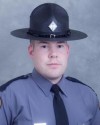
Trooper Andrew David Fox
Virginia State Police
End of Watch: Friday, October 5, 2012
Incident Date: 10/5/2012

Trooper Andrew Fox was struck and killed by a vehicle at the intersection of Route 30 and Theme Park Way, in Hanover County, at approximately 9:50 pm.

He was wearing a reflective vest while directing traffic that was leaving the Virginia State Fair and Kings Dominion theme park when he was struck by an SUV. He was transported to VCU Medical Center in Richmond where he succumbed to his injuries.

Trooper Fox had served with the Virginia State Police for five years. He is survived by his wife.
Rest in Peace Bro…We Got The Watch

Day is done, Gone the sun, From the lake, From the hills, From the sky. All is well, Safely rest, God is nigh.

Geopolitical Weekly: The Emerging Doctrine of the United States, October 9th, 2012

By George Friedman

Over the past weekend, rumors began to emerge that the Syrian opposition would allow elements of the al Assad regime to remain in Syria and participate in the new government. Rumors have become Syria's prime export, and as such they should not be taken too seriously. Nevertheless, what is happening in Syria is significant for a new foreign doctrine emerging in the United States -- a doctrine in which the United States does not take primary responsibility for events, but which allows regional crises to play out until a new regional balance is reached. Whether a good or bad policy -- and that is partly what the U.S. presidential race is about -- it is real, and it flows from lessons learned.

Threats against the United States are many and complex, but Washington's main priority is ensuring that none of those threats challenge its fundamental interests. Somewhat simplistically, this boils down to mitigating threats against U.S. control of the seas by preventing the emergence of a Eurasian power able to marshal resources toward that end. It also includes preventing the development of a substantial intercontinental nuclear capability that could threaten the United States if a country is undeterred by U.S. military power for whatever reason. There are obviously other interests, but certainly these interests are fundamental.

Therefore, U.S. interest in what is happening in the Western Pacific is understandable. But even there, the United States is, at least for now, allowing regional forces to engage each other in a struggle that has not yet affected the area's balance of power. U.S. allies and proxies, including the Philippines, Vietnam and Japan, have been playing chess in the region's seas without a direct imposition of U.S. naval power -- even though such a prospect appears possible.

Lessons Learned

The roots of this policy lie in Iraq. Iran and Iraq are historical rivals; they fought an extended war in the 1980s with massive casualties. A balance of power existed between the two that neither was comfortable with but that neither could overcome. They contained each other with minimal external involvement.

The U.S. intervention in Iraq had many causes but one overwhelming consequence: In destroying Saddam Hussein's regime, a regime that was at least as monstrous as Moammar Gadhafi's or Bashar al Assad's, the United States destroyed the regional balance of power with Iran. The United States also miscalculated the consequences of the invasion and faced substantial resistance. When the United States calculated that withdrawal was the most prudent course -- a decision made during the Bush administration and continued by the Obama administration -- Iran consequently gained power and a greater sense of security. Perhaps such outcomes should have been expected, but since a forced withdrawal was unexpected, the consequences didn't clearly follow and warnings went unheeded.

If Iraq was the major and critical lesson on the consequences of intervention, Libya was the smaller and less significant lesson that drove it home. The United States did not want to get involved in Libya. Following the logic of the new policy, Libya did not represent a threat to U.S. interests. It was the Europeans, particularly the French, who argued that the human rights threats posed by the Gadhafi regime had to be countered and that those threats could quickly and efficiently be countered from the air. Initially, the U.S. position was that France and its allies were free to involve themselves, but the United States did not wish to intervene.

This rapidly shifted as the Europeans mounted an air campaign. They found that the Gadhafi regime did not collapse merely because French aircraft entered Libyan airspace. They also found that the campaign was going to be longer and more difficult than they anticipated. At this point committed to maintaining its coalition with the Europeans, the United States found itself in the position of either breaking with its coalition or participating in the air campaign. It chose the latter, seeing the commitment as minimal and supporting the alliance as a prior consideration.

Libya and Iraq taught us two lessons. The first was that campaigns designed to topple brutal dictators do not necessarily yield better regimes. Instead of the brutality of tyrants, the brutality of chaos and smaller tyrants emerged. The second lesson, well learned in Iraq, is that the world does not necessarily admire interventions for the sake of human rights. The United States also learned that the world's position can shift with startling rapidity from demanding U.S. action to condemning U.S. action. Moreover, Washington discovered that intervention can unleash virulently anti-American forces that will kill U.S. diplomats. Once the United States enters the campaign, however reluctantly and in however marginal a role, it will be the United States that will be held accountable by much of the world -- certainly by the inhabitants of the country experiencing the intervention. As in Iraq, on a vastly smaller scale, intervention carries with it unexpected consequences.

These lessons have informed U.S. policy toward Syria, which affects only some U.S. interests. However, any U.S. intervention in Syria would constitute both an effort and a risk disproportionate to those interests. Particularly after Libya, the French and other Europeans realized that their own ability to intervene in Syria was insufficient without the Americans, so they declined to intervene. Of course, this predated the killing of U.S. diplomats in Benghazi, Libya, but it did not predate the fact that the intervention in Libya surprised planners by its length and by the difficulty of creating a successor regime less brutal than the one it replaced. The United States was not prepared to intervene with conventional military force.

That is not to say the United States did not have an interest in Syria. Specifically, Washington did not want Syria to become an Iranian puppet that would allow Tehran's influence to stretch through Iraq to the Mediterranean. The United States had been content with the Syrian regime while it was simply a partner of Iran rather than Iran's subordinate. However, the United States foresaw Syria as a subordinate of Iran if the al Assad regime survived. The United States wanted Iran blocked, and that meant the displacement of the al Assad regime. It did not mean Washington wanted to intervene militarily, except possibly through aid and training potentially delivered by U.S. special operations forces -- a lighter intervention than others advocated.

Essential Interests

The U.S. solution is instructive of the emerging doctrine. First, the United States accepted that al Assad, like Saddam Hussein and Gadhafi, was a tyrant. But it did not accept the idea that al Assad's fall would create a morally superior regime. In any event, it expected the internal forces in Syria to deal with al Assad and was prepared to allow this to play out. Second, the United States expected regional powers to address the Syrian question if they wished. This meant primarily Turkey and to a lesser degree Saudi Arabia. From the American point of view, the Turks and Saudis had an even greater interest in circumscribing an Iranian sphere of influence, and they had far greater levers to determine the outcome in Syria. Israel is, of course, a regional power, but it was in no position to intervene: The Israelis lacked the power to impose a solution, they could not occupy Syria, and Israeli support for any Syrian faction would delegitimize that faction immediately. Any intervention would have to be regional and driven by each participant's national interests.

The Turks realized that their own national interest, while certainly affected by Syria, did not require a major military intervention, which would have been difficult to execute and which would have had an unknown outcome. The Saudis and Qataris, never prepared to intervene directly, did what they could covertly, using money, arms and religiously motivated fighters to influence events. But no country was prepared to risk too much to shape events in Syria. They were prepared to use indirect power rather than conventional military force. As a result, the conflict remains unresolved.

This has forced both the Syrian regime and the rebels to recognize the unlikelihood of outright military victory. Iran's support for the regime and the various sources of support for the Syrian opposition have proved indecisive. Rumors of political compromise are emerging accordingly.

We see this doctrine at work in Iran as well. Tehran is developing nuclear weapons, which may threaten Israel. At the same time, the United States is not prepared to engage in a war with Iran, nor is it prepared to underwrite the Israeli attack with added military support. It is using an inefficient means of pressure -- sanctions -- which appears to have had some effect with the rapid depreciation of the Iranian currency. But the United States is not looking to resolve the Iranian issue, nor is it prepared to take primary responsibility for it unless Iran becomes a threat to fundamental U.S. interests. It is content to let events unfold and act only when there is no other choice.

Under the emerging doctrine, the absence of an overwhelming American interest means that the fate of a country like Syria is in the hands of the Syrian people or neighboring countries. The United States is unwilling to take on the cost and calumny of trying to solve the problem. It is less a form of isolationism than a recognition of the limits of power and interest. Not everything that happens in the world requires or justifies American intervention.

If maintained, this doctrine will force the world to reconsider many things. On a recent trip in Europe and the Caucasus, I was constantly asked what the United States would do on various issues. I responded by saying it would do remarkably little and that it was up to them to act. This caused interesting consternation. Many who condemn U.S. hegemony also seem to demand it. There is a shift under way that they have not yet noticed -- except for an absence that they regard as an American failure. My attempt to explain it as the new normal did not always work.

Given that there is a U.S. presidential election under way, this doctrine, which has quietly emerged under Obama, appears to conflict with the views of Mitt Romney, a point I made in a previous article. My core argument on foreign policy is that reality, not presidents or policy papers, makes foreign policy. The United States has entered a period in which it must move from military domination to more subtle manipulation, and more important, allow events to take their course. This is a maturation of U.S. foreign policy, not a degradation. Most important, it is happening out of impersonal forces that will shape whoever wins the U.S. presidential election and whatever he might want. Whether he wishes to increase U.S. assertiveness out of national interest, or to protect human rights, the United States is changing the model by which it operates. Overextended, it is redesigning its operating system to focus on the essentials and accept that much of the world, unessential to the United States, will be free to evolve as it will.

This does not mean that the United States will disengage from world affairs. It controls the world's oceans and generates almost a quarter of the world's gross domestic product. While disengagement is impossible, controlled engagement, based on a realistic understanding of the national interest, is possible.

This will upset the international system, especially U.S. allies. It will also create stress in the United States both from the political left, which wants a humanitarian foreign policy, and the political right, which defines the national interest broadly. But the constraints of the past decade weigh heavily on the United States and therefore will change the way the world works.

The important point is that no one decided this new doctrine. It is emerging from the reality the United States faces. That is how powerful doctrines emerge. They manifest themselves first and are announced when everyone realizes that that is how things work.
The Emerging Doctrine of the United States is republished with permission of Stratfor.

Wednesday, October 10, 2012

Oh this is gonna be good...

What is on Elmer's mind?

RIP Alex Karras


Alex Karras, Football Behemoth and Actor, Dies at 77

Alex Karras, a fierce and relentless All-Pro lineman for the Detroit Lions whose irrepressible character frequently placed him at odds with football’s authorities but led to a second career as an actor on television and in the movies, died Wednesday at his home in Los Angeles. He was 77.

Karras had kidney disease, heart disease and stomach cancer, his family said in a statement announcing his death, as well as dementia. He was among the more than 3,500 former players who are suing the National Football League, in cases that have been consolidated, over the long-term damage caused by concussions and repeated hits to the head.

To those under 50, Karras may be best known as an actor. He made his film debut in 1968, playing himself in “Paper Lion,” an adaptation of George Plimpton’s book about his experience as an amateur playing quarterback for the Lions, which starred Alan Alda as Plimpton.

His rendering of his own roguish personality led to several appearances on “The Tonight Show With Johnny Carson,” and in the 1970s he played numerous guest roles on series television, on shows like “McMillan & Wife,” “Love, American Style,” “M*A*S*H” and “The Odd Couple,” in which he played a comically threatening man-mountain, the jealous husband of a woman who has become friendly with Felix (Tony Randall). Perhaps most memorably, he played Mongo, a hulking subliterate outlaw who delivers a knockout punch to a horse, in the Mel Brooks western spoof “Blazing Saddles.”

In 1975 he played George Zaharias, the husband of the champion track star and golfer Babe Didrickson Zaharias, in the television movie “Babe.” The title role was played by Susan Clark, who became his wife, and from 1983 to 1989, they starred together in the gentle sitcom “Webster,” about a retired football player who takes in a black boy (Emmanuel Lewis), the orphaned young son of a former teammate.

But Karras, at 6 feet 2 inches tall and 248 pounds — large then but smaller in comparison with N.F.L. lineman of today — first earned fame as a ferocious tackle for the Lions. He anchored the defensive line for 12 seasons over 13 years, 1958-70.

It was an era when the N.F.L. was rife with talent at the position — Karras’s contemporaries included the Hall of Famers Bob Lilly and Merlin Olsen — but he was an especially versatile pass rusher, known around the league for his combination of strength, speed and caginess. His furious approach — Plimpton described it as a “savage, bustling style of attack” — earned him the nickname the Mad Duck.

“Most defensive tackles have one move, they bull head-on,” Doug Van Horn, a New York Giants offensive lineman who had to block Karras, said in 1969. “Not Alex. There is no other tackle like him. He has inside and outside moves, a bull move where he puts his head down and runs over you, or he’ll just stutter-step you like a ballet dancer.”

Karras was named to four Pro Bowls, and he was a member of the N.F.L’s All-Decade team of the 1960s. He was never elected to the Hall of Fame, however, an oversight that has sometimes been attributed to the fact that the Lions fielded mostly undistinguished teams during his tenure; in Karras’s only playoff game, the Lions lost to the Dallas Cowboys by the unlikely score of 5-0 in 1970...

I've often mentioned that today Hollywood doesn't put out many good movies and there are classics out there that you've watched dozens of times, have the VHS, CD and Blue Ray, can quote the dialogue better than the writers and the actors and if you happen to catch while channel surfing, you immediately stop. Blazing Saddles is one of those movies. Anyone who has watched this movie knows this scene.

RIP Mongo...you made us all laugh. Now you get to play in the greatest field of all.

Monday, October 8, 2012

Officer Down


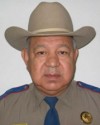
Sergeant Paul Hernandez
Texas Department of Public Safety - Texas Highway Patrol
End of Watch: Thursday, October 4, 2012
Age: 67
Tour: 35 years, 8 months
Badge # 3907

Sergeant Paul Hernandez suffered a fatal heart attack while participating in physical readiness training at the Texas Department of Public Safety Regional Office in San Antonio.

Sergeant Hernandez had served with the Texas Department of Public Safety for over 35 years. He is survived by his wife and son.
Rest in Peace Bro…We Got The Watch

Day is done, Gone the sun, From the lake, From the hills, From the sky. All is well, Safely rest, God is nigh.

He is not only The Most Interesting Man in the World

But of The Universe!

I love it when SNL takes a shot a B Hussein

Good one....I like Rev Al's comments on toilet's flushing!


And not the best one, but you gotta love Big Bird!


Have a great week and congrats Drew Brees!

Officer Down


Police Officer Jonathan Molina
El Paso Texas Police Department
End of Watch: Friday, October 5, 2012
Age: 29
Tour: 4 years
Incident Date: 9/25/2012


Police Officer Jonathan Molina succumbed to injuries sustained 10 days earlier when he was beaten by a teenager on Trowbridge Drive, near Route 54.

Officer Molina was off duty when he observed three juveniles vandalize his car. He confronted the three and identified himself as a police officer. As he spoke to them one of the juveniles punched him, knocking him to the ground. The teen continued to to beat him even after knocking him unconscious. Officer Molina suffered a fractured skull, internal head injuries, and facial fractures.

All three juveniles fled the scene but were apprehended. The subject who beat him was originally charged with assaulting a public servant but was later charged with capital murder of a peace officer following Officer Molina's death.

Officer Molina was a U.S. Marine Corps veteran and had served with the El Paso Police Department for four years.
Rest in Peace Bro…We Got The Watch

Day is done, Gone the sun, From the lake, From the hills, From the sky. All is well, Safely rest, God is nigh.

Unions, hypocrisy and the "Paper of Record"

Hypocrisy and liberalism go hand in hand and here is a classic example of it. The NY Times, which excoriated Wisconsin Governor Scott Walker during the state's union battles last year seems to have issues with unionized labor of its own.
MEDIA OUTLOOK NYT Guild Walks Out Of Negotiations

Yesterday morning the New York Times and the New York Newspaper Guild convened to work on ongoing contract negotiations.

It didn’t go so well.

According to the Guild’s blog, the Times had “changed not a detail of its insulting wage proposal, offered not a dime more toward our pension and raised by just a few hairs its offer on health care.”

So the Guild representatives walked out.

The offer included an increase of $100,000 to the health care fund that the company contributes to, which the Guild called “some slight, stumbling progress, but…far behind that of most private employers its size.”

In exchange, the attorney who represents the Times in the negotiations told the Guild that the offer was “proportional to the disappointing” proposal the Guild put forth at the last negotiation session.

The drama is scheduled to resume next Wednesday when the next negotiation session takes place.
Is this the same NY Times that supported the Wisconsin teacher unions last year? Why yes it is:
Benefits for Wisconsin’s state workers are currently quite generous, but they weren’t stolen. They were negotiated by elected officials and can be re-negotiated at the bargaining table if necessary.

Most pay only 6 percent of their health care premium costs and Governor Walker wants to double that. The average employee contribution to premiums around the country, public and private, is 29 percent. Most state workers contribute almost nothing to their pensions; he wants them to pay 5.8 percent, which is a little less than average for government workers around the country.

Meanwhile, the governor is refusing to accept his own share of responsibility for the state’s projected $137 million shortfall. Just last month, he and the Legislature gave away $117 million in tax breaks, mostly for businesses that expand and for private health savings accounts. That was a choice lawmakers made, and had it not been for those decisions and a few others, according to the state’s Legislative Fiscal Bureau, the state would have had a surplus.

Wisconsin is certainly not as bad off as California, Illinois, and several northeastern states that are making tough budgetary decisions without trying to eliminate union rights. Nonetheless, the union-busting movement is picking up steam, with lawmakers in Ohio, Indiana, and several other states. On Thursday in Washington, John Boehner, the speaker of the House, weighed in on Mr. Walker’s side.

Keeping schools closed and blocking certain public services is not a strategy we support and could alienate public opinion and play into the governor’s hand. Short of that, the unions should make their voices heard and push back hard against this misguided plan.

Hey Pinch, you gonna support the workers against management now? I mean the little guys are getting screwed by the man, right?

Officer Down


Trooper First Class Blake T. Cobled
Pennsylvania State Police
End of Watch: Thursday, October 4, 2012
Age: 48
Tour: 23 years

Trooper Blake Coble was killed when his patrol car collided with a tractor trailer at the intersection of SR 168 and Blackhawk Road in South Beaver Township, Beaver County, at approximately 10:00 am.

His patrol car was struck after the semi ran a stop sign at a high rate of speed.

He was transported to Heritage Valley Beaver Hospital where he succumbed to his injuries.

Trooper Coble, who was preparing for retirement, had served with the Pennsylvania State Police for 23 years and was assigned to Troop D, Beaver Station. He is survived by his wife and two children. His wife serves as a dispatcher for the agency.
Rest in Peace Bro…We Got The Watch

Day is done, Gone the sun, From the lake, From the hills, From the sky. All is well, Safely rest, God is nigh.

A Houston PD standoff!


This can get ugly! :<)

I hadn't heard anything about Daryl Hannah in ages....I thought she was on Current TV

DARYL HANNAH ARRESTED IN TEXAS PROTESTING PIPELINE

Actress Daryl Hannah of "Splash" fame was arrested in northeast Texas on Thursday, along with a 78-year-old landowner as the pair protested an oil pipeline designed to bring crude from Canada to the Gulf Coast.

"They've arrested Daryl Hannah and a rural Texas great-grandmother," said Paul Bassis, Hannah's manager.

Hannah and landowner Eleanor Fairchild were standing in front of heavy equipment in an attempt to halt construction of the Keystone XL pipeline on Fairchild's farm in Winnsboro, a town about 100 miles east of Dallas. They were arrested for criminal trespassing and taken to the Wood County Jail, Bassis said. Hannah also faces a charge of resisting arrest, according to jail records.

Hannah has long opposed TransCanada's construction of the $7 billion pipeline, which is designed to transport heavy tar-sands crude oil from Alberta, Canada, to Texas' Gulf Coast refineries.

"It is unfortunate Ms. Hannah and other out-of-state activists have chosen to break the law by illegally trespassing on private property," David Dodson, a spokesman for TransCanada, said in an email. He also said protesters were "putting their own safety and the safety of others at risk."

Bassis said he spoke to the actress Thursday evening and that there was "a strong indication" that both women would be kept overnight at the local jail.

"The streets of Winnsboro will be much safer tonight now that they've gotten that 78-year-old great grandmother off the streets," Bassis said.

Hannah _ who has starred in dozens of movies, including "Kill Bill" and "Splash" _ also was arrested in August 2011 while protesting the pipeline in Washington. She was one of several hundred prominent scientists and activists arrested that month...

...TransCanada began construction of that portion of the pipeline this summer after receiving the necessary permits. Some Texas landowners, joined by activists from outside the state, have tried through various protests to stop or slow down construction.

Guys, please keep her in the jail. And Daryl, don't go away mad, just go away. You're annoying and stupid.

Officer Down


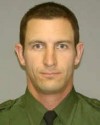
Border Patrol Agent Nicholas J. Ivie
United States Department of Homeland Security - Customs and Border Protection
End of Watch: Tuesday, October 2, 2012
Age: 30
Tour: 4 years
Badge # O225

Border Patrol Agent Nicholas Ivie was accidentally shot and killed in a case of mistaken identity when he and another pair of agents checked on a ground sensor that had been set off near Bisbee, Arizona, at approximately 1:30 am.

The agents encountered each other in an area of extremely rocky terrain. Because of the darkness and obstructions, they were unable to identify each other as agents. They exchanged gunfire during the encounter and Agent Ivie was killed while one of the other agents was wounded.

Agent Ivie had served with the U.S. Border Patrol for four years and was assigned to the Brian A. Terry Border Patrol Station. He is survived by his wife and children.
Rest in Peace Bro…We Got The Watch

Day is done, Gone the sun, From the lake, From the hills, From the sky. All is well, Safely rest, God is nigh.