Police Work, Politics and World Affairs, Football and the ongoing search for great Scotch Whiskey!

Sunday, January 26, 2014

Officer Down


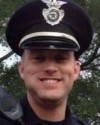
Police Officer Robert C. Deckard, Jr.
San Antonio Texas Police Department
End of Watch: Friday, December 20, 2013
Age: 31
Tour: 7 years
Badge # 0582
Incident Date: 12/8/2013

Police Officer Bobby Deckard succumbed to a gunshot wound sustained on December 8th while pursuing two robbery suspects in Atascosa County.

The suspects, who had committed 15 robberies in San Antonio over the previous several days, were driving a distinctively painted vehicle that Officer Deckard had spotted. He attempted to stop the vehicle but the suspects fled. Officer Deckard pursued the suspects on I-37, into Atascosa County, where one of the men in the vehicle opened fire on him near Exit 109.

One of the rounds passed through the cruiser's windshield and struck Officer Deckard in the head, causing his vehicle to crash. He was transported to San Antonio Military Medical Center, where he remained in grave condition until succumbing to his wounds. He was kept on life support so his organs could be donated.

Both subjects were arrested in Wilson County later in the day after attempting kill a Poth Police Department officer.

Officer Deckard had served with the San Antonio Police Department for seven years. He is survived by his wife and two children.
Rest in Peace Bro…We Got The Watch

Day is done, Gone the sun, From the lake, From the hills, From the sky. All is well, Safely rest, God is nigh. 

News from a cop killer's trial...

Whenever a cop killer goes on trial in Harris County, you can count on the courtroom being filled with officers, supporting the family.  Well, seem a judge don't like that.
Judge: Police can't wear uniforms at cop killer's trial 
By PoliceOne Staff 
BREVARD COUNTY, Fla. — A judge has enacted a policy barring police officers from wearing their uniforms or other insignia while in attendance of the trial for a man accused of killing a Brevard County sheriff’s deputy. 
Judge Morgan Reinman enacted the policy after Brandon Bradley’s attorney argued that a "sea of blue" in the courtroom would influence the jury and prevent Bradley from a fair trial. He is accused of fatally shooting deputy Barbara Pill at a traffic stop in 2012, according to Florida Today. 
The police barring the wearing of uniforms does not apply to witnesses and court deputies. 
Bradley is charged with first-degree murder for the death of Pill, who pulled Bradley over for allegedly stealing from a motel, according to WFTV. Prosecutors are seeking the death penalty...
OK judge, no uniforms, fine.  We'll all just get blue t-skirt saying something like "Justice for Barbara Pill".  Will you stop a group of Bradley's supporters from wearing t-shirts supporting this POS?  I think we know the answer. 

Saturday, January 25, 2014

Officer Down


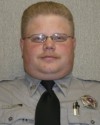
Sergeant Investigator Adam Sowders
Burleson County Texas Sheriff's Office
End of Watch: Thursday, December 19, 2013
Age: 31
Tour: 7 years
Badge # 904

Sergeant Investigator Adam Sowders was shot and killed as he and seven other officers attempted to serve a warrant at rural home near Somerville at approximately 5:30 am.

As the team made entry into the home they were met with gunfire from a .308 caliber rifle and Sergeant Sowders suffered fatal gunshot wounds. One suspect was taken into custody at the scene.

Sergeant Sowders had served with the Burleson County Sheriff's Office for seven years and had previously served with the Somerville Police Department.
Rest in Peace Bro…We Got The Watch

Day is done, Gone the sun, From the lake, From the hills, From the sky. All is well, Safely rest, God is nigh. 

Thursday, January 23, 2014

Geopolitical Weekly: The Geopolitics of the Syrian Civil War, January 21, 2014

The Geopolitics of the Syrian Civil War 
By Reva Bhalla 
International diplomats will gather Jan. 22 in the Swiss town of Montreux to hammer out a settlement designed to end Syria's three-year civil war. The conference, however, will be far removed from the reality on the Syrian battleground. Only days before the conference was scheduled to begin, a controversy threatened to engulf the proceedings after the United Nations invited Iran to participate, and Syrian rebel representatives successfully pushed for the offer to be rescinded. The inability to agree upon even who would be attending the negotiations is an inauspicious sign for a diplomatic effort that was never likely to prove very fruitful. 
There are good reasons for deep skepticism. As Syrian President Bashar al Assad's forces continue their fight to recover ground against the increasingly fratricidal rebel forces, there is little incentive for the regime, heavily backed by Iran and Russia, to concede power to its sectarian rivals at the behest of Washington, especially when the United States is already negotiating with Iran. Ali Haidar, an old classmate of al Assad's from ophthalmology school and a long-standing member of Syria's loyal opposition, now serving somewhat fittingly as Syria's National Reconciliation Minister, captured the mood of the days leading up to the conference in saying "Don't expect anything from Geneva II. Neither Geneva II, not Geneva III nor Geneva X will solve the Syrian crisis. The solution has begun and will continue through the military triumph of the state." 
Widespread pessimism over a functional power-sharing agreement to end the fighting has led to dramatic speculation that Syria is doomed either to break into sectarian statelets or, as Haidar articulated, revert to the status quo, with the Alawites regaining full control and the Sunnis forced back into submission. Both scenarios are flawed. Just as international mediators will fail to produce a power-sharing agreement at this stage of the crisis, and just as Syria's ruling Alawite minority will face extraordinary difficulty in gluing the state back together, there is also no easy way to carve up Syria along sectarian lines. A closer inspection of the land reveals why. 
The Geopolitics of Syria 
Before the 1916 Sykes-Picot agreement traced out an awkward assortment of nation-states in the Middle East, the name Syria was used by merchants, politicians and warriors alike to describe a stretch of land enclosed by the Taurus Mountains to the north, the Mediterranean to the west, the Sinai Peninsula to the south and the desert to the east. If you were sitting in 18th-century Paris contemplating the abundance of cotton and spices on the other side of the Mediterranean, you would know this region as the Levant -- its Latin root "levare" meaning "to raise," from where the sun would rise in the east. If you were an Arab merchant traveling the ancient caravan routes northward from the Hejaz, or modern-day Saudi Arabia, you would have referred to this territory in Arabic as Bilad al-Sham, or the "land to the left" of Islam's holy sites on the Arabian Peninsula. 
Whether viewed from the east or the west, the north or the south, Syria will always find itself in an unfortunate position surrounded by much stronger powers. The rich, fertile lands straddling Asia Minor and Europe around the Sea of Marmara to the north, the Nile River Valley to the south and the land nestled between the Tigris and the Euphrates rivers to the east give rise to larger and more cohesive populations. When a power in control of these lands went roaming for riches farther afield, they inevitably came through Syria, where blood was spilled, races were intermixed, religions were negotiated and goods were traded at a frenzied and violent pace. 
Consequently, only twice in Syria's pre-modern history could this region claim to be a sovereign and independent state: during the Hellenistic Seleucid dynasty, based out of Antioch (the city of Antakya in modern-day Turkey) from 301 to 141 B.C., and during the Umayyad Caliphate, based out of Damascus, from A.D. 661 to 749. Syria was often divided or subsumed by its neighbors, too weak, internally fragmented and geographically vulnerable to stand its own ground. Such is the fate of a borderland.
Unlike the Nile Valley, Syria's geography lacks a strong, natural binding element to overcome its internal fissures. An aspiring Syrian state not only needs a coastline to participate in sea trade and guard against sea powers, but also a cohesive hinterland to provide food and security. Syria's rugged geography and patchwork of minority sects have generally been a major hindrance to this imperative. 
Syria's long and extremely narrow coastline abruptly transforms into a chain of mountains and plateaus. Throughout this western belt, pockets of minorities, including Alawites, Christians and Druze, have sequestered themselves, equally distrustful of outsiders from the west as they are of local rulers to the east, but ready to collaborate with whomever is most likely to guarantee their survival. The long mountain barrier then descends into broad plains along the Orontes River Valley and the Bekaa Valley before rising sharply once again along the Anti-Lebanon range, the Hawran plateau and the Jabal al-Druze mountains, providing more rugged terrain for persecuted sects to hunker down and arm themselves. 
Just west of the Anti-Lebanon mountains, the Barada river flows eastward, giving rise to a desert oasis also known as Damascus. Protected from the coast by two mountain chains and long stretches of desert to the east, Damascus is essentially a fortress city and a logical place to make the capital. But for this fortress to be a capital worthy of regional respect, it needs a corridor running westward across the mountains to Mediterranean ports along the ancient Phoenician (or modern-day Lebanese) coast, as well as a northward route across the semi-arid steppes, through Homs, Hama and Idlib, to Aleppo.
The saddle of land from Damascus to the north is relatively fluid territory, making it an easier place for a homogenous population to coalesce than the rugged and often recalcitrant coastline. Aleppo sits alongside the mouth of the Fertile Crescent, a natural trade corridor between Anatolia to the north, the Mediterranean (via the Homs Gap) to the west and Damascus to the south. While Aleppo has historically been vulnerable to dominant Anatolian powers and can use its relative distance to rebel against Damascus from time to time, it remains a vital economic hub for any Damascene power.Finally, jutting east from the Damascus core lie vast stretches of desert, forming a wasteland between Syria and Mesopotamia. This sparsely populated route has long been traveled by small, nomadic bands of men -- from caravan traders to Bedouin tribesmen to contemporary jihadists -- with few attachments and big ambitions. 
Demography by Design 
The demographics of this land have fluctuated greatly, depending on the prevailing power of the time. Christians, mostly Eastern Orthodox, formed the majority in Byzantine Syria. The Muslim conquests that followed led to a more diverse blend of religious sects, including a substantial Shiite population. Over time, a series of Sunni dynasties emanating from Mesopotamia, the Nile Valley and Asia Minor made Syria the Sunni-majority region that it is today. While Sunnis came to heavily populate the Arabian Desert and the saddle of land stretching from Damascus to Aleppo, the more protective coastal mountains were meanwhile peppered with a mosaic of minorities. The typically cult-like minorities forged fickle alliances and were always on the lookout for a more distant sea power they could align with to balance against the dominant Sunni forces of the hinterland. 
The French, who had the strongest colonial links to the Levant, were masters of the minority manipulation strategy, but that approach also came with severe consequences that endure to this day. In Lebanon, the French favored Maronite Christians, who came to dominate Mediterranean sea trade out of bustling port cities such as Beirut at the expense of poorer Sunni Damascene merchants. France also plucked out a group known as the Nusayris living along the rugged Syrian coast, rebranded them as Alawites to give them religious credibility and stacked them in the Syrian military during the French mandate. 
When the French mandate ended in 1943, the ingredients were already in place for major demographic and sectarian upheaval, culminating in the bloodless coup by Hafiz al Assad in 1970 that began the highly irregular Alawite reign over Syria. With the sectarian balance now tilting toward Iran and its sectarian allies, France's current policy of supporting the Sunnis alongside Saudi Arabia against the mostly Alawite regime that the French helped create has a tinge of irony to it, but it fits within a classic balance-of-power mentality toward the region. 
Setting Realistic Expectations 
The delegates discussing Syria this week in Switzerland face a series of irreconcilable truths that stem from the geopolitics that have governed this land since antiquity.
The anomaly of a powerful Alawite minority ruling Syria is unlikely to be reversed anytime soon. Alawite forces are holding their ground in Damascus and steadily regaining territory in the suburbs. Lebanese militant group Hezbollah is meanwhile following its sectarian imperative to ensure the Alawites hold onto power by defending the traditional route from Damascus through the Bekaa Valley to the Lebanese coast, as well as the route through the Orontes River Valley to the Alawite Syrian coast. So long as the Alawites can hold Damascus, there is no chance of them sacrificing the economic heartland. 
It is thus little wonder that Syrian forces loyal to al Assad have been on a northward offensive to retake control of Aleppo. Realizing the limits to their own military offensive, the regime will manipulate Western appeals for localized cease-fires, using a respite in the fighting to conserve its resources and make the delivery of food supplies to Aleppo contingent on rebel cooperation with the regime. In the far north and east, Kurdish forces are meanwhile busy trying to carve out their own autonomous zone against mounting constraints, but the Alawite regime is quite comfortable knowing that Kurdish separatism is more of a threat to Turkeythan it is to Damascus at this point. 
The fate of Lebanon and Syria remain deeply intertwined. In the mid-19th century, a bloody civil war between Druze and Maronites in the densely populated coastal mountains rapidly spread from Mount Lebanon to Damascus. This time around, the current is flowing in reverse, with the civil war in Syria now flooding Lebanon. As the Alawites continue to gain ground in Syria with aid from Iran and Hezbollah, a shadowy amalgam of Sunni jihadists backed by Saudi Arabia will become more active in Lebanon, leading to a steady stream of Sunni-Shiite attacks that will keep Mount Lebanon on edge.The United States may be leading the ill-fated peace conference to reconstruct Syria, but it doesn't really have any strong interests there. The depravity of the civil war itself compels the United States to show that it is doing something constructive, but Washington's core interest for the region at the moment is to preserve and advance a negotiation with Iran. This goal sits at odds with a publicly stated U.S. goal to ensure al Assad is not part of a Syrian transition, and this point may well be one of many pieces in the developing bargain between Washington and Tehran. However, al Assad holds greater leverage so long as his main patron is in talks with the United States, the only sea power currently capable of projecting significant force in the eastern Mediterranean.
Egypt, the Nile Valley power to the south, is wholly ensnared in its own internal problems. So is Turkey, the main power to the north, which is now gripped in a public and vicious power struggle that leaves little room for Turkish adventurism in the Arab world. That leaves Saudi Arabia and Iran as the main regional powers able to directly manipulate the Syrian sectarian battleground. Iran, along with Russia, which shares an interest in preserving relations with the Alawites and thus its access to the Mediterranean, will hold the upper hand in this conflict, but the desert wasteland linking Syria to Mesopotamia is filled with bands of Sunni militants eager for Saudi backing to tie down their sectarian rivals. 
And so the fighting will go on. Neither side of the sectarian divide is capable of overwhelming the other on the battlefield and both have regional backers that will fuel the fight. Iran will try to use its relative advantage to draw the Saudi royals into a negotiation, but a deeply unnerved Saudi Arabia will continue to resist as long as Sunni rebels still have enough fight in them to keep going. Fighters on the ground will regularly manipulate appeals for cease-fires spearheaded by largely disinterested outsiders, all while the war spreads deeper into Lebanon. The Syrian state will neither fragment and formalize into sectarian statelets nor reunify into a single nation under a political settlement imposed by a conference in Geneva. A mosaic of clan loyalties and the imperative to keep Damascus linked to its coastline and economic heartland -- no matter what type of regime is in power in Syria -- will hold this seething borderland together, however tenuously.

The Geopolitics of the Syrian Civil War is republished with permission of Stratfor.

Witness to an execution

I never knew Officer Guy Gaddis. I only knew what happened to him, that was taught to us in the academy. How he was shot in the back of the head transporting two prisoners to central jail in Houston. That was January 31, 1994 when Gaddis was 24 years old. His murderer stands a few hundred feet away from us awaiting his execution.

A few days ago at the Blue Knights meeting a member announced a group of bikers are riding to Huntsville to support the family. Fortunately I could take the day off and linked up off of I-45, about 20 miles south of Huntsville. Initial headcount of over 40 riders, mainly The Thin Blue Line, but a couple of Blue Knights like me. The Thin Blue Line's International President briefed on the route and our setup at Huntsville, then the chaplain led us in a prayer. For the family, for the safety of the riders and for the punishment of Tamayo. May sound cruel, but this group is over 90% cops. Some knew Gaddis. We are a family, we don't like cop killers. And we have no little tolerance for Tamayo as he said he murdered Gaddis because “he wouldn't let him leave his keys with his wife.”


The ride to Huntsville is normally less than 20 minutes. However construction delayed us right after we get on the interstate, and that's always fun. First people tend to act stupid in construction zones. Also anyone who rides a Harley knows they tend to get a little warm at lower speeds. This is annoying but the beautiful sounds of Luckenbach Texas and Telephone Line from other rider's stereos makes the slow ride pass easier.


Arriving in Huntsville, at the prison there is little confusion of where to park. We parked in the roadway and then the guard told us to clear the road out so at least one car can pass. They also want to keep us and the Tamayo supporters apart. After moving all the bikes, we settle in for what we hope is a stay of ninety minutes or so. Before you know it five riders from Lake Charles LA and Beaumont TX arrived, members of Blue Iron Motorcycle Club. They’ve also ridden in to support the Gaddis family. The record though is a member of TTBL, who came from northern New Mexico.

I have to say I'm surprised the prison is smaller than I thought from all the pictures I've seen on TV. But no matter, it does its work. Over 1400 of Texas's not so good call it home.


After a few minutes several of the officers in the group are allowed to walk to the front of the prison where some HPD officers are greeting the family members.. Present is Officer Ray Hunt, President of the Houston Police Officer’s Union. Here he greets Officer Gaddis’s mother.


A member of The Thin Blue Line brings out a box of cigars and I brought out my pipe. Will take a while, next time I'll bring my thermos of coffee. While waiting around I got a call from my lovely wife. Told her I would probably need some comfort food tonight, like Hooter wings and beer. She understands. I got a hell of a woman.

I get on the iPhone and update Facebook. Quickly I get support, asking for updates. And I notice the phone is already at less than 50% power. Damned, next time make sure it’s fully charged moron!

In Texas we execute prisoners at just past 600pm. Normally the waste of sperm is pronounced dead between 615-630pm. It’s around 620pm and we want to make it known to the people that we’re here. Get the bikes started and make some noise!


We wait a few minutes and no official word. Then we get the word around 700pm, The Supreme Court had stayed the execution for one last look. All of us are worried, would the Gaddis family have to endure this another time. Gaddis was murdered on January 31, 1994. His murderer was convicted in November 1994. To say justice delayed is justice denies is not enough. It’s been twenty years and his lawyers want to stop his punishment because he’s mentally retarded and their are bringing up the red herring about consulate advise. Hey moron, if he wasn’t in our country illegally he wouldn’t be in Huntsville right now. More importantly Gaddis would not have been murdered in January 1994. But we have to wait.

And wait. Some of the riders have to leave. Some of these men have to be at work at 600am and have to go. We wish them well and they go on their way. The men of Blue Iron have to depart. They have a 4 hour ride back to Louisiana and need to get going. We thank them for their support and wish them the best.

And again, we wait. Many of use are trying to get updates on our smart phones of the status of the SCOTUS review. And wondering if this will go on. And the conversation goes on. Rides we’ve taken, family, the job, sports, whatever it takes to pass the time. And then something else gets our attention. We’re getting hungry. Most had planned to eat after the execution and we’re getting hungry.

One of the guards told me there was a gas station a few blocks away and a Snickers bar sounds good. Get on the bike and start riding. Then I get a great idea (Beth is getting nervous right now). There has to be a McDonald's down the road. So I keep riding. It only takes five miles to find one and the dollar menu looking good. An order of 20 each cheeseburgers and fries surprise the managers but I told him to we were watching at the prison. He immediacy gets on his intercom and calls “All hands on grill…” and in less than ten minutes the order is ready. He and several members of his crew thank us for being there. Ride back, miss the damn turn, but get back there. And a quick dinner goes over well. Hot, fast and cheap not only describes a great date when your young, but a quick dinner when your cold and hungry.

Continue to wait, then the word comes down. SCOTUS will not stop the execution. Yes, finally. It’s just past 900pm and we want to make it heard. Back to the bikes and make it loud!


After a few minutes we start to move in front of the prison, as we all know this is done. We look at the entrance, and wait. And wait more. This is almost as bad as the Army, “Hurry Up and Wait!” One of the TBL members points out there is a camera in front of the entrance and it flashes every few minutes, taking picture. And we hear the anti-death penalty people out there, counting down the people this country had executed since the late 1970s and calling Rick Perry a murderer. Reminded me sometime last year Rick Perry had presided over the 500th execution Texas had preformed since capital punishment had resumed in the late 70s. And the Washington Post thinks this is a bad thing. Come down here and tell the family of Officer Gaddis that.

People start trickling out and we hear it’s finally done. It’s around 930pm. One of the Texas Rangers who works with the executions walks out, smiles at us and says “They heard those bikes in there!” Makes it worth staying here! And I realize I’ve left my bike idling since we did that twenty minutes ago.

We walk over to the press area and an official is making the announcement and handing out the press release. It’s done. Justice is served. One of the points he made was Tamayo made no statement, no surprise. He was a coward in 1994, he dies a coward. The human gene pool is a bit cleaner this morning.

Some of the members of TTBL are standing around, waiting on more information, but it’s time for me to go. I want to get to my family. On the bike, I”m making good time home and then it stops. The Texas Department of Transportation is putting down deicing chemicals on I-45 and the trucks are blocking all the traffic. Probably added 20 minutes to my ride home. Thanks guys. Get home and start thawing.

Looking back at this I recall the beginning words of End of Watch, “…By law I am unable to walk away. I am a consequence. I am the unpaid bill…” Tamayo had a bill to pay and he’s now settled his account on Earth. Now he has one more Judge to face and he cannot hide from Him. May God have more mercy on your soul than you deserve Tamayo. I pour some scotch to handle the chill, and a small toast to Officer Gaddis.

I get into debates sometimes with people who oppose capital punishment and a point often made is this will not bring back the dead or it’s not a deterrent. I don’t care. It’s point is to not deter, but to punish. We as a society have decided we will not tolerate certain actions by people, one of which is murdering another human being. In certain cases, we have set the consequence as your life. Yes, this won’t bring Gaddis back to him family, won’t allow him to see his daughter grow up, walk her down the aisle, see grandchildren. But maybe he can rest a little easier. God bless him and his family.

Be safe out there fellow officers.

Tuesday, January 21, 2014

What's going on in the World Today 140121

HYPERLINKS MAY REQUIRE AN EMAIL:

USA

U.S., Canada: Railway Regulations Will Not Deter the Energy Revolution

North America's Railways as an Energy Solution

U.S. Naval Update Map: Jan. 16, 2014

AFRICA

In South Sudan, Both Sides Seek an Advantage Before Any Possible Cease-Fire

South Sudan: Government Forces Retake Malakal January 20, 2014

Government soldiers have retaken Malakal from rebels supporting Riek Machar, South Sudanese President Salva Kiir Mayardit said Jan. 20, Reuters reported. The rebels dismissed the claim, but if it is confirmed, it would be the second major location retaken by Kiir's forces with the backing of the Ugandan army in the past three days. Since Jan. 14 there has been heavy fighting, including tank battles, in the streets of Malakal, the regional capital of Upper Nile state.

ASIA

Kazakhstan's Looser Migrant Worker Rules Will Aggravate Tensions

Thailand: Government Considering State Of Emergency January 20, 2014

Thai authorities are considering declaring a state of emergency after violence over the weekend in Bangkok during anti-government protests, National Security Council chief Paradorn Pattantabutr said Jan. 20 after a meeting with Prime Minister Yingluck Shinawatra, Reuters reported. Thailand's potential role as a regional economic leader is being undermined by the political unrest.

Credit card details on 20 million South Koreans stolen

Credit card details from almost half of all South Koreans have been stolen and sold to marketing firms.

The data was stolen by a computer contractor working for a company called the Korea Credit Bureau that produces credit scores.

The names, social security numbers and credit card details of 20 million South Koreans were copied by the IT worker...

...Early reports suggest that the contractor got hold of the giant trove of data thanks to the access Korea Credit Bureau enjoys to databases run by three big South Korean credit card firms. The contractor stole the data by copying it to a USB stick....

The Costs of Unrest in Thailand

Transdniestria Challenges Moldova Over Its EU Aspirations

Japan's Naval Ambitions in the Indian Ocean

EUROPE

NOTHING SIGNIFICANT TO REPORT

MEXICO/LATIN AMERICA

Mexico's Mounting Challenge With Self-Defense Groups in Michoacan

Mexican government says 'vigilantes not the target'

Mexican officials have urged vigilantes to let the police take on the cartels

The Mexican government has tried to reassure vigilantes in the western state of Michoacan that they are not the target of its security operation.

Hundreds of troops have been sent to the area to restore order after groups of vigilantes clashed with members of the Knights Templar drug cartel.

Many of the "self-defence groups" have refused to heed the government's call to lay down arms.

The interior minister said "they're not our target, the criminals are".

Minister Miguel Angel Osorio Chong said he wanted to convince the vigilantes that "we are going to do our job".

He said that the security forces had identified the three top leaders of the Knights Templar cartel and were hunting them down....

Mexico Knights Templar 'leader' captured in Michoacan

Mexican security forces have arrested 38 members of the Knights Templar drug cartel, as part of an operation to restore order in Michoacan state.

Jesus Vasquez Macias, 37, whom officials described as a leading figure in the gang, was among those detained.

Hundreds of troops were deployed last week after violent scenes as groups of vigilantes clashed with gang members.

The vigilantes accuse the government of not doing enough to protect locals from extortion and violence.

Many members of the so-called self-defence groups are refusing to heed the government's call to disarm.

Hit-man

Mr Vasquez Macias, also known as "El Toro" (The Bull), was arrested along with two other men and charged with offences related to organised crime, a National Public Security System spokesman said.

The three were detained in the port city of Lazaro Cardenas, Monte Alejandro Rubido Garcia told a news conference.

Federal forces are now in control of 27 of Michoacan state's 113 municipalities, he said.

"No violent acts have been recorded in these six days and normal life is being gradually restored in the Tierra Caliente area," Mr Rubido said....

AFGHANISTAN

FP's Situation Report: Biden Renews Push for the Zero Option

By Gordon Lubold

Biden is pushing again for the "zero option" -- or something awfully close to it. . Vice President Joe Biden is behind a fresh push to withdraw most if not all American troops from Afghanistan, leaving the military and other Afghan hands who think sustaining some military presence there after 2014 will avoid squandering the losses over more than 12 years of war. National security officials discussed Afghanistan at the White House yesterday. The WSJ's Dion Nissenbaum, Julian Barnes and Carol Lee: "The White House convened a meeting of top national-security officials on Thursday to discuss the war and the future of the U.S. troop presence. Mr. Biden has lost previous debates on Afghanistan, but his arguments for a smaller force, likely of 2,000 to 3,000 troops, have gained traction within an administration increasingly frustrated by Afghan President Hamid Karzai. Mr. Karzai has refused to sign a security agreement allowing American forces to remain in small numbers after the North Atlantic Treaty Organization mission there formally ends this year. Some U.S. defense officials, preferring a remaining post-2014 U.S. force of 9,000-12,000, are skeptical of the smaller troop presence Mr. Biden and others advocate. Such a force would be so limited that a full pullout would make more military sense, the officials said."

A military official to the WSJ: "We are coming to grips with the potential for zero."..

CHINA

KNIGHTWATCH 140121

North Korea-China: A South Korean news service reported that on 12 January, Kim Jong Un told the military cadres that "the DPRK-China border is a front line before being a border" and gave orders to reinforce border security.

In compliance with this order, supposedly the military formations in the three provinces that border China moved northwards towards the China border, instead of facing south. Those forces include the 8th Army Corps, based in North Pyongan Province which guards the western part of the border; major combat elements of the 12th Army Corps based in Yanggang Province in the central border region; and the 9th Army Corps based in North Hamgyong Province with covers the eastern part of the China border.

According to the news service, the order to consider the China border a front line was a reaction to a large Chinese military exercise in Shenyang Province on the borders of North Korea. The Chinese exercise occurred in the first week of January and involved some 100,000 Chinese soldiers.

Comment: Other news sources have reported the Chinese exercise. The North Korean reaction is not confirmed. It also would not be much of a surprise. Under the influence of Chang Sung-taek, China's influence was expanding slowly in North Korea, spurred by advice and investment. His death might have sparked concern about stability in North Korea that justified special training for a variety of military contingencies along the border.

All the Kims have despised the Chinese, despite China's role in the Korean War. The Chinese consider the Kim's an embarrassment and a retreat from communist theory. Dynastic succession is counter-revolutionary by definition.

The Chinese exercises suggest concern about the stability of the Korean border region. Under the mutual friendship treaty, China does not require a North Korean invitation to invade in the event the North becomes unstable.

North Korean paranoia about a Chinese invasion is such that Kim, on the advice of his marshals and generals, might order increased defensive measures.

Problems with China would help explain the North's somewhat conciliatory overtures to South Korea. The North Koreans cannot fight a two-front war. The leadership apparently judges the South Korean front line is the easier to stabilize through diplomacy at this time while it assesses the potential threat from China.

North Korea has become even more a bastion state in the aftermath of Chang's execution

IRAN

Iran: What It Means to Be Disinvited to the Syria Talks

Iran: Ships Reportedly Dispatched To Atlantic January 21, 2014

Iran is dispatching warships on a mission to the Atlantic Ocean for the first time in the country's history, AP reported Jan. 21, citing Iranian state television. The Sabalan destroyer and Khark logistic helicopter carrier will go on a three-month voyage. No ports of call or specific military mission were mentioned

IRAQ

Iraq: Army Mobilizing In Fallujah January 20, 2014

Iraq's army on Jan. 20 began to mobilize to storm Fallujah, Shafaq News reported, citing an unnamed local official. Elements of the Islamic State in Iraq and Syria militant organization have established themselves in the city over the last three weeks, and the army clashed on Jan. 20 with militants in the al-Azraqiya area, in Fallujah's outskirts.

Iraq: Military Operation Targets Militants In Ramadi January 19, 2014

Iraqi troops, with the help of tribal fighters, launched a major operation in Ramadi aimed at expelling armed militants linked to al Qaeda on Jan. 19, a military spokesman told state television, Al Jazeera reported. A ban on movement has been put in place in the city. The militant group, the Islamic State in Iraq and the Levant, does not have the manpower or the force to overcome its innumerable enemies and achieve its end goal of establishing its version of an Islamic caliphate in Syria and Iraq.

KNIGHTWATCH 140115

Iraq: At least seven car bombs detonated across Baghdad on Wednesday in apparently coordinated attacks by militants that killed at least 30 people, according to police and health officials. Separately, at least 18 people were killed when three bombs detonated at a funeral tent in the city of Baqubah, north of Baghdad

The situation in Anbar Province is unclear. Early reports indicated that militants beat Iraqi forces in one town. Later reports indicated Iraq Army forces recovered the lost ground.

Comment: Militant capabilities appear to match those of the Iraq Army which was US trained and equipped. The Iraq Army forces display no signs of following a campaign or strategy. They appear mired in tactics and are regularly getting beaten.

The unclassified battle reports indicate the Iraq Army is incapable of preventing the secession of the Sunni Arab areas. That raises a question about what that army was trained to do. It certainly could never defend Iraq from an outside attacker if it cannot defend Iraq from an inside secessionist force.

ISRAEL

Kazakhstan: Military-Technical Cooperation Deal Expected With Israel January 20, 2014

Kazakh Defense Minister Adilbek Dzhaksybekov arrived in Israel on Jan. 20 for an official visit, during which an agreement on military and technical cooperation is expected to be signed, the Kazakh Defense Ministry's press service said, Central Asian News reported.

Israel: Rockets Fired From Gaza Intercepted January 16, 2014

Israel's missile defense system intercepted five rockets fired at the city of Ashkelon, The Guardian reported Jan. 16. The Israeli military responded by carrying out airstrikes in the Gaza Strip

RUSSIA

Russia's Growing Regional Debts Threaten Stability

Russia's 1998 Financial Crisis in the Regions: A Case Study

Russia and Norway Compete Over the Barents Sea Region

Debt in Russia's Regions

Iran, Russia and an Improbable Oil-for-Goods Deal

Russia: The Economics of Moneylending

SYRIA

Syria: Russia Provides Military Support To Damascus January 17, 2014

Russia has stepped up supplies of military equipment to Syria, boosting President Bashar al Assad's efforts at a time when rebel infighting has weakened the insurgency, an unspecified source said, Reuters reported Jan. 17. Moscow has been providing conventional weapons to Syria to support al Assad during the ongoing civil war.

MIDDLE EAST GENERAL

Israel and Jordan Work to Preserve Their Strategic Relationship

MISC

Geopolitical Calendar: Week of Jan. 20, 2014

January 17, Softpedia – (International) At least one smart refrigerator used in massive cyberattack. Researchers at Proofpoint analyzed a large-scale spam campaign that involved over 750,000 malicious emails and found that more than 100,000 Internet-connected consumer electronic devices were used in the attack, including multimedia centers, smart TVs, routers, and at least one smart refrigerator.


Except where noted courtesy STRATFOR.COM

Sunday, January 19, 2014

Another expert on gun control from the Iron Pyrite State....

What is it with Democrats from CA and guns. Did their momma raise them this way or were they born screwed up.

First the senior idiot senator from SF:


Now a state senator:


And the fun thing is...both will be reelected by landslides.

Wednesday, January 15, 2014

What's going on in the World Today 140114

HYPERLINKS MAY REQUIRE AN EMAIL:

USA

(California) Pipe bomb found outside El Dorado probation office. The El Dorado County Probation Department office in California was evacuated for 3 hours January 6 after a malfunctioned pipe bomb was found outside the building. Officials are investigating who left the device after they defused and removed it.

Slash: The $1.1 trillion budget deal announced last night by House and Senate negotiators includes a bludgeoning of the procurement budget of the Army's troubled DCGS-A intel system. Situation Report has learned that the budget deal cuts by $156 million the procurement budget of the Distributed Common Ground System that the Army has fought hard to protect and defend even as officials and members of Congress raise questions about its effectiveness - and its cost. The nearly 60 percent reduction in the system's procurement budget clearly amounts to a major defeat for the program.

At the same time, the NDAA budget bill, already passed last year, includes new reporting requirements on the system and breaks it up.

http://www.stratfor.com/analysis/us-naval-update-map-jan-9-2014

AFRICA

Sub-Saharan Africa: The Quest for Expanded Electricity Access

Libya: Deputy Industry Minister Assassinated January 12, 2014

Gunmen shot and killed Libyan Deputy Industry Minister Hassan al-Drowi while he was driving his car in Sirte, security officials said, Arab News reported Jan. 12. Officials also found explosives attached to al-Drowi's car and believe the country's hardline militants are responsible for the attack. Libya continues to face long-term security challenges in its post-Gadhafi era.

South Sudan: Rebels Seize Capital Of Upper Nile State January 14, 2014

South Sudanese rebels captured Malakal, the capital of the oil-rich Upper Nile state, rebels said, Bloomberg reported Jan. 14. A spokesman for the South Sudanese president said fighting in Malakal was ongoing after rebels pushed government forces back to the airport.

NIGHTWATCH 140108

South Sudan-Uganda: Ugandan President Museveni has made good on his threat of intervention and has sent troops in support of the South Sudan government. A military spokesman said 1,200 Ugandan soldiers are providing security at the airport, state house and other installations. He also said Ugandan aircraft have bombed several rebel positions.

According to the spokesman, President Museveni committed more troops and military equipment to South Sudan on Monday and Tuesday in response to a new request from South Sudan President Salva Kiir. The spokesman insisted that Ugandan soldiers are not involved in combat operations, however.

Comment: With the Ugandan military intervention the conflict has widened and become more serious. According to Ugandan analysts in Kampala, Ugandan intervention means that President Museveni suspects that agents of the Sudanese government in Khartoum are backing the fighters of Riek Machar and stirring up the tribes. They are the first to publish their suspicions that the Khartoum government is covertly backing Machar's rebels.

Museveni has a longstanding distrust for Sudanese President Bashir, who backed Ugandan rebels in the past. He also distrusts Machar, whom he reportedly considers a threat to Uganda. The prize in this struggle is control of the Sudanese oil fields which are in South Sudan.

ASIA

Kyrgyzstan, Tajikistan: Border Guards Clash January 11, 2014

A shootout between Kyrgyz and Tajik border guards erupted Jan. 11 in Kyrgyzstan's Batken region, leaving five Kyrgyz border guards, a Kyrgyz policeman and three Tajik border guards injured, the district police chief said, Interfax and RFE/RL reported. The cause of the incident is still unclear, though tensions in the region have been high for years amid a series of territorial disputes. The situation is now reportedly tense but stable. Additional Kyrgyz soldiers and police officers have been deployed to the area, witnesses said, but electricity lines were cut off during the clash

Bangladeshi Unrest and the Textiles Industry

Ukraine's Energy Shift Toward Russia

Thailand: Uncertainty, Unrest and Rumors of a Coup

NIGHTWATCH 140110

North Korea: On 9 January, the government in Pyongyang rejected South Korea's proposal for a round of separated family reunions during the celebration of the Chinese New Year holiday on 31 January.

A message conveyed to the Ministry of Unification in Seoul by North Korea's Committee for the Peaceful Reunification of the Fatherland said, "On the South side, war exercises go on without end and large scale combined US-ROK military drills will soon take place. Could scattered families and relatives reunite with peaceful hearts amidst the shells and bullets?"

"Scattered families' and relatives' reunions were originally raised by us last year and reached the stage of being put into action, but then they could not be realized due to the arrogance and hostility of the South side authorities."

"If the South side's proposal for reunions of scattered relatives and families over the New Year stemmed from a sincere desire to reduce the pain of division and improve North-South relations, then good. If nothing else takes place on the South side and there is the intent to discuss our proposal together then we will be able to talk at a good time."

Comment: The North's rejection is significant for several reasons. Despite Kim Jong Un's unctuous statements about improving North-South relations in 2014 in his new year's message, obviously, the North is not prepared to make good on his promise or it was just another lie.

The second point is that South Korean President Park called Kim's bluff on improving relations and found that it is phony.

Finally, the implication of this exchange is that the North's leadership is not sufficiently stable to handle a major foreign policy initiative. Park's offer has proven to be an excellent tactic to clarify the leadership's stability in Pyongyang. The conclusion is that it is not stable or confident enough to talk about separated families, which all Koreans consider a national tragedy.

Agriculture. Defector news outlets have confirmed that Agriculture is the main thrust of economic development this year. As one source said, the regime is promoting 2014 as the year of "putting farming first."

The communist party cadre has received orders to implement the new national priority and has been badgering people three months early to increase the fertilizer quota, which consists of humus, animal waste and human night soil. Every person has a quota to fill or has to buy a waiver chit. The goal is to achieve a bumper harvest.

According to reports from inside the North, people who are scatologically challenged are stealing human night soil to meet the quotas.

Comment: For those analysts who misunderstood Kim's speech, the main thrust for 2014 is inward. The era of outreach and innovation died with Chang Sung-taek. This year appears to be a giant leap backward.

The last time food production was the highest national priority was in 1993 when Kim Il-song replaced military first production with agriculture and production of consumer good as the top national priorities. Kim Il-song also terminated the national planning bureaucracy that year because all of the North's Seven-Year Plans had failed. The country was destitute.

Kim Jong Un lacks the authority and charisma to enable him to mimic his grandfather's action or even to pursue the profitable connections that his late Uncle had created. He continues to try to act as if he is the reincarnation of Kim Il-song, but consistently shows he has none of his grandfather's experience or leadership credentials.

Thus, Kim's new year's speech urged the farmers to apply more science and technology to improve the harvest as a major priority. Whoever wrote the speech deceived little Kim or its out of touch because there is no money for fertilizer and no science or technology for farming. Nevertheless, the Party cadre did the best it could and ordered everybody to collect more feces.

EUROPE

Portugal Prepares for a Challenging Year as Its Bailout Nears Expiration

Switzerland's Selective Approach to European Integration

In the Netherlands, Conditions Are Ripe for Protest

A Hungarian Plan to Buy Land in Romania?

MEXICO/LATIN AMERICA

Mexican police start to disarm vigilantes in Michoacan

Federal police forces have been deployed to Michoacan to restore order
Mexican security forces sent to quell unrest in the western state of Michoacan have started disarming local vigilante groups, state officials say.

The "self-defence groups" took control of a number of towns in an effort to drive out members of a drug cartel.

The army moved into Nueva Italia, where vigilantes and members of the Knights Templar drug gang engaged in a fire fight on Sunday....

....Soldiers and marines have also moved into the towns of Nueva Italia, Paracuaro and Antunez.

Leaders of the "self-defence groups" have given contradictory statements as to whether they would disarm.

The leader of the General Council of the Community and Self-Defence Groups of Michoacan, Jose Manuel Mireles said in a video message from Mexico City - where he is being treated for injuries sustained in a helicopter crash - that he would "heed the call from the interior minister".

Jose Manuel Mireles said his men would "return to their daily business"
But in a subsequent video published on YouTube, Mr Mireles denied he had ordered his group to disarm, saying he could not give such orders without calling a meeting of the group's general council.

Other vigilante leaders were adamant they would not lay down arms.

Estanislao Beltran who heads a vigilante group in the town of Tepalcatepec said two of his men had been killed amid a tense standoff with federal security forces.

Some vigilante groups have refused to lay down arms, saying they will fight "to the end"
"We're here to the death, all of us," he warned...

...The vigilante groups first emerged in early 2013 as response to the violence perpetrated by the drug cartel, which ranges from extortion to kidnappings.

Local citizens said that they had no choice but to arm themselves as federal troops failed to guarantee their security.

The Knights Templar, which controls much of the methamphetamine trade to the United States, says the vigilantes have sided with their rivals of the New Generation cartel, something the "self-defence groups" fiercely deny.

Venezuel's President Reaches out to the Opposition

AFGHANISTAN

What Withdrawal? U.S. Pumps More Cash Into Afghanistan's $500 Million Dam

In October 2011, U.S. Marines in Afghanistan launched a massive operation, pushing northeast along treacherous Route 611 in Helmand province to tangle with insurgents in Kajaki, then one of the last districts in Helmand without a large presence of U.S. forces. The major goal at the time: Root out the Taliban in a series of firefights and connect the landmark hydroelectric facility in the region, the Kajaki Dam, with the rest of province. Doing so would allow at long last for the belated installation of a third turbine planned to jumpstart electricity for tens of thousands of people in the region.

More than two years later, what's left of the U.S. military and civilian presence in Afghanistan are trying, finally, to complete the project, which first began in 2002 and has cost an estimated $500 million. The U.S. Agency for International Development recently announced it will negotiate a sole-source contract for the installation of the dam's third and final hydroelectric turbine with Black and Veatch, the Kansas-based engineering company that has worked there for years. The project will likely cost about $75 million, according to a recent letter from John Sopko, the U.S. special inspector for Afghanistan. And it won't be completed until 2015, well after the last U.S. combat forces leave the country.

CHINA

China's Economy: Beijing Seeks Reform and Stability for Banks

IRAN

Iran: Nuclear Deal Will Be Implemented Jan. 20January 12, 2014

The interim nuclear deal between Iran and the P5+1 powers will take effect Jan. 20, the Iranian Foreign Ministry and the European Union said Jan. 12, Al Arabiya and Reuters reported. The International Atomic Energy Agency will then begin monitoring and verification activities to ensure that the deal is implemented. Though the U.S.-Iranian detente will probably endure through 2014, a comprehensive settlement will likely take more than 12 months to craft.

COMMENT: If you believe this crap, you really do need help

Iran: Nuclear Talks To Resume In February January 13, 2014

Iranian nuclear talks will likely resume in February, soon after a six-month agreement restricting Tehran's nuclear program takes effect, a diplomatic source said Jan. 13, Reuters reported. The first meeting will include EU foreign affairs chief Catherine Ashton and Iranian Foreign Minister Javad Zarif.

Iran: First Installment Of Unblocked Funds To Arrive In February January 13, 2014

Iran on Feb. 1 will receive a $550 million installment of $4.2 billion being unblocked as part of a deal with the West, a U.S. official said Jan. 12, AFP reported Jan. 13. The payments will be equally distributed over a 180-day period, the official said.

NIGHTWATCH 140110

Iraq: Update. News services reported on 9 January that Sunni Arab tribal militias have forced al Qaida fighters from Fallujah. They also announced they will not allow government forces back into the city.

Comment: The cumulative result of neglect and ineptitude by the al-Maliki government and its military leaders plus the actions of al-Qaida-affiliated fighters apparently is a new awakening among the Sunni Arab tribes of Anbar Governate. They want nothing to do with either of the outsiders.

With appropriate support, the actions of the tribal sheikhs might yet justify the cost in American lives, limbs and treasure to give Fallujah back to them. However, that judgment hinges on the creation of an autonomous and self-sustaining Sunni Arab state in Anbar Governate, perhaps modeled after the Kurdish autonomous region in the north.

NIGHTWATCH 140114

Iran: Iran's nuclear chief, Ali Akbar Salehi, said a bill moving through Iran's parliament will force the country to increase its uranium enrichment. The bill has received support from 218 of the parliament's 290 members.

Comment: The bill has two key points. First it reaffirms that Iran has the right to enrich uranium, as the US and the West have accepted. Second, it directs that the Iranian executive enrich uranium as much as the parliament directs.

Iranian hard-liners, who constitute a majority of the parliament, have as much interest in blocking the new nuclear agreement as do hardliners in the US Congress.

The prospect of limited relief from US sanctions starting in February might be enough to restrain the hardliners for six months. The time term for the agreement begins on 20 January. Relaxed sanctions for six months constitute a major achievement for President Ruhani.

Iran: Moscow and Tehran Negotiating Oil Deal January 10, 2014

Iran and Russia are negotiating an oil-for-goods barter deal, Reuters reported Jan. 10. Under the terms of the deal, Moscow would buy up to 500,000 barrels per day of Iranian oil in exchange for Russian equipment and goods. The deal would defy Western sanctions against Iran.

IRAQ

Iraq: Militants Retake Parts Of Ramadi January 14, 2014

Sunni fighters have taken at least partial control of six neighborhoods in the southern and central parts of Ramadi, Iraqi police said Jan. 14, AFP reported. Two police officers were killed and five were injured in the fighting. Iraq's security forces face an ongoing conflict with al Qaeda-linked militants, whose ultimate goal is to destabilize the country in the hope of one day establishing a regional Islamic Emirate.

Iraq: At Least 10 Killed, 16 Injured In Baghdad Attacks January 14, 2014

At least 10 people were killed and 16 wounded by gunfire and bombings in Baghdad on Jan. 14, medical and security officials said, AFP reported. Two of those killed were a senior judge and his driver, in what seems to be a targeted attack. In the Shiite neighborhood of Sadr City, a car bomb killed four. No group has yet claimed these attacks.

Iraq: 13 Killed In Baghdad Explosions January 12, 2014

Two car bomb explosions killed at least 13 people across Baghdad on Jan. 12, officials said, AP reported. Both blasts targeted commuters; one occurred at a bus station in the city's Allawi area, while the other hit a cluster of buses and taxis in the Hurriyah neighborhood. Iraq's security forces face an ongoing conflict with al Qaeda-linked militants, whose ultimate goal is to destabilize the country in the hope of one day establishing a regional Islamic Emirate

ISRAEL

Ariel Sharon's Legacy in a Changing Israeli Neighborhood

Israel: New Settlements Announced January 11, 2014

Israel's housing ministry on Jan. 11 announced plans to build 1,400 new homes in the West Bank and East Jerusalem, Al Jazeera reported. The Israel Housing Ministry said it plans to construct more than 800 new housing units in the West Bank and 600 in East Jerusalem, while re-issuing tenders for another 582 units in East Jerusalem. If the United States determines that such settlements do not serve American interests (for example, because they radicalize the region and threaten the survival of Jordan), then Washington will force their abandonment by threatening to change its relationship with Israel.

RUSSIA

Russia: Bomb Defused, 5 Militants Arrested In Caucasus Town January 11, 2014

Five members of a banned militant group were arrested Jan. 11 in the southern Russian town of Nalchik, where a homemade bomb packed with shrapnel was defused, a spokesman for Russia's National Anti-Terrorism Committee said, Reuters reported. Nalchick is located in the Caucasus foothills, some 300 kilometers (190 miles) from Sochi, the host of the upcoming Winter Olympics. The anti-terrorism operation also seized ammunition and grenades. Russian authorities will struggle to guarantee safety to surrounding regions ahead of and during the games.

SYRIA

NIGHTWATCH 140108

Syria: On Wednesday, Syrian Islamist rebels seized control of a hospital used as a headquarters by forces of the Islamic State of Iraq and Syria (ISIS) in the northern city of Aleppo. The al-Nusrah Front's leadership has called for an end to fighting between the Islamist groups and to focus on defeating the Asad government's forces. The Front is a member of the Islamist and jihadist coalition that is pushing back the ISIS fighters.

In response, the leadership of ISIS vowed to "crush" its Islamist opponents. Abu Mohammad al-Adnani warned opposition fighters that "none of you will remain, and we will make of you an example to all those who think of following the same path."
Comment: The Front is the designated representative in Syria of al-Qaida leader Zawahiri. The Islamic State of Iraq and Syria was ordered to disband by Zawahiri last year, but has refused.

Syria: Russian, Chinese Warships Escort Removed Chemical Weapons January 14, 2014

A Russian missile cruiser and Chinese frigate have finished escorting the first batch of chemical weapons taken from Syria, the Russian Defense Ministry said, Voice of Russia reported Jan. 14. The weapons were being transported across the Mediterranean Sea by a Dutch cargo ship.

MIDDLE EAST GENERAL

NOTHING SIGNIFICANT TO REPORT

MISC

January 12, Baltimore Sun – (Maryland) Woman pepper sprays more than 20 people in failed Arundel Mills mall robbery. A woman was arrested January 12 at the Arundel Mills mall in Hanover, Maryland, after pepper spraying 25-30 people and pulling a knife on a security guard during a failed theft. Two people were taken to the hospital and at least two dozen people were treated at the scene for pepper spray exposure.

On Forecasting

Geopolitical Calendar: Week of Jan. 13, 2014

Softpedia – (International) World Poker Tour Amateur Poker League admits being hacked. Representative for the World Poker Tour Amateur Poker League (WPTAPL) confirmed that their systems were compromised the week of December 30, 2013 and clear text email addresses and passwords of over 175,000 users were leaked. Included in the leaked emails were some U.S. government email addresses from federal agencies.


Except where noted courtesy STRATFOR.COM


Tuesday, January 14, 2014

Rookie K9 Training!

Looks like Rookie K9 Taz has what it takes for the streets!


Sunday, January 12, 2014

A look at some shooting incidents....

I've subscribed to Police Magazine during the academy and it is a wealth of knowledge.  I've been catching up on a few issues and this article from the Shots Fired column caught my eye.   A good review of what happens when this becomes real.  I've highlighted a few items.

Shots Fired #100: Anywhere, USA 
The first POLICE Magazine "Shots Fired" article was published in June 2005. I've written one for every issue since. And that makes this our 100th article in the series. So I'm going to step outside the normal formula of our concept and talk about some things I've learned and some heroic officers I've had the honor of interviewing.
Consider the following examples: Developing the Concept
...That "Shots Fired" would lead to an abundance of story topics was a given. Unfortunately, there are an awful lot of officers who face the ultimate threat on the job. And thankfully, most of these officers survive and prevail.
Less anticipated were the vagaries of issues that the "Shots Fired" stories would touch upon. While the importance of training and mindset was often in evidence, sometimes the focus shifted to the aftermath of the incident—how it became controverted in the media or the psychological impact that it had on the officer. 
Throughout, the one constant has been an emphasis on officer safety. To that end, sidebars have accompanied the articles to pose questions of readers based upon the involved officer's experiences. Online comments posted by many readers have been particularly insightful and empathetic with the officers and their predicaments. 
Stories of Heroes 
The benchmark for candor was set by San Bernardino County, Calif., Sheriff's Dep. Jason Hendrix. His courageous honesty in detailing his every effort to save lives during an off-duty shootout in a parking lot covered everything from ballistic intervention to begging for his life when his gun ran dry and his assailant loomed over him for an execution shot—which the man then took. 
While Hendrix's collective actions probably saved his life, one reader incredibly characterized Hendrix's conduct as "cowardly." Of all the sentiments ever shared in connection with anything I have ever written, none has outraged me more. Of course this reader showed great courage by posting his comment anonymously. 
Fighting Back 
Beyond their willingness to talk about their experiences in this and other forums—including training academies, interviews, and podcasts—the officers featured in "Shots Fired" have displayed their heroism with their ability to take initiative and take the fight to their attackers. 
In fighting for their lives, as well as the lives of citizens and fellow officers, the "Shots Fired" subjects have called upon a variety of inspirations. Several officers articulated their faith as instrumental to their survival. 
Having something to live for also counts a lot, and the impetus for several officers to prevail in their deadly engagements was often thoughts of their loved ones. Thoughts of missing his son's birthday party weighed heavily on Tim Gramins' mind during his firefight and provided him with added incentive to persevere. 
"I was about to get off at six for family dinner and birthday cake," recalled Gramins. "There was no way I was not going to go home—on that day especially." 
Orange County, Fla., Sheriff's Dep. Jennifer Fulford's determination to attend her own wedding saw her getting the better of two armed suspects in a residential garage, despite suffering multiple gunshots herself. My God, I haven't even had a chance to really experience life, she found herself thinking at the time. I haven't had children yet. I just ordered my wedding dress. But, I will not die here. I will fight with my every strength to see to it that I get out of here alive. 
Training and Equipment 
Perhaps no factors were more important to an officer surviving a shooting than his or her training and mindset. While all were indebted to the training afforded them by their agencies, more than one appreciated the legacies of prior employers. One carry-over from Orange County, Calif., Sheriff's Dep. Richard Olszynski's experience as a Marine was the importance of aggressiveness in a gunfight (October 2010). 
"We were taught to close the distance and engage the enemy," recalls Olszynski. "In one sense, it helped me to be quick. But looking back, once I got between cars (in engaging the suspect), I should have slowed down; still doing a fairly good pace, but slowing down a bit."
Sometimes the tactical training received by the officers was very timely. The "shrimping" technique Montrose, Colo., Police Officer Rodney Ragsdale learned in an officer survival course came into play only two weeks later when he found himself fired upon at a suspect's residence (April 2012). Collapsing his body into a jackknife position then springing his extremities outward, Ragsdale was able to propel himself along the floor and out of the kill zone. 
The importance of effective communication was also often a key factor in the way a shooting evolved. And lack of early communication between newly paired officers sometimes complicated their shootings, as the officers were unfamiliar with each other's tactical leanings. Incidents involving officers from neighboring departments or involving state police officers highlighted training and communications tactics that worked well, and those that did not. 
Perhaps nothing frustrated officers more than equipment failures, whether it was a "stovepiped" gun, a broken radio, blocked or garbled radio signals, subpar ammunition (that typically was subsequently replaced by the department), or disabled patrol cars. 
Sharing Lessons Learned 
Still, the heightened drama created by individual setbacks was never eclipsed by the lessons learned by each of the officers, for every "Shots Fired" protagonist had a message to share. 
Several officers demonstrated the advantages of using their cars for cover and concealment, and when away from their cars, using the natural or manmade landscape as a protective barrier. 
Whether dodging bullets, shielding themselves from shattering glass, chasing suspects, engaging in close combat, or lying disabled on the ground, the ways in which officers returned fire and took the fight to the suspects were as diverse as the officers. They skipped rounds off of the pavement and shot through windshields. They fired point blank at their assailants. And some who were wounded in their strong hands, reloaded and shot back using their weak hands. 
Lessons learned came not only in regard to the shootings, but in aftermath considerations.Many of the wounded officers that we interviewed were deposited in the backseats of radio cars by their comrades for frantic drives to the nearest hospitals. And they ironically found themselves more worried about being killed in collisions on the way to trauma care than dying from their gunshot wounds. Well-intentioned peers who transport wounded warriors for medical treatment should remember to keep their own emotions in check to avoid getting into crashes or needlessly elevating the blood pressures of their bleeding comrades through reckless driving. 
The support offered to shooting survivors by fellow officers, both during and after the incidents, was always acknowledged. Similar kudos have been given to rangemasters and officer survival trainers. 
After Care 
The immediacy of physical and psychological responses to a shooting has always intrigued me. And within these columns is a wealth of insight to the myriad peculiarities that can be experienced while under the stress of a firefight. 
While all of the officers expressed candor, some of that candor included regrets and fears that they preferred to not see attributed to them in print. Some of these sentiments have been deferred until now. And I won't identify which officers expressed them. 
The most common regret was a belief by the officers that they didn't follow their visceral instincts early in the situation. Several believed that they might have avoided injury—or possibly mitigated the need for a firefight—if they had proceeded upon an alternate course of action that they previously considered. In some cases, it was an unwillingness to request backup for fear of imposing upon another unit. In others, it was the temptation to take action before additional personnel was on scene. More than one acknowledged that these suppressive thoughts were hardly unique and that they'd been indulged on prior occasions without repercussion—but not so on the day of the shooting. 
Las Vegas Metro Police Lt. Randy Sutton had already been in four prior shootings the night that he dropped a suspect with a long gun. But he experienced a different dynamic with the "suicide-by-cop" that occurred in January 2008. (May 2012) 
"This was different for me because all of the other shootings were me against them in a single combat situation," notes Sutton. "When you're tactical commander, like on a SWAT team, you're making that decision all the time. But when you're a patrol commander, that situation doesn't arise very often. So giving that order, which was tantamount to ordering the death of another human being, is different and it plays differently in your mind than just you making a decision about your own personal combat."...
The point of this column (or any after action review) is not to tell war stories.  It's to show how things really happen and prepare others in case of similar issues.  Great column Mr Scoville and great work over the years to prepare others for something we hope never happens. 

What's going on in the World Today 140106


Captain Renault: What in heaven's name brought you to Casablanca?
Rick: My health. I came to Casablanca for the waters.
Captain Renault: The waters? What waters? We're in the desert.
Rick: I was misinformed.


A bit late, but Happy New Year.

HYPERLINKS MAY REQUIRE AN EMAIL:
USA

Pepper spray routs Charleston nightclub's New Year's Eve party

Someone released stinging pepper spray at Club Pantheon on New Year's Eve as $3,000 rained on the dance floor and revelers counted down to 2014, officials said....

...On its Facebook page, the Ann Street nightspot on Thursday offered a $1,000 reward for the identity of the person responsible for what happened.

"Probably thought he was going to get all the money," the club said....

...Police officers who responded to a call from the club were unable to track a suspect because they could not find anyone who said they had seen the person who released the pepper spray, the report says.

Eight people were treated for exposure to pepper spray. No one was taken to the hospital, said Charleston County EMS Director Don Lundy....

...Lawson Roberts said he went to the club about 10 minutes after the incident to see if the confetti cannon he provided for the party had worked as intended. He saw people outside who complained of burning eyes.

"It was disturbing," he said.

Roberts described the situation as "a terrible loss" for the club owner.

PERSONAL COMMENT Yo Robert, kinda a "terrible loss" for the owner's patrons too.

January 4, Associated Press – (Massachusetts; New Hampshire) Stolen medical data prompts $150K fine. The Department of Health and Human Services’ Office for Civil Rights reported that Adult & Pediatric Dermatology settled any potential violations of health and security rules by paying $150,000 after a 2011 theft of a computer flash drive. The flash drive, which contained 2,000 patient records, was stolen from a locked car at an employee’s home in Lowell, Massachusetts, and has not been recovered.

AFRICA

Disagreement Persists on Ethiopia's Planned Dam

ASIA

The Indo-Japanese Relationship: Rhetoric and Reality

In Bangladesh, More Tensions Expected After National Elections

Japan: Defense Ministry Drew Up Plan To Increase Military Garrison In 2014, Report Says January 6, 2014

According to a report by Kyodo News, the Japanese Defense Ministry drew up a plan in 2013 to strengthen defense in the southwestern islands by increasing its military garrison in 2014, Ifeng reported Jan. 6.

Turkey: Government Fires 350 Police Officers January 7, 2014

Hundreds of Turkish police officers were dismissed from their posts overnight Jan. 6 by government decree, AFP reported Jan. 7. The firings further undermine a graft investigation that Prime Minister Recep Tayyip Erdogan portrays as a covert attempt by a rival to usurp state power.

Georgia: Military Upgrade Courts the West

Turkey's Role in the Syrian Rebel Landscape

KNIGHTWATCH 140107

North Korea: Kim Jong Un's aunt, the wife of Chang Sung-taek who was purged and executed last month, has either died of a heart attack or committed suicide, according to an unconfirmed press report.

Kim Kyong-hui, previously a leading figure in the regime, is believed to have been ill for several years and was reportedly treated for cancer and travelled to Russia last month for a heart complaint.

Comment: This is a single-source report that is unconfirmed. If it is accurate, then Kim Jong Un has no family guardians who may be traced to the will of his father, Kim Chong-il.

He has extensive family responsibilities as head of the Kim clan in the North. However, he can pursue his pet projects without reminders or reprimands from his family elders, all of whom are dead, if this report is accurate.

PERSONAL NOTE: ...has either died of a heart attack or committed suicide, ...kinda reminds me of this great quote from Casablanca :

We haven't quite decided yet whether he committed suicide or died trying to escape.

EUROPE

The United Kingdom's Geographic Challenge

MEXICO/LATIN AMERICA

NOTHING SIGNIFICANT TO REPORT

AFGHANISTAN

Afghanistan: 88 Prisoners To Be Released Despite U.S. Objections January 6, 2014

The Afghan government will free 88 prisoners despite U.S. objections, an Afghan review board said, Reuters reported Jan. 6. Washington claims that the prisoners, who are being held at a jail at Bagram air base, have been involved in the killing of foreign troops. The Afghan review board said there was no evidence to warrant their continued detention

CHINA

NOTHING SIGNIFICANT TO REPORT

IRAN

NOTHING SIGNIFICANT TO REPORT

IRAQ

Iraq: Momentary Gains for a Jihadist Group

US steps up Iraq weapons shipments

The US is accelerating its deliveries of military equipment to Iraq to help it fight Islamic militants who have overrun Fallujah and entrenched themselves in other parts of the country, the White House has announced....

...Islamic State of Iraq and the Levant (Isil), part of al-Qaida's network, has been tightening its grip on the country's Anbar province and last week captured positions in Ramadi and large parts of Fallujah.

On Tuesday Iraqi officials said fierce clashes were under way between Iraqi special forces and al-Qaida-linked militants outside Fallujah. A government official told the Associated Press the fighting erupted after an army officer and four soldiers were captured by militants during clashes in the same area on Monday...

...The United States was looking to provide additional shipments of Hellfire missiles to Iraq, Carney said, as well as 10 ScanEagle drones and 48 Raven drones.

Maliki has urged Fallujah residents to expel al-Qaida militants to avoid an all-out battle in the besieged city as the government apparently prepares for military push against the Sunni insurgents. The prime minister did not say how he expected Fallujah residents and pro-government tribesmen to push out the militants. In his message, broadcast over state TV, he also urged Iraqi troops to avoid targeting residential areas. Dozens of families have begun fleeing Fallujah to nearby towns, crammed in cars loaded with their belongings.

The militants' seizure of Fallujah and parts of nearby Ramadi, once bloody battlegrounds for US troops, has marked the most direct challenge to Maliki's government since the departure of American forces two years ago. Both the US and its longtime rival Iran view the escalating conflict with alarm, with neither wanting to see al-Qaida take firmer root inside Iraq. Washington has ruled out sending in American troops.

Tehran has signalled it is willing to send military equipment and advisers should Baghdad ask for it. It is unclear whether Baghdad would take up the offer from Iran, which has ruled out sending ground troops.

Any direct Iranian help would exacerbate sectarian tensions fueling Iraq's conflict, as Iraqi Sunnis accuse Tehran of backing what they say are their Shia-led government's unfair policies against them. Iran has the power to sway Maliki's political fortunes ahead of upcoming elections through its deep ties to Iraq's major Shia factions, which have dominated government offices and security forces since the US-led invasion toppled Saddam Hussein in 2003.

Iraqi government troops have surrounded Fallujah, which was overrun by the insurgents last week. The city is 40 miles (65km) west of the Iraqi capital, Baghdad, in the vast Sunni-dominated and largely desert province of Anbar, which borders Syria, where al-Qaida-linked groups are among the most formidable fighters among the rebels trying to topple President Bashar Assad.

Iraq: Air Force Strikes Ramadi January 6, 2014

Iraq's air force on Jan. 6 launched a strike on Ramadi, killing 25 militants, officials said, Reuters reported. Government forces in Anbar province have met with tribal leaders to push for assistance in driving out militants who have taken parts of Ramadi and Fallujah

Iraq: ISIL Senior Member Killed January 6, 2014

Abu Abdelrahman al-Bilawi, al Qaeda's second-in-command in Anbar province, Iraq, has been killed in fighting against government and tribal forces, Al Arabiya reported Jan. 6. The Islamic State in Iraq and the Levant has yet to confirm the death. The group is under increasing pressure on two fronts.

Iraq: ISIL Starts Withdrawing From Fallujah January 7, 2014

The Islamic State in Iraq and the Levant has begun withdrawing from Fallujah, Iraq, into the suburbs, a security source said, Iraqi News reported Jan. 7. The group had reportedly managed to seize practically half of Fallujah but is experiencing heavy losses on two fronts.

Iraq: U.S. Will Not Send Troops To Assist Iraqi Forces January 5, 2014

The United States will not send troops to help the Iraqi government with its military operations to retake Fallujah and Ramadi from al Qaeda-linked militants, U.S. Secretary of State John Kerry said at a press conference in Jerusalem on Jan. 5, Bloomberg News reported. Kerry added that Washington is providing assistance in other ways, and is in touch with pro-government tribal leaders in the region.

Iraq: Army Shells Fallujah To Dislodge Militants January 4, 2014

The Iraqi army shelled the city of Fallujah with mortar bombs overnight on Jan. 3-4 to try to take back control from al Qaeda-linked Sunni militants and tribesmen, killing at least eight people and wounding another 30, tribal leaders and officials said, Reuters reported. The city has been held by the militants and tribal fighters, which have united in their opposition to Iraqi Prime Minister Nouri al-Maliki, since Dec. 30. Officials and witnesses said the northern and eastern parts of the city remained under control of the tribesmen and militants after residents have fled the neighborhoods to avoid the shelling. Militants have deployed snipers atop buildings to prevent the army from entering the city.

ISRAEL

Netanyahu: No Kerry framework deal yet, and it won’t be binding anyway

Israel’s Prime Minister Benjamin Netanyahu told his Likud Knesset faction Monday that “there is no American framework document yet,” and that even if it could be agreed, it would not be binding on the sides, Channel 2 reported. He also assured the Likud MKs that he had not given in to American pressure for more flexible positions regarding the fate of Jerusalem and the Jordan Valley, and said he was only too aware of the consequences of dismantling settlements in the absence of a viable peace accord, the report said.

Referring to Israel’s dismantling of its settlements in Gaza and unilateral withdrawal from the Strip in 2005 — which was followed by a Hamas takeover, rocket fire into Israel and two small wars — Netanyahu reportedly told his colleagues, “We saw what happened when we closed our eyes and dismantled settlements. In the best case we get peace; in the worst, we get Afghanistan.”

The report said Netanyahu did not rule out dismantling settlements at any price. Another report on Channel 10 said the prime minister had told the Likud meeting he did not intend to dismantle settlements, but did not indicate whether Netanyahu was referring to the short term or further down the line....

...The two sides are believed to be at odds over almost every aspect of the core issues involved in a two-state accord. Kerry has been reportedly pushing Netanyahu to agree to at least keep talking on the basis of a Palestinian state to be established along the pre-1967 lines, with land-swap adjustments, and urging Palestinian Authority President Mahmoud Abbas to recognize Israel as a Jewish state.

Beyond these points, the two sides are said to disagree over security arrangements, border demarcations, the fate of Jerusalem and Palestinian refugee demands under a permanent deal. There have also been disputes over who will be released in a final phase of prisoner releases by Israel of terror convicts in the coming months. And it is unclear whether the Palestinians are prepared to extend the current talks beyond their scheduled expiry date in late April.

RUSSIA

Russia: Large Security Operation Underway In Run-Up To Games January 7, 2014

Russia has begun a large-scale security operation with one month to go before the start of winter Olympic games in Sochi, RFERL reported Jan. 7, citing AFP and the BBC. Army soldiers with armored vehicles, as well as navy officers patrolling the Black Sea, will join more than 30,000 police and military personnel already tasked to oversee the games, held from Feb. 7-23.

SYRIA

In Syria, a Bleak Future for an Al Qaeda Front Group

Turkey's Role in the Syrian Rebel Landscape

MIDDLE EAST GENERAL

In Lebanon, a Saudi Militant Leader Dies Under Suspicious Circumstances

Saudi Arabia: Battling al Qaeda for Regional Primacy

Saudi Billionaire Prince: Fracking Competitively Threatens ˜Any Oil Producing Country in the World™ | CNS News

(CNSNews.com) – Saudi Arabia’s Prince Alwaleed Bin Talal, a billionaire businessman and nephew of Saudi King Abdullah, said the production of shale oil and natural gas in the United States and other countries, primarily done through fracking, is a real competitive threat to “any oil-producing country in the world,” adding that Saudi Arabia must address the issue because it is a “matter of survival.”

New shale oil discoveries “are threats to any oil-producing country in the world,” said Prince Alwaleed in an interview with The Globe and Mail. “It is a pivot moment for any oil-producing country that has not diversified. Ninety-two percent of Saudi Arabia’s annual budget comes from oil. Definitely it is a worry and a concern.”

Alwaleed also commented that many Saudi leaders did not comprehend the threat posed by oil and natural gas production from shale. However, he said he would use his influence to keep pressing the issue.

“I will make them get it, there is no doubt about that,” he said. “I’ll make them get it. It is a matter of survival. There is no choice but to get it. I will keep pushing until they do.”

“The majority of Saudi Arabians get it,” said the prince. “We will mobilize the media, mobilize the people to put maximum pressure on the government to do things to rectify the problem.”...

..."It is necessary to diversify sources of revenue, establish a clear vision for that and start implementing it immediately,” said the prince, who added, “we see that raising North American shale gas production is an inevitable threat.”...

...According to data from the U.S. Energy Information Administration (EIA), fracking (and horizontal drilling) has resulted in the United States becoming (in 2010) the world’s largest natural gas producer. Also, in October 2013, domestic oil production surpassed the amount of oil imported into the United States for the first time since 1995.

In addition, because of fracking, America is projected to surpass Saudi Arabia and Russia as the largest oil producer in 2015, according to the EIA.

In 2008, the United States was producing 5 million barrels of crude oil per day; because of fracking, America is now producing 7 million barrels per day.

According to the American Petroleum Institute (API), “A little more than a decade ago natural gas production from shale accounted for 2% of total U.S. output. Today that figure is 37%, and another HIS Global study projects that natural gas developed through the use of hydraulic fracturing will rise to more than 75% of the domestic supply by 2035.”

MISC

Annual Forecast 2014

Geopolitical Calendar: Week of Jan. 6, 2014

From Boston to Kenya: Security and Terrorism in 2013

Except where noted courtesy STRATFOR.COM