A few years ago I post on my department's active shooter class and I called it the best in-service class I've ever had. I still stand by that. Well last night I caught 60 Minutes and they had a report on New York Police Department and Washington DC Police Department officers training for a nightmare. It's just over 15 minutes but well worth your time.
And 60 Minutes Overtime:
Monday, November 23, 2015


Saturday, November 14, 2015
STRATFOR REPORT: What to Expect After the Nov. 13 Paris Attacks. November 14, 2015
What to Expect After the Nov. 13 Paris AttacksFrench security forces evacuate Paris’ 10th arrondissement following a string of Nov. 13 attacks. (KENZO TRIBOUILLARD/AFP/Getty Images)

Analysis
Update (9:30 a.m. CST): The death toll from the Nov. 13 attacks has now reached over 120, according to France 24.
Update (6:00 p.m. CST): According to French media reports, French security forces have stormed and secured the Bataclan theater. The attackers apparently used grenades inside the main concert hall, Aujourd'hui Paris reported Nov. 13. Details are still emerging.
As many as 60 people died Nov. 13 in multiple terrorist attacks throughout Paris. At least five gunmen – likely jihadists judging from witness's accounts – conducted the attacks.
Timeline of the Attack
The attacks, which were clearly coordinated, took place in multiple locations and involved different methods. In the first wave, two suicide bombers detonated their explosives at locations near the Stade de France, where a soccer match between France and Germany was taking place. (French President Francois Hollande himself was at the stadium at the time of the attack. He was escorted from the scene and met with French Interior Minister Bernard Cazeneuve in a closed meeting shortly thereafter.) It is unclear whether grenades or other explosives were used, and it is possible a suicide bomber may have been involved.
Meanwhile, gunmen also opened fire, reportedly with Kalashnikov rifles, on a tightly packed Cambodian restaurant in a drive-by shooting. Shots were also fired at the Bataclan concert hall, where a hostage situation is now underway.
Roughly 25 minutes later, gunmen also opened fire on Rue de Charonne. And about an hour after the initial attacks, attacks by other terrorist cells took place at the Louvre and Les Halles.
Special police units, including RAID, a police intervention unit, have been rapidly mobilized and are currently securing the areas around the stadium, the bars and restaurants in the area of the 10th and 11th arrondissement, a part of Paris popular with young people and tourists, and the Bataclan concert hall, where at least some of the gunmen, allegedly armed with explosives, are reportedly located and holding up to 100 hostages.
Events in Paris could evolve rapidly – the standoff with the gunmen at the Bataclan concert hall could end at any moment if the French special police units believe that the gunmen are going to harm the hostages.
Though shocking, the attacks are not completely surprising. Multiple individuals from France and other European countries have traveled to Syria to join extremist groups there. As the Charlie Hebdo attacks have also demonstrated, there is a persistent risk of terrorist attacks within Europe. An important question going forward is whether the attacks were entirely grassroots in nature or whether the assailants received instruction or assistance from abroad from groups such as the Islamic State or al Qaeda. Furthermore, the recent influx of refugees into Europe from places such as Syria highlights the risk that jihadist groups could have placed some of their members among the large refugee flow in order to conduct attacks in Europe.
In an address to the nation, French President Francois Hollande said that the country will close off its borders. The French government will prioritize immediately locking down the city, protecting civilians and capturing the attackers. The next piece of that will be to close down transportation and the borders to prevent any perpetrators from escaping. Finally they will begin to investigate to uproot the parties responsible for the attacks. Notably, Hollande has officialy declared a state of emergency.Political Fallout

The attacks will surely have political consequences. They come five days before France's only aircraft carrier, the Charles de Gaulle, is due to set sail for the Persian Gulf for actions against the Islamic State in Iraq and Syria. France has been carrying out airstrikes in Syria since late September. Should the attacks be traced back to the Islamic State's core area of operation, France will probably deepen its involvement in anti-Islamic State operations in Syria and Iraq at a time when the Syrian battlefield in particular is becoming crowded and complicated.
From a political perspective, the attacks are a reminder of France's longstanding ethnic frictions following several months in which the focus has been on neighboring Germany. High numbers of migrants have been entering Germany from the east and south, with very few carrying on to France. As a result, France has kept a relatively low profile in the attempts to stem the flow of migrants, though it has been present at the numerous summits on the issue and has supported Germany's push for a relocation of asylum seekers across Europe. Nevertheless, this event can be expected to strengthen the argument of those groups that have been calling for a halt in the flow of immigrants and the closing of borders in countries such as Germany, Sweden and much of Central and Eastern Europe
In the wake of these attacks, Marine Le Pen and her far-right National Front party could see their popularity rise. Le Pen kept a low profile after the Charlie Hebdo shooting in January and still saw an increase in her party's popularity because of its longstanding anti-immigration message. Hollande also saw a brief uptick in popularity after the Charlie Hebdo attack because of his reaction to the events, but a repeat of this trend is not expected because people will now question whether the anti-terrorism measures that were approved this year actually worked. The leader of the center-right Republicans Party, Nicolas Sarkozy, also has a history of taking a strong stance on security issues; he was campaigning on the subject only last week. He is expected to battle the milder Alain Juppe for his party's nomination in the 2017 elections, and voters may swing to his side in the wake of the attacks.
COPYRIGHT: STRATFOR.COM
Security Weekly: Paris Attacks: The Acuity of Hindsight, November 14, 2015
By Scott Stewart
Editor's note: Stratfor has produced this supplemental edition of the Security Weekly to amplify understanding of the Nov. 13 terrorist attacks in Paris. The Security Weekly publishes regularly each Thursday.
Until Nov. 13, the eight attackers responsible for the night of violence in Paris were just a handful of radical Islamists in a large universe of Islamist radicals in France. Many of these radicals are nonviolent, while a small segment of them are extremists who espouse violence to achieve their radical agenda — the type we refer to as jihadists. Yet even among the jihadists who advocate violence, there are divisions. Some maintain that jihad should be waged only defensively in support of fellow Muslims being oppressed or attacked in places such as Syria. Another subset advocates for attacks in a Western country such as France. Even among the latter group, there are those whose threats are merely hot air and those who are actually willing to act. Even among those willing to attack there are actors who pose different degrees of threat.
For French authorities, sorting through the universe of potential attackers to identify those who pose the greatest risk is a daunting challenge — as it is for any other government. The process is like a shark attempting to select a few fish from among a vast shoal of baitfish swimming in unison. A shark has an incredible sensory array that is extremely effective at identifying prey to be devoured by its rows of formidable teeth. But the shoal provides security by making it next to impossible for the shark to identify the specific individual fish its needs to target.
This is exactly the situation in which the French authorities find themselves. They have incredible intelligence capabilities (sensors) and very capable police and military forces (teeth). Yet, those intelligence and enforcement resources are quite limited and can be overwhelmed by the sheer size of the shoal of potential jihadist attackers.
It requires an incredible amount of resources to maintain live telephone taps on one target, much less 24/7 physical surveillance. This means that security services very quickly reach their capacity. Thus, they need to use risk assessments to rank the potential threats and deploy their resources selectively against those threats deemed the most dangerous. This is especially true in a democratic country such at France, where there is rule of law and one cannot just conduct sweeps to arrest every known potential threat and then sort them out in prison. But frankly, as seen in even authoritarian countries, one simply cannot arrest (or kill) their way out of the problem and, often, draconian measures serve only to fuel anger and resentment, further aiding in radicalization.
Because of this reality, some attackers will slip through the screen, no matter the proficiency of security services. Once they attack, they are immediately removed from the shoal of potential threats and are subjected to an incredible amount of scrutiny. Their electronics will be seized as evidence and searched, and their past travel, associations and communications will be reviewed under a microscope. Under this heavy scrutiny, investigators will undoubtedly find clear warnings and indicators that the attackers were up to no good before the attack. Indeed, we will undoubtedly that some, if not all the attackers had previously come to the attention of the authorities.
To use another analogy, prior to the attack, the authorities had a mountainous pile of puzzle pieces with no frame or reference picture — some of those pieces could have led them to these attackers had they been assembled. But sorting through a gigantic pile of pieces of data and putting those pieces together without a frame of reference is often very difficult. Following this attack, the French authorities now have both the frame and the reference picture, and as they examine individual pieces of information, they will be able to place them into context using the frame of reference and (in retrospect) discover smoking guns.
Many will criticize the French government for missing such obvious clues, but those who do have lost sight of the initial challenge of the shoal of suspects and the vast amounts of data associated with each individual fish. Hindsight can be far more acute than foresight.
Paris Attacks: The Acuity of Hindsight is republished with permission of Stratfor.

Saturday, November 7, 2015
What to do to get through an Active Shooter, when you're shot and should be "Down"
An image presented by movies is if you hit someone once, he's down. And there are times this is true, you may be down. In an example we discussed in the academy was of an officer chasing a suspect, the turd put his pistol over his shoulder and fired. The one in a million shot hit the officer in the head and instantly killed him.
But often it takes more than one shot to take you down and you will have to make it through a very difficult situation. And this is the story of a man who had to do that. He was shot 15, yes, 15 times, 12 of which were not stopped by the vest, and he made it though. Take a read.
But often it takes more than one shot to take you down and you will have to make it through a very difficult situation. And this is the story of a man who had to do that. He was shot 15, yes, 15 times, 12 of which were not stopped by the vest, and he made it though. Take a read.
Shot 15 times, a cop offers 5 keys to increasing officer resilience
Resilience is all about positive mindset, mindfulness, a winning spirit, and keeping things in perspective
Resiliency means bouncing back from adversity. The circumstance does not define the resilient officer. Rather, the resilient officer embraces the situation and understands the importance of rebounding. The resilient officer doesn’t always have all the answers, they won’t be correct, and they won’t always come out on top. But what separates the resilient officer is the inability to quit. They take the ups and downs and chalk each experience up to another learning experience.
One name that tops the list in terms of law enforcement resiliency is retired Lt. Brian Murphy. Lt. Murphy’s ability to keep his composure during his life-threatening incident occurred because he relied on three things: training, resiliency, and colleagues (to end the incident).
Lt. Murphy’s story began the morning of August 5th, 2012, when a gunman entered a Sikh Temple in Oak Creek (Wis.). The active shooter event began when two people were killed in the temple parking lot. The gunman eventually moved from the parking lot into the temple, where four more people were killed and three were wounded.
Lt. Murphy was first on scene of the active shooter incident. A gun battle ensued, and Murphy was shot 15 times: three bullets entered his vest and 12 entered his body (including two head shots).
Despite grievous injuries, what defined Murphy that day was his will to live. Murphy never gave up. He survived the incident, went home, and thrives today due to his resiliency. Here are Lt. Murphy’s keys to enhancing officer resilience:
1. Never give up, work around obstacles, and adapt in order to be the best you can be. Lt. Murphy credits his time as a Marine in helping sustain his physical and emotional resilience into adulthood.
2. Resiliency is the ability to carry on no matter what is going on around you. Physical resilience starts with mental resilience.
3. Understand that everyone has something to teach you. Be willing to listen and learn.
4. To improve your resiliency from a physical standpoint, get out of your comfort zone every single day.
5. Being a cop is what you do; it is your job. Being a father, mother, husband, wife, son, or daughter is who you are. Remember the importance of family and nurture these relationships each and every day, because nothing is promised.
Remember resilience is not innate and all perishable skills must be nurtured. No one knows when they may encounter that life changing or life-threatening event, but remember the words of Lt. Brian Murphy: “We are stronger than we think; we are able to persevere longer than we ever thought we could. It’s inside each of us – the spirit to endure. The question really is: how badly do we want to work for it?”
Lt. Murphy explains: “We don’t pick when bad shit happens, it picks us. It’s what we do that separates each of us. If you were going to be in a fight for your life tomorrow; how hard would you train today?”
You must answer that question right here, right now, and begin building and nurturing your resilience today, because it could just save your life tomorrow...
Thursday, November 5, 2015
Officer Down

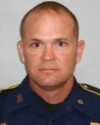
Senior Trooper Steven VincentRest in Peace Bro…We Got The Watch
Louisiana State Police, Louisiana
End of Watch: Monday, August 24, 2015
Age: 43
Tour: 24 years
Badge # D-57
Incident Date: 8/23/2015
Senior Trooper Steven Vincent was shot and killed while checking on a vehicle that was being operated by a suspected intoxicated driver near the intersection of Highway 14 and Fruge Road, near Bell City.
Trooper Vincent was on patrol when he spotted a vehicle from a previous reckless driving report. The vehicle in question had driven off the road and was stuck in a ditch. Trooper Vincent approached the vehicle and began speaking with the occupant and then ordered him to exit the vehicle. The male exited the vehicle with a sawed off shotgun in his hand and opened fire, striking Trooper Vincent in the head. The man then taunted Trooper Vincent as he lay on the ground mortally wounded.
A passing motorist witnessed the incident, stopped his vehicle and tackled the subject. He then wrestled the shotgun away from the man while additional civilians who stopped to assist, utilized Trooper Vincent's handcuffs to cuff and take the subject into custody. They then called for assistance and rendered aid to Trooper Vincent.
Trooper Vincent was taken to Lake Charles Hospital where he died the next day from his wounds.
Trooper Vincent was a U.S. Army veteran. He had served with the Louisiana State Police for 13 years and had previously served with the Lake Charles Police Department for 11 years. He is survived by his wife and 9-year-old son.
Nemo me impune lacessit
Day is done, Gone the sun, From the lake, From the hills, From the sky. All is well, Safely rest, God is nigh.
Subscribe to:
Posts (Atom)