Police Work, Politics and World Affairs, Football and the ongoing search for great Scotch Whiskey!

Thursday, February 7, 2013

Security Weekly: When Security Measures Work, February 7, 2013

By Scott Stewart
Vice President of Analysis

On Feb. 1, a Turkish national named Ecevit Sanli walked up to the side entrance of the U.S. Embassy in Ankara like many others had done that day. Dressed inconspicuously, he waved a manila envelope at the man inside the guard booth as he approached the entrance. The security guard had no reason to distrust the man approaching the checkpoint; the entrance is used to screen packages, and perhaps the guard assumed Sanli was dropping off a document or was a visa applicant at the wrong entrance. What the guard did not know, perhaps, is that Sanli was a person of interest to the Turkish police, who suspected that he was plotting an attack.

The guard opened the door of the access control building -- the outermost door of the embassy compound -- to speak to Sanli, who took one step inside before detonating the explosive device that was strapped to his body. The explosion killed Sanli and the security guard, seriously wounded a journalist who was visiting the embassy and left two other local guards who were manning the entrance with minor injuries.

The embassy's local security personnel, as designed, bore the brunt of the attack. They are hired and trained to prevent threats from penetrating the embassy's perimeter. The low casualty count of the Feb. 1 attack is a testament to the training and professionalism of the local guards and the robust, layered security measures in place at the embassy -- factors for which those responsible for the attack apparently did not sufficiently plan.

Layers of Security

Sanli apparently had hoped to breach the outer perimeter of the compound and to detonate his device inside the embassy building. Reportedly he carried a firearm and a hand grenade, and the way he approached the access control point likewise suggests he hoped to gain entry. Had he wanted to kill Turkish citizens, he could have done so simply by hitting the visa line outside the embassy.

At embassy compounds, secondary access control posts for vehicles and pedestrians typically are staffed with fewer guards than more heavily traversed access points, such as the main entrance or the entrance to the consular section. This particular access point had two guards at the vehicular entrance and a third guard to receive and screen packages and pedestrians. Since there was no drop slot for packages and envelopes, the guard inside the access point had to open the exterior door to receive deliveries. It is likely that the plotters knew about this procedure, which probably factored into their decision to breach the perimeter at this entrance. Moreover, the attack happened around lunchtime, so it is also possible that attackers thought the guards would be inattentive.

Though these smaller access control points have fewer people guarding them, they still boast at least two heavy security doors that all visitors must pass through. Many embassy compounds, including the one in Ankara, have a third door located inside the building. This multiple-door configuration, referred to as a sally port by security officers, provides an additional level of security at perimeter security posts. Sally ports equipped with magnetic locks and reinforced doors can also serve as effective traps for intruders.

The access control point constitutes just the outer perimeter of the embassy. There is also another layer of external security at the entrance to the embassy building itself. It is possible that Sanli thought he could somehow use his weapon or grenade to penetrate that layer once he got through the access control center, but the forced entry/bullet resistant doors and windows on the embassy's exterior would not have been quickly or easily penetrated by such weapons.

Whatever his plan, Sanli never had the opportunity to fully execute it. He was stopped immediately inside the access control center by the security guard and detonated his suicide device just inside the door. The force of the blast blew the outer security door off its hinges and cracked the reinforced concrete exterior wall of the access control building. But the embassy perimeter was not breached, and Sanli never got near the embassy building.

Security Designs

Embassy security measures are designed with specific threats in mind. Sanli, for example, executed precisely the type of attack that embassy security was meant to counter: an isolated terrorist strike that circumvents a host country's police and security services. Ankara is an older embassy office building, but it has received security upgrades over the past few decades that have given the facility decent access control and concentric layers of security meant to stymie intrusions.

Like most older embassy buildings, however, it does not meet the security requirements put in place in the wake of the embassy bombings of the 1980s. The U.S. Consulate General building in Istanbul, which was completed in 2003, exemplifies a building that meets those requirements. Not only is it constructed to specifications, it is also appropriately far enough from the street to help counter threats, such as those posed by Sanli, and to help withstand the damage of a vehicle bomb.

But even the most modern embassies cannot withstand all types of threats, including those posed by long periods of mob violence. On Sept. 14, 2012, a large mob overwhelmed the outer security perimeter of the U.S. Embassy in Tunis -- a newer facility with a robust security design -- causing millions of dollars of damage. Tunisian authorities responded quickly enough to prevent the mob from entering the main embassy building, but with sufficient time the mob could have breached the facility.

Such was the case at the newly built and occupied U.S. Embassy in Tripoli, Libya, in May 2011. After U.S. diplomats were ordered to leave the country, the local security force was unable to prevent a large mob, which constituted security forces and Moammar Gadhafi supporters, from ransacking, looting and burning the facility. The attack rendered the building uninhabitable.

Embassy security measures are also not designed to prevent prolonged assaults by militant groups armed with heavy weapons. Security measures can only provide a delay against a persistent attack by a mob or militant organization. They cannot withstand an indefinite assault. Without extraordinary security like that of the U.S. Embassy in Beirut in the 1980s and 1990s, embassy security only works when the facility enjoys the support and protection of the host country as mandated by the Vienna Convention on Diplomatic Relations.

The Attackers' Weakness

Sanli's method of attack played right into the strength of the embassy's security measures. Perhaps he and his colleagues in the Revolutionary People's Liberation Party-Front believed Sanli could threaten or shoot his way through the embassy's concentric rings of physical security. If so, they underestimated the physical security measures in place and the dedication and bravery of the local guard force.

Notably, attack planning is not a strength of the Revolutionary People's Liberation Party-Front. Over the past decade, the group has conducted several attacks, including five suicide bombings, but their attacks have been famously poorly planned and executed. Often they fail to kill anyone but the suicide bomber. They also have had problems with the reliability of their improvised explosive devices, such as the suicide vest that failed to detonate during the suicide bombing attack against the Turkish justice minister in April 2009.

The Revolutionary People's Liberation Party-Front's Sept. 11, 2012, suicide bombing against a police station in Istanbul killed the bomber and one police officer. In that attack, the bomber threw a grenade at the security checkpoint at the building's entrance, but when the grenade failed to detonate he was unable to get past security at the building's entrance. Only then, in a move similar to the Feb. 1 attack, did he detonate his device.

Following Operation Desert Storm in 1991, Devrimci Sol, the Revolutionary People's Liberation Party-Front's parent organization, conducted a spate of attacks in Turkey that targeted the United States and NATO. Because of the timing, U.S. terrorism investigators believed that Saddam Hussein's government sponsored these attacks. Currently, some leaders of the Revolutionary People's Liberation Party-Front's factions live in Syria and maintain close connections with the al Assad regime. Some of the group's militants have fought with the regime forces, and the group has published statements supporting the al Assad regime. They have also fomented pro-al Assad and anti-intervention demonstrations inside Turkey. This pro-Syrian sentiment, or perhaps even financial enticement from the Syrian government itself, could explain the motive for the attack against the U.S. Embassy. Therefore, it is possible that there could be other anti-U.S. or anti-NATO attacks like those seen in 1991.

The Feb. 1 bombing serves as a timely reminder of several facts that tend to be overlooked. It reminds us of the underlying terrorist threat in Turkey. It also reminds us that not all suicide bombers are jihadists, let alone religious. Indeed, there is a long history of secular groups engaging in suicide terrorism. Last, it reminds us that not all threats emanate from al Qaeda and the constellation of groups and individual actors gathered around its ideological banner.

Perhaps most important, the incident highlights the heroism and dedication of the local guards who serve at U.S. embassies around the world. In the Feb. 1 attack, the embassy's security equipment functioned as designed, and the guards performed as they were trained, undoubtedly saving many lives. These local guards are often criticized when they make a mistake, but they are too frequently overlooked when security works.

When Security Measures Work is republished with permission of Stratfor.

A new look at active shooter....

As this is an issue for our school officials, this former state trooper has come up with some ideas on how to defend the students.

Houston weather, traffic, news | FOX 26 | MyFoxHouston

Some teachers learning 'Intruderology' to protect themselves

Is gun control the answer? Many are divided in a debate that sparked after the Sandy Hook school shooting where almost thirty people were killed. Most agree something has to be done. One man who travels the U.S. conducting training seminars says he has a solution.

What do you think? Can something you learn in a class keep a gunman from walking into a school and taking as many lives as he pleases? This course isn't English Lit. or American History. This is something brand new. It's called Intruderology, teaching teachers how to keep themselves and their kids from being easy prey. So what should a teacher do when she knows a gunman is seconds from finding her and her students unarmed and helpless in a classroom with no way out?

"What we see in these mass killing events, police are responding very rapidly but these killers are moving quickly. So if you can delay the attacker you have the opportunity to save lives," explains the teacher of the course, Brad Spicer. Spicer is a former state trooper and SWAT team member.

He says one of the biggest mistakes is putting kids under desks and hoping the gunman won't come in. "We see an extraordinarily high fatality rate because it's no resistance."

Spicer says teachers should run, evacuate to safety, even if that means escaping with the kids through a window. If that isn't possible he says hide behind a locked door. No lock? Create one with a belt, computer cable, flag rope or telephone cord. "You can loop it around the handle or look at this hinge at the top of the door. Another option is you tie it off up here (at the elbow hinge) and then you also loop it down here (on the door handle)," explains Spicer.

Tying off the door handle and pulling the belt or cord tight worked every time in Spicer's demonstration. The training seminar, put on by Harris County Department of Education, also teaches administrators how to deal with a killer who comes to their school.


"Just monitoring who's coming in and out of the building on a regular basis. We do that every day but to make sure we do it at the highest level we can," explains Tomball ISD Assistant Superintendent Chris Trotter.

Spicer stresses once a gunman is inside the building fighting should be a staff member's last resort. He says chairs, trash cans, fire extinguishers and even throwing heavy books, all make good weapons when you would otherwise be empty handed. "The shooter is not expecting that," says Spicer. He says school shooters are expecting to be the hunter finding easy prey. Spicer suggests teachers turn the tables. Barricade the door or doorway with everything you can except yourself. "If you use your body to support a barricade they're going to shoot at the barricade," says Spicer.

If you classroom door has a lock Spicer suggests you keep it locked and use a specially made magnetic strip on the door so kids can come in and out. That way in an emergency you just rip off the magnetic strip and the door is locked, instead of fumbling around with a key trying to lock the door with shaky hands and a racing heart when a gunman is seconds away from your classroom.

"Don't get me wrong he's got the gun you don't. It's still a really bad day but you've mitigated his ability to come in," Spicer explains.

A school shooting is a tragedy most don't even want to think about. Doing that Spicer says is dangerous and is a luxury we just don't have anymore. "Like when I walk in this room now I count the number of exits that I see to get out. That's what I learned here today," says Calvin Singleton, principal at High Point North alternative school.

Spicer says seconds matter and the longer the gunman can be delayed, the more lives will be saved. He says being prepared mentally is a big part of the battle. So teachers should visualize their safety plan then carry it out, if necessary.

In the aftermath of Sandy Hook, there was a lot written on the active shooter scenerio. One of the more intelligent items I read mentioned these facts:

If you’re the situation with an active shooter and you are carrying a concealed weapon, there are a few things to remember. First, most active shooters aren’t planning on leaving alive. Second, active shooters are cowards looking to murder and not to fight; the first sign of resistance could be a complete shock. A prime example of this is that active shooters often kill themselves before possible police confrontation.

At least this man is training people on what to do, as opposed to the politicians grandstanding on the bodies of children. Yes, I said that, and it's true. Thank you Trooper Spicer for this training for our teachers.

Tales from Wal-Mart

I've often said, this has to be real. You can't make this up!
Timothy Carr, Brooksville man, accused of driving drunk -- inside a Walmart

BROOKSVILLE, Fla. -- Police in Brooksville say they've arrested a man who was driving drunk -- inside a Walmart. According to WFLA , officers said Timothy Carr was drunk and driving around the store on a motorized shopping cart. Carr then removed an alcoholic beverage from a shelf and was drinking it while he knocked other items off the shelves, police told WFLA . The Walmart is located at 7305 Broad Street. According to the report, Carr told police he did not have enough money to pay for the alcohol. He also said he is a transient. Carr had two previous arrests for retail theft, which made the current arrest a felony. He was charged with disorderly intoxication and felony retail theft. Copyright 2013 Scripps Media, Inc. All rights reserved. This material may not be published, broadcast, rewritten, or redistributed.
No more comment needed!

Wednesday, February 6, 2013

Is the SPLC promoting hate?

The Southern Poverty Law Center, like the NAACP was once a great organization that did excellent work. But that time is past. For the most time it's only purpose is to provide some legitimacy to leftist rants against conservatives and republicans.

But now we have to take a look at this. And a question must be asked.

Floyd Corkins pleads guilty to Family Research Council shooting

A man accused of shooting a security guard inside the downtown Washington headquarters of a conservative Christian lobbying group pleaded guilty Wednesday in connection with the shooting.

Floyd Corkins pleaded guilty to one federal count of crossing state lines with guns and ammunition. He also pleaded guilty to one count of intent to kill while armed and one count of committing an act of terrorism with the intent to kill....

...Corkins was charged in August with opening fire inside the lobby of the Family Research Council building. A security guard was wounded but managed to wrestle away the gun. No one else was hurt.

Prosecutors say Corkins, who had been volunteering at a center for gay, lesbian and transgender people, was carrying ammunition and Chick-fil-A sandwiches in his bag. Chick-fil-A was making headlines at the time because of its president's stated opposition to gay marriage.

Corkins intended to smear the sandwiches in the faces of his victims to make a statement about gay rights opponents, he acknowledged during a hearing Wednesday.

According to the plea agreement, he told FBI agents who interviewed him after the shooting that he wanted to use the sandwiches to "make a statement against the people who work in that building ... and with their stance against gay rights and Chick-fil-A."...

...Corkins acknowledged as part of his plea agreement that he had taken a number of steps to plan the shooting. He bought the pistol the week before and practiced firing it.

He also visited the headquarters of the Family Research Council, and he purchased the Chick-fil-A chicken sandwiches the day before the shooting. The plea agreement said Corkins was filmed picking out the gun by a French television crew doing a piece on the ease with which firearms can be purchased in the United States.

Corkins also acknowledged that he considered making a bomb but didn't have the patience to do it. In his pants pocket, police found a handwritten list of groups that also oppose gay marriage. Lawyers did not include the list of organizations in the plea agreement.

Corkins pleaded guilty to three charges: interstate transportation of a firearm and ammunition, assault with intent to kill while armed and act of terrorism while armed, a charge based on the shooting being intended to intimidate anyone who is associated with or supports the Family Research Council and other organizations that oppose gay marriage...

...In a statement released after Corkins' plea, the head of the Family Research Council blamed the shooting in part on the Southern Poverty Law Center, which has labeled his organization a hate group.

In his plea agreement, Corkins acknowledged he identified the Council as "an anti-gay organization" by visiting Southern Poverty's website. The head of the Council, Tony Perkins, called on the group to stop labeling his organization and others hate groups because of their stance on gay issues. A spokeswoman for the Alabama-based Law Center did not immediately return a telephone message....

And the question is, SPLC, are you proud of yourself? After the Oklahoma City bombing was blaming Rush Limbaugh for inspiring Timothy McVeigh. Were are the usual suspects screaming about hate speech inspiring domestic terrorists?

I know, rhetorical question.

Tuesday, February 5, 2013

Geopolitical Weekly: U.S.-Iranian Dialogue in Obama's Second Term, February 5, 2013

By Reva Bhalla
Vice President of Global Affairs

As U.S. President Barack Obama's second-term foreign policy team begins to take shape, Iran remains unfinished business for the U.S. administration. The diplomatic malaise surrounding this issue over the past decade has taken its toll on Washington and Tehran. Even as the United States and Iran are putting out feelers for another round of negotiations, expectations for any breakthrough understandably remain low. Still, there has been enough movement over the past week to warrant a closer look at this long-standing diplomatic impasse.

At the Munich Security Conference held Feb. 1-3, U.S. Vice President Joe Biden said the United States would be willing to hold direct talks with Iran under the right conditions. Iranian Foreign Minister Ali Akbar Salehi responded positively to the offer but warned that Iran would not commit unless Washington shows a "fair and real" intention to resolve the issues dividing the two sides.

An Uneven Record in U.S.-Iranian Diplomacy

This diplomatic courting ritual between the United States and Iran has occurred a handful of times over the past several years. Like previous times, the public offer of talks was preceded by denials of secret pre-negotiations. (This time, Ali Akbar Velayati, a presidential hopeful and senior adviser to Iranian Supreme Leader Ayatollah Ali Khamenei, denied that he met with a U.S. representative in Oman.) Meanwhile, as a sideshow to the more critical U.S.-Iranian bilateral track, Iran has announced it will hold negotiations with the P-5+1 group Feb. 25 in Kazakhstan to demonstrate its willingness to seek a compromise on the nuclear issue as part of a broader deal. For good measure, Iran has balanced these diplomatic moves with an announcement that it is upgrading uranium centrifuges at the Natanz enrichment facility. Though this will rile Israel, the thought of Iran accelerating its nuclear program could add just the right amount of urgency to propel the talks.

The first step to any negotiation is defining a common interest. For the United States and Iran, those interests have evolved over the past decade. In 2003, they shared an interest in bringing Saddam Hussein down and neutralizing a Sunni jihadist threat. By 2007, it was a mutual interest in relieving the U.S. military burden in Iraq. In 2011, it was a common interest in avoiding a war in the Strait of Hormuz. In 2013, as the region fragments beyond either side's control, Washington and Tehran are each looking to prevent the coming quagmire from undermining their respective positions in the Middle East.

But talks have also stalled many times due to issues of timing, misreading of intentions, lack of political cohesion or a number of other valid reasons. At base, timing is everything. Both sides need to create a favorable political climate at home to pursue controversial negotiations abroad. Complicating matters, both sides have the mutually contradictory goal of negotiating from a position of strength. In 2007, Iran could still claim to hold thousands of U.S. troops hostage to attacks by its Shiite militant proxies in Iraq. In 2011, a Shiite uprising in Bahrain threatened to upset the balance of power in the Persian Gulf in Iran's favor while Iran could at the same time shake energy markets with military maneuvers in the Strait of Hormuz.

Iran, however, couldn't hold that position for long. With time, Tehran's still-limited covert capabilities in the eastern Arabian Peninsula were exposed. Meanwhile, the United States built up its military presence in the Persian Gulf. With minesweepers now concentrated in the area, Iran now must think twice before carrying out provocations in the strait that could accidentally trigger a military intervention.

Before Tehran could recover, the regional climate flipped against Iran. In 2012, the Sunni rebellion in Syria gained steam, in no small part due to a growing regional imperative to deprive Iran of its Mediterranean foothold in the Levant. As Iran's position in Syria and Lebanon began to slip, the Sunni momentum predictably spilled into Iraq, where massive Sunni protests against the Shiite government in Baghdad already are under way.

Now, Iran no longer poses a strategic threat to U.S. interests in the way it did just a few years ago, and the prospect of Iran solidifying an arc of influence from western Afghanistan to the Mediterranean has evaporated. Iran is on the defensive, trying to help its allies survive in Syria and Lebanon while at the same time being forced to devote more resources to holding its position in Iraq. And while Iran's overseas expenses are rising, its budget is simultaneously shrinking under the weight of sanctions. U.S.- and European-led sanctions over the past two years have gradually moved from a policy of targeted sanctions against individuals and firms to a near-total trade embargo that has prompted some Iranian officials to openly admit that Iran's oil revenues have dropped more than 40 percent.

At this point, the United States has two options. It could allow the regional forces to run their course and whittle down Iran's strength over time. Or it could exploit the current conditions and try negotiating with Iran from a position of strength while it still has the military capacity to pose a legitimate threat to Iran. Iran may be weakening, but it still has levers with which to pressure the United States. Preparations are already under way for Alawite forces in Syria to transition to an insurgency with Iran's backing. In Afghanistan, Iran has militant options to snarl an already fragile U.S. exit strategy. So far, the United States has shown a great deal of restraint in Syria; it does not want to find itself being drawn into another conflict zone in the Islamic world where Iran can play a potent spoiler role.

It appears that the United States is pursuing the strategy of giving negotiations another go with the expectation that these talks will extend beyond the immediate nuclear issue. Iran has frequently complained that it cannot trust the United States if Washington cannot speak with one voice. For example, while the U.S. administration has pursued talks in the past, Congress has tightened economic sanctions and has tried to insert clauses to prevent any rollback of sanctions. The economic pressure produced by the sanctions has helped the United States fortify its negotiating position, but the administration has tried to reserve options by keeping a list of sanctions it could repeal layer by layer should the talks yield progress.

Seeking Flexibility in Sanctions

Washington could look to Europe for more flexibility for its negotiating needs. In a recent story overlooked by the mainstream media, the General Court of the European Union on Jan. 29 revoked sanctions against Bank Mellat, one of the largest commercial banks in Iran that is primarily involved in financing Iran's vital energy sector. Bank Mellat was sanctioned in 2010 based on allegations that it was a state-owned bank involved in Iran's nuclear proliferation activities. But the EU court has now ruled that there was insufficient evidence to link the bank to the nuclear program. Even so, though Iran claims that the bank has been fully privatized since 2010, it is difficult to believe that it does not maintain vital links with the regime. Nonetheless, rumors are circulating that more EU sanctions de-listings could be in store.

Given the impossibility of sealing every legal loophole, perception plays a vital role in upholding any sanctions regime. Over the past two years, the United States -- in coordination with an even more aggressive European Union -- has signaled to traders, banks and insurers across the globe that the costs of doing business with Iran are not worth jeopardizing their ability to operate in Western markets. Enough businessmen were spooked into curbing, or at least scaling back, their interaction with Iran and known Iranian front companies that Iran has experienced a significant cut in revenue. But with large amounts of money to be made in a market under sanctions, it can be very difficult politically to maintain this level of economic pressure over an extended period of time. And the more the sanctions begin to resemble a trade embargo, the more ammunition Iran has for its propaganda arm in claiming sanctions are harming Iranian civilians. The prospect of additional sanctions being repealed in court in the coming months could deflate the West's economic campaign against Iran and give more businesses the confidence to break the sanctions -- but if the sanctions were intended to force negotiations in the first place, that may be a risk the U.S. administration is willing to take.

There is no clear link between the recent U.S. offer of talks and the sanctions de-listing of Bank Mellat. But if the United States were serious about using its position of relative strength to pursue a deal with Iran, we would expect to see some slight easing up on the sanctions pressure. This would likely begin in Europe, where there would be more flexibility in the sanctions legislation than there would be in the U.S. Congress. Germany, Iran's largest trading partner in Europe, has perhaps not coincidentally been the strongest proponent for this latest attempt at direct U.S.-Iranian talks. It is also notable that U.S. President Barack Obama's picks for his second-term Cabinet include senators Chuck Hagel and John Kerry, both of who have openly advocated dialogue with Iran.

Iran is now the most critical player to watch. Iran is weakening in the region and is becoming heavily constrained at home, but even so, the clerical regime is not desperate to reach a deal with Washington. Reaching an understanding with the United States could mitigate the decline of Alawite forces in Syria and the Sunni backlash that Iran is likely to face in Iraq, but it would not necessarily forestall them. And with general elections in Iran slated for June, the political climate in the country will not be conducive to the give-and-take needed to move the negotiations forward, at least in the near term.

The United States would prefer to reduce the number of unknowns in an increasingly volatile region by reaching an understanding with Iran. The irony is that with or without that understanding, Iran's position in the region will continue to weaken. Even if Washington doesn't need this negotiation as badly as Iran does, now is as good a time as any for a second-term president to give this dialogue another try.

U.S.-Iranian Dialogue in Obama's Second Term is republished with permission of Stratfor.

Maybe some of these ideas will catch on over here.


Northern lights

The Nordic countries are reinventing their model of capitalism, says Adrian Wooldridge


THIRTY YEARS AGO Margaret Thatcher turned Britain into the world’s leading centre of “thinking the unthinkable”. Today that distinction has passed to Sweden. The streets of Stockholm are awash with the blood of sacred cows. The think-tanks are brimful of new ideas. The erstwhile champion of the “third way” is now pursuing a far more interesting brand of politics.

Sweden has reduced public spending as a proportion of GDP from 67% in 1993 to 49% today. It could soon have a smaller state than Britain. It has also cut the top marginal tax rate by 27 percentage points since 1983, to 57%, and scrapped a mare’s nest of taxes on property, gifts, wealth and inheritance. This year it is cutting the corporate-tax rate from 26.3% to 22%.

Sweden has also donned the golden straitjacket of fiscal orthodoxy with its pledge to produce a fiscal surplus over the economic cycle. Its public debt fell from 70% of GDP in 1993 to 37% in 2010, and its budget moved from an 11% deficit to a surplus of 0.3% over the same period. This allowed a country with a small, open economy to recover quickly from the financial storm of 2007-08. Sweden has also put its pension system on a sound foundation, replacing a defined-benefit system with a defined-contribution one and making automatic adjustments for longer life expectancy.

Most daringly, it has introduced a universal system of school vouchers and invited private schools to compete with public ones. Private companies also vie with each other to provide state-funded health services and care for the elderly. Anders Aslund, a Swedish economist who lives in America, hopes that Sweden is pioneering “a new conservative model”; Brian Palmer, an American anthropologist who lives in Sweden, worries that it is turning into “the United States of Swedeamerica”.


There can be no doubt that Sweden’s quiet revolution has brought about a dramatic change in its economic performance. The two decades from 1970 were a period of decline: the country was demoted from being the world’s fourth-richest in 1970 to 14th-richest in 1993, when the average Swede was poorer than the average Briton or Italian. The two decades from 1990 were a period of recovery: GDP growth between 1993 and 2010 averaged 2.7% a year and productivity 2.1% a year, compared with 1.9% and 1% respectively for the main 15 EU countries.

For most of the 20th century Sweden prided itself on offering what Marquis Childs called, in his 1936 book of that title, a “Middle Way” between capitalism and socialism. Global companies such as Volvo and Ericsson generated wealth while enlightened bureaucrats built the Folkhemmet or “People’s Home”. As the decades rolled by, the middle way veered left. The government kept growing: public spending as a share of GDP nearly doubled from 1960 to 1980 and peaked at 67% in 1993. Taxes kept rising. The Social Democrats (who ruled Sweden for 44 uninterrupted years from 1932 to 1976 and for 21 out of the 24 years from 1982 to 2006) kept squeezing business. “The era of neo-capitalism is drawing to an end,” said Olof Palme, the party’s leader, in 1974. “It is some kind of socialism that is the key to the future.”

The other Nordic countries have been moving in the same direction, if more slowly. Denmark has one of the most liberal labour markets in Europe. It also allows parents to send children to private schools at public expense and make up the difference in cost with their own money. Finland is harnessing the skills of venture capitalists and angel investors to promote innovation and entrepreneurship. Oil-rich Norway is a partial exception to this pattern, but even there the government is preparing for its post-oil future.

This is not to say that the Nordics are shredding their old model. They continue to pride themselves on the generosity of their welfare states. About 30% of their labour force works in the public sector, twice the average in the Organisation for Economic Development and Co-operation, a rich-country think-tank. They continue to believe in combining open economies with public investment in human capital. But the new Nordic model begins with the individual rather than the state. It begins with fiscal responsibility rather than pump-priming: all four Nordic countries have AAA ratings and debt loads significantly below the euro-zone average. It begins with choice and competition rather than paternalism and planning. The economic-freedom index of the Fraser Institute, a Canadian think-tank, shows Sweden and Finland catching up with the United States. The leftward lurch has been reversed: rather than extending the state into the market, the Nordics are extending the market into the state.


Why are the Nordic countries doing this? The obvious answer is that they have reached the limits of big government. “The welfare state we have is excellent in most ways,” says Gunnar Viby Mogensen, a Danish historian. “We only have this little problem. We can’t afford it.” The economic storms that shook all the Nordic countries in the early 1990s provided a foretaste of what would happen if they failed to get their affairs in order.

There are two less obvious reasons. The old Nordic model depended on the ability of a cadre of big companies to generate enough money to support the state, but these companies are being slimmed by global competition. The old model also depended on people’s willingness to accept direction from above, but Nordic populations are becoming more demanding....

Lady Thatcher was famous for many sayings, one of which is "The problem with socialism is eventually you run out of other people's money." She saw the problems the European Socialist model brings. Lack of ambition, inefficiency, destruction of family ties, among others. At least the Sweeds have discovered the truth, even if the current leadership in DC things they make make the impossible work.

No, they haven't run out of other people's money yet.

Officer Down


Sergeant Patrick Divers
New York City Police Department
End of Watch: Friday, February 1, 2013
Age: 51
Tour: 25 years

Sergeant Patrick Divers suffered a fatal heart attack while participating in a drug buy-bust operation with other detectives in the area of Myrtle Avenue and Nostrand Avenue, in Brooklyn, at about 10:30 am.

Other officers immediately transported him to a local hospital when he started suffering chest pains. He passed away at the hospital a short time later.

Sergeant Divers had served with the New York City Police Department for 25 years and was assigned to Brooklyn North Narcotics. He is survived by his wife, daughter, and son.
Rest in Peace Bro…We Got The Watch

Day is done, Gone the sun, From the lake, From the hills, From the sky. All is well, Safely rest, God is nigh.

Monday, February 4, 2013

What is a Policeman by Paul Harvey

No comment by me needed.


Thanks to Andi for the link.

But she's legal enough to judge a case.

Judge who shoved deputy found not guilty by reason of insanity

Cook County Judge Cynthia Brim, on trial for shoving a sheriff's deputy at the Daley Center last year, has been found not guilty of battery by reason of insanity....

...Brim will now have to report to the state Department of Health for an evaluation of her mental health and treatment. She is due back in court in March.

She remains free on bond, and her lawyer said she wants to return to the bench.

Brim had approached deputies in the Daley Center last March and, without identifying herself, asked if they had found any keys, authorities have said previously. Deputies showed her three sets of keys and Brim claimed a set and walked away.

About 10 minutes later, the judge returned and, without explanation, tossed the keys toward one deputy and shoved another in the chest with both hands, according to authorities. She was then handcuffed and arrested.

Her attorney James Montgomery said during his opening statement at the Daley Center this morning that his client was legally insane at the time.

He said Brim ended up at the Daley Center last March after a confused trek there from 47th street after taking the wrong bus. Montgomery said she threw her keys as a protest against the justice system.

Brim has been hospitalized five times since her 1994 election after going off her anti-psychotic meds, according to testimony.

In 2004, firefighters removed her from a courtroom and took her to a hospital, said psychiatrist Matthew Markos.

Brim was hospitalized for 20 days after her arrest last year, he said. Markos said at the time Brim was hospitalized, she was catatonic, confused, irrational and showing signs of paranoia and psychosis.

Brim was re-elected to another six-year term as a judge in November. She was backed by the Cook County Democratic Party as well as the Committee for Retention of Judges in Cook County, a campaign committee funded by judges.
...

We are talking Chicago, home of the Chicago Way. I wish I could say this could only happen in Chicago, but I know better.

She is a Democrat in a big city. Law doesn't apply.

Officer Down


Police Officer William Michael McGary
Conway Police Department, Arkansas
End of Watch: Friday, February 1, 2013
Age: 26
Tour: 2 years
Badge # 474
Incident Date: 1/31/2013

Police Officer William McGary succumbed to injuries sustained the previous night when he was struck by an intoxicated driver at the intersection of Dave Ward Drive and Exchange Street.

Officer McGary was directing traffic at the scene of another accident when a car struck him at about 8:00 pm. The driver who struck him was arrested at the scene and charged with several counts, including driving under the influence of narcotics.

Officer McGary was flown to a hospital in Little Rock where he remained in serious condition until succumbing to his injuries. He served with the Conway Police Department for just under two years.
Rest in Peace Bro…We Got The Watch

Day is done, Gone the sun, From the lake, From the hills, From the sky. All is well, Safely rest, God is nigh. 

From the files of Even Paranoids Have Enemies....

I'm not one to see black helicopters in the sky, etc with the excesses of the federal government. But after the last few months, getting practice ammunition is almost impossible. That being said, ammo factories are running 24/7 to fill demand and I have to say B Hussein Obama is the best salesman the firearms industry has every had.

Which brings me to these articles and I'll propose a theory at the end.

Department of Homeland Security buys even more hollow point rounds

The Department of Homeland Security has put out yet another solicitation requesting hundreds of millions of hollow point rounds, this time 200 million rounds of .223 and .308 for the Immigration and Customs Enforcement Agency, to be obtained over two years, with 40 million the first year and 160 million the second.

For the .308, the agency has ordered two types: blanks and hollow points. The blanks will be sent to two locations in the southeast and Puerto Rico, with the hollow points going throughout the entire country. Blanks are used in movies and television, but can also be used to teach new shooters proper breathing and control of the trigger.

This is the latest order by the DHS of hundreds of millions of rounds of hollow point ammo. Back in March, the agency purchased 450 million rounds of .40 caliber ammunition from the ATK company out of Minnesota. This was followed in April by a solicitation for another 750 million rounds, including .357 magnum rounds that are capable of penetrating walls. All together, this is over a billion rounds.

The DHS has so far refused to say why they are purchasing billions of rounds, as this is an unusually large amount. When more people started questioning these purchases, the DHS responded by classifying information, blacking out certain sections of a solicitation, including portions pertaining to 64 and 65 grain .223 ammo and the number being requested.

Other agencies have also begun buying large quantities of ammo, including the National Weather Service’s order of 46,000 hollow point rounds, and 174,000 .357 magnum rounds ordered by the Social Security Administration. Though the SSA has explained away their purchase as being typical for agents and the NWS claims that the purchase was a “clerical error” and was actually for NOAA's Fisheries Office of Law Enforcement, the reasons for the DHS’s purchases still remain unknown....

Ok, a question early. Why the hell does the Social Security Administration need 174K in bullets? Why does the National Weather Service need firearms period? Then again why does the Education Department have a SWAT team?

But I digress.
Department of Homeland Security buying 7,000 full auto assault rifles

According to an article by Mike Adams on Monday, the Department of Homeland Security is seeking to purchase 7,000 fully automatic rifles, which the Department is referring to as “personal defense weapons.”

The solicitation for the weapons reads: “The scope of this contract is to provide a total of up to 7,000 5.56x45mm North Atlantic Treaty Organization (NATO) personal defense weapons (PDW) throughout the life of this contract to numerous Department of Homeland Security components.”

The solicitation continues that the guns should be select fire, so that they fire both semi-automatic and full auto (the true definition of an “assault rifle”). The rifles will also take so-called high capacity magazines, “capable of accepting all standard NATO STANAG 20 and 30 round M16 magazines (NSN 1005-00-921-5004) and Magpul 30 round PMAG (NSN 1005-01-576-5159). The magazine shall have a capacity to hold thirty (30) 5.56x45mm NATO rounds.”

This large order of firearms would seem to fit with the nearly 2 billion rounds of hollow point ammunition that the DHS has ordered, which includes .223 caliber rounds, the civilian equivalent of the 5.56x45mm NATO round.

The reason for these ammo purchases is unknown, as the Department has refused to give a reason for this unusually large amount, going so far as to illegally black out information on a solicitation after people started noticing the purchases.

The media has downplayed the ammo purchases as being for training, but hollow points are not used for that purpose. Full metal jacket rounds are used for the purposes of training.

Now B Hussein Obama hates private ownership of firearms and although he loathes the market, he understands it. Now little Barry knows guns control is dead on arrival in the House but he wants it. And right now you cannot get ammunition without paying through the ass (assuming you can find it). So again, I wonder, is B Hussein Obama getting gun control through the free market? He is limiting the supply of guns and ammunition out there and people are suffering for it. Then again if people suffer, he really doesn't care.

Just saying. As they used to say in the KGB, Even Paranoids Have Enemies.

We gotta think of a way to make these things smaller....

Some may recognize that quote from the movie 1941. However this is incredible technology and the applications for military, law enforcement, even ranching are countless.

Mini Drones: Army Deploys Tiny Helicopters


British troops are using a nano drone just 10cm long and weighing 16 grams on the front line in Afghanistan to provide vital information on the ground.

They are the first to use the state-of-the-art handheld tiny surveillance helicopters, which relay reliable full motion video and still images back to the devices' handlers in the battlefield.

The Black Hornet Nano Unmanned Air Vehicle is the size of a child's toy, measuring just 10cm (4 ins) by 2.5cm (1 inch), and is equipped with a tiny camera.


The 16g helicopters are used to assess enemy threat

Soldiers use the mini drone to peer around corners or over walls to identify any hidden threats and the images are relayed to a small screen on a handheld terminal.

Sergeant Christopher Petherbridge, of the Brigade Reconnaissance Force in Afghanistan, said: "Black Hornet is definitely adding value, especially considering the light weight nature of it.

"We used it to look for insurgent firing points and check out exposed areas of the ground before crossing, which is a real asset. It is very easy to operate and offers amazing capability to the guys on the ground."

The nano helicopter has been developed by Prox Dynamics AS of Norway as part of a £20m contract for 160 units with Marlborough Communications Ltd (MCL), Surrey.


The tiny drones send video and still images back to a handheld screen

Philip Dunne, Minister for Defence Equipment, Support and Technology, said: "Black Hornet gives our troops the benefits of surveillance in the palm of their hands. It is extremely light and portable whilst out on patrol.

"Intelligence, surveillance and reconnaissance systems are a key component in our 10-year equipment plan and now that we have balanced the defence budget we are able to confidently invest in these kinds of cutting-edge technologies."

Sunday, February 3, 2013

An amateurs guide to New Orleans

Saw this while looking through Facebook this morning and for those of you who have not enjoyed the city of New Orleans, this will help you when you visit.
15 things you need to know if you are visiting New Orleans or watching any of the horrible pre-game New Orleans fluff pieces before the Super Bowl:

1: We are NOT CAJUNS! Cajuns live West of here and were never in New Orleans. We're Creole by fact, which is not Cajun. If you meet someone from New Orleans who says that they are Cajun, they are 1 of two things: Really stupid... or Cajun.

Classic example of getting it wrong, did you ever see The Big Easy?
2: We DO NOT PRONOUNCE IT "N'awlins". Not sure what Middle Eastern T-shirt shop owner came up with that, but it's not from us. We say it like: "nu-ARE-lins". Some parts of town say it: "nu-AW-lee-ins". But we do NOT friggin say N'Awlins. It sounds stupid and if you're a TV personality, quit saying it!

3: We ARE NOT COUNTRY or SOUTHERN. Would you call Miami "Southern"? No. We don't wave rebel flags, wear cowboy boots or know how to do the 2-step. Nothing wrong with "Country". We're surrounded by "Country", most of us have family who are "Country". But we identify more with New York than anywhere else. Our ancestory and New York's ancestory are almost identical, except we had French and Spanish beginnings. Everything else is the same. The same Irish influx, the same Italian influx, the same German influx, plus we had a lot of Caribbean people come here, mainly from Haiti. Does that sound Country?

4: We DO NOT Speak with Southern accents. Many say we sound something like Brooklyn. I call it "Brooklyn with a dash of stupid". Just watch our local commercials and you'll see what I mean.

I've often said Louisiana is like three states in one. The southern part of the state is the Cajun area. The northern state is more like the Antebellum South. And New Orleans...it's New Orleans.
5: We do not eat clams. Our waters are FULL of clams but we don't serve them. Why? because we have Oysters. They are better. Much better. Better by miles and miles and miles. Like how the SuperBowl is better than all other sporting events combined.

6: You are as safe here as you would be in any major city. Yes, we have a LOT of murders, but if you aren't selling crack to a guy in a 1998 Escolade, you won't be catching any bullets. However, don't stand on the sidewalk yapping away on your iPhone. An iPhone is worth about 3 days worth of crack to a crack head. And if you're fat, you can't run down the crack head who snatched your iPhone out of your hand. He's faster than you for at least 1 city block.

7: Mardi Gras is as much for families as it is for the drunken college student found face down in a river of party gravy. Just pick your neighborhood wisely and you can see or not see whatever you want. It's the best time of year, in the best city on the planet.

I've told friend going to New Orleans for parades, Metairie and Uptown are family friendly. On Bourbon Street, get ready for everything sort of sex on the street. You're warned.
8: We don't care where you are from. Seriously. No place is better than here so if you tell us where you're from, you might hear back "well I'm from right here, bitch", knowing that we just "1-upped" any response you might have about your musically impared town. We don't give a shit. Especially people from Boston. We don't give a damn about Boston or anywhere else. No one here ever leaves. Most people here don't even travel. That's a fact. We don't want to leave. Even Katrina couldn't get us to leave. New Orleans has the highest "nativity rate" in the country. Meaning: is your mother from here? is your father from here? and do you live here? Yes and you're a true native. No other city is even close. We're over 80% in that statistic. We've got better food, better music, better looking chicks, worse streets, the most corrupt politics, the worst education, the hardest core of criminals, better desserts including King Cake and we'll shout you down about all of it. Come here, enjoy yourself and tell us you're never going to leave. But we don't give a shit about Boston!

9: We eat Crawfish. They're tiny lobsters. If you're from Boston, you'll love em.

10: The Saints should be in the SuperBowl. Period. Watch any TV program this weekend about the Superbowl and you'll see tons of Saints jerseys in the crowd. This is a city-wide, organized "Screw you" to the NFL. Our entire 2012 season was stolen by mismanagement of the NFL by an ambitious A-hole named Rodger Goodell. He penalized the Saints for things that were later disproved and overturned in court, but the Saints paid the price by having our coach held in house arrest and taking away his cell phone. Goodell is here this week and if he knows what's good for him, he won't eat anything while in town. Ever. People here are insane about the Saints and this man's lack of clarity and overreaching of his authority has cost the Saints an entire season. Ask any man wearing a Saints jersey this week if he'll take a murder rap for Sean Payton or Drew Brees if either men were to fly off and stick a knife through Goodell's eye. Well, you'd have a line of other Saints jersey wearers standing in line behind the first one, ready to serve the time. Did the Saints do something wrong? Probably. But they were made scapegoats for the entire "head injury" scandal that the NFL is currently trying to defend in court and the Saints did nothing every other team was doing. The whole thing stinks of corruption.

11: Take a Street Car ride. Take the green one and don't call it a "trolley". Trolleys are in San Francisco. The Street Car will take you Uptown, down St. Charles Avenue, past some of the most scenic places you'll ever see in a major city. We're not just Bourbon Street and naked breasts. Take a ride to the other parts of town in between texting your buds pictures of naked breasts. Breasts are great, but you might even see better breasts on the natives.

12: If there's a line waiting to eat, you're probably at a tourist trap, walk on. There are only 2 restaurants where a local will wait to eat and you don't know of either of them. We have more 4 and 5 star restaurants than any other city in the country, especially Boston. And we won't wait for it. Just step out of line and ask a local where to eat. If you saw it on the food channel, it probably sucks by now.

13: Find Magazine Street. Walk down it untill you wear holes in your shoes. Really.

14: Ride the Ferry across the river. It's free for pedestrians and you'll have a better photo-op than any other place in the city. It's at the foot of Canal Street.

15: Move here! Houses are pretty reasonable in some areas, but if you want to look in the older areas, you can pick up a fixer-upper for next to nothing. Give yourself a year to get it ready and deal with contractors, but you'll end up with a 200 year old masterpiece with a yard for the price of a small condo in Boston. We've got more tech companies moving here these days than Silicon Valley. You can ditch one of your cars and ride that bike you paid too much for. Our winters are... well... look outside, it's February and it's 65. The cost of living is cheaper than you would expect. Get here before all that changes. The people will welcome your talents and brains like the return of the prodigal son. There's a lot you'll have to forgive living here, but there's a lot you'll never get anywhere else (See #8)
What do I miss from the city? The Three F's. Family, Friends and Food. Sorry Texans, you have the BBQ down. Leave the seafood to Louisiana.

Go Saints!

Saturday, February 2, 2013

Gun microstamping and other fantasies.

With the latest crisis being guns, I saw this article from Hotair.com and thought it was interesting.

Gun microstamping could close American factories

I understand that gun owners’ rights and the Second Amendment haven’t really been a touchstone in this year’s elections, but that doesn’t mean that the battle isn’t still being waged. One story out this month hits pretty close to home for me, both figuratively and literally. It involves the Remington Arms plant located in Ilion, a village in upstate New York. They are currently battling a pending move by the state government which would force them to put laser etched microstamps on the firing pins of all their weapons, driving costs through the roof.

Microstamping, or ballistic imprinting, is a patented process that uses laser technology to engrave a tiny marking of the make, model and serial number on the tip of a gun’s firing pin to allow an imprint of that information on spent cartridge cases. Supporters of the technology say it will be a “game changer,” allowing authorities to quickly identify the registered guns used in crimes. Opponents claim the process is costly, unreliable and may ultimately impact the local economies that heavily depend on the gun industry, including Ilion, N.Y., where Remington Arms maintains a factory, and Hartford, Conn., where Colt’s manufacturing is headquartered.

“Mandatory microstamping would have an immediate impact of a loss of 50 jobs,” New York State Sen. James Seward, a Republican whose district includes Ilion, said, adding that Remington employs 1,100 workers in the town. “You’re talking about a company that has options in other states. Why should they be in a state that’s hostile to legal gun manufacturing? There could be serious negative economic impact with the passage of microstamping and other gun-control laws.”

I grew up within bicycling distance of the Remington Arms plant, and nearly every one of our neighbors either had a family member who worked there or knew people who did. It was the central industry of the area, and while diminished in size over the years, is still a primary force in providing jobs. They also have a long, proud tradition of producing some of the finest hunting hardware in the nation for well over a century.

This microstamping, while perhaps well intentioned from a law enforcement perspective, is a business disaster in the making for little or no return on the investment. Bob Owens explains.

For starters: microstamping fails to work on any firearm that already exists, something in the neighborhood of more than 300 million firearms. As firearms last indefinitely, it would be decades before they became a significant number of total firearms — even if the technology was foolproof.

But microstamping is not foolproof. Let’s look at the ways microstamping fails, beyond the numbers:

Microstamping does not work if shell casings aren’t automatically ejected from the crime gun. Revolvers, derringers, double-barrel shotguns, pump shotguns and rifles, and semi-automatic firearms that can be equipped with inexpensive brass catchers (common among some shooters) would leave no cartridges at the scene of a shooting.

Microstamping does not work because firing pins are inexpensive and easy to replace. The firing pin for most weapons are easily replaced by someone with a minimum of ability to read and follow the basic cleaning directions for his firearm. The expense of millions of dollars in retooling is thwarted by the purchase of a $12 part.

Microstamping does not work because the stamping is easily defaced. It would take a matter of a half-dozen passes of a standard diamond file, and less than a minute, to eradicate the microstamping.

Microstamping is incredibly fragile. The stamping would wear out over time through simple use of the firearm, or be thwarted by the normal powder residue that builds up on small parts.

Microstamping could easily be spoofed and waste police time — or worse, send the wrong people to jail. Most shooters do not reload their own ammunition, and leave their shell casings at the range. All it would take to turn microstamping to a criminal’s advantage would be for a criminal or one of his associates to pick up brass from a firing range in the same caliber as the weapon he carries. After he uses a microstamping-free weapon in a crime, he would merely drop the brass he recovered from Joe Citizen at the range at the crime scene. Joe will wake up with a SWAT team crashing through his door at 5:00 a.m., and if he’s lucky, innocent Joe won’t be gunned down along with his family pets...

How about this Chuckie Schumer et al. Just find the people who use guns in a crime and upon conviction lock them up and throw away the key. Then while they are in prison they can only commit crimes in prison, not against innocent people.

As a classic example William Spengler. He was convicted of murdering his grandmother in New York in 1980 and served only 18 years and then released. He was a convicted felon he cannot, by law, possess a firearm. Now that didn't stop him from committing two murders.

Now, in Texas he would have been indicted for capital murder (because he murdered someone 62 or older) and even if he wasn't put on death row his ass would be in prison for a lot more than 18 years. And good chance he would have never have ambushed those firemen.

Again, as Wayne LaPier said, "The only thing that stops a bad guy with a gun is a good guy with a gun." And if we enforce our laws maybe we would have fewer bad guys with guns.

K9 Down


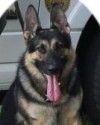
K9 Koda
Leon County Florida Sheriff's Office
End of Watch: Thursday, January 31, 2013
Breed: German Shepherd
Age: 6
Gender: M

K9 Koda was shot and killed as he attempted to take down a subject following a vehicle pursuit.

Deputies had pursued a vehicle several blocks until the vehicle crashed into a ditch near the intersection of Seminole Drive and South Magnolia Drive. The subject continued to flee on foot and then opened fire on K9 Koda and deputies. Two deputies returned fire and wounded the subject before taking him into custody.

It was later determined that the subject was wanted on warrants for attempted first degree murder, aggravated battery with a deadly weapon, and discharging a firearm from a vehicle.
Rest in Peace Koda…and enjoy running the green grass of Heaven!

In Memory of all Police Dogs

They handled themselves with beauty & grace
And who could ever forget that beautiful face
Whether at work; or at home; whatever the test
They always worked hard; and did their best

They were real champions; at work or at play
But their lives were cut short; suddenly one day
While working on the job with their partner one day
They put themselves out on a limb; out into harms way

They gave the ultimate sacrifice; any dog can give
They gave up their life; so someone could live
The best of their breed; as his partner and anyone would say
Many hearts are now broken; that he had to prove it this way

Now as the trees are blowing in the gentle breeze
The sun is shining; thru the leaves on the trees
The meadows are green; and the grass grows tall
Off in the distance they can see a waterfall

As they look over the falls; down through the creek
The water flows gently; as a rabbit sneaks a peek
Far up above; in the deep blue sky
They see the birds soar high; as they fly by

They see animals playing; at the bridge by a waterfall
Chasing each other; and just having a ball
They play all day; from morning to night
There's no more rain; just warm sunlight

Off in the distance; they hear trumpets blow
Then all the animals look up; and notice a bright glow
The harps would play and the angels would sing
As they know they've come home; they've earned their wings

We remember that they died; in the line of duty
And are now with the Lord; sharing in heaven's beauty
Off to the meadows now; where they can play and roam free
With an occasional rest stop; under a tall oak tree

No more bad guys to chase; or bullets to take
Just a run through the meadow; down to the lake
A quick splash in the water; then back to the shore
Then it's off to the forest; to go play some more

These special dogs are back home; up in heaven above
They're cradled in God's arm's; and covered with His love
We'll light a candle for all of them; in the dark of night
In loving memory of all; these very special knights

By John Quealy

Security Weekly: The Consequences of Intervening in Syria, January 31, 2013

By Scott Stewart
Vice President of Analysis

The French military's current campaign to dislodge jihadist militants from northern Mali and the recent high-profile attack against a natural gas facility in Algeria are both directly linked to the foreign intervention in Libya that overthrew the Gadhafi regime. There is also a strong connection between these events and foreign powers' decision not to intervene in Mali when the military conducted a coup in March 2012. The coup occurred as thousands of heavily armed Tuareg tribesmen were returning home to northern Mali after serving in Moammar Gadhafi's military, and the confluence of these events resulted in an implosion of the Malian military and a power vacuum in the north. Al Qaeda in the Islamic Maghreb and other jihadists were able to take advantage of this situation to seize power in the northern part of the African nation.

As all these events transpire in northern Africa, another type of foreign intervention is occurring in Syria. Instead of direct foreign military intervention, like that taken against the Gadhafi regime in Libya in 2011, or the lack of intervention seen in Mali in March 2012, the West -- and its Middle Eastern partners -- have pursued a middle-ground approach in Syria. That is, these powers are providing logistical aid to the various Syrian rebel factions but are not intervening directly.

Just as there were repercussions for the decisions to conduct a direct intervention in Libya and not to intervene in Mali, there will be repercussions for the partial intervention approach in Syria. Those consequences are becoming more apparent as the crisis drags on.

Intervention in Syria

For more than a year now, countries such as the United States, Turkey, Saudi Arabia, Qatar and European states have been providing aid to the Syrian rebels. Much of this aid has been in the form of humanitarian assistance, providing things such as shelter, food and medical care for refugees. Other aid has helped provide the rebels with non-lethal military supplies such as radios and ballistic vests. But a review of the weapons spotted on the battlefield reveals that the rebels are also receiving an increasing number of lethal supplies.

For example, there have been numerous videos released showing Syrian rebels using weapons such as the M79 Osa rocket launcher, the RPG-22, the M-60 recoilless rifle and the RBG-6 multiple grenade launcher. The Syrian government has also released videos of these weapons after seizing them in arms caches. What is so interesting about these weapons is that they were not in the Syrian military's inventory prior to the crisis, and they all likely were purchased from Croatia. We have also seen many reports and photos of Syrian rebels carrying Austrian Steyr Aug rifles, and the Swiss government has complained that Swiss-made hand grenades sold to the United Arab Emirates are making their way to the Syrian rebels.

With the Syrian rebel groups using predominantly second-hand weapons from the region, weapons captured from the regime, or an assortment of odd ordnance they have manufactured themselves, the appearance and spread of these exogenous weapons in rebel arsenals over the past several months is at first glance evidence of external arms supply. The appearance of a single Steyr Aug or RBG-6 on the battlefield could be an interesting anomaly, but the variety and concentration of these weapons seen in Syria are well beyond the point where they could be considered coincidental.

This means that the current level of external intervention in Syria is similar to the level exercised against the Soviet Union and its communist proxies following the Soviet intervention in Afghanistan. The external supporters are providing not only training, intelligence and assistance, but also weapons -- exogenous weapons that make the external provision of weapons obvious to the world. It is also interesting that in Syria, like Afghanistan, two of the major external supporters are Washington and Riyadh -- though in Syria they are joined by regional powers such as Turkey, Jordan, Qatar and the United Arab Emirates, rather than Pakistan.

In Afghanistan, the Saudis and the Americans allowed their partners in Pakistan's Inter-Services Intelligence agency to determine which of the myriad militant groups in Afghanistan received the bulk of the funds and weapons they were providing. This resulted in two things. First, the Pakistanis funded and armed groups that they thought they could best use as surrogates in Afghanistan after the Soviet withdrawal. Second, they pragmatically tended to funnel cash and weapons to the groups that were the most successful on the battlefield -- groups such as those led by Gulbuddin Hekmatyar and Jalaluddin Haqqani, whose effectiveness on the battlefield was tied directly to their zealous theology that made waging jihad against the infidels a religious duty and death during such a struggle the ultimate accomplishment.

A similar process has been taking place for nearly two years in Syria. The opposition groups that have been the most effective on the battlefield have tended to be the jihadist-oriented groups such as Jabhat al-Nusra. Not surprisingly, one reason for their effectiveness was the skills and tactics they learned fighting the coalition forces in Iraq. Yet despite this, the Saudis -- along with the Qataris and the Emiratis -- have been arming and funding the jihadist groups in large part because of their success on the battlefield. As my colleague Kamran Bokhari noted in February 2012, the situation in Syria was providing an opportunity for jihadists, even without external support. In the fractured landscape of the Syrian opposition, the unity of purpose and battlefield effectiveness of the jihadists was in itself enough to ensure that these groups attracted a large number of new recruits.

But that is not the only factor conducive to the radicalization of Syrian rebels. First, war -- and particularly a brutal, drawn-out war -- tends to make extremists out of the fighters involved in it. Think Stalingrad, the Cold War struggles in Central America or the ethnic cleansing in the Balkans following the dissolution of Yugoslavia; this degree of struggle and suffering tends to make even non-ideological people ideological. In Syria, we have seen many secular Muslims become stringent jihadists. Second, the lack of hope for an intervention by the West removed any impetus for maintaining a secular narrative. Many fighters who had pinned their hopes on NATO were greatly disappointed and angered that their suffering was ignored. It is not unusual for Syrian fighters to say something akin to, "What has the West done for us? We now have only God."

When these ideological factors were combined with the infusion of money and arms that has been channeled to jihadist groups in Syria over the past year, the growth of Syrian jihadist groups accelerated dramatically. Not only are they a factor on the battlefield today, but they also will be a force to be reckoned with in the future.

The Saudi Gambit

Despite the jihadist blowback the Saudis experienced after the end of the war against the Soviets in Afghanistan -- and the current object lesson of the jihadists Syria sent to fight U.S. forces in Iraq now leading groups such as Jabhat al-Nusra -- the Saudi government has apparently calculated that its use of jihadist proxies in Syria is worth the inherent risk.

There are some immediate benefits for Riyadh. First, the Saudis hope to be able to break the arc of Shiite influence that reaches from Iran through Iraq and Syria to Lebanon. Having lost the Sunni counterweight to Iranian power in the region with the fall of Saddam Hussein in Iraq and the installation of a Shiite-led government friendly to Iran, the Saudis view the possibility of installing a friendly Sunni regime in Syria as a dramatic improvement to their national security.

Supporting the jihad in Syria as a weapon against Iranian influence also gives the Saudis a chance to burnish their Islamic credentials internally in an effort to help stave off criticism that they are too secular and Westernized. It allows the Saudi regime the opportunity to show that it is helping Muslims under assault by the vicious Syrian regime.

Supporting jihadists in Syria also gives the Saudis an opportunity to ship their own radicals to Syria, where they can fight and possibly die. With a large number of unemployed, underemployed and radicalized young men, the jihad in Syria provides a pressure valve similar to the past struggles in Iraq, Chechnya, Bosnia and Afghanistan. The Saudis are not only trying to winnow down their own troubled youth; we have received reports from a credible source that the Saudis are also facilitating the travel of Yemeni men to training camps in Turkey, where they are trained and equipped before being sent to Syria to fight. The reports also indicate that the young men are traveling for free and receiving a stipend for their service. These young radicals from Saudi Arabia and Yemen will even further strengthen the jihadist groups in Syria by providing them with fresh troops.

The Saudis are gaining temporary domestic benefits from supporting jihad in Syria, but the conflict will not last forever, nor will it result in the deaths of all the young men who go there to fight. This means that someday the men who survive will come back home, and through the process we refer to as "tactical Darwinism" the inept fighters will have been weeded out, leaving a core of competent militants that the Saudis will have to deal with.

But the problems posed by jihadist proxies in Syria will have effects beyond the House of Saud. The Syrian jihadists will pose a threat to the stability of Syria in much the same way the Afghan groups did in the civil war they launched for control of Afghanistan after the fall of the Najibullah regime. Indeed, the violence in Afghanistan got worse after Najibullah's fall in 1992, and the suffering endured by Afghan civilians in particular was egregious.

Now we are seeing that the jihadist militants in Libya pose a threat not only to the Libyan regime -- there are serious problems in eastern Libya -- but also to foreign interests in the country, as seen in the attack on the British ambassador and the U.S. diplomatic mission in Benghazi. Moreover, the events in Mali and Algeria in recent months show that Libya-based militants and the weapons they possess also pose a regional threat. Similar long-lasting and wide-ranging repercussions can be expected to flow from the intervention in Syria.

The Consequences of Intervening in Syria is republished with permission of Stratfor.

Officer Down


Sergeant Rick Riggenbach
Chitimacha Tribal Police Department, Louisiana
End of Watch: Saturday, January 26, 2013
Age: 52
Tour: 15 years
Badge # T506

Sergeant Rick Riggenbach was shot and killed after he and two St. Mary Parish deputies responded to reports of a mobile home fire and an armed subject on Flatown Road, near Charenton shortly after 9:00 am. The fire was reported just off of tribal land about one quarter mile from a Chitimacha-owned casino.

When Sergeant Riggenbach arrived at the scene the subject shot him with a shotgun, fatally wounding him. The subject then opened fire on the two St. Mary Parish deputies as they arrived at the scene moments later. Both deputies were critically wounded. The subject, who was also wounded at some point during the incident, was taken into custody by responding officers and transported to a local hospital.

After the house fire was extinguished, the body of its owner was discovered in the debris. The subject who started the fire was a neighbor with a history of mental illness.

Sergeant Riggenbach was a U.S. Navy veteran and had served with the Chitimacha Tribal Police Department for 4-1/2 years. He had previuosly served 10-1/2 years with the St. Mary Parish Sheriff's Office. He is survived by his wife, son, two daughters, and grandchildren.
Rest in Peace Bro…We Got The Watch

Day is done, Gone the sun, From the lake, From the hills, From the sky. All is well, Safely rest, God is nigh.

Taking yourself too seriously

Got this from Legal Insurrection l last week, You’re just a tree falling in the forest, lady.  As a blogger who loves anytime someone posts to my blog or refers to me I am happy.  Not this woman.
And no one is going to hear you.

I was going to link to a quite interesting post, with an excerpt, regarding the “Violence Against Women Act.”

The author, someone I had never heard of, writing at a website I never had heard of, made some excellent points.

My hope was to call attention to her post, hopefully send some readers over there (like an Instalanche, only smaller), and maybe get others interested in her excellent points.

But when I headed back there this morning to prepare the post, I saw this:

You’re not that important. Neither am I. Neither is anyone on the internet.

Get used to it.

Now your excellent points will not be heard.
Again lady, you're not that important.

Officer Down


Trooper Michael Slagle
Tennessee Highway Patrol
End of Watch: Friday, January 25, 2013
Age: 52
Tour: 32 years

Trooper Michael Slagle died following a vehicle crash on Longmire Road, near Emory Road, in Knox County.

His patrol car slid off the roadway after striking a patch of ice. Despite being stuck in his vehicle, he was able to notify dispatchers of the crash and rescue crews were sent to the scene. A responding fire truck slid on the same patch of ice and flipped over on top of his patrol car while he was still inside.

At some point during the incident Trooper Slagle suffered a fatal heart attack.

Trooper Slagle had served with the Tennessee Highway Patrol for 28 years and was assigned to the State Supreme Court Detail. He had previously served with the Granger County Sheriff's Office for four years. He is survived by his wife and daughter.
Rest in Peace Bro…We Got The Watch

Day is done, Gone the sun, From the lake, From the hills, From the sky. All is well, Safely rest, God is nigh.

No, the border doesn't need to be secured....

California has already been a state where people have migrated to. And over the last three decades an open border has led to an influx of people from south of the border who may not be the huddled masses yearning to be free.
Attack on family in Compton latest incident in wave of anti-black violence

The trouble began soon after they arrived.

The black family—a mother, three teenage children and a 10-year-old boy—moved into a little yellow home in Compton over Christmas vacation.

When a friend came to visit, four men in a black SUV pulled up and called him a "nigger," saying black people were barred from the neighborhood, according to Los Angeles County sheriff's deputies. They jumped out, drew a gun on him and beat him with metal pipes.

It was just the beginning of what detectives said was a campaign by a Latino street gang to force an African American family to leave.

The attacks on the family are the latest in a series of violent incidents in which Latino gangs targeted blacks in parts of greater Los Angeles over the last decade.

Compton, with a population of about 97,000, was predominantly black for many years. It is now 65% Latino and 33% black, according to the 2010 U.S. census. But it's not only historically black areas that have been targeted.

Federal authorities have alleged in several indictments in the last decade that the Mexican Mafia prison gang has ordered street gangs under its control to attack African Americans. Leaders of the Azusa 13 gang were sentenced to lengthy prison terms earlier this month for leading a policy of attacking African American residents and expelling them from the town.

Similar attacks have taken place in Harbor Gateway, Highland Park, Pacoima, San Bernardino, Canoga Park and Wilmington, among other places. In the Compton case, sheriff's officials say the gang appears to have been acting on its own initiative.

Sheriff's detectives said Friday they had arrested Jeffrey Aguilar, 19, of Gardena and Efren Marquez, 21, of Rialto, both alleged members of the Compton Varrio 155 gang, and are continuing to look for more assailants.

"This family has no gang ties whatsoever," Sheriff's Lt. Richard Westin said. "They are complete innocent victims here."...

I take it you're used to that now Lt. Westin. We've let in millions of illegal immigrants into the country who refuse to assimilate, accommodated them (Press 2 for Spanish) and nwo we see the results.

But no, listen to B Hussein and the moron Chuckie Schumer, the borner is secured.

Officer Down


Police Officer Kevin A. Tonn
Galt California Police Departmen
End of Watch: Tuesday, January 15, 2013
Age: 35
Tour: 3 years
Badge # 113

Police Officer Kevin Tonn was shot and killed after responding to a burglary call in the 200 block of F Street at approximately 11:20 am.

Upon arriving at the scene a witness pointed to a suspect who was nearby. As Officer Tonn approached the man to question him the subject produced a gun and fired a single shot, striking Officer Tonn. The man then fired at other responding officers before committing suicide.

Officer Tonn was transported to a nearby hospital where he was pronounced dead.

Officer Tonn was a U.S. Army veteran and had served with the Galt Police Department for three years. He had previously served as a firefighter and medic. He is survived by his parents.
Rest in Peace Bro…We Got The Watch

Day is done, Gone the sun, From the lake, From the hills, From the sky. All is well, Safely rest, God is nigh.

Friday, February 1, 2013

Geopolitical Weekly: Ferocious, Weak and Crazy: The North Korean Strategy, January 29th, 2012

By George Friedman
Founder and Chairman

North Korea's state-run media reported Sunday that North Korean leader Kim Jong Un has ordered the country's top security officials to take "substantial and high-profile important state measures," which has been widely interpreted to mean that North Korea is planning its third nuclear test. Kim said the orders were retaliation for the U.S.-led push to tighten U.N. sanctions on Pyongyang following North Korea's missile test in October. A few days before Kim's statement emerged, the North Koreans said future tests would target the United States, which North Korea regards as its key adversary along with Washington's tool, South Korea.

North Korea has been using the threat of tests and the tests themselves as weapons against its neighbors and the United States for years. On the surface, threatening to test weapons does not appear particularly sensible. If the test fails, you look weak. If it succeeds, you look dangerous without actually having a deliverable weapon. And the closer you come to having a weapon, the more likely someone is to attack you so you don't succeed in actually getting one. Developing a weapon in absolute secret would seem to make more sense. When the weapon is ready, you display it, and you have something solid to threaten enemies with.

North Korea, of course, has been doing this for years and doing it successfully, so what appears absurd on the surface quite obviously isn't. On the contrary, it has proved to be a very effective maneuver. North Korea is estimated to have a gross domestic product of about $28 billion, about the same as Latvia or Turkmenistan. Yet it has maneuvered itself into a situation where the United States, Japan, China, Russia and South Korea have sat down with it at the negotiating table in a bid to persuade it not to build weapons. Sometimes, the great powers give North Korea money and food to persuade it not to develop weapons. It sometimes agrees to a halt, but then resumes its nuclear activities. It never completes a weapon, but it frequently threatens to test one. And when it carries out such tests, it claims its tests are directed at the United States and South Korea, as if the test itself were a threat.

There is brilliance in North Korea's strategy. When the Soviet Union collapsed, North Korea was left in dire economic straits. There were reasonable expectations that its government would soon collapse, leading to the unification of the Korean Peninsula. Naturally, the goal of the North Korean government was regime survival, so it was terrified that outside powers would invade or support an uprising against it. It needed a strategy that would dissuade anyone from trying that. Being weak in every sense, this wasn't going to be easy, but the North Koreans developed a strategy that we described more than 10 years ago as ferocious, weak and crazy. North Korea has pursued this course since the 1990s, and the latest manifestation of this strategy was on display last week. The strategy has worked marvelously and is still working.

A Three-Part Strategy

First, the North Koreans positioned themselves as ferocious by appearing to have, or to be on the verge of having, devastating power. Second, they positioned themselves as being weak such that no matter how ferocious they are, there would be no point in pushing them because they are going to collapse anyway. And third, they positioned themselves as crazy, meaning pushing them would be dangerous since they were liable to engage in the greatest risks imaginable at the slightest provocation.

In the beginning, Pyongyang's ability to appear ferocious was limited to the North Korean army's power to shell Seoul. It had massed artillery along the border and could theoretically devastate the southern capital, assuming the North had enough ammunition, its artillery worked and air power didn't lay waste to its massed artillery. The point was not that it was going to level Seoul but that it had the ability to do so. There were benefits to outsiders in destabilizing the northern regime, but Pyongyang's ferocity -- uncertain though its capabilities were -- was enough to dissuade South Korea and its allies from trying to undermine the regime. Its later move to develop missiles and nuclear weapons followed from the strategy of ferocity -- since nothing was worth a nuclear war, enraging the regime by trying to undermine it wasn't worth the risk.

Many nations have tried to play the ferocity game, but the North Koreans added a brilliant and subtle twist to it: being weak. The North Koreans advertised the weakness of their economy, particularly its food insecurity, by various means. This was not done overtly, but by allowing glimpses of its weakness. Given the weakness of its economy and the difficulty of life in North Korea, there was no need to risk trying to undermine the North. It would collapse from its own defects.

This was a double inoculation. The North Koreans' ferocity with weapons whose effectiveness might be questionable, but still pose an unquantifiable threat, caused its enemies to tread carefully. Why risk unleashing its ferocity when its weakness would bring it down? Indeed, a constant debate among Western analysts over the North's power versus its weakness combines to paralyze policymakers.

The North Koreans added a third layer to perfect all of this. They portrayed themselves as crazy, working to appear unpredictable, given to extravagant threats and seeming to welcome a war. Sometimes, they reaffirmed they were crazy via steps like sinking South Korean ships for no apparent reason. As in poker, so with the North: You can play against many sorts of players, from those who truly understand the odds to those who are just playing for fun, but never, ever play poker against a nut. He is totally unpredictable, can't be gamed, and if you play with his head you don't know what will happen.

So long as the North Koreans remained ferocious, weak and crazy, the best thing to do was not irritate them too much and not to worry what kind of government they had. But being weak and crazy was the easy part for the North; maintaining its appearance of ferocity was more challenging. Not only did the North Koreans have to keep increasing their ferocity, they had to avoid increasing it so much that it overpowered the deterrent effect of their weakness and craziness.

A Cautious Nuclear Program

Hence, we have North Korea's eternal nuclear program. It never quite produces a weapon, but no one can be sure whether a weapon might be produced. Due to widespread perceptions that the North Koreans are crazy, it is widely believed they might rush to complete their weapon and go to war at the slightest provocation. The result is the United States, Russia, China, Japan and South Korea holding meetings with North Korea to try to persuade it not to do something crazy.

Interestingly, North Korea never does anything significant and dangerous, or at least not dangerous enough to break the pattern. Since the Korean War, North Korea has carefully calculated its actions, timing them to avoid any move that could force a major reaction. We see this caution built into its nuclear program. After more than a decade of very public ferocity, the North Koreans have not come close to a deliverable weapon. But since if you upset them, they just might, the best bet has been to tread lightly and see if you can gently persuade them not to do something insane.

The North's positioning is superb: Minimal risky action sufficient to lend credibility to its ferocity and craziness plus endless rhetorical threats maneuvers North Korea into being a major global threat in the eyes of the great powers. Having won themselves this position, the North Koreans are not about to risk it, even if a 20-something leader is hurling threats.

The China Angle and the Iranian Pupil

There is, however, a somewhat more interesting dimension emerging. Over the years, the United States, Japan and South Korea have looked to the Chinese to intercede and persuade the North Koreans not to do anything rash. This diplomatic pattern has established itself so firmly that we wonder what the actual Chinese role is in all this. China is currently engaged in territorial disputes with U.S. allies in the South and East China seas. Whether anyone would or could go to war over islands in these waters is dubious, but the situation is still worth noting.

The Chinese and the Japanese have been particularly hostile toward one another in recent weeks in terms of rhetoric and moving their ships around. A crisis in North Korea, particularly one in which the North tested a nuclear weapon, would inevitably initiate the diplomatic dance whereby the Americans and Japanese ask the Chinese to intercede with the North Koreans. The Chinese would oblige. This is not a great effort for them, since having detonated a nuclear device, the North isn't interested in doing much more. In fact, Pyongyang will be drawing on the test's proverbial fallout for some time. The Chinese are calling in no chits with the North Koreans, and the Americans and Japanese -- terribly afraid of what the ferocious, weak, crazy North Koreans will do next -- will be grateful to China for defusing the "crisis." And who could be so churlish as to raise issues on trade or minor islands when China has used its power to force North Korea to step down?

It is impossible for us to know what the Chinese are thinking, and we have no overt basis for assuming the Chinese and North Koreans are collaborating, but we do note that China has taken an increasing interest in stabilizing North Korea. For its part, North Korea has tended to stage these crises -- and their subsequent Chinese interventions -- at quite useful times for Beijing.

It should also be noted that other countries have learned the ferocious, weak, crazy maneuver from North Korea. Iran is the best pupil. It has convincingly portrayed itself as ferocious via its nuclear program, endlessly and quite publicly pursuing its program without ever quite succeeding. It is also persistently seen as weak, perpetually facing economic crises and wrathful mobs of iPod-wielding youths. Whether Iran can play the weakness card as skillfully as North Korea remains unclear -- Iran just doesn't have the famines North Korea has.

Additionally, Iran's rhetoric at times can certainly be considered crazy: Tehran has carefully cultivated perceptions that it would wage nuclear war even if this meant the death of all Iranians. Like North Korea, Iran also has managed to retain its form of government and its national sovereignty. Endless predictions of the fall of the Islamic republic to a rising generation have proved false.

I do not mean to appear to be criticizing the "ferocious, weak and crazy" strategy. When you are playing a weak hand, such a strategy can yield demonstrable benefits. It preserves regimes, centers one as a major international player and can wring concessions out of major powers. It can be pushed too far, however, when the fear of ferocity and craziness undermines the solace your opponents find in your weakness.

Diplomacy is the art of nations achieving their ends without resorting to war. It is particularly important for small, isolated nations to survive without going to war. As in many things, the paradox of appearing willing to go to war in spite of all rational calculations can be the foundation for avoiding war. It is a sound strategy, and for North Korea and Iran, for the time being at least, it has worked.

Ferocious, Weak and Crazy: The North Korean Strategy is republished with permission of Stratfor.