Police Work, Politics and World Affairs, Football and the ongoing search for great Scotch Whiskey!

Friday, March 13, 2015

Geopolitical Weekly: The Paradox of America's Electoral Reform, March 10, 2015

By George Friedman

We are now in the early phases of selecting the president of the United States. Vast amounts of money are being raised, plans are being laid, opposition research is underway and the first significant scandal has broken with the discovery that Hillary Clinton used a non-government email account for government business. Ahead of us is an extended series of primaries, followed by an election and perhaps a dispute over some aspect of the election. In the United States, the presidential election process takes about two years, particularly when the sitting president cannot run for re-election.

This election process matters to the world for two reasons. First, the world's only global power will be increasingly self-absorbed, and the sitting president — already weakened by the opposition party controlling both houses of Congress — is increasingly limited in what he can do. This is disturbing in some ways, since all presidential elections contain visions of the apocalypse that will follow the election of an opponent. During the U.S. election season, the world hears a litany of self-denigration and self-loathing that can be frightening emanating from a country that produces nearly a quarter of the world's wealth each year and commands the world's oceans. If Honduras were to engage in this behavior, the world would hardly notice. When the United States does it, the public discourse can convince others that the United States is on the verge of collapse, and that perspective has the potential to shape at least some actions on the global stage.

Tempering the Passions of Politics

The United States sees itself as the City on the Hill, an example to the world. But along with any redemptive sensibility comes its counterpart: the apocalyptic. The other candidate is betraying the promise of America, and therefore destroying it. Extreme messages are hardwired into the vision that created the republic.

The founders understood the inherent immoderation of politics and sought to solve problems by limiting democracy and emphasizing representative democracy. Americans select representatives through various complex courses. They do not directly elect presidents, but members of the Electoral College.

Likely an archaic institution, the Electoral College still represents the founders' fear of the passions of the people — both the intensity of some, and the indifference of others. The founders also distrusted the state while fully understanding its necessity. They had two visions: that representatives would make the law, and that these representatives would not have politics as a profession. Since re-election was not their primary goal, they were freed from democratic pressures to use their own wisdom in crafting laws.

The founders saw civil society — business, farms, churches and so on — as ultimately more important than the state, and they saw excessive political passion as misplaced. First, it took away from the private pursuits they so valued, and it tended to make political life more important than it should be. Second, they feared that ordinary men (women were excluded) might be elected as representatives at various levels. They set property requirements to assure sobriety (or so they thought) in representatives and at least limit the extent to which they were interested in politics. They set age requirements to assure a degree of maturity. They tried to shape representative democracy with standards they considered prudent — paralleling the values of their own social class, where private pursuits predominated and public affairs were a burdensome duty.

It is not that the founders regarded government as unimportant; to the contrary, it was central to civilization. Their concern was excessive passion on the part of the electorate, so they created a republican form of representative government because they feared the passions of the public. They also feared political parties and the factions and emotions they would arouse.

Parties and Party Bosses

Of course it was the founders who created political parties soon after the founding. The property requirements dissolved fairly quickly, the idea that state houses would elect senators went away, and the ideological passions and love of scandal emerged.

Political parties were organized state by state, and within state by counties and cities. These parties emerged with two roles. The first was to generate and offer potential leaders for election at all levels. The second was to serve as a means of mediation between the public — for multiple classes, from the wealthy to the poor — and the state. The political machines that dominated the country served as feeders of the republican system and ombudsmen for citizens.

The party bosses did not have visions of redemption or apocalypse. They were what the founders didn't want: professional politicians, not necessarily holding office themselves but overseeing the selection of those who would. Since these officeholders owed their jobs to the party boss, the boss determined legislation. And the more powerful bosses populated the smoke-filled rooms that selected presidents.

This was a system made for corruption, of course, and it violated the founders' vision, but it also fulfilled that vision in a way. The party bosses' power resided in building coalitions that they could serve. In the large industrial cities where immigrants came to work in the factories, that meant finding people jobs, securing services, maintaining the schools and so on. They didn't do this because they were public-spirited, but because they wanted to hold power. Even if companies that kicked back money to the bosses built the schools or the brother-in-law of a party boss owned the company that paved the streets, the schools got built and the streets got paved. The political machines were very real in rural areas as well.

Every four years, party bosses gathered at the party convention with the goal of selecting a candidate who would win. They would allow the candidate his ideological foibles, so long as they retained the ability to name postmasters and judges and appoint federal contracts in their areas. The system was corrupt, but it produced leaders like Abraham Lincoln, Theodore Roosevelt, Woodrow Wilson, Franklin Roosevelt, Harry Truman and Dwight Eisenhower, as well as some less illustrious people.

The Boss System Breaks Down

Starting in 1972, following Richard Nixon's presidency, the United States shifted away from a system of political bosses. This was achieved by broadly expanding primaries at all levels. Rather than bosses selecting candidates and controlling them, direct democratic elections were used for candidate selection. Since the bosses didn't select candidates, the candidates were beholden to the voters rather than the bosses. Each election year, the voters would select the candidates and then select the officeholder. Over time, the power of the political machine was broken and replaced by a series of elections. The founders did not want this level of democracy, but neither did they explicitly want the party boss.

This change had two unanticipated consequences. The first was that the importance of money in the political process surged. In the old system, you had to convince bosses to support you. That took time and effort and required that promises be made, but it did not require vast amounts of money. Under the primary system, apart from the national election, primary elections take place in almost all states. Candidates must build their own machines in each state and appeal directly to voters. That means huge expenditures to create a machine and buy advertising in each state.

As the bosses' corruption was curbed but money's centrality soared, the types of corruption endemic to the political system shifted. Corruption moved from favors for bosses to special treatment of fundraisers, but it was still there. Reformers tried to limit the amount of money that could be contributed, but they ignored two facts. First, a primary system for the presidency is fiendishly expensive simply because delivering the message to the public in 50 states costs a fortune. Second, given the stakes, the desire to influence government is difficult to curb. The means will be found to donate money, and in some cases it will be done in the hope and expectation of favors. The reforms changed the shape of corruption but could not eliminate it.

The second unintended consequence was that it institutionalized political polarization. The party boss was not a passionate man. But those who go to the polls in primaries tend to be. Turnout at American elections is always low. The founders set the election for a Tuesday rather than a weekend as in many countries, and it is a work day, with children to be picked up at school, dinner to be cooked and so on. The founders designed politics to be less important than private life, and in the competition on Election Tuesday, private life tends to win, particularly in off-year elections and primaries.

The people who vote in primaries tend to be passionate believers. The center, which holds the largest block of voters in the general election, is not a passionate place. The kids' homework comes first. Passion exists on the wings of both parties. This means that in the primaries, only two types of candidates win. One is the extremely well funded — and the passion of the wings make funding for them even more important. The other is the ideologically committed. The top fundraisers face the most passionate voters, and the contest is whether the center can be turned out with money. Frequently the answer is no. The result is that the wings, although likely a minority in the party, frequently select candidates in the primary who have trouble winning the general election. From their point of view, winning means nothing if you give up principles.

All of this applies equally to elections to the House and Senate. It has been said that there has never been less bipartisanship than there is now. I don't know if that is true, but it is certainly the case that the penalties for collaboration with the other party, or for moving to the center, are extremely high. The only ones who can do it are the ones who can raise sufficient money to draw the center out. And that is hard to do. As a result, everyone must run to the extreme in the primary and run to the center in the general election. The reforms have institutionalized hypocrisy and outsized strength for marginal groups, though they succeeded in breaking the party bosses.

Since 1972, the United States has elected presidents like Ronald Reagan, the two Bushes, Bill Clinton and Barack Obama. I will leave it to the reader to determine how this compares to the boss-generated leaders. However, I would argue that the ombudsman system has broken down. Bosses, because they were corrupt, could provide an interface for voters with employers (who wanted contracts) and government. I suspect that the collapse of the boss system made it easier for the Italians, Irish and Jews to integrate into society, and harder for blacks and Hispanics. There are pockets of bosses, but they are not the norm, and they cannot offer as much without going to jail.

This is not meant to romanticize the bosses. We are, on the whole, better off without them, and we can't resurrect them. I am trying to explain why our elections have become so long, why they cost so much money, and why the wings of the parties get to define agendas and legislative and executive behavior.

The Geopolitics of the U.S. Elections

There is a geopolitical side to this as well. The internal political process of the leading global power is always a geopolitical matter. The structure and method whereby leaders are selected shape the kinds of leaders who govern and define, to some extent, the constraints placed on governments. Geopolitics, as Stratfor uses the concept, argues that the wishes and idiosyncrasies of individual leaders make little difference in the long run. This is because leaders are constrained by global realities. It is also because internal political processes define what must be done to take and hold power. Those internal political processes have their own origins in impersonal forces.

There has been a long struggle between the founders' vision of how politics should work and the reality of the process. The party boss was, in a weird way, an implementation of the principle of representative government. He was also a symbol of corruption and anti-democratic behavior. His demise has created the primary system, which carries with it its own corruption. Moreover, it has systematically limited the power of the center and strengthened the power of the most ideological. It has also caused U.S. elections to put the world ill at ease, because what the world hears in the Georgia, Vermont or Texas primaries can be unsettling. The American Republic was invented and it is continually being reinvented on the same basic theme. Each reform creates a new form of corruption and a new challenge for governance. In the end, everyone is trapped by reality, but it is taking longer and longer to enter that trap.

This situation is not unique to the United States, but the pattern differs elsewhere. Over the centuries, the U.S. public has been shaped by immigration, and the U.S. government was consciously constructed out of the theoretical constructs of its founders. It was as if the country were a blank slate. It was in this context that waves of reform took place, all changing the republic, all with unintended consequences.

I have tried to show here the unintended consequences of the post-Watergate reforms to illustrate why the American political system works as it does. But perhaps the most important point is that redrawing the government is endemic to the kind of government the United States has, and that the United States both absorbs change well and is frequently surprised by what change does. In other countries, there is less room to maneuver, and perhaps fewer surprises and standards of success. The political parties emerged against the founders' intentions, because political organization beyond the elite followed from the logic of the government. The rise of political bosses followed from the system, and simultaneously stabilized and corrupted it. The post-Watergate reforms changed the nature of the corruption but also changed the texture of political life. The latter is the issue with which the United States is now struggling.

China, Russia and Europe are all struggling, but in different ways and toward different ends, frequently because of problems endemic to their cultures. The problem endemic in American culture is the will to reform. It is both the virtue and vice of the U.S. government. It has geopolitical consequences. This is another dimension of geopolitics to be considered in the coming weeks and months.

The Paradox of America's Electoral Reform is republished with permission of Stratfor.

Officer Down


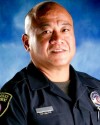
Special Agent William Sheldon
United States Department of Justice - Bureau of Alcohol, Tobacco, Firearms and Explosives
End of Watch: Monday, March 2, 2015
Age: 47
Tour: 16 years
Incident Date: 9/11/2001

Special Agent Bill Sheldon died as the result of cancer he developed as a direct result of participating in rescue and recovery efforts at the World Trade Center site following the 9/11 Terrorist Attacks.

Agent Sheldon assisted with directing people away from the towers on the day of the attack. He was then exposed to toxic debris while assisting with the search and recovery efforts at Ground Zero in the weeks following the attack. He and two other members of his 5-person ATF team were eventually diagnosed with cancer that was determined to be a result of their exposure to the toxic debris.

His health continued to deteriorate until he passed away on March 2nd, 2015.

Special Agent Sheldon was a U.S. Army combat veteran and had served with ATF for 16 years. He is survived by his wife and two young children.

On the morning of September 11, 2001, seventy-two officers from a total of eight local, state, and federal agencies were killed when terrorist hijackers working for the al Qaeda terrorist network, headed by Osama bin Laden, crashed two of four hijacked planes into the World Trade Center towers in New York City. After the impact of the first plane, putting the safety of others before their own, law enforcement officers along with fire and EMS personnel, rushed to the burning Twin Towers of the World Trade Center to aid the victims and lead them to safety. Due to their quick actions, it is estimated that over 25,000 people were saved.

As the evacuation continued, the first tower unexpectedly collapsed due as a result of the intense fire caused by the impact. The second tower collapsed a short time later. 71 law enforcement officers, 343 members of the New York City Fire Department and over 2,800 civilians were killed at the World Trade Center site.

A third hijacked plane crashed into a field in rural Pennsylvania when the passengers attempted to re-take control of the plane. One law enforcement officer, who was a passenger on the plane, was killed in that crash.

The fourth hijacked plane was crashed into the Pentagon in Arlington, Virginia, killing almost 200 military and civilian personnel. No law enforcement officers were killed at the Pentagon.

The terrorist attacks resulted in the declaration of war against the Taliban regime, the illegal rulers of Afghanistan, and the al Qaeda terrorist network which also was based in Afghanistan.

On September 9, 2005, all of the public safety officers killed on September 11, 2001, were posthumously awarded the 9/11 Heroes Medal of Valor by President George W. Bush.

The contamination in the air at the World Trade Center site caused many rescue personnel to become extremely ill, and eventually led to the death of several rescue workers.

On May 1, 2011 members of the United States military conducted a raid on a compound in Abbottabad, Pakistan where Osama bin Laden was hiding. During the raid, they shot and killed bin Laden.
Rest in Peace Bro…We Got The Watch

Nemo me impune lacessit

Day is done, Gone the sun, From the lake, From the hills, From the sky. All is well, Safely rest, God is nigh. 

Tuesday, March 10, 2015

Cook County is not doing well with DWIs

It's bad when you have to tell the complainant, or their next of kin we can't prosecute because of a lack of evidence, no witnesses, etc. It's quite another when you screw up the evidence trail, like what is apparently happening here.
DUI paperwork mistakes allow thousands of drivers back on Illinois roads - Chicago Tribune

Bureaucratic mix-ups have let thousands of drunken drivers avoid mandatory license suspensions and stay on the roads, a Tribune investigation has found.

A Tribune review of state data found case after case across the Chicago area in which the arrests of these drivers — some with repeat DUIs — are not being logged into state computers to ensure their licenses are suspended. The failures come in a process that still relies on police filling out forms by hand and mailing them to the state, a process rife with human error that frustrates anti-DUI advocates.

"There are so many ways for things to get lost," said Cathy Stanley, with Alliance Against Intoxicated Motorists. "Nothing is instantaneously done or efficiently done like it should be."

A spokeswoman for Secretary of State Jesse White, who administers the suspensions, said the office was disappointed at the Tribune's findings and worried "there are potentially dangerous drivers, who have violated the law, driving on our roadways."

State officials blame the breakdown on police failing to send reports. However, most departments contacted by the Tribune maintain that they drop the requisite paperwork in the mail and assume that the state has logged the suspensions. Officials said nobody had ever studied how many times the process failed.

The revelation offers one more gap in what is billed as a near-automatic punishment for being arrested for driving drunk. Last year, the Tribune found that some suburbs routinely let drivers keep their licenses, often in exchange for hefty fines. That prompted White to ask his traffic safety task force to study the issue.

The latest-discovered gap — from mistakes — appears widespread, from arrests in Chicago to the tiniest suburbs.

It is nearly impossible to determine the true number of mistakes because of how DUI data is kept. But an analysis of state data found more than 3,000 Chicago-area drivers' arrests since 2010 weren't logged.

In one county whose court data could be studied more deeply — DuPage — it appears that as many as one in 15 DUI defendants are not missing a day behind the wheel because of the bureaucratic breakdown.

Benefiting from the mix-ups are people like Ruben Reyes-Rodriguez, 36, of West Chicago. Records show the same department pulled him over twice in 2012 and both times failed to send the paperwork to the state for what were his third and fourth DUI arrests. It took over a year for him to lose his license, and only because one of the DUIs led to a conviction that sparked a separate license revocation...

In all honesty a suspended license does stop anyone from driving. It is simply a risk you take when you drive, hoping you don't get pulled over and if so, pray the cop will not run the license or actually arrest you.

But again, why is it so difficult to log the entry of a report and paperwork into a state database? Assuming this report is true (or accurate), you must say "Come on guys, it's the 2010s, you can do this..."

Officer Down


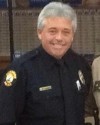
Police Officer III Siegfred D. R. "Dove" Mortera
Guam Police Department
End of Watch: Saturday, February 14, 2015
Age: 49
Tour: 17 years
Badge # 602
Cause: Heart attack
Incident Date: 2/11/2015

Police Officer Siegfred Mortera suffered a fatal heart attack while participating in his department's SWAT training at Eagles Field.

He was leading a run of other SWAT team members when he suddenly collapsed at approximately 9:00 am. Another officer performed CPR until medics arrived at the location. He was transported to Naval Hospital Guam where he remained unresponsive before passing away three days later.

Officer Mortera had served with the Guam Police Department for 17 years. He is survived by his wife, four children, and three grandchildren.
Rest in Peace Bro…We Got The Watch

Nemo me impune lacessit

Day is done, Gone the sun, From the lake, From the hills, From the sky. All is well, Safely rest, God is nigh. 

Prisoners and their obituaries.

An interesting read. More than a few students have been tasked to write then own obituaries, tell the stor about what would you say about you at the end of your life. Last year my wife did it for an English class in college. But I gotta say this is interesting. Often the last meal of a prison inmate is written, but not the obit. Worth a read.
Inmates writing their own obits reveal regrets, failed dreams

In the wrong writer's hands, an obituary can be a dull collection of biographical facts, the type of article that journalism professor William Drummond calls the "lowest common denominator" of newspaper writing.

But on this day, he hoped for something more profound from his students, even if his classroom wasn't filled with the high-achievers he was accustomed to teaching at UC Berkeley. Drummond was across the bay in San Quentin State Prison, where he was introducing inmates to the basics of covering the news.

The obituary assignment came with a twist. Instead of writing about a pop star's overdose or a political leader's assassination, Drummond told his incarcerated students they would be writing about a different death: their own.

They would choose how they would die, and they would sum up their own lives however they wanted.

"I did it as a way to find out how these guys had reconciled their crimes," Drummond said. "Were they able to take a critical look at what got them in trouble?"

The inmates, he recalled, were uncomfortable. These were people who were best known for their worst decisions — stabbing a man to death, gunning down a bystander, robbing banks.

Now Drummond wanted to know: "What is your real value?"

The resulting obituaries were reflective, outlandish, candid, evasive, aspirational. Above all, they showed how people who have wronged society would like to be remembered.

Phoeun You's heritage is tattooed on his neck — "the killing fields." He escaped the genocidal Khmer Rouge in Cambodia when he was a child, reaching Utah as a 5-year-old refugee with the rest of his family.

Phoeun You is one of several inmates at San Quentin who wrote his own obituary for a class project. (Mark Boster / Los Angeles Times)
"It snowed, and there was nothing but white people," the 41-year-old recalled....

...In his obituary, You doesn't mention his crime. Instead, he describes a heroic death — being stabbed while trying to break up a racially charged fight in a prison classroom.

"Mr. You observed what was about to take place and stepped in front of Mr. Bryant in hopes of diffusing the situation," he writes. He is stabbed and dies immediately...

...Sitting in the prison yard, You explained his choice of death: "My incarceration, the reason I'm here, is by taking a life. When I leave this world, I would love to leave saving a life."...


...Since Julian Glenn Padgett arrived in 2006, he's enrolled in academic classes and played Shylock in a prison production of Shakespeare's "The Merchant of Venice." Even while sitting in a cramped storage closet during a break from his work at the inmate-run newspaper, he spoke with the intensity of an actor on stage. Asked about committing murder, he cited a Walt Whitman poem.

Padgett stabbed and killed a man he believed was a romantic rival. Therefore, his victim cannot "contribute a verse" in "the powerful play" of life.

"I don't want to be remembered as the man to do that," he said. Like You, he doesn't mention his crime in his fictional obituary.

Padgett, a 51-year-old Ethiopian Jew who wears a knit kippa over his dreadlocks, was convicted in 1997 in Sacramento and isn't eligible for parole until 2023.

His obituary is brimming with passion for outdoor activities that are out of reach.

But most of the 57-year-old's obituary focuses on his childhood in San Diego, including a wrestling match victory and a stint as junior class president.

The longest quote in the article comes from a classmate testifying to his high school leadership skills.

"He built the treasury from just a couple of dollars, to several thousand. His biggest accomplishment was at Homecoming, our float was the biggest one, and our Junior Class Ball was held at a big fancy hotel. The seniors were somewhat jealous."

Despite his candor about his conviction, the obituary focuses on his younger days....


...George Burns envisioned a noble end in his obituary. In the early morning darkness, he would stop by the side of the road to help someone with a flat tire, only to be struck and killed by a speeding driver.

"George was the type of person that loved helping those that were less fortunate and needed help," Burns wrote. "His heart was made of gold."

Although he wrote about his desire to be a positive influence, Burns was also upfront about his crimes in the obituary.

"Mr. Burns early life was rocky he was in and out of jail," he wrote in one fragmented sentence. A gang member in Sacramento, he was convicted of robbery and firearms charges in 2001 and sentenced to prison for 31 years and eight months.

In his obituary, Burns wrote about enrolling in college classes and trying to turn a corner while in prison....
I guess one thing strikes me. I just finished a year as a jail supervisor and a point I've made more than once, "There is not a guilty man in this place." These men own up to what they did, to a point.

Security Weekly: What is Your Best Weapon?, March 5, 2015

By Scott Stewart

Last week, I was in northern Uganda where I had the opportunity to talk with some people about the security issues they are facing in their country, South Sudan and the surrounding region. As is often the case when people are talking to someone in my line of work and with my background, the conversation shifted to weapons. I am often asked questions such as "what is the best weapon for home defense," or "what is the best weapon for when I am traveling?" Invariably, I always answer them with the same response: Your brain. Now, let me explain why.

First Things First

Before anyone goes off on a rant and accuses me of being anti-gun, let me establish that I am an avid hunter, target shooter and a trained firearms instructor. I have nothing against guns. I own many of them, and now that I am a civilian, I have obtained a concealed carry permit and carry my firearm where and when I can do so legally.

Having said that, I must also point out that merely being armed will not protect a person from a criminal. Being armed may even be the sole reason a person becomes a target in a case where an attacker knows they are armed and wants to steal their weapon. In places like the Philippines, for example, New People's Army "sparrow" units specifically target armed people for murder to steal their guns in what they call "agaw-armas," or "arms grabbing" operations.

Being armed can also provide some people with a false sense of security. They believe that because they are armed, they are invulnerable and do not need to practice good situational awareness. If they are caught off guard by a criminal and cannot get to their weapon, it becomes pretty much worthless to them, and they might as well not have brought it.

Even an armed individual needs to rely primarily on his or her most important weapons system — the brain. If the brain is properly engaged and a person has the proper mindset, practices good situational awareness and recognizes a problem while it is still developing, they put themselves in a much better position to effectively deploy and employ their body, knife, gun or whatever secondary weapon they have access to. If the brain is not effectively engaged, a person is left relying on luck, happenstance and the ineptitude of the criminals — and these are not things prudent people should trust their lives to.

The Brain is an Amazing Thing

The first important function the brain serves is providing a person with the proper mindset. Reaching this mindset begins with realizing there are bad people in the world who want to hurt others. Sadly, there are many people who live in denial of this fact — and denial is deadly.

Second, once individuals accept that the threats are real, they must then come to grips with the fact that they are the primary actors responsible for their own security. Too many people mistakenly believe that security is something for which only police and security forces are responsible. The truth is, governments cannot protect everyone and everything from every potential threat. They simply lack the resources to do so. Even authoritarian regimes have proven incapable of protecting everything. People must take responsibility and do their part to keep themselves, their families and their homes safe. Of course, understanding this fact is a little easier for someone living in a place like South Sudan than it is for someone living in South Beach, but the level of responsibility is the same.

The final element of proper mindset is having the willingness and discipline to employ security techniques such as situational awareness and security tools, including weapons. Remember, common sense security and proper situational awareness are not just things a government agent or a trained security officer can practice — anyone can if they have the discipline. I also strongly believe that a person who is not willing to use a firearm or other weapon should not carry one merely in the hopes of using it to threaten a criminal. In such cases, their weapons are frequently turned against them, essentially arming the criminals.

Once a person has decided they will use a weapon if necessary, their brain can help guide them tactically to know when to engage and when to withdraw. It is also determines how they will employ their weapon — whether they will deliberately aim their fire to make it effective, or if they will just spray and pray. It will even help warn them when they are running low on ammunition, and help them determine what to do next when they have run out of ammunition and their firearm becomes nothing more than a metal cudgel. The brain is the real weapon, and a firearm is merely a tool the brain utilizes in a specific situation.

Another critical function the brain performs is providing a person with the will to fight on and survive, even after they have been wounded. But a person is far better off if they can utilize their brain before a situation gets to the point where deadly force is needed. Thus understanding one's environment and maintaining situational awareness are critical.

By understanding the types of crimes that occur in an area — and how they occur — a person can assess their vulnerability to such threats and will be able to see them developing if they are practicing an appropriate level of situational awareness. Seeing a problem while it is still developing and avoiding it is better than having to react to a problem that comes as a surprise. Action is faster than reaction.

Location, Location, Location

It is also important to recognize that there are simply some places where one cannot carry a firearm, knife or other obvious weapon. Such places include secure areas like government buildings, commercial aircraft, some workplaces and cities or countries with laws restricting the possession of weapons.

In such situations, it is especially important for people to utilize their brain, using it to look for developing problems and to mentally catalog safe places and exit routes as they go about their daily routines. They should take note of things like a bank or government building with heavily armed security officers they can dart into if a criminal is following them. Obviously, people should avoid obsessive paranoia. Moreover, in some situations such as an anti-government protest, seeking refuge in a government building may be a bad idea. Safe places need to be appropriate for the environment and situation.

But even in a restrictive environment, if a person has the proper mindset, their brain can help them find not-so-obvious weapons for use when confronted by an imminent threat. Items like a vehicle, flashlight, pen, hotel room lamp, fire extinguisher or a computer's power supply can serve as improvised weapons. The possibilities are nearly limitless if a person's brain is focused properly and working as their most effective weapon. But even then, it is better if they can utilize their brain to recognize and avoid a dangerous situation before it escalates.

COPYRIGHT: STRATFOR.COM

Geopolitical Weekly: Netanyahu, Obama and the Geopolitics of Speeches, March 3, 2015

By George Friedman

Israeli Prime Minister Benjamin Netanyahu is visiting the United States this week to speak to Congress on March 3. The Obama administration is upset that Speaker of the House John Boehner invited Netanyahu without consulting with the White House and charged Boehner with political grandstanding. Netanyahu said he was coming to warn the United States of the threat of Iran. Israeli critics of Netanyahu charged that this was a play for public approval to improve his position in Israel's general election March 17. Boehner denied any political intent beyond getting to hear Netanyahu's views. The Obama administration claimed that the speech threatens the fabric of U.S.-Israeli relations.

Let us begin with the obvious. First, this is a speech, and it is unlikely that Netanyahu could say anything new on the subject of Iran, given that he never stops talking about it. Second, everyone involved is grandstanding. They are politicians, and that's what they do. Third, the idea that U.S.-Israeli relations can be shredded by a grandstanding speech is preposterous. If that's all it takes, relations are already shredded.

Speeches aside, there is no question that U.S.-Israeli relations have been changing substantially since the end of the Cold War, and that change, arrested for a while after 9/11, has created distance and tension between the countries. Netanyahu's speech is merely a symptom of the underlying reality. There are theatrics, there are personal animosities, but presidents and prime ministers come and go. What is important are the interests that bind or separate nations, and the interests of Israel and the United States have to some extent diverged. It is the divergence of interests we must focus on, particularly because there is a great deal of mythology around the U.S.-Israeli relationship created by advocates of a close relationship, opponents of the relationship, and foreign enemies of one or both countries.

Building the U.S.-Israeli Relationship

It is important to begin by understanding that the United States and Israel did not always have a close relationship. While the United States recognized Israel from the beginning, its relationship was cool until after the Six-Day War in 1967. When Israel, along with Britain and France, invaded Egypt in 1956, the United States demanded Israel's withdrawal from Sinai and Gaza, and the Israelis complied. The United States provided no aid for Israel except for food aid given through a U.N. program that served many nations. The United States was not hostile to Israel, nor did it regard its relationship as crucial.

This began to change before the 1967 conflict, after pro-Soviet coups in Syria and Iraq by Baathist parties. Responding to this threat, the United States created a belt of surface-to-air missiles stretching from Saudi Arabia to Jordan and Israel in 1965. This was the first military aid given to Israel, and it was intended to be part of a system to block Soviet power. Until 1967, Israel's weapons came primarily from France. Again, the United States had no objection to this relationship, nor was it a critical issue to Washington.

The Six-Day War changed this. After the conflict, the French, wanting to improve relations with the Arabs, cut off weapons sales to Israel. The United States saw Egypt become a Soviet naval and air base, along with Syria. This threatened the U.S. Sixth Fleet and other interests in the eastern Mediterranean. In particular, the United States was concerned about Turkey because the Bosporus in Soviet hands would open the door to a significant Soviet challenge in the Mediterranean and Southern Europe. Turkey was now threatened not only from the north but also from the south by Syria and Iraq. The Iranians, then U.S. allies, forced the Iraqis to face east rather than north. The Israelis forced the Syrians to focus south. Once the French pulled out of their relationship with Israel and the Soviets consolidated their positions in Egypt and Syria in the wake of the Six-Day War, the United States was forced into a different relationship with Israel.

It has been said that the 1967 war and later U.S. support for Israel triggered Arab anti-Americanism. It undoubtedly deepened anti-American sentiment among the Arabs, but it was not the trigger. Egypt became pro-Soviet in 1956 despite the U.S. intervention against Israel, while Syria and Iraq became pro-Soviet before the United States began sending military aid to Israel. But after 1967, the United States locked into a strategic relationship with Israel and became its primary source of military assistance. This support surged during the 1973 Arab-Israeli War, with U.S. assistance rising from roughly 5 percent of Israeli gross domestic product to more than 20 percent a year later.

The United States was strategically dependent on Israel to maintain a balance of power in the eastern Mediterranean. But even during this period, the United States had competing strategic interests. For example, as part of encouraging a strategic reversal into the U.S. camp after the 1973 war, the United States negotiated an Israeli withdrawal from Sinai that the Israelis were extremely reluctant to do but could not avoid under U.S. pressure. Similarly, U.S. President Ronald Reagan opposed an Israeli invasion of Lebanon that reached Beirut, and the initial U.S. intervention in Lebanon was not against Arab elements but intended to block Israel. There was a strategic dependence on Israel, but it was never a simple relationship.

The Israelis' national security requirements have always outstripped their resources. They had to have an outside patron. First it was the Soviets via Czechoslovakia, then France, then the United States. They could not afford to alienate the United States — the essential foundation of their national security — but neither could they simply comply with American wishes. For the United States, Israel was an important asset. It was far from the only important asset. The United States had to reconcile its support of Israel with its support of Saudi Arabia, as an example. Israel and the Saudis were part of an anti-Soviet coalition, but they had competing interests, shown when the United States sold airborne warning and control systems to the Saudis. The Israelis both needed the United States and chafed under the limitations Washington placed on them.

Post-Soviet Relations

The collapse of the Soviet Union destroyed the strategic foundation for the U.S.-Israeli relationship. There was no pressing reason to end it, but it began to evolve and diverge. The fall of the Soviet Union left Syria and Iraq without a patron. Egypt's U.S.-equipped army, separated from Israel by a demilitarized Sinai and token American peacekeepers, posed no threat. Jordan was a key ally of Israel. The United States began seeing the Mediterranean and Middle East in totally different ways. Israel, for the first time since its founding, didn't face any direct threat of attack. In addition, Israel's economy surged, and U.S. aid, although it remained steady, became far less important to Israel than it was. In 2012, U.S. assistance ($2.9 billion) accounted for just more than 1 percent of Israel's GDP.

Both countries had more room to maneuver than they'd had previously. They were no longer locked into a relationship with each other, and their relationship continued as much out of habit as out of interest. The United States had no interest in Israel creating settlements in the West Bank, but it wasn't interested enough in stopping them to risk rupturing the relationship. The Israelis were no longer so dependent on the United States that they couldn't risk its disapproval.

The United States and Israel drew together initially after 9/11. From the Israeli perspective, the attacks proved that the United States and Israel had a common interest against the Islamic world. The U.S. response evolved into a much more complex form, particularly as it became apparent that U.S. forces in Afghanistan and Iraq were not going to pacify either country. The United States needed a strategy that would prevent jihadist attacks on the homeland, and that meant intelligence cooperation not only with the Israelis but also with Islamic countries hostile to Israel. This was the old problem. Israel wanted the United States focused on Israel as its main partner, but the United States had much wider and more complex relations to deal with in the region that required a more nuanced approach.

This is the root of the divergence on Iran. From Israel's point of view, the Iranians pose an inherent threat regardless of how far along they are — or are not — with their nuclear program. Israel wants the United States aligned against Iran. Now, how close Tehran is to a nuclear weapon is an important question, but to Israel, however small the nuclear risk, it cannot be tolerated because Iran's ideology makes it an existential threat.

The Iran Problem

From the American perspective, the main question about Iran is, assuming it is a threat, can it be destroyed militarily? The Iranians are not fools. They observed the ease with which the Israelis destroyed the Iraqi nuclear reactor in 1981. They buried theirs deep underground. It is therefore not clear, regardless of how far along it is or what its purpose is, that the United States could destroy Iran's nuclear program from the air. It would require, at the very least, special operations on the ground, and failing that, military action beyond U.S. capabilities. Aside from the use of nuclear weapons, it is unclear that an attack on multiple hardened sites would work.

The Israelis are quite aware of these difficulties. Had it been possible to attack, and had the Israelis believed what they were saying, the Israelis would have attacked. The distances are great, but there are indications that countries closer to Iran and also interested in destroying Iran's nuclear program would have allowed the use of their territories. Yet the Israelis did not attack.

The American position is that, lacking a viable military option and uncertain as to the status of Iran's program, the only option is to induce Iran to curtail the program. Simply maintaining permanent sanctions does not end whatever program there is. Only an agreement with Iran trading the program for an end of sanctions would work. From the American point of view, the lack of a military option requires a negotiation. The Israeli position is that Iran cannot be trusted. The American position is that in that case, there are no options.

Behind this is a much deeper issue. Israel of course understands the American argument. What really frightens the Israelis is an emerging American strategy. Having failed to pacify Afghanistan or Iraq, the United States has come to the conclusion that wars of occupation are beyond American capacity. It is prepared to use air power and very limited ground forces in Iraq, for example. However, the United States does not see itself as having the option of bringing decisive force to bear.

An Intricate U.S. Strategy

Therefore, the United States has a double strategy emerging. The first layer is to keep its distance from major flare-ups in the region, providing support but making clear it will not be the one to take primary responsibility. As the situation on the ground deteriorates, the United States expects these conflicts to eventually compel regional powers to take responsibility. In the case of Syria and Iraq, for example, the chaos is on the border of Turkey. Let Turkey live with it, or let Turkey send its own troops in. If that happens, the United States will use limited force to support them. A similar dynamic is playing out with Jordan and the Gulf Cooperation Council states as Saudi Arabia tries to assume responsibility for Sunni Arab interests in the face of a U.S-Iranian entente. Importantly, this rapprochement with Iran is already happening against the Islamic State, which is an enemy of both the United States and Iran. I am not sure we would call what is happening collaboration, but there is certainly parallel play between Iran and the United States.

The second layer of this strategy is creating a balance of power. The United States wants regional powers to deal with issues that threaten their interests more than American interests. At the same time, the United States does not want any one country to dominate the region. Therefore, it is in the American interest to have multiple powers balancing each other. There are four such powers: Turkey, Iran, Saudi Arabia and Israel. Some collaborate, some are hostile, and some shift over time. The United States wants to get rid of Iran's weapons, but it does not want to shatter the country. It is part of a pattern of regional responsibility and balance.

This is the heart of Israel's problem. It has always been a pawn in U.S. strategy, but a vital pawn. In this emerging strategy, with multiple players balancing each other and the United States taking the minimum possible action to maintain the equilibrium, Israel finds itself in a complex relationship with three countries that it cannot be sure of managing by itself. By including Iran in this mix, the United States includes what Israel regards as an unpredictable element not solely because of the nuclear issue but because Iran's influence stretches to Syria and Lebanon and imposes costs and threats Israel wants to avoid.

This has nothing to do with the personalities of Barack Obama and Benjamin Netanyahu. The United States has shown it cannot pacify countries with available forces. The definition of insanity is doing the same thing repeatedly and expecting a different outcome. If the United States is not involved on the ground in a conflict, then it becomes a problem for regional powers to handle. If the regional powers take the roles they must, they should balance against each other without a single regional hegemon emerging.

Israel does not want to be considered by the United States as one power among many. It is focused on the issue of a nuclear Iran, but it knows that there is no certainty that Iran's nuclear facilities can be destroyed or that sanctions will cause the Iranians to abandon the nuclear program. What Israel fears is an entente between the United States and Iran and a system of relations in which U.S. support will not be automatic.

So a speech will be made. Obama and Netanyahu are supposed to dislike each other. Politicians are going to be elected and jockey for power. All of this is true, and none of it matters. What does matter is that the United States, regardless of who is president, has to develop a new strategy in the region. This is the only option other than trying to occupy Syria and Iraq. Israel, regardless of who is prime minister, does not want to be left as part of this system while the United States maintains ties with all the other players along with Israel. Israel doesn't have the weight to block this strategy, and the United States has no alternative but to pursue it.

This isn't about Netanyahu and Obama, and both know it. It is about the reconfiguration of a region the United States cannot subdue and cannot leave. It is the essence of great power strategy: creating a balance of power in which the balancers are trapped into playing a role they don't want. It is not a perfect strategy, but it is the only one the United States has. Israel is not alone in not wanting this. Turkey, Iran and Saudi Arabia don't want it, either. But geopolitics is indifferent to wishes. It understands only imperatives and constraints.

Netanyahu, Obama and the Geopolitics of Speeches is republished with permission of Stratfor.

Officer Down


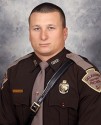
Trooper Nicholas Dees
Oklahoma Highway Patrol
End of Watch: Saturday, January 31, 2015
Age: 30
Tour: 1 year, 6 months
Badge # 731

Trooper Nicholas Dees was struck and killed by a vehicle near mile marker 195 on I-40, east of Shawnee.

He and another trooper were investigating a wreck involving a semi-truck on westbound I-40 at approximately 10:00 pm when a vehicle went around their patrol cars before striking both troopers. Trooper Dees died at the scene. The other trooper suffered serious injuries.

The subject who caused the crash was arrested and charged in connection with the incident.

Trooper Dees had served with the Oklahoma Highway Patrol for approximately 18 months.
Rest in Peace Bro…We Got The Watch

Nemo me impune lacessit

Day is done, Gone the sun, From the lake, From the hills, From the sky. All is well, Safely rest, God is nigh. 

Monday, March 9, 2015

China is building a navy

Will it challenge the 7th Fleet, no, not today. But they are still something to keep an eye on. If they push out too much, we will have to "reorient to the Pacific" in ways the current administration may not understand. And if China really goes crazy, it will take less than a year for Japan to develop nuclear weapons. For those of you who have not studied your history, there is a reason the Japanese are still hated for things done prior and during World War II. China had better pray Japan doesn't go back to hold habits.

Extracts from the STRATFOR: China: Sub Fleet Grows, Still in U.S. Wake
Summary

Despite making significant progress in developing their submarine arm, the Chinese nuclear submarine force is still far behind the full reach and capabilities of the United States silent service. It will take decades to even reach parity with the U.S. Navy, and even with advanced technology, China lacks the institutional knowledge, skills and expertise of a more venerable, seasoned force...

...Though the Pentagon is right to point out continued and impressive Chinese headway in modernizing their armed forces, the Chinese nuclear submarine fleet is not nearly as capable as official remarks may suggest. As an entity, the People's Liberation Army Navy lacks the expertise and institutional knowledge possessed by navies with a centuries-long heritage, like the United States Navy or the British Royal Navy.

Late Bloomers

It is true that the Chinese submarine force has made tremendous progress over the last decade. It is also true that the number of overall Chinese attack submarines, both diesel and nuclear powered, has grown rapidly, surpassing the number of commissioned U.S. nuclear attack submarines — craft designed specifically to engage other submarines or surface vessels. Critically, the Chinese are also spending large amounts of time at sea building up their expertise in training and patrols. The number of PLAN submarine sorties has approximately quadrupled over the last five years or so. As Admiral Mulloy stated, Beijing's nuclear ballistic missile submarines — distinct from their hunter-killer brethren in that they can launch intercontinental ballistic missiles from beneath the ocean surface — are almost ready for deterrence patrols, with one of these submarines having spent more than three months at sea during a trial patrol.

However, the Chinese are without a doubt still far behind the U.S. Navy's submarine service, especially in terms of fielding a nuclear submarine force capable of global reach and sustained operations. With a number of advanced diesel-electric Yuan-class submarines already in service, and improved models under construction, the Chinese are increasingly well positioned to utilize their diesel submarines in the sea denial role around China's coastal waters.

The Chinese doctrine in regard to its periphery is what can be referred to as a counter intervention strategy based on preventing or limiting U.S. and allied access into the Chinese near seas. From Beijing's point of view, these include the Yellow, East China and South China seas. Chinese conventional submarines would be used to interdict enemy vessels as they approach the Chinese near seas by conducting operations in the larger sea space between what China calls the first and second island chains — roughly speaking, the Philippine Sea.


Future Aspirations

The long-term Chinese ambition is, however, to develop a strong force of nuclear powered submarines for global force projection and the escort of carrier task groups and nuclear ballistic submarines. In this respect, China is still far behind the United States. In terms of the development of critical nuclear propulsion and quieting technology, the latest Chinese commissioned nuclear attack submarine, the Type-93 Shang-class, is broadly equivalent to the U.S. Sturgeon-class of late 1960s vintage. Even taking into account improved Chinese Type-93B submarines undergoing sea trials, the Chinese have not surpassed the capabilities displayed by early versions of the U.S. Los Angeles-class submarines of late 1970s vintage....
I think I've pushed "fair use" a bit, so be it. Have a great week.

Officer Down


Detective Michael Starrett
Jacksboro Tennessee Police Department
End of Watch: Friday, January 30, 2015
Age: 54
Tour: 20 years
Badge # 302
Incident Date: 1/23/2015

Detective Mike Starrett succumbed to injuries sustained one week earlier when he was involved in a head-on crash while responding to a fatal accident in which a father and young son were killed.

Other vehicles were yielding to Detective Starrett's vehicle when it was struck by the pickup truck on Highway 116 at Little Cove Creek Road. Detective Starrett was transported to UT Medical Center where he underwent several surgeries before passing away seven days later.

The driver of the truck that struck his vehicle was charged with failure to maintain control and failure to exercise due care.

Detective Starrett had served with the Jacksboro Police Department for 20 years. He is survived by his wife.
Rest in Peace Bro…We Got The Watch

Nemo me impune lacessit

Day is done, Gone the sun, From the lake, From the hills, From the sky. All is well, Safely rest, God is nigh. 

Saturday, March 7, 2015

Again, a Reagan meme says it all

I remember during the 1980 campaign then President Carter said something about making America more liked. Then former Governor Ronald Reagan said it best, "Mr. President, I always believed it was more important to be respected than liked."

President Reagan also knew, in the diplomatic world, it was more important to be feared than respected. And as we look at the utter ineptitude of our foreign and military policy under the current regime, this picture says what a real leader would have done.

Damned we need you Ronnie!

Friday, March 6, 2015

Officer Down


Patrolman Roger O'Dell
Town Creek Alabama Police Department
End of Watch: Wednesday, January 28, 2015
Age: 47
Tour: 25 years
Badge # TC-4

Patrolman Roger O'Dell suffered a fatal heart attack after taking two juveniles into custody who had escaped from a juvenile detention facility in a neighboring county earlier in the day.

He had received an anonymous tip at approximately 4:00 am that the two were at an apartment complex on the 1900 block Highway 20. He was able to detain the two and once he positively identified them he was placed them under arrest. He collapsed moments after placing them both in the rear of his patrol car.

Upon seeing him collapse, one of the juveniles was able to crawl through the prisoner partition into the front of his patrol car and used the radio to alert dispatchers.

Patrolman O'Dell was a veteran of the Alabama National Guard. He had served with the Town Creek Police Department for approximately 18 months after retiring as chief of the Courtland Police Department. He is survived by his wife and four children.
Rest in Peace Bro…We Got The Watch

Nemo me impune lacessit

Day is done, Gone the sun, From the lake, From the hills, From the sky. All is well, Safely rest, God is nigh. 

Thursday, March 5, 2015

Officer Down


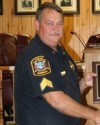
Sergeant Charles Kerry Mitchum
Loxley Alabama Police Department
End of Watch: Monday, January 26, 2015
Age: 57

Sergeant Kerry Mitchum was killed in a single vehicle crash on Oak Lane, near Highway 59, in Stapleton.

He was en route to the Baldwin County Sheriff's Office firing range at approximately 3:00 pm when his department vehicle left the roadway and struck a tree. He was flown the University of South Alabama Medical Center where he succumbed to his injuries.
Rest in Peace Bro…We Got The Watch

Nemo me impune lacessit

Day is done, Gone the sun, From the lake, From the hills, From the sky. All is well, Safely rest, God is nigh. 

He was on a mission from God! RIP John Belushi.

I can't believe it's been 33 years since he's past. John Belushi died on this day in 1982. Another low point to a shitty year. But he would want to be remembered with laughter than tears and with the recent passing of Leonard Nimoy I figured this was appropriate. Enjoy.


Damned I miss him.

Twenty years and no justice.

I've said before I would rather wait ten years to execute a guilty person than see a not-guilty person be executed. But this is beyond getting ridiculous.

The New Orleans Police Department had many problems, including a starting salary (if memory serves) of 13, 500 a year. With you paying for all your equipment. That insured you will get the worse possible candidates and here she is, Antoinette Frank.

20 years ago: Restaurant killings rocked city, NOPD

It was a crime that shook New Orleans to its core - 20 years ago Wednesday. A female New Orleans police officer – Antoinette Frank – was arrested for shooting and killing a fellow officer and the two children of a family whose New Orleans East restaurant she helped protect.

About 2 a.m. on Saturday morning, March 4, 1995, police said Frank, then 23, and an accomplice, Rogers Lacaze, 18, entered the Kim Anh restaurant on Bullard Avenue to rob the place. Frank had worked paid details while off-duty at the Vietnamese family-run restaurant.

"The motive of the murder was robbery. An undetermined amount of cash was taken," then-New Orleans Police Supt. Richard Pennington said the morning after.

But a far worse crime was committed: three people were shot and killed, including the children of the restaurant's owners - 17-year-old Cuong Vu and his sister, 24-year-old Ha Vu, along with 25-year-old New Orleans Police officer Ronald Williams II. He was off duty and working a police detail at the business, as Frank had done at the restaurant many times herself.

"I was left somewhat speechless by the events which were reported to me," former Mayor Marc Morial said at the time.

Frank initially had told police she was on the scene that night but not involved in the killings and went for help when she found out what had happened. She then was back on the scene when the officers arrived. Police became suspicious while questioning her and determined she was involved.

The two young people died on the scene. Williams died later at Charity Hospital, Pennington said in a morning news conference the next day.

The fact that the victims were people Frank knew well, made the crime all the more cold-blooded. It came on the heels of one of the most violent years in the city's history and as the mayor and police chief launched efforts to reform the NOPD.

"We're going to continue to clean the department up of corrupt police officers, officers that are involved in criminal activity," Pennington said.

But that was little comfort to the families of the victims, including the Williams family and Officer Williams' wife and two young sons – one of whom was born just a week before his father died.

At separate trials later that year, Frank and Lacaze were both convicted for their roles in the murders and sentenced to death. It took the jury just 22 minutes to reach a guilty verdict in Frank's case.

The pair remains on death row 20 years later, though they continue to appeal. In 2007, the Louisiana Supreme Court ruled that Frank had been properly sentenced to die. Lacaze is awaiting a judge's ruling on his most recent request for a new trial.

Almost twenty years since the pair was sentenced to death, there is not even an execution date set or looks like it will be set. The Vu and Williams family have waited far too long for justice. It has been proven, and proven, and proven, and proven again they did it and they have had full access to the judicial process. This is justice denied.

I've attended the election of two executions in the past year, in January 2014 and February 2015. The execution chamber of Louisiana is not as active as the one in Huntsville, but this is too much. Time for both of those two waste of human sperm be put down like the rabid animals they are.

Wednesday, March 4, 2015

Security Weekly: A Look Back at the 1993 World Trade Center Bombing, February 26, 2015


By Scott Stewart

On the morning of Feb. 26, 1993, a massive truck bomb ripped a hole almost 30 meters (100 feet) across the B-2 level of the parking garage beneath the World Trade Center's North Tower. The blast wave was so powerful that it penetrated five stories of the reinforced concrete building. In addition to causing structural damage, the explosion destroyed or heavily damaged hundreds of vehicles in the garage. That such a powerful explosion killed only six people is nothing short of a miracle, for the attackers had a goal much more grandiose.

They wanted to topple the North Tower onto the South Tower to destroy them both and kill thousands. Had a device of the same magnitude been detonated at street level during rush hour, it would have likely killed scores if not hundreds of people and wounded perhaps thousands more.

From Yemen to New York City

An hour or two after the bombing, I landed in Frankfurt, Germany, on my way back to Washington from Yemen. I was working as a special agent for the Diplomatic Security Service investigating a bombing attack against U.S. Air Force personnel in Aden on Dec. 29, 1992, and a rocket attack against the U.S. Embassy in Sanaa in January 1993. As I stood in the airport terminal looking at the first reports of the World Trade Center bombing, I had no idea the attack was linked to the incidents I had been investigating in Yemen. Later it would be discovered that the same group that conducted the Yemen attacks also bombed the Trade Center: al Qaeda.

I had initially flown to Yemen with a colleague from the explosives section of the FBI laboratory to investigate the strikes against U.S. interests there. We suspected the Libyans might have conducted those attacks after seriously wounding embassy communicator Arthur Pollick in a 1986 shooting in Sanaa and conducting a series of other attacks against U.S. interests around the world.

One of the explosive devices in the Aden attack had failed to detonate, and we wanted to examine it to see if it matched any of the components or bombmaking signatures from devices used in previous Libyan and Libyan-sponsored attacks. However, after examining the Aden device and the manner in which the rocket attack against the U.S. Embassy had been conducted, we were fairly certain the attacks were not the work of the Libyan intelligence service or one of its usual proxies such as the Abu Nidal Organization or the Japanese Red Army, also known as the Anti-Imperialist International Brigade.

But the manner in which those attacks were conducted did tell us one important thing: The CIA had trained whoever had conducted them. Several specific elements of those attacks matched techniques I had learned when I attended the CIA's improvised explosive device training course. (Agents assigned to my office attended the bombmaking course because knowing what is required to make a bomb is crucial when investigating a bombing.) After the CIA station chief assured us that he and his people were not behind the Aden and Sanaa attacks, we concluded that the attackers were most likely Yemenis who had traveled to Afghanistan to fight against the Soviet occupation and had received some training from the CIA's Office of Technical Services — or someone it had trained.

So we knew what the attackers were — jihadists who had returned from Afghanistan — we just didn't have a name for them yet. It would be almost a year before I heard the term "al Qaeda" and several months after that before I realized the term was the name of a group of former mujahideen who fought in Afghanistan and had turned their sights against the United States.

As I watched the newsfeed in Frankfurt, I also had no idea that I would spend the next two years of my life investigating the World Trade Center bombing and the New York Landmarks bomb plot that was connected to it, which targeted the Lincoln Tunnel, the U.N. headquarters and the Javits Federal Building in Manhattan among other locations. In fact, since I was returning from a 10-day investigative trip in Yemen, I figured that if my office was asked to assist in the investigation, my supervisor would assign another agent to the case.

But I was wrong. When I arrived home Feb. 27, I found a message on my answering machine telling me to pack my gear for an indefinite rotation to New York. One of my colleagues had been designated to run the case, but he had become tied down at headquarters handling the myriad investigative leads being sent to regional security officers at U.S. embassies around the world, and he had requested that I be sent to New York to help with the investigation.


A World Trade Center bombing crime scene identification badge issued by the New York JTTF.

Initially, the FBI's working hypothesis was that Serbian terrorists had carried out the bombing in revenge for U.S. support of the republics that had broken away from the former Yugoslavia. Regional security officers at U.S. embassies all over the world were pulling visa applications, airline manifests and crew lists of merchant ships with Serbians on board in an effort to identify the potential bombers. I was skeptical of the idea that Serbians carried out the attack, and my previous experience investigating large vehicle bombings by Hezbollah, such as the March 1992 bombing of the Israeli Embassy in Buenos Aires, led me to suspect that this was another of its attacks. Of course, we would all be proven wrong within a week.

The Crime Scene

I did not deploy to New York alone. The FBI laboratory requested that we transport one of the State Department's EGIS explosive detection machines to the crime scene, and a security engineering officer from the Diplomatic Security Service traveled up to the World Trade Center with me. We arrived in New York at an opportune time on Sunday, Feb. 28. As I checked in with some of my Bureau of Alcohol, Tobacco and Firearms (ATF) and NYPD friends at the crime scene, they excitedly told me how they had just found the rear differential of a vehicle that showed indications of heavy explosive pitting and gas wash — signs that it had been in intimate contact with the explosives, or possibly was from the rear end of the vehicle used to transport the bomb.


Rubble and debris cover the basement of the World Trade Center's North Tower.

They documented their find and placed it on an ambulance gurney to take it to the NYPD explosives laboratory in hopes of recovering the vehicle identification number from the differential. The sight of a gurney being wheeled out of the parking garage and loaded into a truck led the press to speculate that another victim had been found. It was a good thing the NYPD and ATF personnel had identified and removed the differential Sunday, because on Monday morning, a huge slab of concrete fell from the level above right onto the area where it had been. Had the agents not moved the differential, it might have been buried for some time.

The excitement my ATF colleagues felt over the differential find became somewhat dampened as they learned of events that transpired in Waco, Texas, earlier that day. A group of Branch Davidian members had holed themselves up in their compound and killed four ATF agents during a raid. The next morning, we all reported for work with black bands over our badges to mourn the agents who lost their lives in Waco.


Diplomatic Security Service Special Agent Scott Stewart uses an EGIS explosive detection machine to examine rubble in the World Trade Center's basement in 1993.

Monday morning was also when we fired up the EGIS machine and ran its collector over several items that appeared to have been in proximity to the seat of the blast, including a huge steel girder that had been hurled into the Port Authority office where four of the victims were killed. The machine's mass spectrometer showed a substantial spike of some sort of nitrate compound, but the machine had been programmed to recognize only six different common explosive compounds, so it could not identify what it had detected. Laboratory tests would later determine that the main charge consisted of urea nitrate.


The screen of an EGIS explosive detection machine indicates a high level of a nitrate compound.

The EGIS machine turned out to be pretty much useless, so I volunteered to help with the rest of the crime scene investigation. I was given a broom and shovel to help the army of police officers and agents working at the site collect bits of rubble, vehicles and other miscellaneous materials so they could be sorted and catalogued at an armory in Long Island. Literally sweeping the crime scene proved to be a long, labor-intensive process.

A few days later, I came off of broom and shovel duty after lab techs were able to pull up the VIN number from the differential and trace it to a Ryder truck that had been rented by Mohammed Salameh. He was a known member of a group the FBI had previously investigated as a possible terrorist threat after one of its members assassinated Meir Kahane, the founder of the Jewish Defense League, in a Manhattan hotel in November 1990. Our New York field office was familiar with the group after working with the Manhattan District Attorney's office to investigate overseas leads in the Kahane investigation.

Officers and agents from the New York Joint Terrorism Task Force (JTTF) arrested Salameh at a Ryder rental office March 4. He had filed a stolen vehicle report for the truck and was attempting to retrieve his security deposit. After detaining him, agents and police officers began rounding up his associates identified in the earlier investigation.

One of those associates, Ibrahim Elgabrowny, attacked a colleague of mine from the ATF who was serving a search warrant on his home. Authorities arrested Elgabrowny for assault, and a search team discovered Nicaraguan passports bearing the photos of his cousin, Kahane's assassin El Sayyid Nosair, and his family in addition to Nicaraguan driver's licenses and identification cards. I talked to the JTTF unit supervisor and told him I was confident I had enough to make a passport and document fraud case against Elgabrowny. Because there was no other evidence tying Elgabrowny to the bombing investigation, the JTTF supervisor told me to approach the U.S. Attorney's office to see if it was interested in pursuing the passport fraud case. It was, and Elgabrowny was soon indicted on assault and passport fraud charges.

I quickly developed a close working relationship with the group of assistant U.S. attorneys working the case. They frequently came to me seeking the Diplomatic Security Service's help with some of the more problematic suspects in the World Trade Center bombing case and the connected New York Landmarks plot.

In addition to helping with the successful prosecution of Elgabrowny, Diplomatic Security special agents tracked and arranged for the capture and rendition of Mahmud Abouhalima, who had fled the United States after the bombing. We also uncovered sufficient evidence to help tie Ahmed Ajaj to the conspiracy and found critical information that helped the U.S. attorney convince the U.S. attorney general to allow the indictment of Sheikh Omar Abdel Rahman. I developed a visa fraud case against Rahman so he could be arrested if acquitted on the seditious conspiracy charges, and we also obtained an indictment for Abdel Basit, also known as Ramzi Yousef, for passport fraud and captured him in Pakistan.

Looking Back

In retrospect, Nosair's assassination of Jewish Defense League founder Meir Kahane was the first notable grassroots jihadist case in the United States. When the FBI infiltrated a group of Nosair supporters, it judged them to be inept and not posing a serious threat. The 1993 World Trade Center case serves as an example of how seemingly bumbling grassroots jihadists or "Kramer terrorists" can become quite deadly when they link up with a highly trained terrorist facilitator who can lead and organize them. After learning lessons from this case, today, even when a group appears to be somewhat inept like the group of Nosair supporters, the authorities must go after them as hard as they can with whatever charges available instead of just writing them off.

The pre-9/11 terrorism operational model seen in the Kahane assassination, the World Trade Center bombing and the New York Landmarks plot shares many parallels with the current environment. It is far harder for jihadist groups such as al Qaeda or the Islamic State to conduct a 9/11-style attack using highly trained operatives dispatched from overseas to conduct attacks in the United States and the West. The big difference between 1993 and today is that we are now acutely aware of who the jihadists are, be they members of al Qaeda, the Islamic State or other organizations. We also know what they believe and have a clearer idea of their capabilities. There is much more emphasis on countering the threat than there was in 1993. Security agencies also have more resources now.

Finally, my involvement in the investigation of the 1993 bombing gave me a profound sense of the sheer magnitude of the events that occurred on 9/11. I had seen firsthand how a large truck bomb that caused substantial damage in the parking garage had little impact on the Twin Towers themselves. Seeing the towers completely destroyed was something almost impossible for me to imagine.

I am a person with a sheepdog-like wiring that gives me a deep need to protect others, and the time I spent working in the bowels of the World Trade Center and the many months of effort I put into helping catch and prosecute those responsible for the attack also gave me a special affinity for the buildings. Watching the Twin Towers fall on live television impacted me in a deep and personal way — and I am sure that my colleagues from the wide array of agencies involved in the 1993 investigation shared those same feelings of disbelief, grief and shock. New York and the country have moved on from the loss of the World Trade Center, but even today, there is a hole in my heart when I gaze at the Manhattan skyline.

A Look Back at the 1993 World Trade Center Bombing is republished with permission of Stratfor.

Officer Down


Director of Investigations John Ballard Gorman
Mississippi Gaming Commission
End of Watch: Wednesday, January 21, 2015
Age: 45
Tour: 22 years

Director of Investigations John Gorman was accidentally shot and killed during a training exercise at the Mississippi Gaming Commission's office in Robinsonville, Mississippi, at approximately 9:00 am.

A firearm being used by another agent was accidentally discharged and the round struck Director Gorman.

Director Gorman had served with the Mississippi Gaming Commission for 22 years and had been promoted to Director of Investigations the previous day. He is survived by his wife and two daughters.
Rest in Peace Bro…We Got The Watch

Nemo me impune lacessit

Day is done, Gone the sun, From the lake, From the hills, From the sky. All is well, Safely rest, God is nigh. 

Geopolitical Weekly: The Intersection of Three Crises, February 24, 2015

By Reva Bhalla

Within the past two weeks, a temporary deal to keep Greece in the eurozone was reached in Brussels, a cease-fire roadmap was agreed to in Minsk and Iranian negotiators advanced a potential nuclear deal in Geneva. Squadrons of diplomats have forestalled one geopolitical crisis after another. Yet it would be premature, even reckless, to assume that the fault lines defining these issues are effectively stable. Understanding how these crises are inextricably linked is the first step toward assessing when and where the next flare-up is likely to occur.

Germany and the Eurozone Crisis

Germany has once again become the victim of its own power. As Europe's largest creditor, it has considerable political leverage over debtor nations such as Greece, whose entire livelihood now depends on whether German Chancellor Angela Merkel is willing to sign another bailout check. Lest we forget, Germany is exporting the equivalent of about half its GDP, and most of those exports are consumed within Europe. Thus, the institutions Germany relies on to protect its export markets are the very institutions Berlin must battle to protect Germany's national wealth.

Many have characterized the recent Brussels deal as a victory for Berlin over Athens as eurozone finance ministers, including the Portuguese, Spanish and French, stood behind Germany in refusing Greece the right to circumvent its debt obligations. But Merkel is also not about to gamble an unlimited amount of German taxpayer funds on flimsy Greek pledges to cut costs and impose structural reforms on a population that, for now, still views the ruling Syriza party as its savior from austerity. Within four months, Greece and Germany will be at loggerheads again, and Greece will likely still lack the austerity credentials that Berlin needs to convince its own Euroskeptics that it has the institutional heft and credibility to impose Germanic thriftiness on the rest of Europe. The more time Germany buys, the more inflexible the German and Greek negotiating positions become, and the more seriously traders, businessmen and politicians alike will have to take the threat of a so-called Grexit, the first in a chain of events that could shatter the eurozone.

The Role of the Crisis in Ukraine

In order to steer Germany through an escalating eurozone crisis, Merkel needs to calm her eastern front. It is no wonder, then, that she committed herself to multiple sleepless nights and an incessant travel schedule to put another Minsk agreement with Russia on paper. The deal was flawed from the start because it avoided recognizing the ongoing attempts by Russian-backed separatists to smooth out the demarcation line by bringing the pocket of Debaltseve under their zone of control. After several more days of scuffling, the Germans (again leveraging their creditor status — this time, against Ukraine) quietly pushed Ukrainian President Petro Poroshenko to accept the battlefield reality and move along with the cease-fire agreement. But even if Germany on one side and Russia on the other were able to bring about a relative calm in eastern Ukraine, it would do little in the end to de-escalate the standoff between the United States and Russia.

The Connection Between Ukraine and Iran

Contrary to popular opinion in the West, Russian President Vladimir Putin is not driven by crazed territorial ambitions. He is looking at the map, just as his predecessors have for centuries, and grappling with the task of securing the Russian underbelly from a borderland state coming under the wing of a much more formidable military power in the West. As the United States has reminded Moscow repeatedly over the past several days, the White House retains the option to send lethal aid to Ukraine. With heavier equipment comes trainers, and with trainers come boots on the ground.

From his perspective, Putin can already see the United States stretching beyond NATO bounds to recruit and shore up allies along the Russian periphery. Even as short-term truces are struck in eastern Ukraine, there is nothing precluding a much deeper U.S. probe in the region. That is the assumption that will drive Russian actions in the coming months as Putin reviews his military options, which include establishing a land bridge to Crimea (a move that would still, in effect, leave Russia's border with Ukraine exposed), a more ambitious push westward to anchor at the Dnieper River and probing actions in the Baltic states to test NATO's credibility.

The United States does not have the luxury of precluding any one of these possibilities, so it must prepare accordingly. But focusing on the Eurasian theater entails first tying up loose ends in the Middle East, starting with Iran. And so we come to Geneva, where U.S. Secretary of State John Kerry and Iranian Foreign Minister Javad Zarif met again Feb. 22 to work out the remaining points of a nuclear deal before March 31, the date by which U.S. President Barack Obama is supposed to demonstrate enough progress in negotiations to hold Congress back from imposing additional sanctions on Iran. If the United States is to realistically game out scenarios in which U.S. military forces confront Russia in Europe, it needs to be able to rapidly redeploy forces that have spent the past dozen years putting out fires ignited by sprouting jihadist emirates and preparing for a potential conflict in the Persian Gulf. To lighten its load in the Middle East, the United States will look to regional powers with vested and often competing interests to shoulder more of the burden.

A U.S.-Iranian understanding goes well beyond agreeing on how much uranium Iran is allowed to enrich and stockpile and how much sanctions relief Iran gets for limiting its nuclear program. It will draw the regional contours of an Iranian sphere of influence and allow room for Washington and Tehran to cooperate in areas where their interests align. We can already see this in effect in Iraq and Syria, where the threat of the Islamic State has compelled the United States and Iran to coordinate efforts to contain jihadist ambitions. Though the United States will understandably be more cautious in its public statements while it tries to limit Israeli anxiety, U.S. officials have allegedly made positive remarks about Hezbollah's role in fighting terrorism when speaking privately with their Lebanese interlocutors in recent meetings. This may seem like a minor detail on the surface, but Iran sees a rapprochement with the United States as an opportunity to seek recognition for Hezbollah as a legitimate political actor.

A U.S.-Iranian rapprochement will not be complete by March, June or any other deadline Washington sets for this year. Framework agreements on the nuclear issue and sanctions relief will necessarily be implemented in phases to effectively extend the negotiations into 2016, when Congress could allow the core sanctions act against Iran to expire after several months of testing Iranian compliance and after Iran gets past its parliamentary elections. Arrestors could arise along the way, such as the death of Iranian Supreme Leader Ayatollah Ali Khamenei, but they will not deter the White House from setting a course toward normalizing relations with Iran. The United States, regardless of which party is controlling the White House, will rank the threat of a growing Eurasian conflict well ahead of de-escalating the conflict with Iran. Even as a nuclear agreement establishes the foundation for a U.S.-Iranian understanding, Washington will rely on regional powers like Turkey and Saudi Arabia to eat away at the edges of Iran's sphere of influence, encouraging the natural rivalries in the region to mold a relative balance of power over time.

Circling Back

Germany needs a deal with Russia to be able to manage an existential crisis for the eurozone; Russia needs a deal with the United States to limit U.S. encroachment on its sphere of influence; and the United States needs a deal with Iran to refocus its attention on Russia. No conflict is divorced from the other, though each may be of a different scale. Germany and Russia can find ways to settle their differences, as can Iran and the United States. But a prolonged eurozone crisis cannot be avoided, nor can a deep Russian mistrust of U.S. intentions for its periphery.

Both issues bring the United States back to Eurasia. A distracted Germany will compel the United States to go beyond NATO boundaries to encircle Russia. Rest assured, Russia — even under severe economic stress — will find the means to respond.

The Intersection of Three Crises is republished with permission of Stratfor.
Israel, Netanyahu, and liberal hypocrisy.

I was listening to Rush Limbaugh yesterday and he had a classis line.
NETANYAHU: Facing me, right up there in the gallery, overlooking all of us in this august chamber is the image of Moses. Moses led our people from slavery to the gates of the Promised Land. And before the people of Israel entered the land of Israel, Moses gave us a message that has steeled our resolve for thousands of years. I leave you with his message today. (speaking Hebrew) "Be strong and resolute. Neither fear nor dread them." My friends, may Israel and America always stand together, strong and resolute. May we neither fear nor dread the challenges ahead. May we face the future with confidence, strength, and hope. May God bless the state of Israel, and may God bless the United States of America.

RUSH: Okay, so we've had all the meaningful, relevant Netanyahu sound bites and we've highlighted Obama's reaction to it, which is angry and petulant and feeling put upon, all of which is understandable. We've had Netanyahu acting like the leader of the free world. Netanyahu is a perfect example of a foreigner coming here to do the jobs Americans won't do. How about that? Benjamin Netanyahu, a perfect example of a foreigner coming here to do the jobs Americans won't do. In this case, behaving like a president, which is exactly what he did.

If you haven't see the Netanyahu speech, watch it. It's worth an hour of your time to see a leader address the Congress. It's been so long.

Now from Legal Insurrection, one of my favorite blogs,is an examination at the Anti-Semetism sweeping higher education. Here are the highlights:
...Israel’s first crime is that it is a Western nation. In the minds of Israel’s critics, to be Western is to be suspect, especially when your country is juxtaposed with non-Western nations. Israeli actions are confused with colonialism by those who erroneously insist that, to this day, imperialism drives relations between Western and non-Western peoples. To attack Israel is to give non-Westerners a leg up in these supposedly colonial interactions.

Israel’s second offense is that it is pro-American. It is little surprise that Israel’s fiercest opponents are also militant critics of the United States. They deride America’s invasions of Afghanistan and Iraq as modern-day imperialism and look forward to a day when America will be forced to relinquish its superpower status.

Because Israel and America have such strong links, Israel is tarred as a mere instrument of America’s supposedly nefarious interests abroad. Bashing Israel is just their way of expressing contempt for the policies of the United States, and as such serves as an outlet for virulent anti-Americanism. They treat the Jewish State as America in the Middle East.

Israel’s third “flaw” is that it is economically and politically successful. To far-left academics, students and activists, success must necessarily come at the expense of others. They adhere to the discredited, primitive notion that development is a zero-sum game. If someone becomes rich, someone else must have been made poor as a result. To them, accomplishment is synonymous with an oppressor status.

Palestinians serve as the victim in Israel’s success story.

As Israel became wealthier — thus supposedly freeing itself from the “oppression” of relative poverty — it increasingly became the villain, the persecutors of the unfortunate Palestinians. Ironically, this perspective degrades the Palestinians by treating them as mere victims rather than historical actors capable of exercising their own judgment and taking control of their own future.

A point on this. Israel has received billions in aid over the decades but for that you have a first world nation in the middle of third world hell holes. Kinda like the one good looking house in the middle of da hood where an old couple actually take care of their house. But the PLO and PLA (or whatever it's called this week) has also received billions over the decades and the Palestinians have what to show for it? They live in tents, don't have running water or flushing toilets. They live in squalor and Arafat (and his successors) live in five star hotels. From 60 Minutes, not exactly "the vast right wing conspiracy".
Arafat's Billions: One Man's Quest To Track Down Unaccounted-For Public Funds

Yasser Arafat diverted nearly $1 billion in public funds to insure his political survival, but a lot more is unaccounted for.

Jim Prince and a team of American accountants - hired by Arafat's own finance ministry - are combing through Arafat's books. Given what they've already uncovered, Arafat may be rethinking the decision. Lesley Stahl reports.

"What is Mr. Arafat and the Palestinian Authority worth today?" asks accountant Jim Prince. "Who is controlling that money? Where is that money? How do we get it back?"

So far, Prince's team has determined that part of the Palestinian leader's wealth was in a secret portfolio worth close to $1 billion -- with investments in companies like a Coca-Cola bottling plant in Ramallah, a Tunisian cell phone company and venture capital funds in the U.S. and the Cayman Islands.

Now we go on.
And finally, of course, Israel is Jewish. Casting aside all pretense that they could distinguish between anti-Zionism and anti-Semitism, a South African student union recently voted to expel its Jewish students for being Jewish, adding that this expulsion applied especially (but not exclusively) to “Jews who do not support the Palestinian cause.”

This typical anti-Semitic scapegoating demonstrates that opposition to Israel is often driven by the ancient anti-Semitic belief that Jews ought to be denied the right to self-determination and rendered permanently stateless. Attacking Israel is a convenient way for anti-Semites to target Jews while simultaneously reinforcing their supposedly “progressive,” anti-Zionist label.

Whenever I discuss the ongoing vilification of Israel, I am usually met with the same questions: Where are the protests against Israel’s immediate neighbors? Why is there no talk of the repression of gays and women throughout the Middle East, or of modern-day slavery and gender apartheid in Saudi Arabia? And are these self-appointed moralists aware of China’s occupation of Tibet, Russia’s occupation of Ukraine, Turkey’s occupation of Cyprus or Morocco’s occupation of the Western Sahara?

The answer? Those countries aren’t Israel.

Very well said Julius Kairey, very well said.

Monday, March 2, 2015

Japan sheds some more of its post war shell.

Japan, to a greater degree than Germany, was suppressed in the post Cold War years. As Germany was split into two, Japan was kept by its own constitution to renounce war. In conjunction with that, the intelligence service was pared down and decentralized.

As the Japanese military, with the expansion of both the North Korean and Chinese threats have arisen, Japan is moving to reform their intelligence services. This is a good look at what Japan's intelligence institutions have gone though in the 20th Century and how they are moving in a new direction.
Japan's Intelligence Reform Inches Forward


Summary

When the Allies defeated Japan at the end of World War II, they dismantled the Japanese security apparatus and deliberately left the country dependent on outside powers. This entailed not only taking apart the military, but also the extensive imperial intelligence apparatus that had facilitated Japanese expansion in Asia. As it reconstituted itself, postwar Japan opted for a decentralized intelligence system as an alternative to its prewar model. The result was more a fragment of an intelligence apparatus than a full system, with Tokyo outsourcing the missing components to its allies. This system worked through the Cold War, when Japan was more essential to U.S. anti-Soviet strategy. Since then, however, Japan has found itself unable to count on its allies to provide vital intelligence in a timely manner. The Islamic State hostage crisis in January, during which Japan depended on Jordanian and Turkish intelligence, reinforced this lesson.

In response to the recent incident, Japan's ruling Liberal Democratic Party has started drafting a proposal to create a new agency specializing in foreign intelligence. To address Japanese dependence on outsiders, the new system will shift away from a decentralized model with limited collection capacity to a centralized system with in-house capabilities. This plan would support Japan's slow normalization of its overall military capabilities in order to face new threats.

Analysis

...Japan's current intelligence apparatus is fragmented among five organizations. The Cabinet Information and Research Office focuses on open source and geospatial intelligence. Japan's Ministry of Foreign Affairs collects diplomatic intelligence. The Defense Intelligence Headquarters gathers signals intelligence, including electronic and telecommunications systems. Under the Ministry of Justice, the Public Security Intelligence Agency mainly conducts internal investigations and monitors subversive domestic groups. The most powerful of these is the National Police Agency, which is responsible for domestic law enforcement, counterterrorism and combating transnational crime. This agency also has personnel positioned in the four other institutions as high-level intelligence directors.

This system lacks two key components: Its greatest weakness is the absence of a clandestine intelligence arm, depriving Japan of reliable access to human intelligence. The country also does not have an institution that pools the intelligence gathered by the different branches. Such an institution would provide comprehensive analysis to top policymakers and ensure effective information-sharing among agencies. Instead, Japan's intelligence agencies each report directly to the prime minister's office. The absence of these two key nodes has left Japanese policymakers with huge gaps in awareness, forcing them to react to crises instead of pre-empting them. Time and again, this has led to tragic consequences for Japanese citizens....

Well, that's about all I can get with fair use. The rest you will have to use an email address for. Have a great week!