Police Work, Politics and World Affairs, Football and the ongoing search for great Scotch Whiskey!

Sunday, January 22, 2012

Officer Down


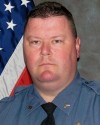
Sergeant Barbara Ester
Arkansas Department of Correction
End of Watch: Friday, January 20, 2012
Bio & Incident Details
Age: 47
Tour: 12 years

Sergeant Barbara Ester was stabbed to death by an inmate at the East Arkansas Regional Unit in Brickeys, Arkansas.

She had observed an inmate in possession of contraband pair of sneakers and entered the open barracks to confiscate them. As she approached the inmate he suddenly stabbed her twice in the stomach with a shank.

Sergeant Ester was flown to a hospital in Memphis, Tennessee, where she succumbed to her wounds.

The inmate, who had was serving a life sentence for murder, was immediately taken into custody and transferred to the maximum security wing of the prison.

Sergeant Ester had served with the Arkansas Department of Correction for 12 years. She is survived by her husband, who also serves as an officer at the same facility.
Rest in Peace Sis…We’ll Continue The Watch

Day is done, Gone the sun, From the lake, From the hills, From the sky. All is well, Safely rest, God is nigh.

Officer Down


Deputy Sheriff Randall L. Benoit
Calcasieu Parish Louisiana Sheriff's Office,
End of Watch: Wednesday, January 18, 2012
Age: 41
Tour: 18 years

Deputy Sheriff Randall Benoit was killed in an automobile accident at the intersection of Highway 27 and Red Rose Drive in Carlyss at approximately 8:00 am.

His patrol car was struck head-on by another vehicle, causing fatal injuries.

Deputy Benoit had served with the Calcasieu Parish Sheriff's Office for 18 years and was assigned to the Civil Division.
Rest in Peace Bro…We’ll Continue The Watch

Day is done, Gone the sun, From the lake, From the hills, From the sky. All is well, Safely rest, God is nigh.

Electric Car Parking

I have little use for the Chevy Volt or other electric cars out there. They may have limited use for a concentrated area but as a general use vehicle they are worthless. I personally commute over 60 miles a day and this will not work. And I know people who commute more.

Now a question. Is the use of a charger at the Wal-Mart a privilege or a perk of using the over glorified golf cart? Let's see.

Electric car parking: Perk or privilege?

They drive whisper-quiet cars, zing past you in the parking lot, and use dedicated charging stations just a few steps from the front entrance. Electric car owners enjoy many perks, and there’s a growing frustration among owners of conventional cars about the charging stations popping up at places like Ikea, Whole Foods, Walgreens, and other stores -- especially when the spots in front of them are empty.

“This makes me think drivers of electric cars must be a little disabled,” one customer who did not want to be identified told FoxNews.com about the charge ports at a Goodwill store in St. Paul, Minn. “They are usually health freaks, so I wonder why they don’t mind walking a half-mile back to a charging station.”

Meanwhile, charging stations are being installed at public libraries, sports stadiums, and even airports. In some cases, the electric vehicle-only parking spots are located closer to the front entrance than the handicapped spaces. Yet, even an advocate for green living says the charge ports are superfluous.

“If stores and organizations wish to minimize their environmental footprint then they can give priority access to bicyclers and pedestrians,” says Ozzie Zehner, a visiting scholar and the University of California-Berkeley, and author of Green Illusions, an upcoming book that pokes holes in alternative energy practices. 

Zehner says EV charge stations just reinforce eco-fetishism and urban sprawl.

“American taxpayers give electric car owners tax breaks and credits to buy their vehicles as well as priority parking and special freeway lanes even though there’s no evidence they’ve done anything positive for the environment in return," Zehner says. "In fact, the mining, heavy metals, and other side effects of electric car production and operation are likely worse for the environment."...

...Not every EV owner is an advocate of front-of-the-parking-lot privileges, however. Angela Miller, an IT executive in San Diego, owns a Nissan Leaf and says she would not mind parking in a back lot and walking. She says it will be less likely that a massive gas-chugging SUV will take her spot.,,
Rarely do I agree with an environmental nutcase like Zehner but he has legit points here. Electric vehicles use regular electrify (usually coal) for charging. That really helps with pollution right? But more to the point I am paying for this POS with my tax dollars or my other money I spend at places like BestBuy. But more to the point these EV morons piss me off because hey expect others to pay for there electrify. I'm paying over three dollars a gallon for gas right now, in large parts because of enviro-morons and the policies they push. But again, I am paying for it. The no brain enviro whack brains like to live in their city like New York or Seattle, take an electric car they could only afford with tax breaks I paid for and on top of that expect me to pay for the electrify at the library or other "municipal charging station". An example:
All told Houston, working with its partner ECOtality, will install 28 additional public charging stations at city libraries and parks. Another partner, GRIDbot, will handle the installation of an additional 28 municipal charging stations in the parking garage underneath Tranquility Park, for the fleet of city vehicles.

A city that is broke as Houston cannot afford this crap. But please, don't let reality get in the way of a good press event.

Things to look at after an early morning.

Up early on Saturday so Beth and I could go on a ride with Blue Knights Texas VII on the chapter's anniversary ride. We spent the day in Bay City with other members at a auction hosted by another chapter. So after getting home Beth is dead and I"m not far behind. Both of us are dead by 900pm. Problem with that is I'm up at 400am.

So I kill a few minutes on the computer and found two interesting articles on current issues.
HURT: Why use 'despicable,' clueless left-wing media to moderate GOP debates? - Washington Times

By Charles Hurt-The Washington Times Friday, January 20, 2012
NORTH CHARLESTON, S.C. — There is growing consternation in Republican circles and among conservatives over why Republicans keep allowing the various Communist, leftist and otherwise anti-American TV networks to host GOP debates.

The ickiness of Diane Sawyer asking questions in her cloying voice is more than most can bear. The utter cluelessness of the questions these people think actual American voters care about is mystifying. The shameless and ham-handed pandering to conservatives by the networks is revolting.

Indeed, the entire phoenix rising candidacy of former House Speaker Newt Gingrich can be attributed to America's abject hatred of the left-wing media. He was destitute and written off by the press when he tapped into one of the most visceral political reactions coursing through the veins of regular Americans. And once be began beating up the media, America gathered around him.

Last night, we saw once again why Republicans need to keep allowing fakers and Communists to moderate their GOP debates. Because without the leftist, elitist snobs to beat the ever-living crap out of every couple of weeks, the debates would be so much less fun.

Now I realize that what we watched last night was not a simple beating and perhaps it was wrong of so many of us to enjoy it with such bloodlust. It was more a public evisceration. A man's entrails were picked out and drawn far out from inside him and left for jackals to chew on before his living eyes.

If John King of Communist News Network were not, in fact, a cardboard cutout of a blockheaded jock, it would have been much more gruesome. Because then human blood would have been spewing all over the stage and the fine people watching the debate live. Instead, it was just minced corrugated cardboard stuffing floating in the flood lights.

From the moment the debate began, Mr. King tried setting the tone of the debate by lobbing unsubstantiated claims about Mr. Gingrich made by an ex-wife. News flash: The ex-wife is not a big Newt fan, as is often the case in the course of human relations, especially divorces...

We all know the details on this. But I'm drawn to this part of the article.
...From there, Mr. King suffered several more smackdowns by Mr. Gingrich and others. And, ever clueless, the network pressed on in its complete disdain for regular voters wanting answers to their most pressing questions. In its folly of pretending to care about these voters, CNN allowed one voter in the audience to ask a question. She simply wondered what each candidate would do to make sure that all the illegal aliens flooding the country would not take the jobs of actual legal Americans.

Superb question. But CNN cut her mic, and Mr. King tossed her question aside to ask his own idiotic, canned question about immigration that rendered the same canned answers we have heard a hundred times before...

I remembered good questions from a debate a few months ago. The network, CNN. The host? John King. Well there broke to commercial with "a question from one of our viewers" that actually was pretty intelligent (although I can't remember what it was I"m sorry to say). So what does John King asks the candidates:
"Keep dish or thin crust?"
"iPhone or BlackBerry"
"Elvis or Johnny Cash?"
"Coke or Pepsi?"

And these morons in Atlanta wonder why they are not trusted. Then again the final four were stupid enough to agree to go on their debate. I don't know if it was as bad when George Stephanopoulos held it but hey guys, this was Bill Clinton's Minister of Propaganda. Do you really expect a fair hand from him?

Next I got this from Townhall.com and it put Newt's second marriage into perspective.

A Naughty Newt, A Bitter Ex and Misplaced Rage by Doug Giles

As a Christian, I will neither defend nor excuse Newt’s past adultery. That said, after watching his ex-wife Marianne go off on him on ABC, as a man, I now get why he supposedly wanted an “open marriage.” Holy crikey. That chick is scary! Hell hath no fury like a furry woman. That’s one angry, gangrenous ex-Gingrich chica right there, folks. Let’s see … what do we have here? Lonely and bitter? Table for one?...

Hello, Tom Arnold with Roseanne? Bill with Mrs Bill Clinton? Good point!

Well get up early and to my shock the damned paper is here on Sunday. Elmer gets up with me and as I type this he's looking at me "Daddy play with me!" with his toy in his mouth, so I get to throw a toy while typing. Coffee is done and I got a few quiet minutes before the house go crazy with the girls up.

Conference championships today and start studying for the Sergeant's test this week. Hope your week is better than that!

Take care, Go Giants.

Americans and caffeine....is there a problem

A look at the way Americans put down some coffee among other things....

American caffeine addiction races full speed ahead - Washington Times

Oil and coffee “are two dark, black liquids that run this country,” says Robert Thompson, director of the Bleier Center for Television and Popular Culture at Syracuse University. The standard 16-ounce cup of Starbucks coffee contains 330 mg of caffeine — the equivalent of three No-Doz pills.

When future talking-monkey archaeologists sift through the detritus of postapocalyptic America, they would do well to ignore the usual cultural Rosetta Stones — the Statue of Liberty, Mount Rushmore, seven seasons and counting of "The Real Housewives of Orange County."

They should focus instead on a single artifact: the AeroShot caffeine inhaler.


Sleek and plastic, the size of a lip balm tube, the AeroShot is the brainchild of David Edwards, a Harvard professor of biomedical engineering who also invented breathable chocolate. (Don't ask.) The AeroShot contains a puff of lime-flavored caffeine powder; one squeeze, and it dispenses about 40 mg of the drug in your mouth, like an asthma inhaler.

A startup product recently released in the Boston area, the AeroShot already has drawn the ire of Sen. Charles E. Schumer. In December, the New York Democrat expressed concern that the inhaler would be used as a "party enhancer" and asked the Food and Drug Administration to review the safety and legality of selling it to children.

In doing so, Mr. Schumer overlooked the obvious: When it comes to the nation's predilection for energy-boosting enhancement — at parties, at the office or anywhere in between, for young and old alike — the horse has long since left the barn, if only to lap up a double espresso at the neighboring Starbucks. (Speaking of which, the coffee bar chain briefly pilot-tested its own caffeine inhaler in 2006, one with mint flavor instead of lime.)

"At the time we came up with the AeroShot, we were looking at breathable coffee, breathable vitamins, the most high-value ingredient the product could have," Mr. Edwards said. "We came up with energy. There is a big demand for energy in the United States."

One nation under a buzz

...To understand the depths of our perked-up desire, consider:

• The average American ingests as much as 300 mg of caffeine a day, equal to three No-Doz pills;

• From June 2010 to June 2011, amid ongoing economic malaise, energy drink sales rose a whopping 31.6 percent.

• At an Army lab in Natick, Mass., military scientists reportedly have taken time out from developing Global Positioning System-guided helicopters to test and develop ... caffeinated meat.

Or, just visit a Starbucks.

Once upon a time — say, the 1950s — there was the standard, 5-ounce cup o' Joe, containing about 70 mg to 100 mg of caffeine. Quaint. In the here and now, the standard16-ounce cup of regular Starbucks coffee contains 330 mg of the same substance.

"There are two dark, black liquids that run this country," said Robert Thompson, director of the Bleier Center for Television and Popular Culture at Syracuse University. "Oil and coffee. Walk down the street in any major city at lunch hour. You just see coffee and cell phones."

...According to historian David T. Courtwright, American per capita coffee consumption rose from three pounds per year in 1830 to eight pounds per year by 1859. Today, the National Coffee Association reports that the number of 18- to 39-year-olds who drink coffee daily jumped almost 10 percent year-over-year in 2011.

Remember, that's in a country where about 90 percent of the adult population already ingests caffeine on a daily basis. A country where all of the coffee sold at our 10,000-plus Starbucks locations amounts to less than 4 percent of the domestic market for brewed coffee.

Is it any wonder that coffee is the world's second-most valuable commodity, behind only oil?

Beyond java, we have caffeinated lip balm. Caffeinated sunflower seeds. Caffeinated soap. We have caffeine mixed with gobs of sugar — that tasty Frappuccino isn't sweet on its own — and with all sorts of other chemicals, energy drink mystery ingredients like taurine, guarana and L-carnitine. We even have something called the "5150 Juice Syringe," available online, which basically allows you to squirt an extra helping of liquid caffeine into whatever you're already drinking.

The surest cultural signs our fair republic has become akin to a coffee-and-greenie-fueled Major League Baseball clubhouse, circa 1975?

(a) Vice-free, clean-living Denver Broncos quarterback Tim Tebow endorses an energy drink.

(b) Elite Northwest Washington private school Sidwell Friends — where the Obama daughters go to school — has its own coffee bar.

(c) We don't just drink vodka. We drink vodka mixed with the up-all-night energy drink Red Bull - because even our downers need uppers.

...The history of caffeine consumption is more or less the history of the modern world, according to Mr. Weinberg and co-author Bonnie Bealer. Prior to the 1700s, Europeans drank copious amounts of beer — even for breakfast — because water was largely unsafe.

With the widespread adoption of coffee and tea, however, Western civilization swapped its daylong, semi-drunk alcoholic stupor for energy, alertness, attentiveness and sociability. One result? Intellectuals gathered in coffee shops, spawning (among other things) the Enlightenment and the French Revolution.

"Visit churches in Europe, and the tour guides will constantly point out that so-and-so fell off the rafters," Mr. Weinberg said. "The reason they fell off is that they were drunk all the time.

"When caffeine swept over Europe, it changed the nature of society. It gave people a way to control and harness their energies, helped to initiate the industrial economy. That requires a different kind of discipline and mental focus than agrarian work."

As for today? We're stressed and squeezed by economic turmoil in a hypercompetitive global economy that places a premium on knowledge and mental-task completion. We're surrounded by round-the-clock entertainment, stimulated at every turn. We're a nation of working fathers and mothers, strapped for family time. We're an older generation of baby boomers who refuse to dodder into our golden years and a younger cohort of millennials who keep our smart phones bedside.

In short, we need caffeine — and other energy boosters — more than ever. The rise of Starbucks corresponds with the rise of the Internet.

"What's really boosted this up in the past 20 years is that now everybody is connected to a portable transmission and reception device, expected and available to be working all the time," Mr. Thompson said. "It used to be you went home at 5:30, then got into the office the next morning and had messages. Now, you're constantly checking email. Our lifestyles need stimulants to keep up with things."...

...Consider an executive X who gets up at 5:30 a.m. every day, proposes Mr. Thompson. "Could she or he not do their job without a certain dosage of caffeine a day? If the answer to that is no, that's an interesting thing to consider."

Every year I have my usual resolutions (weight exercise, etc) but one thing I have done in the last two year. Reduce the amount of caffeine I take in by limiting Diet Cokes and morning coffee. But I'm probably still above the 300mg reported in this article. When someone says that's still too much my retort is:

1. I never smoked cigarette like most of the family.

2. I'm not the alcoholic half the family is.

3. I never used narcotics.

The only thing I abuse is caffeine. Cut me some freaking slack! And if is pisses off Schumer you know there is something right about it!

Saturday, January 21, 2012

Taser use in Canada

I caught the link to this article from PoliceOne.com and it covers TASER use in Canada.
Tasers a ‘new urban terrorism’ against ‘downtrodden’: Canadian study

A new study is calling for a moratorium on Taser use in Canada. By Douglas Quan

The use of Tasers by Canada’s police forces represents a “teething new urban terrorism” that targets society’s “downtrodden,” says a study published this month that looked at more than two dozen deaths involving the stun guns.

Those most likely to get “tased” include the poor, mentally ill and chronic drug users, according to the study, led by Temitope Oriola, who received a Governor General’s Gold Medal for academic excellence upon the completion of his doctoral studies at the University of Alberta last year.
Mr Oriola, you say "the poor, mentally ill and chronicle drug users" as if they are three different income levels. They are the people that cops deal with every day and more to the point they are all in the same. If you are mentally ill (and unable to control them with treatment from that great Canadian medical system) you generally don't hold a job and you are poor. Yes, the overwhelming majority of homeless people are mentally ill and they don't have much money. And they steal and harass other law abiding citizens. Those people the call the cops for protection. And this leads to conflict with the police.
“It is beneath the integrity of the RCMP — a well-respected organization by international standards — and other police establishments in Canada to continue to use the Taser without conclusive independent scientific evidence succinctly demonstrating its effects or consequences on the human body,” the study, published in the journal Social Identities, concludes...

...In a statement, RCMP spokeswoman Sgt. Julie Gagnon said the force has revised its use-of-force training and policies since 2007 to focus on “de-escalation and communication.”

The latest revision to the RCMP’s Taser-use policy in April 2010 states that Tasers can only be used when someone is causing bodily harm or when an officer believes that a person will imminently cause bodily harm, she said....

...The study reviewed 26 fatalities across the country in which a Taser was involved, including the high-profile death of Robert Dziekanski, a distraught Polish immigrant, following an encounter with police at Vancouver International Airport.

Relying on news accounts of those incidents, the study’s authors conclude that Tasers tend to be used on the most “hapless” members of society.

Many were poor or had chronic drug problems, some were ethnic minorities, and a few were certified as mentally ill, they said.

“Taser use on the downtrodden has led to a very unhealthy mistrust, dread and fear of the police akin to the way members of the public are terrified by terrorist attacks,” the authors wrote...
Again Mr Oriola you seem clueless. You must be a PhD. :...very unhealthy mistrust, dread and fear of the police...", Mr Oriola, that mistrust, dread and fear of the cops was there long time before the TASER was invented and will still be there after the TASER is replaced by the next non-lethals pistol. It was not caused by the TASER but by the fact the cops are there to control the criminal element.
...In an interview, Oriola said he understands the dangers and risks that police face, but he insisted that there should be a moratorium on Taser use in Canada.

The days when academics sit on the sidelines and do “objective analysis” are becoming a “thing of the past,” Oriola said. Scholars need to take a stance on issues, especially those that involve society’s most vulnerable, he said.

Lack of objectivity from an academic, I don't believe it! I have no doubt there is federal funding waiting for you.

Yes Mr Oriola, why are you not coming into your true calling. You needed to get to the RCMP and let them know how to their job. To paraphrase a great bumper sticker, "Hire your college student while they still know everything." Or ever better, come with an officer on patrol and tell the cops he's screwing up.

Friday, January 20, 2012

What the Environmental Movement is really about.

An excellent article on the hypocrisy of the environmental movement. Instead of really being liberal they are the most conservatives. They like things as they are and their opposition is not to use of the environment but to progress.
Environmentalism and the Leisure Class By WILLIAM TUCKER


In playing Keystone cop, President Obama protects his environmental flank for no good reason.

This week President Obama handed down what may prove to be one of the most fateful decisions of his entire administration when he rejected the plan to build the Keystone XL Pipeline carrying oil from the tar sands of Canada to the refineries of Houston. The decision did not win him one new vote but was crucial in protecting his environmental flank. The movie stars and Sierra Club contributors were getting restless and had drawn the line in the sand.

In turning down Keystone, however, the President has uncovered an ugly little secret that has always lurked beneath the surface of environmentalism. Its basic appeal is to the affluent. Despite all the professions of being "liberal" and "against big business," environmentalism's main appeal is that it promises to slow the progress of industrial progress. People who are already comfortable with the present state of affairs -- who are established in the environment, so to speak -- are happy to go along with this. It is not that they have any greater insight into the mysteries and workings of nature. They are happier with the way things are. In fact, environmentalism works to their advantage. The main danger to the affluent is not that they will be denied from improving their estate but that too many other people will achieve what they already have. As the Forest Service used to say, the person who built his mountain cabin last year is an environmentalist. The person who wants to build one this year is a developer.
It is not that they have any greater insight into the mysteries and workings of nature.

Gee, like an idiot ex-vice president who majored in government at Harvard but for some reason is now considered a genius on environmental issues. Even though he avoided science and math class in college because he sucked at them.
...In 1977, I wrote a cover story for Harper's called "Environmentalism and the Leisure Class," my first story for a national magazine. Environmentalism was very young at the time -- born supposedly on Earth Day in 1970 -- but had already achieved a seat in the upper echelons of the Carter Administration. These freshly appointed bureaucrats began canceling dams, preaching the sins of fossil fuels, and raising obstacles to nuclear power. In its place they promised distant, over-the-horizon technologies of wind and solar energy. I remember one iconic photograph of Andrew Young, Carter's Secretary of Housing and Urban Development, holding a pyramid over his head on Earth Day in the fashionable superstition that pyramids had mysterious powers to concentrate the sun's rays.

My story in Harper's was built around the devastating 1977 New York City blackout (the subject of the book The Bronx is Burning) and the almost forgotten fact that Con Edison had been trying for 15 years to construct an upstate power plant designed to prevent blackouts. The Storm King Mountain facility was a pumped storage plant 40 miles up the Hudson that stored power overnight by pumping water uphill and then releasing it the next day to generate hydroelectricity. The idea was to avoid building more coal plants in New York City. As an added attraction, the utility never failed to mention, the floodgates could be opened in an instant to provide power in the event of an emergency, while ordinary generators took the better part of an hour to get up to speed.

Pumped storage was considered an engineering marvel of the time and many were built. There are now about 30 around the country. In the Hudson Highlands, however, Con Ed had unwittingly disturbed a nest of New York aristocrats who had escaped from the city in the 19th century. As Robert F. Kennedy, Jr. (who now lives in the area) would write 30 years later without a trace of irony:
The committee [the Scenic Hudson Preservation Conference] quickly found support among the well-heeled residents of the Hudson Highlands. Many of its founding members were the children and grandchildren of the Osborns, Stillmans, and Harrimans, the robber barons who had laid out great estates amid the Highlands' spectacular scenery and whose descendants had fought fiercely since the turn of the century to preserve the views for themselves and the public. [John Cronin and Robert F. Kennedy, Jr., The Riverkeepers,Scribner, 1997.]

Well-connected both in New York society and the editorial pages of the New York Times, Scenic Hudson began an opposition campaign that eventually engulfed the entire city. The battle to "Save Storm King" was the nation's first great environmental crusade, becoming a legal landmark when the Federal District Court allowed Scenic Hudson to intervene on environmental grounds for the first time in history. The case is still cited. Several Scenic Hudson members went on to found the Natural Resources Defense Council.

...What finally focused my attention on the aristocratic roots of environmentalism, however, was a chapter in Thorstein Veblen's Theory of the Leisure Class. Although the book is justly famous for coining "conspicuous consumption" and "conspicuous waste," there is a lesser-known chapter entitled "Industrial Exemption" that perfectly describes the environmental zeitgeist. Veblen posed the question, why is it that people who are the greatest beneficiaries of industrial society are often the most passionate in condemning it? He provided a simple answer. People in the leisure class have become so accustomed affluence as the natural state of things that they no longer feel compelled to embrace any further industrial progress:

The leisure class is in great measure sheltered from the stress of those economic exigencies which prevail in any modern, highly organized industrial community.… [A]s a consequence of this privileged position we should expect to find it one of the least responsive of the classes of society to the demands which the situation makes for a further growth of institutions and a readjustment to an altered industrial situation. The leisure class is the conservative class.

...It is not that the average person is not concerned about the environment. Everyone weighs the balance of economic gain against a respect for nature. It is only the truly affluent, however, who can be concerned about the environment to the exclusion of everything else. Most people see the benefits of pipelines and power plants and admit they have to be built somewhere. Only in the highest echelons do we hear people say, "We don't need to build any pipelines. We've already got enough energy. We can all sit around awaiting the day we live off wind and sunshine."

Environmentalists have spent decades trying to disguise these aristocratic roots, even from themselves. They work desperately to form alliances with labor unions and cast themselves as purveyors of "green jobs." But the Keystone Pipeline has brought all this into focus. As Joel Kotkin writes in Forbes, Keystone is the dividing line of the "two Americas," the knowledge-based elites of the East and West Coasts in their media, non-profit and academic homelands (where Obama learned his environmentalism) and the blue-collar workers of the Great In- Between laboring in agriculture, mining, manufacturing, power production and the exigencies of material life.
This article fives numerous examples of why the environment movement is more against progress than anything and worth the read.

Thursday, January 19, 2012

This ain't real

I see a pattern here.  A few days ago I posted on how Washington DC said it had lowered the murder rates. Now we get this from Chicago.

Chicago Goes Murder-Free ... for 24 Hours

Police Supt. Garry McCarthy announced Thursday the city of Chicago went 24 hours without a murder or shooting. Wednesday marked Chicago's first shooting- and murder-free day for almost a year. Early 2011 was the last time the city was this still, McCarthy said....

...Last year Chicago saw fewer homicides than in 2010 except for the Englewood neighborhood. Police logged 419 murders days before the New Year, down from 437 in 2010. Englewood saw a 40 percent increase, though, to 56 people killed in 2011.

Again, my ass! Those redeployed cops are moving the bodies out of the city!

I NEVER THOUGHT I WOULD SAY THIS!

BUT I'M IN PLAYBOY!


Now I only subscribe for the articles and while reading The Advisor I found this letter I sent in a few months ago.


So I called McCoy's and the owner said all of his humidor boxes were filled.  I told him I was putting in just a couple of sticks and a bottle of scotch and he answered "I remember the article from Playboy on that..."  I told him "Yea, I wrote the letter." and he said "Come on down...I will make this happen!"

Gotta love a great businessman!


Secuity Weekly: A Hezbollah Threat in Thailand?, January 19, 2012

By Ben West

On Jan. 12, Thai authorities arrested a man they say was a member of the Lebanon-based Shiite militant group Hezbollah who was plotting an attack in Bangkok. In uncovering the plot, Thai police cite cooperation with the United States and Israel going back to December 2011. Bangkok is indeed a target-rich environment with a history of terrorist attacks, but today Hezbollah and other militant and criminal groups rely on the city as more of a business hub than anything else. If Hezbollah or some other transnational militant group were to carry out an attack in the city, it would have to be for a compelling reason that outweighed the costs.

The suspect was identified as Atris Hussein, who was born in Lebanon but acquired Swedish citizenship and a passport after marrying a Swedish woman in 1996. Hussein was arrested on immigration charges as he was trying to board a plane at Suvarnabhumi airport, Bangkok's main international airport. Police said another suspect is still at large and possibly already out of the country. Hussein's arrest on Jan. 12 was followed by a statement the next day from the U.S. Embassy warning U.S. citizens in Bangkok of the potential foreign terrorist threat in the country and encouraging them to avoid tourist areas. Other countries, including the United Kingdom, Australia, Canada and Israel, issued similar warnings. Thai police have responded by increasing security in tourist areas like Bangkok's Khao San Road and the island of Phuket.

Then, on Jan. 16, some 200 Thai police officers searched a three-story commercial building in a town along the coast 32 kilometers (about 20 miles) southwest of Bangkok. Information on the location and contents of the building was said to have been provided by Hussein after two days in custody. On the second floor of the building, officers found 4,380 kilograms (about 10,000 pounds) of urea-based fertilizer and 38 liters (about 10 gallons) of liquid ammonium nitrate -- enough materials to construct several truck bombs comparable to the one detonated at the Marriott hotel in Islamabad in 2008. Urea fertilizer can be used to manufacture the improvised explosive mixture urea nitrate, which was the main charge used in the 1993 World Trade Center bombing. The compound is also frequently used in improvised explosive devices in Iraq and to some extent in Afghanistan. On the ground floor of the same building, police found reams of printing paper and 400 electric table fans in cardboard boxes.

The following day, a Bangkok court charged Hussein with illegal possession of explosive materials. As in many other countries, a permit is required for handling such large amounts of fertilizer in Thailand.

Since Hussein's arrest and the police raid, a flurry of statements from Thai authorities have given contradictory accounts of what happened. Gen. Yuthasak Sasiprapha, Thailand's defense minister, seemed comfortable connecting the U.S. and Israeli warnings to the arrest and seizure, stating that Hussein and other conspirators were linked to Hezbollah and had chosen Bangkok as part of a plan to retaliate against Israel. The general speculated that the Israeli Embassy, synagogues, tour companies and kosher restaurants could be targeted.

The defense minister's speculations are logical. In 2010, Thailand received 120,000 Jewish tourists, and Bangkok itself has a large Jewish community, complete with a Chabad house (a Jewish cultural center and one of the targets in the 2008 Mumbai attacks). According to its website, the Israeli Embassy is located in a commercial office building with (from what we can tell from photographs) relatively little perimeter security. Hundreds of thousands of Americans also visit Thailand each year. At the same time, the United States and Israel are engaged in a covert war with Iran that has most recently seen the assassination of an Iranian scientist allegedly involved in the country's nuclear program. Since Hezbollah has been considered a proxy of Iran, the United States and Israel have long anticipated reprisal attacks from Iran via Hezbollah against U.S. or Israeli targets around the world.

While there are certainly plenty of U.S., Jewish and Israeli targets in Thailand in general and Bangkok in particular, other officials have given different accounts of the alleged plot that add more nuance. According to National Police Chief Priewpan Damapong, Hussein insisted that the materials seized were not intended for attacks in Thailand but were going to be transported to a yet-to-be-named third country (a Stratfor source has cited the Philippines as a logical destination). He also allegedly told authorities that, although he was a member of Hezbollah, he was not a member of the group's militant arm. A Hezbollah official in Beirut, Ghaleb Abu Zainab, told the Lebanese Broadcasting Corp. that Hussein was not a Hezbollah member, while Stratfor sources have told us that he was. Our sources also have confirmed Hussein's reported confession to police that he was on the business side of things -- likely involved in procurement and logistics -- rather than the militant side, which involves such things as bombmaking or operational planning. As a Swedish passport holder, Hussein would have much more access to business connections, so it makes sense that Hezbollah would want to compartmentalize his skills.

Most other official statements since Gen. Sasiprapha's have focused on softening the threat and mitigating the damage done to Thailand's tourism industry. Thai Prime Minister Yingluck Shinawatra has called on the United States to revoke its warning, saying it will damage the country if it is prolonged. Hence, it is not surprising that tidbits released from Hussein's purported interrogation have moved the spotlight away from the domestic threat and focused more on targets abroad.

The historical record shows ample precedent for attacks by foreign extremists in Bangkok. In 1972, members of Black September took over the Israeli Embassy in Bangkok and held diplomats hostage there for 18 hours. In 1988, Hezbollah gunmen hijacked Kuwait Airways Flight 422, which was departing Bangkok for Kuwait City, in an effort to coerce the Kuwaiti government to release the "al-Dawa 17," a group of Shiite militants being held in Kuwait. And in 1994, a truck laden with explosives was en route to attack either the U.S. or Israeli Embassy (the investigation did not yield conclusive results) when a traffic accident disrupted the plot. Bangkok has long been on the map for terrorist operational planners.

During the 1970s, 1980s and 1990s, Hezbollah and other groups conducted dozens of attacks targeting Jews, Israel and Israel's allies around the world. However, over the past decade, Hezbollah has become a more serious political party in Lebanon, and while its international network is still in place, its activities are increasingly focusing on illicit business ventures rather than terrorist attacks. The shell corporations and drug-smuggling networks that for years provided the means to fund ideological terrorist operations have, in many ways, become the end itself. Hezbollah members who have grown rich off the international network are more interested in spending the cash from the network and building up political patronage at home than in provoking powerful enemies abroad. For example, Bangkok is a hub for acquiring counterfeit documents, which are a lucrative commodity around the world and part of Hezbollah's criminal enterprise. Conducting an attack in Bangkok would likely disrupt a node in the network and ultimately affect the group's bottom line.

Thus, Hezbollah's profile and set of interests support Hussein's reported claims that the bombmaking materials that police found were being moved out of the country and were not intended for use in Bangkok or other tourist locations in Thailand.

Other details from the case support this scenario. The fertilizer was to be hidden in the 400 table fan boxes found in the same building, a move conducive to smuggling the fertilizer, not constructing explosive devices. The sheer amount of fertilizer (nearly 5 tons) is a wholesale amount. The largest vehicle-borne improvised explosive devices (VBIEDs) in recent history have contained about a ton of fertilizer. The device used in the 1993 World Trade Center bombing consisted of about 1,300 pounds of urea nitrate. Constructing and delivering bombs larger than that tends to create technical and logistical hitches. It is much more likely that such a large amount of fertilizer would be meant for multiple smaller or medium-sized devices.

While urea-based fertilizer and ammonium nitrate are key ingredients for the main charge of a VBIED, many more materials are required to make it a viable device, including nitric acid, which must be mixed with urea-based fertilizer to make urea nitrate. (Urea nitrate is highly corrosive and has typically been mixed and held in plastic industrial chemical drums. While cardboard boxes would be fine for holding the urea-based fertilizer, they certainly would not be heavy-duty enough to contain the urea nitrate mixture.) In the Bangkok case, there has been no mention of other important bombmaking components such as fuses, timing mechanisms or detonating charges or of a competent bombmaker to put it all together.

In other words, while some of the materials to make a bomb were present in the commercial building that police raided, there was no viable device there. Nor has there been any mention of weapons such as rifles, handguns or grenades, which are often (although certainly not always) involved in terrorist attacks. Some media sources alleged that Hussein was plotting a "Mumbai-like" attack, which would have required a stash of automatic rifles, ordnance, communication devices and other tactical tools that have yet to surface.

Just as Bangkok is an attractive business hub in Southeast Asia for legitimate businessmen, it is also an attractive hub for illicit businessmen. In 2008, Thai police arrested Russian arms smuggler Viktor Bout after agents from the U.S. Drug Enforcement Administration, posing as members of the Revolutionary Armed Forces of Colombia guerrilla group trying to negotiate a deal to buy weapons, incriminated Bout during a meeting in Bangkok. It appears that Hussein's role in this case would have been an administrative one similar to Bout's: sourcing the fertilizer, finding a place to stockpile it and concealing it in innocent-looking fan boxes. This would not make him any less guilty of assisting a militant group, but it would deflate the theory that Hezbollah was plotting to use this material in an immediate attack in Bangkok.

This is not to say that Hezbollah or some other militant group will not conduct an attack in Bangkok in the future. But it would take a lot to convince group leaders that the financial pain of an attack in the city would be worth the ideological gain. And the recent alleged plot should remind investigators and policymakers to remember the financial bottom line as well as the ideological bottom line when assessing future terrorist threats.


A Hezbollah Threat in Thailand? Copyright STRATFOR.COM

Wednesday, January 18, 2012

Gun-Scanning Technology

In and by itself I have no real issue with this technology being used in a public place. Hey there are hundreds of cameras in Time Square and you are a fool if you think there is privacy there. And the NY Criminals Lover's Union is staffed with idiots, err lawyers who see no real issue with TSA groping children but for some reason they have issues with police surveillance in the public.


Mr Kelly, how about you concentrate on Middle Eastern males between the ages of 18-40? You know, the types of people who took down the World Trade Center Towers in 2001. Please don't tell me about profiling concerns because you really don't have them. Remember when the Time Square Bomber was at loose and HISONORDAMORON was asked by Katie Couric who the mayor though was responsible:

Let's just say I would like to know a few more details on what this technology can detect but I right now give it a qualified yes. You don't wanna be photographed in Time Square then don't go there.

Here is the article that came with it.

Home-grown, maybe a mentally deranged person or somebody with a political agenda that doesn't like the health care bill or something. It could be anything.

NYPD Testing Gun-Scanning Technology « CBS New York

NEW YORK (CBSNewYork) – The NYPD is stepping up their war against illegal guns, with a new tool that could detect weapons on someone as they walk down the street.

But is it violating your right to privacy?

Police, along with the U.S. Department of Defense, are researching new technology in a scanner placed on police vehicles that can detect concealed weapons.

“You could use it at a specific event. You could use it at a shooting-prone location,” NYPD Commissioner Ray Kelly told CBS 2′s Hazel Sanchez on Tuesday.

It’s called Terahertz Imaging Detection. It measures the energy radiating from a body up to 16 feet away, and can detect anything blocking it, like a gun.

...Police Commissioner Kelly said the scanner would only be used in reasonably suspicious circumstances and could cut down on the number of stop-and-frisks on the street.

The wisdom of remaining silent and thought a fool....

Than opening your mouth and removing all doubt.

Hey I can relate on this. No one who has handled firearms routinely has not had a mishap of some type. If he had shown some wisdom and simple been grateful no one was injured. Then he would have let his 15 minutes of fame (or infamy really) pass and simple walked back into obscurity. But know he decided to sue.

Sorry Agent Paige. Making a mistake, that happens. Having the misfortune of it being published in the open like this, all I can say is welcome to the 21st Century. Now simply ignore this and go back to your life. This incident will be with you forever so get over it.


By Nedra Pickler Associated Press

WASHINGTON — A federal agent who accidentally shot himself while lecturing children on gun safety lost his appeal Tuesday in a lawsuit over release of the video that subjected him to ridicule on the Internet and late-night talk shows.

Lee Paige sued his employer, the Drug Enforcement Administration, after video of the 2004 accident in Florida appeared in the news and went viral on the Internet. The video shows Paige shooting himself in the leg just as he displays his firearm and tells a gathering of about 50 youth and their parents, "I'm the only one in this room professional enough, that I know of, to carry this Glock 40."

Paige claimed in his lawsuit that the DEA's release of the video, taken by a parent attending the demonstration, invaded his privacy and ended his ability to work undercover or give motivational speeches. Paige, a former professional football player who worked at the DEA since 1990, said the release has also resulted in humiliating comments toward him and his family not only on television but at grocery stores and restaurants.

Siding with the DEA in December 2010, a U.S. District court judge ruled that Paige had provided no evidence of who made the video public. On Tuesday, a three-judge appeals court panel upheld that ruling and found that the video contained no private facts because the accidental discharge occurred in an Orlando community center at an event open to the public.

But the appellate judges found that even though Paige's privacy rights weren't violated, the DEA's handling of the video as part of its internal investigation into the shooting "is far from a model of agency treatment of private data."

"The widespread circulation of the accidental discharge video demonstrates the need for every federal agency to safeguard video records with extreme diligence in this Internet age of iPhones and YouTube with their instantaneous and universal reach," the judges wrote...

Wow, a judge figures that something in the public is not private. Who would have thunk that? But judges you may wanna get off the bench and look around. The DEA couldn't stop this. As soon as the parent had this it's in the open and unless you seize the phone or camera it's gone. And there would be legit privacy issues.

Again Agent Paige just drop it and go on with your life and career.
PROFNEWT
Prof Newt Gingrich 1973

I have no real issue with this article per say. A presidential candidate should be vetted and looking at what he did as a professor is open for discussion. The first few paragraphs sets the tone:


All legit questions. Now has Ms Williamson done similar reporting on the law classes hosted by Professor Obama at the University of Chicago Law School. Hell, have she even demanded to see his college records or his taxes. Or those of the Professor Bill Clinton at the University of Arkansas Law School?

Rhetorical questions, I know. And we all know the WSJ, it's right wing reputation aside wants Romney as the president and is working to defeat any anti-Romney out there. But guys how about some fairness out on this. If you have demanded to see Romney's tax and employment records I must have missed it. Or God forbid how about vetting the current occupant of the White House.
By ELIZABETH WILLIAMSON

A year into his first full-time teaching job, Newt Gingrich applied to be college president, submitting with his application a paper titled "Some Projections on West Georgia College's Next Thirty Years."

Mel Steely, a history professor who played a role in Mr. Gingrich's hiring in 1970, said the bid drew "a chuckle" from administrators. The following year, Mr. Gingrich applied to be chairman of the history department. That wasn't greeted so kindly, Mr. Steely said, with some favoring a longtime professor and World War II veteran.

"We weren't going to make Newt our chairman, but he liked the idea of competing for almost anything," said Mr. Steely, who later wrote a complimentary biography of Mr. Gingrich titled "The Gentleman From Georgia." "He figured 'I'm capable of doing this,' and it didn't bother him so much that it offended anybody."

Mr. Gingrich often says his experience as a historian would make him a superior president. During Monday's GOP debate, he lectured "as a historian" on "a fact-based model" for revamping Social Security, citing the success of programs in Galveston, Texas, and Chile.

So what was Professor Gingrich actually like? A clutch of little-known records from what is now the University of West Georgia in Carrollton suggests the ambition and intellectual grandeur of Newt 2012 aren't a long way from the 1970s vintage. In addition to seeking the college presidency, Mr. Gingrich was often absent as he pursued political goals. He embarked on an effort to moonlight as a paid consultant. And, it turns out, he spent little time teaching history...

Officer Down

Puerto Rico Police Department, Puerto RicoAgent Francis Crespo-Mandry | Puerto Rico Police Department, Puerto Rico


Agent Francis Crespo-Mandry
Puerto Rico Police Department
End of Watch: Wednesday, January 18, 2012
Age: 55
Tour: 24 years

Agent Francis Crespo-Mandry was shot and killed as he and another officer responded to a panic alarm at a gas station at the intersection of PR-3 and PR-758 in Patillas.

As they arrived at the scene they encountered two subjects robbing the gas station at gunpoint. The suspects opened fire on the officers, fatally wounding Agent Crespo-Mandry. One of the suspects was wounded in the ensuing shootout and taken into custody. The other suspect remains at large.

Agent Crespo-Mandry had served with the Puerto Rico Police Department for 24 years and was assigned to the Patillas District. He is survived by his wife and two children. He is also survived by two brothers who serve with the agency.

Rest in Peace Bro…We’ll Continue The Watch

Day is done, Gone the sun, From the lake, From the hills, From the sky. All is well, Safely rest, God is nigh. 

Tuesday, January 17, 2012

Over the hill....what hill? I don't remember any hill!

OK, this is a strange morning. After a miserable night’s sleep I got notified I forgot to turn the alarm off by it’s 0600 noise so I could’t sleep in like I’d planned. Beth looks at me and says “Can you get Adele’s lunch ready, I’m sick...”. After I get up I see the girl has pretty much gotten her lunch ready and I’m up for no real reason. So I decide to get going to get my truck’s oil changed. I pick up a breakfast taco and make a nice sized grease spot on my shirt.

Happy Birthday Mike!

As I’m trying to not have an accident and eat I hear a woman on the radio claim six million people have food allergies and she has started a new company selling clothing for kids identify them as such. Like this one on peanuts.


Na, this won’t led to a new form of bullying on the playground right. Not that I’m knocking the woman for starting a company but this seems like a solution in search of a problem. I really want to know how they came up with the number of six millions people with food allergies. Forgive me if I take it with a rock of salt but I also question three million homeless or man made Global Cooling, err Global Warming, oh yea, Climate Change.

After leftover cake I find this month’s issue of Playboy and checked out The Advisor. To my pleasant surprise a letter I sent them a few months ago asking about where to store cigars and a bottle of scotch for the Counsel of Colonels was published. They suggested a place downtown called McCoy's and I called the owner. To my surprise he knew of the letter and even though all of his boxes were rented out he said “Come on down we will make something happen!” Love a good businessman like that. Spoke with Jim who has the cigars and scotch he loved this. Beth and I will check out McCoy’s later tonight.

To my delight I got my present from long time friend Claude and he hit it out of the park!


Not only do I love Moe, Larry and Curley but Beth (like too many women) hates them! The sun is starting to come out and I should make it out to the range after all.

May make it a decent 47th after all!

Hope your day is looking up to!

Geopolitical Weekly: Iran, the U.S. and the Strait of Hormuz Crisis, January 17, 2012

By George Friedman

The United States reportedly sent a letter to Iran via multiple intermediaries last week warning Tehran that any attempt to close the Strait of Hormuz constituted a red line for Washington. The same week, a chemist associated with Iran's nuclear program was killed in Tehran. In Ankara, Iranian Parliament Speaker Ali Larijani met with Turkish officials and has been floating hints of flexibility in negotiations over Iran's nuclear program.

This week, a routine rotation of U.S. aircraft carriers is taking place in the Middle East, with the potential for three carrier strike groups to be on station in the U.S. Fifth Fleet's area of operations and a fourth carrier strike group based in Japan about a week's transit from the region. Next week, Gen. Michael Dempsey, chairman of the Joint Chiefs of Staff, will travel to Israel to meet with senior Israeli officials. And Iran is scheduling another set of war games in the Persian Gulf for February that will focus on the Islamic Revolutionary Guard Corps' irregular tactics for closing the Strait of Hormuz.

While tensions are escalating in the Persian Gulf, the financial crisis in Europe has continued, with downgrades in France's credit rating the latest blow. Meanwhile, China continued its struggle to maintain exports in the face of economic weakness among its major customers while inflation continued to increase the cost of Chinese exports.

Fundamental changes in how Europe and China work and their long-term consequences represent the major systemic shifts in the international system. In the more immediate future, however, the U.S.-Iranian dynamic has the most serious potential consequences for the world.

The U.S.-Iranian Dynamic

The increasing tensions in the region are not unexpected. As we have argued for some time, the U.S. invasion of Iraq and the subsequent decision to withdraw created a massive power vacuum in Iraq that Iran needed -- and was able -- to fill. Iran and Iraq fought a brutal war in the 1980s that caused about 1 million Iranian casualties, and Iran's fundamental national interest is assuring that no Iraqi regime able to threaten Iranian national security re-emerges. The U.S. invasion and withdrawal from Iraq provided Iran an opportunity to secure its western frontier, one it could not pass on.

If Iran does come to have a dominant influence in Iraq -- and I don't mean Iran turning Iraq into a satellite -- several things follow. Most important, the status of the Arabian Peninsula is subject to change. On paper, Iran has the most substantial conventional military force of any nation in the Persian Gulf. Absent outside players, power on paper is not insignificant. While technologically sophisticated, the military strength of the Arabian Peninsula nations on paper is much smaller and they lack the Iranian military's ideologically committed manpower.

But Iran's direct military power is more the backdrop than the main engine of Iranian power. It is the strength of Tehran's covert capabilities and influence that makes Iran significant. Iran's covert intelligence capability is quite good. It has spent decades building political alliances by a range of means, and not only by nefarious methods. The Iranians have worked among the Shia, but not exclusively so; they have built a network of influence among a range of classes and religious and ethnic groups. And they have systematically built alliances and relationships with significant figures to counter overt U.S. power. With U.S. military power departing Iraq, Iran's relationships become all the more valuable.

The withdrawal of U.S. forces has had a profound psychological impact on the political elites of the Persian Gulf. Since the decline of British power after World War II, the United States has been the guarantor of the Arabian Peninsula's elites and therefore of the flow of oil from the region. The foundation of that guarantee has been military power, as seen in the response to Iraq's invasion of Kuwait in 1990. The United States still has substantial military power in the Persian Gulf, and its air and naval forces could likely cope with any overt provocation by Iran.

But that's not how the Iranians operate. For all their rhetoric, they are cautious in their policies. This does not mean they are passive. It simply means that they avoid high-risk moves. They will rely on their covert capabilities and relationships. Those relationships now exist in an environment in which many reasonable Arab leaders see a shift in the balance of power, with the United States growing weaker and less predictable in the region and Iran becoming stronger. This provides fertile soil for Iranian allies to pressure regional regimes into accommodations with Iran.

The Syrian Angle

Events in Syria compound this situation. The purported imminent collapse of Syrian President Bashar al Assad's regime in Syria has proven less imminent than many in the West imagined. At the same time, the isolation of the al Assad regime by the West -- and more important, by other Arab countries -- has created a situation where the regime is more dependent than ever on Iran.

Should the al Assad regime -- or the Syrian regime without al Assad -- survive, Iran would therefore enjoy tremendous influence with Syria, as well as with Hezbollah in Lebanon. The current course in Iraq coupled with the survival of an Alawite regime in Syria would create an Iranian sphere of influence stretching from western Afghanistan to the Mediterranean. This would represent a fundamental shift in the regional balance of power, and probably would redefine Iranian relations with the Arabian Peninsula. This is obviously in Iran's interest. It is not in the interests of the United States, however.

The United States has sought to head this off via a twofold response. Clandestinely, it has engaged in an active campaign of sabotage and assassination targeting Iran's nuclear efforts. Publicly, it has created a sanctions regime against Iran, most recently targeting Iran's oil exports. The later effort faces many challenges, however.

Japan, the No. 2 buyer of Iranian crude, has pledged its support, but has not outlined concrete plans to reduce its purchases. The Chinese and Indians -- Iran's No. 1 and 3 buyers of crude, respectively -- will continue to buy from Iran despite increased U.S. pressure. In spite of U.S. Treasury Secretary Timothy Geithner's visit last week, the Chinese are not prepared to impose sanctions, and the Russians are not likely to enforce sanctions even if they agreed to them. Turkey is unwilling to create a confrontation with Iran and is trying to remain a vital trade conduit for the Iranians regardless of sanctions. At the same time, while the Europeans seem prepared to participate in harder-hitting sanctions on Iranian oil, they already have delayed action on these sanctions and certainly are in no position politically or otherwise to participate in military action. The European economic crisis is at root a political crisis, so even if the Europeans could add significant military weight, which they generally lack, concerted action of any sort is unlikely.

Neither, for that matter, does the United States have the ability to do much militarily. Invading Iran is out of the question. A nation of about 70 million people, Iran's mountainous geography makes direct occupation impossible given available American forces.

Air operations against Iran are an option, but they could not be confined to nuclear facilities. Iran still doesn't have nuclear weapons, and while nuclear weapons would compound the strategic problem, the problem would still exist without them. The center of gravity of Iran's power is the relative strength of its conventional forces in the region. Absent those, Iran would be less capable of wielding covert power, as the psychological matrix would shift.

An air campaign against Iran's conventional forces would play to American military strengths, but it has two problems. First, it would be an extended campaign, one lasting months. Iran's capabilities are large and dispersed, and as seen in Desert Storm and Kosovo against weaker opponents, such operations take a long time and are not guaranteed to be effective. Second, the Iranians have counters. One, of course, is the Strait of Hormuz. The second is the use of its special operations forces and allies in and out of the region to conduct terror attacks. An extended air campaign coupled with terrorist attacks could increase distrust of American power rather than increase it among U.S. allies, to say nothing of the question of whether Washington could sustain political support in a coalition or within the United States itself.

The Covert Option

The U.S. and Israel both have covert options as well. They have networks of influence in the region and highly capable covert forces, which they have said publicly that they would use to limit Iran's acquisition of nuclear weapons without resorting to overt force. We assume, though we lack evidence, that the assassination of the Iranian chemist associated with the country's nuclear program last week was either a U.S. or Israeli operation or some combination of the two. Not only did it eliminate a scientist, it also bred insecurity and morale problems among those working on the program. It also signaled the region that the United States and Israel have options inside Iran.

The U.S. desire to support an Iranian anti-government movement generally has failed. Tehran showed in 2009 that it could suppress demonstrations, and it was obvious that the demonstrators did not have the widespread support needed to overcome such repression. Though the United States has sought to support internal dissidents in Iran since 1979, it has not succeeded in producing a meaningful threat to the clerical regime. Therefore, covert operations are being aimed directly against the nuclear program with the hope that successes there might ripple through other more immediately significant sectors.

As we have long argued, the Iranians already have a "nuclear option," namely, the prospect of blockading the Strait of Hormuz, through which roughly 35 percent of seaborne crude and 20 percent of the world's traded oil passes daily. Doing so would hurt them, too, of course. But failing to deter an air or covert campaign, they might choose to close off the strait. Temporarily disrupting the flow of oil, even intermittently, could rapidly create a global economic crisis given the fragility of the world economy.

The United States does not want to see that. Washington will be extremely cautious in its actions unless it can act with a high degree of assurance that it can prevent such a disruption, something difficult to guarantee. It also will restrain Israel, which might have the ability to strike at a few nuclear facilities but lacks the force to completely eliminate the program much less target Iran's conventional capability and manage the consequences of that strike in the Strait of Hormuz. Only the United States could do all that, and given the possible consequences, it will be loathe to attempt it.

The United States continues, therefore, with sanctions and covert actions while Iran continues building its covert power in Iraq and in the region. Each will try to convince the region that its power will be supreme in a year. The region is skeptical of both, but will have to live with one of the two, or with an ongoing test of wills -- an unnerving prospect. Each side is seeking to magnify its power for psychological effect without crossing a red line that prompts the other to take extreme measures. Iran signals its willingness to attempt to close Hormuz and its development of nuclear weapons, but doesn't cross the line to actually closing the strait or detonating a nuclear device. The United States pressures Iran and moves forces around, but doesn't cross the red line of commencing military actions. Thus, each avoids triggering unacceptable actions by the other.

The problem for the United States is that the status quo ultimately works against it. If al Assad survives and if the situation in Iraq proceeds as it has been proceeding, then Iran is creating a reality that will define the region. The United States does not have a broad and effective coalition, and certainly not one that would rally in the event of war. It has only Israel, and Israel is as uneasy with direct military action as the United States is. It does not want to see a failed attack and it does not want to see more instability in the Arab world. For all its rhetoric, Israel has a weak hand to play. The only virtue of the American hand is that it is stronger -- but only relatively speaking.

For the United States, preventing the expansion of an Iranian sphere of influence is a primary concern. Iraq is going to be a difficult arena to stop Iran's expansion. Syria therefore is key at present. Al Assad appears weak, and his replacement by a Sunni government would limit -- but not destroy -- any Iranian sphere of influence. It would be a reversal for Iran, and the United States badly needs to apply one. But the problem is that the United States cannot be seen as the direct agent of regime change in Syria, and al Assad is not as weak as has been claimed. Even so, Syria is where the United States can work to block Iran without crossing Iran's red lines.

The normal outcome of a situation like this one, in which neither Iran nor the United States can afford to cross the other's red lines since the consequences would be too great for each, would be some sort of negotiation toward a longer-term accommodation. Ideology aside -- and the United States negotiating with the "Axis of Evil" or Iran with the "Great Satan" would be tough sells to their respective domestic audiences -- the problem with this is that it is difficult to see what each has to offer the other. What Iran wants -- a dominant position in the region and a redefinition of how oil revenues are allocated and distributed -- would make the United States dependent on Iran. What the United States wants -- an Iran that does not build a sphere of influence, but instead remains within its borders -- would cost Iran a historic opportunity to assert its longstanding claims.

We find ourselves in a situation in which neither side wants to force the other into extreme steps and neither side is in a position to enter into broader accommodations. And that's what makes the situation dangerous. When fundamental issues are at stake, each side is in a position to profoundly harm the other if pressed, and neither side is in a position to negotiate a broad settlement, a long game of chess ensues. And in that game of chess, the possibilities of miscalculation, of a bluff that the other side mistakes for an action, are very real.

Europe and China are redefining the way the world works. But kingdoms run on oil, as someone once said, and a lot of oil comes through Hormuz. Iran may or may not be able to close the strait, and that reshapes Europe and China. The New Year thus begins where we expected: at the Strait of Hormuz.

C: STRATFOR.COM

Sunday, January 15, 2012

Joint Force 2020

When I was a kid in the 70s one of the Saturday morning cartoons I enjoyed was Sealab 2020. Now we have Joint Force 2020. What do they have in common you ask. They are both works of fiction, although Hanna Barbara did a better job of selling it's story.

My good friend Chris W, a retired Army Colonel sent the 2012 Defense Strategic Guidance with a forwarded comment of another colonel:

Contains every buzzword congealed into a sizeable mound of crap or am I being to harsh?

I made a comment to Chris about his poor English (to or too) but we are talking an infantry officer here!

The entire 16 page piece is nothing but propaganda but I found this really interesting.

...Our defense efforts in the Middle East will be aimed at countering violent extremists and destabilizing threats, as well as upholding our commitment to allies and partner states. Of particular concern are the proliferation of ballistic missiles and weapons of mass destruction (WMD). U.S. policy will emphasize Gulf security, in collaboration with Gulf Cooperation Council countries when appropriate, to prevent Iran’’s development of a nuclear weapon
capability and counter its destabilizing policies. The United States will do this while standing up for Israel’’s security and a comprehensive Middle East peace. To support these objectives, the United States will continue to place a premium on U.S. and allied militarypresence in –– and support of –– partner nations in and around this region...

Countering violent extremists? From the administration that led the Muslin Brotherhood in taking Egypt and the overthrow of an ally for almost 30 years. Have they really been that concerned about the Iranians and their expansion. In 2009 their was an uprising of people in Iran against the regime and for some reason that wasn't part of people power or whatever tripe is popular this week. That Arab Spring died a terrible death and for some reason the administration was not concerned.

There is an old saying about being an American advisory can be bad but to be an ally can be deadly. Ask Hosea Mubarak.

Saturday, January 14, 2012

Philadelphia's mayor, children and other issues of the day

Philadelphia, City of Brotherly Love, has done it again. Three teenagers killed on the street. But the Mayor is saying something and it's something the NAACP, etc don't like. It's called the truth.

Nutter Fumes After 3 Philadelphia Teens Killed In Apparent Reprisal Shooting « CBS Philly

PHILADELPHIA (CBS) – Following a shooting Tuesday night in the Juniata section of the city that left three teens dead, Mayor Michael Nutter had strong words for the shooter, calling him “a dog.”

The outraged mayor also had strong words for the parents of Philadelphia’s youth, telling them “not to act like idiots and a–holes.”

While Nutter says he is gratified about the quick arrest in the multiple shooting, he is fuming that the victims were out on Tuesday night apparently looking for trouble. And he blames their parents.

“Seven young people, somewhere between 14 and 16 years old, on a Tuesday night, a school night, are out in a car going to somewhere to have a fight with some other teenager. That is completely insane, it is irresponsible. Parents have to know where their children are and what they are doing,” the mayor said.

“Their little butts should have either been in bed, getting ready for bed, or doing some homework,” Nutter added. “Not out in a car, not in some other neighborhood, and not up to this kind of nonsense. I’m not your mom and I’m not your dad. We cannot completely legislate, or by policy, make people responsible for their children....”

...“The least you can do is know where the hell your kids are, in the daytime, in the nighttime, or at any time during the week or on the weekends. That’s the minimum we should ask and expect from our parents. You want to have kids? Take care of them.”


Right on Mayor Nutter, right on. You may remember Mayor Nutter from a few months ago talking about flash mobs.
PHILADELPHIA — Mayor Michael A. Nutter, telling marauding black youths “you have damaged your own race,” imposed a tougher curfew Monday in response to the latest “flash mob” — spontaneous groups of teens who attack people at random on the streets of the city’s tourist and fashionable shopping districts.

“Take those God-darn hoodies down, especially in the summer,” Mr. Nutter, the city’s third black mayor, said in an angry lecture aimed at black teens. “Pull your pants up and buy a belt ‘cause no one wants to see your underwear or the crack of your butt.”

“If you walk into somebody’s office with your hair uncombed and a pick in the back, and your shoes untied, and your pants half down, tattoos up and down your arms and on your neck, and you wonder why somebody won’t hire you? They don’t hire you ‘cause you look like you’re crazy,” the mayor said. “You have damaged your own race.”
Mr Mayor I agree with everything you say. Parents are not raising their children because they have not been raised by adults themselves. How many teenagers in the hood have children and are themselves children of teenagers. You have 30 somethings (in some cases late 20s) being grandparents.

You can thank many in this debacle of society. The left that has said since the early 60's "Don't worry, we have a committee to raise your children. Guys, impregnate as many females as you want, you're not responsible. We got it covered. You don't have to grow up, just act like an animal in the wild." I've often said Lyndon Johnson is the worst president America has ever had and when asked why my first answer is usually "I'll give you fifty eight thousand reasons, their names are on a wall in Washington DC." But then I'll go into how LBJ (and the leftist in the Congress that have seized control of the Democratic Party in the 60s and held it since) put in the welfare state with his Great Society. If ever their was an oxymoron that is it, worse than Military Intelligence or Rap Music. It has torn minority families, specifically the black family apart.

When you tell people you have no responsibility for you own life or your children and pay you not to work that lead to sloth and destroys their self esteem, that crap educrats say not withstanding. Now you get generations living in hovels and you tell them "This is as good as it gets because someone is holding you down" (Hello NAACP, The Race, excuse me, La Raza, Urban League, etc) more and more accept this is it. And they have.

Want a classic example, fifteen children by three men, the father of ten is in jail:


And the tag line, "Somebody needs to be held accountable, and they need to pay,” she said."

Another example of the decay of a society in from Fox television. You know, the right wing conservative Fox television. A new show called I Hate My Teenage Daughter about two former geeks with teenage girls just like the kids that used to pick on them. I have never seen an episode but one catch line from a commercial stuck with me. The mother ask her daughter who is completely ignoring her parent, "Can't we just go back to being best friends?" The girl answers her without stopping her testing on the cell phone, looking at her mother or stopping her walk from her "We were never friends mom." The mother looked crushed.

Excuse me woman, first of all you are not her friend. You are her mother. Your job is to raise her to be an adult and sometimes you gotta piss her off. Like when telling her life ain't fair, stop complaining if you don't get everything handed to you. If you want it, go work for it. Not to mention mom you need to slap your little girl for walking away from you as you are talking to her and take that cell phone away. That is disrespect to the parent. Then again CPS may call that child abuse these days.

A few weeks ago I was at the DA's office and I got into a discussion with one of the clerks, a 50 something black female. The lady discussed how she was concerned her granddaughter (6 years old as I recall) was not being disciplined by her son. I recounted how more than once I would get called to fights in the hood where a 30 something mother was in a fight with her 16 year old daughter and mom was saying how her girl was going out of hand, etc. And (again) the thought going through my head was simple. "Woman, the problem is not you trying to discipline your daughter at 16. The problem is you didn't kick her ass at 6! You think she will respect you now after a lifetime of disrespect"

The point of this rant? We have to get back to parents raising their children, instilling in children a sense of responsibility for their lives. Girls have some self respect for yourselves and get an education and marry a good man before you have a family. Boys you are more than a "Baby daddy". If that's all you are you're a sack of s@#$ and waste of sperm and you will grow to nothing. Grow up, meet the right woman, marry her and have a family. Support yourselves and instill in them those same values. I would say it's amazing how this works but it's not. Wherever liberalism hasn't infected it's the norm.

I look at what has happened to the poor in this country and I shutter. But hopefully though the efforts of many good people (churches, etc) and the efforts of real leaders and against the efforts of race baiting poverty pimps we can start to reverse this. If not, then God help the republic.


Friday, January 13, 2012

Again, a simple question. Is there a market for this?

Then again bureaucracy is not really concerned with this.
Detroit unsure over the future of green cars

The US auto industry remains unsold over the future of "green cars" such as electrics and hybrids, as carmakers struggle with the first steps in a market most agree shows promise over the long term.

Automakers wheeled out a variety of new hybrids and plug-in electrics at the annual Detroit auto show this week, touting their great energy savings along with new, freshened designs.

But despite that apparent commitment, behind the scenes, the manufacturers remain split between doubts and optimism over their potential.

Ten years after the Toyota Prius hybrid swept into the market, only about three percent of all cars sold in the United States are electric or gas-electric hybrids, said David Cole, director of the Center for Automotive Research.

"Initially there was probably some excessive exuberance about the green auto," he told AFP.

"But the economics are not attractive yet for the average consumer."

Nissan has sold only 9,700 of its all-electric Leaf in the US market, and General Motors has sold just 8,000 of its rechargeable hybrid the Volt since its launch at the end of 2010, below the targeted 10,000.

The Volt became the object of scrutiny in recent weeks after tests by US authorities saw batteries in three cars catch fire.

Detroit's investment in hybrids and electrics have picked up pace in recent years under prodding and support by the government, said Cole.

The government has set tight goals for companies to boost fuel economy across their entire range of cars and trucks, and many are turning to hybrids and electrics to meet the goals...

Translation, no one wants this POS and the only way it will be economically viable is if we force people to buy them. In other words make gas or diesel powered cars too expensive to operate. Is there an ulterior motive to deliberately driving up oil cost there? Na, no way right.

Thursday, January 12, 2012

Security Weekly: Armed UAV Operations 10 Years On, January 12, 2012

One of the most iconic images of the American-led wars in Iraq and Afghanistan -- as well as global U.S. counterterrorism efforts -- has been the armed unmanned aerial vehicle (UAV), specifically the MQ-1 "Predator" and the MQ-9 "Reaper." Unarmed RQ-1 Predators (which first flew in 1994) were flying over Afghanistan well before the 9/11 attacks. Less than a month after the attacks, an armed variant already in development was deployed for the first time.

In the decade since, the Predator has clocked more than a million flight hours. And while U.S. Air Force procurement ceased in early 2011 -- with more than 250 airframes purchased -- the follow-on MQ-9 Reaper has already been procured in numbers and production continues. Predators and Reapers continue to be employed in a broad spectrum of roles, including close air support (CAS), when forward air controllers communicate with UAV operators to release ordnance with friendly troops in the vicinity (CAS is one of the more challenging missions even for manned aircraft because of the heightened risk of friendly casualties). Officially designated "armed, multi-mission, medium-altitude, long endurance, remotely piloted aircraft," the second to last distinction is the Predator and Reaper's principal value: the ability to loiter for extended periods, in some cases for more than 24 hours.

This ability affords unprecedented situational awareness and physical presence over the battlefield. The implications of this are still being understood, but it is clear that it allows, for example, the sustained and constant monitoring of main supply routes for attempts to emplace improvised explosive devices (IEDs) or the ability to establish a more sophisticated understanding of high-value targets' living patterns. In addition, live, full-motion video for ground controllers is available to lower and lower echelons to an unprecedented degree.

As the procurement of Predators and Reapers and the training of operators accelerated -- particularly under the tenure of former U.S. Defense Secretary Robert Gates, beginning in 2006 -- the number of UAV "orbits" skyrocketed (an orbit is a single, continuous presence requiring more than one UAV airframe per orbit). There are now more than 50 such orbits in the U.S. Central Command area of operations alone (counting several maintained by the larger, unarmed RQ-4 "Global Hawk"). The U.S. Air Force expects to be capable of maintaining 65 orbits globally by 2013, with the combined total of flight hours for Predator and Reaper operations reaching about 2 million around the same time. In 2005, UAVs made up about 5 percent of the military aircraft fleet. They have since grown to 30 percent, though most are small, hand-launched and unarmed tactical UAVs.

The Counterterrorism Value
One of the most notable uses of the Predator and Reaper has been in the counterterrorism role, both as an intelligence, surveillance and reconnaissance (ISR) platform and as an on-call strike platform. These armed UAVs are operated both by the U.S. Air Force and, in some cases (as with operations conducted over Pakistan), the CIA. Even before the 9/11 attacks, the armed Predator then in development was being considered as a means not only of keeping tabs on Osama bin Laden but also of killing him. Since then, armed UAVs have proved their worth both in the offensive strike role against specific targets and as a means of maintaining a constant level of threat.

The value of the counterterrorism ISR that can be collected by large UAVs alone is limited since so much depends on how and where they are deployed and what they are looking for. This mission requires not only sophisticated signals but also actionable human intelligence. But as a front-line element of a larger, integrated collection strategy, the armed UAV has proved to be a viable and enduring element of the U.S. counterterrorism strategy worldwide.

The ability to loiter is central and has a value far beyond the physical capabilities of a single airframe in a specific orbit. Operating higher than helicopters and with a lower signature than manned, jet-powered fighter aircraft, the UAV is neither visibly or audibly obvious (though the degree of inconspicuousness depends on, among other things, weather and altitude). Because UAVs are so discreet, potential targets must work under the assumption that an armed UAV is orbiting within striking distance at all times.

Such a constant threat can place considerable psychological pressure on the prey, even when the predator is large and loud. During the two battles of Fallujah, Iraq, in April and November of 2004, AC-130 gunships proved particularly devastating for insurgents pinned in certain quadrants of the city, but AC-130s were limited in number and availability. When it was not possible to keep an AC-130 on station at night (in order to keep the insurgents' heads down), unarmed C-130 transports were flown in the same orbits at altitudes where the distinctive sound of a C-130 could be clearly discerned on the ground, thus maintaining the perception of a possible AC-130 reprisal against any insurgent offensive.

Indeed, it is difficult to overstate the psychological and operational impact of this tactic on a group that experiences successful strikes on its members, even if the strikes are conducted only rarely. Counterterrorism targets in areas where UAVs are known to operate must work under tight communications discipline and constraints, since having their cellular or satellite phone conversations tapped risks not only penetration of communications but immediate and potentially lethal attacks.

The UAV threat was hardly the only factor, but consider how Osama bin Laden's communiques declined from comparatively regular and timely videos to rare audiotapes. In 2001, bin Laden was operating with immense freedom of maneuver and impunity despite the manhunt already under way for him. That situation changed even as he fled to Pakistan, and the combination of aggressive signals as well as UAV- and space-based ISR efforts further constrained his operational bandwidth and relevance as he was forced to focus more and more on his own personal survival.

The UAV threat affects not only the targeted individuals themselves but also their entire organizations. When the failure to adhere to security protocols can immediately yield lethal results, the natural response is to constrict communications and cease contact with untrusted allies, affiliates and subordinates. When the minutiae of security protocols start to matter, the standard for having full faith, trust and confidence among those belonging to or connected with a terrorist organization become much higher. And the more that organization's survival is at stake, the more it must focus on survival, thereby reducing its capacity to engage in ambitious operations. On a deeper level, there is also the value of sowing distrust and paranoia within an organization. This has the same ultimate effect of increasing internal distrust and thereby undermining the spare capacity for the pursuit of larger, external objectives.

The Evolving Geography
While armed Predators first operated in the Afghanistan-Pakistan theater, it was the darkest days of the Iraq War, at the height of the violence there from 2005 to 2007, that saw the strongest demand for them. As the main effort shifted from Iraq to Afghanistan, UAV operations began to shift with them. While UAVs will remain in high demand in Afghanistan even as the drawdown of forces continues there in 2012, the end of armed UAV operations in Iraq and the continued expansion of the U.S. Air Force's Reaper fleet mean that considerable bandwidth is being freed up for operations in other parts of the world. (In Iraq, some UAVs may continue to be operated over northern Kurdish areas in coordination with Turkey, and some private security contractors are operating a small fleet of unarmed UAVs as part of protection efforts in coordination with the U.S. State Department's Diplomatic Security Service.)

There are obvious diplomatic and operational limitations to the employment of armed UAVs. Diplomatically, however, they also have demonstrated some value as an intermediate step between purely clandestine operations run by the CIA and the overt deployment of uniformed personnel and manned aircraft. Operationally, while Predators and Reapers lack the sort of low-observability profile of the RQ-170 (one of which was lost over Iran in 2011), UAVs lack pilots and pose no risk of human personnel being taken captive. A UAV that crashes in Iran has far fewer political ramifications than a piloted aircraft, making its deployment an easier decision for political leaders.

Indeed, the last decade has seen the maturation of the armed UAV, including its underlying architecture and doctrines. And while more than 50 Predators and Reapers have been lost in Iraq and Afghanistan and in training over the past decade, the aircraft are now essentially as safe and reliable as a manned F-16C/D but far cheaper to procure, maintain and operate. And over the next 10 years, the Pentagon plans to grow its UAV fleet about 35 percent. The U.S. Air Force plans to buy 288 more Reapers -- 48 per year from now through 2016 -- and money for UAVs has remained largely untouched even as budget cuts intensify at the Pentagon.

So while armed UAVs are merely one tool of a much broader and more sophisticated counterterrorism strategy, they can be expected to be valuable for the foreseeable future, and employed in areas of the world beyond Pakistan, Somalia and Yemen (even along the U.S.-Mexico border in an unarmed role for border patrol and counternarcotics missions). And despite an enormous breach in U.S.-Pakistani relations following the deaths of two dozen Pakistani military personnel in a cross-border incident in November and the consequent ejection of the CIA from Shamsi airfield in Pakistan (from which it had operated armed UAVs since October 2001), existing UAV orbits have been largely maintained. On Jan. 10, the first strike on Pakistani territory since November took place in North Waziristan agency of the Federally Administered Tribal Areas.>


Armed UAV Operations 10 Years On: Copyright STRATFOR