Police Work, Politics and World Affairs, Football and the ongoing search for great Scotch Whiskey!

Saturday, March 16, 2013

You can believe this. The NY Puke doesn't like the junior senator from Texas

I used to be a more routine reader of the New York Times, especially back in my Army days. As an intelligence officer it was incummuntant upon me to be up on the enemy, do I read it's propaganda. Pravda, Izvestia, The People's Daily and The New York Times. What was a great paper is simply another leftist propaganda rag. But I digress

Winston Churchill famously stated, You have enemies? Good. That means you've stood up for something, sometime in your life. It seems Mr. Cruz has made a few and he's only been in the office a few months.
The Dread That Is Ted

It is possible that the high point of this week in Washington came when Senator Dianne Feinstein told Senator Ted Cruz to stop treating her as if she were in middle school.

If anything that was an insult to sixth graders madam. Comparing yourself to Feinstein is not much of a measuring stick.
Let me set the stage. First, pretend you’re Feinstein. You started your political career in San Francisco. While you were on the Board of Supervisors in 1978, your colleague Harvey Milk and Mayor George Moscone were assassinated in City Hall. You were the one who discovered Milk’s body.

And this makes her an expect in law enfocement and crime prevention how? I've met many a person who has found a friend's body after being shot or stabbed. Does that make them an expert in anything? No, it doesn't. And it doesn't make Feinstein anything other than a woman who had the misfortune of being at the proper place at the proper time to use the murder of two men to further her career.
You arrived in the Senate with an understandable interest in gun violence. The ban on assault weapons you successfully sponsored has long since expired. You’ve been working on a new one for almost a decade, and, after the Sandy Hook slaughter, it looked for a minute as if there might be a chance....

Funny, you don't mention that this ban didn't do anything. Then again don't let the fact get in the way of a good story.
...The other argument, which does not require examples, is that the founding fathers wanted Americans in the 21st century to be able to stock up on guns that can fire 45 rounds a minute.

Enter Ted Cruz of Texas, a Tea Party darling. He’s been in office only a few months, but he’s made quite an impression. You may remember his suggestion that Chuck Hagel might have been taking money from North Korea. Or his interesting theories about a United Nations plot to exterminate American golf courses.

Cruz said he had a question for the senator from California. “It seems to me that all of us should begin, as our foundational document, with the Constitution,” he began, in a tone that combined sublime pomposity with a total lack of actual curiosity. “And the Second Amendment in the Bill of Rights provides that. ...”

He delivered an extensive lecture to the 79-year-old Feinstein. The question buried in the harangue was whether she could imagine listing exceptions to other parts of the Bill of Rights. He could not have asked it in a more patronizing way if he had illustrated his remarks with pictures of large, brightly colored stick figures.

“I’m not a sixth grader,” said Feinstein, before launching into a fiery defense. The bill, she noted, includes a list of 2,271 types of weapons specifically exempted from its scope: “Isn’t that enough for the people in the United States? Do they need a bazooka?”

Red herring argument for both the senator and the writer. The questioning was simple. What are the limits on the 2nd Amendment and are their comparable ones for the 1st and 4th Amendments? The embarrassment from California dodged the question until Cruz nailed her again.

Now this is a great quote:
...Later, Feinstein would tell CNN that she felt Cruz was being “somewhat arrogant,” which seemed like an understatement. Even in an age of political polarization, there apparently is still an unwritten rule against calling someone “a stupendously irritating twit” on national TV.

In committee, Cruz sat sullenly while Feinstein gave her response. “I would note that she chose not to answer the question that I asked,” he said when she finished.

Other Democratic senators jumped in and pointed out some of the ways that other parts of the Bill of Rights were, indeed, limited by exceptions.
To hear this 79 year old leach on the American people call a man arrogant for daring to challenge her lack of intelligence on constitutional matters is extraordinary. BTY, the writer here implies Cruz called Feinstein "a stupendously irritating twit'. He, and to her credit she, did not such thing. Also, it wasn't "Democratic senators jumped in...", it was Chuck Shumer who pointed out child porn wasn't protected by the 1st Amendment. He seem really excited when he said child porn (4:35), but that's neither here nor there.
...Do you think, people, that this is a key to the stupendous impact the Tea Party continues to have on Congress, even now that it’s proved itself to be a loser when it comes to elections? If you combine a lack of a sense of humor with an absence of humility and then stir in a cup of self-righteousness, you are definitely not working on a recipe for cooperative achievement.
There, Ms. Collins has accidentally said something valuable. Ted Cruz, and Rand Paul and Mike Lee were not sent to Washington for cooperative achievement. They were sent to the Senate to throw a wrench into the machine, choak it and kill it. Feinstein was shown as the petty incompetent moron she is and she needs to be sent back to Califrnta to live out her miserable life. Unfortunately the majority of residents are too stupid to do that (yes I know there are some people who haved voted against her and hopefully she gets picked off in 2014). But Ms Collins, you seem to like Senators like Graham who know their place as a Republican. Quiet, accommodating, reaching across the aisle. You seem to not know (more likely chose to know acknowledge) the fact the people of this country want these professional politicians taken out. And if Cruz showing Feinstein as the fool she is helps that, let's all thank God for it.

Good work Ted.

Supreme Court 2012 Rulings

I just noticed this on PoliceOne.com but it will not be the last time I'll post this. Good review and all cops know no law, including ten that were chiseled into stone in front of Charlton Heston are not guaranteed to pass SCOTUS unscathed.
Police Liability and Litigation
with Terrence P. Dwyer, Esq.
2012 in Review: Supreme Court decisions affecting cops
From GPS warrants to eyewitness testimony to governmental immunity, this past year has been a mixed bag of legal goodies for law enforcement

It is that magical time of year once again when all that was possible has been realized and we anxiously look ahead to see what will come. I am, of course, referring to the annual review of the past year’s U.S. Supreme Court cases.

Fourth Amendment Issues

We began the year with the Court’s dubious assertion of privacy protection in the context of law enforcement’s use of a global positioning device on a suspected drug dealer’s vehicle in United States v. Jones. The question presented by the Court for argument was whether warrantless use of a tracking device on the suspect’s vehicle to monitor its movements on public streets violated the Fourth Amendment.

However, the Court decided the case on narrower grounds by finding that the vehicle operated by Jones was an “effect” within the meaning of the Fourth Amendment and this “effect” was trespassed upon by the government.

Left unanswered — presumably for another day — was the issue of the reasonableness of prolonged government monitoring via GPS. The Jones facts show that the government originally applied for a warrant to install the GPS in the District of Columbia. The 10 day installation period provided in the warrant was not met and installation did not occur until the 11th day in the State of Maryland.

Law enforcement proceeded to monitor Jones’ movements for 28 days. At trial he subsequently made a motion to suppress evidence obtained from the GPS surveillance. The majority opinion of Justice Scalia resurrected the trespass standard from the 1928 case Olmstead v. United States which required a physical government intrusion in order to find an unlawful search or seizure of evidence.

In 1967 the Court adopted a broader “reasonable expectation of privacy” standard in Katz v. United States thereby not necessarily requiring a physical intrusion to find a Fourth Amendment violation.

The Court found the trespass upon the Jones vehicle caused by the placement of the GPS to be dispositive of the Fourth Amendment issue without providing any further guidance. The lower court D.C. Circuit Court opinion in United States v. Maynard, from which the Jones case came, offers a clearer and sounder explanation of the law in this area. The bottom-line analysis to take away from Jones is to favor caution and proceed with a warrant.

Fallibility of Eyewitness Testimony

When it comes to the reliability of eyewitness identification, the Court has been quiet since it last looked at the issue in the 1977 case of Manson v. Brathwaite. Four years later in Watkins v. Sowders, the Court last considered due process related issues concerning the conduct of a hearing related to a defendant’s challenge of eyewitness testimony.

In Perry v. New Hampshire, issued this past July, the Court held that the due process clause of the Fourteenth Amendment did not require a preliminary judicial inquiry into the reliability of eyewitness identification when the identification was not procured by the police. Perry involved a suspect who broke into a vehicle at an apartment complex during early morning hours.

Police were called and found Barion Perry in the parking lot with stereo amplifiers. While an officer spoke with Perry, the owner of the amplifiers arrived and told police the amplifiers were his and, though he did not see who took the amplifiers, he was notified by his neighbor who had contacted the police.

A second officer — along with the amplifier owner — went to speak to the neighbor witness. While interviewing the neighbor, she made an unprompted positive identification of Perry who remained in the parking lot speaking with the first officer.

Perry was arrested and several days later. The neighbor witness was unable to pick him out of a photo lineup shown to her by police.

Before the trial, Perry moved to suppress the identification by as being suggestive and unreliable. The motion was denied and at trial the neighbor testified to her identification of Perry at the scene but was not asked to point him out in the courtroom. On appeal, Perry argued the inherent fallibility of eyewitness testimony and the due process implications of faulty identification.

The Supreme Court said that Perry’s reliance on the Court’s prior eyewitness identification cases involved police-initiated identifications which involved improper police action. Here there was no improper police action or police initiated identification procedure. Additionally, despite studies which point to unreliability among eyewitnesses, there is no due process requirement for independent judicial review.

According to the Court, the credibility and reliability of a witness is left to the jury and the defense has the ability to offer evidence to challenge or discredit the witness.

Strip Searches and Privacy Rights

The invasiveness of strip searches and privacy rights were the subject of Florence v. Board of Chosen Freeholders of the County of Burlington.

Albert Florence had to submit to two strip searches at two different county jails after his vehicle was pulled over and he was arrested on a warrant for failure to pay a fine. Florence had actually paid the fine but the warrant was not removed from the system.

The treatment of Florence as he was processed at each jail did not differ from other detainees. However, he objected based on the fact his arrest was for a minor offense.

He brought suit under 42 U.S.C. §1983 alleging constitutional violations of his Fourth and Fourteenth Amendment rights.

The Court, in rejecting his argument, deferred to the legitimate security interests of correctional facilities. Justice Kennedy also addressed Florence’s minor offense rationale by stating that “the seriousness of an offense is a poor predictor of who has contraband and that it would be difficult in practice to determine whether individual detainees fall within the proposed exemption.”

Kennedy cited the cases of Oklahoma City bomber Timothy McVeigh, New York serial killer Joel Rifkin, and one of the Flight 93 9/11 terrorists, who were all stopped for traffic violations, as examples of the discrepancy between a relatively minor offense and an individual’s threat level.

As long as there is a reasonable balance between inmate privacy and the security needs of the facility search procedures will not be subject to individualized review under the Fourth and Fourteenth Amendments.

The Florence case sought damages under the Civil Rights Statute (42 U.S.C. §1983) from several governmental entities and law enforcement officials.

In a PoliceOne article this past June, I analyzed the Supreme Court’s decisions in three 2012 cases concerning the extent of public officer liability when sued under the §1983 statute (“U.S. Supreme Court Examines Scope of Governmental Immunity”).

The three cases — Millender v. Messerschmidt, Rehberg v. Paulk and Filarsky v. Delia — continued the Court’s frequent analysis of governmental immunity cases. In each of the cases, the Court extended qualified immunity coverage to the actions of the involved government agents.

The Millender decision found a “good faith” objective reasonable basis for a police officer’s reliance on his belief in the probable cause established in a search warrant. In Rehberg the Court held that a government official acting as a complaining witness in a grand jury proceeding was entitled to the same immunity in a §1983 lawsuit as a witness who testifies at trial.

The Filarsky decision then held that an individual hired by the government to perform a government function was entitled to qualified immunity.

A fourth case — Reichle v. Howards — joined the trio. The Reichle facts involved a 2006 appearance by then Vice-President Cheney at a Colorado shopping center. Steven Howards, an attendee at the event, verbally criticized Cheney and then reached out and touched him on the shoulder.

Two Secret Service agents arrested Howards for assault.

The criminal charges were dropped by the local prosecutor and Howards sued the agents for retaliatory arrest. His lawsuit was premised upon the First Amendment. The issue before the Supreme Court was whether one can make a First Amendment retaliatory arrest claim when there was probable cause for the arrest and if qualified immunity applied to such a claim.

The district court had denied the agents’ motion for summary judgment ruling that qualified immunity was not available under the circumstances. The Tenth Circuit affirmed the decision of the district court.

The Supreme Court reversed and held the agents were entitled to qualified immunity because the at the time of Howards’ arrest it was not clearly established that an arrest supported by probable cause could give rise to a First Amendment violation. Justice Thomas, writing for the Court, said the “clearly established” rule was not met in this case and that the Court had not previously recognized a First Amendment right to be free from retaliatory arrest if there was probable cause.

Immigration and Arizona’s SB1070

Last in this year-end review is the case, Arizona v. United States, dealing with Arizona’s SB1070 legislation, otherwise known as the “Support our Law Enforcement and Safe Neighborhoods Act.”

The Act, signed into law on April 23, 2010 by Governor Brewer, contained several provisions pertaining to immigration. Three of the provisions were ruled unconstitutional by the Court.

The stricken provisions required illegal immigrants to carry registration documentation at all times, made it a crime for an illegal immigrant to search for or hold a job in the state, and allowed police to arrest individuals suspected of being illegal immigrants.

The Court, however, did uphold one provision which allowed police officers who have lawfully stopped an individual to make an inquiry into the immigration status of the individual if there is reasonable suspicion to suspect the person may be in the country illegally.

Section 2(B) of SB1070 was not preempted by federal law as presently crafted though the Court said future challenges may arise once the law is implemented and put into practice. It is likely we may hear more from the Court on this issue in years to come, especially as other states have followed Arizona’s lead and put forward similar legislation.

So there it is. As we close out another year and await the Court’s release of its decision next year in the Florida dog sniff cases and its take on the DNA collection case from Maryland among other criminal law related cases before the Court.

But, more importantly as we begin to embark on what is traditionally a reflective time for us all, let us not forget those brave men and women in law enforcement who made the ultimate sacrifice in 2012. They shall continue to be honored and their memory preserved in the professionalism and service that is the mark of American law enforcement.

Source:

Terrence P. Dwyer retired in 2007 from the New York State Police after a 22-year career. He is now an Associate Professor in the Justice and Law Administration Department at Western Connecticut State University and an attorney in private practice representing law enforcement officers in discipline cases, critical incidents, and employment matters.

K9 Down


K9 Ape
United States Department of Justice - Federal Bureau of Investigation
End of Watch: Thursday, March 14, 2013
Bio & Incident Details
Breed: German Shephard
Origin: Czech Republic
Age: 2
Gender: M
Tour: 3 weeks
Location: New York

K9 Ape was shot and killed by a subject who had murdered four people in Herkimer, New York, the previous day.

The subject had walked into several businesses in the small town and murdered several people before hiding in a nearby abandoned building on North Main Street. An FBI tactical team was called to the scene to assist local and state agencies during the standoff.

Following a prolonged standoff the tactical team made entry to search the building. The subject immediately opened fire from the doorway of a room, killing K9 Ape. Agents returned fire, killing the subject.

K9 Ape had served with the Federal Bureau of Investigation for only three weeks after completing training February 25th, 2013.
Rest in Peace Ape…and enjoy running the green grass of Heaven!

In Memory of all Police Dogs

They handled themselves with beauty & grace
And who could ever forget that beautiful face
Whether at work; or at home; whatever the test
They always worked hard; and did their best

They were real champions; at work or at play
But their lives were cut short; suddenly one day
While working on the job with their partner one day
They put themselves out on a limb; out into harms way

They gave the ultimate sacrifice; any dog can give
They gave up their life; so someone could live
The best of their breed; as his partner and anyone would say
Many hearts are now broken; that he had to prove it this way

Now as the trees are blowing in the gentle breeze
The sun is shining; thru the leaves on the trees
The meadows are green; and the grass grows tall
Off in the distance they can see a waterfall

As they look over the falls; down through the creek
The water flows gently; as a rabbit sneaks a peek
Far up above; in the deep blue sky
They see the birds soar high; as they fly by

They see animals playing; at the bridge by a waterfall
Chasing each other; and just having a ball
They play all day; from morning to night
There's no more rain; just warm sunlight

Off in the distance; they hear trumpets blow
Then all the animals look up; and notice a bright glow
The harps would play and the angels would sing
As they know they've come home; they've earned their wings

We remember that they died; in the line of duty
And are now with the Lord; sharing in heaven's beauty
Off to the meadows now; where they can play and roam free
With an occasional rest stop; under a tall oak tree

No more bad guys to chase; or bullets to take
Just a run through the meadow; down to the lake
A quick splash in the water; then back to the shore
Then it's off to the forest; to go play some more

These special dogs are back home; up in heaven above
They're cradled in God's arm's; and covered with His love
We'll light a candle for all of them; in the dark of night
In loving memory of all; these very special knights

By John Quealy

Kinda reminds me of a Reagan tale.

The Democrats under the leadership of Harry Reid finally produce a budget after four years:
Courtesy HOTAIR.COM
Reagan has a tale on this:

There was once upon a time that to be a republican in this area in this area of the country felt a little bit like being Gary Cooper in High Noon. Outnumbered in a big way.

But I remember the story about a fella who was running for office as a republican. And he was in a rural area that wasn't known to be a republican area and he stopped by a farm to do some campaigning.

And when the farmer heard he was a republican his jaw dropped and he said wait right here while I go get Ma. She's never seen a republican before. So he got her. And the candidate looked around for a podium from which to give his speech.

And the only thing he could find was a pile of that stuff that Bess Truman took 35 years trying to get Harry to call fertilizer. So, he got up on the mound and when they came back he gave his speech.

And at the end of it the farmer said that is the first time I've ever heard a republican speech. And the candidate said that's the first time I've ever given a republican speech from a democratic platform”
Here is the video:

Wednesday, March 13, 2013

Officer Down


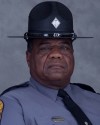
Master Trooper Junius A. Walker
Virginia State Police
End of Watch: Thursday, March 7, 2013
Bio & Incident Details
Age: 63
Tour: 40 years
Badge # 802

Master Trooper J.A. Walker was shot and killed after stopping for what he believed to be a disabled vehicle on southbound I-85, near mile marker 45, in Dinwiddie County at approximately 1:30 pm.

At some point during the encounter, a subject exited the vehicle and opened fire on Trooper Walker as he sat in his patrol car. He was able to return fire and call for assistance. Another trooper responded within two minutes of the radio call and observed the subject shooting into Trooper Walker's patrol car.

The responding trooper exchanged shots with the subject, who fled into the adjacent woods. The man was apprehended a short time later and subsequently charged with capital murder of a police officer, attempted capital murder of a police officer, and several weapons charges.

Trooper Walker succumbed to his wounds at the scene.

Trooper Walker had served with the Virginia State Police for 40 years, and had been assigned to Dinwiddie County for 27 years. He was scheduled to retire one month after his murder. He is survived by his wife and two adult children.
Rest in Peace Bro…We Got The Watch

Day is done, Gone the sun, From the lake, From the hills, From the sky. All is well, Safely rest, God is nigh. 

Tuesday, March 12, 2013

Taking it easy for a bit....


Blogging will be light for a few. This is the view from the back porch of our cabin at the 7F Lodge outside of College Station TX. Some of you may not know but I got married on Saturday the 9th. As Beth and I are both in college and can't take a full honeymoon, so we have this mini-moon. A few days in the great woods with no TV (not a real loss), only cell phones and no internet except the stuff I'm paying for.....waaaaaa.

Wednesday we're going to tour the George HW Bush Library at Texas A&M then topping off the mini-moon with a five course meal at the Messina Hof Vinery. If all goes well we will be back late Wednesday. If we are a bit too plastered then Thursday morning.

As I sit in a rocker with my beautiful new wife, smoking a Romeo y Julieta Romeo Churchill and enjoying a Shiner FM 966 Farmhouse Ale, I have to say life is pretty good right now. Hope yours is the same. Have a great few days till I'm back on!

Saturday, March 9, 2013

A doctor who seems to not a have clue.

On patrol you often receive calls from people who want us to handle something that is no way a matter of law enforcement. A classic example is when a single mother called me because her children refused to do their homework. Sorry lady, I'm not here to raise your kids. Maybe you should have their father's get over here and do their jobs.

Now this is interesting. OK doctor, what do you want us to do here?
Doctor Threatens To Call Cops On Pregnant Woman If She Doesn’t Have Emergency C-Section

TAMPA (CBS Tampa) — A Florida doctor told a pregnant patient that he would call the cops on her if she didn’t have an emergency caesarean section because the baby was a week past his due date.

The Tampa Bay Times reports that Dr. Jerry Yankowitz, chairman of the obstetrics and gynecology at the University of Southern Florida, sent the threatening email to 35-year-old Lisa Epsteen.

“I feel abandoned. There has to be a level of trust between provider and patient, and that has been betrayed,” Epsteen told the Times. “It’s circumstances like this that make women feel like they have no options but to birth their babies on their own — and put themselves in more dangerous circumstances — because they feel bullied.”

The email stated: “I am deeply concerned that you are contributing to a very high probability that your fetus will die or your child will incur brain damage if born alive. At this time, you must come in for delivery. I would hate to move to the most extreme option, which is having law enforcement pick you up at your home and bring you in, but you are leaving the providers of USF/TGH no choice.”

Epsteen reached out to the National Advocates for Pregnant Women after receiving the email. The group sent a letter to the hospital questioning their medical ethics.

“Any attempt to force her to undergo the surgery by means of arrest and detention in the hospital is without legal justification and in defiance of a clear medical consensus that such threats and actions undermine maternal, fetal, and child health,” Lynn Paltrow, executive director of NAPW, said in a statement on the group’s website....

Doctor, you may have forgotten something. A crime is only a crime because a level of government (local, county, state or federal) has passed legislation making that act a crime. This woman may be showing poor judgement in this matter but a cop has no authority to make her into custody and "bring you in". And bring you in to where? I generally bring prisoners into a jail, not a hospital. They are in jail because they have broken a law.

Doctor, use a bit of judgement before you write an empty threat like this.

Thursday, March 7, 2013

This is someone who needs his ass kicked!

Poisons the dog to break into the house.
Richmond K-9 poisoned while officer's home is robbed

RICHMOND, Calif. (KGO) -- A police dog is recovering after he nearly died of poisoning. Richmond police say that canine was intentionally drugged at the same time his partner's guns were stolen from his home.

He's the most seasoned K-9 on the Richmond police force and someone tried to kill him, but what makes this so personal is that police say it was all a set up.

"We do think that this officer was intentionally targeted," said Richomnd Lt. Bisa French.

Richmond police say an officer came home and found his 2-year-old black lab dying after it ate some meat laced with poison. So he rushed his family dog to the vet and left his K-9 partner of nine years in a kennel in the backyard. That's when the burglars struck.

"His house was ransacked and five fire arms were stolen as well as numerous personal possessions," said French.

There's one key detail that really bothers the officers in Richmond.

"Both of the dogs involved in this were locked, secured in kennels. They were of no threat to any burglar. It was obviously an intentional act. They could have broken into the house and committed the crime that they committed without doing anything to those dogs," said Richmond Ofc. Joe Avila.

The police won't say what the dogs ate, but the family's Labrador died from the same poison given to the police dog. The K-9 and his trainer are not being identified, but officer Avila, also a K-9 officer, was with the police dog's trainer at the vet.

"It didn't look good for his partner for quite some time and luckily he got the attention he needed immediately," said Avila.

Avila says the bond between an officer and his dog is strong, but these two are really tight.

"They're just an extremely hard working team. One of the most dedicated teams in our unit," said Avila.

Had the dog been on duty, the poisoning would have been considered a felony assault on an officer. Instead, it's just a misdemeanor "cruelty to animals" charge.

There is now a $10,000 reward for information that leads to an arrest and conviction.

Donations to the Richmond Police K9 Association can be made at the Contra Costa Federal Credit Union, Acct. 5090250

That is low....hopefully this turd is severely arrested!

Security Weekly: Bioterrorism and the Pandemic Potential, March 7, 2013

I was reading this quote, "general hygienic measures -- avoiding mass gatherings, thoroughly washing hands and even wearing masks in specific, high-risk situations.", and recall something the wifie said about how her fellow nursing students reacted to a virus going around the school. "DID YOU WASH YOUR HANDS?! AND DON'T TOUCH ME!"

But a good general look at a more likely threat of mass effect than nuclear or chemical weapons.

By Rebecca Keller

Periodic media reports of bird flu, a new SARS-like virus and a case of drug-resistant tuberculosis have kept the world informed, but they have also contributed to a distorted perception of the true threat such contagions pose. Perhaps the greatest value of the media coverage is the opportunity it provides to discuss the uncertainties and the best ways to prepare for biological threats, both natural and man-made.

It is important to remember that the risk of biological attack is very low and that, partly because viruses can mutate easily, the potential for natural outbreaks is unpredictable. The key is having the right tools in case of an outbreak, epidemic or pandemic, and these include a plan for containment, open channels of communication, scientific research and knowledge sharing. In most cases involving a potential pathogen, the news can appear far worse than the actual threat.

Infectious Disease Propagation

Since the beginning of February there have been occurrences of H5N1 (bird flu) in Cambodia, H1N1 (swine flu) in India and a new, or novel, coronavirus (a member of the same virus family as SARS) in the United Kingdom. In the past week, a man from Nepal traveled through several countries and eventually ended up in the United States, where it was discovered he had a drug-resistant form of tuberculosis, and the Centers for Disease Control and Prevention released a report stating that antibiotic-resistant infections in hospitals are on the rise. In addition, the United States is experiencing a worse-than-normal flu season, bringing more attention to the influenza virus and other infectious diseases.

The potential for a disease to spread is measured by its effective reproduction number, or R-value, a numerical score that indicates whether a disease will propagate or die out. When the disease first occurs and no preventive measures are in place, the reproductive potential of the disease is referred to as R0, the basic reproduction rate. The numerical value is the number of cases a single case can cause on average during its infectious period. An R0 above 1 means the disease will likely spread (many influenza viruses have an R0 between 2 and 3, while measles had an R0 value of between 12 and 18), while an R-value of less than 1 indicates a disease will likely die out. Factors contributing to the spread of the disease include the length of time people are contagious, how mobile they are when they are contagious, how the disease spreads (through the air or bodily fluids) and how susceptible the population is. The initial R0, which assumes no inherent immunity, can be decreased through control measures that bring the value either near or below 1, stopping the further spread of the disease.

Both the coronavirus family and the influenza virus are RNA viruses, meaning they replicate using only RNA (which can be thought of as a single-stranded version of DNA, the more commonly known double helix containing genetic makeup). The rapid RNA replication used by many viruses is very susceptible to mutations, which are simply errors in the replication process. Some mutations can alter the behavior of a virus, including the severity of infection and how the virus is transmitted. The combination of two different strains of a virus, through a process known as antigenic shift, can result in what is essentially a new virus. Influenza, because it infects multiple species, is the hallmark example of this kind of evolution.

Mutations can make the virus unfamiliar to the body's immune system. The lack of established immunity within a population enables a disease to spread more rapidly because the population is less equipped to battle the disease. The trajectory of a mutated virus (or any other infectious disease) can reach three basic levels of magnitude. An outbreak is a small, localized occurrence of a pathogen. An epidemic indicates a more widespread infection that is still regional, while a pandemic indicates that the disease has spread to a global level.

Virologists are able to track mutations by deciphering the genetic sequence of new infections. It is this technology that helped scientists to determine last year that a smattering of respiratory infections discovered in the Middle East was actually a novel coronavirus. And it is possible that through a series of mutations a virus like H5N1 could change in such a way to become easily transmitted between humans.

Lessons Learned

There have been several influenza pandemics throughout history. The 1918 Spanish Flu pandemic is often cited as a worst-case scenario, since it infected between 20 and 40 percent of the world's population, killing roughly 2 percent of those infected. In more recent history, smaller incidents, including an epidemic of the SARS virus in 2003 and what was technically defined as a pandemic of the swine flu (H1N1) in 2009, caused fear of another pandemic like the 1918 occurrence. The spread of these two diseases was contained before reaching catastrophic levels, although the economic impact from fear of the diseases reached beyond the infected areas.

Previous pandemics have underscored the importance of preparation, which is essential to effective disease management. The World Health Organization lays out a set of guidelines for pandemic prevention and containment. The general principles of preparedness include stockpiling vaccines, which is done by both the United States and the European Union (although the possibility exists that the vaccines may not be effective against a new virus). In the event of an outbreak, the guidelines call for developed nations to share vaccines with developing nations. Containment strategies beyond vaccines include quarantine of exposed individuals, limited travel and additional screenings at places where the virus could easily spread, such as airports. Further measures include the closing of businesses, schools and borders.

Individual measures can also be taken to guard against infection. These involve general hygienic measures -- avoiding mass gatherings, thoroughly washing hands and even wearing masks in specific, high-risk situations. However, airborne viruses such as influenza are still the most difficult to contain because of the method of transmission. Diseases like noroviruses, HIV or cholera are more serious but have to be transmitted by blood, other bodily fluids or fecal matter. The threat of a rapid pandemic is thereby slowed because it is easier to identify potential contaminates and either avoid or sterilize them.

Research is another important aspect of overall preparedness. Knowledge gained from studying the viruses and the ready availability of information can be instrumental in tracking diseases. For example, the genomic sequence of the novel coronavirus was made available, helping scientists and doctors in different countries to readily identify the infection in limited cases and implement quarantine procedures as necessary. There have been only 13 documented cases of the novel coronavirus, so much is unknown regarding the disease. Recent cases in the United Kingdom indicate possible human-to-human transmission. Further sharing of information relating to the novel coronavirus can aid in both treatment and containment.

Ongoing research into viruses can also help make future vaccines more efficient against possible mutations, though this type of research is not without controversy. A case in point is research on the H5N1 virus.

H5N1 first appeared in humans in 1997. Of the more than 600 cases that have appeared since then, more than half have resulted in death. However, the virus is not easily transmitted because it must cross from bird to human. Human-to-human transmission of H5N1 is very rare, with only a few suspected incidents in the known history of the disease. While there is an H5N1 vaccine, it is possible that a new variation of the vaccine would be needed were the virus to mutate into a form that was transmittable between humans. Vaccines can take months or even years to develop, but preliminary research on the virus, before an outbreak, can help speed up development.

In December 2011, two separate research labs, one in the United States and one in the Netherlands, sought to publish their research on the H5N1 virus. Over the course of their research, these labs had created mutations in the virus that allowed for airborne transmission between ferrets. These mutations also caused other changes, including a decrease in the virus's lethality and robustness (the ability to survive outside the carrier). Publication of the research was delayed due to concerns that the results could increase the risk of accidental release of the virus by encouraging further research, or that the information could be used by terrorist organizations to conduct a biological attack. Eventually, publication of papers by both labs was allowed.

However, the scientific community imposed a voluntary moratorium in order to allow the community and regulatory bodies to determine the best practices moving forward. This voluntary ban was lifted for much of the world on Jan. 24, 2013. On Feb. 21, the National Institutes of Health in the United States issued proposed guidelines for federally funded labs working with H5N1. Once standards are set, decisions will likely be made on a case-by-case basis to allow research to continue.

Fear of a pandemic resulting from research on H5N1 continues even after the moratorium was lifted. Opponents of the research cite the possibility that the virus will be accidentally released or intentionally used as a bioweapon, since information in scientific publications would be considered readily available.

The Risk-Reward Equation

The risk of an accidental release of H5N1 is similar to that of other infectious pathogens currently being studied. Proper safety standards are key, of course, and experts in the field have had a year to determine the best way to proceed, balancing safety and research benefits. Previous work with the virus was conducted at biosafety level three out of four, which requires researchers wearing respirators and disposable gowns to work in pairs in a negative pressure environment. While many of these labs are part of universities, access is controlled either through keyed entry or even palm scanners. There are roughly 40 labs that submitted to the voluntary ban. Those wishing to resume work after the ban was lifted must comply with guidelines requiring strict national oversight and close communication and collaboration with national authorities. The risk of release either through accident or theft cannot be completely eliminated, but given the established parameters the risk is minimal.

The use of the pathogen as a biological weapon requires an assessment of whether a non-state actor would have the capabilities to isolate the virulent strain, then weaponize and distribute it. Stratfor has long held the position that while terrorist organizations may have rudimentary capabilities regarding biological weapons, the likelihood of a successful attack is very low.

Given that the laboratory version of H5N1 -- or any influenza virus, for that matter -- is a contagious pathogen, there would be two possible modes that a non-state actor would have to instigate an attack. The virus could be refined and then aerosolized and released into a populated area, or an individual could be infected with the virus and sent to freely circulate within a population.

There are severe constraints that make success using either of these methods unlikely. The technology needed to refine and aerosolize a pathogen for a biological attack is beyond the capability of most non-state actors. Even if they were able to develop a weapon, other factors such as wind patterns and humidity can render an attack ineffective. Using a human carrier is a less expensive method, but it requires that the biological agent be a contagion. Additionally, in order to infect the large number of people necessary to start an outbreak, the infected carrier must be mobile while contagious, something that is doubtful with a serious disease like small pox. The carrier also cannot be visibly ill because that would limit the necessary human contact.

As far as continued research is concerned, there is a risk-reward equation to consider. The threat of a terrorist attack using biological weapons is very low. And while it is impossible to predict viral outbreaks, it is important to be able to recognize a new strain of virus that could result in an epidemic or even a pandemic, enabling countries to respond more effectively. All of this hinges on the level of preparedness of developed nations and their ability to rapidly exchange information, conduct research and promote individual awareness of the threat.

Bioterrorism and the Pandemic Potential is republished with permission of Stratfor.

Insite to the man who is only a heart beat away from the Presidency

An interesting interview with Roger Ailes

...One day during the 2012 primary season, Newt Gingrich complained that Fox News’s support for Mitt Romney was responsible for Gingrich’s poor showing. Rick Santorum had made a similar claim when he dropped out of the race. Gingrich and Santorum had been Fox commentators before getting into the race, and Ailes found their complaints self-serving and disloyal. Brian Lewis, his spokesman, asked Ailes for guidance on how to respond to Newt. “Brush him back,” Ailes said. “He’s a sore loser and if he had won he would have been a sore winner.” Lewis nodded.

Ailes was silent for a moment and then added, “Newt’s a prick.”

Lewis then read Ailes a summary of the flap over Democratic operative Hilary Rosen’s comment that Ann Romney, mother of five, had never worked a day in her life. Ailes spun it without hesitation. “Obama’s the one who never worked a day in his life. He never earned a penny that wasn’t public money. How many fund-raisers does he attend every week? How often does he play basketball and golf? I wish I had that kind of time. He’s lazy, but the media won’t report that.” He noticed my arched eyebrows and added, “I didn’t come up with that. Obama said that, to Barbara Walters.” (What Obama said was that he feels a laziness in himself that he attributes to his laid-back upbringing in Hawaii.)

“I like Marco Rubio,” Ailes told a staff meeting of Fox News Latino when talk about the Florida senator being Mitt Romney’s vice-presidential pick was at fever pitch. “But I don’t know about as a vice-presidential candidate. He’s a nice guy, and that role requires kicking the crap out of your opponents.” He paused, thinking about vice presidents he had known. “I have a soft spot for Joe Biden,” he said. “I like him. But he’s dumb as an ashtray.”...

I respectfully disagree. Joe Biden is as smart as an ashtray!

Officer Down


Corporal Terry Johnson
Sebastian County Arkansas Sheriff's Office
End of Watch: Saturday, March 2, 2013
Age: 48
Tour: 16 years

Corporal Terry Johnson succumbed to injuries sustained several hours earlier when he was involved in a vehicle crash while on patrol.

A citizen called 911 to report an overturned patrol car in a ditch along Highway 96 in Lavaca, Arkansas, at approximately 4:20 am. Responding rescue personnel extricated him from the vehicle and transported him to Mercy Hospital. He succumbed to injuries shortly after noon.

Corporal Johnson had served with the Sebastian County Sheriff's Office for 16 years. He is survived by his wife.
Rest in Peace Bro…We Got The Watch

Day is done, Gone the sun, From the lake, From the hills, From the sky. All is well, Safely rest, God is nigh. 

ALGORE must have been scheduled to testify!


Federal government closings: Global warming hearing cancelled - POLITICO.com

The snowquester has claimed yet another casualty: Wednesday's House hearing on global warming.

The House Science, Space and Technology Committee announced early Wednesday that it's postponing its environmental subcommittee's scheduled 10 a.m. hearing on the state of the science behind climate change. As a reason, it cited "weather."

The panel hasn't announced when the hearing will take place.

The session was apparently designed to shore up the knowledge of subcommittee members ahead of expected new carbon regulations from President Barack Obama. As of Tuesday evening, a committee spokesman had insisted the show would go on.

From the start, the idea of holding a climate hearing during a paralyzing D.C. snowstorm seemed ripe for snarky comments.

Don’t buy into global warming science? Here’s your March snowstorm — call up Sen. Jim Inhofe (R-Okla.) and his grandchildren for help with your Al Gore igloo project.

Think the U.S. needs to cut carbon dioxide emissions and adapt in the face of climate change and ever more bizarre weather patterns? Aside from forecasts for fast-falling snow and warm air temperatures, D.C. residents could experience "thundersnow."...

Cool...pardon the pun. Gonna have a good laugh on this one!

Officer Down


Sergeant Gary Morales
St. Lucie County Florida Sheriff's Office
End of Watch: Thursday, February 28, 2013
Age: 35
Tour: 13 years
Badge # 166
Military veteran

Sergeant Gary Morales was shot and killed while making a traffic stop in the 3200 block of Naylor Terrace, near Edwards Road, at approximately 9:30 am.

During the stop a subject exited the stopped vehicle and opened fire, striking Sergeant Morales as he sat his in his patrol car. He was transported to Lawnwood Regional Medical Center and Heart Institute where he was pronounced dead.

The subject was taken into custody.

Sergeant Morales was a U.S. Air Force veteran and had served with the St. Lucie County Sheriff's Office for 13 years. He is survived by his wife and twin children.
Rest in Peace Bro…We Got The Watch

Day is done, Gone the sun, From the lake, From the hills, From the sky. All is well, Safely rest, God is nigh. 

Jacoby Jones helps out NOPD!

Love it when a home town man helps out the city's finest!

Jacoby Jones presents motorcycles to NOPD as Super Bowl thanks from Ravens

NEW ORLEANS - On Wednesday, Baltimore Ravens player and New Orleans native Jacoby Jones presented two motorcycles to the New Orleans Police Department that the team donated as a Super Bowl thank you.

Bright lights are installed on the bike. WWLTV's Katie Moore said, "They light up like Mardi Gras floats!"

Jones said he was happy to be back in his hometown (and eating at his favorite restaurant - his mother's house.)

Thanks Jacoby...and I know you wanna eat at Mom's but don't forget to bring mom to Deannies!


Wednesday, March 6, 2013

Video Cameras To Be Worn By Laurel Police « CBS Baltimore

I believe that if a police action is in the public (e.g. traffic stop, on view patrol investigation) it can be videotaped. That goes both ways.
Video Cameras To Be Worn By Laurel Police


LAUREL, Md. (WJZ) — Videotaping police encounters. It’s a controversial issue when citizens record the cops. Now one Maryland police department is going to start recording citizens right back.

The cameras will be worn on sunglasses and other types of headgear. Many people believe they benefit both the police and the public.

For years, misbehaving cops have been caught on video. But now, police in Laurel will be doing more of their own recording–and the camera isn’t where you think.

We use them for training. I want to use them for search warrant execution,” said Chief Richard McLaughlin, Laurel Police.

“It’s kind of easy to have a he said she said scenario, but when it’s on video, you can’t argue the facts,” McLaughlin said.

Cop cams are the flip side to another issue. In recent years, police have been accused of illegally harassing people who videotaped them.

In 2010, a man who recorded an arrest at the Preakness sued the department after he said officers took his camera and deleted the video.

“Having proof of what happened can be very useful, both to protect officers and to protect citizens,” said attorney David Rocah, ACLU of Md.

Attorney David Rocah from the American Civil Liberties Union thinks cop cams are a good idea because most people act more professional when they know they’re being recorded. He also believes police interactions need more monitoring.

“It is an activity that goes largely undocumented and unregulated and it can have profound consequences for people,” Rocah said.

The videos recorded by the wearable cameras will be stored and monitored by an outside company. Officers can use a cell phone app to watch them.

Police will be required to notify the public that they are being recorded.
I think we have to be careful with the execution of search warrants as an undercover officer may be present but daylight keeps people honest. but cops and citizens.

Good word Laurel PD!

This is so cool...and from California!

From the YouTube video,
The Bay Lights LED installation on the San Francisco Bay Bridge officially came to life on Tuesday night, March 5, 2013. 25,000 individually controlled lights form patterns programmed by video artist Leo Villareal.


No more comment is needed except, "Beth, road trip!"

K9 Down


K9 Maxo
United States Department of Homeland Security - United States Secret Service Uniformed Division
End of Watch: Saturday, January 26, 2013
Breed: Belgian Malinois
Gender: M
Tour: 1 year, 3 months
Cause: Fall
Location: Louisiana

K9 Maxo died when he fell while performing a security sweep of a parking garage on Iberville Street, in New Orleans, Louisiana, during a protective assignment for Vice President Joe Biden.

Maxo was searching for explosives when he fell from the sixth-floor roof of the parking deck to the ground below. He was rushed to an emergency animal hospital where he died.

K9 Maxo had served with the United States Secret Service for 15 months.
Rest in Peace …and enjoy running the green grass of Heaven!

In Memory of all Police Dogs


They handled themselves with beauty & grace
And who could ever forget that beautiful face
Whether at work; or at home; whatever the test
They always worked hard; and did their best

They were real champions; at work or at play
But their lives were cut short; suddenly one day
While working on the job with their partner one day
They put themselves out on a limb; out into harms way

They gave the ultimate sacrifice; any dog can give
They gave up their life; so someone could live
The best of their breed; as his partner and anyone would say
Many hearts are now broken; that he had to prove it this way

Now as the trees are blowing in the gentle breeze
The sun is shining; thru the leaves on the trees
The meadows are green; and the grass grows tall
Off in the distance they can see a waterfall

As they look over the falls; down through the creek
The water flows gently; as a rabbit sneaks a peek
Far up above; in the deep blue sky
They see the birds soar high; as they fly by

They see animals playing; at the bridge by a waterfall
Chasing each other; and just having a ball
They play all day; from morning to night
There's no more rain; just warm sunlight

Off in the distance; they hear trumpets blow
Then all the animals look up; and notice a bright glow
The harps would play and the angels would sing
As they know they've come home; they've earned their wings

We remember that they died; in the line of duty
And are now with the Lord; sharing in heaven's beauty
Off to the meadows now; where they can play and roam free
With an occasional rest stop; under a tall oak tree

No more bad guys to chase; or bullets to take
Just a run through the meadow; down to the lake
A quick splash in the water; then back to the shore
Then it's off to the forest; to go play some more

These special dogs are back home; up in heaven above
They're cradled in God's arm's; and covered with His love
We'll light a candle for all of them; in the dark of night
In loving memory of all; these very special knights

By John Quealy

Another example of what happens when you don't vet an unaccomplished man-child before you elect him President

In case it's not painfully obvious I'm no fan of B Hussein Obama. More accurately I despise the narcissistic arrogant bastard who's only purpose while in the White House is to endure one meeting per two vacations, deliberately apologize to one dictator after another and meticulously plan and execute the decline of United States. Not that he will feel it and nor does he care of the pain it will inflict on the American people.

But now that he's safely reelected there are some coming out to point out his shortcomings. It's not like they haven't been known since he come on the national scene, but as the recent attacks by "objective journalists" on Bob Woodward has shown, leftists protect their own. That being said, it's good to see something like this come out.

One of my consistent points I've made on B Hussein is he was highly educated by had no real accomplishments to show for it. In ten years in the Illinois Senate he cannot point to one issue he pushed significantly and said "I'll make my stand on this." In less than 200 days serving in the US Senate the only thing he's was working on was the 2008 election. And he has never led or managed anything. I've often said he's not qualified to supervise the night shift of a McDonald's because he has no concept of leadership or management. He's never done it.

One of the things you must do as a leader is trust the people around you to handle things. An Army adage is great commander's surround themselves with great staff officers. Not in the case of the B Hussein regime. And this book shows some glaring examples of this.
Barack Obama a 'dithering, controlling, risk-averse' US president

The insider-account of the damaging divisions between the White House and the State Department comes as diplomats around the world wait to see if John Kerry, the new US secretary of state, can persuade Mr Obama to greater engagement on Syria, Egypt and the wider Middle East.

Vali Nasr, a university professor who was seconded in 2009 to work with Richard Holbrooke, Mr Obama's special envoy to Afghanistan and Pakistan, records his profound disillusion at how a "Berlin Wall" of domestic-focused advisers was erected to protect Mr Obama.

"The president had a truly disturbing habit of funnelling major foreign policy decisions through a small cabal of relatively inexperienced White House advisers whose turf was strictly politics," Mr Nasr writes in The Dispensable Nation: America Foreign policy in Retreat.

The book sets out in detail how Mr Holbrooke, appointed with great fanfare in 2009, was systematically cut out of decision making as both he and Hillary Clinton, the former secretary of state, tried to argue the merits of engaging with the Taliban and the dangers caused by the overuse of drones.

"The White House seemed to see an actual benefit in not doing too much," Prof Nasr writes, "The goal was to spare the president the risks that necessarily come with playing the leadership role that America claims to play in this region."

Admiral Mike Mullen, who was chairman of the Joint Chiefs of Staff until September 2011, is quoted lamenting how little support Mrs Clinton received from the White House, even though she remained on good personal terms with Mr Obama.

"They want to control everything," Admiral Mullen is quoted as saying of a White House that Prof Nasr says was "ravenous" in its desire to manage foreign policy, even by the to-be-expected standards of turf wars between diplomatic and national security teams....

Im reminded of the great quote from The Godfather, "Keep your friends close, your enemies even closer.", and that is what B Hussein did in 2009. His biggest adversary in the Democratic Party was Mrs. Bill Clinton and in a brilliant stroke, he neutered her. She took the State Department assignment and then he appointed Czars to handle the real work. So Mrs Bill Clinton was stuck on trips with Lady Gaga. But she was part of the family and couldn't do anything. She wants the support of his supporters in 2016 and that is all that matters to her.

As Lyndon Johnson once said about appointing his political enemies to high positions, "I'd rather have them inside the tent pissing out then outside the tent pissing in!"
..."American foreign policy has been on a four-year autopilot, which I argue has been excessively risk averse and domestically focused. I don't see any clear decision yet to change that," said Mr Nasr in an interview with The Daily Telegraph.

"I wrote this book to problematise the way Obama has approached this whole region, and that it is dangerous to disengage and confuse a low-level foreign policy with success in foreign policy," he concluded.

"My hope is that Kerry will be able to do more, but it is still early. He's definitely trying to create more US engagement, but there has to be a fundamental, strategic decision in the White House to reorientate our approach."

I would not count on that Mr Nasr. John Kerry, who by the way served in Vietnam, is not know for decision making or being bold. But that suits B Hussein fine. He is not finished destroying America as a superpower and fundamentally transforming us into a second rate European nation.

God help us all.

Officer Down


Sergeant Loran "Butch" Baker
Santa Cruz California Police Department
End of Watch: Tuesday, February 26, 2013
Tour: 28 years
Badge # 105

Detective Elizabeth Butler
Santa Cruz California Police Department
End of Watch: Tuesday, February 26, 2013
Age: 38
Tour: 10 years
Badge # 172


Sergeant Loran Baker and Detective Elizabeth Butler were shot and killed as they followed up on a sexual assault investigation at a residence in the 800 block of North Branciforte Avenue at approximately 3:30 pm.


The suspect who was inside the residence, opened the door and immediately shot and fatally wounded both officers. He then stole both of their handguns and fled the scene in their unmarked vehicle.

He was located nearby approximately 30 minutes later and was shot and killed when he opened fire on responding officers. The subject was wearing body armor at the time he was killed by other officers.

Sergeant Baker had served with the Santa Cruz Police Department for 28 years. He is survived by his wife, son, and two daughters. Sergeant Baker's son also serves with the Santa Cruz Police Department.

Detective Butler had served with the Santa Cruz Police Department for 10 years. She is survived by her two children and her boyfriend.
Rest in Peace…We Got The Watch

Day is done, Gone the sun, From the lake, From the hills, From the sky. All is well, Safely rest, God is nigh. 

Security Weekly: Fire: The Overlooked Threat, February 28, 2013

By Scott Stewart
Vice President of Analysis

People sometimes obsess over the potential threat posed by terrorist attacks that use things such as chemical weapons, electromagnetic pulses or dirty bombs. Yet they tend to discount the less exciting but very real threat posed by fire, even though fire kills thousands of people every year. The World Health Organization estimates that 195,000 people die each year from fire, while according to the Global Terrorism Database an average of 7,258 people die annually from terrorism, and that includes deaths in conflict zones such as Afghanistan and Iraq.

There are also instances in which fire is used as a weapon in a terrorist attack. U.S. Ambassador Christopher Stevens and embassy communications officer Sean Smith, the two diplomats killed in the attack on the U.S. office in Benghazi on Sept. 11, 2012, did not die from gunfire or even rocket-propelled grenade strikes but from smoke inhalation. This fact was not lost on the U.S. Department of State Accountability Review Board that investigated the Benghazi attack. In an interview published by Reuters on Feb. 24, former Ambassador Thomas Pickering, the head of the Accountability Review Board, said more attention should be paid to the threat fire poses to diplomatic posts.

Fire can be deadly and destructive. But whether a fire is intentionally set, as in the Benghazi example above, or is the result of an accident or negligence, there are some practical steps individuals can take to protect themselves.

Fire as a Weapon

The use of fire as a weapon, especially against diplomatic facilities, is not new. It was seen in the November 1979 sacking and burning of the U.S. Embassy in Islamabad, Pakistan, and in the April 1988 mob and arson attack against the U.S. Embassy annex in Tegucigalpa, Honduras. In February 2008, the U.S. Embassy in Belgrade, Serbia, was heavily damaged when a mob lit its lobby on fire. More recently, on Sept. 14, 2012, three days after the Benghazi attack, millions of dollars' worth of damage was done at the U.S. Embassy in Tunis, Tunisia, after a mob set outbuildings and vehicles ablaze. Fires set by demonstrators also caused extensive damage to the adjacent American school.

Fire has been used to attack non-diplomatic facilities as well. During the November 2008 Mumbai attacks, the group of attackers holed up in the Taj Mahal Palace Hotel started fires in various parts of the hotel. Anarchists and radical environmental and animal rights activists have also conducted arson attacks against a variety of targets, including banks, department stores, the homes and vehicles of research scientists and even a ski resort.

Fire has also been a weapon frequently mentioned by al Qaeda in the Arabian Peninsula in its longstanding efforts to encourage Muslims living in the West to conduct simple attacks. In an interview featured in the first edition of Inspire magazine, al Qaeda in the Arabian Peninsula leader Nasir al-Wahayshi encouraged would-be jihadists to burn down forests and buildings as a way to strike terror into the hearts of their adversaries. This theme was expanded upon in Inspire magazine's ninth edition, which actually contained a photo tutorial on how to construct timed incendiary devices as well as a fatwa noting that it was religiously permissible to light forest fires as an act of war. It is suspected that Palestinian groups have also been responsible for a number of fires in Israel and the West Bank.

But fire is not a weapon to be used against only buildings and forests -- it can also be used to attack transportation targets. In March 2008, a Uighur separatist attempted to light a fire in the restroom of a China Southern Airlines flight from Urumqi to Beijing using two soft drink cans filled with gasoline that she had smuggled onto the flight. Fire is extremely dangerous aboard aircraft because of the oxygen-rich environment, the sensitive nature of avionic controls, the presence of thousands of gallons of jet fuel and the toxic smoke that results from burning plastics and other materials that make up a plane. Examples of deadly fires aboard aircraft include the September 1998 incident involving Swissair Flight 111, in which all 229 people aboard were killed after the crew was overcome by smoke, and the May 1996 ValuJet crash in the Florida Everglades. In a case similar to the one at hand, a June 1983 fire that started in the restroom of Air Canada Flight 797 resulted in the deaths of 23 of the 46 passengers on board. Autopsies showed that most of them died as a result of smoke inhalation.

Trains have also been targeted for arson. In August 2006, an attack against two German trains failed when the timed incendiary devices placed onboard failed to ignite. A February 2007 attack against a train in India proved far more deadly. Two timed incendiary devices placed aboard the Samjhauta Express killed 68 people and injured another 50. Two additional unignited devices were later found in other cars aboard the train. Had they functioned properly, the death toll would have been much higher.

Incendiary devices are not only quite deadly if properly employed, they also have an advantage over explosive devices in that they can be constructed from readily available materials such as gasoline and kerosene. Even the aluminum powder and iron oxide required to manufacture a more advanced incendiary compound such as thermite can be easily obtained or even produced at home.

Another consideration is that quite often other forms of attacks, such as those using explosive devices, rocket-propelled grenades or even tracer ammunition, can spark fires. Many of the victims of the July 7, 2005, London subway bombings were affected not by the bombs' blast effect but by the smoke from the resultant fires.

Precautions

In addition to the threat of fire as a weapon or resulting from another form of attack, many deadly fires result each year from accidents or negligence. Such fires are deadly enough in the United States and Europe, where there are strict fire codes, but their impact is often magnified in less-developed countries, where fire codes are nonexistent or poorly enforced. For example, while sprinkler systems are mandatory for hotels in the United States, in many parts of the world they are not required.

When I was working on protective details overseas, I learned that it is not uncommon to find items stored in emergency stairwells, leaving them obstructed or sometimes impassable. It is also not unusual to find fire doors that have been chained shut due to the criminal threat.

One thing that can be done to mitigate the threat from fire is to check emergency exits to ensure that they are passable. This applies not only to hotels but also to apartment and even office buildings. In the August 2011 Casino Royale attack in Monterrey, Mexico, the attackers ordered the occupants out of the building before dousing it with gasoline and lighting it on fire, but 52 people died in the incident because they were trapped inside a building by a fire exit that had been chained and locked shut.

While we recommend that travelers staying at hotels overseas should attempt to stay above the second floor for security reasons, we also recommend that they not stay above the sixth floor so that they will be within range of most fire department rescue ladders. We also recommend checking that functional and tested fire extinguishers and fire hoses are present.

In fires, smoke inhalation is a huge problem. According to studies, it is the primary cause of fire deaths and accounts for some 50-80 percent of all deaths from indoor fires. While this is somewhat obvious in confined spaces such as an aircraft fuselage or a subway tunnel, it also applies to buildings. Even buildings that are constructed of concrete or cinderblock and would therefore seem to be resistant to the effects of fire can serve to confine smoke to deadly levels. The U.S. office in Benghazi is a very good recent example. Video of the building after the attack showed that the fire had not badly damaged the building's structure itself; what killed Stevens and Smith was the smoke.

As Stratfor has noted for many years now, smoke hoods are a very important piece of safety equipment and should be part of everyone's personal safety plan. Smoke hoods can be carried in a purse or briefcase and can provide the wearer with 15-30 minutes of safe air to breathe. This period of time can make a world of difference to a person caught in a burning building, subway tunnel or aircraft and attempting to escape to fresh air.

Due to past fire incidents on aircraft, the Federal Aviation Administration mandates that airlines furnish a smoke hood for each crew member on commercial flights. They do not provide smoke hoods for each passenger, although high-end executive aircraft normally do. Commercial passengers who would like access to a smoke hood in the case of a fire need to carry their own. Another useful tool in such situations is a small, high-intensity flashlight that can help you find your way through the smoke or dark once you have donned your smoke hood.

Fire is a potentially deadly weapon, one that should not be forgotten, but steps can be taken to mitigate the danger it poses.

Fire: The Overlooked Threat is republished with permission of Stratfor.

Officer Down


Correctional Officer Eric Williams
United States Department of Justice - Federal Bureau of Prisons
End of Watch: Monday, February 25, 2013
Age: 34
Tour: 1 year, 6 months
Cause: Stabbed
Location: Pennsylvania

Correctional Officer Eric Williams was stabbed to death by an inmate inside USP Canaan in Waymart, Pennsylvania, at approximately 11:30 pm.

The inmate attacked Officer Williams and stabbed him with a shank before being subdued by other officers. Officer Williams was transported to a local hospital where he succumbed to his wounds.

Officer Williams had served with the Federal Bureau of Prisons for 18 months.
Rest in Peace Bro…We Got The Watch

Day is done, Gone the sun, From the lake, From the hills, From the sky. All is well, Safely rest, God is nigh. 

Back online

Hi All

Blogging has been a bit off lately because of a crash. My computer went DOA and I'm just starting to recover. Will have some stuff to catch up on. Hope you're having a better luck with me!

Tuesday, March 5, 2013

Officer Down


Detective Christopher Simpson
Chesterfield Police Department, Missouri
End of Watch: Tuesday, February 12, 2013
Age: 56
Tour: 35 years
Badge # 133
Cause: Heart attack
Incident Date: 2/12/2013

Detective Christopher Simpson died after suffering a medical emergency while participating in physical fitness training at the department's fitness center.

Detective Simpson had served with the Chesterfield Police Department for 25 years and served in law enforcement for a total of 35 years. He had previously served with the Maplewood Police Department and the Berkeley Police Department. He is survived by his wife.
Rest in Peace Bro…We Got The Watch

Day is done, Gone the sun, From the lake, From the hills, From the sky. All is well, Safely rest, God is nigh. 

Geopolitical Weekly: Europe, Unemployment and Instability, March 5, 2013

By George Friedman
Founder and Chairman

The global financial crisis of 2008 has slowly yielded to a global unemployment crisis. This unemployment crisis will, fairly quickly, give way to a political crisis. The crisis involves all three of the major pillars of the global system -- Europe, China and the United States. The level of intensity differs, the political response differs and the relationship to the financial crisis differs. But there is a common element, which is that unemployment is increasingly replacing finance as the central problem of the financial system.

Europe is the focal point of this crisis. Last week Italy held elections, and the party that won the most votes -- with about a quarter of the total -- was a brand-new group called the Five Star Movement that is led by a professional comedian. Two things are of interest about this movement. First, one of its central pillars is the call for defaulting on a part of Italy's debt as the lesser of evils. The second is that Italy, with 11.2 percent unemployment, is far from the worst case of unemployment in the European Union. Nevertheless, Italy is breeding radical parties deeply opposed to the austerity policies currently in place.

The core debate in Europe has been how to solve the sovereign debt crisis and the resulting threat to Europe's banks. The issue was who would bear the burden of stabilizing the system. The argument that won the day, particularly among Europe's elites, was that what Europe needed was austerity, that government spending had to be dramatically restrained so that sovereign debt -- however restructured it might be -- would not default.


One of the consequences of austerity is recession. The economies of many European countries, especially those in the eurozone, are now contracting, since austerity obviously means that less money will be available to purchase goods and services. If the primary goal is to stabilize the financial system, it makes sense. But whether financial stability can remain the primary goal depends on a consensus involving broad sectors of society. When unemployment emerges, that consensus shifts and the focus shifts with it. When unemployment becomes intense, then the entire political system can shift. From my point of view, the Italian election was the first, but expected, tremor.

A Pattern Emerges in Europe


Consider the geography of unemployment. Only four countries in Europe are at or below 6 percent unemployment: the geographically contiguous countries of Germany, Austria, the Netherlands and Luxembourg. The immediate periphery has much higher unemployment; Denmark at 7.4 percent, the United Kingdom at 7.7 percent, France at 10.6 percent and Poland at 10.6 percent. In the far periphery, Italy is at 11.7 percent, Lithuania is at 13.3 percent, Ireland is at 14.7 percent, Portugal is at 17.6 percent, Spain is at 26.2 percent and Greece is at 27 percent.
Germany, the world's fourth-largest economy, is at the center of gravity of Europe. Exports of goods and services are the equivalent of 51 percent of Germany's gross domestic product, and more than half of Germany's exports go to other European countries. Germany sees the European Union's free trade zone as essential for its survival. Without free access to these markets, its exports would contract dramatically and unemployment would soar. The euro is a tool that Germany, with its outsized influence, uses to manage its trade relations -- and this management puts other members of the eurozone at a disadvantage. Countries with relatively low wages ought to have a competitive advantage over German exports. However, many have negative balances of trade. Thus, when the financial crisis hit, their ability to manage was insufficient and led to sovereign debt crises, which in turn further undermined their position via austerity, especially as their membership in the eurozone doesn't allow them to apply their own monetary policies.

This doesn't mean that they were not profligate in their social spending, but the underlying cause of their failure was much more complex. Ultimately it was rooted in the rare case of a free trade zone being built around a massive economy that depended on exports. (Germany is the third-largest exporter in the world, ranking after China and the United States.) The North American Free Trade Agreement is built around a net importer. Britain was a net importer from the Empire. German power unbalances the entire system. Comparing the unemployment rate of the German bloc with that of Southern Europe, it is difficult to imagine these countries are members of the same trade group.

Even France, which has a relatively low unemployment rate, has a more complex story. Unemployment in France is concentrated in two major poles in the north and the south, with the southeast of France being the largest of them. Thus, if you look at the map, the southern tier of Europe has been hit extraordinarily hard with unemployment, and Eastern Europe not quite as badly, but Germany, Austria, the Netherlands and Luxembourg have been left relatively unscathed. How long this will last, given the recession in Germany, is another matter, but the contrast tells us a great deal about the emerging geopolitics of the region.

Portugal, Spain and Greece are in a depression. Their unemployment rate is roughly that of the United States in the midst of the Great Depression. A rule I use is that for each person unemployed, three others are affected, whether spouses, children or whomever. That means that when you hit 25 percent unemployment virtually everyone is affected. At 11 percent unemployment about 44 percent are affected.

It can be argued that the numbers are not quite as bad as they seem since people are working in the informal economy. That may be true, but in Greece, for example, pharmaceuticals are now in short supply since cash for importing goods has dried up. Spain's local governments are about to lay off more employees. These countries have reached a tipping point from which it is difficult to imagine recovering. In the rest of Europe's periphery, the unemployment crisis is intensifying. The precise numbers matter far less than the visible impact of societies that are tottering.

The Political Consequences of High Unemployment

It is important to understand the consequences of this kind of unemployment. There is the long-term unemployment of the underclass. This wave of unemployment has hit middle and upper-middle class workers. Consider an architect I know in Spain who lost his job. Married with children, he has been unemployed for so long that he has plunged into a totally different and unexpected lifestyle. Poverty is hard enough to manage, but when it is also linked to loss of status, the pain is compounded and a politically potent power arises.

The idea that the Germany-mandated austerity regime will be able to survive politically is difficult to imagine. In Italy, with "only" 11.7 percent unemployment, the success of the Five Star Movement represents an inevitable response to the crisis. Until recently, default was the primary fear of Europeans, at least of the financial, political and journalistic elite. They have come a long way toward solving the banking problem. But they have done it by generating a massive social crisis. That social crisis generates a political backlash that will prevent the German strategy from being carried out. For Southern Europe, where the social crisis is settling in for the long term, as well as for Eastern Europe, it is not clear how paying off their debt benefits them. They may be frozen out of the capital markets, but the cost of remaining in it is shared so unequally that the political base in favor of austerity is dissolving.

This is compounded by deepening hostility to Germany. Germany sees itself as virtuous for its frugality. Others see it as rapacious in its aggressive exporting, with the most important export now being unemployment. Which one is right is immaterial. The fact that we are seeing growing differentiation between the German bloc and the rest of Europe is one of the most significant developments since the crisis began.

The growing tension between France and Germany is particularly important. Franco-German relations were not only one of the founding principles of the European Union but one of the reasons the union exists. After the two world wars, it was understood that the peace of Europe depended on unity between France and Germany. The relationship is far from shattered, but it is strained. Germany wants to see the European Central Bank continue its policy of focusing on controlling inflation. This is in Germany's interest. France, with close to 11 percent unemployment, needs the European Central Bank to stimulate the European economy in order to reduce unemployment. This is not an arcane debate. It is a debate over who controls the European Central Bank, what the priorities of Europe are and, ultimately, how Europe can exist with such vast differences in unemployment.

One answer may be that Germany's unemployment rate will surge. That might mitigate anti-German feeling, but it won't solve the problem. Unemployment at the levels many countries are reaching and appear to be remaining at undermines the political power of the governments to pursue policies needed to manage the financial system. The Five Star Movement's argument in favor of default is not coming from a marginal party. The elite may hold the movement in contempt, but it won 25 percent of the vote. And recall that the hero of the Europhiles, Mario Monti, barely won 10 percent of the vote just a year after Europe celebrated him.

Fascism had its roots in Europe in massive economic failures in which the financial elites failed to recognize the political consequences of unemployment. They laughed at parties led by men who had been vagabonds selling post cards on the street and promising economic miracles if only those responsible for the misery of the country were purged. Men and women, plunged from the comfortable life of the petite bourgeoisie, did not laugh, but responded eagerly to that hope. The result was governments who enclosed their economies from the world and managed their performance through directive and manipulation.

This is what happened after World War I. It did not happen after World War II because Europe was occupied. But when we look at the unemployment rates today, the differentials between regions, the fact that there is no promise of improvement and that the middle class is being hurled into the ranks of the dispossessed, we can see the patterns forming.

History does not repeat itself so neatly. Fascism in the 1920s and 1930s sense is dead. But the emergence of new political parties speaking for the unemployed and the newly poor is something that is hard to imagine not occurring. Whether it is the Golden Dawn party in Greece or the Catalan independence movements, the growth of parties wanting to redefine the system that has tilted so far against the middle class is inevitable. Italy was simply, once again, the first to try it out.

It is difficult to see not only how this is contained within countries, but also how another financial crisis can be avoided, since the political will to endure austerity is broken. It is even difficult to see how the free trade zone will survive in the face of the urgent German need to export as much as it can to sustain itself. The divergence between German interests and those of Southern and Eastern Europe has been profound and has increased the more it appeared that a compromise was possible to save the banks. That is because the compromise had the unintended consequence of triggering the very force that would undermine it: unemployment.

It is difficult to imagine a common European policy at this point. There still is one, in a sense, but how a country with 5.2 percent unemployment creates a common economic policy with one that has 11 or 14 or 27 percent unemployment is hard to see. In addition, with unemployment comes lowered demand for goods and less appetite for German exports. How Germany deals with that is also a mystery.

The crisis of unemployment is a political crisis, and that political crisis will undermine all of the institutions Europe has worked so hard to craft. For 17 years Europe thrived, but that was during one of the most prosperous times in history. It has not encountered one of the nightmares of all countries and an old and deep European nightmare: unemployment on a massive scale. The test of Europe is not sovereign debt. It is whether it can avoid old and bad habits rooted in unemployment.

Europe, Unemployment and Instability is republished with permission of Stratfor.