Police Work, Politics and World Affairs, Football and the ongoing search for great Scotch Whiskey!

Friday, February 6, 2015

Security Weekly: Is Terrorism an Existential Threat?

By Scott Stewart

In an interview that aired on CNN on Feb. 1, Fareed Zakaria asked U.S. President Barack Obama to respond to charges that he is downplaying the threat of terrorism to the United States. Obama responded by saying that he believes the threat of terrorism must be kept in the proper perspective and that it is important not to overinflate the importance of terrorist networks. He also said he believes that terrorist groups do not pose an existential threat to the United States or the world order.

As with almost any statement made by a U.S. president, Obama's belief that terrorism does not pose an existential threat to the United States became grist for many pundits. Leaving the politics of this statement aside, however, there are some significant facets to Obama's claim that are worth unpacking and examining in detail.

The Nature of Terrorism

In the interest of full disclosure, I must begin by admitting that I agree with the president's statement that terrorism does not pose an existential threat to the United States. Indeed, Stratfor has long argued this point, even when the U.S. National Intelligence Estimate disagreed with our assessment in July 2007. We stood by our conclusions and continue to note that terrorism must be kept in proper perspective.

The reason we can boldly proclaim that terrorism does not pose an existential threat to the United States has far more to do with the nature of terrorism — what terrorism is — than it does with the intent and capability of the actors who employ terrorism.

An examination of terrorist theory shows us that terrorism is a tactic or a tool used by militant groups unable to wage an insurgency or fight a conventional war. In fact, it is often used as a way to conduct asymmetrical armed conflict against an enemy with a stronger military. This fact is why Marxist, Maoist and Focoist revolutionary theories all consider terrorism — that is, small-scale, politically motivated attacks against vulnerable targets — as the first step in an armed struggle that is to be built upon to form an insurgency.

In many ways al Qaeda and other jihadist groups have also followed a type of Focoist vanguard strategy by using terrorism to shape public opinion through the propaganda of the deed, the concept that a group can better spread its messages through action than through social media posts or YouTube videos. Terrorist attacks raise popular support for their causes while raising doubts about the target government's legitimacy and ability to maintain order.

Aside from being a potential first step of revolutionary violence, terrorism can also be used to supplement insurgency or conventional warfare when employed to keep the enemy off balance and distracted, principally by conducting strikes against vulnerable targets behind the enemy's front lines. The Afghan Taliban employs terrorism in this manner. Defending against such attacks on "soft" targets requires a disproportionate allocation of material and manpower, but such an allocation is absolutely necessary for the security forces to prevent the targeted population from feeling terrorized.

Weaker opponents in a struggle can also use terrorism as a tool of vengeance and retribution. For example, after the United States humiliated Libyan President Moammar Gadhafi's military forces in a series of naval and air confrontations in the Gulf of Sidra during the early 1980s, Gadhafi responded with terrorism and ordered the April 1986 bombing of the La Belle Disco in Berlin — a site frequented by U.S. servicemen. After it became clear that Libya was behind the La Belle bombing, the United States conducted airstrikes against Tripoli and Benghazi. Gadhafi responded with additional terrorist attacks — although they were conducted more carefully and in a manner intended to provide a bit more plausible deniability.

In the 1980s, Hezbollah effectively used terrorism to push U.S. forces out of Lebanon. This example later inspired jihadist groups such as al Qaeda. These groups have employed terrorism in efforts to drive U.S. forces out of the Muslim world so they could weaken and overthrow the governments supported by the United States.

While a diverse range of groups practice terrorism, it is important to understand that terrorism for the sake of terror is not their end goal. Instead, it is merely one step toward their greater purpose, whether that objective is launching a revolution that will bring about "workers' paradise," providing animals the same rights as humans or establishing a global caliphate.

Beyond Terrorism

However, terrorist attacks still pose a threat. Attacks result in death and destruction; and their psychological impact is even wider-felt than the physical damage they cause. To the people involved, this threat is existential, but on their own, terrorist attacks do not pose an existential threat to the governments they are aimed at — even the extremely destructive ones conducted by highly capable, state-sponsored groups. For example, the Provisional Irish Republican Army's 1996 Canary Wharf bombing, the Italian Red Brigade's kidnapping and murder of former Prime Minister Aldo Moro and Hezbollah's 1983 bombing of the U.S. Marine Barracks in Beirut posed no real threat to the U.K., Italian and U.S. governments. While the March 2004 Madrid train bombings did have an impact on the country's parliamentary elections just three days later and doomed the re-election hopes of then-Prime Minister Jose Maria Aznar, the attack did not topple the Spanish system.

The only way a terrorist attack could pose a true existential threat to a country is if an actor were to obtain and use weapons of mass destruction, namely, nuclear devices. However, non-state actors have not yet developed such capabilities, and the consequences of such a strike for a nuclear-capable state actor supplying the weapon would be massive and catastrophic. In this sense, a nuclear weapon would present as much of an existential threat for the supplier as it would for the target.

Indeed, terrorist attacks are not the true threat to governments. Instead, what is most dangerous is what militant groups can accomplish after carrying out terrorist attacks. For example, Viet Cong terrorist attacks in Hanoi did not topple the South Vietnamese government, but the battlefield successes of large-scale Viet Cong insurgent and regular army units and the North Vietnamese Army did. The Mujahideen-e-Khalq's terrorist attacks against the Shah of Iran's government and its foreign backers did not result in the overthrow of his government, but the massive popular uprising that followed spelled its doom. Terrorism can help create the environment for revolution, but terrorist attacks alone cannot overthrow a government.

Events in recent years have also proven this truth. Terrorist attacks from groups such as al Shabaab, al Qaeda in the Arabian Peninsula and al Qaeda in the Islamic Maghreb did not permit them to assume governance of large sections of Somalia, southern Yemen and northern Mali. Rather, the attacks enabled these groups to foment dissent and launch insurgencies. The same holds true for the Islamic State. Employing terrorism did not conquer large swaths of Syria and Iraq for the group, but sophisticated insurgent tactics and mobile maneuver warfare did.

This is where terminology becomes vitally important. Whether we realize it or not, it influences how we perceive things. Advertising executives have understood this truth for many years, taking advantage of it to benefit their clients. This same principle holds true for analyzing threats. The taxonomy used to describe actors impacts how we assess them. We must use the correct taxonomy if we hope to reach an accurate analysis.

Some have criticized Stratfor's decision to refer to jihadists as "militants" rather than "terrorists" after perceiving our selection of the term to be some form of political correctness. However, we purposefully chose the term "militant" because jihadists are more than just terrorists, and they clearly aspire to do more than merely conduct terrorist attacks. They want to progress along the continuum of military force until they can pose a threat to existing governments and create jihadist polities as we have seen in Somalia, Yemen, Mali, Syria and Iraq, among other places. Because of this fact, thinking of such groups as merely terrorist organizations is dangerous. Anyone who does so is at great risk of underestimating the threat they pose. Perhaps this is why the large-scale offensive operation the Islamic State conducted last summer caught so many people by surprise. They thought of the Islamic Sate as mere terrorists rather than militants who employ terrorism as only one of the many forms of violence in their arsenal.

This mistake is also where I find fault with Obama's comments to Zakaria: He repeatedly referred to the Islamic State as a terrorist group. I understand that Obama and the U.S government are trying to use rhetoric in an effort to discredit and insult the group. This attitude is also reflected by their continued use of the name ISIS, an acronym for Islamic State in Syria and al Sham, to refer to the organization rather than using the group's preferred name, the Islamic State. But when one makes the decision to use such terms, one must be careful to ensure that the terms do not influence their analysis.

Certainly, terrorist attacks do not pose an existential threat to the United States or the world order. Terrorism is a fact of modern life and the threat of terrorism must be kept in the proper perspective. The response to terrorist attacks must also be logical and measured. However, large militant groups with thousands of capable fighters — or in the Islamic State's case, tens of thousands of fighters — that not only employ terrorism, but also insurgent tactics and maneuver warfare to capture and then govern large chunks of territory, are another matter. Such organizations pose a threat to the governments in the countries where they operate and in the region around these areas. Ultimately, we must be extremely mindful of the difference between terrorism, insurgency and other forms of militancy.

COPYRIGHT: STRATFOR.COM

Thursday, February 5, 2015

Witness to an execution: And now there are three

Texas has a reputation for a very active death chamber, although per capita we’ve come in second to Georgia (if memory serves) for a year. But the thing closest to high speed rail to the death chamber is murdering a cop. In December 2000, seven felons broke out of prison and committed multiple robberies between Houston, San Antonio and Dallas until the night of December 24, 2000.

On the night of Christmas Eve 2000, the Texas 7 murdered Irvine TX Police Officer Aubrey Hawkins while robbing a sporting goods store. The members of the Texas 7 were caught a month later in Colorado Springs CO, where one of the escapees, Larry Harper, cleansed the human gene pool by taking his own life.

The remaining six were tried, convicted and sentenced to death. The man who’s time is up tonight, Donald Newbury, is the third to make it to the execution chamber. He had a unique defense, I didn’t mean to do it.
Newbury contended he didn't shoot to kill Hawkins and pointed his gun far above the officer's head.
Right. Well, the state has eliminated two of the other members of the Texas 7 in the last few years. The leader, George Rivas, met his end in 2012 and George Rodriguez was executed in 2008. Tonight, Newbury is eliminated.

Again the Thin Blue Line organizes the ride to support the family and Irvine Police officers present at Huntsville. Two members of my Blue Knights Club, Texas Seven, meet up with the rest of the members two hours before the scheduled execution. Well, I got off a bit late and made it to Huntsville with just a little time to spare.

Texas schedules executions at 600pm on Wednesday night because the court order expires at midnight. This allows us time to handle any last minute appeals and stays and still preform the execution. But fortunately we don’t have to deal with this like we did with this like we did last year during the Tamayo execution.
Eight riders from the Thin Blue Line and three from Blue Knights TX -VII
at Huntsville Unit, supporting the Hawkins family during the execution
of Donald Newberry


As we arrive we link up with Huntsville staff and they thank us for coming.

The officers from the Irvine Police Department who have driven four hours to see this murder put down, move from the prison house and take a position in front of the location. And we wait for a bit, but the word comes quick, “Two minutes!”

We jump on our bikes and the work comes to make it loud!


We finish up and the word comes down, “Pronounced DOA at 625.” A few minutes later the DA staff comes out and thanks us again for being there. Then a friend of Officer Hawkins comes up and explains we is a witness to the execution. He tells us how Newbury only me this view for a second then turned his head down. He then told us how the he made a rambling statement, taking no responsibility for his actions. Finally, he thanks us because “it took a few seconds and people were asking ‘what is that sound?’, but we and Newberry heard those bikes!” He again thanks us for coming up and asks if anyone is coming to Sturgis this year.

We’re all humbled by the thought this man would thank us as he had to bury a close friend and just saw one of his murderers sent to his Final Judge. We will try and link up at a reception scheduled at the Holiday Inn and say goodbye.

Four down, three to go: Joseph Garcia, Patrick Murphy Jr. and Randy Halprin, sit on Death Row and wait for an order and a date. And we will be there.

Not about to say I will be at all, no one can say for sure that what the future holds. But thanks to the members of the Thin Blue Line and their actions, we will have someone there to support the families, friends and partners of these fallen officers. We have two more cop killers scheduled in the next three months. I’ll be there.

We try and make it to the reception (I really need to get some coffee in me! :<) ) and get lost on the way there. Most of the Thin Blue Line members have gone off to their homes and I need to get going myself. It’s cold (thankfully not as bad as last year with the salt trucks) but it’s time to get going. After an hour of very cold riding I make it home for dinner with the family and some Jack and Cole to take the chill off the night.

Rest In Peace Officer Hawkins. Hopefully this helps your family and friends and you can rest a little easier. Even if there was no one else, the Thin Blue Line and Blue Knights will be there.

God Rest your Soul.

Security Weekly: Jihadism in 2014: Jihadist Franchises, January 29, 2015


By Scott Stewart

In the first part of this series, we discussed the changes in the global jihadist movement following the split between al Qaeda and the Islamic State. We then examined the current state of the al Qaeda core and, in subsequent parts, the Islamic State and the grassroots jihadist movement.

This week we will focus on regional jihadist franchise groups. Last year all of the franchise groups were al Qaeda affiliates or, at the very least, sympathetic toward al Qaeda. This year, however, the split in the jihadist movement means that rather than assessing them specifically by name, we will need to gauge them by region. This is because many groups now have their own internal splits as well: Both al Qaeda and Islamic State franchise groups exist in many jihadist areas of operation.
The Arabian Peninsula

Al Qaeda in the Arabian Peninsula has long been one of the most robust al Qaeda franchise groups and has perhaps the closest ideological as well as personal ties with the al Qaeda core. It has also assumed a leadership role in the al Qaeda movement's efforts to conduct transnational attacks in the West over the past several years.

The close relationship between the al Qaeda core and al Qaeda in the Arabian Peninsula has been evident during the public spat between al Qaeda and the Islamic State. Al Qaeda in the Arabian Peninsula has urged the Islamic State to reconcile with al Qaeda and groups such as Jabhat al-Nusra in Syria. The group has also published statements critical of the manner by which Islamic State militant leadership declared the establishment of a caliphate. This criticism has unleashed a backlash. The sixth issue of the Islamic State's English-language Dabiq magazine contained not only scathing attacks on the al Qaeda core but also on al Qaeda in the Arabian Peninsula. The magazine specifically focused on al Qaeda in the Arabian Peninsula ideologue Harith al-Nadhari, who is characterized as a misguided windbag whose "expressions trickle with blood, forebode evil, and contain wickedness."

Given this back and forth — plus the egos of the personalities involved — reconciliation between al Qaeda in the Arabian Peninsula and the Islamic State is unlikely in the near future. This conflict also has reportedly led to the establishment of an Islamic State jihadist group in Yemen, presumably rivaling al Qaeda in the Arabian Peninsula in its area of operation. This Islamic State move, however, has limitations. Yemenis have indeed fought alongside the Islamic State on the battlefields in Syria and Iraq in addition to working with other jihadist groups. But it is unlikely that al Qaeda in the Arabian Peninsula would permit the establishment of an Islamic State organization in Yemen that could become a rival for recruits, resources and power. If there is an Islamic State franchise in Yemen, it is very small and is keeping a low profile to evade attention until it is strong enough to challenge the stronger group. Efforts by this Islamic State group, though, might be given a boost if al Qaeda in the Arabian Peninsula is significantly weakened by its fight against al-Houthi militants.

As we noted last year, al Qaeda in the Arabian Peninsula has struggled in Yemen since the group seized large swaths of territory in 2011. This triggered a 2012 government offensive to dislodge the group, in which al Qaeda in the Arabian Peninsula suffered terrible losses. The group continues to be hit by both Yemeni government operations as well as occasional U.S. airstrikes and is clearly weaker than it was in 2011. One sign of the group's weakness was its inability to launch significant attacks against huge crowds aligned with al-Houthi rebels in Sanaa in August and September. It did dispatch two individual suicide bombers, but those attacks were not well executed or very effective.

Recent al-Houthi advances in Yemen, however, do seem to have breathed new life into al Qaeda in the Arabian Peninsula because al-Houthi opponents see the group as a potential ally. The more conservative Yemeni tribes — the Salafists within the state security apparatus and the Salafist wing of the al-Islah party, led by Abdul Majid al-Zindani — all fear the al-Houthi movement. They have aligned with al Qaeda in the Arabian Peninsula, strengthening the group. Since the beginning of December, we have seen al Qaeda in the Arabian Peninsula conduct larger and more effective attacks against al-Houthi forces in Marib, Ibb and Bayda provinces.

However, the United States remains firmly focused on containing the group and, despite the current political crisis in Yemen, continues to apply all the tools in its terrorist toolbox against it. This means that the group will likely continue to struggle in 2015.

Egypt and North Africa

Over the past year, Algerian security forces have continued to apply immense pressure to al Qaeda in the Islamic Maghreb's units in the mountain hideouts of Algeria's north. This pressure has been compounded by Tunisian military campaigns against Ansar al-Sharia (Tunisia) on the Tunisian side of the border.

Jihadist units associated with al Qaeda in the Islamic Maghreb and their rival al Qaeda franchise, known as al-Mourabitoun, continue to range far and wide across the Sahel region seeking to kidnap Westerners, smuggle contraband and engage in occasional terrorist attacks. But these groups remain a chronic rather than an acute threat and are kept in check by regional governments working together with France and the United States.

Libya continues to be a very confusing and muddled place, with a large number of militias operating in the country, several of which are jihadist. Groups such as Ansar al-Sharia (Libya) have demonstrated contacts with al Qaeda while jihadists in Darnah have claimed allegiance to the Islamic State and have even declared wilayahs, or "provinces," in three areas of Libya. We have also seen reports of al Qaeda and Islamic State operatives being dispatched to Libya to work with sympathetic groups there. Jihadists in the country will continue to pose a concern for the foreseeable future. The Jan. 27 suicide bombing and armed assault against the Corinthia Hotel in Tripoli underscores this danger.

In Egypt, Ansar Beit al-Maqdis has splintered. A faction of the group in the Sinai Peninsula has declared allegiance to the Islamic State and now calls itself the Wilayah Sinai, meaning "Sinai Province," while the leadership in the Egyptian mainland remains loyal to al Qaeda. The fact that the Sinai militants are split is not surprising given the groups' past connections to Abu Musab al-Zarqawi, founder of the Islamic State predecessor al Qaeda in Iraq, and the current involvement of Egyptian nationals in the al Qaeda core, most notably Egyptian-born leader Ayman al-Zawahiri.

Iraq and the Levant

Like Libya, the militant landscape in Syria is complex, fluid and difficult to decipher. This ambiguity is seen in the difficulty the United States has experienced in finding so-called "moderate" rebel units to support with weapons and training. In addition to the Islamic State and al Qaeda's Syria affiliate, Jabhat al-Nusra, there is an array of other groups that coexist, and in some cases cooperate, with the Islamic State, Jabhat al-Nusra or both. The Islamic State has also claimed to have rounded up and executed members of ultra-extremist groups that believe Islamic State sectarianism is too lax, and the group has labeled them "Kharijites."

The al Qaeda core has sent a number of senior leaders to Syria in an attempt to influence the jihadist groups there. It also appears that the al Qaeda core has sought to use Syria as a place to regenerate its terrorist capability by dispatching an operational group from the al Qaeda core called the "Khorasan Group" to work in Jabhat al-Nusra areas. U.S. airstrikes in Syria have targeted this group, which the core purportedly tasked with staging attacks abroad from northern Syria.

South Asia

The Afghan Taliban are a nationalist jihadist organization, and they have never demonstrated the intent to conduct transnational terrorist attacks. Even some of the members of the Quetta Shura who have demonstrated more sophisticated terrorist tradecraft, such as the Haqqani network, have not conducted attacks outside the Afghanistan-Pakistan region. Due to the support the Taliban still enjoy from elements within the Pakistani state and society, it is quite likely they will become an even more powerful force in Afghanistan after the U.S. withdrawal, either through some sort of political settlement or by the force of arms.

The unrelated Pakistani Taliban, aka Tehrik-i-Taliban Pakistan, have declared war on the Pakistani government and non-Sunni Muslims in Pakistan. The sectarian bent of some Pakistani Taliban factions has made them susceptible to the Islamic State's ideology, and some factions of the Pakistani Taliban have pledged allegiance to the Islamic State. The Islamic State has declared the Afghan Taliban to be misguided and practicing a flawed form of Sharia; this is likely to increase the tension between the Afghan Taliban and the Pakistani Taliban factions that have pledged allegiance to the Islamic State — some of which are operating in southern Afghanistan.

In September 2014, al Qaeda announced the formation of a new franchise group in South Asia called al Qaeda in the Indian Subcontinent. Jihadists have long been active in the region including India and Bangladesh. Because of this, the announcement of al Qaeda in the Indian Subcontinent's existence seems to be more of a public relations stunt or a branding initiative than an actual increase in operational capability or even effort in the region. Therefore, we do not expect to see a significant increase in the residual threat in the region due to this new group.

Somalia

Al Shabaab has continued its downward spiral over the past year as the group has been racked by infighting and defections. It also suffered a significant loss in September 2014 when its leader, Ahmad Abdi Godane, was killed by a U.S. airstrike. Godane's death gave the group the opportunity to defect to the surging Islamic State, but instead the group's new leadership reiterated its pledge of allegiance to al Qaeda. In all likelihood this decision was probably influenced by its close relationship to, and dependence upon, al Qaeda in the Arabian Peninsula.

While al Shabaab is badly damaged, the group has been down before and has rebounded, so it is quite premature to declare it defunct. It still poses a risk of sophisticated terrorist attacks inside Somalia as well as less sophisticated attacks elsewhere in the region, including Uganda and Kenya.

Nigeria

Boko Haram has grown in size and danger over the past year. In many ways its development has been similar to that of the Islamic State, progressing from merely conducting terrorist attacks and hit-and-run insurgent operations to actually seizing and holding a significant area of territory in northern Nigeria. The group has also conducted occasional raids into northern Cameroon, but so far those forays have been beaten back.

Despite its past dealings with groups such as al Qaeda in the Islamic Maghreb and al Shabaab, Boko Haram appears to have been heavily influenced by the activities of the Islamic State. Like the Islamic State, Boko Haram has conducted large-scale kidnappings of women and brutal massacres of people who oppose it, including other Muslims. Indeed, the group has even declared a caliphate in northern Nigeria.

Boko Haram has not demonstrated the intent or capability to conduct transnational terrorist attacks and, with its heavy focus on its territorial goals, likely has little time or resources to devote to such adventures.

East Asia

The first generation of East Asian jihadists — figures such as Hanbali, Dulmatin and Janjalani — was trained in terrorist tradecraft in al Qaeda camps in Afghanistan. They were then allowed to operate with little or no pressure. Even then, they were able to hit very soft targets, such as nightclubs and restaurants in Bali, but struggled to hit harder targets such as the Australian Embassy in Jakarta.

Counterterrorism operations in the region have removed most of the highly trained terrorist cadres from the region and the capability of East Asian jihadists has been reduced dramatically. East Asian Muslims have also not been a particularly susceptible audience for jihadist recruitment, and despite the large numbers of Muslims there (Indonesia is the largest Muslim country in the world), few East Asian Muslims have adopted the jihadist ideology.

We have seen Indonesian cleric Abu Bakar Bashir pledge allegiance to the Islamic State from prison, but many of his followers, including his own son, have criticized that decision.

Some factions of the Abu Sayyaf group in the Philippines have also joined the Islamic State. But like their brethren in Indonesia, it does not really matter what they call themselves: Their capabilities and the threat they pose are not going to change simply because they call themselves Islamic State.

Caucasus and Central Asia

The leaders of the Caucasus Emirate's Dagestan network have pledged their loyalty to the Islamic State in defiance of the overall Caucasus Emirates leader. This is not surprising given the large number of Chechens and Dagestanis fighting with the Islamic State and the high profile they have taken on. However, one of the important reasons there are so many militants from the Caucasus region in Syria to begin with is the intense pressure they are under from Russian and Chechen security forces at home. The Caucasus Emirates has already been hit hard by the security services, and the split will only serve to make them weaker.

We have also seen a number of reports from Central Asia that countries such as Kazakhstan, Tajikistan and Uzbekistan have serious concerns about the threat of jihadism to their stability after the U.S. withdrawal from Afghanistan. However, as we have discussed elsewhere, we believe that these concerns are valid but certainly not beyond the capacity of the Central Asian governments to handle. Indeed, internal social and economic problems pose a greater threat to stability in the region than returning jihadists.

No Military Solution

As long as the ideology continues to thrive and mutate it will continue to attract adherents. Because of this, we continue to stress that there is no military solution to the threat. The West simply cannot kill its way out of this problem. Nor does the West have any real standing on the ideological battlefield where jihadism must be confronted and defeated. Of course, the West must continue to fight jihadist groups with all the counterterrorism tools it has available — military, intelligence, law enforcement, diplomatic and financial — but such tools can only serve to mitigate the jihadist threat, not eliminate it.

The split between al Qaeda and the Islamic State has divided and weakened the jihadist movement globally. This competition is not only harmful to jihadist groups because of social media arguments or physical battles in places such as Syria, it is also something that can and will be taken advantage of by those seeking to undermine the movement ideologically. As ideologues affiliated with the Islamic State and those opposed to it point out one another's hypocrisy and deviance, they supply ample ammunition to the theological warriors seeking to discredit jihadism.

Geopolitical Weekly: The New Drivers of Europe's Geopolitics, January 27,, 2015

By George Friedman

For the past two weeks, I have focused on the growing fragmentation of Europe. Two weeks ago, the murders in Paris prompted me to write about the fault line between Europe and the Islamic world. Last week, I wrote about the nationalism that is rising in individual European countries after the European Central Bank was forced to allow national banks to participate in quantitative easing so European nations wouldn't be forced to bear the debt of other nations. I am focusing on fragmentation partly because it is happening before our eyes, partly because Stratfor has been forecasting this for a long time and partly because my new book on the fragmentation of Europe — Flashpoints: The Emerging Crisis in Europe — is being released today.

This is the week to speak of the political and social fragmentation within European nations and its impact on Europe as a whole. The coalition of the Radical Left party, known as Syriza, has scored a major victory in Greece. Now the party is forming a ruling coalition and overwhelming the traditional mainstream parties. It is drawing along other left-wing and right-wing parties that are united only in their resistance to the EU's insistence that austerity is the solution to the ongoing economic crisis that began in 2008.

Two Versions of the Same Tale

The story is well known. The financial crisis of 2008, which began as a mortgage default issue in the United States, created a sovereign debt crisis in Europe. Some European countries were unable to make payment on bonds, and this threatened the European banking system. There had to be some sort of state intervention, but there was a fundamental disagreement about what problem had to be solved. Broadly speaking, there were two narratives.

The German version, and the one that became the conventional view in Europe, is that the sovereign debt crisis is the result of irresponsible social policies in Greece, the country with the greatest debt problem. These troublesome policies included early retirement for government workers, excessive unemployment benefits and so on. Politicians had bought votes by squandering resources on social programs the country couldn't afford, did not rigorously collect taxes and failed to promote hard work and industriousness. Therefore, the crisis that was threatening the banking system was rooted in the irresponsibility of the debtors.

Another version, hardly heard in the early days but far more credible today, is that the crisis is the result of Germany's irresponsibility. Germany, the fourth-largest economy in the world, exports the equivalent of about 50 percent of its gross domestic product because German consumers cannot support its oversized industrial output. The result is that Germany survives on an export surge. For Germany, the European Union — with its free-trade zone, the euro and regulations in Brussels — is a means for maintaining exports. The loans German banks made to countries such as Greece after 2009 were designed to maintain demand for its exports. The Germans knew the debts could not be repaid, but they wanted to kick the can down the road and avoid dealing with the fact that their export addiction could not be maintained.

If you accept the German narrative, then the policies that must be followed are the ones that would force Greece to clean up its act. That means continuing to impose austerity on the Greeks. If the Greek narrative is correct, than the problem is with Germany. To end the crisis, Germany would have to curb its appetite for exports and shift Europe's rules on trade, the valuation of the euro and regulation from Brussels while living within its means. This would mean reducing its exports to the free-trade zone that has an industry incapable of competing with Germany's.

The German narrative has been overwhelmingly accepted, and the Greek version has hardly been heard. I describe what happened when austerity was imposed in Flashpoints:

But the impact on Greece of government cuts was far greater than expected. Like many European countries, the Greeks ran many economic activities, including medicine and other essential services, through the state, making physicians and other health care professionals government employees. When cuts were made in public sector pay and employment, it deeply affected the professional and middle classes.

Over the course of several years, unemployment in Greece rose to over 25 percent. This was higher than unemployment in the United States during the Depression. Some said that Greece's black economy was making up the difference and things weren't that bad. That was true to some extent but not nearly as much as people thought, since the black economy was simply an extension of the rest of the economy, and business was bad everywhere. In fact the situation was worse than it appeared to be, since there were many government workers who were still employed but had had their wages cut drastically, many by as much as two-thirds.

The Greek story was repeated in Spain and, to a somewhat lesser extent, in Portugal, southern France and southern Italy. Mediterranean Europe had entered the European Union with the expectation that membership would raise its living standards to the level of northern Europe. The sovereign debt crisis hit them particularly hard because in the free trade zone, this region had found it difficult to develop its economies, as it would have normally. Therefore the first economic crisis devastated them.

Regardless of which version you believe to be true, there is one thing that is certain: Greece was put in an impossible position when it agreed to a debt repayment plan that its economy could not support. These plans plunged it into a depression it still has not recovered from — and the problems have spread to other parts of Europe.

Seeds of Discontent

There was a deep belief in the European Union and beyond that the nations adhering to Europe's rules would, in due course, recover. Europe's mainstream political parties supported the European Union and its policies, and they were elected and re-elected. There was a general feeling that economic dysfunction would pass. But it is 2015 now, the situation has not gotten better and there are growing movements in many countries that are opposed to continuing with austerity. The sense that Europe is shifting was visible in the European Central Bank's decision last week to ease austerity by increasing liquidity in the system. In my view, this is too little too late; although quantitative easing might work for a recession, Southern Europe is in a depression. This is not merely a word. It means that the infrastructure of businesses that are able to utilize the money has been smashed, and therefore, quantitative easing's impact on unemployment will be limited. It takes a generation to recover from a depression. Interestingly, the European Central Bank excluded Greece from the quantitative easing program, saying the country is far too exposed to debt to allow the risk of its central bank lending.

Virtually every European country has developed growing movements that oppose the European Union and its policies. Most of these are on the right of the political spectrum. This means that in addition to their economic grievances, they want to regain control of their borders to limit immigration. Opposition movements have also emerged from the left — Podemos in Spain, for instance, and of course, Syriza in Greece. The left has the same grievances as the right, save for the racial overtones. But what is important is this: Greece has been seen as the outlier, but it is in fact the leading edge of the European crisis. It was the first to face default, the first to impose austerity, the first to experience the brutal weight that resulted and now it is the first to elect a government that pledges to end austerity. Left or right, these parties are threatening Europe's traditional parties, which the middle and lower class see as being complicit with Germany in creating the austerity regime.

Syriza has moderated its position on the European Union, as parties are wont to moderate during an election. But its position is that it will negotiate a new program of Greek debt repayments to its European lenders, one that will relieve the burden on the Greeks. There is reason to believe that it might succeed. The Germans don't care if Greece pulls out of the euro. Germany is, however, terrified that the political movements that are afoot will end or inhibit Europe's free-trade zone. Right-wing parties' goal of limiting the cross-border movement of workers already represents an open demand for an end to the free-trade zone for labor. But Germany, the export addict, needs the free-trade zone badly.

This is one of the points that people miss. They are concerned that countries will withdraw from the euro. As Hungary showed when the forint's decline put its citizens in danger of defaulting on mortgages, a nation-state has the power to protect its citizens from debt if it wishes to do so. The Greeks, inside or outside the eurozone, can also exercise this power. In addition to being unable to repay their debt structurally, they cannot afford to repay it politically. The parties that supported austerity in Greece were crushed. The mainstream parties in other European countries saw what happened in Greece and are aware of the rising force of Euroskepticism in their own countries. The ability of these parties to comply with these burdens is dependent on the voters, and their political base is dissolving. Rational politicians are not dismissing Syriza as an outrider.

The issue then is not the euro. Instead, the first real issue is the effect of structured or unstructured defaults on the European banking system and how the European Central Bank, committed to not making Germany liable for the debts of other countries, will handle that. The second, and more important, issue is now the future of the free-trade zone. Having open borders seemed like a good idea during prosperous times, but the fear of Islamist terrorism and the fear of Italians competing with Bulgarians for scarce jobs make those open borders less and less likely to endure. And if nations can erect walls for people, then why not erect walls for goods to protect their own industries and jobs? In the long run, protectionism hurts the economy, but Europe is dealing with many people who don't have a long run, have fallen from the professional classes and now worry about how they will feed their families.

For Germany, which depends on free access to Europe's markets to help prop up its export-dependent economy, the loss of the euro would be the loss of a tool for managing trade within and outside the eurozone. But the rise of protectionism in Europe would be a calamity. The German economy would stagger without those exports.

From my point of view, the argument about austerity is over. The European Central Bank ended the austerity regime half-heartedly last week, and the Syriza victory sent an earthquake through Europe's political system, although the Eurocratic elite will dismiss it as an outlier. If Europe's defaults — structured or unstructured — surge as a result, the question of the euro becomes an interesting but non-critical issue. What will become the issue, and what is already becoming the issue, is free trade. That is the core of the European concept, and that is the next issue on the agenda as the German narrative loses credibility and the Greek narrative replaces it as the conventional wisdom.

It is not hard to imagine the disaster that would ensue if the United States were to export 50 percent of its GDP, and half of it went to Canada and Mexico. A free-trade zone in which the giant pivot is not a net importer can't work. And that is exactly the situation in Europe. Its pivot is Germany, but rather than serving as the engine of growth by being an importer, it became the world's fourth-largest national economy by exporting half its GDP. That can't possibly be sustainable.

Possible Seismic Changes Ahead

There are then three drivers in Europe now. One is the desire to control borders — nominally to control Islamist terrorists but truthfully to limit the movement of all labor, Muslims included. Second, there is the empowerment of the nation-states in Europe by the European Central Bank, which is making its quantitative easing program run through national banks, which may only buy their own nation's debt. Third, there is the political base, which is dissolving under Europe's feet.

The question about Europe now is not whether it can retain its current form, but how radically that form will change. And the most daunting question is whether Europe, unable to maintain its union, will see a return of nationalism and its possible consequences. As I put it in Flashpoints:
The most important question in the world is whether conflict and war have actually been banished or whether this is merely an interlude, a seductive illusion. Europe is the single most prosperous region in the world. Its collective GDP is greater than that of the United States. It touches Asia, the Middle East and Africa. Another series of wars would change not only Europe, but the entire world.
To even speak of war in Europe would have been preposterous a few years ago, and to many, it is preposterous today. But Ukraine is very much a part of Europe, as was Yugoslavia. Europeans' confidence that all this is behind them, the sense of European exceptionalism, may well be correct. But as Europe's institutions disintegrate, it is not too early to ask what comes next. History rarely provides the answer you expect — and certainly not the answer you hope for.

The New Drivers of Europe's Geopolitics is republished with permission of Stratfor.

Thursday, January 29, 2015

Paranoia or alertness

I have been a long time supporter of concealed carry permits and the fact their issuance in over half the states in the Union has not led to massive carnage, liberals still don't like them. I found this column from a women who appears disturbed someone in line at a book store has a pistol, if not well concealed, not obvious. Some of her comments are interesting.
Why your gun makes me nervous

Lynda Waddington, Exact Change

There’s a mantra quickly repeating in my head: “Please have a badge. Please have a badge. Please have a badge.” It’s a steady heartbeat as I begin a conversation with a shop clerk and reposition myself so I can peer over her shoulder.

I’ve already seen the bulge in his jacket, and it’s clear from the size and shape that he has a holstered gun. Now my eyes are quickly scanning, hoping to find a law enforcement badge clipped to his belt.

Ms Waddington, as a rule if the weapon is concealed, so is the badge. If someone saw a badge without a pistol, they may get the impression we have a cop unarmed. That may lead to errors in judgement. We go on.
I’m in a local bookstore and there’s a sticker near the door asking patrons not to carry weapons on the premises. My two children scurried off the moment we entered, each in search of their own treasures.

And from what I read of Iowa concealed carry law, a book store is not a restricted location, such as a bar or courthouse. Remember, the sign says "asks", not "it is unlawful".
The man with the weapon is as interested with the bookstore patrons as he is with the books on display. I’ve watched him watch others. The way he tracks them is unnerving.

I do not know this man, have no knowledge of his profession, personality or character. I am unaware of his mental state, of why he feels the need to carry a weapon into a bookstore. Frankly, I’m not that interested in his reasons right now. My mind is too busy filtering through the various scenarios that could be taking place. They flick before me like movie trailers, and I watch, casting some aside and mentally marking others for further consideration.

There’s no badge — at least not one I can see. And my inspection of him has not gone unnoticed. I rotate my handbag so that more of it rests toward the front of my body and gently pat it. It’s a tell by women who are packing heat in their purse. Many do it without thinking, a subtle check of hard steel through the leather. My touch is greeted by the bristles on my hairbrush, but no one else knows that.

The man recognizes the gesture, his eyes briefly flicking to my own before he moves past us in the aisle.

I still don’t know him, and the movie trailers increase. He could be the stalker, searching for his mark. He could be contemplating a robbery, or seeking someone to abduct. He could be an off-duty police officer, or even one that is undercover. He could be paranoid, thinking the world is out to get him or knowing someone truly is. He could be a fugitive, a drug dealer, a rapist or the owner of a sporting goods store. He could be a million things.

Thanking the clerk, I walk toward the YA section and my children. We won’t be spending money in this store today. We will be leaving as quickly as I can get them through the door, away from the man.

OK, you have an armed man, got it. And you have no idea what he is, got it. But something you may have and not notice. You may have another person in the store armed and not wanting to be identified for rather bad reasons. You could have a felon, robber, fugitive, gang member in the store, casing it or preparing to rob it. You don't know. A discussion point of a few cops on POLICEONE.COM a few years centered on where you would never go unarmed. A man made the point, "The last place I would go not carrying was a church because that is the place most feel safest and where they are least likely to be armed. I need to be prepared if the wolves comes growing."

BTY, he may be a cop with his B&C (Badge and credentials, aka ID) in his wallet. Just something to add to your rambling list of possibilities.
Although he is unknown to me, I do know Iowa’s lackluster gun laws and that they offer no assurances. While law enforcement officers have been trained with their weapons, civilians handed licenses to carry weapons in Iowa need not have ever touched, much less fired a weapon.

Mandated classes do not teach those who carry to use, nor do they assess accuracy or respect.

I do not know the last time the weapon in the man’s holster was maintained, and state law provides no assurances he knows how to maintain it.

As we leave, I am angered by lawmakers and gun advocates who preach blind trust in the same breath as they extol the dangers of society as their reason for needing to carry a weapon in a bookstore.

Well, I've seen trained law enforcement handle weapons before, and sometimes it not so reassuring! :<) Again Ms. Waddington, see my point of what you have. You are assuming the worse on the man and the best on the situation. I've been a cop for 17 years and yes, when I go to a restaurant or bar off duty (or on for that matter) I generally sit with a wall to my back and a view of the entrance. I generally don't know who is the bad guy just by sight but I need to be ready. You are to be commented for your awareness of you surroundings. The fact is it's not as safe as it used to be and for that reason some law abiding people feel they should be armed. And I hate to share this with you, the criminals are already armed. They don't care about the law, that's why they are called criminals. It's a felony in Texas if a felon is in possession of a firearm. Guess what, they still carry guns. That's why they are called criminals, they don't obey the laws, like the ones saying you can't rob, rape or murder. And I know they are hostile and they don't care about you or me. So yes, I have no issue with the non-criminal element of Iowa, or Texas, having a concealed weapon if they feel they need to. Maybe you should spend some time at a concealed carry class, get some training on firearms and you will see the people in the class or just like you. You wouldn't like to be a Carl Rowan now would you?

While I was reading this post, I saw a link to another by a guest columnist, the owner of an outfitters. And a CHL holder.

I carry a gun every day

Ernie Traugh, guest columnist

Every day I get up and put on a gun. It’s part of my daily routine. No different from making coffee or feeding the dogs before I leave for work.

There is so much misinformation about who that makes me. I’m a “gun nut.” I’m one of “those right-wing Second Amendment people.” I’m the scourge of the earth to some.

Funny how that works.

They don’t even know me but they are worried that I’m what’s wrong with this country, this state and this city I call home. I walk among them and they don’t even know it. I’m the guy in the jeans and Under Armour shirt, the guy in the $200 sport coat and $125 shoes, the guy in Nike pants and a hoodie, and some days I’m the guy with dirty hands from working in the yard, but most of all I’m the guy they never see.

Oh, they acknowledge me sometimes. When I hold the door for them because my parents raised me that way. When I let them go ahead of me in line at the gas station because they seem to be in a hurry. When I pick up their baby’s pacifier in the aisle at the grocery store and hand it back to them because it fell out and they didn’t notice. But they don’t see me. I’m just another guy in the store with things in my hand. But only my left hand. I don’t carry things in my right hand. Not at the store. Not in public.

Good point on keeping your weapon hand free Mr. Traugh.
Why? Because I’m “that guy.” I know that bad things happen. Every day. Everywhere. So I try to be aware. I try to study my surroundings. I expect to not see it coming every time. I expect that evil may show up while I’m shopping or walking through the mall or eating at a restaurant. It doesn’t make me crazy. It doesn’t make me paranoid. It simply makes me aware. Unlike a lot of people that walk by me every day. Looking at their phones, their notes, their purses, or any of the other distractions that plague us. I get it.

I also get that there are wolves. Hungry. Lean. Skilled at their trade. Studying you. Studying me. They like you. They don’t like me. I see them at the mall. I see them at the gas station. I see them right here in this town. Do they know I’m armed? No, they don’t. They know that I’m aware. I look at them. Kill them with kindness. It’s a like a mutual agreement. I see you; you see me. Let’s not kid each other.

It’s weird in a way. The man and his friend in the store that looked all around and even glanced at the camera above us — those guys see me. I’m aware that the door is over there. I’m aware that the coffee pot is within reach and full. He urges me to go first to the counter. “Oh no, you go please. I have all day,” I reply. Now he has to make a purchase. Now he knows I’m polite …. I’m polite and I do not want them behind me in line...

You can finish Mr. Traugh's column at the link and it's a good review of why people have to more aware of their surroundings these days and yes, there are more bad guys out there. So they choose, in accordance with the law, to be armed. And guy what, the crooks are too. so it's only there to make sure you can be prepared in case of the worse situation possible.

I'm glad this went over better than this:

Officer Down


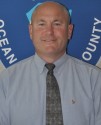
Detective John Scott Stevens
Ocean County New Jersey Prosecutor's Office
End of Watch: Wednesday, January 21, 2015
Age: 44
Tour: 20 years
Badge # 3514
Incident Date: 1/8/2015

Detective John Stevens succumbed to injuries sustained two weeks earlier in a single vehicle on Dover Road in Lacey Township.

He was working on an undercover assignment and was driving an undercover vehicle when it crossed the center and struck a tree. He was transported to Jersey Shore University Medical Center where he remained until passing away on January 21st.

Detective Stevens had served with the Ocean County Prosecutor's Office for 15 years and had previously served with the New Jersey State Attorney's Office for five years. He is survived by his wife and 10-year-old son.
Rest in Peace Bro…We Got The Watch

Nemo me impune lacessit

Day is done, Gone the sun, From the lake, From the hills, From the sky. All is well, Safely rest, God is nigh. 

Wednesday, January 28, 2015

Blow blows his own horn

I've read the columns of Mr. Charles Blow from time to time and with exception, he is convinced the entire country is nothing but a massive action to suppress black people. Now I did find this article eye-catching because he claims outrage when his son was detained by Yale Police at gunpoint during the search for a burglary or robber on campus. I saw "burglary or robbery" because I've read articles listing both crimes.

Library Visit, Then Held at Gunpoint

Charles Blow: At Yale, the Police Detained My Son

Saturday evening, I got a call that no parent wants to get. It was my son calling from college — he’s a third-year student at Yale. He had been accosted by a campus police officer, at gunpoint!

This is how my son remembers it:

He left for the library around 5:45 p.m. to check the status of a book he had requested. The book hadn’t arrived yet, but since he was there he put in a request for some multimedia equipment for a project he was working on.

Then he left to walk back to his dorm room. He says he saw an officer “jogging” toward the entrance of another building across the grounds from the building he’d just left.

Then this:

“I did not pay him any mind, and continued to walk back towards my room. I looked behind me, and noticed that the police officer was following me. He spoke into his shoulder-mounted radio and said, ‘I got him.’

“I faced forward again, presuming that the officer was not talking to me. I then heard him say, ‘Hey, turn around!’ — which I did.

“The officer raised his gun at me, and told me to get on the ground.

“At this point, I stopped looking directly at the officer, and looked down towards the pavement. I dropped to my knees first, with my hands raised, then laid down on my stomach.

“The officer asked me what my name was. I gave him my name.

“The officer asked me what school I went to. I told him Yale University.

“At this point, the officer told me to get up.”

The officer gave his name, then asked my son to “give him a call the next day.”

My son continued:

“I got up slowly, and continued to walk back to my room. I was scared. My legs were shaking slightly. After a few more paces, the officer said, ‘Hey, my man. Can you step off to the side?’ I did.”

The officer asked him to turn around so he could see the back of his jacket. He asked his name again, then, finally, asked to see my son’s ID. My son produced his school ID from his wallet.

The officer asked more questions, and my son answered. All the while the officer was relaying this information to someone over his radio.

My son heard someone on the radio say back to the officer “something to the effect of: ‘Keep him there until we get this sorted out.’ ” The officer told my son that an incident report would be filed, and then he walked away.


A female officer approached. My son recalled, “I told her that an officer had just stopped me and pointed his gun at me, and that I wanted to know what this was all about.” She explained students had called about a burglary suspect who fit my son’s description.

That suspect was apparently later arrested in the area.

When I spoke to my son, he was shaken up. I, however, was fuming.

Now, don’t get me wrong: If indeed my son matched the description of a suspect, I would have had no problem with him being questioned appropriately. School is his community, his home away from home, and he would have appreciated reasonable efforts to keep it safe. The stop is not the problem; the method of the stop is the problem.

Why was a gun drawn first? Why was he not immediately told why he was being detained? Why not ask for ID first?
Ok Mr. Blow, hate to tell you this, but it's not safe out there, with things like that campus rape epidemic going on. What seems to not be in dispute is your son matched the description of a felony suspect. Now what we don't know is your son's size vs the officer's. If your son is a linebacker, 6-4, 260 and the female officer is 5-4, 120 soaking wet is there a size/strength difference? Yes, in case you haven't figured it out. Now, the officer is taking a possibly felon into custody by herself, she has questions to ask. Is this him? Is he armed? Can he take get a swing on me before I can react? Very serious questions. If you want to know why, I'll show you an example of what an unarmed man can do to an armed police officer.

Oh, BTY, that example of the 260 lb male vs the 120 lb female is from my academy days. The DA teaching us use of force make the point the female officer has a legit higher lever of fear for her safety, and possibly life, by the size difference alone.

What if my son had panicked under the stress, having never had a gun pointed at him before, and made what the officer considered a “suspicious” movement? Had I come close to losing him? Triggers cannot be unpulled. Bullets cannot be called back.

My son was unarmed, possessed no plunder, obeyed all instructions, answered all questions, did not attempt to flee or resist in any way.

And he did what the cop told him to, his identity was confirmed, he was released.

...The dean of Yale College and the campus police chief have apologized and promised an internal investigation, and I appreciate that. But the scars cannot be unmade. My son will always carry the memory of the day he left his college library and an officer trained a gun on him.

And if they had let he actual suspect go Mr. Blow, who later assaulted, robbed or murdered your son would you be so understanding?

I love reading the comments section on articles like this because the stupidity and ignorance is astounding. The charge of "racial profiling" is all over the pages. Question, how is it "racial profiling" when the suspect was identified as a young black male? It's stupidity and hypersensitive like this that lead to wanted posters without a full description. Right now the Sheriff of Harris County Texas (basically Houston) is sending out wanted notices on robbers. They have a full description of the cloths (e.g. white t-shirt, blue jeans down to the hips), his getaway vehicle (blue Ford pickup), his approximate age (18-24 YOA) and his sex. What's missing is all that? Come on, you can tell me, can't you? Oh yes, the color of his skin?

A typical morinic comment:

Reform police training now before more innocent blood is shed.

Police in the U.S., campus or municipal, have powers they have not had in earlier generations: weapons are more powerful and varied and the public less concerned with police rules and civil liberties. Judges and governing officials too often permit police and citizens more leeway in firing and carrying weapons. Safety can be ensured without victimizing innocents...


Gee doc, what news powers do I have? Actually in previous generations I could shoot a warning shot, I didn't have to have fear for my "life or serious bodily injury" before using a firearm, I didn't have the fear in the back of my head I could loose my job, liberty and wealth to a street punk.

The most logical comment I saw (there were one 1100 so I can't see them all) was this:

...Charles's reaction of outrage as a dad is perfectly understandable. But readers are given way too little information to conclude that this was a racially characterized incident; or even that the campus cop WASN'T justified in drawing down on someone who matched the burglar's description.

But Charles suggests racism, and to do that legitimately he needs to defend the suggestion with facts.

Excuse me sir, but with all respect, Mr. Blow is a member of the racial industry. He makes his living complaining about any possible racist slight. You are very correct, an investigation should determine if the officer legitimacy used her weapon. From what I've read, yes, she did . But your last sentence is very correct. We need facts and the facts in evidence do not support what Mr. Blow is implying and stating. But that never got in his way before.

UPDATE:

Seems more information is coming out and it's not fitting the race baiting template:

From an email the Yale President sent out:

The Yale Police Department’s response to a crime in progress on Saturday evening has generated substantial and critical conversations on campus and beyond. A Yale police officer detained an African American Yale College student who was in the vicinity of a reported crime, and who closely matched the physical description – including items of clothing – of the suspect. The actual suspect was found and arrested a short distance away. 
Many in our community felt personal pain upon reading accounts of this incident on social media and in the press as they saw national debates about race, policing, and the use of force become a very local and personal story. We share these feelings and recognize that the interest in and reaction to this incident underscore that the work of making our campus and our society more inclusive, just, and safe remains an imperative for all of us. 
Let us be clear: we have great faith in the Yale Police Department and admire the professionalism that its officers display on a daily basis to keep our campus safe. What happened on Cross Campus on Saturday is not a replay of what happened in Ferguson; Staten Island; Cleveland; or so many other places in our time and over time in the United States. The officer, who himself is African American, was responding to a specific description relayed by individuals who had reported a crime in progress…

Strange Mr. Blow, why didn't you mention that the officer who stopped your son was black?  I'm assuming your son told you that in his frantic phone call.  I mean, leftist like you like to say a black person cannot be a racist beause "they don't have the power of a white person" or some other crap.  So again Mr. Blow, was this stereotyping?  And to you, and all the morons on the comment section who went off half cocked screaming racism, you will now apologize to the officer whom you have just defamed?

I think I know the answer to both questions.  But the facts won't stop Mr. Blow from sending out other "not fully accurate" writings in the future.  Hopefully it will make the flying off the handle commenters think before they speak.

Security Weekly: Jihadism in 2014: The Grassroots Threat, January 22, 2015


By Scott Stewart

When I was planning this series I had originally intended to cover jihadist franchise groups before grassroots jihadists, but the events of the past few weeks have compelled me to change the order and discuss grassroots jihadism first.

As noted in the second installment of last year's Gauging the Jihadist Movement series that dealt with terrorist theory, jihadist ideologues such as Abu Musab al-Suri have publicly endorsed the leaderless resistance model since 2004. Al Qaeda in the Arabian Peninsula repeated those calls in 2009, and the al Qaeda core followed suit in 2010. Most recently, the Islamic State made the call in 2014. While these high-profile groups have drawn attention to the threat of lone wolf terrorism, the reality is the grassroots jihadist threat that springs from the leaderless resistance operational model goes back much further.

I personally first encountered grassroots jihadism in December 1990, when the district attorney for Manhattan approached a colleague of mine in the Diplomatic Security Service's New York Field Office seeking assistance in his investigation of the Nov. 5, 1990, assassination of Jewish Defense League founder Meir Kahane. An Egyptian-born American citizen named El Sayyid Nosair killed Kahane, but the FBI declared that the assassination was not terrorism because he acted alone. Therefore, it would not assist the Manhattan district attorney and the New York Police Department with the international aspects of the case. My office was asked to step in to assist, and we investigated many leads in Egypt and throughout the region. Immediately, the Nosair case illustrated the complex nature of grassroots jihadists and the web of relationships they can have.

The FBI would eventually open an investigation into the odd assortment of characters who formed a network to support Nosair's defense efforts. Many of them were tied to the al-Khifa Refugee Center — also known as the Brooklyn Jihad Office.

The Spectrum


While the grassroots jihadist threat is not by any means new, recent events in the United States, France and other parts of Europe highlight the varying types of grassroots jihadists and the different threats they pose based on training and connections to professional terrorist cadres. The spectrum of grassroots jihadists ranges from rank amateurs to trained operatives who work independent of a core or franchise jihadist group.

A good example of an unskilled amateur is Christopher Cornell, who was arrested by the FBI on Jan. 14 in Cincinnati. Cornell was a self-radicalized Muslim with a history of problems who had no training in terrorist tradecraft or even in small-arms and small-unit tactics. While reaching out for contacts within the jihadist realm, Cornell unknowingly established contact with an FBI informant who was able to monitor his intent and efforts toward launching an attack against the U.S. Capitol.

While people frequently poke fun at individuals such as Cornell and liken them to the awkward television character Kramer from the television show Seinfeld, it must be recognized that when they become connected with genuine terrorist trainers or facilitators instead of government informants, they can pose far more danger than they would have on their own. A prime example of this is Richard Reid, who attempted to destroy a Miami-bound American Airlines flight over the Atlantic Ocean with a shoe bomb in December 2001. Many dismissed Reid as a bumbling amateur, but when provided with a professionally manufactured shoe bomb and instructions on how to bypass airport security, he came very close to destroying the aircraft and killing all 197 people aboard.

Another example of amateurs becoming extremely dangerous when directed by professionals is the case of the 1993 World Trade Center bombing. A highly trained al Qaeda operational leader, Abdel Basit (also known as Ramzi Yousef), was able to take a ragtag band of amateurs associated with the Nosair case and work with them to construct and detonate a 1,200-pound truck bomb in the parking garage beneath the North Tower. Indeed, Basit made a career of working with grassroots jihadists in places as diverse as the United States, the Philippines and Pakistan. He was only captured after one of the grassroots jihadists he was training refused to become a suicide bomber and shared his location with Diplomatic Security Service special agents, who then worked with Pakistani authorities to capture him in Islamabad.

There are various degrees of coordination, capability and threat presented by jihadists. In some cases, individuals have contact with a jihadist group that helps in their radicalization process, but they receive little or no operational assistance. A good example of this is Ft. Hood shooter Maj. Nidal Hasan, who corresponded with Anwar al-Awlaki via email, but received no training from al Qaeda in the Arabian Peninsula.

Sometimes, amateurs can have limited or no contact with professional terrorist operatives but receive the training they need via the Internet. The Tsarnaev brothers learned to make the pressure cooker bombs they used in the Boston Marathon attack using instructions from al Qaeda in the Arabian Peninsula's Inspire magazine.

The next step on the continuum is when a grassroots jihadist receives some training from a jihadist group, then returns home to conduct a self-motivated and self-planned attack. The 2009 Little Rock shooting, the Jan. 7 attack in Paris against Charlie Hebdo and the 2009 Najibullah Zazi case are all examples.

While more training often makes an operative more dangerous, this does not exclusively determine the threat level an individual poses. Personal capability and access to soft targets are also important factors. For example, Little Rock shooter Abdulhakim Mujahid Muhammad attended a training camp run by al Qaeda in the Arabian Peninsula in Yemen and received small-arms training there, but he only killed one soldier in his attack. Conversely, Maj. Nidal Hasan, who had received no jihadist training, succeeded in killing 13 and wounding 30 in an attack that became the most deadly on U.S. soil since 9/11.

Other plans where jihadist groups in Pakistan trained grassroots jihadists to carry out attacks in the West have also seen mixed results. For example, while Mohamed Sidique Khan and his confederates were able to kill 52 victims in their July 7, 2005, bombings in London, Faisal Shahzad was not able to build a viable improvised explosive device and instead left a large, conspicuous dud at Times Square in May 2010.

Trends

Al Qaeda has a history of sending operational commanders to organize and mentor grassroots jihadists in conducting major attacks. They used this model for the 1993 World Trade Center bombing, the 1998 East Africa embassy bombings and several other plots. However, counterterrorism measures taken following the 9/11 attacks have made this operational model more difficult to implement, and we have not seen such an attack in several years. Instead, jihadist organizations are increasingly turning to the leaderless resistance model because even using fighters returning from training or combat in the Middle East to carry out attacks has become more difficult.

Since the Islamic State called for jihadists to adopt the leaderless resistance model in September 2014, we have seen an uptick in grassroots activity. A month ago, it appeared as if this would be a short-lived trend, but the events of the past two weeks have shown that the trend is continuing. Interestingly, the Charlie Hebdo attackers were acting out of solidarity with al Qaeda in the Arabian Peninsula while their co-conspirator, Amedy Coulibaly, pledged allegiance to the rival Islamic State. This case not only illustrates the increased frequency of grassroots attacks, but also the complexity of the web of contacts and influences that can motivate them.

Countries are trying to block travel to places such as Syria where grassroots jihadists can receive training and combat experience, but as our grassroots spectrum shows, this will not totally alleviate the problem. Rather, it will only help to limit the small-arms and terrorist tradecraft training provided to grassroots jihadists. If these individuals are not permitted to travel, they may just strike in their home countries ahead of schedule. Such was the case on Sept. 23, when Michael Zehaf-Bibeau killed a soldier at the Canadian War memorial in Ottawa and stormed the Canadian Parliament building after being denied a passport to travel to Syria — presumably to fight with the Islamic State.

Challenges

As designed, the leaderless resistance model employed by grassroots jihadists poses problems for law enforcement and intelligence agencies. Most counterterrorism intelligence efforts have been designed to identify and track people with travel, communication or financial links to known terrorist groups. Such methods have proven effective. Still, one of the many difficulties in identifying grassroots jihadists is that such links may not exist, and the relationship between grassroots operatives and terrorist groups may be ambiguous — and government agencies simply do not fare well in dealing with ambiguous things.

Beyond the lack of links or solid links, another significant problem for security agencies lies in the sheer volume of potential grassroots actors. There are simply too many actors for the authorities to effectively monitor all the time. Monitoring a single individual's actions and communications full time requires an incredible amount of resources, especially if translation is required. When monitoring hundreds or even thousands of individuals, the problem is magnified significantly.

Because of resource constraints, law enforcement and intelligence agencies are forced to conduct quick assessments and prioritize their surveillance efforts. This often means focusing on grassroots operatives who have contact with a terrorist entity and ignoring those who do not because of the severity in the potential threat they pose on the threat spectrum. This prioritization of scarce resources often allows other grassroots operatives assessed as posing a lesser threat to conduct their operational planning without police surveillance detection. Of course, even jihadists who pose a lesser threat can still kill people. Moreover, if they do launch a successful attack, security forces are inevitably criticized for failing to monitor the specific person(s) in the sea of potential attackers.

Furthermore, security agencies can only monitor the suspects they know about. Other people can fly beneath the radar until they strike. It is impossible to identify them all before they attack, and it is impossible to protect every potential target. Despite the best efforts of the security forces, some attacks will eventually slip through and succeed.

As long as jihadists urge radicalized followers to adopt their ideology and conduct attacks using the principles of the leaderless resistance model, grassroots jihadists will continue to pose a broad threat that is difficult to counter. As a result, these kinds of attacks will remain a part of modern life. However, this threat will also continue to be less severe than the one posed by highly trained professional terrorist operatives, meaning that while it is chronic, it is not acute.

COPYRIGHT: STRATFOR.COM

Monday, January 26, 2015

The White Horse vs The Good, the Bad and the Ugly

While channel surfing YouTube I found this interviw with Clint Eastwood, comparing his characters to John Wayne's. How Wayne was a bit black and white while Clint had more than 50 Shades of Gray! :<) Less than two minutes but worth a quick view.

Sunday, January 25, 2015

I have a real bad feeling about this woman......

President B Hussein Obama nominated Loretta Lynch to replace Eric Holder at his Just-Us Department last last year. I would have been shocked if President Pookie would nominate anyone other than a radical leftist and I was not disappointed. Now Bloomberg media has a review of this woman and I have no doubt she will be confirmed, she is that bad. Perfect to succeed the crook Eric Holder.

From the article, I found this interesting.

...In her June 1992 speech at the South Carolina church, she forcefully criticized the nation for the way it addressed poverty and the first Gulf War.

Helping Children

“A society that takes away hundreds of thousands of jobs, and then blames people for not working, is morally lost,” she said. “A society that drops everything to save Kuwait, but barely lifts a finger to help the 13 million American children living in poverty in this country is sending the moral message that those children are not important, that they don’t matter. And if our society tells people that they don’t matter, how can we expect people to act like anything matters?”...

"Barely lifts a finger" to help 13 million children, that is rich. We have spent trillions of dollars in anti-poverty programs, the Great Society, Medicaid, etc since 1964. The cost of the Gulf War, according to the Congressional Research Service, was around 291 billion. This is a fraction of the money just from the federal treasury. This is no way includes church groups, personal initiates, local and state programs. What planet is this woman from?

Then there is this from the same article:
"Though she was the second black U.S. attorney for the Eastern District of New York, Lynch saw her ascension as historic in a 2000 speech: “I took office last summer, and as I did I am sure that a long line of dead white men rolled over in their graves. But at the same time, I am sure that just a stone’s throw away from here, in the African burial ground, a long line of people for whom the law was an instrument of oppression, sat up and smiled.”

Mentioning black people smiling at her accent to the US attorney's office is one thing, but she seems to have a chip on her shoulder about this country's founding. Damned, she will fit right in with B Hussein Obama and Eric Holder.

I would hope the Senate would stop her nomination but Holder has already said he's going nowhere until she is confirmed. So what radical do we get now? No matter which, they are anti-police, race baiters. Al Sharpton and Jesse Jackson will both have a direct line to her office. I just hope the next president had enough in him to purge the DoJ of the Holder and Obama leftovers.

Saturday, January 24, 2015

The most important 50th anniversary of 2015!

I thought it was my 50th birthday last Saturday, but I was very wrong.

I knew it was 1965, but I didn't remember the exact month or date. The Right Honourable Sir Winston Churchill, KG, OM, CH, TD, DL, FRS, RA, Defender of the Realm, past from us on this day 50 years ago.

Here are some of the greatest speeches he is remembered for, this was their finest hour!


or Never was so much owed by so many to so few...

or possibly his most famous, Blood, Toil, Tears, and Sweat!


RIP Sir Winston. A good cigar and scotch will commemorate you today. I know you sending out memo's in heaven to the Powers That Be explaining how to handle their operations!

Thank you Dr Jacobson for the notice at Legal Insurrection.

Thursday, January 22, 2015

Geopolitical Weekly: The European Union, Nationalism and the Crisis of Europe, January 20, 2015

By George Friedman

Last week, I wrote about the crisis of Islamic radicalism and the problem of European nationalism. This week's events give me the opportunity to address the question of European nationalism again, this time from the standpoint of the European Union and the European Central Bank, using a term that only an economist could invent: "quantitative easing."

European media has been flooded for the past week with leaks about the European Central Bank's forthcoming plan to stimulate the faltering European economy by implementing quantitative easing. First carried by Der Spiegel and then picked up by other media, the story has not been denied by anyone at the bank nor any senior European official. We can therefore call this an official leak, because it lets everyone know what is coming before an official announcement is made later in the week.

The plan is an attempt to spur economic activity in Europe by increasing the amount of money available. It calls for governments to increase their borrowing for various projects designed to increase growth and decrease unemployment. Rather than selling the bonds on the open market, a move that would trigger a rise in interest rates, the bonds are sold to the central banks of eurozone member states, which have the ability to print new money. The money is then sent to the treasury. With more money flowing through the system, recessions driven by a lack of capital are relieved. This is why the measure is called quantitative easing.

The United States did this in 2008. In addition to government debt, the Federal Reserve also bought corporate debt. The hyperinflation that some had feared would result from the move never materialized, and the U.S. economy hit a 5 percent growth rate in the third quarter of last year. The Europeans chose not to pursue this route, and as a result, the European economy is, at best, languishing. Now the Europeans will begin such a program — several years after the Americans did — in the hopes of moving things forward again.

The European strategy is vitally different, however. The Federal Reserve printed the money and bought the cash. The European Central Bank will also print the money, but each eurozone country's individual national bank will do the purchasing, and each will be allowed only to buy the debt of its own government. The reason for this decision reveals much about Europe's real crisis, which is not so much economic (although it is certainly economic) as it is political and social — and ultimately cultural and moral.

The recent leaks have made it clear the European Central Bank is implementing quantitative easing in this way because many eurozone governments are unable to pay their sovereign debt. European countries do not want to cover each other's shortfalls, either directly or by exposing the central bank to losses, a move that would make all members liable. In particular, Berlin does not want to be in a position where a series of defaults could cripple Europe as a whole and therefore cripple Germany. This is why the country has resisted quantitative easing, even in the face of depressions in Southern Europe, recessions elsewhere and contractions in demand for German products that have driven German economic growth downward. Berlin preferred those outcomes to the risk of becoming liable for the defaults of other countries.

The major negotiation over this shift took place between European Central Bank head Mario Draghi and German Chancellor Angela Merkel. Draghi realized that if quantitative easing was not done, Europe's economy could crumble. While Merkel is responsible for the fate of Germany, not Europe, she also needs a viable free trade zone in Europe because Germany exports more than 50 percent of its gross domestic product. The country cannot stand to lose free access to Europe's markets because of plunging demand, but it will not underwrite Europe's debt. The two leaders compromised by agreeing to have the central bank print the money and give it to the national banks on a formula that has yet to be determined — and then it is every man for himself.

The European Central Bank is providing the mechanism for stimulating Europe's economy, while the eurozone member states will assume the responsibility for stimulating it — and living with the consequences of failure. It is as if the Federal Reserve were to print money and give some to each state so that New York could buy its own debt and not become exposed to California's casual ways. The strangeness of the plan rests in the strangeness of the European experiment. California and New York share a common fate as part of the United States. While Germany and Greece are both part of the European Union, they do not and will not share a common fate. If they do not share a common fate, then what exactly is the purpose of the European Union? It was never supposed to be about "the pursuit of happiness," but instead about "peace and prosperity." The promise is the not right to pursue, but the right to have. That is a huge difference.

The anthem of the European Union is from Beethoven's 9th Symphony, which contains these lines from the German poet Friedrich Schiller:

Joy, beautiful sparkle of the gods,

Daughter of Elysium,

We enter, fire-drunk,

Heavenly one, your shrine.

Your magic binds again

What custom has strictly parted.

All men become brothers

Where your tender wing lingers.
I wrote in my new book, Flashpoint: The Coming Crisis in Europe, that Europe is about:

"…the joy of joining men into a single brotherhood, overcoming the divisions of mere custom. Then there would be joy. Brotherhood means shared fate. If all that binds you is peace and prosperity, then that must never depart. If some become poor and others rich, if some go to war and others don't, then where is the shared fate?"

A Crisis of Brotherhood

Europe's crisis is not ultimately an economic one. Everyone — families and nations — has economic problems. The crisis is not war, which tragically is as common as poverty. Europe's problem is that it promised a joy beyond custom, a joy yielding brotherhood and abolishing war, and a promise based on prosperity, which is a promise so vast it is beyond anyone's hope to make perpetual. Neither perpetual peace nor perpetual prosperity can be guaranteed, therefore the joy that would overcome custom and bind men in brotherhood is a base of sand.

In the European Central Bank's compromise with Germany, we can see not only the base of sand dissolving but also the brotherhood of Europe falling apart. At the heart of this promise is the idea that Germany will not share the fate of Greece, nor France the fate of Italy. In the end, these are different nations. Their customs can be overcome by the joy uniting them in brotherhood, but absent that joy, absent peace and prosperity, there is nothing binding them together.

The test of the American Republic came when the idea that all men are created equal and endowed by their creator with certain inalienable rights was juxtaposed with the brutishness of slavery. Prior to the revolution, these United States were divided into sovereignties so profound that many states saw themselves as individual nations not bound by the promises of the Declaration of Independence. They believed themselves free to withdraw from the federation if displeased by others' moral interpretations of the Declaration. What ensued was the Civil War, which was fought, as Abraham Lincoln put it, to test whether a nation so constituted could long endure.

That is precisely the question of the European Union. Can an entity, founded on nations of wildly different customs, expectations and economies long endure and share a common fate? In the dry technicalities of quantitative easing, Europe has defined its limits of brotherhood. One of those limits is prosperity. Each nation determines how it will plot its own course, its money distributed by the European Central Bank, but under the rules of the individual states and without any nation being compelled to share the fate of another. The euro is a common currency that has no one's picture on the front because the histories of eurozone countries are so divided that there are no common heroes. The United States knows that Washington, Lincoln, Hamilton, Jackson, Grant and Franklin are our common heritage. There is no such commonality in Europe, and, therefore, no transcendence of the customs of nations.

The strategy proposed for quantitative easing is a great compromise, and it may solve the economic problem. But at its first test, hardly on the order of slavery and the American Civil War, Europe has failed a more profound test: brotherhood, which is men bound together by a joy-transcending culture.

Some will say that I am making too much over a useful political compromise — that the basic institutions of Europe remain, and we therefore have a useful solution to the problem. I think this argument misses the deeper point. Europe never expected to face this crisis because it thought peace and prosperity would endure. It has not because it could not. Quantitative easing is not merely the desire to avoid responsibility for prosperity. There is no unity in Europe over the fears of Romania or Russia about Ukraine. There is no real unity over how to face terrorism in the name of Islam. There is simply no unity.

If Europe can parse the common search for prosperity in this way and calmly consider the secession of one of the brotherhood, Greece, over malfeasance far from terrible on the order of human things, then what is to keep any of the Europe's institutions intact? If you can secede or be expelled from the eurozone, and if you might choose to close your border to Slovaks seeking jobs in Denmark, then perhaps you can choose to close your borders to German products. And if that is possible, then what is the fate of Germany, which relies on its ability to sell its goods anywhere in Europe? After all, it is not only the poor and weak in Europe whose fates are at risk.

In the end, Europe becomes not so much a moral project as it does a convenience, a treaty, which is something a country can leave at will if it is in its interest to do so. When the South seceded from the United States, Northern men were prepared to die to preserve the Union. Is there anyone who would give his life to preserve the European Union, block secession and demand a permanent, shared fate?

I predicted that a decisive moment would arrive in Europe, but the speed at which it did surprised me. I expect that its institutions will survive a while, and I expect that most people will think I am overreacting. That's possible, but I don't think so. Regardless of the technical and political purpose behind the decision to implement quantitative easing, and however defensible it is on its own grounds, the moral lesson is that Europe ultimately is a continent, not an idea.

Last week, the question was why Europe found it so difficult to assimilate immigrants and why it resorted to multiculturalism. The answer was that the customs of the nation-state made it impossible to imagine someone born outside the customs of the nation-state to truly become part of its brotherhood. This week, the question is why the European Central Bank cannot distribute the money it prints but will give it to national banks to manage. The answer is that no country wants to be responsible for the debts of anyone else in Europe. That is not a foolish position, but it makes a union impossible, certainly not one that can overcome custom.

In Flashpoints, I wrote the following:

"We are now living through Europe's test. As all human institutions do, the European Union is going through a time of intense problems, mostly economic for the moment. The European Union was founded for "peace and prosperity." If prosperity disappears, or disappears in some nations, what happens to peace?...That is what this book is about. It is partly about the sense of European exceptionalism, the idea that they have solved the problems of peace and prosperity that the rest of the world has not."

But if Europe is not exceptional and is in trouble, what comes next? The history of Europe should give us no comfort.


The European Union, Nationalism and the Crisis of Europe is republished with permission of Stratfor.