Here is some of the Baltimore Police radio traffic during the riots from last April. And the video of that idiot mayor and prosecutor. Fellow cops, watch yourself.
Wednesday, August 12, 2015


Tuesday, August 11, 2015
Security Weekly: A Tactical Assessment of the Islamic State's Bombing Operations, July 30, 2015
By Scott Stewart
On July 18, the eve of the Eid al-Fitr holiday, the market in Khan Bani Saad in Iraq's Diyala Governorate was packed with people buying items to prepare for family celebrations. Amid the hustle and bustle, a merchant's truck entered the market. The driver announced that because of the holiday he was selling ice at deeply discounted prices. Such an offer was welcome in the scorching heat of an Iraqi summer, and many people crowded around the truck to take advantage of the sale. As the crowd gathered, the truck's driver pushed an innocuous switch and the large quantity of explosives concealed under his cargo of ice erupted into a massive explosion. The fiery blast killed at least 130 people and injured scores of others. The powerful device left a deep crater in the street and severely damaged the surrounding building.
The Khan Bani Saad bombing, claimed by the Islamic State, was a clever, deadly and expertly executed attack against a very soft target. The attackers were able to construct a functional, large device (not as easy as it sounds) and transport it to the attack site, then employ a ruse to lure victims close to it. The attack clearly illustrates the Islamic State's capability to plan and execute suicide vehicle bombings inside its core area of operations. Furthermore, the attack was only one of several suicide vehicle bombings executed by the Islamic State in July. The group has conducted scores of such attacks across their core operational area, from Kobani in Syria to Khan Bani Saad more than 643 kilometers (400 miles) away.
However, it is important to recognize that the bomb making and tactical capabilities of the Islamic State's core organization do not always directly translate to its regional franchises.
The Islamic State's Structure
Rhetoric aside, what most people conceive of as the Islamic State is not really a single hierarchical organization. Like al Qaeda, the group has a three-tiered architecture consisting of the core organization in Iraq and Syria; franchise groups outside of the core area in places such as Libya, Egypt's Sinai Peninsula, Nigeria, Saudi Arabia, Yemen and Afghanistan; and grassroots operatives located worldwide, including Europe and North America. Franchise groups and grassroots operatives may claim allegiance to the core group, and even take on some of its operational philosophies and tactics, but there is a large tactical distinction between fighters and units that are Islamic State-inspired and those that are Islamic State-directed. For example, the group known as the Islamic State's Wilayat al Sudan al Gharbi, or West African province, might use this name, but when you look at the group's tactics, techniques and procedures, there is little evidence that it is anything other than Boko Haram with a new name and a new inspiration.
In other words, there is little to suggest that the Islamic State core is directly involved in the operations of its franchise groups, sending operational planners to support the military and terrorist operations of franchises or even training franchise personnel to plan and execute attacks.
It is important to remember that merely taking on the name of a larger jihadist group and publishing a video on the Internet does not somehow magically imbue a person or organization with the capabilities of that larger group. In fact, some past attempts to launch new jihadist franchise groups have been abject failures. For example, in 2006 al Qaeda announced that a remnant of the Egyptian militant group Gamaah al-Islamiyah was becoming a franchise group in Egypt. The group appears to have been intended as an alternative to the Abu Musab al-Zarqawi-linked Jamaat al-Tawhid and Jihad that established itself in the Sinai Peninsula (this group became the Islamic State's Wilayat Sinai in 2014), but the al Qaeda/Gamaah al-Islamiyah franchise group simply never amounted to much.
Certainly in the case of the Islamic State, there is a big difference between the capabilities of the core group and those of their proclaimed franchise groups. One of the places that difference is perhaps most visible is in the execution of suicide vehicle bomb attacks.
The Bomb
Even more than al Qaeda in Iraq's pre-2010 run, the hallmark of the Islamic State's current military campaign has been the suicide vehicle bomb. The operational planning and bomb making expertise the group has built up over its many years of operations has been important to the success of these efforts.
In many cases, the group constructs vehicle bombs using armored vehicles, such as armored Humvees or armored personnel carriers, or trucks with makeshift armor of metal plating. The armor not only helps protect the vehicle as it approaches a protected site, such as the perimeter of a military base, but it also provides additional shrapnel and, in the case of an armored vehicle, amplifies the explosion akin to a pipe bomb. Using large vehicle bombs to breach defensive perimeters ahead of an infantry assault has become a widely employed tactic. In many cases, multiple large vehicle bombs will be deployed; one breaches the perimeter, then others target command centers and barracks. Often these vehicle bombs contain hundreds or even thousands of pounds of high explosives, and they are deadly against troops that do not have the means to stop them.
In the May 2015 operation to capture Ramadi, it is believed that the Islamic State used some 27 suicide vehicle bombs. The use of numerous powerful vehicle bombs in this manner is the Islamic State's version of what the Americans called "shock and awe" in the 2003 invasion of Iraq, and the tactic has been very effective in demoralizing and routing much larger military forces.
The group deploys scores of large vehicle bombs every month, and up to this point it has had no shortage of suicide operatives or high explosives, though this could change soon if Turkey is serious about its efforts to curtail the Islamic State's supply lines. A large percentage of the Islamic State's suicide bombers are foreign fighters, and many, if not most, of them entered the theater through Turkey. In addition, the Islamic State has been steadily importing tons of ammonium nitrate — much of which went toward constructing massive vehicle bombs — from Turkey.
The Fizzle
Bombings at the franchise level have been neither as widespread nor as effective. For example, Wilayat Najd, the Saudi Islamic State franchise, began a bombing campaign directed against Shiite mosques in May. The first attack targeted a mosque in al-Qadeeh on May 20. It caught the Shiites off guard, and the bomber was able to enter the mosque before detonating his device, killing 21. The Shiites responded by making preparations for the following week, and security guards outside a mosque in Dammam were able to keep a bomber outside. The suicide attack resulted in the deaths of only three victims. On July 16, another Wilayat Najd attack was thwarted when a suicide operative detonated his device when his vehicle was stopped at a security checkpoint on the outskirts of Riyadh. The incident was initially reported as a car bomb attack, but a review of photos and videos from the scene quickly revealed that it was a case of a bomb in the car rather than a car bomb. Two police officers were wounded in the explosion, but the bomber was the only fatality.
Another Islamic State franchise group that has struggled in its bombing operations is Wilayat Sanaa in Yemen. The Yemeni group's operations have followed a similar trajectory to those conducted by Wilayat Najd: an initial surprise attack that was successful, followed by additional attacks thwarted by increased security. On March 20, Wilayat Sanaa dispatched four suicide bombers to target two mosques in Sanaa that were frequented by Houthi members. There is really no such thing as a Shiite mosque in Yemen, since the Zaidi Houthis and Sunnis often attend the same mosques. That initial attack claimed some 140 victims.
After that first surprise attack, security increased at mosques in Sanaa, making it much harder to walk into a mosque with a suicide belt or vest on. In response to this security, Wilayat Sanaa adjusted its tactics and started planning more complex attacks. They first attempted to use concealed explosives. On May 22, the group sent a suicide bomber into a mosque with explosives hidden inside his sandals. Once detonated, the bomb resulted in 13 injuries but no deaths because of the small amount of explosives involved. Security officers at a mosque thwarted another bombing on May 29 when they detained another Islamic State suicide bomber with explosives in his shoes.
With concealment not working, the group began using vehicle bombs in hopes of overcoming increased external security at mosques by detonating larger devices outside of the buildings. Wilayat Sanaa has dispatched several vehicle bombs. The group's vehicle bomb campaign began June 17, when four vehicle bombs were dispatched against the Houthis' political headquarters and two mosques, killing 31 people. A June 20 bombing attempt against a mosque killed one. On June 29, a vehicle bomb attack against a Houthi funeral killed 28.
But since the funeral attack, Wilayat Sanaa attacks have been less successful. A vehicle bombing July 2 left two dead, another July 7 left one dead, and a vehicle bombing July 19 killed only five. Not to trivialize the casualties in these attacks, but these death tolls are very low for vehicle bomb attacks. In many cases, the attacker likely would have killed more people had he used a firearm.
As I was working on this analysis, Wilayat Sinai attacked a mosque in Sanaa on July 28 with a bomb that killed only three people. Photographs of the scene indicate that the device was small, again more of a bomb in a car than a car bomb. The photographs also reveal that the explosives were in direct contact with the street rather than inside the car, so it was actually more of a bomb under the car. It appears that the attack was conducted using a small explosive device concealed in a bag or box that was placed under the car next to the curb. I have not been able to obtain such detailed photos of the other July non-suicide attacks in Sanaa, but because of the low death tolls, I wonder if they were not also conducted using small satchel bombs rather than dramatically underpowered vehicle bombs.
The reasons for the low death tolls in Wilayat Sanaa bombings are twofold. First, the devices are underpowered for vehicle bombs, rarely creating much of a crater or causing structural damage to buildings near the site of the blast. They tend to be more like smaller bombs hidden in cars than vehicle bombs (which attackers need a vehicle to transport). In most cases, the devices cause only limited structural damage to the vehicle used to camouflage them; small devices can still cause major fire damage to a vehicle, but that is not the same thing as blast damage. Larger vehicle bombs heavily damage the vehicles they are in, often scattering parts of the bomb vehicle over dozens if not hundreds of meters.
Second, these smaller devices usually have not been deployed in a manner that would enable them to cause maximum damage, even though they have been deployed against soft targets like mosques. The June 29 attack on a funeral was Wilayat Sanaa's most effective bombing to date. They achieved a higher overall death toll in the June 17 attack, but they needed four vehicle bombs to do so, and frankly averaging less than eight deaths per vehicle bomb is hardly impressive terrorist targeting.
Constructing and deploying a vehicle bomb requires a great amount of resources, and a terrorism planner would want to maximize the return on the investment. That is why we are concluding that Wilayat Sanaa is not nearly as effective as the Islamic State core, or even al Qaeda in the Arabian Peninsula, in terms of bombing tradecraft. In recent months, al Qaeda in the Arabian Peninsula has deployed a number of substantial suicide vehicle bombs against Houthi forces and forces loyal to former Yemeni President Ali Abdullah Saleh — far harder targets than those selected by Wilayat Sanaa.
It is unclear if the Wilayat Sanaa devices have been underpowered because of problems in obtaining explosives or because of the inexperience of the group's bomb maker or makers. It is possible that Wilayat Sanaa and Wilayat Najd operational planners will receive outside training and assistance or will be able to improve their terrorism tradecraft through trial and error. If they receive training, we would expect to see a dramatic operational leap in capability; if they learn through trial and error, we might see a steady learning curve if the group is able to learn from past mistakes and then improve its operations accordingly. Either way, it will be important to continue to study the tactical proficiency of these groups in an effort to gauge the threat they pose.
COPYRIGHT: STRATFOR.COM
K9 Down

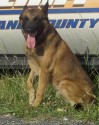
K9 MakoRest in Peace …till our next roll call at the Rainbow Bridge!
Cleveland County Sheriff's Office, North Carolina
End of Watch: Thursday, February 19, 2015
Age: 9
Gender: M
Tour: 7 years
Incident Date: 11/19/2014
K9 Mako died of injuries sustained three months earlier when he was attacked by another dog while assisting members of the agency's Vice / Narcotics Division serve a warrant near Shelby, North Carolina.
As Mako and his handler searched the outside of the home a dog that lived on the property attacked him. Mako was immediately taken to emergency animal hospital and underwent surgery. He never fully recovered and died on February 19th, 2015, as a result of the injuries.
K9 Mako had served with the Cleveland County Sheriff's Office for seven years.

In Memory of all Police Dogs
They handled themselves with beauty & grace
And who could ever forget that beautiful face
Whether at work; or at home; whatever the test
They always worked hard; and did their best
They were real champions; at work or at play
But their lives were cut short; suddenly one day
While working on the job with their partner one day
They put themselves out on a limb; out into harms way
They gave the ultimate sacrifice; any dog can give
They gave up their life; so someone could live
The best of their breed; as his partner and anyone would say
Many hearts are now broken; that he had to prove it this way
Now as the trees are blowing in the gentle breeze
The sun is shining; thru the leaves on the trees
The meadows are green; and the grass grows tall
Off in the distance they can see a waterfall
As they look over the falls; down through the creek
The water flows gently; as a rabbit sneaks a peek
Far up above; in the deep blue sky
They see the birds soar high; as they fly by
They see animals playing; at the bridge by a waterfall
Chasing each other; and just having a ball
They play all day; from morning to night
There's no more rain; just warm sunlight
Off in the distance; they hear trumpets blow
Then all the animals look up; and notice a bright glow
The harps would play and the angels would sing
As they know they've come home; they've earned their wings
We remember that they died; in the line of duty
And are now with the Lord; sharing in heaven's beauty
Off to the meadows now; where they can play and roam free
With an occasional rest stop; under a tall oak tree
No more bad guys to chase; or bullets to take
Just a run through the meadow; down to the lake
A quick splash in the water; then back to the shore
Then it's off to the forest; to go play some more
These special dogs are back home; up in heaven above
They're cradled in God's arm's; and covered with His love
We'll light a candle for all of them; in the dark of night
In loving memory of all; these very special knights
By John Quealy
Officer Down

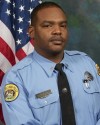
Police Officer Daryle HollowayRest in Peace Bro…We Got The Watch
New Orleans Louisiana Police Department
End of Watch: Saturday, June 20, 2015
Age: 46
Tour: 22 years
Badge # 1708
Police Officer Daryle Holloway was shot and killed while transporting a prisoner to the Central Lockup at approximately 8:00 am.
The prisoner had been arrested by a previous shift for aggravated assault for firing one shot at a woman with a .40 caliber handgun. Responding officers located a .38 caliber handgun owned by the woman and one .40 caliber shell casing, but did not locate the .40 caliber handgun. The subject was arrested and transported to the police station for questioning.
Officer Holloway was requested to transport the subject to Central Lockup following the interviews. The subject had been handcuffed behind his back but managed to maneuver his arms to the front of his body. He then produced the .40 caliber handgun he had kept concealed on his person, crawled through the vehicle's partition, and began struggling with Officer Holloway. Officer Holloway was shot during the ensuing struggle, causing his vehicle to crash into a utility pole near the intersection of North Claiborne Avenue and Elysian Fields Avenue.
The subject fled on foot after the vehicle crashed and was captured the next day after a brief chase that ended near the intersection of Reynes Street and St. Claude Avenue. He was arrested the following morning and charged with first degree murder of a police officer, aggravated escape, and weapons charges.
Officer Holloway had served with the New Orleans Police Department for 22 years and was assigned to the 5th District.
Nemo me impune lacessit
Day is done, Gone the sun, From the lake, From the hills, From the sky. All is well, Safely rest, God is nigh.

Geopolitical Weekly: Quantum Geopolitics, July 28, 2015
By Reva Bhalla
Forecasting the shape the world will take in several years or decades is an audacious undertaking. There are no images to observe or precise data points to anchor us. We can only create a picture, and a fuzzy one at best. This is, after all, our basic human empirical instinct: to draw effortlessly from the vivid imagery of our present world and past experiences while we squint and hesitate before faint, blobby images of the future.
In the world of intelligence and military planning, it is far less taxing to base speculations on the familiar — to simulate a war game that pivots on an Iranian nuclear threat, a seemingly unstoppable jihadist force like the Islamic State and the military adventurism of Russia in Eastern Europe — than it is to imagine a world in which Russia is weak and internally fragmented, the jihadist menace is contained by its own fractiousness and Iran is allied with the United States against a rising Sunni threat. In the business world, it is much simpler to base trades and strategies on a familiar environment of low oil prices and high interest rates. Strategists in many domains are guilty of taking excessive comfort in the present and extrapolating present-day assumptions to describe the future, only to find themselves unequipped when the next big crisis hits. As a U.S. four-star general once told me in frustration, "We always have the wrong maps and the wrong languages when we go to war."
So how do we break out of this mental trap and develop the confidence to sketch out plausible sets and sequences of unknowns? The four-dimensional world of quantum mechanics may offer some guidance or, at the very least, a philosophical approach to strategic forecasting. Brilliant physicists such as Albert Einstein, Louis de Broglie and Erwin Schrodinger have obsessed over the complex relationship between space and time. The debate persists among scientists over how atomic and subatomic particles behave in different dimensions, but there are certain underlying principles in the collection of quantum theories that should resonate with anyone endowed with the responsibility of forecasting world events.
Quantum Principles and Political Entities
Einstein described space-time as a smooth fabric distorted by objects in the universe. For him, the separation between past, present and future was merely a "stubbornly persistent illusion." Building on Einstein's ideas, celebrated U.S. physicist and Nobel Laureate Richard Feynman, some of whose best ideas came from drawings he scribbled on cocktail napkins in bars and strip clubs, focused on how a particle can travel in waves from point A to point B along a number of potential paths, each with a certain probability amplitude. In other words, a particle will not travel in linear fashion; it will go up, down and around in space, skirting other particle paths and colliding into others, sometimes reinforcing or canceling out another completely. According to Feynman's theory, the sum of all the amplitudes of the different paths would give you the "sum over histories" — the path that the particle actually follows in the end.
The behavior of communities, proto-states and nation-states (at least on our humble and familiar planet Earth) arguably follows a similar path. We have seen statelets, countries and empires rise and fall in waves along varied frequencies. The crest of one amplitude could intersect with the trough of another, resulting in the latter's destruction. One particle path can reinforce another, creating vast trading empires. Latin America, where geopolitical shifts can develop at a tortoise's pace in the modern era, tends to emit long radio-like waves compared to the gamma-like waves of what we know today as a highly volatile Middle East.
Applied Quantum Theories: Turkey
If we apply the nation-state as an organizing principle for the modern era (recognizing the prevalence of artificial boundaries and the existence of both nations without states and states without nations), the possibilities of a state's path are seemingly endless. However, a probability of a state's path can be constructed to sketch out a picture of the future.
The first step is to identify certain constants that have shaped a country's behavior over time, regardless of personality or ideology (an imperative to gain sea access, a mountainous landscape that requires a large amount of capital to transport goods from point A to point B, a fertile landscape that attracts as much competition as it provides wealth). The country's history serves as a laboratory for testing how the state has pursued those imperatives and what circumstances have charted its path. What conditions were in place for the state to fail, to prosper, to avoid getting entangled in the collisions of bigger states, to live in relative peace? We take the known and perceived facts of the past, we enrich them with anecdotes from literature, poetry and song, and we paint a colorful image of the present textured by its past. Then comes the hard part: having the guts to stare into the future with enough discipline to see the constraints and enough imagination to see the possibilities. In this practice, extrapolation is deadly, and an unhealthy obsession with current intelligence can be blinding.
Take Turkey, for example. For years, we have heard political elites in the United States, Eastern Europe and the Middle East lament a Turkey obsessed with Islamism and unwilling or incapable of matching words with action in dealing with regional competitors like Iran and Russia. Turkey was in many ways overlooked as a regional player, too consumed by its domestic troubles and too ideologically predisposed toward Islamist groups to be considered useful to the West. But Turkey's resurgence would not follow a linear path. There have been ripples and turns along the way, distorting the perception of a country whose regional role is, in the end, profoundly shaped by its position as a land bridge between Europe and Asia and the gatekeeper between the Black and Mediterranean seas.
How, then, can we explain a week's worth of events in which Turkey launched airstrikes at Islamic State forces and Kurdish rebels while preparing to extend a buffer zone into northern Syria — actions that mark a sharp departure from the timid Turkey to which the world had grown accustomed? We must look at the distant past, when Alexander the Great passed through the Cilician Gates to claim a natural harbor on the eastern Mediterranean (the eponymous city of Alexandretta, contemporarily known as Iskenderun) and the ancient city of Antioch (Antakya) as an opening into the fertile Orontes River Valley and onward to Mesopotamia. We move from the point when Seljuk Turks conquered Aleppo in the 11th century all the way up to the crumbling of the Ottoman Empire in the wake of World War I, when a fledgling Turkish republic used all the diplomatic might it could muster to retake the strategic territories of Antioch and Alexandretta, which today constitute Hatay province outlining the Syrian-Turkish border.
We must simultaneously look at the present. A contemporary map of the Syria-Turkey border looks quite odd, with the nub of Hatay province anchored to the Gulf of Iskenderun but looking as though it should extend eastward toward Aleppo, the historical trading hub of the northern Levant, and onward through Kurdish lands to northern Iraq, where the oil riches of Kirkuk lie in what was formerly the Ottoman province of Mosul.
We then take a long look out into the future. Turkey's interest in northern Syria and northern Iraq is not an abstraction triggered by a group of religious fanatics calling themselves the Islamic State; it is the bypass, intersection and reinforcement of multiple geopolitical wavelengths creating an invisible force behind Ankara to re-extend Turkey's formal and informal boundaries beyond Anatolia. To understand just how far Turkey extends and at what point it inevitably contracts again, we must examine the intersecting wavelengths emanating from Baghdad, Damascus, Moscow, Washington, Arbil and Riyadh. As long as Syria is engulfed in civil war, its wavelength will be too weak to interfere with Turkey's ambitions for northern Syria, but a rehabilitated Iran could interfere through Kurdistan and block Turkey farther to the east. The United States, intent on reducing its burdens in the Middle East and balancing against Russia, will reinforce the Turkish wavelength up to a point, while higher frequencies from other Sunni players such as Saudi Arabia will run interference against Turkey in Mesopotamia and the Levant. While Russia still has the capacity to project military power outward, Turkey's moves in Europe and the Caucasus will skirt around Russia for some time, but that dynamic will shift once Russia becomes consumed with its own domestic fissures and Turkey has more room to extend through the Black Sea region.
Thinking Beyond Limitations
This sketch of Turkey is by no means static or deterministic. It is, simply but critically, the product of putting a filter on a lens to bring the state's trajectory into clearer view. The assumptions we form must be tested every day by incoming intelligence that can lead to refinements of the forecast at hand. A quantum interpretation of the world will tell you that nothing is deterministic, and we cannot know for sure that a certain outcome will or will not happen based on the limited information we possess. We can only assign a probability of something happening, and that probability will evolve over time. As Stephen Hawking said, "It seems Einstein was ... wrong when he said, 'God does not play dice.' Not only does God definitely play dice, but He sometimes confuses us by throwing them where they can't be seen."
We can apply the same process to the ebb and flow of the Far East, with a resurgent Japan responding to the reverberations of a powerful China and an artificially divided Korea sandwiched in between. Or, the push and pull between France and Germany on the European mainland as centripetal forces subsume the EU project.
Too often, we see the future as we see the past — through the distorted lens of the present. That is the flaw in our human instinct that we must try to overcome. Constraints will apply, and probabilities will be assigned. But whatever the time, direction or dimension we are operating in when forecasting geopolitical events, we must simultaneously exist in the past, present and the future to prepare for a world that we have yet to know.


Quantum Geopolitics is republished with permission of Stratfor.
Monday, August 10, 2015
Officer Down


Police Officer Sonny KimRest in Peace Bro…We Got The Watch
Cincinnati Ohio Police Department
End of Watch: Friday, June 19, 2015
Age: 48
Tour: 27 years
Badge # 396
Police Officer Sonny Kim was shot and killed after responding to a 911 call at a home near the intersection of Roe Street and Whetsel Avenue at approximately 9:30 am. The caller stated a man was walking on the sidewalk at that location with a gun in his waistband and acting belligerent.
Officer Kim was the first officer to arrive at the location and was approached by the subject who made the 911 call. The man immediately opened fire on Officer Kim, wounding him. He then struggled with Officer Kim and disarmed him.
The man then used Officer Kim's gun to shoot at a Hamilton County probation officer and a second Cincinnati police officer who responded to the scene. The second officer returned fire, fatally wounding the subject. Responding officers performed CPR on Officer Kim until medics arrived and transported him to the hospital. He succumbed to his wounds a short time later.
It was later determined that the subject had intended to commit suicide by cop.
Officer Kim had served with the Cincinnati Police Department for 27 years. He is survived by his wife and three sons.
Nemo me impune lacessit
Day is done, Gone the sun, From the lake, From the hills, From the sky. All is well, Safely rest, God is nigh.
Security Weekly: Terrorism: When Reality Meets Unrealistic Expectations, July 23, 2015
By Scott Stewart
U.S. law enforcement is under incredible pressure to thwart every terrorist plot, an impossible task as made clear by the July 16 attack on a military recruiting station and a Navy Reserve center in Chattanooga, Tennessee. The attack underscores the reality of the current terrorist threat to the U.S. homeland.
It shows that the most likely type of attack to occur inside the United States is one launched by a lone assailant or a small cell working under the leaderless resistance operational model. This shift to leaderless resistance first began with the white supremacist movement in the late 1980s. Animal rights, environmental activist and anarchist groups soon followed suit. Although jihadist ideologues began discussing the concept as early as 2004, it wasn't until 2009 that jihadist groups such as al Qaeda in the Arabian Peninsula began to actively promote the concept to jihadists residing in the West. The Islamic State adopted the leaderless resistance strategy in September 2014.
Muhammad Youssef Abdulazeez, the shooter killed by police in the Chattanooga attack, is the prototypical leaderless resistance assailant. He had no known connection or even communications with a jihadist group. He plotted and launched his attack alone and, judging from interviews with his friends and family members, gave very little indication of his impending plans. He was apparently self-radicalized and reportedly influenced in some part by the preaching of Anwar al-Awlaki, the American-born ideologue of al Qaeda in the Arabian Peninsula who was killed by a U.S. airstrike in 2011.
With no communications to track, no obvious connections to identified terrorist entities or personalities and no overt expression of support for jihadist groups either in person or on social media, it is no wonder that Abdulazeez did not appear on any terrorist watch lists. That is exactly how leaderless resistance is intended to work: Attackers appear seemingly out of nowhere and strike, much to the surprise of the authorities.
But this model does have its downside. The lone assailants and small clandestine cells operating under the leaderless resistance profile do not have access to the resources and advanced terrorist tradecraft that a professional terrorist operative does. Because of this, they tend to hit soft, or unprotected targets, rather than more valuable or symbolic targets.
In recent years, grassroots jihadists have begun focusing on soft military targets, that is, places where there are unarmed U.S. military personnel such as training bases, National Guard and reserve armories, recruitment offices, and military entrance processing centers. Such locations serve as symbolic military targets that can be attacked even with the limited the tactical capabilities possessed by grassroots attackers. Grassroots attackers have also attacked or attempted to attack civilian soft targets such as the Boston Marathon, Times Square, mass transit systems and malls, among other targets. The reality is that the list of potential soft targets is limited only by the grassroots operative's inclinations and imagination.
U.S. law enforcement and intelligence agencies were designed to protect strategic targets against known threats. Indeed, they have done an admirable job of protecting the U.S. homeland from the long-threatened and feared 9/11 follow-on attack. There have been some close calls, such as the December 2001 shoe bombing attempt and the December 2009 underwear bombing attempt, in which catastrophe was averted more by luck and tactical ineptitude (or as I prefer to think, providence) rather than by good policing. But overall, American authorities have done a good job. Indeed, their efforts to block major terrorist attacks are what have caused the jihadists to adopt leaderless resistance in the first place — a move that is an admission of weakness, not a sign of strength.
Still, leaderless resistance poses problems for authorities because it generates so much ambiguity, and government agencies simply do not deal well with ambiguity. Things become downright murky when dealing with self-radicalized terrorist operatives who have no contact or communication with a known terrorist entity and who can target nearly anything. It is a simple reality that the government cannot protect everything, all the time. And if they try, as Sun Tzu said, they will end up merely protecting nothing.
What Is Vs. What We Want to Be
And this is the point where reality and unrealistic expectations begin to clash. For the past century, the American people have been incredibly sheltered from violence. Sure, Pancho Villa conducted a raid on Columbus, New Mexico, in 1916, and there was of course Pearl Harbor and the 9/11 attacks, but, by and large, war and political violence is something that happens elsewhere. In fact when we do suffer an incident like Columbus, Pearl Harbor or 9/11, we have a tendency to invade other countries to ensure that there will be no repeat performance.
Domestic terrorism has always been a simmering problem in the United States, but most domestic terrorist attacks have been more like Ted Kaczynski's or Daniel Andreas' San Diego pipe bombs than Timothy McVeigh's truck bomb. The United States has basically not suffered the same level of war or terrorism as most countries in the world, and American citizens have come to believe that this peace is the rule rather than the exception. This leads many Americans to the unreasonable expectation that the government must prevent all terrorist attacks. This expectation is really quite interesting given the fact that the United States has long suffered from high levels of criminal violence and that non-political mass shooting incidents are fairly common. Indeed, there have been several criminal mass shooting incidents since the Chattanooga attacks.
Part of the problem driving these expectations is the press, which frequently serves to magnify terrorism. Five dead at multiple crime scenes involving street gangs is a bad night in Chicago or Detroit, but it hardly gets notice in the national and international media. But five dead at multiple crime scenes in which a Muslim gunman is involved becomes immediate fodder for round-the-clock cable news.
Make no mistake, five people murdered is a tragedy, no matter the motive. I do not mean to trivialize the loss of life nor the burden on families. However, in the big picture, the number of people killed by plain old gang warfare in the United States dwarfs the number killed by al Qaeda or the Islamic State — even accounting for the huge number of deaths on 9/11. Yet terrorist attacks continue to generate hysteria that far outweighs their real impact — which is exactly the effect terrorists want.
This hysteria when combined with the unrealistic expectation that the government should prevent all terrorist attacks creates a great deal of pressure on political figures, and, make no mistake, the directors of the FBI and the CIA are every bit as attuned to political pressure as elected officials.
The public and the media do not really care how many plots the government prevents; they only focus on the attackers the government missed. This reality has resulted in many FBI agents steering away from counterterrorism work. It is seen as entirely too risky and not as career enhancing as other types of investigation, such as white-collar crime or bank robberies. As a result, many counterterrorism squads are understaffed. But beyond that, this fear of missing something often leads to false warnings like the highly publicized July 4 warning this year. Even in the best of times, warnings are based on incomplete intelligence; if investigators had the whole picture they would merely roll up those posing the threat. However, it is seen as much safer to cry wolf and issue a warning for a threat that never materializes than to ignore it and then be held politically accountable for it by the press, the public and the opposing party in Congress. The politics clearly go beyond ensuring accountability: Some politicians also seize upon acts of terrorism as a political tool with which to attack their opponents. This political opportunism also serves as a terror magnifier and an additional source of pressure thanks to the publicity and public outcry it creates.
There is also a danger that the political fallout over grassroots attacks will serve to pressure federal agencies to turn their attention from more significant threats. Attacks by grassroots jihadists operating under the leaderless resistance model may be the most likely threat facing the U.S. homeland, but the threat posed from professional terrorist cadres including from al Qaeda and the Islamic State is still the most serious. This is not to say that efforts should not be made to counter grassroots plotters, only that such efforts should remain secondary to efforts to counter more professional terrorists.
Americans have been largely sheltered from violence but that has changed a bit over the past generation. Terrorism is a fact of life for Americans, and it will continue to be so for the foreseeable future. It is not an existential threat, but it will be a persistent and deadly one.
The way in which Americans respond to successful attacks — with a sober, measured response or with irrational hysteria — will define whether an attack succeeds as an act of terrorist theater. If Americans adjust their expectations and understand that it is unreasonable to expect the government to prevent every attack, it would go a long way to tempering the disproportionate media responses that actually contribute to terrorist objectives. As the Provisional Irish Republican Army said in a statement released in 1984 after a sophisticated plot to assassinate then British Prime Minister Margaret Thatcher at a hotel in Brighton, England, "Today we were unlucky, but remember we only have to be lucky once. You will have to be lucky always."
It is simply not possible for the U.S. government to stop every terrorist attack, and therefore some attacks will inevitably succeed. In light of this reality, the American people need to take a cue from their British counterparts, and "keep calm and carry on."
COPYRIGHT: STRATFOR.COM

K9 Down

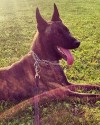
K9 PepperRest in Peace Pepper…till our next roll call at the Rainbow Bridge!
Wise County Sheriff's Office, Texas
End of Watch: Wednesday, January 28, 2015
Breed: Dutch Shepherd
Age: 2
Gender: M
Tour: 3 months
K9 Pepper was shot and killed while tracking a subject near the Wise County - Montague County line.
Pepper and his handler had been called to assist Montague County sheriff's deputies and Bowie police officers who had attempted to stop a man wanted on several warrants. The man fled into a wooded area near the intersection of Pickett Run Road and Aujla Road, near Sunset, Texas.
The man opened fire on Pepper and five officers when Pepper located him hiding in a pile of leaves. The officers returned fire, killing the subject.
K9 Pepper had served with the Wise County Sheriff's Office for several months.
In Memory of all Police Dogs
They handled themselves with beauty & grace
And who could ever forget that beautiful face
Whether at work; or at home; whatever the test
They always worked hard; and did their best
They were real champions; at work or at play
But their lives were cut short; suddenly one day
While working on the job with their partner one day
They put themselves out on a limb; out into harms way
They gave the ultimate sacrifice; any dog can give
They gave up their life; so someone could live
The best of their breed; as his partner and anyone would say
Many hearts are now broken; that he had to prove it this way
Now as the trees are blowing in the gentle breeze
The sun is shining; thru the leaves on the trees
The meadows are green; and the grass grows tall
Off in the distance they can see a waterfall
As they look over the falls; down through the creek
The water flows gently; as a rabbit sneaks a peek
Far up above; in the deep blue sky
They see the birds soar high; as they fly by
They see animals playing; at the bridge by a waterfall
Chasing each other; and just having a ball
They play all day; from morning to night
There's no more rain; just warm sunlight
Off in the distance; they hear trumpets blow
Then all the animals look up; and notice a bright glow
The harps would play and the angels would sing
As they know they've come home; they've earned their wings
We remember that they died; in the line of duty
And are now with the Lord; sharing in heaven's beauty
Off to the meadows now; where they can play and roam free
With an occasional rest stop; under a tall oak tree
No more bad guys to chase; or bullets to take
Just a run through the meadow; down to the lake
A quick splash in the water; then back to the shore
Then it's off to the forest; to go play some more
These special dogs are back home; up in heaven above
They're cradled in God's arm's; and covered with His love
We'll light a candle for all of them; in the dark of night
In loving memory of all; these very special knights
By John Quealy
Now you don't see it....
Now you do.
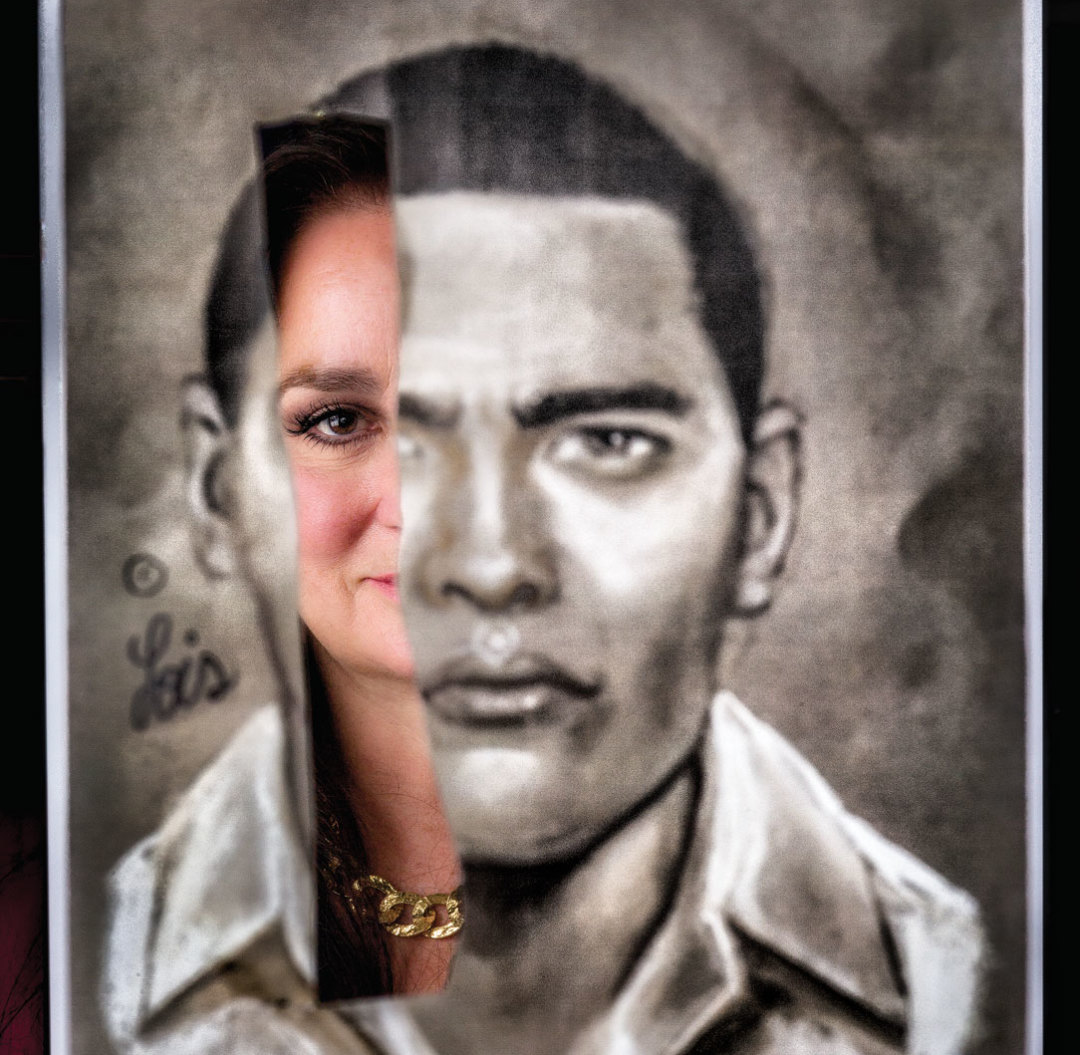
I met Lois Gibson during the academy (damned 17 years ago) and she is astonishing. A witness sees the side of a suspect's face for a fraction of a face as he walks away. Lois spends 40 minutes with the witness, asks a few questions and turns the canvas and you see the man. Here are a few examples of her work and the actual photo:


This former Playboy model (who says they are dump blonds!) is now being profiled in Houstonian Magazine. It points out that in many ways this is a mission. She was raped at 21 and did not report her attacker. But that gave her a goal to go after.
I think the kids and I are going to take a ride to the Holocaust Museum this month.
I met Lois Gibson during the academy (damned 17 years ago) and she is astonishing. A witness sees the side of a suspect's face for a fraction of a face as he walks away. Lois spends 40 minutes with the witness, asks a few questions and turns the canvas and you see the man. Here are a few examples of her work and the actual photo:
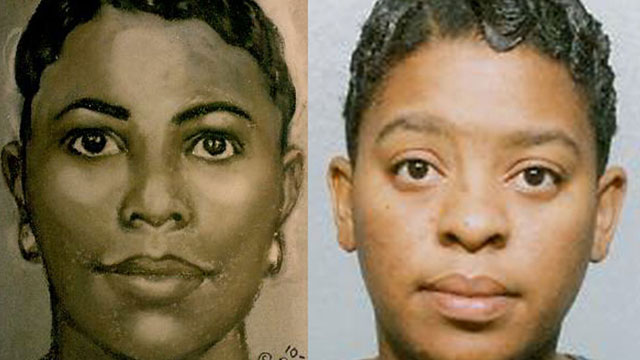


This former Playboy model (who says they are dump blonds!) is now being profiled in Houstonian Magazine. It points out that in many ways this is a mission. She was raped at 21 and did not report her attacker. But that gave her a goal to go after.
The Art of Crime
Lois Gibson, forensic artist for HPD, has helped catch thousands of criminals—and now puts her skills to use in unexpected ways.
It’s crazy the things you think about when someone is trying to kill you,” says Lois Gibson, remembering the time, years ago, when she was sexually assaulted and almost choked to death by an attacker. I’ll never have children, I’ll never finish college, thought the then-21-year-old Los Angeleno, who blacked out four times before her assailant finally released her, leaving a bloodied Gibson on the floor of her apartment. She never reported the crime, fearing that the police might try to pin the blame on her, a model and dancer on a local TV program. One day while driving, Gibson turned onto a wrong street where she actually witnessed her attacker getting arrested for a different crime: cocaine possession. She suddenly saw a purpose to return to school and pursue a degree in art.
That’s the moment that Gibson, now 65, returns to when asked about her career as a forensic artist for the Houston Police Department, a career that by all accounts has been remarkable. Over the past 33 years, she has sketched thousands of portraits of burglars, rapists, murderers and other criminals, and no one in the world has done it better, at least according to Guinness, which in 2004 declared Gibson the world record holder for “most criminals positively identified due to the composites of one artist”—1,266.
These days Gibson sketches about 120 portraits a year, meaning that hardly a day goes by when she isn’t hearing about crimes recollected—gruesome and otherwise—by victims and witnesses, children and adults, although she says that obtaining such information comes easier and easier to her these days. Sometimes it’s her own victim experience that gets them to open up, sometimes it’s her comforting and outgoing demeanor, sometimes it’s her way of convincing them that such portraits might ultimately prove cathartic.
“For their whole life I am the author of making them feel better about something they’re never going to forget,” she says. “When they see the sketch it gives them hope for justice.”
Typically, 30 percent of these sketches lead to an arrest, and the only thing more astounding than Gibson’s success rate is how often law enforcement still discounts the importance of forensic artists, she says, even now. But for years she has proved them wrong, going all the way back to 1982 when Gibson first interviewed a witness who’d seen someone stab a man to death in Memorial Park. The young man was hysterical and the portrait an embarrassment, the artist recalls. The face was smudged and half-finished, and the suspect looked like he was sucking a lemon. Nevertheless, just a day later, a detective called Gibson with the news that her sketch had helped solve the case. It was her first “hit,” as she calls it.
“I thought, If that sketch, that pitiful sketch, stopped a guy that was killing someone, like somebody tried to kill me—oh that’s it, I’m never going to stop,” Gibson says.
And so she hasn’t. She has branched out, however. A few years back, Wendy Morgan Cohen reached out to Gibson via email after seeing her sketch of a crime suspect on the 10 o’clock news. Cohen, who had never seen her grandparents but whose father, a Holocaust survivor, remembered their faces, wondered if Gibson could try to bring them back to life through portraiture. That project led her to four other survivors who wanted portraits of family members, and eventually an exhibition, “Soul Survivors,” running through September at the Holocaust Museum Houston.
“I want to give [them] an image to carry on…and show the world their heritage,” she says, her eyes filling with tears. “They can pull back a piece of what they lost.”
Her project to sketch Holocaust victims has elicited different sorts of reactions. One grateful survivor’s daughter told Gibson that her portrait of her mother was perfect, even as someone else refused to let her draw his relative, because he couldn’t bear to look into his eyes.
Of all the portraits she has sketched under difficult circumstances, and there have been many, Gibson says that her Holocaust works were the most painful she has ever created. But they have also brought her the most satisfaction.
“I’m used to people that see somebody drive by at 50 miles of hour…these teeny little moments that they see somebody run by, whereas [the survivors] saw their family their whole life,” she says, now crying. “The grief was so much deeper.”
Gibson also teaches her craft to young artists at Northwestern University’s Center for Public Safety, as well as the Institute of Forensic Art here at home, a school she founded in 2012. There, she instructs 14 to 20 students at a time in the fine art of reconstructing faces from skulls, sketching faces of suspects from witness memory, drawing age progression portraits and more. Gibson believes that thanks to the development of facial recognition systems, forensic artists will soon be in high demand, as law enforcement agencies will finally realize how valuable they can be.
“I’m going to teach as many artists as I can before I go to the big drawing board in the sky,” she chuckles.
And if any spare time remains, perhaps Gibson will put her talents to a more conventional purpose. After all, the walls of her Spring home are decorated with oil paintings of family members, as well as surreal images in acrylic, and watercolor landscapes of places she’s been—works that she hopes will one day land in a gallery.
Given that, one might expect her to look forward to a time when, like other artists, she can devote herself solely to creating the beautiful. But she doesn’t. On the contrary, Gibson can’t imagine ever retiring. Why? There’s nothing like that feeling of getting a hit.
“It’s addicting if you catch one. You want to get them again.”...
I think the kids and I are going to take a ride to the Holocaust Museum this month.
Mount Nyukmore!
Mount Rushmore was formally dedicated today in 1927. We decided it was time for a facelift! Nyuk! Nyuk! Nyuk!

Thanks to Mike K. from the link.
Officer Down

Police Officer Sean BoltonRest in Peace Bro…We Got The Watch
Memphis Police Department, Tennessee
End of Watch: Saturday, August 1, 2015
Age: 33
Tour: 4 years, 9 months
Police Officer Sean Bolton was shot and killed when he interrupted a drug deal near the intersection of Cottonwood Road and Perkins Road at approximately 9:15 pm.
Officer Bolton observed an illegally parked vehicle near the intersection occupied by multiple people. As he approached it he was shot several times by one of the occupants of the vehicle, who then fled the scene. A citizen used Officer Bolton's radio to call for assistance after he was shot.
He was transported to Regional Medical Center where he succumbed to his wounds.
The subject who murdered him was turned himself in on August 3rd, 2015.
Officer Bolton was a U.S. Marine Corps veteran. He had served with the Memphis Police Department since October 2010.
Nemo me impune lacessit
Day is done, Gone the sun, From the lake, From the hills, From the sky. All is well, Safely rest, God is nigh.
Officer Down

Police Officer Rick SilvaRest in Peace Bro…We Got The Watch
Chehalis Washington Police Department
End of Watch: Thursday, June 18, 2015
Tour: 27 years
Badge # 117
Incident Date: 2/1/2015
Police Officer Rick Silva died while undergoing surgery to correct a duty related injury suffer sustained in February 2015 while attempting to arrest a shoplifting suspect.
The offender, who was armed with a knife, resisted arrest. During the ensuing struggle Officer Silva injured his hip in the same location in which he had suffered a previous duty injury. The second injury required him to undergo surgery.
Officer Silva had served with the Chehalis Police Department for 13 years and had previously served with the Lewis County Sheriff's Office for 12 years.
Nemo me impune lacessit
Day is done, Gone the sun, From the lake, From the hills, From the sky. All is well, Safely rest, God is nigh.

Geopolitical Weekly: The Turkish Enigma, July 21, 2015
By George Friedman
In my "Net Assessment of the World," I argued that four major segments of the European and Asian landmass were in crisis: Europe, Russia, the Middle East (from the Levant to Iran) and China. Each crisis was different; each was at a different stage of development. Collectively the crises threatened to destabilize the Eurasian landmass, the Eastern Hemisphere, and potentially generate a global crisis. They do not have to merge into a single crisis to be dangerous. Four simultaneous crises in the center of humanity's geopolitical gravity would be destabilizing by itself. However, if they began to merge and interact, the risks would multiply. Containing each crisis by itself would be a daunting task. Managing crises that were interlocked would press the limits of manageability and even push beyond.
These four crises are already interacting to some extent. The crisis of the European Union intersects with the parallel issue of Ukraine and Europe's relation to Russia. The crisis in the Middle East intersects with the European concern over managing immigration as well as balancing relations with Europe's Muslim community. The Russians have been involved in Syria, and appear to have played a significant role in the recent negotiations with Iran. In addition there is a potential intersection in Chechnya and Dagestan. The Russians and Chinese have been advancing discussions about military and economic cooperation. None of these interactions threaten to break down regional boundaries. Indeed, none are particularly serious. Nor is some sort of inter-regional crisis unimaginable.
Sitting at the center of these crisis zones is a country that until a few years ago maintained a policy of having no problems with its neighbors. Today, however, Turkey's entire periphery is on fire. There is fighting in Syria and Iraq to the south, fighting to the north in Ukraine and an increasingly tense situation in the Black Sea. To the west, Greece is in deep crisis (along with the EU) and is a historic antagonist of Turkey. The Mediterranean has quieted down, but the Cyprus situation has not been fully resolved and tension with Israel has subsided but not disappeared. Anywhere Turkey looks there are problems. As important, there are three regions of Eurasia that Turkey touches: Europe, the Middle East and the former Soviet Union.
I have argued two things in the past. The first was that Turkey was an emerging regional power that would ultimately be the major power in its locale. The second was that this is a region that, ever since the decline and fall of the Ottomans in the first quarter of the 20th century, has been kept stable by outside powers. The decision of the United States to take a secondary role after the destabilization that began with the 2003 invasion of Iraq has left a vacuum Turkey will eventually be forced to fill. But Turkey is not ready to fill that vacuum. That has created a situation in which there is a balancing of power underway, particularly among Turkey, Iran and Saudi Arabia.
A Proximate Danger
The most violent and the most immediate crisis for Ankara is the area stretching from the Mediterranean to Iran, and from Turkey to Yemen. The main problem for Turkey is that Syria and Iraq have become contiguous battlegrounds featuring a range of forces, including Sunni, Shiite and Kurdish elements. These battles take place in a cauldron formed by four regional powers: Iran, Saudi Arabia, Israel and Turkey. This quadrangle emerged logically from the mayhem caught between them.
Each major power has differing strategic interests. Iran's primary interest is the survival of the establishment and in assuring that an aggressive Sunni polity does not arise in Iraq to replicate the situation Tehran faced with Saddam Hussein. Iran's strategy is to support anti-Sunni forces in the region. This support ranges from bolstering Hezbollah in Lebanon, propping up the minority Alawite establishment in Syria led — for the moment — by Bashar al Assad, and assisting the Iraqi army, itself controlled by Shiites and Iraq's Shiite militias. The United States sees Iran as aligned with American interests for the moment, since both countries oppose the Islamic State and Tehran is important when it comes to containing the militant group. The reality on the ground has made this the most important issue between Iran and the United States, which frames the recent accord on nuclear weapons.
Saudi Arabia sees Iran as its primary enemy. Riyadh also views the Islamic State as a threat but at the same time fears that an Iraq and Syria dominated by Iran could present an existential threat to the House of Saud. The Saudis consider events in Yemen from a similar perspective. Also in this context, Riyadh perceives a common interest with Israel in containing Iranian militant proxies as well as the Islamic State. Who exactly the Saudis are supporting in Syria and Iraq is somewhat murky, but the kingdom has no choice but to play a tactical and opportunistic game.
The Israelis are in a similar position to the Saudis. They oppose the Iranians, but their main concern must be to make certain that the Hashemites in Jordan don't lose control of the country, opening the door to an Islamic State move on the Jordan River. Jordan appears stable for the moment and Israel and the Saudis see this as a main point of their collaboration. In the meantime, Israel is playing a wait-and-see game with Syria. Al Assad is no friend to the Israelis, but a weak al Assad is better than a strong Islamic State rule. The current situation in Syria suits Israel because a civil war limits immediate threats. But the conflict is itself out of control and the risk is that someone will win. Israel must favor al Assad and that aligns them on some level with Iran, even as Israel works with Sunni players like Saudi Arabia to contain Iranian militant proxies. Ironies abound.
It is in this context that the Turks have refused to make a clear commitment, either to traditional allies in the West or to the new potential allies that are yet emerging. Partly this is because no one's commitments — except the Iranians' — are clear and irrevocable, and partly because the Turks don't have to commit unless they want to. They are deeply opposed to the al Assad regime in Syria, and logic would have it that they are supporting the Islamic State, which also opposes the Syrian regime. As I have said before, there are endless rumors in the region that the Turks are favoring and aiding the Islamic State. These are rumors that Turkey has responded to by visibly and seriously cracking down on the Islamic State in recent weeks with significant border activity and widespread raids. The Turks know that the militants, no matter what the currently confrontational relationship might be, could transition from being a primarily Arab platform to being a threat to Turkey. There are some who say that the Turks see the Islamic State as creating the justification for a Turkish intervention in Syria. The weakness of this argument is that there has been ample justification that Ankara has declined, even as its posture toward the Islamic State becomes more aggressive.
This shows in Turkey's complex relations with the United States, still formally its major ally. In 2003 the Turks refused to allow U.S. forces to invade Iraq from Turkey. Since then the relationship with the United States has been complex and troubled. The Turks have made U.S. assistance in defeating al Assad a condition for extensive cooperation in Syria. Washington, concerned about an Islamic State government in Syria, and with little confidence in the non-Islamic State militancy as a long-term alternative, has refused to accept this. Therefore, while the Turks are now allowing some use of the NATO air base at Incirlik for operations against the Islamic State, they have not made a general commitment. Nor have they cooperated comprehensively with Sunni Saudi Arabia.
The Turkish problem is this: There are no low-risk moves. While Ankara has a large army on paper, it is untried in battle outside of Turkey's 30-year insurgency in its southeast. Turkey has also observed the outcome of U.S. conventional forces intervening in the region and doesn't want to run the same risk. There are domestic considerations as well. Turkey is divided between secular and Islamist factions. The secularists suspect the Islamists of being secretly aligned with radical Islam — and are the source of many of the rumors floating about. The ruling Sunni-dominated Justice and Development Party, better known by its Turkish acronym, AKP, was seriously weakened in the last election. Its ability to launch the only attack it wants — an attack to topple al Assad — would appear to be a religious war to the secularists and would not be welcomed by the party's base, setting in motion rifts that could bring down the AKP. An attack on the Sunnis, however radical, complicates relations with the rebel factions in northern Syria that Turkey is already sponsoring. It also would risk the backlash of reviving anti-Turkish feelings in an adjacent Arab country that remembers Turkish rule only a century ago.
Therefore Turkey, while incrementally changing — as evidenced by the recent accord to allow U.S. Predator drones to fly from Incirlik — is constrained if not paralyzed. From a strategic point of view, there appears to be more risk than reward. Its position resembles Israel's: watch, wait and hopefully avoid needing to do anything. From the political point of view, there is no firm base of support for either intervening directly or providing support for American airstrikes.
The problem is that the worst-case scenario for Turkey is the creation of an independent Kurdish republic in Syria or Iraq. That would risk lighting a touchpaper among Kurds in southeastern Turkey, and regardless of current agreements, could destabilize everything. This is the one thing that would force Turkey's hand. However, the United States has historically had some measure of influence among the Kurds in Iraq and also in Syria. While this influence can be overstated, and while Washington is dependent on the Kurdish peshmerga militias for ground support as it battles the Islamic State from the air, it is an important factor. If the situation grew out of control, Ankara would expect the United States to control the situation. If Washington could and would, the price would be Turkish support for U.S. operations in the region. The Turks would have to pay that price or risk intervention. That is the lever that would get Ankara involved.
Added Complications
The Turks are far less entangled in the Russian crisis than in the Middle East, but they are still involved, and potentially in a way that can pyramid. There are three dimensions to this. The first is the Black Sea and Turkey's role in it. The second is the Bosporus and the third is allowing the United States to operate from its air base in Incirlik in the event of increased Russian military involvement in Ukraine.
The crisis in Ukraine necessarily involves the Black Sea. Crimea's Sevastopol is a Russian Base on the Black Sea. In this potential conflict, the Black Sea becomes a vital theater of operations. First, in any movement westward by the Russians, the Black Sea is their right flank. Second, the Black Sea is a vital corridor for trade by the Russians, and an attempt by its enemies to shut down that corridor would have to be addressed by Russian naval forces. Finally, the U.S./NATO strategy in addressing the Ukrainian crisis has been to increase cooperation with Romania. Romania is on the Black Sea and the United States has indicated that it intends to work with Bucharest in strengthening its Black Sea capabilities. Therefore, events in the Black Sea can rapidly escalate under certain circumstances, posing threats to Turkish interests that Ankara cannot ignore.
The Black Sea issue is compounded by the question of the Bosporus, which is a narrow strait that, along with the Dardanelles, connects the Black Sea with the Mediterranean. The Bosporus is the only passage from the Black Sea to the Mediterranean. For the Russians, this is a critical trade route and the only means for Russian ships passing into the Mediterranean. In the event of a conflict, the United States and NATO would likely want to send naval forces into the Black Sea to support operations around its perimeter.
Under the Montreux Convention, an agreement signed in 1936, the Bosporus is under Turkish control. However the convention also places certain restrictions on traffic in the Bosporus. Access is guaranteed to all commercial traffic, however, Ankara is authorized to refuse transit to countries at war with Turkey. All countries with coasts on the Black Sea are free to operate militarily in the Black Sea. Non-Black Sea nations, however, suffer restrictions. Only warships under 15,000 tones may be sent, and no more than nine at any one time, with a total tonnage of 30,000 tons. And then they are only permitted to stay for 21 days or less.
This limits the ability of the United States to project forces into the Black Sea — American carrier battle groups, key components of U.S. naval power, are unable to pass through. Turkey is, under international law, the guarantor of the convention and it has over time expressed a desire to be freed from it so Ankara can exercise complete sovereignty over the Bosporus Straits. But it has also been comforted by knowing that refusal to allow warships to pass can be referred to international law, instead of being Turkish responsibility.
However, in the event of a conflict with Russia, that can no longer be discounted: Turkey is a member of NATO. If NATO were to formally participate in such a conflict, Ankara would have to choose whether the Montreaux Convention or its alliance obligations take precedence. The same can be said of air operations out of Incirlik. Does Turkey's relationship with NATO and the United States take precedence or will Ankara use the convention to control conflict in the Black Sea? Even prior to its own involvement in any conflict with Russia, there would be a potentially dangerous diplomatic crisis.
To complicate matters, Turkey receives a great deal of oil and natural gas from Russia through the Black Sea. Energy relations shift. There are economic circumstances on which the seller is primarily dependent on the sale, and circumstances on which the buyer is dependent. It depends on the room for maneuver. While oil prices were over $100, Russia had the financial option to stop shipping energy. Under current pricing, Russia's ability to do this has decreased dramatically. During the Ukrainian crisis, using energy cut-offs in Europe would have been a rational response to sanctions. The Russians did not do it because they could not afford the cost. The prior obsession with the fragility of the flow of energy from Russia is no longer there, and Turkey, a major consumer, has reduced its vulnerability, at least during the diplomatic phase.
The United States is constructing an alliance system that includes the Baltics, Poland and Romania that is designed to contain any potential Russian advance westward. Turkey is the logical southern anchor for this alliance structure. The Turks have been more involved than is already visible — conducting exercises with the Romanians and Americans in the Black Sea. But as in the Middle East, Ankara has carefully avoided any commitment to the alliance and has remained unclear on its Black Sea Strategy. While the Middle East is more enigmatic, the Russian situation is potentially more dangerous, though Turkish ambiguity remains identical.
Similarly, Turkey has long demanded membership in the European Union. Yet Ankara's economic performance over the last 10 years indicates that Turkey has benefitted from not being a member. Nevertheless, the secularists in particular have been adamant about membership because they felt that joining the union would guarantee the secular nature of Turkish society. The AKP has been more ambiguous. The party continues to ask for membership, but it has been quite content to remain outside. It did not want the EU strictures secularists wanted, nor did it want to share in the European economic crisis.
Turkey is nevertheless drawn in two directions. First, Ankara has inevitable economic ties in Europe that are effected by crises, ironically focused on its erstwhile enemy Greece. More important at the moment is the immigration and Islamic terrorism crisis in Europe. Many of the Muslims living in Germany, for example, are Turks and the treatment of overseas Turks is a significant political issue in Turkey. While Ankara has wanted to be part of Europe, neither economic reality nor the treatment of Turks and other Muslims in Europe argue for that relationship.
There is a growing breach with Europe in an attempt to avoid absorption of economic problems. However in southeastern Europe discussions of Turkish investments and trade are commonplace. Put into perspective, as Europe fragments, Turkey — a long-term economic power, understanding of what the short-term problems are — draws southeastern Europe into its economic center of gravity. In a way it becomes another force of fragmentation, simply by being an alternate economic benefactor for the poorer countries in the southeast.
The potential interaction of Turkey in the Middle East is an immediate question. The mid-term involvement with Russia is a longer question. Its relation to Europe is the longest question. And its relationship with the United States is the single question that intersects all of these. For all these concerns, Turkey has no clear answer. It is following a strategy designed to avoid involvement and maintain maximum options. Ankara relies on a multi-level strategy in which it is formally allied with some powers and quietly open to relations with powers hostile to its allies. This multi-hued doctrine is designed to avoid premature involvement; premature meaning before having achieved a level of strategic maturity and capability that allows it to define itself, with attendant risks.
In one sense, Turkish policy parallels American policy. U.S. policies in all three regions are designed to allow the regional balance of power to maintain itself, with Washington involving itself selectively and with limited force. The Turks are paralleling the United States in principle, and with even less exposure. The problem the Turks have is that geography binds them to the role of pivot for three regions. For the United States this role is optional. The Turks cannot make coherent decisions, but they must. So Ankara's strategy is to be consistently ambiguous, an enigma. This will work until outside powers make it impossible to work.
The Turkish Enigma is republished with permission of Stratfor.
Thursday, August 6, 2015

Wednesday, August 5, 2015
STRATFOR Focal Point: Bringing Turkey's Border Strategy Into Focus, August 5, 2015
Bringing Turkey's Border Strategy Into Focus

Summary
Satellite images taken at the Turkey-Syria border corroborate what Stratfor predicted weeks ago: that Turkey, now partnered with the United States, will strike at Islamic State-controlled territory adjacent to the Turkish border. The Turks reportedly began to reinforce their southern border with troops and equipment as early as July 3. But according to these images, which were taken July 26, we now know that that equipment includes Turkish-made main battle tanks and support units poised in a defensive position on the Turkish side of the border.
Analysis
The areas shown in the images are located near the Turkish town of Elbeyli, on the border with Syria. On July 23, just three days before the images were captured, Islamic State militants fired across the border from the Syrian village of al-Raaee and traded fire with Turkish forces, resulting in the death of a Turkish soldier and a Syrian militant. The next day, Turkish fighter aircraft bombed Islamic State positions in Syria. Soon after, Washington and Ankara came to an official agreement allowing the United States to use Incirlik Air Base to strike against Islamic State positions.


U.S. Secretary of State John Kerry, Saudi Foreign Minister Adel al-Jubeir and Russian Foreign Minister Sergei Lavrov, among other prominent political figures, met in Doha from Aug. 2 to Aug. 3, ostensibly to negotiate a resolution to the Syrian conflict. But this diplomatic activity is inconsistent with the situation on the ground, where groups may be unwilling to fight for the objectives of their sponsors. Jabhat al-Nusra, for example, attacked the New Syrian Force on Aug. 3, driving it back into the Kurdish-defended Afrin region. Major foreign powers may be on the same page, but their discussions at this point do not realistically reflect what is possible on the ground.
In this context, these satellite images are particularly telling. They show that Turkey is ready for the consequences of attacking Islamic State targets and interdicting the movement of supplies and fighters across the border with Syria and Iraq. Notably, Turkish troops are not preparing for offensive movement; they are holding their ground as political and military leaders try to plan future operations involving Syrian rebels, U.S. and/or Turkish air support and additional diplomatic maneuvering.
Bringing Turkey's Border Strategy Into Focus is republished with permission of Stratfor.
I know my rights!!!!!!
I'm starting a new label, YouTube Lawyers. These are people who "know their rights!" even when their only knowledge of the law is Law and Order reruns. So with that as an introduction, here is a classic example (Language warning):
One of the things I dealt with as a jail supervisor was prisoners shocked because "No one has read me my rights..." Generally it wasn't the frequent flier but the store manager who got busted for DWI or a fight who don't know that you are not read your rights until you get interrogated. But this is an example of the "issues" we as cops get to deal with. Can be hazardous but you can get a laugh out of it.
One of the things I dealt with as a jail supervisor was prisoners shocked because "No one has read me my rights..." Generally it wasn't the frequent flier but the store manager who got busted for DWI or a fight who don't know that you are not read your rights until you get interrogated. But this is an example of the "issues" we as cops get to deal with. Can be hazardous but you can get a laugh out of it.
Subscribe to:
Posts (Atom)