Police Work, Politics and World Affairs, Football and the ongoing search for great Scotch Whiskey!

Monday, February 29, 2016

Good look at consensual encounters compared to detention based on reasonable suspicion or arrest on probably cause

A few weeks ago I was called to a scene by one of my cops where they arrested the driver of a vehicle. The passenger was alarmed we didn't have "probably cause" to stop the vehicle and he "went to UT and knew a lot about the law..." I kept my mouth shut and resisted the smile forming on my face as I recall the wisdom of a quote attributed to Lincoln, "Better to remain silent and though a fool then to open your mouth and remove all doubt."

Reading this month's Police Magazine there is an excellent article on the difference between a Consensual Encounter, Detention or Arrest.
Consensual Encounters

What happens if you make a ped stop, and then develop probable cause to arrest the person, and then find contraband or weapons or other evidence when you search incident to arrest, and then get told by the judge that your detention was not justified by reasonable suspicion? As you're painfully aware, what happens is that all evidence deemed the "fruit" of your unlawful detention gets suppressed, charges may get dismissed, and you may find yourself on the receiving end of administrative discipline and a civil suit. Not good.

Safety permitting, there's a smarter way to initiate contact with people, without risking the possibility of these bad outcomes flowing from an unreasonable detention. The well-trained, self-disciplined, smart law enforcement officer first tries a consensual encounter, before resorting to a detention that may or may not win judicial approval.

Three Levels of Interaction

The U.S. Supreme Court has identified three distinct categories of Fourth Amendment police-citizen interaction:

(1) Arrests, which are typically made by taking physical custody of a person and taking him to the station or the jail for booking, and which require "probable cause" as justification;

(2) Detentions, including ped stops and vehicle stops, which are justifiable by the lower standard of "reasonable suspicion;" and

(3) Consensual encounters, in which police use no commands, force, red or blue lights or sirens, but simply approach a person and engage him in conversation and make plain-view observations without any official restraints, and for which no level of justification is needed, because unlike arrests and detentions, the consensual encounter is not a Fourth Amendment "seizure" of the person.

If you believe you have PC for an arrest but the judge disagrees, you've made an unconstitutional arrest. If the judge finds your reasons for making a detention don't add up to reasonable suspicion, you've made an unconstitutional detention. But because consensual encounters do not require any showing of suspicion whatsoever, there's no opportunity for a court to find that you've made an unconstitutional consensual encounter. For Fourth Amendment purposes, the consensual encounter is risk-free; a detention is not. Therefore, which of these choices should be your preferred method of attempting contact with a suspect?

Distinguishing a Consensual Encounter From a Detention

The essential test of a detention is to look at all of the surrounding circumstances and ask whether, in view of what officers have said and done, a reasonable, innocent person in this situation would have felt that he no longer had a choice about coming or going as he pleased, but was compelled by official authority to submit to the interaction with police.

What kinds of actions could convert a consensual encounter into a detention, requiring reasonable suspicion? "Examples of circumstances that might indicate a seizure, even where the person did not attempt to leave, would be the threatening presence of several officers, the display of a weapon by an officer, some physical touching of the person, or the use of language or tone of voice indicating that compliance with the officer's request might be compelled." (U.S. v. Mendenhall) In a series of cases, the Supreme Court has expressed the distinction as follows:

"A person has been 'seized' only when, by means of physical force or a show of authority, his freedom of movement is restrained. As long as the person to whom questions are put remains free to disregard the questions and walk away, there has been no intrusion on that person's liberty or privacy as would under the Constitution require some particularized and objective justification." (U.S. v. Mendenhall)

"Our cases make it clear that a seizure does not occur simply because a police officer approaches an individual and asks a few questions. So long as a reasonable person would feel free to disregard the police and go about his business, the encounter is consensual and no reasonable suspicion is required." (Florida v. Bostick)

"The initial contact between the officers and defendant, where they simply asked if he would step aside and talk to them, was clearly the sort of consensual encounter that implicates no Fourth Amendment interest." (Florida v. Rodriguez)

"Law enforcement officers do not violate the Fourth Amendment by merely approaching an individual in a public place and putting questions to him. If there is no detention—no seizure within the meaning of the Fourth Amendment—then no constitutional rights have been infringed." (Florida v. Royer)

Scope of Investigative Activity

To attempt a consensual encounter, you could simply approach a person in a public place and ask a non-threatening, engaging question: "Hey, how you doing? Man, can you believe this weather?" The person doesn't have to remain or respond, but if he does, there are a number of things you can do:

Observe his demeanor for signs of intoxication, drug use, nervousness, or other suspicious behavior. (U.S. v. Crews)
Request ID. Although a demand for ID would convert the encounter into a detention, a request for ID does not. (INS v. Delgado) Without retaining the person's ID, you can quickly copy information, promptly return the ID, and run records checks.
Ask questions about the person's activities. (Florida v. Royer)
Request consent to search. (Florida v. Bostick)
Seize evidence discovered in plain view, or discovered under a consent search. (U.S. v. Drayton)
If in the course of these permissible activities you establish reasonable suspicion to detain and then probable cause to arrest, resulting evidence cannot be suppressed on grounds that it flowed from an unjustified detention, because it flowed instead from a consensual encounter, which requires no justification.

Limitations on Activity

Unless you have reasonable suspicion that the person is involved in criminal activity, do not turn your consensual encounter into an unlawful detention by doing any of these things:

Giving any orders or commands.
Displaying or pointing a weapon.
Surrounding the person with multiple officers or K-9.
Frisking or touching the person without consent.
Holding onto license or ID after a quick consensual examination.
Caging, cuffing, restricting, or moving the person without consent.
Overcoming Common Arguments

Although defense attorneys sometimes argue that a consensual encounter was really a detention because no reasonable person holding drugs (guns, stolen property, etc.) would feel free to ignore a police request, "This argument cannot prevail because the 'reasonable person test' presupposes an innocent person." (Florida v. Bostick)

Another common argument is that no reasonable person would feel at liberty to refuse to talk to an armed, uniformed officer. "Those factors should have little weight in the analysis. Officers are often required to wear uniforms, and in many circumstances, this is cause for assurance, not discomfort. Much of the same can be said for the wearing of sidearms. That most law enforcement officers are armed is a fact well known to the public. The presence of a holstered firearm thus is unlikely to contribute to the coerciveness of the encounter, absent active brandishing of the weapon." (U.S. v. Drayton)

The Dividends

Initiating contact with a suspect through a consensual encounter (safety permitting) can reduce citizen complaints, administrative discipline, suppression of evidence, and civil liability. These are substantial reasons not to jump the gun with a premature detention, when a consensual encounter could have done the trick.


Devallis Rutledge is a former police officer and veteran prosecutor who currently serves as special counsel to the Los Angeles County district attorney.

Saturday, February 27, 2016

I'll say it about the persecutor of the cops in Baltimore....

Couldn't have happened to a nicer bitch!

Ms Mosby was so ready to indict these officers for jaywalking and jumped at anything. She had visions of being next best legal thing, perhaps a position in the Obama Just-Us department. Oh well, I doubt it's meant to be.

Freddie Gray Autopsy Report Deals Blow to Murder Charges

Baltimore prosecutor Marilyn Mosby has withheld the autopsy report on Freddie Gray from defense counsel and the public for nearly two months. It is the report on which she relied to file murder and other charges against six police officers, even though the investigation into Mr. Gray’s death was not close to being complete.

Now, just two days before Friday’s court deadline for the state to disclose the report to the defense, it has been leaked to the Baltimore Sun.

The Sun’s story makes it easier to understand why Ms. Mosby wanted the autopsy kept under wraps. It raises additional disturbing questions about her case — a case in which she has already had to dismiss false-imprisonment charges, the untenable nature of which I explained when Mosby filed them.

It turns out that Mr. Gray “tested positive for opiates and cannabinoid.” Moreover, he carried on wildly when initially placed in the police van. It had previously been widely reported that he was not belted into his seat, a violation of recently adopted Baltimore police policy that Mosby dubiously makes the plinth of her case. The Sun’s latest dispatch, however, indicates that Gray was making matters difficult for the police: “yelling and banging, ‘causing the van to rock,’ the autopsy noted.”

The van made several stops during its 45-minute ride. At the second one, six minutes after the arrest, Gray was reportedly “still yelling and shaking the van.” Police thus removed him and placed him in leg restraints — ankle cuffs, to go along with the handcuffs that had already been applied. Gray was “then slid onto the floor of the van, belly down and head first,” according to the autopsy report, which gingerly adds that he was, at that point, “still verbally and physically active.”

It’s now easier to understand why Mosby wanted the autopsy kept under wraps: It raises additional disturbing questions about her case.
It was after this, the medical examiner concluded, that Gray suffered a severe spinal injury (which led to his death, a week later). At some undetermined point during the van’s journey, he was catapulted by the force of its deceleration and crashed into the interior. The injury is likened to a “shallow-water diving accident.”

Significantly, however, the medical examiner, Carol H. Allan, surmised that Gray probably could not have sustained his severe injuries if he’d remained in the prone position the police had put him in.

The Sun report elaborates:

While it’s possible Gray was hurt while lying on the floor and moving back and forth, Allan determined that his body likely couldn’t have moved in that position with enough force to cause his injuries. Allan surmised that Gray could have gotten to his feet using the bench and opposite wall. With his hands and ankles restrained, and unable to see out of the van and anticipate turns, she said, he was at a high risk for an unsupported fall.

Thus, the most likely scenario is that Gray, under the influence of narcotics and in the course of making his transport difficult for the arresting officers, elected on his own to get to his feet despite the difficulty of doing so. Under circumstances where his arms and legs were restrained, Gray’s decision to change the position the police had put him in rendered him vulnerable to the “high-energy” injury he sustained...


Ms Mosby, before you jumped the gun perhaps you should have actually read all the pertinent facts and then made a decision to proceed? You had visions of being the next legal behemoth. Now if things play out, can you see yourself as the next Mike Nifong?

You think you can prosecute a case successfully and not present to the defense all evidence? Woman, there is a document you should read called the Constitution of the United States. You are probably ignorant of the fact that you are required to turn over everything and as the prosecutor you cannot surprise the defense. Idiot.

As your cases disintegrates and your legal reputations is left in tatters, I would be worried about your future. The cops will never back you, the Black Live Matter crowd will end up hating your guts because you failed them and Obama will not come to save your ass. We haven't started to think about the civil suits coming out of this soon enough. You choose these men and women as scapegoats and I think in the future you will make them millionaires. So please, make a bigger ass out of yourself. I for one will enjoy seeing you self destruct.

A good way to start this up again

I've been off the net for a bit, a few crazy weeks and it's gonna get crazier, finishing up my thesis. But I can't think of a better thing to post to get started again. The only time all Four Stooges were seen together.


A true classic clip! The only time FOUR Stooges appeared together.
Posted by Michael Boynton on Tuesday, September 22, 2015
Ironic that at first they though Curley was too handsome to be part of the trio, then they cut his hair and the greatest Stooge of all time was born. In the off season he would let his hair grow out and he was a ruggedly handsome dude.


RIP to all Six Stooges. God knows they have given me a laugh and a lift when needed.

Have a great weekend.

Tuesday, February 16, 2016

Officer Down


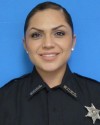
Deputy Sheriff Rosemary Vela
Madison County Sheriff's Office, Tennessee
End of Watch: Monday, September 28, 2015
Age: 24
Tour: 2 years, 6 months
Badge # 7809

Deputy Sheriff Rosemary Vela was killed in a single vehicle crash while responding to backup another deputy.

She was traveling on Highway 70 West, near Huntersville, when her patrol car left the roadway during a period of heavy rain. The vehicle struck a tree and then came to rest in a creek.

Deputy Vela had served with the Madison County Sheriff's Office for five months and had previously served with the Alamo Police Department and the Crockett County Sheriff's Office. She is survived by her 5-year-old son.
Rest in Peace Sis…We Got The Watch

Nemo me impune lacessit

Day is done, Gone the sun, From the lake, From the hills, From the sky. All is well, Safely rest, God is nigh. 

Monday, February 15, 2016

Officer Down


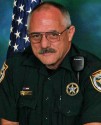
Deputy Sheriff William J. Myers
Okaloosa County Sheriff's Office, Florida
End of Watch: Tuesday, September 22, 2015
Age: 64
Tour: 26 years
Badge # 336

Deputy Sheriff Bill Myers was shot and killed while serving a domestic violence injunction at a local attorney's office on Plew Avenue, in Shalimar, at approximately 8:20 am.

He had served the papers on the subject and was leaving the office when the man opened fire from behind, striking him multiple times in the back and the back of the head.

The man fled to a local hotel where he barricaded himself in a room for approximately 90 minutes. He was shot and killed by members of the agency's Special Response Team after exiting the room displaying a firearm.

Deputy Myers had served with the Okaloosa County Sheriff's Office for a total of 26 years. He had retired from the agency after serving 25 years and then returned as a part-time deputy in January 2015 to assist with serving civil papers.
Rest in Peace Bro…We Got The Watch

Nemo me impune lacessit

Day is done, Gone the sun, From the lake, From the hills, From the sky. All is well, Safely rest, God is nigh. 

Security Weekly: Can Libya Be Reassembled?, January 28, 2016

By Scott Stewart

Many indicators suggest that European and regional powers along with the United States are once again gearing up for an intervention in Libya. These signs include increased surveillance activity over the North African country, reports of U.S., British and French soldiers already on the ground, and leaks that countries in the region are being approached to provide assistance.

Libya is mired in a period of protracted chaos. Jihadists aligned with al Qaeda and the Islamic State now control substantial portions of the country. Thanks to their connections with other militant groups in the region, there is a network that provides training and weapons reaching from the Sinai Peninsula to West Africa.

It is understandable that the United States and its allies feel compelled to intervene in Libya to degrade the power of these jihadist groups. However, given the divisive and fractious nature of Libya, putting together a viable and sustainable political system after the military intervention will remain the greatest challenge.

Unshackling the Jihadists

In February 2011, a month before the NATO-led international coalition intervened in the Libyan civil war, I wrote that overthrowing Gadhafi could plunge Libya into chaos that would allow jihadists to flourish. I based this assessment on the continued involvement of Libyans in global jihadist activities from the 1980s in Afghanistan through Chechnya, Bosnia and Iraq. This was exacerbated by Moammar Gadhafi's policy of keeping his security and military forces weak, fractured and dependent on him. Throughout its own history, al Qaeda has had a disproportionate number of Libyan leaders, considering the population of Libya compared to the rest of the Muslim world. Senior al Qaeda figures hailing from Libya have included Abu Yahya al-Libi, Anas al-Libi, Abu Faraj al-Libi and Abu Laith al-Libi.

The degree of Libyan involvement in Iraq was perhaps best documented in a batch of personnel files captured by U.S. troops from an al Qaeda safe house in the northern Iraqi city of Sinjar in 2007. These documents, often referred to as "the Sinjar files," contained the details of 595 jihadists who had traveled to Iraq to fight. Of these 595, 112 were Libyans. The number of Libyans in this sample was smaller than the 244 Saudis, but when compared against the populations of their respective countries, the Libyans had a higher per capita participation rate than the Saudis. The Libyans also appeared to be more radical than the Saudis: 85 percent of the Libyans asked to be suicide bombers complied, compared to only 50 percent of the Saudis.

Of the Libyan jihadists represented in the Sinjar files, 60 percent of them had listed their home city as Darnah and around 24 percent had come from Benghazi. Gadhafi's security apparatus kept a close eye on returning jihadists and used a strong carrot-and-stick approach to keep them under control prior to the outbreak of the civil war in early 2011. On reflection, the pro-jihadist sentiment in Libya's east helps explain why those cities were hotbeds of anti-Gadhafi revolutionary sentiment and why jihadists remain a powerful force in Darnah and Benghazi today.

I believed back in 2011 that this strong jihadist current, combined with literally tons of loose weapons, was a potentially deadly combination for Western interests in Libya, writing that:

This bodes ill for foreign interests in Libya, where they have not had the same security concerns in recent years that they have had in Algeria or Yemen. If the Libyans truly buy into the concept of targeting the far enemy that supports the state, it would not be out of the realm of possibility for them to begin to attack multinational oil companies, foreign diplomatic facilities and even foreign companies and hotels.

This forecast was proved tragically correct on Sept. 11, 2012, when the U.S. diplomatic facility in Benghazi was attacked. U.S. Ambassador J. Christopher Stevens and State Department communicator Sean Smith were killed, along with two CIA contractors later that night when a CIA annex was attacked. Since then, jihadists have continued to attack hotels and kill or kidnap foreigners.

Other Fractures

But the jihadist ideology is not the only divisive factor in Libya. Indeed, there are a number of significant ethnic, tribal and regional fault lines inside Libya. I was referencing these divisions in August 2011 (two months before the death of Gadhafi) when I wrote the following:

As the experiences of recent years in Iraq and Afghanistan have vividly illustrated, it is far easier to depose a regime than it is to govern a country. It has also proved to be very difficult to build a stable government from the remnants of a long-established dictatorial regime. History is replete with examples of coalition fronts that united to overthrow an oppressive regime but then splintered and fell into internal fighting once the regime they fought against was toppled. In some cases, the power struggle resulted in a civil war more brutal than the one that brought down the regime. In other cases, this factional strife resulted in anarchy that lasted for years as the iron fist that kept ethnic and sectarian tensions in check was suddenly removed, allowing those issues to re-emerge.

The country's fractures were clearly on display during the recent attempts to create a unity government sanctioned by both the Tripoli-based General National Council government and the Tobruk-based House of Representatives. But even if the United Nations and the international community are able to pressure the rival Tripoli and Tobruk governments to overcome their differences and work together, that divide only represents one of the fault lines in Libya today. And each of these two competing governments represent only a fraction of Libya. A number of other powerful political groups and militias — such as Ibrahim Jadhran's Petroleum Facilities Guard — will have to be persuaded to join the new unity government, or in the case of the jihadist groups, defeated militarily.

The worst-case scenario we foresaw in 2011 has come to pass: Several jihadist groups are flourishing in Libya and are negatively impacting the country's internal security. And, through their training camps and transfers of weapons, the security of places from Sinai to Senegal is also in question. If there is one silver lining in this bleak situation, it is that the proliferation of Libyan man-portable air-defense systems and anti-tank guided missiles has not had the regional terrorist impact we feared. There were a few Libyan missiles used in the Sinai Peninsula, but these projectiles have not yet been used to attack a civilian airliner, attack an embassy or assassinate a public official.

As the United States and its European and regional allies prepare to intervene in Libya, they should be able to reduce the jihadist's ability to openly control territory. However, they will face the same challenge they did in 2011: building a stable political system from the shattered remains of what was once a country. Now, Libya is a patchwork of territories controlled by a variety of ethnic, tribal and regional warlords. The last five years of fighting has led to significant hatred and blood feuds between these competing factions, which will only compound the challenges ahead.

Clearly the Humpty Dumpty that was Libya is shattered. Putting him back together again will be a long and onerous task.

COPYRIGHT: STRATFOR.COM

Geopolitical Weekly: Understanding Italian Defiance, January 26, 2016

By Adriano Bosoni

The Italian government has been in a rebellious mood of late. During a war of words with the European Commission over his plan to increase spending this year, Prime Minister Matteo Renzi told Brussels "Italy is back, more solid and ambitious." In an op-ed published in The Guardian a few days later, Renzi added that "the political and cultural orthodoxy that has monopolized thinking on how Europe should be run for the last decade isn't working" and promised that "Italy will not stop demanding to have its voice heard."

To be sure, Italy — the third-largest economy in the eurozone and a net contributor of funds to the European Union — believes it has cause to be annoyed with the bloc's officials. Rome views Brussels' constant requests for spending cuts as an obstacle to economic growth. It is also disappointed by the lack of progress in EU efforts to address the migration crisis. More recently, doubts over the health of Italian banks reignited a debate between Rome and the European Commission over Italy's plans to protect its banking sector.

But Italy's recent actions are based on more than short-term calculations; they are intimately connected to the way the country sees the world. To understand Rome's behavior, it is necessary to consider how modern Italy was born and what shapes its policies. Present-day Italy was created by combining dozens of unconnected pieces, constantly at risk from over a millennium of foreign invasions. Elements of Italian history mirror the European Union's attempts to create a united Continent, and they offer clues to the bloc's future.

A Fragmented State

Italy is a mountainous country. The Alps serve as a natural border with its northern neighbors, while the Apennines bisect the Italian Peninsula from north to south. Italy also controls Sicily and Sardinia, the two largest islands in the Mediterranean. This fragmented geography facilitated the emergence of strong local identities, something exemplified by the extensive variety of dialects spoken in the country.

Geography also explains Italy's unequal levels of economic development. The Po River Basin in the north, which runs from the Alps to the Adriatic Sea, is one of the wealthiest regions in Europe. The richness of its soil, the river's navigability and the region's connection to other commercial centers in Europe enabled the Po Valley to become Italy's commercial and industrial core. These conditions fostered the growth of cities such as Turin, Milan and Venice, three powerful economic and political centers in constant competition.

By contrast, the south is characterized by lower economic development, the product of a semi-arid climate and an economy primarily based on agriculture. Failure to apply effective land reform before and after modern Italy's unification further hindered the south's development. This was in addition to the pervasive presence of groups and practices that exist in parallel to the formal system — from the gray economy to organized criminal organizations. Neither factor, however, prevented the emergence of important southern economic and cultural centers like Naples and Palermo.

Another key to understanding Italy's behavior is its location at the heart of the Mediterranean Sea. The Ancient Romans understood that the peninsula would never be safe unless they had some degree of control over the lands surrounding the "Mare Nostrum" (Latin for "Our Sea"), and so they built their massive empire around it. From the late 19th to the early 20th century, Italian governments similarly sought colonies in Africa and the Balkans, albeit with much less success. More recently, Italy has based its Mediterranean strategy on maintaining good relations with governments in North Africa so as to secure energy supplies, open business opportunities for Italian companies and prevent the arrival of sea-faring immigrants.

Italy's privileged position at the center of the Mediterranean Sea made it a target for invaders. From the Germanic invasions that ended the Western Roman Empire in the late fifth century to the invasions of the Austrian, Spanish and French empires in the 18th and 19th centuries, surrounding powers have repeatedly conquered Italy. By the late 1850s, the peninsula was host to several political entities, including the Kingdom of Sardinia (under the House of Savoy), the Kingdom of the Two Sicilies (under Bourbon control) the Kingdom of Lombardy-Venetia (under Habsburg rule) and the Papal States.


Austrian Empire Chancellor Klemens von Metternich once famously derided Italy as "only a geographic expression." There is some truth to this statement. When Italy became a unified kingdom in the 1860s, Italians shared little beyond the Roman Catholic faith. For decades, there had been attempts to unify Italy under the figure of the pope, but as Machiavelli wrote in the early 16th century, the Catholic Church was "too weak to unify Italy, but too strong to let it happen."

So, to unify Italy, its new leaders had to create a country from scratch. To do this they had to introduce a common currency, the lira; create a standardized educational system that would teach a common language; form a national army to instigate some sense of patriotism; and build thousands of kilometers of rail lines to connect the country. But despite these efforts, many regional differences remained.

More important, Italy's unification also involved a great degree of state violence. "Unification" is often a poetic way to describe what was actually the annexation of the rest of the peninsula by the Kingdom of Sardinia. In the south, "unification" was very close to a civil war, with occupation forces from the north fighting a confusing combination of Bourbon loyalists, local peasants and brigands. A century and a half after these events, mistrust between the north and the south has still not been completely overcome.

The Role of Public Spending

Unification was expensive, which forced the fledgling state to start issuing foreign debt from day one. Young Italy was in a dangerous position: Bourbon loyalists were ensconced in Rome as the pope's guests, the dukes and grand dukes of Central Italy were waiting in the wings for the Savoys to make a mistake, and Austria and France were permanent threats. This prompted Italy to assume all of its predecessor states' debts, hoping that Europe's great powers would recognize and support the new country. This opened a cycle of foreign debt that still defines Italy.

Public spending and lax government continued to hold the country together during the 20th century. In the south, large amounts of public money were spent on subsidies to prevent social unrest, while the mafia progressively became a national phenomenon. In the north, the economic success of companies partially depended on the state willfully ignoring tax evasion. Italy's "economic miracles" of the 1960s and 1980s relied on a handful of national champions like Fiat and myriad small and medium-sized manufacturing firms clustered in specialized industrial districts of the north and center. The south was largely neglected.

The prosperity of these years came at the expense of the public finances; little effort was made to keep public spending under control. Frequent devaluations of the lira helped Italy stay afloat while keeping unemployment low. Small and medium-sized companies remain the backbone of the Italian economy, and their lack of competitiveness and their inability to adapt to an increasingly globalized world is one of the main reasons Italy was dealing with low rates of economic growth even before the European crisis. Complicating matters, the introduction of the euro deprived Italy of the possibility of devaluing its currency to deal with crises, while its national budget must now be negotiated with Brussels.

Italy's seemingly chaotic political system is also connected to history and geography. Politics in Rome are complex because the Italian government often operates as umpire among conflicting interests. Rome is under permanent pressure to find a balance between the general needs of the country and the many vested interests in play, from local, regional and national political leaders to labor unions, the private sector and the Catholic Church. One of the most notable Italian novels of the 20th century, The Leopard, uses the transformations of the 1860s as a metaphor for a country where reforms are often meant to protect vested interests. This coined a term (gattopardismo, from the book's Italian title) that is as relevant today as it was when the novel was first published in 1958.

A Permanent Balancing Act

Italy's main geopolitical imperative is to achieve a minimum level of unity to prevent the country's disintegration while finding a balance between pressure from domestic and foreign powers — and preventing those foreigners from invading again.

This explains Rome's complex relationship with the European Union. Italy was a founding member of the European Economic Community, the EU's predecessor, because of its long tradition of intellectuals who saw the construction of a federal Europe as a means of overcoming the Continent's fragmentation by dissolving regional identities into a broader European identity. But foreign pressure was also a factor, because after World War II, the United States had an interest in Italy's membership in Western trade and defense alliances as means of promoting economic growth and limiting Russian influence.

Since then, Italy has used its strategic position at the heart of the Mediterranean to be attractive to the European Union and NATO while expecting them not to interfere too much with its domestic affairs. But the European crisis has made this balance hard to maintain. As the crisis progressed, Rome came under pressure from Brussels and international markets, which are fearful of the financial consequences of Italian political instability and lack of reform. This has forced Rome to negotiate internally and externally, seeking to apply just enough reform to appease foreign interests while keeping domestic dissent within tolerable margins.

An important element of Italy's strategy for coping with the EU crisis has been the premise that it is simply too big to fall. Many Italian politicians believe the size of the country's economy means EU authorities will always ultimately come to the rescue. And they want Europe to do this without interfering too much in Italy's domestic affairs. This explains Rome's frequently strong reactions to Brussels' pushes for stricter fiscal discipline. The Italian government sees EU pressure as foreign interference in its domestic affairs and as a threat to internal stability. The ongoing debate between Brussels and Rome over Italian plans to create a bad bank are a part of this dynamic, as the European Union wants to prevent Italy from using public money to protect its banks.

Renzi presents himself as Europe's ultimate reformist, and his intentions are probably sincere, though he is most certainly making electoral calculations. His Democratic Party is still the most popular in the country, but it has lost support over the past year. Some of Italy's largest cities — including Rome, Milan and Turin — will hold elections in April, and Renzi has linked his political future to winning a referendum on constitutional reforms in October. The prime minister wants to be allowed to spend more in an important year, and he probably believes that anti-German and anti-Brussels rhetoric could win him some extra votes. The eurozone economic crisis has evolved into a political crisis where a growing number of voters oppose the European Union and the political elite who back it.

Renzi has a point when he says that the Italian opposition is fragmented, but if all the anti-establishment, nationalist and right-wing parties are combined, about half of the electorate supports forces that oppose different aspects of the process of EU integration, from the common currency to the free movement of people. At a time when prospects for growth are modest and unemployment remains high, Italian support for the European Union can no longer be taken for granted.

Rome wants to be part of a Continental bloc where high public spending and inflation are tolerated to create jobs, and where resources are transferred from wealthy regions to poorer areas without interfering too much in their domestic affairs. But the Germans and the Dutch do not want to permanently subsidize the Portuguese and the Greeks, at least not without greater control over their economies.

Italy faces a fundamental problem: The kind of European Union the Italians want to build is similar to the type of country they have struggled to create at home. Italy is a miniature version of the European Union because it has a Germany and a Greece within its borders, in the form of a dynamic north and an underdeveloped south whose interests are not always aligned. It took a combination of money, compromise and coercion to build a unified Italy. In the European Union, the economic crisis has tarnished the promise of prosperity, compromises are becoming harder to find and coercion is not a basis for a sustainable Continental project. And while the Italians of the 1860s at least had some vague sentiment of a shared destiny, the same cannot be said of the current European Union.

COPYRIGHT: STRATFOR.COM

A simple solution to stop an Active Shooter

I've often said the only thing that stops a bad guy with a gun is a good guy with a gun. I may have to take some of that back now.

These three simple locks stop people from entering a room. Will it stop them long term, no, but Active Shooters know they have little time to do what they want to do. Time equals more people alive.

These simple locks could help save hundreds of lives
Could this be a deterrent for mass shootings?
Posted by Future X - The Future Is Now on Tuesday, January 26, 2016
Excellent work gentlemen, American ingenuity at it's finest.

Saturday, February 6, 2016

Some great commentaries on the plague of political correctness....

In the recent drive by leftists to purge any mention of Confederate heroes, we have the idiot mayor of New Orleans, Mitch Landreau. The brother of the idiot ex-senator of Louisiana. The one who said for residency requirements she lived in her daddy's home. The married senator with a family who has a 2 million dollar mansion in Virginia lives with daddy in New Orleans.

But Mitch, like the other public servants of the family has other issues. Rebuilding the city after the hurricane, the education system, the spiking crime rates, particularly the murder rate. Nah, they need to spend the little money they have on the real threat, Lee Circle and Jackson Square.

The Walton and Johnson show has been hitting on the corruption and incompetence of New Orleans politicians for ages and they hit it out the park with this.


This morning I was surfing the web and cause this commentary by one of my favorite comedians, John Cleese. The first line say it all, "I'm offended every day...." And you should be. I get offended every day by what I see people do. Words hurt only with you let them. And another classic line in this commentary, the quote of a former director of the BBC, "There are some people I would wish to offend."

I will strongly disagree with one line from this, the plague of political correctness has always been a movement, led by leftists, the stigmatize or even criminalize speech.

Enjoy this great commentary of a comic genius

Monday, January 25, 2016

You hear of some stupid crimals....

But this takes it. Read his last words.
Robber’s Famous Last Words: ‘I Thought You Couldn’t Own A Gun In New Jersey’

A Newark, New Jersey deli owner who shot and killed an armed man will not face charges, police and prosecutors say.

Acting Essex County Prosecutor Carolyn Murray as well as Newark Police Director Eugene Venable say that the owner of the deli had a permit for the gun that he used to defend himself.


New Jersey is notorious for having some of the strictest gun regulations in the nation. The robber apparently thought that meant there was no legal way for his would-be victims to arm themselves.

According to Guns.buzz, Mark Robinson’s last words inside the New Neighborhood Deli Supermarket were “I thought you couldn’t own a gun in New Jersey.”

Robinson, 46, had walked into the deli around 8:30 p.m. and immediately pointed a gun at the owner, who didn’t hesitate to pull his own weapon and fire. Robinson was pronounced dead at around 10 pm.

Ron White said it best:


Sunday, January 24, 2016

Officer Down


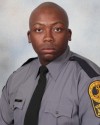
Trooper Nathan-Michael William Smith
Virginia State Police
End of Watch: Monday, September 21, 2015
Age: 27
Tour: 1 year, 3 months
Badge # 1844

Trooper Nathan-Michael Smith was killed in a single vehicle crash at approximately 7:10 am while responding to assist another trooper whom he believed to be in distress at an accident scene in Dinwiddie County

He was exiting I-295 south onto I-95 north, in Prince George County, when his patrol car left the roadway, overturned, and struck several trees. He was extricated from the vehicle and flown to a local hospital where he succumbed to his injuries.

The call he was responding to was dispatched as CPR being performed on another trooper. It was later determined that the trooper was performing CPR on a civilian crash victim.

Trooper Smith had served with the Virginia State Police for 15 months and was assigned to the Richmond Division Area 7 Office. He is survived by his wife, two children, and parents.
Rest in Peace Bro…We Got The Watch

Nemo me impune lacessit

Day is done, Gone the sun, From the lake, From the hills, From the sky. All is well, Safely rest, God is nigh. 

9mm vs. .40 Caliber. An overview.

One of my friends is a now retired ER nurse in San Antonio TX and he told me a story of the 9mm round. He had a gang banger admitted with 8 shots from a 9mm. And he walks out of the hospital in three days. Three days. I've often said "If that had been a 38 I am pretty sure he would have bled out before the ambulance got him to the hospital..." Well this is an interesting look at how the bullets work. The FBI just went back to the 9mm and this is an interesting read.
9mm vs. .40 Caliber


This man was shot with .40 S&W rounds to center mass, was not incapacitated at the scene, and survived the shooting. (Photo: Sydney Vail)

At the end of October, the FBI announced that it was planning to swap out the .40 S&W pistols and ammunition now used by its agents and replace them with 9mm pistols and ammo. This was a widely discussed decision, given that the Bureau once partially blamed the performance of 9mm cartridges for the deaths of two agents in the 1986 Miami shootout and subsequently transitioned to 10mm and then to .40 caliber sidearms. This is also a widely followed decision because the FBI's choice of duty pistol and ammo will likely influence many other law enforcement agencies to give the 9mm jacketed hollow-point another look.

In the January 2013 issue of POLICE, I wrote an article titled "Stopping Power: Myths, Legends, and Realities," in which I discussed the wound ballistics performance of various popular pistol calibers as I have observed through my experience as a trauma surgeon and tactical medical specialist. My advice then and now is when it comes to claims about the effectiveness of handgun ammo, don't believe the hype. Instead, look at the hard facts.

And now that the FBI's decision to go back to 9mm pistols has ignited another round of debate about caliber effectiveness, it's time to look at the real-world performance of 9mm and .40 S&W rounds in terms of wound ballistics.

Understanding Stopping Power

One of the least understood concepts in all wound ballistics is stopping power. So before we discuss the 9mm vs. .40 caliber in terms of wound ballistics, let's define the concept of "stopping power."

I believe the definition of stopping power for law enforcement should be a particular ammunition's effectiveness to render a person unable to offer resistance or remain a threat to the officer, an intended victim, or self.

So how does ammunition accomplish this? You have two options. You can use a really large round at very high velocity like the 30mm cannon rounds from an Apache helicopter's M230 Chain Gun, which produces substantial kinetic energy, or you can place your shot where it has the most effect. Obviously, shot placement is the only realistic option for a law enforcement officer.

A handgun bullet shot into the shirtless torso of a person causes a degree of injury due to the body absorbing the bullet's energy and dispersing it in front of and around the path of the bullet. The projectile also tears through the tissue. This means that the kinetic energy of the bullet will create both a permanent cavity and to a much lesser extent a temporary cavity.

But handgun ammunition only has acceptable stopping power if the bullet hits a vital structure that would "stop" the target from continuing the fight.

The Measurements

OK, let's return to our specific discussion of 9mm and .40 S&W ammo and look at some of the basic measurable differences between these two calibers of handgun rounds.

9mm

Diameter 9.01mm (0.355 in)

Velocity 950-1,400 fps

Expansion 0.36-0.72 in

.40 S&W

Diameter 10.2mm (0.4 in)

Velocity 900-1,449 fps

Expansion 0.4-0.76 in

There is no debate that for a handgun round to be as effective at incapacitating as quickly as possible, it has to either hit the brain stem, injure a significant amount of brain tissue, or cause extremely rapid exsanguination (hemorrhage). From a wound ballistics perspective, the diameter of the handgun bullet translates into the permanent cavity, the direct tissue impact or what is actually injured by the projectile as it passes through tissues. If there is a blood vessel that is injured, the larger the hole or injury relates to the volume of blood that is able to leave the vascular system in a period of time as to cause a significant enough loss of blood to make the blood pressure go down to cause the brain not to work as efficiently, then to cause the loss of coordination, which then causes the person to become a reduced threat and eventually lose consciousness...all over time.

In a head shot, the amount of brain tissue disrupted by a bullet produces varying degrees of incapacitation unless the brain stem is hit. So when comparing the 9mm to the .40 S&W, size is not a huge factor. If both expand to the maximum diameter based on bullet design, there is not a large enough difference to account for a larger degree of tissue injury; the difference between non-expanded bullets is small as well.

Penetration in living tissue is a guessing game for both of these rounds. Despite what many shooters believe, measuring penetration in ballistic gel—simulating muscle tissue—yields limited useful information about penetration in the human body, which is made up of more than just muscle.

There are too many variables to accurately predict what the actual depth of penetration will be inside a human body. I have found a wide variety of depths of penetration for both 9mm and .40 caliber rounds when operating or caring for gunshot patients.

More Rounds in the Mag

Our discussion now comes back to shot placement or wounding accuracy and the potential number of bullets required to increase or maximize the odds of injuring the body of a threat in such a way as to render that person incapacitated.

Shooting accuracy is affected by stress, but the effects of stress can be reduced through experience. To quote Bruce Siddle from "Sharpening the Warriors Edge," "stress is a matter of perception and perceptions can be changed through the training process." By training to deal with more stressful situations, and not training until you get it right but training so you don't get it wrong, you have a much better chance of accurate hits under stressful conditions.

In other words, shot placement—which is critical to prevailing in a gunfight—must be maintained under the most stressful of circumstances. Having more rounds in your pistol's magazine increases the potential for accurate shots. Hence the FBI chose to make the change to the 9mm round, which usually offers a higher round count per magazine, faster and more accurate follow-up shots, less perceived recoil, and very similar physical bullet characteristics to the .40 S&W.

From a trauma surgeon's perspective, both the 9mm and the .40 caliber can wound, injure, incapacitate, or kill. However, shot placement is the best predictor of accomplishing the intended goals. I have treated patients with more than 20 "holes" in them that never caused enough tissue damage or bleeding to cause them to die. And I have treated patients with a single "hole" that did die. Remember, the discussion is the ability of a particular ammunition caliber with improved bullet characteristics to stop a threat, not living or dying but simply to temporarily or permanently incapacitate the threat.

The FBI report of an officer-involved shooting on Nov. 29, 2006, from a Pennsylvania police department makes for an interesting read on this topic. The assailant was shot in the chest and abdomen with 180-grain

.40 S&W modern hollow-point ammunition as well as .223 rounds from an M4. On autopsy it was discovered he had been shot 17 times with 11 rounds exiting his body. Despite these many wounds, he struggled with officers attempting to handcuff him before he died.

Limitations of Ballistic Gel

There are people who will read this article who will maintain that the early works of Dr. Martin Fackler were written in stone when in fact he provided a significant amount of quality wound ballistics data but kept an open mind, understanding the limitations of simulants such as ballistic gel. This is best represented in an editorial he wrote about an article published in the Journal of the International Wound Ballistics Association, Winter volume 1991;10-13, by E.J. Wolberg.

The article in question was an autopsy study by a medical examiner on "torso only" shots with a retained bullet, noting that patients were excluded if bone was hit or there was over penetration. This data was compared to gelatin data for the 9mm 147-grain Winchester jacketed hollow-point. Gel demonstrated a 12- to 14-inch depth of penetration, and the autopsy findings (with the bullet only passing through soft tissue) of a 10- to 17-inch penetration. The author's conclusion: "Based on comparison of data from living tissue penetration by the 9mm 147-grain bullet with test shots of the same bullet into gelatin, it is concluded that gelatin can be a useful predictor of this bullet's penetration and expansion characteristics in shots in the human torso."...

Personally I carry a Sig-Sauer 229 as my primary weapon and it's never let me down. I own a Taurus 9mm and it's been an excellent purchase. My department now allows 45's and I'm looking at going to a Glock sometime this year. But for now I don't see going to a 9mm as primary weapon. To each their own, but I this is an interesting read on the subject.

Officer Down


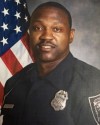
Police Officer Kevin Jermaine Toatley
DeKalb County Police Department, Georgia
End of Watch: Saturday, September 19, 2015
Age: 35
Tour: 7 years
Badge # 2690
Cause: Automobile accident

Police Officer Kevin Toatley was killed when his patrol car was struck head-on by the driver of a vehicle traveling in the wrong direction on the South Fulton Parkway, near Buffington Road, at approximately 12:30 am.

His patrol car burst into flames following the crash. The five occupants of the other vehicle, including three children, were injured in the crash.

Officer Toatley had served with the DeKalb County Police Department for seven years.
Rest in Peace Bro…We Got The Watch

Nemo me impune lacessit

Day is done, Gone the sun, From the lake, From the hills, From the sky. All is well, Safely rest, God is nigh. 

Saturday, January 23, 2016

Officer Down


Trooper Kyle D. Young
Vermont State Police, Vermont
End of Watch: Thursday, September 17, 2015
Age: 28
Tour: 1 year, 9 months
Badge # 446

Trooper Kyle Young suffered a fatal medical emergency while participating in a training session with the agency's Tactical Services Unit at the Ethan Allen Firing Range, in Jericho.

Trooper Young was a U.S. Air Force veteran and had served with the Vermont State Police for 21 months. He is survived by his two daughters and partner.
Rest in Peace Bro…We Got The Watch

Nemo me impune lacessit

Day is done, Gone the sun, From the lake, From the hills, From the sky. All is well, Safely rest, God is nigh. 

Cops and armored vehicles....

I've gotten into heated discussions with close friends on the need of law enforcement to use armored vehicles from time to time. A few years back I was on a SWAT scene where the suspect was holed up in a building and he had almost 50 yards of kill space. The armored vehicle our team has allows them to approach shielded and deploy officers to enter the building.

Now there usual suspects at the Obama Regime want to limit purchase of the MRAP by local law enforcement. Remember the shooting in San Bernardino last month? How the sheriff deputies, also known as the "first responders", had to use AR-15s and an armored vehicle to approach. And they saved countless lives.

Now we have another example of how using formerly military equipment can be used in law enforcement.

Texas sheriff’s SWAT team uses MRAP to end stolen 18-wheeler standoff after chase


Remember those intimidating, oppressive, surplus military vehicles that are being taken away from police departments across the country? Well, one was used to finally put an end to a cross-county stolen 18-wheeler chase last week in Texas. The special response vehicle, used by the Hunt County Sheriff’s SWAT team was positioned in front of the truck after it had come to a halt and used as a position to fire tear gas into the cabin which ultimately ended the standoff. The man was arrested and the dog who was in the cabin was left with relatives, and not taken to a shelter.
Jan. 13–Units from multiple law enforcement agencies followed a reportedly stolen 18-wheeler across four counties Wednesday, before the slow-speed pursuit finally ended along the interstate 30 service road in Greenville.

The driver of the truck, identified as David Allen Arnold, 60, Burkeville, Va., was being held in local custody Wednesday evening, after he was arrested following a brief standoff, which involved SWAT units, an armored car and the use of tear gas.

No one was injured during the chase, which began in Kaufman County Wednesday morning when the Kaufman County Sheriff’s Office, the Department of Public Safety (DPS) and the Dallas County Sheriff’s Office began pursuing an 18-wheeler which had been reported stolen...

...Officers deployed spike sticks and several of the tires on the tractor trailer were deflated. But the chase continued through Rockwall County and entered Hunt County, at which time Arnold exited onto the south service road.

Speeds only reached 35 to 40 mph and continued into Greenville along the south service road of Interstate 30, ending when Arnold reached the dead end just past the former Mary of Puddin Hill store...

...“We were asked by DPS to deploy our SWAT unit,” (Hunt County Sheriff Randy)Meeks said. “I called our SWAT unit in as well as the Greenville Police Department SWAT team. We also deployed our Special Response Vehicle 6×6. We attempted negotiations with the suspect and we had no luck. A combination of the Hunt County Sheriff’s Office SWAT team and the Greenville Police Department’s SWAT team approached the parked truck inside the SRV vehicle. Two rounds of 40 millimeter of CS gas were shot into the cab of the 18-wheeler and the dog and the suspect exited the vehicle on the passenger side.”...

...“Anytime officers or civilians are not injured in an incident like this and the bad guy goes to jail is a good day,” Meeks said.

Dead on Sheriff Meeks, glad this came to a successful conclusion, great work by you deputies, the other officers and agencies involved. I'm

K9 handler issues....

I know of a couple of dogs who have similar issues.....

Officer Down


Sergeant Eric Meier
Crawford Police Department, New York
End of Watch: Thursday, September 17, 2015
Age: 51
Tour: 25 years

Sergeant Eric Meier suffered a fatal heart attack while hiking in a remote, rugged area while searching for a marijuana grow operation.

The grow had been reported in a section of farmland and woods off of Lybolt Road, near Gordon Road. The officer he was with requested medical assistance when Sergeant Meier began to fall ill. He was brought out of the remote area and transported to Orange Regional Medical Center, where he was pronounced dead.

Sergeant Meier had served in law enforcement for 25 years. He is survived by his wife and two sons.
Rest in Peace Bro…We Got The Watch

Nemo me impune lacessit

Day is done, Gone the sun, From the lake, From the hills, From the sky. All is well, Safely rest, God is nigh. 

Friday, January 22, 2016

Officer Down


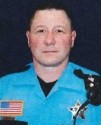
Deputy Sheriff Richard Allen Hall
Chatham County Sheriff's Office, Georgia
End of Watch: Wednesday, September 16, 2015
Age: 45
Tour: 14 years

Deputy Sheriff Richard Hall was killed in a vehicle crash on Highway 280, just north of I-16 in Bryan County, at approximately 5:15 pm.

Deputy Hall was attempting to make a U-turn when his Department vehicle was struck by a pickup truck. The driver of the other vehicle suffered minor injuries.

Deputy Hall had served with the Chatham County Sheriff's Office for 14 years.
Rest in Peace Bro…We Got The Watch

Nemo me impune lacessit

Day is done, Gone the sun, From the lake, From the hills, From the sky. All is well, Safely rest, God is nigh. 

Officer Down


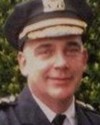
Deputy Sheriff Dwight Darwin Maness
McHenry County Sheriff's Office, Illinois
End of Watch: Monday, September 14, 2015
Age: 47
Tour: 8 years
Incident Date: 10/16/2014

Deputy Sheriff Dwight Maness succumbed to gunshot wounds sustained 11 months earlier after being ambushed while en route to a domestic disturbance at a home in Holiday Hills.

He and two other deputies had gone to the home in the 1300 block of Northeast Shore Drive after a friend of the subject's wife called to request a welfare check. The subject answered the door and stated he did not need any assistance. He invited the deputies into the home and then immediately opened fire on them with an AR-15 rifle.

Deputy Maness and one of the other deputies were both shot multiple times as they retreated for cover. The third deputy returned fire as an Island Lake Police Department officer pulled Deputy Maness to safety.

The subject who shot the deputies was arrested several hours later. He was subsequently convicted of attempted murder and sentenced to 135 years in prison.

Deputy Maness was confined to a wheelchair and underwent multiple surgeries. He passed away on September 14th, 2015, after suffering a pulmonary embolism while conducting a rehab session.

Deputy Maness was a U.S. Army veteran and had served with the McHenry County Sheriff's Office for seven years. He is survived by his wife, two sons, stepchildren, sister, three brothers, parents, and stepmother.
Rest in Peace Bro…We Got The Watch

Nemo me impune lacessit

Day is done, Gone the sun, From the lake, From the hills, From the sky. All is well, Safely rest, God is nigh. 

Thursday, January 21, 2016

Officer Down


Deputy Sheriff Steven "Brett" Hawkins
Harrison County Sheriff's Office, Missouri
End of Watch: Sunday, September 13, 2015
Age: 34
Tour: 3 years
Incident Date: 9/12/2015

Deputy Sheriff Brett Hawkins suffered a fatal heart attack following an emergency response.

The call involved a frantic subject and a subsequent search of the home and large surrounding area. He suffered the heart attack several hours after returning home following his shift.

Deputy Hawkins had served with the Harrison County Sheriff's Office for three years. He had previously served with the Bethany Police Department and Clinton County Sheriff's Office. He is survived by his wife, daughter, three sons, mother, and three siblings.
Rest in Peace Bro…We Got The Watch

Nemo me impune lacessit

Day is done, Gone the sun, From the lake, From the hills, From the sky. All is well, Safely rest, God is nigh. 

Officer Down


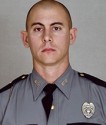
Trooper Joseph Cameron Ponder
Kentucky State Police, Kentucky
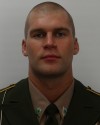
End of Watch: Sunday, September 13, 2015
Age: 31
Tour: 9 months
Badge # 954

Trooper Joseph Ponder was shot and killed after conducting a vehicle stop on I-24, near Lamasco, at approximately 10:20 pm.

Trooper Ponder was on patrol when he observed a vehicle commit a traffic violation. The vehicle fled during the stop, leading Trooper Ponder on a nine-mile pursuit. During the chase, the driver abruptly stopped his vehicle, causing Trooper Ponder to crash into it. The man then exited his vehicle and opened fire, killing Trooper Ponder.

The subject fled the scene on foot but located in a wooded area several hours later by members of the Kentucky State Police ERT. He was shot and killed when he pointed his weapon at the officers.

Trooper Ponder was a U.S. Navy veteran and had served with the Kentucky State Police for nine months. He was assigned to the Mayfield Station. He is survived by his fiancee, parents, three siblings, and grandparents.
Rest in Peace Bro…We Got The Watch

Nemo me impune lacessit

Day is done, Gone the sun, From the lake, From the hills, From the sky. All is well, Safely rest, God is nigh. 

Wednesday, January 20, 2016

Officer Down


Deputy Chief John P. McKee
City University of New York Department of Public Safety, New York
End of Watch: Saturday, September 12, 2015
Age: 49
Tour: 18 years

Deputy Chief John McKee died as the result of cancer he developed following his assignment to assist with search and rescue efforts at the World Trade Center site immediately following the terrorist attacks of September 11, 2001.

Following the attacks, Chief McKee spent over one month at the ground zero site coordinating the allocation of his agency's resources and personnel for the search and rescue operations. He later fell ill as a result of his exposure to the toxic materials in the area at the site.

Chief McKee had served with the City University of New York Department of Public Safety for 18 years and he was second in command of the agency. He is survived by his wife.
On the morning of September 11, 2001, seventy-two officers from a total of eight local, state, and federal agencies were killed when terrorist hijackers working for the al Qaeda terrorist network, headed by Osama bin Laden, crashed two of four hijacked planes into the World Trade Center towers in New York City. After the impact of the first plane, putting the safety of others before their own, law enforcement officers along with fire and EMS personnel, rushed to the burning Twin Towers of the World Trade Center to aid the victims and lead them to safety. Due to their quick actions, it is estimated that over 25,000 people were saved.

As the evacuation continued, the first tower unexpectedly collapsed due as a result of the intense fire caused by the impact. The second tower collapsed a short time later. 71 law enforcement officers, 343 members of the New York City Fire Department and over 2,800 civilians were killed at the World Trade Center site.

A third hijacked plane crashed into a field in rural Pennsylvania when the passengers attempted to re-take control of the plane. One law enforcement officer, who was a passenger on the plane, was killed in that crash.

The fourth hijacked plane was crashed into the Pentagon in Arlington, Virginia, killing almost 200 military and civilian personnel. No law enforcement officers were killed at the Pentagon.

The terrorist attacks resulted in the declaration of war against the Taliban regime, the illegal rulers of Afghanistan, and the al Qaeda terrorist network which also was based in Afghanistan.

On September 9, 2005, all of the public safety officers killed on September 11, 2001, were posthumously awarded the 9/11 Heroes Medal of Valor by President George W. Bush.

The contamination in the air at the World Trade Center site caused many rescue personnel to become extremely ill, and eventually led to the death of several rescue workers.

On May 1, 2011 members of the United States military conducted a raid on a compound in Abbottabad, Pakistan where Osama bin Laden was hiding. During the raid, they shot and killed bin Laden.
Rest in Peace Bro…We Got The Watch

Nemo me impune lacessit

Day is done, Gone the sun, From the lake, From the hills, From the sky. All is well, Safely rest, God is nigh. 

Officer Down


Lieutenant Roy McLaughlin
Yonkers Police Department, New York
End of Watch: Thursday, September 10, 2015
Age: 38
Tour: 17 years

Lieutenant Roy McLaughlin passed away as the result of cancer which he developed following his assignment to aid in the search and recover efforts at the World Trade Center site following the 9/11 Terrorist Attack.

Lieutenant McLaughlin had served with the Yonkers Police Department for 17 years. He is survived by his wife, four children, parents, and three brothers. All three of his brothers and his father also served with the Yonkers Police Department.

On the morning of September 11, 2001, seventy-two officers from a total of eight local, state, and federal agencies were killed when terrorist hijackers working for the al Qaeda terrorist network, headed by Osama bin Laden, crashed two of four hijacked planes into the World Trade Center towers in New York City. After the impact of the first plane, putting the safety of others before their own, law enforcement officers along with fire and EMS personnel, rushed to the burning Twin Towers of the World Trade Center to aid the victims and lead them to safety. Due to their quick actions, it is estimated that over 25,000 people were saved.

As the evacuation continued, the first tower unexpectedly collapsed due as a result of the intense fire caused by the impact. The second tower collapsed a short time later. 71 law enforcement officers, 343 members of the New York City Fire Department and over 2,800 civilians were killed at the World Trade Center site.

A third hijacked plane crashed into a field in rural Pennsylvania when the passengers attempted to re-take control of the plane. One law enforcement officer, who was a passenger on the plane, was killed in that crash.

The fourth hijacked plane was crashed into the Pentagon in Arlington, Virginia, killing almost 200 military and civilian personnel. No law enforcement officers were killed at the Pentagon.

The terrorist attacks resulted in the declaration of war against the Taliban regime, the illegal rulers of Afghanistan, and the al Qaeda terrorist network which also was based in Afghanistan.

On September 9, 2005, all of the public safety officers killed on September 11, 2001, were posthumously awarded the 9/11 Heroes Medal of Valor by President George W. Bush.

The contamination in the air at the World Trade Center site caused many rescue personnel to become extremely ill, and eventually led to the death of several rescue workers.

On May 1, 2011 members of the United States military conducted a raid on a compound in Abbottabad, Pakistan where Osama bin Laden was hiding. During the raid, they shot and killed bin Laden.
Rest in Peace Bro…We Got The Watch

Nemo me impune lacessit

Day is done, Gone the sun, From the lake, From the hills, From the sky. All is well, Safely rest, God is nigh. 

Tuesday, January 19, 2016

Officer Down


Sergeant Miguel Perez-Rios
Puerto Rico Police Department, Puerto Rico
End of Watch: Monday, September 7, 2015
Age: 35
Tour: 13 years
Badge # 33906

Sergeant Miguel Perez-Rios was shot and killed in an ambush while working an off duty assignment at a gas station on Camino Alejandrino, in Caimito.

He was approached by three masked individuals and shot numerous times without warning. The subjects continued to shoot him after he fell to the ground, firing approximately 40 rounds.

Sergeant Perez-Rios had received death threats over the previous 24 hours by an individual he had arrested several times. It is believed that he was murdered in retaliation for the prior arrests. Several subjects have been taken into custody as part of the investigation.

Sergeant Perez-Rios had served with the Puerto Rico Police Department for 13 years. He was posthumously promoted to the rank of sergeant. He is survived by his expectant wife and three children.
Rest in Peace Bro…We Got The Watch

Nemo me impune lacessit

Day is done, Gone the sun, From the lake, From the hills, From the sky. All is well, Safely rest, God is nigh. 

Same stuff, new year.