Police Work, Politics and World Affairs, Football and the ongoing search for great Scotch Whiskey!

Tuesday, June 17, 2014

Officer Down


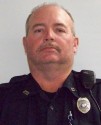
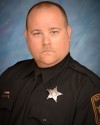
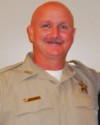
Police Officer,Noel Lee Hawk
Eatonton Georgia Police Department
End of Watch: Sunday, May 4, 2014
Age: 52
Tour: 12 years
Badge # 356

Police Officer Noel Hawk suffered a fatal heart attack shortly after breaking up at a fight at a fast food restaurant in the 100 block of Oak Street at approximately 8:00 pm.

He and several other officers had responded to a dispute between an adult and a juvenile and were able to calm the situation before clearing the scene. A short time later several family members and friends of the subjects arrived at the location and a disturbance occurred.

Officers responded to the scene again and were placing two subjects under arrest when Officer Hawk suddenly collapsed. CPR was initiated but he was not able to be revived.

Officer Hawk had served with the Eatonton Police Department for 12 years. He is survived by his five children, parents, and a brother.
Rest in Peace Bro…We Got The Watch

Day is done, Gone the sun, From the lake, From the hills, From the sky. All is well, Safely rest, God is nigh. 

Security Weekly: Police Officers as Grassroots Defenders, May 15, 2014

Police Officers as Grassroots Defenders

By Scott Stewart

Last week's Security Weekly discussed how an alert citizen helped prevent a Columbine-inspired school shooting in Waseca, Minnesota. In that case, an alert citizen noticed John LaDue behaving suspiciously near a storage space and called the police. Responding officers found that LaDue was manufacturing pressure cooker bombs during what is known as the weapons acquisition phase of the attack cycle.

This series of events highlighted the fact that attackers are vulnerable to detection during the attack cycle and demonstrated that attacks can be prevented by what we call grassroots defenders. But school shootings are not the only types of attacks that can be thwarted by grassroots defenders. Politically or religiously motivated terrorists face the same attack cycle constraints and are vulnerable to detection in the same manner. And concerned citizens are not the only type of grassroots defenders. Police officers -- specifically ordinary patrolmen not assigned exclusively to counterterrorism roles -- also serve a critical role in protecting the public from terrorism.

Trends

As I write, I'm flying to Atlanta to speak at the annual conference of the International Association of Law Enforcement Intelligence Analysts and the Law Enforcement Intelligence Units Association about the current state of the jihadist movement and the implications of changes in that movement for law enforcement personnel. Because of this, my mind is fixating on the topic of police officers as grassroots defenders against terrorist attacks, but there are some important concepts that I'd like to share with Stratfor readers, whether law enforcement officers or civilians.

As I noted in the series of analyses published a few months ago that assessed the current state of the jihadist movement, over the past decade -- and especially during the past five years -- jihadist ideologues have begun to heavily promote the concept of leaderless resistance for their followers in the United States and Europe. In doing so, jihadist leaders have followed a long line of far-right and far-left extremist leaders who have urged their followers to adopt a leaderless resistance model for their operations. In other words, the al Qaeda core and its franchises are copying the operational models adopted earlier by white supremacist groups, the Earth Liberation Front and the Animal Liberation Front.

The jihadists have adopted this leaderless resistance "grassroots" operational model for the same reason that these other groups did. Namely, once the full attention of the U.S. (or a foreign government's) law enforcement and intelligence apparatus became focused on them, it became very difficult to operate as a hierarchical organization. Communications were compromised, operatives were identified and tracked, and funding was interdicted. It is no accident that the al Qaeda core suffered substantial losses after the 9/11 attacks and that it has been unable to replicate that type of "terrorist spectacular" over the nearly 13 years that have passed since. The U.S. government and its allies have attacked the al Qaeda organization with the full weight of every tool in their counterterrorism arsenal, and the end result of that assault was frustrated terrorist planners who decided the best way to attack the United States or the West was by urging jihadists living there to take action.

This was a significant change for the jihadist movement. Since the 1970s their call was for men to come and "join the caravan" traveling to receive training and then fight in places like Afghanistan, Bosnia, Chechnya and Iraq. In 2009, that call became "stay at home and attack to the best of your ability where you live." This shift had clear security advantages because there would be no international communications to intercept or hierarchical organizations to penetrate and monitor. The jihadist "movement" is far wider than the al Qaeda organization and it is therefore more difficult to determine who might be planning an attack and where.

However, this increased operational security also comes with a price. The grassroots operatives, whether working alone or as part of a small cell, lack the technical skills of the professional terrorist operatives of the al Qaeda core or the al Qaeda franchise groups. We call these technical terrorist skills "tradecraft."

The grassroots operatives -- no matter their ideological motivation -- generally possess poor tradecraft skills in such areas as surveillance, bombmaking and operational security. They also frequently lack funding, and in some cases they will use crime to fund their activities. Their poor operational security and involvement in crime leaves them particularly vulnerable to detection by the police.

Challenges

As noted above, most counterterrorism intelligence efforts have been designed to identify and track people with links to known terrorist groups, and in that regard such efforts have proved very effective. On the other hand, counterterrorism agencies have struggled to identify those grassroots militants who do not have contact with known terrorist entities. Grassroots movements are by nature ambiguous, and government agencies frequently struggle with ambiguity.

It is also important to note that the resources of counterterrorism agencies are limited. For example, the FBI has fewer than 14,000 special agents on the street to fulfill its many responsibilities, and while counterterrorism has become its top mission in the post-9/11 era, only a portion of its agents (estimated to be between 2,500 and 3,000) are assigned to counterterrorism investigations at any time. This is not merely a problem for the FBI. Indeed, counterterrorism is not the sole, or even primary, mission of most agencies that conduct counterterror operations. Often, as is the case with MI5 in the United Kingdom, the primary counterterrorism agency also has substantial foreign counterintelligence responsibilities. In the case of the FBI, it has not only counterterrorism and foreign counterintelligence missions but also a host of other responsibilities, such as investigating bank robberies, kidnappings, white-collar crime, online crime and public corruption. Also, while counterterrorism was the primary focus of almost every law enforcement and intelligence agency immediately after 9/11, as time has passed, the emphasis on counterterrorism has lessened because other missions have demanded increased resources.

These limited resources have been largely focused on identifying and monitoring the activities of people connected to established militant groups. This emphasis is understandable given that operatives belonging to a group like Hezbollah or established jihadist organizations have access to much better training and far greater resources than their grassroots counterparts. This means that they are generally capable of planning and executing larger and more sophisticated attacks. Because of this, it is only logical for counterterrorism agencies to focus their limited resources on the more potent threat. But, as demonstrated by last year's Boston Marathon bombing, grassroots operatives can and do launch attacks. That attack also demonstrated how counterterrorism programs have struggled to address the grassroots threat.

Certainly, professional counterterrorism agencies have thwarted many grassroots plots. But in the majority of those plots the suspects either planned an attack that was beyond their means, leading them to seek assistance from government informants, or they contacted a known militant actor and, in doing so, came to the attention of the authorities. However, grassroots actors who do not seek assistance and who do not get caught communicating with known terrorist entities can often launch their attacks undetected. In those cases, the attack will either fail, like the 2010 Times Square bombing, or succeed, like the Boston Marathon bombing.

Grassroots Defenders

While there are only about 14,000 FBI agents to cover the entire United States, there are some 34,000 officers in the New York City Police Department alone and an estimated 800,000 local and state police officers across the United States. While the vast majority of these officers are not assigned to investigate terrorism, simple numbers dictate that grassroots operatives planning terrorist attacks who do not reach out for help are far more likely to encounter an ordinary policeman than a dedicated counterterrorism agent.

One example is the June 2011 case in which Seattle police alerted the FBI of two grassroots jihadists planning an armed assault against a Military Entrance Processing Station in Seattle. The men were identified when they contacted a police informant in an attempt to obtain hand grenades and fully automatic rifles -- the weapons acquisition phase of the attack cycle.

Other examples include the August 2007 case in which two men stopped by a sheriff's deputy for speeding near Goose Creek, S.C., were found to be in possession of a large pipe bomb, and the July 2005 case in which police in Torrance, Calif., thwarted a grassroots terrorism plot during the investigation of a string of armed robberies. Furthermore, a sharp North Carolina sheriff's deputy uncovered a multimillion-dollar cigarette smuggling operation being run by Hezbollah.

Because of their limited tradecraft capabilities, grassroots operatives of all stripes frequently make operational security errors while they are in the process of committing crimes in advance of an attack, such as document fraud, illegally obtaining weapons or illegally raising funds for an attack. These are the types of activities a would-be attacker is required to conduct by the constraints of the attack planning cycle that leave him or her vulnerable to detection. But this vulnerability can only be exploited if the police officers recognize the behavior for what it is and take appropriate action.

The threat from the grassroots is real and deadly. Because of this, the importance of grassroots defenders has never been greater. Police officers, whether on patrol or conducting investigations are a critical component in the grassroots defense network. As the West faces the continuing danger of jihadists returning from battlefields in places such as Syria, police officers will play a significant role in helping to mitigate that threat.

Security Weekly: Police Officers as Grassroots Defenders is republished with permission of Stratfor.

Geopolitical Weekly: Borderlands: The View from Azerbaijan, May 12, 2014


By George Friedman

I arrive in Azerbaijan as the country celebrates Victory Day, the day successor states of the former Soviet Union celebrate the defeat of Germany in World War II. No one knows how many Soviet citizens died in that war -- perhaps 22 million. The number is staggering and represents both the incompetence and magnificence of Russia, which led the Soviets in war. Any understanding of Russia that speaks of one without the other is flawed.

As I write, fireworks are going off over the Caspian Sea. The pyrotechnics are long and elaborate, sounding like an artillery barrage. They are a reminder that Baku was perhaps the most important place in the Nazi-Soviet war. It produced almost all of the Soviet Union's petroleum. The Germans were desperate for it and wanted to deny it to Moscow. Germany's strategy after 1942, including the infamous battle of Stalingrad, turned on Baku's oil. In the end, the Germans threw an army against the high Caucasus guarding Baku. In response, an army raised in the Caucasus fought and defeated them. The Soviets won the war. They wouldn't have if the Germans had reached Baku. It is symbolic, at least to me, that these celebrations blend into the anniversary of the birth of Heydar Aliyev, the late president of Azerbaijan who endured the war and later forged the post-Soviet identity of his country. He would have been 91 on May 10.

Baku is strategic again today, partly because of oil. I've started the journey here partly by convenience and partly because Azerbaijan is key to any counter-Russian strategy that might emerge. My purpose on this trip is to get a sense of the degree to which individual European states feel threatened by Russia, and if they do, the level of effort and risk they are prepared to endure. For Europe does not exist as anything more than a geographic expression; it is the fears and efforts of the individual nation-states constituting it that will determine the course of this affair. Each nation is different, and each makes its own calculus of interest. My interest is to understand their thinking, not only about Russia but also about the European Union, the United States and ultimately themselves. Each is unique; it isn't possible to make a general statement about them.

Some question whether the Caucasus region and neighboring Turkey are geographically part of Europe. There are many academic ways to approach this question. My approach, however, is less sophisticated. Modern European history cannot be understood without understanding the Ottoman Empire and the fact that it conquered much of the southeastern part of the European peninsula. Russia conquered the three Caucasian states -- Armenia, Georgia and Azerbaijan -- and many of their institutions are Russian, hence European. If an organic European expression does exist, it can be argued to be Eurovision, the pan-continental music competition. The Azerbaijanis won it in 2011, which should settle any debate on their "Europeanness."

But more important, a strategy to block Russia is hard to imagine without including its southern flank. There is much talk of sanctions on Russia. But sanctions can be countered and always ignore a key truth: Russia has always been economically dysfunctional. It has created great empires and defeated Napoleon and Hitler in spite of that. Undermining Russia's economy may be possible, but that does not always undermine Russia's military power. That Soviet military power outlived the economically driven collapse of the Soviet Union confirms this point. And the issue at the moment is military.

The solution found for dealing with the Soviet Union during the Cold War was containment. The architect of this strategy was diplomat George Kennan, whose realist approach to geopolitics may have lost some adherents but not its relevance. A cordon sanitaire was constructed around the Soviet Union through a system of alliances. In the end, the Soviets were unable to expand and choked on their own inefficiency. There is a strange view abroad that the 21st century is dramatically different from all prior centuries and such thinking is obsolete. I have no idea why this should be so. The 21st century is simply another century, and there has been no transcendence of history. Containment was a core strategy and it seems likely that it will be adopted again -- if countries like Azerbaijan are prepared to participate.

To understand Azerbaijan you must begin with two issues: oil and a unique approach to Islam. At the beginning of the 20th century, over half the world's oil production originated near Baku, the capital of Azerbaijan. Hence Hitler's strategy after 1942. Today, Azerbaijani energy production is massive, but it cannot substitute for Russia's production. Russian energy production, meanwhile, defines part of the strategic equation. Many European countries depend substantially on Russian energy, particularly natural gas. They have few alternatives. There is talk of U.S. energy being shipped to Europe, but building the infrastructure for that (even if there are supplies) will take many years before it can reduce Europe's dependence on Russia.

Withholding energy would be part of any Russian counter to Western pressure, even if Russia were to suffer itself. Any strategy against Russia must address the energy issue, begin with Azerbaijan, and be about more than production. Azerbaijan is not a major producer of gas compared to oil. On the other side of the Caspian Sea, however, Turkmenistan is. Its resources, coupled with Azerbaijan's, would provide a significant alternative to Russian energy. Turkmenistan has an interest in not selling through Russia and would be interested in a Trans-Caspian pipeline. That pipeline would have to pass through Azerbaijan, connecting onward to infrastructure in Turkey. Assuming Moscow had no effective counters, this would begin to provide a serious alternative to Russian energy and decrease Moscow's leverage. But this would all depend on Baku's willingness and ability to resist pressure from every direction.

Azerbaijan lies between Russia and Iran. Russia is the traditional occupier of Azerbaijan and its return is what Baku fears the most. Iran is partly an Azeri country. Nearly a quarter of its citizens, including Ayatollah Ali Khamenei, are Azeri. But while both Azerbaijan and Iran are predominantly Shiite, Azerbaijan is a militantly secular state. Partly due to the Soviet experience and partly because of the unique evolution of Azeri identity since the 19th century, Azerbaijan separates the private practice of Islam from public life. I recall once attending a Jewish Passover feast in Baku that was presided over by an Orthodox rabbi, with security provided by the state. To be fair, Iran has a Jewish minority that has its own lawmaker in parliament. But any tolerance in Iran flows from theocratic dogma, whereas in Azerbaijan it is rooted in a constitution that is more explicitly secular than any in the European Union, save that of France.

This is just one obvious wedge between Azerbaijan and Iran, and Tehran has made efforts to influence the Azeri population. For the moment, relations are somewhat better but there is an insoluble tension that derives from geopolitical reality and the fact that any attack on Iran could come from Azerbaijan. Furthering this wedge are the close relations between Azerbaijan and Israel. The United States currently blocks most weapons sales to Azerbaijan. Israel -- with U.S. approval -- sells the needed weapons. This gives us a sense of the complexity of the relationship, recalling that complexity undermines alliances.

The complexity of alliances also defines Russia's reality. It occupies the high Caucasus overlooking the plains of Azerbaijan. Armenia is a Russian ally, bound by an agreement that permits Russian bases through 2044. Yerevan also plans to join the Moscow-led Customs Union, and Russian firms own a large swath of the Armenian economy. Armenia feels isolated. It remains hostile to Turkey for Ankara's unwillingness to acknowledge events of a century ago as genocide. Armenia also fought a war with Azerbaijan in the 1990s, shortly after independence, for a region called Nagorno-Karabakh that had been part of Azerbaijan -- a region that it lost in the war and wants back. Armenia, caught between Turkey and an increasingly powerful Azerbaijan, regards Russia as a guarantor of its national security.

For Azerbaijan, Nagorno-Karabakh remains a critical issue. Azerbaijan holds that U.N. resolutions have made it clear that Armenia's attack constituted a violation of international law, and a diplomatic process set up in Minsk to resolve the crisis has proven ineffective. Azerbaijan operates on two tracks on this issue. It pursues national development, as can be seen in Baku, a city that reflects the oil wealth of the country. It will not endanger that development, nor will it forget about Nagorno-Karabakh. At some point, any nation aligning itself with Azerbaijan will need to take a stand on this frozen conflict, and that is a high price for most.

Which leads me to an interesting symmetry of incomprehension between the United States and Azerbaijan. The United States does not want to sell weapons directly to Azerbaijan because of what it regards as violations of human rights by the Azerbaijani government. The Americans find it incomprehensible that Baku, facing Russia and Iran and needing the United States, cannot satisfy American sensibilities by avoiding repression -- a change that would not threaten the regime. Azerbaijan's answer is that it is precisely the threats it faces from Iran and Russia that require Baku to maintain a security state. Both countries send operatives into Azerbaijan to destabilize it. What the Americans consider dissidents, Azerbaijan sees as agents of foreign powers. Washington disputes this and continually offends Baku with its pronouncements. The Azerbaijanis, meanwhile, continually offend the Americans.

This is similar to the Nagorno-Karabakh issue. Most Americans have never heard of it and don't care who owns it. For the Azerbaijanis, this is an issue of fundamental historical importance. They cannot understand how, after assisting the United States in Afghanistan, risking close ties with Israel, maintaining a secular Islamic state and more, the United States not only cannot help Baku with Nagorno-Karabakh but also insists on criticizing Azerbaijan.

The question on human rights revolves around the interpretation of who is being arrested and for what reason. For a long time this was an issue that didn't need to be settled. But after the Ukrainian crisis, U.S.-Azerbaijani relations became critical. It is not just energy; rather, in the event of the creation of a containment alliance, Azerbaijan is the southeastern anchor of the line on the Caspian Sea. In addition, since Georgia is absolutely essential as a route for pipelines, given Armenia's alliance with Russia, Azerbaijan's support for Georgian independence is essential. Azerbaijan is the cornerstone for any U.S.-sponsored Caucasus strategy, should it develop.

I do not want to get into the question of either Nagorno-Karabakh or human rights in Azerbaijan. It is, for me, a fruitless issue arising from the deep historical and cultural imperatives of each. But I must take exception to one principle that the U.S. State Department has: an unwillingness to do comparative analysis. In other words, the State Department condemns all violations equally, whether by nations hostile to the United States or friendly to it, whether by countries with wholesale violations or those with more limited violations. When the State Department does pull punches, there is a whiff of bias, as with Georgia and Armenia, which -- while occasionally scolded -- absorb less criticism than Azerbaijan, despite each country's own imperfect record.

Even assuming the validity of State Department criticism, no one argues that Azerbaijani repression rises anywhere near the horrors of Joseph Stalin. I use Stalin as an example because Franklin Roosevelt allied the United States with Stalin to defeat Hitler and didn't find it necessary to regularly condemn Stalin while the Soviet Union was carrying the burden of fighting the war, thereby protecting American interests. That same geopolitical realism animated Kennan and ultimately created the alliance architecture that served the United States throughout the Cold War. Is it necessary to offend someone who will not change his behavior and whom you need for your strategy? The State Department of an earlier era would say no.

It was interesting to attend a celebration of U.S.-Azerbaijani relations in Washington the week before I came to Baku. In the past, these events were subdued. This one was different, because many members of Congress attended. Two guests were particularly significant. One was Charles Schumer of New York, who declared the United States and Azerbaijan to be great democracies. The second was Nancy Pelosi, long a loyalist to Armenian interests. She didn't say much but chose to show up. It is clear that the Ukrainian crisis triggered this turnout. It is clear that Azerbaijan's importance is actually obvious to some in Congress, and it is also clear that it signals tension over the policy of criticizing human rights records without comparing them to those of other countries and of ignoring the criticized country's importance to American strategy.

This is not just about Azerbaijan. The United States will need to work with Turkey, Bulgaria, Romania and Hungary -- all of whom have been found wanting by the State Department in some ways. This criticism does not -- and will not -- produce change. Endless repetition of the same is the height of ineffectiveness. It will instead make any strategy the United States wants to construct in Europe ineffective. In the end, I would argue that a comparison between Russia and these other countries matters. Perfect friends are hard to find. Refusing to sell weapons to someone you need is not a good way to create an alliance.

In the past, it seemed that such an alliance was merely Cold War nostalgia by people who did not realize and appreciate that we had reached an age too wise to think of war and geopolitics. But the events in Ukraine raise the possibility that those unreconstructed in their cynicism toward the human condition may well have been right. Alliances may in fact be needed. In that case, Roosevelt's attitude toward Stalin is instructive.

Borderlands: The View from Azerbaijan is republished with permission of Stratfor.

Officer Down


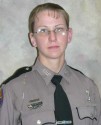
Trooper Chelsea Richard
Florida Highway Patrol
End of Watch: Saturday, May 3, 2014
Age: 30
Tour: 9 years
Badge # 1087

Trooper Chelsea Richard was struck and killed by a vehicle while investigating an accident on I-75, near mile marker 341, at approximately 2:00 pm.

The vehicles involved in the accident had been moved to the shoulder. She was speaking with a tow truck driver and a family member of a crash victim when another accident occurred at the same location. A pickup truck pulling a trailer left the roadway and struck all three individuals, killing Trooper Richard and the tow truck driver. The third pedestrian suffered severe injuries and died several days later.

Trooper Richard had served with the Florida Highway Patrol for nine years and was assigned to the Ocala District Office. She is survived by her 4-year-old son, parents, and grandparents.
Rest in Peace Sis…We Got The Watch

Day is done, Gone the sun, From the lake, From the hills, From the sky. All is well, Safely rest, God is nigh. 

Officer Down


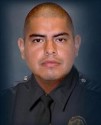
Police Officer II Roberto C. Sanchez
Los Angeles California Police Department
End of Watch: Saturday, May 3, 2014
Age: 32
Tour: 6 years
Badge # 39618

Police Officer Roberto Sanchez was killed when his patrol car was intentionally rammed by a vehicle while attempting to make a traffic stop.

Officer Sanchez and his partner were in the Harbor City section of the city and were following a vehicle on Anaheim Street, attempting to conduct a traffic stop. The vehicle they were attempting to stop made a sudden U-turn at President Avenue. As the patrol car also made the U-turn a SUV that had been following the patrol car rammed it at a high rate of speed. The two occupants of the SUV fled on foot.

Both officers were trapped in the vehicle and Officer Sanchez's partner was unable to reach his radio to call for assistance. He then utilized his mobile phone and called 911. Both officers were removed from the vehicle by responding emergency units. They were taken to a local hospital where Officer Sanchez died from his injuries.

The driver of the SUV fled the scene on foot but was apprehended a short time later and charged with murder, vehicular manslaughter with gross negligence, assault on a peace officer and leaving the scene of the accident.

Officer Sanchez had served with the Los Angeles Police Department for six years. He was survived by his wife.
Rest in Peace Bro…We Got The Watch

Day is done, Gone the sun, From the lake, From the hills, From the sky. All is well, Safely rest, God is nigh. 

Monday, June 16, 2014

Security Weekly: A Narrowly Averted Tragedy in Minnesota, May 8, 2014

By Scott Stewart

The Waseca Police Department in Minnesota announced May 1 that it had disrupted a local high school student's plot to murder his family and then commit a Columbine-inspired bomb and firearms attack at his school. The department said a concerned citizen called the evening of April 29 and reported seeing a man with a backpack break into a self-storage locker and close the door behind him. Police responding to the call found 17-year-old John LaDue in the storage locker. Noting the presence of gunpowder, pyrotechnic chemicals, a pressure cooker, steel ball bearings and other items used in bombmaking inside the locker, the officers secured the storage space and transported LaDue to the police department for a voluntary interview.

LaDue told officers that he had planned to kill his family, start diversionary fires in a rural part of Waseca to distract first responders, and then travel to his school, where he planned to detonate several explosive devices and shoot the school resource officer, staff and students. LaDue also told officers he had hoped police officers responding to the scene would kill him.

Based on the officers' observations and the interview of LaDue, police obtained search warrants for the storage locker and LaDue's home. They found a document outlining LaDue's plans in minute detail that indicated the plot had been in the works for some 10 months. They also found multiple firearms, including an SKS rifle and a Beretta pistol, several hundred rounds of ammunition and three completed explosive devices. LaDue had apparently intended to conduct the attack on April 20, the anniversary of the 1999 school shooting in Columbine, Colo., but postponed the assault when he realized April 20 fell on a Sunday this year.

LaDue's plot was thwarted, but it highlights several concepts Stratfor has discussed for many years concerning such attacks and specifically how they can be prevented.

Attacks Follow a Process

The LaDue case is another demonstration that an attack does not "just happen." Rather, it is the result of a distinct and discernible planning cycle that anyone wanting to conduct an attack must follow.

There are several points in the process in which an aspiring attacker has no choice but to make himself vulnerable to detection. One such point is while conducting preoperational surveillance. Another is during the weapons acquisition phase. There have been numerous cases in which would-be attackers have unwittingly reached out to government agents or informants in an effort to gather weapons or explosive devices for an attack. This is true for attackers of many ideologies: jihadists, neo-Nazis, anti-government militia members, anarchists and militant environmentalists.

The success of these sting cases has led jihadist leaders from al Qaeda in the Arabian Peninsula and the al Qaeda core since 2009 to encourage grassroots attackers to conduct simple attacks within their capabilities. Right- and left-wing militant ideologues have issued similar calls for their adherents to conduct attacks alone or in small "phantom" cells.

Even when an aspiring attacker opts for a simple strike, obtaining the components to construct even a basic explosive device such as a pressure cooker bomb has led to the arrest of some plotters. Often they attract attention by their demeanor while acquiring necessary items. In July 2011, for example, Pfc. Jason Abdo was arrested in a Killeen, Texas, hotel after a gun store employee told police that Abdo had acted suspiciously while purchasing a large quantity of smokeless powder. Abdo was planning to bomb a Killeen restaurant that soldiers frequented.

In the LaDue case, it was his demeanor at the storage facility that led to the phone call to police. In an interview with the Minneapolis Star Tribune, the witness noted that she called police because she sensed something was wrong in the way he arrived at the storage space by sneaking through her backyard instead of coming in on the road. LaDue also took some time to get into the locker, leading the witness to believe he may have broken into it, and then shut the door behind him. This is obviously not normal behavior for someone visiting a self-storage site.

Bombmaker Clues

In actuality, LaDue's behavior at the storage locker was not the first clue Waseca police had that something was afoot. While planning the attack, LaDue had experimented with his improvised explosive device components and had detonated smaller devices in parks, the high school athletic field and church and elementary school playgrounds. Police had opened an investigation into the remains of some CO2 cartridge bombs found on the playground at the Hartley Elementary School in Waseca in March. It is unclear from published reports if LaDue planned to use the CO2 cartridges filled with gunpowder as improvised detonators for his pressure cooker bombs or if he intended to use them as improvised hand grenades. Either way, the remnants of the explosive devices were evidence that someone was engaged in bombmaking.

Bombmakers frequently test improvised explosive mixtures and bomb components such as blasting caps to ensure that they are functioning properly and that the completed device will therefore be viable. Testing usually involves burning or detonating small quantities of the explosive mixture, or actually exploding the improvised blasting cap or a prototype explosive device. The bombmaker will often attempt to do this in a remote place so as not to draw attention to his activities. LaDue was not so discreet with his explosives tests.

The problem for police with an item such as CO2 canisters filled with black powder is that it is difficult to determine whether the items are intended for use in an attack or if they are merely being used by someone recreationally. It is not uncommon for some people to experiment with small bombs, as a YouTube search of "homemade bomb" will readily attest. But a rash of seemingly "harmless" bomb incidents, as was seen in the LaDue case, could indicate that someone is preparing for an attack and therefore presents police with an opportunity to thwart the attack if they can identify the person doing the bomb testing.

Grassroots Defenders

As we've previously noted, the number of dedicated counterterrorism practitioners is very limited. As a result, attackers, who are forced to reveal themselves during the attack planning cycle, are far more likely to be spotted by someone other than an FBI or MI5 agent. This fact highlights the importance of what we call grassroots defenders -- citizens practicing situational awareness who notice and report indicators of a pending attack, such as weapons acquisition, bombmaking and the conduct of preoperational surveillance.

Grassroots defenders are not vigilantes, and this is not a call to institute the type of paranoid informant network that existed in East Germany. Rather, grassroots defenders are citizens who take responsibility for their own security and for the security of society and who report possible terrorist behavior to authorities. Anyone can spot operational planning activities such as purchasing bombmaking components and firearms, creating or testing improvised explosive mixtures and conducting preoperational surveillance.

The LaDue case was further proof that ordinary citizens exercising good situational awareness can save and have saved lives. This has been the driving force behind programs such as the New York Police Department's "If You See Something, Say Something" campaign, a program subsequently adopted by the U.S. Department of Homeland Security as a means of encouraging citizens to report potential terrorist behavior.

It is unrealistic to expect the government to uncover and thwart every plot. There are simply too many potential malevolent actors and too many vulnerable targets. People need to assume responsibility for their own security and the security of their communities. This doesn't mean living in fear and paranoia but rather being cognizant of potential dangers and alert to indicators of them.

A Narrowly Averted Tragedy in Minnesota is republished with permission of Stratfor.

Officer Down

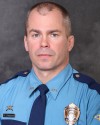
Sergeant Patrick Scott Johnson
Alaska State Troopers
End of Watch: Thursday, May 1, 2014
Age: 45
Tour: 23 years
Badge # 144

Trooper Gabriel Rich
Alaska State Troopers
End of Watch: Thursday, May 1, 2014
Age: 26
Tour: 7 years, 6 months
Badge # 46

Sergeant Scott Johnson and Trooper Gabriel Rich were shot and killed while investigating reports that a person had brandished a firearm in the village of Tanana several days earlier.

Both troopers had gone to a home on Front Street to speak to the suspect. At some point during the investigation both troopers were fatally shot inside of the home.

One subject was taken into custody following the incident.

Sergeant Johnson had served with the Alaska State Troopers for 20 years and had previously served with the North Slope Borough Police Department for three years. He is survived by his wife, three daughters, parents, and siblings.

Trooper Rich had served with the Alaska State Troopers for 3-1/2 years and had previously served with the North Pole Police Department for four years. He is survived by his two sons, fiance, and parents.
Rest in Peace Gentlemen…We Got The Watch

Day is done, Gone the sun, From the lake, From the hills, From the sky. All is well, Safely rest, God is nigh. 

Geopolitical Weekly: Borderlands: The New Strategic Landscape, May 6, 2014

By George Friedman

I will be leaving this week to visit a string of countries that are now on the front line between Russia and the European Peninsula: Poland, Slovakia, Hungary, Romania, Serbia and Azerbaijan. A tour like that allows you to look at the details of history. But it is impossible to understand those details out of context. The more I think about recent events, the more I realize that what has happened in Ukraine can only be understood by considering European geopolitics since 1914 -- a hundred years ago and the beginning of World War I.

In The Guns of August, Barbara Tuchman wrote a superb and accurate story about how World War I began. For her it was a confluence of perception, misperception, personality and decisions. It was about the leaders, and implicit in her story was the idea that World War I was the result of miscalculation and misunderstanding. I suppose that if you focus on the details, then the war might seem unfortunate and avoidable. I take a different view: It was inevitable from the moment Germany united in 1871. When it happened and exactly how it happened was perhaps up to decision-makers. That it would happen was a geopolitical necessity. And understanding that geopolitical necessity gives us a framework for understanding what is happening in Ukraine, and what is likely to happen next.

The German Problem

The unification of Germany created a nation-state that was extraordinarily dynamic. By the turn of the 20th century, Germany had matched the British economy. However, the British economy pivoted on an empire that was enclosed and built around British interests. Germany had no such empire. It had achieved parity through internal growth and exports on a competitive basis. This was just one of the problems Germany had. The international economic system was based on a system of imperial holdings coupled with European industrialism. Germany lacked those holdings and had no politico-military control over its markets. While its economy was equal to Britain's, its risks were much higher.

Economic risk was compounded by strategic risk. Germany was on the North European Plain, relatively flat, with only a few north-south rivers as barriers. The Germans had the Russians to the east and the French to the west. Moscow and Paris had become allies. If they were to simultaneously attack Germany at a time of their choosing, Germany would be hard-pressed to resist. The Germans did not know Russo-French intentions, but they did know their capabilities. If there was to be war, the Germans had to strike first in one direction, achieve victory there and then mass their forces on the other side.

When that war would be fought, which strategy the Germans chose and ultimately whether it would succeed were uncertainties. But unlike Tuchman's view of the war, a war that began with a German strike was inevitable. The war was not the result of a misunderstanding. Rather, it was the result of economic and strategic realities.

The Germans struck against the French first but failed to defeat them. They were therefore trapped in the two-front war that they had dreaded, but they were at least fully mobilized and could resist. A second opportunity to implement their strategy occurred in the winter of 1917, when an uprising took place against the Russian czar, who abdicated on March 15, 1917. (Germany actually set the revolution in motion in March by repatriating Lenin back to Russia via the infamous sealed train car.) There was serious concern that the Russians might pull out of the war, and in any case, their military had deteriorated massively. A German victory there seemed not only possible, but likely. If that happened, and if German forces in Russia were transferred to France, it was likely that they could mass an offensive that would defeat the British and French.

In April 1917, the United States declared war on Germany. There were multiple reasons, including the threat that German submarines might close the Atlantic to American shipping, but also the fear that events in Russia might defeat the allies. The United States had a deep interest in making certain that the Eurasian landmass would not fall under the control of any single nation. The manpower, resources and technology under the control of the Germans would more than outmatch the United States. It could not live with a German victory, and therefore within a year it had sent more than a million men to Europe and helped counter the German offensive after the October 1917 Russian Revolution pulled Russia from the war. The peace treaty ceded Ukraine to the Germans, placing Russia in danger if the Germans defeated the Anglo-French alliance. Ultimately, the American intervention defeated the Germans, and the Russians regained Ukraine.

The American intervention was decisive and defined American strategy in Eurasia for a century. It would maintain the balance of power. As the balance shifted, Washington would increase aid and, if absolutely necessary, intervene decisively in the context of an existing and effective military alliance.

World War II was fought similarly. The Germans, again in a dangerous position, made an alliance with the Soviets, assuring a single-front war, and this time defeated France. In due course, Germany turned on Russia and attempted to dominate Eurasia decisively. The United States was first neutral, then provided aid to the British and Russians, and even after entering the war in December 1941 withheld its main thrust until the last possible moment. The United States did invade North Africa, Sicily and the rest of Italy, but these were marginal operations on the periphery of German power. The decisive strike did not occur until June 1944, after the German military had been significantly weakened by a Soviet army heavily supplied by the United States. The decisive campaign in northern Europe lasted less than a year, and was won with limited U.S. losses compared to the other combatants. It was an intervention in the context of a powerful military alliance.

In the Cold War, the Soviet Union positioned itself by creating deep buffers. It held the Baltics, Belarus and Ukraine as its first line of defense. Its second defensive tier consisted of Poland, Czechoslovakia, Hungary, Romania and Bulgaria. In addition, the Soviet buffer moved to the center of Germany on the North German Plain. Given history, the Soviets needed to create as deep a buffer as possible, and this line effectively precluded an attack on the Soviet Union.

The American response was more active than in the first two wars, but not as decisive. The United States positioned forces in West Germany in the context of a strong military alliance. This alliance was likely insufficient to block a Soviet attack. The United States promised the delivery of additional troops in the event of war and also guaranteed that if needed, it was prepared to use nuclear weapons to stop a Soviet attack.

The model was in that sense similar. The hope was to maintain the balance of power with minimal American exposure. In the event the balance broke, the United States was prepared to send substantially more troops. In the worst case, the United States claimed to be prepared to use decisive force. The important thing to note was that the United States retained the option to reinforce and go nuclear. The Soviets never attacked, in part because they didn't need to -- they were not at risk -- and in part because the risk associated with an attack was too high.

Thus, the United States followed a consistent strategy in all three wars. First, it avoided overexposure, limiting its presence to the minimum needed. The United States wasn't present in World War I until very late. In World War II, America's presence consisted of peripheral operations at relatively low cost. In the Cold War, it positioned a force sufficient to convince the Soviets of American intent, but always under its control and always poised for full intervention at the latest opportune time, with minimal losses, in the context of an effective military alliance.

The collapse of the Soviet Union and the revolutions of 1989 stripped away the buffers that the Soviets had captured in World War II. Their strategic position was worse than it was before the world wars or even since the 17th century. If the inner buffer, the Baltics, Belarus or Ukraine, were to become hostile and part of a Western alliance system, the threat to Russia would be overwhelming. The Baltics were admitted to NATO and the alliance was now less than 100 miles from St. Petersburg. If Ukraine and Belarus went the same route, then the city of Smolensk, once deep in the Soviet Union and the Russian empire, would be a border town, and the distance to Moscow from NATO territory would be 250 miles.

The mitigating factor was that NATO was weak and fragmented. This was not much of a consolation for the Russians, who had seen Germany transform from a weak and fragmented country in 1932 to a massive power by 1938. Where there is an industrial base, military capability can be rapidly generated and intentions can change overnight. Therefore, for Russia, preventing the Western alliance system from absorbing Ukraine was critical, as the events of previous months have shown.

The U.S. Approach

The American strategy in Europe remains the same as it was in 1914: to allow the European balance of power to manage itself. Public statements aside, the United States was comfortable with the weakness of European powers so long as the Russians were also weak. There was no threat of a hegemon emerging. The American strategy was, as always, to let the balance maintain itself, intervene with any aid needed to maintain the balance and intervene militarily in the context of a robust alliance at the decisive moment and not before.

It follows from this that the United States is not prepared to do more than engage in symbolic efforts right now. The Russian military may be able to capture Ukraine, although the logistical challenges are serious. But the United States is not in a position to deploy a decisive defensive force in Ukraine. The shift in the European balance of power is far from decisive, and the United States has time to watch the situation develop.

At this point, the United States is likely prepared to increase the availability of weapons to the countries I will visit, along with Bulgaria and the Baltics. But the United States' problem is that its historical strategy relies on the existence of a significant military force, and where multiple countries are involved, a working alliance. It is pointless for the United States to provide weapons to countries that will not cooperate with each other and are incapable of fielding sufficient force to use these weapons.

Since the events in Ukraine, many European countries have discussed increased defense spending and cooperation. It is not clear that NATO is a vehicle for this cooperation. As we saw during the meetings between U.S. President Barack Obama and German Chancellor Angela Merkel, Germany's willingness to engage in assertive action is limited. In southern Europe, the economic crisis still rages. The appetite of the British and French or the Iberians to become involved is limited. It is hard to see NATO playing an effective military role.

The United States looks at this as a situation where the exposed countries must take decisive steps. For the United States, there is no emergency. For Poland, Slovakia, Hungary, Romania, Serbia and Azerbaijan, along with the other countries along the buffer line, there is not yet an emergency. But one could materialize with surprising speed. The Russians are not intrinsically powerful, but they are more powerful than any of these countries alone, or even together. Given American strategy, the United States would be prepared to begin providing aid, but substantial aid requires substantial action on the part of the buffer countries.

The first and second world wars were about the status of Germany in Europe. That was what the Cold War was about as well, although framed in a different way. We are once again discussing the status of Germany. Today it has no western threat. The eastern threat is weak, far away and potentially more of an ally than a threat. The force that drove Germany in two world wars is not there now. Logically, it has little reason to take risks.

The American fear of a Eurasian hegemon is also a distant one. Russia is far from being able to pose that kind of threat. It is still struggling to regain its buffers. Just as Germany is not prepared to engage in aggressive actions, the United States will continue its century-old strategy of limiting its exposure for as long as possible. At the same time, the buffer countries face a potential threat that prudence requires they prepare for.

However, it is not clear that the Russian threat will materialize, and it is not clear that, rhetoric aside, the Russians have the political will to act decisively. The buffer states' optimal solution would be a massive NATO intervention. That won't happen. The second best would be a massive American intervention. That won't happen either. The buffer states want to shift the cost of their defense to others -- a rational strategy if they can achieve it.

The impersonal forces of geopolitics are driving Russia to try to retake its critical borderland. Having done that, the nations bordering Russian power will not know how far the Russians will try to go. For Russia, the deeper the buffer, the better. But the deeper the buffer, the higher the cost of maintaining it. The Russians are not ready for any such move. But over time, as their strength and confidence grow, their actions become less predictable. When facing a potential existential threat, the prudent action is to overreact.

The buffer states need to arm and ally. The United States will provide a degree of support, regardless of what the Germans, and therefore NATO, do. But the basic decision is in the hands of the Poles, Slovaks, Hungarians, Romanians, Serbians and Azerbaijanis, along with those in the other buffer states. Some, like Azerbaijan, have already made the decision to arm and are looking for an alliance. Some, like Hungary, are watching and waiting. Mark Twain is supposed to have said, "History does not repeat itself, but it does rhyme." There is a rhyme that we can hear. It is in its early stages and few are yet locked into a course as Germany was in 1914. The forces are beginning to gather, and if they do, they will not be controlled by good will.

I will be listening for that rhyme on this trip. I need to see if it is there. And if it is, I need to see if those most at risk to its verses hear it too. I will let you know what I hear.

Borderlands: The New Strategic Landscape is republished with permission of Stratfor.

Officer Down


Deputy Sheriff Bryan Marshall Berger
Spotsylvania County Virginia Sheriff's Office
End of Watch: Monday, April 28, 2014
Age: 34
Tour: 7 months
Badge # 564

Deputy Sheriff Bryan Berger suffered a fatal heart attack while participating in physical training at the Rappahannock Regional Criminal Justice Academy in Fredericksburg, Virginia.

He was performing several exercises while warming up for officer survival exercises when he began to feel ill. An ambulance had been called to the academy but he suddenly collapsed as it arrived at the scene. He was transported to a local hospital but doctors were unable to revive him.

Deputy Berger had been sworn as a deputy for seven months, and had previously served as a dispatcher for the Spotsylvania County Sheriff's Office for two years. He was survived by his wife and parents.
Rest in Peace Bro…We Got The Watch

Day is done, Gone the sun, From the lake, From the hills, From the sky. All is well, Safely rest, God is nigh. 

Wednesday, June 11, 2014

Elections, family dynasties and choice

I recall the 2008 election and the media darlings said to the Republicans "You need to nominate McCain, he is the only one who can win..." Result, loss. Fast forward to 2012 and the usual suspects again say "Nominate Romney, the intellectual father of Obamacare, he's the only man who can win..." Result, we get another term of an incompetent man-child going hog wild. Now look forward to 2016 and our nominal friends tell us the new candidate who can beat Mrs. Bill Clinton is someone new, fresh, with an outside of the Beltway view. Jeb Bush.

Jeb Bush and the Three Amigos Path to the Presidency

The Republican field for president has one stable center of gravity right now -- Senator Ted Cruz of Texas. Cruz doesn't dominate with ideas or fundraising prowess or his political network. He dominates with orthodoxy. As the most inflexible and unyielding conservative presidential prospect in a party with an inflexible and unyielding base, Cruz represents the pure religion against which the beliefs of other candidates are judged.

You can see the effects of Cruz's gravitational pull on the retrograde orbit of Senator Marco Rubio of Florida. Rubio boldly championed immigration reform and seems eager to be identified with realistic policy ideas. But his entrepreneurial streak has left the base skeptical of his motives, and Rubio appearing compromised and conflicted...

No, the reason Rubio is appearing "compromised and conflicted" is because he sold out the Tea Party members who put him in office on amnesty. He's dead to the base. He may be able to gain the nomination but unless he has a come to Jesus moment ("I was completely wrong on joining with the old white men on amnesty! Forgive me!") with the base, he will never be president. Same with Paul Ryan.

...Right now, perhaps the best thing Paul and Rubio have going for them is each other. When Rubio proposes a thoughtful reform of student loans, he stretches the boundaries for Paul. When Paul says Republicans need to reach out to racial minorities -- even with his own complicated history on race -- or "agree to disagree" on social issues, he creates elbow room for Rubio.

But this two-man dynamic isn't sufficient: Rubio remains battered by his attempt to solve a problem, immigration, which the base doesn't want solved, and Paul remains too much of a party outlier. They could use a hand from a third amigo: Jeb Bush.

By entering the presidential race, Bush would be a spokesman for sane conservatism, but he would also be another force pushing against the party's contraction. His deliberately provocative comments on immigrants -- in which he described crossing the border as an "act of love" -- alienates him from the rank and file. And his refusal to walk away from his support for the Common Core education reforms won't help win those voters back. But by establishing himself as a Chamber of Commerce candidate who refuses to kowtow to the Cruz wing, he can help loosen the straitjacket that keeps Republican politics and policy so dangerously restricted.

Love that term "sane conservatism". That's a dog whistle for moderate or sell outs. I wonder is I will ever hear the term "sane liberalism" from Bloomberg?


...But imagine a 2016 presidential primary that includes the quirky Paul, the straddling Rubio and the defiantly establishment yet Hispanic-friendly Bush. The party would be stretched instead of constricted. The opportunities for policy entrepreneurship would grow along with the chances of a conservative politics based on something more broadly appealing than unremitting anger.

The danger, of course, is that Cruz would dominate the angry base vote while the three relative innovators competed over the party's less-energized remainder. By splitting the libertarian and mainstream conservative vote, the three amigos might deliver the nomination to Cruz. The Texan, however, will no doubt face competition of his own, even if it's from flavor-of-the-moment candidates such as the former surgeon Ben Carson.

Besides, for Bush, the risk is worth taking. Paul's appeal may be sufficiently idiosyncratic to power him to the end of the race, but not to victory. Either Rubio or Bush, however, would probably have to drop out without early primary victories and, of the two, Bush seems better suited to prevail. Ideally, once some ideological breathing space had been secured, whichever of the two is left standing could find a path to victory without having to endure Romneyesque contortions.

The alternative is likely another dispiriting primary season featuring candidates aping the base's hostility to science, immigrants and tens upon tens of millions of their fellow American citizens. Republicans desperately need a candidate who can change that ugly scenario. Perhaps they need three.

His mommy even said this country needs to have more choice for president than from political families like the Bush's and the Clinton's. She is right. While we are at it, get ride of the Kennedy's.

Again, if the Republican establishment nominates another North Eastern moderate as a candidate put a fork in America, she is done. Mrs. Bill Clinton walks into the White House, Obamacare is locked in and amnesty is put in, making the Republicans a minority party for generations. Mark Styen said it best during the 2012 Republican nomination fight, "America don't need a compromise, it needs a choice." Hopefully, after seeing Cantor knocked off there is hope someone can give the electorate that choice.

Officer Down


Deputy Sheriff William Heath Kelley
Covington County Alabama Sheriff's Office
End of Watch: Friday, April 18, 2014
Bio & Incident Details
Age: 46
Tour: 8 years
Badge # 2319

Deputy Sheriff William Kelley was killed in a vehicle crash while responding to an accident with injuries call.

He was traveling on Highway 55, south of the South Bypass, when his patrol car hydroplaned and struck another vehicle.

Deputy Kelley had served with the Covington County Sheriff's Office for eight years.
Rest in Peace Bro…We Got The Watch

Day is done, Gone the sun, From the lake, From the hills, From the sky. All is well, Safely rest, God is nigh. 

Sunday, June 8, 2014

Iron Maiden and D-Day

I watched the 70th Anniversary Commemoration of D-Day and on Facebook I found this video to Iron Maiden. I recall that many of the vets of the landing said this was as close as any file got to the real experience on the beaches.


Words don't describe this...God bless these men as they enter the sunset of their lives.

Gotta say this is cool geek stuff

I don't see this as useful for a patrol officer, but still this is is awesome. Maybe a clip on variety. And for those of you who question the ability of cop to tie a Windsor Knot, patrol officers use clip ons for safety. If it's tied around the next bad guys can choke the officer with it.


Tactical necktie with frikkin' lasers makes you king of the geeks

Are you the type of office worker who thinks it's perfectly acceptable to walk around with your phone slung on your belt in a holster with a velcro flap? Do you carry around a laser pointer at all times, just so you can point to things without having to get up off your butt? If you answered yes to both of these questions, then you're going to be clamoring for the latest in geeky office wear from the folks at Think Geek.

The Laser-Guided Tactical Necktie puts everything you need to compete in office battle right at your fingertips. Made from the finest tactical nylon, the tie uses a military-style MOLLE (MOdular Lightweight Load-carrying Equipment) attachment system, so you can keep all of your tactical gear right where you need it.

The tie comes with one removable pouch where you can keep anything from an encrypted thumb drive containing all of your favorite science fiction books, to a copy of your building's emergency plan, just in case. Near the top there's a nice D ring where you can hang larger items like a smartphone or your spare nerd glasses.

The real piece de resistance however, is the class II laser pointer built into its own pouch down at the bottom of the tie. This is ready for you to fire up at a moment's notice so you can point out everyone else's mistakes, or to point out things on the screen while giving a PowerPoint presentation.

What started out as an April Fool's joke is now available now from Think Geek for $29.99, which sounds like a small price to pay for total office supremacy.

I can think of a few guys who would love this!

Officer Down


Deputy Sheriff Mike Seversen
Polk County Wisconsin Sheriff's Office
End of Watch: Monday, April 14, 2014
Age: 51
Incident Date: 4/19/1991

Deputy Sheriff Mike Seversen succumbed to complications of a gunshot wound sustained on April 19th, 1991, as he and Deputy Sheriff Allen Albee, of the Burnett County Sheriff's Office, attempted to arrest a subject wanted for a shooting in Minnesota the previous day.

The subject's car was located near Webster Elementary School, in Burnett County. Deputy Seversen responded to the scene when the Burnett County Sheriff's Office requested additional assistance.

Several deputies, including Deputy Seversen and Deputy Albee, were approaching the subject near the school when the man opened fire with a .32 caliber handgun. Deputy Albee was killed and Deputy Seversen suffered a wound to his spinal cord, causing him to become paralyzed from the neck down.

Other deputies returned fire and killed the subject.

Deputy Seversen remained paralyzed from the neck down until passing away from complications of the wound on April 14th, 2014.
Rest in Peace Bro…We Got The Watch

Day is done, Gone the sun, From the lake, From the hills, From the sky. All is well, Safely rest, God is nigh. 

Thursday, June 5, 2014

I can't believe it's been ten years....


This was on a Saturday morning and when I was driving in to work, I listened to the radio news. The announcer said President Reagan was not doing well and his family had assembled at his home.

I started my shift just after 200 and as I normally did, I put the Cigar Dave. He mentioned how President Reagan wasn't doing well and he wished him the best. Dave went on to mention how Reagan was the first man he voted for in a presidential election. Same here, I voted in 1984. Proudest vote I cast in my life.

Well, I get my first call, an accident on US 59 and I'm still listening to Dave talk about cigars, etc as I'm driving in. I arrive, have to get out of the car to handle the accident and then needed something. I got back into my car and instead of Cigar Dave, I'm listening to Dan Rather. It was at that moment I knew he was gone. And for the first of many times that week, I unashamedly wept.

The next days in the week the world seems to stop. I recall the words of then National Security Advisor Colin Powell to the outgoing President Reagan on his last day in office, January 20, 1989. "Mr. President, the world is quiet today."

Many words were said about the man that week, good, bad, in between. I recall how he was asked about how history would judge him and he said he was't worried, the truth would come out in the end and he would be judged fairly.

Anyone who knows me knows I'm a daily reader of STRATFOR.COM and as an intel geek, this was the best commentary on the man.

Geopolitical Diary: Wednesday, June 9, 2004

Ronald Reagan’s body arrived in Washington today. The “Geopolitical Diary” would not be complete if it did not note his passing. The very least that can be said is that he presided over the United States while the Soviet empire imploded. The very most that can be said is that his policies caused the Soviet Union to collapse. The truth probably rests between those two poles.

Geopolitical events, like great economic processes, are never in the control of one man, and rarely are the result of conscious policies. People argue that the Soviet Union was driven to ruin by the American arms race and that Reagan knew this would happen. The fact is the Soviet Union was moving toward ruin because of an unsustainable social system and because of serious geographical problems. Its agriculture and its rivers never matched up. Moreover, it is not clear that the arms buildup — which was begun by Jimmy Carter, not Reagan — was intended to undermine the Soviets. It was meant simply to counter the Soviets. The idea that it was intended to cripple the Soviet Union was introduced after the fact.

We can debate Reagan’s role in the fall of the Soviet Union forever. What cannot be disputed is this: He believed the Soviet Union was going to collapse, and he believed it would happen within his lifetime. He believed this at a time when almost no one else believed it. He was ridiculed for his simplistic thinking, silly generalizations and lack of sophistication by serious thinkers and policy makers all over the world. But the fact is that the cowboy was absolutely right in his reading of history — and the world-renowned scholars were wrong. We know of no major Soviet expert in or out of government who was prepared to argue in 1980 that the Soviet Union would not survive the century. Reagan did argue that. He was laughed at. He was right.

In order to study geopolitics, scholarship is useful — but imagination is essential. When we think back over the 20th century, it is extraordinary how radically the world changed every 20 years or so. Think of the difference between 1900, 1920, 1940, 1960, 1980 and 2000. Hardly any sober scholar at any of these points could have imagined the nature of the world 20 years hence. Scholars tend to think in linear terms — 2020 will be like 2000, only more so. In fact, if history holds true, 2020 will be extraordinarily different from what any of us imagine now. The modern world, on this level, is a world of discontinuities.

It is difficult to see the forest when you are counting trees, and scholars and experts are disciplined in tree counting. Reagan was not. He called himself a “big picture man” and was ridiculed for it, with people claiming he was out of touch with reality. Perhaps, but the empirical fact is this: He was right when all of the people who saw themselves as intimately in touch with reality were wrong. The scholars and specialists were arguing that the United States must reach a broad détente with the Soviet Union because, like it or not, we shared a small planet. Reagan said living with the “evil empire” was unnecessary because it was going to collapse.

In our business, there is one measure of success: being right. Reagan was right on the most important issue of the second half of the 20th century. Some might say he just got lucky, but, frankly, we don’t buy that. He was right because he reduced the problem to its essence. He looked at the Soviet Union as a poorly functioning empire and argued that the Soviet system was going to lose control of that empire. His argument was simple, but it was not simplistic. That is what his critics always missed: Geopolitical analysis must be simple; it must identify the essential force and ignore the secondary and tertiary forces. The underlying engine of a historical epoch must be identified. Specialists create models that include too many variables — and come up with the answer that the situation is too complicated to predict what will happen, and will probably never change. Reagan reduced the problem to its essence and correctly identified the trajectory.

We tend to confuse the terms “intellectual” and “intelligent.” An intellectual is a person who makes his living dealing in ideas. He is learned by profession. He could also be a moron. There is no guarantee that an intellectual is intelligent. At the same time, there are people who are enormously intelligent, but not at all intellectual. They do not make their living working with ideas. They are not learned. But their unencumbered intelligence can sometimes see the future more clearly than someone who is encumbered by complex ideas that their intelligence can’t sort through.

Reagan was no intellectual. That allowed him to see things that intellectuals could not see. He was ridiculed savagely in his time. He was called a cowboy, ready to involve the United States in dangerous, even nuclear wars. He was accused of ignoring the sophisticated advice of European allies. He was accused of using simplistic moralizing and silly analogies to analyze the Cold War. There was little he was not accused of. But in the end he was right about the course history would take — and his critics were wrong.

In the intelligence racket, the pay is low, the hours long and respect hard to find. There is one compensatory pleasure: the ability to say, on occasion, “I told you so.” As Reagan is buried, let us all pause and say on his behalf to the Council on Foreign Relations, retired European diplomats and the entire faculty of Harvard University: “He told you so.”

RIP Mr. President. God knows we could use you now.

Wednesday, June 4, 2014

This is the truth!

I hear the complaint from women that I don't know what's it like to take a bra off at the end of a long day. Well, cops can disagree with that.

Now a female cop has this double tapped! :<)

Thank you James G for the link!

Sunday, June 1, 2014

A good story on the front page of the Houston Chronicle

I've been off the net for a while I know. I've never gone a week with one posting but this has been a crazy seven days. Trying to finish up my class, house work, Blue Knights and three really bad nights. Tuesday morning in the jail I had to handle an irate idiot who threatened me and the arresting officer three times. So I get to file retaliation on him. Next night I had to deal with a drunk who decided to go nuts, kick me in the face and knee one of my jailers. Oh well, assault of an officer. Fortunately the following night I had to supervise housing, I figure that is safe and my goal, I told everyone, was to make it through a shift without having to file charges. I did make that goal. As far as the others...

We had a prisoner who was covered in his own feces and we was walked up to one of my housing floors. He was supposed to take a shower. What does he decide to do...put more on him and spread it all over the day room. Thanks. Had to talk him to the outside and hose him down. It's is at times like this I ask "I went to college for what?"

So enjoying a leisurely Sunday morning with Beth, Elmer and Bugs. Bugs is still kinda out of it after his surgery yesterday but his appetite is back. And I get this good news on the front page of the Houston Chronicle.

Texas law schools getting undercut on tuition

Texans can now get a cheaper law degree in Arizona than in Houston. Or in Austin. Or at just about any law school in Texas, at least based on the sticker price.

Across the country, law schools, which have long enjoyed a wealth of students, are competing more fiercely than ever for a shrinking pool of applicants — just two-thirds the size it was four years ago and set to narrow another 8 percent this year...

And the author says (or should I say writes) this like it's bad news. America, with only 5 percent of the world's population, produces over 80 percent of the planets lawyers. Like we don't have enough.

This is interesting:
...“The number of applications are down, so the competition for students is up and schools are doing what they can to recruit the best students, to make law school as affordable as they can,” said Richard Alderman, the interim dean at the University of Houston Law Center, which added more than $1 million in scholarships this year.

In one of the latest moves, the University of Arizona’s law school cut tuition for the second time in two years. The school in April slashed out-of-state tuition by 25 percent to $29,000 — about $800 less than the UH Law Center’s in-state price, and more than $4,000 less than Texas students would pay to attend the law school at the University of Texas in Austin, one of the state’s biggest and most prestigious.

Pennsylvania State University recently launched a grant program that gives all Pennsylvania residents admitted $20,000 a year, effectively cutting tuition in half. Other schools, such as Roger Williams University in Rhode Island, have reduced tuition by more than 15 percent.

But that’s just the sticker price. UH and UT have added scholarships to remain competitive. This year, UH’s law school increased its scholarship budget by more than 30 percent, Alderman said. UT is also spending substantially more on scholarships, said UT Law Dean Ward Farnsworth, though he could not say by how much.

You mean if you cut the demand for something it forces the cost lower. No wonder the education-government complex likes to push everyone into a "you must go into college" mindset. Artificially generate a demand and it will support higher prices.

Maybe if we looked at this in medical cost.....no, let's not go there.

K9 Down


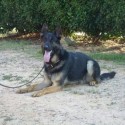
K9 Ike
Worcester County Maryland Sheriff's Office
End of Watch: Saturday, May 3, 2014
Age: 4
Gender: M
Cause: Struck by vehicle

K9 Ike was struck and killed by a vehicle near the intersection of Race Track Road and Route 50 at approximately 10:00 pm.

His handler had made a traffic stop of another vehicle and was speaking to the driver when K9 Ike alerted to something outside of the patrol car and jumped out of an open window. Ike was then struck by a passing vehicle.

K9 Ike had served with the Worcester County Sheriff's Office for three years.
Rest in Peace Ike …and enjoy running the green grass of Heaven!

In Memory of all Police Dogs

They handled themselves with beauty & grace
And who could ever forget that beautiful face
Whether at work; or at home; whatever the test
They always worked hard; and did their best

They were real champions; at work or at play
But their lives were cut short; suddenly one day
While working on the job with their partner one day
They put themselves out on a limb; out into harms way

They gave the ultimate sacrifice; any dog can give
They gave up their life; so someone could live
The best of their breed; as his partner and anyone would say
Many hearts are now broken; that he had to prove it this way

Now as the trees are blowing in the gentle breeze
The sun is shining; thru the leaves on the trees
The meadows are green; and the grass grows tall
Off in the distance they can see a waterfall

As they look over the falls; down through the creek
The water flows gently; as a rabbit sneaks a peek
Far up above; in the deep blue sky
They see the birds soar high; as they fly by

They see animals playing; at the bridge by a waterfall
Chasing each other; and just having a ball
They play all day; from morning to night
There's no more rain; just warm sunlight

Off in the distance; they hear trumpets blow
Then all the animals look up; and notice a bright glow
The harps would play and the angels would sing
As they know they've come home; they've earned their wings

We remember that they died; in the line of duty
And are now with the Lord; sharing in heaven's beauty
Off to the meadows now; where they can play and roam free
With an occasional rest stop; under a tall oak tree

No more bad guys to chase; or bullets to take
Just a run through the meadow; down to the lake
A quick splash in the water; then back to the shore
Then it's off to the forest; to go play some more

These special dogs are back home; up in heaven above
They're cradled in God's arm's; and covered with His love
We'll light a candle for all of them; in the dark of night
In loving memory of all; these very special knights

By John Quealy

Officer Down


Agent Marielis Morales-Santiago
Puerto Rico Police Department
End of Watch: Thursday, April 10, 2014
Age: 32
Tour: 4 years
Badge # 29950
Incident Date: 4/4/2014

Agent Marielis Morales-Santiago succumbed to injuries sustained in a vehicle collision six days earlier.

She and another officer were driving a department vehicle on PR-52, near Santa Isabel Salinas, when another vehicle struck it. Their vehicle overturned, causing both officers to suffer serious injuries. They were both flown to a local hospital, where Agent Morales-Santiago succumbed to her injuries.

Agent Morales-Santiago had served with the Puerto Rico Police Department for 14 years and was assigned to the Division of Community Relations. She was survived by her husband and three children.
Rest in Peace Bro…We Got The Watch

Day is done, Gone the sun, From the lake, From the hills, From the sky. All is well, Safely rest, God is nigh. 

Saturday, May 24, 2014

Plata o Plombo....silver or lead

The drug cartels have been targeting police, judges and other law enforcement agents in Mexico and South America for years. But this is the first time its come to north of the border.


A chilling message from the cartels: Billboards with hanging mannequins warning cops to choose 'silver over lead' appear in Texas 
Two billboards along highways in El Paso, Texas were vandalized and had mannequins hanging off of them One reads 'silver or lead' in Spanish which is taken to mean that police and business owners can either take drug cartels' bribes or die 
Worries spreading that cartels that have ruled Mexican border towns with violence may be headed north Two frightening incidents of vandalism in El Paso near the Mexican border in Texas have been interpreted as warnings from drug cartels. 
In both instances, a mannequin wearing a suit and tie was tied to a billboard with a noose and messages were scrawled over the placards.     
Local station KHOU reports that one of the signs reads 'Plata o Plombo' which translates to 'silver or lead', a threat used commonly against police officers effectively warning that if they do not accept the cartel's bribes then they will be shot. 
Threat: The translation of the painted vandalism means 'silver or lead' which is meant to mean that police officers and business owners should either accept bribes or expect gunshots... ...The message was different this (second) time, as the paint read: 'Dying for drugs' was written over a wanted poster calling for the capture of drug lord Rafael Caro Quintero. This second mannequin was dressed in jeans rather than the suit and tie from the other instance. 
The mannequins were a particularly jarring image for many familiar with the drug war, as some of the most violent drug lords south of the border regularly hang offenders off highway overpasses. While a warning from drug lords seems like one of the most likely prospects, KHOU reports that prosecutors have another theory that the vandalism also could have been caused by activist groups working against the war on drugs.
In Mexico you can find open recruiting signs for police, offering them multiple times what they make as a cop.  And opening threatening them and their families.  But the border is secure as it's ever been, right Homeland Security.

Yo, little Johnny Boehner, maybe now is not the time for amnesty, oh, excuse me, "comprehensive immigration reform."