Police Work, Politics and World Affairs, Football and the ongoing search for great Scotch Whiskey!

Sunday, September 8, 2019

Women, children, and minorities, again, hardest hit.

A couple years ago I posted in American Thinker on how cops had "Gone Galt," were being much less assertive in patrol activities. And how minority communities were hardest hit. Now we see another example of what happens when the inmates run an asylum:
City Disbands Police Dept. After Protests, Now Community Upset With Consequences

East Pittsburgh, PA – East Pittsburgh residents gathered on Monday to express their concerns about the rise in violent crime and the lack of police officers patrolling their neighborhood just eight months after they disbanded the East Pittsburgh Police Department.

The East Pittsburgh Borough Council voted to dissolve the borough’s police department in the wake of the officer-involved shooting death of Antwon Rose.

The council notified the Pennsylvania State Police on Nov. 13, 2018 that they were going to need coverage from that agency as of Nov. 30, 2018, while they worked to come up with a long-term solution...

...When the East Pittsburgh Police Department was disbanded, city officials promised they were in the middle of talks to launch a multi-community police force that would cover their territory...

...However, residents began complaining about the lack of police presence the day after the East Pittsburgh police shut down when there was no obvious state police presence on their streets.

“They’re supposed to be learning the streets and all that,” East Pittsburgh resident Sean Andrejco complained to the Pittsburgh Post-Gazette. “That’s why the problem started. It was a young cop who didn’t know what he was doing.”

The dissolution of the police department had been a part of borough council discussions for years, but the fatal shooting of 17-year-old Rose by East Pittsburgh Police Officer Michael Rosfeld on June 19, 2018 brought the matter to a head.

...almost five months later, residents of East Pittsburgh have found themselves in a dangerous pickle, having gotten rid of its police force before a local alternative was put in place.

The community has continued to complain about the lack of police presence on their streets and there’s no concrete plan as of yet to solve the problem.

When the Pennsylvania State Police took over police services in the borough, Trooper Melinda Bondarenka explained that on-duty troopers would not be spending their time specifically patrolling East Pittsburgh, the Pittsburgh Post-Gazette reported.

Trooper Bondarenka said troopers would continue their usual highway patrol duties in a larger zone that would also include the borough of East Pittsburgh.

“They will be in and out of the borough,” she said....

Good people of East Pittsburg, would it ever occur to you to coordinate police coverage before you decide to eliminate your PD? And remember the state police's primary mission is on the state highways, not local law enforcement?

This is what happens when you have idiots in position of authority. Good luck people of East Pittsburg. Might I suggest you vote out the morons who put you in this position first.

Friday, September 6, 2019

I was born!, in East LA!!!!!

A long week, and I'm looking forward to the end of the weekend. But now we have football to watch (at least the NFL has gotten its head out of its ass on these "Social Justice Warriors). And I gotta say, this is a great commercial:

For some reason I thought of this great video from Cheech and Chong.

Have a great weekend.

Officer Down


Police Officer Esmeralda Ponce Ramirez
Los Angeles Police Department, California
End of Watch Sunday, June 9, 2019
Age 49
Tour 11 years

Police Officer Esmeralda Ramirez succumbed to injuries sustained in a vehicle crash in 2015.

She passed away after experiencing complications as a result of required surgery related to her injuries.

Officer Ramirez had served with the Los Angeles Police Department for 11 years and was assigned to the Pacific Division. She is survived by her three adult children.
Rest in Peace Sis…We Got The Watch

Nemo me impune lacessit

Day is done, Gone the sun, From the lake, From the hills, From the sky. All is well, Safely rest, God is nigh. 

Thursday, September 5, 2019

K9 Down


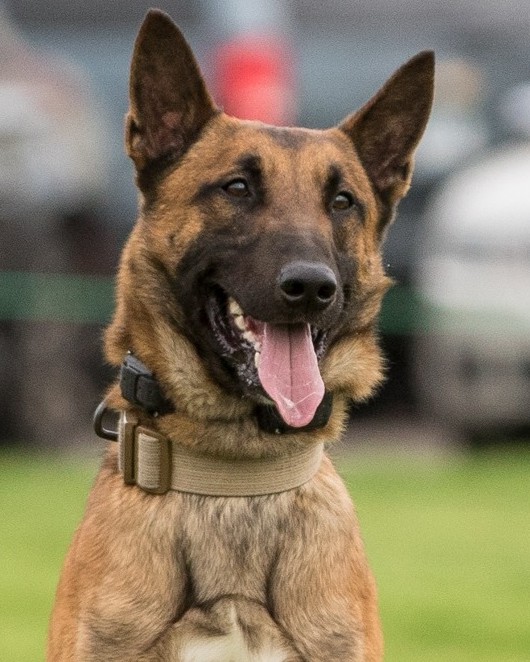
K9 Haas
Duluth Police Department, Minnesota
End of Watch Sunday, January 13, 2019
Breed Belgian Malinois
Gender Male
Age 3
Tour 2 years

K9 Haas was shot and killed during a barricade of a domestic violence suspect in the 1000 block of West Skyline Parkway.

The subject barricaded himself inside of the home as officers arrived at the scene of the initial call. Negotiators spoke to the man for about an hour before he opened fire, killing K9 Haas and wounding an officer. Other officers returned fire and the suspect was found dead inside the home a short time later.

K9 Haas had served with the Duluth Police Department for two years and was certified in narcotics detection and patrol.
Rest in Peace Haas…till our next roll call at the Rainbow Bridge!


In Memory of all Police Dogs

They handled themselves with beauty & grace
And who could ever forget that beautiful face
Whether at work; or at home; whatever the test
They always worked hard; and did their best

They were real champions; at work or at play
But their lives were cut short; suddenly one day
While working on the job with their partner one day
They put themselves out on a limb; out into harms way

They gave the ultimate sacrifice; any dog can give
They gave up their life; so someone could live
The best of their breed; as his partner and anyone would say
Many hearts are now broken; that he had to prove it this way

Now as the trees are blowing in the gentle breeze
The sun is shining; thru the leaves on the trees
The meadows are green; and the grass grows tall
Off in the distance they can see a waterfall

As they look over the falls; down through the creek
The water flows gently; as a rabbit sneaks a peek
Far up above; in the deep blue sky
They see the birds soar high; as they fly by

They see animals playing; at the bridge by a waterfall
Chasing each other; and just having a ball
They play all day; from morning to night
There's no more rain; just warm sunlight

Off in the distance; they hear trumpets blow
Then all the animals look up; and notice a bright glow
The harps would play and the angels would sing
As they know they've come home; they've earned their wings

We remember that they died; in the line of duty
And are now with the Lord; sharing in heaven's beauty
Off to the meadows now; where they can play and roam free
With an occasional rest stop; under a tall oak tree

No more bad guys to chase; or bullets to take
Just a run through the meadow; down to the lake
A quick splash in the water; then back to the shore
Then it's off to the forest; to go play some more

These special dogs are back home; up in heaven above
They're cradled in God's arm's; and covered with His love
We'll light a candle for all of them; in the dark of night
In loving memory of all; these very special knights

By John Quealy

Wednesday, September 4, 2019

Officer Down


Police Officer Albert Ramirez Castaneda, Jr.
Grand Prairie Police Department, Texas
End of Watch Friday, June 7, 2019
Age 38
Tour 11 years
Badge 472

Police Officer AJ Castaneda was struck and killed by a vehicle while running radar on the President George Bush Turnpike, near Dickey Road, at 10:30 am.

A 17-year-old driver lost control of his vehicle and struck Officer Castaneda, throwing him off the elevated roadway. Officer Castaneda was transported to a local hospital where he was pronounced dead.

Officer Castaneda was a U.S. Coast Guard veteran. He had served with the Grand Prairie Police Department for five years and had previously served with the Tarrant County Sheriff's Office for six years. He is survived by two children.
Rest in Peace Bro…We Got The Watch

Nemo me impune lacessit

Day is done, Gone the sun, From the lake, From the hills, From the sky. All is well, Safely rest, God is nigh. 

Tuesday, September 3, 2019

K9 Down


K9 Able
United States Department of Justice - Bureau of Alcohol, Tobacco, Firearms and Explosives, U.S. Government
End of Watch Saturday, January 5, 2019
Breed Labrador Retriever
Gender Male
Age 6
Cause Duty related illness
Incident Date Wednesday, December 26, 2018

K9 Able died of complications of being exposed to an unknown substance during an explosives detection training deployment in Dallas, Texas.

Following the exposure, he became ill and experienced renal failure. His condition worsened and he died as a result of complications 10 days later.

K9 Able had served with the ATF for five years and worked as an explosive detection canine.
Rest in Peace Able…till our next roll call at the Rainbow Bridge!


In Memory of all Police Dogs

They handled themselves with beauty & grace
And who could ever forget that beautiful face
Whether at work; or at home; whatever the test
They always worked hard; and did their best

They were real champions; at work or at play
But their lives were cut short; suddenly one day
While working on the job with their partner one day
They put themselves out on a limb; out into harms way

They gave the ultimate sacrifice; any dog can give
They gave up their life; so someone could live
The best of their breed; as his partner and anyone would say
Many hearts are now broken; that he had to prove it this way

Now as the trees are blowing in the gentle breeze
The sun is shining; thru the leaves on the trees
The meadows are green; and the grass grows tall
Off in the distance they can see a waterfall

As they look over the falls; down through the creek
The water flows gently; as a rabbit sneaks a peek
Far up above; in the deep blue sky
They see the birds soar high; as they fly by

They see animals playing; at the bridge by a waterfall
Chasing each other; and just having a ball
They play all day; from morning to night
There's no more rain; just warm sunlight

Off in the distance; they hear trumpets blow
Then all the animals look up; and notice a bright glow
The harps would play and the angels would sing
As they know they've come home; they've earned their wings

We remember that they died; in the line of duty
And are now with the Lord; sharing in heaven's beauty
Off to the meadows now; where they can play and roam free
With an occasional rest stop; under a tall oak tree

No more bad guys to chase; or bullets to take
Just a run through the meadow; down to the lake
A quick splash in the water; then back to the shore
Then it's off to the forest; to go play some more

These special dogs are back home; up in heaven above
They're cradled in God's arm's; and covered with His love
We'll light a candle for all of them; in the dark of night
In loving memory of all; these very special knights

By John Quealy

Monday, September 2, 2019

What's going on in the World Today 190902

HYPERLINKS MAY REQUIRE AN EMAIL:

USA

5 times in history enemies shot down a US drone, By: Cal Pringle

A Navy Global Hawk drone was shot down by Iran on June 20, 2019. (Erik Hildebrandt / Navy)
On Aug. 20, the United States linked the downing of an MQ-9 Reaper over Yemen by Houthi forces to Iran. Iran has supplied Houthi fighters with weapons and missiles in the past and the attack on the Reaper, reported by CNN, follows a summer of forces exchanging fires and downing drones.

Most notably, this summer included the June 20 shoot-down of a U.S. RQ-4 Global Hawk over the Strait of Hormuz by Iran. But these events are not entirely uncommon.

Unmanned aircraft have been a part of U.S. military operations since World War II and have led to leaps and bounds in mission capabilities. Drones allow the armed forces to undertake missions that would be too risky or impossible with manned aircraft, and uncertainty as to their presence in future military conflict is all but guaranteed. Countries around the world will increasingly operate on the drone axis, developing capabilities to both employ and combat against drones. After the expensive, high-profile destruction of a Global Hawk in Iran, some historical context of the destruction of U.S. drones by hostile forces is in order...

With that recent context, here is a retrospective of U.S. drones shot down by enemy forces...

One Small Step for Trump’s Space Force

The United States officially resurrects U.S. Space Command, but the fight for a Space Force is not yet done.
BY LARA SELIGMAN | AUGUST 29, 2019, 4:36 PM

The United States on Thursday reestablished U.S. Space Command as the military’s operational arm in space, but the fate of President Donald Trump’s promised “Space Force” is still up in the air.

The original U.S. Space Command, created in 1985 to coordinate the space operations of the different armed services, was disbanded in 2002 after the 9/11 terrorist attacks. The new version is the first step in the Trump administration’s response to China and Russia’s emerging capability to disrupt U.S. space operations—through electronic jamming, shooting down satellites, and more...

AFRICA

NOTHING SIGNIFICANT TO REPORT

ASIA

U.S., Japan: A Trade Deal Offers Welcome Relief for U.S. Corn and Wheat Producers

The Big Picture

The White House's ongoing negotiations with Japan have provided a relative bright spot amid the host of trade wars the United States has now embroiled itself in — the largest and most volatile being with China. Tokyo and Washington are now slated to have a concrete trade agreement on the table by late September, carrying with it the potential for a boost in Japanese purchases of U.S. agricultural exports.

What Happened

On Aug. 25, U.S. President Donald Trump and Japanese Prime Minister Shinzo Abe announced an agreement in principle for a trade deal to be signed around the next U.N. General Assembly session on Sept. 24. While many of the details remain unknown, under the reported framework, the deal would put U.S. agricultural access to Japan on par with the Comprehensive and Progressive Trans-Pacific Partnership (CPTPP) agreement, including up to $7 billion worth of U.S. products such as beef, pork, dairy, wine and ethanol.

Crucially for the White House, Trump noted that Japan will also make unspecified large purchases of U.S. wheat and corn. For Japan's part, its main goal in trade talks has been to avoid the blow of a threatened 25 percent U.S. automotive tariff, with a secondary hope of greater access to the U.S. market for industrial goods. But while the framework deal would reportedly lower industrial tariffs on unspecified Japanese products, it most notably would not include automobiles. Neither side has confirmed whether or not Tokyo will now be exempted from the White House's automotive tariff threat. According to leaks, Washington's existing 2.5 percent tariff on Japanese automotive exports is slated for a separate discussion between the two countries..

Japan, U.S.: Countries Reach Framework for Trade Deal, Reports Say

- What Happened: Japan and the United States have agreed on a framework for a trade agreement that will reportedly leave U.S. tariffs on Japanese automotive imports in place, while Tokyo will lower its duties on beef and pork imports from the United States, Reuters reported Aug. 23. According to Japanese Economy Minister Toshimitsu Motegi, working-level talks between both sides will continue to work out the details of the agreement.

- Why It Matters: If confirmed, the agreement would give U.S. President Donald Trump a political victory as he's been seeking to gain greater access for U.S. agricultural products to Japanese markets.

- Background: The United States and Japan entered bilateral talks toward reaching a trade deal in late 2018 after Washington threatened to impose steep tariffs on automotive imports from Japan.

EUROPE

NOTHING SIGNIFICANT TO REPORT

LATIN/SOUTH AMERICA

26 killed in fiery attack on bar in southern Mexico

Gang members burst into a bar, blocked all the exits and then started a fire that killed 26 people and injured about a dozen others, Mexican officials said Wednesday.

Authorities said the attack in the Gulf coast city of Coatzacoalcos late Tuesday apparently was overseen by a man who had been recently arrested but released.

"The criminals went in, closed the doors, the emergency exits, and set fire to the place," President Andrés Manuel López Obrador said at his daily morning news conference.

Veracruz state police said the attack targeted the "Bar Caballo Blanco," or "White Horse Bar." It advertised "quality, security and service," private rooms for $7.50 "all night," ''sexy girls" and a pole dance contest.

It is located just off a busy commercial street in Coatzacoalcos, a city whose main industry has long been oil and oil refining.

On Wednesday afternoon, relatives of the victims gathered anxiously outside state prosecutors' offices with photos that could be used to identify their loved ones...

AFGHANISTAN

Khalilzad Edges Closer to Pact With Taliban
BY COLUM LYNCH, LARA SELIGMAN, ROBBIE GRAMER | AUGUST 28, 2019, 4:37 PM

Zalmay Khalilzad, the U.S. special representative for Afghan reconciliation, is on the verge of an agreement with the Taliban that would pave the way for the withdrawal of some 14,000 U.S. troops from Afghanistan in exchange for guarantees that the war-wracked nation would not be used as a haven for international terrorism, according to diplomatic sources.

Khalilzad will now mount a final push to persuade Afghanistan’s president, Ashraf Ghani, to accept the agreement ahead of the country’s Sept. 28 presidential election. If a deal is clinched, the United States will hold a signing ceremony with the Taliban in Doha, Qatar, before an audience of representatives from key world powers, including from the region, Europe, and possibly China and Russia...

CHINA

Casting an Eye on the Belt and Road Initiative

It's billed as the new Silk Road, but China's Belt and Road Initiative is much more ambitious than that, as countries on every continent have signed up to partner with Beijing on massive infrastructure projects. From Jamaica to New Zealand and Pakistan to Uruguay, countries have rushed to get their hands on some of the $70 billion in investments and $400 billion in loans that China is dangling to attract potential partners...


Photos reveal progress on China’s largest amphibious assault ship

By: Mike Yeo

Chinese naval officers march pass Tiananmen Square during the National Day parade in Beijing on Oct. 1, 2009. (Frederic J. Brown/AFP)
MELBOURNE, Australia — Recent photos reveal the construction of China’s largest amphibious assault ship is progressing at a shipyard in the metropolis of Shanghai, as the country strives to plug gaps in its military’s amphibious capabilities.

One photo, taken from a boat sailing on the Huangpu River, which runs through Shanghai, eastern China, shows the main bridge structure has recently been joined to the hull of the first Type 075 amphibious assault ship.

Other photos taken from surrounding buildings and within China State Shipbuilding Corporation’s Hudong-Zhonghua shipyard have also been posted online, with one taken from the rear showing the configuration of the stern elevator and part of the well dock...


Exclusive: China denies Qingdao port visit for U.S. warship amid tensions

WASHINGTON (Reuters) - China has denied a request for a U.S. Navy warship to visit the Chinese port city of Qingdao in recent days, a U.S. defense official told Reuters on Tuesday, at a time of tense ties between the world’s two largest economies.

This marks at least the second time China has denied a request by the United States this month, having earlier rejected a request for two U.S. Navy ships to visit Hong Kong, as the political crisis in the former British colony deepened.

The defense official, speaking on the condition of anonymity, said the destroyer was supposed to visit on Sunday but China denied the request prior to that...

U.S. military warships have occasionally made visits to China, most recently in 2017, the defense official said. The last U.S. Navy ship to visit Qingdao was the destroyer Benfold in 2016.

IRAN

Trump Unlikely to Support Macron’s Plan to Revive Iran Deal

By Helene Fouquet and Nick Wadhams August 24, 2019

French President Emmanuel Macron pitched U.S. President Donald Trump on a plan to end the standoff over the Iran nuclear deal -- by allowing Iran to sell oil for a limited period of time in exchange for returning to talks and to compliance with the agreement.

The proposal was described by a French official after Macron and Trump sat down to an impromptu lunch that stretched for two hours at the Group of Seven Summit in Biarritz, France. A senior U.S. official termed the plan a non-starter.

The U.S. in the past has resisted any compromise that allowed Iran to resume selling oil, which is sharply restricted by U.S. sanctions. That’s why ending the impasse and putting the deal back together is so difficult: Iran’s No. 1 demand to come back to the bargaining table is that it be allowed to sell oil to help its struggling economy.

The French official described a plan that would occur in two phases. Iran would be allowed to sell some volume of its oil in exchange for a series of commitments: return to compliance with the existing agreement, find ways to lower tensions in the Persian Gulf amid a spate of tanker seizures, and return to structured talks on missiles, regional issues and what happens after 2025, when the current agreement is set to expire...


Iranian Rocket Launch Ends In Failure, Imagery Shows

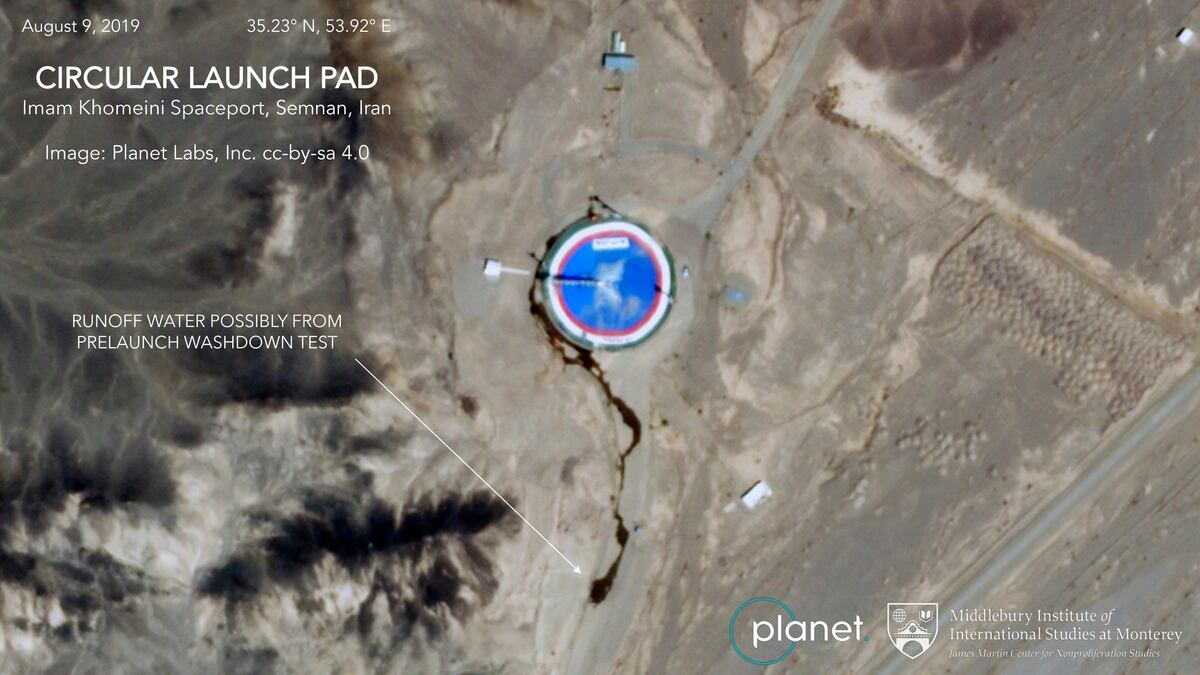
Satellite imagery shared exclusively with NPR shows that an Iranian rocket appears to have exploded on the launch pad Thursday.

The imagery from the commercial company Planet and shared via the Middlebury Institute of International Studies shows smoke billowing from the pad at the Imam Khomeini Space Center in northern Iran. The pad had been given a fresh coat of paint in recent days, and numerous vehicles had been spotted around the site in preparation for the launch attempt...

U.S. Cyberattack Hurt Iran’s Ability to Target Oil Tankers, Officials Say

WASHINGTON — A secret cyberattack against Iran in June wiped out a critical database used by Iran’s paramilitary arm to plot attacks against oil tankers and degraded Tehran’s ability to covertly target shipping traffic in the Persian Gulf, at least temporarily, according to senior American officials.

Iran is still trying to recover information destroyed in the June 20 attack and restart some of the computer systems — including military communications networks — taken offline, the officials said.

Senior officials discussed the results of the strike in part to quell doubts within the Trump administration about whether the benefits of the operation outweighed the cost — lost intelligence and lost access to a critical network used by the Islamic Revolutionary Guards Corps, Iran’s paramilitary forces.

The United States and Iran have long been involved in an undeclared cyberconflict, one carefully calibrated to remain in the gray zone between war and peace. The June 20 strike was a critical attack in that ongoing battle, officials said, and it went forward even after President Trump called off a retaliatory airstrike that day after Iran shot down an American drone...

IRAQ

How a Proxy War Could Blow Up Iraq—Again
With the country barely stabilizing after 16 years of conflict, war-weary Iraqis fear a new eruption of attacks by the U.S. and Israel against Iranian-backed forces inside the country.
BY PESHA MAGID | AUGUST 28, 2019, 5:01 PM

BAGHDAD—When a mysterious drone strike killed two members of Iraq’s Popular Mobilization Forces (PMF) on Sunday—and Israeli Prime Minister Benjamin Netanyahu hinted that his country might be involved—it was only the latest sign to war-weary Iraqis that they can’t get a break. Just as they’re getting on their feet, Iraq is becoming a battleground for foreigners once again.

The PMF is an amalgam of paramilitary brigades, many of which are linked to Iran, that helped to oust the Islamic State from Iraq in late 2017. Since then, Iraqi Prime Minister Adel Abdul Mahdi, under pressure from Washington, has sought to integrate the brigades into the Iraqi armed forces in hopes of finally stabilizing a country torn by 16 years of nearly nonstop conflict since the U.S. invasion in 2003...

ISRAEL

The Israel-Iran Shadow War Escalates and Breaks Into the Open
By David M. Halbfinger, Ben Hubbard and Ronen Bergman

JERUSALEM — Israel has carried out a series of attacks across the Middle East in recent weeks to prevent Iran from equipping its Arab allies with precision-guided missiles, drones and other sophisticated weapons that could challenge Israel’s defenses.

The attacks represent a new escalation in the shadow war between Iran and Israel, which has broken into the open and threatens to set off a wider confrontation.

In one 18-hour period over the weekend, an Israeli airstrike killed two Iranian-trained militants in Syria, a drone set off a blast near a Hezbollah office in Beirut’s southern suburbs and an airstrike in Qaim, Iraq, killed a commander of an Iran-backed Iraqi militia.

Israel accuses Iran of trying to establish an overland arms-supply line through Iraq and northern Syria to Lebanon. The attacks, only one of which Israel has publicly acknowledged, were aimed at stopping Iran and signaling to its proxies that Israel will not tolerate a fleet of smart missiles on its borders, officials and analysts said.

Israel, Lebanon: Hezbollah Preparing 'Calculated Strike' Against Israel After Drone Incident, Sources Say

What Happened: Hezbollah is planning a "calculated strike" against Israel to retaliate against what it claims were two Israeli drones armed with explosives that crashed Aug. 25 in Beirut, according to sources close to the group, Reuters reported Aug. 27.

Why It Matters: Although Hezbollah is reportedly planning a limited response to avoid escalating tensions with Israel, the scope and scale of the group's retaliation will determine whether the incident remains isolated or spirals into a broader conflict.

Background: Israel has been striking Iranian and Hezbollah targets in Syria for multiple years to interdict arms shipments and supplies from Iran to Lebanon, but has been warier about striking in Lebanon itself. The two drones that crashed in a southern suburb of Beirut under unclear circumstances over the weekend prompted Hezbollah chief Sheikh Hassan Nasrallah to threaten retaliation against Israel.

KOREAN PENNSULEA

North Korea: 2 Short-Range Ballistic Missiles Fired Into Sea of Japan Aug 24, 2019

- What Happened: North Korea fired two short-range ballistic missiles from its east coast into the Sea of Japan early on Aug. 24 local time, according to Japan's Joint Chiefs of Staff, Yonhap reported.

- Why It Matters: The timing of the launch is notable as it comes just after the conclusion of joint U.S.-South Korean military drills. Although the test marks Pyongyang's seventh launch in recent weeks, all fall within North Korean promises to the United States that it will refrain from longer-range tests.

- Background: U.S.-North Korean outreach made little progress in recent weeks despite a surprise summit between U.S. President Donald Trump and North Korean leader at the Demilitarized Zone and a letter by Kim to Trump saying talks could continue after the conclusion of U.S.-South Korean drills.

RUSSIA

Russia's New Arms Give the U.S. Room for Pause

- The recent failure of a Russian Burevestnik missile test highlights the numerous deficiencies in the weapon's development, yet Russia will continue to prioritize the development of the missile and other offensive strategic weapon systems.

- In so doing, Russia will aim to boost its deterrence and negate U.S. missile defense capabilities as much as possible.

- Because the Kremlin has prioritized the operational deployment of some programs — despite the technical challenges they face — the United States will be forced to upgrade its overall missile defense systems and strategic capabilities.

The incident itself had immediate and drastic effects: five dead and a spike in radiation that was up to 16 times higher than normal. But the larger fallout from the Aug. 8 explosion of a nuclear-powered cruise missile on Russia's White Sea coast has drawn renewed attention to the development of some of the country's newest, high-tech strategic weapons. The development of the weapon in question fits into Moscow's broader effort to maintain its nuclear deterrent. While Russia's ambitions are pushing the boundaries of its capabilities in some of these projects — to even deadly results, as the most recent case demonstrates — the overall effort will undoubtedly force the United States into a response...


Russia: National Guard Launches Countrywide Riot Police Recruitment Drive

What Happened: The Russian National Guard has launched a nationwide recruitment drive for anti-riot forces in Moscow, The Moscow Times reported Aug. 27.

Why It Matters: Moscow's new recruitment push reflects the Russian government's anticipation of renewed demonstrations and potential unrest during and after upcoming regional elections on Sept. 8.

Background: Protesters have been gathering in Moscow since July to demonstrate against a decision by local authorities to bar opposition candidates from running in regional elections.

MIDDLE EAST GENERAL

The Saudi Monarchy Catches Up With Its Millennials

By Ryan Bohl

If you subscribe to the official narrative, Saudi Arabia is evolving with the times. The monarchy, after all, has adjusted its stance on women's rights, broadened cultural experiences and softened taboos that would have once led to lethal consequences for those breaking them.

Yet in many ways, the monarchy is just catching up with its younger generations of Saudis, rather than shepherding them into new mindsets. Members of those generations, especially the ones born after 1980 (including heir apparent Crown Prince Mohammed bin Salman, born in 1985), have shared experiences that have fundamentally shaped worldviews — moving them out of alignment with the conservative clerics who, until recently, most defined the kingdom's moral and cultural compass...

The UAE Revisits Its Foreign Policy Goals With New Tactics

- The Emiratis are repositioning themselves to decrease the likelihood that their actions will trigger a general war with Iran, even as they cannot control all the other factors that could ignite such a conflict.

- The country's pullback from Yemen represents an adjustment to the diplomatic, political and military risks of its intervention, but Abu Dhabi will not abandon its overall strategy to either reduce Iran's influence in Yemen or combat Sunni extremists there.
- Because it is highly dependent on the Trump administration's goodwill amid Congress' hostility, the United Arab Emirates will only have a finite window of opportunity to shore up its relationship with the United States.

The goals haven't changed, but the methods of achieving them have, at least as far as the United Arab Emirates is concerned regarding foreign policy. In recent weeks, Abu Dhabi has raised eyebrows by conducting a partial pullout from its war against Iran-backed Houthi rebels in Yemen, while at the same time pursuing low-level maritime talks with Tehran to manage its relations with its great regional nemesis...

CYBER ISSUES

Follow the Digital Silk Road
China’s tech prowess offers business opportunities – but also security concerns – for Southeast Asian nations. So how will the United States respond?
By BRIAN HARDING Apr 1, 2019

Southeast Asia is home to many of China’s most high-profile Belt and Road Initiative projects, including Kyaukpyu port in Myanmar, a high-speed railway in northern Laos and nowstalled rail and pipeline projects in Malaysia. While these physical infrastructure projects have attracted widespread attention, China’s involvement in the region’s digital infrastructure has been far less examined despite holding the potential to have even greater strategic importance in the coming years.

Southeast Asia’s rapidly growing economies, buoyed by young populations living in some of the world’s most digitized societies, offer tremendous business opportunities for information and communication technology (ICT) companies from around the world. However, Southeast Asia’s strategic importance for China, the United States, Japan and others, and the advantages that will come with control over data flows, mean that the region’s decisions on digital infrastructure and Internet governance will have implications that far transcend business outcomes. The United States, Japan and other countries have begun to focus considerable attention on this issue, but the challenge of competing with China in an environment in which its companies enjoy substantial advantages over competitors due in part to government support is daunting...

China’s Next Naval Target Is the Internet’s Underwater Cables

Worried about Huawei’s 5G? Wait till it gets into the game for 95 percent of all data and voice traffic.

By James Stavridis

As the West considers the threat posed by China’s naval ambitions, there is a natural tendency to place overarching attention on the South China Sea. This is understandable: Consolidating it would provide Beijing with a huge windfall of oil and natural gas, and a potential chokehold over up to 40 percent of the world’s shipping.

But this is only the most obvious manifestation of Chinese maritime strategy. Another key element, one that’s far harder to discern, is Beijing’s increasing influence in constructing and repairing the undersea cables that move virtually all the information on the internet. To understand the totality of China’s “Great Game” at sea, you have to look down to the ocean floor.

While people tend think of satellites and cell towers as the heart of the internet, the most vital component is the 380 submerged cables that carry more than 95 percent of all data and voice traffic between the continents. They were built largely by the U.S. and its allies, ensuring that (from a Western perspective, at least) they were “cleanly” installed without built-in espionage capability available to our opponents. U.S. internet giants including Google, Facebook and Amazon are leasing or buying vast stretches of cables from the mostly private consortia of telecom operators that constructed them.

But now the Chinese conglomerate Huawei Technologies, the leading firm working to deliver 5G telephony networks globally, has gone to sea. Under its Huawei Marine Networks component, it is constructing or improving nearly 100 submarine cables around the world. Last year it completed a cable stretching nearly 4,000 miles from Brazil to Cameroon. (The cable is partly owned by China Unicom, a state-controlled telecom operator.) Rivals claim that Chinese firms are able to lowball the bidding because they receive subsidies from Beijing...

INTEL GENERAL

NOTHING SIGNIFICANT TO REPORT

TERRORISM


Examining Whether the Terrorism Label Applies to Antifa


By Scott Stewart
VP of Tactical Analysis, Stratfor

- Antifa is an umbrella movement comprised of people of various ideologies who are united in their opposition to white supremacism, neo-Nazism and fascism.

- Nevertheless, elements that often participate in antifa actions, such as anarchists, do condone and participate in terrorism and political violence.

- White supremacist groups intentionally hold rallies in left-leaning cities like Portland, Oregon, in hopes of sparking antifa violence, as they believe such action generates publicity and sympathy for their cause...

Employees Can Be the Biggest Threat — and Asset — for Workplace Security Programs

By Scott Stewart
VP of Tactical Analysis, Stratfor

- The intimate knowledge that insiders have of an organization's security programs, policies and procedures put them in a position to cause significant damage, whether by conducting an act of workplace violence, corporate espionage or another crime.

- Insider threat actors can include current employees, former employees, contractors, service providers or someone working for a business partner (such as a web-hosting service).

- While security teams may provide leadership on the issue, protecting against insider threats is really a corporatewide responsibility.

- It's not enough to continuously monitor employees; all staff members at an organization should also know how to recognize suspicious behaviors and who should be informed of them.

For companies and other organizations, sometimes the biggest threat comes from within. An "insider" is generally someone with intimate knowledge of a facility being targeted, as well as natural covers for status and action that an "outsider" would lack. But beyond knowing the ins and outs of a facility and having a reason to be there, an insider can also develop a detailed understanding of internal security programs, policies and procedures to help them plan and conduct their crime...
MISC

NOTHING SIGNIFICANT TO REPORT

Officer Down


Police Officer William James Leahy
Port Authority of New York and New Jersey Police Department, New York
End of Watch Thursday, June 6, 2019
Age 49
Tour 26 years
Badge 1577

Police Officer William Leahy died as the result of cancer that he developed following his assignment to the search and recovery efforts at the World Trade Center site following the 9/11 Terrorist Attacks.

Officer Leahy had served with the Port Authority of New York and New Jersey Police Department for 26 years and was assigned to John F. Kennedy International Airport. He is survived by his parents.

On the morning of September 11th, 2001, seventy-two officers from a total of eight local, state, and federal agencies were killed when terrorist hijackers working for the al Qaeda terrorist network, headed by Osama bin Laden, crashed four hijacked planes into the World Trade Center towers in New York City, the Pentagon in Arlington, Virginia, and a field near Shanksville, Pennsylvania.

After the impact of the first plane into the World Trade Center's North Tower, putting the safety of others before their own, law enforcement officers along with fire and EMS personnel, rushed to the burning Twin Towers of the World Trade Center to aid the victims and lead them to safety. Due to their quick actions, it is estimated that over 25,000 people were saved.

As the evacuation continued, the South Tower unexpectedly collapsed as a result of the intense fire caused by the impact. The North Tower collapsed a short time later. Seventy-one law enforcement officers, 343 members of the New York City Fire Department and over 2,800 civilians were killed at the World Trade Center site.

A third hijacked plane crashed into a field in rural Pennsylvania when the passengers attempted to re-take control of the plane. One law enforcement officer, who was a passenger on the plane, was killed in that crash.

The fourth hijacked plane was crashed into the Pentagon in Arlington, Virginia, killing almost 200 military and civilian personnel. No law enforcement officers were killed at the Pentagon on 9/11.

The terrorist attacks resulted in the declaration of war against the Taliban regime, the illegal rulers of Afghanistan, and the al Qaeda terrorist network which also was based in Afghanistan.

On September 9th, 2005, all of the public safety officers killed on September 11th, 2001, were posthumously awarded the 9/11 Heroes Medal of Valor by President George W. Bush.

The contamination in the air at the World Trade Center site caused many rescue personnel to become extremely ill and eventually led to the death of several rescue workers.

On May 1st, 2011 members of the United States military conducted a raid on a compound in Abbottabad, Pakistan, and killed Osama bin Laden.
Rest in Peace Bro…We Got The Watch

Nemo me impune lacessit

Day is done, Gone the sun, From the lake, From the hills, From the sky. All is well, Safely rest, God is nigh. 

Saturday, August 31, 2019

Churches preparing for the next active shooter....

A few years back, I was on a PoliceOne.Com discussion with multiple officers, the question being, "Where do you always carry when your off duty?" One man said quickly, "I always carry in church, people are relaxed and believe no one will harm them..." Unfortunately, time has shown the man was correct, churches, like other "No Gun Zones," are target rich environments for the bad guys.

Found this article on how some churches are reacting to this new security threat. Not saying I like it, but the fact is we've had shootings at houses of worship. And when seconds count, the police are only minutes away.
Churches arm, train congregants after shootings

By Jake Bleiberg ASSOCIATED PRESS

HASLET — Acrid gun smoke clouded the sunny entrance of a Texas church on arecent Sunday.

Seven men wearing heavy vests and carrying pistols loaded with blanks ran toward the sound of the shots, stopping at the end of a long hallway. As one peeked into the foyer, the “bad guy” raised the muzzle of an AR-15, took aim and squeezed the trigger.

The simulated gunfight at the church in Haslet was part of a niche industry that trains civilians to protect their churches using the techniques and equipment of law enforcement. Rather than a bullet, the rifle fired a laser that hit Stephen Hatherley’s vest — triggering an electric shock the 60-year-old Navy veteran later described as a “tingle...”

...The anxiety of one mass shooting after another has led some churches to start training and arming their worshippers with guns. Not all security experts support this approach, but it has gained momentum as congregations across the country grapple with how to secure spaces where welcoming strangers is a religious practice.

“Ten years ago, this industry was not a thing,” said David Rig-gall, a Texas police officer whose company trains churchgoers to volunteer as security guards. “I mean, sanctuary means a safe place.”

In 1993, Doug Walker said security wasn’t at the fore of his mind when, as a recent Baptist seminary graduate, he founded Fellowship of the Parks church in Fort Worth. But six years later, after a gunman killed seven people and took his own life at another church in the Texas city, the pastor said his thinking changed.

Today, the interdenominational church has four campuses and 3,000 worshippers on an average Sunday, Walker said. It has increased security as it has grown, asking off-duty police to carry weapons at church events. And it recently hired Riggall’s company, Sheepdog Defense Group, to train volunteers in first aid, threat assessment, de-escalation techniques, using a gun and tactical skills, such as clearing rooms during an active shooting.

Walker, 51, said there wasn’t a single event that prompted his church to decide its guards needed more training. But Riggall said that after mass shootings, congregations reach out...

...The 46-year-old police officer said that he and a colleague had the idea for the company after the 2012 mass shooting at an elementary school in Newtown, Conn. They started doing firearms trainings with parents and, after Riggall became certified under Texas law to train security guards, transitioned to churches.

The company incorporates Christian teachings into its courses and more than 90 people at 18 churches have completed the 70 hours of initial training and become state-licensed guards through its program, Riggall said. The so-called sheepdogs are insured and technically employed by the company. But they volunteer doing security at their own churches, which in turn pay Rig-gall.

On a Sunday in July, Brett Faulkner stood with an AR-15 in hand and his back to the cross in the sanctuary of Fellowship of the Parks campus in Haslet, a community about 15 miles north of Fort Worth. He pointed the rifle at a young woman’s back and yelled at the armed men advancing into the room, “I’m going to kill this woman. It’s going to happen right now.”

Faulkner, a 46-year-old information technology worker, already completed a Sheepdog session but came to another church’s to play the bad guy and keep his skills sharp.

“It really just comes down to caring about the people in that building,” Faulkner said of choosing to guard his small Baptist church...

I'm 54 years old, and I remember rifles/shotguns on the back glass of pickup trucks at school and church, not to mention gun clubs at schools. Unfortunately, the world has changed. And houses of worship need to be prepared for the next nut case that comes along. Again, nothing stops a bad guy with a gun but a good guy with a gun. As was shown in Southerland Springs, TX:

...As the gunman exited the church, he was confronted by a local resident who, armed with his own weapon, began firing, prompting the suspect to flee in his vehicle.
“The local citizen pursued him,” said Freeman Martin, a regional director for the Texas Department of Public Safety, who said the gunman crashed off the road about 11 miles north of the shooting scene and was later found dead there. “We don’t know if it was a self-inflicted gunshot wound or if he was shot by our local resident who engaged him in a gunfight...”

Be sale out there Sheepdogs.

The deliberate weakening of our military...

Lat year I completed Duty: Memoirs of a Secretary at War, he was George W Bush's last Secretary of Defense, and Obama's first. and I recently learned he was the president of the Boy Scouts of America who accepted openly gas members, scoutmasters, and girls in the "Boy" Scouts. As I looked at what became of my former institution (I'm an Eagle Scout, Class of 1982), I was saddened and outraged. When Obama gutted the Army by ten brigades, Mr. Gates just accepted that outrage. General Mattis, upon reaching a breaking point with President Trump, said "No sir, I cannot, in good conscious, go with this decision of yours, you have my resignation..."

Well, one of the other outrages of degrading of our military on other fronts, the greatest opening front line combat branches (e.g infantry, armor) to women. My friend, fellow Army officer, and prolific writer, Mike Ford, has written another great piece for Redstate.com. Enjoy.
Women In Ranger School, The Politicization Of Our Military

There is more fallout from President Obama’s politicization of our Military. In a two part series, The Daily Caller adapted excerpts from decorated veteran, James Hasson’s new book, “Stand Down: How Social Justice Warriors Are Sabotaging America’s Military.”

Part One

Part Two

These excerpts show quite clearly how the standards in the U.S. Army’s premiere combat leadership course, Ranger School, were subverted. This was the result of a desire by senior leaders to force females through the course in order to achieve the goal of “proving” women were “just as good as men” at close combat.

If you recall, 3 years ago this month, the Army graduated its first two females from Ranger School, followed shortly by a third. At the time there were myriad rumors floating around about standards being lowered and the women being given preferential treatment. I had heard some of this third hand and, based on these excerpts, it looks like the rumors were true. However, the only direct evidence I could come up with was a text message “interview” with one of the first graduates as part of my own investigation. In that exchange, she admitted to having been recycled (made to start over) 3 times. This is usually only done because of injury. This officer had been recycled multiple times for failing patrols. The officer was quite candid and I admit a certain respect for anyone who would make 4 back-to-back attempts to get through the course. I squeaked through on my first try…Thank God.

What I was lacking was evidence of command pressure which Hansen provides in his book as the excerpts in the article demonstrate. Hasson also provides an actual copy of Instructor Comments and extracts of text messages going back and forth after one candidate, who clearly should have failed a patrol, got a passing grade for “motivation.” The second article and its extracts show clearly how the chain of command refused to admit command influence through out this investigation and in some cases, may have destroyed evidence requested by Congressional Representatives.

There are so many things wrong with this.

First of all, is the degradation of the institution. At the lowest level, it diminishes the value of a Ranger Tab. When Soldiers see the “highly coveted Black and Gold,” on their leaders’ left shoulder, they know he has been through the fire and earned it. That no longer obtains. They know the Army has allowed unqualified officers and now enlisted folks to make it through…all on the altar of political correctness.

Second, is the money. It costs a small fortune to produce a Ranger School graduate who graduates on his first try. Think about the opportunity cost that recycling women multiple times produces. Each of these three initial graduates were recycled 3 times. That’s 9 slots that could have been filled by qualified men—and that’s not even counting the expense of running them through a special preparatory course to identify the less than 20 out of a more than 150 who qualify to even give it a try.

Third, is the fundamentally dishonest reasoning for this charade. This whole debacle has been promoted from the viewpoint and desires of the women—and the women make no bones about it. The whole issue is about promotion opportunities, which of course are more numerous in the combat fields. After all, that’s what the military is for, to kill people and break things…not to morally preen about promotion opportunities for women.

Fourth, not only do Senior Leaders refuse to admit to #3 above, but not one, NOT ONE! Flag Officer or Senior Civilian has even attempted to make the case as to how including women in Special Operations Forces and Close Combat units, enhances the military’s, Lethality, Cost Effectiveness, Sustainability (which means something different than the tree huggers say) Combat Effectiveness, Survivability and a host of other metrics by which we measure the effectiveness of our Armed Forces. The closest to any sort of explanation was by a 4-Star General who told me that we needed to put women through Ranger School and the Special Forces Qualification “Q” Course for two reasons: One, to train the females who interact with Muslim women and, two, to generate the same capability we had during World War II with female OSS operatives.

My answer to that? We did just fine in World Wars I and II, fighting in North Africa, without spending millions to train American females to grope Arab women. As far as women in the OSS, we already have a system to get that capability. It’s called, “The Farm.” There is absolutely no need to totally upend a well functioning system merely to make a political statement.

Finally, there’s the elephant in the room that no one dares point out. Close combat is men’s work. Women in general, are not suited to this type of thing. It requires upper body strength, endurance and aggressiveness…all male attributes. Can certain females, through brute force efforts, be trained to a point where they can compete marginally with the bottom quartile of qualified men? Of course. But that isn’t the point.

It makes no sense to do as the Army did, selecting 150 or so of the “best” women, then putting them through an extensive and expensive preparatory course just, to get them where they could meet the bare minimum standards merely to enter Ranger School. Only 19 of those selectees were able to satisfactorily complete prep course and actually enter a Ranger Class. Of those 19, not one graduated the first time through, nor the second, Eventually, after multiple “recycles” and at the behest of the Commanding General at Fort Benning, the Ranger Training Regiment was able to brute force three women through the course and on to graduation. What are we getting for all of that? Nothing more than some sort of bragging rights, another “glass ceiling” broken and increased promotion opportunities for a handful of women.

Then there is the bio-socio part of this. Infantry squads and platoons are male-centric—they are locker rooms if you will, fueled by testosterone and aggression. They need to be. Close quarters combat isn’t a cerebral exercise where you get points for “trying hard.” Ultimately it means jumping down into an enemy position and sticking a bayonet in his throat. It means as so aptly portrayed in the stairway scene in “Saving Private Ryan,” a brutal, physical fight to the death over a bayonet…the loser dying alone.

For any of you readers out there who wish to believe former President Obama’s absurd statement about bayonets and horses no longer being used, should consult the U.S. Marines who had to retake Fallujah at bayonet point, or the Special Forces Soldiers who took Afghanistan, calling in airstrikes from horseback. No matter how much technology we have, we only end up the victor when U.S Infantrymen stand on our enemy’s territory and force him to surrender…at bayonet point.

Close Combat also involves conquering fear. A big part of conquering that fear, is being part of a male bonded team, a locker room as it were…a place where warriors get pumped up before a big fight…A place where (gasp!) profanity abounds. Combat Arms Squads, Platoons and Companies are close knit organizations. Introducing females into all male these units always degrades morale and teamwork. The Marines did a study on this. All male units consistently out did their all female and mixed sex (yes, it’s “sex” not “gender”) counterparts.

I’m glad Mr Hassen published his book and the Daily Caller, those two sets of excerpts. Take the time to read them.

Mike Ford, is a retired Infantry Officer, and Ranger School Graduate who writes on Military, Foreign Affairs and occasionally dabbles in Political and Economic matters. Follow him on Twitter: @MikeFor10394583
The man who swore me in back in 1987 was a Ranger School graduate, and one of the points he made to me was you may come to a point in your career where you cannot abide by a decision. And at that point, you must resign. Then SECDEF Gates started this disaster, but it was handed off to Chuck Hagel and Ash Carter, who continued it on its merry way. I don't know if Trump if the man to un-screw this damage (the end of recruiting transsexuals was a good start), but I shutter to think what would have happened if Mrs. Bill Clinton had one in 2016.

Friday, August 30, 2019

Roll Me Away...at least from work...

I've said more than once I've gotten into motorcycles late in life. I recently rode 4,327 miles over two weeks, and I loved it, rain and all. Riding a motorcycle reminds me of something Reagan said about riding a horse, it clears your mind and lets you see things. I can attest I have done some great thinking while cruising on my Harley Davidson. And I see the wife and I spending a lot of time on a bike in our Golden Years.

With that in mind, and seeing the summer has come to an end, (although it's still as hot as hell in Houston), here is a great song for a long weekend. Bob Seger, Roll Me Away.
Have a great long weekend! Hopefully you no have to labor on Labor Day like I do! :<)

Monday, August 26, 2019

What's going on in the World Today 190826

HYPERLINKS MAY REQUIRE AN EMAIL:

The new LUSV will build upon the unmanned Sea Hunter, seen here in Portland in 2016
USA

US Navy to build £330m world’s largest robot warship to patrol the most dangerous seas
Jon Rogers

THE US Navy wants to build a fleet of ten robot warships over the next five years.

The huge ships referred to as Large Unmanned Surface Vehicle (LUSV) would function as scouts for the main battle fleet, carrying radar and sonar as well as anti-air and cruise missiles.


Proponents of the ships see the role of the vessels as carrying out “3D work” – dull, dirty and dangerous.

A Draft Request for Proposal, posted on the FedBizOpps website, said: “The LUSV will be a high-endurance, reconfigurable ship able to accommodate various payloads for unmanned missions to augment the Navy’s manned surface force.

“With a large payload capacity, the LUSV will be designed to conduct a variety of warfare operations independently or in conjunction with manned surface combatants...

A Malaysian Rare Earth Processing Plant Looms Large in the U.S.-China Trade Spat

Highlights

- The extension of Lynas' mining permit removes a key threat to the global supply of rare earths from outside China — at least for now.

- Domestic Malaysian political maneuvering could jeopardize the project, as Prime Minister Mahathir Mohamad maintains a tenuous hold on his coalition government.

- Additional rare earth processing plants are likely to come online in the coming years, especially if tensions remain high between the United States and China, thereby slowly reducing the significance of the Malaysian facility.


The U.S. Will Find Few Takers in the Western Pacific for Its Missiles

Highlights

- The United States will continue its efforts to deploy land-based intermediate-range missiles in the western Pacific, including Japan and South Korea.

- China and Russia, however, will explore various avenues to dissuade regional U.S. allies from acceding to Washington's wishes.

- Overall, Washington will have few problems in deploying the missiles in places like Guam, but it will have a hard time convincing foreign allies to host them.
AFRICA

A Cure for Ebola? Two New Treatments Prove Highly Effective in Congo


The therapies saved roughly 90 percent of the patients who were newly infected, a turning point in the decades-long fight against the virus.

By Donald G. McNeil Jr. Aug. 12, 2019

In a development that transforms the fight against Ebola, two experimental treatments are working so well that they will now be offered to all patients in the Democratic Republic of Congo, scientists announced on Monday.

The antibody-based treatments are quite powerful — “Now we can say that 90 percent can come out of treatment cured,” one scientist said — and they raise hopes that the disastrous epidemic in eastern Congo can soon be stopped and future outbreaks more easily contained.

Offering patients a real cure “may contribute to them feeling more comfortable about seeking care early,” said Dr. Anthony S. Fauci, director of the National Institute of Allergy and Infectious Diseases, who joined the World Health Organization and the Congolese government in making the announcement...

Meets to Discuss Recent U.S. Missile Test

What Happened: The U.N. Security Council is meeting at Russia's and China's request on Aug. 22 to discuss a recent U.S. missile test, RFE/RL reported.

Why It Matters: As Russia attempts to raise recent U.S. missile tests and potential deployments on an international stage, it is increasingly coordinating its efforts with China to push back against the United States. Moscow has previously said it would respond to any U.S. missile deployments in Asia and Europe after U.S. Secretary of Defense Mark Esper said he would like to station ground-based missiles in Asia soon.

Background: The United States formally withdrew from the Intermediate-Range Nuclear Forces Treaty on Aug. 2. Washington and Moscow signed the agreement in 1987 to outlaw intermediate-range and short-range ground-based missiles.

ASIA

Taiwan sharply boosts defense budget amid China tension

REUTERS/Tyrone Siu

TAIPEI (Reuters) - Taiwan unveiled its largest defense spending increase in more than a decade on Thursday amid rising military tensions with its giant neighbor China, which considers the self-ruled island its own and has not renounced the use of force against it.

President Tsai Ing-wen’s cabinet signed off on an 8.3% increase in military spending for the year starting January to T$411.3 billion ($13.11 billion), its largest yearly gain since 2008, according to Directorate General of Budget, Accounting and Statistics.

If approved by lawmakers, which is likely given the ruling Democratic Progressive Party’s control of parliament, it will be the highest since records started in 2001, data from the statistics agency show...

The Question That Never Gets Asked About Kashmir

Highlights

- The specter of nuclear war haunts tensions between India and Pakistan, and the disputed territory of Kashmir could provide the spark that lights South Asia’s nuclear fuse.

- With passions again running high in Kashmir, the stakes for the region and the world could not be higher.
- Decades ago, the people of Kashmir were promised a plebiscite that never took place. Will they ever be asked what they want?..

EUROPE

NOTHING SIGNIFICANT TO REPORT

LATIN/SOUTH AMERICA

NOTHING SIGNIFICANT TO REPORT

AFGHANISTAN

NOTHING SIGNIFICANT TO REPORT

CHINA

Weaponizing Biotech: How China’s Military Is Preparing for a ‘New Domain of Warfare’

A 2011 photo of the People's Liberation Army General Hospital, aka 301 Hospital, a leading institution in Chinese gene-editing research.

BY ELSA B. KANIA AUGUST 14, 2019

Under Beijing's civil-military fusion strategy, the PLA is sponsoring research on gene editing, human performance enhancement, and more.

We may be on the verge of a brave new world indeed. Today’s advances in biotechnology and genetic engineering have exciting applications in medicine — yet also alarming implications, including for military affairs. China’s national strategy of military-civil fusion (军民融合) has highlighted biology as a priority, and the People’s Liberation Army could be at the forefront of expanding and exploiting this knowledge.

The PLA’s keen interest is reflected in strategic writings and research that argue that advances in biology are contributing to changing the form or character (形态) of conflict...


IRAN

Images show Iran satellite launch looms despite US criticism

By: Jon Gambrell, The Associated Pres


This Aug. 9, 2019, satellite image shows activity at the Imam Khomeini Space Center in Iran's Semnan province. (Planet Labs Inc, Middlebury Institute of International Studies via AP)

DUBAI, United Arab Emirates — Iran appears to be preparing another satellite launch after twice failing this year to put one in orbit, despite U.S. accusations that the Islamic Republic’s program helps it develop ballistic missiles.

Satellite images of the Imam Khomeini Space Center in Iran's Semnan province this month show increased activity at the site, as heightened tensions persist between Washington and Tehran over its collapsing nuclear deal with world powers.

While Iran routinely only announces such launches after the fact, that activity coupled with an official saying a satellite would soon be handed over to the country's Defense Ministry suggests the attempt will be coming soon...

Iran: Released Supertanker Heads East From Gibraltar

- What Happened: The Iranian supertanker Adrian Darya, formerly known as the Grace 1, departed Gibraltar after local authorities rejected a U.S. request to allow it to seize the vessel, the BBC reported Aug. 19. The ship is now heading east and lists Kalamata, Greece, as its destination.

- Why It Matters: While it's possible that the vessel will indeed continue toward Greece as indicated, it's also possible that it could offload its oil cargo to smaller ships either as a means to smuggle the vessel's oil into Syria or remove enough to allow the Adrian Darya to pass through the Suez Canal.

- Background: British Royal Marines seized the vessel as it neared the Mediterranean Sea on July 4 on suspicion that it was planning to take oil to Syria in violation of EU sanctions. Two weeks later, Iran detained the British tanker Stena Impero in the Strait of Hormuz in what was seen as a retaliatory move.

IRAQ

Why Iraq Could Be the Next Regional Powderkeg

Highlights

- Israel could be following through on its threats to expand its anti-Iran operations to Iraq amid a number of factors that suggest the country was responsible for a series of explosions at Iran-linked sites in Iraq.

- If Israel does expand into Iraq, the government in Baghdad would strive to prevent their country from becoming another proxy battleground between Israel and Iran.

- However, Iraq's nationalists, pro-Iranian factions, Sunni groups and ordinary citizens would struggle to agree whether to push back against the United States or Iran as a result of Israeli action.
Israeli action in Iraq could also become yet another trigger for a general war between Iran and its regional enemies. But even if it doesn't ignite a war, it would embolden Israel to secure itself against Iran even further afield.

There's plenty of speculation as to who was behind four explosions at Iran-linked sites in Iraq, but no definitive proof. Authorities have yet to conclude that the explosions were all even intentional, but the evidence suggests that either sabotage or airstrikes were involved — and if so, Israel stands at the top of the list of potential culprits. That is leading to suspicions that Israel might be on the verge of expanding its anti-Iran campaign from Syria to Iraq as part of its regional strategy to check the threat of the Islamic republic. But if Israel is considering bringing the fight closer to Iran by expanding its campaign into Iraq, it could find the country far more combustible than even Syria — a quality that would have grave implications for its stalwart American ally and regional peace as a whole...
ISRAEL

NOTHING SIGNIFICANT TO REPORT

KOREAN PENNSULEA

North Korea’s Koryolink: Built for Surveillance and Control BY: MARTYN WILLIAMS

Eavesdropping and network security were the top concerns of the North Korean government in the months before Koryolink, the country’s current mobile network service, was launched in December 2008, according to minutes of a May 28, 2008 meeting in Kuala Lumpur between engineers from the Korea Posts and Telecommunications Co. (KPTC) and Orascom Telecom which have been seen by 38 North. Despite being a technical-level meeting, the building of sufficient network surveillance capabilities was of such great importance to the regime that even Ri Su Yong (also known as Ri Chol or Ri Tcheul)[1], then the DPRK’s representative to the United Nations in Geneva, was in attendance. At that time, it was clear that if the regime was going to attempt reintroducing telecommunications technology to the North Korean people, tight controls were needed to ensure it would not be used in subversive ways. Working together with Chinese technology companies, KPTC and Orascom created one of the most restrictive cellular environments in the world.

Background

The Koryolink service represented a grand plan by North Korea to reinvest in cellular technology after an earlier stumble. The country’s first cellular network started in 2002 but was abruptly closed in 2004, one month after a massive explosion hit a railway station in Ryongchon, leveling most of the town and reportedly killing thousands. Kim Jong Il’s train had traveled through the station hours earlier and a rumor spread that it was an assassination attempt triggered by cell phone. No cause was ever announced publicly but the network closed shortly afterwards. Consequently, for the country to attempt another cellular service, security would be of the utmost importance to the North Korean government...

New South Korean, North Korean Ballistic Missiles Emerge

The Korean Peninsula is a ballistically busy place. South Korea’s Hanwha is offering a road-mobile variant of its new tactical ballistic missile for export, while North Korea unveils a similar weapon and exhibits defense-confounding maneuvers with its KN-23—a capability that Seoul turns out to already have.

Hanwha also says that, apart from the domestic and export versions of the tactical missile, the Korean Tactical Surface-to-Surface Missile (KTSSM), it is working on a ballistic weapon intermediate in size between that missile and the smaller Chunmoo. All three, plus the unguided K136 Guryong unguided rocket, can be launched by the launcher of the Chunmoo system.

The latest North Korean weapon looks like the KTSSM but is apparently larger. Its first test, on Aug. 11, followed a succession of flights by the KN-23, a Short-Range Ballistic Missile (SRBM) that is larger than both. In July, the KN-23 demonstrated a pull-up maneuver. The Hyunmoo 2, an SRBM also bigger than the KTSSM and deployed a decade ago, can do the same thing, the government and local media report.

The export variant of KTSSM is the third version. The first version is a test target, its existence disclosed in official photos released in 2016, and the second is the one to be used initially by the Republic of Korea Army. Further improvements are planned, Hanwha executives say, providing introductory information about the system...

RUSSIA


Russia's New Arms Give the U.S. Room for Pause

Highlights

- The recent failure of a Russian Burevestnik missile test highlights the numerous deficiencies in the weapon's development, yet Russia will continue to prioritize the development of the missile and other offensive strategic weapon systems.

- In so doing, Russia will aim to boost its deterrence and negate U.S. missile defense capabilities as much as possible.

- Because the Kremlin has prioritized the operational deployment of some programs — despite the technical challenges they face — the United States will be forced to upgrade its overall missile defense systems and strategic capabilities.

A Mysterious Explosion Took Place in Russia. What Really Happened?

Russia’s catastrophic test of a nuclear-powered missile proves that a new global arms race will mean new nuclear accidents.

BY JEFFREY LEWIS | AUGUST 12, 2019, 12:03 PM

On Thursday, Aug. 8, Russian authorities issued a surprising announcement. Some sort of accident had occurred during a test of a missile engine near the city of Severodvinsk, along Russia’s Arctic coast. Two people died, and there had been a brief spike in radiation detected. Soon after, images and videos appeared on social media of first responders in hazmat suits, ambulances, and a helicopter for an emergency airlift.

The reference to radiation was striking—tests of missile engines don’t involve radiation. Well, with one exception: Last year, Russia announced it had tested a cruise missile powered by a nuclear reactor. It calls this missile the 9M730 Burevestnik. NATO calls it the SSC-X-9 Skyfall.

Powered By

A nuclear-powered cruise missile is an outrageous idea, one the United States long ago considered and rejected as a technical, strategic, and environmental nightmare. Vladimir Putin’s Russia, though, thinks differently. My colleagues and I at the Middlebury Institute of International Studies—who regularly use open-source tools to monitor the state of nuclear proliferation around the world—wondered if something had gone wrong with the Skyfall. We soon discovered there was good reason to believe so.

The first thing we did was attempt to locate where the incident had occurred. Many of the reports pointed to a missile test site at a place called Nenoksa, about 18 miles up the coast from Severodvinsk. Our assumption was that the accident had occurred at the Nenoksa Missile Test Center. The facility is no secret: It is well documented in declassified intelligence reports and even marked on open-source platforms such as Wikimapia. The test center has been there since the 1960s—and, from satellite images, looks every year of its age.

But when we looked more closely at the site, we were surprised to find something new. To tell you what we saw, I have to tell you a little more about the Skyfall...

Russia: Moscow to Strengthen Military Presence in Eastern Region, Defense Minister Says

What Happened: Russia will form a mixed air division and an anti-aircraft missile brigade in the country's eastern military district, according to Defense Minister Sergei Shoigu, Tass reported Aug. 21. Shoigu accused the United States of attempting to expand its influence in the Asia-Pacific and undermining Russian and Chinese positions in Southeast Asia.

Why It Matters: Shoigu's comments come as the United States is planning to increase its military footprint in the western Pacific following the collapse of the Intermediate-Range Nuclear Forces (INF) Treaty — an act that would most likely trigger a Russian response. With Moscow increasing its military cooperation with Beijing, a more substantial U.S. security presence will drive China and Russia to explore additional areas of coordination.

Background: On Aug. 5, Russian Deputy Foreign Minister Sergei Ryabkov said Moscow would take measures to defend itself if the United States deploys missiles to the Asian theater.

MIDDLE EAST GENERAL

Iran: Zarif to Reportedly Visit Kuwait, Reports Say

- What Happened: Iranian Foreign Minister Javad Zarif will reportedly visit Kuwait on Aug. 17, Mehr news agency reported Aug. 16.

- Why It Matters: Among Gulf Cooperation Council (GCC) member states, Kuwait, Oman and Qatar retain relatively close ties with Iran, and Zarif could use a trip to Kuwait to deliver a message for the Saudi government.

- Background: The visit, if confirmed, would mark Zarif's second trip to a GCC member state within a short period after he visited Qatar on Aug. 12 as part of Tehran's strategy to showcase its commitment to reducing regional tensions.

Yemen: Houthi Rebels Shoot Down U.S. MQ-9 Drone

What Happened: Houthi rebels have shot down a U.S. MQ-9 Reaper drone in the southern Yemeni province of Dhale, Houthi-affiliated Al Masirah TV reported Aug. 21, citing the group's military spokesman. Two anonymous U.S. officials later confirmed the incident to Reuters and Voice of America.

Why It Matters: The second successful downing of a U.S. MQ-9 drone in Yemen in two months highlights the Houthi rebels' improving military capabilities, as well as ongoing support from Iran in targeting U.S. assets in the region. The U.S. Central Command already warned of the Houthis' growing strike capabilities after the group destroyed a U.S. drone in June.

Background: Iran continues to support Houthi rebel forces in the Yemen civil war to push back against U.S. and Saudi interests in the region. Direct attacks against U.S. assets by Houthi forces are likely an attempt by the group and its Iranian backers to draw the United States more deeply into the conflict.

Read More:

CYBER ISSUES

U.S. Cyber Command warns of North Korea-linked Lazarus Group malware

Written by Shannon Vavra

Malicious software samples uploaded by U.S. Cyber Command to VirusTotal on Wednesday are associated with campaigns from Lazarus Group, an advanced persistent threat group linked with North Korea, two cybersecurity researchers told CyberScoop.

Lazarus is an umbrella name that typically describes hacking activity which advances Pyongyang’s interests. The group is especially known for its financial motivations, such as abusing the Society for Worldwide Interbank Financial Telecommunication (SWIFT) monetary transfer system and for hacking banks, according to Adam Meyers, vice president of intelligence at CrowdStrike. The instance Wednesday marks the second time in as many months Cyber Command added malware details to the VirusTotal security repository as part of an information sharing effort with the private sector...

New Army cyber warfare units seriously undermanned, GAO says

By: Kyle Rempfer  

The Army’s multi-domain operations doctrine hinges on effective cyber and electronic warfare threats to compete against adversaries like China and Russia.

The service is taking the shift in doctrine seriously and formed new cyber and electronic warfare units. However, it did not fully assess the risk of activating some units at an accelerated pace and now has challenges with staffing, equipping and training, according to a new report by the Government Accountability Office.

Some of these new units are being activated before cyber training and equipment have been updated and they remain short on personnel, as the competition with the private sector for in-demand cyber skills is very high, the congressional watchdog agency said...

INTEL GENERAL

South Korea, Japan: An Intelligence Pact's End Carries More Symbolic Than Practical Effect

The Big Picture

South Korea and Japan form the backbone of U.S. strategy in the Asia-Pacific. But South Korea's hard-line stance on Japan's wartime legacy and Japan's retaliatory trade restrictions have deepened their rifts. Now, South Korea has taken the step of terminating an intelligence-sharing pact that had enhanced U.S.-led security efforts in the region.

What Happened
With the Japan-South Korea relationship deteriorating amid a small trade war, Seoul has moved to downgrade its intelligence relationship with its fellow U.S. ally. On Aug. 22, South Korea announced that it will terminate its bilateral intelligence-sharing pact with Japan, known as the General Security of Military Information Agreement, citing Japan's early August removal of South Korea from a national security export "white list." The pact will expire on Nov. 24...

TERRORISM

The Mark of a Terrorist Is Behavior, Not Ideology
By Scott Stewart, VP of Tactical Analysis, Stratfor

Highlights

- Terrorism is a tactic used by radical extremists of many different ideologies, which means there is no fixed ethnic, religious or gender profile for what a "terrorist" looks like.

- But while their motives may vary, all would-be attackers are still bound to generally follow the same attack cycle. Thus, tactics used to disrupt terrorism of one strain can also be successfully used against others.

- Combating terrorism, however, is not just the responsibility of the government but of society at large. "See something, say something" works, which is why the public must be educated on how to spot activities associated with the terrorist attack cycle.

The Las Vegas Joint Terrorism Task Force arrested a 23-year-old man Aug. 8 who was allegedly plotting to attack Jewish houses of worship and bars frequented by the LGBTQ community in the city. In 2017, he began to frequent websites peddling a narrative that people who shared his extremist views were under attack. And as he began to relate to that narrative, he started frequenting online forums and social media groups that peddled even more radical messages that contained urgent and overt calls for violence. This eventually mobilized him to gather bombmaking materials and firearms, as well as establish contact with like-minded individuals to discuss potential targets and attack tactics. But little did he know that the co-conspirators he thought were his allies were actually undercover FBI agents who had been monitoring his online activity...
MISC

Identifying Potential Hypersonics Winners And Losers
The U.S. is setting a few hypersonics markers; bettors are stepping up
Aug 13, 2019 Michael Bruno | Aviation Week & Space Technology

Some on Wall Street may look down on defense prime contractors as subpar investments, but you can say one thing about the government: It’s a pretty easygoing customer that practically always pays its bills on time. That is one reason why it is so exciting—relatively speaking—when a big spender like the Pentagon announces a major new initiative such as hypersonic weapons.

But where do you invest? Which prime, supplier or upstart is better than another? Thanks to a new report from Cowen and Co., investors have new opinions about where to put their bets. The answer: Raytheon, then Lockheed, and likely Northrop Grumman and Aerojet Rocketdyne (AJR) too. And for now, not Boeing—but do not write the company off...


Visualizing the Commodity Super Cycle

By Nicholas LePan, for Visual Capitalist

As more people and wealth translate into the demand for global goods, the prices of commodities—such as energy, agriculture, livestock, and metals—have often followed in sync.

This cycle, which tends to coincide with extended periods of industrialization and modernization, helps in telling a story of human development.

Why are Commodity Prices Cyclical?

Commodity prices go through extended periods during which prices are well above or below their long-term price trend. There are two types of swings in commodity prices: upswings and downswings.

Many economists believe that the upswing phase in super cycles results from a lag between unexpected, persistent, and positive trends to support commodity demand with slow-moving supply, such as the building of a new mine or planting a new crop. Eventually, as adequate supply becomes available and demand growth slows, the cycle enters a downswing phase.While individual commodity groups have their own price patterns, when charted together they form extended periods of price trends known as "Commodity Super Cycles" where there is a recognizable pattern across major commodity groups...