USA
Pentagon Seeks a Way to Shoot Down Putin’s ‘Invincible’ Hypersonic Missiles
Vladimir Putin calls Russia’s Avangard hypersonic missile “invincible.” The U.S. military is looking to prove him wrong.
On Tuesday, the Defense Advanced Research Projects Agency announced that it had awarded $13 million to defense contractor Northrop Grumman for its Glide Breaker program, an experimental effort to develop interceptors to take out highly advanced and highly maneuverable hypersonic missiles.
The U.S. military regards the burgeoning class manueverable hypersonic missiles as a strategic challenge. Shooting down even a conventional missile traveling at five times the speed of sound is hardly easy. “If you’re going Mach 13 at the very northern edge of Hudson Bay, you have enough residual velocity to hit all 48 of the continental United States and all of Alaska. You can choose [to] point it left or right, and hit Maine or Alaska, or you can hit San Diego or Key West. That’s a monstrous problem,” Paul Selva, the former Vice Chief of Staff, said last year...
Scramjet-Powered Cruise Missile Emerges As New U.S. Priority
Fielding an operational scramjet-powered cruise missile has emerged as a new priority for the U.S. Defense Department’s proliferating portfolio of maneuvering hypersonic weapons.
Senior defense officials are putting together a program to develop an operational follow-on to DARPA’s Hypersonic Air-breathing Weapon Concept (HAWC), which currently supports competing scramjet-powered missile demonstrators designed by Lockheed Martin/Aerojet Rocketdyne and Raytheon/Northrop Grumman Innovation Systems teams.
Pentagon officials seek hypersonic air-breathing weapon follow-on
Awareness of boost-glide challenges sinks in
“We are in the process of trying to figure out what [an operational program] would look like,” says Mike White, assistant director for hypersonics in the office of the under secretary of defense for research and engineering.
As the U.S. military rushed after 2017 to respond to Russian and Chinese hypersonic advances, air-breathing hypersonic cruise missiles fell to the bottom of the priority list. Funding for operational programs favored boost-glide technology over the seemingly less mature field of weapons powered by scramjets (supersonic combustion ramjets).
But that assumption is being challenged. Along with the flight-test experience accumulated a decade ago by the Air Force Research Laboratory’s (AFRL) X-51 scramjet vehicle, recent ground tests and simulations indicate scramjet technology is more advanced than previously understood. In September, the AFRL announced it had achieved thrust levels over 13,000 lb. with a Northrop-designed engine at speeds “above Mach 4” in a hypersonic wind tunnel. In June, Raytheon reported the maturity of its scramjet-powered HAWC demonstrator had exceeded that of its boost-glide design...
Trump will seek 20% budget boost for nukes, says Inhofe
Joe Gould
WASHINGTON ― U.S. President Donald Trump has settled an internal battle over whether to seek $20 billion for the federal agency that maintains America’s weapons, or less money, Senate Armed Services Committee Chairman Jim Inhofe, R-Okla., confirmed Tuesday.
The president will ask for the $20 billion.
The decision came after the head of the National Nuclear Security Administration, Lisa Gordon-Hagerty, agitated internally in favor of boosting the budget for nuclear weapons modernization in fiscal 2021 ― a position later backed by Inhofe and other congressional Republicans.
In internal deliberations, Gordon-Hagerty’s initial request for nearly $20 billion (a 20 percent hike from $16.7 billion for FY20) was reportedly scaled back to $17.5 billion amid opposition by White House budget officials and Energy Secretary Dan Brouillette, whose department oversees NNSA...
Deployment of new US nuclear warhead on submarine a dangerous step, critics say
First submarine to go on patrol armed with the W76-2 warhead makes a nuclear launch more likely, arm control advocates warn
Julian BorgerLast modified on Wed 29 Jan 2020 13.24 EST
The US has deployed its first low-yield Trident nuclear warhead on a submarine that is currently patrolling the Atlantic Ocean, it has been reported, in what arms control advocates warn is a dangerous step towards making a nuclear launch more likely.
According to the Federation of American Scientists, the USS Tennessee – which left port in Georgia at the end of last year – is the first submarine to go on patrol armed with the W76-2 warhead, commissioned by Donald Trump two years ago.
It has an explosive yield of five kilotons, a third of the power of the “Little Boy” bomb dropped on Hiroshima and considerably lower than the 90- and 455-kiloton warheads on other US submarine-launched ballistic missiles...
AFRICA
U.S. Officials Worry Looming Military Cuts in Africa Are ‘About Politics’
Pentagon eyes reducing its footprint in the region as terrorist groups expand in the Sahel.
Lara Seligman
As Defense Secretary Mark Esper weighs proposals for a major reduction of U.S. forces in Africa, some Pentagon and State Department officials as well as top Republican lawmakers are concerned that the potential drawdown is more motivated by the president’s reelection campaign than sound military strategy.
Possible cuts to the U.S. military’s footprint in Africa, where the United States has roughly 5,000 troops, are part of the Defense Department’s recent review of deployments worldwide. Esper has said he is asking all of his military commanders to look for areas where they can free up resources in order to either bring troops home or reposition them to the Pacific to counter what the Pentagon sees as its long-term strategic threat: China.
But some senior Pentagon and State Department officials are concerned that political pressure could tilt the scales toward a full or partial withdrawal, effectively ceding the continent to Chinese influence, four current and former officials tell Foreign Policy...
Macron pleads with Trump not to cut off U.S. support for French forces in Africa
The White House may stop helping France fight African jihadis with drones and refueling planes. Experts say that could open the door to more terrorism.
Jan. 25, 2020, 5:11 AM CST
By Dan De Luce
WASHINGTON — France is appealing to President Donald Trump not to cut off U.S. military support to French forces fighting Islamist militants in Africa, warning that it could undermine efforts to counter a growing terrorist threat in the Sahel region.
Trump administration officials, however, are skeptical of the French counterterrorism mission's value and have refused so far to promise continued logistical and intelligence support that French forces rely on in their fight against al Qaeda and ISIS-linked groups, according to one current and one former U.S. official.
"We're spending hundreds of millions of dollars on a French force that has not been able to turn the tide," said a senior administration official, who was not authorized to speak on the record.
"It's not even a case of whack a mole. For all that we're spending, we're not getting much out of it," the official told NBC News.
The U.S. provides French forces with plane refueling and intelligence from drones at a relatively modest cost out of the Pentagon's vast budget. The administration has been reviewing its options, including possibly requiring France to reimburse the U.S. for the drone flights and refueling services, the official said...
ASIA
The Geopolitical Cost of Australia's Wildfires
9 MINS READ
HIGHLIGHTS
- The expected record-breaking damage of Australia’s 2020 fire season is already set to surpass previous levels of damage, sapping economic growth and forcing the government to abandon promises of a budget surplus.
- In the long term, increasingly intense and lengthy fire seasons could disadvantage Australian agricultural producers in the global competition for hungry Asian markets.
- By swinging climate change back to the forefront of Australian politics, the fires also pose a threat to the ruling Liberal-National coalition's fragile hold on power.
Despite the political risks, however, Canberra is unlikely to make any sweeping changes to its energy-friendly policies due to the country's economic reliance on oil and gas exports.
Australia is at the start of what's shaping up to be a record fire season with potentially drastic economic and political repercussions. As of mid-January, wildfires in New South Wales, Victoria, South Australia, Queensland and elsewhere have resulted in insured property damage estimated at over $1.34 billion (1.95 billion AU$), burning nearly 12 million hectares (29.7 million acres) and resulting in 28 deaths. In addition to the areas already engulfed in flames, broad swaths of the country are at higher-than-usual risk of coming into the line of fire. And the damage to date could be just the tip of the iceberg, given that the country's annual fire seasons stretch from December to around April...
EUROPE
As the U.S. Squeezes Iran, Europe Is Stuck in the Middle
Matthew Bey Senior Global Analyst, Stratfor, Emily Hawthorne Middle East and North Africa Analyst, Stratfor Jan 30, 2020
HIGHLIGHTS
- The United States has shown little willingness to relent on its pressure campaign against Iran, but Iran has shown little sign it is prepared to bend to the pressure.
- European powers have little interest in moving quickly with the Joint Comprehensive Plan of Action's dispute resolution process they triggered in early January, which they hope will limit Iranian nuclear activities.
- The United States will continue to expand sanctions pressure on Iran, but is nearing the limits of the strategy's efficacy, and so will turn to even harsher measures, including trying to force European countries into a more aggressive stance against Iran or seeking to snap back U.N. sanctions on its own.
Tensions between the United States and Iran will almost certainly escalate once again later this year as Iran's nuclear program continues to expand. In recent weeks, Iranian officials have threatened to leave the Nuclear Non-Proliferation Treaty and suspend its Additional Protocol with the International Atomic Energy Agency if it faces renewed, or "snapped back," U.N. sanctions. Iran's threats come after Europe decided to trigger the dispute resolution mechanism of the Joint Comprehensive Plan of Action nuclear deal (JCPOA). But the so-called E3 bloc consisting of France, Germany and the United Kingdom has little desire to trigger a U.N. sanctions snapback just now...
French President Makes Call on Sahel Deployment. French President Emmanuel Macron will meet with his security team on Jan. 29 to discuss the country's current strategy in the insecurity-plagued Sahel region of West Africa. Reports suggest Macron will approve or reject plans by Gen. Francois Lecointre, France's army chief of staff, to send reinforcements to the Sahel. As the security situation continues to degrade amid an uptick in militant attacks, and as the United States ponders a pullout from the region, France will be left to hold the situation together for the foreseeable future.
China Leaps Into Breach Between Myanmar and West
Keith JohnsonJanuary 29, 2020
A raft of new multibillion-dollar development deals announced by Chinese President Xi Jinping in Myanmar earlier this month show how Beijing is back in business in the country after being sidelined from one of its preferred geopolitical stomping grounds for several years as Naypyidaw turned toward the West.
The new China-Myanmar flirtation is more worrisome for policymakers in New Delhi, looking across the Bay of Bengal at Myanmar. China’s renewed economic offensive, especially the construction of a new deep-water port, threatens to further encircle India, already feeling the squeeze of an increasingly aggressive China across the breadth of the Indian Ocean.
In the first visit by a Chinese leader in nearly two decades, Xi announced more than a score of big investments in Myanmar, which is still trying to rebuild its infrastructure and jumpstart its economy after laboring under Western sanctions for about 20 years. The deals included, crucially, an announcement on the construction of the long-discussed deep-water port at Kyaukpyu.
The high-profile visit and big accords were seen as particularly significant because Myanmar (also known as Burma) had started to distance itself from Beijing’s longtime influence, beginning around 2011, and had until recently been increasingly open to more engagement with the West. That prompted concern in Beijing, which long supported the army in Myanmar and played an outsized role in the country’s economy, making it a virtual geopolitical appendage in Southeast Asia...
LATIN/SOUTH AMERICA
NOTHING SIGNIFICANT TO REPORT
AFGHANISTAN
NOTHING SIGNIFICANT TO REPORT
CHINA
NOTHING SIGNIFICANT TO REPORT
IRAN
Iran Has a Bitcoin Strategy to Beat Trump
As the United States expands its sanctions, Iran has been ramping up its use of cryptocurrencies to get around them.
BY TANVI RATNA | JANUARY 24, 2020, 6:06 AM
In narrow terms, the economic sanctions imposed by the United States on Iran in the last two years have been effective, shrinking the Iranian economy by 10 to 20 percent. But they have also accelerated Iran’s use of cryptocurrencies such as bitcoin, which are increasingly used by the Iranian government and public to evade legal barriers. This has led to an attempted crackdown on bitcoin by international regulators—but the cryptocurrency industry is proving more nimble than the enforcers of sanctions.
The Iranian government has long had an interest in using cryptocurrencies to support international trade outside of the traditional banking system. In July 2018, President Hassan Rouhani’s administration declared its intention of launching a national cryptocurrency; one month later, a news agency affiliated with the Central Bank of Iran outlined multiple features of the national cryptocurrency, stating that it would be backed by the rial—Iran’s national currency. Multiple blockchain projects—developing the underlying technology for cryptocurrencies—were revealed by the central bank at a digital payments conference last year, one of which is reportedly already being tested by four Iranian banks (three of which are under sanctions)...
U.S. says first shipments of medicine to Iran delivered via Swiss humanitarian channel
Michael Shields
ZURICH/WASHINGTON (Reuters) - A humanitarian channel to bring food and medicine to Iran has started trial operations, the Swiss and U.S. governments said on Thursday, helping supply Swiss goods to the struggling population without tripping over U.S. sanctions.
The Swiss Humanitarian Trade Arrangement (SHTA) seeks to ensure that Swiss-based exporters and trading companies in the food, pharmaceutical and medical sectors have a secure payment channel with a Swiss bank through which payments for their exports to Iran are guaranteed, a government statement said.
Three shipments of cancer and transplant drugs have been sent to Iran through this channel and the transaction has been processed, U.S. Special Representative Brian Hook told a press briefing...
Iran, photos suggest a US-criticized satellite launch looms
Iranian officials and satellite images suggest the Islamic Republic is preparing to a launch a satellite into space after three major failures last year…. Satellite images show work at a launchpad at the Imam Khomeini Spaceport in Iran's Semnan province. The photos also show more cars and activity at a facility at the spaceport, some 230 kilometers (145 miles) southeast of Iran's capital, Tehran. Such activity in the past has signaled a launch looms. The increased activity corresponds to an uptick in reports in state and semiofficial media in Iran about launches coming amid celebrations marking the days before the nation celebrates the 41st anniversary of
its 1979 Islamic Revolution. Iran routinely unveils technological achievements for its armed forces, its space program and its nuclear efforts during this time.
IRAQ
Iraqi security forces kill protester, rockets hit U.S. embassy Aziz El Yaakoubi, Nadine Awadalla
Iraqi security forces shot at anti-government protesters in Baghdad on Sunday, killing at least one person, and unidentified men set fire to sit-in tents in a southern Iraqi city, police and medics said, as months-long civil unrest escalated. Separately, at least one of five Katyusha rockets fired at Baghdad’s fortified Green Zone hit the U.S. embassy, wounding three people, in a rare direct targeting of the compound, security sources said. Reuters could not independently verify the rocket attacks. Anti-government protests erupted in Baghdad on Oct. 1 and quickly turned violent. Security forces and unidentified gunmen have shot protesters dead. Nearly 500 people have been killed in the unrest. The protests are an unprecedented leaderless challenge to Iraq’s Shi’ite Muslim-dominated and largely Iran-backed ruling elite, which emerged after a U.S.-led invasion toppled Sunni dictator Saddam Hussein in 2003...
ISRAEL
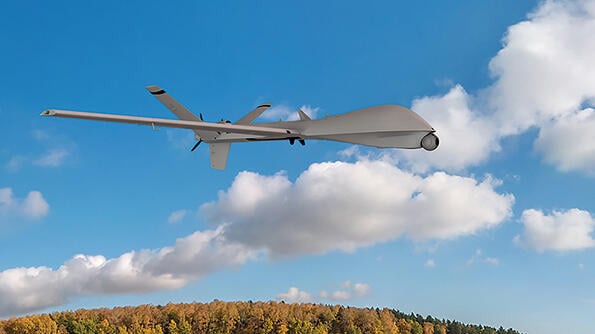
An image released by the Israeli military depicts a concept for a laser interceptor pod for rockets mounted on the nose of a generic UAV design.
Israel Enters Airborne-Laser Weapon Market
Steve Trimble January 08, 2020
Israel has started development of a self-defense laser weapon system for aircraft, sources in the Israeli defense sector say.
The country’s defense ministry also plans to perform field trials of a ground-based laser system in 2020 using technology developed by Rafael and Elbit Systems, according to Israeli media reports.
Elbit Systems, which produces laser countermeasures, rangefinders and pointers, is developing the airborne technology demonstrator for manned and unmanned aircraft under a defense ministry contract, sources say. The aim of the project to is provide air superiority and air defense, they say.
A self-defense laser system includes a beam-tracking system to illuminate the target and a high-power laser to intercept the incoming missile with a blast of thermal energy. A podded system includes separate subsystems for power generation and thermal management within the pod. A more advanced system integrated inside an aircraft would require a significant internal capacity for onboard power generation and cooling.
Self-defense lasers for aircraft tend to fall into a power class of 50-100 kW. Elbit Systems’ laser technology has transitioned from highly inefficient flashlamp-pumped to solid state, diode-pumped lasers. The change improves overall efficiency from about 1% to about 35%. But a diode-pump laser still requires a power-generation capacity of 150-300 kW to produce a 50-100-kW laser beam, with about 100-200 kW of waste energy, or heat, that must be cooled or vented overboard...
Israel: Country Thwarted 'Serious' Attempted Cyberattack, Energy Minister Says
Jan 29, 2020
What Happened: Israel reportedly thwarted a "very serious, sophisticated" cyberattack on one of the country's power plants several months ago, according to Energy Minister Yuval Steinitz, The Jerusalem Post reported Jan. 29.
Why It Matters: Although Steinitz wouldn't confirm the perpetrator of the attempted attack, Iran has the capabilities and motive to launch similar attacks either directly or through its regional proxies. Tehran also orchestrated similar incidents in the past, including an August 2019 intrusion targeting Bahraini infrastructure. Additional cyberattacks will remain a risk for Israel and continue to pose a threat to several targets, including critical infrastructure.
Background: Israeli-Iranian tensions have escalated over the past years, and have seen Israeli airstrikes against Iranian proxies in Syria, Iraq and Lebanon. Previous cyberattacks have targeted Israel's government, private companies, public events and Tel Aviv's Ben Gurion Airport
KOREAN PENINSULA
North Korea: Satellite Imagery Suggests Activity Near Missile Test Site
What Happened: Satellite imagery of North Korea's Sanumdong missile research facility outside of Pyongyang suggests vehicle movements consistent with early preparation for a weapons test, CNN reported Jan. 26. According to anonymous U.S. officials, the imagery could indicate potential preparations but said that no test was imminent.
Why It Matters: An upcoming test would be consistent with North Korea's announcement that it no longer feels bound by its promise to halt testing due to alleged U.S. bad faith in negotiations. The recent imagery adds to previous reports of activity at the Sohae Satellite Launching Station.
Background: Outreach between the United States and North Korea has been stagnating over the past year, culminating in Pyongyang's announcement that it planned to exit the dialogue unless Washington changed its approach.
RUSSIA
Putin Gives Russia a Glimpse of a Future Without Him
HIGHLIGHTS
- With his proposed constitutional changes, Putin will seek to transform Russia from a personality-driven, super-presidential system to one based on consensus and institutional interdependence between different governmental bodies.
- With power to be divided between the president and the State Duma, stable rule in Russia will come to depend more on the unity of dominant factions in the Kremlin and the parliament than on a single leader.
- The division of powers, as well as potential competition between them, increases the chances of political discord as Putin exits the political stage.
"Without Putin" is how young people in Russia today often describe a concept that is unfamiliar, and well they might: For most of their lives, they have known no other leader than Vladimir Putin. Yet all of Russia, not least President Putin himself, knows he cannot remain leader indefinitely. That's why Putin, who has led Russia in one form or another since the turn of the century, is now smoothing the way for his gradual exit — as well as for major changes in Russia's system of governance...
MIDDLE EAST GENERAL
Trump's Pro-Israel Peace Plan Risks Pushing Jordan Away
Ryan Bohl
Middle East and North Africa Analyst, Stratfor
HIGHLIGHTS
- The U.S. Middle East peace plan has emboldened Israel's nationalist push to expand its control of the West Bank, which includes annexing the Jordan River Valley.
- Jordan will take symbolic acts of retaliation against Israeli annexations to appease the kingdom's own growing nationalist demands for an independent Palestinian state.
- Such provocations against Israel will tempt the United States to use its considerable economic and military leverage to force Jordan to support its peace plan.
- But in the long term, Jordan's increasingly divergent views on Washington's regional strategy will drive the kingdom to seek out new ties with other nations, such as the United Kingdom and Russia.
By placing Israel's strategic goals first, the United States has placed its other ally Jordan in a tight spot. Washington's newly unveiled Middle East peace plan strongly indicates that the Palestinian state envisioned by many Jordanians will not come to fruition. Fears of backlash at home will compel Jordan to rebuke Israeli annexations in the West Bank. Though in doing so, Jordan will have to tread lightly, given the United States' track record of strong-arming allies to support its foreign policy goals...
Washington Doesn’t Understand Shiite Clerics in Iran or Iraq
U.S. officials who praise Iraqi Ayatollah Ali al-Sistani while denouncing Iran’s supreme leader fail to grasp that the two clerical leaders have a shared interest in resisting outside threats.
Mohammad R. KalantariJanuary 30, 2020
Shiite Muslim pilgrims walk in front of posters of Iran's Supreme Leader Ayatollah Ali Khamenei, the spiritual leader of the Shiite community Grand Ayatollah Ali Sistani, and the leader of Lebanon's Hezbollah movement Hasan Nasrallah during their procession from the holy Iraqi city of Najaf to the central shrine city of Karbala on Oct. 12, 2019. HAIDAR HAMDANI/AFP via Getty Images
On Jan. 17, as Grand Ayatollah Ali al-Sistani, the most prominent Shiite leader in Iraq, was discharged from the hospital, U.S. Secretary of State Mike Pompeo posted three tweets—in English, Arabic, and Farsi—wishing him a speedy recovery and calling the ayatollah “a source of guidance and inspiration.”
The friendly approach toward Sistani was regarded as an attempt by Pompeo to portray U.S. support for the ayatollah, who the administration believes is countering Iranian influence in Iraq. This comes only weeks after Pompeo himself encouraged President Donald Trump to assassinate the Iranian military commander Qassem Suleimani in an airstrike while the general was visiting Iraq.
It is no secret that Pompeo is a champion of exerting a maximum pressure strategy on what he calls “Khamenei’s kleptocracy,” in reference to Iran’s supreme leader, Ayatollah Ali Khamenei. But his different and conflicting attitudes toward the two ayatollahs are yet another miscalculation on the part of the U.S. government in the tumultuous Middle East...
CYBER ISSUES
Iraqi F-16s Could Be in Jeopardy Amid Iran Tensions
Sensitive U.S. technology feared vulnerable to Iranian-backed militias after contractors evacuate Balad air base.
Ellen IoanesJanuary 30, 2020, 4:07 PM
It was supposed to be a gesture of goodwill and a good-faith effort to give Iraq the military it needed to defend itself against regional adversaries like Iran and the Islamic State. But some U.S. and Iraqi officials say they are increasingly concerned that Iraq’s F-16 fighter jet program—supplied by the United States and, until recently, secured and maintained by foreign contractors—is vulnerable to seizure by Iranian-backed militias.
Sallyport Global, part of the Caliburn contractor conglomerate based in Reston, Virginia, provided security for the roughly 34-aircraft F-16 squadron at Balad Air Base alongside contractors from Lockheed Martin, who provided maintenance, and Iraqi personnel. But in early January, Sallyport and Lockheed Martin contractors withdrew from the base after facing indirect rocket fire from Iran-backed militias, leaving sensitive U.S. technology potentially vulnerable, U.S. and Iraqi officials tell Foreign Policy...
Cyber-Attack on US Water Company Causes Network Outage
A South Carolina water company is recovering from a cyber-attack that took its phone and online payment systems offline for nearly a week. The cyber-attack on Greenville Water triggered a payment system outage that began on Wednesday, January 22. Company spokesperson Emerald Clark said 500,000 customers were affected by the incident. An investigation has been launched into the cyber-attack, the exact nature of which is yet to be
revealed by Greenville Water. It's not yet known who targeted the water company or from wherethe attack was launched.
INTEL GENERAL
NOTHING SIGNIFICANT TO REPORT
TERRORISM
The Global Jihadist Movement in 2020: The Threat Lens Forecast
Scott Stewart, VP of Tactical Analysis, Stratfor & Thomas Abi-Hanna Global Security Analyst, Stratfor
Jan 28, 2020 | 10:00 GMT
Editor's Note: With the arrival of the new year, Threat Lens presents its assessment of the state of the jihadist movement divided into its three main components: the Islamic State pole, the al Qaeda pole and the grassroots jihadist threat. This security-focused assessment is an excerpt from one of many such analyses found at Stratfor Threat Lens, a unique protective intelligence product designed with corporate security leaders in mind. Threat Lens enables industry professionals and organizations to anticipate, identify, measure and mitigate emerging threats to people, assets and intellectual property the world over. Threat Lens is the only unified solution that analyzes and forecasts security risk from a holistic perspective, bringing all the most relevant global insights into a single, interactive threat dashboard.
As 2020 begins, the world is firmly in the post-Islamic State "caliphate" phase of the jihadist struggle. In 2019, the Islamic State lost the last sliver of the vast territory it had seized during its rapid rise in 2014. The group also lost its "caliph," Abu Bakr al-Baghdadi, in a U.S.-led raid in October 2019. The conditions that fueled its growth and propelled it to the forefront of the jihadist movement have clearly changed. But the threat hasn't disappeared.
The movement continues to be split generally between the Islamic State and al Qaeda. However, in practice, the jihadist ecosystem is really far more complex. Though there are two major "brand names" of jihad, there can be quite a bit of variance in how closely particular groups and individuals adhere to the doctrine and tactical guidance of the central leadership of each pole. These poles can be broken down into three different sections: the core group, the associated franchise groups and the grassroots supporters. The core group is just that, the core organization that provides leadership and guidance to the rest of the movement...
MISC
Security Clearance Backlog Hits Long-Awaited ‘Steady State’
About 200,000 people are waiting for background investigations, which lawmakers called a welcome, "sustainable" level. The newly reconstituted background investigations agency based out of the Pentagon has achieved a years-long goal of reaching a “steady state” of pending security clearance requests, according to lawmakers briefed Wednesday. In October, the Defense Counterintelligence and Security Agency, or DCSA—formerly the Defense Security Service— officially absorbed the National Background Investigations Bureau, or NBIB. Formerly under the Office of Personnel Management, NBIB was created in 2016 in response to security concerns in the wake of the 2015 hack that exposed personal information on 21 million current, formerand prospective federal employees and contractors.
Stealthy UAS Unveiled For USAF Target, Loyal Wingman Needs
Steve Trimble January 13, 2020
A small start-up company in California has unveiled a new proposal for a stealthy unmanned aircraft system (UAS) to offer the U.S. Air Force as a “fifth-generation” target drone or a low-cost attritable aircraft.
Tehachapi, California-based Sierra Technical Services, a company founded by previously retired Lockheed Martin Skunk Works engineers, unveiled the first photos of the completed Fifth Generation Aerial Target (5GAT) prototype after completing engine tests on the ground. A first flight of the 5GAT is scheduled in early 2020.
The name of the aircraft is derived from its origins as a prototype funded by the Defense Department’s Director of Operational Test and Evaluation (DOT&E), says Roger Hayes, president and CEO of Sierra Technical Services...
What Exactly is the Space Force?
Last Friday, President Donald Trump tweeted out the new logo for the United States Space Force, a new service branch of the U.S. military within the Department of the Air Force. President Trump first announced the new Space Force in 2018, and its creation was made official with Space Policy Directive-4 in February 2019. The Space Force officially came into existence on December 20, 2019, when the National Defense Authorization Act (NDAA) guaranteeing its funding was signed into law.
For some onlookers, the Space Force’s formation raises an important question: What exactly is the Space Force going to do?
Answering this question requires an understanding of the U.S. military’s role in space activities. Prior to the Space Force’s creation, U.S. military space operations were managed by the Air Force Space Command, a major command within the U.S. Air Force. Although some of the Space Command’s activities are classified, it is public knowledge that the Command’s personnel are engaged with the procurement and operation of military space technology, such as spaceplanes, satellites and the rockets used to launch them into orbit. Programs under the Space Command’s purview include the Global Positioning System (GPS), the Defense Meteorological Satellite Program and the Space-Based Infrared System Program. The Command also operates the Delta II, Delta IV and Atlas V launch vehicles.
In 2018, President Trump proposed the formation of a new military branch to take over the Space Command’s responsibilities, citing the country’s increasing need to both protect its military space technology from foreign threats and to preserve “American superiority in space.” The Trump administration proposed that this new military branch – the “Space Force” – sit within the Air Force, just as the Marine Corps sits within the Navy.
The Space Force is now the sixth branch of the U.S. military and the first U.S. military service unit to be created since the U.S. Air Force was born out of the Army Air Corps in 1947. Its first member, Air Force Gen. John “Jay” Raymond, was sworn into office on January 14, in a White House ceremony led by Vice President Mike Pence. As of January 26, Gen. Raymond is the branch’s only official employee. The Pentagon expects that he will be joined by up to 15,000 new officers, airmen and civilians from the former Air Force Space Command in the next few months.
Among industry experts and pundits, reception towards the creation of a new service branch has been mixed. In 2018, the Air Force Association staunchly opposed the creation of a Space Force, stating that the stand-up of a new service branch would drive unnecessary and burdensome administrative costs. (The total estimated budget for the Space Force is $2 billion USD over the next 5 years.) The professional association argued instead for the renaming of the Air Force as the U.S. Aerospace Force, and for a re-establishment of the military’s existing Space Command under this umbrella. Michael E. O’Hanlon, a senior fellow with The Brookings Institution, expressed similar misgivings towards the Space Force, calling it a “misguided idea” that might unintentionally lead to the weaponization of space...
Urban Air Mobility Faces Crucial First Trials In 2020
Graham Warwick December 19, 2019
The rubber hits the road for urban air mobility (UAM) in 2020, with demonstrations and challenges planned that will put the technology through its first realistic operational tests.
Uber Elevate plans test flights over three cities in 2020
NASA will bring developers together with regulators
Uber plans test flights for its Elevate aerial ride-sharing service in Dallas, Los Angeles and Melbourne, Australia, using experimental electric vertical-takeoff-and-landing (eVTOL) vehicles. The company is maintaining its commitment to launch commercial service in 2023 with small fleets of certified vehicles flying a handful of routes in these pilot cities.
NASA plans an initial event in 2020 for its Grand Challenge to improve UAM safety and accelerate scalability through integrated demonstrations that bring together vehicle developers and providers of airspace operations-management services. An initial development test event is planned for July-November, paving the way for the first Grand Challenge in 2022.
Monday, February 3, 2020
What's going on in the World Today 200203
HYPERLINKS MAY REQUIRE AN EMAIL:



Friday, January 31, 2020
The Thrill is not gone...but the weekend is here....
Another long week, and I'm shocked. The first month of the "new" year is over.
From the 2010 Crossroads Guitar Festival, his signature classic, The Thrill is Gone.
Here's to another great weekend.
From the 2010 Crossroads Guitar Festival, his signature classic, The Thrill is Gone.
Here's to another great weekend.
Containment? Or the other Cold War?
Ages ago I was in a college geography class, during the Cold War era, 1986 or 87. The professor, as liberal as you could get, was rather critical on the views of Ronald Reagan. I can hear her now, "The Soviet Union is not something that is going away, it is there, it will continue to be there, we can't defeat (emphasis hers) it, we must live and deal with it..."
The Soviet Union was rotting from inside and collapsed in less than five years.
I've posted the STRATFOR article on Ronald Reagan's passing countless times on this blog, and I'll post the critical passage now:
One of the truisms I've learned over 55 years, don't confuse intelligence and education.
One of the distinction's of the Cold War was focus on one primary enemy, the Soviet Union. Now we have multiple "smaller" enemies (Russia, China), often non-national (International terrorism, non-governmental cyber warfare), that require different focus. But of all the nations in the Middle East, Iran is our greatest threat, in both areas of operations, conventional and unconventional. And they are intermingling with Russia and China, for example, holding naval exercises together to keep the US and Israel off balance. No question, Iran is a threat to the stability of the Middle East, and multiple other counties that rely on Persian Gulf oil. Now we have other serious thinkers and policy makers all over the world telling us we can't take the mullahs out in Tehran, we must learn to live with them. And we will just give them 150 billion to show we're nice guys, in spite of them continuing to develop nuclear weapons, and the means to deliver them. A question never asked of, or answered by, the Obama regime, "If Iran doesn't want nukes, why are they developing ICBMs?"
From this mornings's Foreign Policy, the latest wisdom of the appeasers:
Actually it empowered the Iranian nuclear development program. After giving Tehran 150 billion, did they use it to relive the suffering of the Iranian people? No. But they are putting in large arms purchases to Russia and China. And yes, I think it's fair to say, Trump wants regime change in Tehran, like other sane people.
Not necessarily. You start with open support to the protesters in Tehran and elsewhere. Then you use lethal (e.g. small arms, explosives) and non-lethal (money, intelligence, communications) assistance to aid their efforts. Of particular need is video communications of the protest. Tehran has blocked its citizens from accessing the Internet in the past, and if threatened, it will do so again. Video of Iranian troops shooting protesters will show the world what they are dealing with in the mullahs. And why it needs to be changed.
Legitimately, the Iranians have reason to fear the US intent. After Muammar Gaddafi gave up his WMD program, and started to assist us with intelligence, we (should I specifically say, Obama and Mrs Bill Clinton), did what? Overthrew his government, got him killed, and threw his nation into chaos. The Obama regime initiated another disaster in Egypt, almost giving an ally and stable nation over to the Muslim Brotherhood. Not to mention, if the Trump administration developed Iran Nuke Deal II, the Democrats in the Senate will suddenly rediscover the Treaty Claude in the Constitution, and demand to have it approved by 2/3 of the members present.
But it doesn't matter, the mullahs want a nuclear force, and have vowed to wipe Israel off the face of the earth. And back to the issue of "containment," during the Cold War, it was a plausible policy. The Soviets were concerned with only one issue, regime survival. But they were not insane. They had a well developed nuclear force, but they would not attack Alaska or Great Britain to simply "wipe them off the map." The same cannot be said of the leaders in Iran. They have as stated government policy the elimination of Israel, which will only lead to their own destruction, if they attempt it. It's an open secret that Israel has had nuclear weapons since the early 70s, and they have the means to deliver them to every nation in the Middle East. And, in spite of multiple attacks on their soil, they have not used them. If the mullahs had a similar force, does anyone believe it would not be used?
Sorry, containment is not a plausible policy with Iran. We must use the indirect means at hand to weaken, then collapse the regime. Over half the population in Iran is less than 40 years old, they have no memory of the Shah, but they know they are living in 3rd World conditions while the rest of the world is light years ahead of them. While the Obama regime had no issue with destroying friendly (Egypt) or non-hostile (Libya) governments, the one nation in the Middle East it would not interfere with was Iran. You can speculate why, but hopefully, a new administration will encourage this movement, filled with people risking their lives. Not to mention, the end of the Iranian regime will help stabilize a very critical, but unstable, area of the world.
The Soviet Union was rotting from inside and collapsed in less than five years.
I've posted the STRATFOR article on Ronald Reagan's passing countless times on this blog, and I'll post the critical passage now:
...We can debate Reagan's role in the fall of the Soviet Union forever. What cannot be disputed is this: He believed the Soviet Union was going to collapse, and he believed it would happen within his lifetime. He believed this at a time when almost no one else believed it. He was ridiculed for his simplistic thinking, silly generalizations and lack of sophistication by serious thinkers and policy makers all over the world. But the fact is that the cowboy was absolutely right in his reading of history — and the world-renowned scholars were wrong. We know of no major Soviet expert in or out of government who was prepared to argue in 1980 that the Soviet Union would not survive the century. Reagan did argue that. He was laughed at. He was right...
One of the truisms I've learned over 55 years, don't confuse intelligence and education.
One of the distinction's of the Cold War was focus on one primary enemy, the Soviet Union. Now we have multiple "smaller" enemies (Russia, China), often non-national (International terrorism, non-governmental cyber warfare), that require different focus. But of all the nations in the Middle East, Iran is our greatest threat, in both areas of operations, conventional and unconventional. And they are intermingling with Russia and China, for example, holding naval exercises together to keep the US and Israel off balance. No question, Iran is a threat to the stability of the Middle East, and multiple other counties that rely on Persian Gulf oil. Now we have other serious thinkers and policy makers all over the world telling us we can't take the mullahs out in Tehran, we must learn to live with them. And we will just give them 150 billion to show we're nice guys, in spite of them continuing to develop nuclear weapons, and the means to deliver them. A question never asked of, or answered by, the Obama regime, "If Iran doesn't want nukes, why are they developing ICBMs?"
From this mornings's Foreign Policy, the latest wisdom of the appeasers:
The Only Sensible Iran Strategy Is Containment
The most effective plan against the Islamic Republic has always been the most obvious—and the one nobody in Washington seems willing to try.
BY STEVEN A. COOK
I trace my interest in the Middle East back to the Iranian hostage crisis—those 444 days of yellow ribbons...
The subject hasn’t gotten any less confusing since. In the past 40 years, U.S. policymakers have endlessly debated a central issue in U.S.-Middle East policy: What should the United States do about Iran? The answer has often proved to be elusive in large part because of domestic politics. The traumas of the late 1970s and early 1980s have rendered parts of the U.S. policy community needlessly bellicose, others credulously dovish, and the remaining wary of both in search of a “just right” strategy to modify Iran’s behavior.
But the central question has now taken on a new urgency. U.S. President Donald Trump’s decision to kill Iranian military commander Qassem Suleimani in a drone strike on Jan. 3 has raised fears of violent escalation—even war—between the United States and Iran. It’s time to directly address the question of what exactly the United States can do about Iran—and fortunately, there’s a good answer available, even if it’s not satisfying for anyone in Washington.
What’s already clear is that the current U.S. approach needs improvement. Despite his hit on Suleimani, it is not at all clear what the president wants to achieve regarding Iran. He has combined hawkish rhetoric with periodic offers to negotiate with Tehran while pursuing a “maximum pressure” policy that until recently did not employ military force. Depending on whom one asks or who is doing the asking, the administration is seeking either full-scale regime change or simply a more robust nuclear deal than the Joint Comprehensive Plan of Action (JCPOA)—the agreement negotiated by the Obama administration, which set limits on Iran’s nuclear program...
Actually it empowered the Iranian nuclear development program. After giving Tehran 150 billion, did they use it to relive the suffering of the Iranian people? No. But they are putting in large arms purchases to Russia and China. And yes, I think it's fair to say, Trump wants regime change in Tehran, like other sane people.
...Yet just because the Trump administration and the politics of U.S.-Iran relations have imposed a binary choice on policymakers—regime change or the existing nuclear agreement—does not mean that there are no other possibilities. The U.S. government could pursue, for example, a “grand bargain” with Iran that would settle all the outstanding issues—notably, the nuclear program, Iran’s use of proxies to meddle in the region, and the release of Americans held in Tehran—between the two countries. Yet the most rational option under the present circumstances is another strategy that no longer goes mentioned in Washington: containment.
Consider the other potential strategies in turn. Regime change has, for obvious reasons, become a scary term and a policy one would think officials and analysts would want to avoid given the U.S. experience in Iraq, but it remains an option if only because influential people continue to advocate for it. It would not necessarily require a march on Tehran, but it would be costly, requiring the United States to provide far more military, political, and financial resources to Iran’s opponents around the region than current policy. This seems an unlikely scenario for two important reasons: 1) The potential for further regional chaos is high, and 2) the American people and Congress would likely be reluctant to support policies that would undoubtedly include augmenting the already sizable deployment of almost 45,000 American soldiers, sailors, and airmen in the Persian Gulf.
Not necessarily. You start with open support to the protesters in Tehran and elsewhere. Then you use lethal (e.g. small arms, explosives) and non-lethal (money, intelligence, communications) assistance to aid their efforts. Of particular need is video communications of the protest. Tehran has blocked its citizens from accessing the Internet in the past, and if threatened, it will do so again. Video of Iranian troops shooting protesters will show the world what they are dealing with in the mullahs. And why it needs to be changed.
Returning to the JCPOA or negotiating a new nuclear deal that addresses some of the defects in the original agreement—for example, the failure to set limits on Iran’s ballistic missile program—is the flip side of Washington’s Iran debate. Reviving the JCPOA would mean acceptance of Iran’s alleged right to develop nuclear technology, sanctions relief, and the normalization of Tehran’s commercial ties with the world. It would also require implicit acceptance of Iran’s role in the region, especially its influential positions in Lebanon and Syria.
The problems with returning to the JCPOA or an enhanced agreement that addresses Iran’s missile program, for example, are similar to the one’s the Obama administration encountered, including opposition from regional allies and hawks in Washington determined to scuttle a deal, with one additional, notable challenge: Iran’s leaders would likely be reluctant to enter an agreement with the United States after the Trump administration breached the JCPOA in May 2018. The Iranians would also resist limits on their ballistic missiles given their reliance on those weapons for regional deterrence. There are also constraints on the U.S. side: In order for the Trump administration to make a new agreement work, it would need to convince its regional allies of its wisdom...
Legitimately, the Iranians have reason to fear the US intent. After Muammar Gaddafi gave up his WMD program, and started to assist us with intelligence, we (should I specifically say, Obama and Mrs Bill Clinton), did what? Overthrew his government, got him killed, and threw his nation into chaos. The Obama regime initiated another disaster in Egypt, almost giving an ally and stable nation over to the Muslim Brotherhood. Not to mention, if the Trump administration developed Iran Nuke Deal II, the Democrats in the Senate will suddenly rediscover the Treaty Claude in the Constitution, and demand to have it approved by 2/3 of the members present.
But it doesn't matter, the mullahs want a nuclear force, and have vowed to wipe Israel off the face of the earth. And back to the issue of "containment," during the Cold War, it was a plausible policy. The Soviets were concerned with only one issue, regime survival. But they were not insane. They had a well developed nuclear force, but they would not attack Alaska or Great Britain to simply "wipe them off the map." The same cannot be said of the leaders in Iran. They have as stated government policy the elimination of Israel, which will only lead to their own destruction, if they attempt it. It's an open secret that Israel has had nuclear weapons since the early 70s, and they have the means to deliver them to every nation in the Middle East. And, in spite of multiple attacks on their soil, they have not used them. If the mullahs had a similar force, does anyone believe it would not be used?
Sorry, containment is not a plausible policy with Iran. We must use the indirect means at hand to weaken, then collapse the regime. Over half the population in Iran is less than 40 years old, they have no memory of the Shah, but they know they are living in 3rd World conditions while the rest of the world is light years ahead of them. While the Obama regime had no issue with destroying friendly (Egypt) or non-hostile (Libya) governments, the one nation in the Middle East it would not interfere with was Iran. You can speculate why, but hopefully, a new administration will encourage this movement, filled with people risking their lives. Not to mention, the end of the Iranian regime will help stabilize a very critical, but unstable, area of the world.
Officer Down


Correctional Administrator Debra JohnsonRest in Peace Sis…We Got The Watch
Tennessee Department of Correction, Tennessee
End of Watch Wednesday, August 7, 2019
Age 64
Tour 38 years
Cause Assault
Weapon Person
Offender Apprehended
Correctional Administrator Debra Johnson was found murdered in her residence on the grounds of the West Tennessee State Penitentiary on August 7th, 2019.
She was attacked by an inmate who then escaped from the facility using a tractor. The escapee, who was serving a sentence for aggravated kidnapping and rape, remained at large for five days before being taken into custody. He was charged with first-degree murder, burglary, aggravated sexual assault, and escape.
Administrator Johnson had served with the Tennessee Department of Correction for 38 years and started her career as a correctional officer.
Nemo me impune lacessit
Day is done, Gone the sun, From the lake, From the hills, From the sky. All is well, Safely rest, God is nigh.
Thursday, January 30, 2020
K9 Down


K9 HavocRest in Peace Havoc…till our next roll call at the Rainbow Bridge!
Utah County Sheriff's Office, Utah
End of Watch Tuesday, July 16, 2019
Breed Belgian Malinois
Gender Male
Age 7
Tour 6 years, 6 months
K9 Havoc was struck and killed by a vehicle on Vineyard Road in the area of Vineyard Beach at 9:15 am.
His handler stopped to let K9 Havoc take a break in a parking lot more than 200 feet from the roadway. As K9 Havoc inspected the area he suddenly ran towards the roadway and failed to obey his handler's commands to return. He was struck by a vehicle once he entered the roadway.
He was able to return to his handler who immediately took him to a veterinary clinic. He passed away approximately one hour later while being treated for his injuries.
K9 Havoc had served with the Utah County Sheriff's Office for 6-1/2 years and was certified in narcotics detection and patrol. He had taken third place in vehicle narcotics search at the Las Vegas Metro Police K-9 Trials in October 2018.

In Memory of all Police Dogs
They handled themselves with beauty & grace
And who could ever forget that beautiful face
Whether at work; or at home; whatever the test
They always worked hard; and did their best
They were real champions; at work or at play
But their lives were cut short; suddenly one day
While working on the job with their partner one day
They put themselves out on a limb; out into harms way
They gave the ultimate sacrifice; any dog can give
They gave up their life; so someone could live
The best of their breed; as his partner and anyone would say
Many hearts are now broken; that he had to prove it this way
Now as the trees are blowing in the gentle breeze
The sun is shining; thru the leaves on the trees
The meadows are green; and the grass grows tall
Off in the distance they can see a waterfall
As they look over the falls; down through the creek
The water flows gently; as a rabbit sneaks a peek
Far up above; in the deep blue sky
They see the birds soar high; as they fly by
They see animals playing; at the bridge by a waterfall
Chasing each other; and just having a ball
They play all day; from morning to night
There's no more rain; just warm sunlight
Off in the distance; they hear trumpets blow
Then all the animals look up; and notice a bright glow
The harps would play and the angels would sing
As they know they've come home; they've earned their wings
We remember that they died; in the line of duty
And are now with the Lord; sharing in heaven's beauty
Off to the meadows now; where they can play and roam free
With an occasional rest stop; under a tall oak tree
No more bad guys to chase; or bullets to take
Just a run through the meadow; down to the lake
A quick splash in the water; then back to the shore
Then it's off to the forest; to go play some more
These special dogs are back home; up in heaven above
They're cradled in God's arm's; and covered with His love
We'll light a candle for all of them; in the dark of night
In loving memory of all; these very special knights
By John Quealy
Wednesday, January 29, 2020
Officer Down

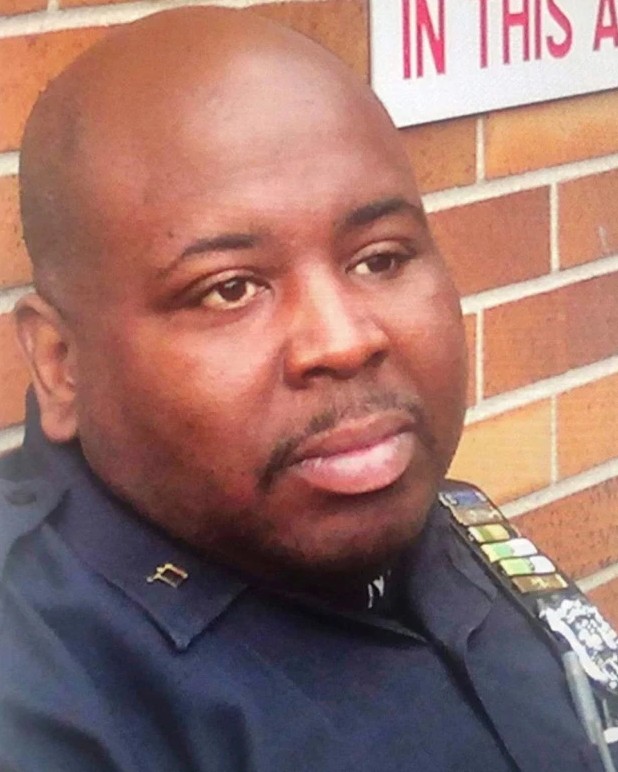
Police Officer Raymond HarrisRest in Peace Bro…We Got The Watch
New York City Police Department, New York
End of Watch Sunday, August 4, 2019
Age 52
Tour 22 years
Cause 9/11 related illness
Incident Date Tuesday, September 11, 2001
Weapon Aircraft; Passenger jet
Offender 19 suicide attackers
Police Officer Raymond Harris died as the result of cancer that he developed following his assignment to the search and recovery efforts at the World Trade Center site following the 9/11 Terrorist Attacks.
Officer Harris had served with the New York City Police Department for 22 years. He is survived by his wife, two daughters, and granddaughter.
On the morning of September 11th, 2001, seventy-two officers from a total of eight local, state, and federal agencies were killed when terrorist hijackers working for the al Qaeda terrorist network, headed by Osama bin Laden, crashed four hijacked planes into the World Trade Center towers in New York City, the Pentagon in Arlington, Virginia, and a field near Shanksville, Pennsylvania.
After the impact of the first plane into the World Trade Center's North Tower, putting the safety of others before their own, law enforcement officers along with fire and EMS personnel, rushed to the burning Twin Towers of the World Trade Center to aid the victims and lead them to safety. Due to their quick actions, it is estimated that over 25,000 people were saved.
As the evacuation continued, the South Tower unexpectedly collapsed as a result of the intense fire caused by the impact. The North Tower collapsed a short time later. Seventy-one law enforcement officers, 343 members of the New York City Fire Department and over 2,800 civilians were killed at the World Trade Center site.
A third hijacked plane crashed into a field in rural Pennsylvania when the passengers attempted to re-take control of the plane. One law enforcement officer, who was a passenger on the plane, was killed in that crash.
The fourth hijacked plane was crashed into the Pentagon in Arlington, Virginia, killing almost 200 military and civilian personnel. No law enforcement officers were killed at the Pentagon on 9/11.
The terrorist attacks resulted in the declaration of war against the Taliban regime, the illegal rulers of Afghanistan, and the al Qaeda terrorist network which also was based in Afghanistan.
On September 9th, 2005, all of the public safety officers killed on September 11th, 2001, were posthumously awarded the 9/11 Heroes Medal of Valor by President George W. Bush.
The contamination in the air at the World Trade Center site caused many rescue personnel to become extremely ill and eventually led to the death of several rescue workers.
On May 1st, 2011 members of the United States military conducted a raid on a compound in Abbottabad, Pakistan, and killed Osama bin Laden.
Nemo me impune lacessit
Day is done, Gone the sun, From the lake, From the hills, From the sky. All is well, Safely rest, God is nigh.
Tuesday, January 28, 2020
K9 Down

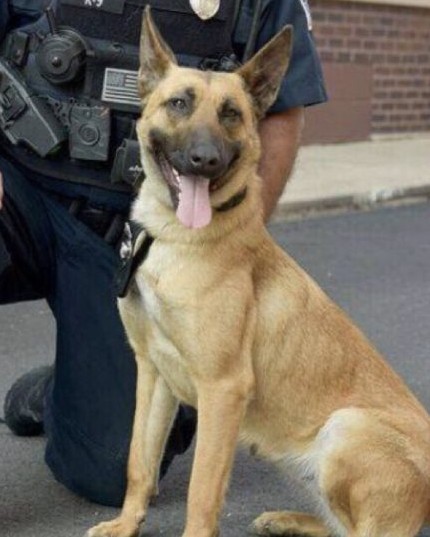
K9 CasRest in Peace Cas…till our next roll call at the Rainbow Bridge!
Whitley County Sheriff's Office, Indiana
End of Watch Wednesday, July 10, 2019
Breed Belgian Malinois
Gender Female
Tour 2 years, 3 months
K9 Cas was killed when her handler's patrol car was struck by a fleeing vehicle at the intersection of U.S. 30 and County Road 450.
Her handler had stopped at the intersection to deploy spike strips while assisting with a vehicle pursuit that had started following an armed carjacking in Kosciusko County. The pursuit involved multiple agencies as it entered Whitley County.
The patrol car was struck after the fleeing vehicle swerved to avoid the spike strips that K9 Cas' handler had deployed. The Dodge Charger patrol car was broadsided on the passenger side and then burst into flames. Her handler and other officers were unable to free K9 Cas due to the heat and flames.
The driver of the fleeing vehicle was taken into custody.
K9 Cas had served with both the Whitley County Sheriff's Office and Columbia City Police Department for just over two years
In Memory of all Police Dogs
They handled themselves with beauty & grace
And who could ever forget that beautiful face
Whether at work; or at home; whatever the test
They always worked hard; and did their best
They were real champions; at work or at play
But their lives were cut short; suddenly one day
While working on the job with their partner one day
They put themselves out on a limb; out into harms way
They gave the ultimate sacrifice; any dog can give
They gave up their life; so someone could live
The best of their breed; as his partner and anyone would say
Many hearts are now broken; that he had to prove it this way
Now as the trees are blowing in the gentle breeze
The sun is shining; thru the leaves on the trees
The meadows are green; and the grass grows tall
Off in the distance they can see a waterfall
As they look over the falls; down through the creek
The water flows gently; as a rabbit sneaks a peek
Far up above; in the deep blue sky
They see the birds soar high; as they fly by
They see animals playing; at the bridge by a waterfall
Chasing each other; and just having a ball
They play all day; from morning to night
There's no more rain; just warm sunlight
Off in the distance; they hear trumpets blow
Then all the animals look up; and notice a bright glow
The harps would play and the angels would sing
As they know they've come home; they've earned their wings
We remember that they died; in the line of duty
And are now with the Lord; sharing in heaven's beauty
Off to the meadows now; where they can play and roam free
With an occasional rest stop; under a tall oak tree
No more bad guys to chase; or bullets to take
Just a run through the meadow; down to the lake
A quick splash in the water; then back to the shore
Then it's off to the forest; to go play some more
These special dogs are back home; up in heaven above
They're cradled in God's arm's; and covered with His love
We'll light a candle for all of them; in the dark of night
In loving memory of all; these very special knights
By John Quealy
Monday, January 27, 2020
Officer Down

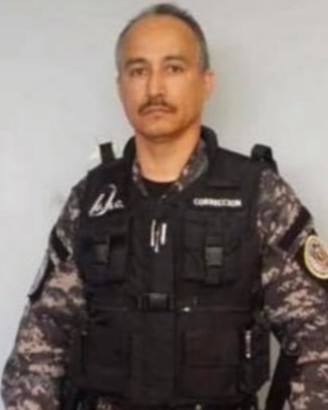
Correctional Officer Pedro J. Rodríguez-MateoRest in Peace Bro…We Got The Watch
Puerto Rico Department of Corrections and Rehabilitation,
End of Watch Thursday, August 1, 2019
Age 44
Cause Assault
Incident Date Wednesday, July 31, 2019
Offender Deceased
Correctional Officer Pedro Rodríguez-Mateo succumbed to injuries sustained the previous day when he was attacked by an inmate at the Ponce Maximum Security Facility.
Officer Rodríguez-Mateo was supervising inmate visitation when he observed a visitor pass an item to an inmate. He had the inmate removed the visitation area so he could be searched. During the search, the inmate attacked Officer Rodríguez-Mateo and disarmed him of his baton. The inmate, who was serving a 71-year sentence for a triple murder, struck Officer Rodríguez-Mateo several times, causing him to suffer a skull fracture.
The inmate was subdued and remained in custody and was charged with first-degree murder of a correctional officer. He died in prison in September 2019.
Officer Rodríguez-Mateo was transported to a local hospital where he succumbed to his injuries the following day.
Officer Rodríguez-Mateo is survived by his wife and child.
Nemo me impune lacessit
Day is done, Gone the sun, From the lake, From the hills, From the sky. All is well, Safely rest, God is nigh.
Friday, January 24, 2020
Officer Down


Detective James J. BielloRest in Peace Bro…We Got The Watch
Atlanta Police Department, Georgia
End of Watch Sunday, July 28, 2019
Age 68
Tour 15 years
Incident Date Wednesday, April 15, 1987
Offender Sentenced to 60 years
Detective J.J. Biello succumbed to gunshot wounds sustained on April 15th, 1987, while working a secondary employment job at Provino’s Italian Restaurant at 4387 Roswell Road NE.
An armed juvenile entered the restaurant and announced a robbery. As he had an employee remove money from the cash register Detective Biello approached him from behind and identified himself. The juvenile turned around and opened fire, striking Detective Biello in the chest and abdomen. Detective Biello was able to return fire, wounding the suspect who then shot him in the neck and fled.
As the subject left the scene another officer fired shots at him. The injured suspect was arrested a short time later.
Detective Biello's wounds rendered him a quadriplegic and he was confined to a wheelchair. On July 29th, 2019, he succumbed to complications from the original gunshot wounds.
The subject who shot him was convicted of aggravated assault and armed robbery and sentenced to 60 years following the initial incident.
At the time of the shooting Detective Biello had served with the Atlanta Police Department for 15 years.
Nemo me impune lacessit
Day is done, Gone the sun, From the lake, From the hills, From the sky. All is well, Safely rest, God is nigh.
Wednesday, January 22, 2020
Officer Down


Police Officer Juan Jose DiazRest in Peace Bro…We Got The Watch
Los Angeles Police Department, California
End of Watch Saturday, July 27, 2019
Age 24
Tour 2 years
Police Officer Juan Diaz was shot and killed shortly after midnight in the area of Avenue 26 and Humboldt Street after taking law enforcement action when he observed several men vandalizing a wall.
He was eating with friends when he observed the man tagging a wall with gang graffiti. He approached the man and told him to stop. A short time later the man returned with others, confronted Officer Diaz and his friends, and brandished a handgun. The man then opened fire on the group as they tried to leave the area, killing Officer Diaz and wounding his girlfriend's brother.
Three subjects were taken into custody approximately one week later and charged with murder and gang participation.
Officer Diaz had served with the Los Angeles Police Department for two years and was assigned to the Professional Standards Bureau.
Nemo me impune lacessit
Day is done, Gone the sun, From the lake, From the hills, From the sky. All is well, Safely rest, God is nigh.
RIP Francis Currey, MOH Battle of the Bulge


I've said multiple time to friends and family, a national treasure (no exaggeration) is the National World War II Museum in New Orleans LA. Besides the displays and other items, many of the vets of the war are there, speaking with visitors. And the fact is they are passing. If you were 18 in 1945, you are 93 now. We have recently lost another member of the Greatest Generation.
Local WWII veteran, Medal of Honor recipient dies at 94
SELKIRK — Francis S. Currey, one of the last few living World War II veterans who received the Medal of Honor, died Tuesday morning at 94...
...Currey, of Selkirk, was originally born in Loch Sheldrake, New York on June 29, 1925 and joined the U.S. Army when he was 17 where he eventually became a technical sergeant. According to the Digital Collections of the National WWII Museum, on Dec. 21, 1944, Currey risked his life when German infantrymen shot at his direction in Malmedy, Belgium during the Battle of the Bulge. He countered with a bazooka and anti-tank grenades, and rescued five fellow American soldiers who were trapped by German tank rounds. He was just 19 at the time.
His heroic actions earned him the Medal of Honor — the highest and most prestigious decoration for an outstanding U.S. military service member for acts of valor — and has been said to win the battle and shorten the war. According to a July 14, 2006 article by the Times Herald-Record, a GI Joe action figure was crafted in his image back in 1998.
RIP sir...We Got The Watch.
Monday, January 20, 2020
What's going on in the World Today 200120
HYPERLINKS MAY REQUIRE AN EMAIL:
USA
New U.S. Missiles in Asia Could Increase the North Korean Nuclear Threat
After withdrawing from the INF Treaty, U.S. officials have been worrying about Beijing, but as Washington starts to deploy previously banned missiles in the Pacific, the real risk will come from Pyongyang.
BY ANKIT PANDA | NOVEMBER 14, 2019, 2:07 AM
The 1987 Intermediate-Range Nuclear Forces (INF) Treaty expired on Aug. 2 when the United States’ withdrawal from that agreement became official. Now, unencumbered by INF restrictions, U.S. planning has turned toward the development and deployment of previously proscribed missiles—primarily to Asia, where competition with China is an acute future concern.
But China isn’t the only major strategic concern in a post-INF Asia. What should greatly worry strategic planners in Washington is the inadvertent ways in which the deployment of new U.S. missiles in the Pacific theater might greatly increase the risk of nuclear weapons use on and around the Korean Peninsula.
A second-order effect of a new U.S. missile deployment to the region would be the complication of any attempts at diplomacy with North Korea over its nuclear program. Indeed, Kim Jong Un’s resolve to retain his nuclear capabilities would likely harden as a result.
While the beginnings of the post-INF debate in the United States have largely focused on Russia and China, it is the unintended consequences with North Korea that are most likely to raise nuclear risks in the short term.While the beginnings of the post-INF debate in the United States have largely focused on Russia and China, it is the unintended consequences with North Korea that are most likely to raise nuclear risks in the short term. Unlike China, which can be confident in its ability to retaliate, North Korea’s current command and control practices and its limited nuclear arsenal may force it to reevaluate its choices to date, taking it down a dangerous..
With an Eye Toward China, Pentagon Weighs Slashing Global Hawk Drone
The surveillance aircraft on the chopping block is a variant of the type that Iran shot down this summer.
Just months after Iran shot down an expensive U.S. surveillance drone over the Strait of Hormuz, the Defense Department is weighing scrapping about two-thirds of the Air Force’s roughly three dozen Global Hawk unmanned aircraft as part of a shift toward building the new capabilities needed to counter China and Russia.
The Air Force has proposed retiring as many as 21 of its 35 RQ-4 Global Hawk high-altitude drones, which currently collect intelligence across the Middle East and elsewhere, as part of a series of steep cuts to legacy programs, current and former U.S. defense officials told Foreign Policy. The proposal has been submitted to the Office of the Secretary of Defense for review as part of annual budget negotiations.
“The Air Force continues to refine its budget submission,” Air Force spokeswoman Ann Stefanek said. “We don’t expect details to be available until the President’s Budget is submitted to Congress in February 2020.”
The proposed cut is part of the Pentagon’s shift from the counterterrorism fight of the last few decades toward so-called great-power threats from China and Russia. The strategy was laid out in the Pentagon’s guiding doctrine, the National Defense Strategy, rolled out by then-Defense Secretary James Mattis in January 2018.
Both China and Russia are increasingly able to challenge the U.S. military’s superiority through a wide variety of sophisticated missiles, air defenses, and electronic capabilities that could destroy key U.S. and allied forces—even U.S. aircraft carriers.
The Pentagon’s challenge, then, is to invest in building next-generation systems that can penetrate Chinese and Russian defenses—the new B-21 stealth bomber, hypersonic missiles, and others. But to do so, the department needs cash. So, the Pentagon, led by Defense Secretary Mark Esper, has embarked on an effort to review legacy programs to see which ones it can live without...
AFRICA
NOTHING SIGNIFICANT TO REPORT
ASIA
South Korea and Japan Cool Their Trade Spat in the Name of Security
The Big Picture
Nearly five months old, the South Korea-Japan trade spat has shone a spotlight on the historical and geopolitical tensions between the two allies. Seoul's recent decision to remain in a U.S.-brokered intelligence-sharing pact with Tokyo opens the way to de-escalation, but any progress toward compromise will be fraught with hurdles due to domestic considerations.
Just in the nick of time, South Korea has saved a bilateral intelligence-sharing pact with Japan. On Nov. 22, Seoul decided to provisionally extend the pact — mere hours before it expired — that it had planned to exit in retaliation for export restrictions that Tokyo imposed in response to Seoul's demands for greater compensation for the Korean wartime victims of imperial Japan. In addition, Seoul announced that it would pause its related challenge against Japan at the World Trade Organization. But even if the two have managed to halt the escalation in their miniature trade war, Seoul and Tokyo still have much work to do to truly bury the hatchet...
EUROPE
Russia and Ukraine Seek a Contentious New Gas Transit Deal
HIGHLIGHTS
- Russia, Ukraine and the European Union have a shared interest in avoiding economic losses by reaching a new deal on gas transit before the current agreement expires.
- But significant obstacles — including geopolitical competition and the impact of new energy infrastructure in the region — could lead to a delay or impasse in negotiations.
- If the parties cannot reach an agreement before the current agreement expires Dec. 31, Russian gas deliveries to Europe via Ukraine could well experience interruptions...
LATIN/SOUTH AMERICA
NOTHING SIGNIFICANT TO REPORT
AFGHANISTAN
NOTHING SIGNIFICANT TO REPORT
CHINA
Secret documents detail inner workings of China’s mass detention camps for minorities
Secret documents detail inner workings of China’s mass detention camps for minorities
A growing body of evidence from former detainees, human rights groups and reporters documents the Chinese government’s efforts to forcibly indoctrinate more than 1 million members of ethnic minorities in camps, exposing the reality of what officials call a massive job-training initiative.
Papers released Sunday pierce a culture of intense secrecy to add a new piece of corroboration: the government’s own classified directives.
Provided to the International Consortium of Investigative Journalists by an anonymous source, the documents lay bare a crackdown in Xinjiang that has sought to stamp out minority culture, language and religion — with a particular focus on the Muslim Uighurs, whom the government blames for regional unrest. A manual, the first of its kind to be made public, details the inner workings of the three-year-old detention camps, while four intelligence briefings illuminate the mass surveillance that identifies people for internment on merely the suspicion that they may cause trouble...
China: Beijing to Open Up Energy Exploration for Foreign, Private Domestic Firms
What Happened: China will open up oil and gas exploration to private and foreign companies in a move that will break the long dominance of state-run firms in the industry, Reuters reported Jan. 8.
Why It Matters: The announcement aims to boost domestic oil production amid the country's growing dependence on foreign energy supplies and the resultant fears for China's energy security. The move also highlights Beijing's desire to increase market access for international companies at a time of heightened economic uncertainty and trade disputes.
Background: China imports 70 percent of the crude oil at its refineries, while its dependence on overseas natural gas soared to 44.5 percent in 2018, leading Beijing to diversify its imports of liquefied natural gas to mitigate potential energy security vulnerabilities.
IRAN
Iran’s Revenge Plans Are Bigger Than Missile Strikes
Iran will use the networks Suleimani built to avenge his death.
Zach DorfmanJanuary 8, 2020, 11:31 AM
The assassination of Maj. Gen. Qassem Suleimani, perhaps the second most powerful person in Iran behind Supreme Leader Ali Khamenei, will reverberate in the Middle East and beyond for years, and perhaps decades. But the immediate consequences, several U.S. intelligence officials say privately, will be clear: more deaths, and some of them American. Tuesday’s noisy attacks, despite the reassuring words of the Iranian Foreign Minister Mohammad Javad Zarif that they were a “proportionate measure,” were only the beginning.
Those killings will be carried out using tools Suleimani, who was assassinated in Iraq by a U.S. drone strike, himself built. The institution Suleimani led, the Quds Force—the Islamic Revolutionary Guard Corps’ powerful hybrid military intelligence agency and covert action wing—midwifed Shiite extremist groups in Lebanon, Iraq, Yemen, Syria, Afghanistan, and elsewhere.
Suleimani understood that, unlike Russia or China, Iran was not, and would never be, powerful enough to challenge the United States head-on. It would have to prepare for war differently. This meant establishing deterrence (in Iran’s thinking) against a U.S. attack through asymmetric means, by supporting proxy forces such as Lebanese Hezbollah, the world’s most formidable terrorist army. It also meant backing spectacular acts of violence that did not rise to the level of, and would not precipitate, full-scale war...
With Its Missile Strikes, Iran Flaunts Its Accuracy
HIGHLIGHTS
- Iran's attacks on the Ayn al-Asad Air Base demonstrate the country's ability to accurately strike targets that are far away.
- The care with which Tehran selected its targets suggests that it only wanted to send a message to the United States without igniting a larger war.
- Iran's ability to accurately fire missiles demonstrates that it can inflict damage even on more powerful adversaries like the United States...
USAF Chief Calls for Gulf Cooperation Against Iran
Despite tensions between Gulf Cooperation Council states, the Iranian missile threat requires regional cooperation as the “best shot to defend the UAE is not always from the UAE. It may be Qatar or Oman,” says U.S. Air Force chief of staff Gen. David Goldfein.
In remarks at the Dubai International Air Chiefs conference yesterday, Goldfein sought to rally attendees representing the leadership of global and regional air forces to unite against common threats, with Iran singled out as the most immediate threat to the region.
“The region is once again threatened by a country that does not respect the sovereign borders of its neighbors,” Goldfein says...
IRAQ
Iraq's Nationalistic Protests Present a Tricky Test for Iran
HIGHLIGHTS
- The current Iraqi nationalist protest movement has threatened Iran’s ability to maintain its influence in Iraq. However, Iran has the political and security ties to help the current government in Baghdad remain in place.
- Fighting to maintain its position in Iraq benefits Iran in the near term but could create blowback over the long haul.
- The current government is confident it can quell the unrest, offering only piecemeal solutions to demands for political reform, making it more likely that Iran may have to step in eventually, although it will try to do so quietly.
ISRAEL
NOTHING SIGNIFICANT TO REPORT
KOREAN PENINSULA
NOTHING SIGNIFICANT TO REPORT
RUSSIA
9M729 - SSC-8
Russia has deployed a cruise missile in violation of the 1987 Intermediate-Range Nuclear Forces (INF) Treaty, complicating Trump's approach to Russia. Michael Gordon writing in the New York Times reported 14 February 2017 that "... the Russians now have two battalions of the prohibited cruise missile. One is still located at Russia’s missile test site at Kapustin Yar in the country’s southeast. The other was shifted in December from that test site to an operational base elsewhere in the country... Each missile battalion is believed to have four mobile launchers and a larger supply of missiles."
The INF Treaty defines an intermediate-range missile as a ground-launched ballistic missile (GLBM) or GLCM having a range capability in excess of 1,000 km [about 540 nm] but not in excess of 5,500 km [2969.762 nm, but this is too precise, 3,000 nm is better]. The Treaty defines a shorter-range missile as a GLBM or GLCM having a range capability equal to or in excess of 500 km [270 nm] but not in excess of 1,000 km. A GLCM is defined as a ground-launched cruise missile that is a weapon delivery vehicle.
Russia is committed to its obligations under the Intermediate-range Nuclear Forces Treaty (INF Treaty), Kremlin spokesman Dmitry Peskov said 09 March 2017. His remarks came after the Vice Chairman of the U.S. Joint Chiefs of Staff Paul Selva told Congress the previous day that Russia violated the "spirit and intent" of the INF pact by deploying a banned land-based cruise missile.
The treaty, signed by American and Soviet leaders in 1987, prohibits both countries from testing, producing and possessing land-based intermediate-range missiles. It was deemed as a cornerstone of global arms control and helped end the Cold War. "Russia fully complies with the INF treaty, although it does not totally meet our interests," Peskov was quoted by RIA Novosti as saying. Viktor Ozerov, chairman of the defense committee of Russia's upper house of parliament, said Russia strictly observes the arms control treaty and called the repeated U.S. accusations groundless. "Let them present the facts of these violations. We have heard enough baseless conversations lately," Ozerov said.
The 9M729 is by some accounts a variant of the 9M728 missiles, and its improved version - an extended-range missile - a new land-launched "Garnet." The 9M729 SSC-X-8 is a long-range ground-based cruise missile system. According to Western reports, the rocket is a land version of the SS-N-30 3M14 missile complex "Caliber-NK" and developed OKB "Innovator" (Ekaterinburg). From the report of the 2014 GosNIIP - "management system for 9M728 / 9M729 missiles and its improved version" has passed state tests.
The missile’s assessed range is between 300 miles and 3,400 miles — the distance covered under the landmark INF treaty that banned an entire class of intermediate-range missiles. The missile is made by the normal aerodynamic scheme with wings folded in the fuselage of the missile in the transport position. The missile is equipped with a starting solid propellant, which fires after the launch. The control system and guidance of the cruise missile is presumably inertial control system (autopilot) with Doppler sensors drift angle correction according to satellite navigation systems GLONASS and GPS. At the final stage it may use active radar homing.
There is speculation that the missile is a surface option CBRC X-101 with a range of over 5,500 km [about 3,000 nm]. Creation and testing of such missiles in the ground form is recognized by Western observers in violation of the Treaty on the Reduction of INF, which was signed in 1987 between the Soviet Union and the United States...
MIDDLE EAST GENERAL
The Factors Motivating Turkey in Libya
Turkey's parliament voted on Jan. 2 to authorize the deployment of Turkish troops to support Libya's U.N.-recognized Government of National Accord, led by Fayez al-Sarraj. Opposition political parties and some observers identified this move as a dangerous one that likely will result in the Turkish military entering into a civil war in which Turkey has no significant national interest and where it cannot realistically achieve its objectives. With three military interventions in Syria, it can be assumed that the deployment of Turkish troops to Libya is a full expression of President Recep Tayyip Erdogan's ambition to expand his country's military footprint across the region. Despite appearances, however, this aim does not seem to be Erdogan's main or sole intention...
Emirati Eye in the Sky Goes Public
The GlobalEye is emerging into public view for the first time anywhere at the Dubai Airshow 2019.
The United Arab Emirates Air Force’s new airborne early warning platform, the Saab GlobalEye, has made its public debut four years after contracts were signed at the Dubai Airshow.
A heavily modified derivative of Bombardier’s Global 6000 business jet, the GlobalEye – previously known as the Swing-Role Surveillance System (SRSS) – takes aloft a multi-sensor suite of Saab’s self-developed Erieye ER S-band airborne early warning radar, Leonardo Seaspray 7500E active electronically scanned array surface search radar for land and sea surveillance, while an under-nose fairing contains an electro-optical camera system, allowing long-range visual identification of targets.
The UAE ordered two GlobalEyes at the 2015 Dubai Airshow and later followed with an order for an additional aircraft...
Top U.S. General: It’s ‘Very Possible’ Iran Will Attack Again
The threat from Tehran continues to increase despite U.S. military buildup, U.S. Central Command’s Gen. Kenneth McKenzie says.
MANAMA, Bahrain—Since May, the Pentagon has dispatched 14,000 additional U.S. troops, an aircraft carrier, and tens of thousands of pounds of military equipment to the Middle East to respond to what it says are alarming new threats from Iran. But despite the stepped-up U.S. military posture, the top U.S. general in the region believes the Iranian threat continues to rise—and Tehran is likely to continue lashing out.
“I think the strike on Saudi Aramco in September is pretty indicative of a nation that is behaving irresponsibly,” said Gen. Kenneth McKenzie, the commander of U.S. Central Command, in a Friday interview, referring to the Sept. 14 Iran-sponsored attack on Saudi facilities that took half of Riyadh’s oil production offline.
“My judgment is that it is very possible they will attack again.”
McKenzie, who stepped into his new job in March, assumed command of the world’s most volatile theater at a particularly turbulent time. Over the past eight months, the Taliban has intensified attacks in Afghanistan, Turkey invaded northeast Syria, the Islamic State has threatened to resurge, and Yemen continues to be the world’s worst humanitarian disaster. But Iran is the one common thread undermining regional stability through direct attacks on its neighbors, supporting disruptive proxies such as the Taliban in Afghanistan and Yemen’s Houthi rebels, and increasingly penetrating Iraq and Syria...
CYBER ISSUES
China’s Surveillance State Has Eyes on Central Asia
Autocrats are handing their citizens’ data to Beijing under so-called smart city programs.
BY BRADLEY JARDINE | NOVEMBER 15, 2019, 12:10 PM
China’s advanced surveillance regime is taking root along the length of the Belt and Road—especially the Belt, the overland Eurasian routes that were the origin of the government’s ambitious investment project. Recently, Kyrgyzstan opened a new police command center in its capital, Bishkek, putting its new facial recognition cameras to work. The equipment was supplied—reportedly free of charge—by the China National Electronics Import and Export Corporation, a defense company currently sanctioned by the United States.
The initiative is part of Bishkek’s emerging effort to become a so-called smart city—a catchall term for cities with advanced data-processing capabilities. Such projects are being implemented across the region with help from China. This April, Huawei closed a $1 billion deal with Uzbekistan to build a traffic-monitoring system involving some 883 cameras. Meanwhile Hikvision—another Chinese company under U.S. sanctions that advertises its ability to spot the faces of members of the Uighur minority in crowds—supplies major urban centers across Kazakhstan, including Almaty and Shymkent. Kazakhstan has been experimenting with developing smart cities since 2017...
INTEL GENERAL
NOTHING SIGNIFICANT TO REPORT
TERRORISM
NOTHING SIGNIFICANT TO REPORT
MISC
NOTHING SIGNIFICANT TO REPORT




Deputy Sheriff Benjamin NimtzRest in Peace Bro…We Got The Watch
Broward County Sheriff's Office, Florida
End of Watch Sunday, July 21, 2019
Age 30
Tour 1 year, 4 months
Badge Not available
Deputy Sheriff Benjamin Nimtz was killed in a vehicle crash at the intersection of South Military Trail and SW 10th Street while responding to a domestic violence call at 3:00 a.m.
His patrol car collided with a pickup truck in the intersection. He was transported to a local hospital where he succumbed to his injuries.
Deputy Nimtz had served with the Broward County Sheriff's Office for 16 months. He was one week from resigning from the department to move to Indiana. Deputy Sheriff Nimtz is survived by his wife and two children.
Nemo me impune lacessit
Day is done, Gone the sun, From the lake, From the hills, From the sky. All is well, Safely rest, God is nigh.
Friday, January 10, 2020
Time Stands Still...RIP Neil Peart.
I was going to post a video from last night, but I just heard some very depressing news. Neil Peart, drummer for the band Rush, passed away at age 67, of apparent brain cancer (I am tired of hearing that damned word).
My wife Beth and several close friends are Rush fanatics. I liked their music, but it wasn't until Beth and I attended a concert a few years back that I saw just how incredible this band is. And I learned how Neil, besides being one of the greatest drummers of all time, was a survivor of the worse a man could take. In 1997, he lost his only child, Selena, and in 1998, his wife Jackie. This happened in the course of ten months. He recounts the 18 month motorcycle ride he took to heal himself, riding from Canada to Brazil, in his book Ghost Rider.
Rest In Peace Neil. You're with Jackie and Selena now. And thank you for the joy you brought to millions with your music, and you.
My wife Beth and several close friends are Rush fanatics. I liked their music, but it wasn't until Beth and I attended a concert a few years back that I saw just how incredible this band is. And I learned how Neil, besides being one of the greatest drummers of all time, was a survivor of the worse a man could take. In 1997, he lost his only child, Selena, and in 1998, his wife Jackie. This happened in the course of ten months. He recounts the 18 month motorcycle ride he took to heal himself, riding from Canada to Brazil, in his book Ghost Rider.
Rest In Peace Neil. You're with Jackie and Selena now. And thank you for the joy you brought to millions with your music, and you.
Sunday, January 5, 2020
An interesting loook at the killing of Suleimani
In the initial aftermath of our killing of the sack of excrement, I heard General Petraeus was not in favor of the operation. But it looks like his view is a bit more nuanced.
Interesting look at the killing of Suleimani.
Petraeus Says Trump May Have Helped ‘Reestablish Deterrence’ by Killing Suleimani
The former U.S. commander and CIA director says Iran’s “very fragile” situation may limit its response.
As a former commander of U.S. forces in Iraq and Afghanistan and a former CIA director, retired Gen. David Petraeus is keenly familiar with Qassem Suleimani, the powerful chief of Iran’s Quds Force, who was killed in a U.S. airstrike in Baghdad Friday morning.
After months of a muted U.S. response to Tehran’s repeated lashing out—the downing of a U.S. military drone, a devastating attack on Saudi oil infrastructure, and more—Suleimani’s killing was designed to send a pointed message to the regime that the United States will not tolerate continued provocation, he said.
Petraeus spoke to Foreign Policy on Friday about the implications of an action he called “more significant than the killing of Osama bin Laden.” This interview has been edited for clarity and length.
Foreign Policy: What impact will the killing of Gen. Suleimani have on regional tensions?
David Petraeus: It is impossible to overstate the importance of this particular action. It is more significant than the killing of Osama bin Laden or even the death of [Islamic State leader Abu Bakr] al-Baghdadi. Suleimani was the architect and operational commander of the Iranian effort to solidify control of the so-called Shia crescent, stretching from Iran to Iraq through Syria into southern Lebanon. He is responsible for providing explosives, projectiles, and arms and other munitions that killed well over 600 American soldiers and many more of our coalition and Iraqi partners just in Iraq, as well as in many other countries such as Syria. So his death is of enormous significance.
The question of course is how does Iran respond in terms of direct action by its military and Revolutionary Guard Corps forces? And how does it direct its proxies—the Iranian-supported Shia militia in Iraq and Syria and southern Lebanon, and throughout the world?
FP: Two previous administrations have reportedly considered this course of action and dismissed it. Why did Trump act now?
DP: The reasoning seems to be to show in the most significant way possible that the U.S. is just not going to allow the continued violence—the rocketing of our bases, the killing of an American contractor, the attacks on shipping, on unarmed drones—without a very significant response...
FP: Do you think this response was proportionate?
DP: It was a defensive response and this is, again, of enormous consequence and significance. But now the question is: How does Iran respond with its own forces and its proxies, and then what does that lead the U.S. to do?
Iran is in a very precarious economic situation, it is very fragile domestically—they’ve killed many, many hundreds if not thousands of Iranian citizens who were demonstrating on the streets of Iran in response to the dismal economic situation and the mismanagement and corruption. I just don’t see the Iranians as anywhere near as supportive of the regime at this point as they were decades ago during the Iran-Iraq War. Clearly the supreme leader has to consider that as Iran considers the potential responses to what the U.S. has done...
FP: ...Do you think the decision to conduct this attack on Iraqi soil was overly provocative?
DP: Again what was the alternative? Do it in Iran? Think of the implications of that. This is the most formidable adversary that we have faced for decades. He is a combination of CIA director, JSOC [Joint Special Operations Command] commander, and special presidential envoy for the region. This is a very significant effort to reestablish deterrence, which obviously had not been shored up by the relatively insignificant responses up until now.
FP: What is the likelihood that there will be an all-out war?
DP: Obviously all sides will suffer if this becomes a wider war, but Iran has to be very worried that—in the state of its economy, the significant popular unrest and demonstrations against the regime—that this is a real threat to the regime in a way that we have not seen prior to this.
FP: Given the maximum pressure campaign that has crippled its economy, the designation of the Islamic Revolutionary Guard Corps as a terrorist organization, and now this assassination, what incentive does Iran have to negotiate now?
DP: The incentive would be to get out from under the sanctions, which are crippling. Could we get back to the Iran nuclear deal plus some additional actions that could address the shortcomings of the agreement?
This is a very significant escalation, and they don’t know where this goes any more than anyone else does. Yes, they can respond and they can retaliate, and that can lead to further retaliation—and that it is clear now that the administration is willing to take very substantial action. This is a pretty clarifying moment in that regard...
Interesting look at the killing of Suleimani.
Thursday, January 2, 2020
A good look at the integration of women into the combat arms.
I have worked with great women in the service, and the police. However, there is no question in my mind that women have no business in the direct combat arms, i.e. infantry, armor, and tube artillery. One of the (many) cluster f^&*s of the Obama years was putting women into subs. Once a submarine submerges for a 90 plus day tour, it has one main purpose: To not be scene. I'm just waiting for the first case of a woman walking up to the captain, 60s days into the cruise, "Sir, I'm pregnant..." At that moment, the ship must surface, the sailor put on the largest surface ship they can find (assumption it has the best medical facilities), and evacuated to land.
Sorry Obama, Ash, Mrs Bill Clinton, you cannot change the facts of life, put women and men close together, they will do what comes naturally. That is one of the reasons we don't put women into the close combat arms. Now, my close friend COL Mike Ford has reviewed another book on my "to read" bookcase (Goal for the year is 36 books...one can only hope!), and I will read this soon enough (Just breezed through it so far). I hope you find this interesting.
I'll probably start this after this coming weekend. Take care.
Sorry Obama, Ash, Mrs Bill Clinton, you cannot change the facts of life, put women and men close together, they will do what comes naturally. That is one of the reasons we don't put women into the close combat arms. Now, my close friend COL Mike Ford has reviewed another book on my "to read" bookcase (Goal for the year is 36 books...one can only hope!), and I will read this soon enough (Just breezed through it so far). I hope you find this interesting.
Book Review: Women in Combat; Feminism Goes to War
Book Review: Women in Combat; Feminism Goes to WarSome time ago, I had been asked to look over the final, pre-publication draft of a book, written by a friend of one of my West Point classmates whose father just happens to be a Medal of Honor recipient. More on that later. I made note of some things and informed the author. Below is my review of the final, published book.
The book, Women in Combat; Feminism Goes to War, is written by Mark C. Atkins, a self-described, “failed Marine” (I checked; He has an Honorable Discharge) does what few folks today have courage to do, call out the current feminization of our military for what it is. This book is a natural extension to the feminist effort described by Bruce Deitrick Price; “K-12: The War on Boys and Men,” now being used to weaken our military.
Mr Atkins gets out of the blocks quickly and right in your face—with his choice of a title: Women in Combat: Feminism goes to War. With this title alone, he is sure to become a target of the feminist left.
In Part One of his book, Atkins sets the stage, starting with the feminist agenda, differences between men and women, finishing the first part of his book by stating that the concepts of freedom and equality, are “false justification for women in combat.”
In Part Two of the book, He introduces what he clearly considers the crux of the issue, namely human nature and its most important product, the natural-rational-family. In his words:
We humans possess a healthy-nature, and this nature inclines us to produce instinctively and forever the natural-rational-family. Inasmuch as any ideal can be reduced to a formula, I posit as sovereign truth and offer no evidence beyond what common sense observation can provide, that the ideal family, born of our healthy-nature, consists of: A masculine man and a feminine woman united for life, in mutual respect, in a sexually exclusive union, the man leading, the woman following, the woman providing them and their offspring a home, the man protecting and providing for them and their home, both committed to the well-being and development of their children, both emotionally and physically affectionate towards each other and their children.
This family is most likely to produce the well being and survival of children and by extension the people. This family is the greenhouse that is most likely to produce the young man or woman that will withstand the vagaries of life, and make, support, and protect what is good, passing on the strengths of the people to the next generation. It is least likely to produce the young man or woman that is laden with baggage or dysfunctions.
That this ideal is rarely achieved does not justify our chucking it out the window. It is in fact broadly achieved by many, and many more over the course of a lifetime will make progress towards it. Indeed, the strength of any given people is a product of the degree to which its constituent families are able to embrace the ideal of the natural-rational-family. The further removed a people’s families are from this ideal, the weaker the people.
Atkins then goes on to blast feminism for the damage it has done to the American family and offers a dire warning. He writes…
Feminism has pounded the square peg into the round hole, damaged both, and declared victory. Not satisfied with having wrecked the American family and thus American culture with its bad ideas, Feminism is now wrecking the United States military.
Later, Mr Atkins goes on to describes feminism’s objectives and methodologies—those culminating in a horrible end:
In order to sustain Sexual Liberation as a practical reality, Feminism has encouraged women to do that which is most contrary to their nature, i.e., to destroy their own offspring.
In Chapters 11-20, Mr. Atkins walks us through the physical and psychological differences between men and women while comparing them to the attributes desirable for a Soldier in close combat. He elaborates on just how the attributes of men are far superior to women for close combat, even in today’s technological era. He further expands this by detailing how having women in close combat formations, can actually be a significant detriment.
I enjoyed this book, likely because Mr. Atkins is saying what I, and the vast majority of Americans, believed not all that long ago. He writes well, and throws in just enough humor to keep the book from being a finger-wagging lecture. The greatest strength of this book is that it is organized well and leads the reader through a logical progression to the author’s conclusion.
Now for the other shoe. Lack of citations for the fundamental assertions in the book detract from its credibility. Yes. “Everybody knows” that, on average, female upper body strength is less than that of males. “Everybody knows” that males are more aggressive than females. “Everybody knows” that strength and aggressiveness are critical attributes in close combat. However, unless it’s an opinion piece, the author needs some citations for these basic assertions. Fortunately, there is easily found and credible research out there to support all of the fundamental assertions upon which Mr. Atkins bases his argument.
What might have helped (Monday morning quarterback here) is to have brought one or two distinguished senior officers with combat experience along as co-authors. I had mentioned this to Atkins earlier, but it was too late to do so. It also would have been unethical to ask a senior military personage to “rubber stamp” an already written manuscript as his own.
To his great credit, Mr. Atkins did the next best thing by sending copies of his book to a number of senior officers with extensive combat experience who agree with his positions and who have given glowing reviews inside the cover. Best of all, the forward to this great book was written by Major General (Retired) Patrick Henry Brady, Medivac Pilot in Vietnam and recipient of the Medal of Honor.
This is a book worth reading for those who wish to get to the root of the problem which, according to Atkins, is a mass rejection of a common sense understanding of basic human nature. It lays out a logical path that can only end up in one place. As Atkins states…
Just as home is what it is because it is an extension of woman’s nature, combat is what it is because it is an extension of man’s nature. He does not need to alter his nature to enter this arena. She must.
You can find “Women in Combat,” on Amazon
Mike Ford, a retired Infantry Officer, writes on Military, Foreign Affairs and occasionally dabbles in Political and Economic matters...
I'll probably start this after this coming weekend. Take care.
Subscribe to:
Posts (Atom)